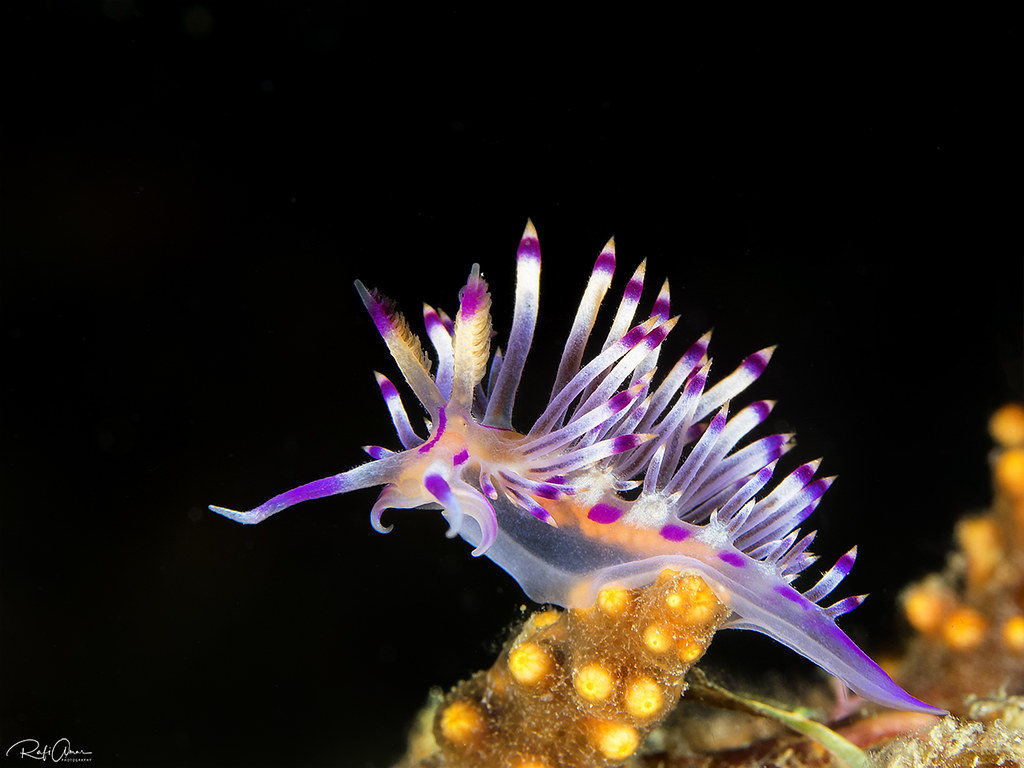
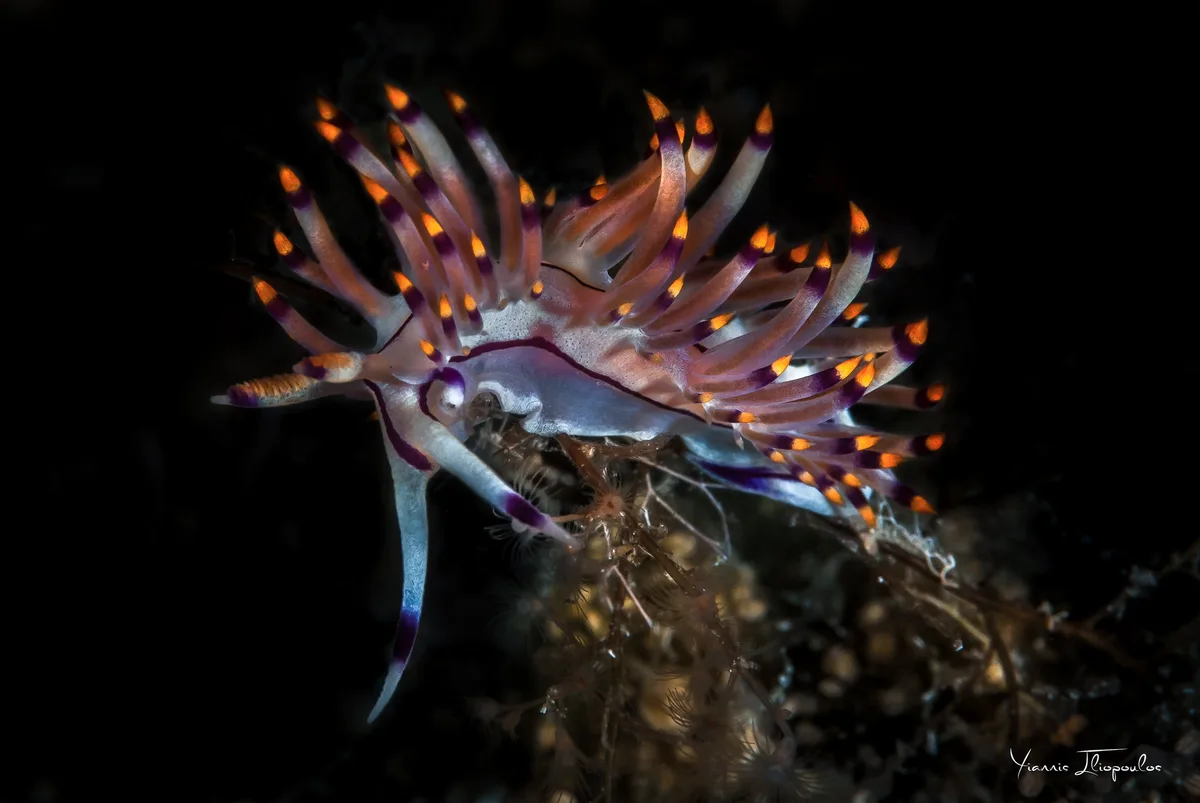
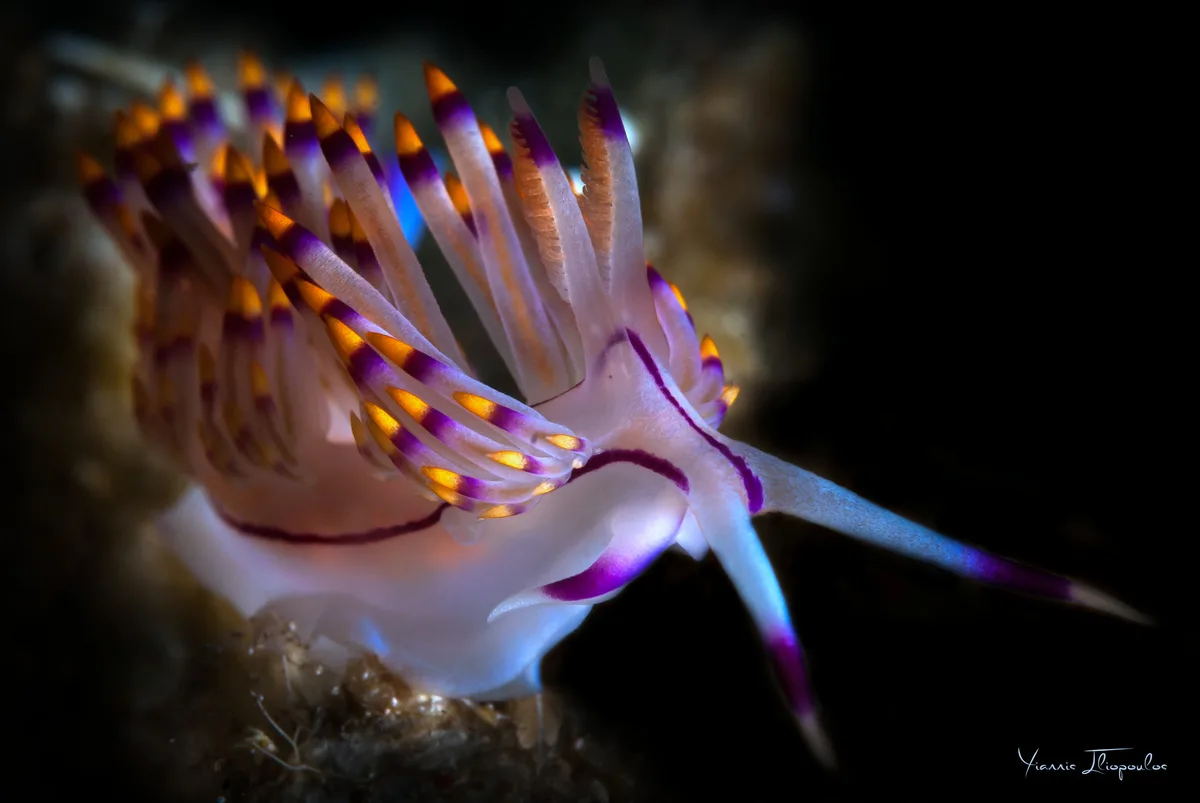
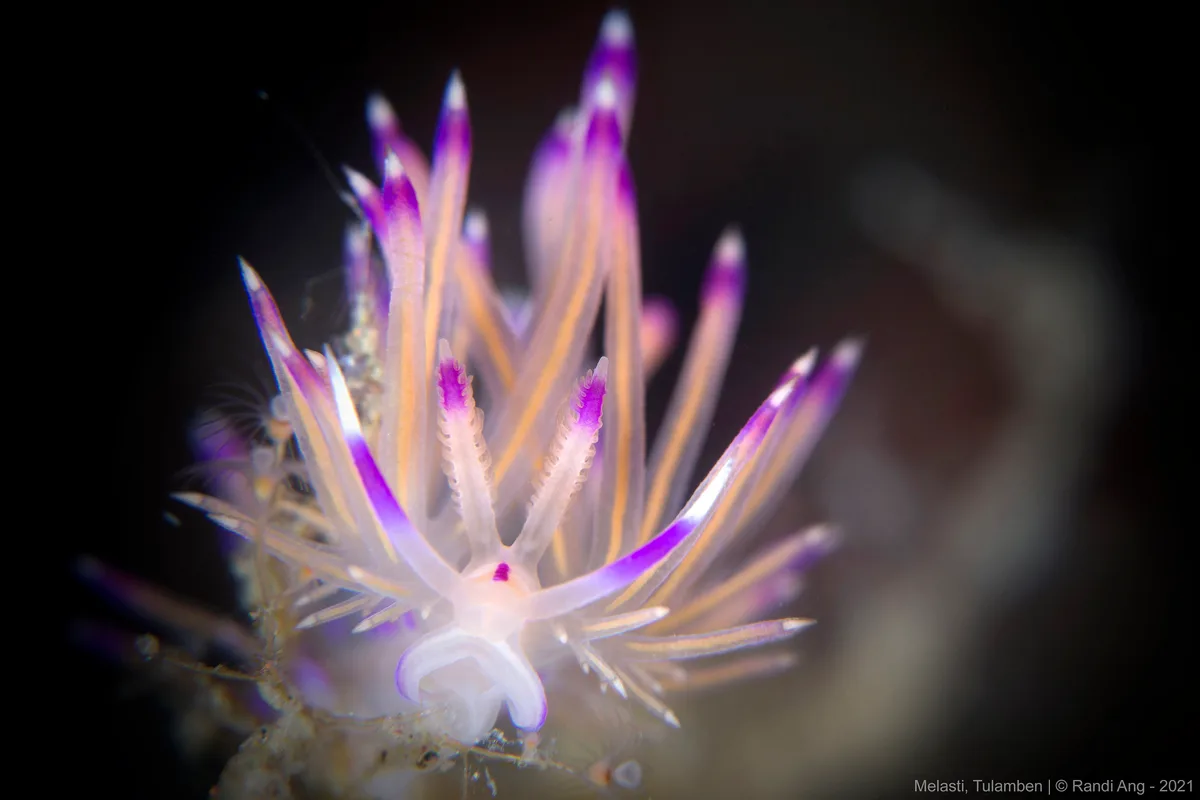
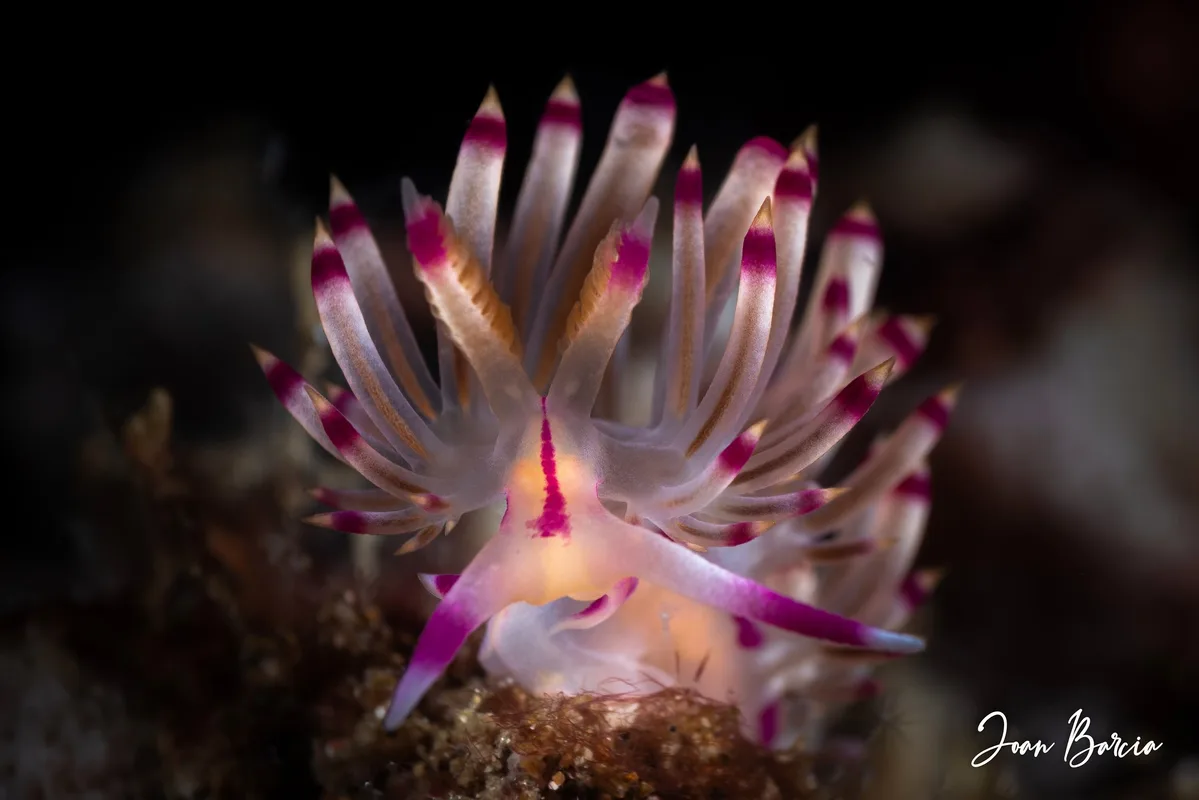
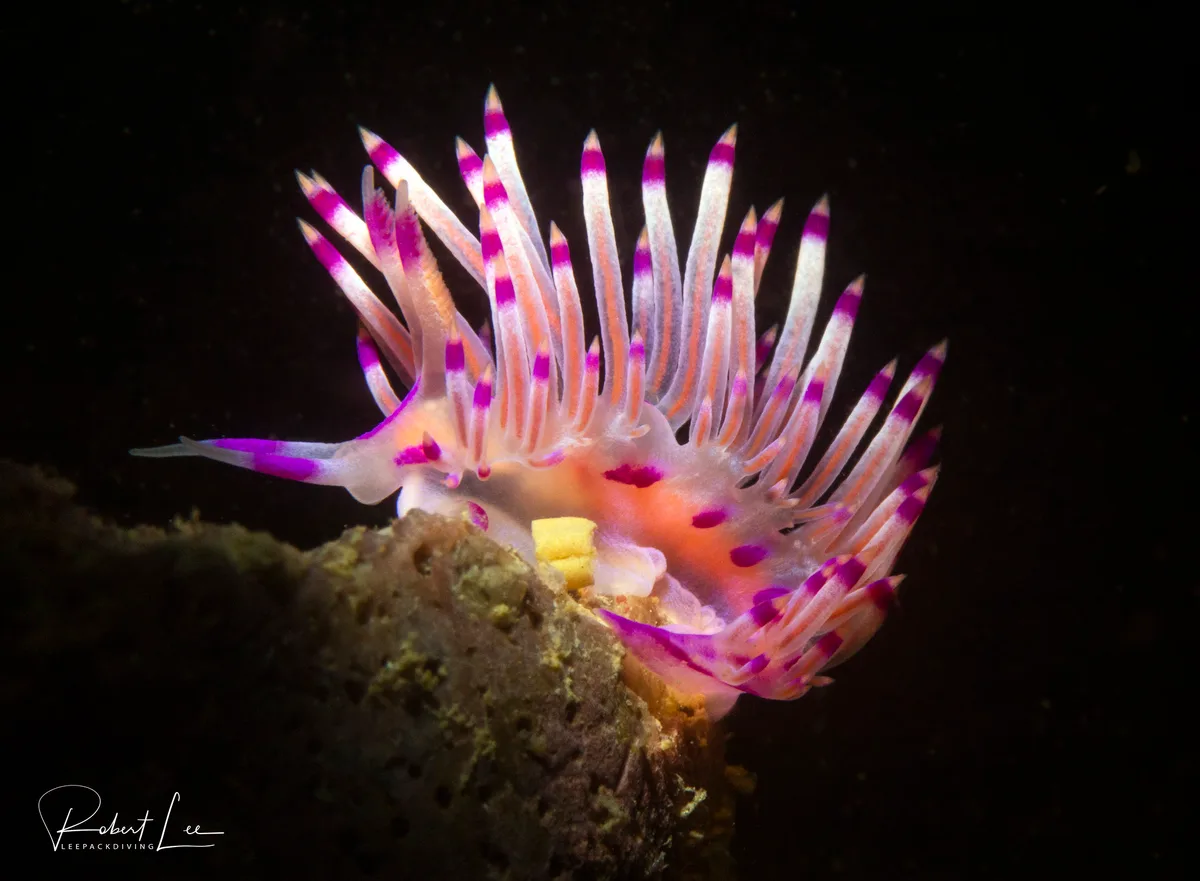
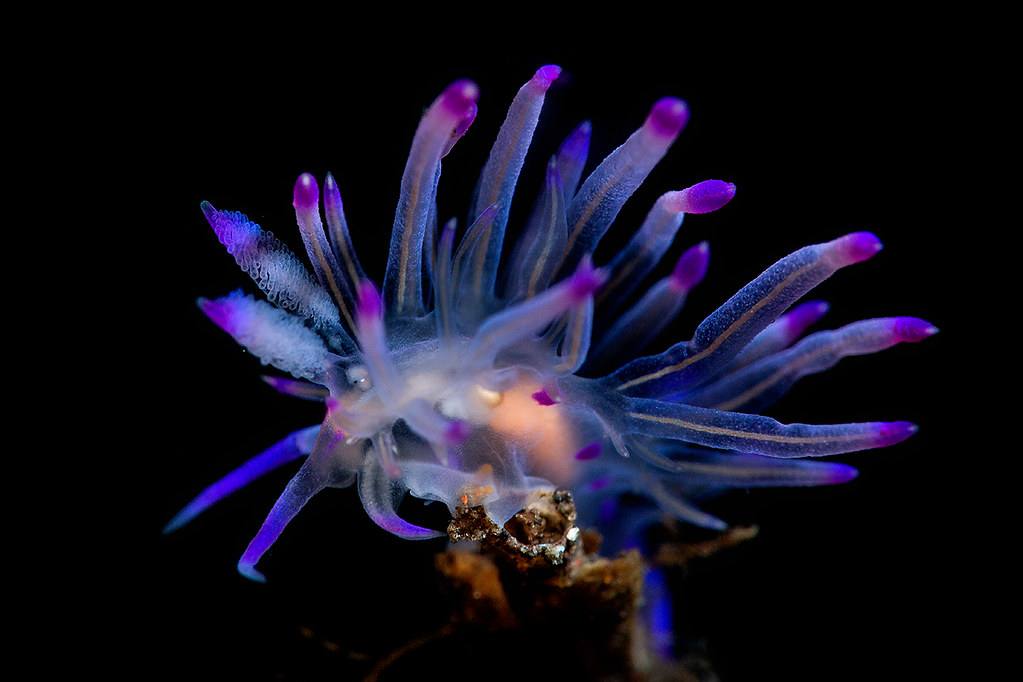
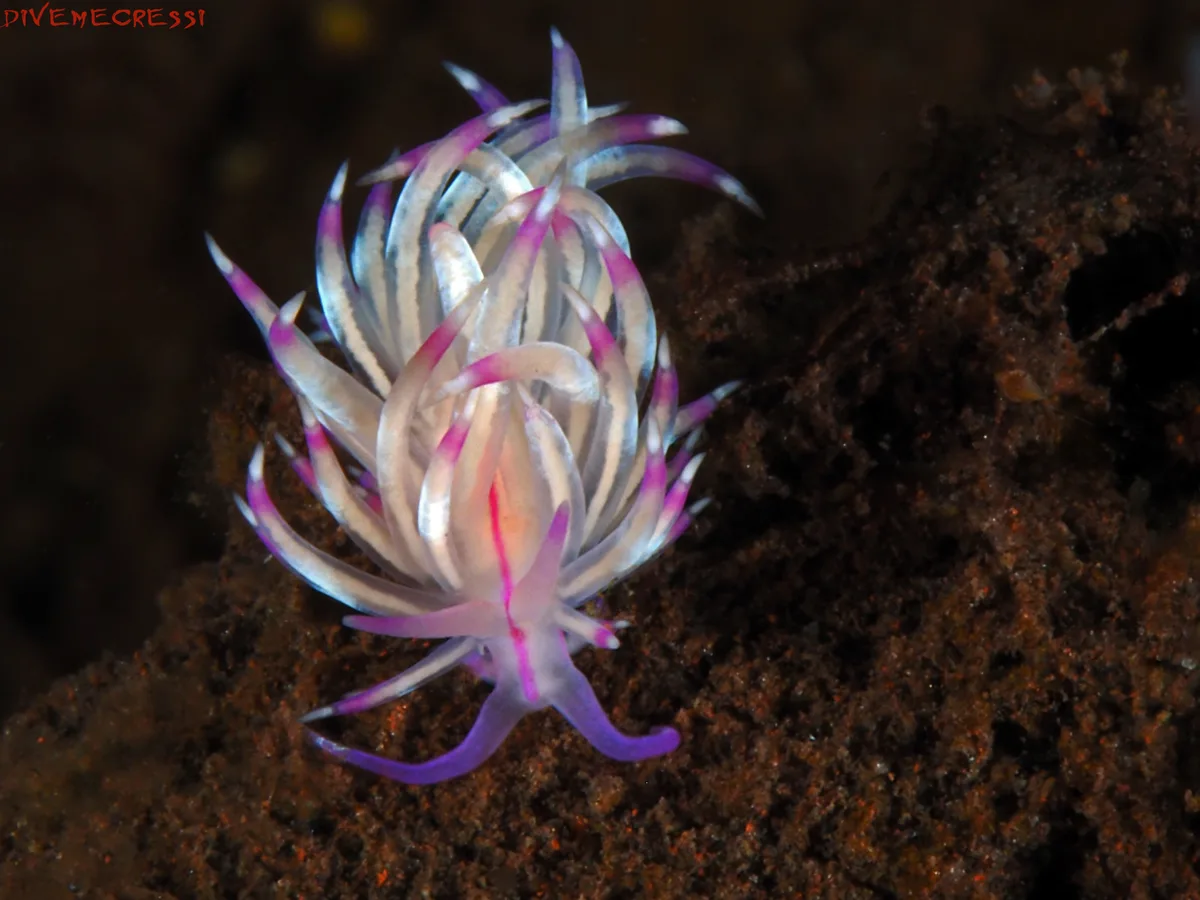
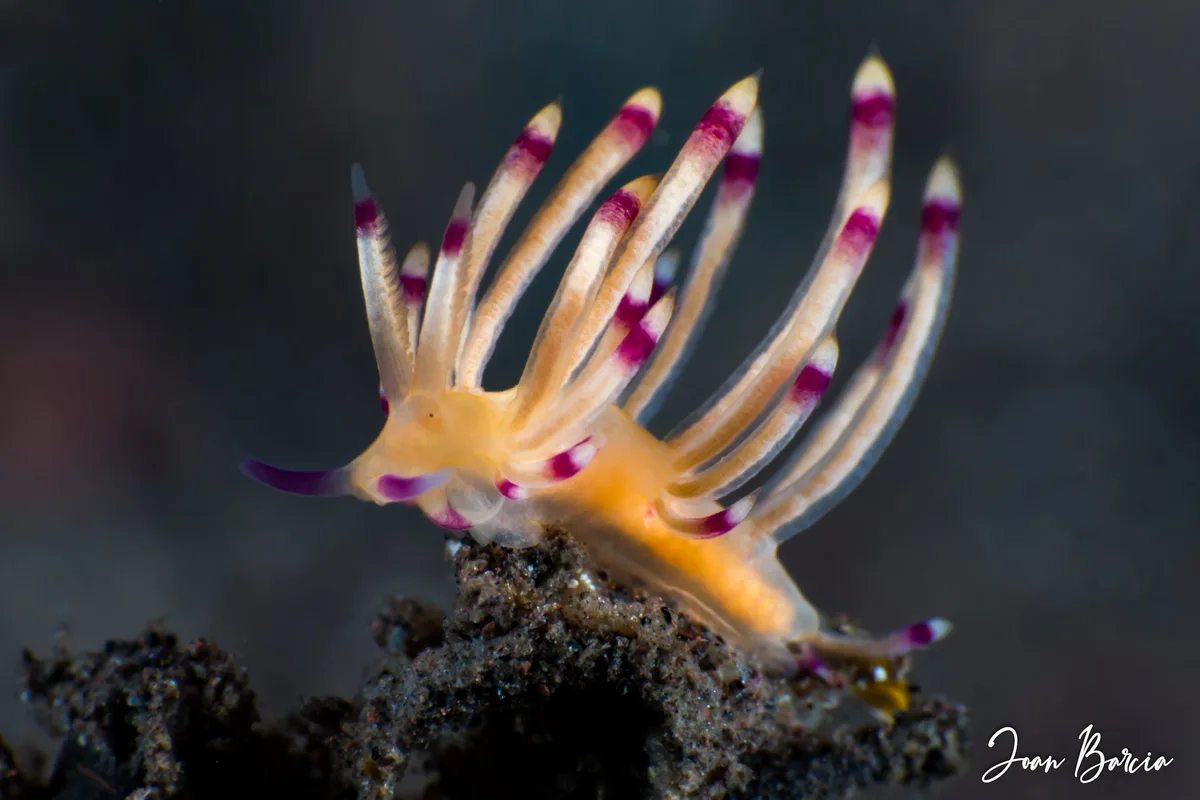
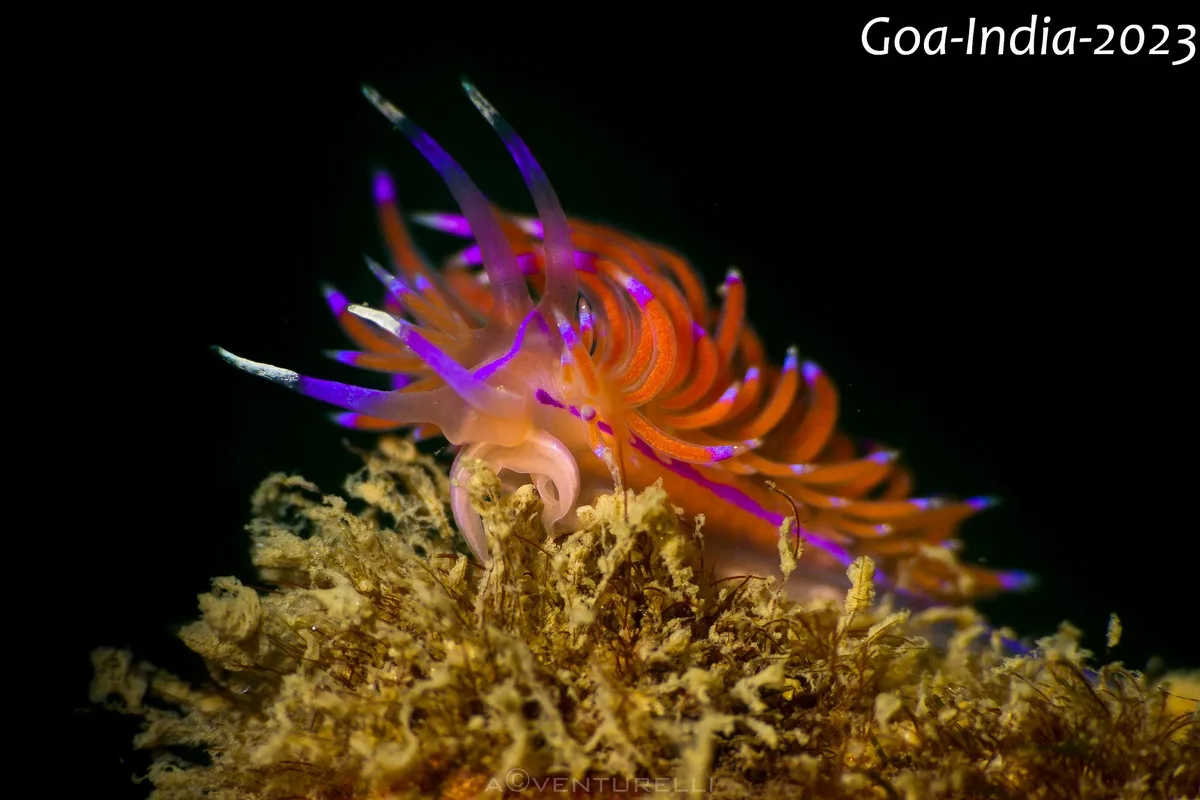
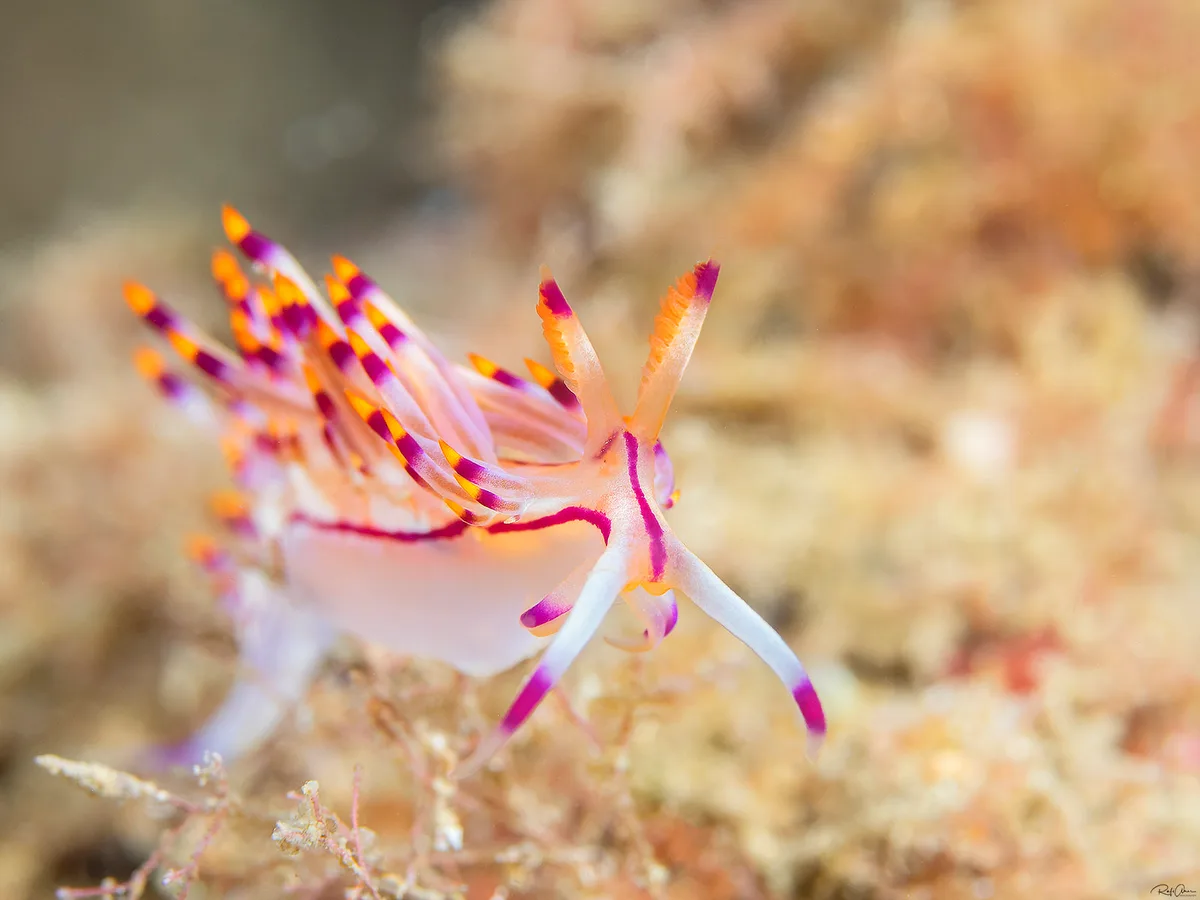
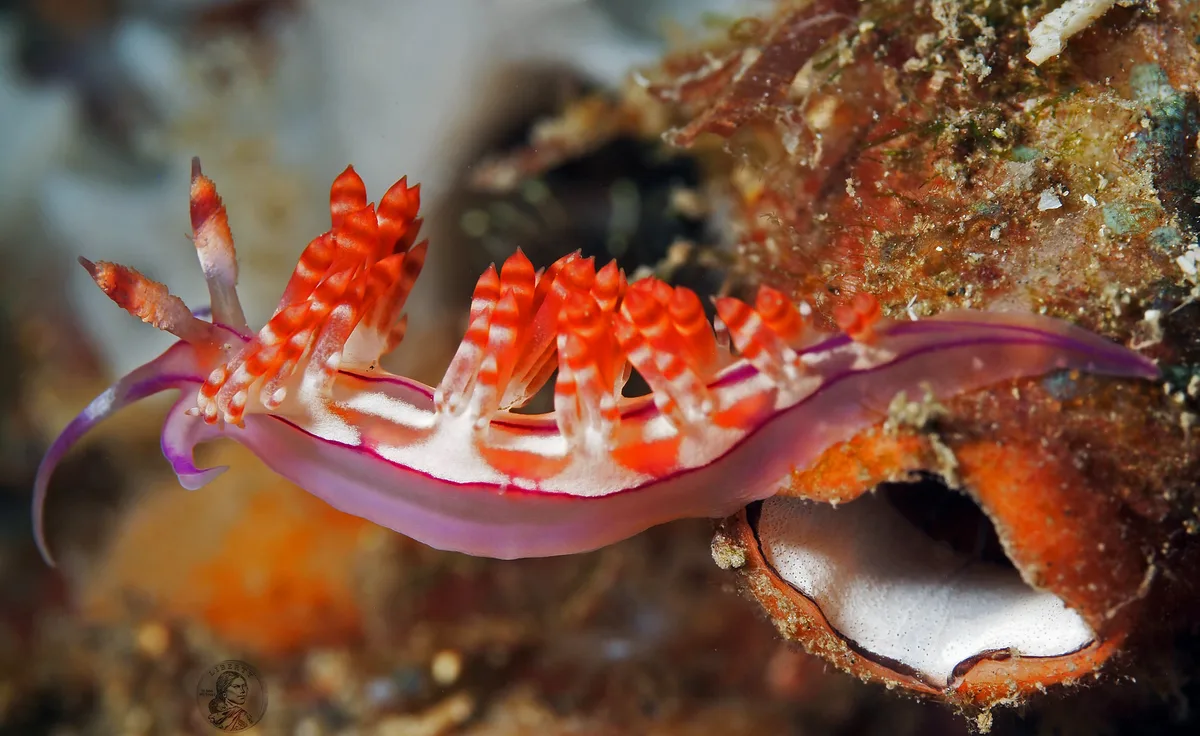
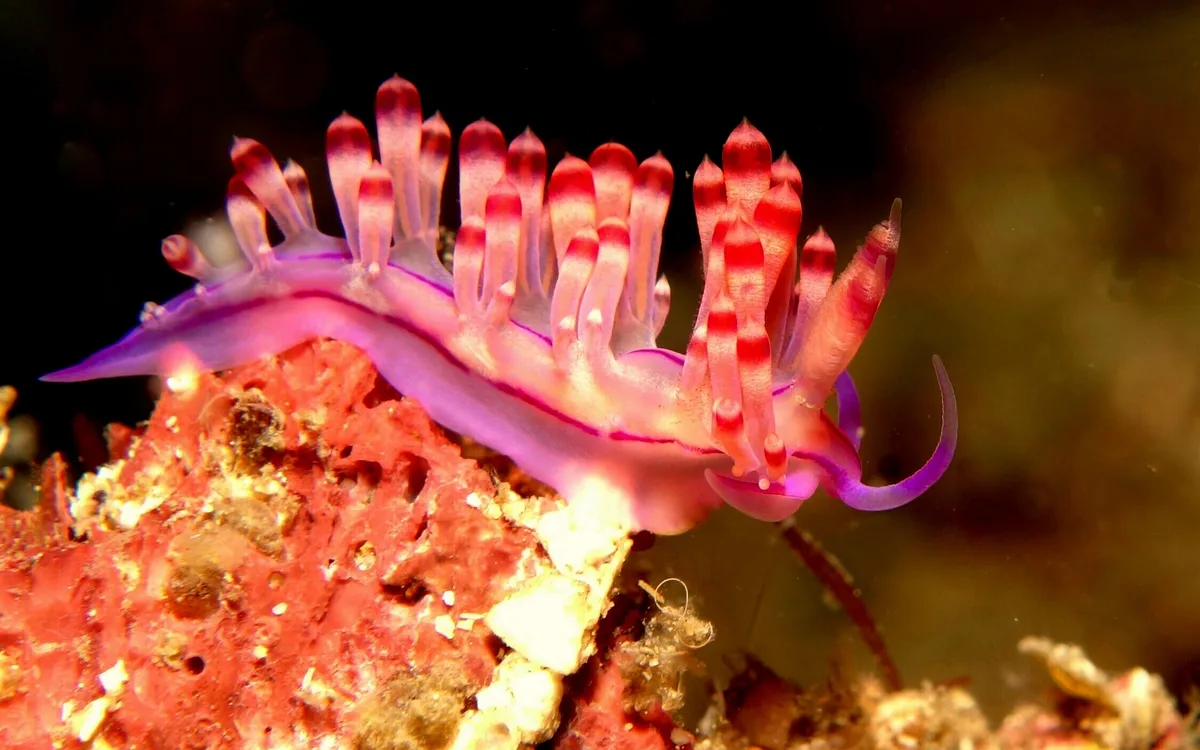
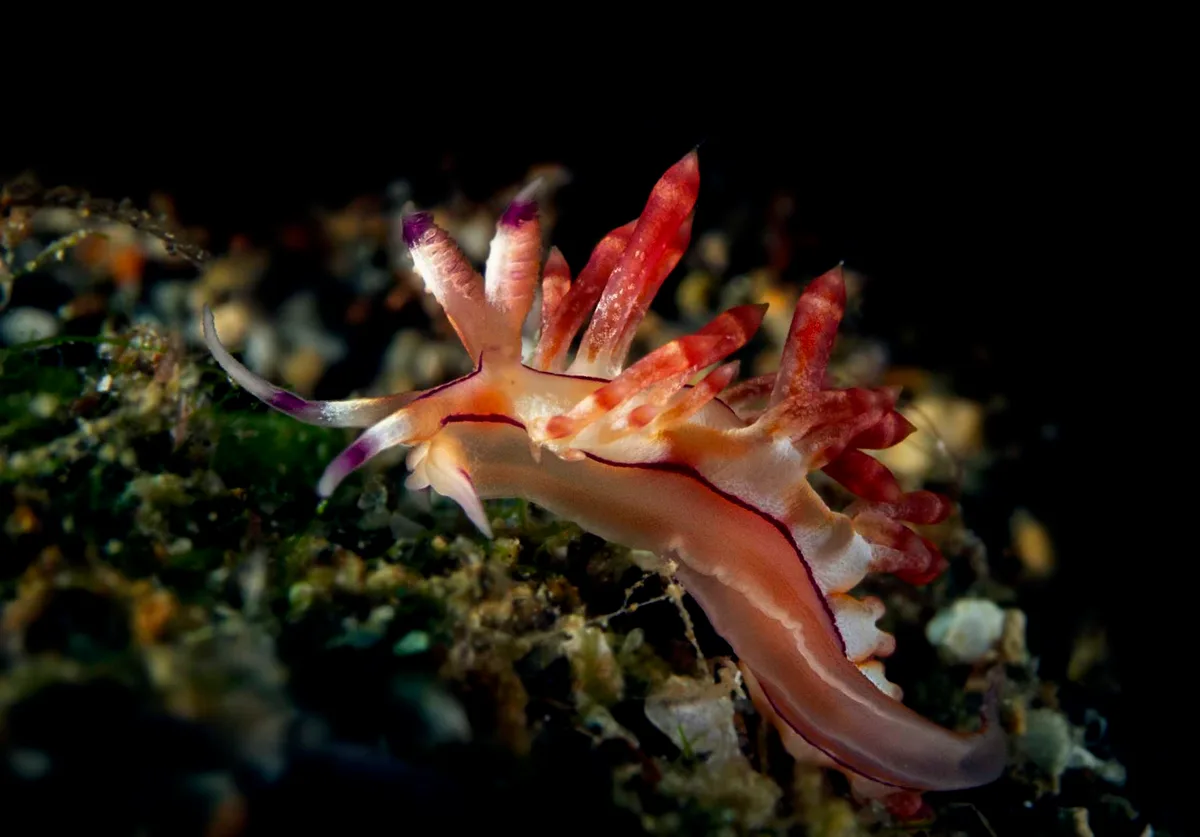
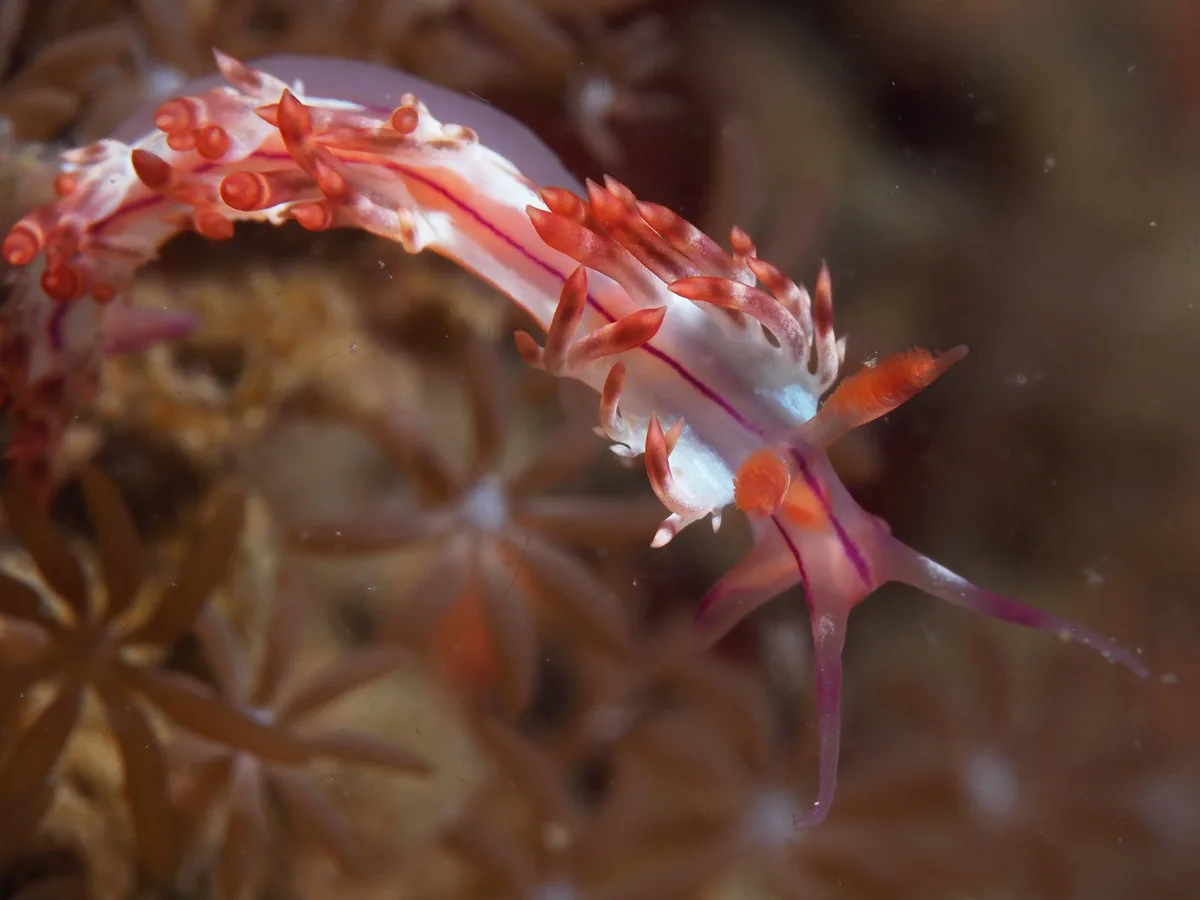
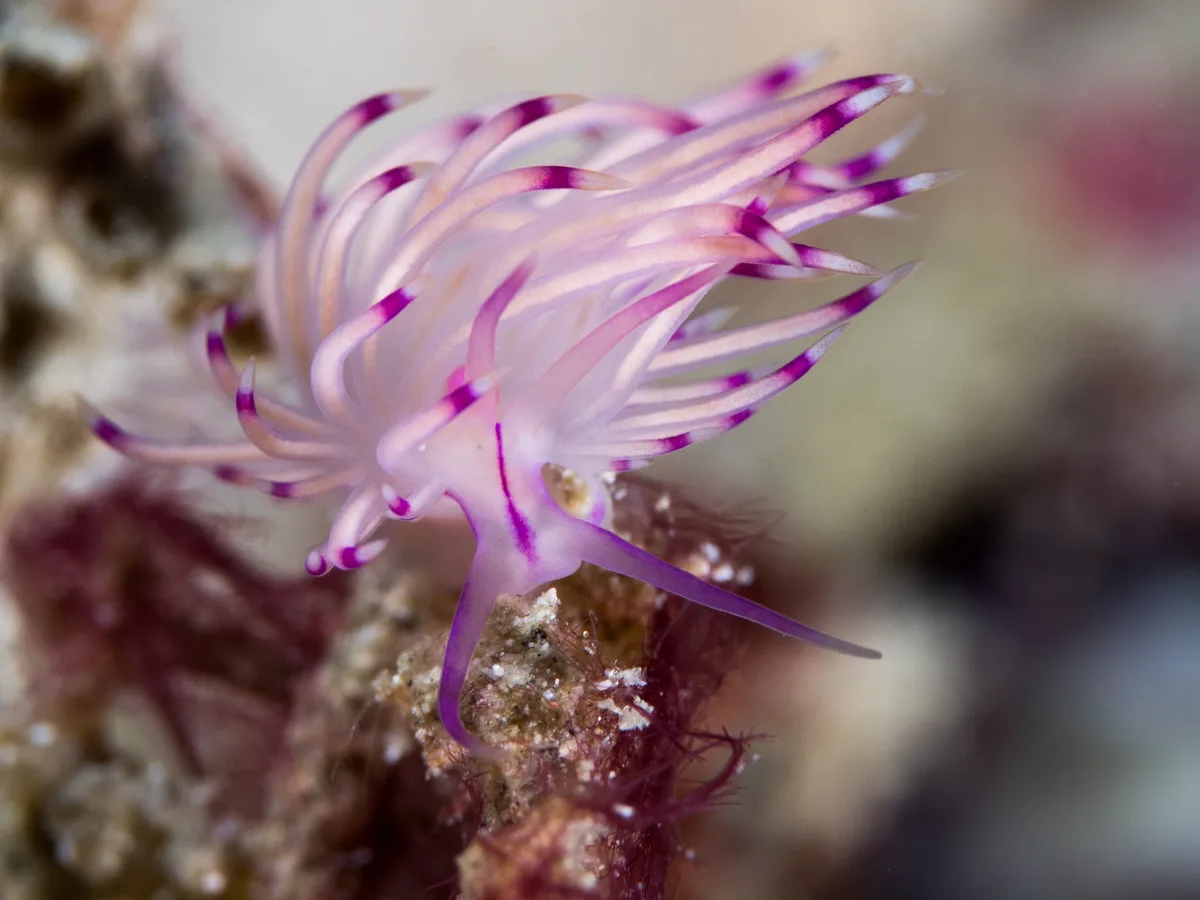
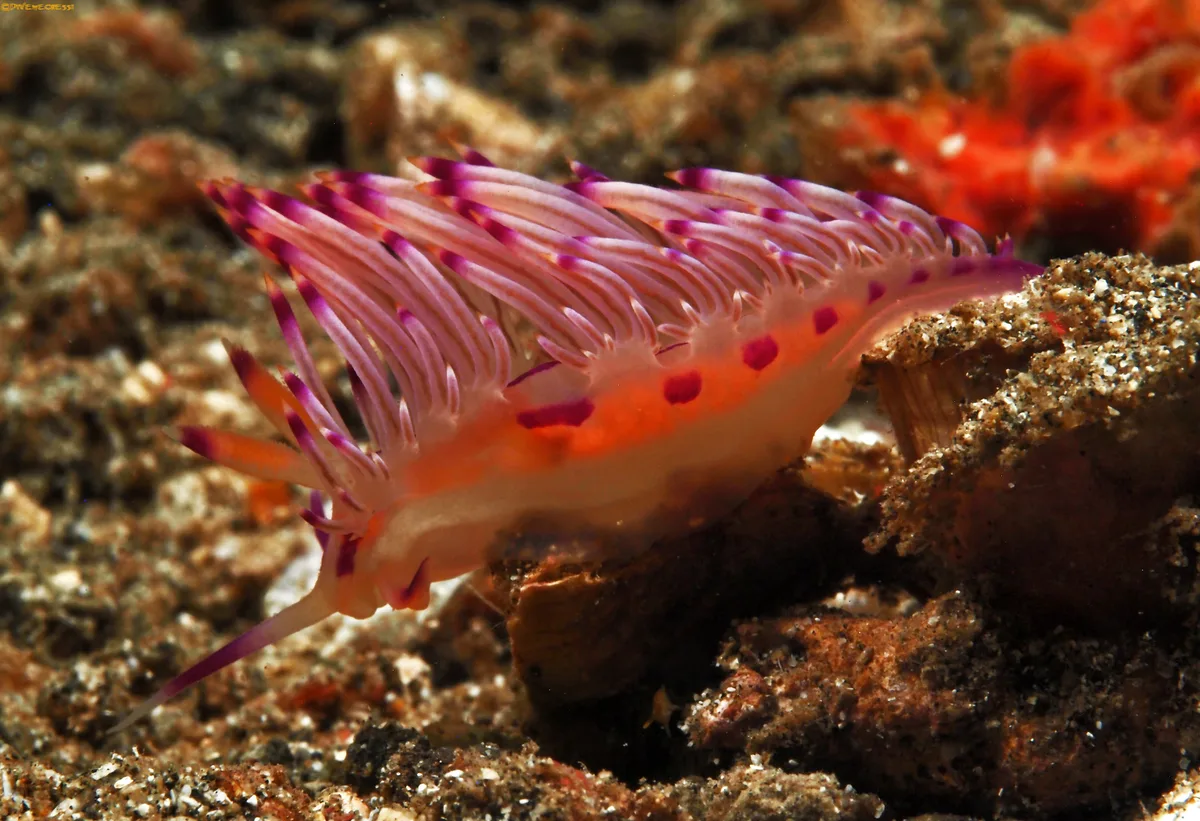
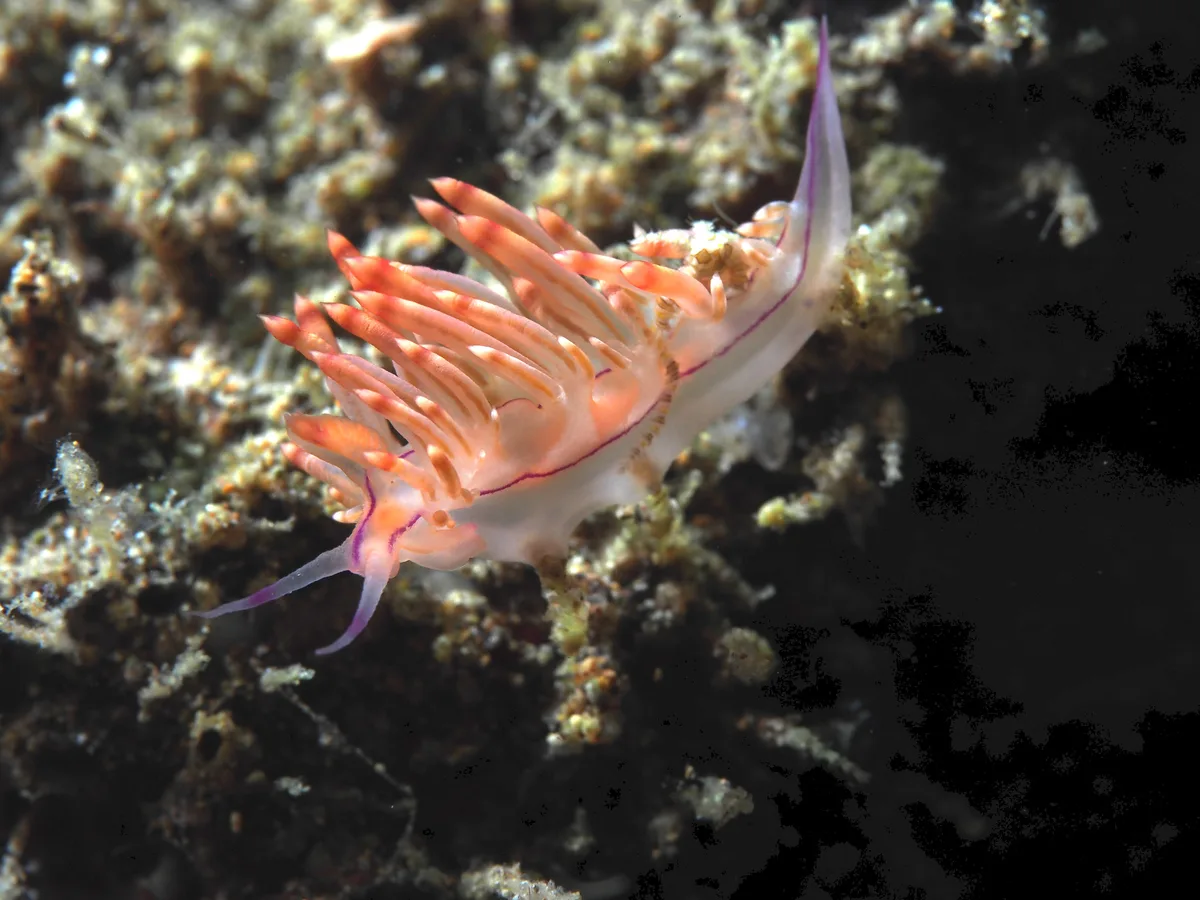
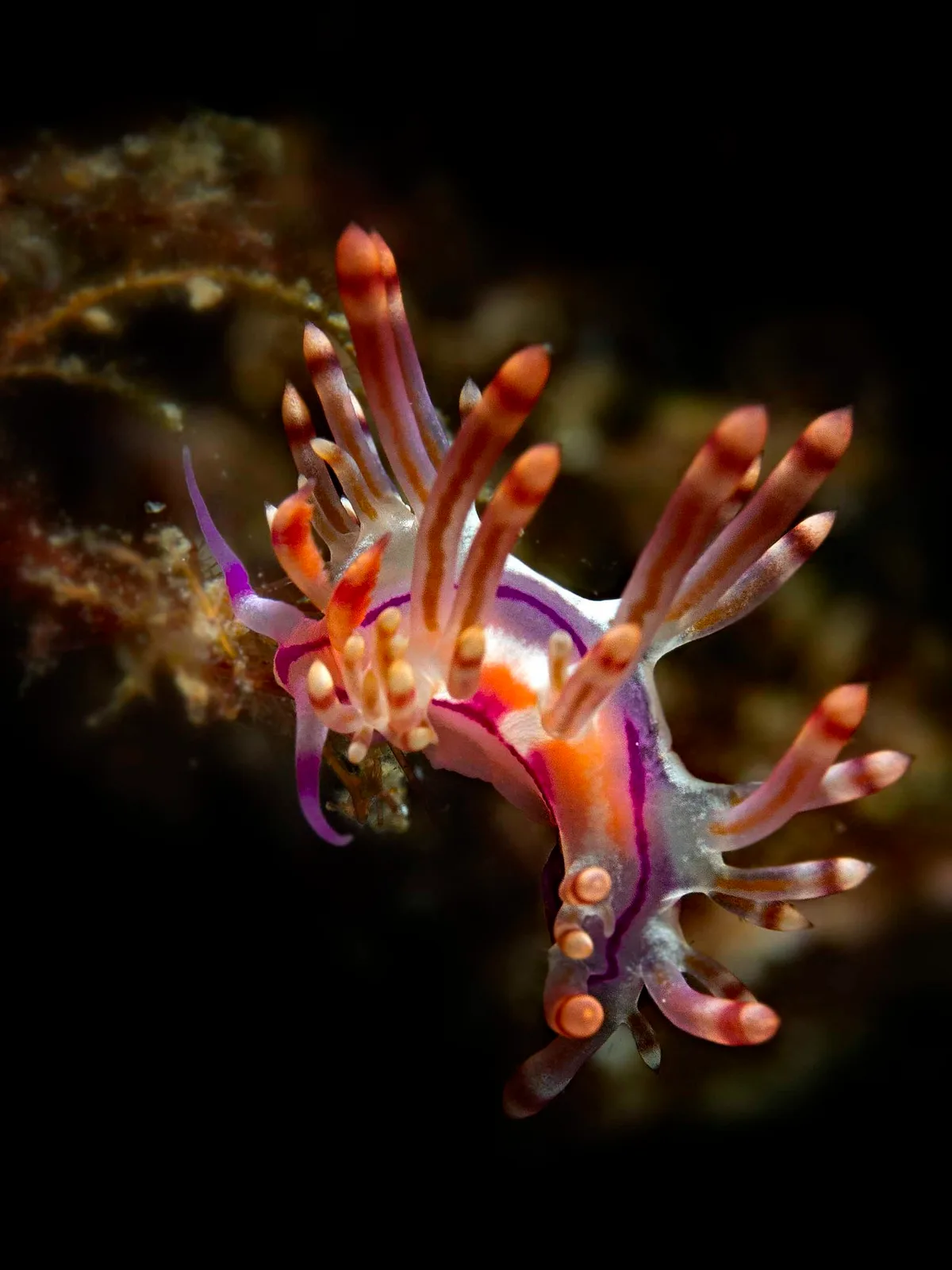
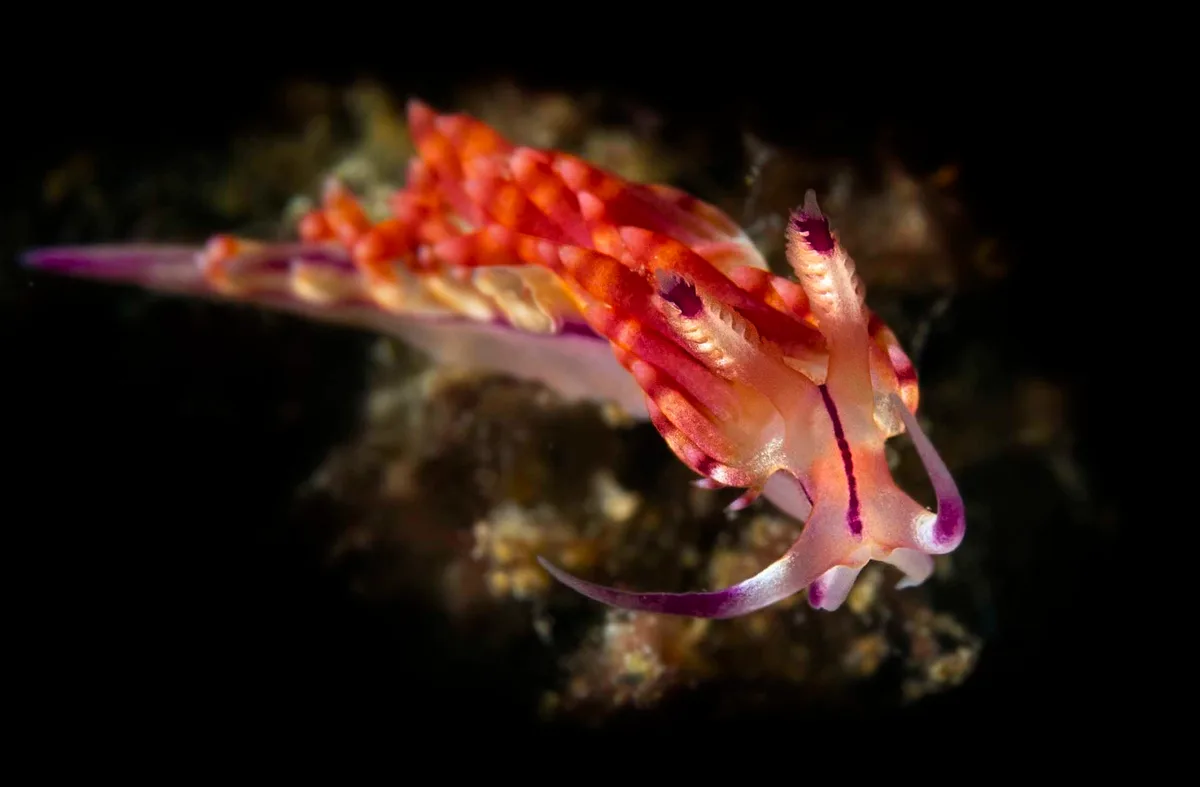
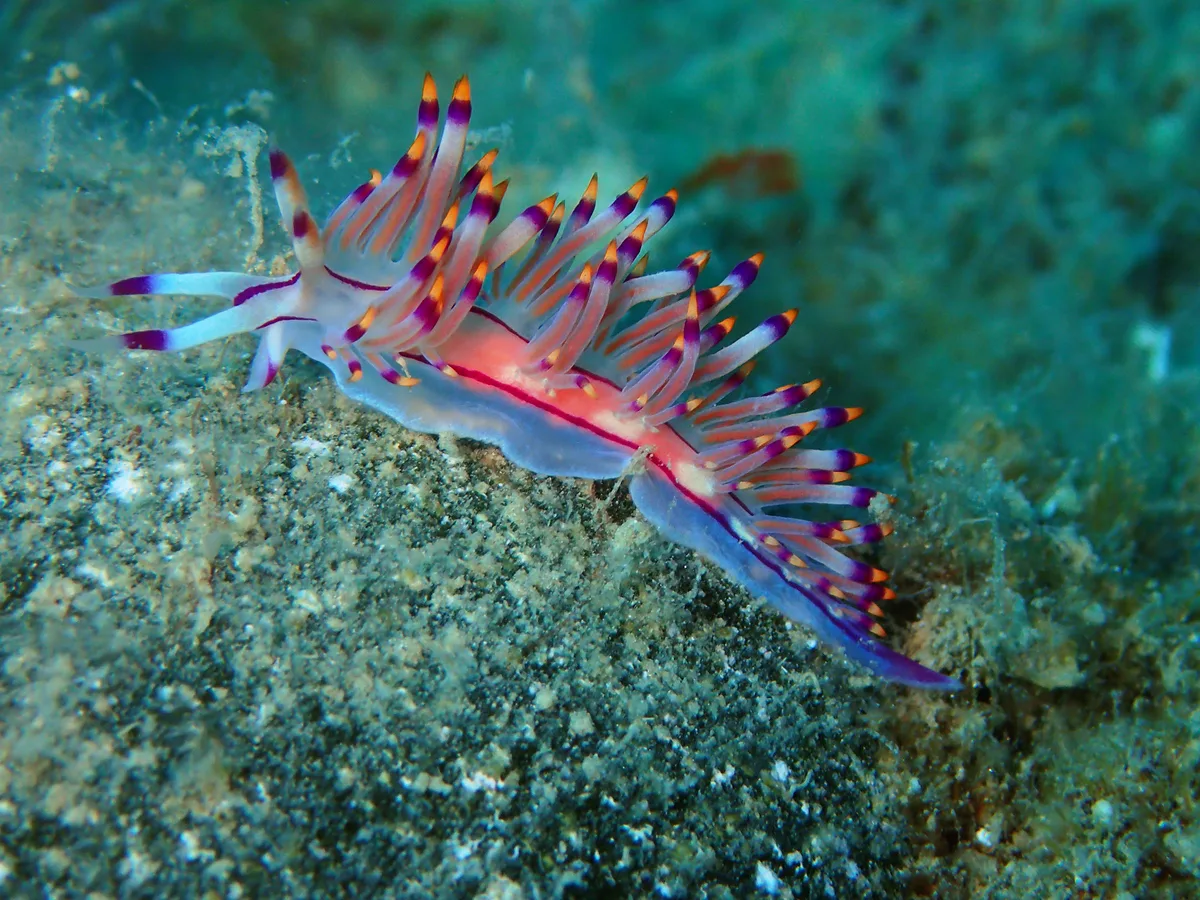
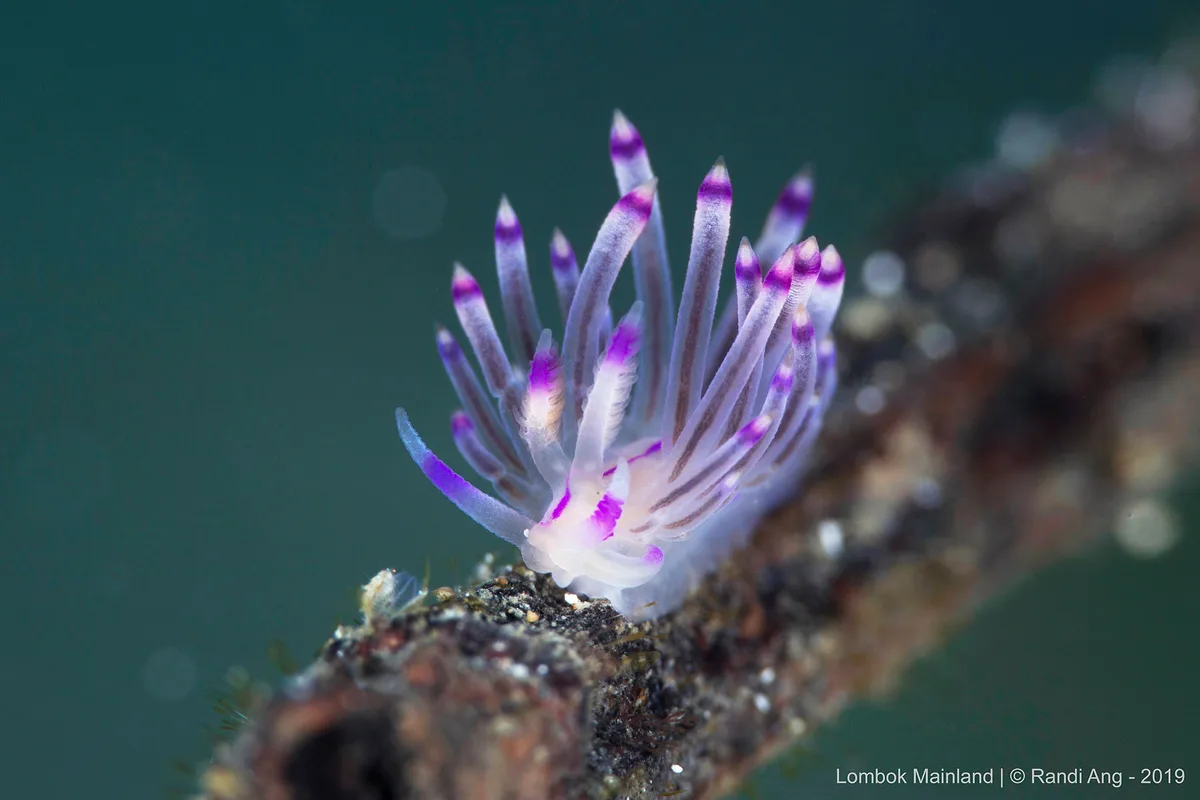
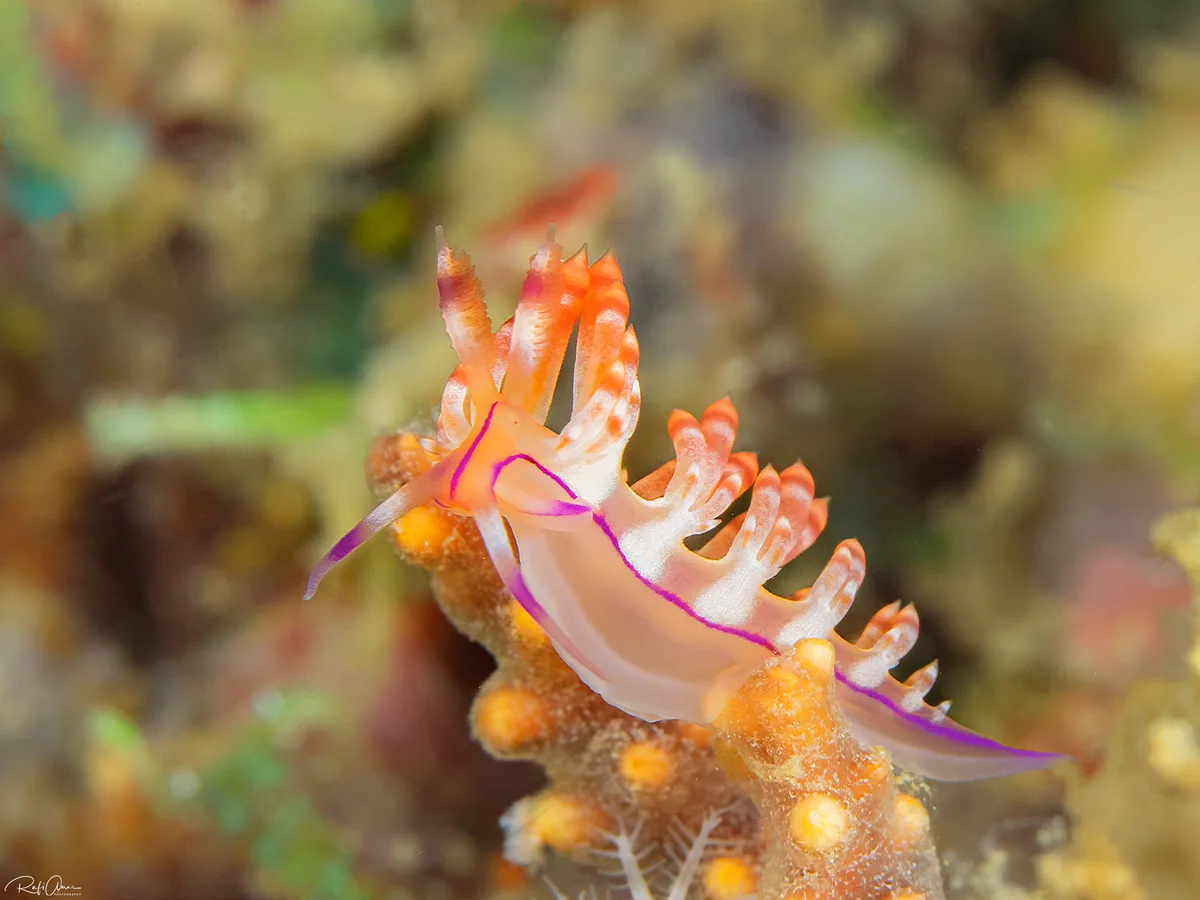
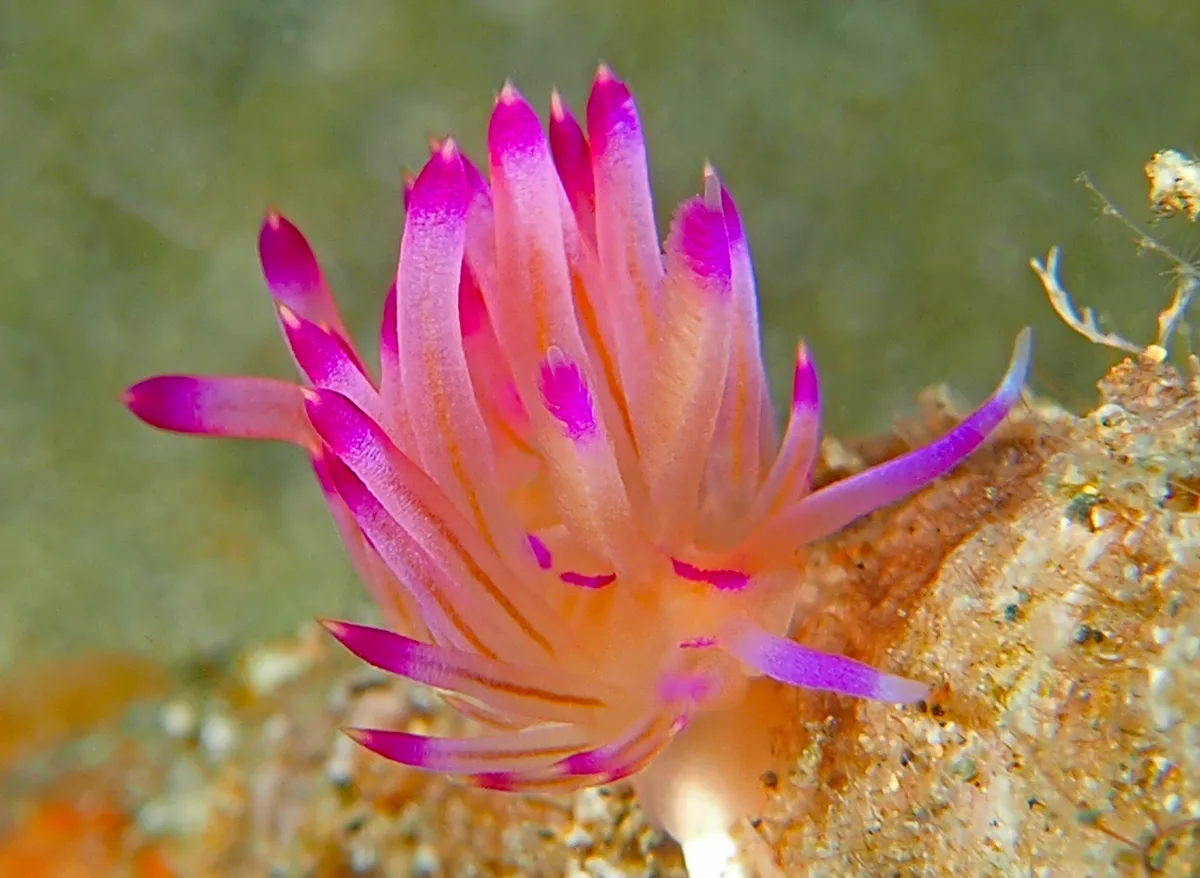
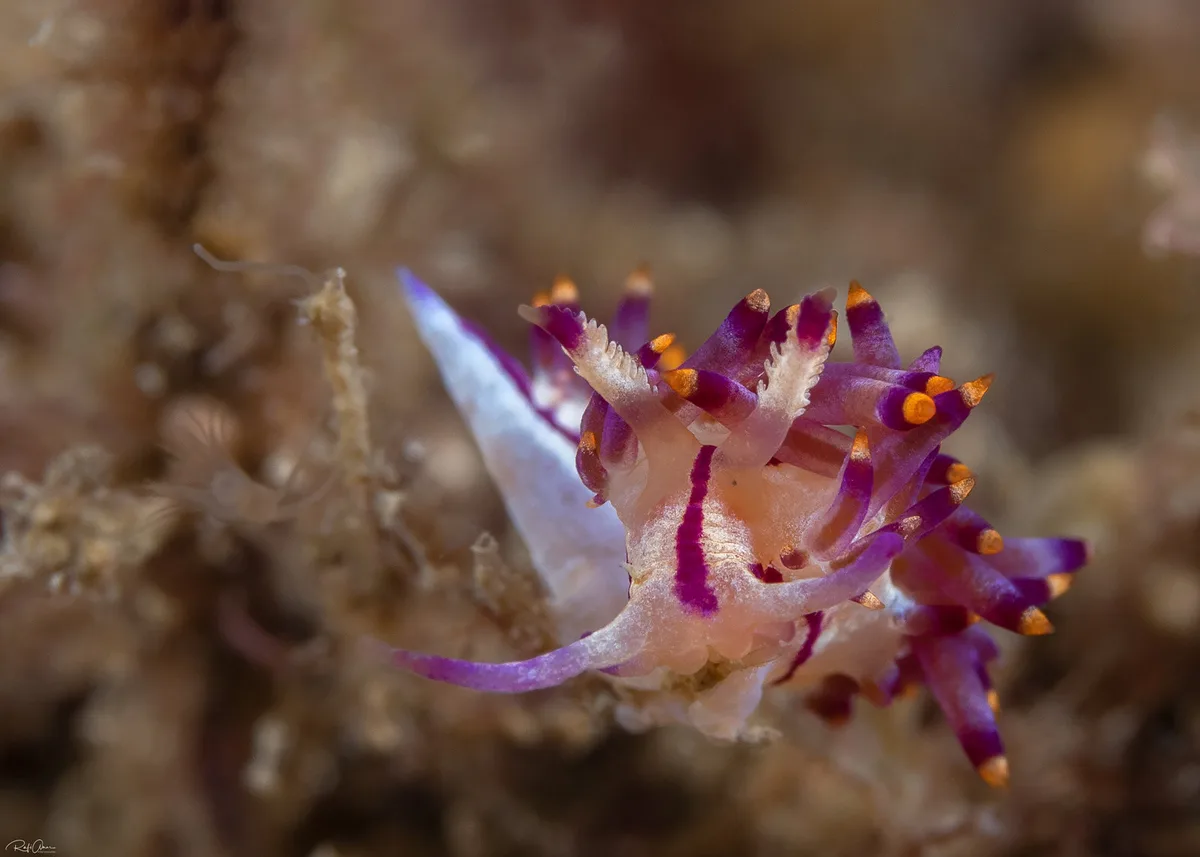
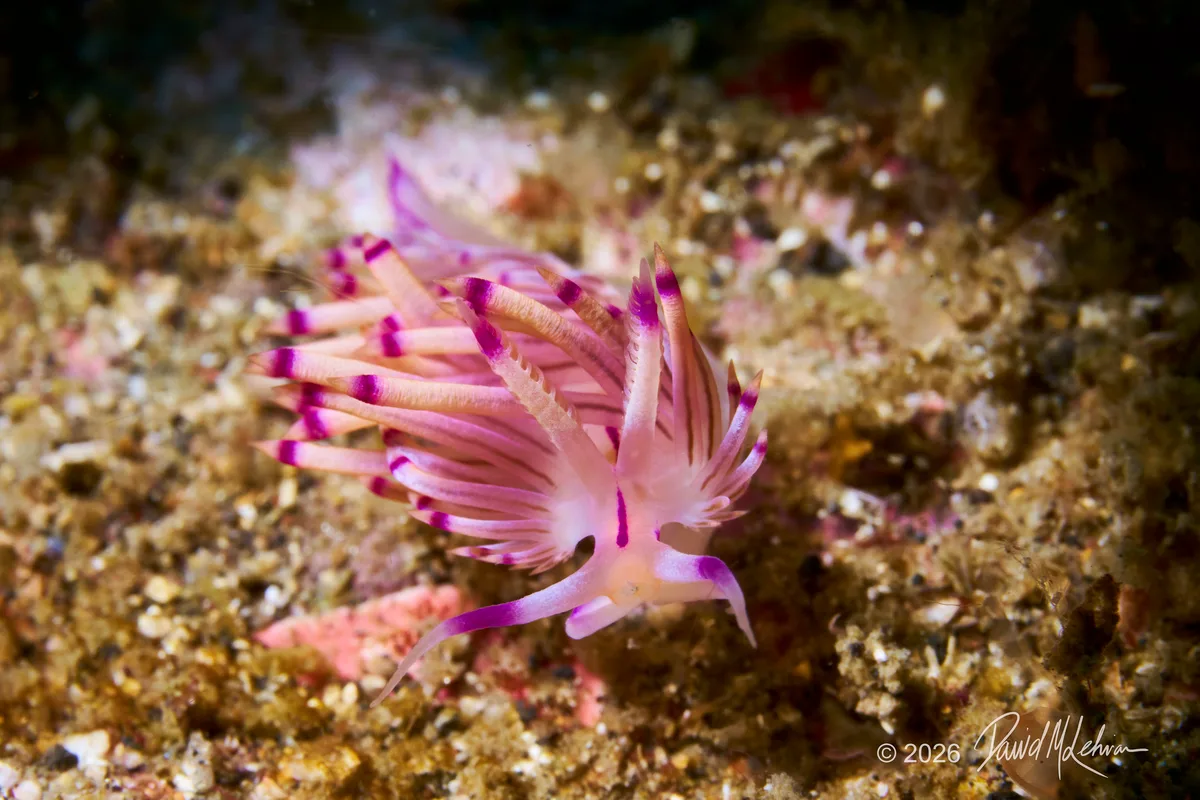
Count the lines. Three red stripes run the length of this slug, one along the midline of the back and one down each side, and on a two and a half centimeter (1 in) animal that is the whole identification. The ground color is white to pinkish cream and reads purple at depth, which is where the dive name comes from.
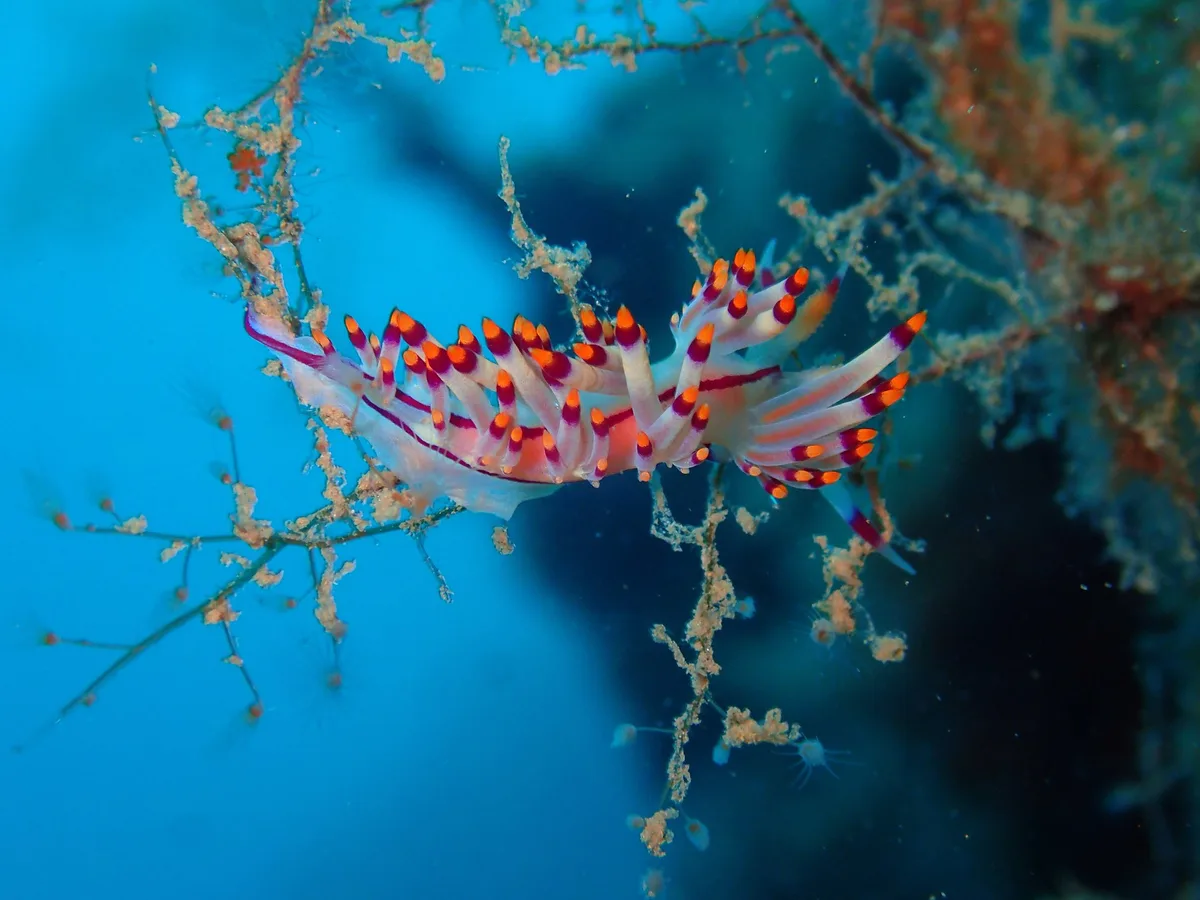
It feeds on hydroids, the small branching colonies that fur over wreck plating and dead coral, and every one of those colonies is armed. Hydroid stinging cells fire on contact, which is what makes them a defended food and what makes them worth eating anyway. The slug swallows them without setting them off, moves them intact through its gut into sacs at the tips of the cerata on its back, and stores them there as its own. It grazes a weapons supplier and walks away wearing the stock.
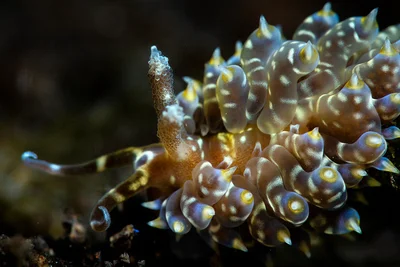
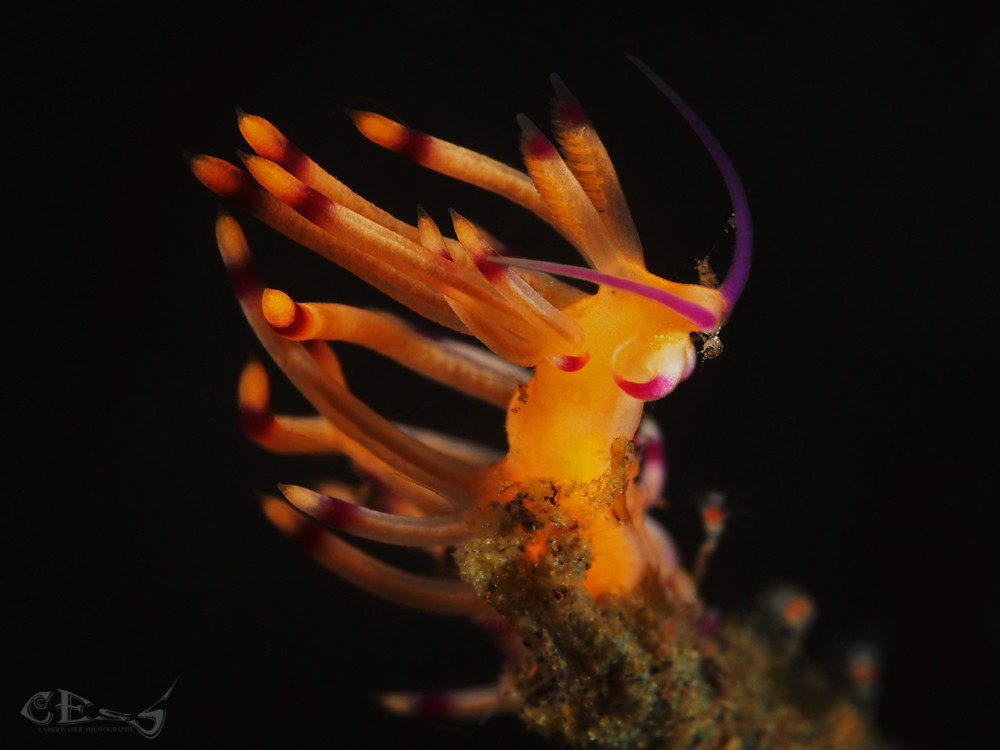
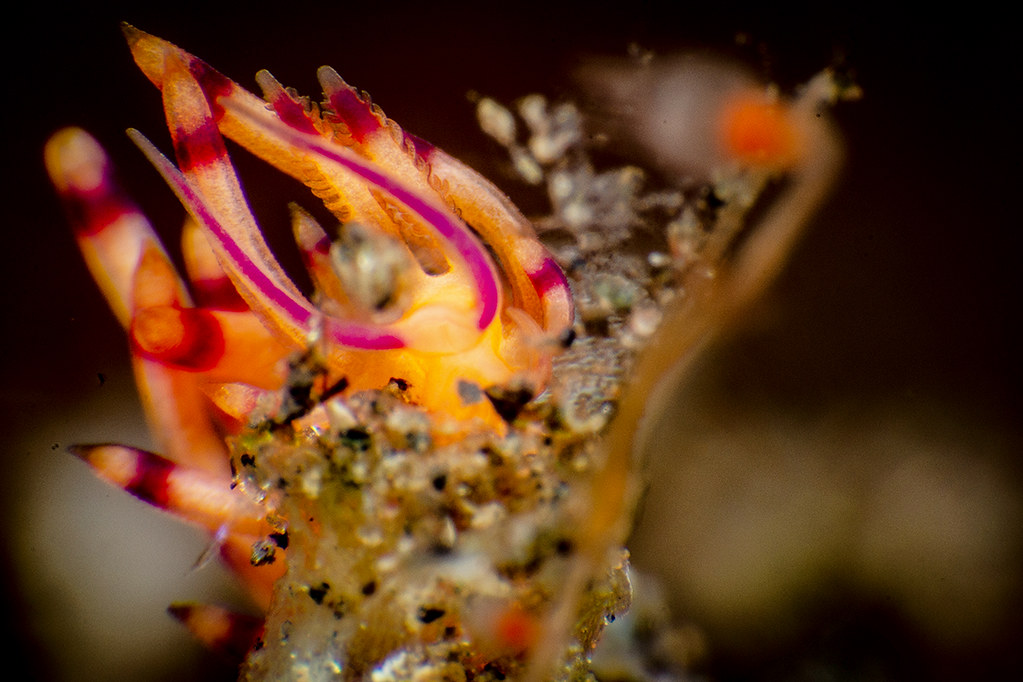
The cluster arrangement of the cerata matters more than it looks. They are grouped, not evenly spread, and every group can be shed. A fish that bites gets a mouthful of stinging cells fired in its mouth and a detached tuft still moving, and the slug leaves with the rest of the rows intact.
The last thing worth knowing about it is where else it lives. This is a 🌊 Red Sea and Arabian Sea animal, and it has been recorded off 🇹🇷 Turkey, Greece and Cyprus in the eastern Mediterranean. Nothing swam around Africa to get there. It went north through the Suez Canal (🇪🇬 Egypt), one more line in the long list of 🌊 Red Sea species that have used the ditch since 1869, and it is now a slug you can find on either end of the passage.
- three red lines running the length of the body, one down the middle of the back and one along each side
- white to pinkish cream ground color, often reading as purple underwater
- cerata in distinct clusters, tipped white
- rhinophores ringed rather than smooth