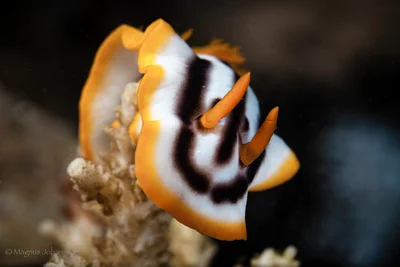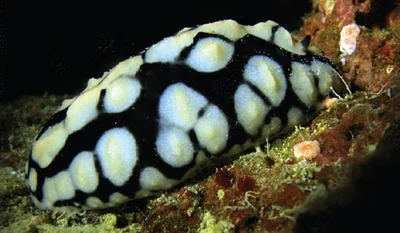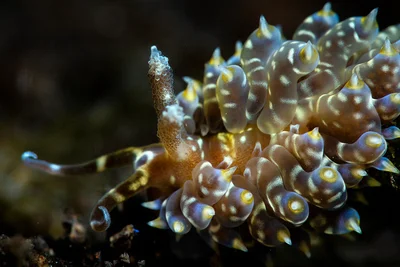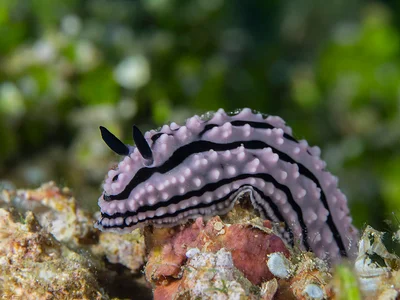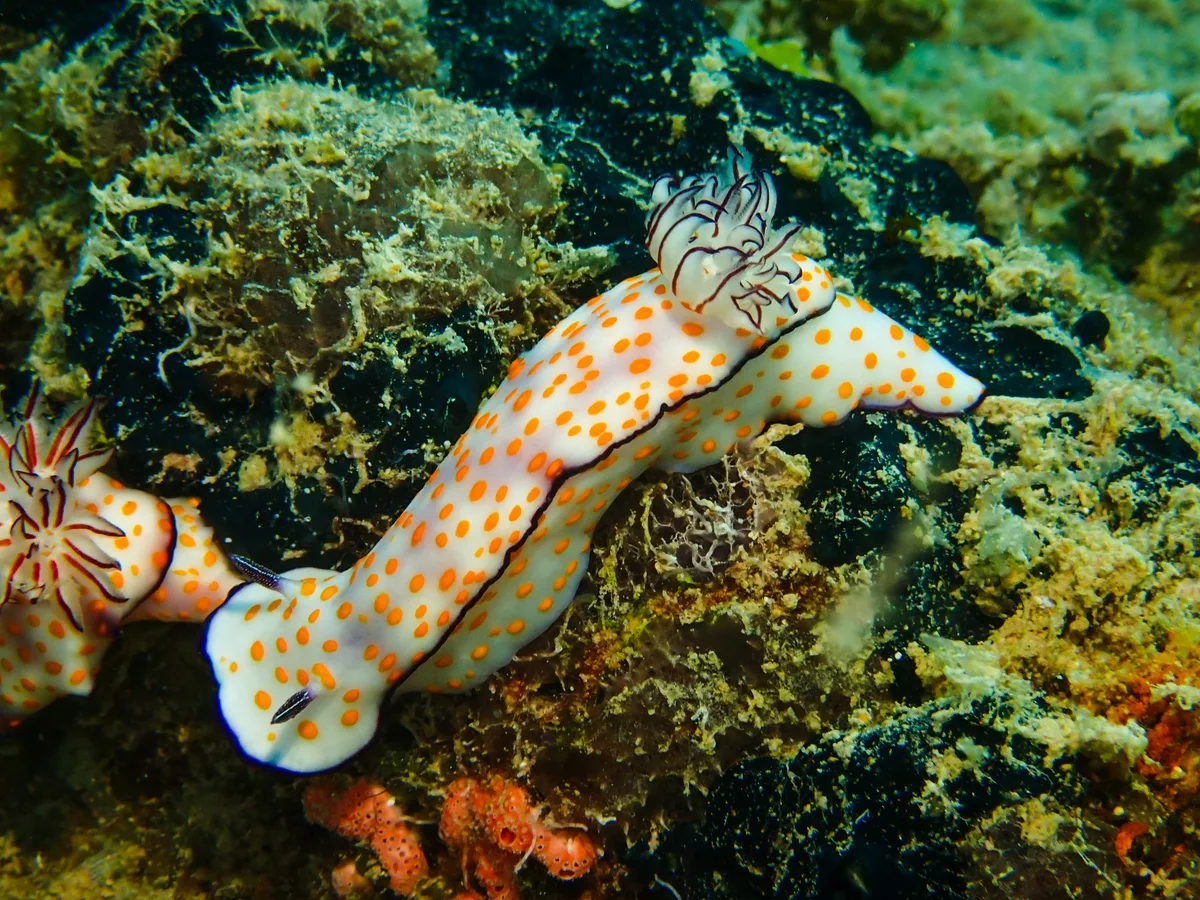
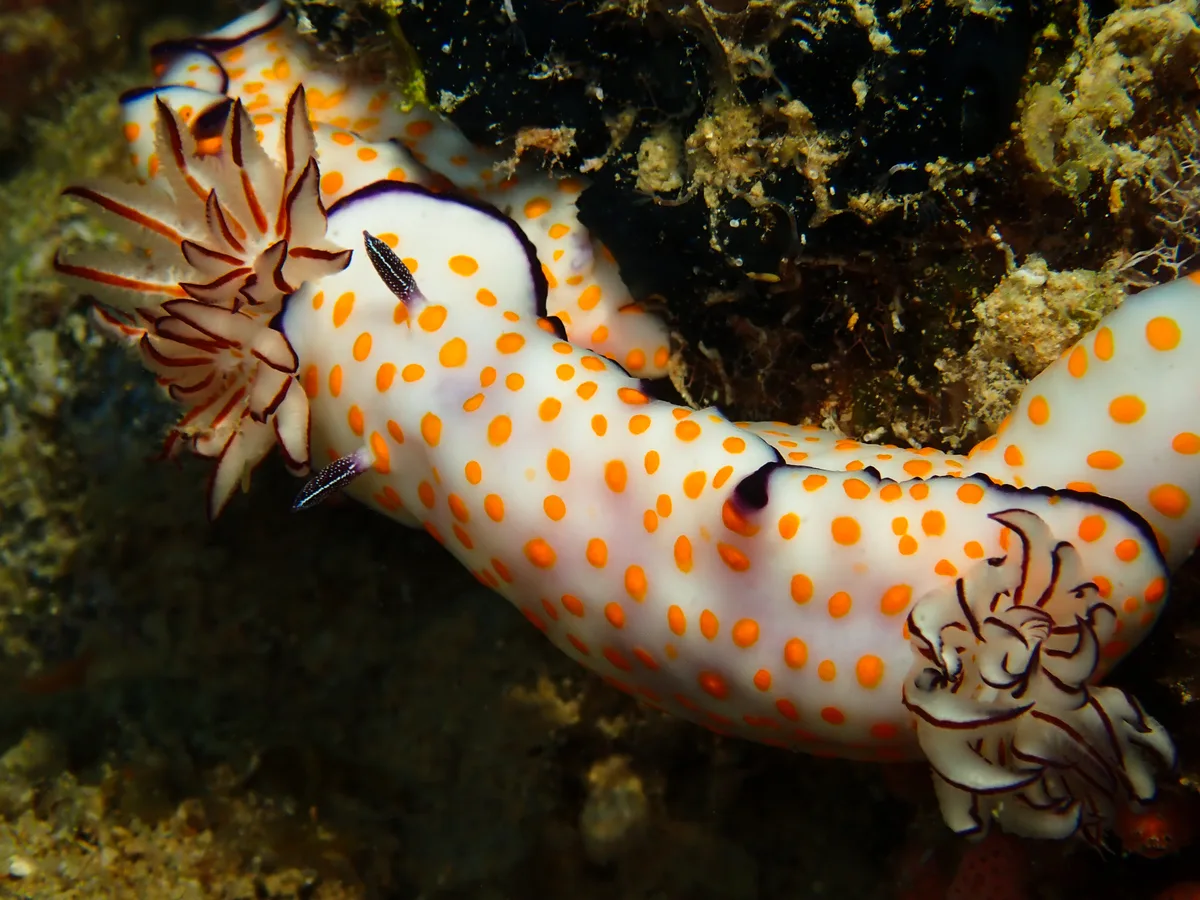
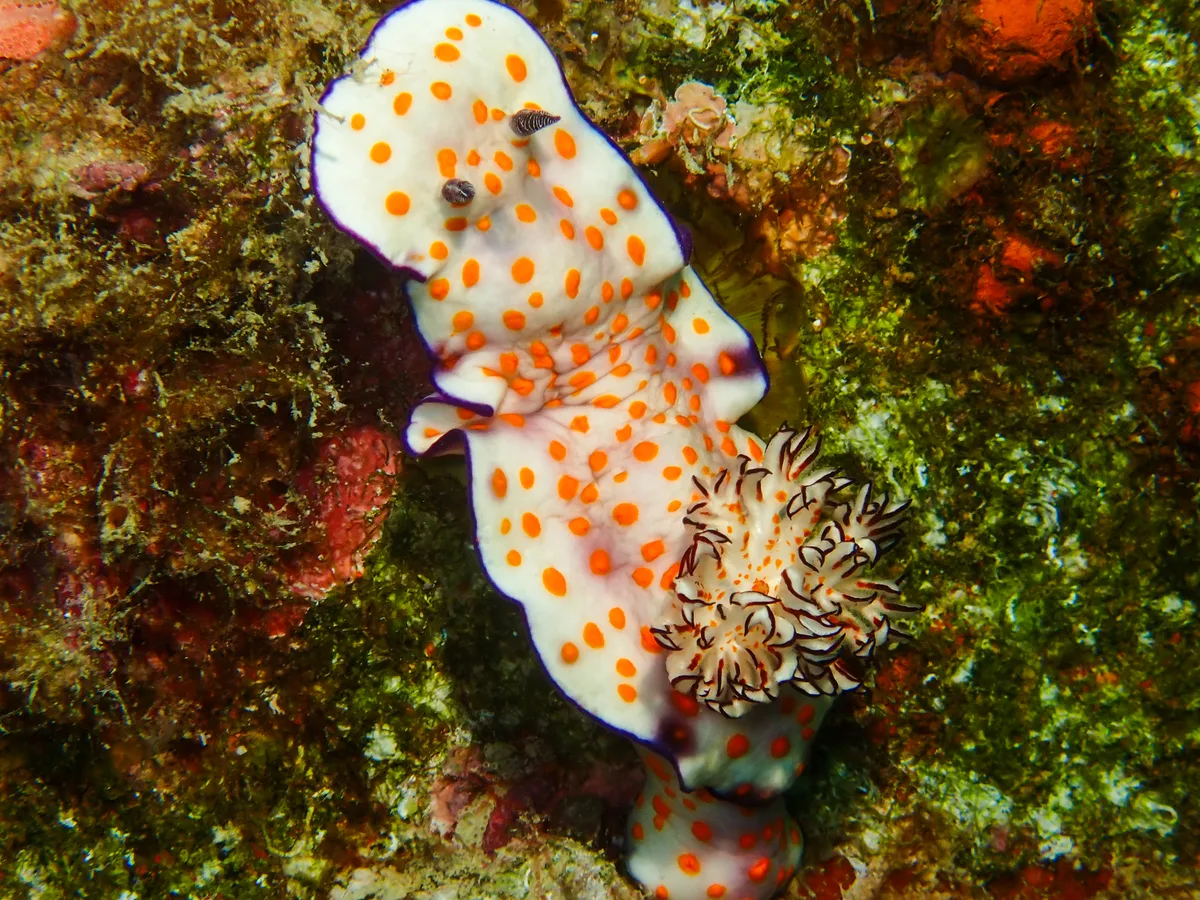
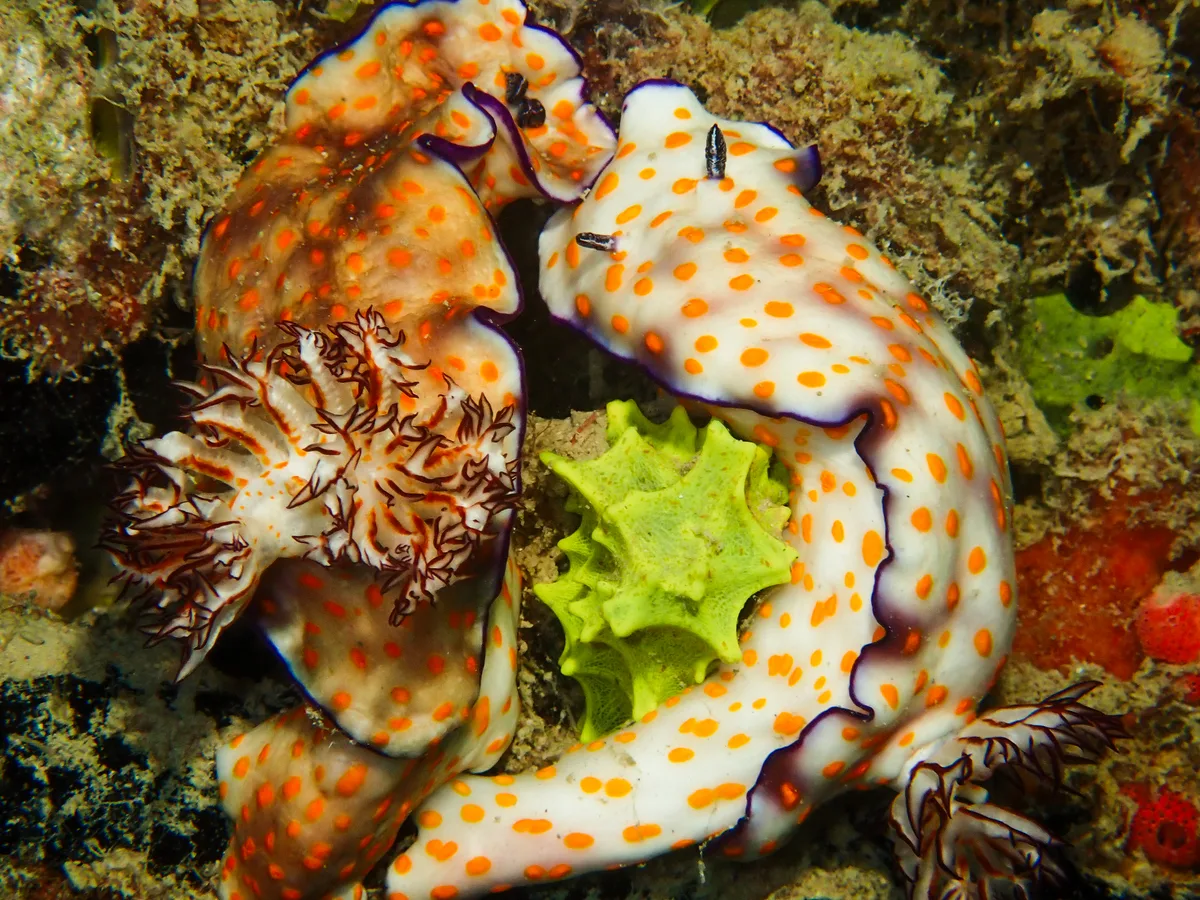
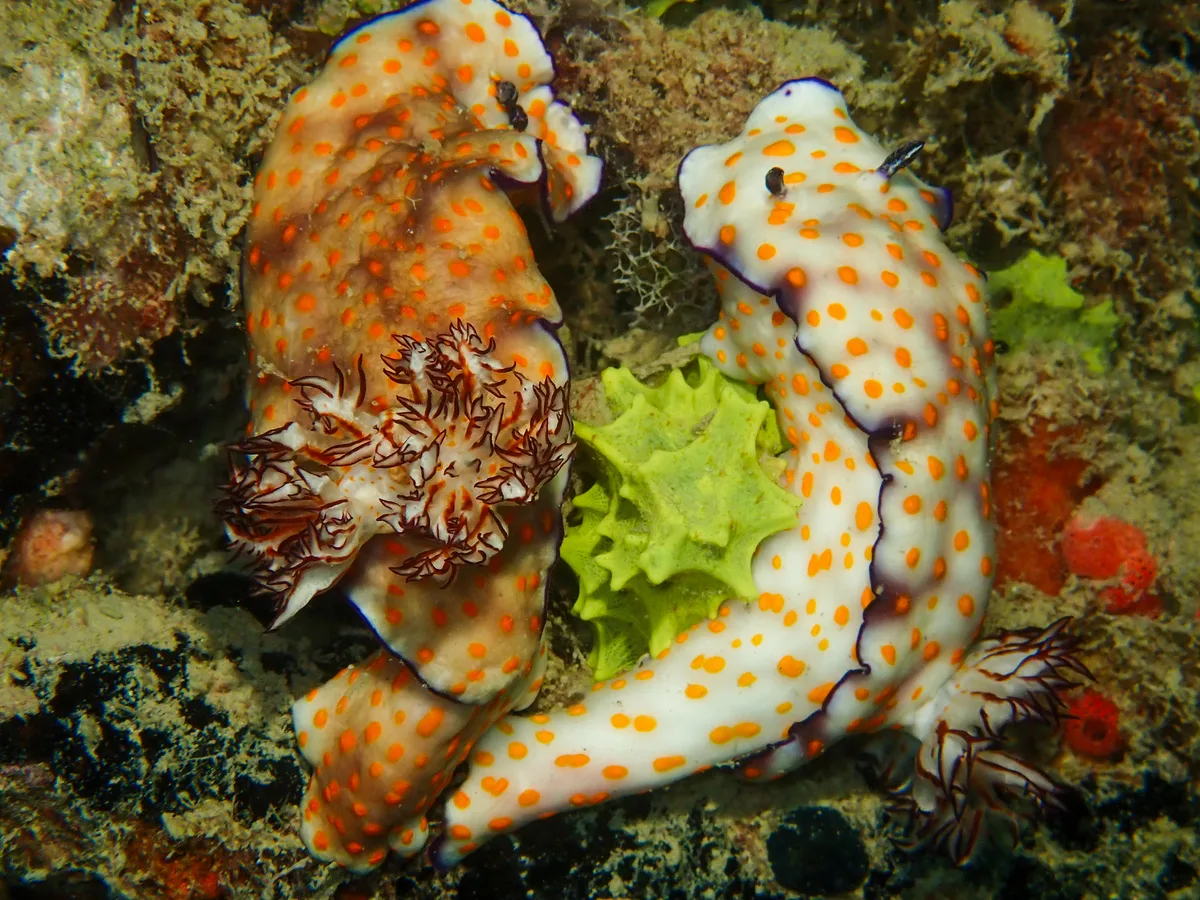
One of the larger nudibranchs here, eight centimeters (3 in) of cream and brown with an orange rim, moving across rubble in daylight without any attempt at concealment.
It is also the one that travels in pairs. Two animals move in single file, the follower keeping its rhinophores in contact with the leader's tail, sometimes for hours - behavior called tailgating and known from only a handful of sea slugs. Nobody has settled why they do it: the leading candidates are that it keeps a mate within reach in a population where meetings are rare, and that a slime trail is cheaper to follow than open ground is to search.
Like other chromodorids it eats sponges and keeps the chemistry. The compounds a sponge makes to avoid being eaten are digested out, taken up intact and stored in glands around the mantle rim, which is exactly where a fish would bite. The colors advertise it.
Described from this sea in 1830. It was long placed in the genus Risbecia, which is why older books and many photographs online still call it that.
- cream body with a broad pale margin and fine brown speckling, dark patches down the back
- yellow-orange rim to the mantle edge
- orange-tipped gills and rhinophores
- often two animals in single file, the rear one touching the leader
- length up to 8 cm