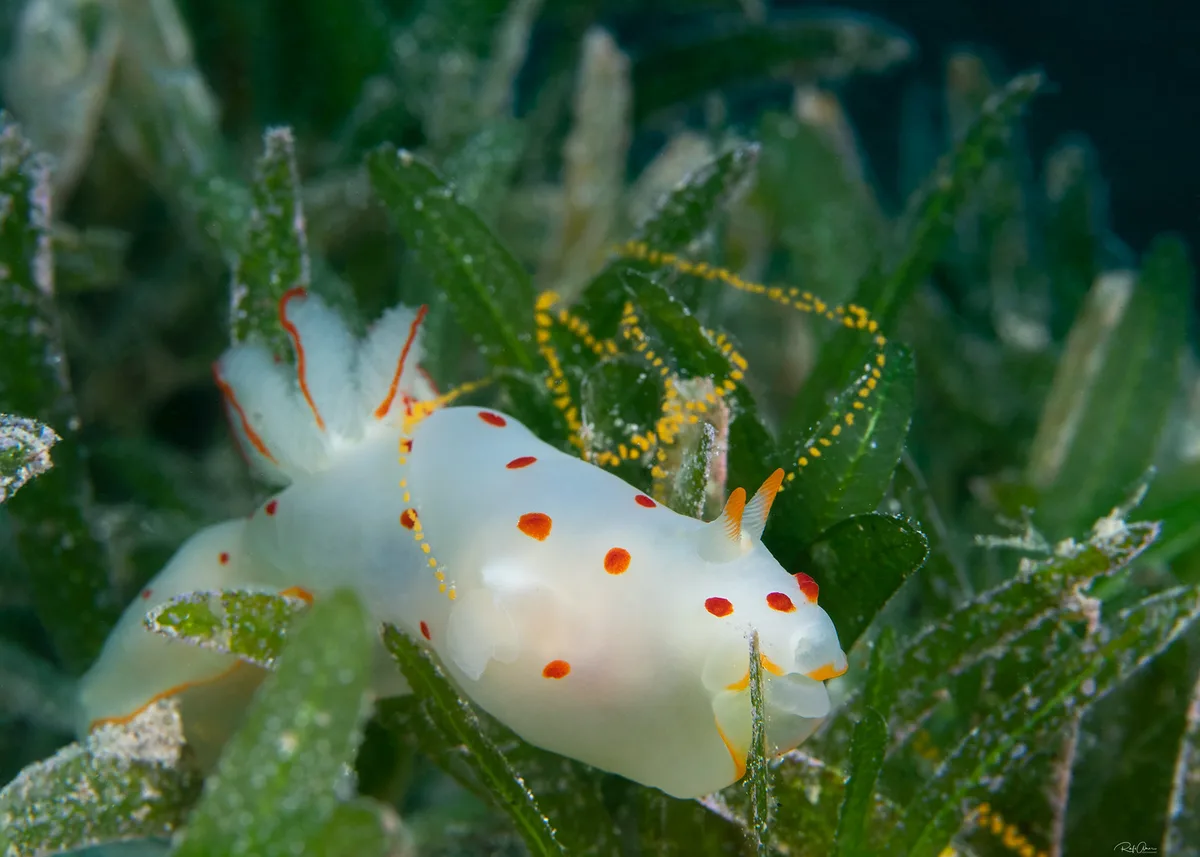
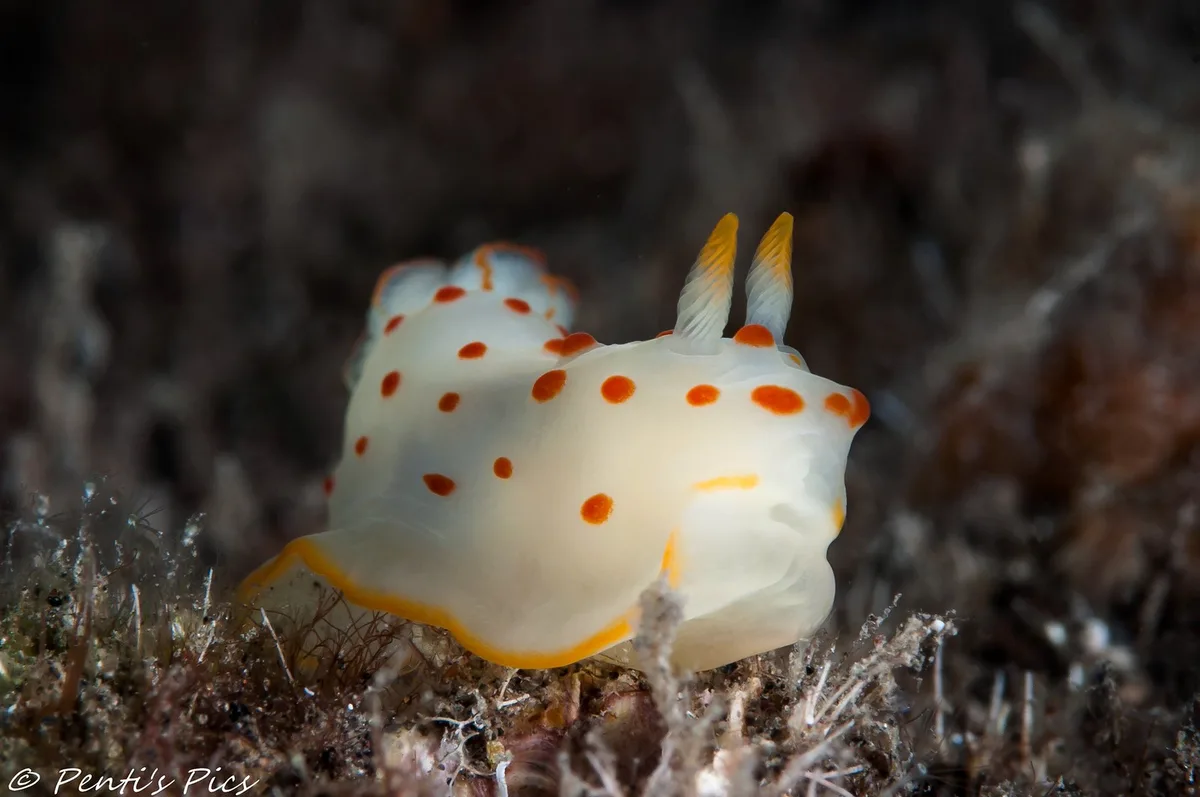
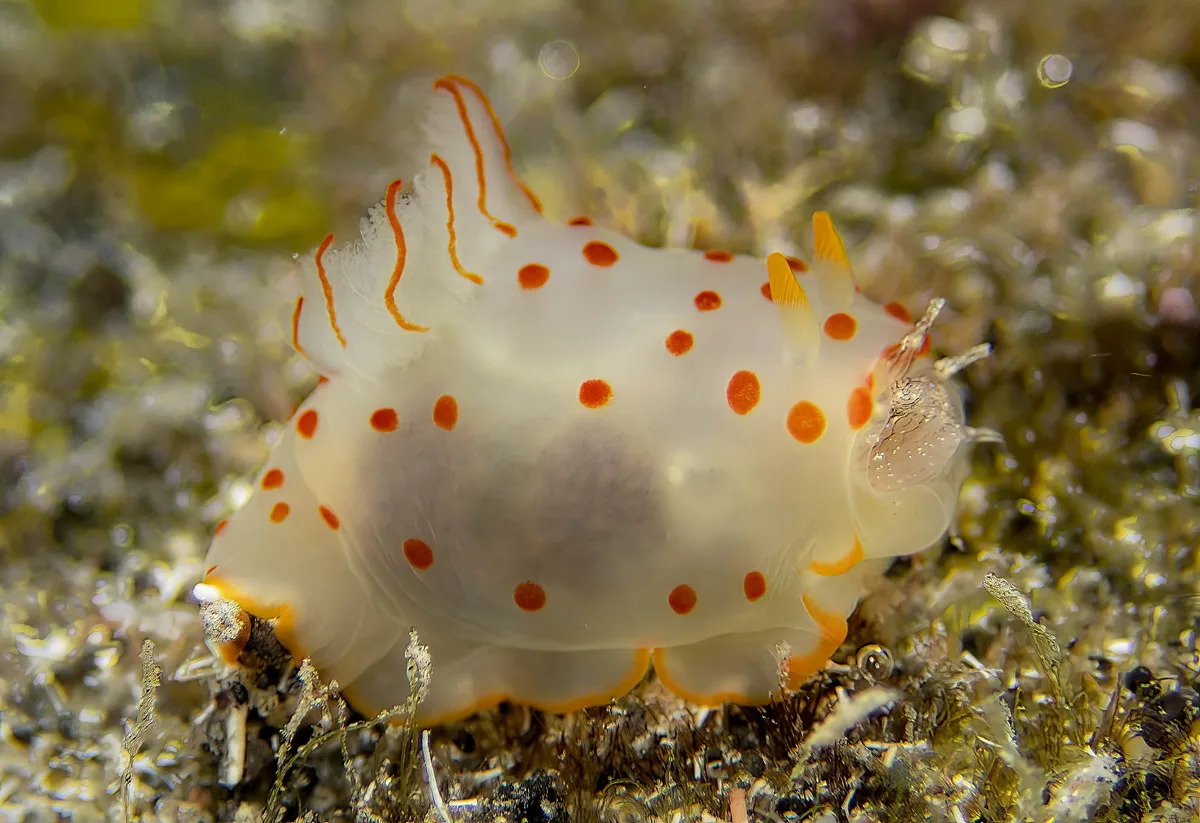
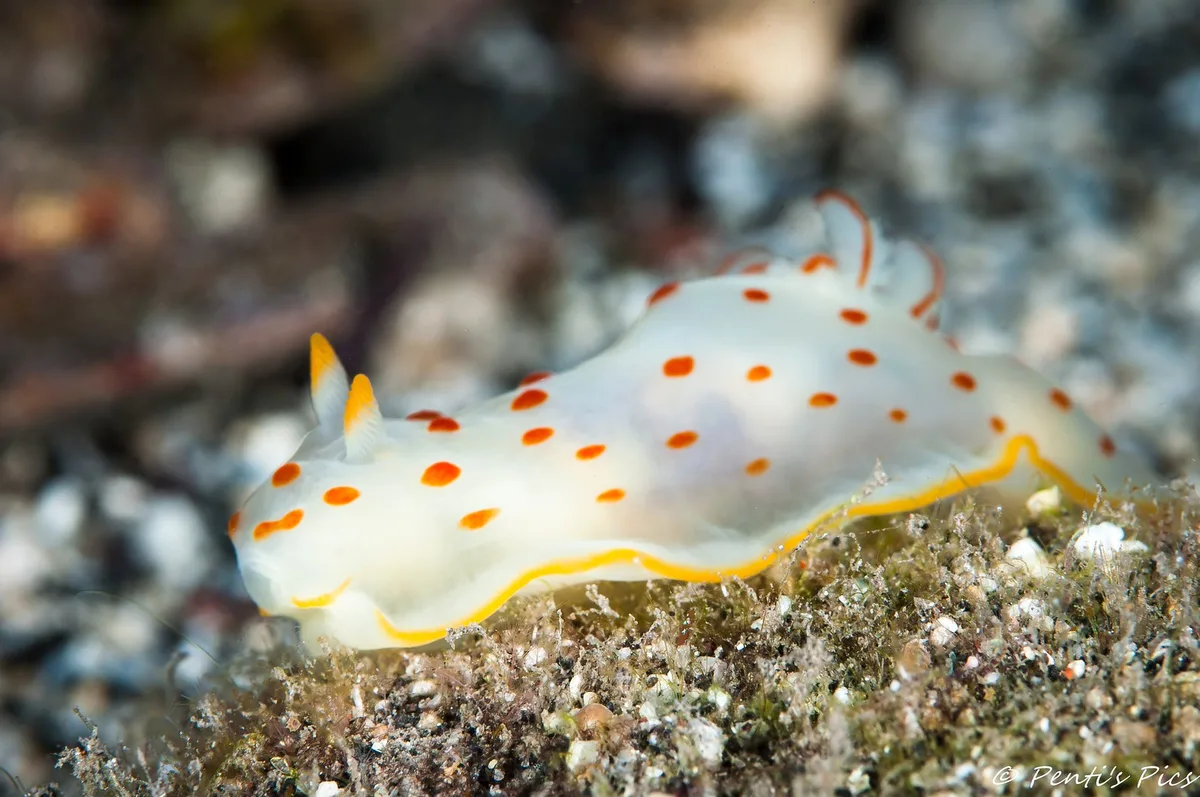
Most sea slugs on this reef are grazers working over a sponge that cannot run away. This one hunts, and what it hunts is other sea slugs.
Its usual prey here is the lined sea hare, Stylocheilus striatus, a soft grazing slug that carries chemical defenses picked up from the cyanobacteria it eats and releases ink when it is handled. None of that helps. The Gymnodoris takes hold with a broad, strong rasping ribbon and works its way in, and an animal of twelve centimeters (5 in) can deal with prey nearly its own length. When sea hares bloom on a sand flat, the slugs arrive in numbers; divers have found dozens feeding on a single patch at once.
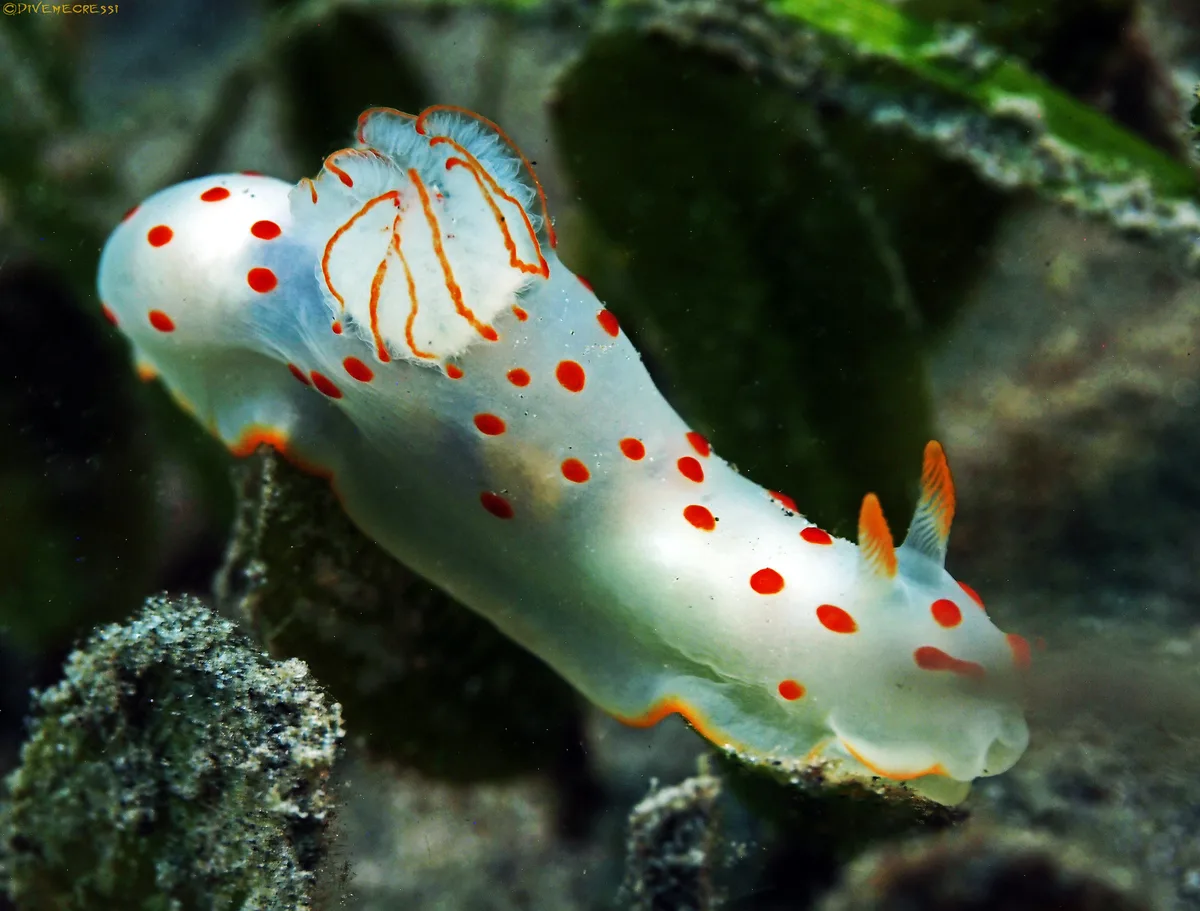
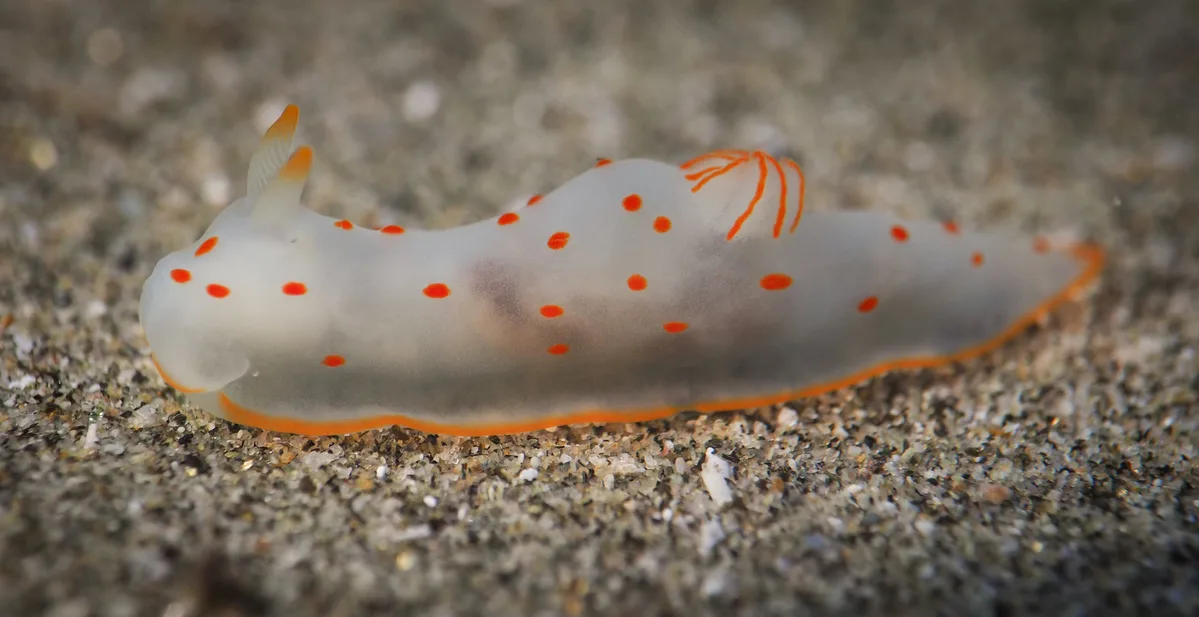
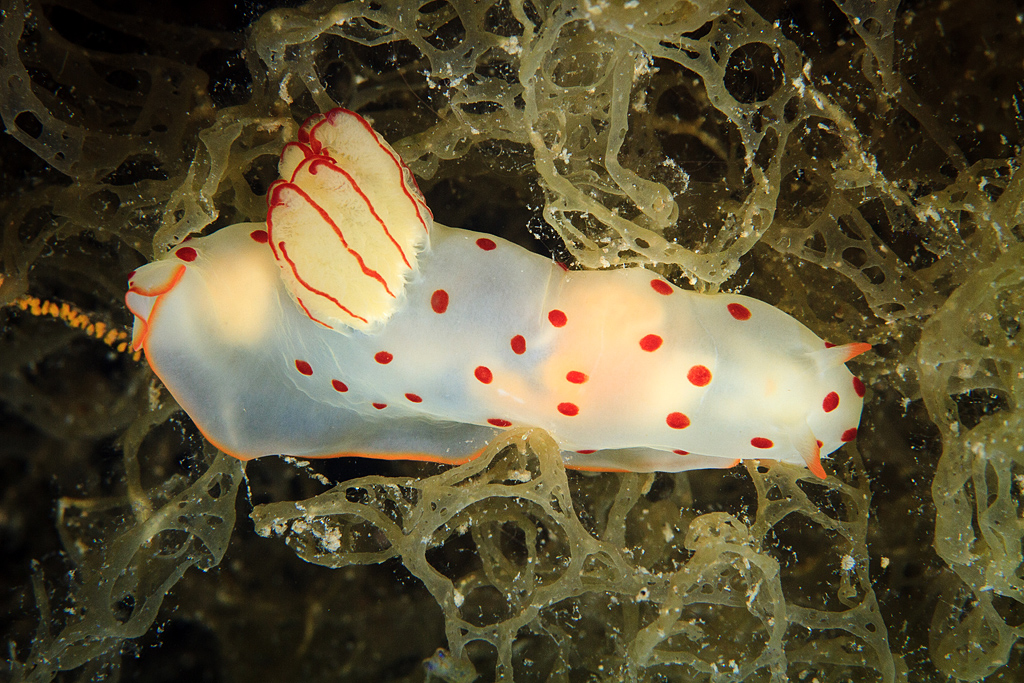
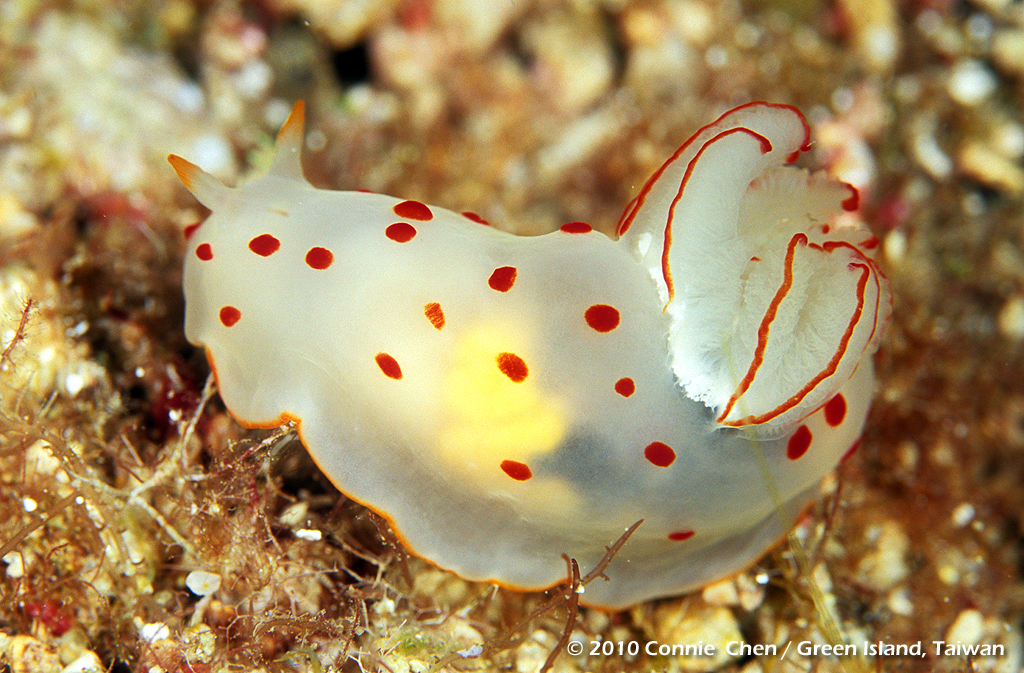
The body is built for the job. A typical dorid carries a mantle skirt that overhangs the foot on all sides, which is fine for something that spends its life sitting on one sponge, and useless for something that has to chase. Gymnodoris has largely given the skirt up. The sides of the foot are exposed along the whole animal, the outline is a smooth torpedo rather than a frill, and it crawls noticeably faster than the chromodorids around it.
There is a further consequence to being a slug that eats slugs, which is that other Gymnodoris are also slugs. Attacks between them have been recorded more than once, and two of them meeting is not always a courtship.
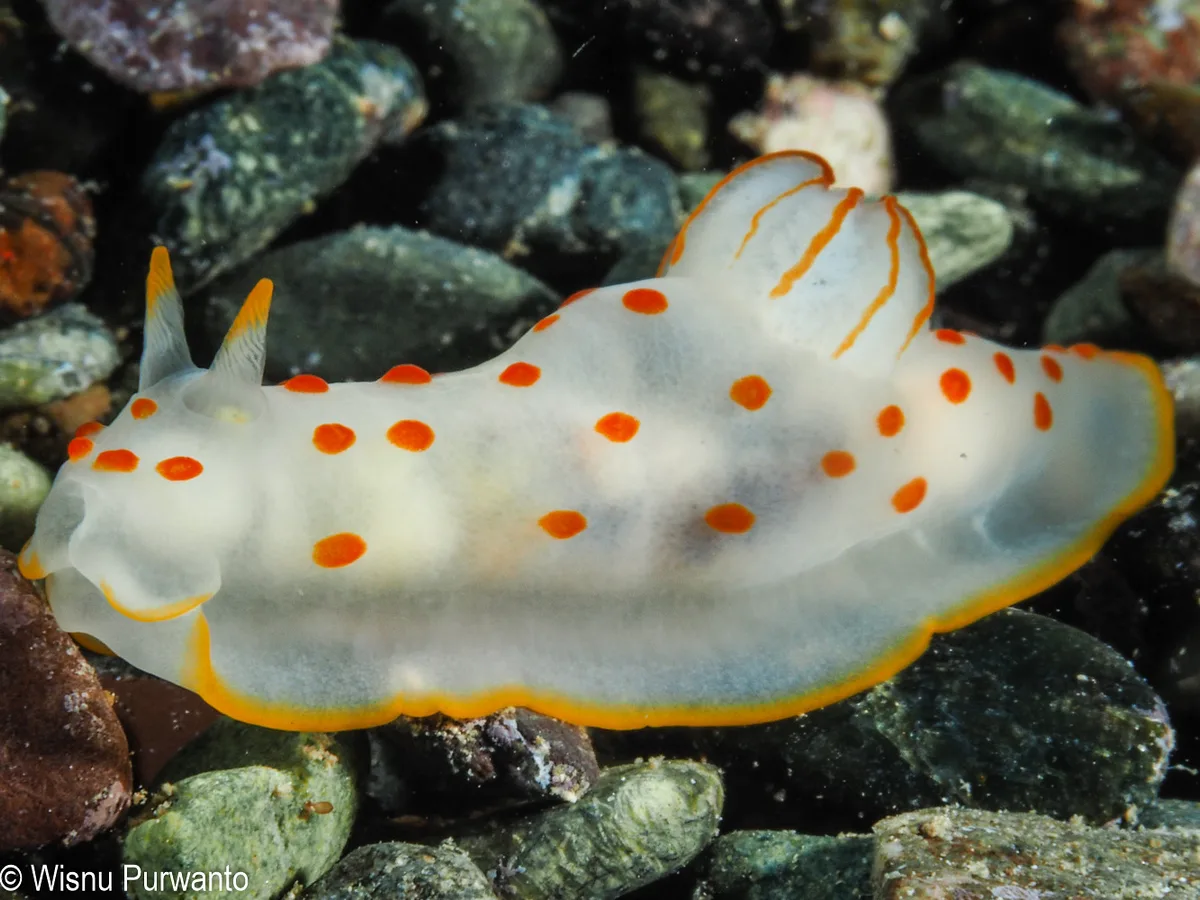
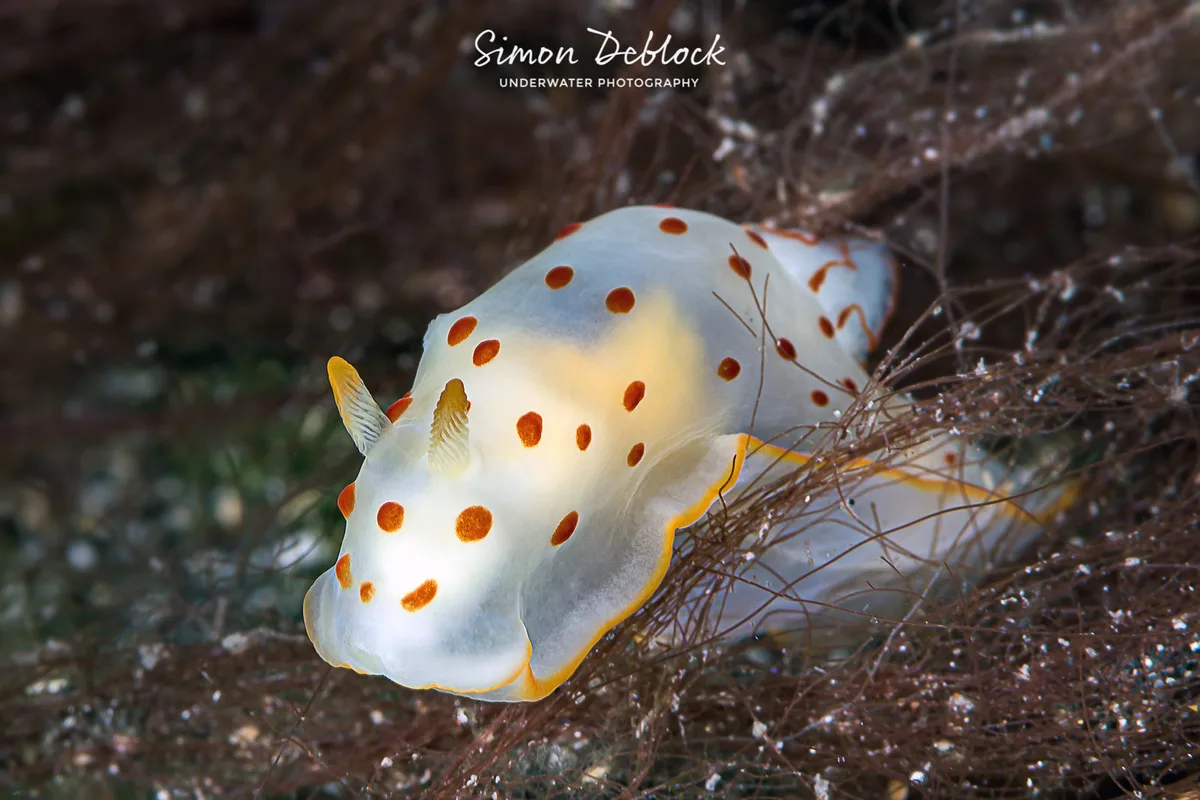
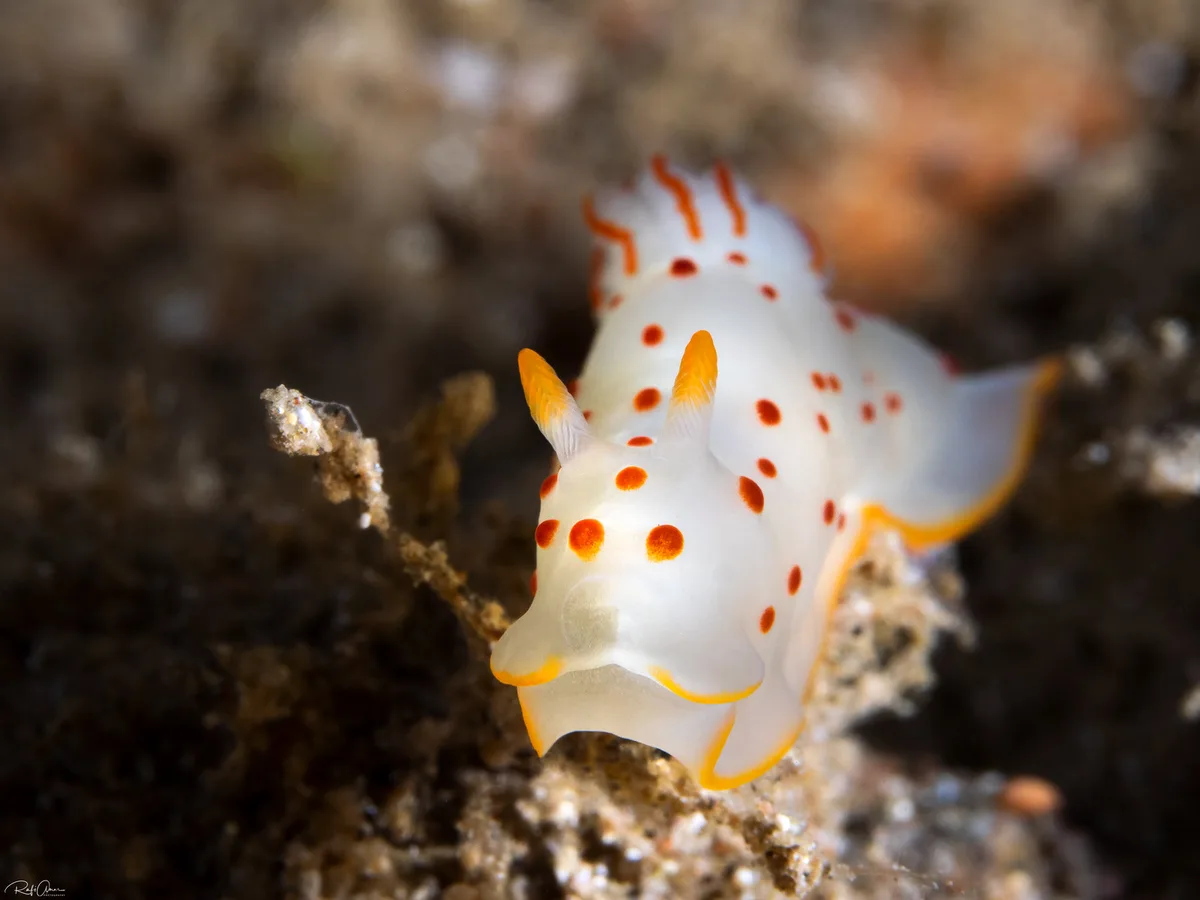
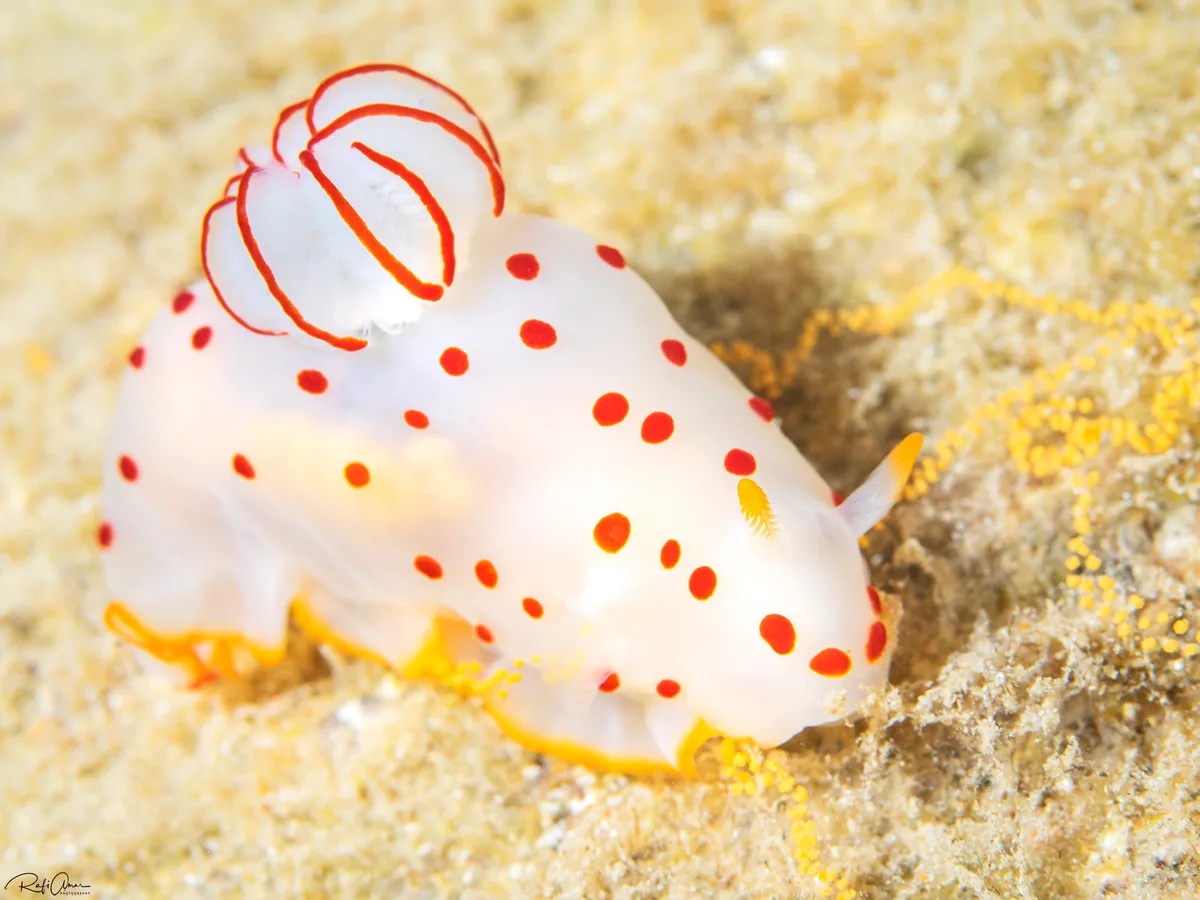
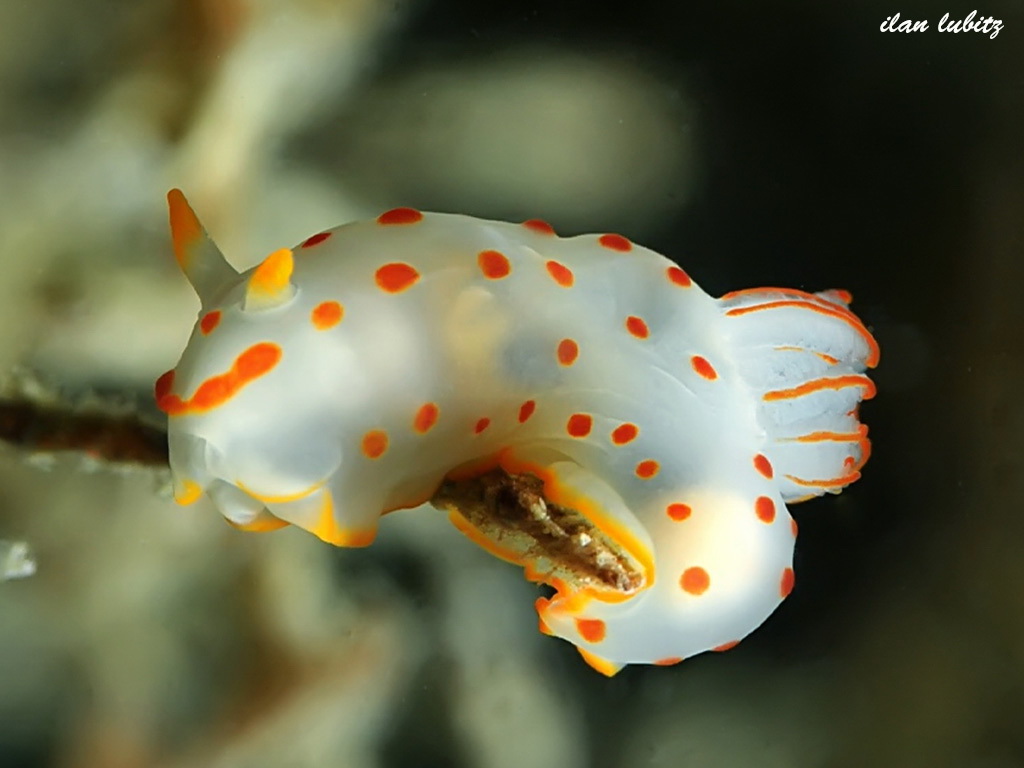
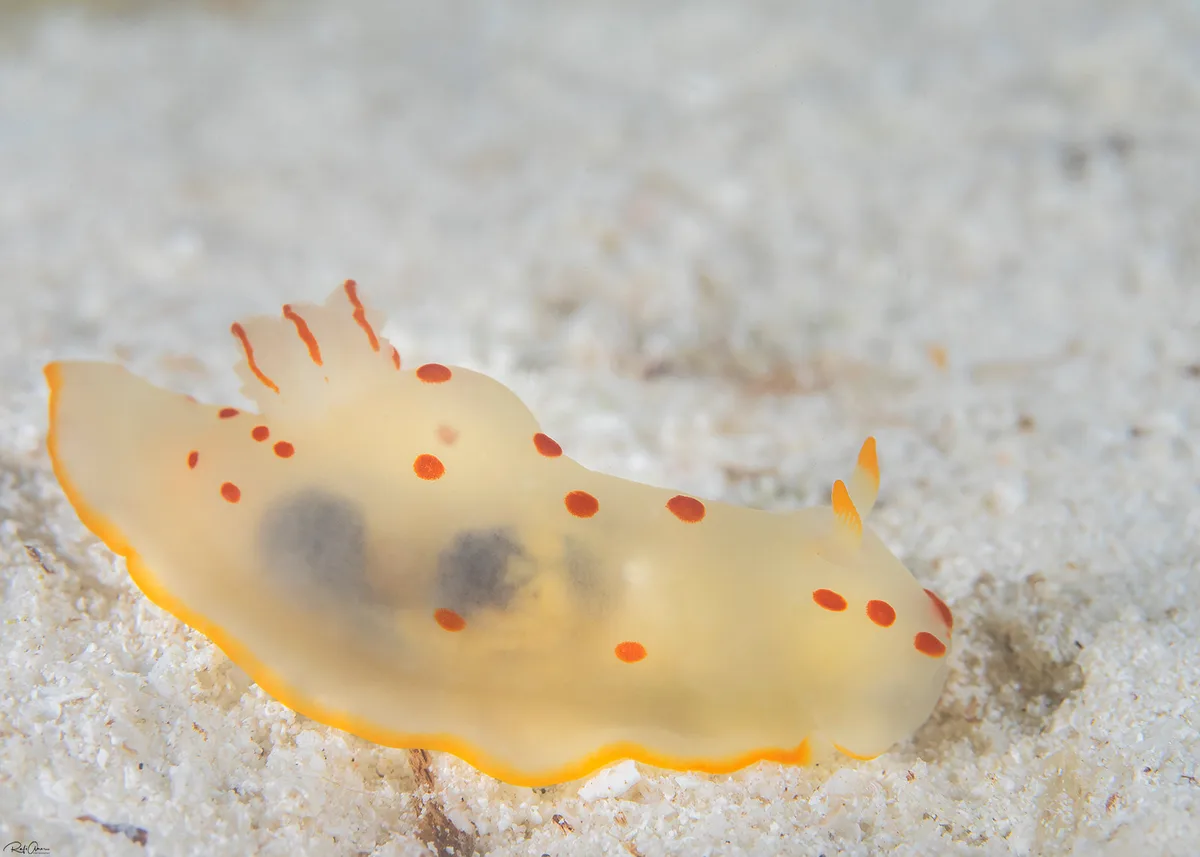
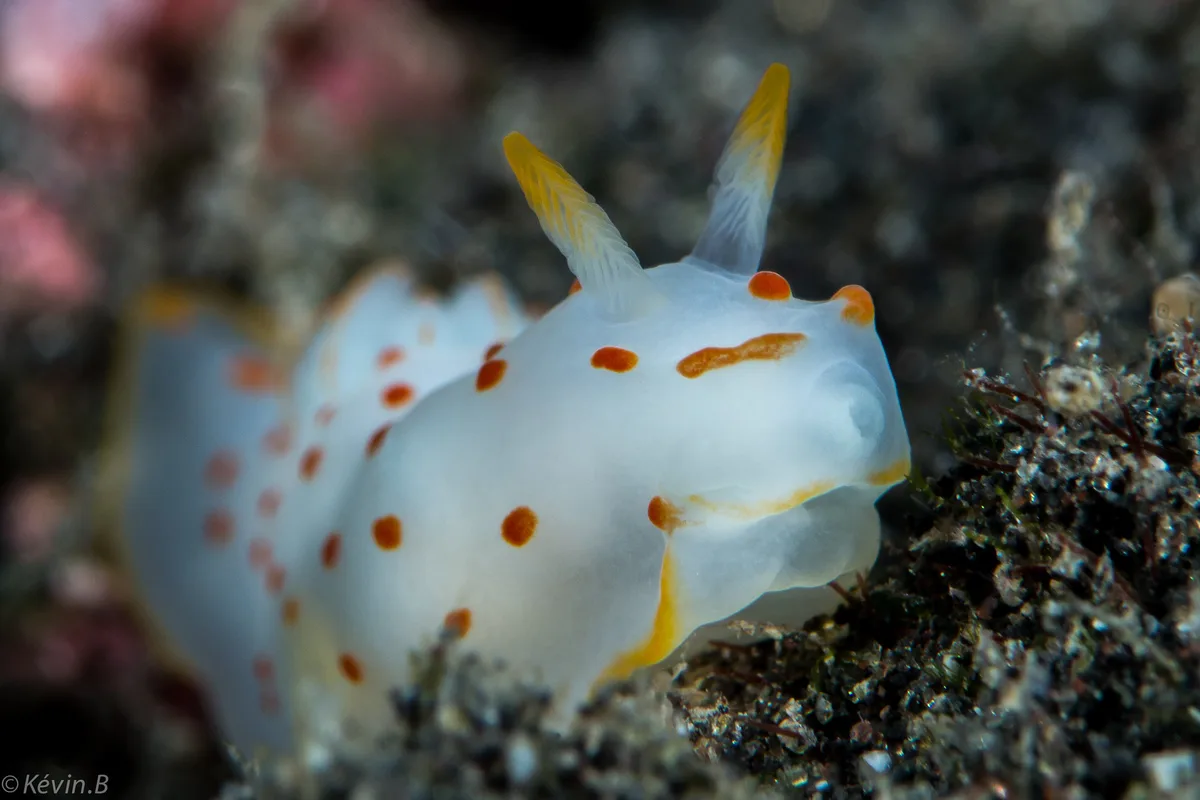
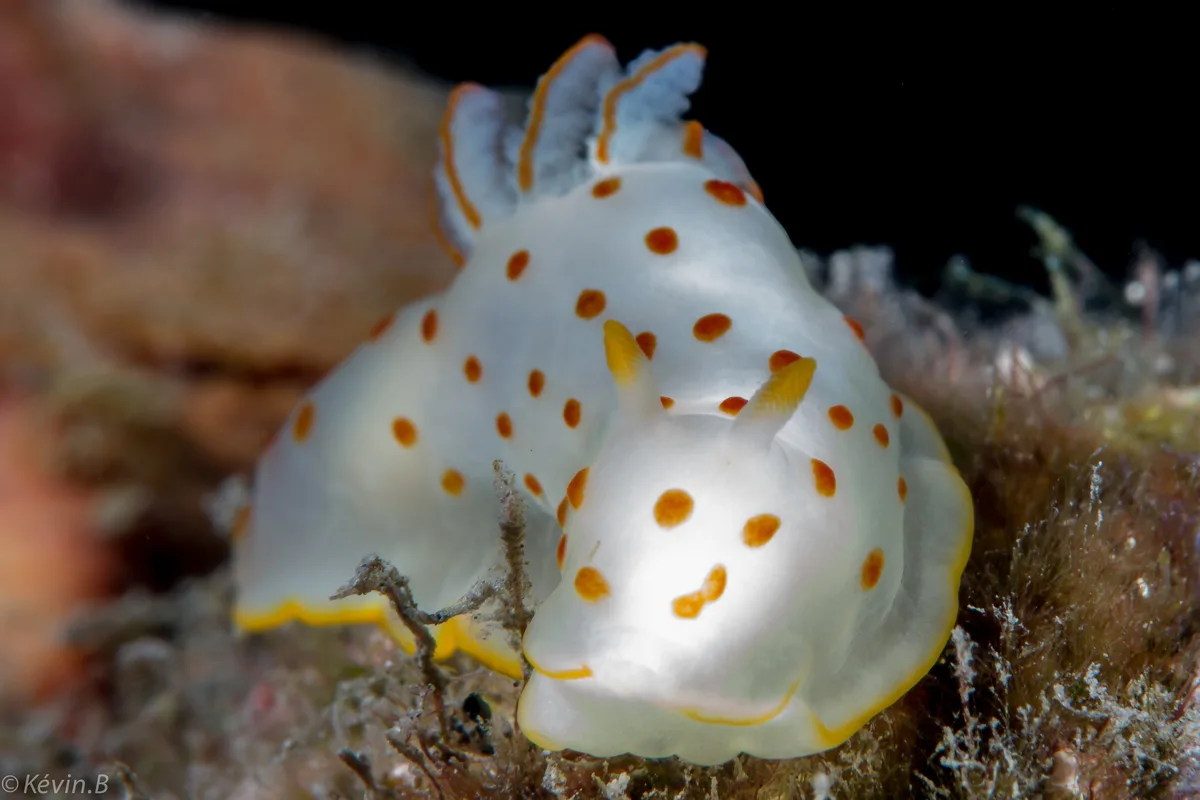
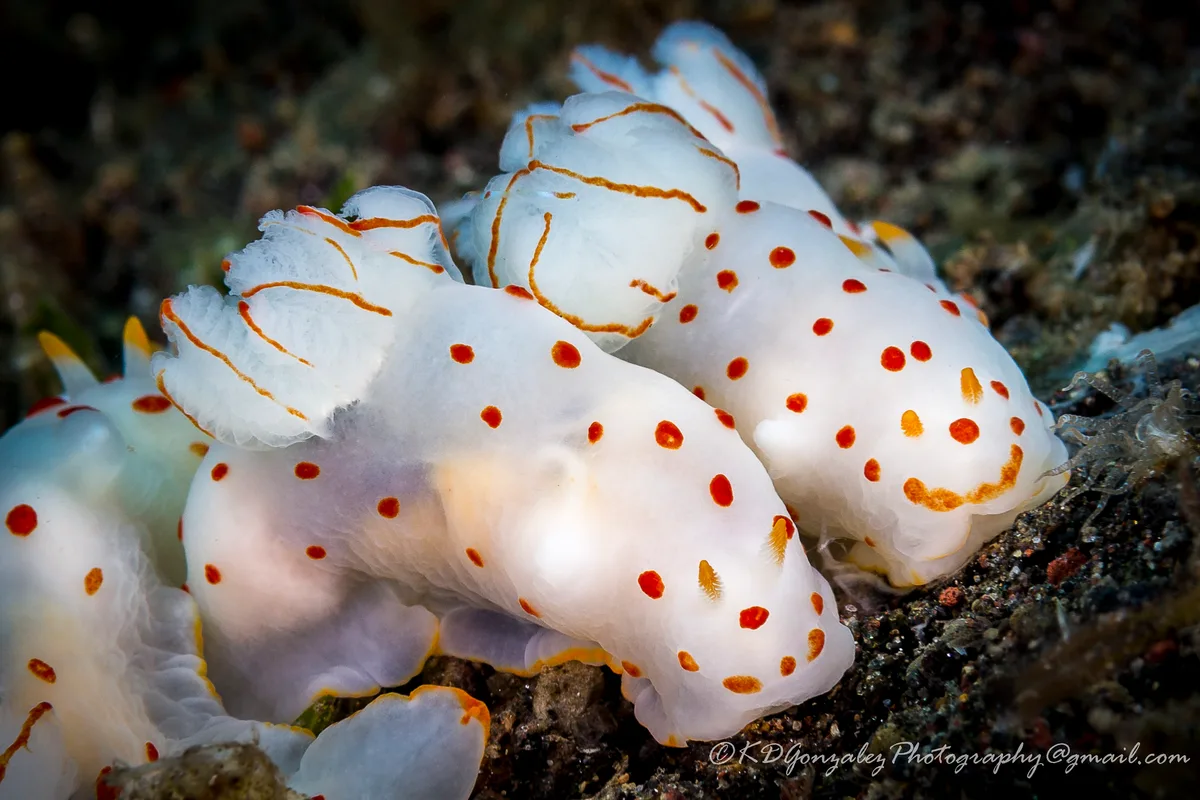
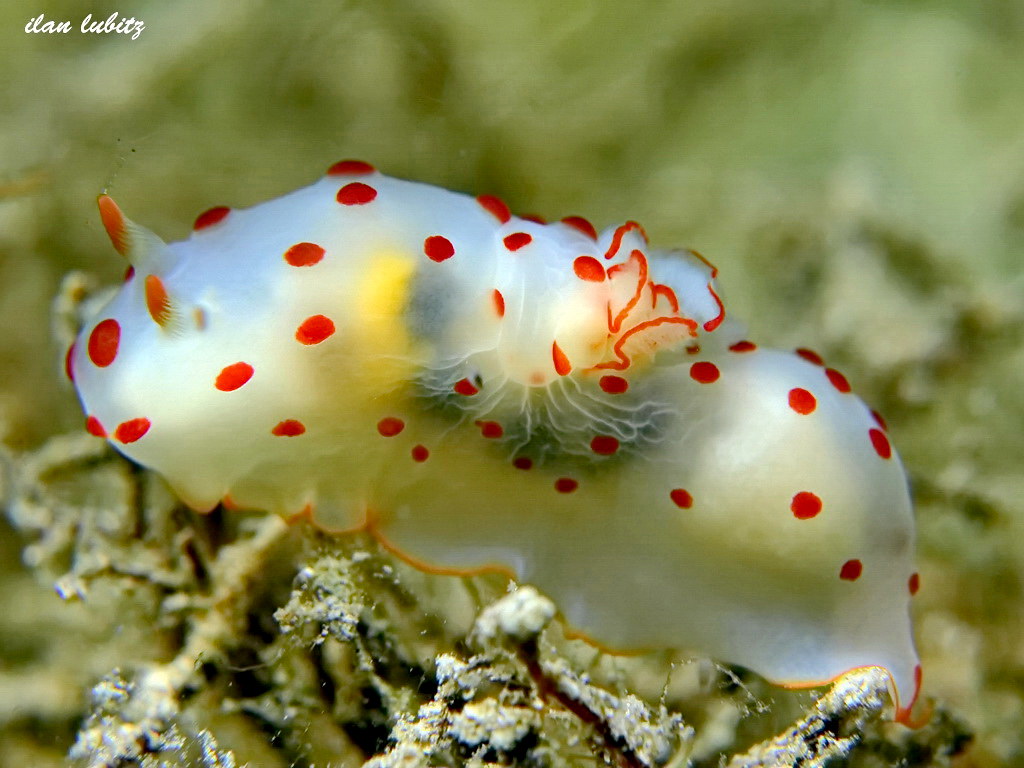
When it is not feeding it looks harmless: white, spotted red, gills fanned at the back, drifting over open sand in daylight. It is one of the few animals in this section you should be pleased to find on top of another one.
- translucent white body covered in small red to orange spots
- gill plume set well back, its branches edged in red
- no mantle skirt: the sides of the foot show along the whole body
- large for a sea slug, and moving faster than one should