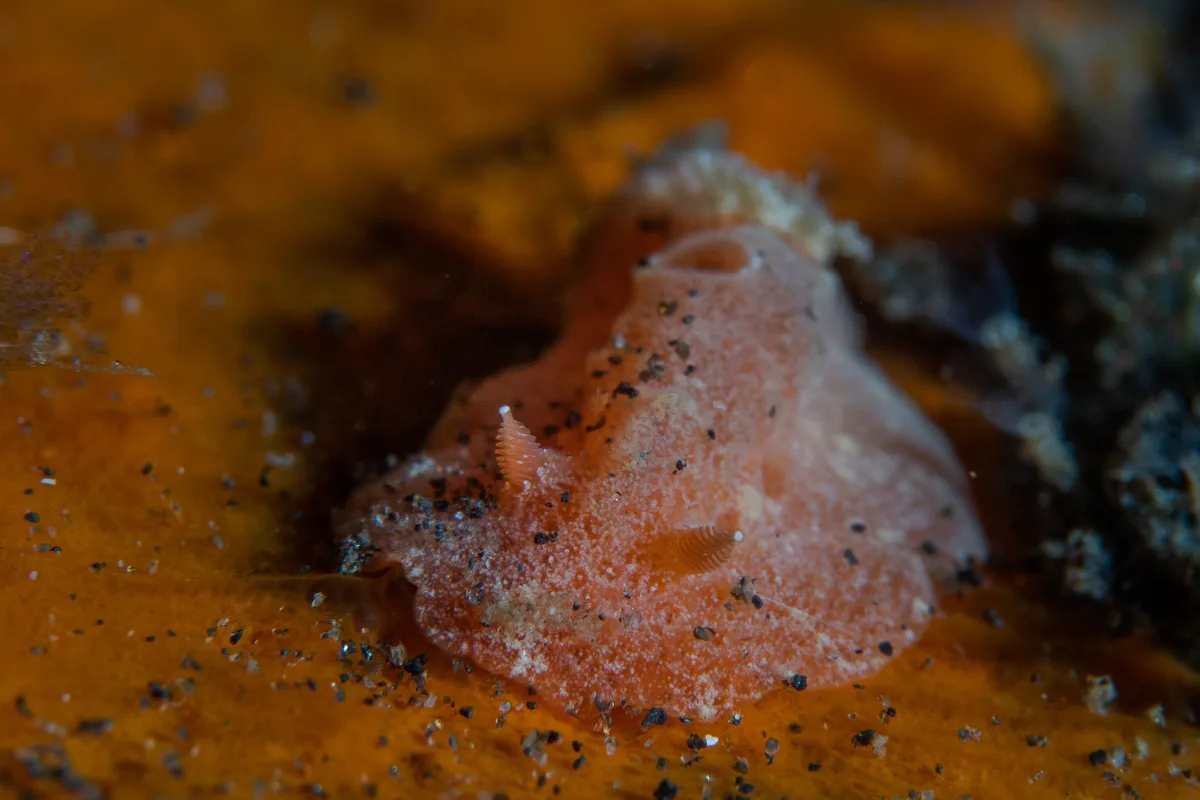
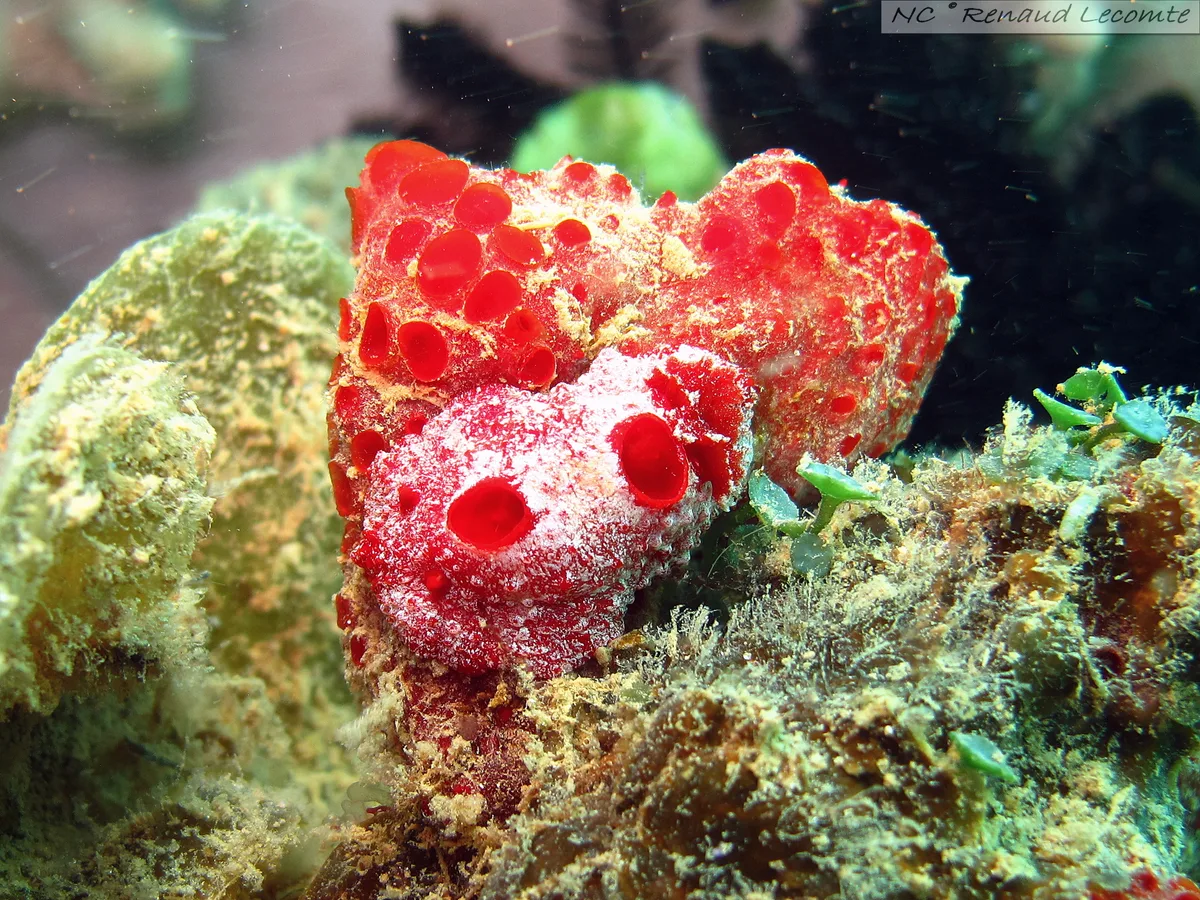
You will not find this animal. You will find its gills.
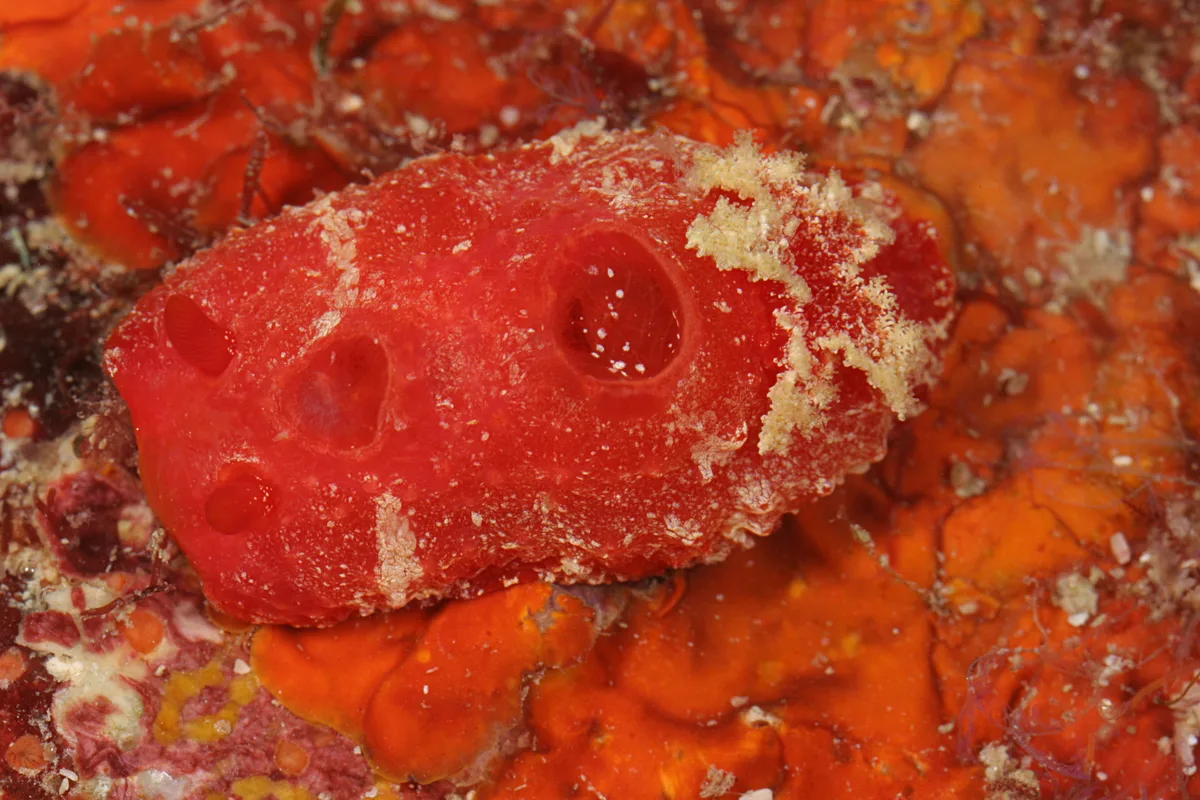
It is fifteen millimeters (0.6 in) long, red to pink, and it lives on red to pink encrusting sponge, which it eats. Against that background the body registers as nothing, and there is no colored margin to catch the eye because the margin is the same color too. What breaks the pattern is the gill plume, which is opaque white and stands up off the back: a small white smudge in the middle of a red patch, and that is the search image.
The two round depressions set into the back are the mark to check once you are close. They are the identification character for the species, and they finish the resemblance, because the surface of an encrusting sponge is not flat either.
How long this went unnoticed is the other part of the story. It was described in 2017, from Zavora in 🇲🇿 Mozambique, and records since have come from 🇯🇵 Japan, 🇳🇨 New Caledonia (🇫🇷 Overseas France), 🇴🇲 Oman and this sea. It is not that the animal is confined to some remote corner. It is that a fifteen-millimeter red slug on a red sponge does not get collected unless somebody is looking straight at it, and for most of the history of this science nobody was in the water at all.
Sponge, chemistry, mantle: the usual arrangement in this family. What is unusual here is only the scale on which it is hidden.
- opaque white gills on a red body: usually the only part of the animal you see first
- two round depressions set into the back
- red to pink, the same red to pink as the sponge underneath it
- one and a half centimeters, which is small even for this section