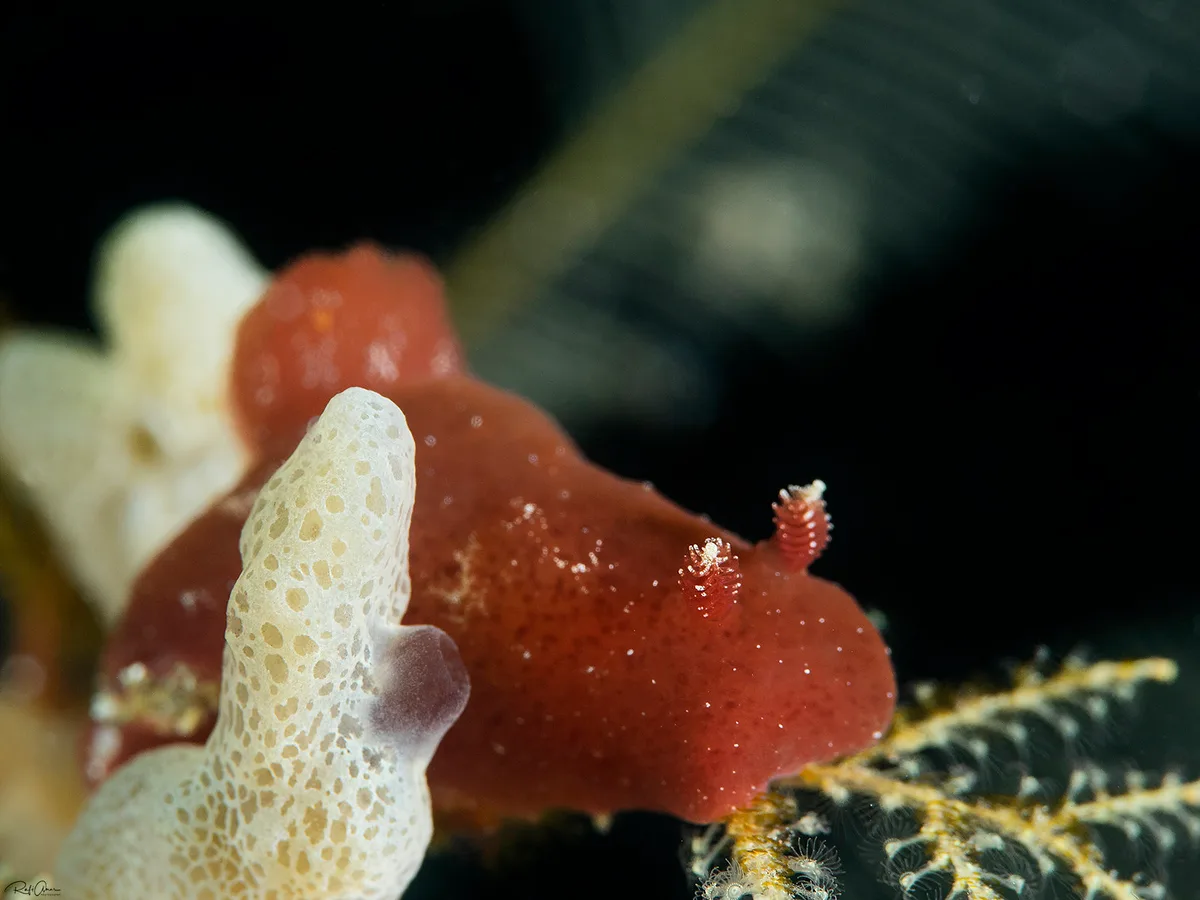
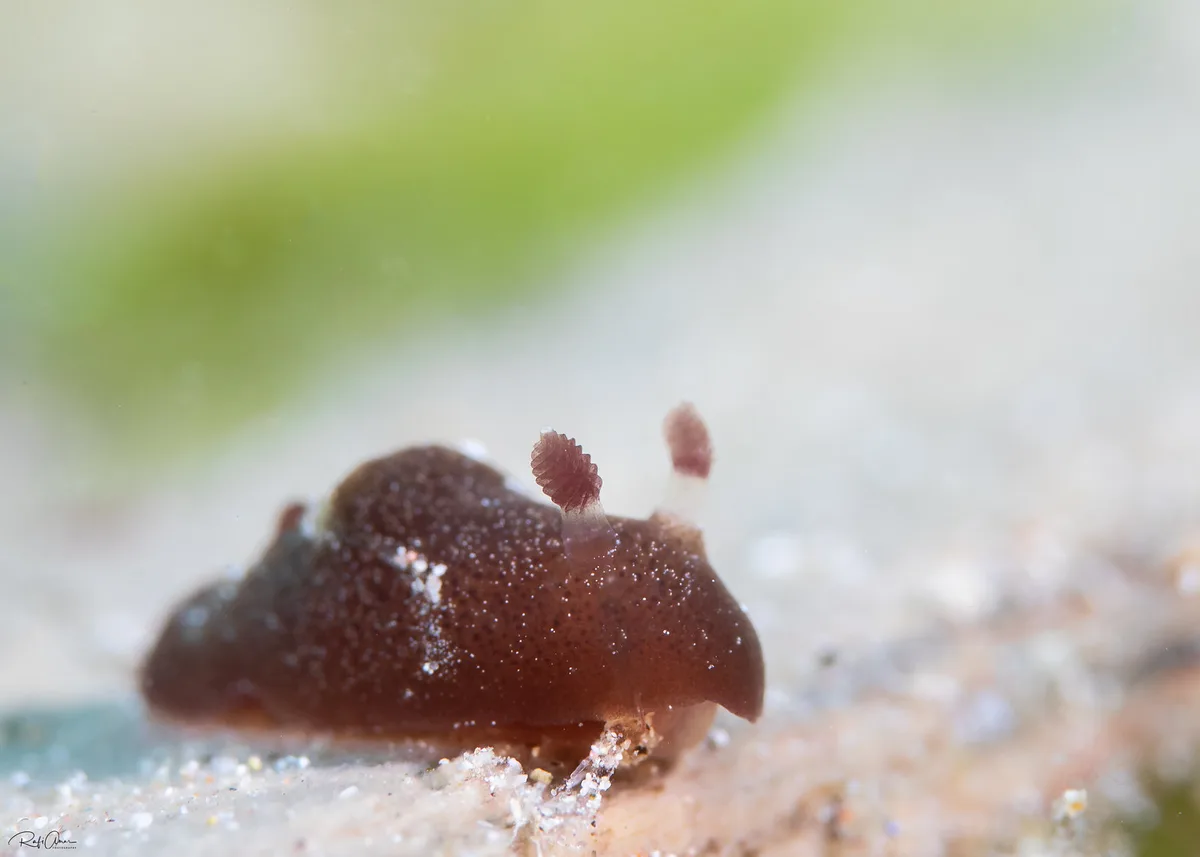
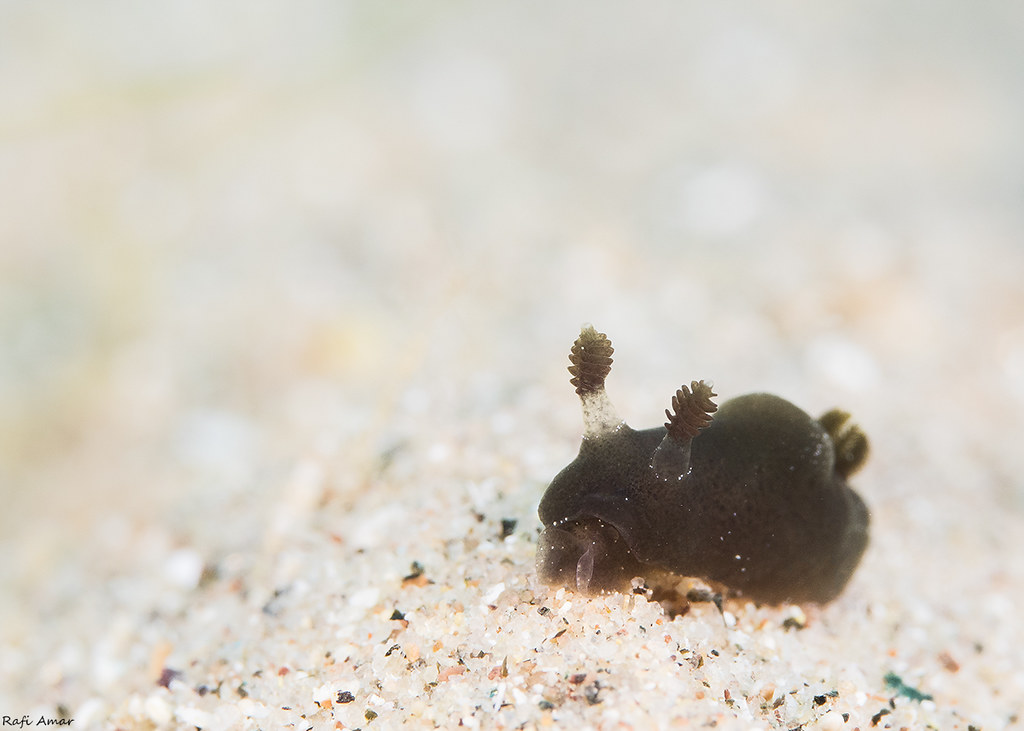
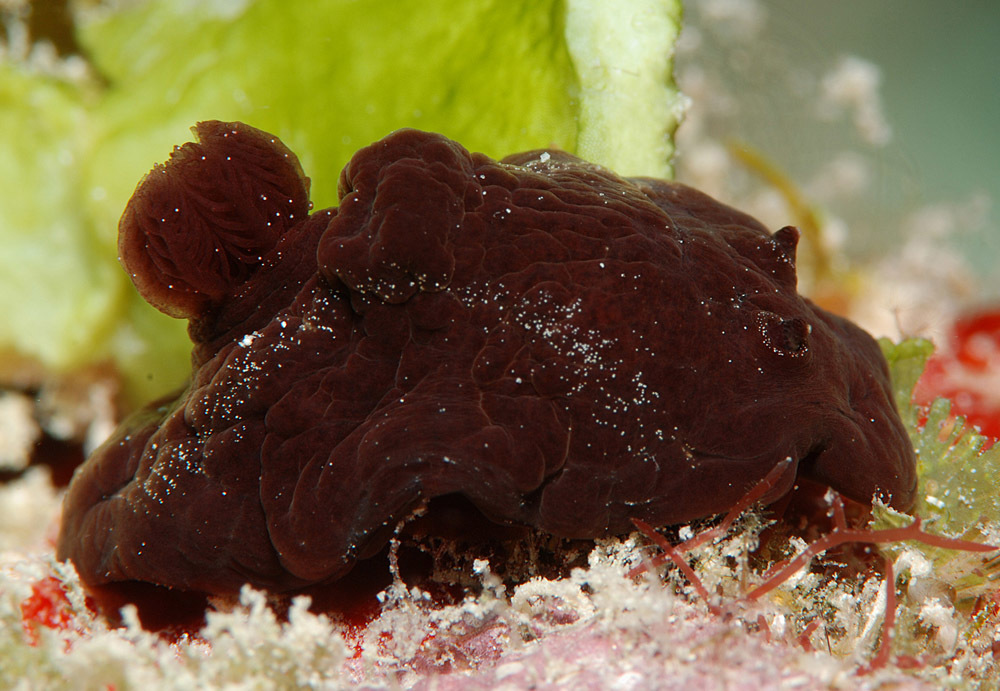
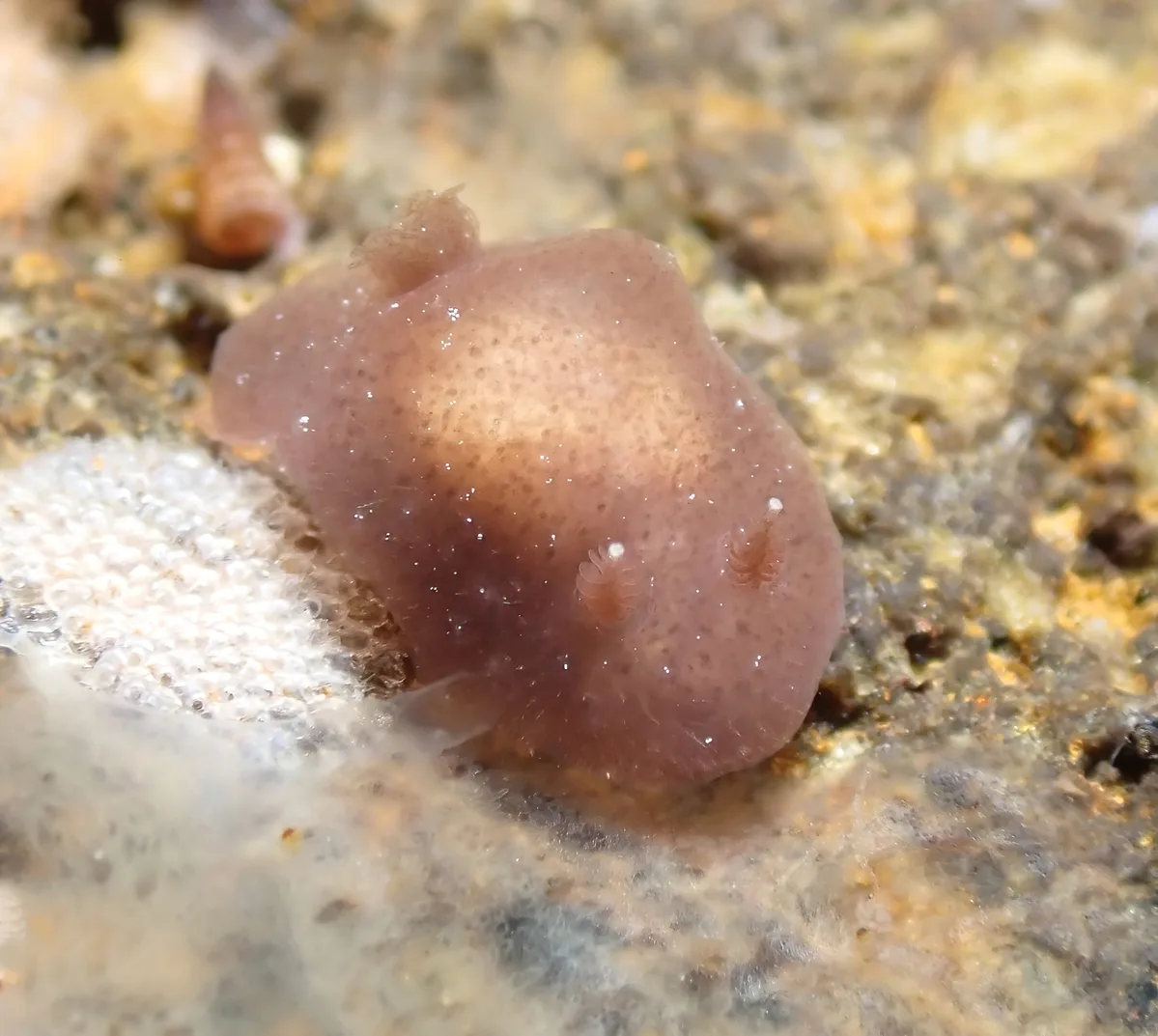
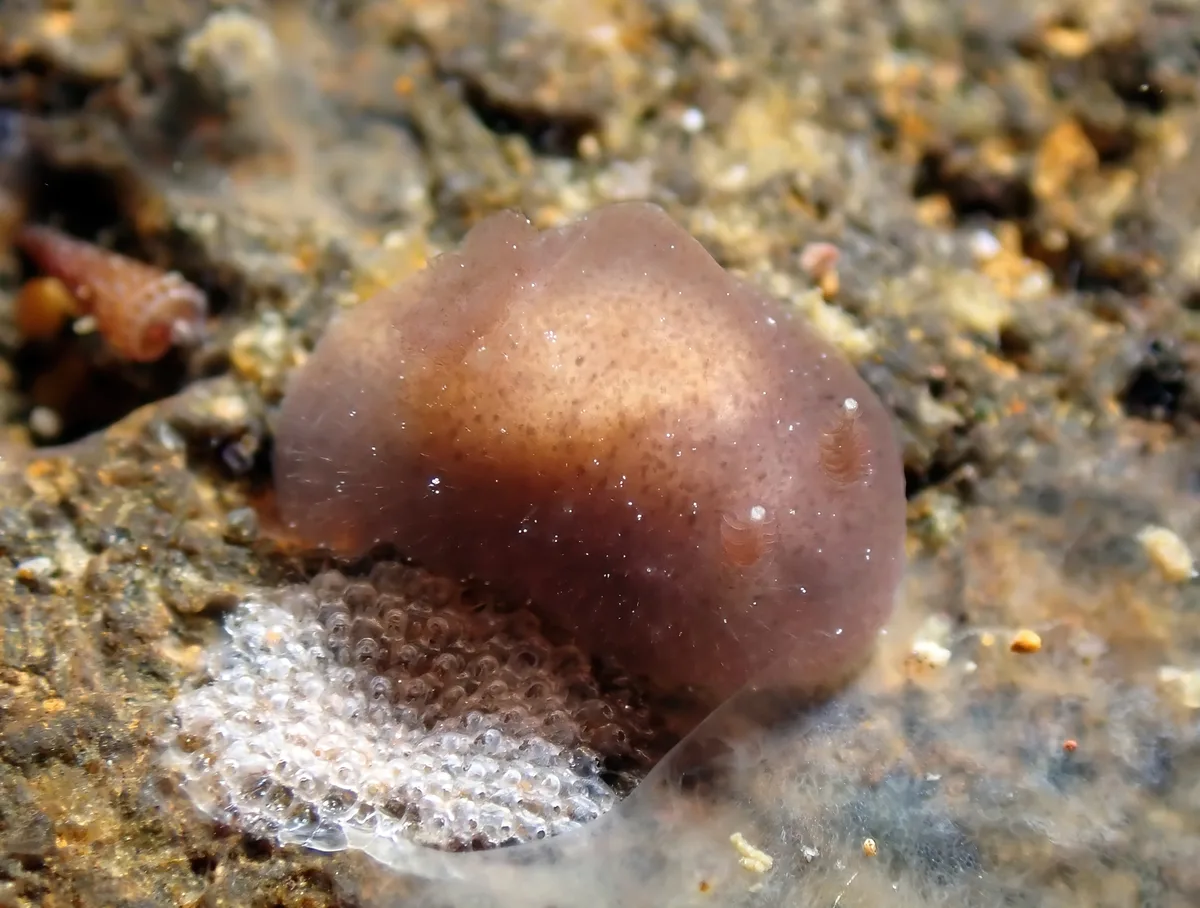
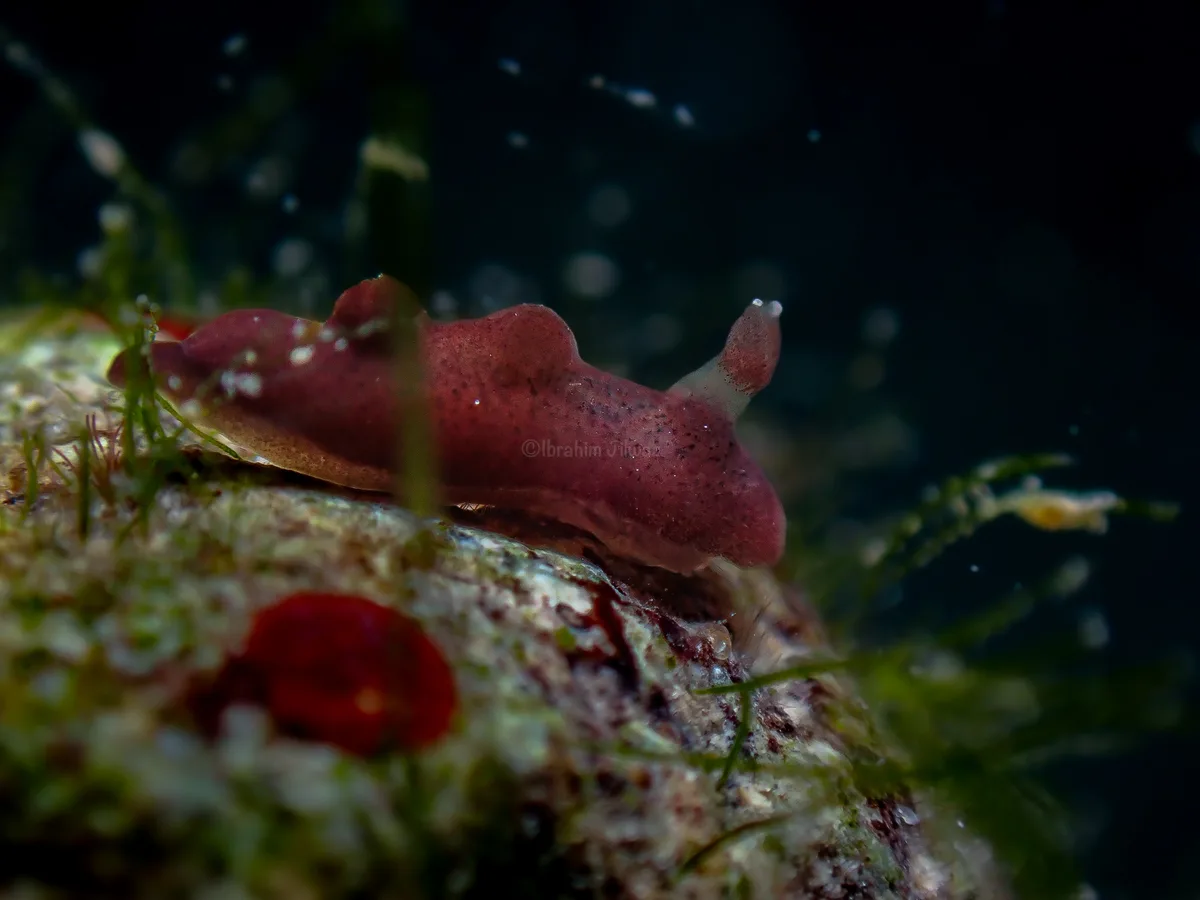
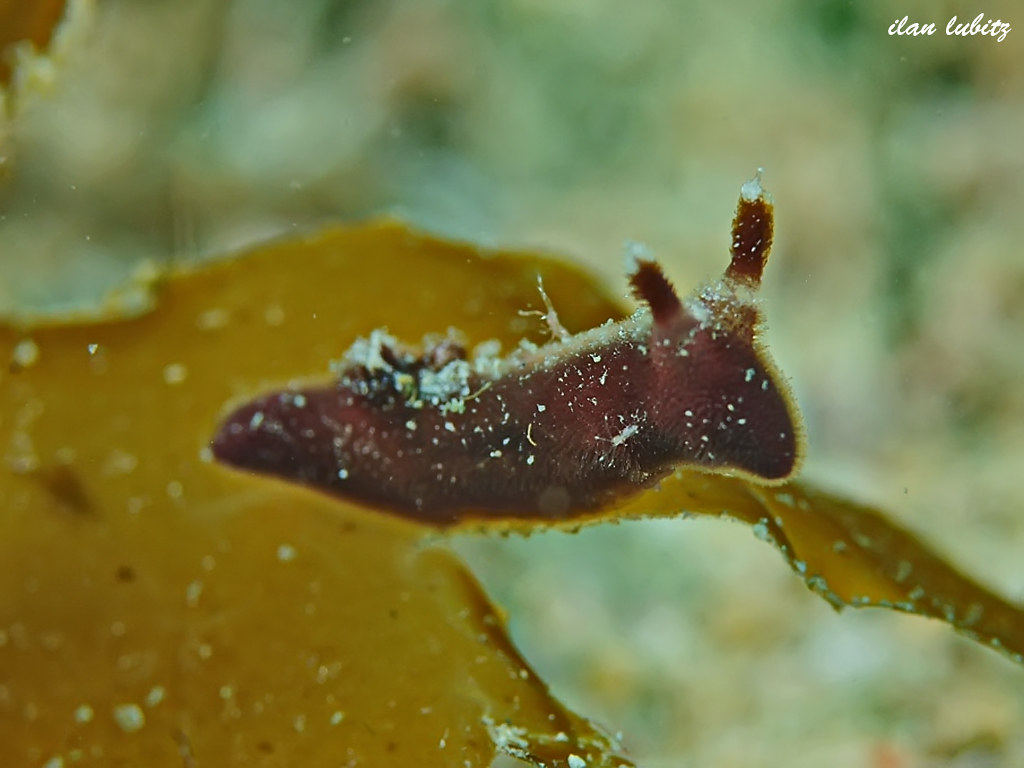
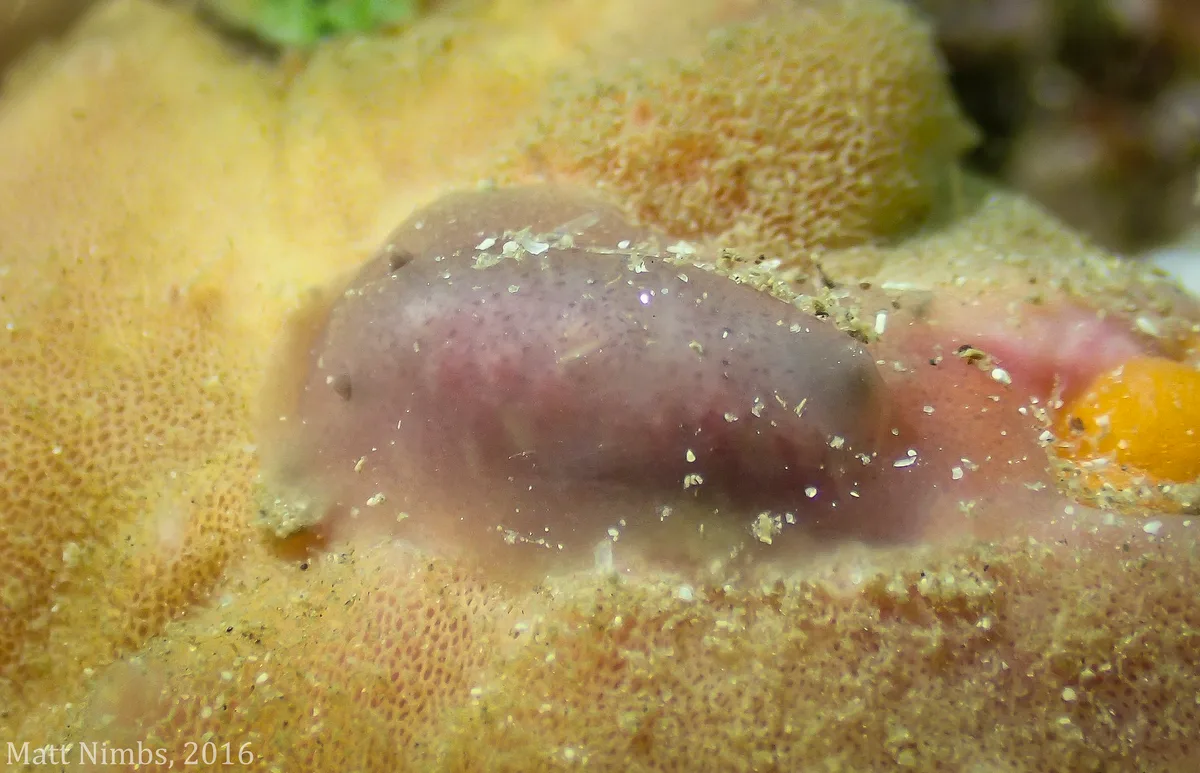
Nearly every dorid on this page eats sponges. This one eats sea squirts, and that changes where you have to look.
Didemnid ascidians are the thin gray and white crusts that spread over rubble and shaded rock and get taken for sponge by everyone who is not a specialist. They are not sponges at all. They are colonial tunicates, animals closer to us than to anything else on the reef, each colony a shared jelly matrix full of tiny individuals pumping water through their own bodies. This genus has been recorded feeding on them, which puts it in a small club: almost nothing grazes ascidians, because they are loaded with acid and with metabolites that discourage everything else.
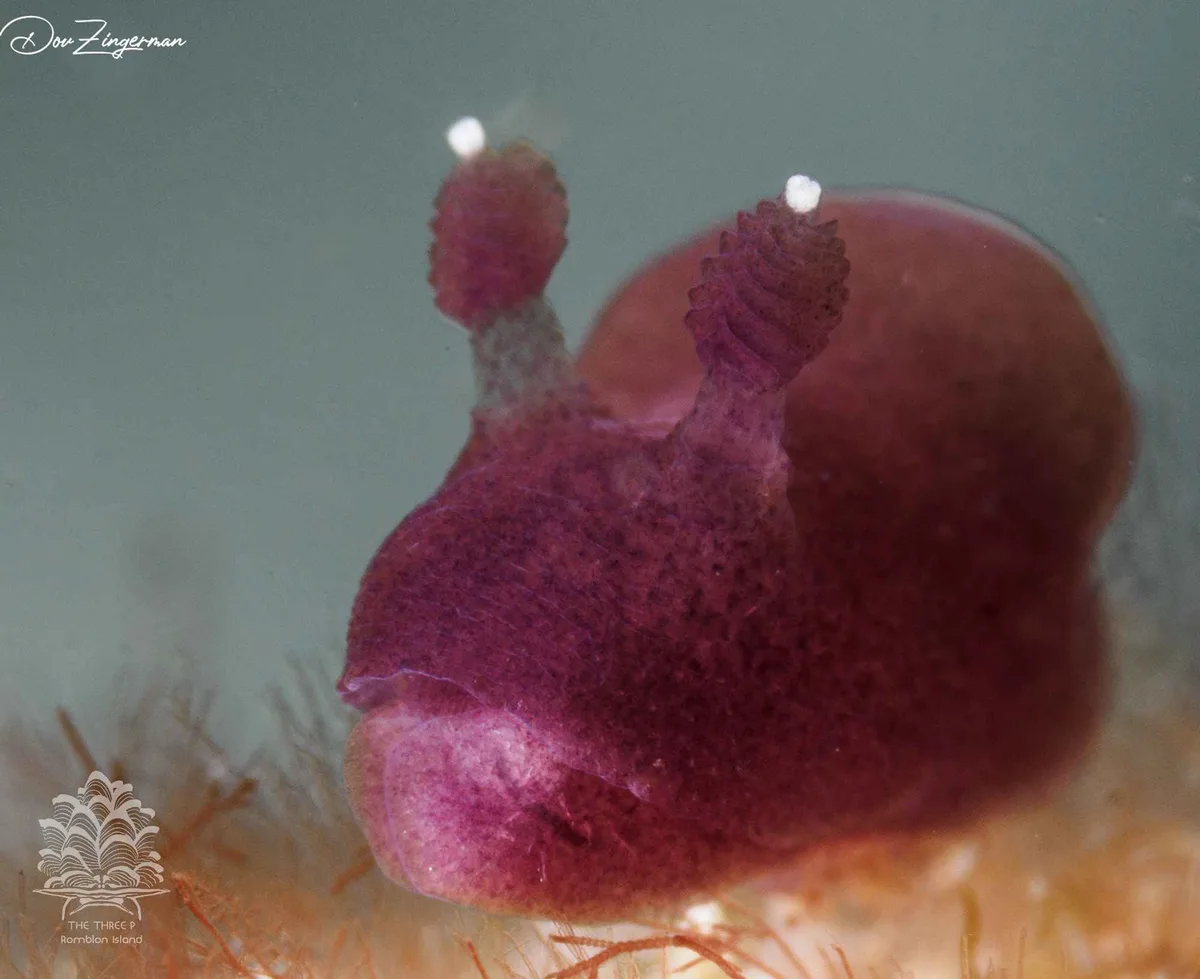
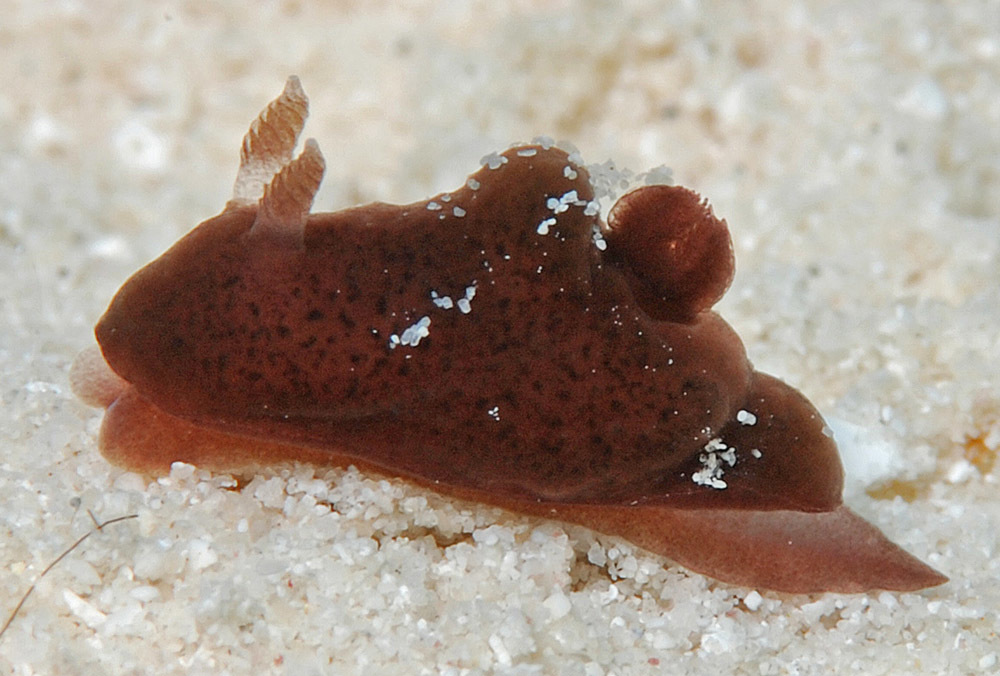
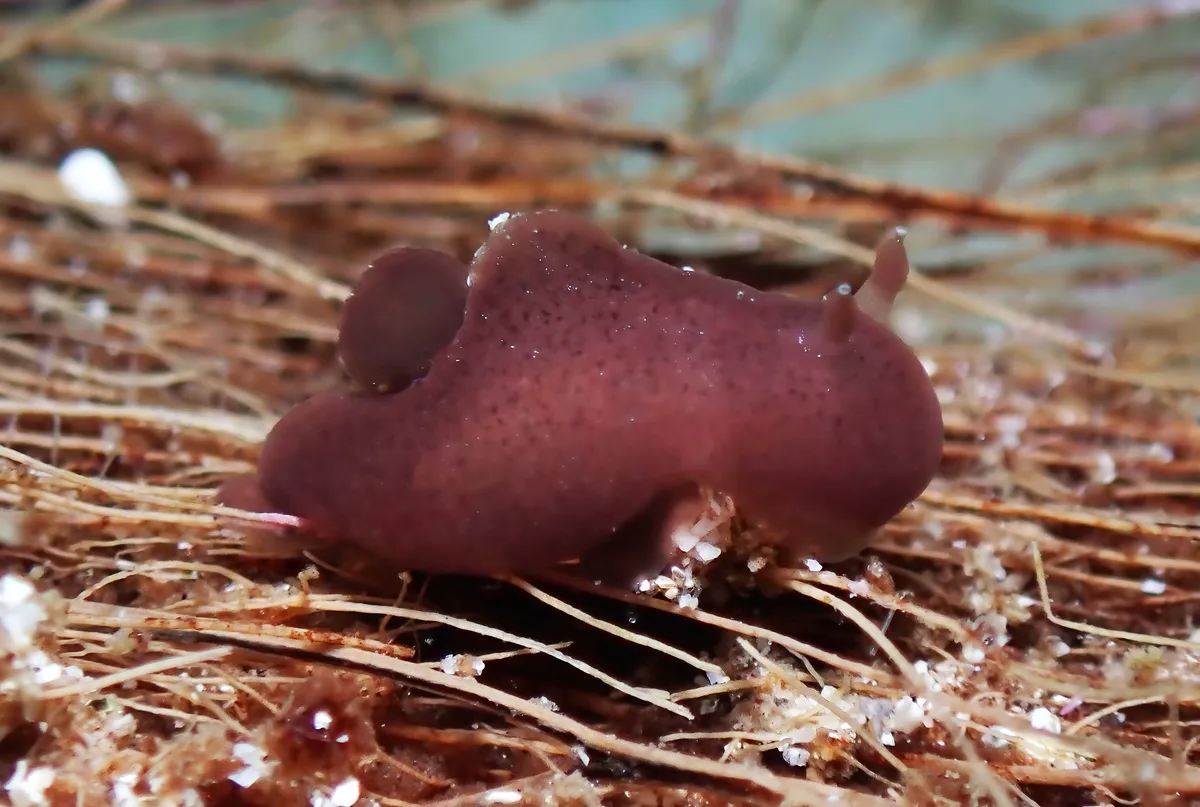
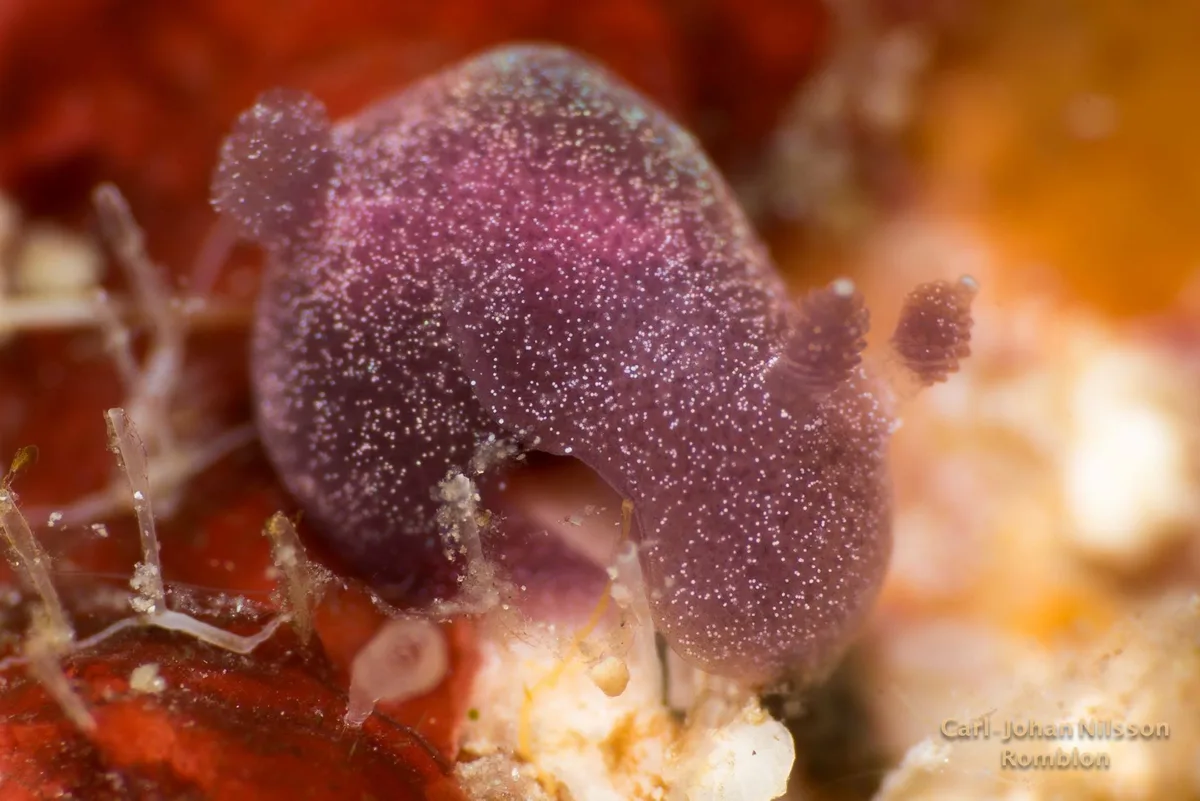
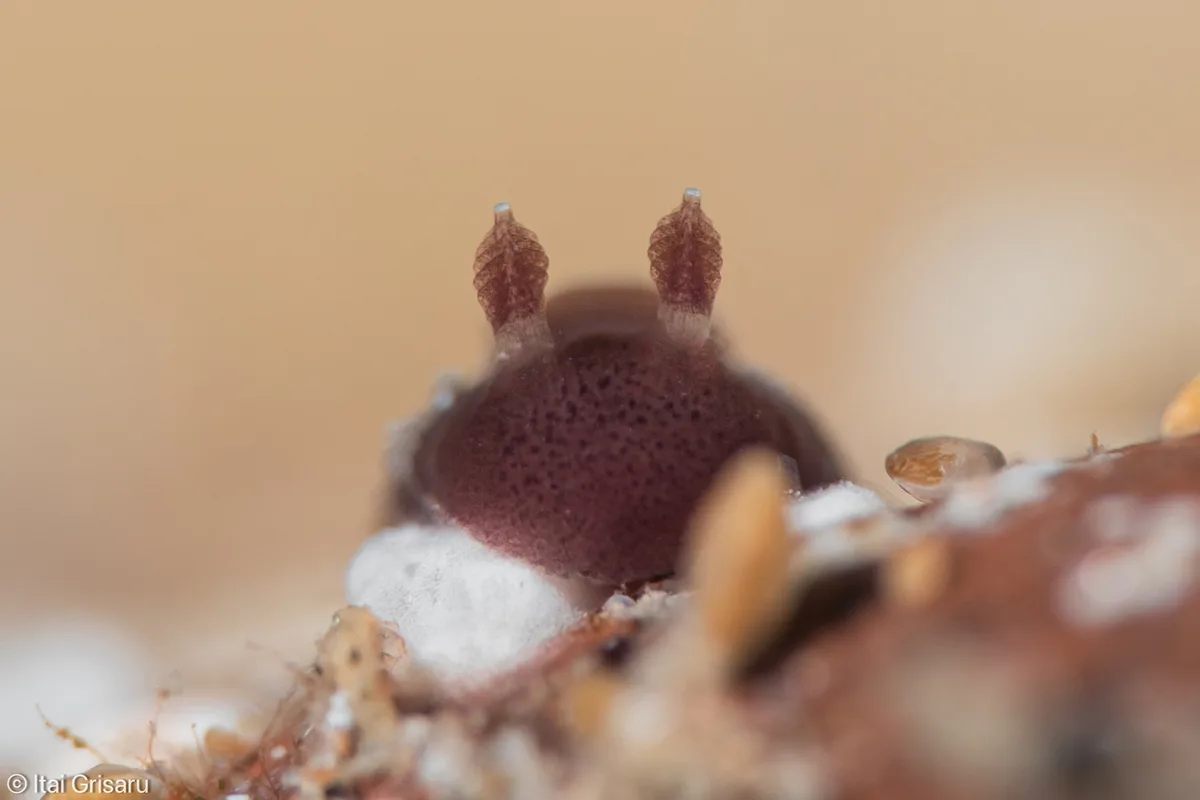
The gills are the other oddity. On most dorids the plume is feathery, divided into fine branches. Here they are rounded and blunt, more like short fingers standing at the back, which is a family character and the thing to check once you have found one.
Finding one is the problem. It is twelve millimeters (0.5 in), pale, unmarked, and sitting on a crust that most divers have already decided is not worth a second look.
It is also one of only two members of its family here, a group that gets a paragraph in the literature where the chromodorids get chapters. The species name means unseemly or plain, which for once is simply an accurate description rather than an insult.
- gills rounded and blunt rather than feathery, which is unusual for a dorid
- rhinophores tipped white
- pale, low and entirely unmarked
- twelve millimeters, on a sea squirt colony rather than on sponge