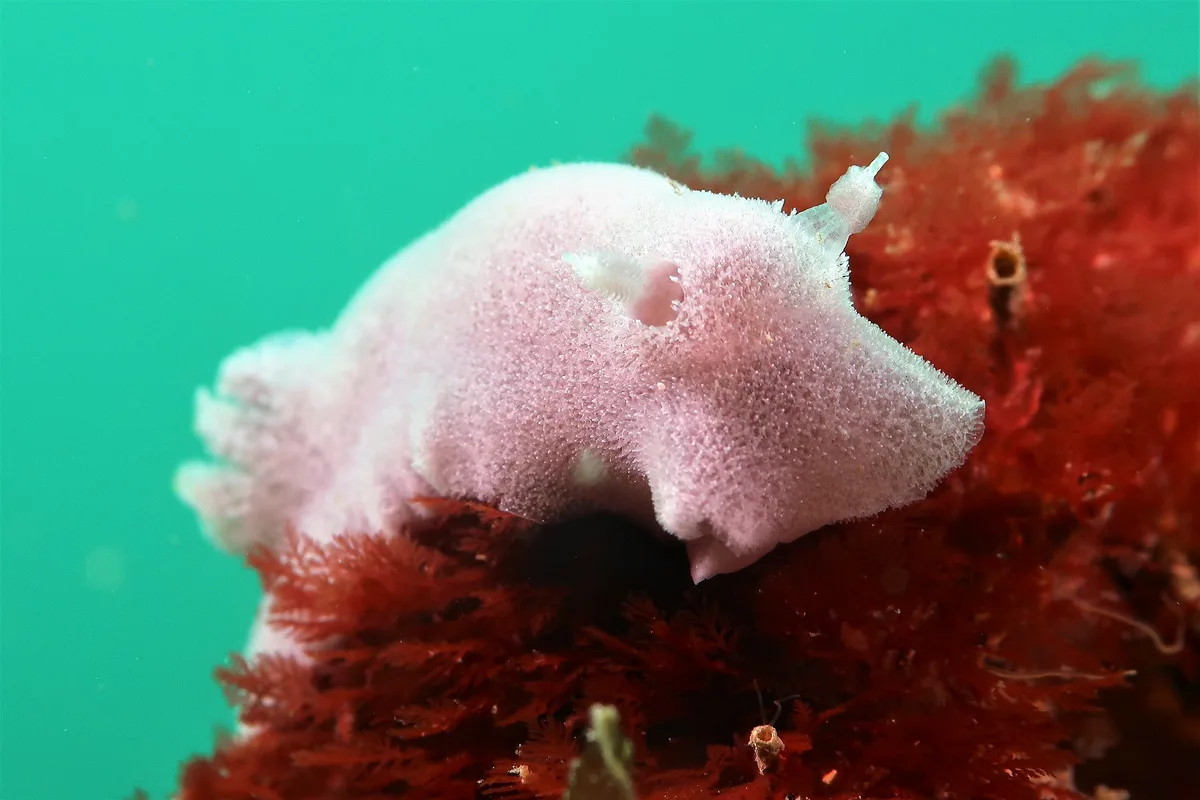
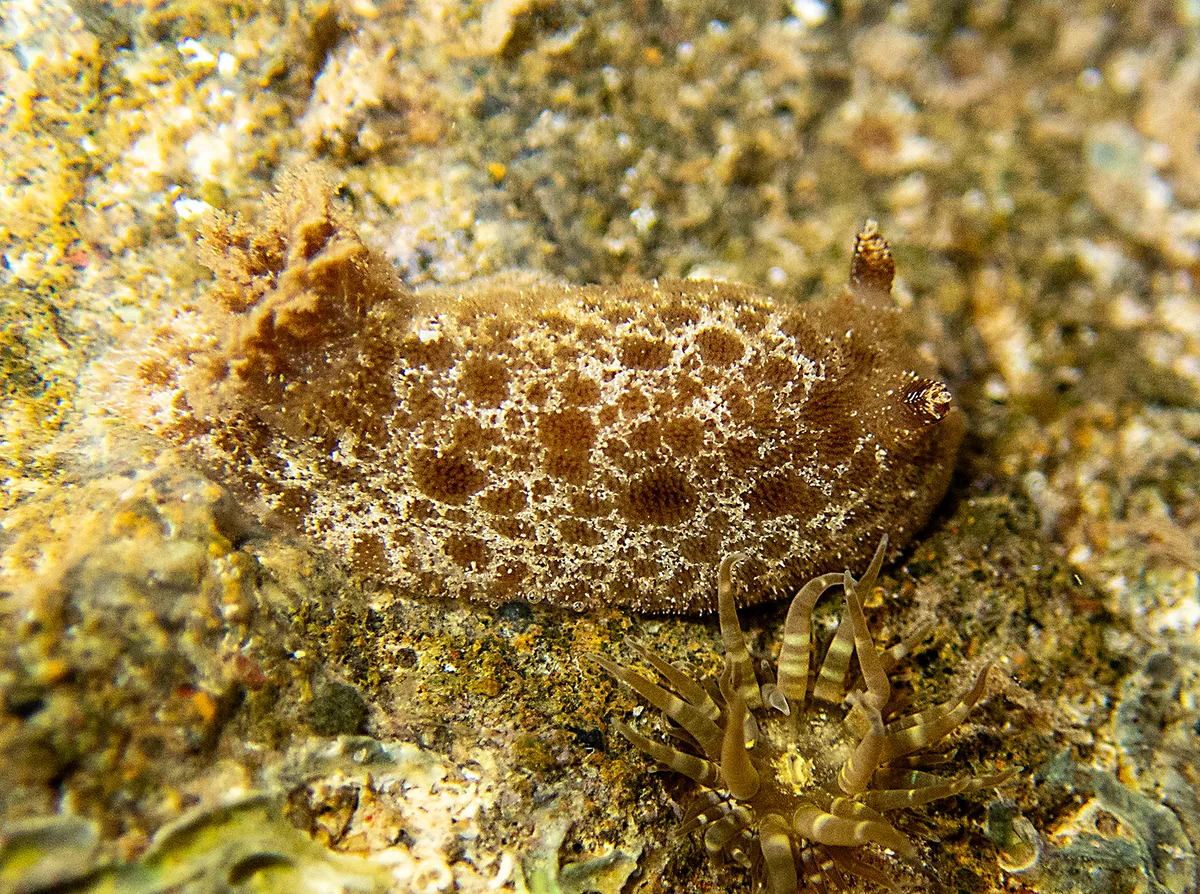
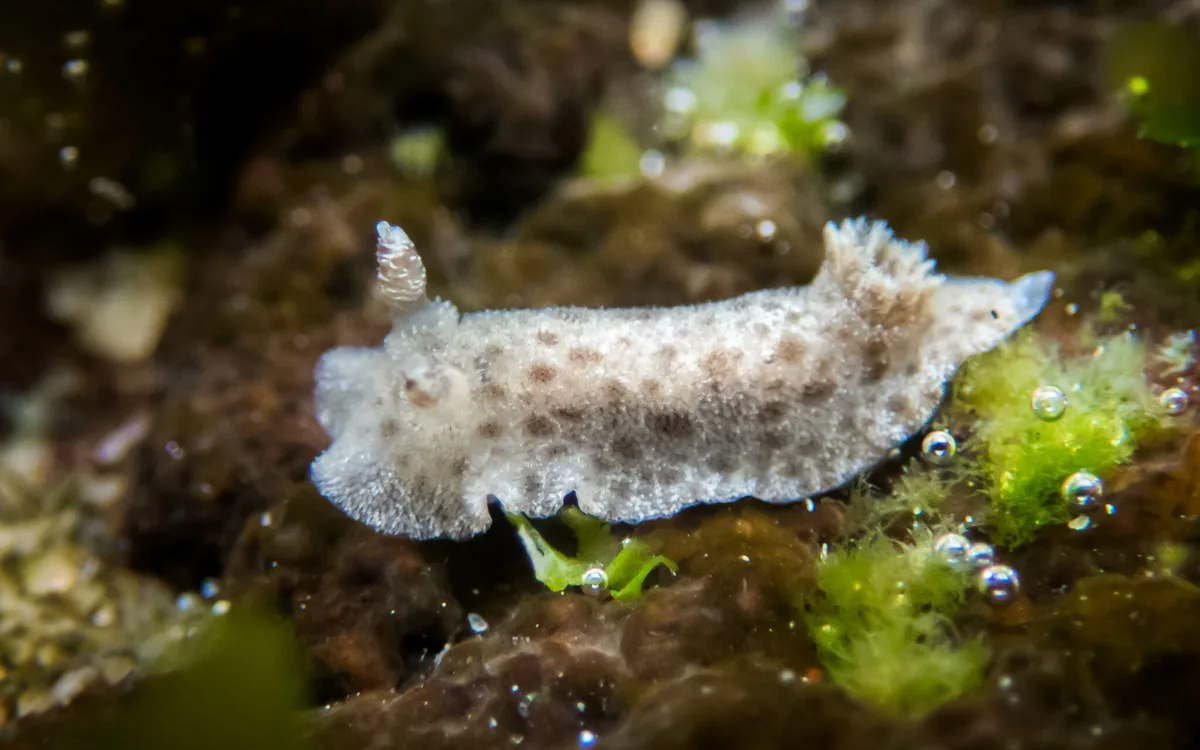
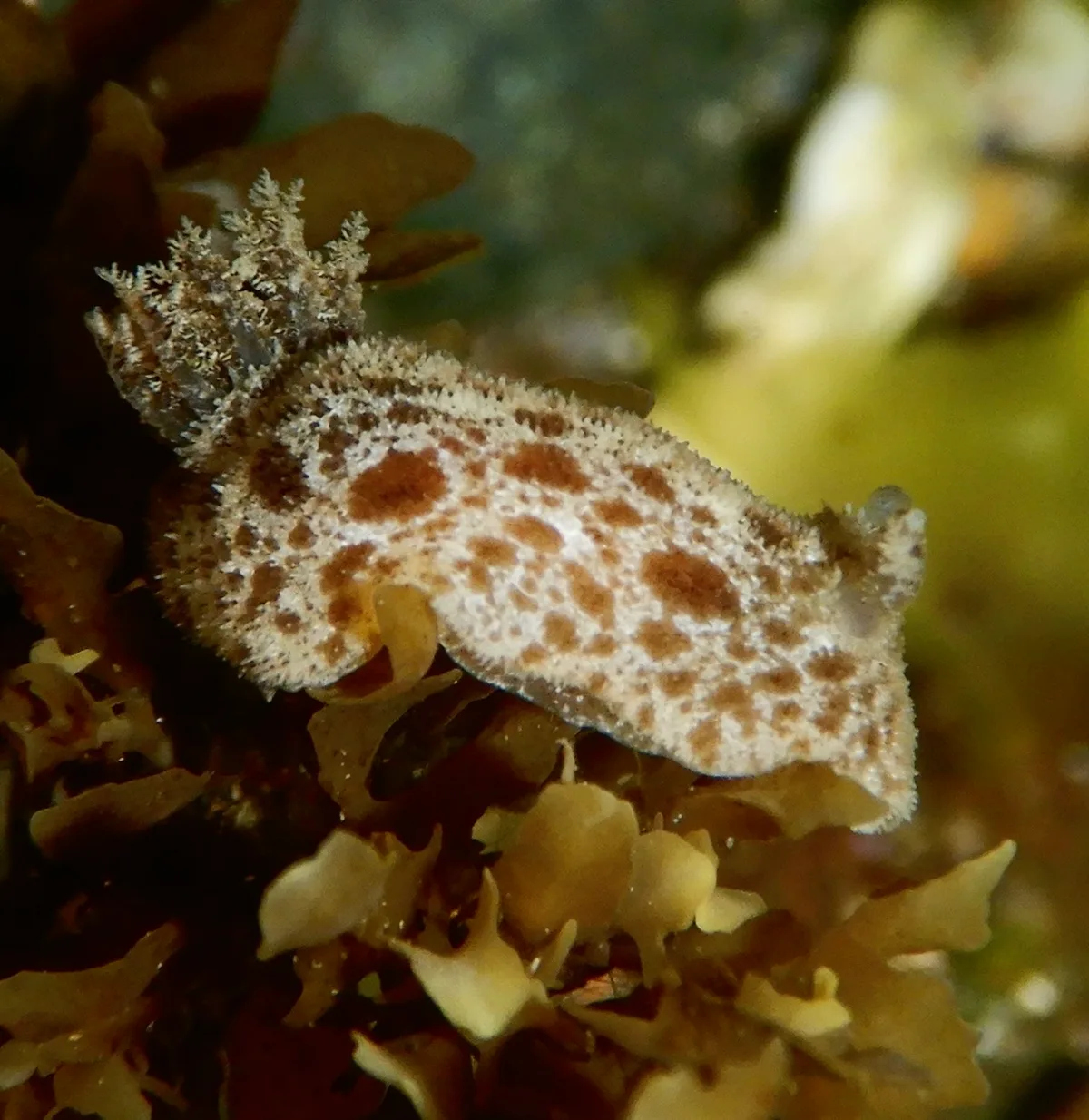
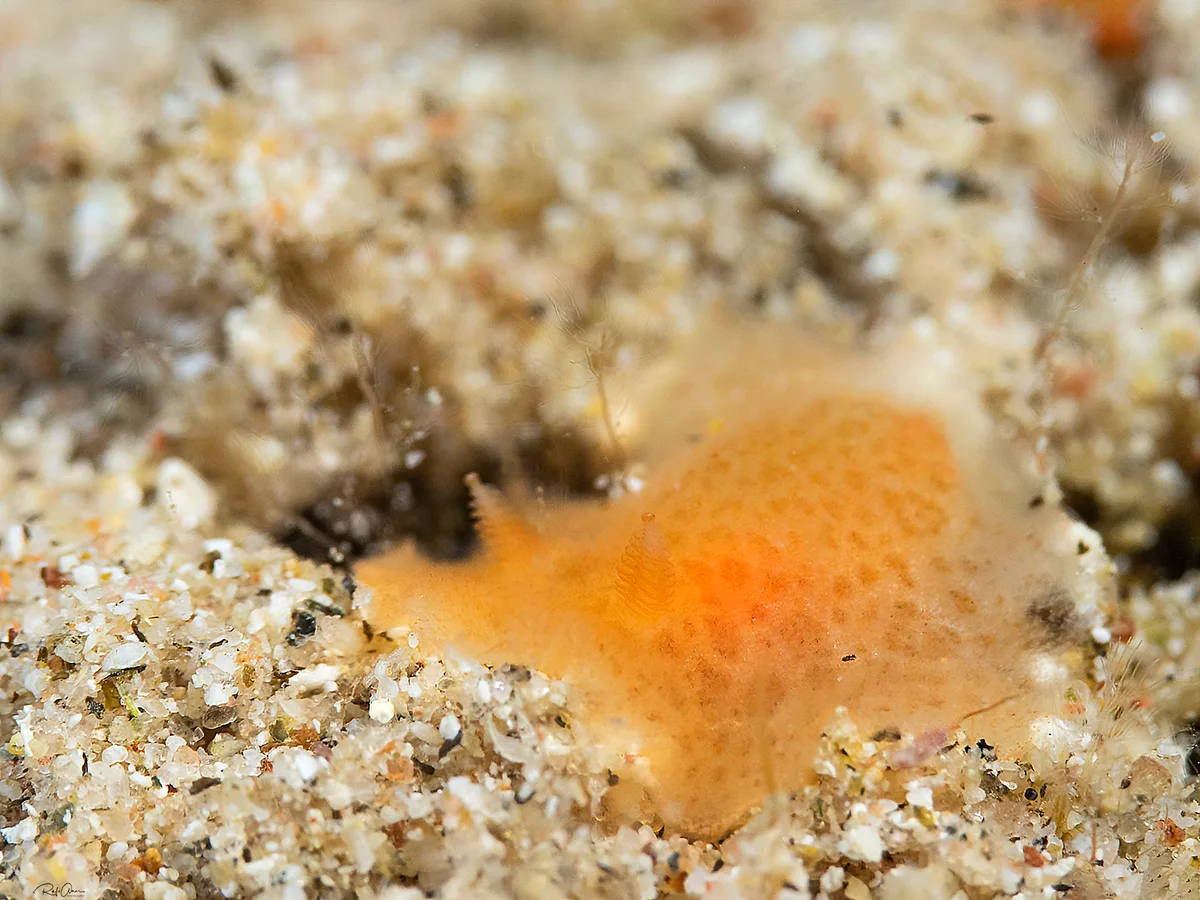
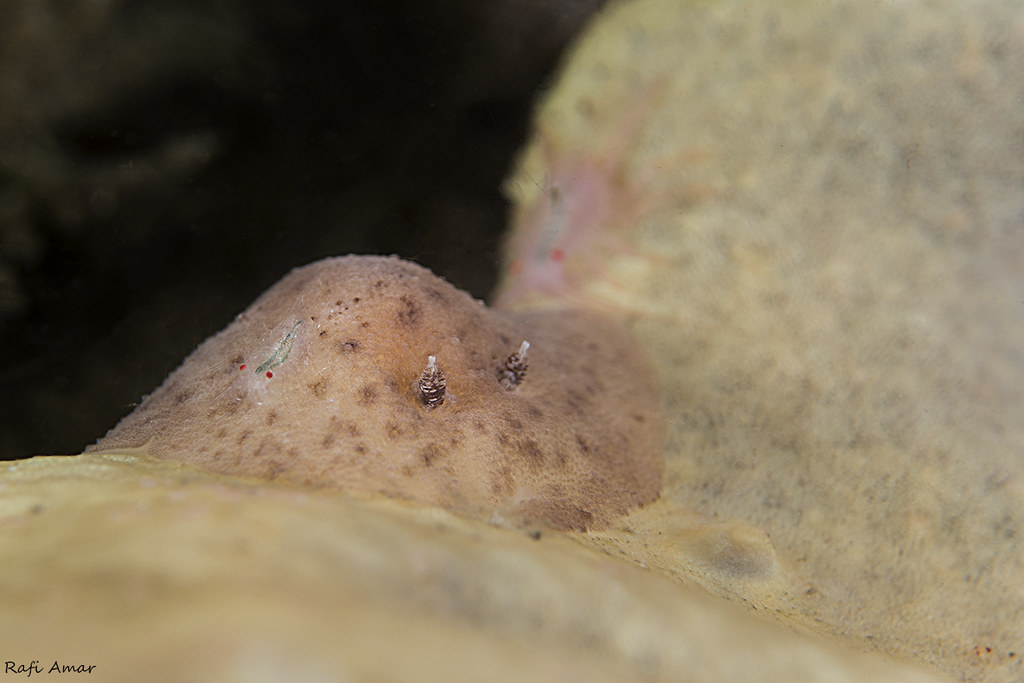
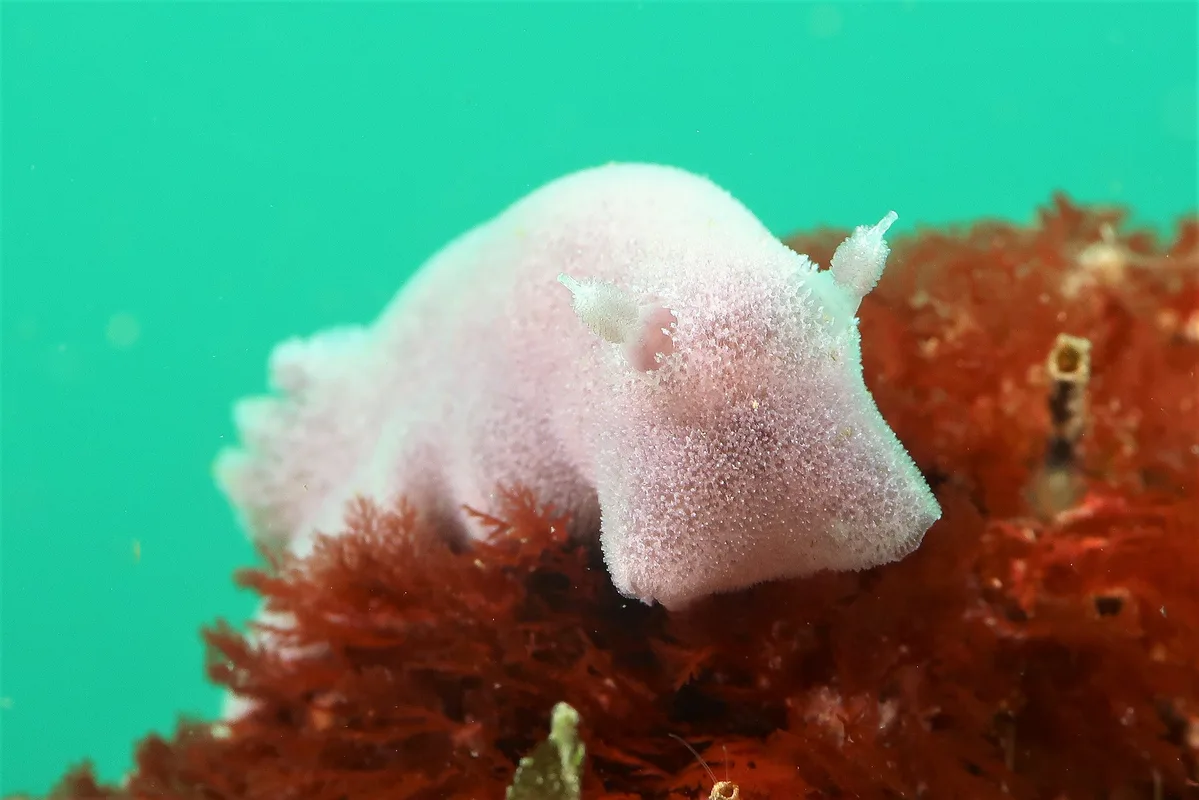
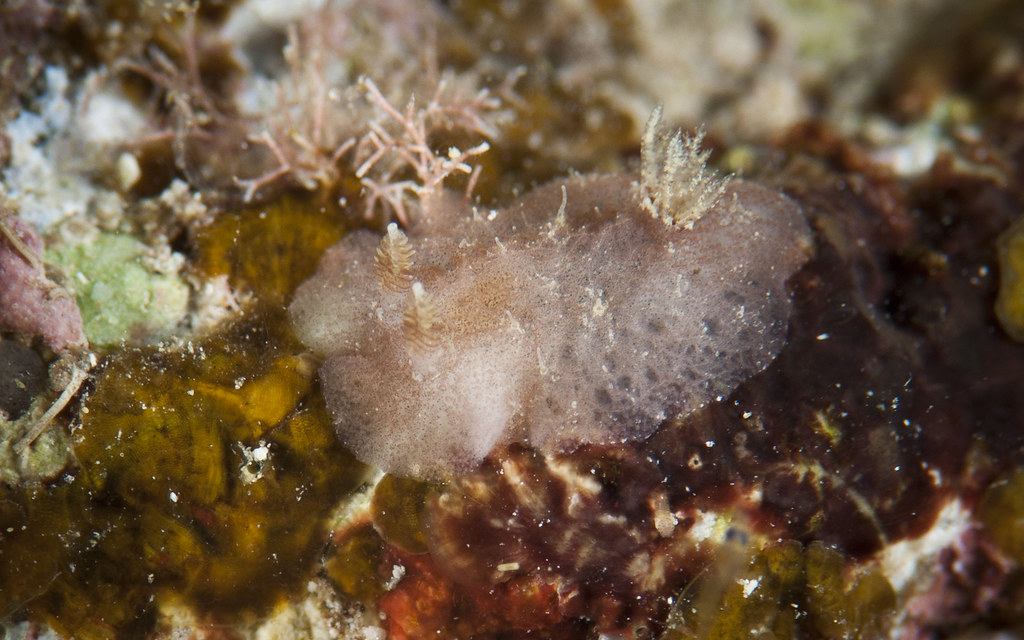
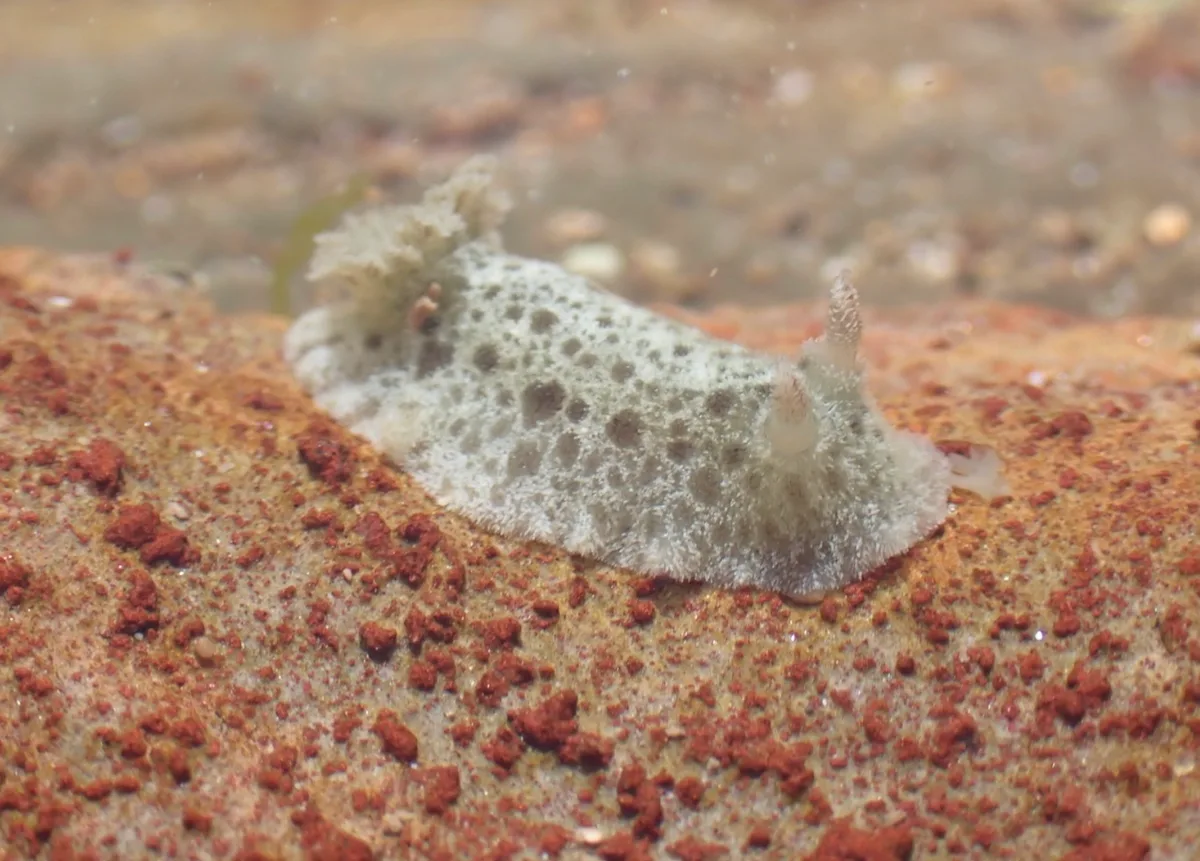
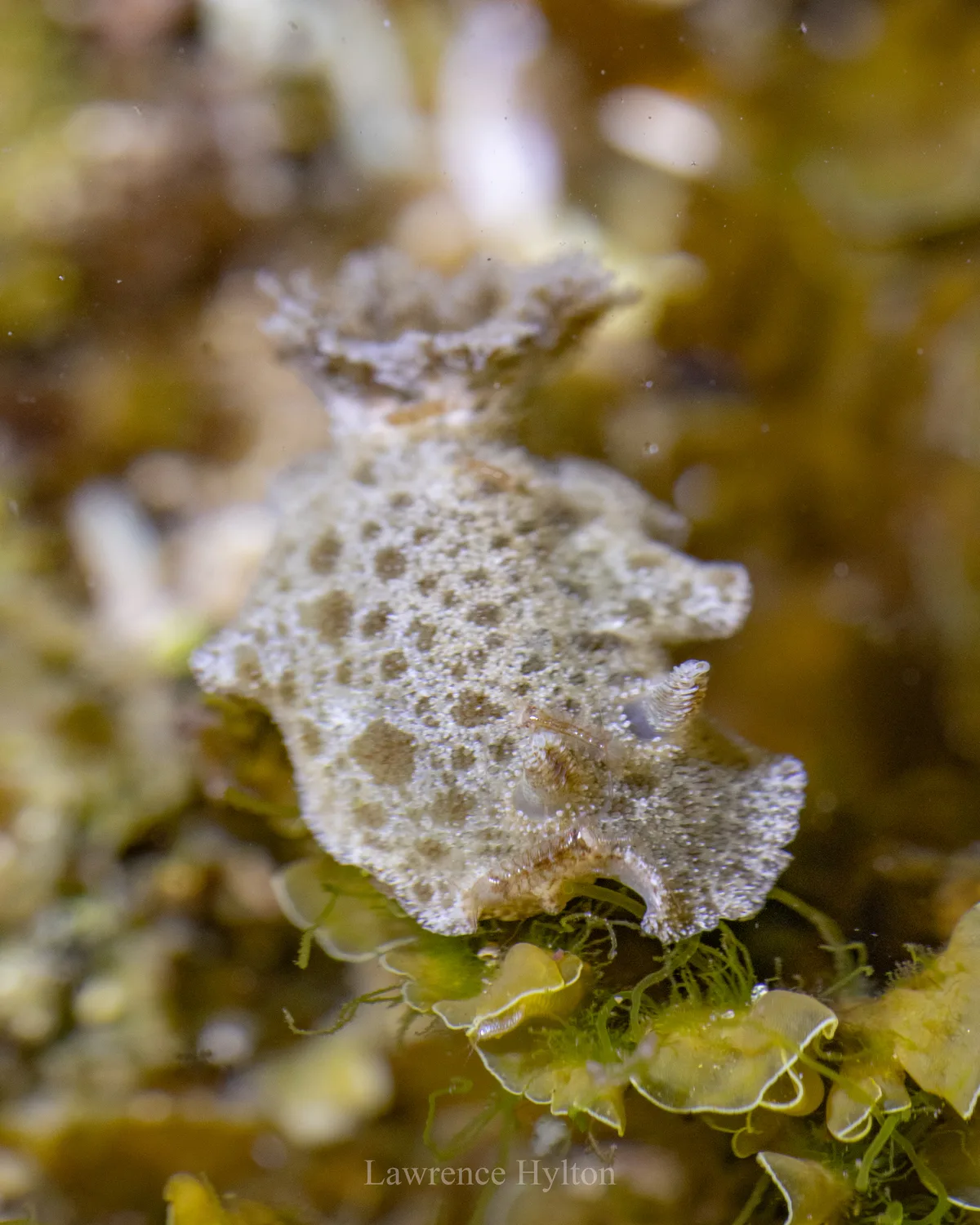
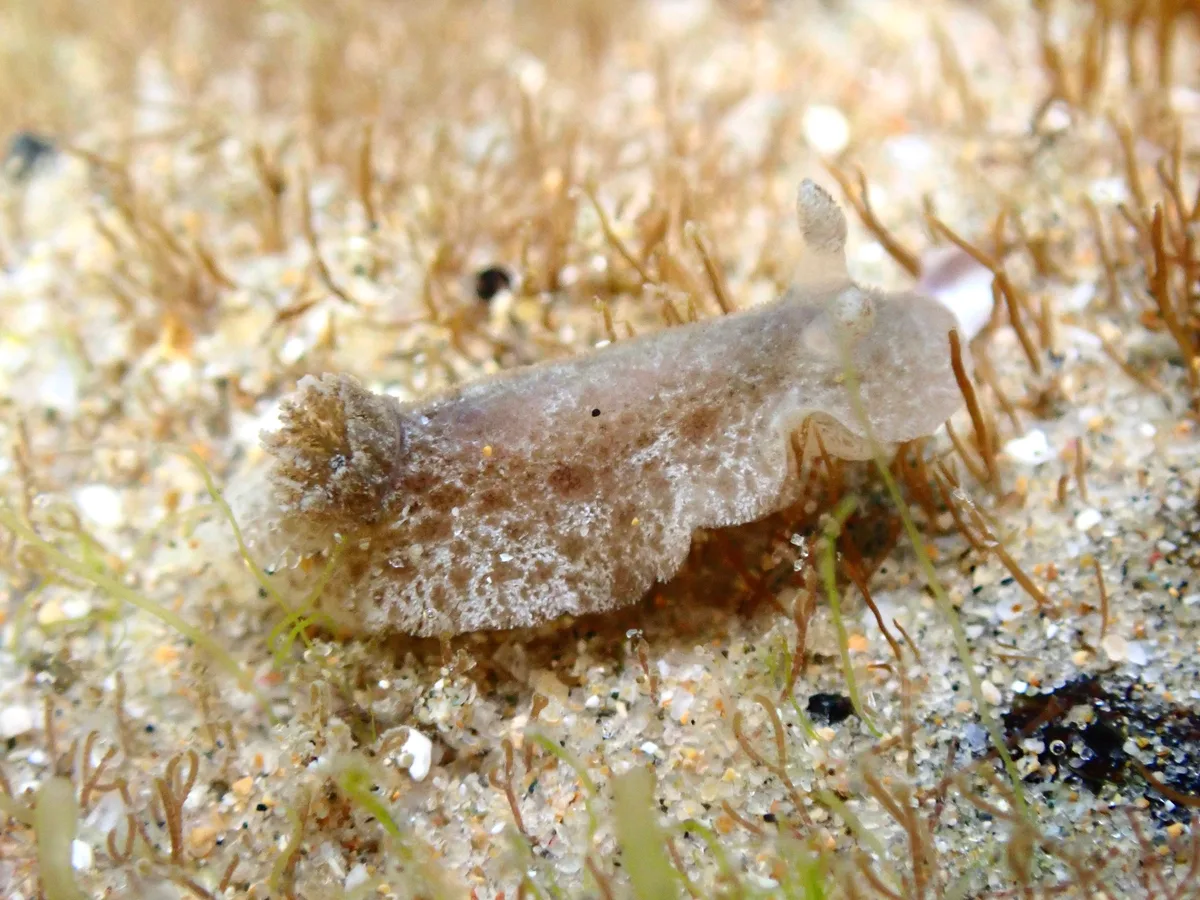
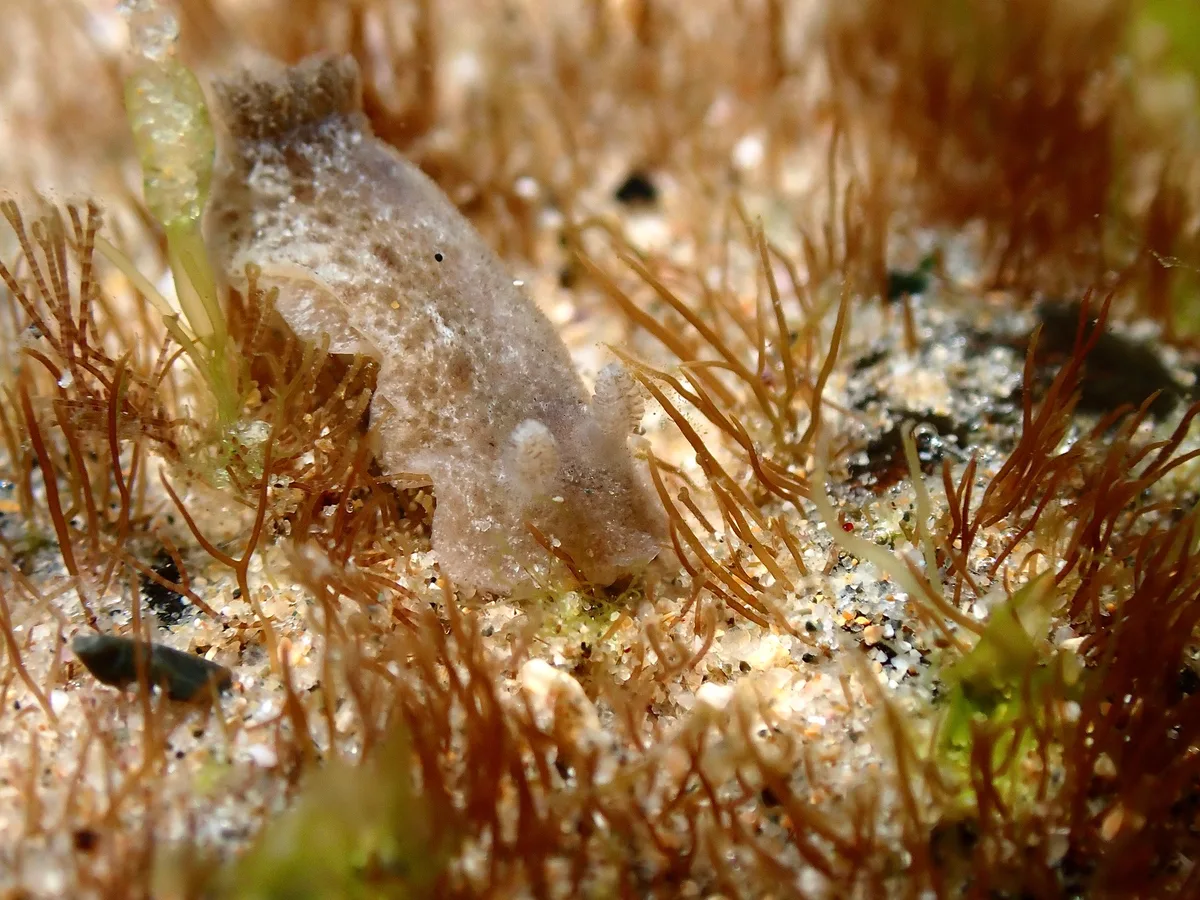
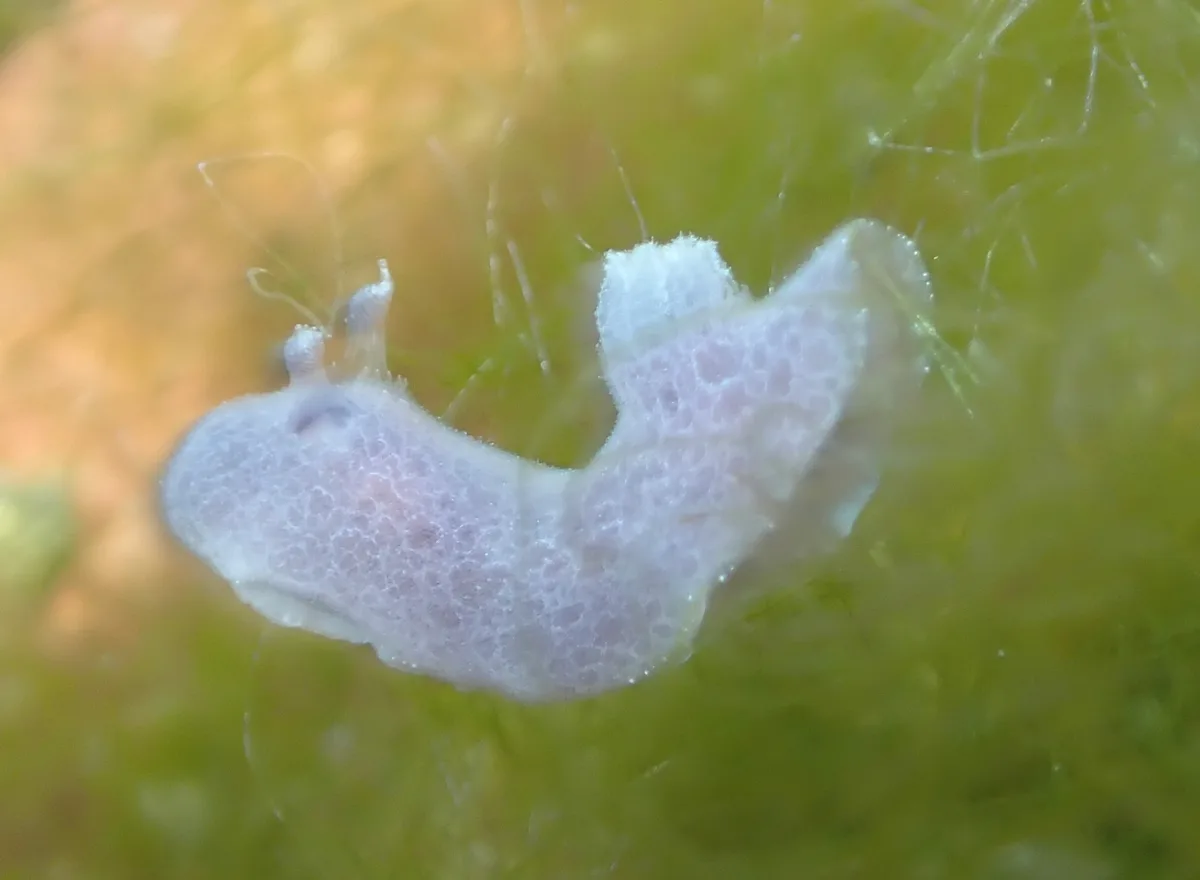
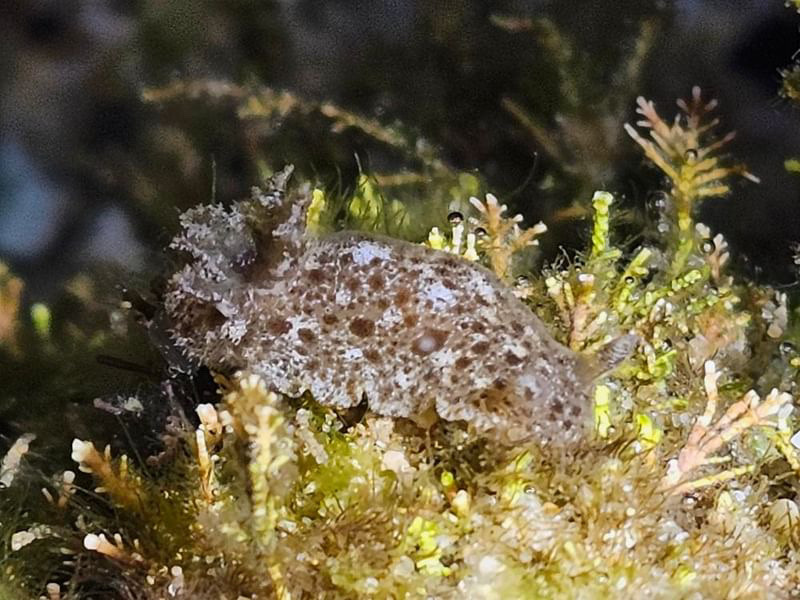
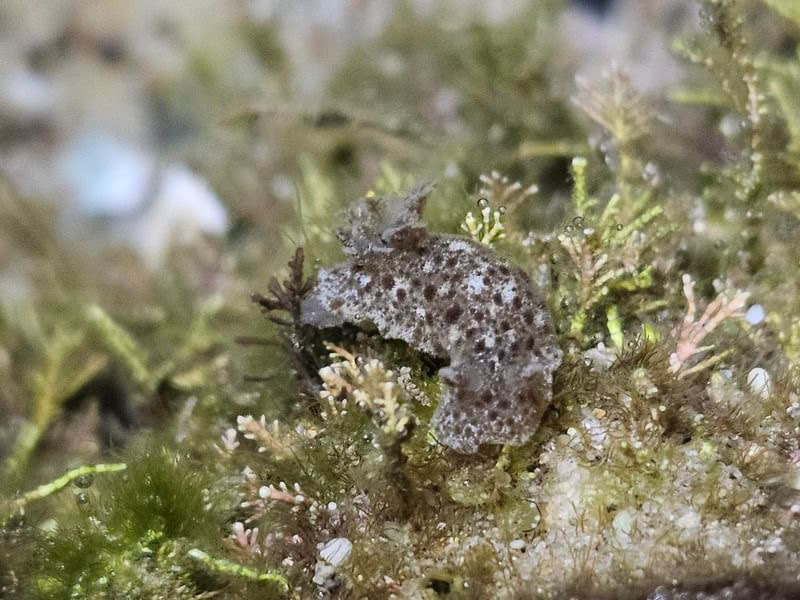
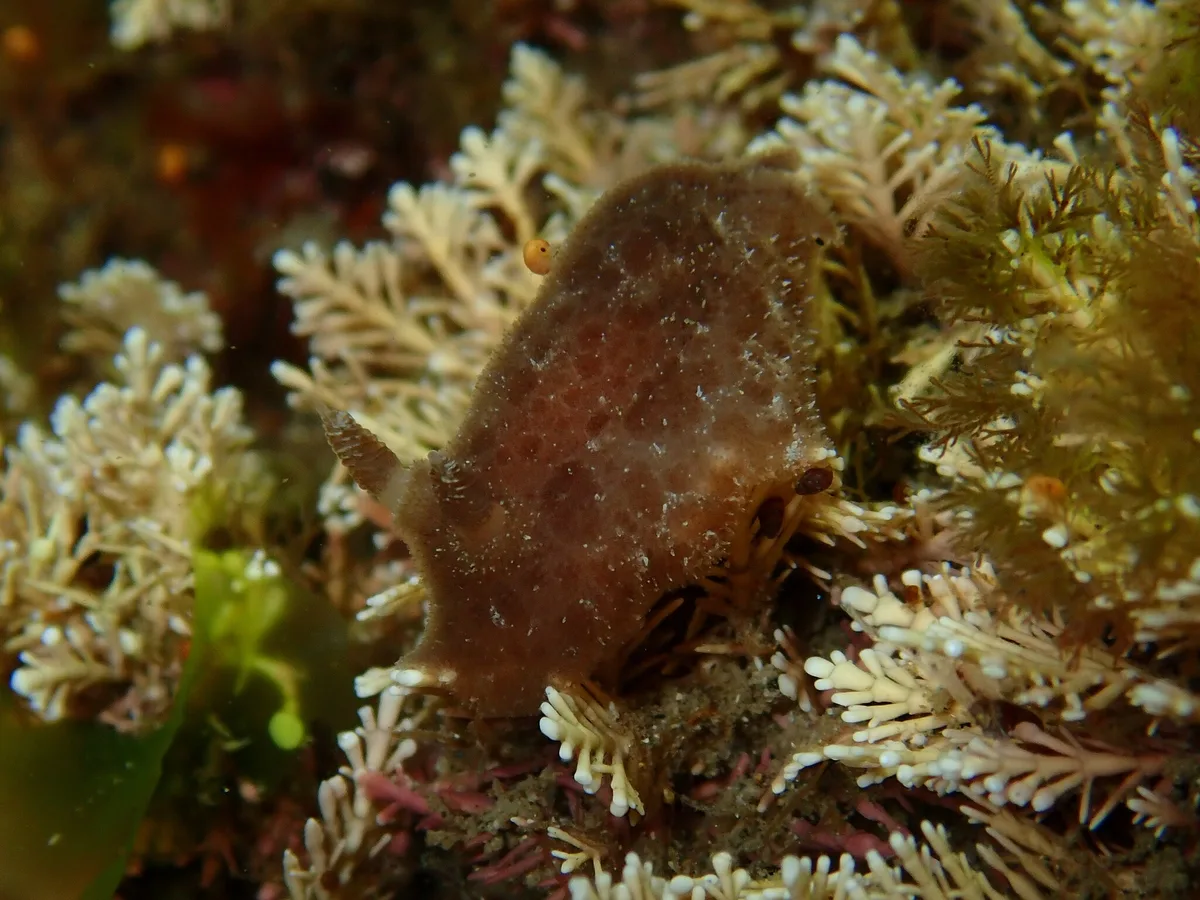
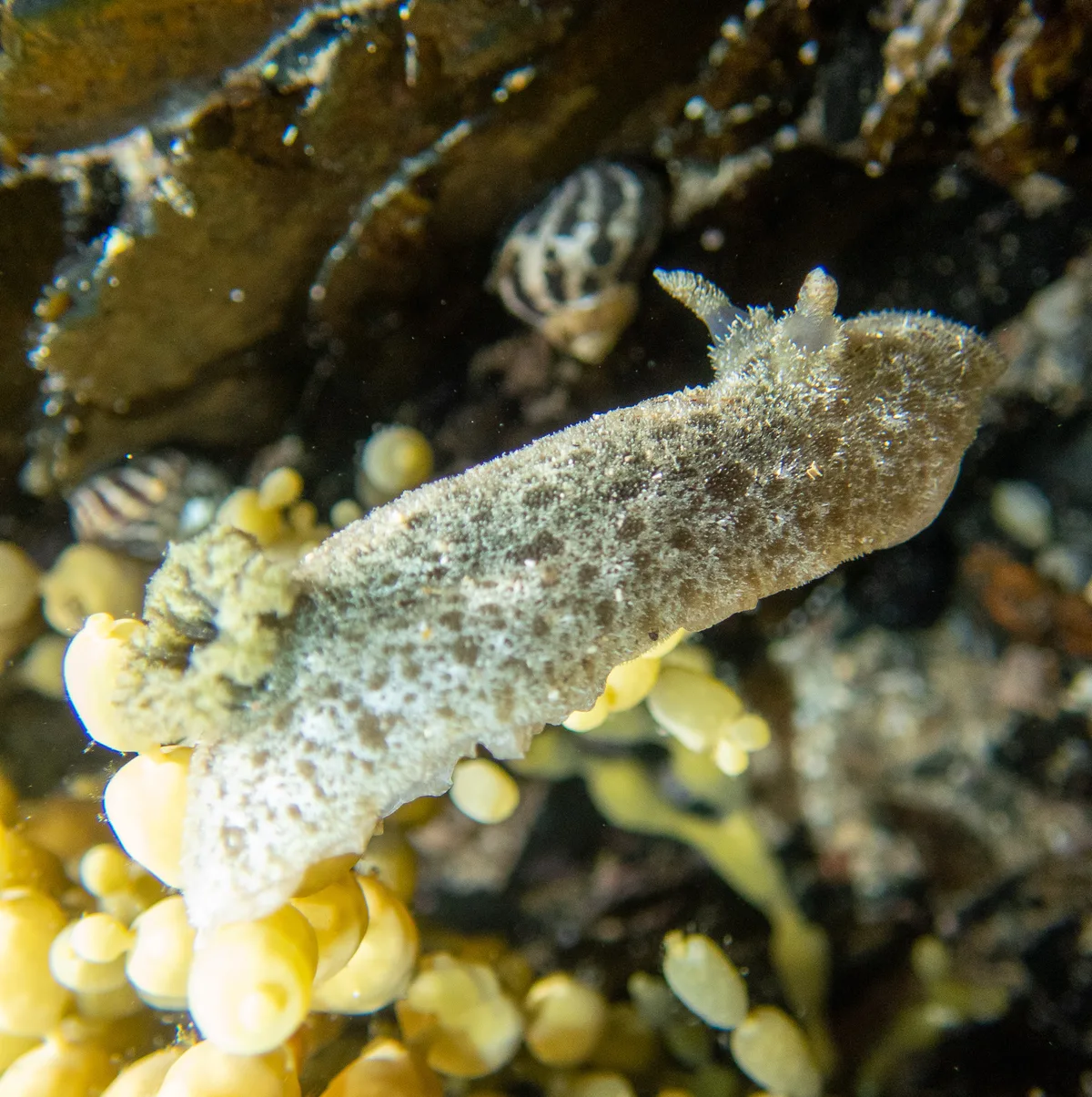
This is the plain one in a genus famous for being cute, and being plain is the whole strategy.
Jorunna are the velvet dorids, and two of them are already in this catalogue: the small yellow one the internet calls a sea bunny and the large white one covered in grey rings. This species went the other way and settled on beige with irregular brown blotches, which on a sponge-covered rock is close to invisible. It is not advertising. It is disappearing.
That difference is worth noticing, because the standard sea slug story is bright color backed by stolen chemistry, and this animal shows the other half of the family doing the opposite. Cryptic coloration and chemistry are not alternatives, and a slug can carry both, but where the color goes tells you which one the animal is leaning on.
The velvet is the genus mark and survives the camouflage: the whole back is covered in minute papillae, each stiffened by a bundle of mineral spicules and tipped with sensory cells. Under a light at an angle the surface breaks into rows of tiny posts.
Two and a half centimeters, out at night on sponge-covered rock, and found mostly by people who are already looking closely at something else.
- beige to pale brown with irregular darker brown blotches
- velvety surface, the whole back covered in minute stiffened papillae
- small, up to 2.5 cm
- gill plume small and pale, set well back