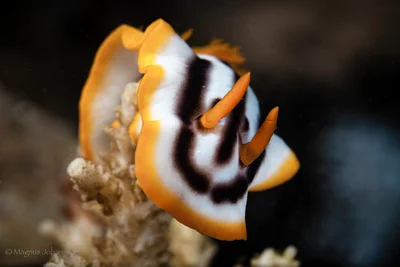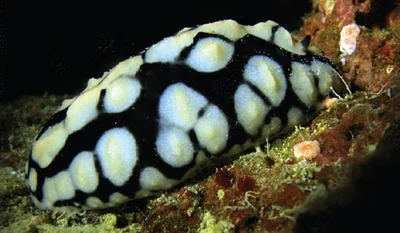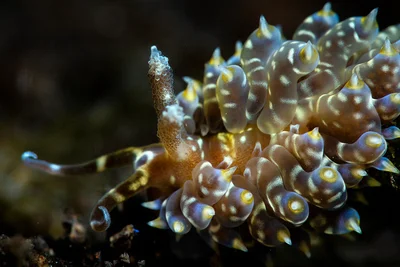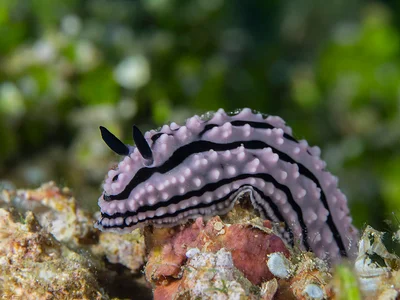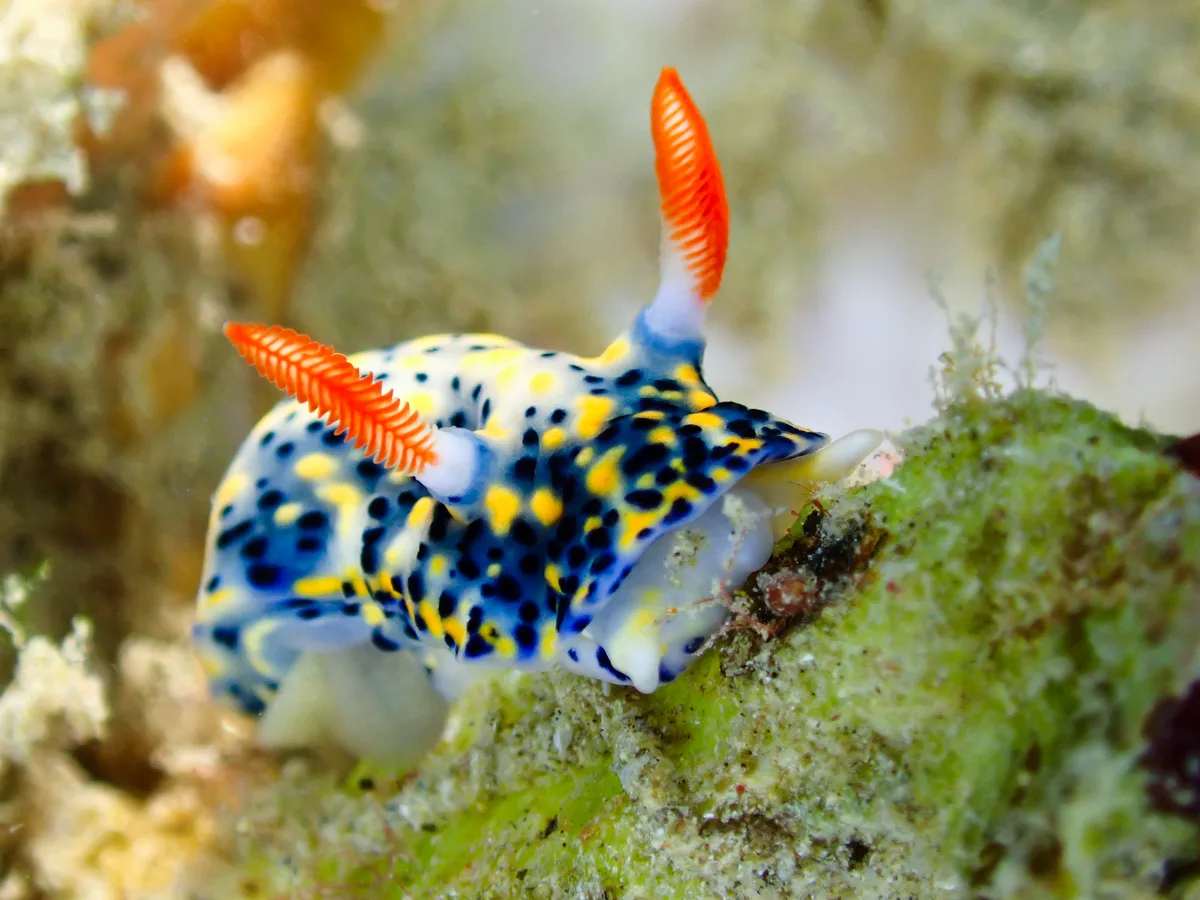
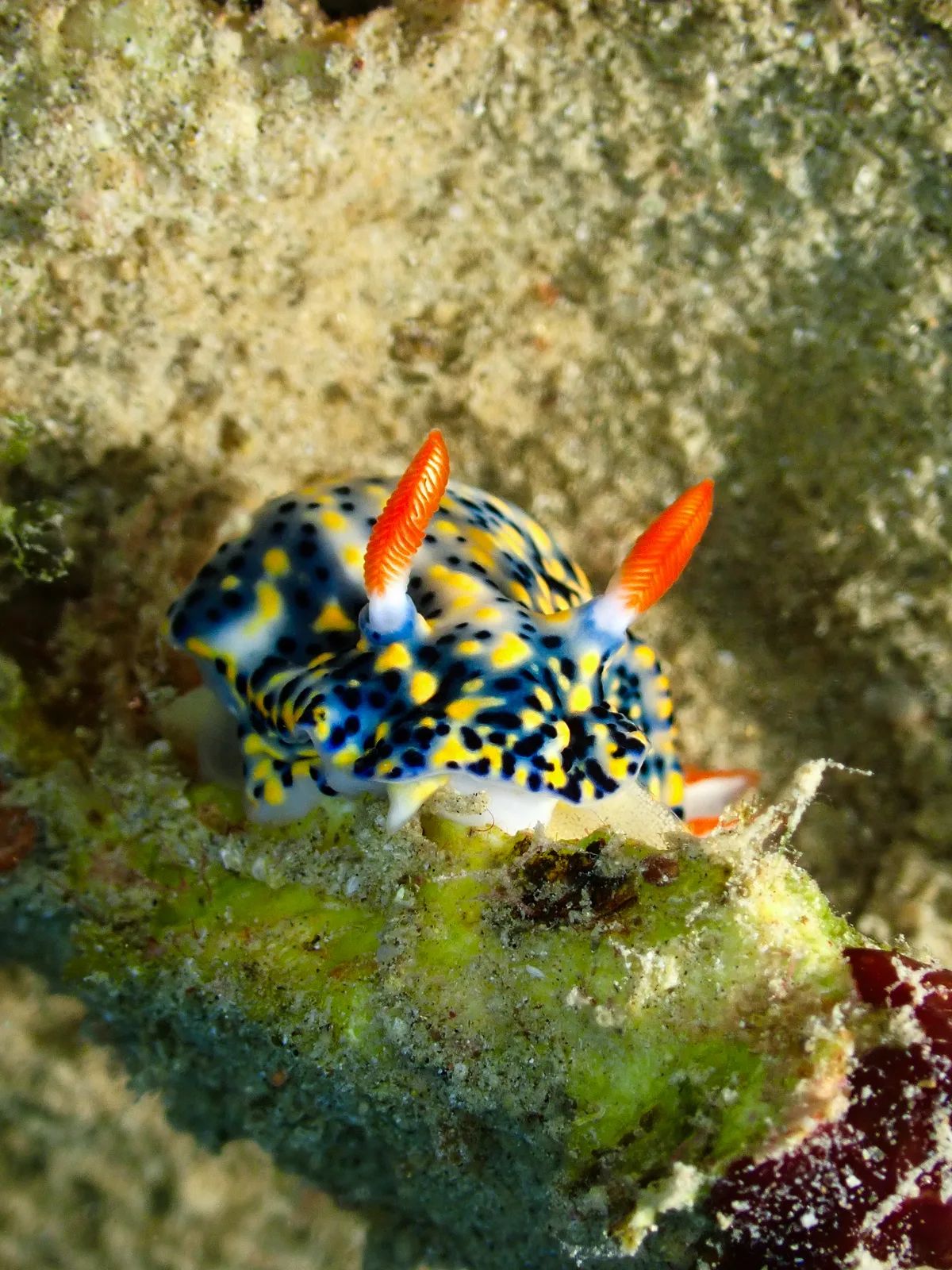
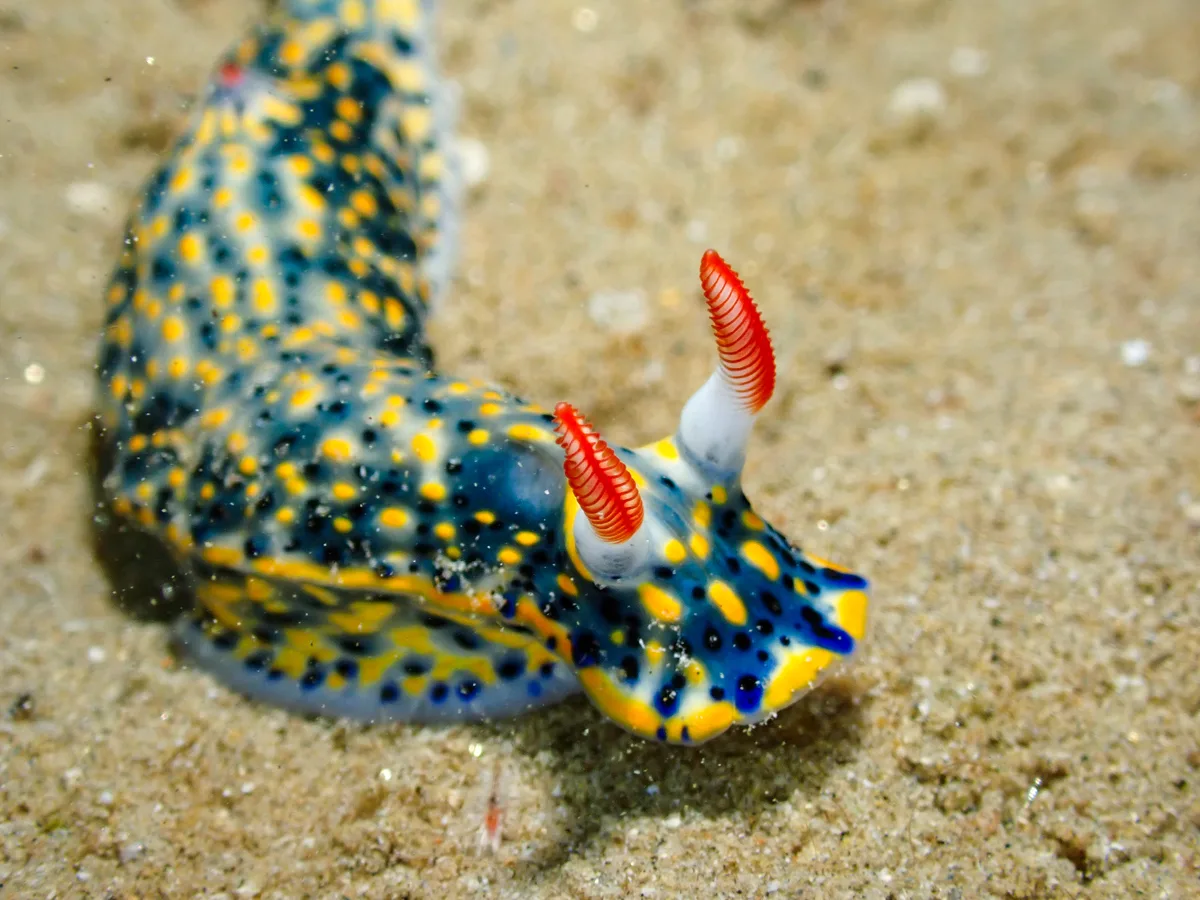
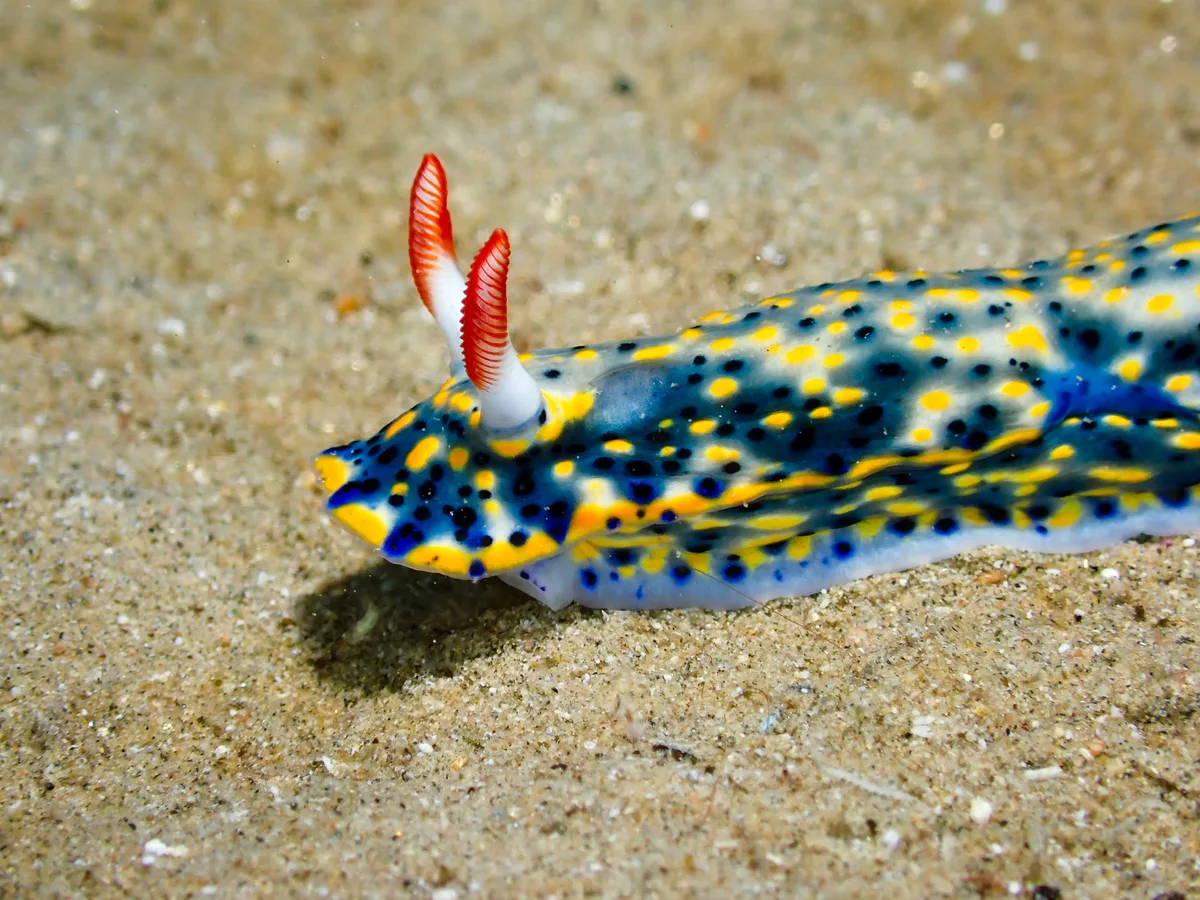
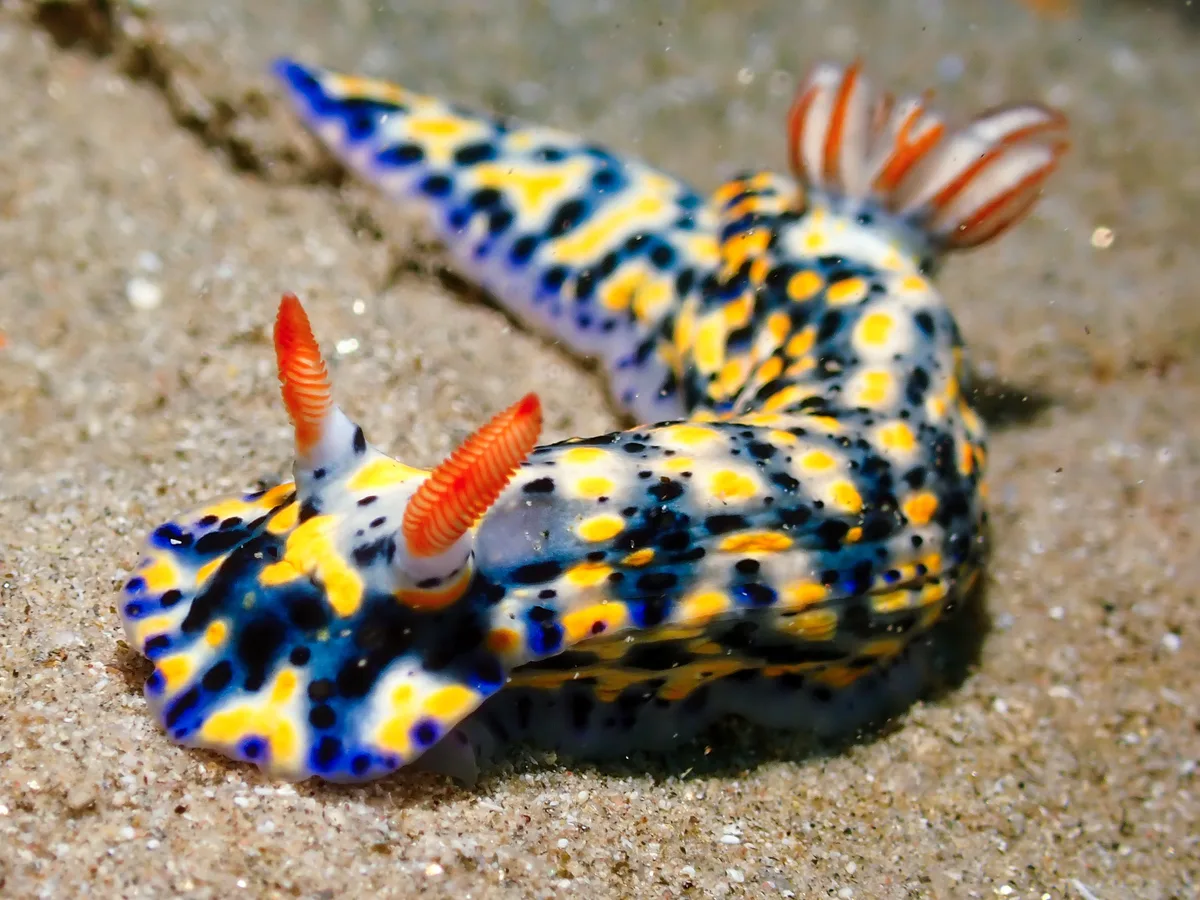
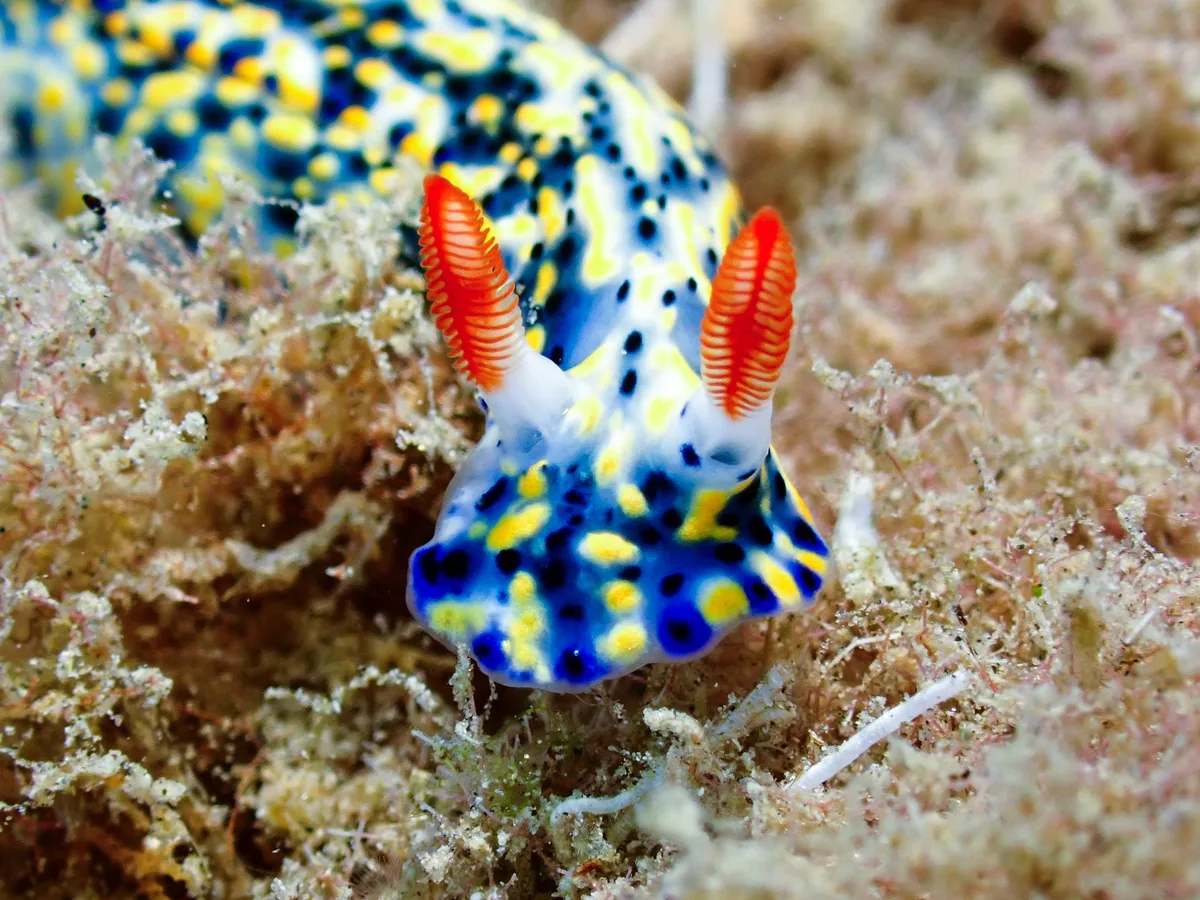
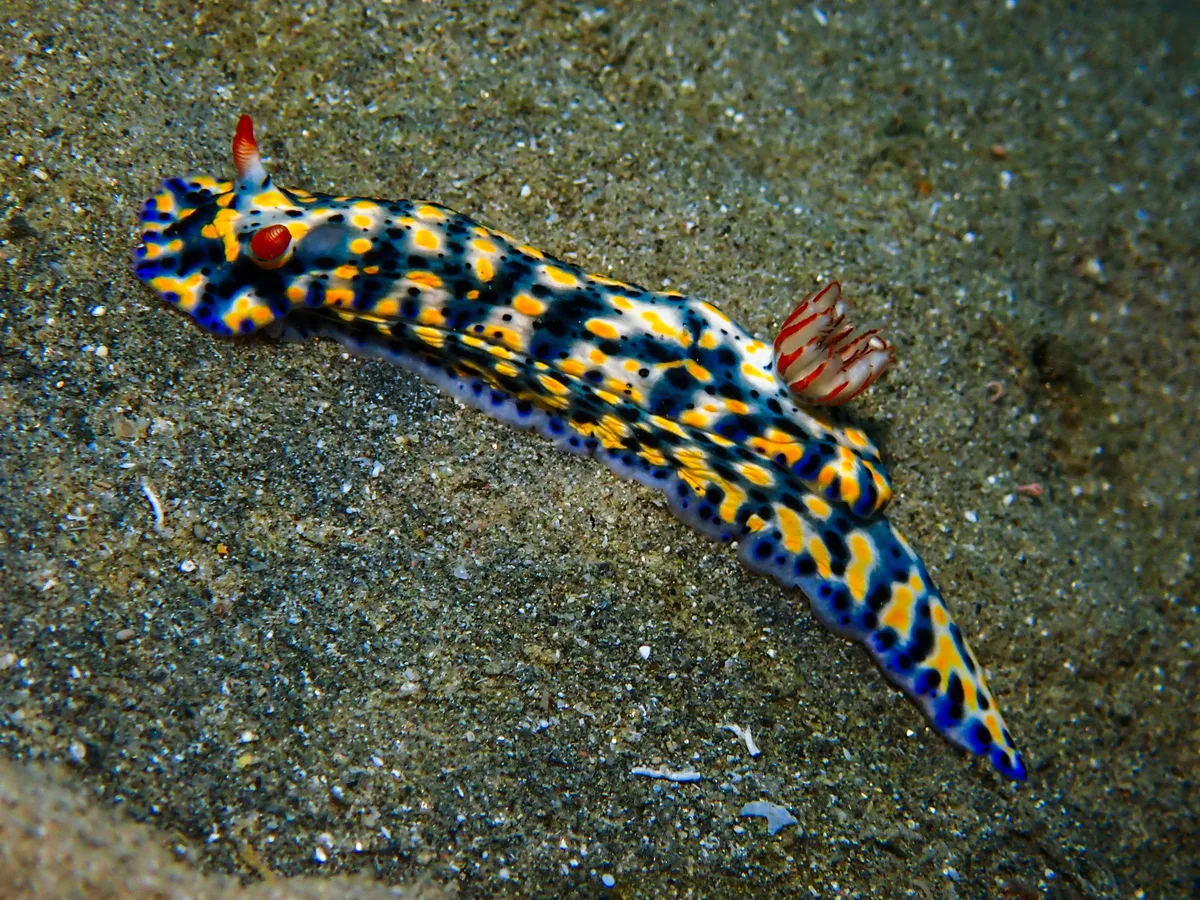
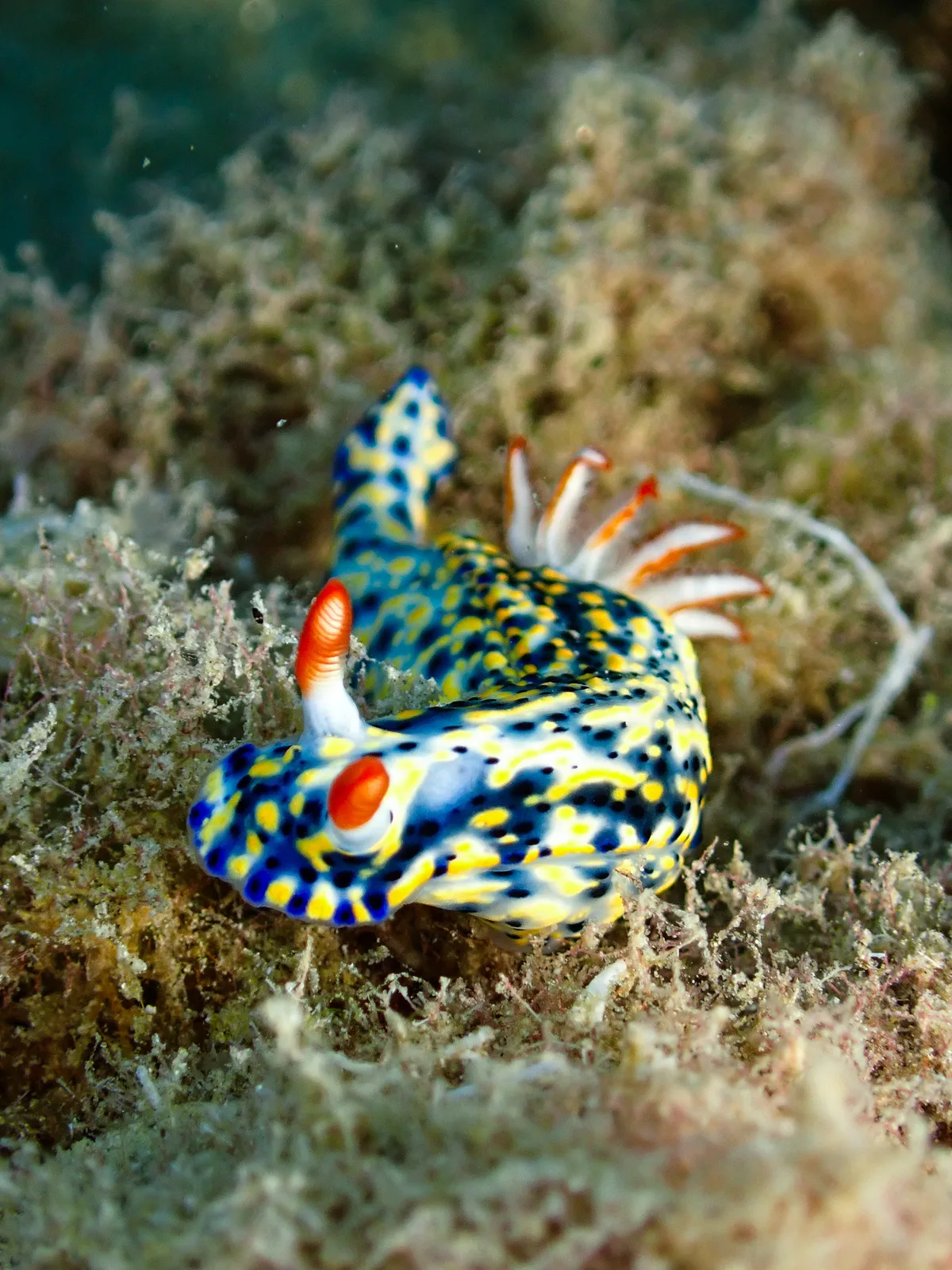
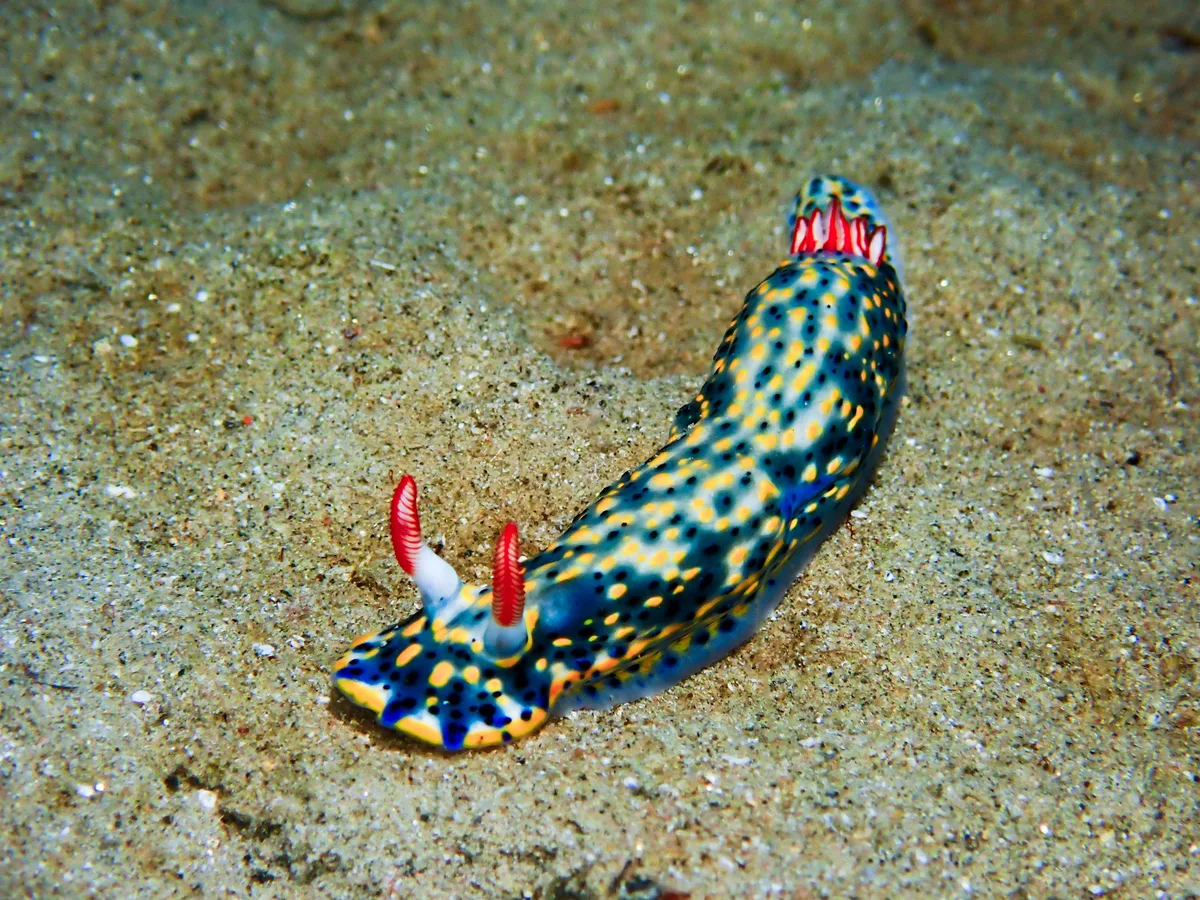
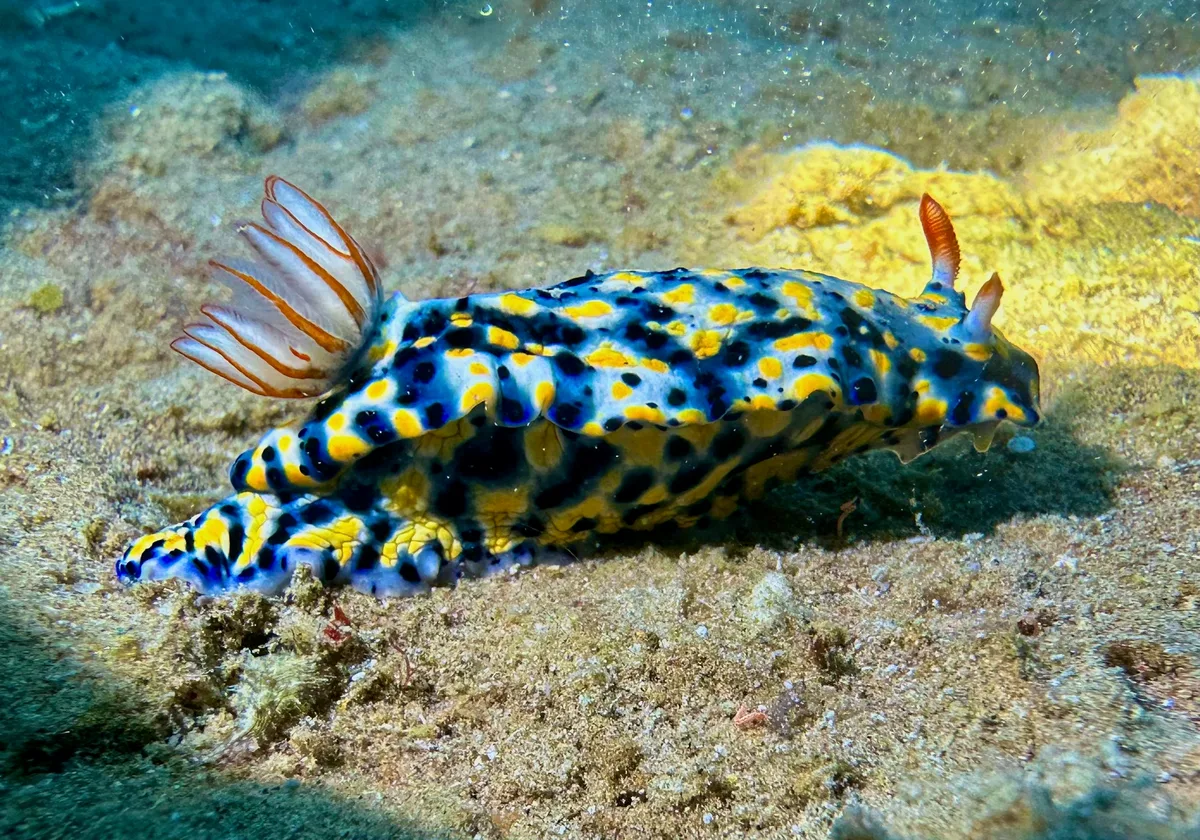
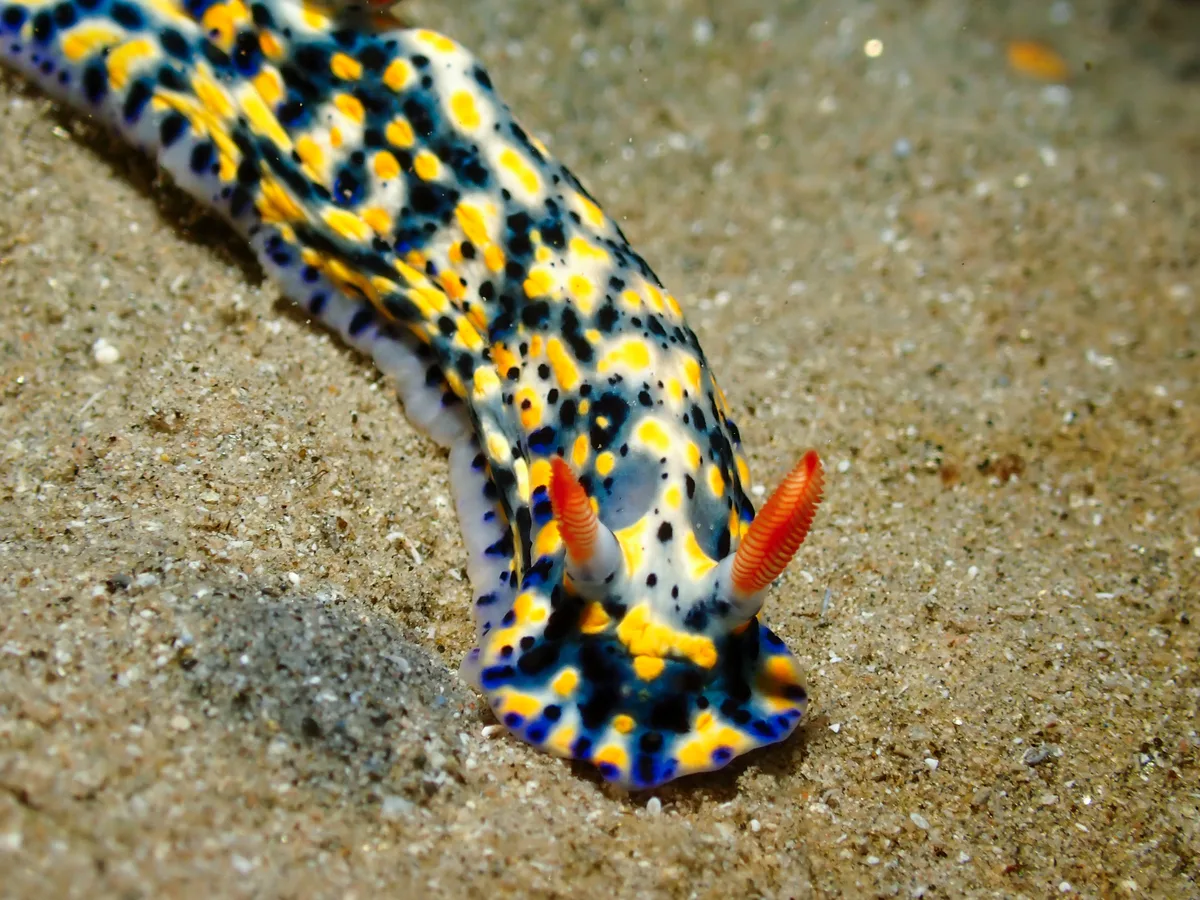
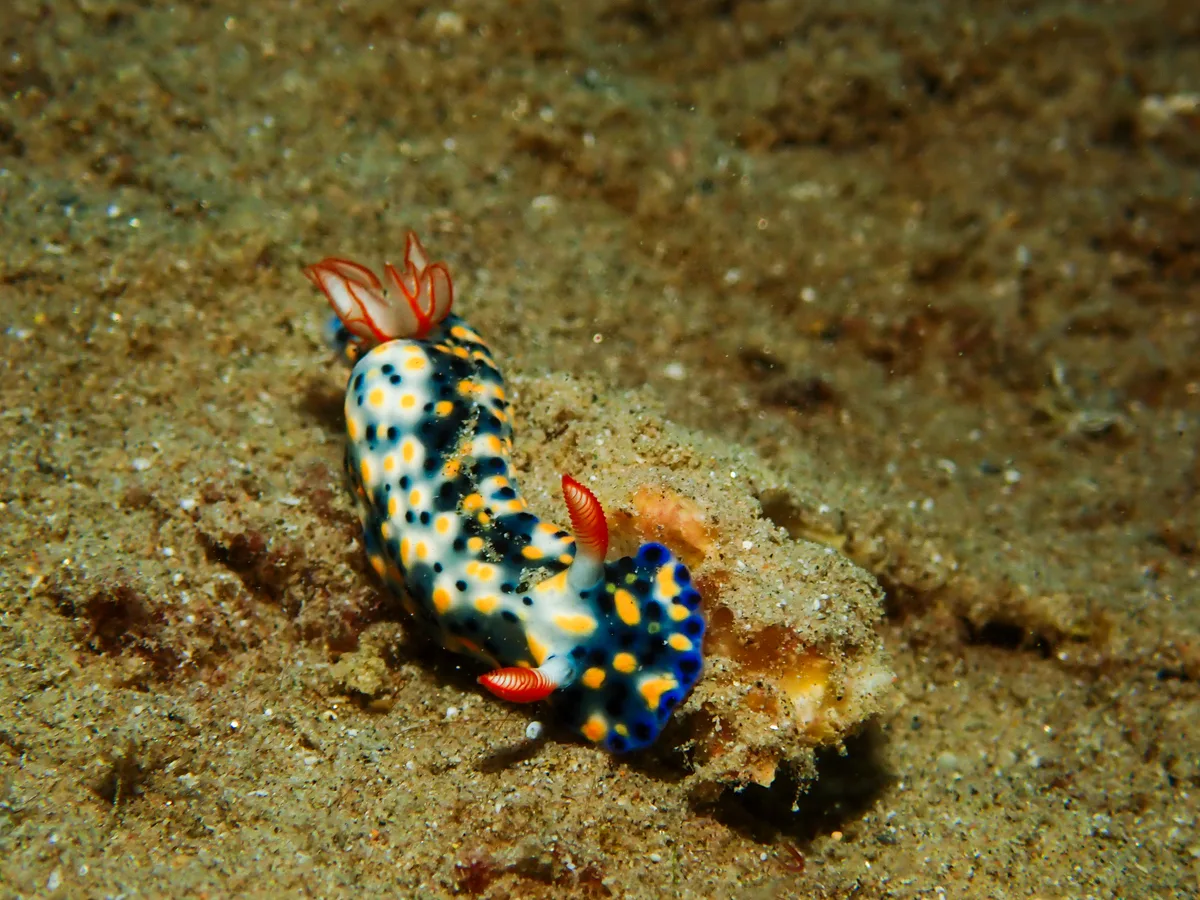
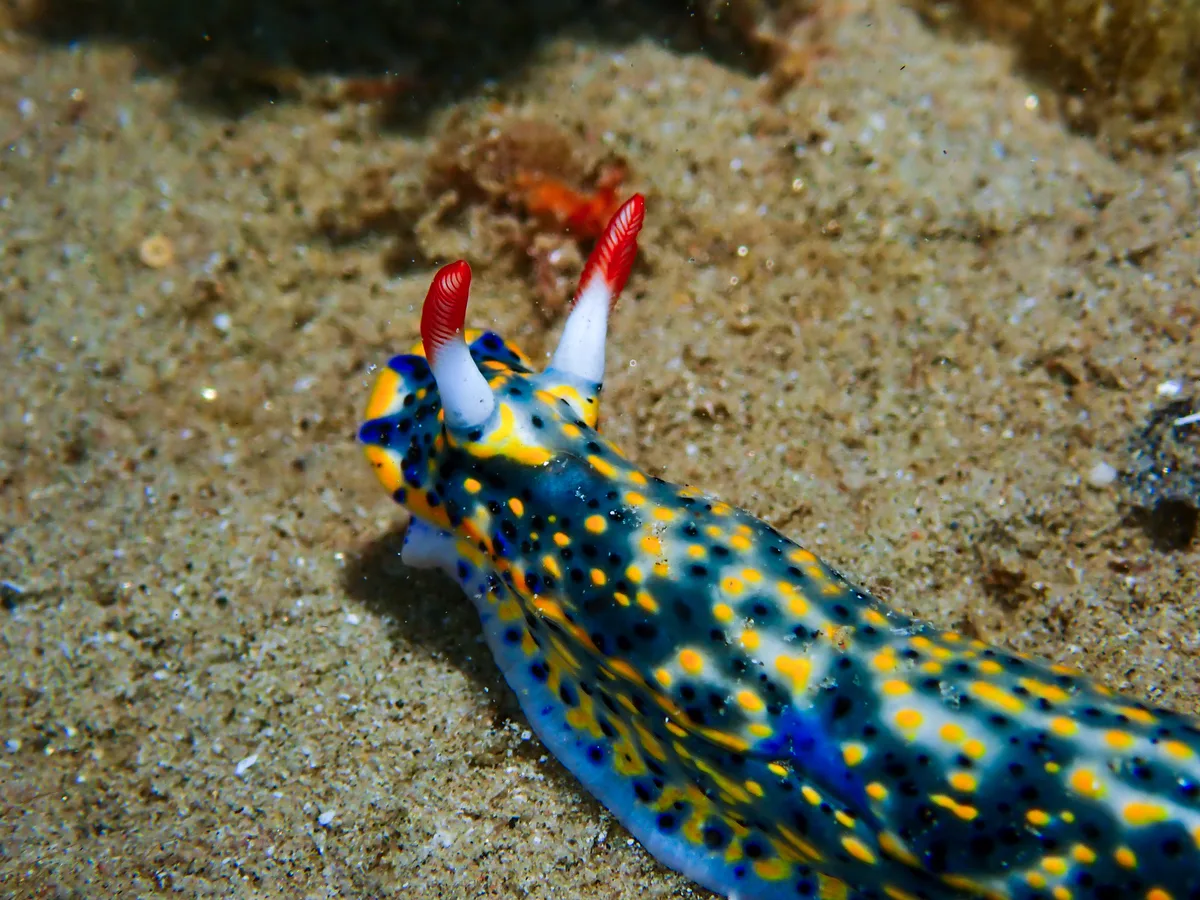
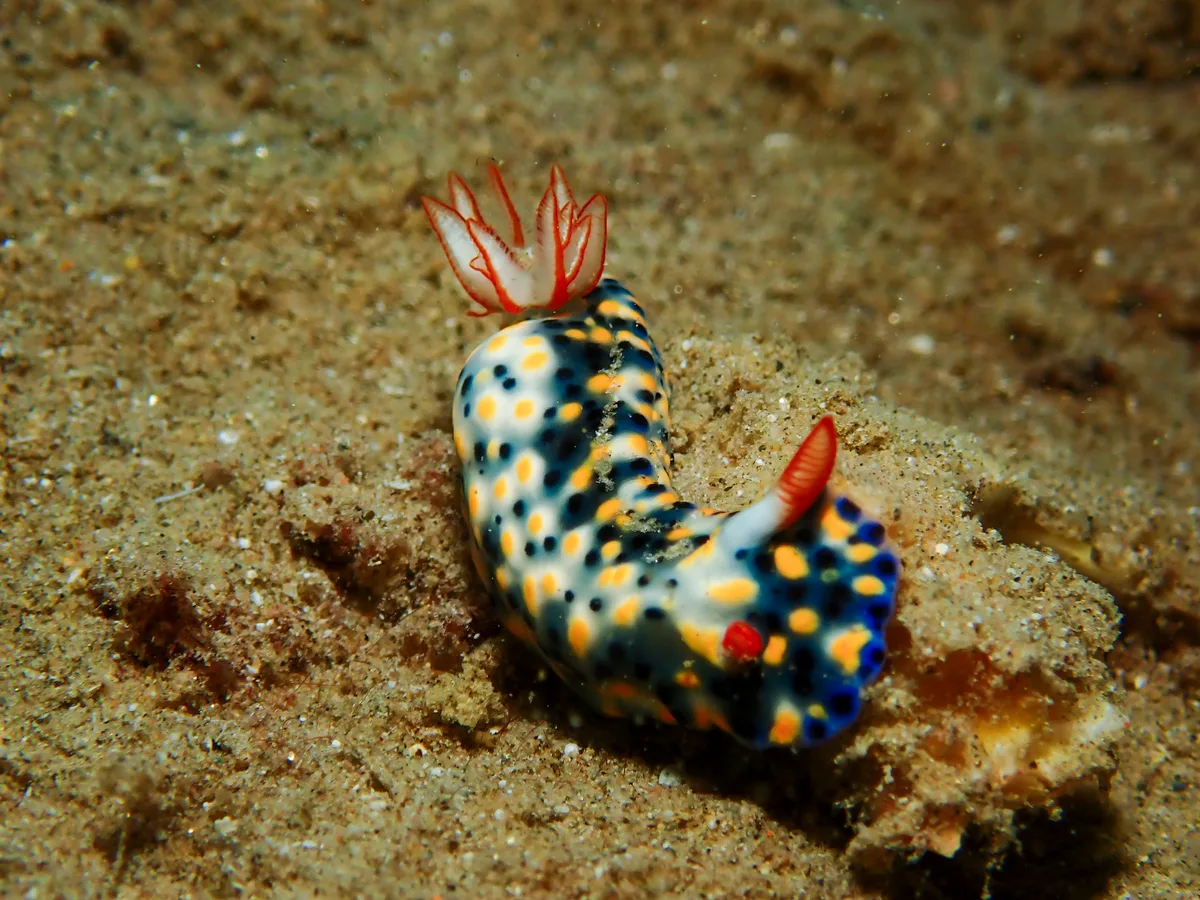
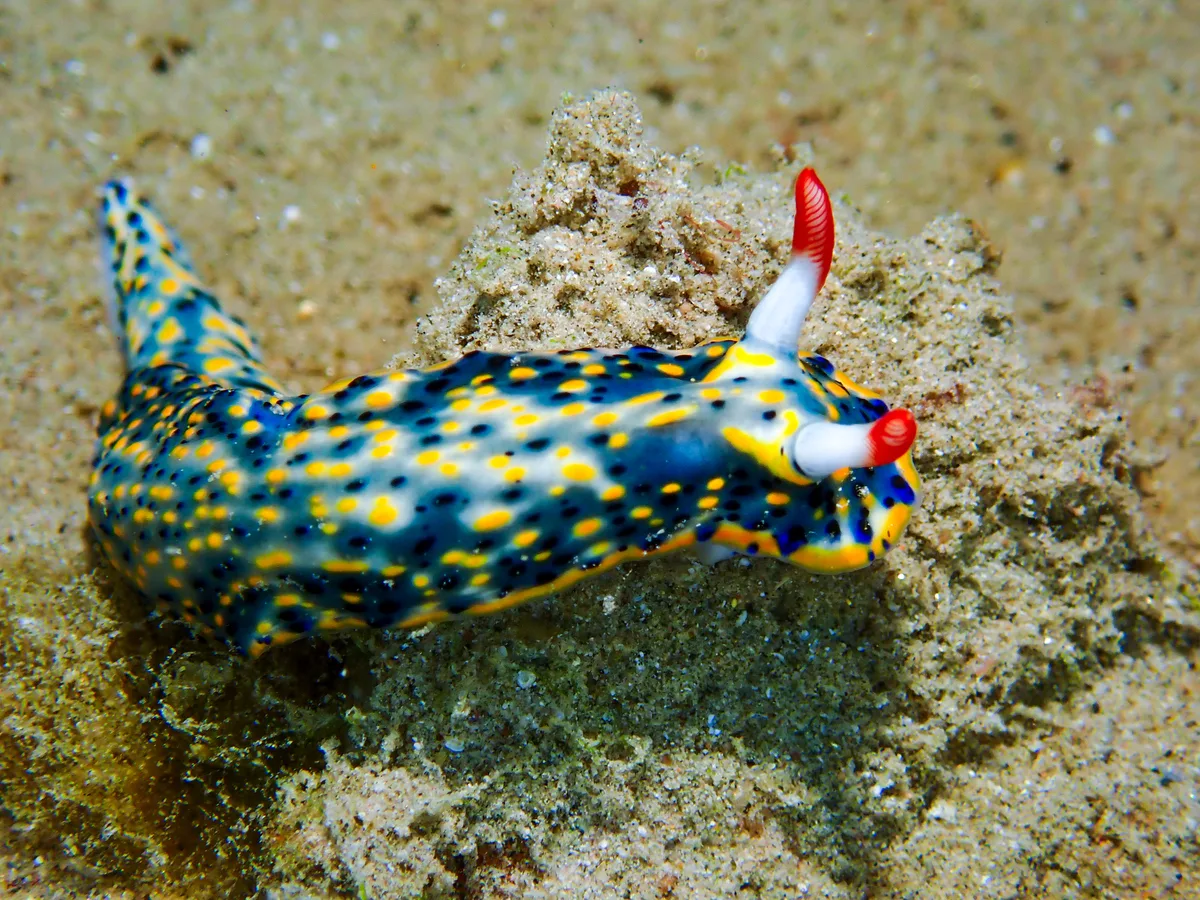
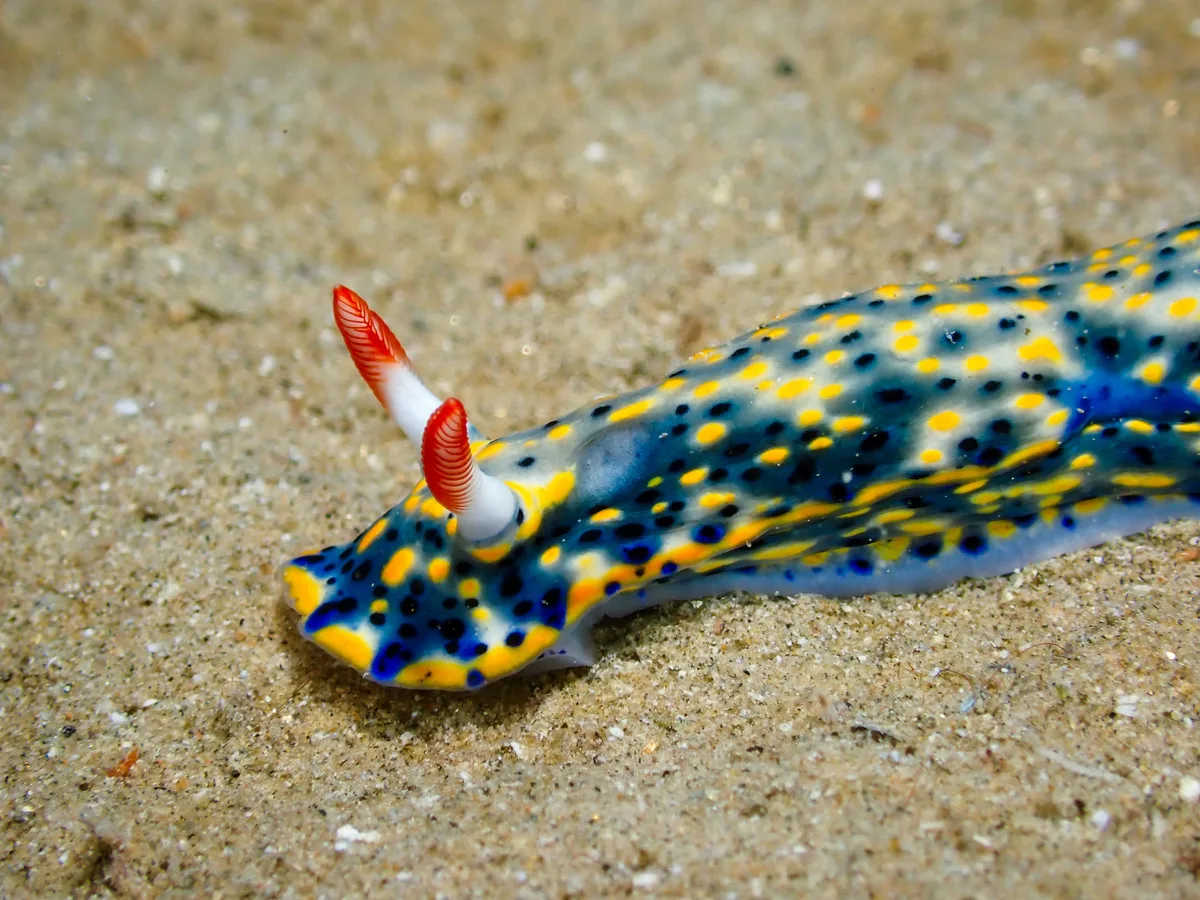
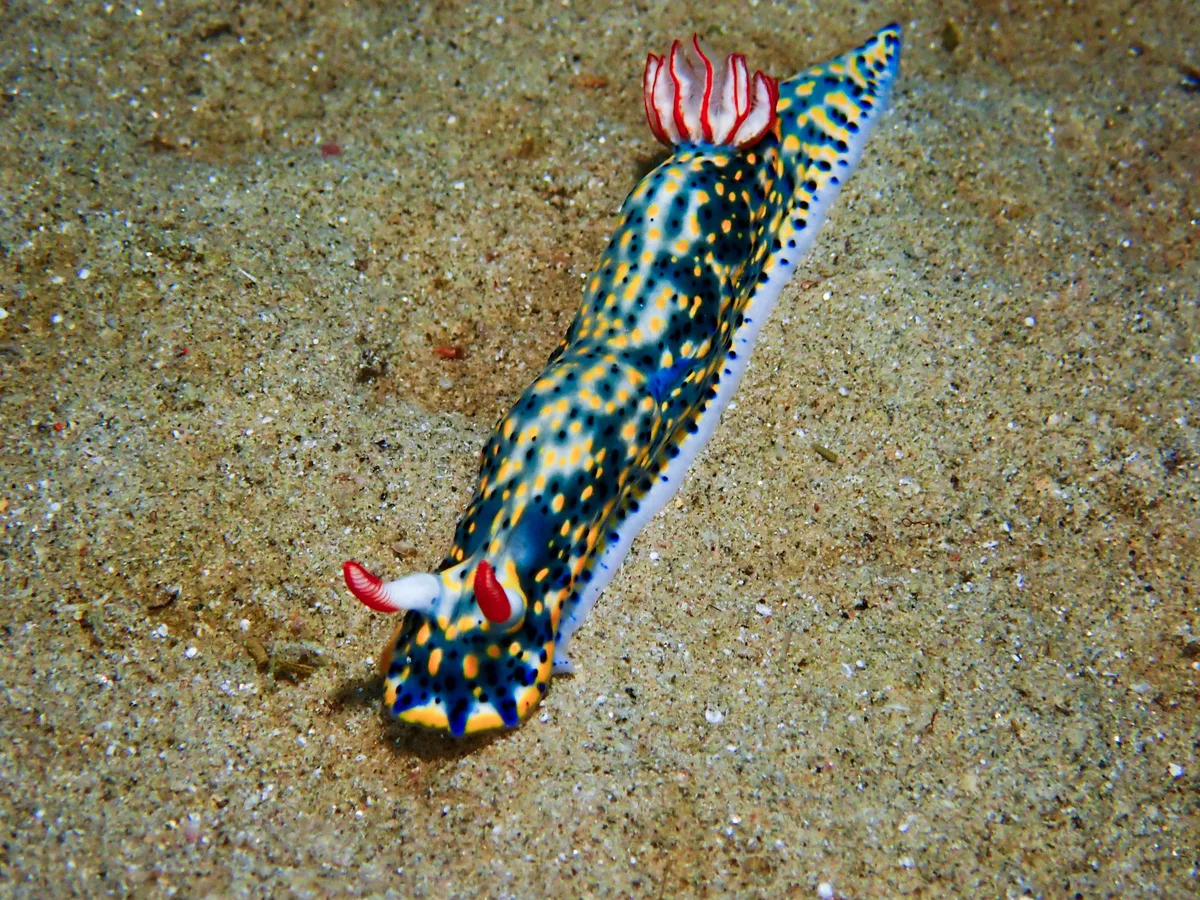
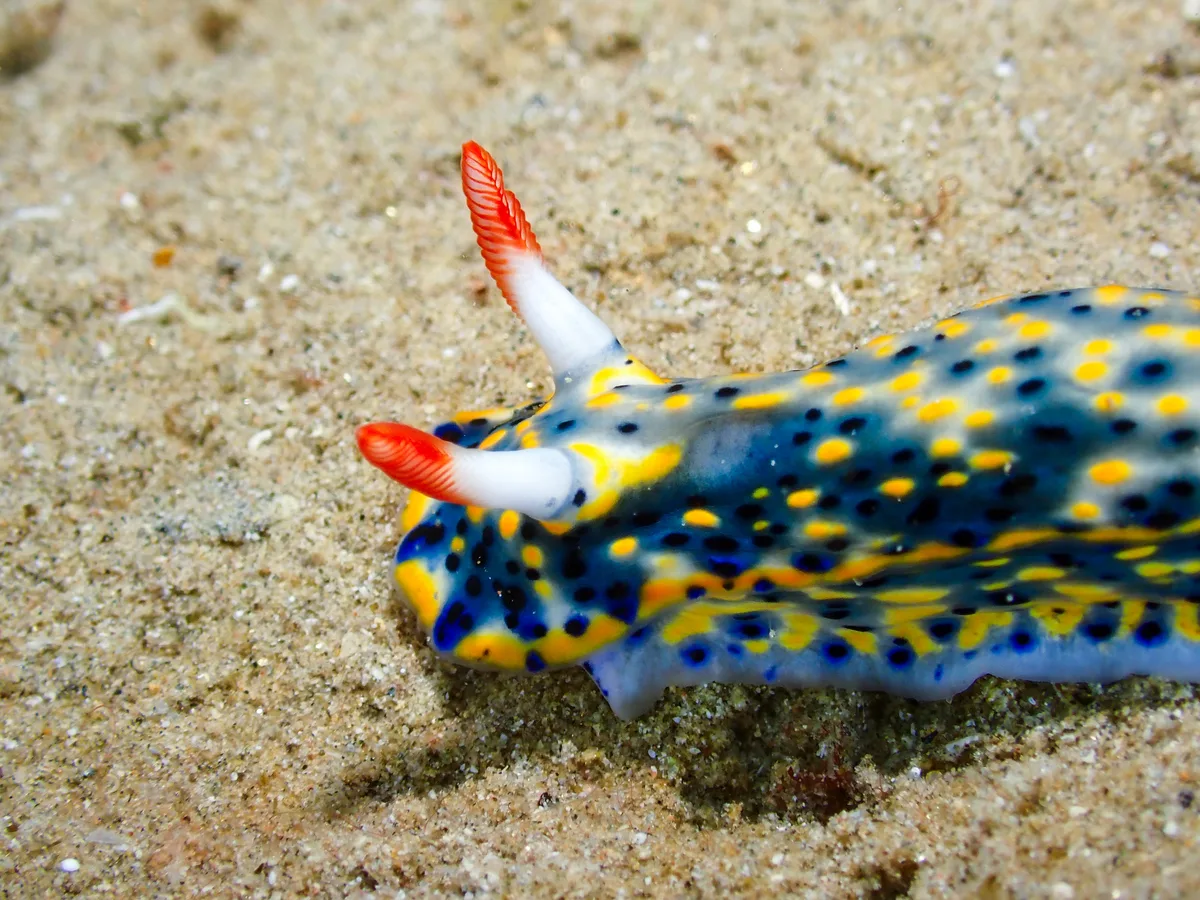
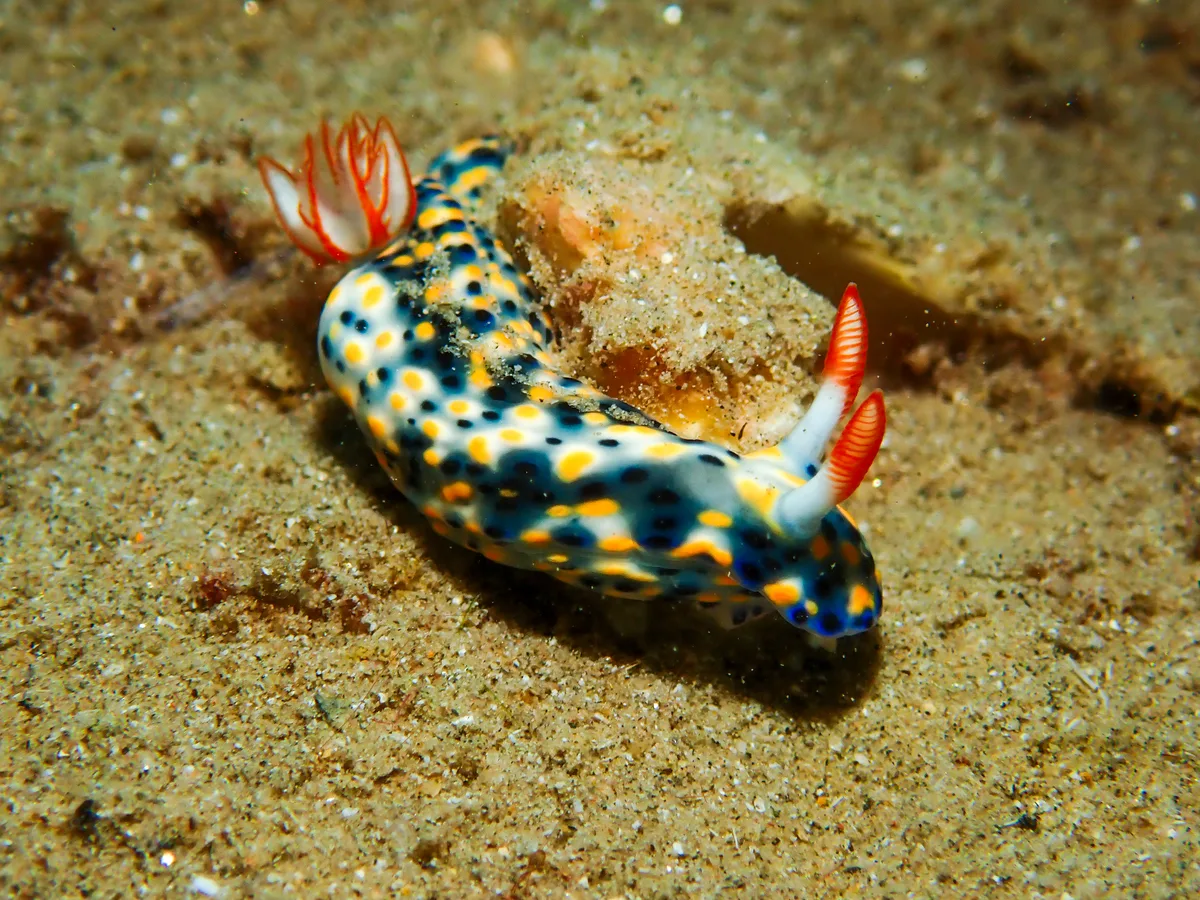
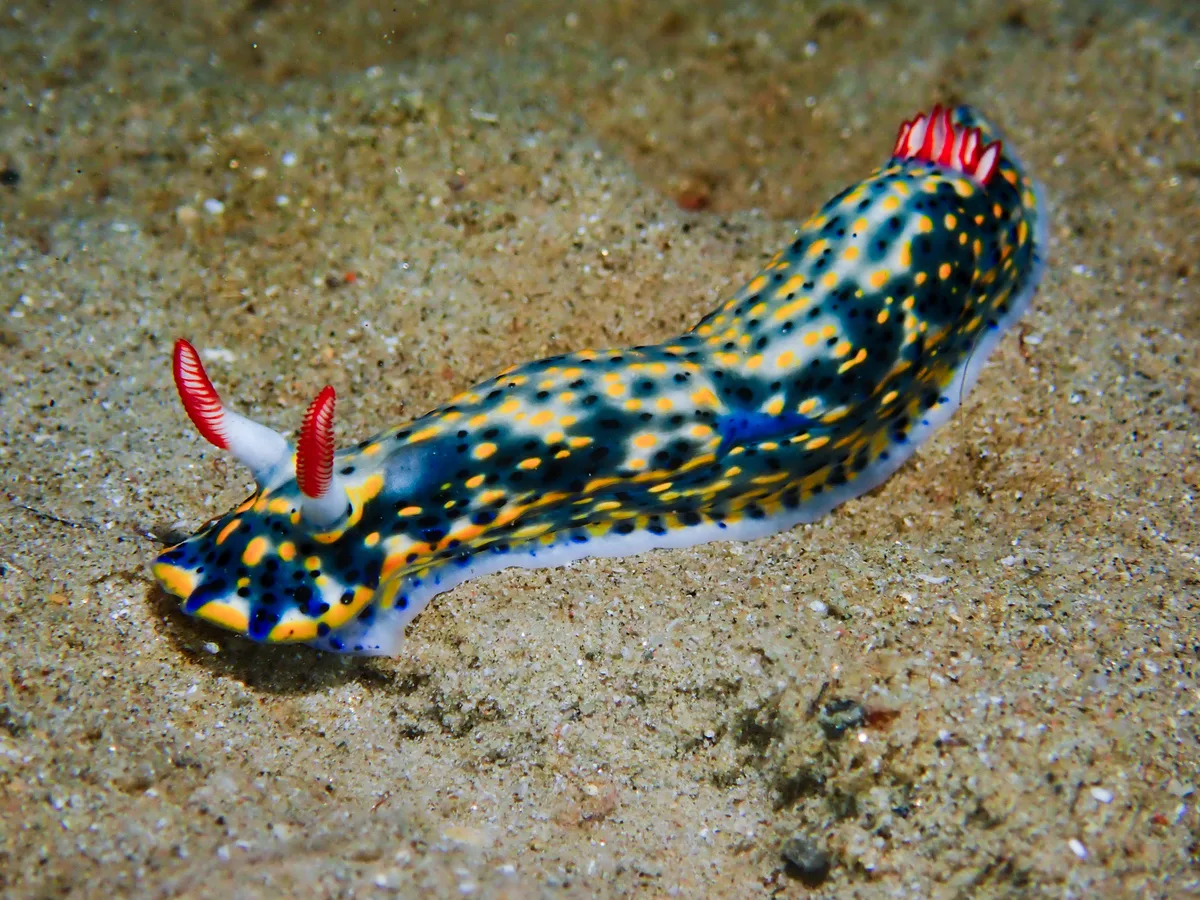
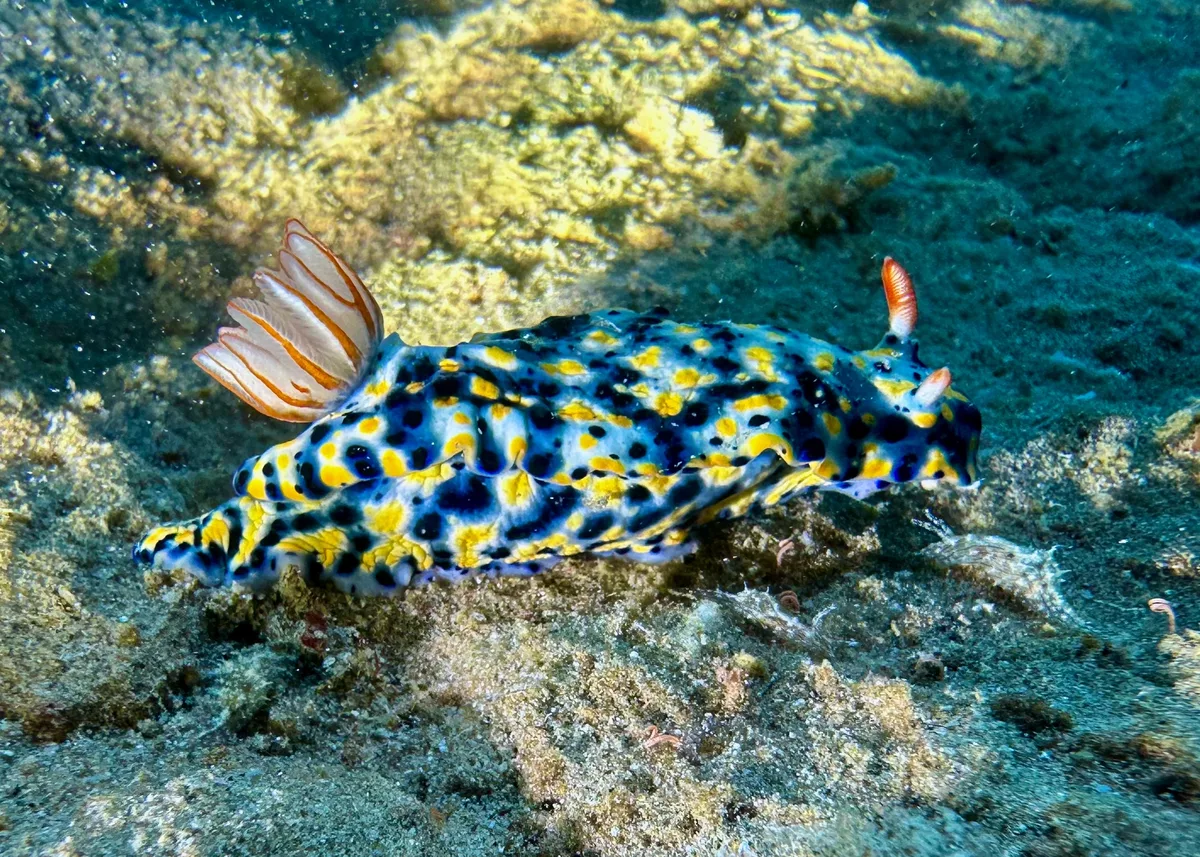
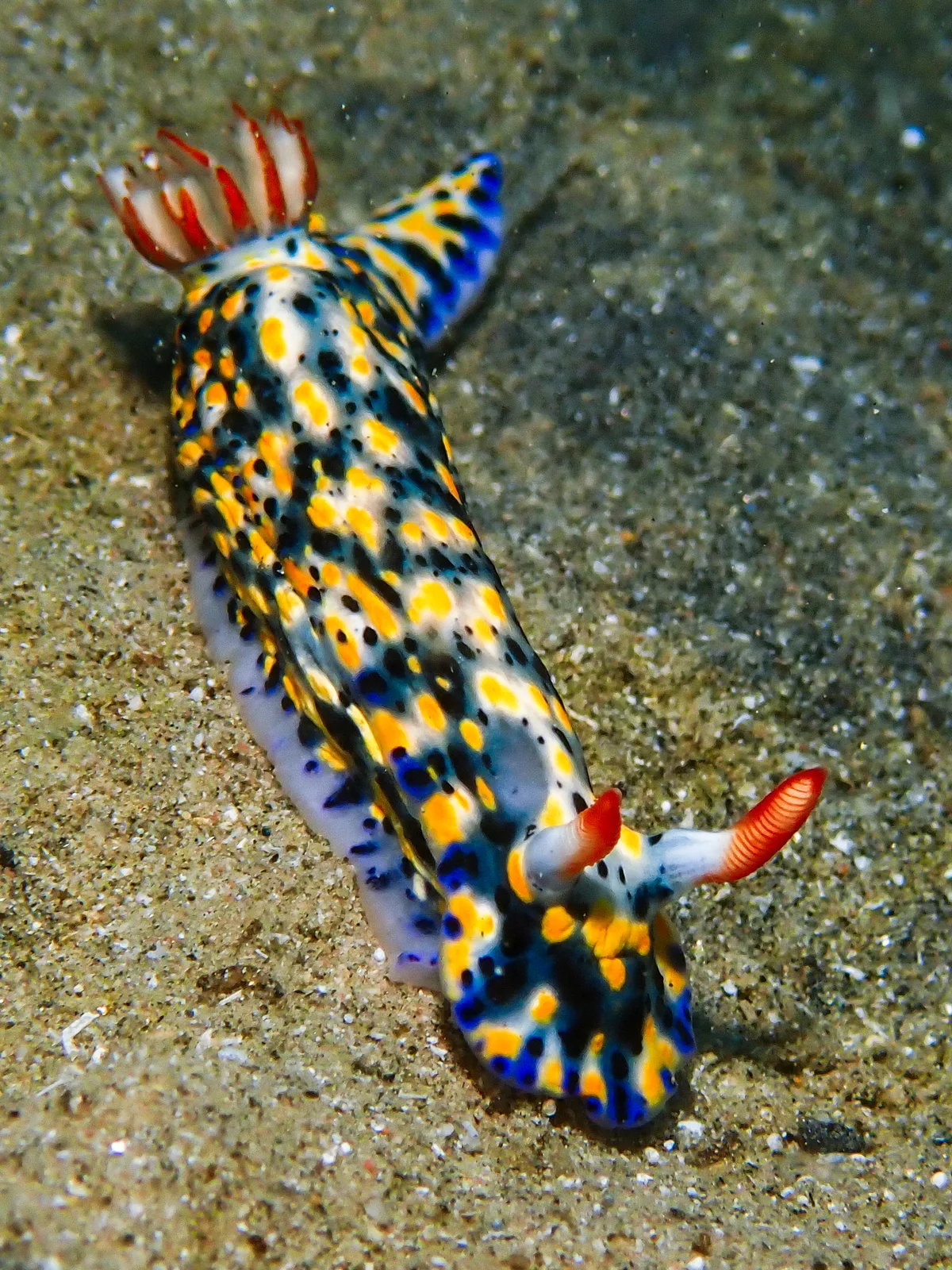
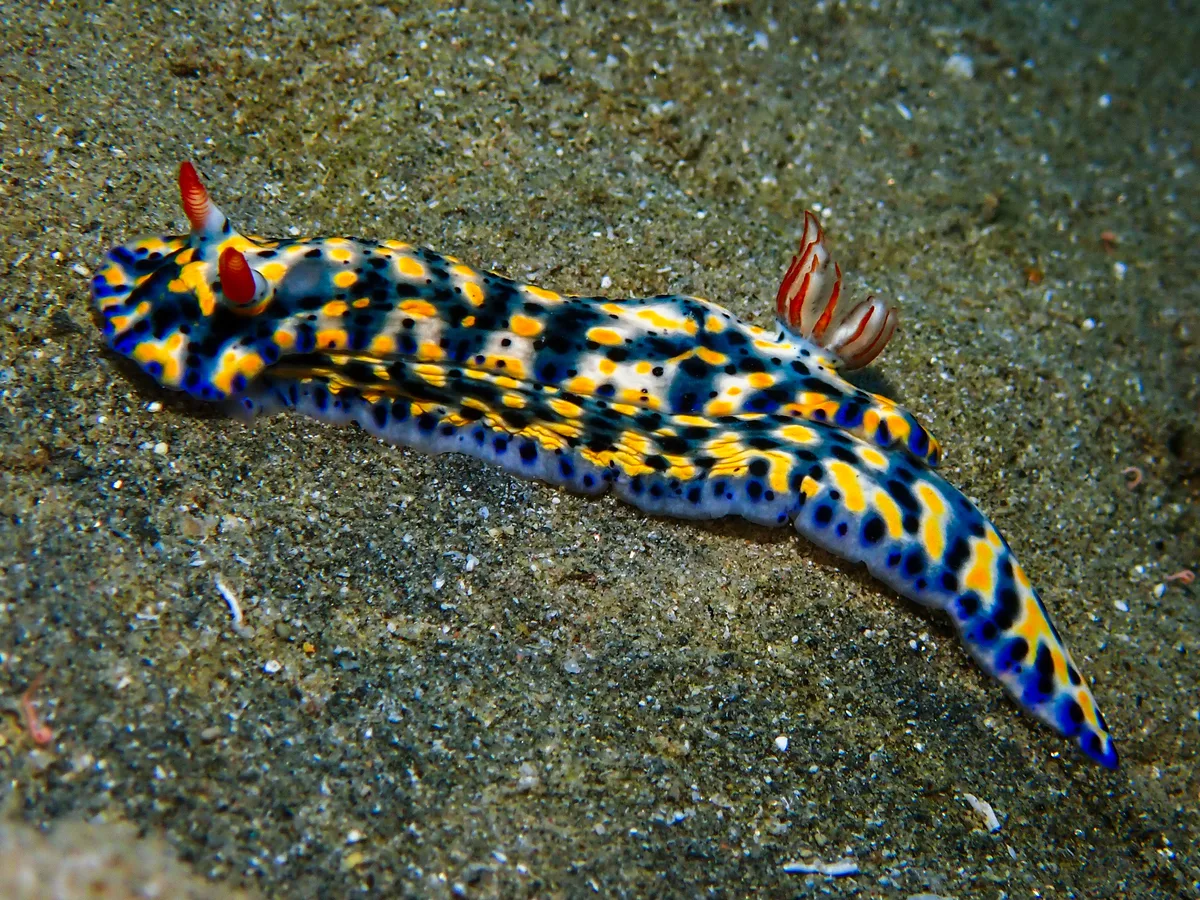
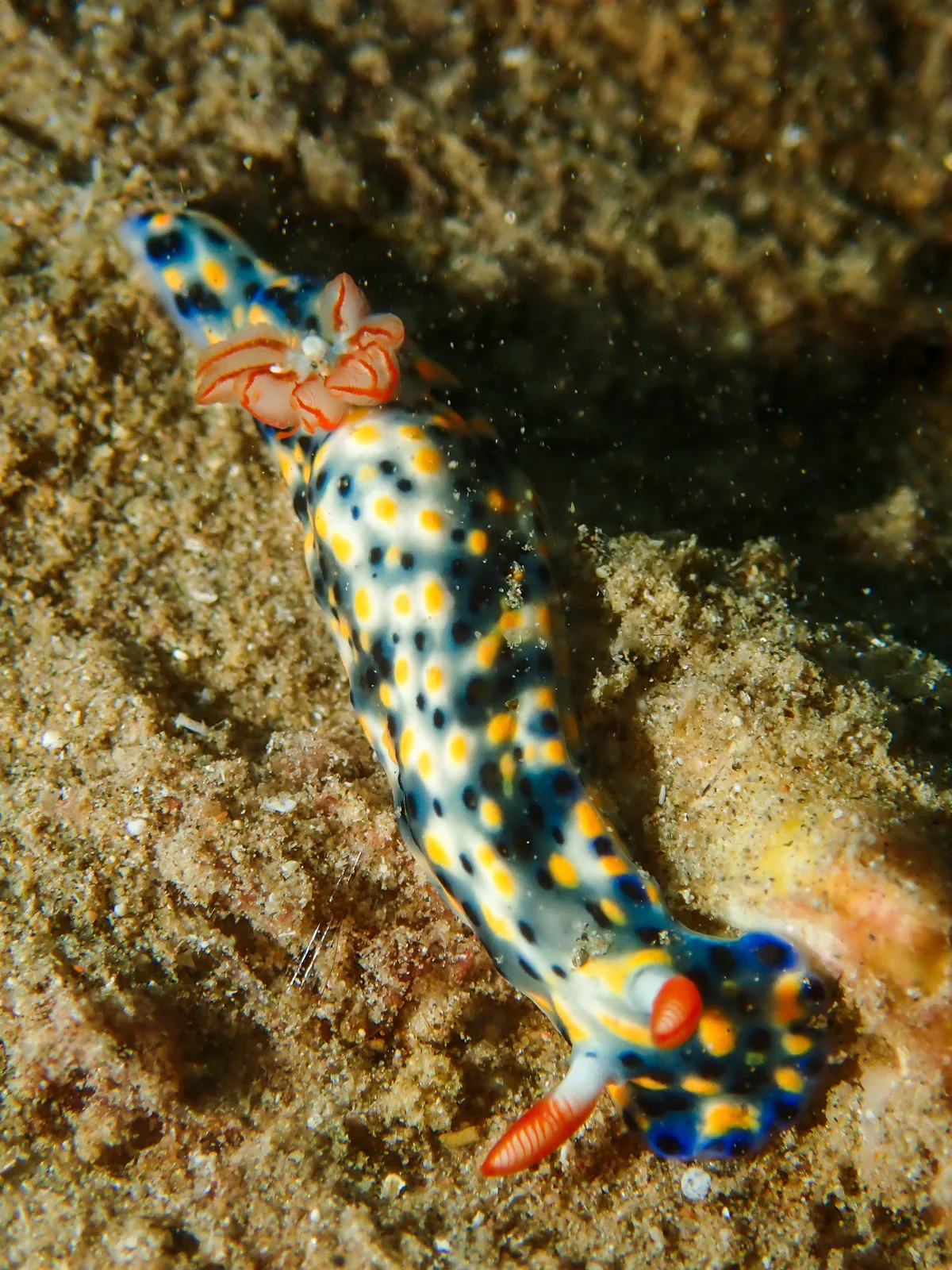
Five centimeters (2 in) of white slug scattered with blue-gray patches, yellow spots and black speckling, crawling across open rock in broad daylight and making no attempt whatsoever to hide. On a reef where everything else is camouflaged, cryptic or in a hole, that is a statement.
It can afford it because of what it eats. This nudibranch feeds on sponges, and sponges are chemical factories - the terpenoids they use to stop themselves being eaten. The slug digests the sponge, extracts those compounds intact, and stores them in glands packed around the rim of its own mantle, where a predator's first bite lands. The colors are the advertisement for that arrangement, and fish learn them quickly.
It was described from this sea in 1830 and has since done well elsewhere: it ranges east to Hawaii (🇺🇸 United States), and it went north through the Suez Canal (🇪🇬 Egypt) to establish itself in the Mediterranean, one of the few nudibranchs to make that crossing.
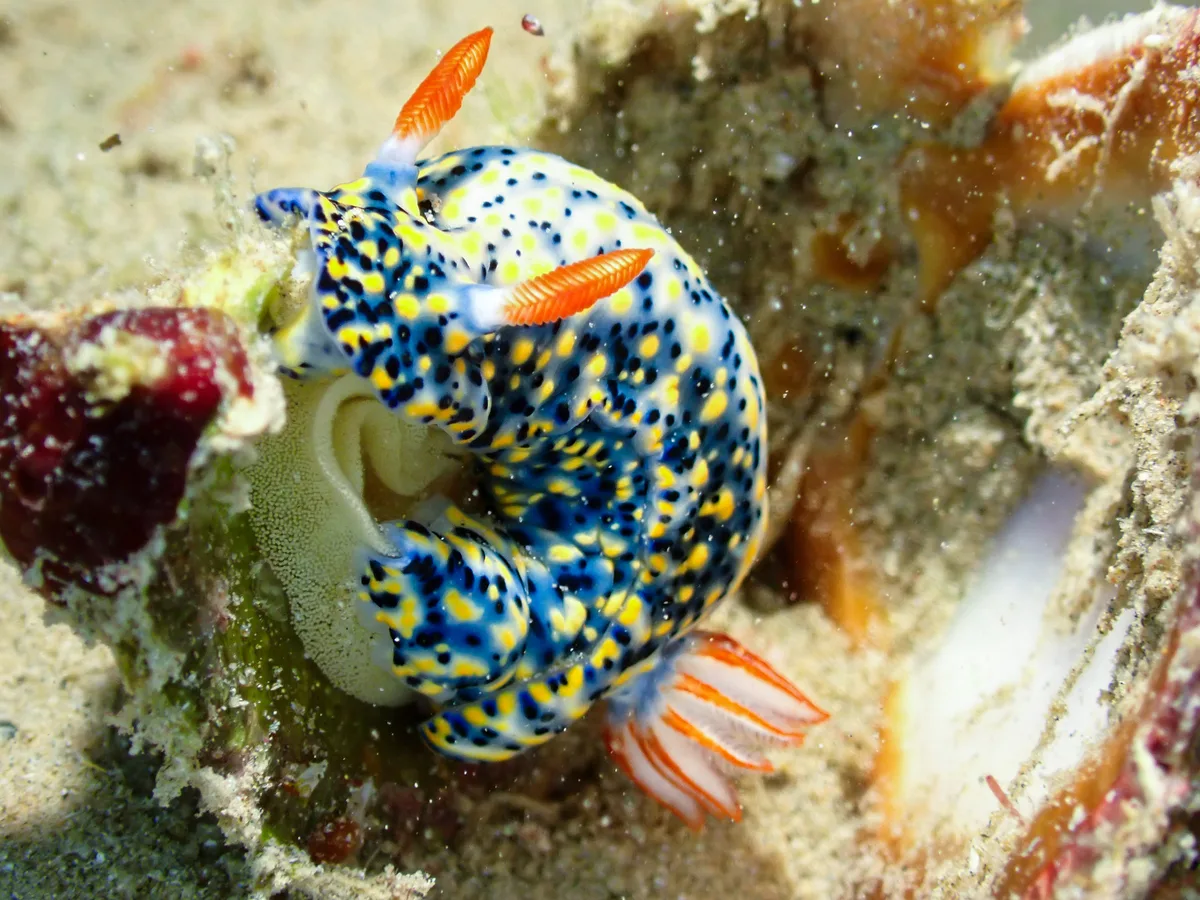
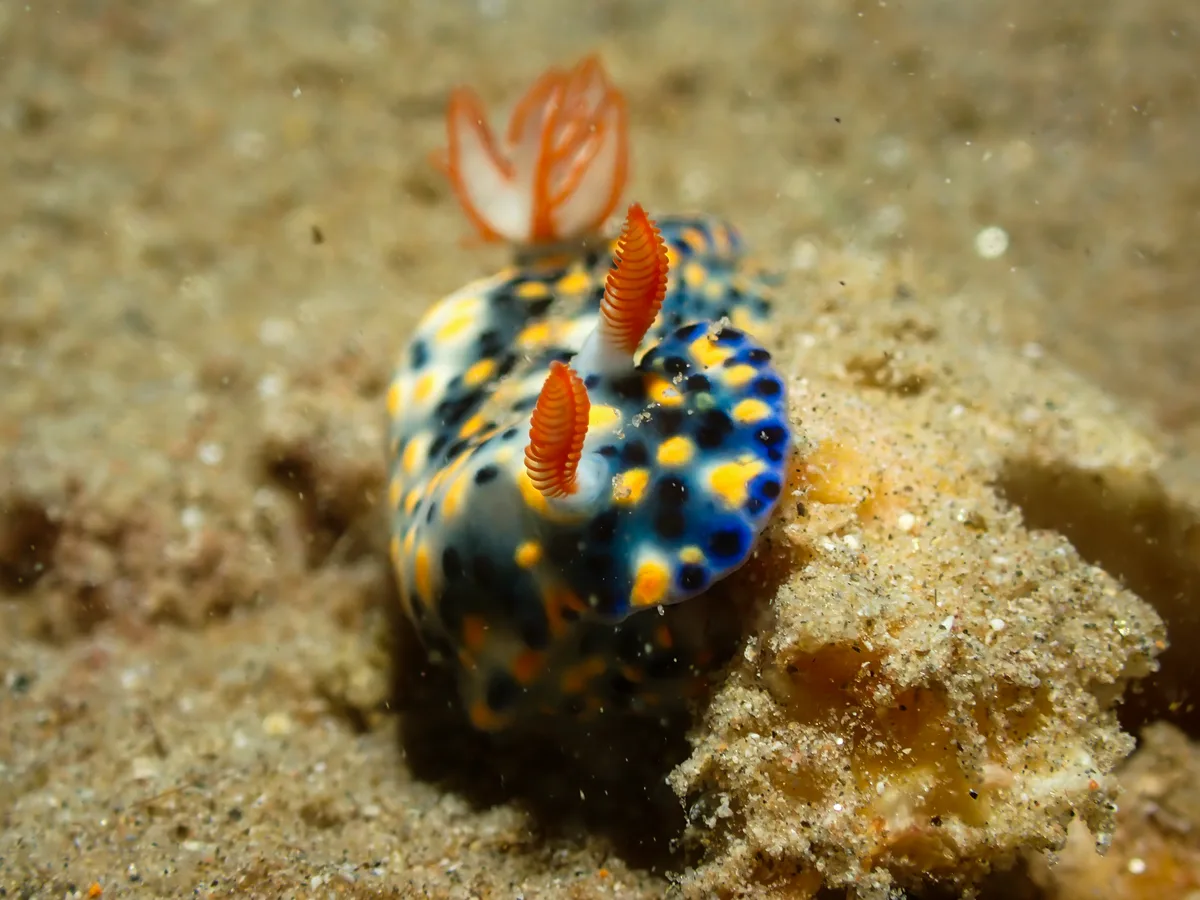
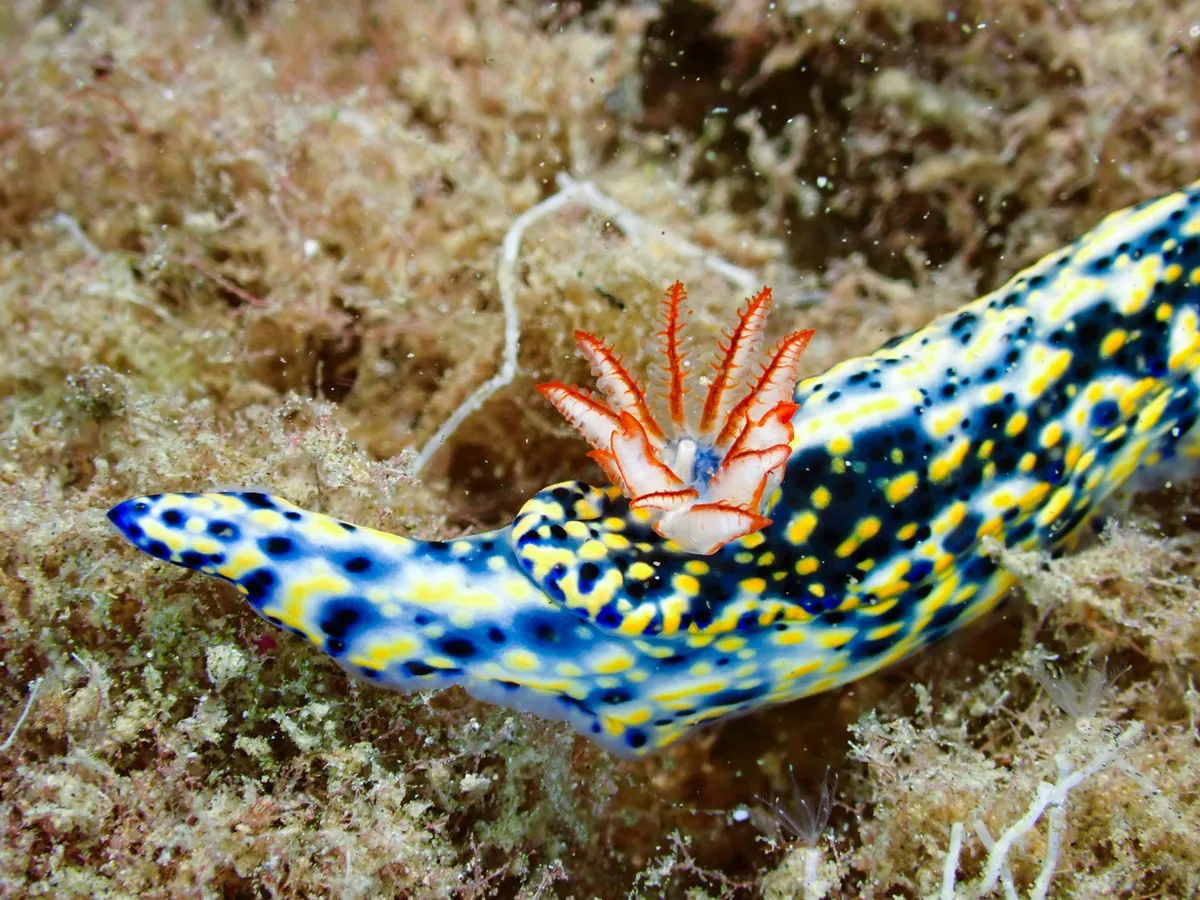
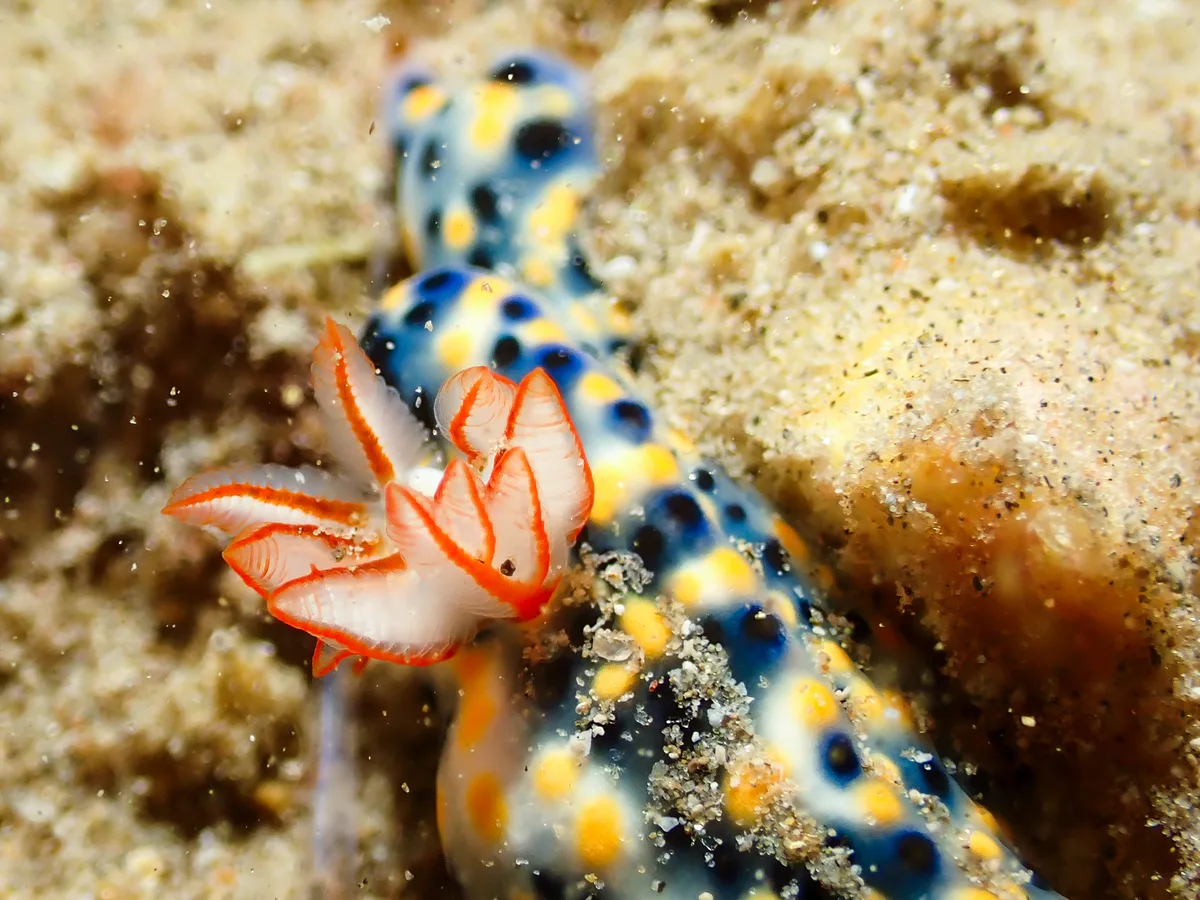
Telling it from its relatives comes down to the gills. Here each gill has a single red line down its outer face; in the similar Hypselodoris kanga, H. roo and H. confetti the outer face carries two edges and reads as triangular in profile. Like all sea slugs it is a simultaneous hermaphrodite - two animals meeting fertilize each other, and both go on to lay a coiled ribbon of eggs.
- translucent white body scattered with blue-gray patches, yellow spots and fine black speckling
- white gills with a single red line down the outer face of each
- white rhinophores with red edges to the lamellae
- crawls in the open in daylight, making no attempt to hide
- length up to 5 cm