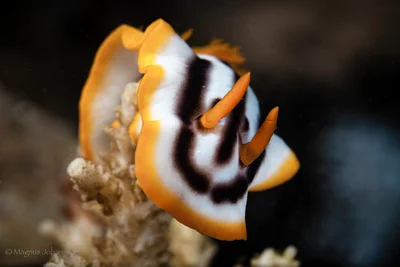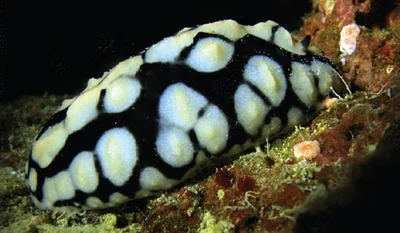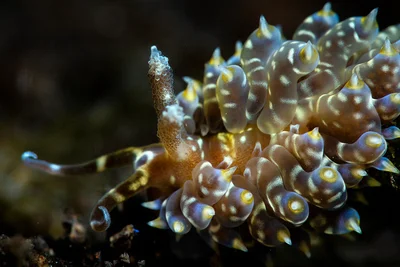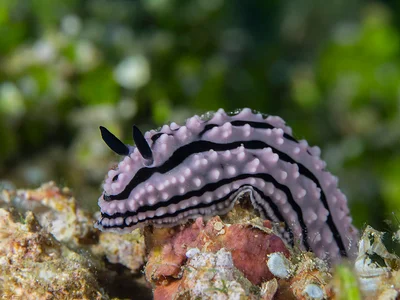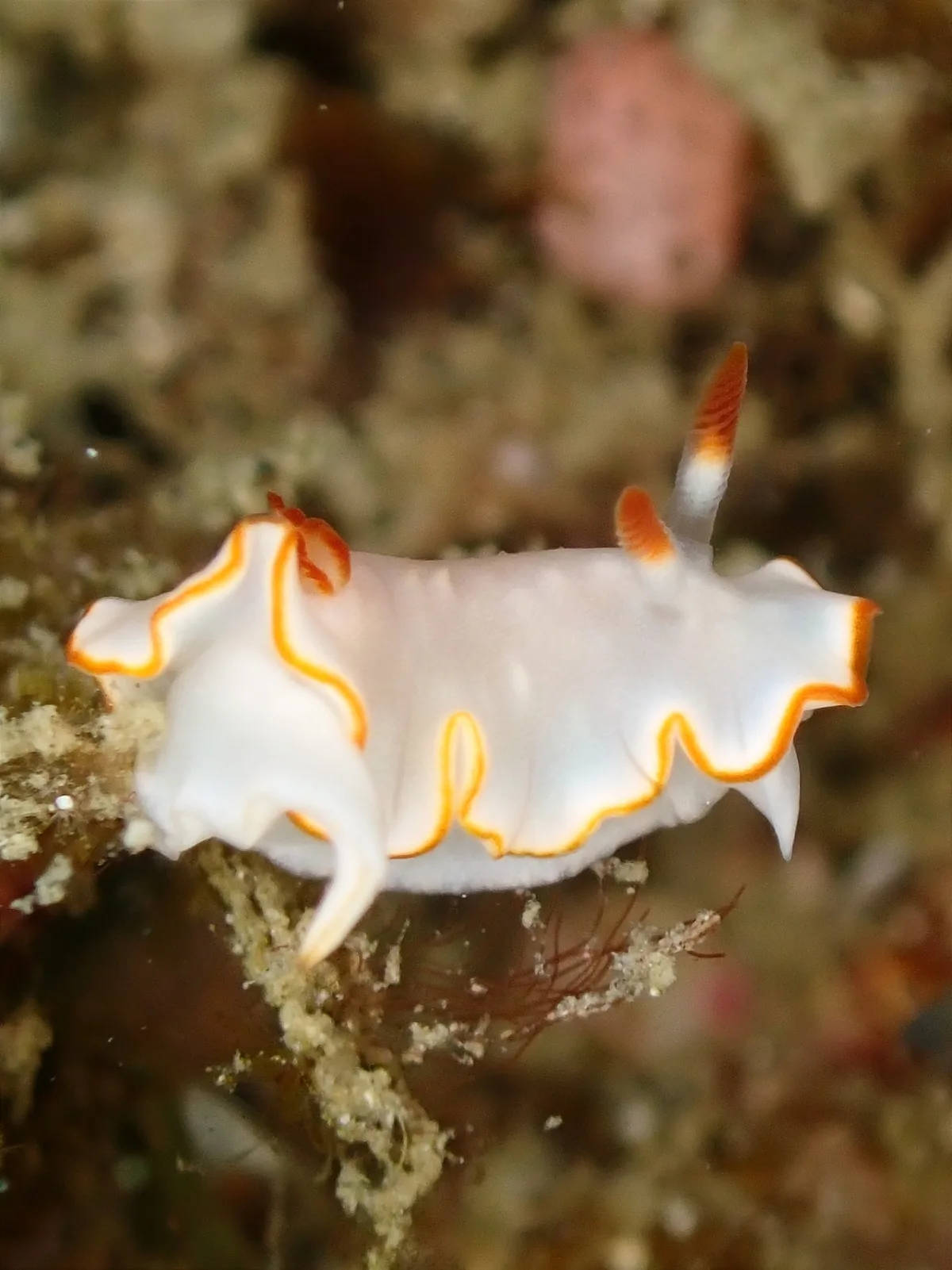
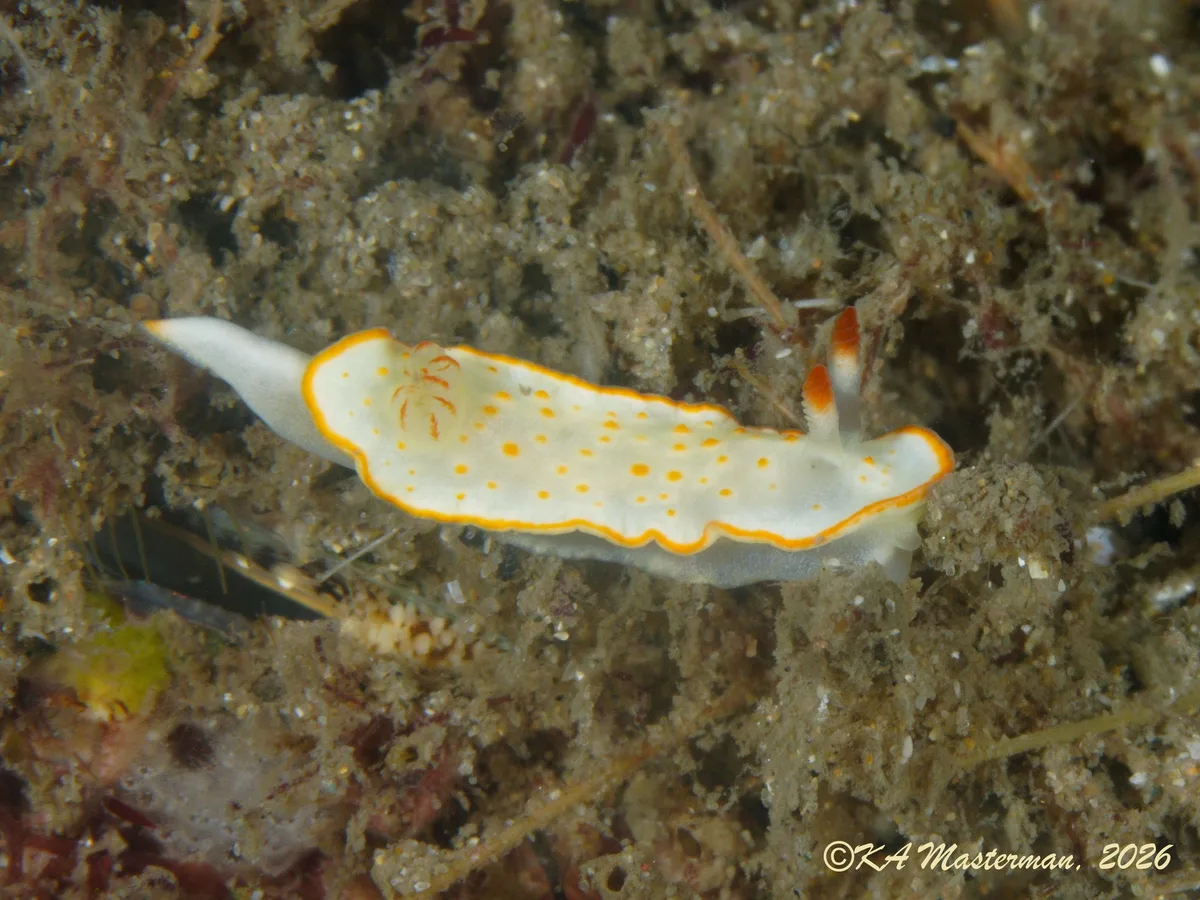
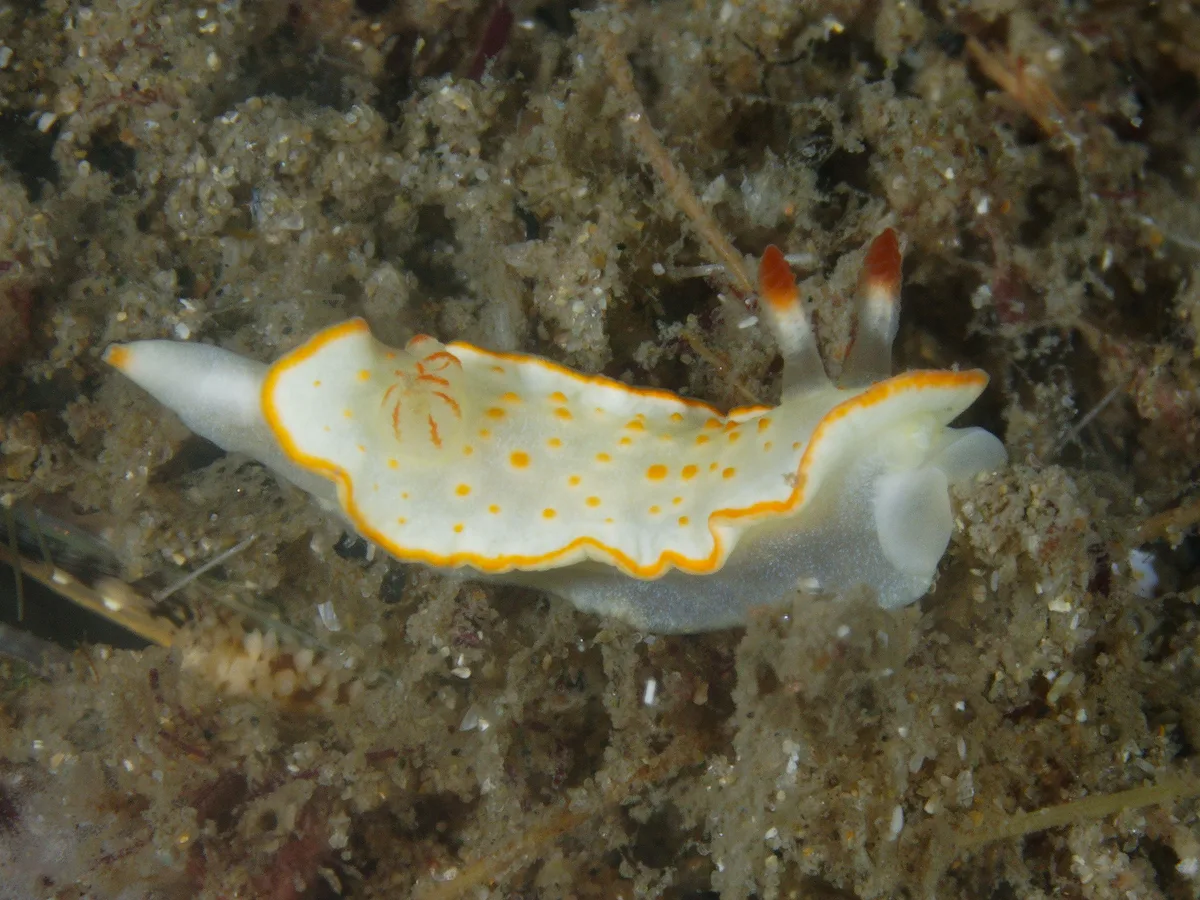
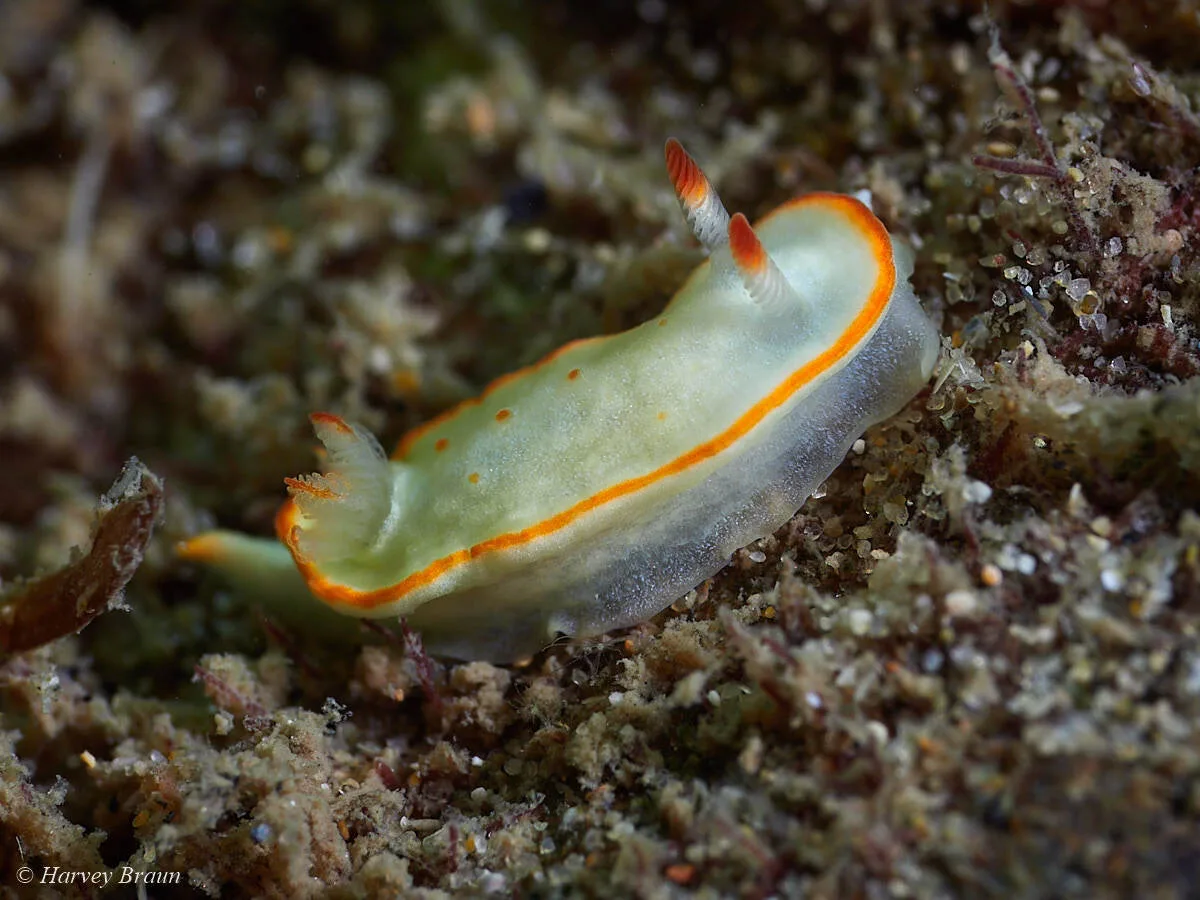
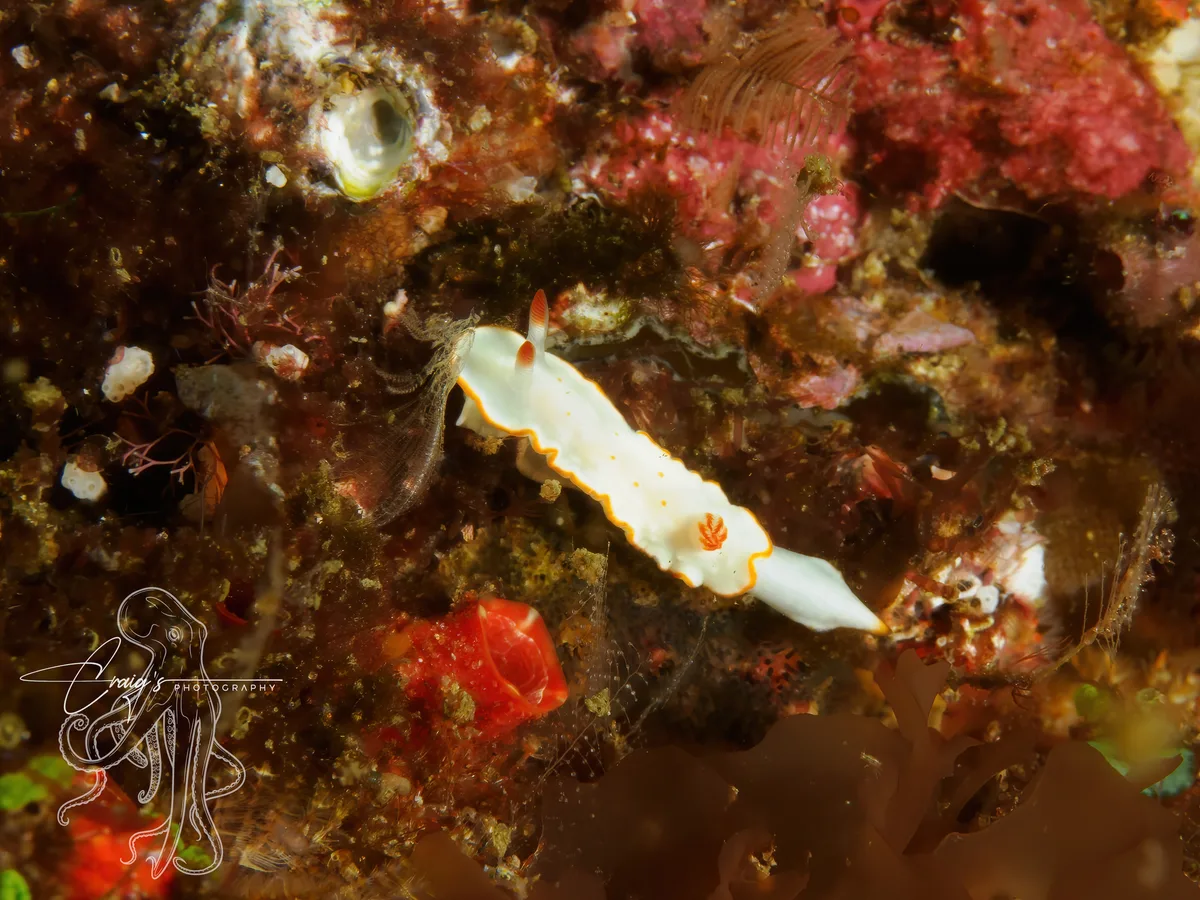
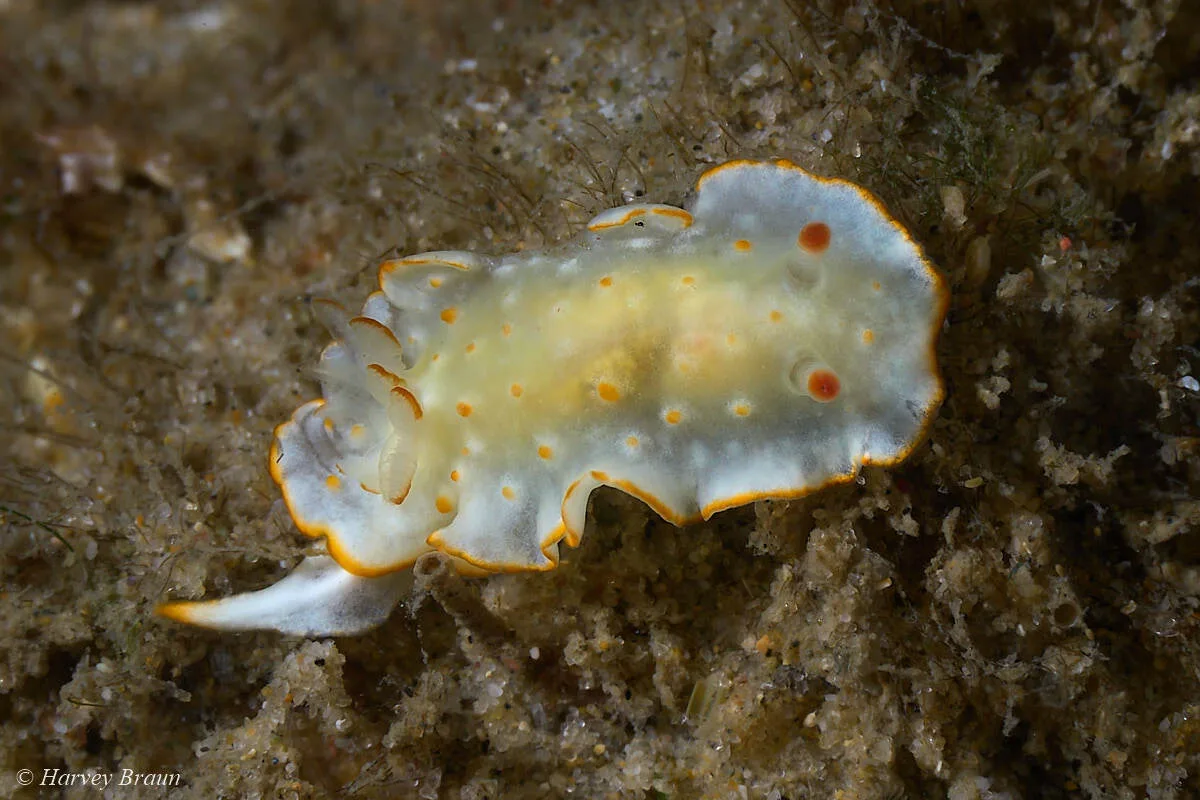
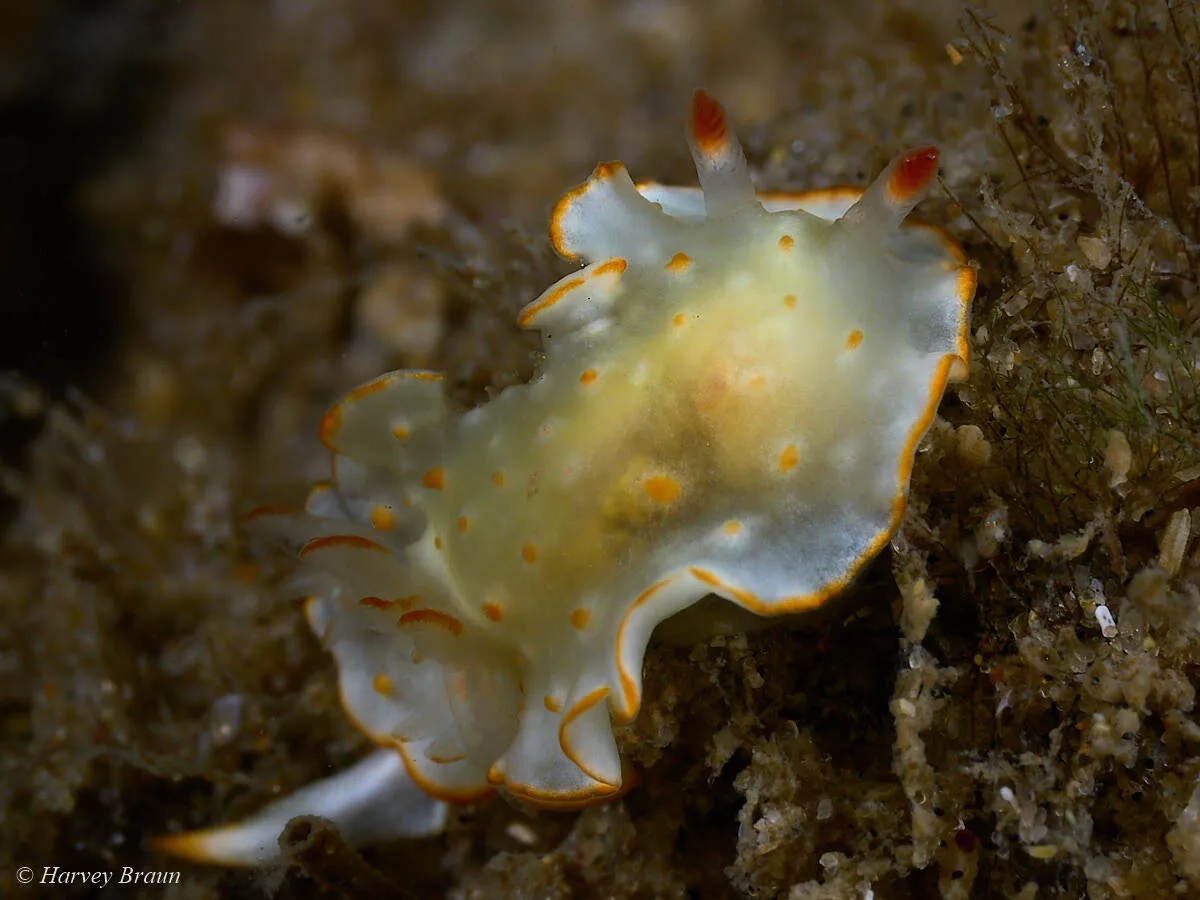
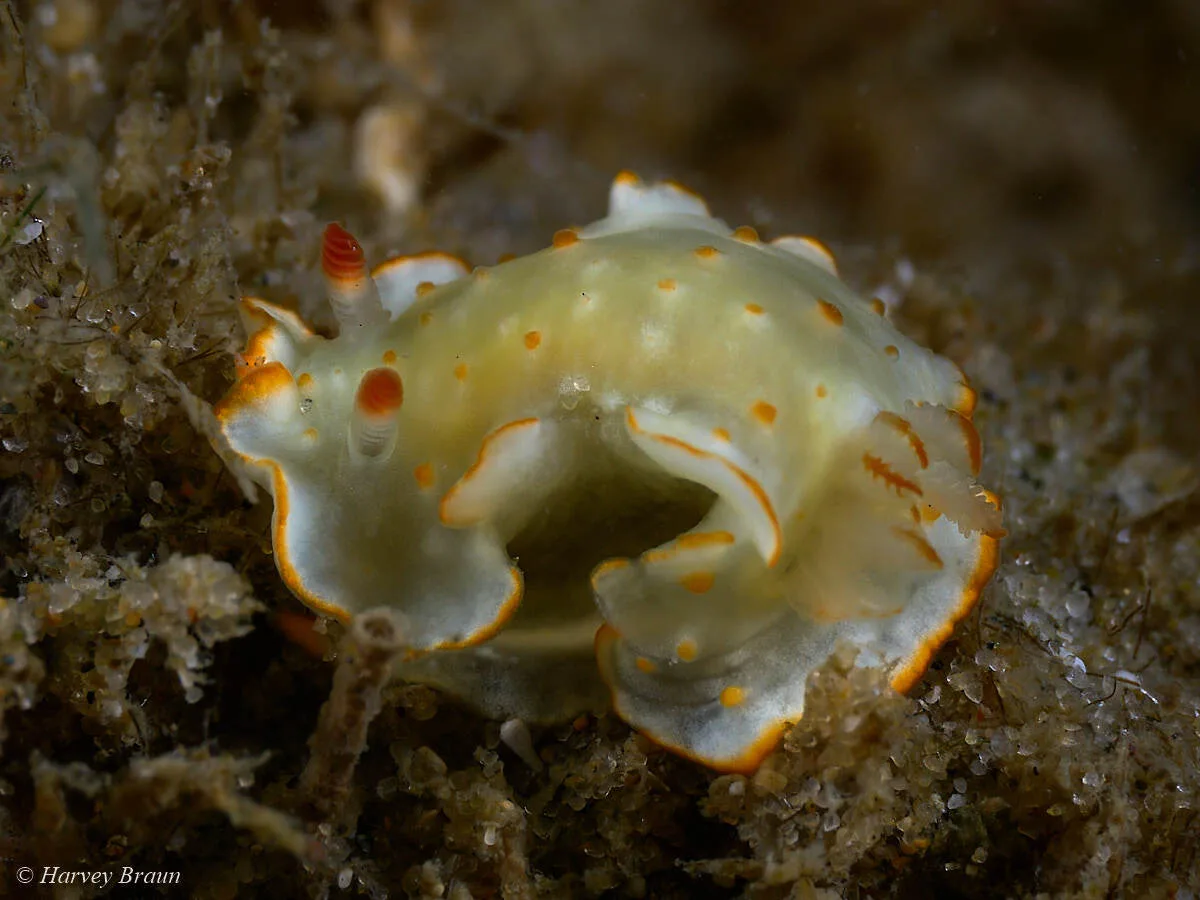
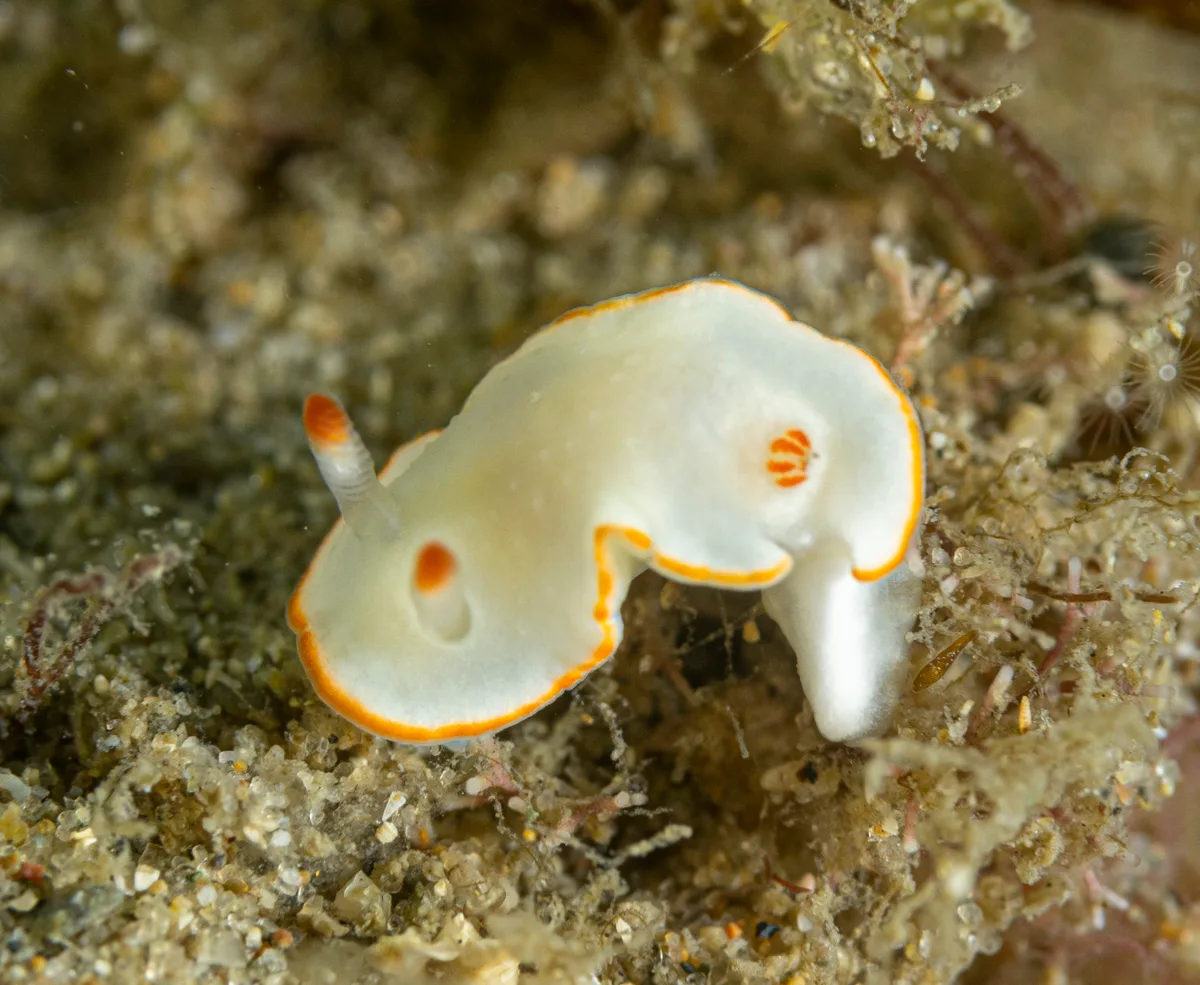
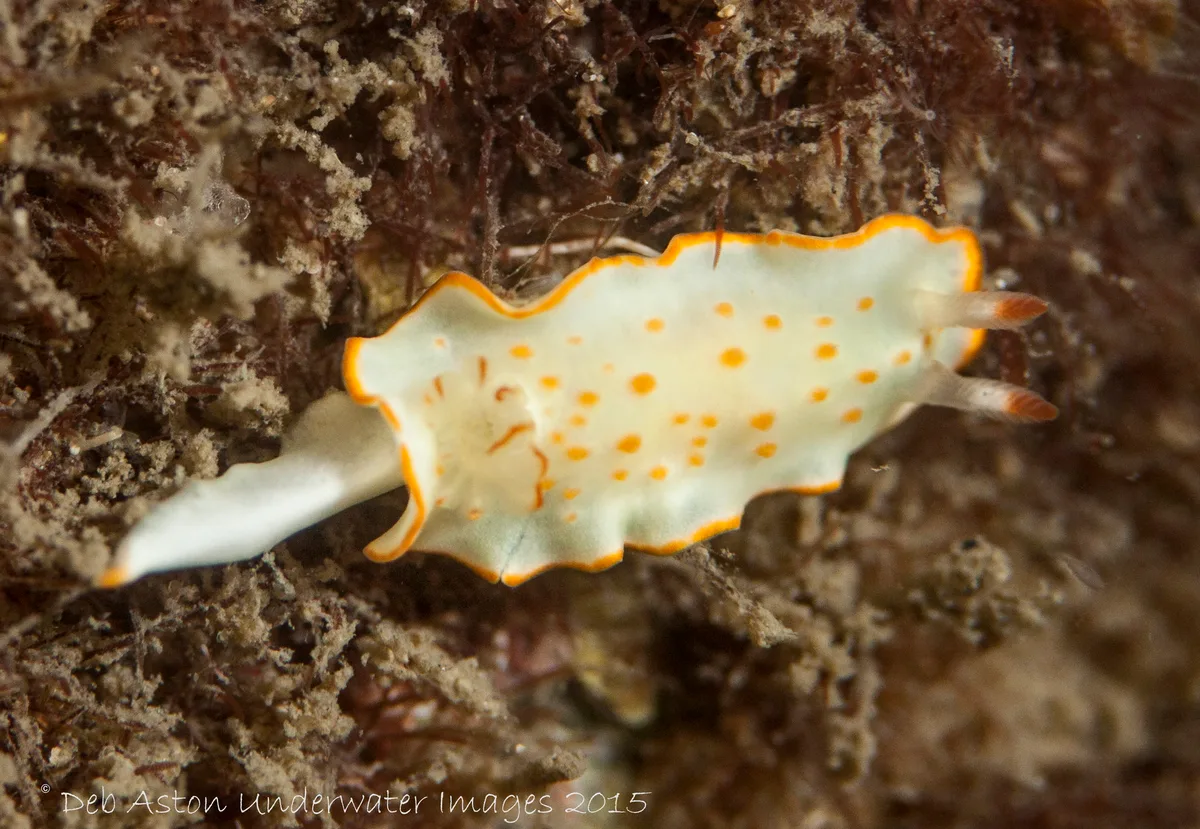
Diversidoris aurantionodulosa - Pelangan, Sekotong, West Lombok Regency, West Nusa Tenggara, Indonesia
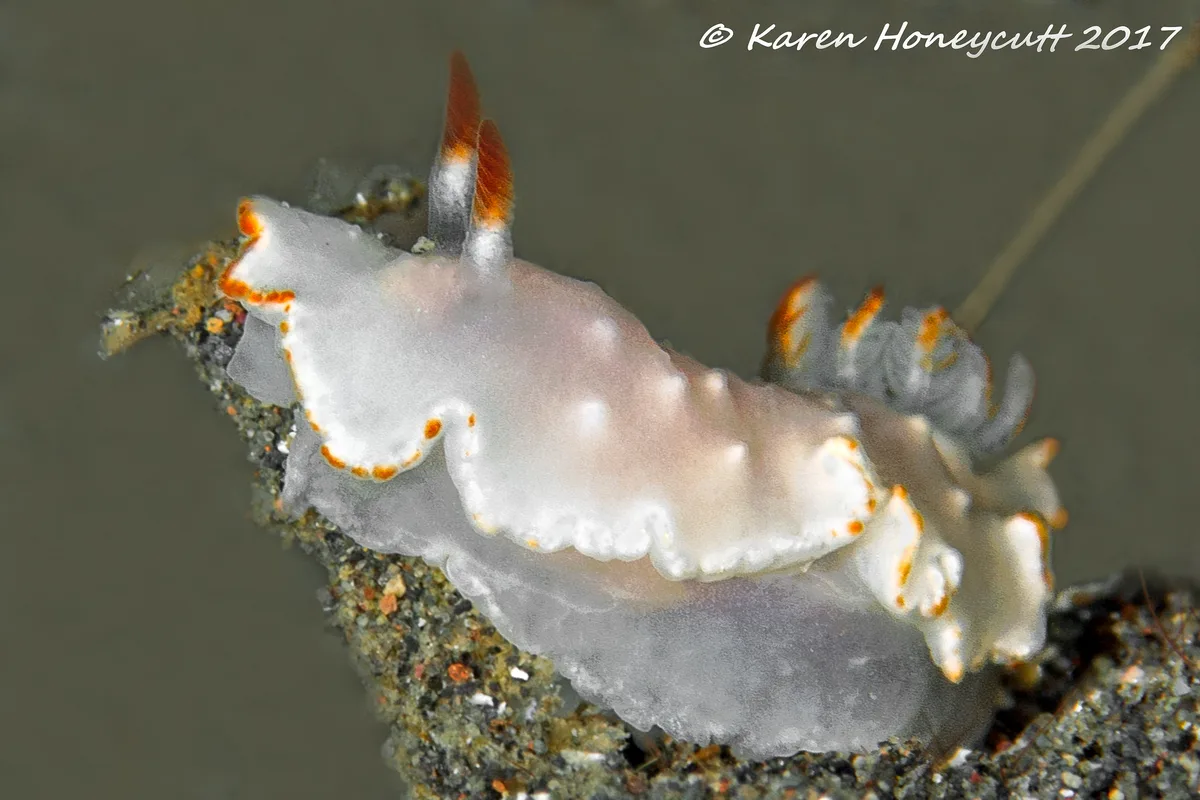
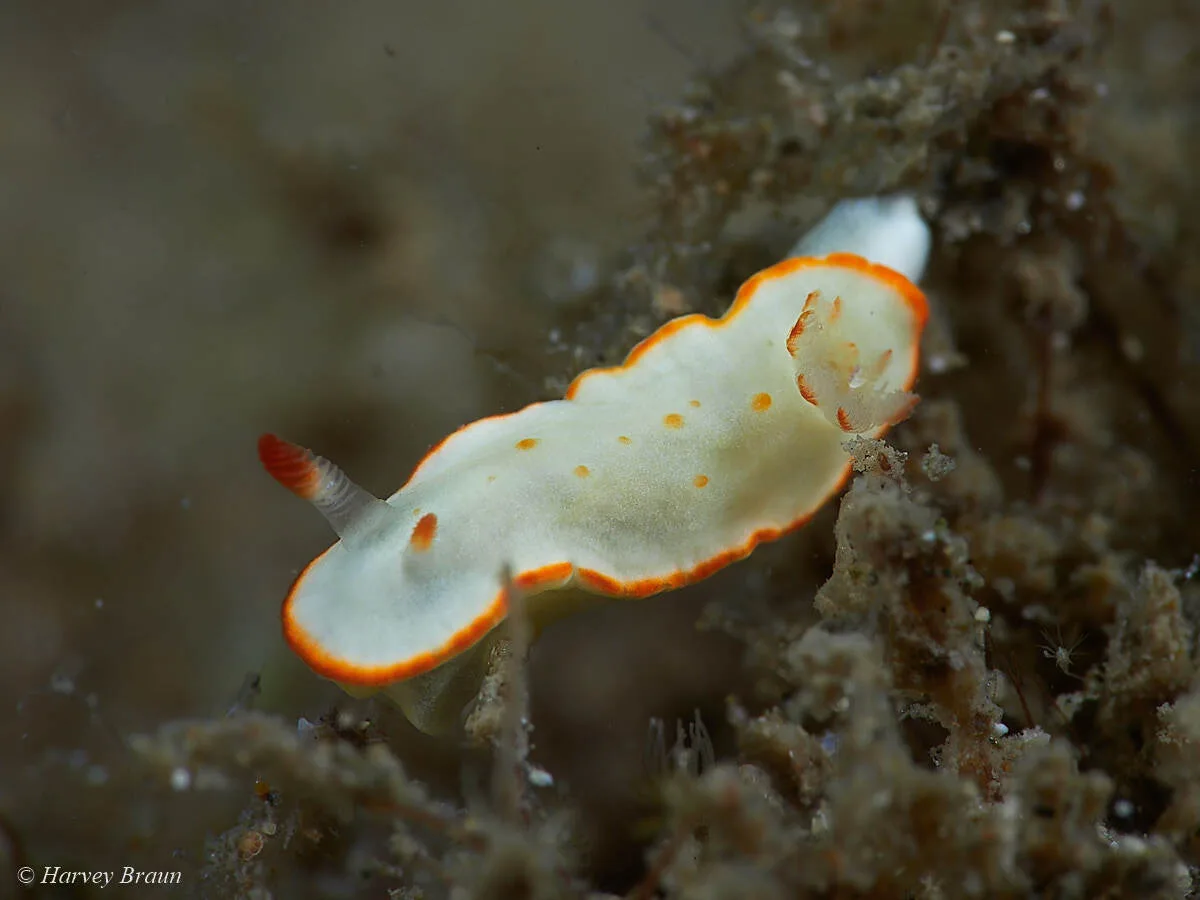
Diversidoris aurantionodulosa (Nudibranch) - Lembeh, Indonesia
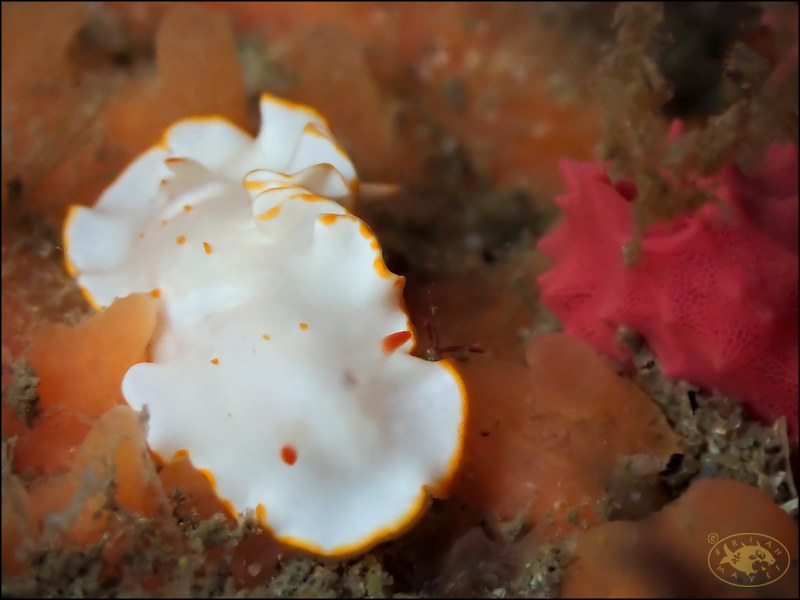
Nudibranch (Diversidoris aurantionodulosa)
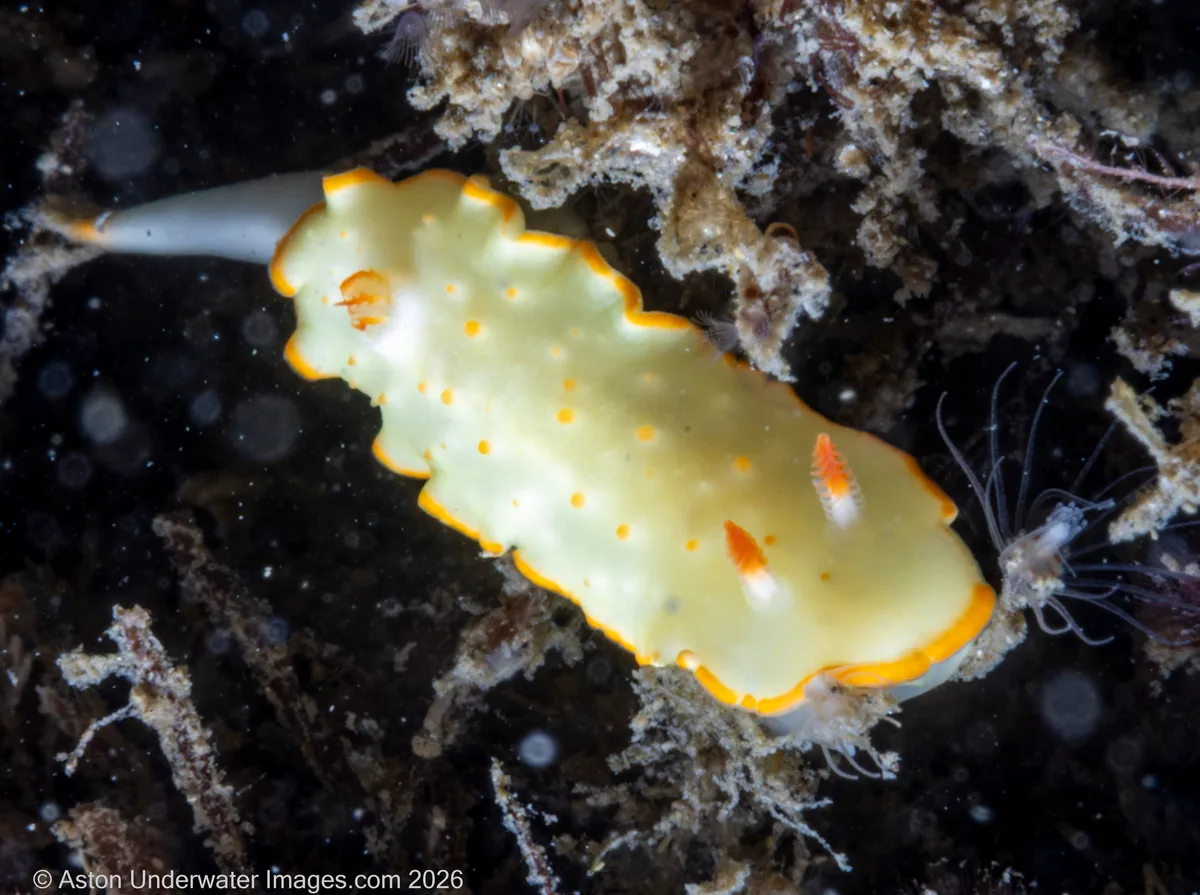
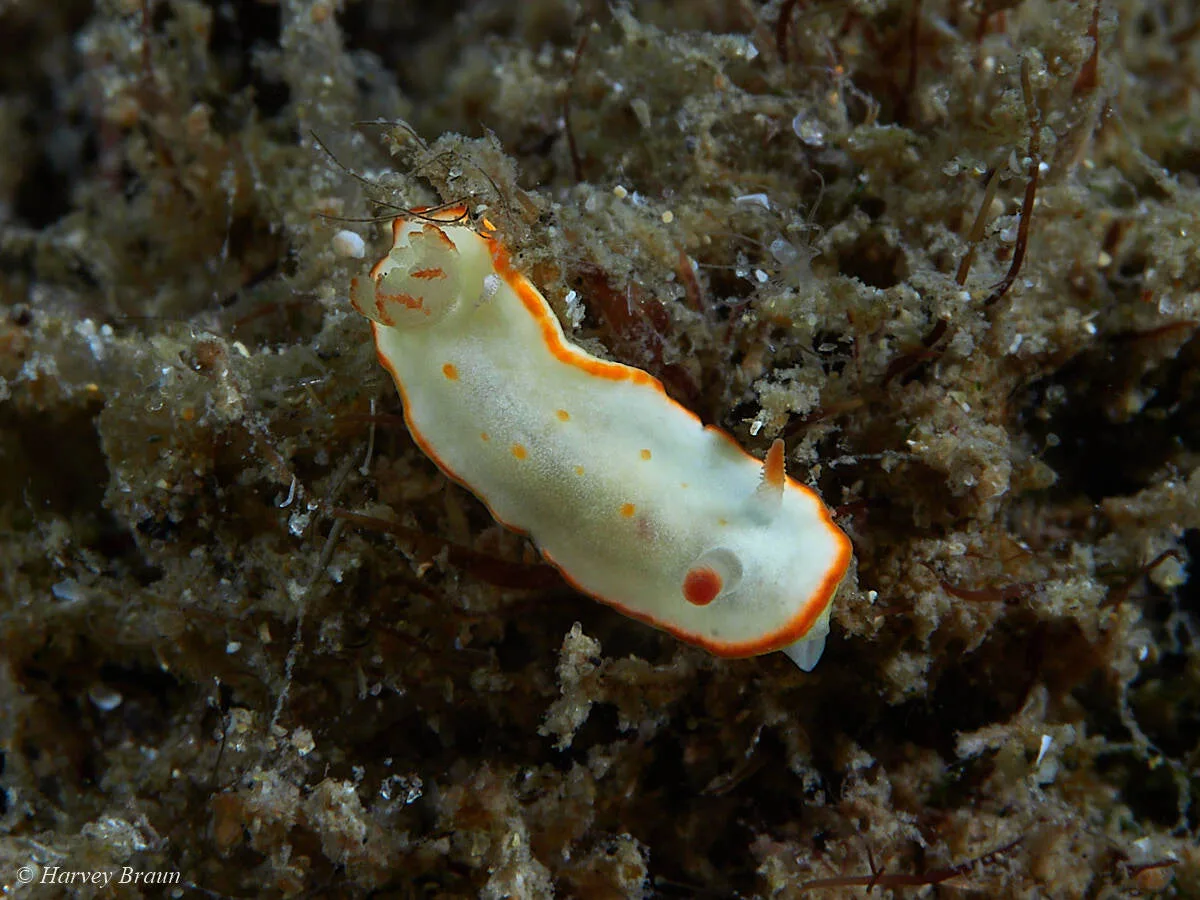
Diversidoris aurantionodulosa - Gold Coast QLD, Australia
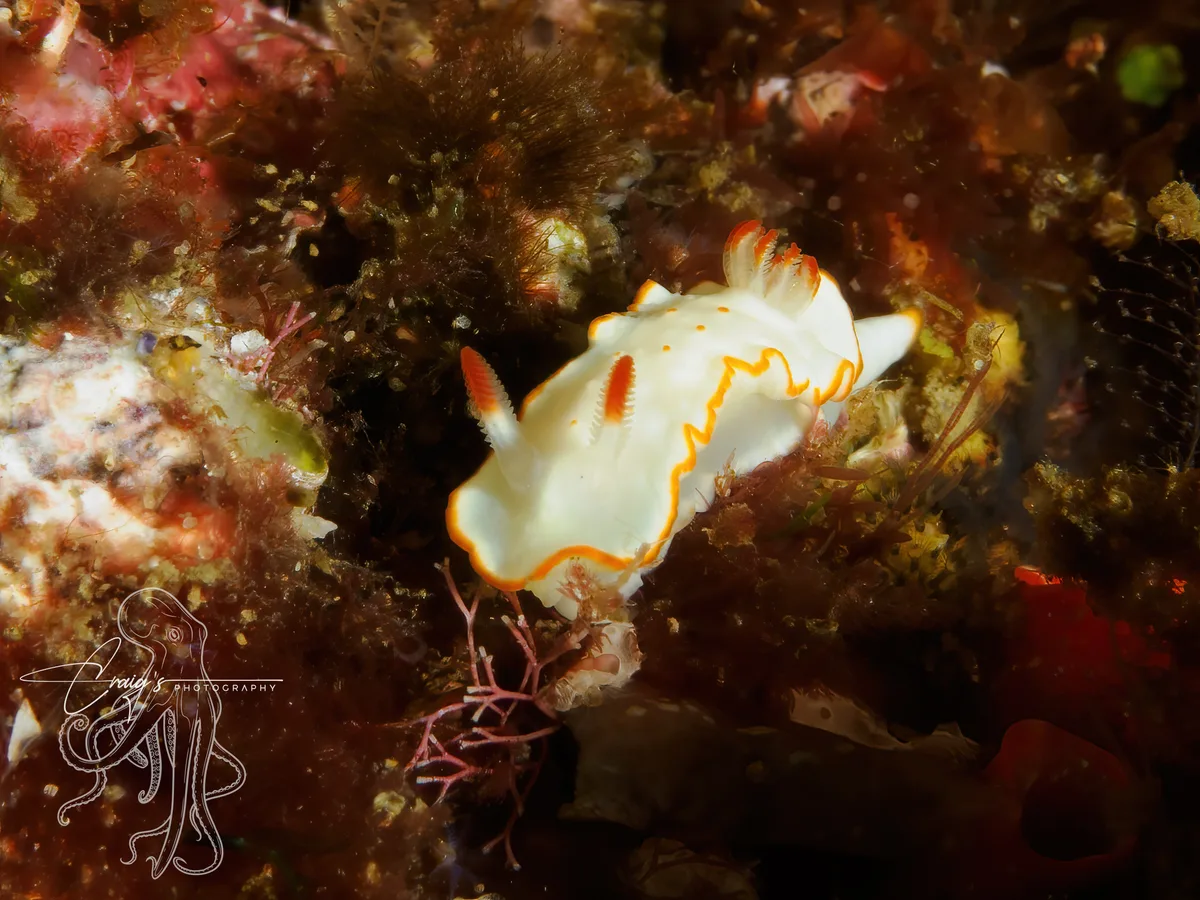
Diversidoris aurantionodulosa - Main Beach-South Stradbroke, Queensland, Australia
Diversidoris aurantionodulosa - South Solitary Island, New South Wales, Australia
Diversidoris aurantionodulosa - Gold Coast QLD, Australia
Diversidoris aurantionodulosa - Gold Coast Seaway, Seaworld Dr, Main Beach QLD 4217, Australia
Diversidoris aurantionodulosa - Tallebudgera Creek, Gold Coast QLD, Australia
Diversidoris aurantionodulosa - Burleigh Heads, Gold Coast QLD, Australia
Diversidoris aurantionodulosa - Gold Coast QLD, Australia
Poisonous© Febrianne S
Invertebrate · Molluscs · Nudibranch

Orange-spotted Longtail Dorid

Diversidoris aurantionodulosa Rudman, 1987
up to 2 cmPoisonous
0

The name is a description of the animal: aurantionodulosa, orange-knobbed, and both halves of it are the identification.

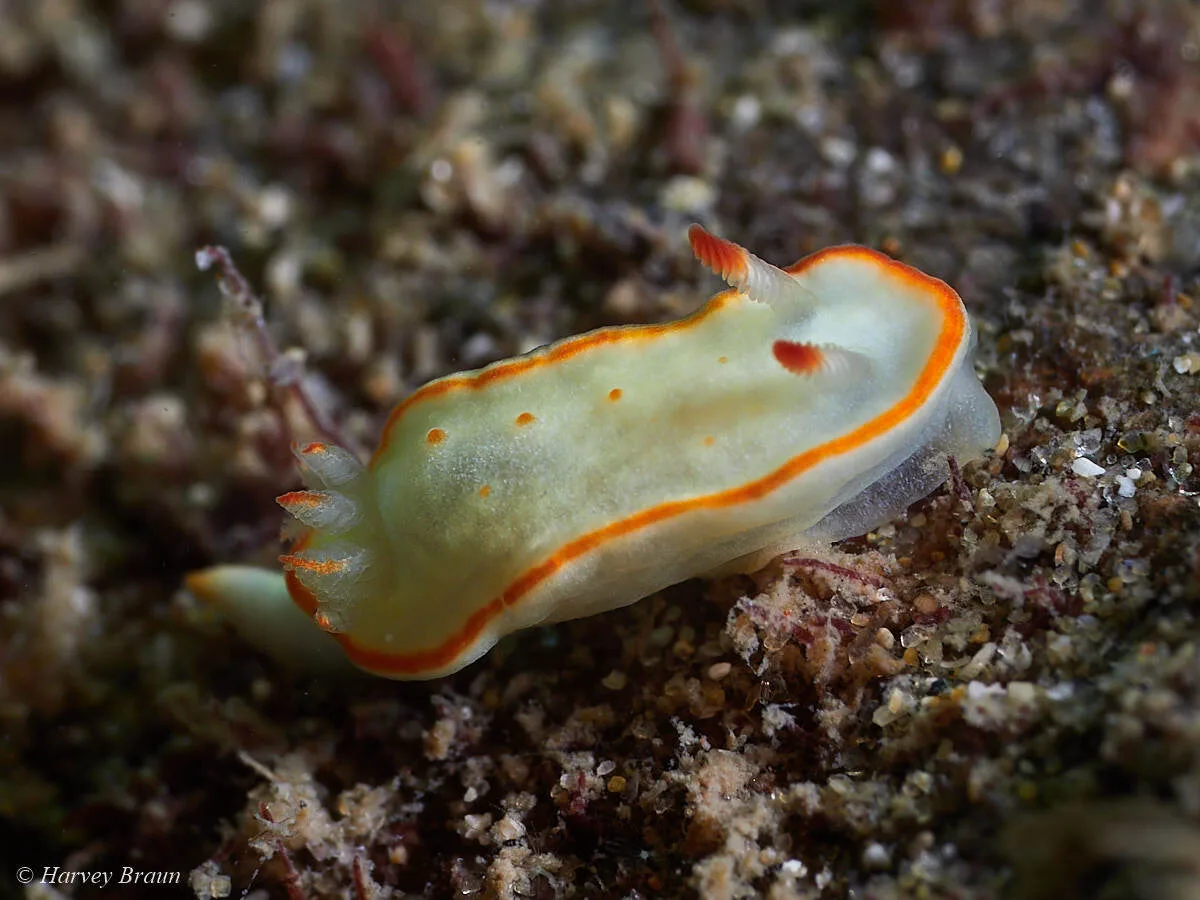
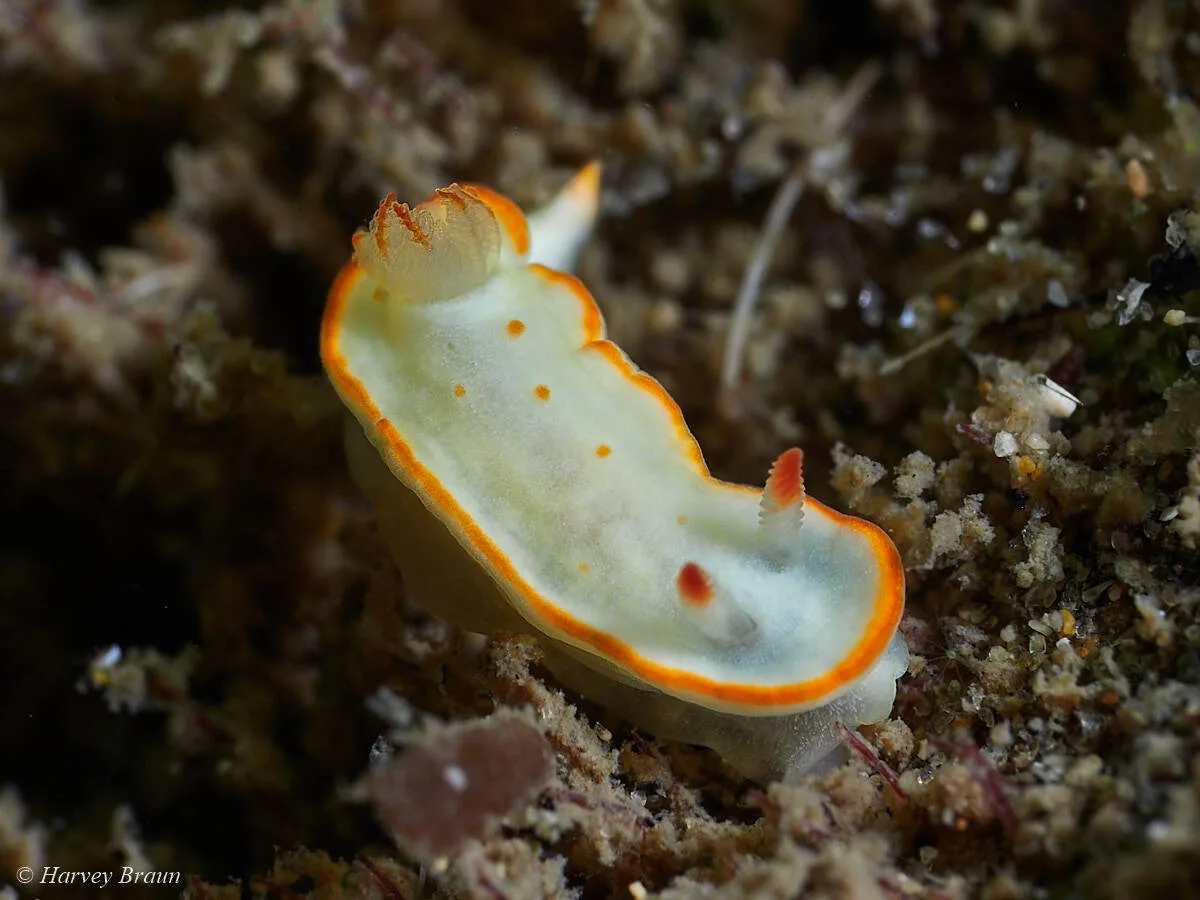
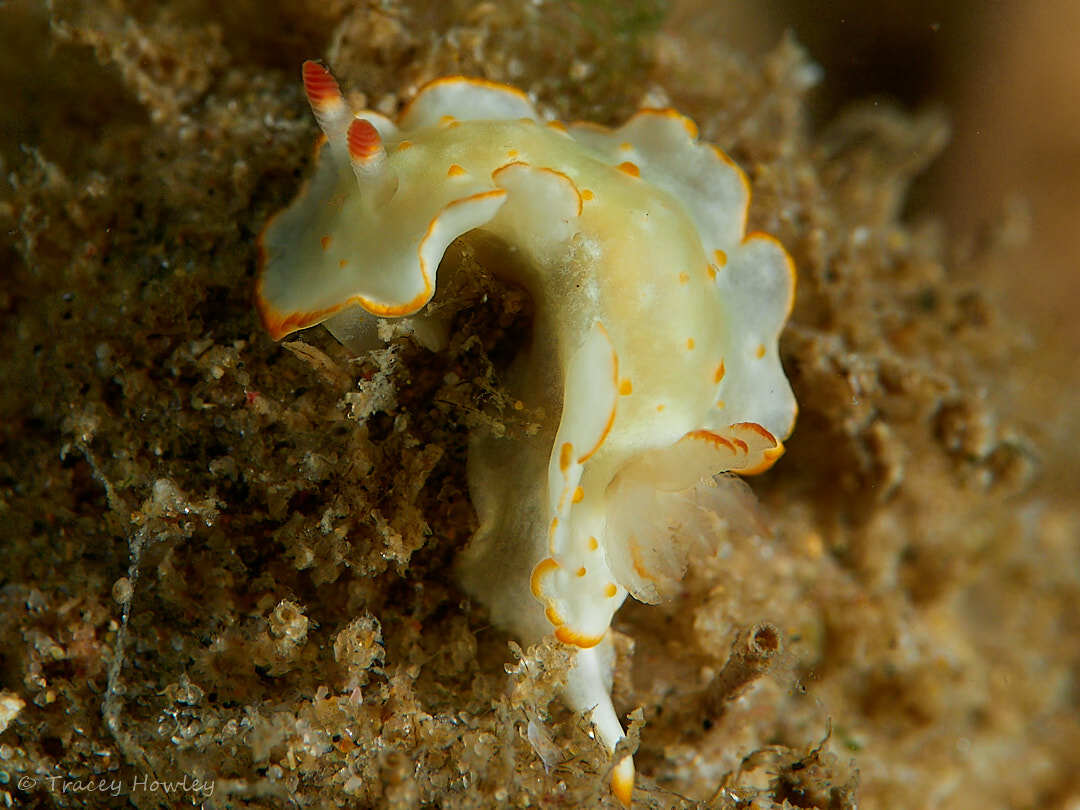
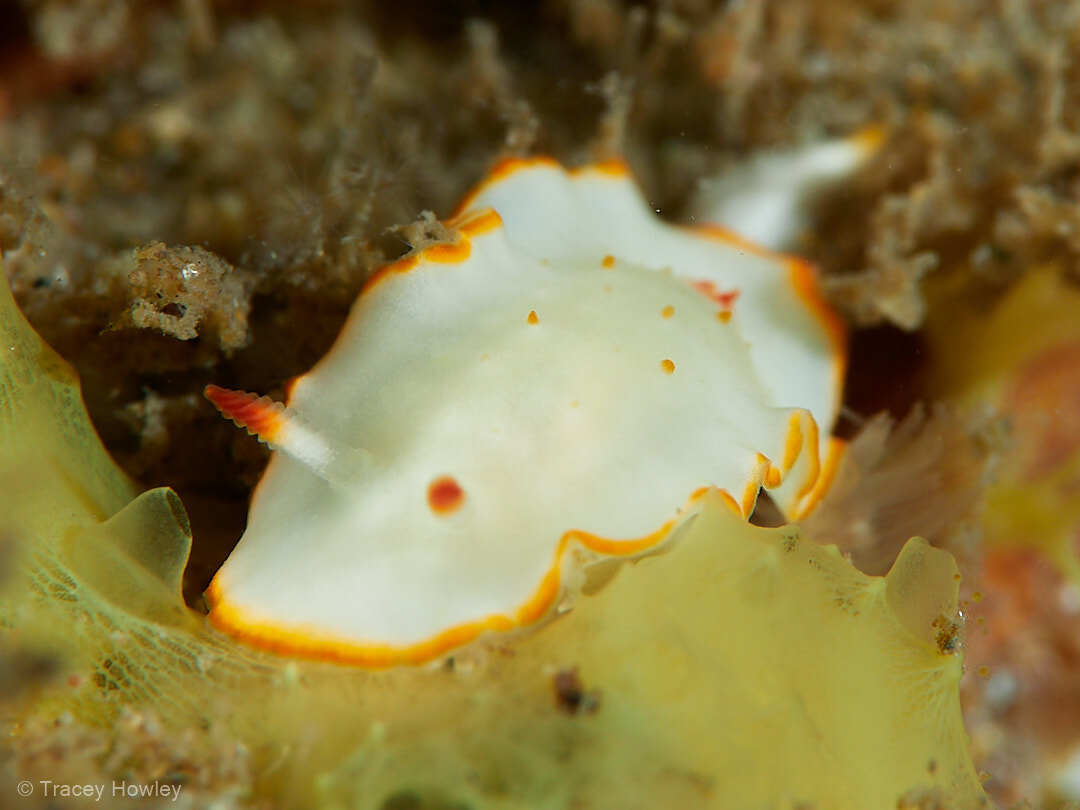
Chromodorids are smooth. That is close to a family rule: a low, even oval with the pattern painted on and nothing raised. This one breaks it. The mantle carries distinct tubercles standing up off the surface, and on a white to pale yellow body they give a texture that no other member of the family here has. The rhinophores and the gill plume are tipped orange, which on an otherwise pale animal is the only strong color it carries.

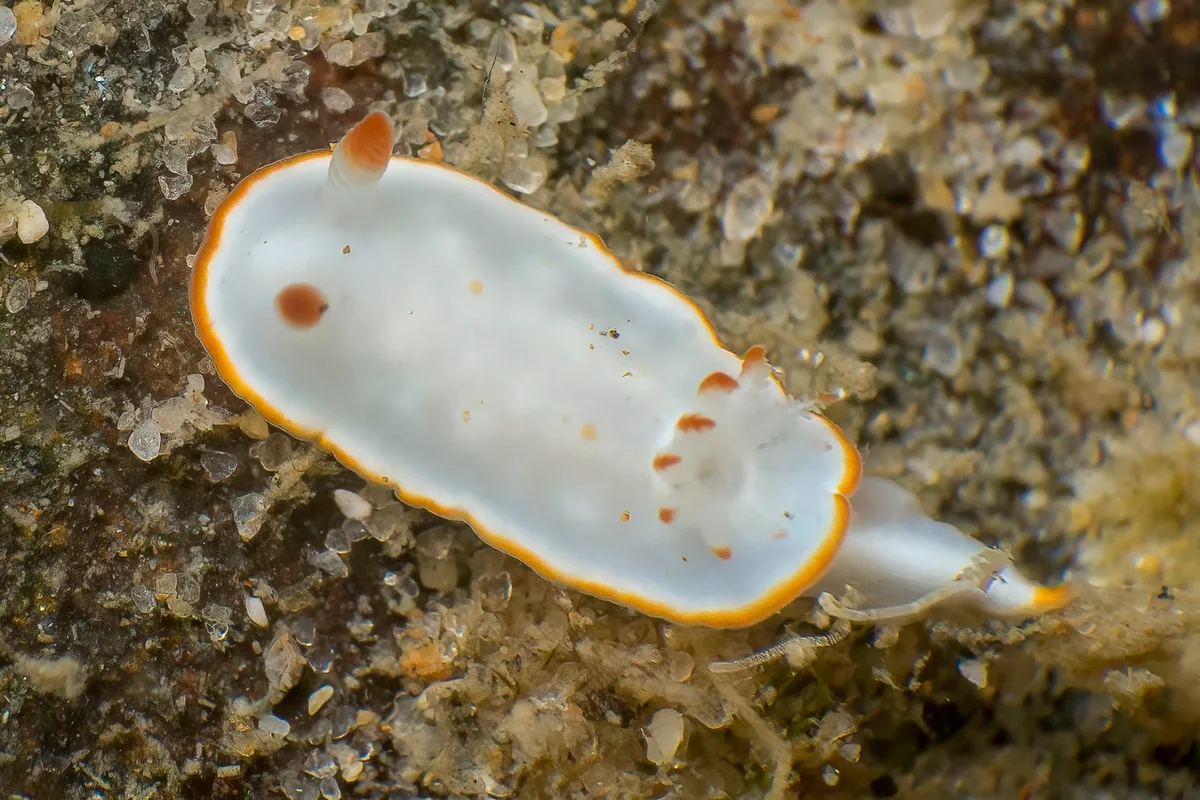
The second mark is the genus. In Diversidoris the foot runs out past the back edge of the mantle instead of being covered by it, so seen from above the outline is an oval with a small tail sticking out behind. Once you know to look at the rear end, these are separable from every other small pale dorid on the reef at a glance.

Its food has been recorded as sponges of the genus Darwinella, which are soft and fibrous with no mineral skeleton at all, and like the rest of its family it keeps the sponge's chemistry rather than digesting it, concentrating the compounds toward the mantle rim.

Two centimeters (0.8 in), out in daylight, on the sponge rather than beside it. The world's photographs of it come overwhelmingly from 🇦🇺 Australia, so a 🌊 Red Sea record is worth logging properly.

How to recognise it
  • raised tubercles over the mantle, which chromodorids normally do not have
  • rhinophores and gills tipped orange on a white to yellow body
  • foot extending past the back of the mantle as a visible tail
  • two centimeters, on sponge

Comments

Please, sign in to leave a comment

Continue with a social account - yours will be created automatically.

No comments yet — be the first.

Last Update: August 28, 2026