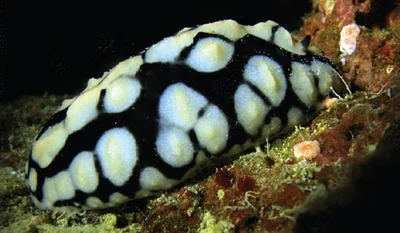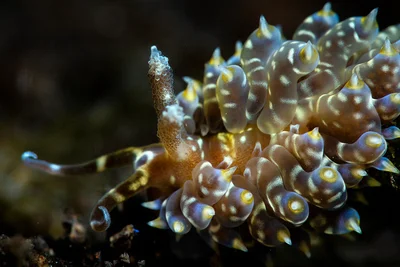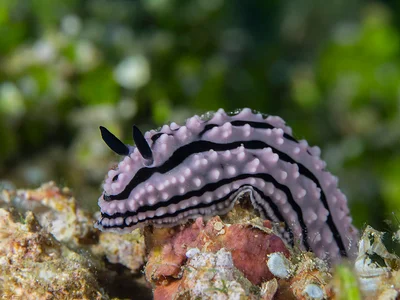
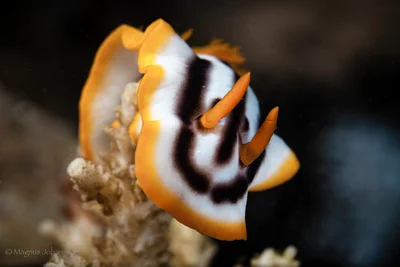
Nudibranch (Dermatobranchus gonatophoros)
Dermatobranchus gonatophorus - Saint Vincent, Nouvelle-Calédonie
Dermatobranchus gonatophorus - Similan Islands, Lam Kaen, Phang Nga, Thailand
Dermatobranchus gonatophorus - Tingloy, Batangas, Philippines
Dermatobranchus gonatophorus - Saint Vincent, Nouvelle-Calédonie
Dermatobranchus gonatophorus - Bonne Anse Lighthouse, New Caledonia
Dermatobranchus gonatophorus
Dermatobranchus gonatophorus - Mabini, Batangas, Philippines
Gonad Dermatobranch
Dermatobranchus gonatophorus - Mabini, Batangas, Philippines
Dermatobranchus gonatophorus - Saint Vincent, Nouvelle-Calédonie
Dermatobranchus gonatophorus - L'Île des Pins, Nouvelle-Calédonie
Dermatobranchus gonatophorus - Bonne Anse Lighthouse, New Caledonia
Dermatobranchus gonatophorus - Saint Vincent, Nouvelle-Calédonie
Dermatobranchus gonatophorus - Mabini, Philippines
Dermatobranchus gonatophorus - 5GG2+FJG Malé House Reef, Bus Station, Majeedhee Magu, Majeedhee Magu Rd, Malé, Maldives
Nudibranch (Dermatobranchus gonatophorus)
Dermatobranchus gonatophorus - Andaman
Dermatobranchus gonatophorus - Mabini, Batangas, Philippines
Dermatobranchus gonatophorus - Andaman
Dermatobranchus gonatophorus - Mabini, Philippines
Dermatobranchus gonatophorus - Ko Raya Yai, Rawai, Mueang Phuket District, Phuket, Thaimaa
Dermatobranchus gonatophorus - Mabini, Philippines
Dermatobranchus gonatophorus - Crystal Bay
Dermatobranchus gonatophorus
Dermatobranchus gonatophorus - Tingloy, Batangas, Philippines
Dermatobranchus gonatophorus - Ko Raya Yai, Rawai, Mueang Phuket District, Phuket, Thaimaa
Dermatobranchus gonatophorus - Mabini, Batangas, Philippines
Dermatobranchus gonatophorus - Bonito Island
Poisonous© Brian Mayes
Invertebrate · Molluscs · Nudibranch

Orange-margin Pinstripe

Dermatobranchus gonatophorus van Hasselt, 1824
up to 8 cmPoisonous
0

This is the one that explains the English name for the whole genus, and it is worth looking at closely because the ribbing is unusually well drawn.

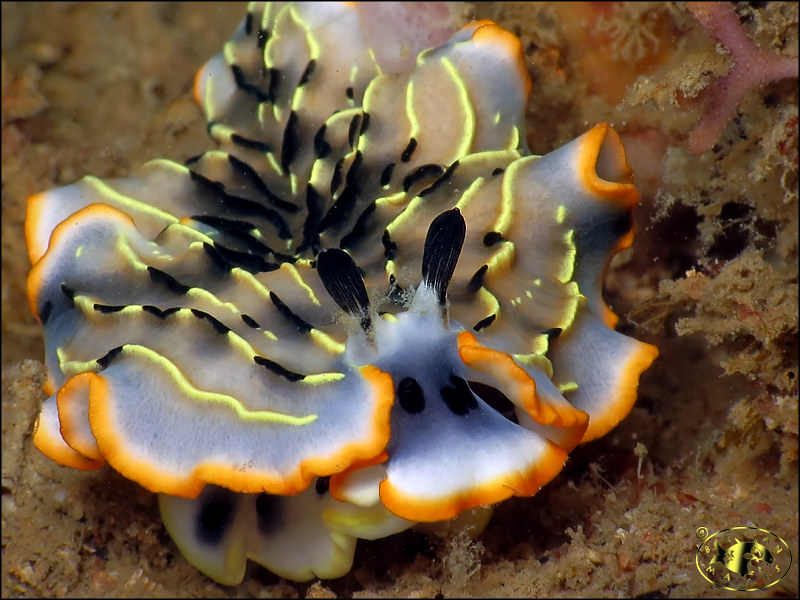
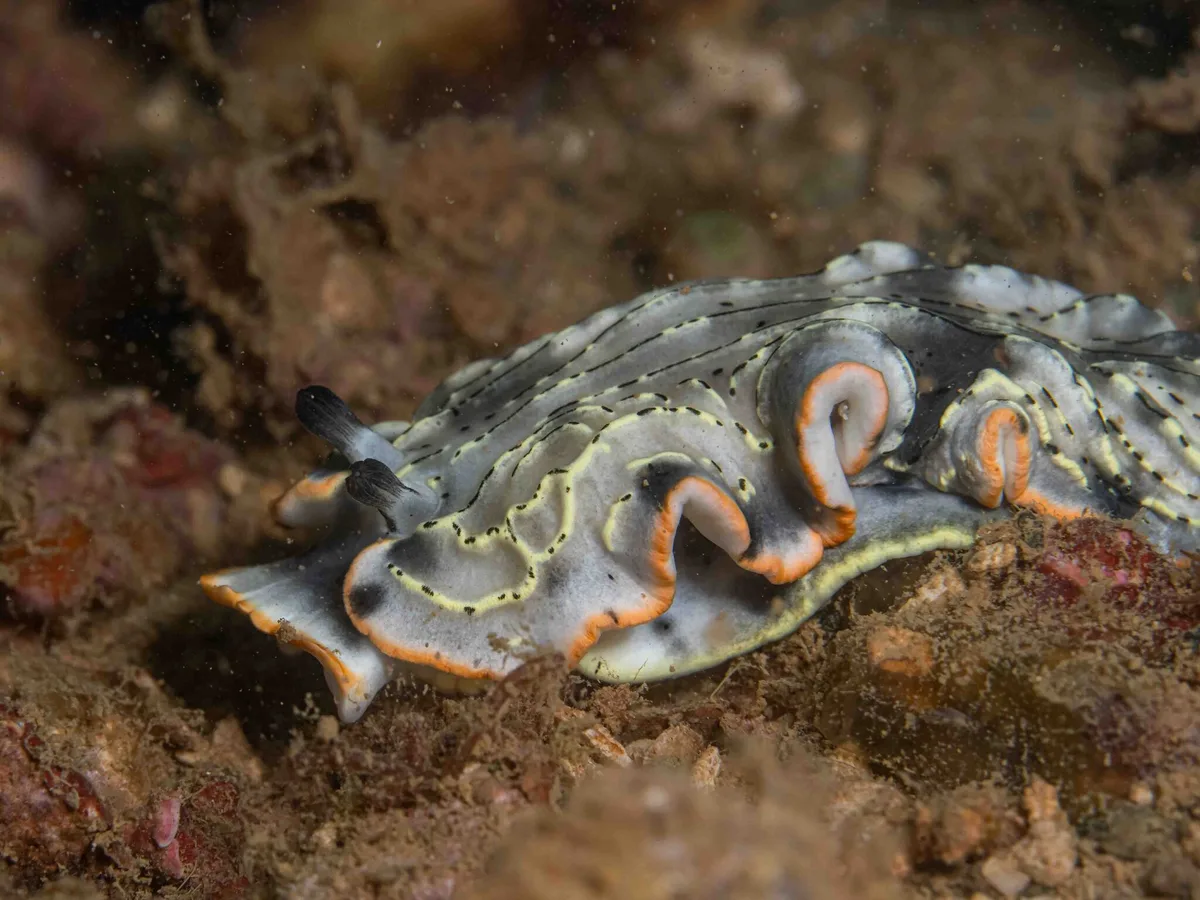
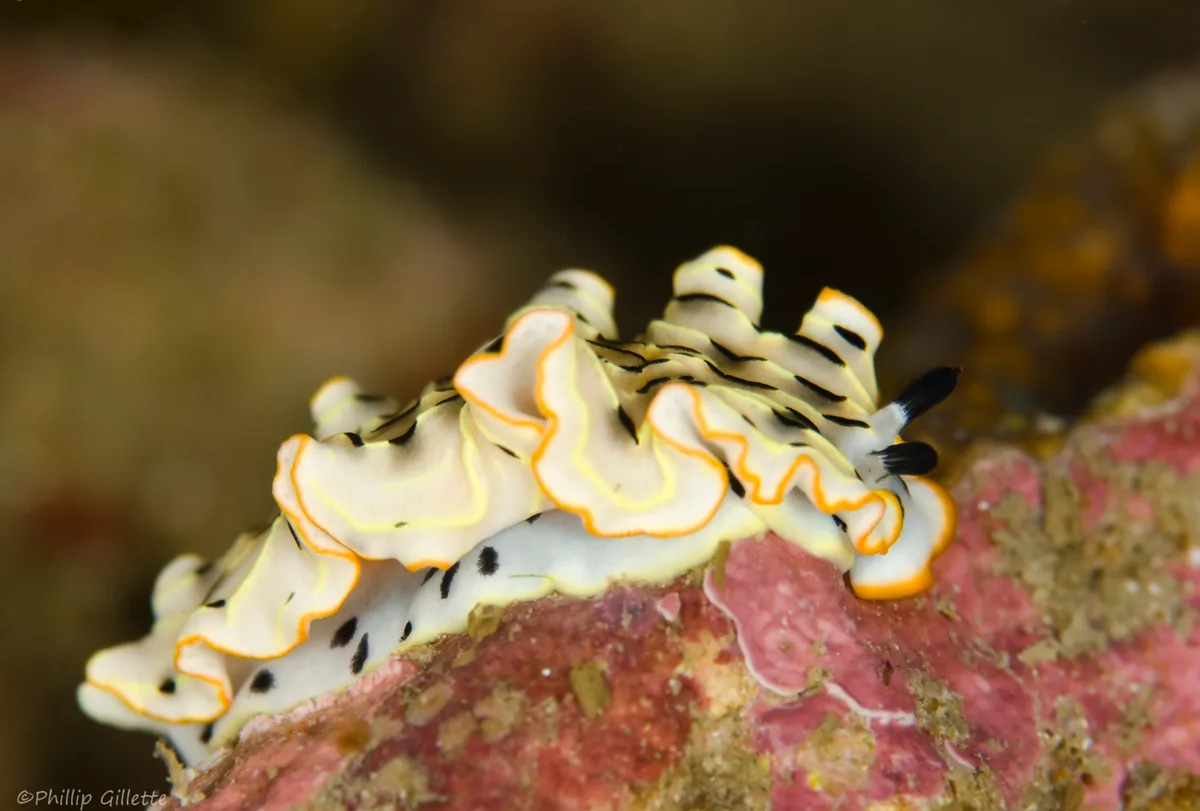
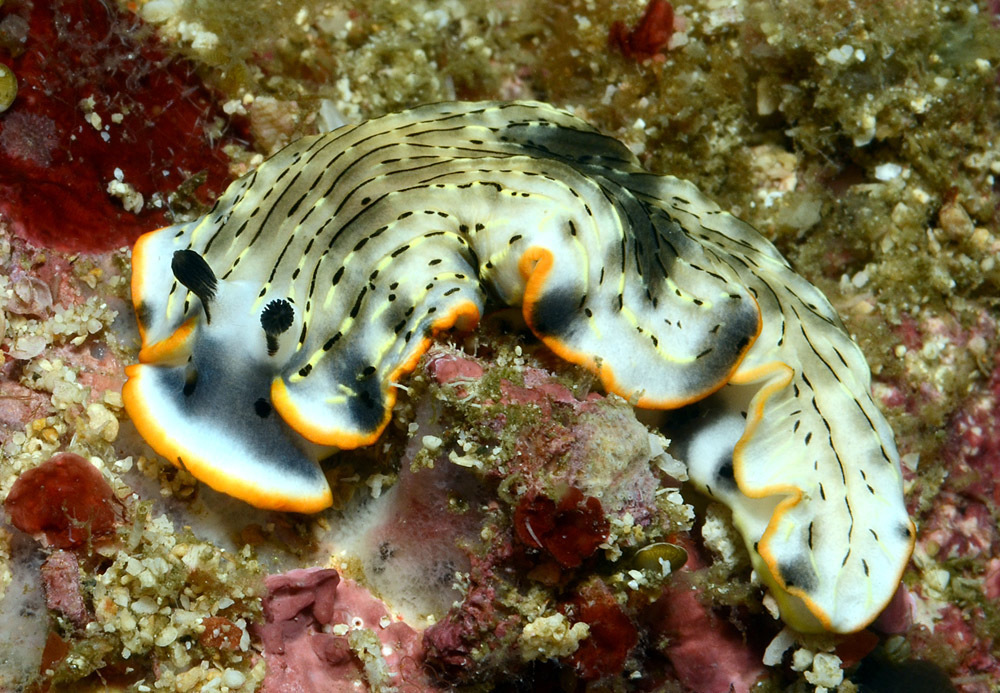
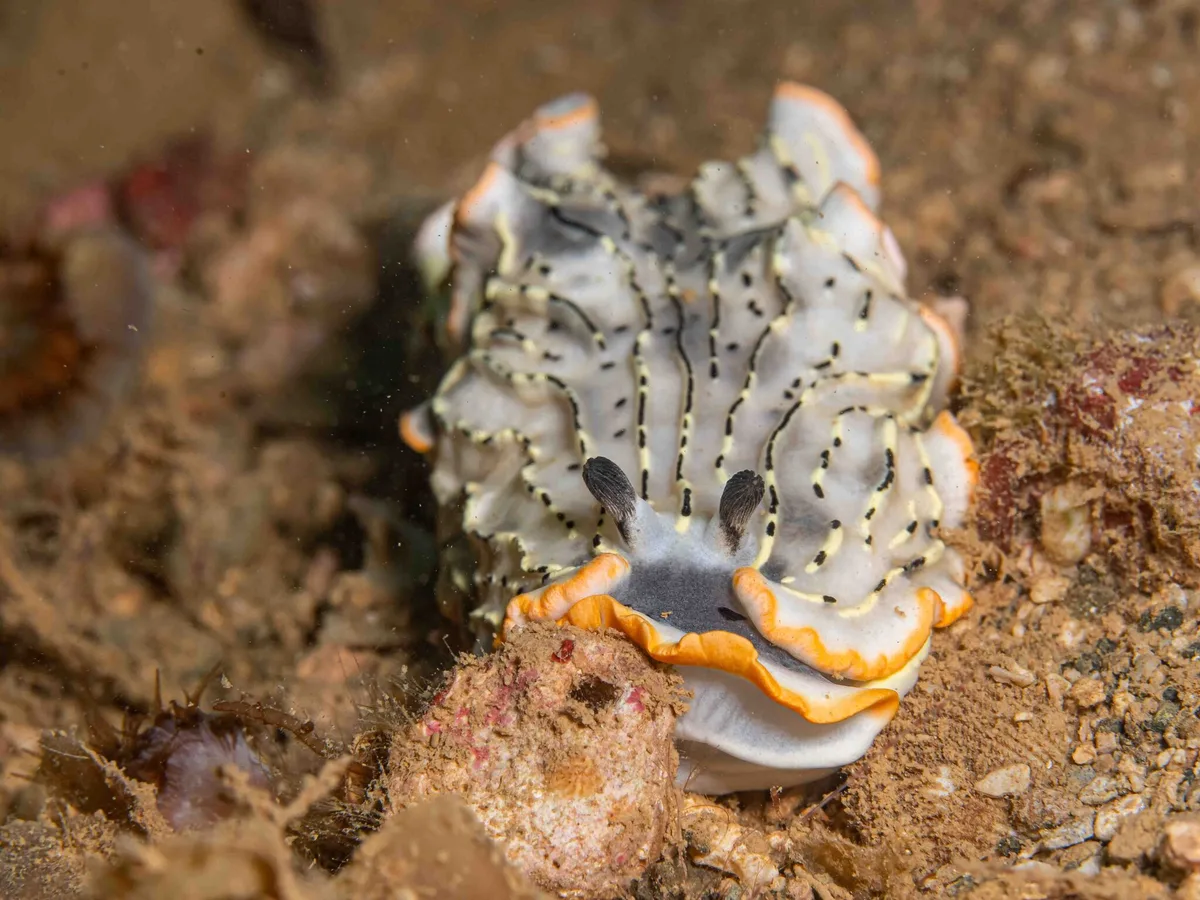
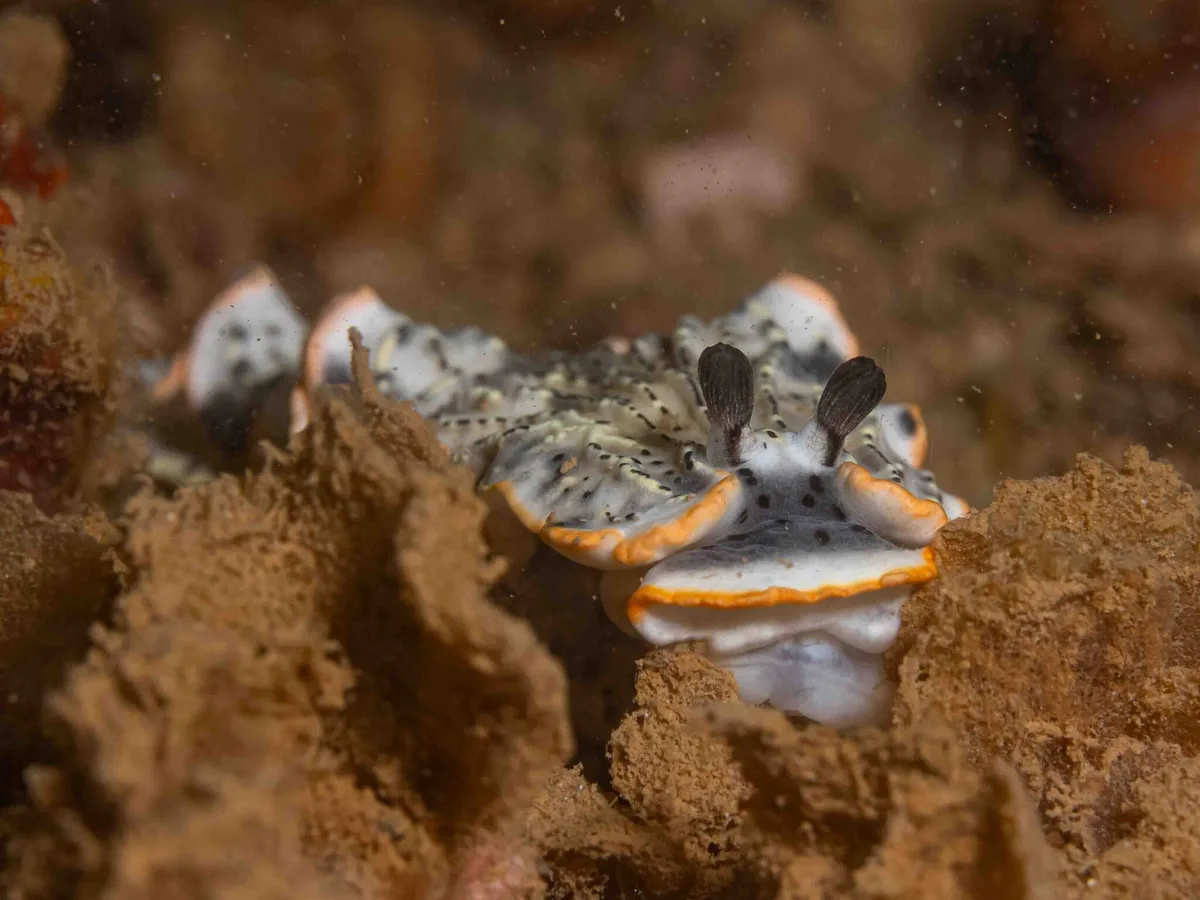
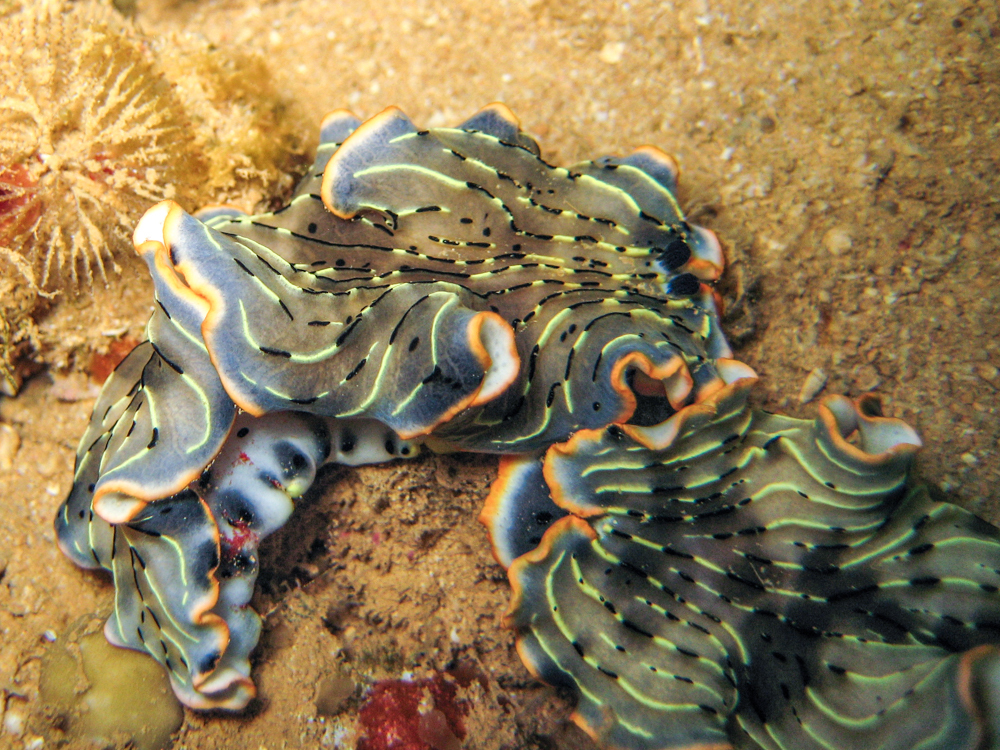
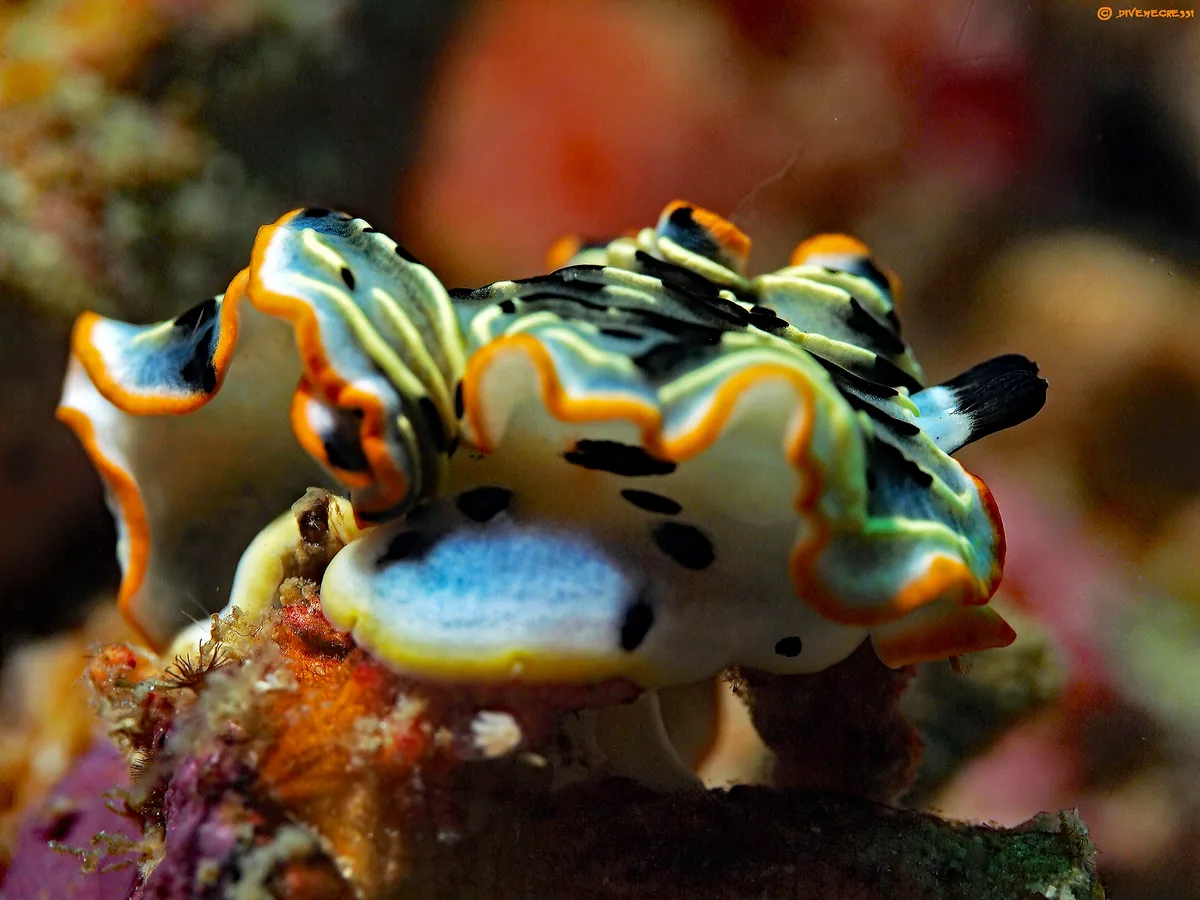
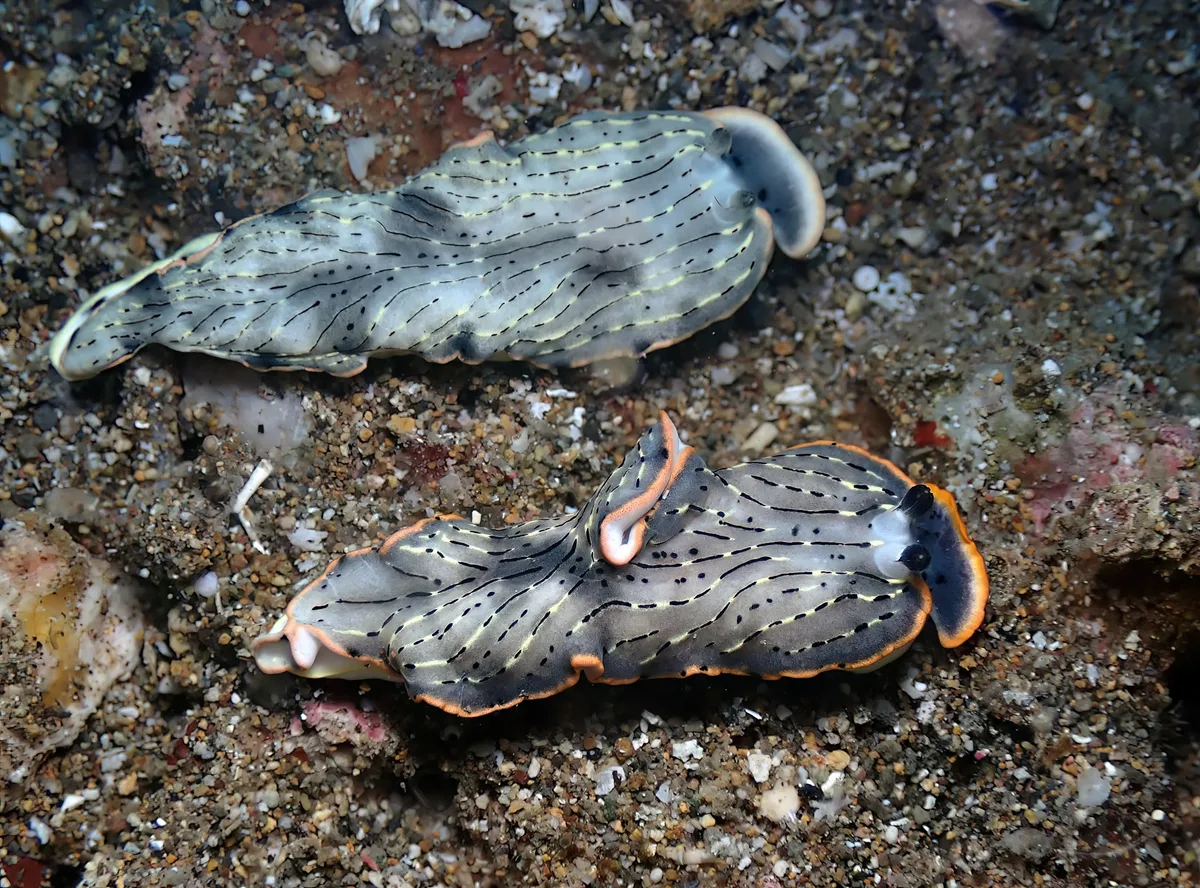
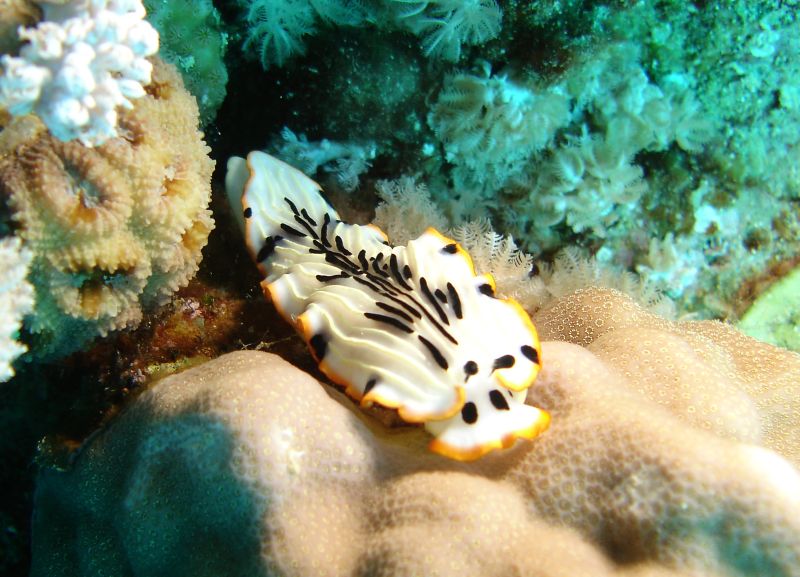
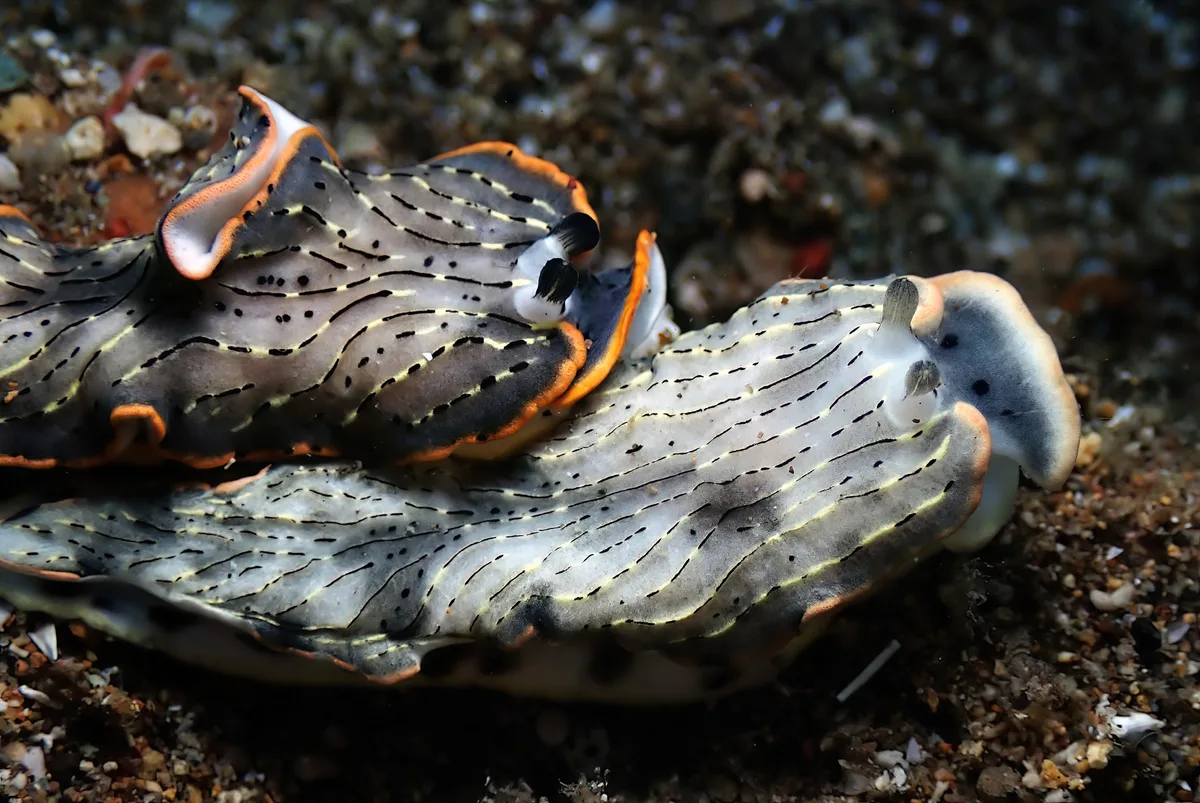
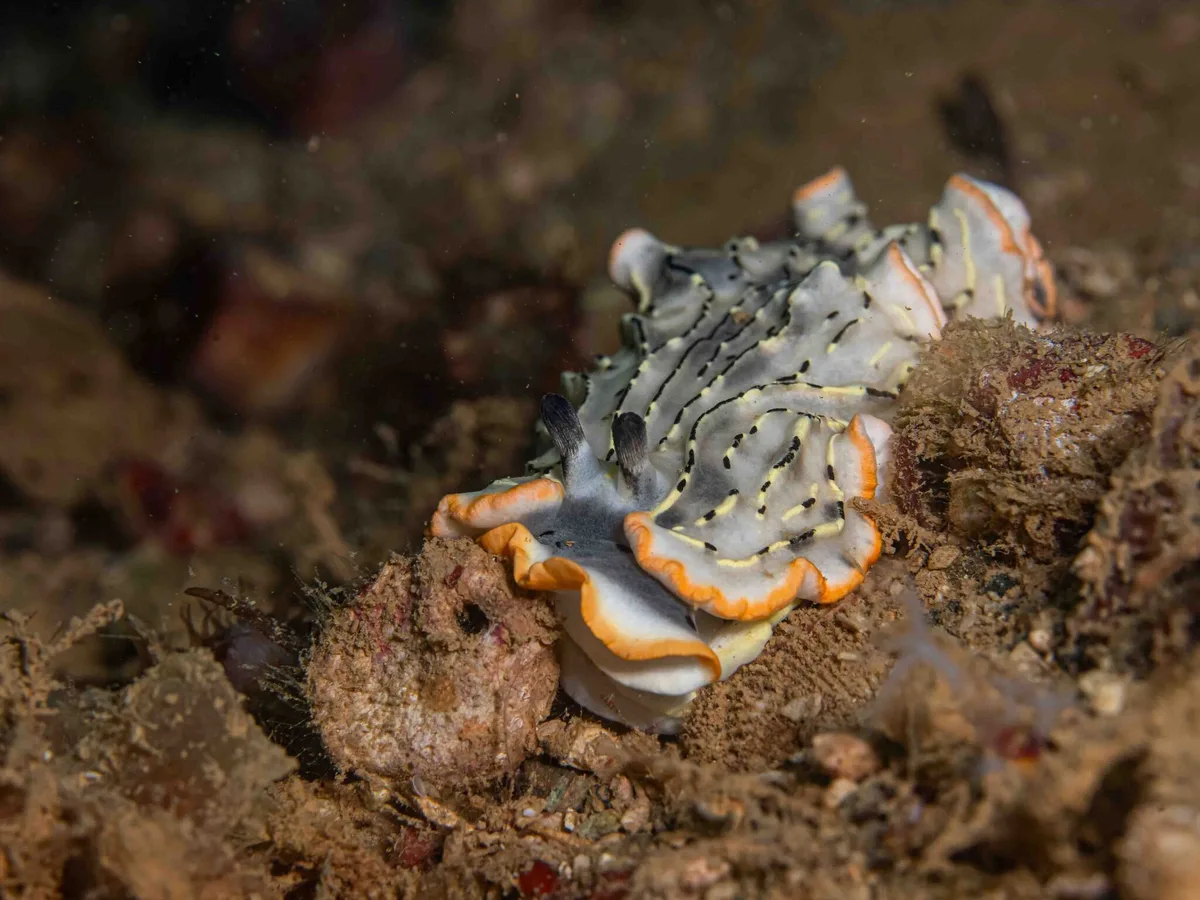
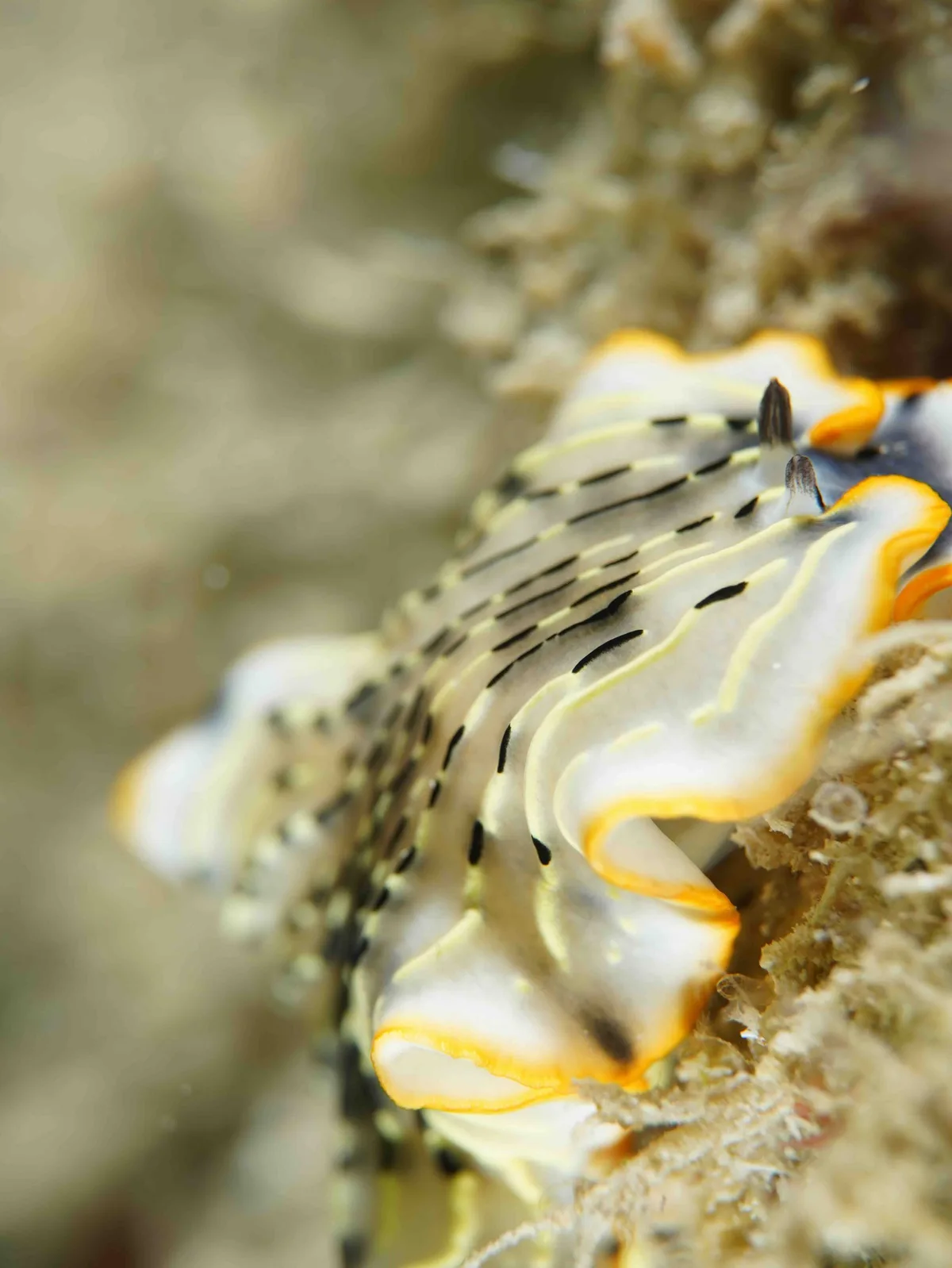
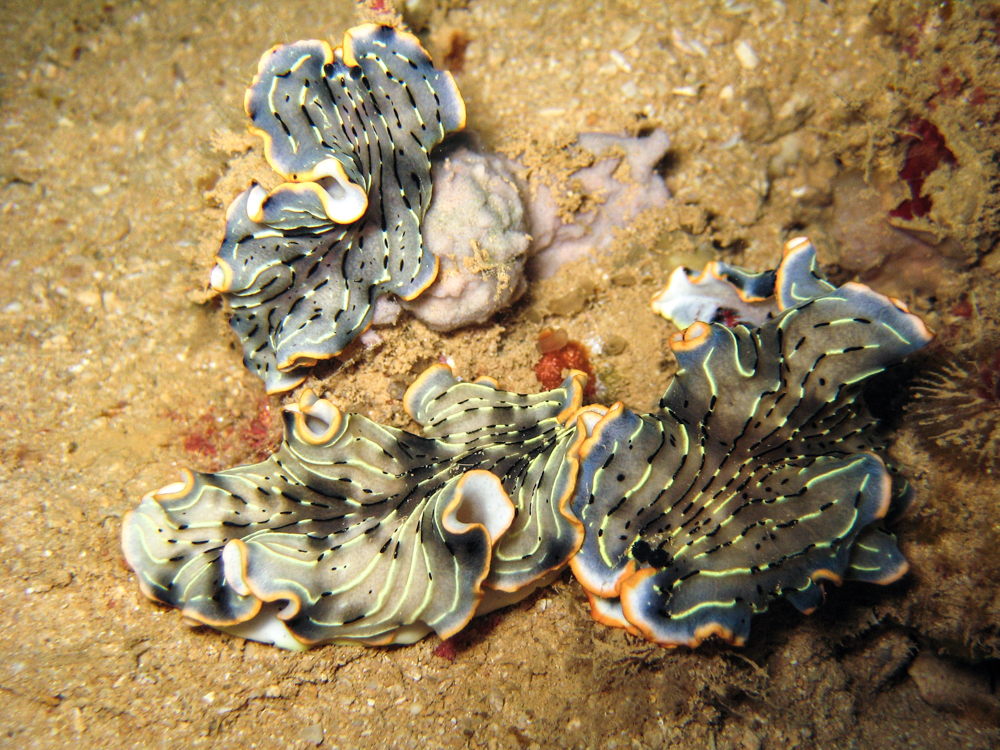
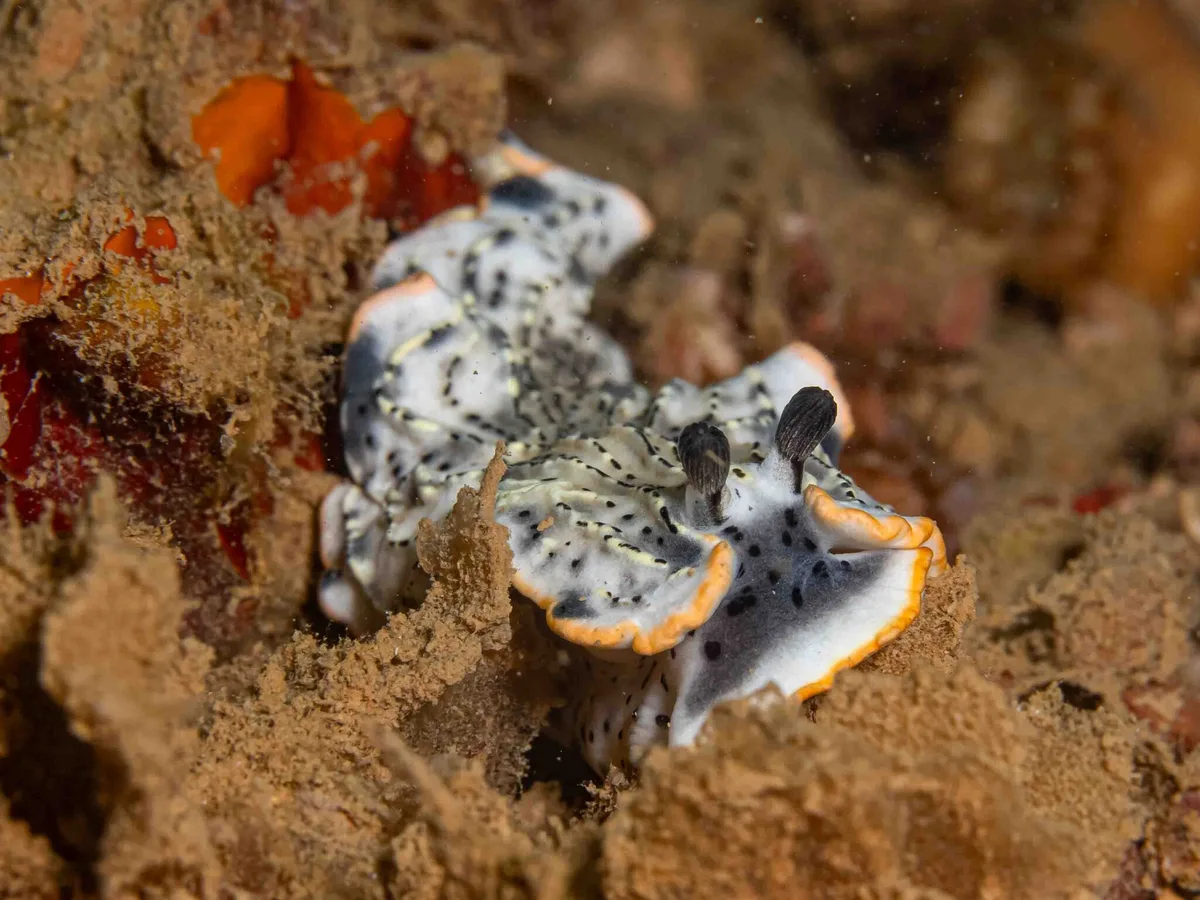
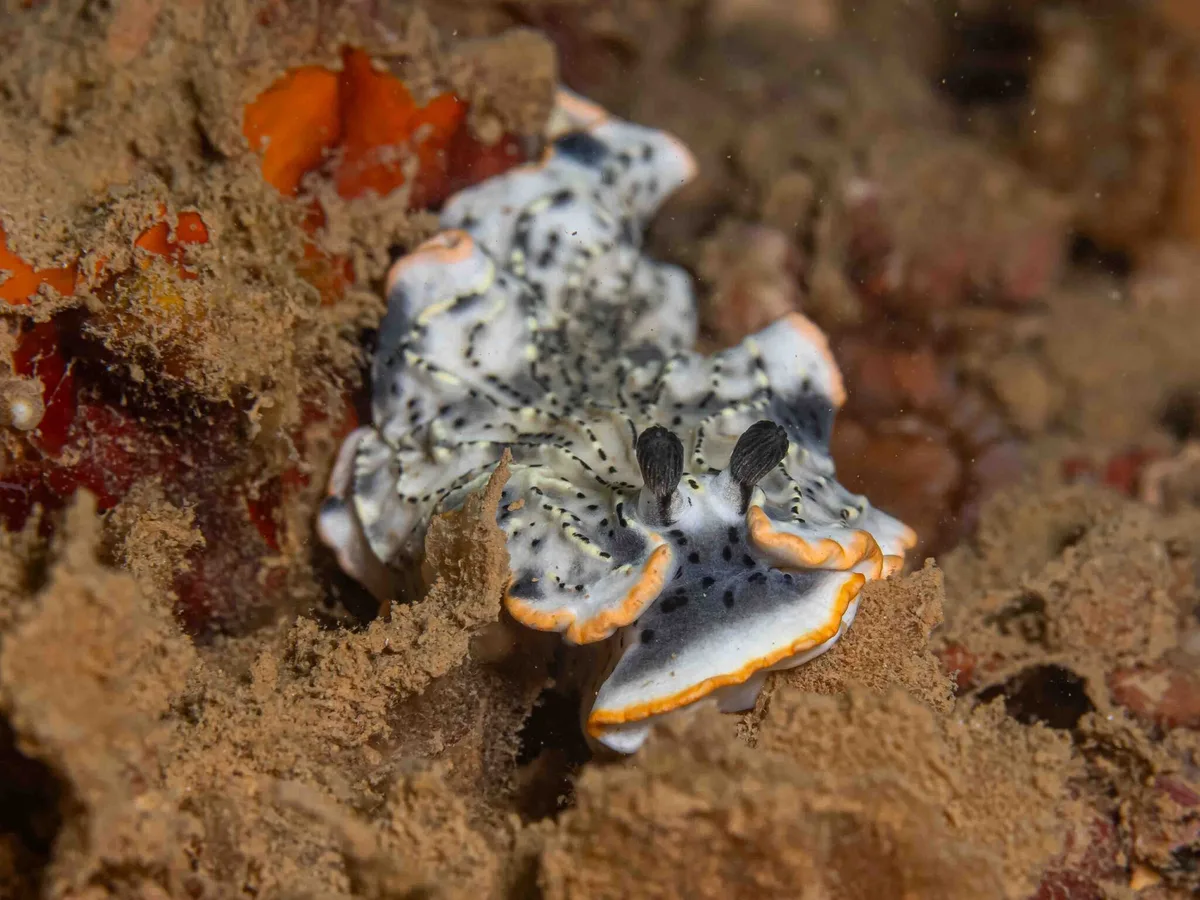
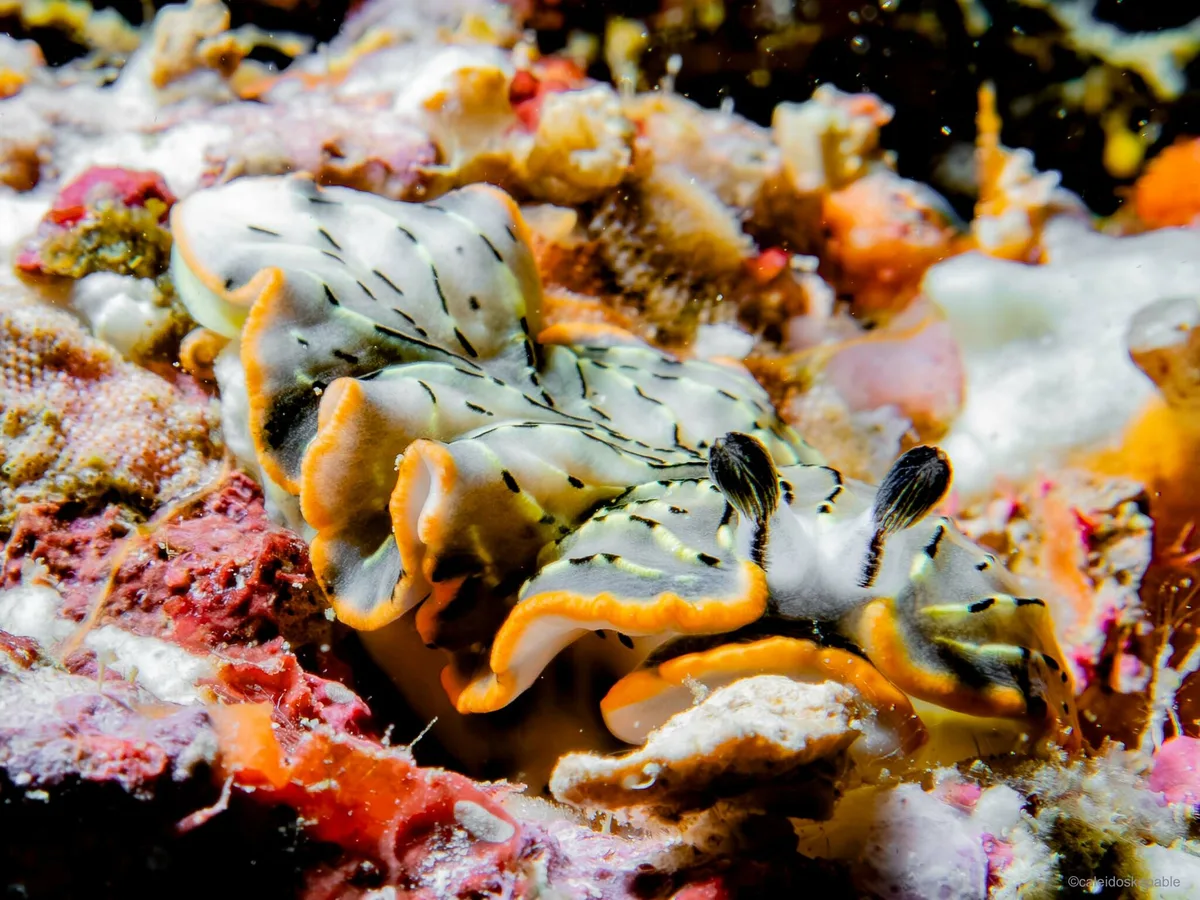
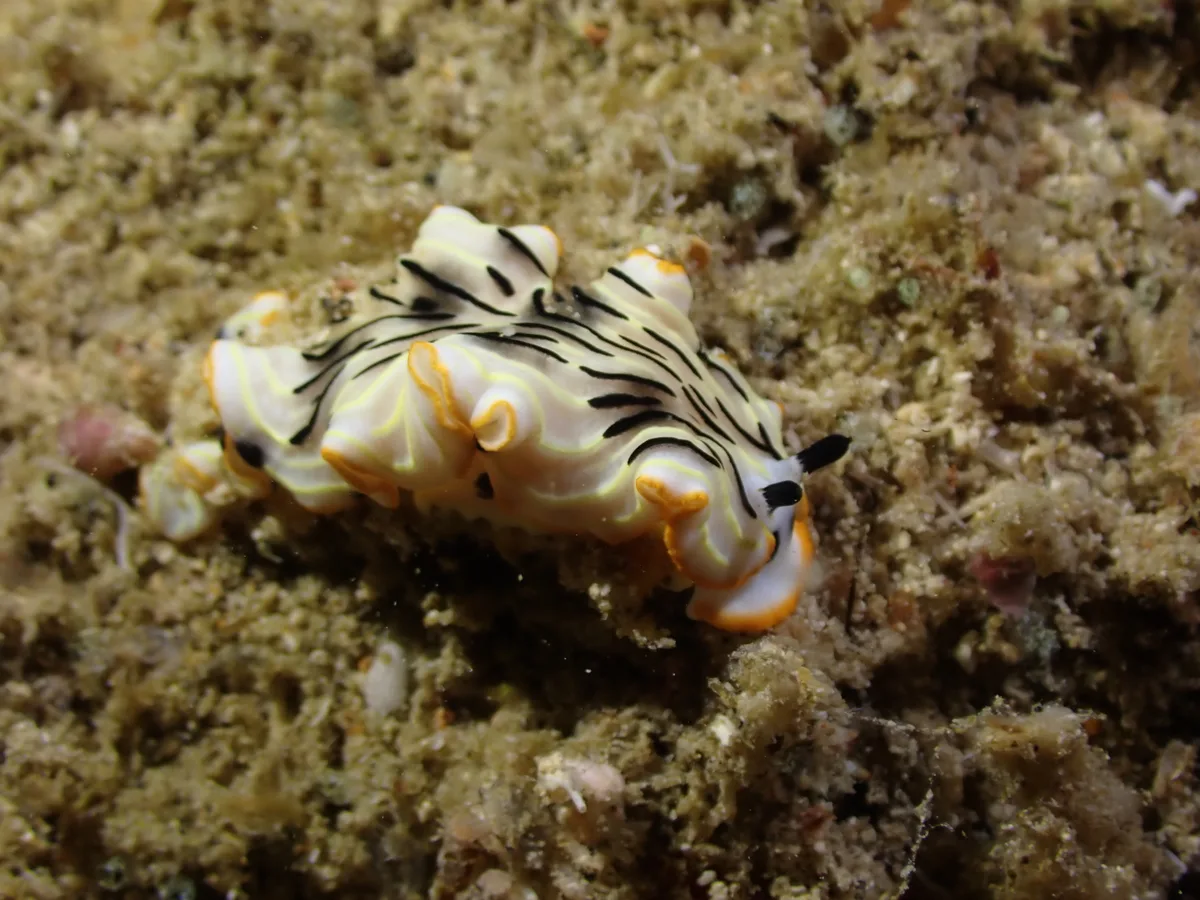
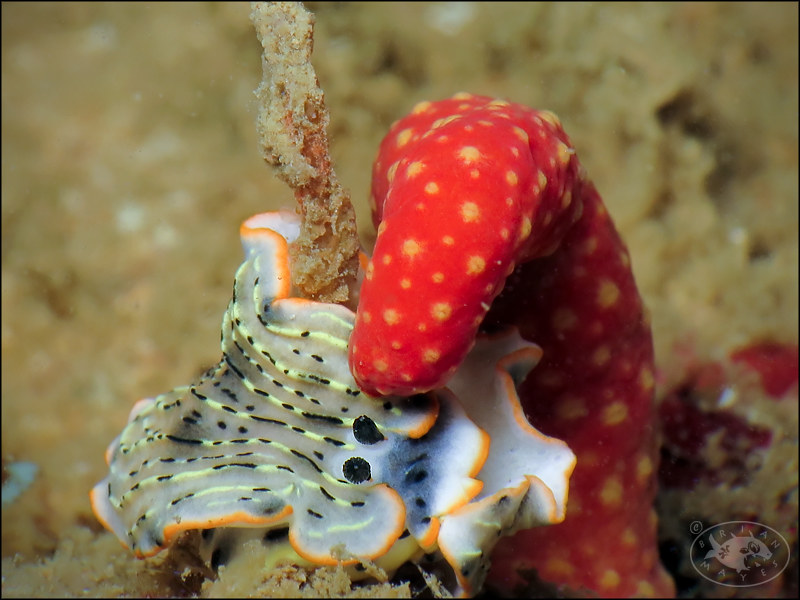
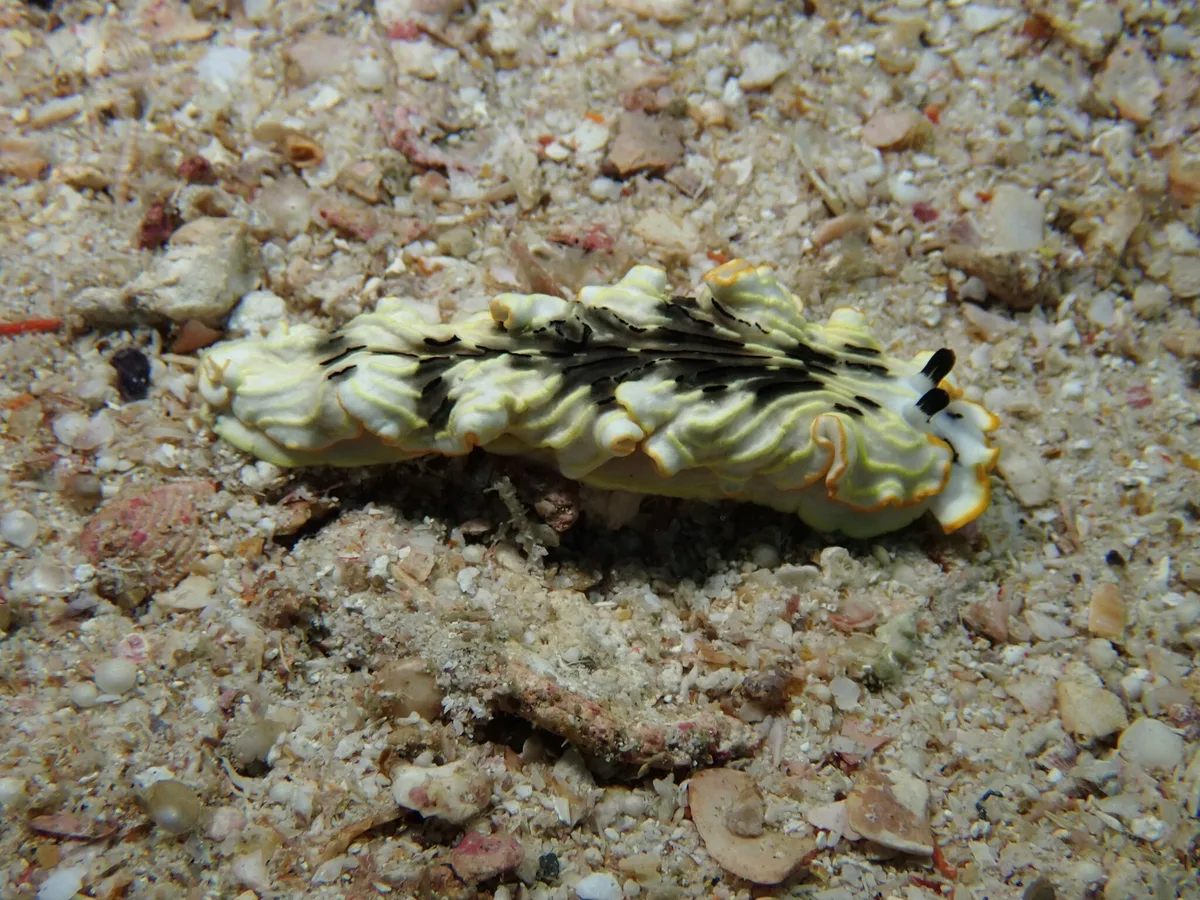
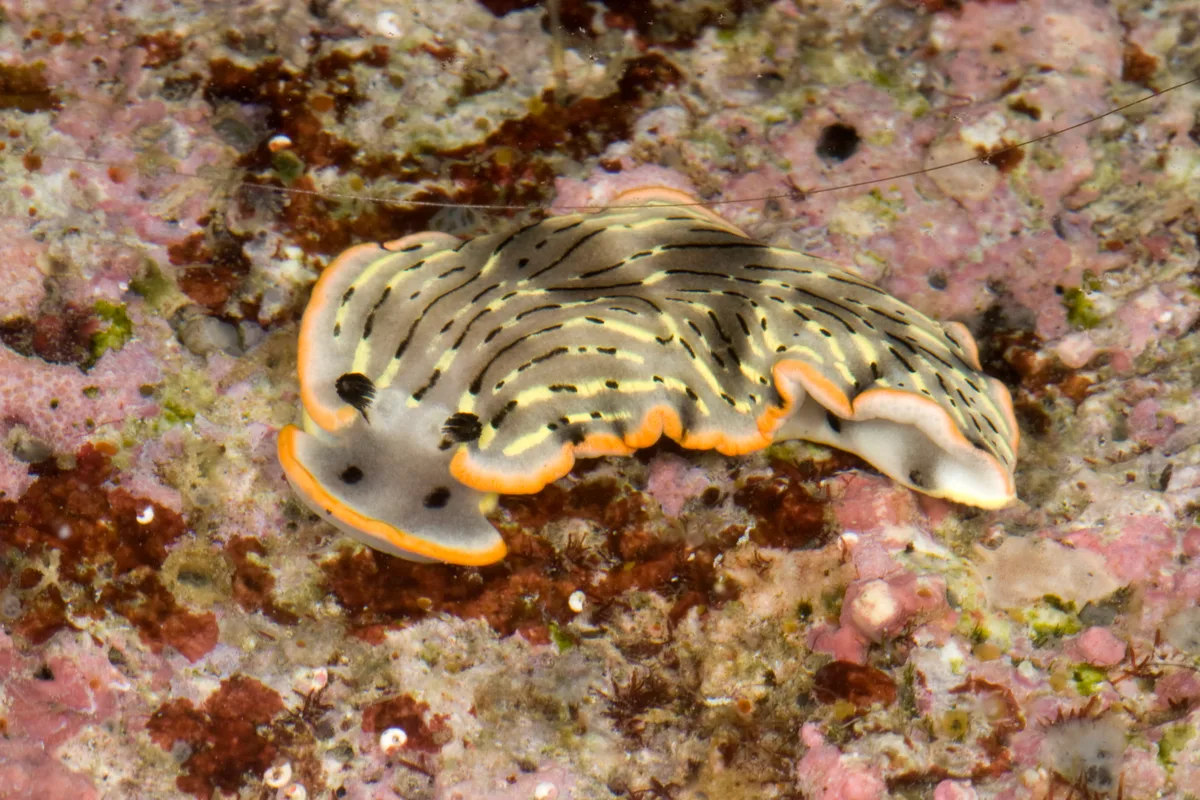
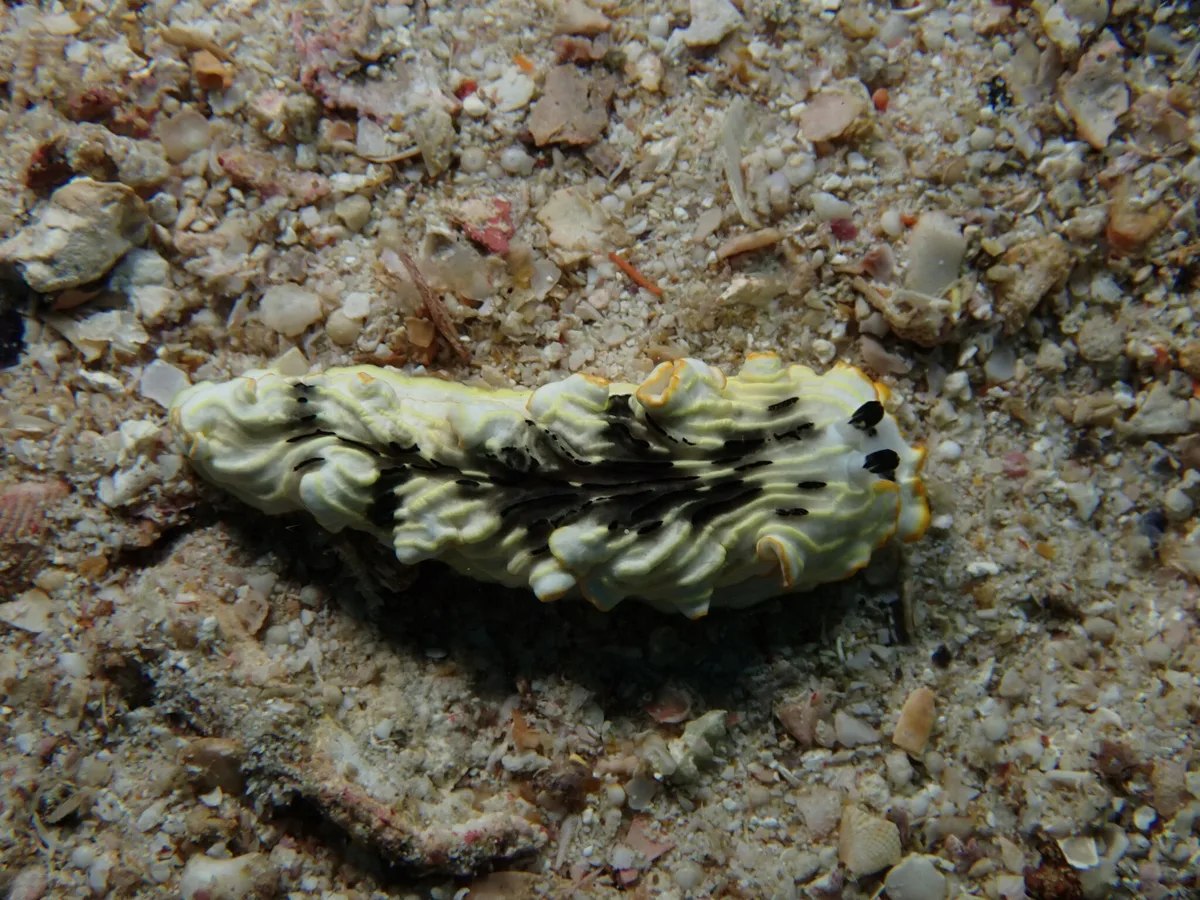
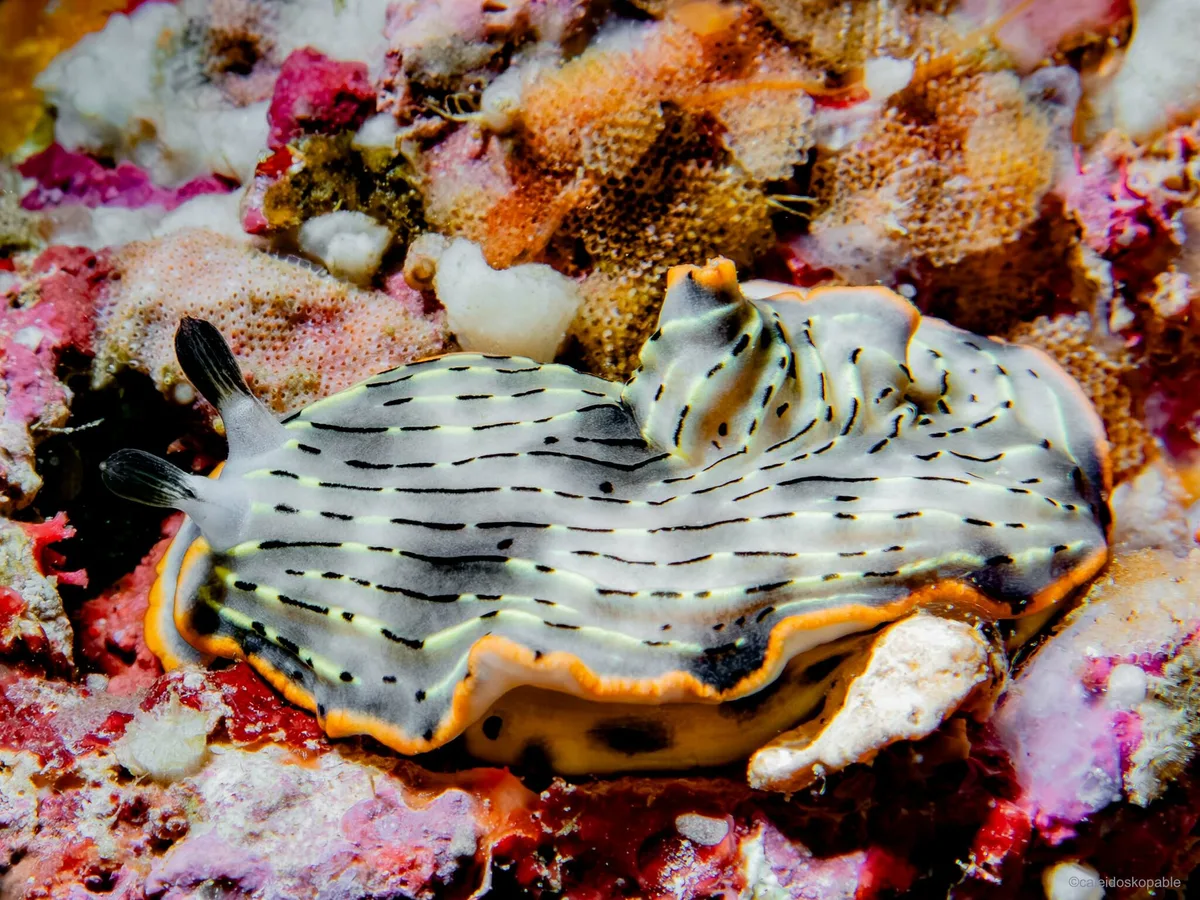
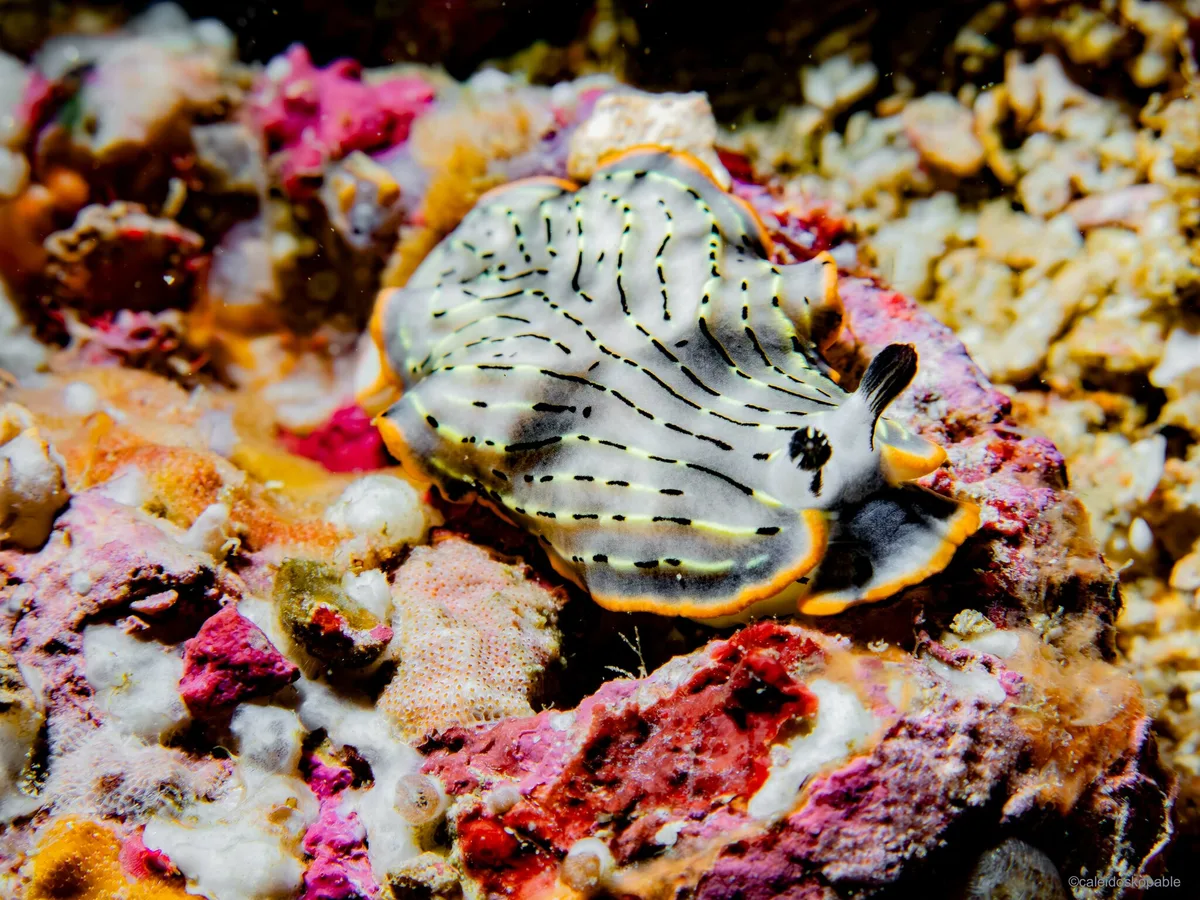
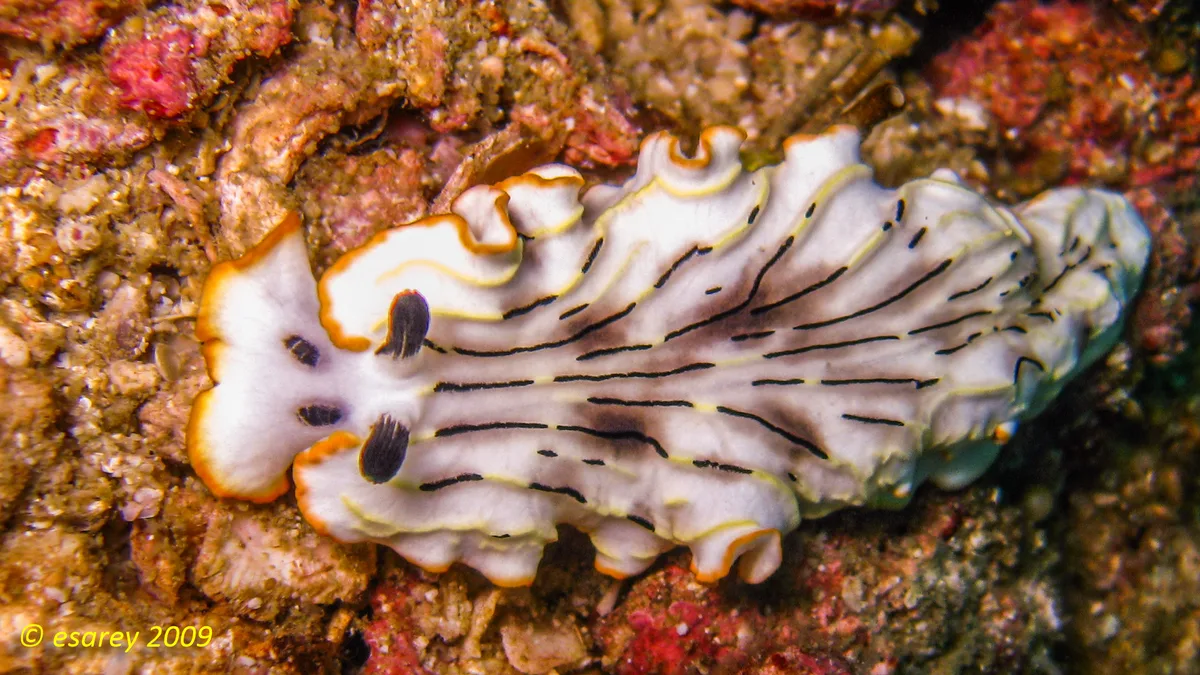
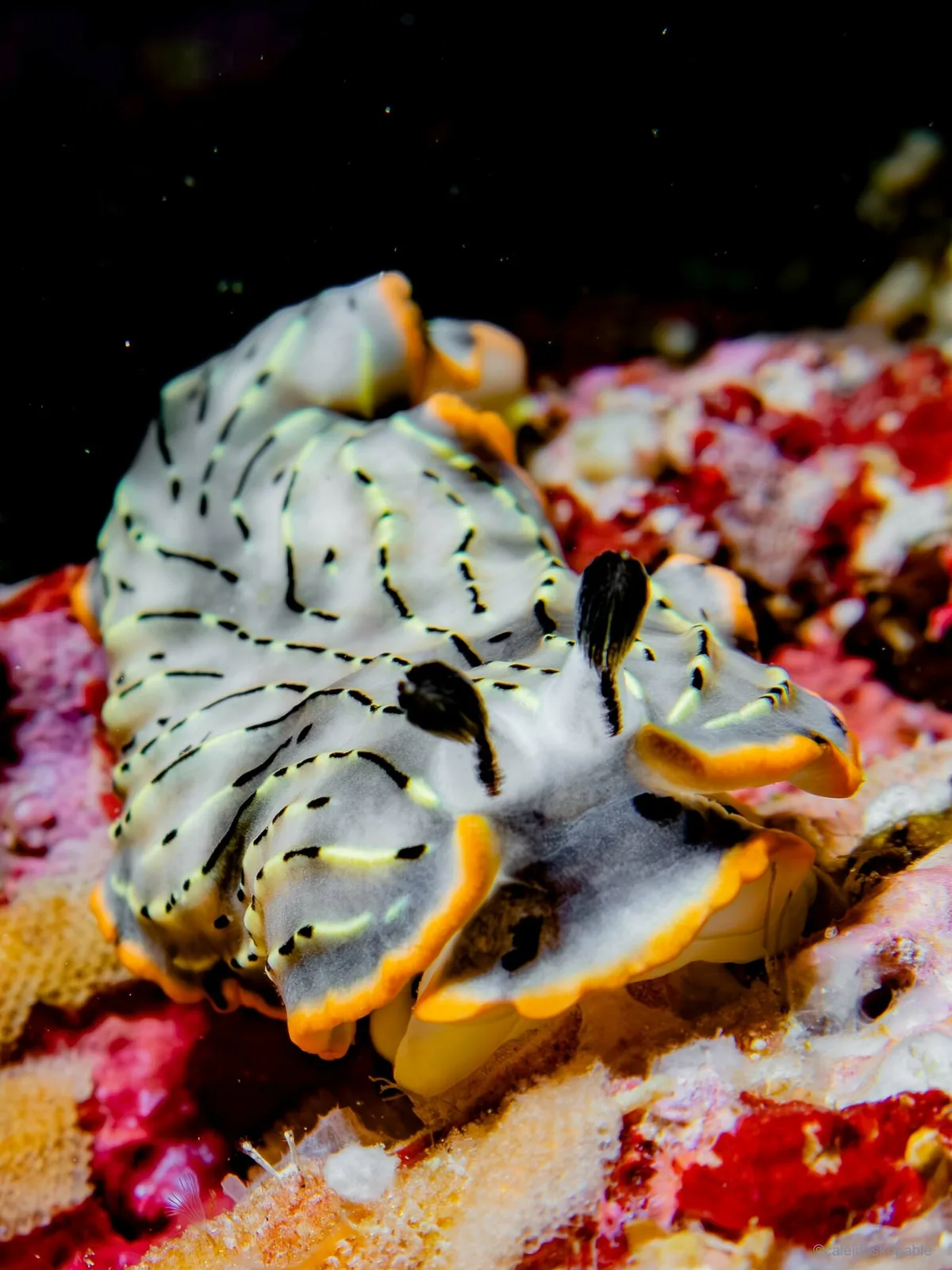
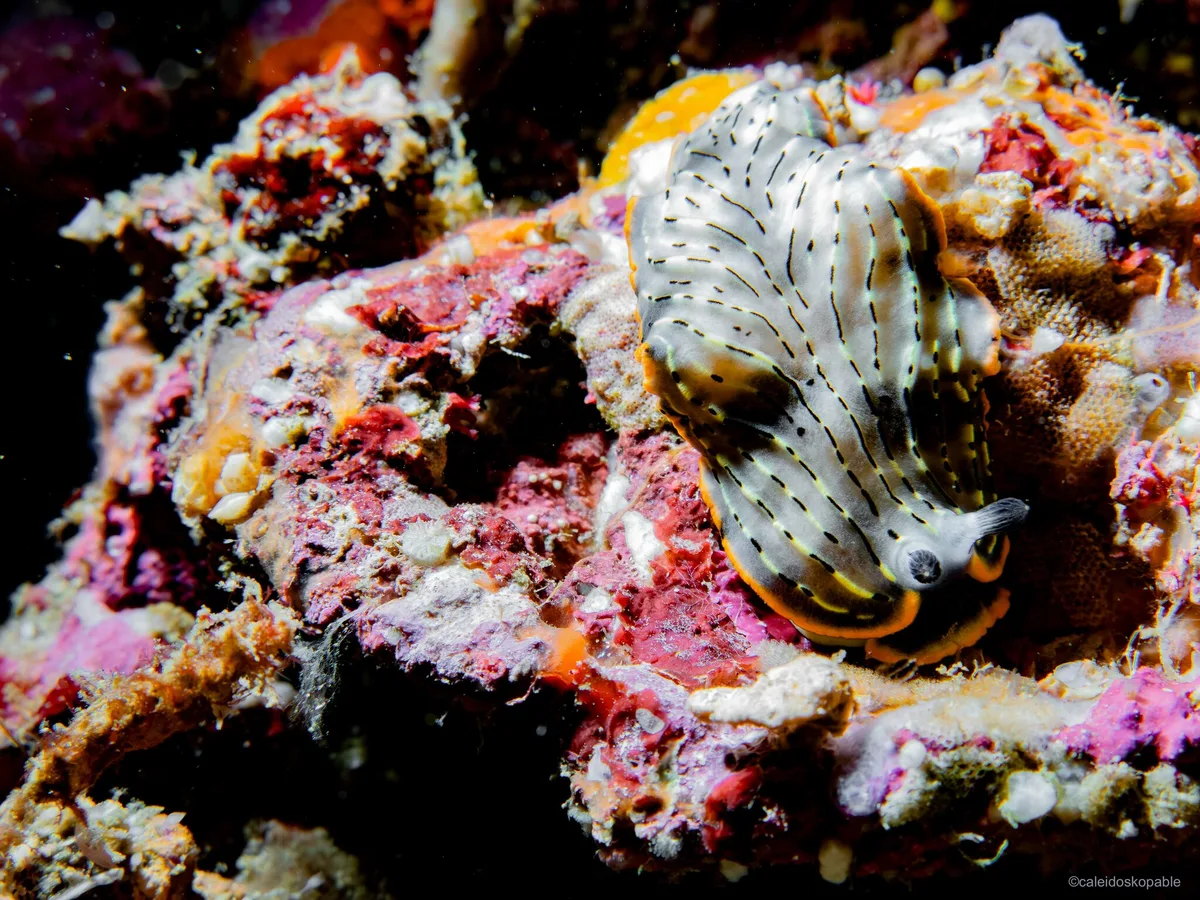
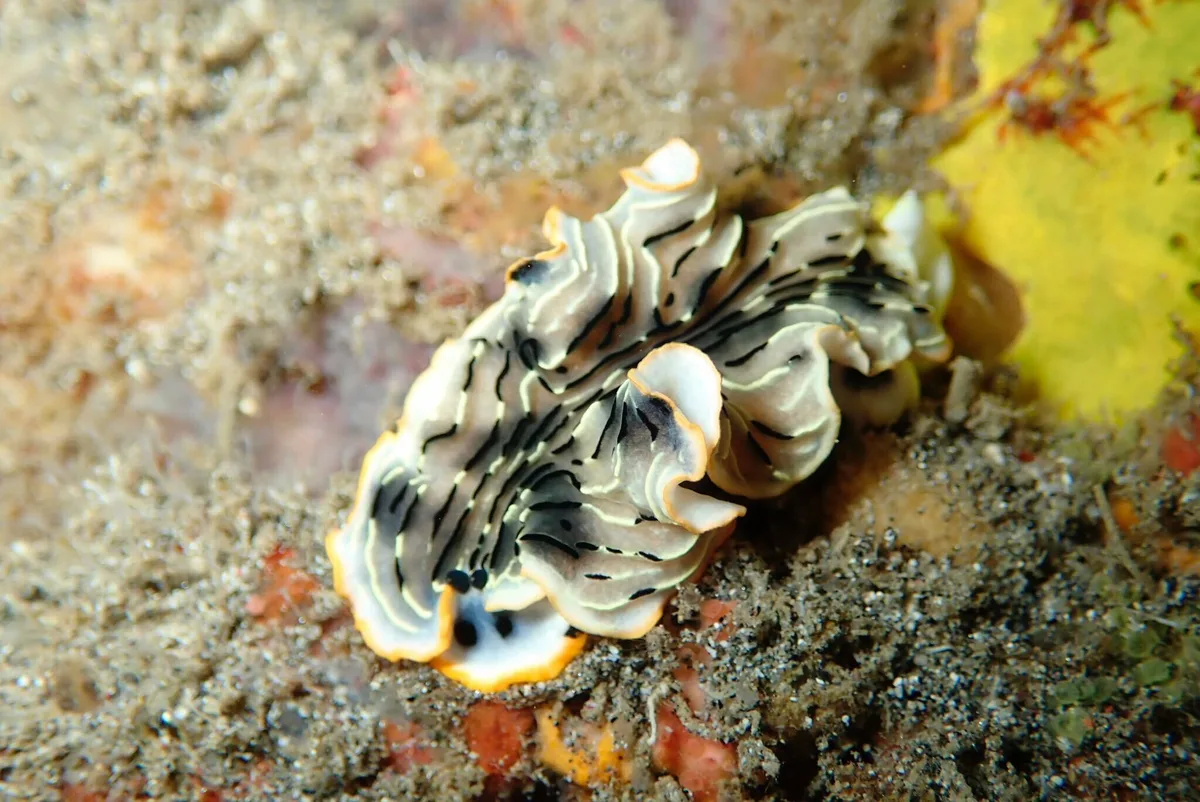
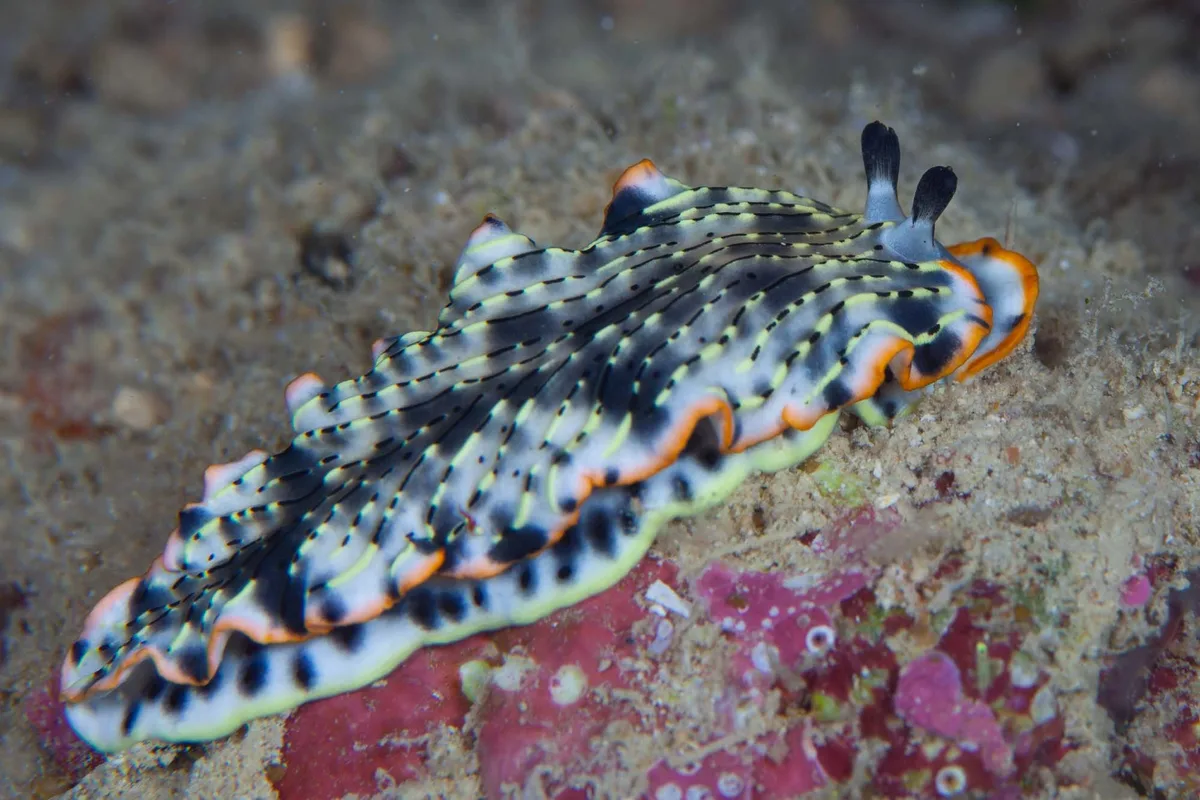
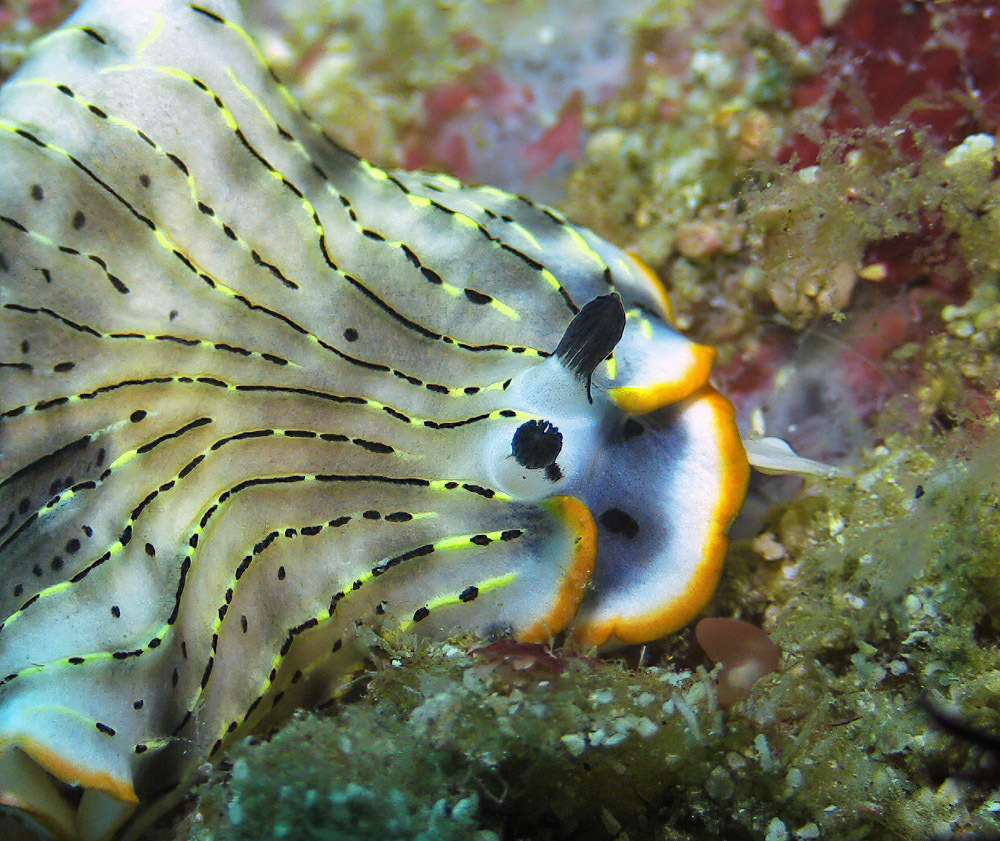
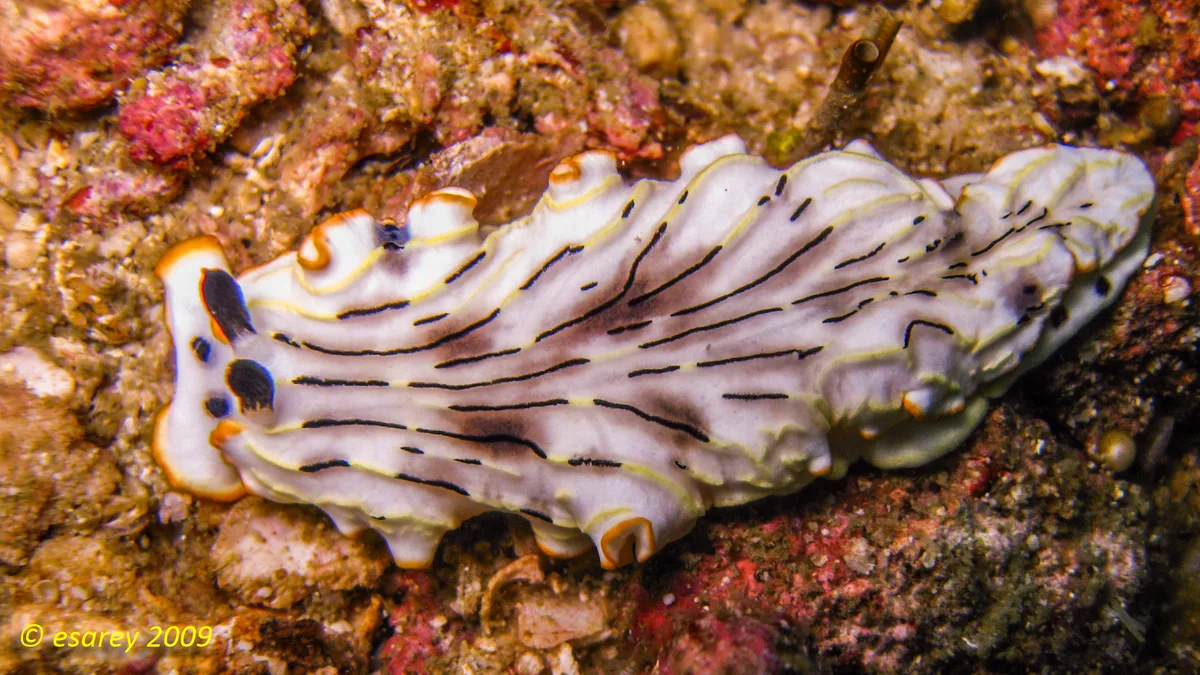
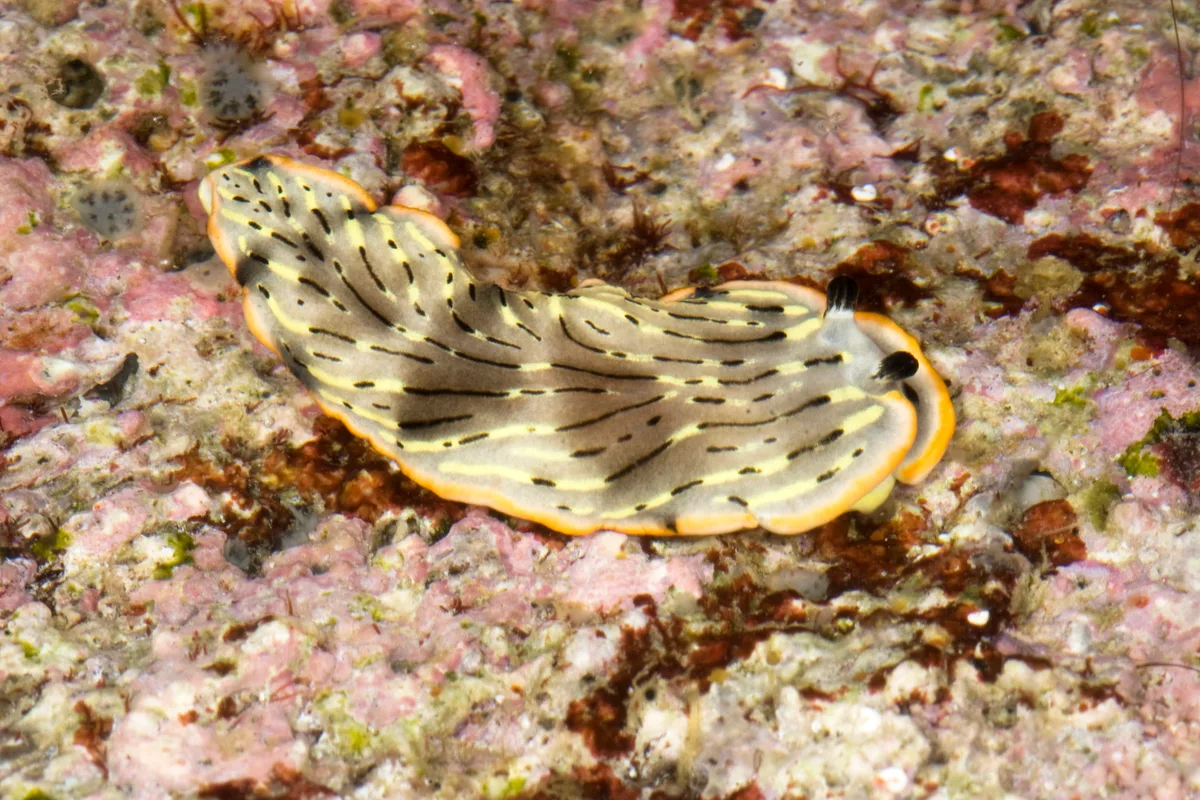
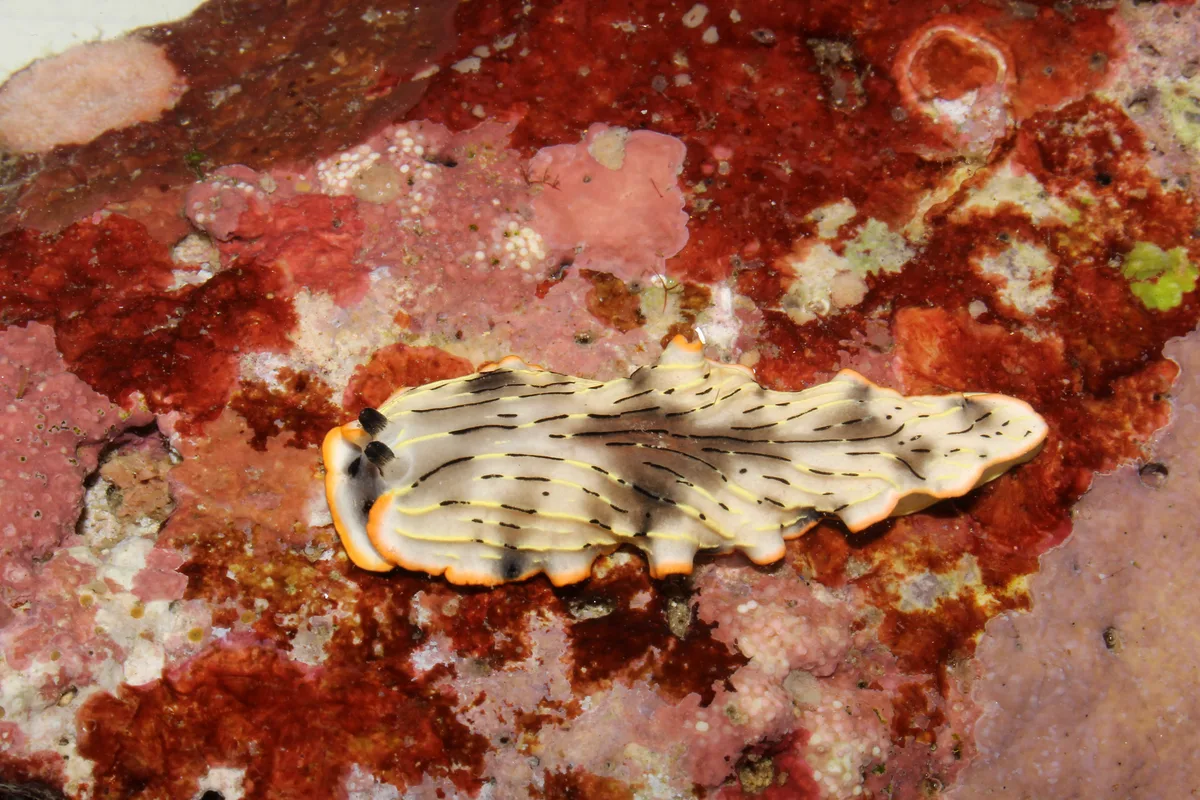
The back is corrugated from end to end in fine parallel ridges. The raised ones are pale green to white, the grooves between them are dark blue-black, and lying in those grooves is a row of short black dashes, so the surface reads as ruled paper. Around the outside runs a bright orange band with a white line just inside it, and the mantle edge itself is thrown into shallow waves rather than running straight.

Nothing stands up off that surface. Arminids have no gill plume: the breathing surfaces are folded away underneath, in the groove between the mantle skirt and the foot, running down both flanks. From above the animal is a closed ribbed shield.

At eight centimeters (3.1 in) it is the largest of the seven arminids in this catalogue by a wide margin, and on open sand beside a soft coral it is a substantial and genuinely striking find.

van Hasselt described it in 1824, which makes it among the oldest names in this section. It has been photographed in the Straits of Tiran.

How to recognise it
  • pale green and dark ridges alternating down the length of the body
  • short black dashes lying in the dark grooves between the ridges
  • bright orange margin with a white line just inside it
  • eight centimeters, by far the largest arminid here
Comments

Please, sign in to leave a comment

Continue with a social account - yours will be created automatically.

No comments yet — be the first.

Last Update: August 28, 2026