This genus eats entoprocts, and almost nothing else in the sea does.
Entoprocts are minute stalked animals that grow in colonies on sponges, hydroid stems and worm tubes. Each is a goblet on a stem with a ring of tentacles around the rim, driving a water current through that ring and straining particles out of it. They are everywhere on a reef once you know to look, they are ignored by essentially every predator, and Trapania has the whole resource to itself. That is why an animal a centimeter long has a secure place in the world.
It also fixes the search. There is no point scanning reef. You find the fuzz of entoprocts on a sponge and then you examine that patch, and the slug is on it or it is nowhere.
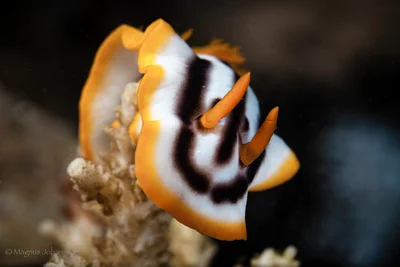
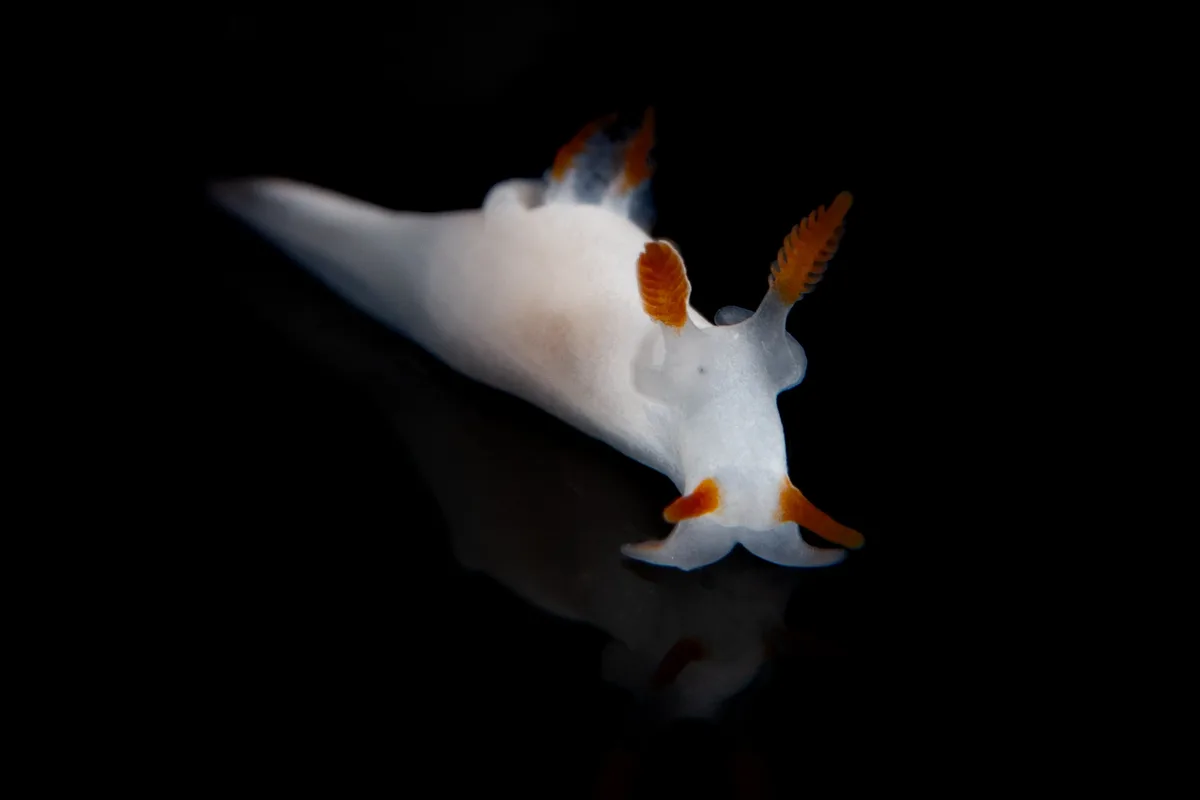
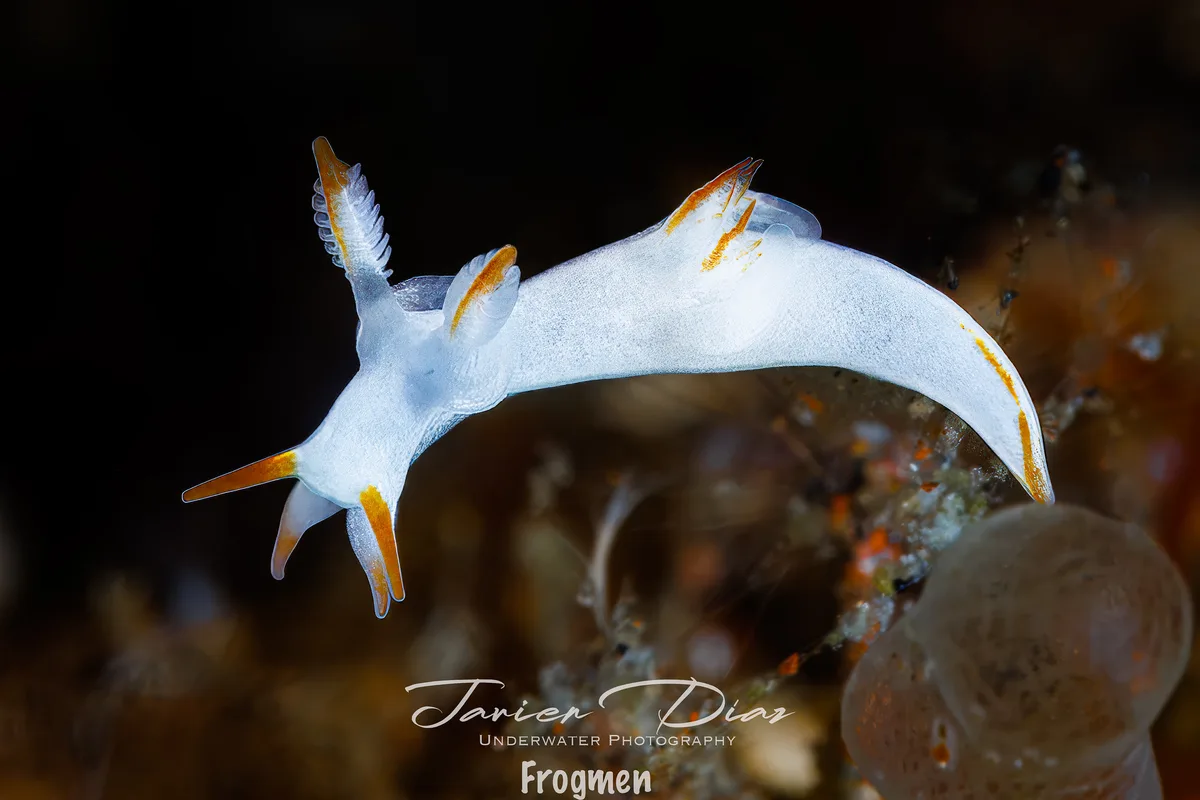
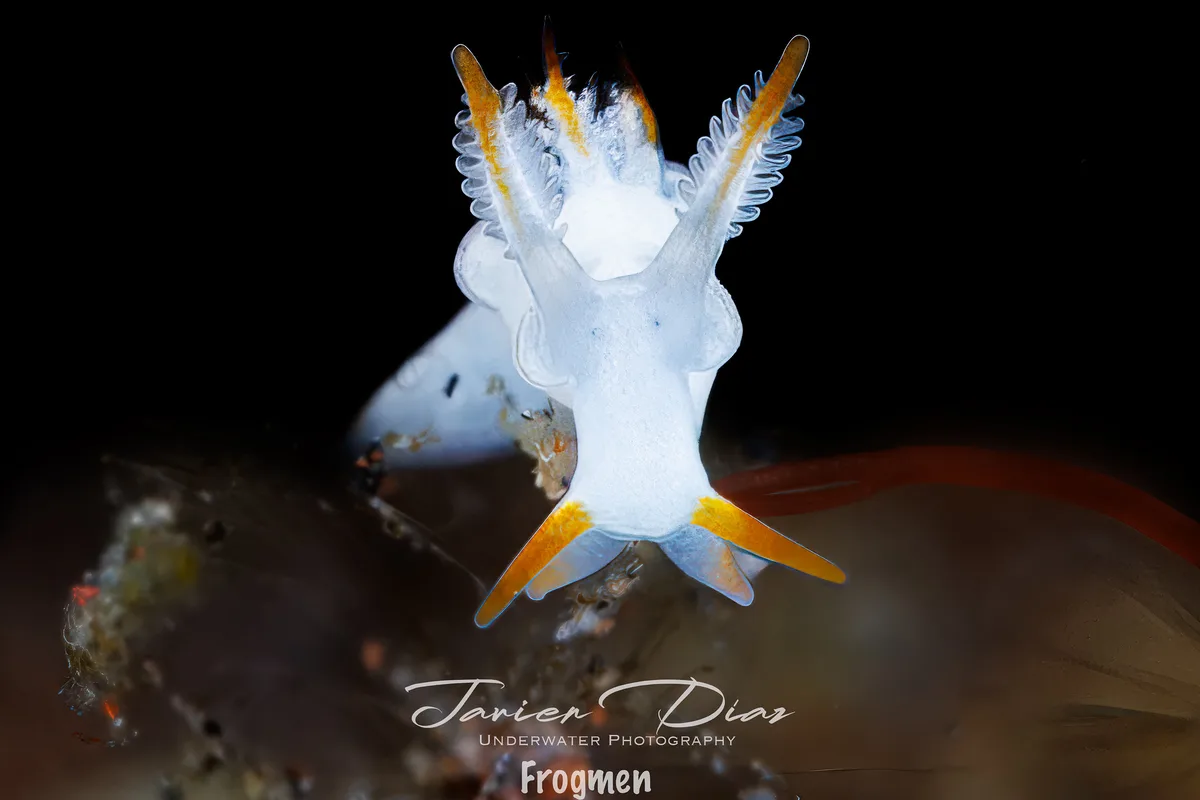
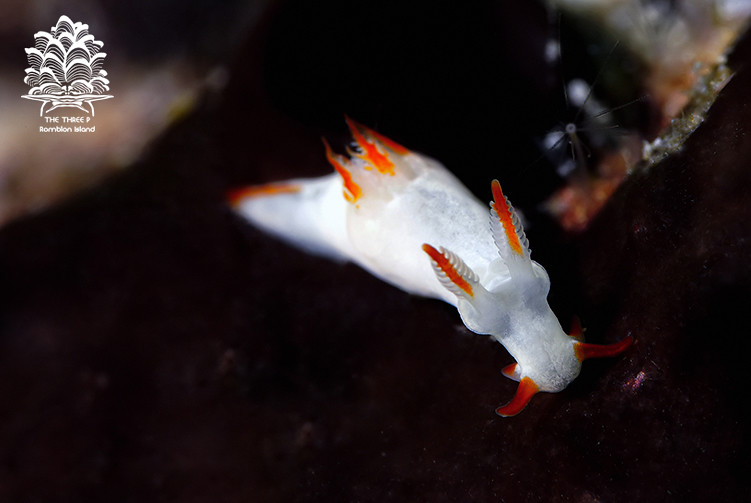
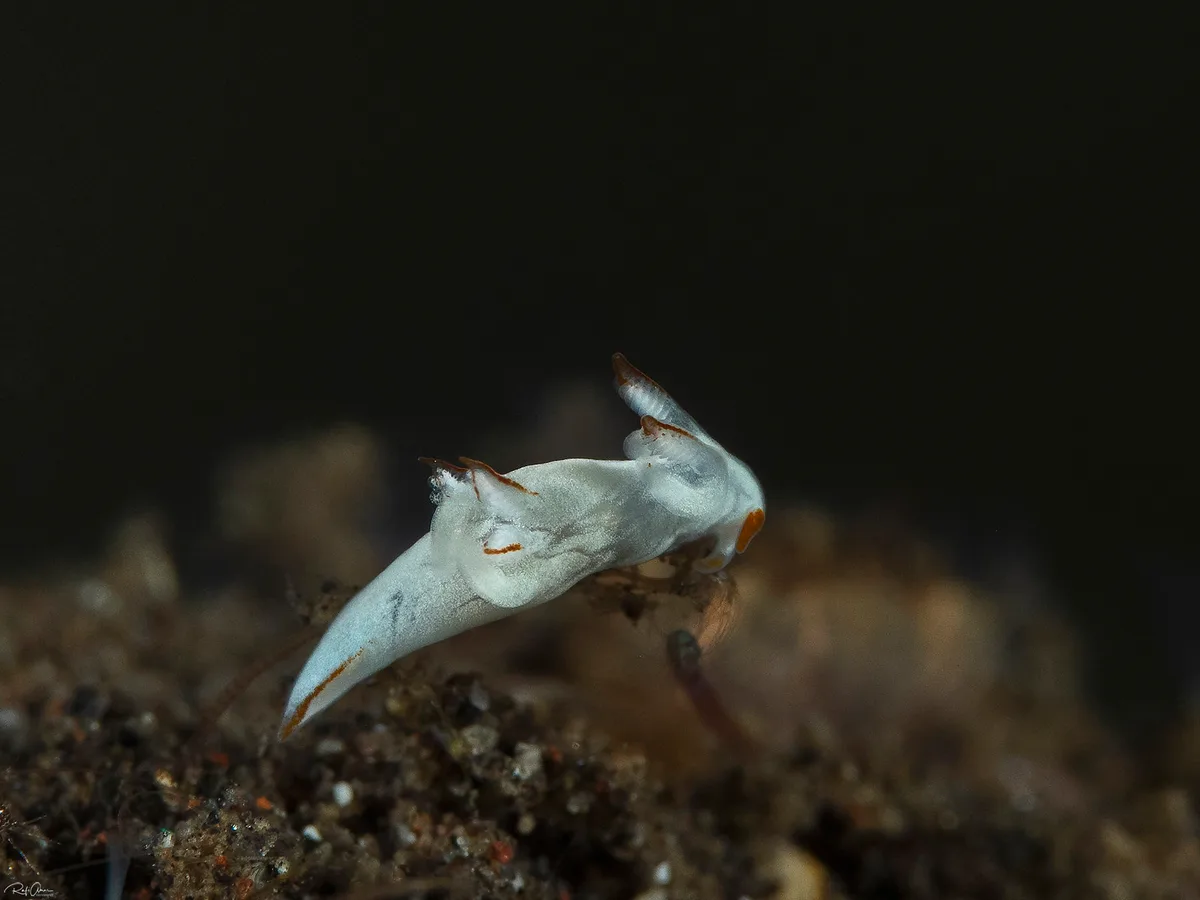
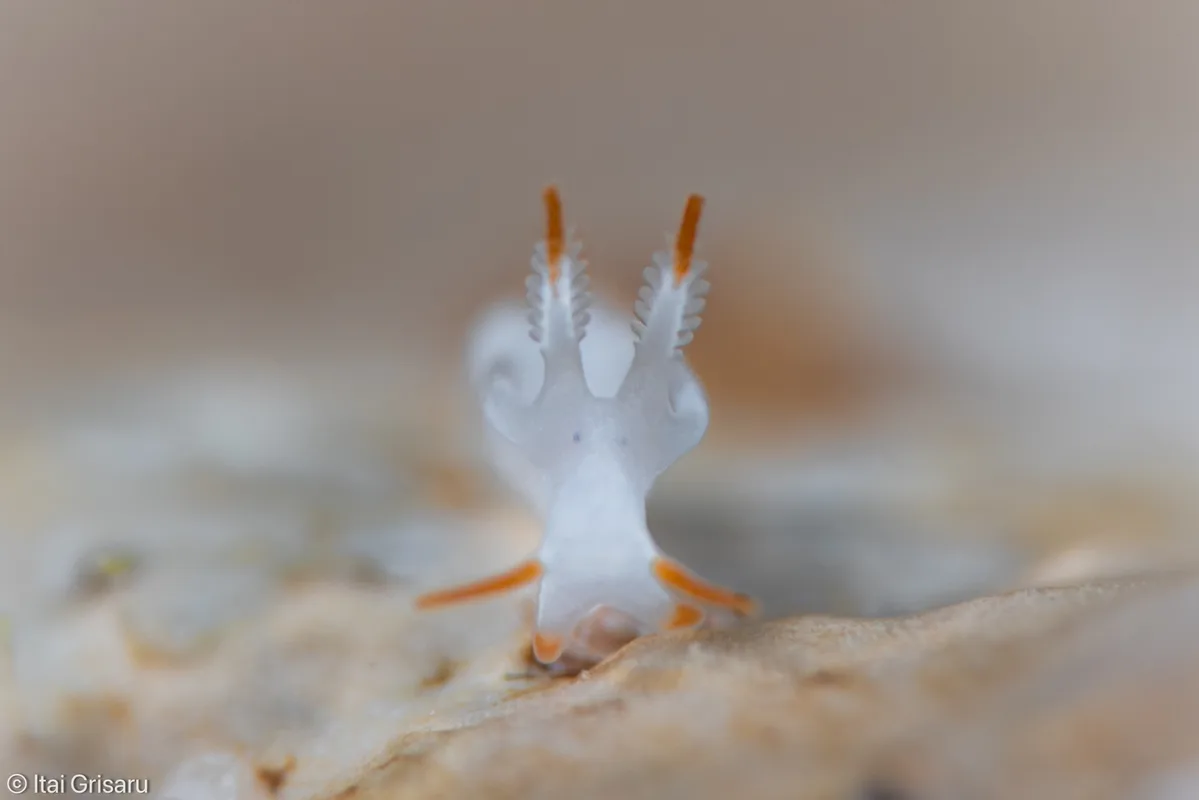
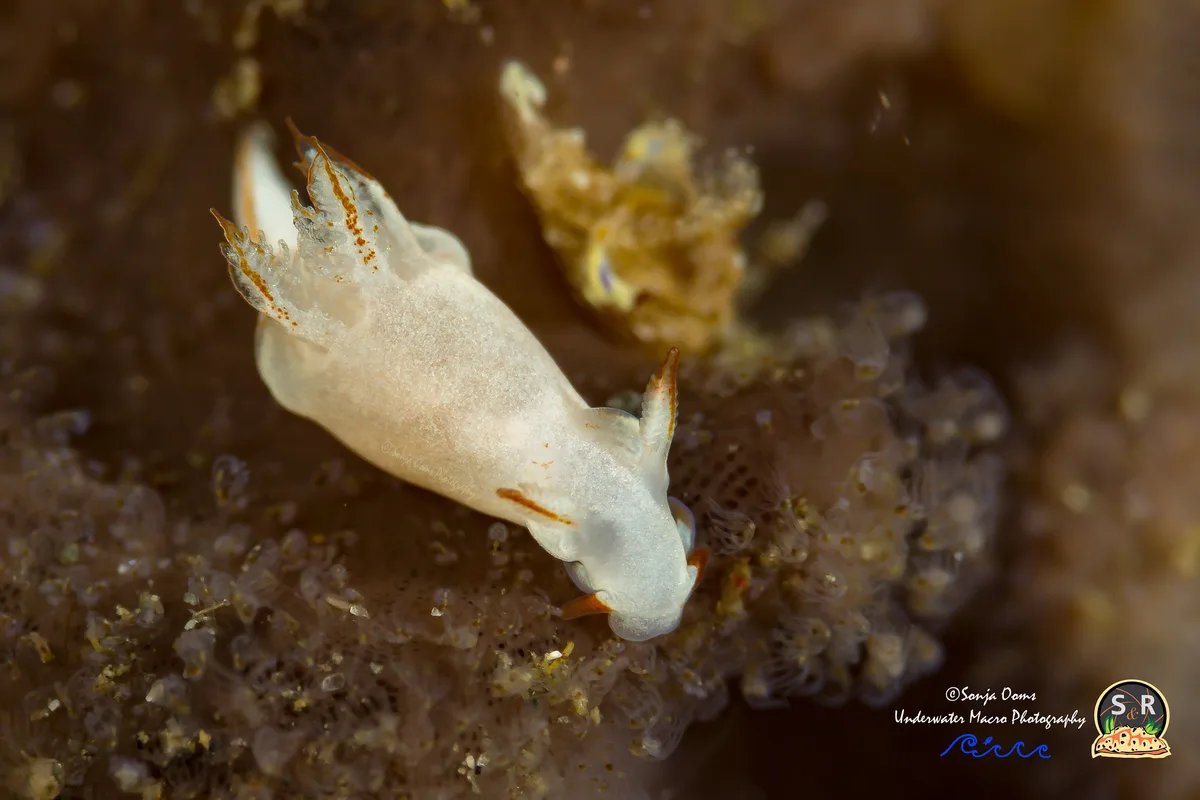
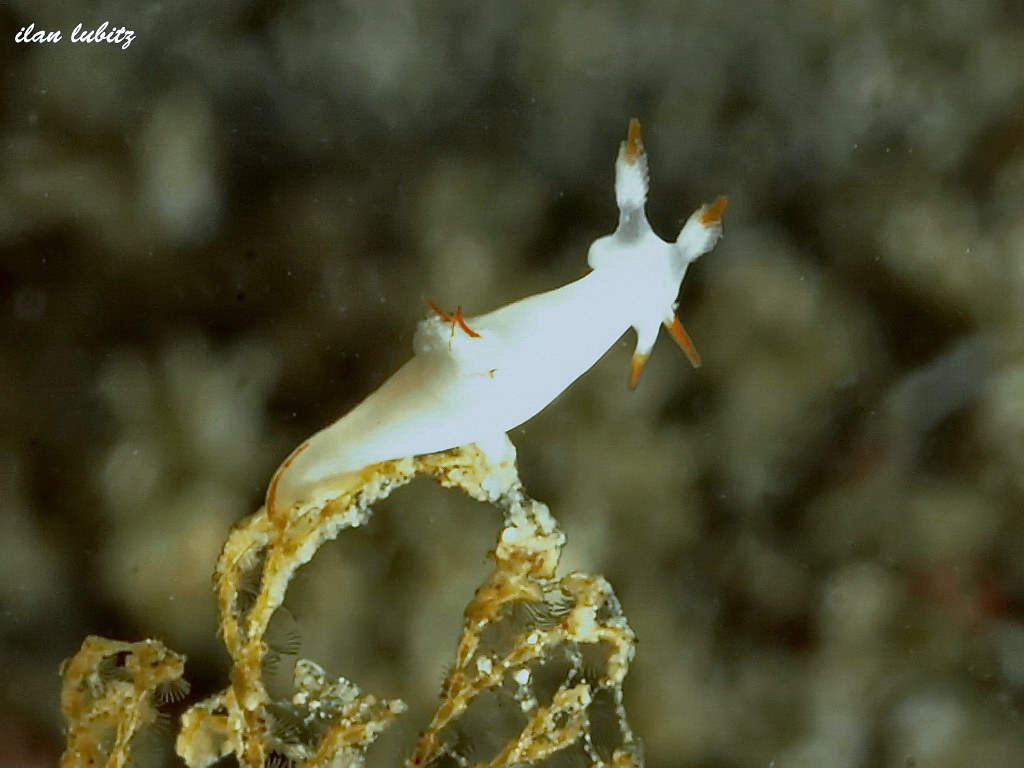
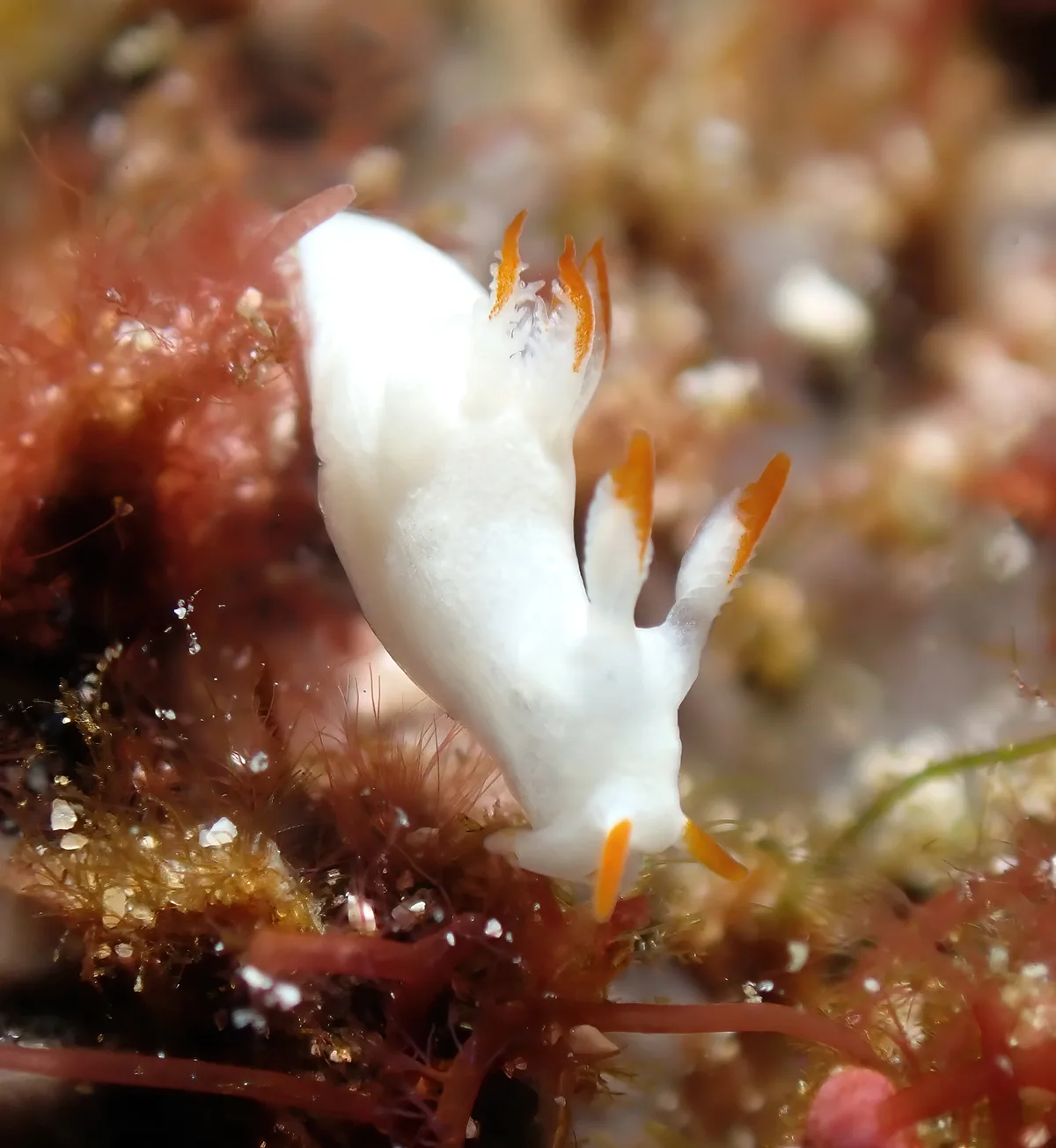
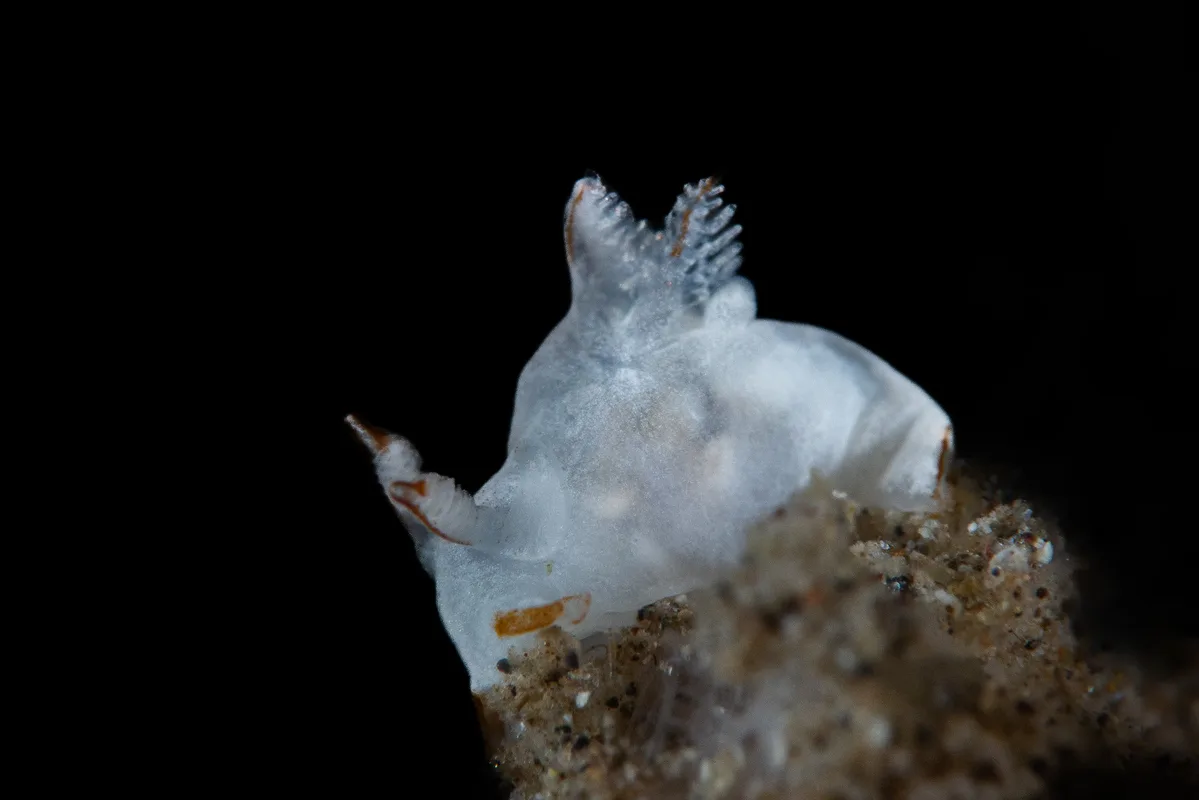
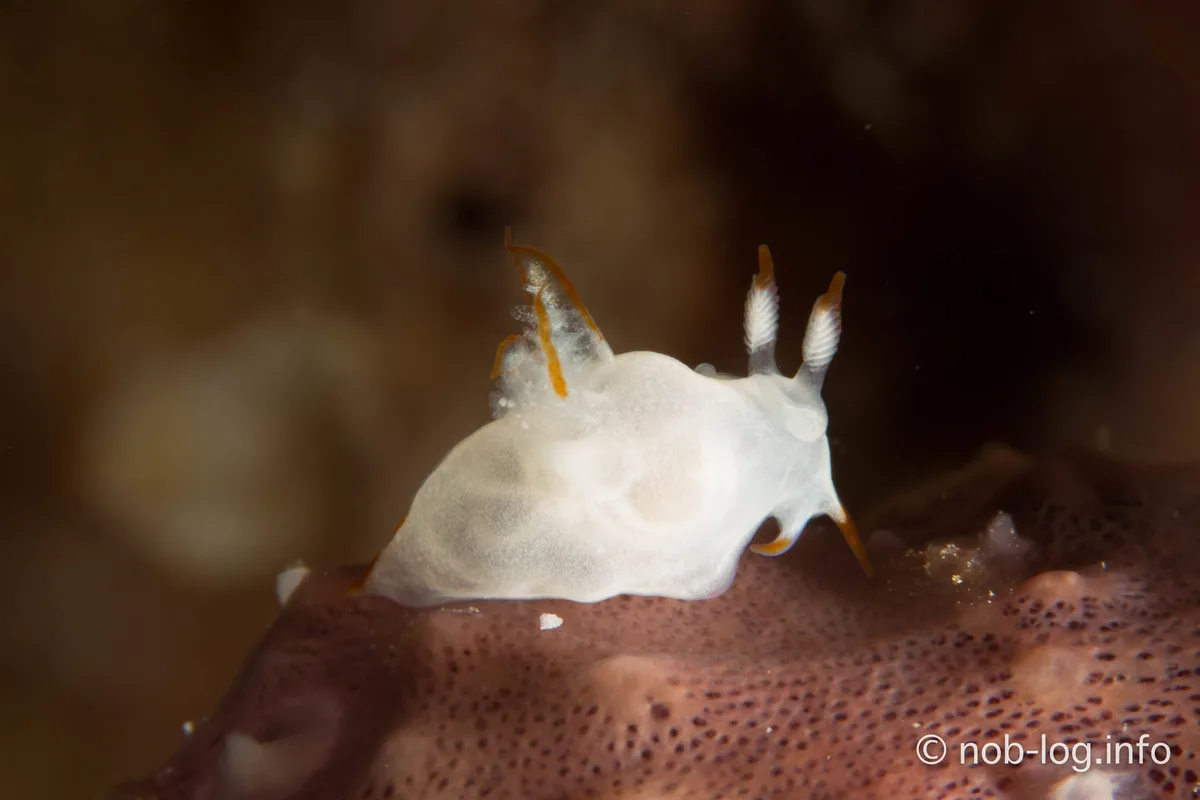
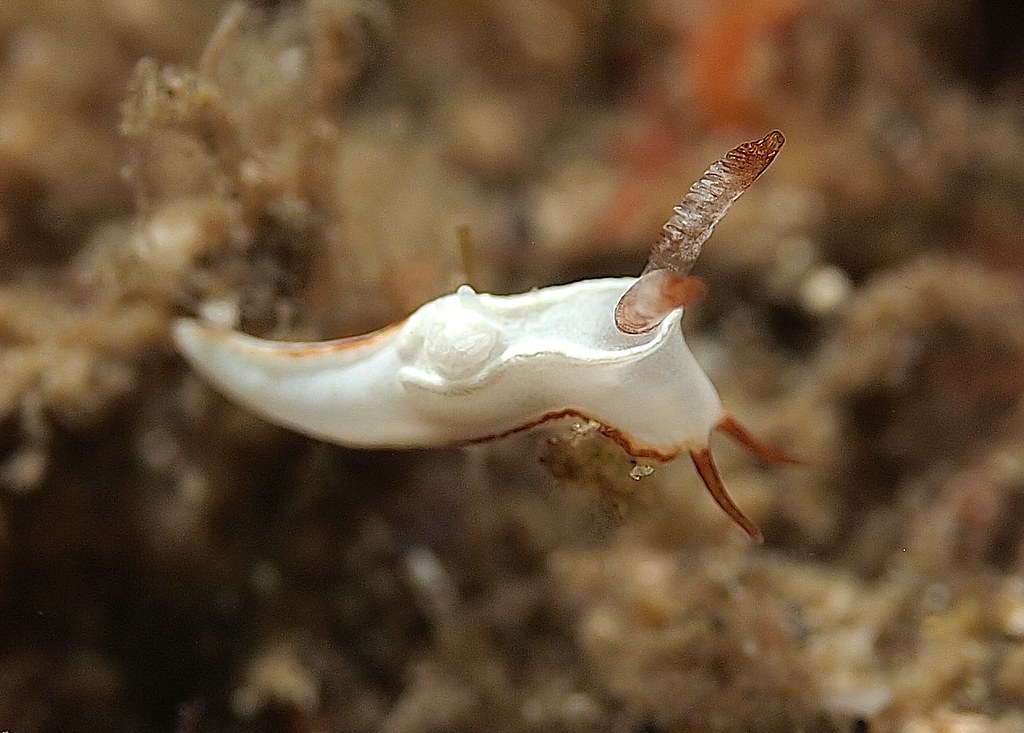
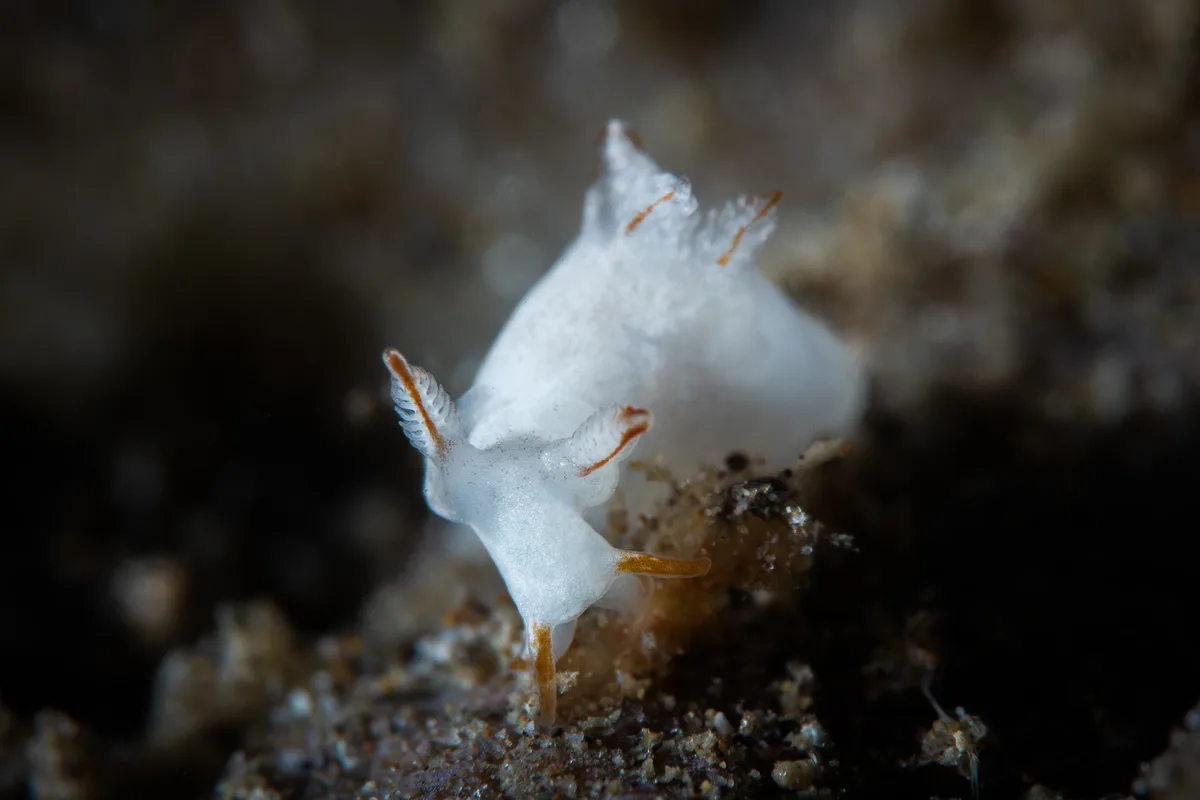
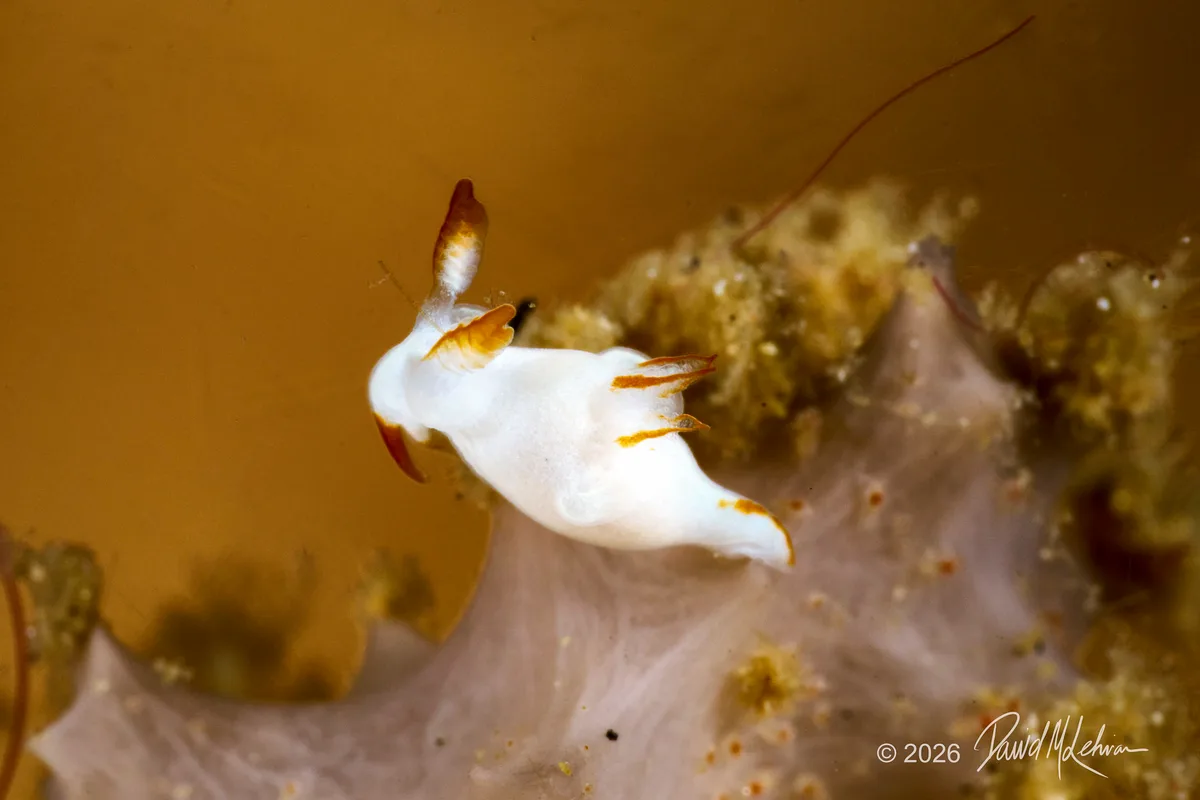
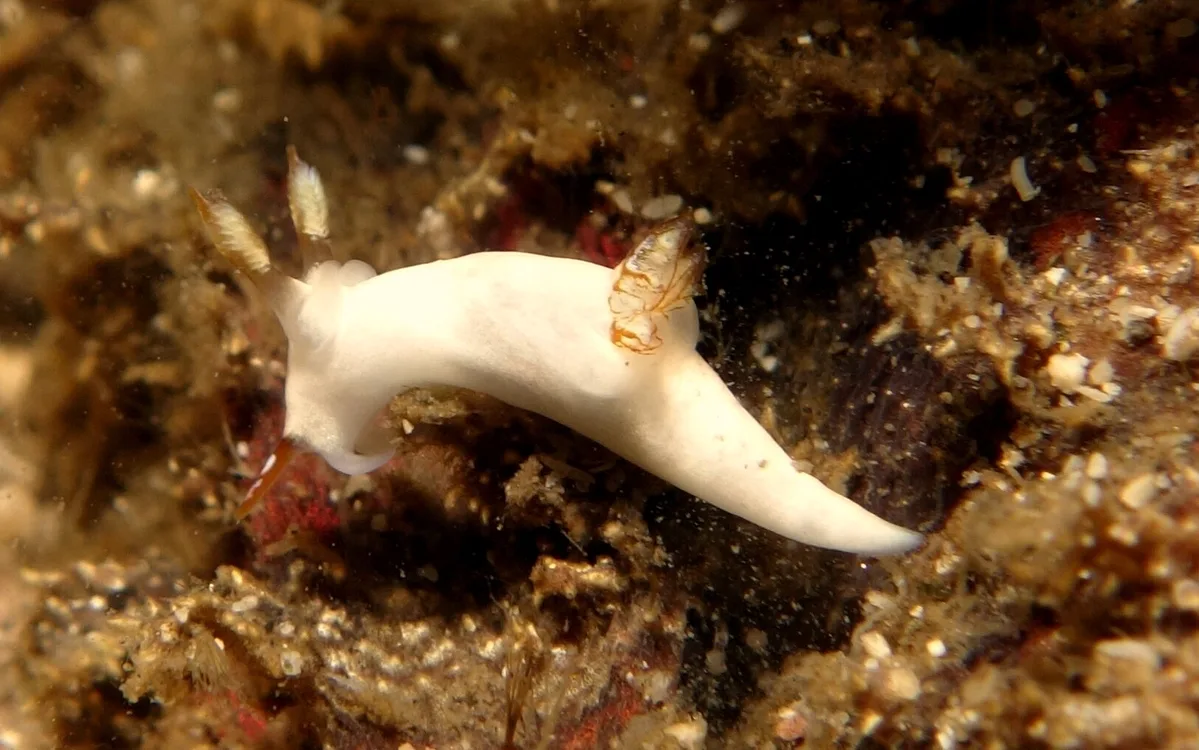
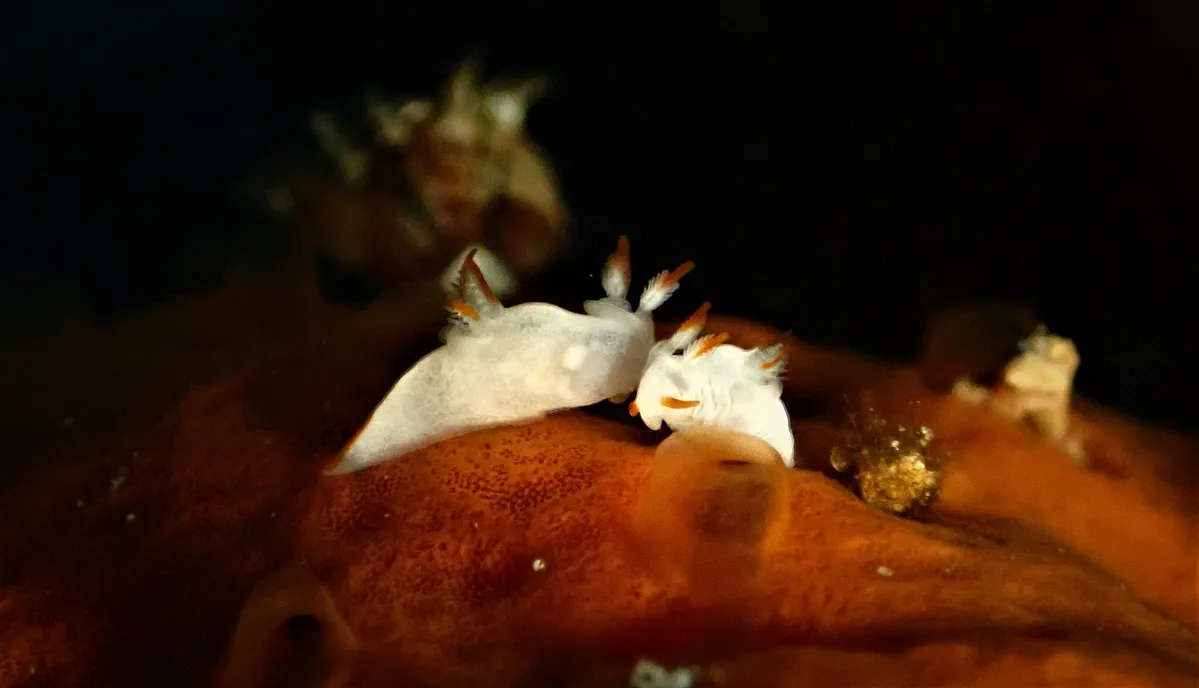
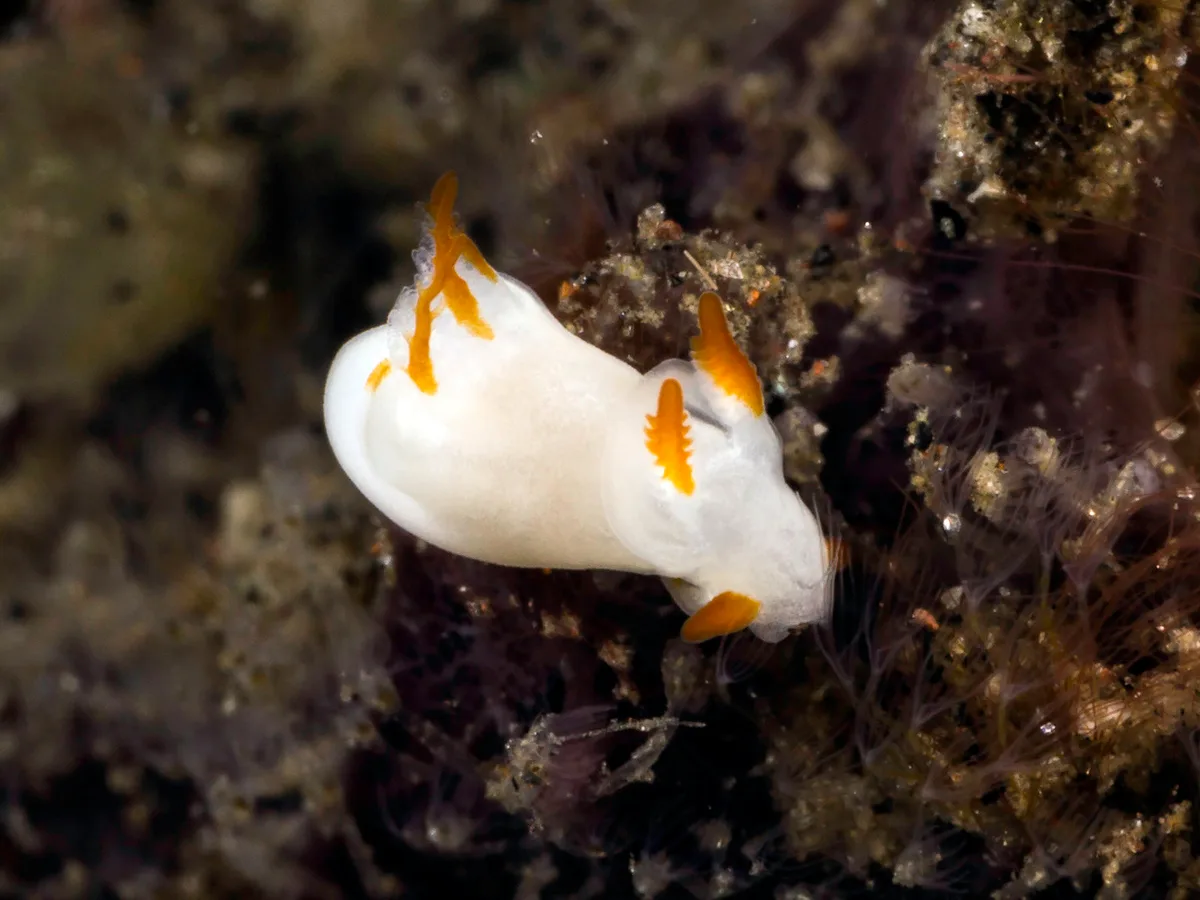
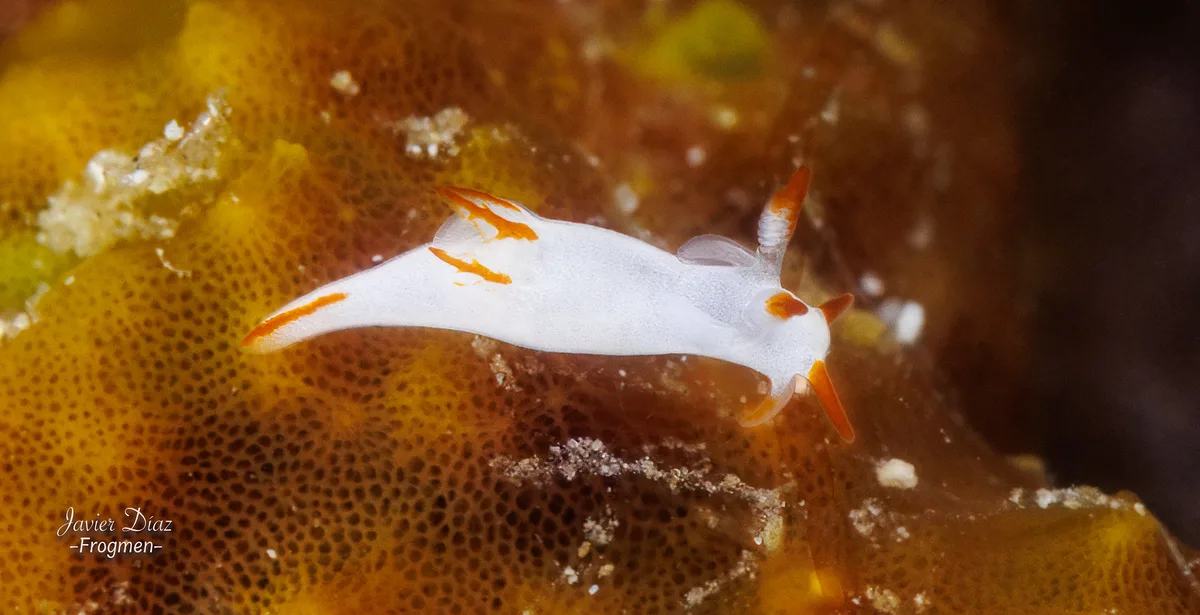
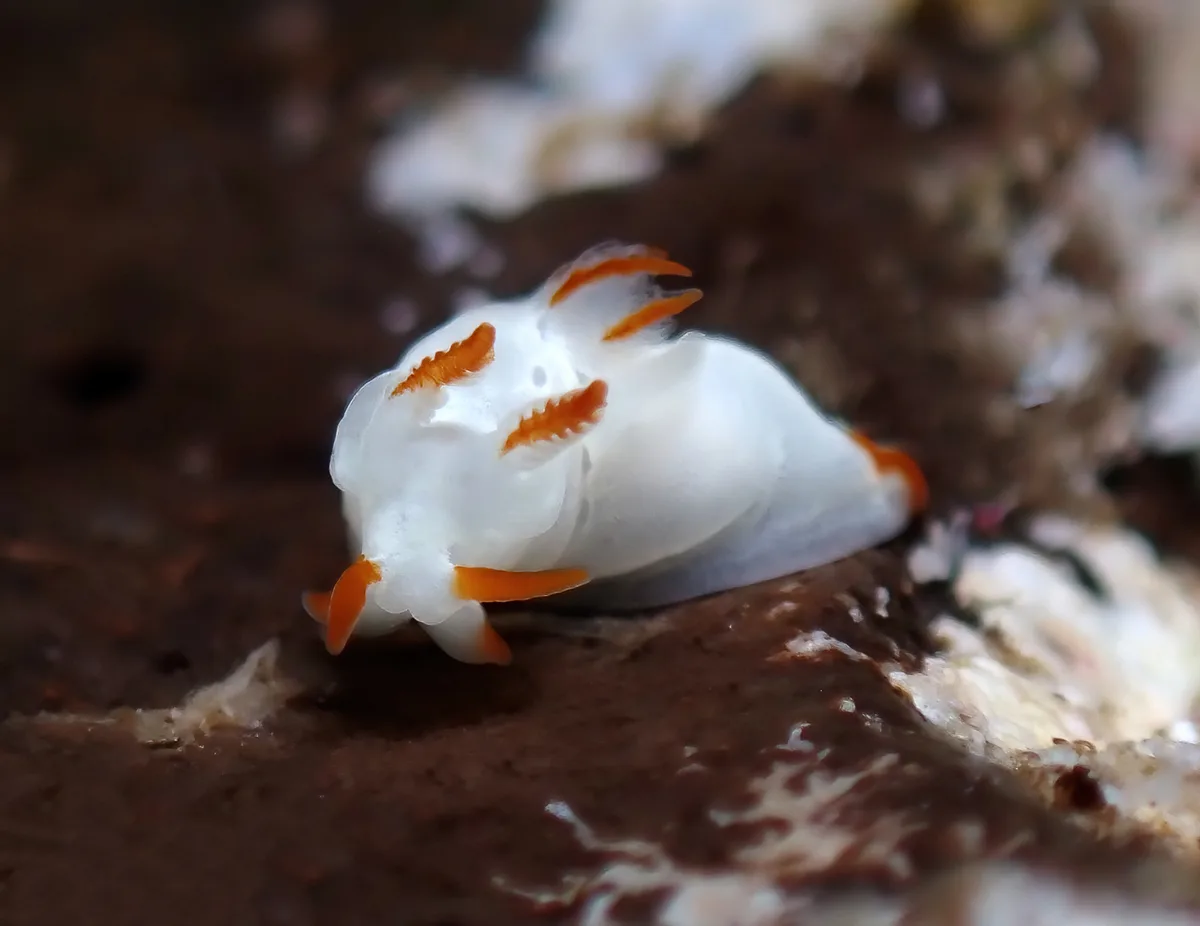
The genus announces itself once you have one in frame. Beside the gill plume a long process sticks out on each side, and a second pair stands beside the rhinophores at the front: four extra appendages in two pairs, carried by no other dorid on this reef.
This species is the clean one. The body is white and every appendage - the four processes, the rhinophores, the gills - is dipped in orange at the tip, so the animal reads as a white speck with orange points. Its relative here is pale yellow blotched with brown and speckled, which is a completely different look at the same tiny scale. Both were described in the same 2008 paper.
- white body with the tips of every appendage dipped in orange
- one long process on each side beside the gills, and a second pair beside the rhinophores
- those four extra appendages place the genus and nothing else here has them
- just over a centimeter, on a sponge rather than on the reef