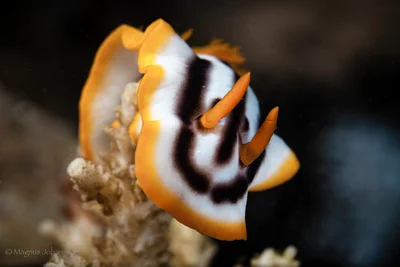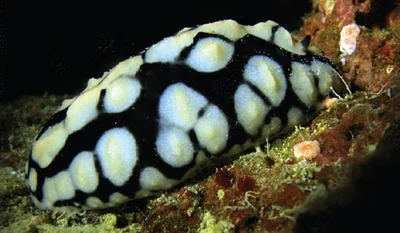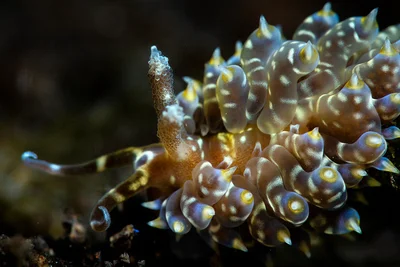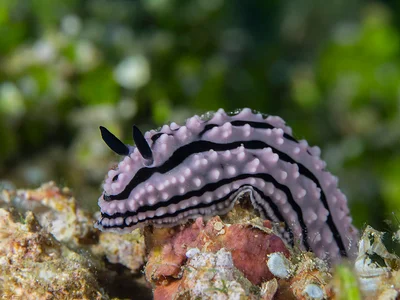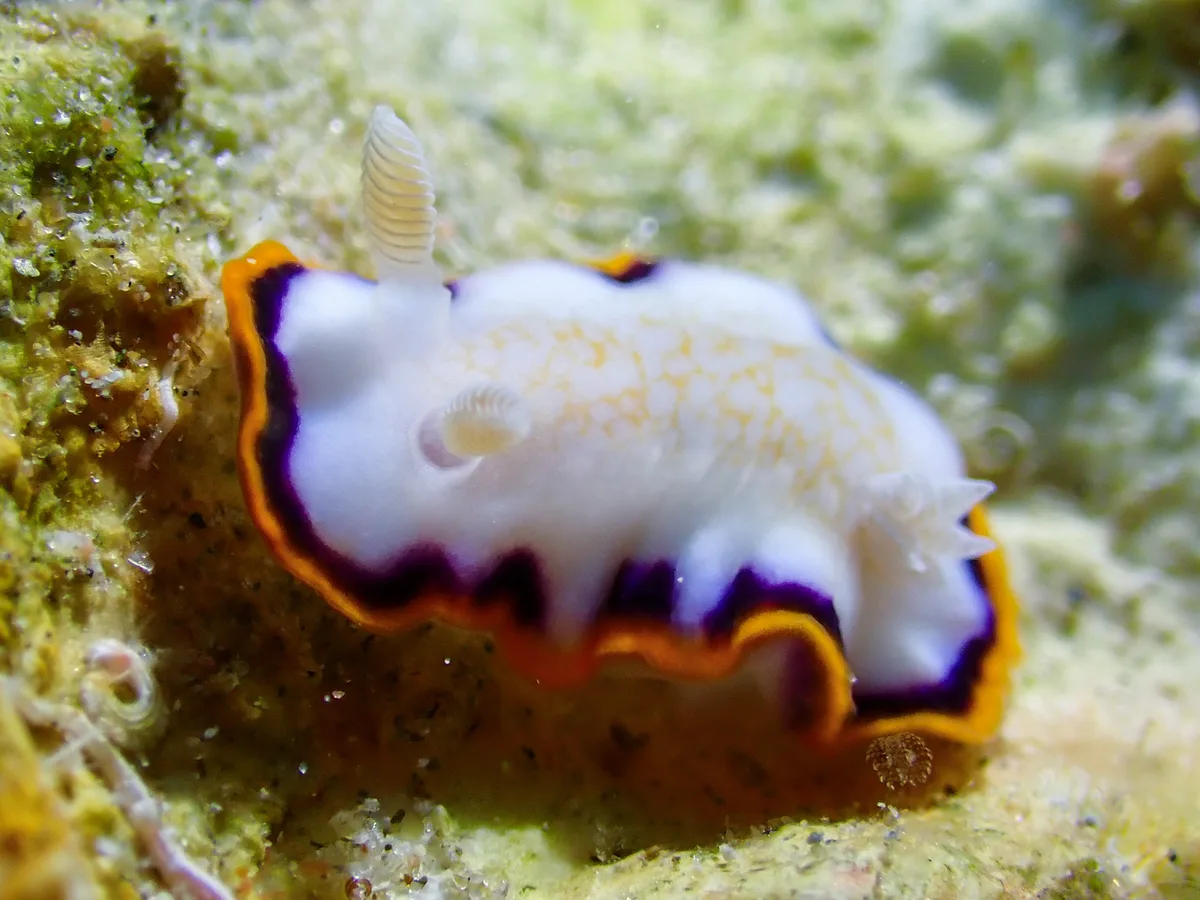
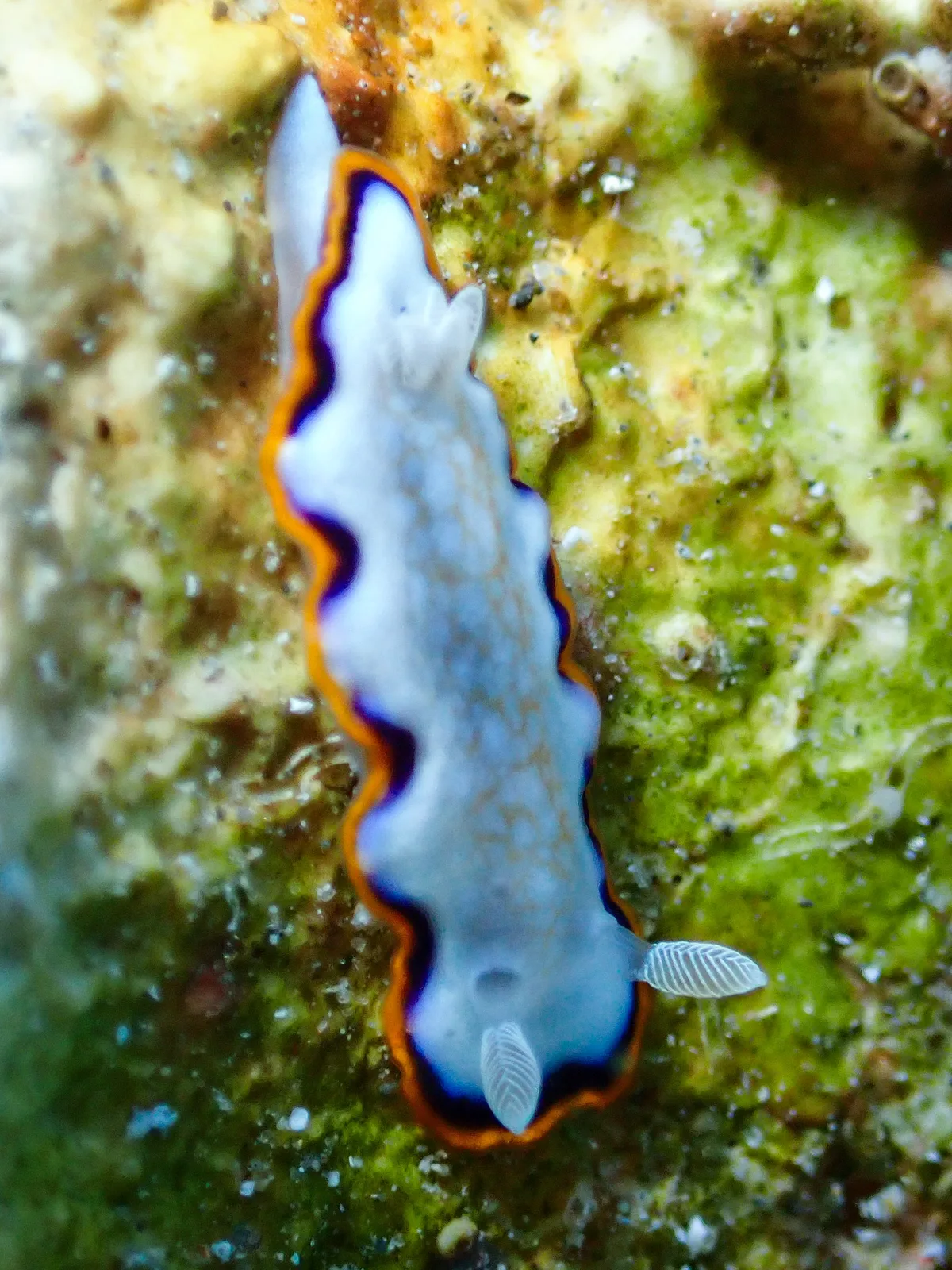
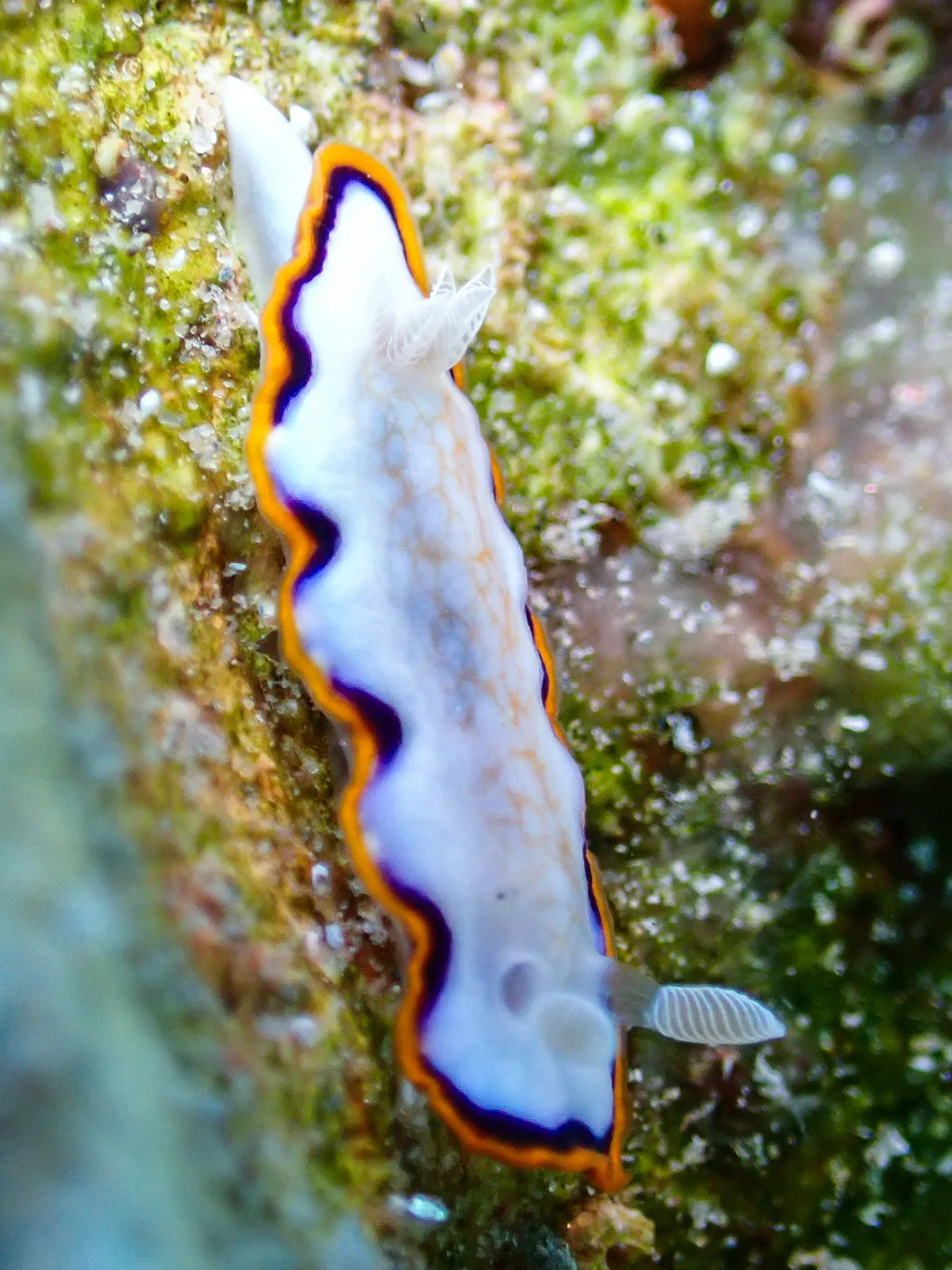
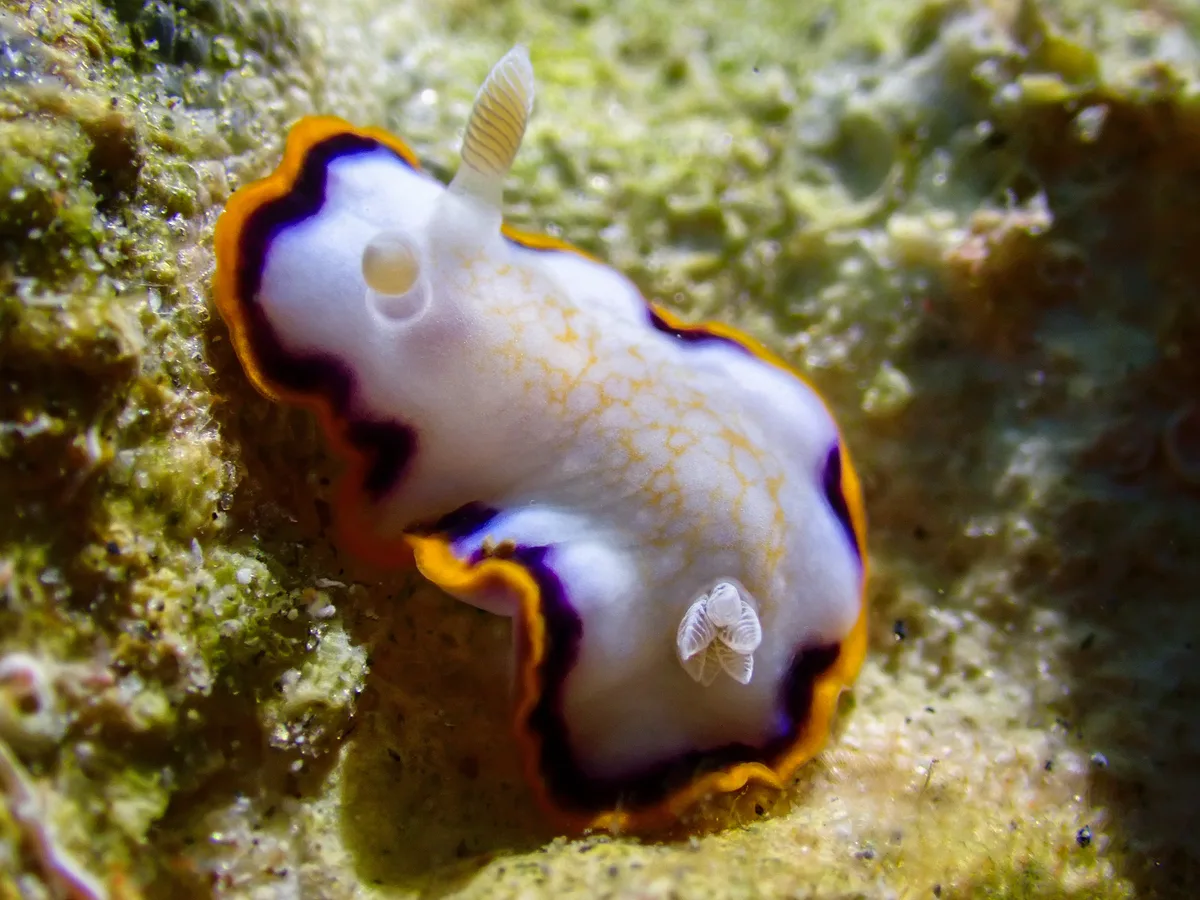
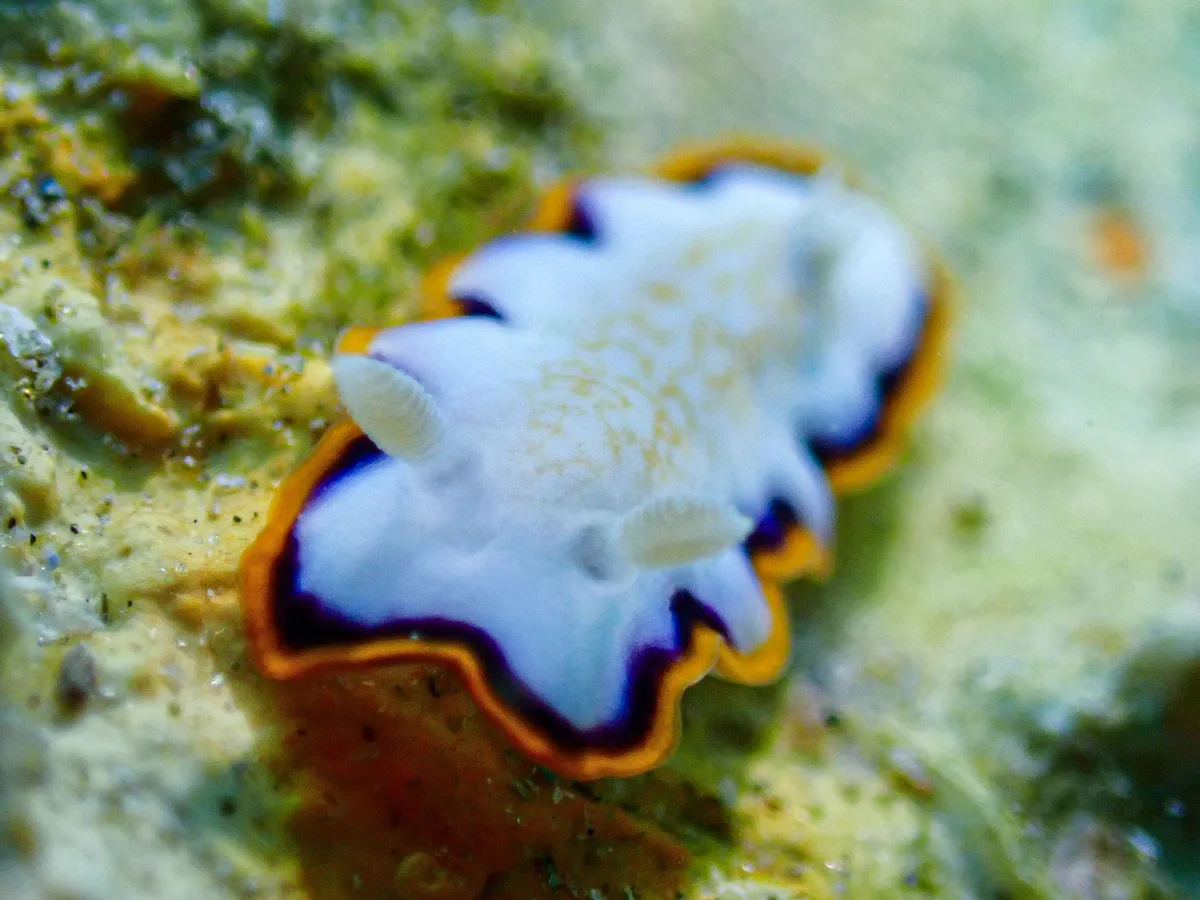
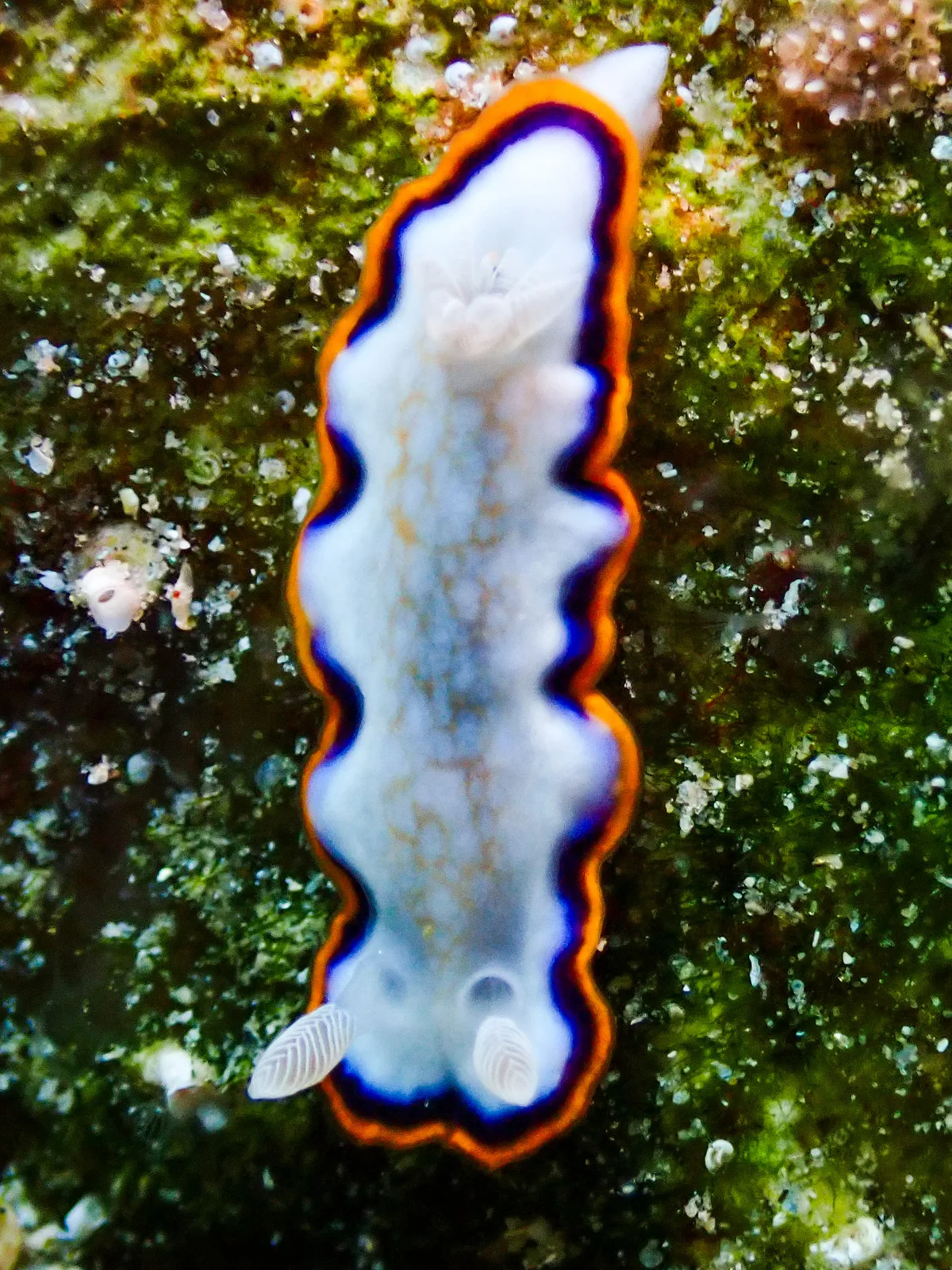
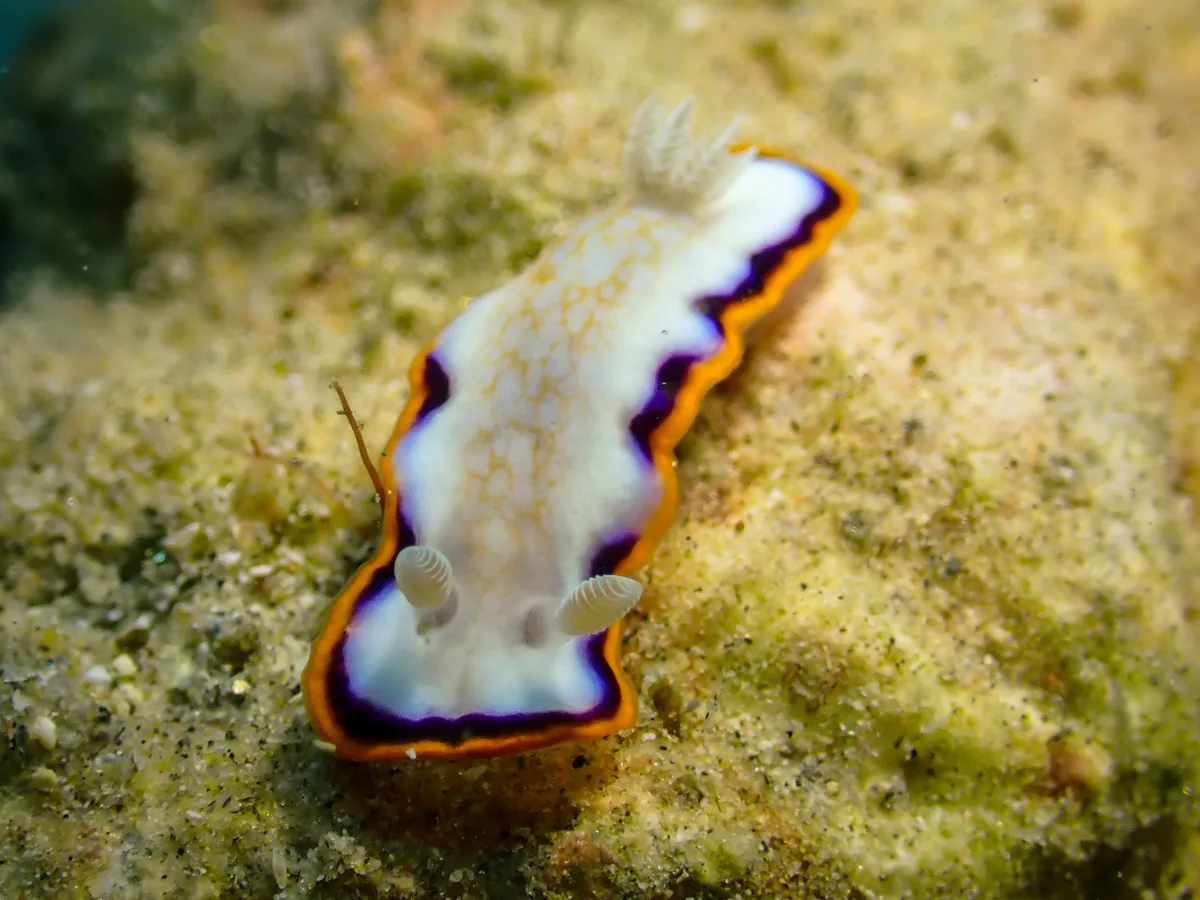
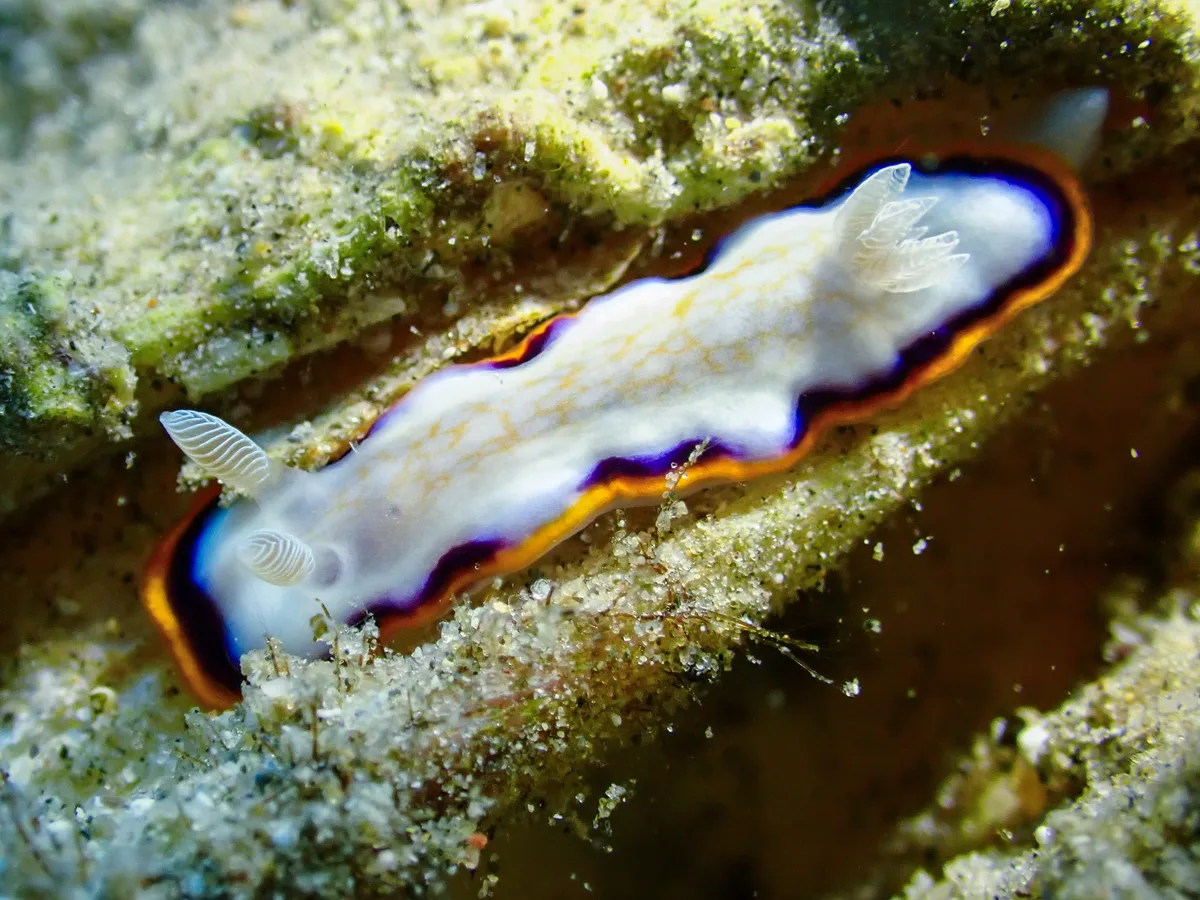
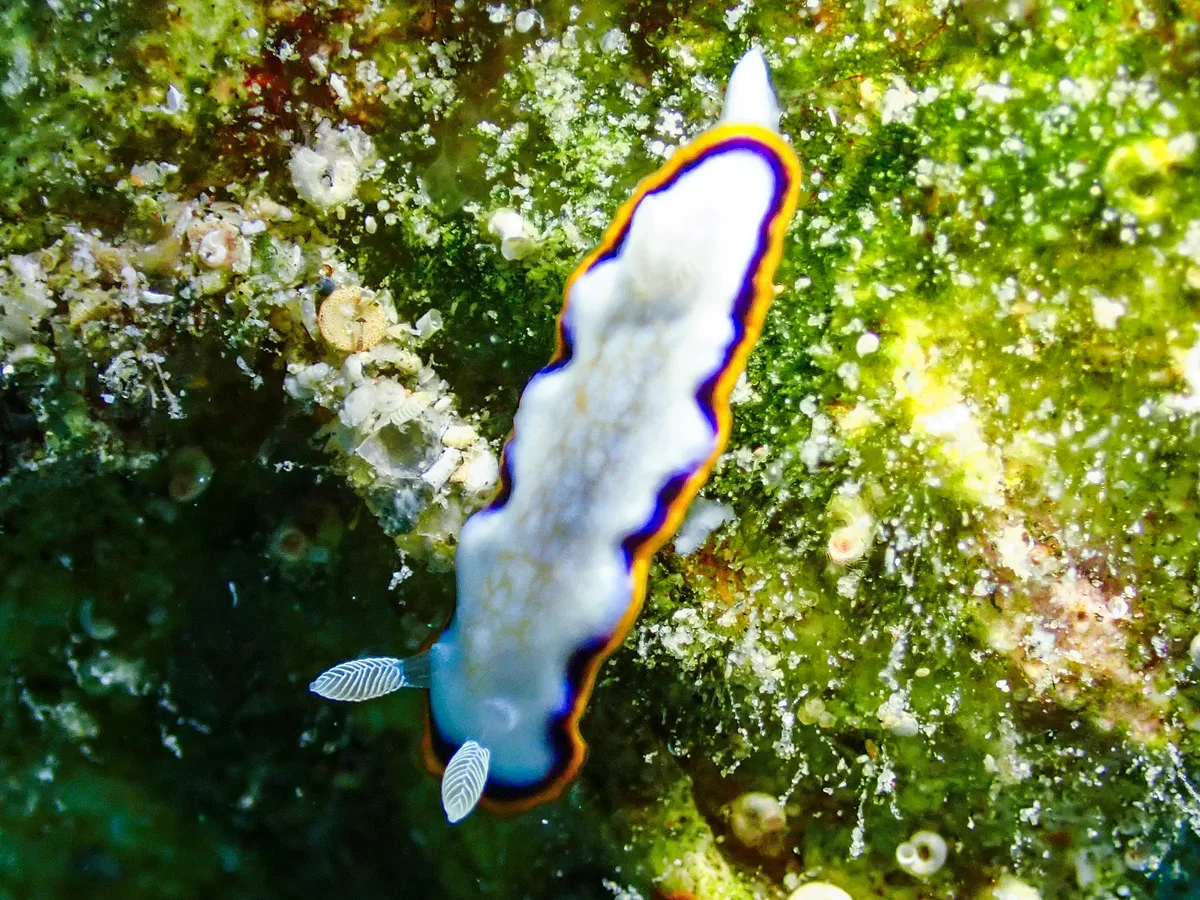
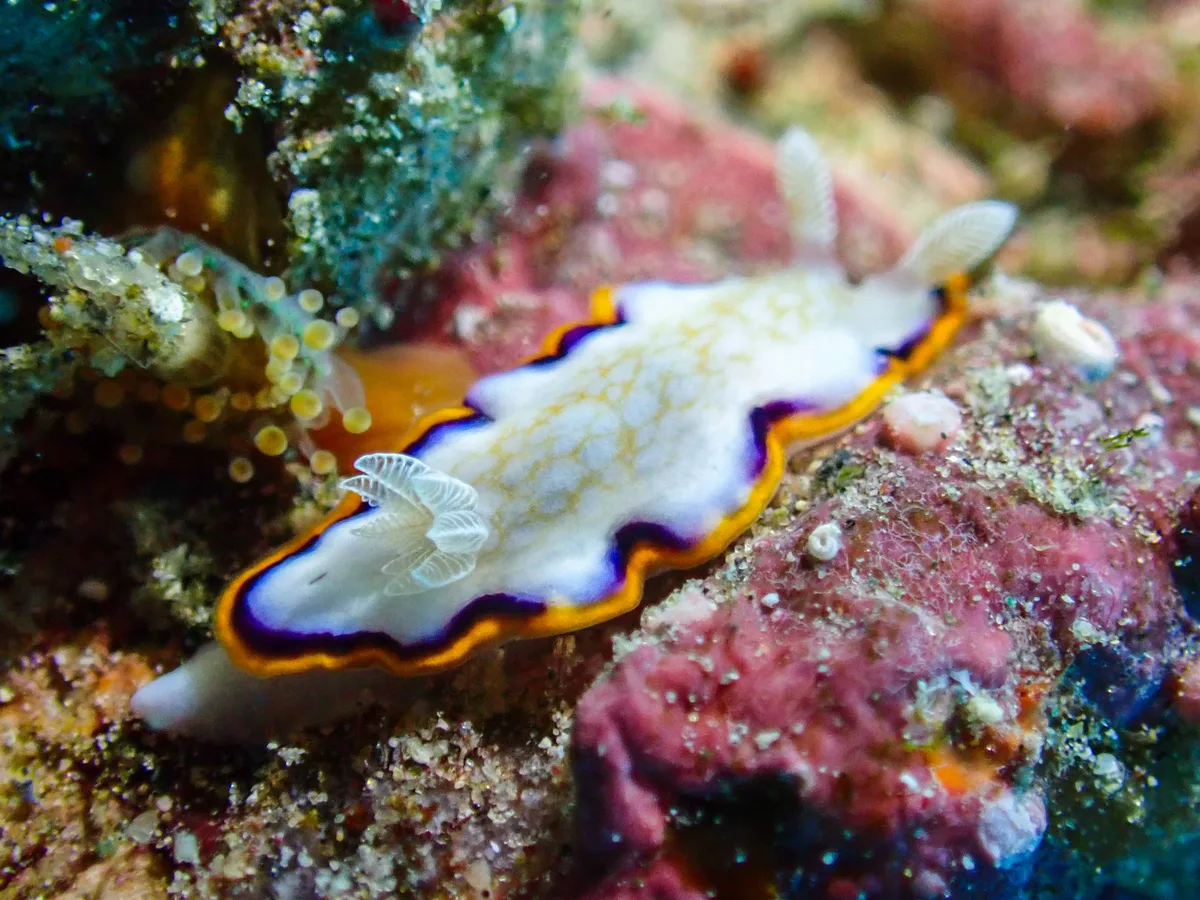
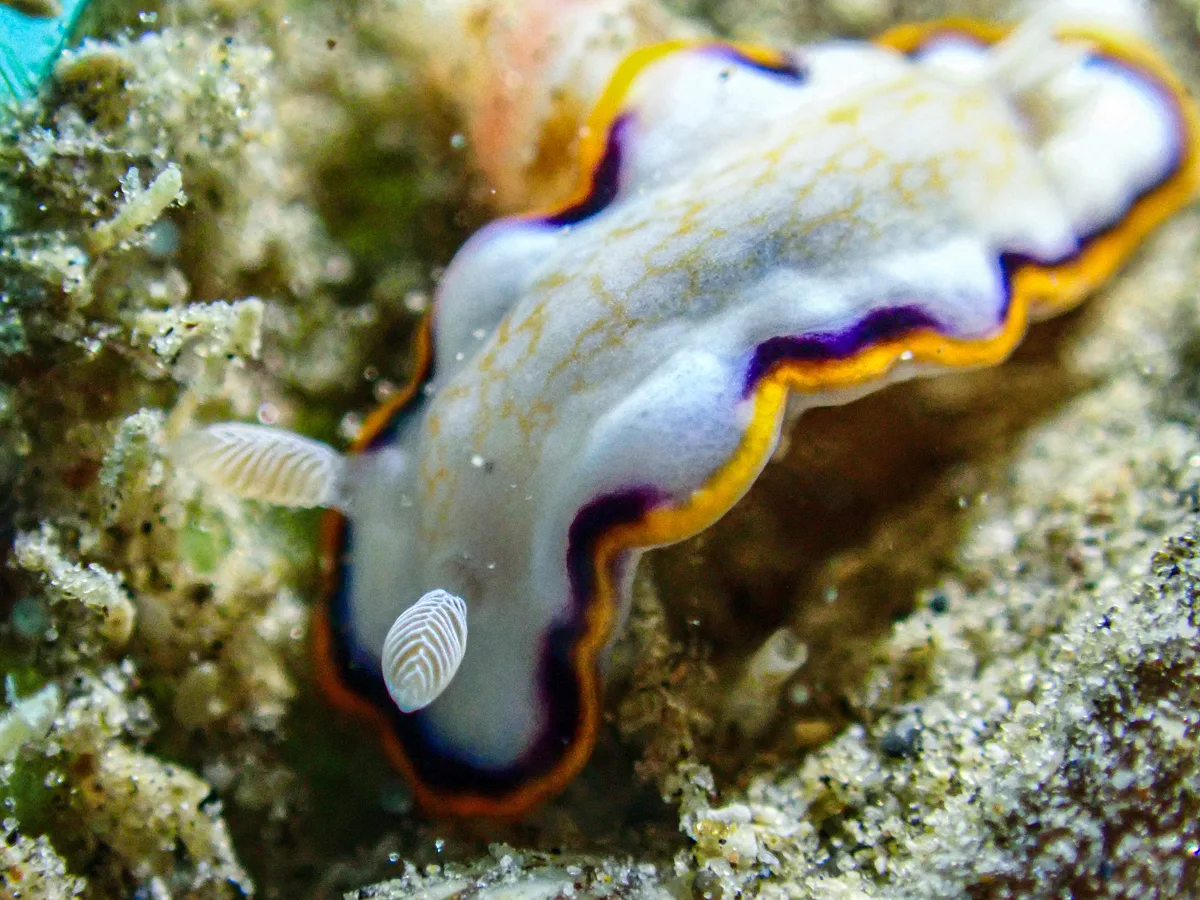
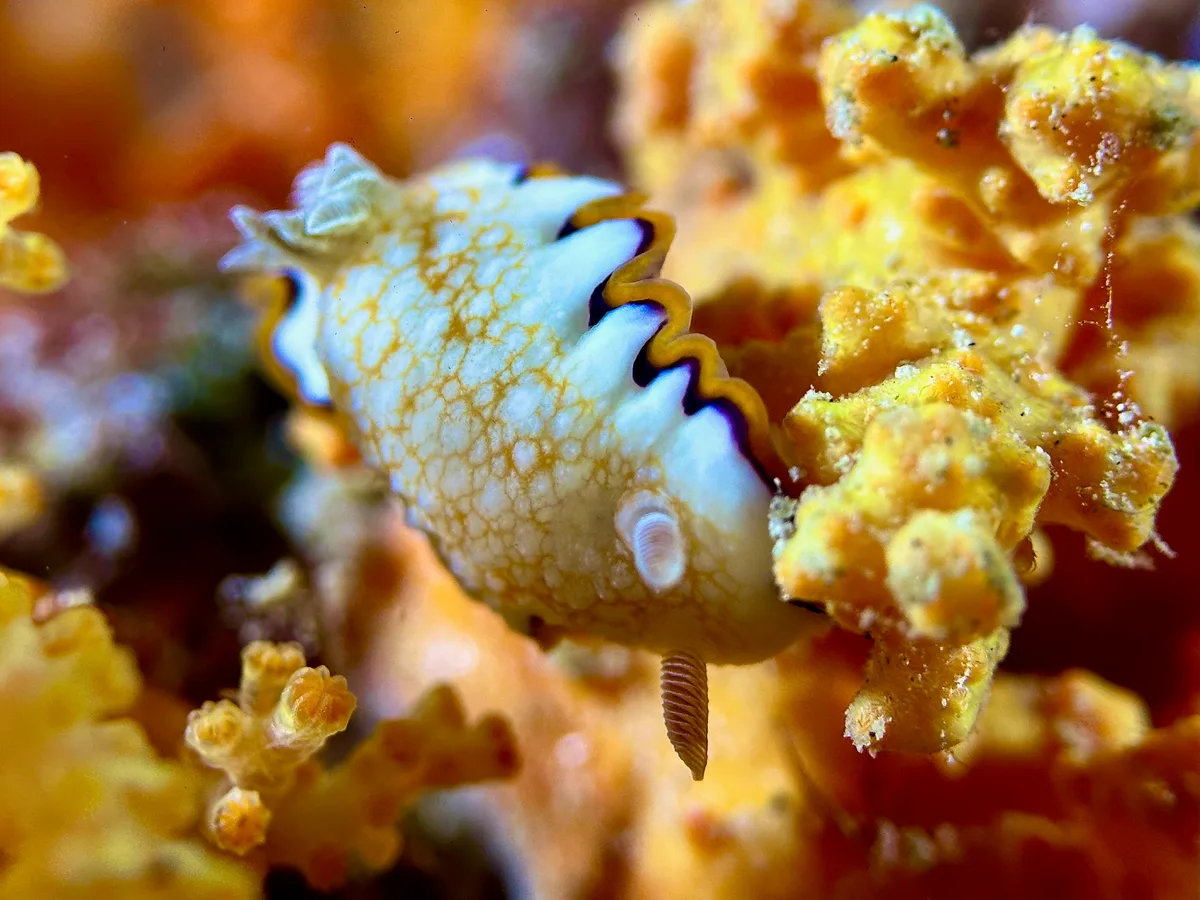
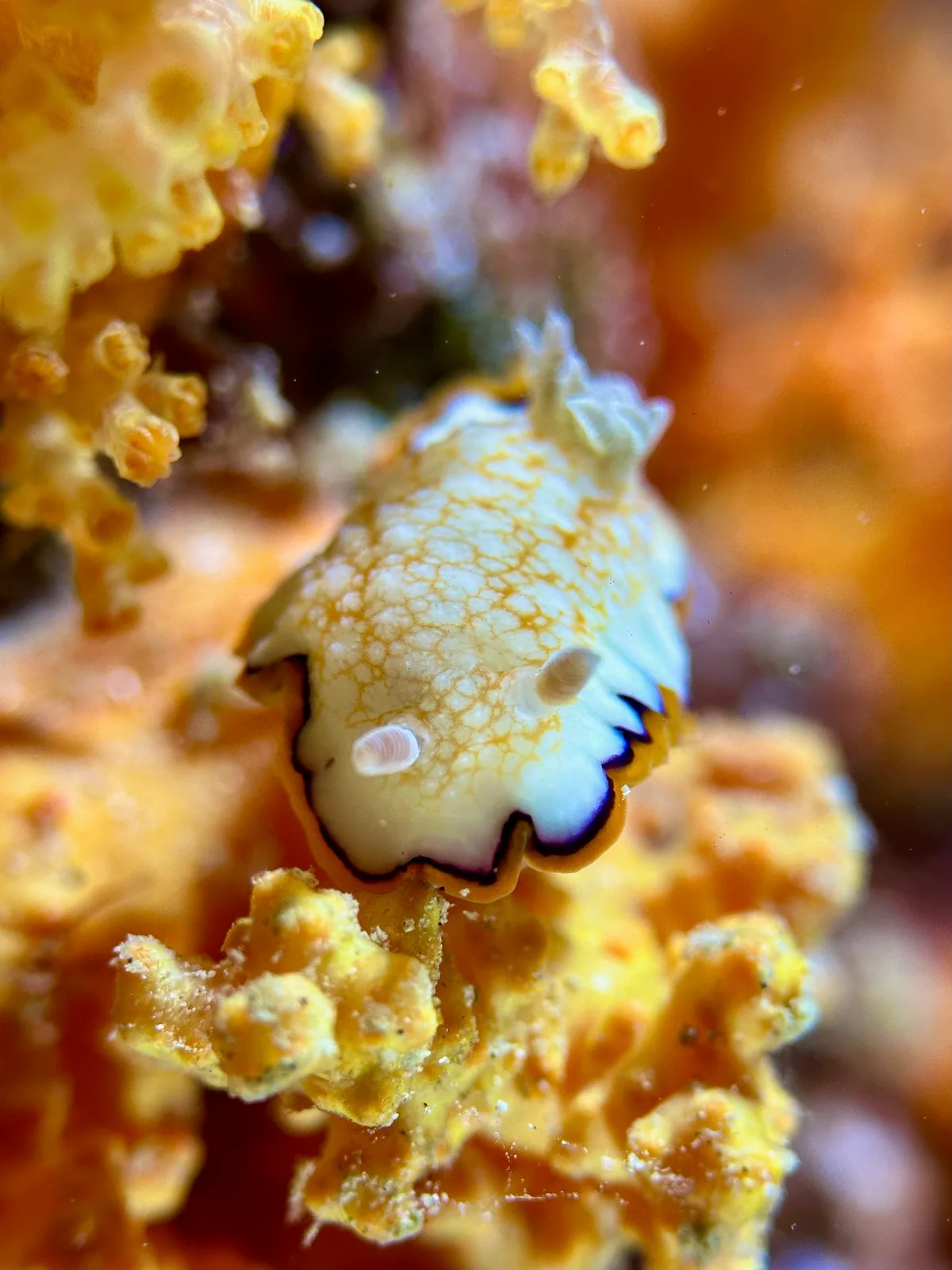
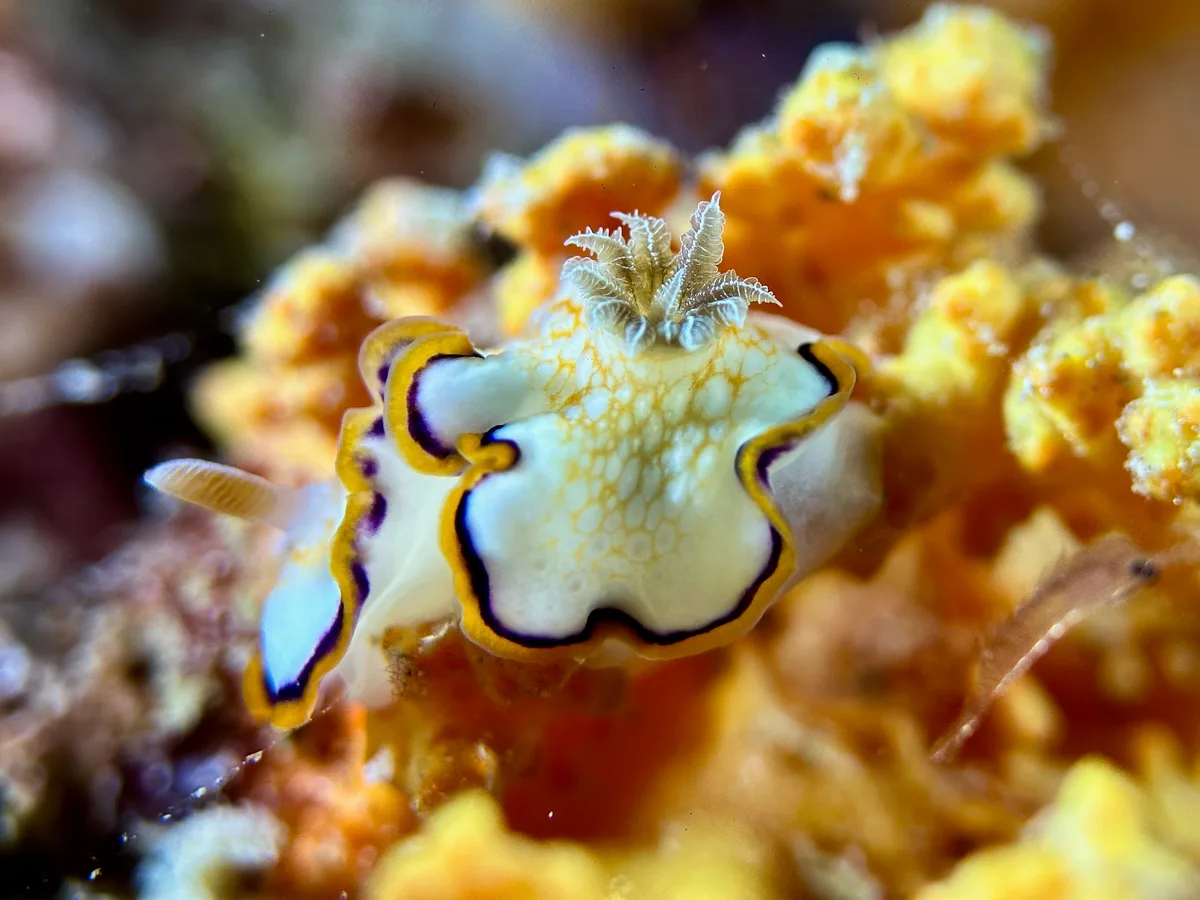
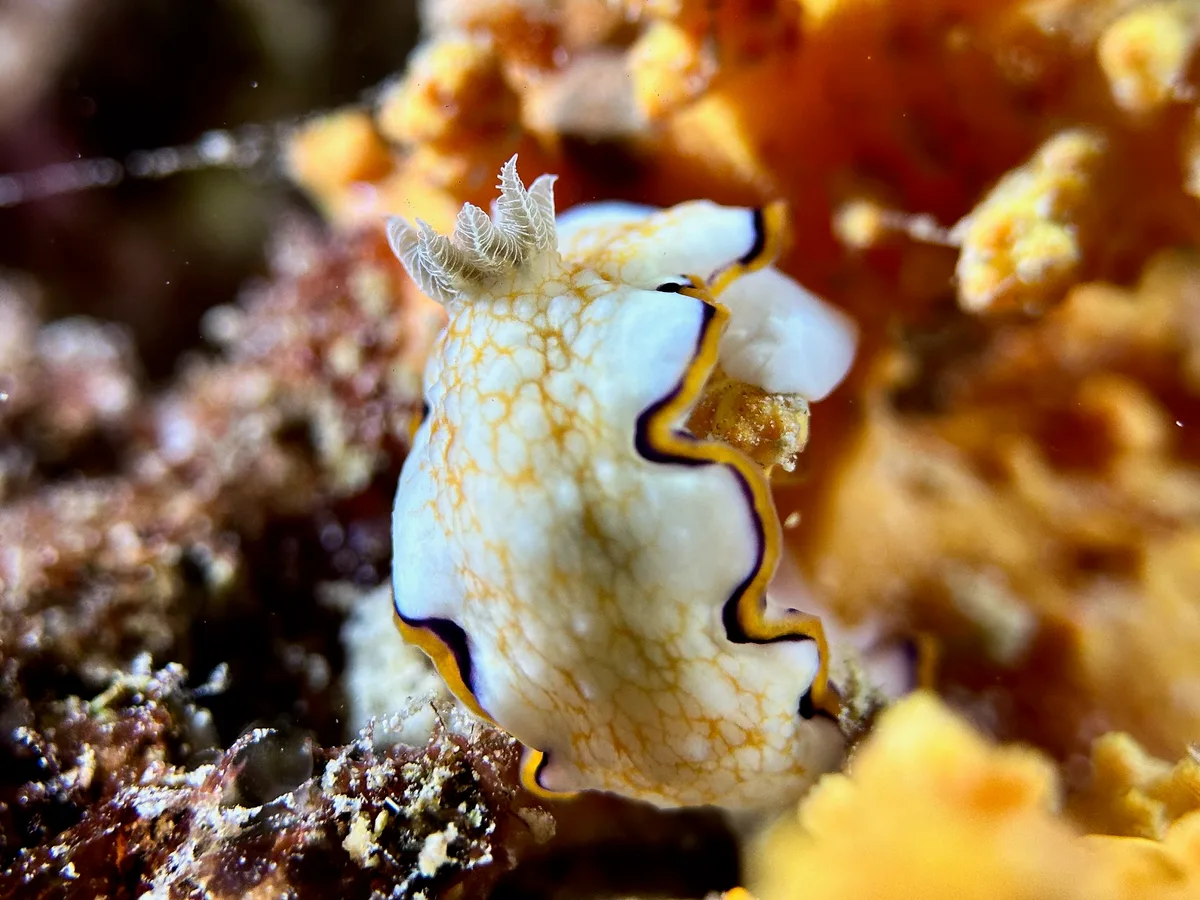
A white dorid with an orange rim, a blue-black band just inside it and a surface roughened into pustules with orange-brown netting between them. Around 4 cm (1.6 in), and one of the more reliably identifiable chromodorids here - the three-band edge is not shared by its neighbors.
It was described from this sea and is known from almost nowhere else except the 🌊 Persian Gulf, which makes it a regional animal rather than an Indo-Pacific one that happens to occur here. For a family whose species are usually spread from Africa to Polynesia, that is unusual.
Like the rest of its family it eats sponges and keeps their chemistry. Chromodorids concentrate defensive compounds from their prey in the mantle rim - which is precisely the part a fish would bite first, and precisely the part this animal outlines in warning colors.
Eggs are laid as a flat coiled ribbon stuck to rock, usually beside the sponge the adult has been feeding on.
- white mantle with an orange rim and a blue-black band just inside it
- surface rough with raised pustules, orange-brown netting between them
- translucent brown gills and rhinophores, flecked white
- length up to 4 cm