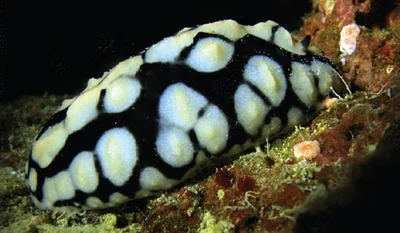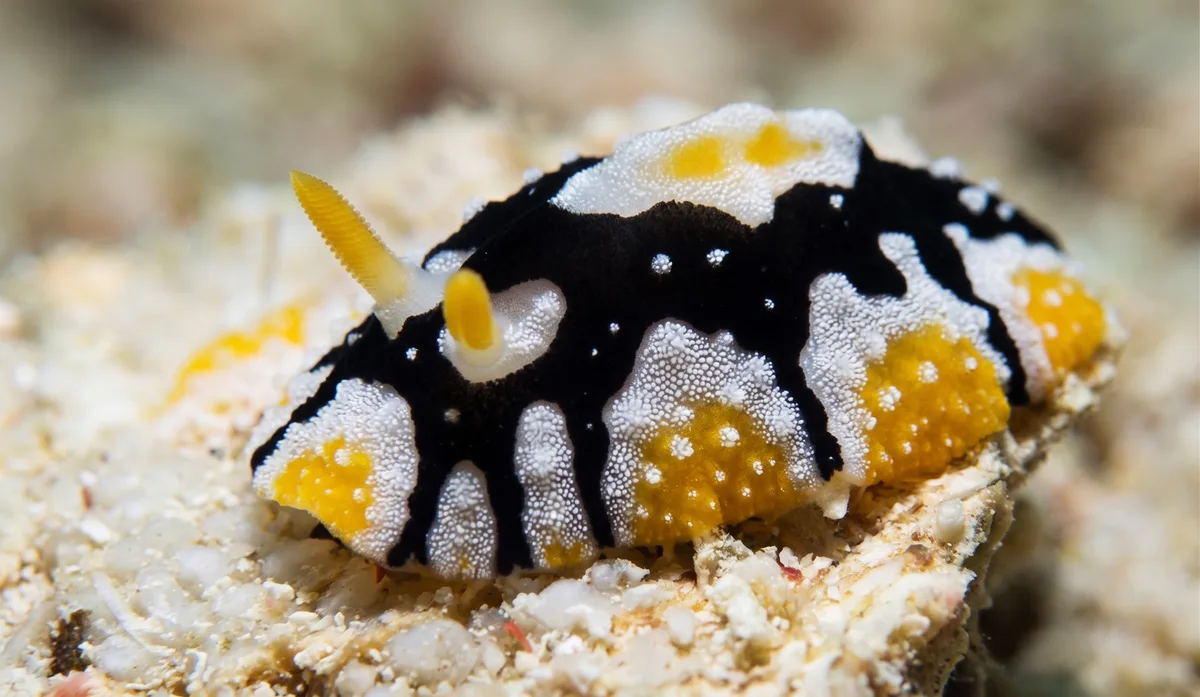
Monacha means a nun, and the name is about the habit: black, broken up with white, in an animal small enough to fit in the palm of a hand.
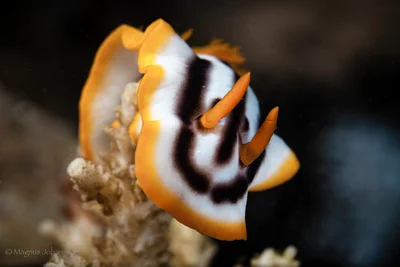
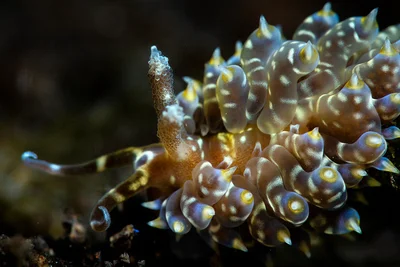
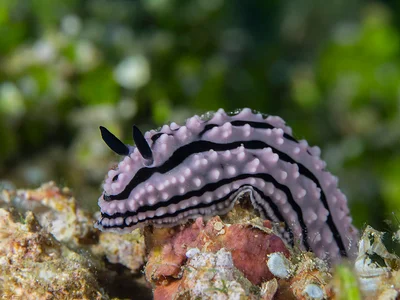
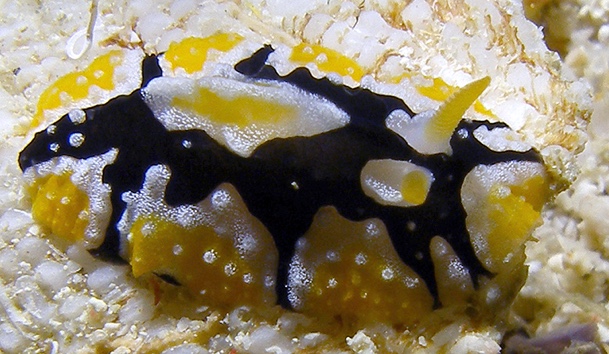
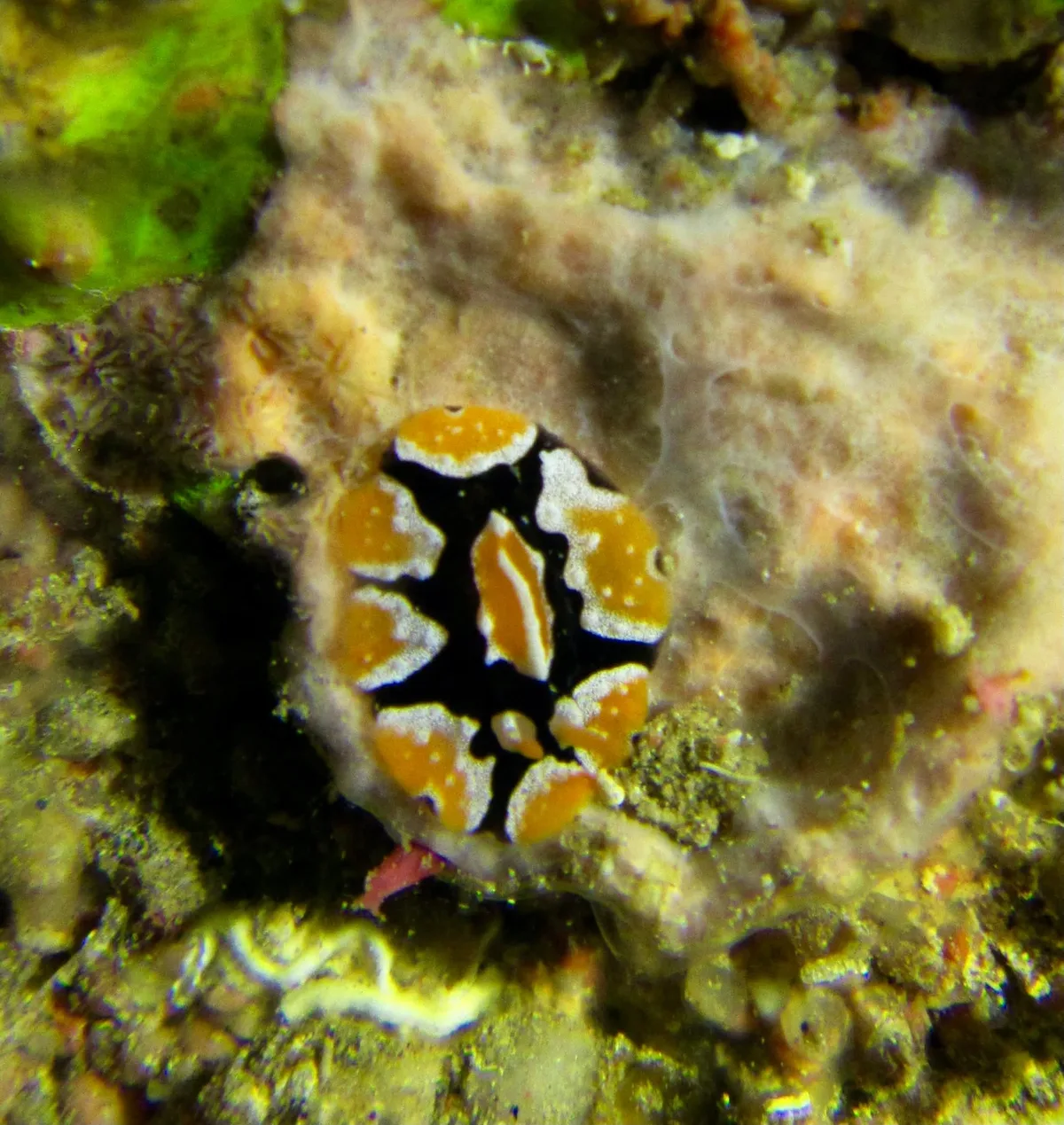
The pattern is patches. Broad white areas sit on a black ground with yellow marks among them, and the important thing is that they are patches and not anything else. Its close relative on this reef carries a branching black web; another is pink with black lines running over ridges; a third is red-brown with compound tubercles. In a family where every species wears a version of the same black, white and yellow warning livery, the geometry is the entire diagnosis, and this one is blocks of color.
The rest is what wart slugs are. No gill plume on the back: the family gave it up and breathes through a row of leaflets tucked under the mantle rim, which is why nothing shows from above. A firm, rubbery, spicule-loaded body carrying sponge toxins throughout. Two centimeters (0.8 in) of animal that crawls in daylight without cover because nothing here will touch it.
One note on the label. Nathalie Yonow described it in 1986 as a Phyllidiopsis, and that is the name the regional book and the photographic databases still use, so it is the name to search on. Taxonomists have since moved the species into Phyllidia, and the identifier behind this page points at that accepted taxon.
It is known from this sea and from Southeast Asia, on a total of very few logged records.
- black ground broken by white patches, with yellow marks among them
- the pale areas are patches rather than a network or a web
- two centimeters
- no gill plume showing on the back, like the rest of the family