Follow this one up the food chain and it gets better at every step.
At the bottom are small fish and invertebrates. Above them sits the clubtip anemone, Telmatactis, a stout ten-centimeter animal on shallow rock whose tentacles end in swollen knobs and whose sting is strong enough to take small fish out of the water column and hold them. It is one of the few anemones in this sea that genuinely hunts rather than filters.
And then there is this slug, which eats the anemone.
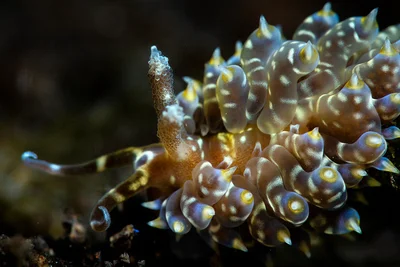
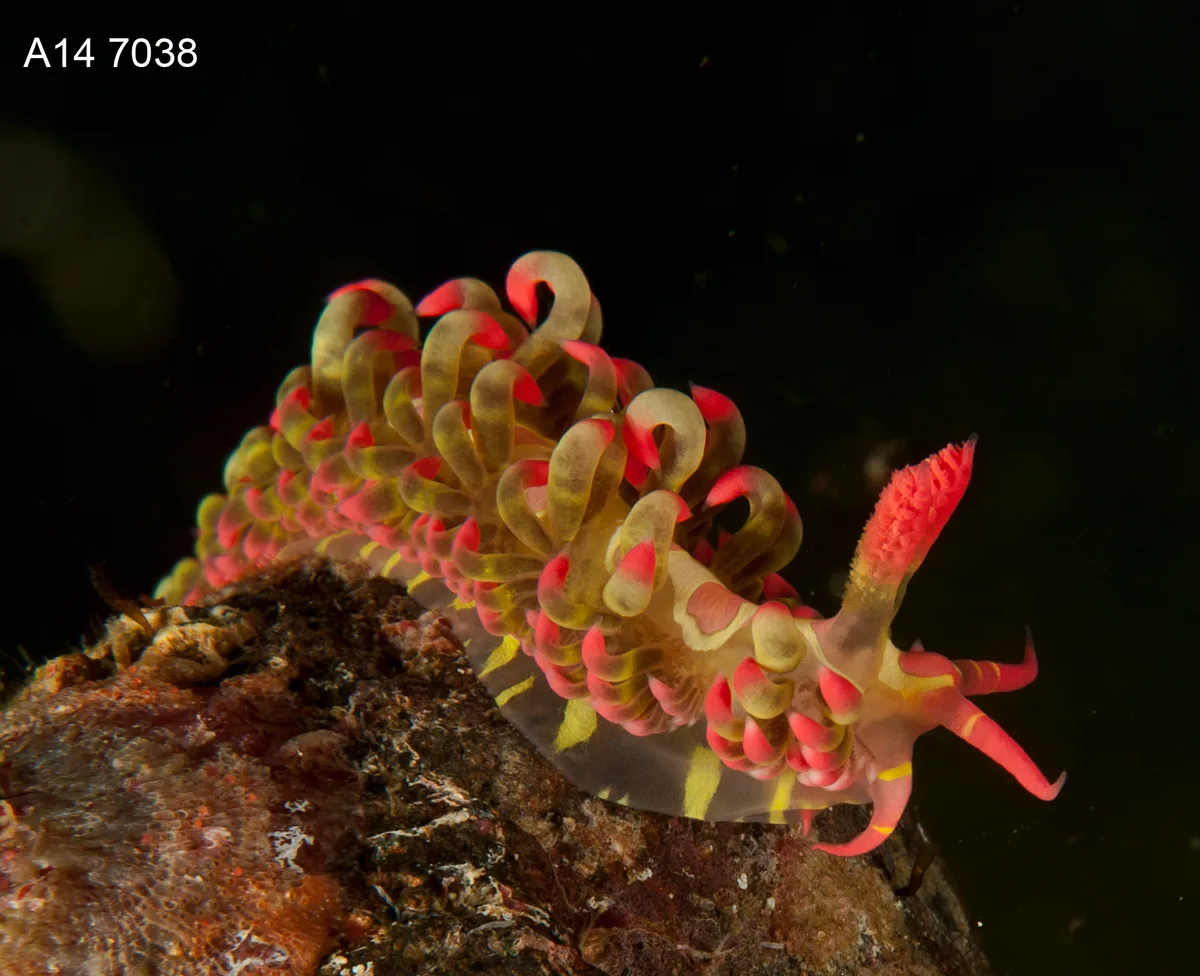
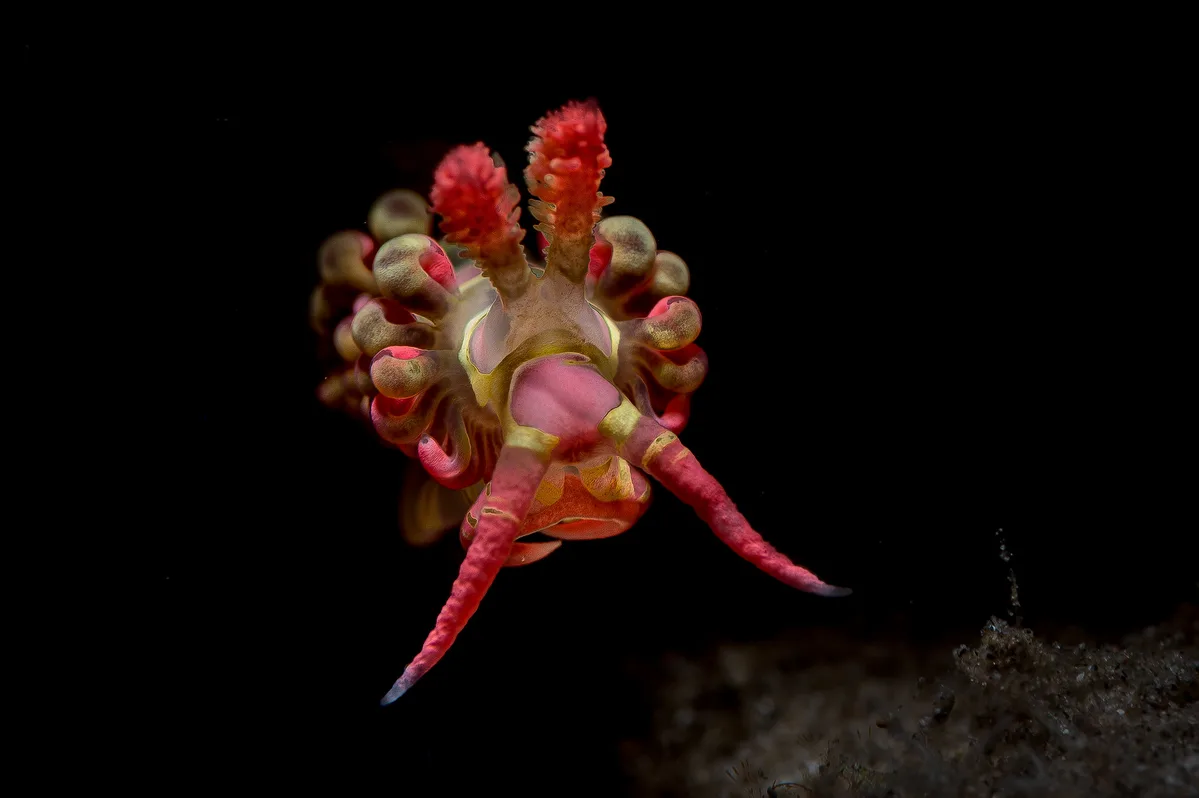
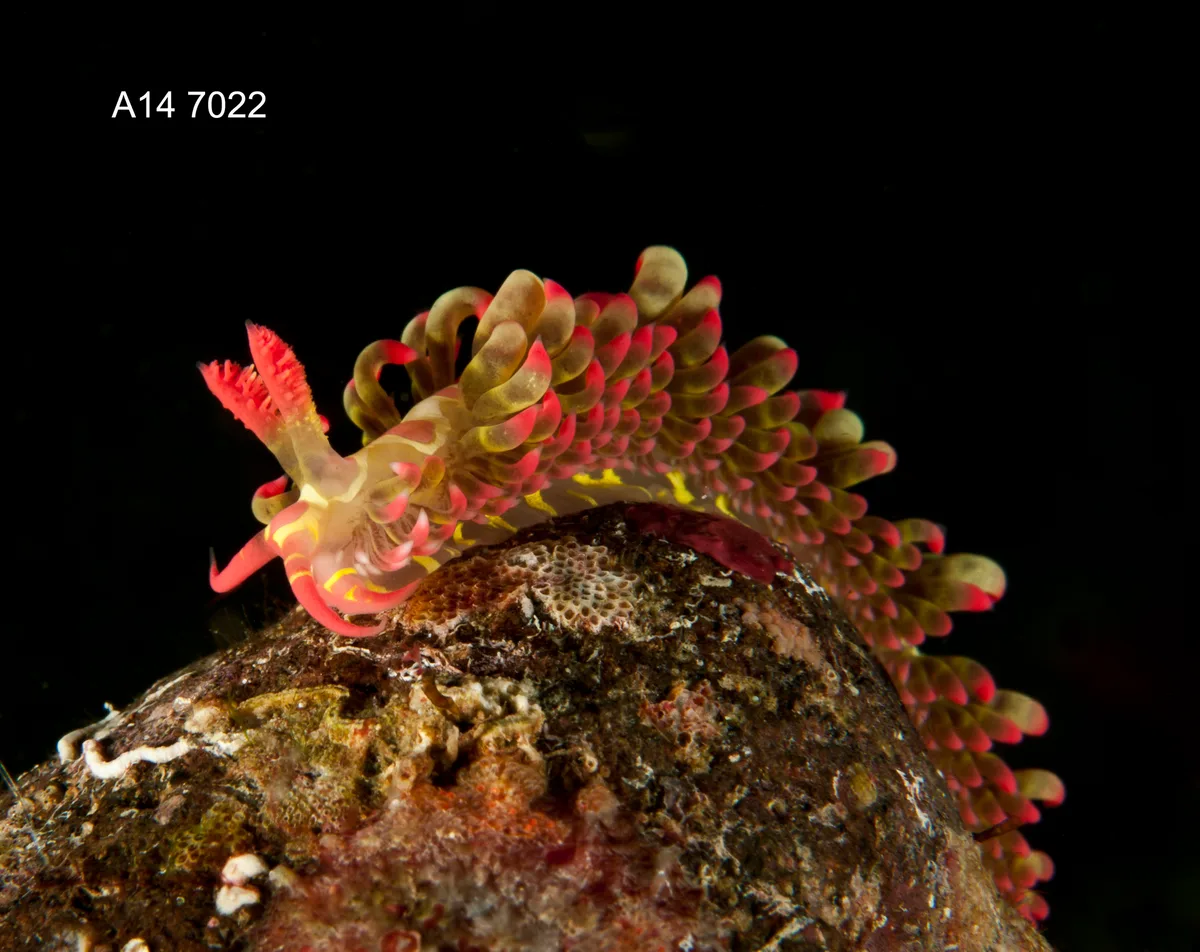
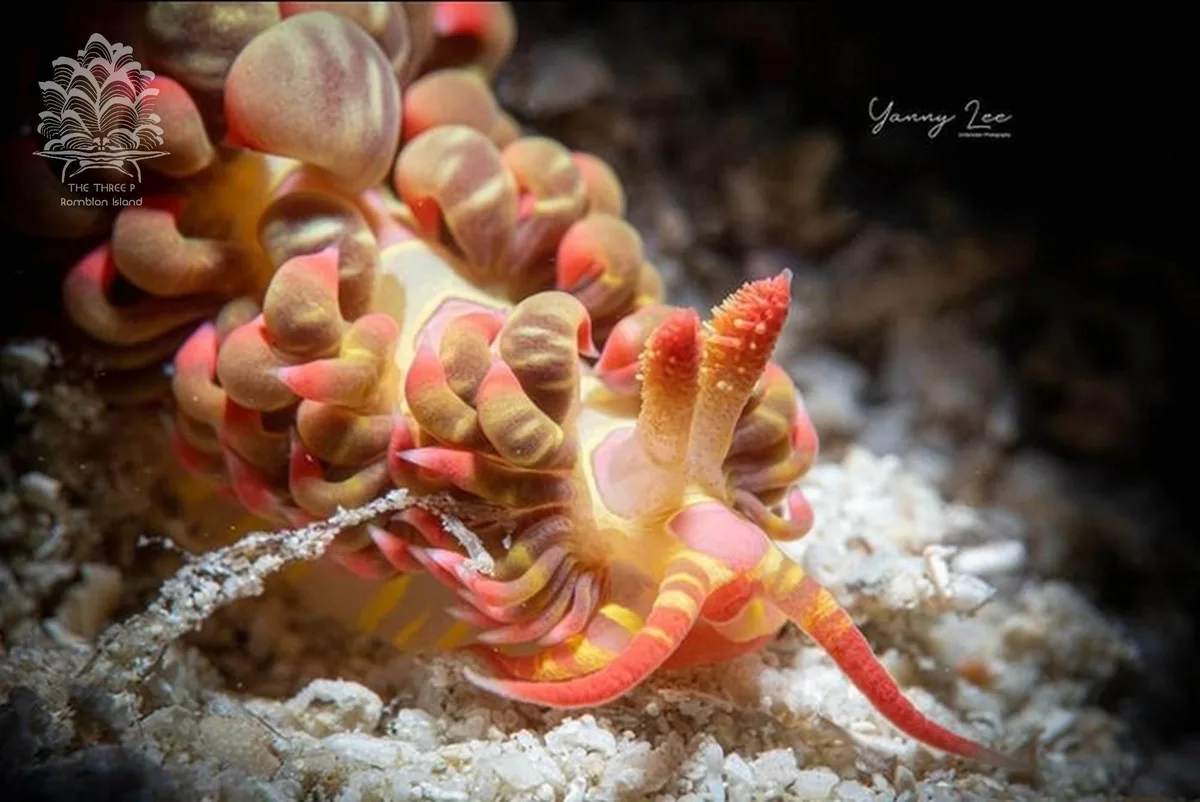
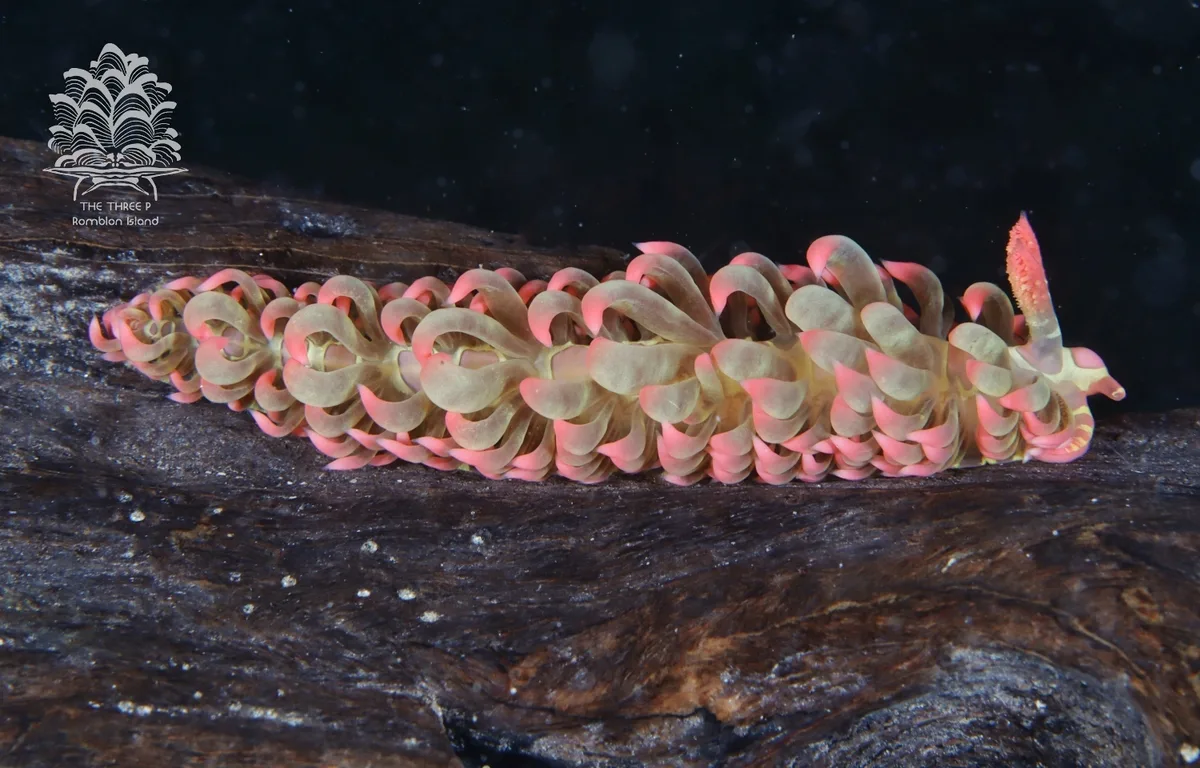
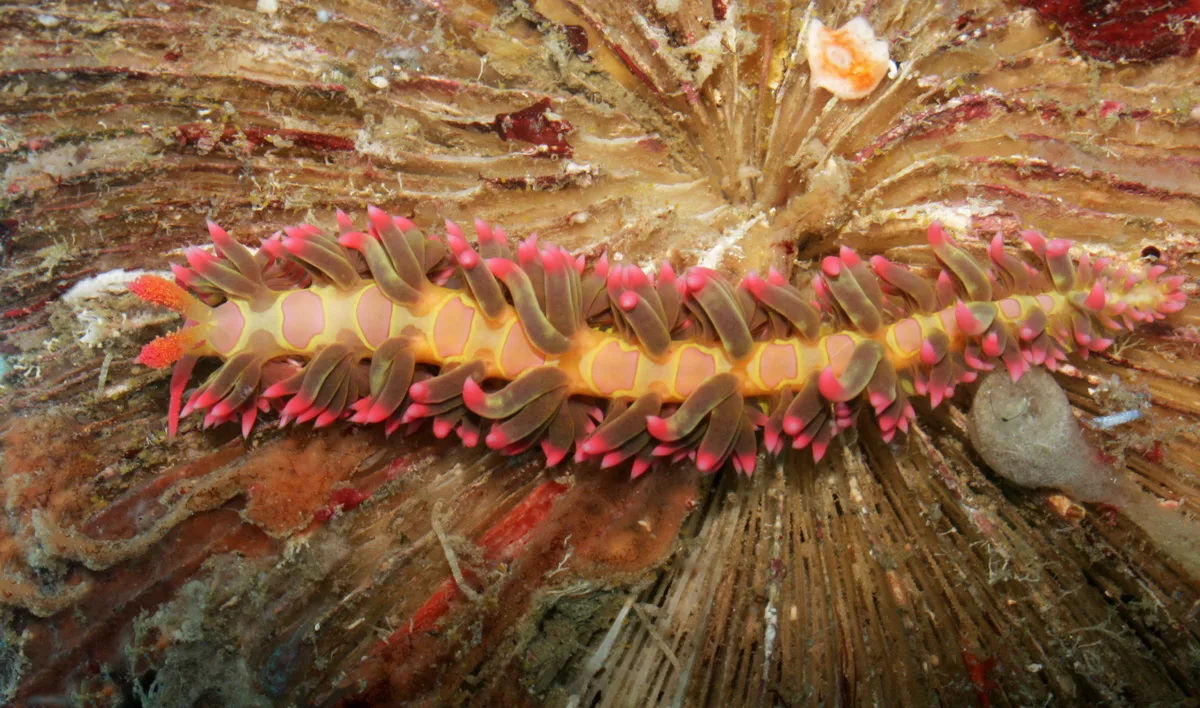
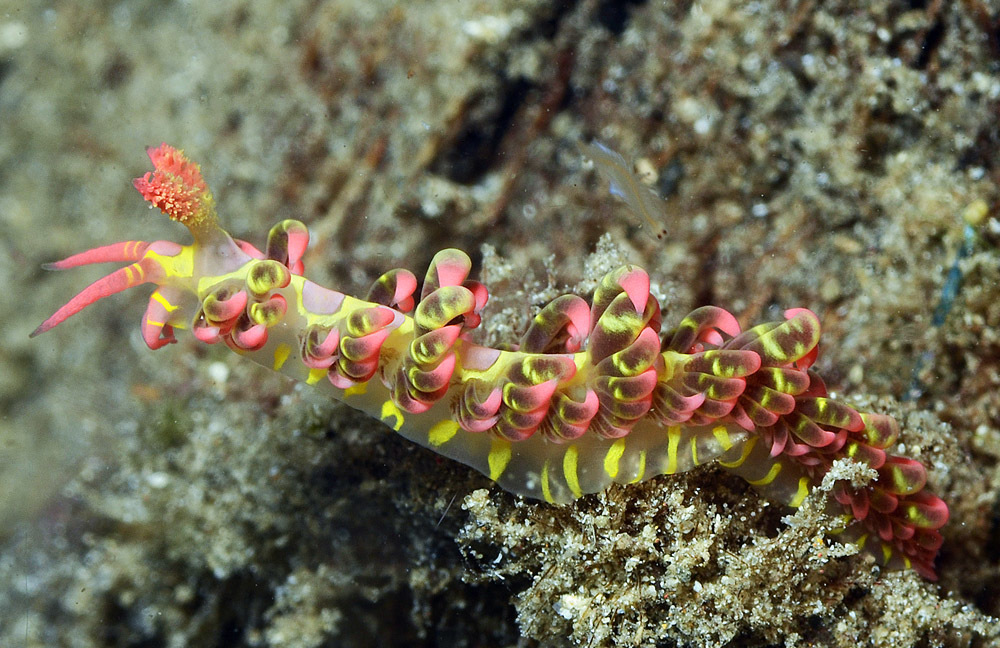
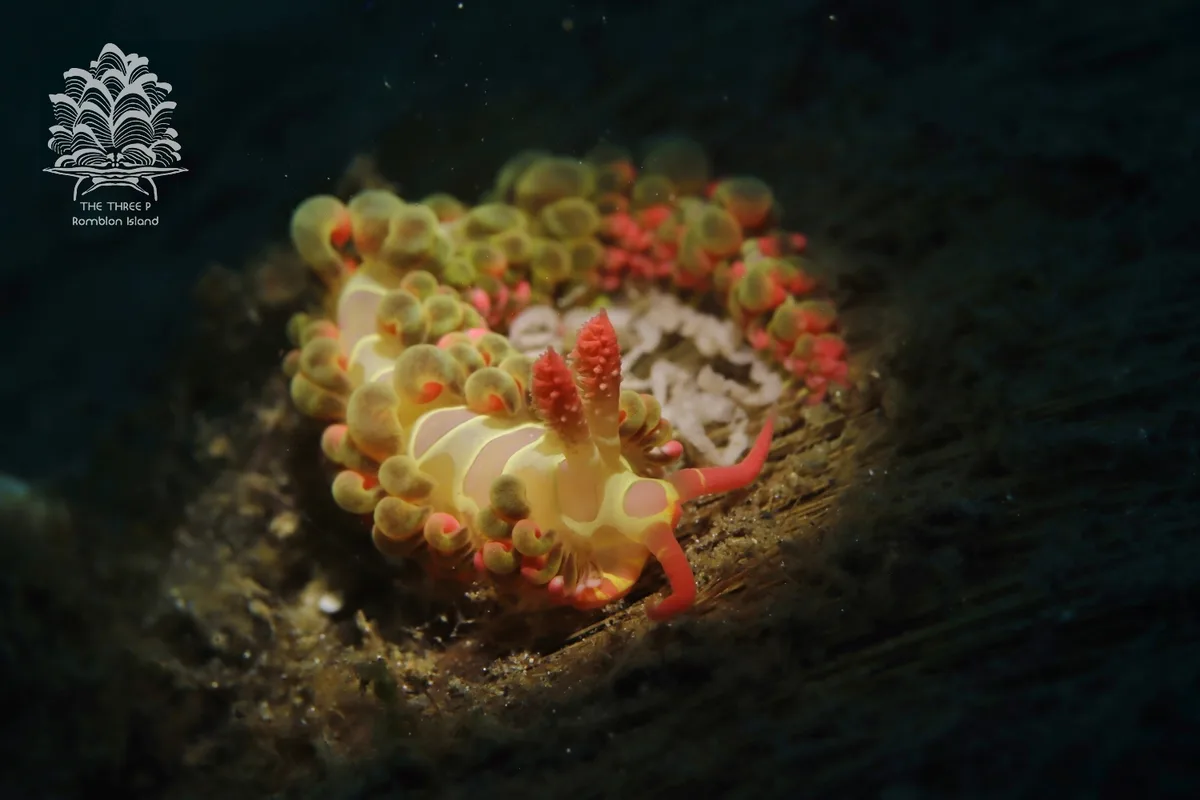
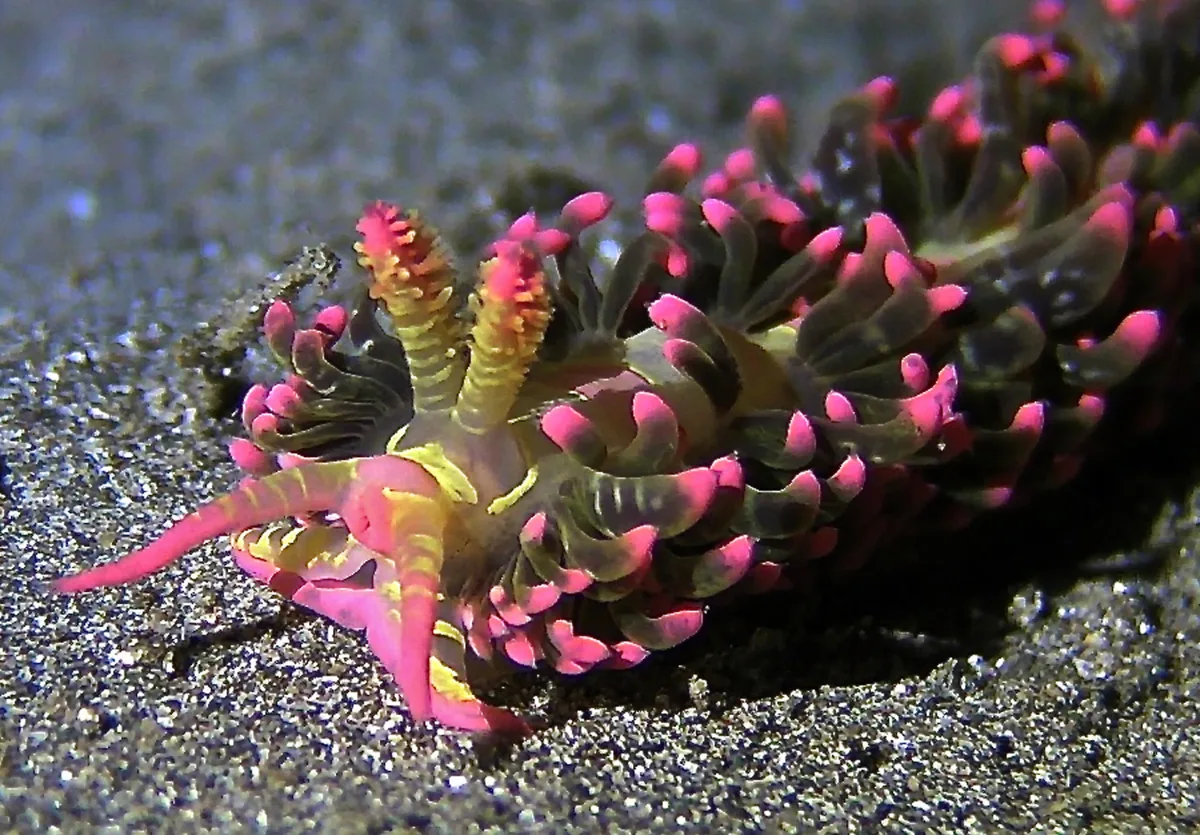
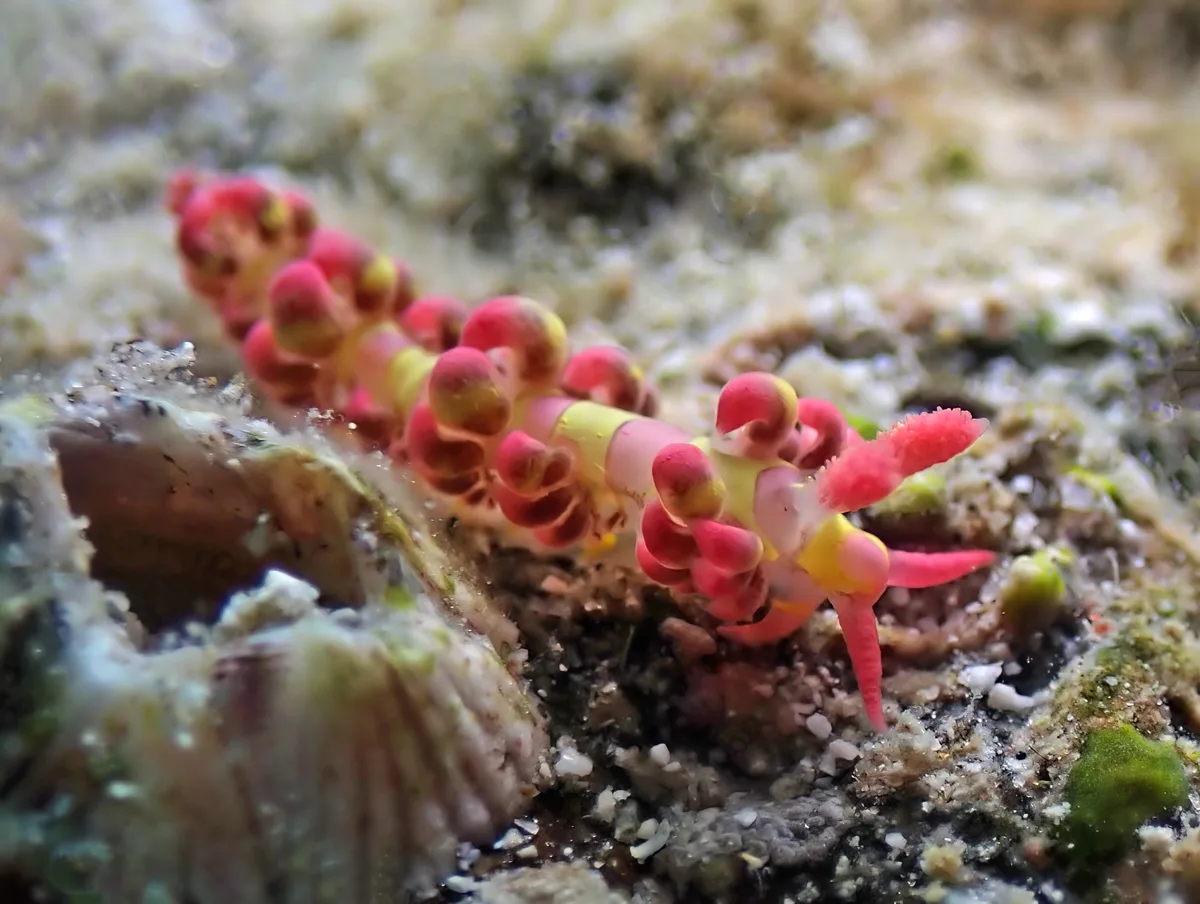
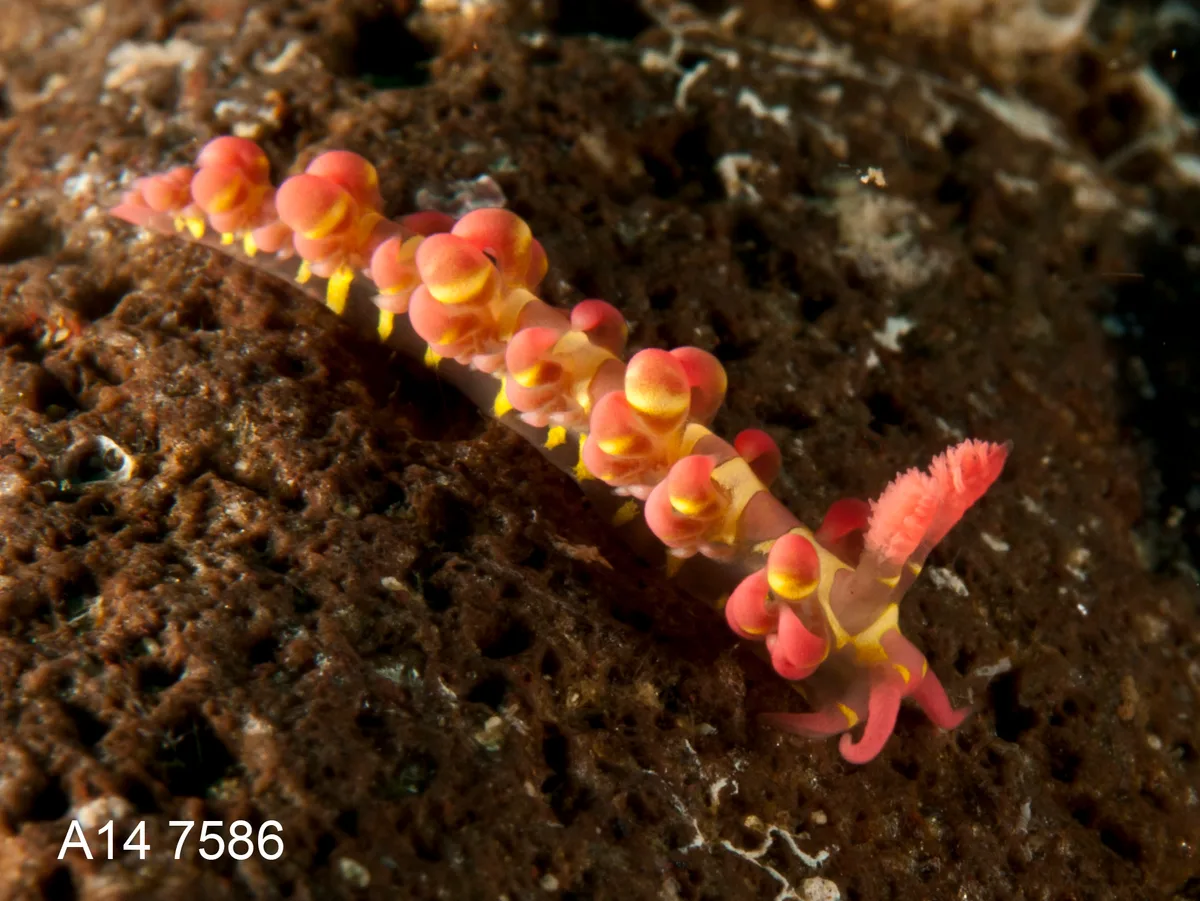
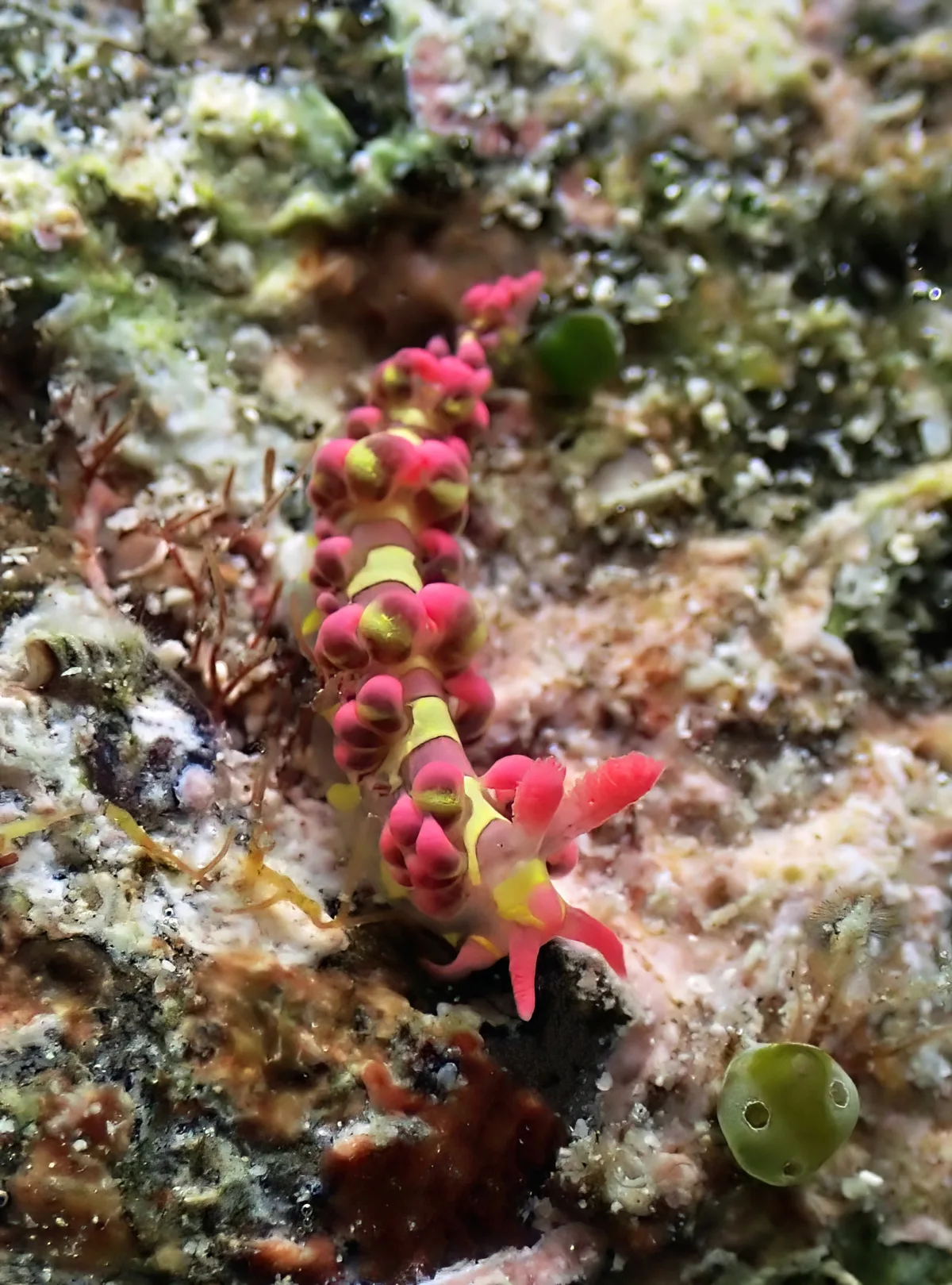
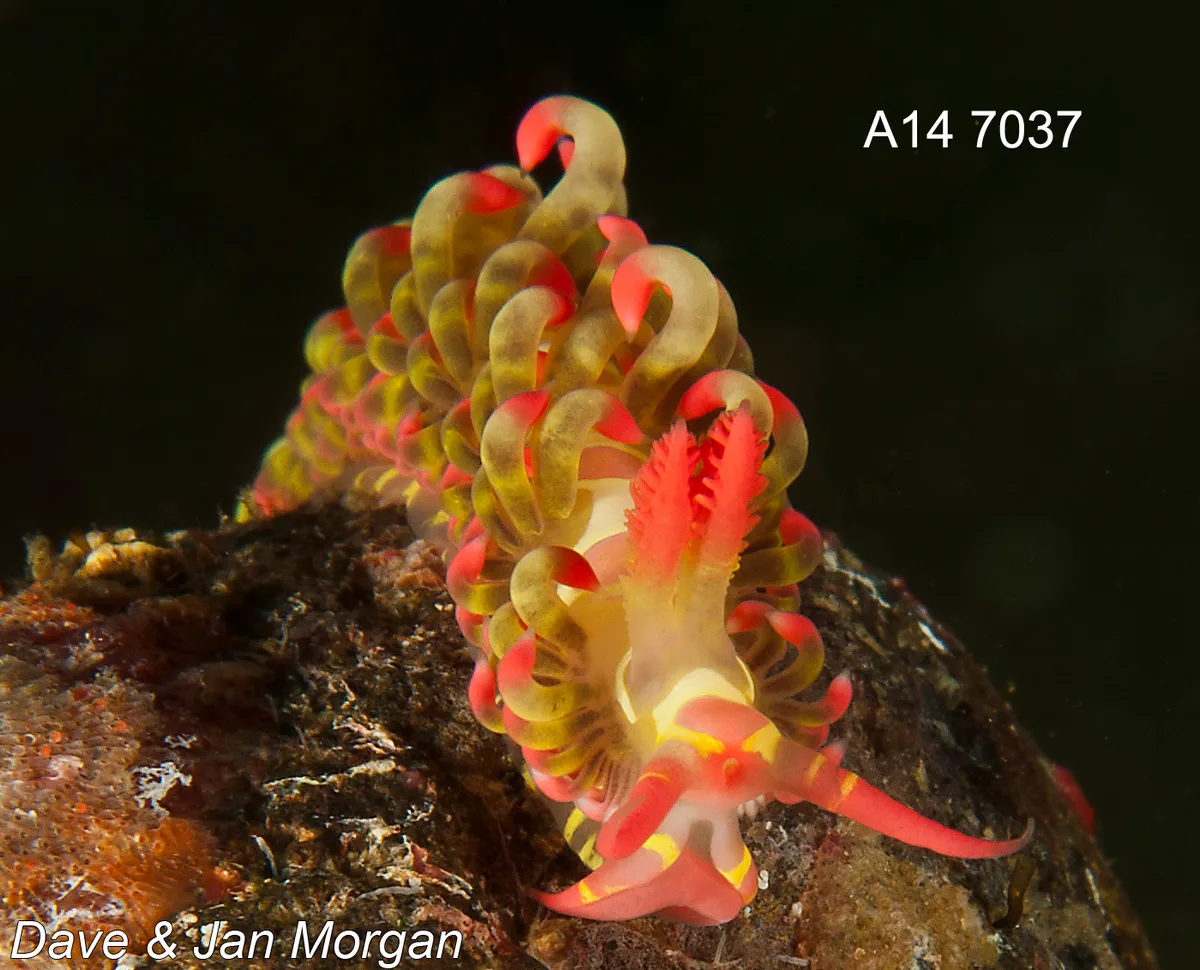
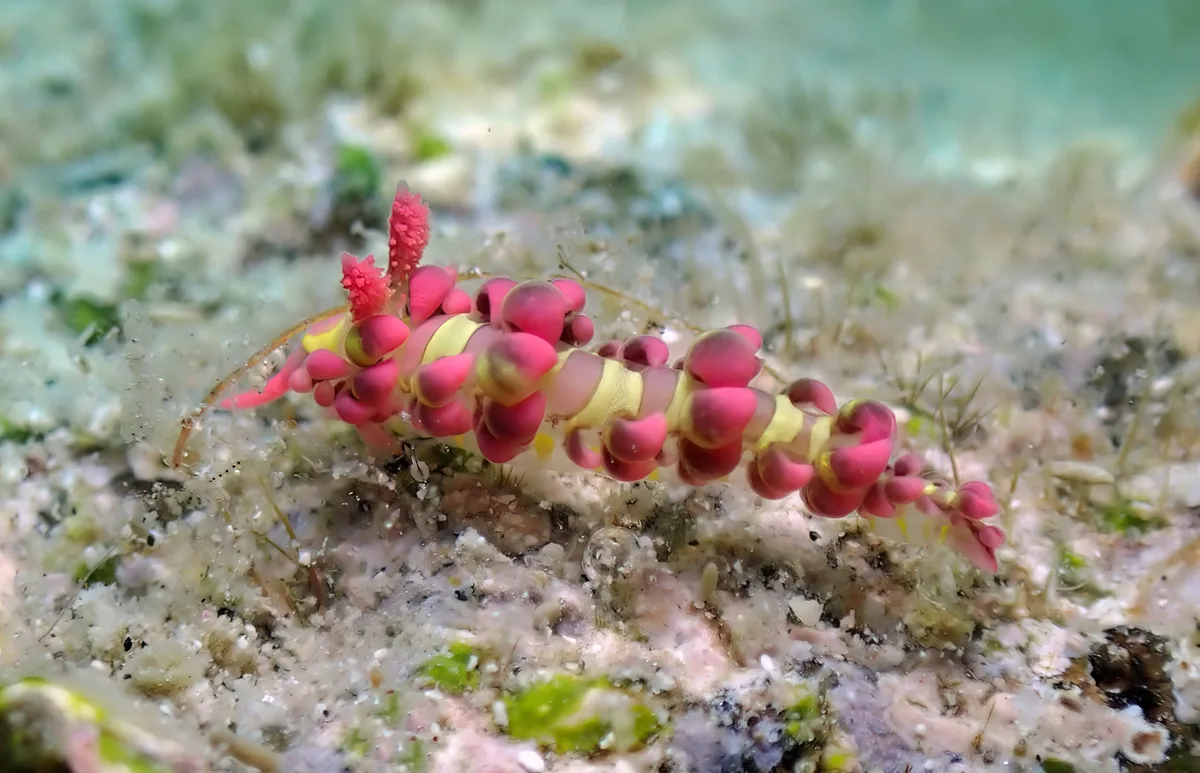
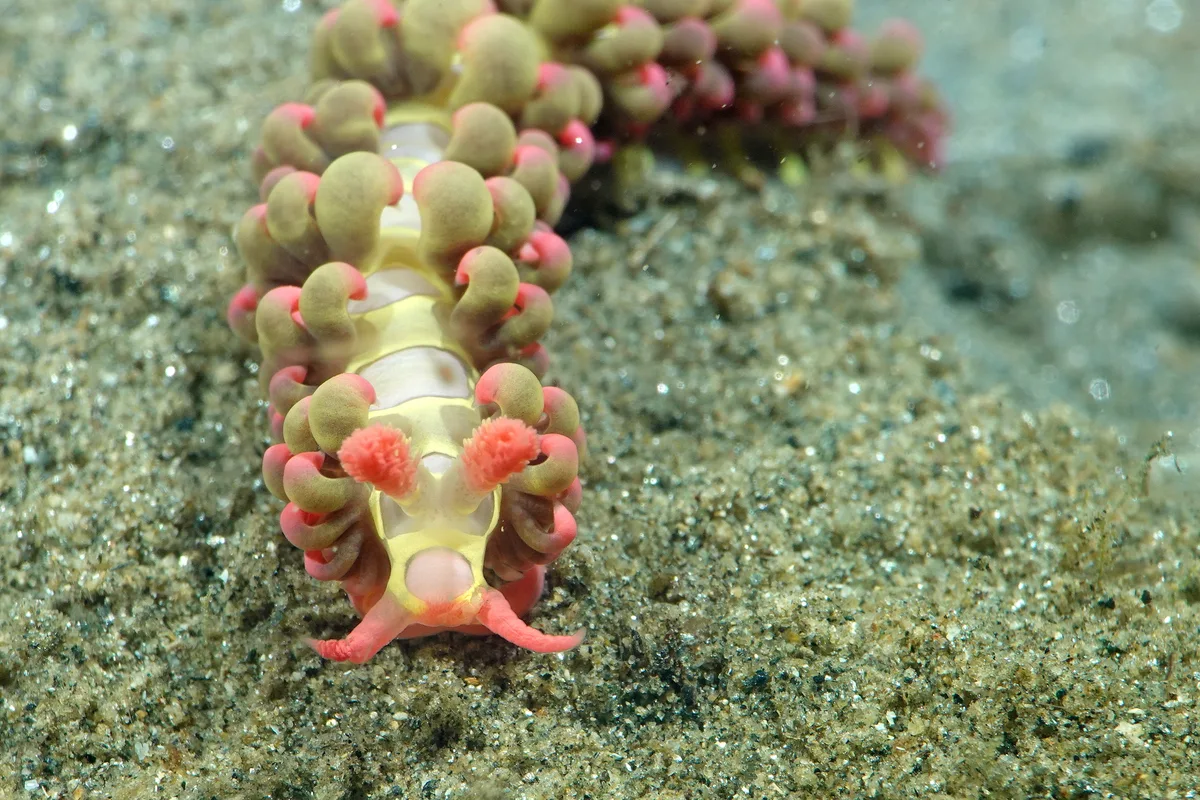
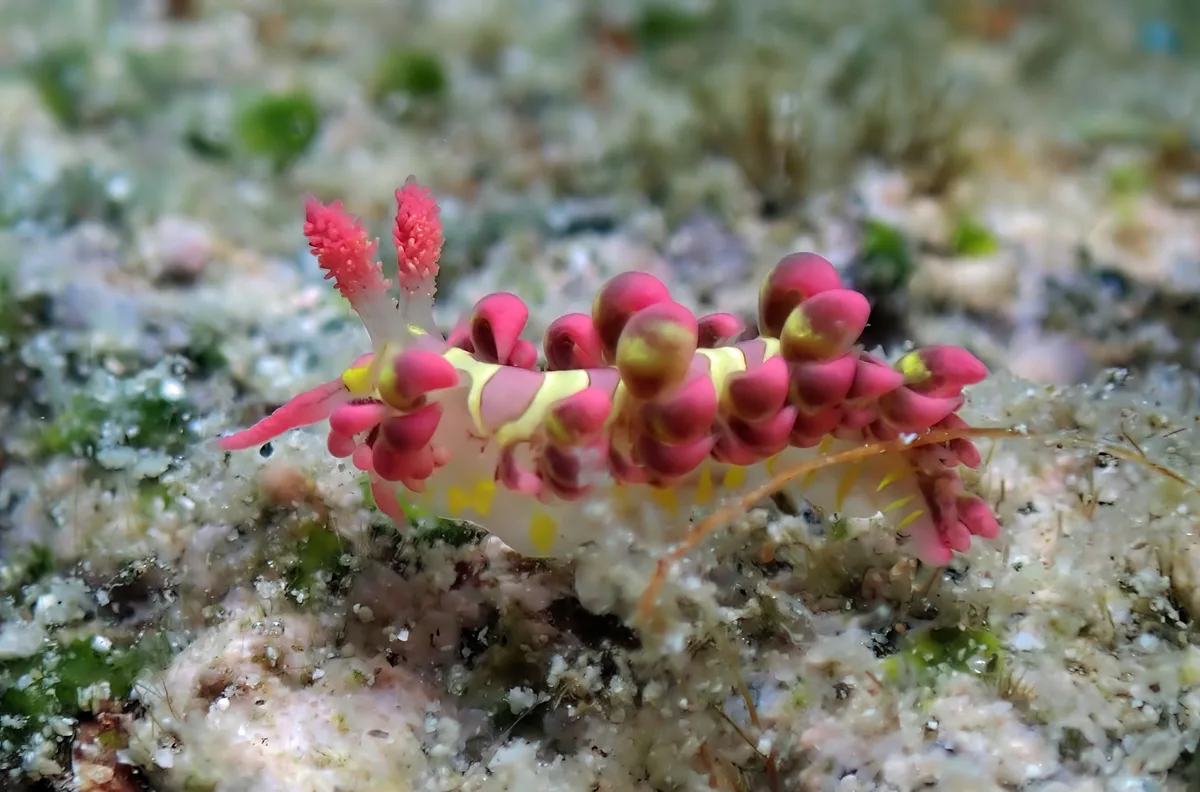
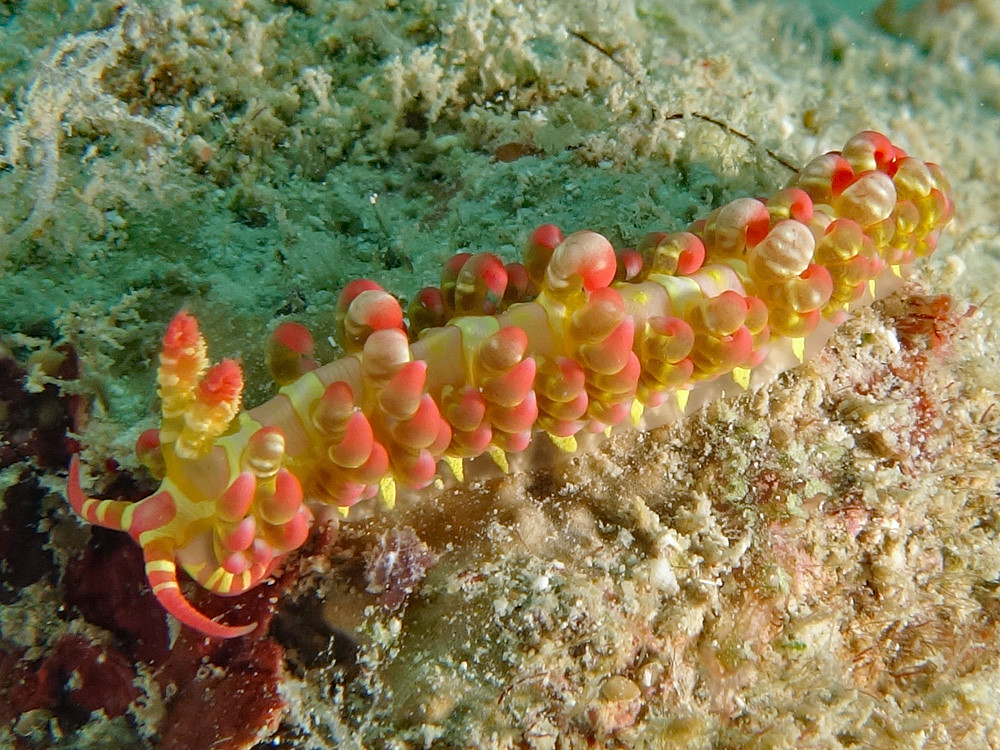
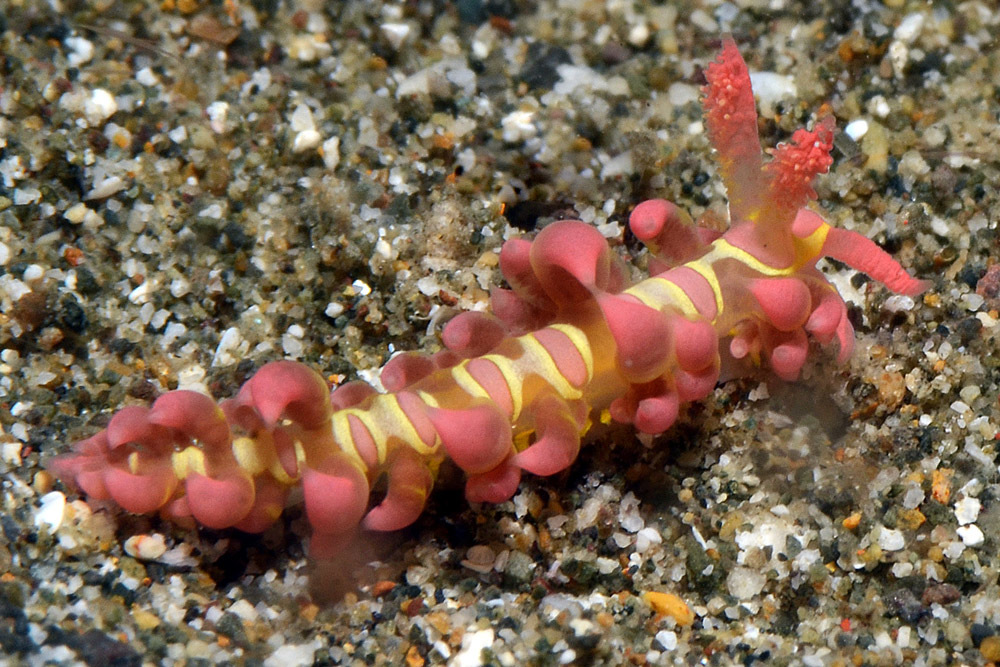
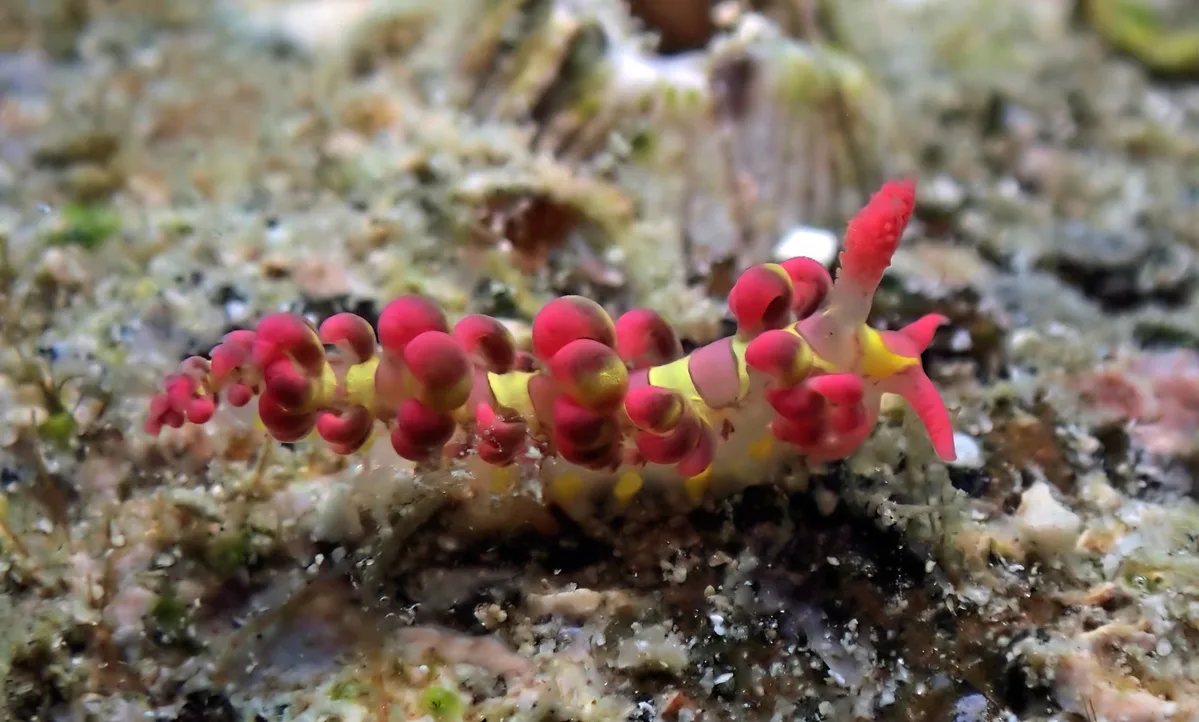
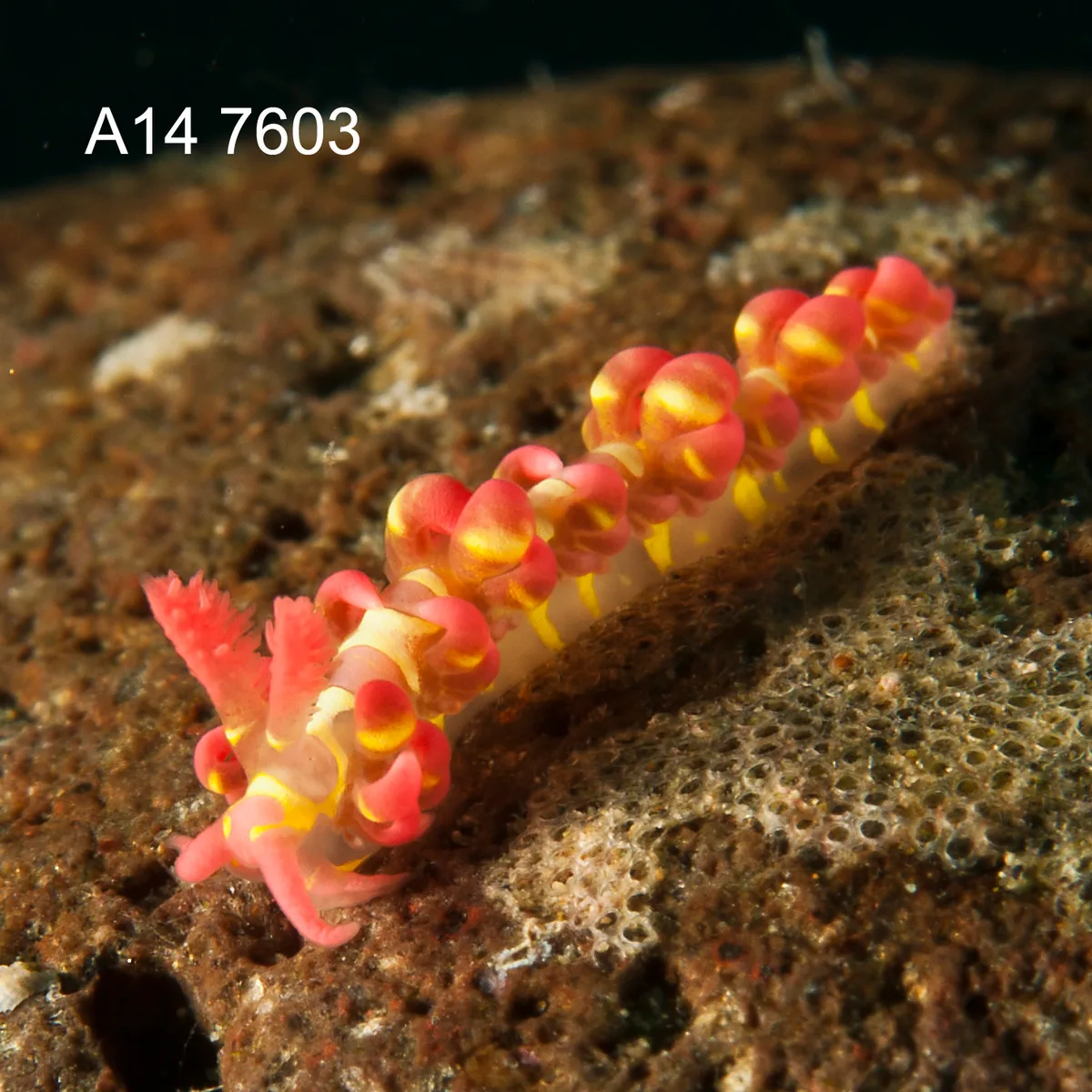
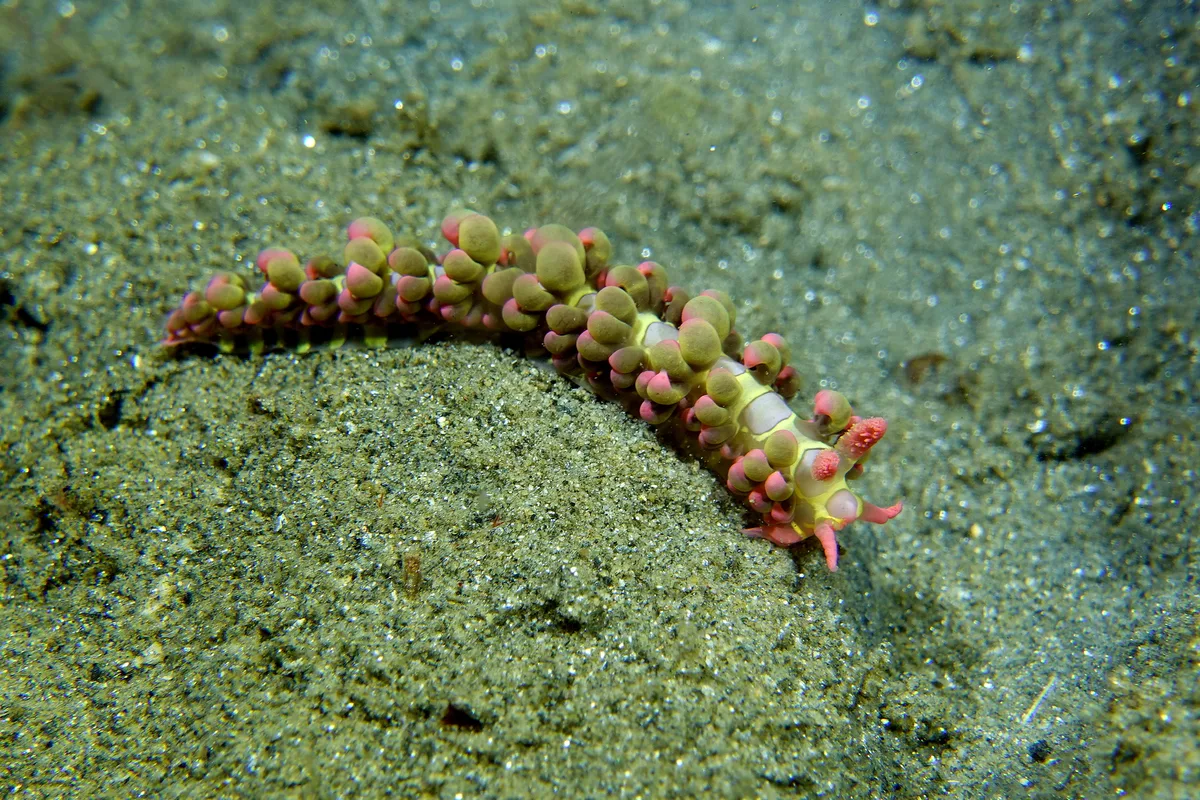
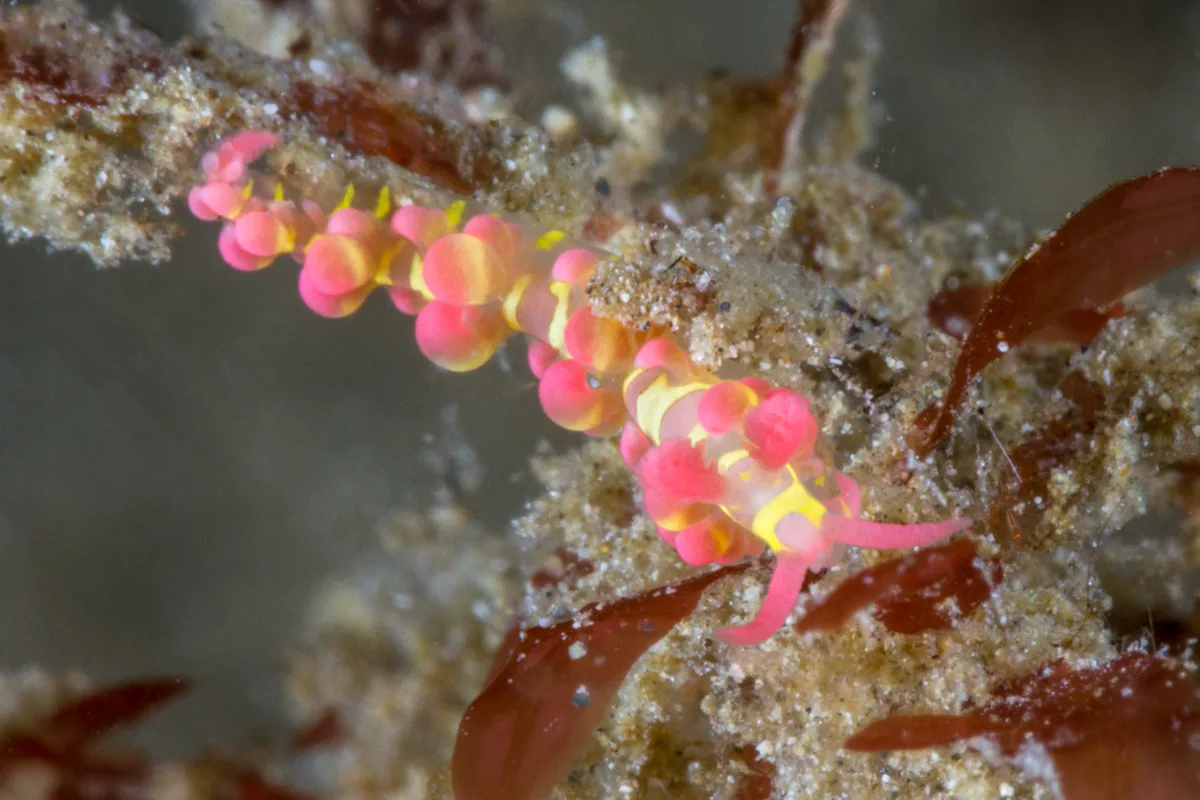
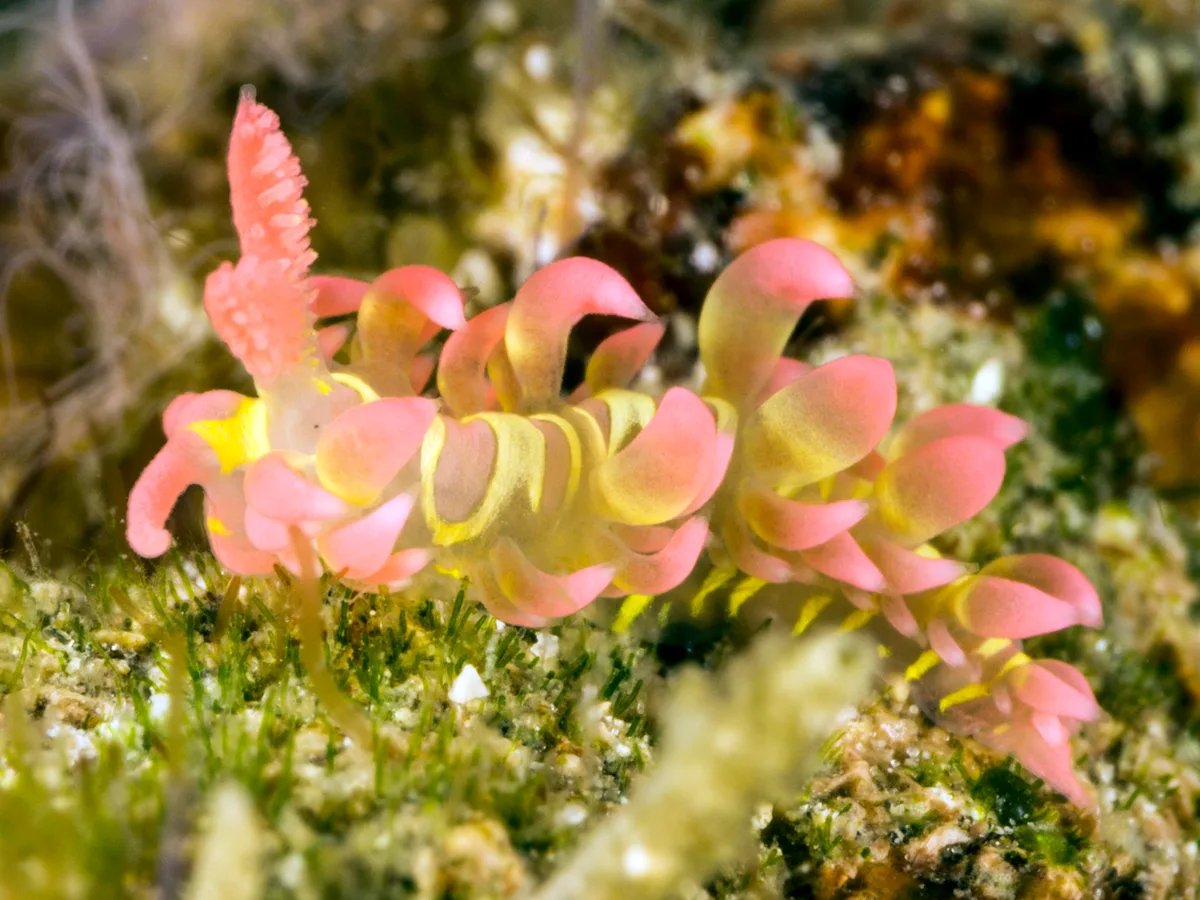
Six centimeters (2.4 in) of soft-bodied animal with no shell, no speed and no hard parts climbs onto a predator that catches fish, and feeds on it. The trick is the one the whole family uses: the anemone's stinging capsules are swallowed intact, carried through the gut without discharging, and pushed out into sacs at the tips of the cerata packed across the slug's back. What the anemone built to catch fish ends up defending the animal that ate it.
The look is a yellow-brown back scattered with pink spots and a dense field of short cerata, which is a solid, heavy-set build compared to the delicate finger-fringed aeolids on hydroids.
It was described in 2014, which for an animal six centimeters long living in shallow water tells you something about how recently anyone looked at this group properly.
- yellow-brown back scattered with pink spots
- six centimeters, large and heavy for an aeolid
- dense short cerata covering the whole back
- found on or beside a clubtip anemone