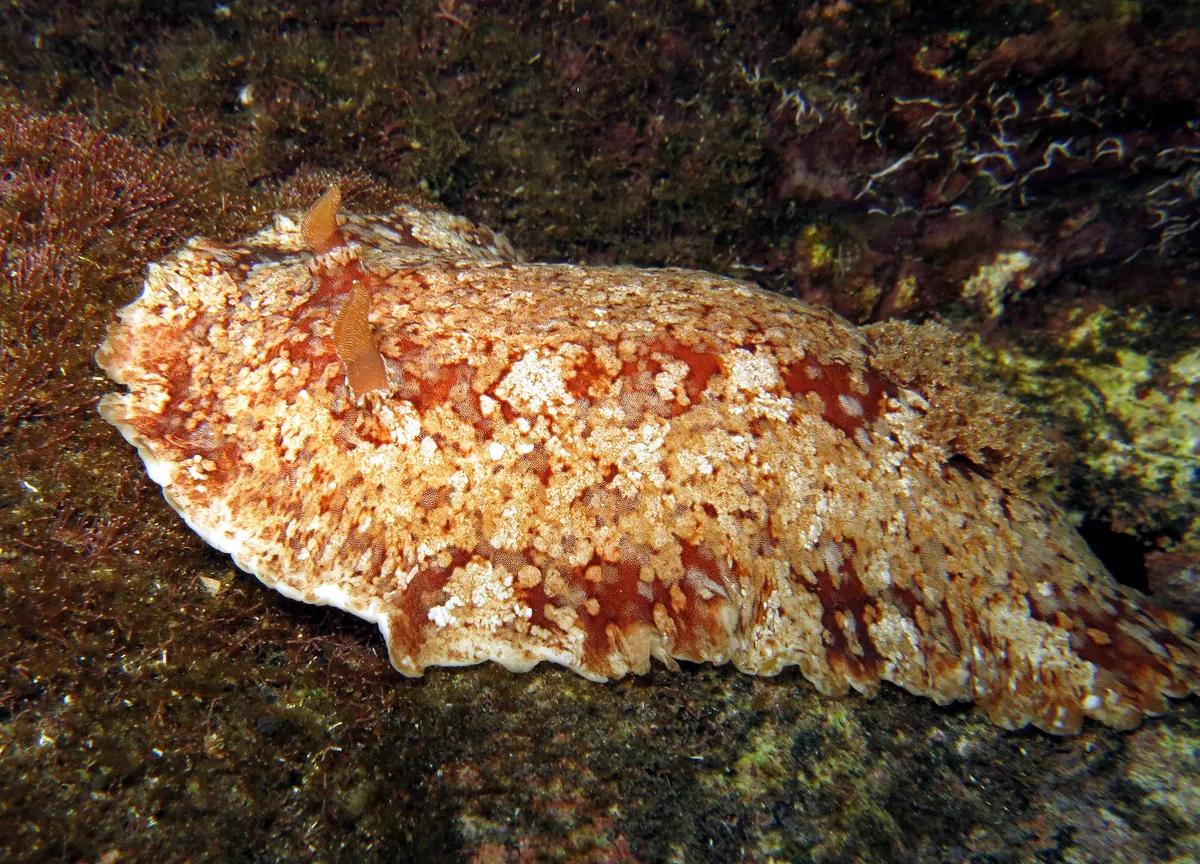
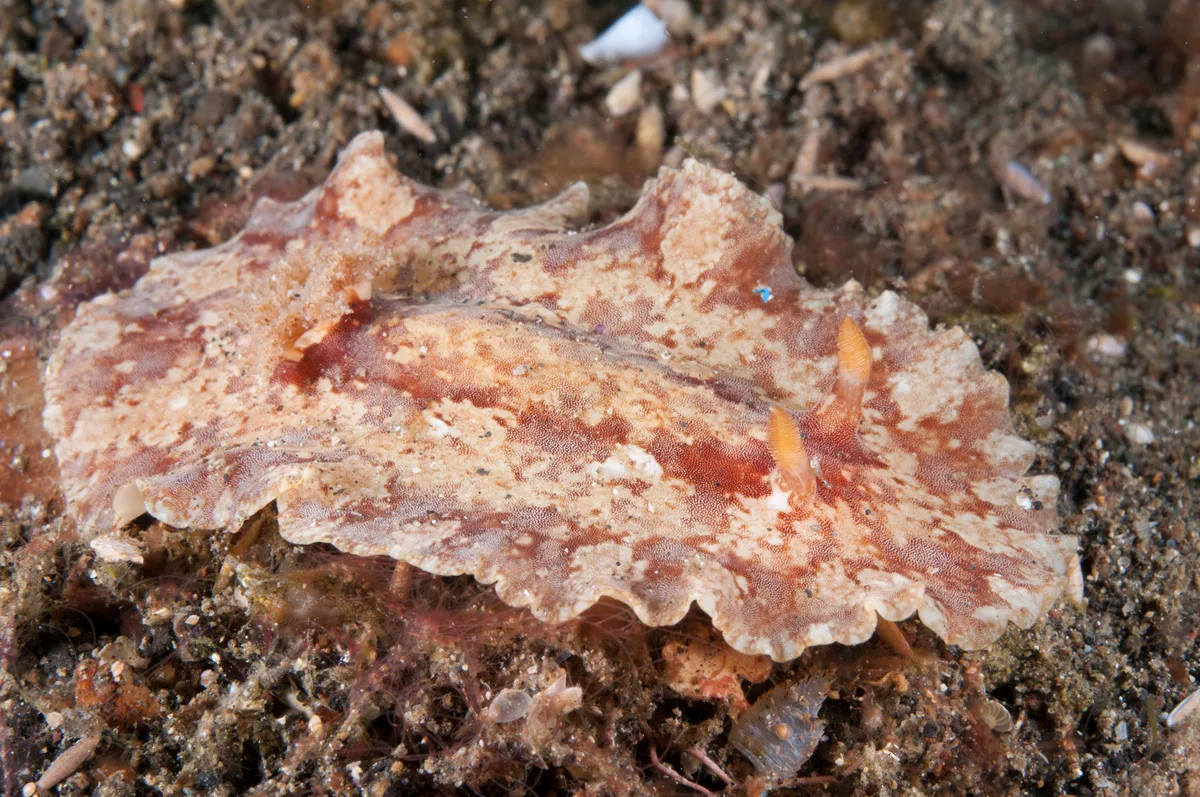
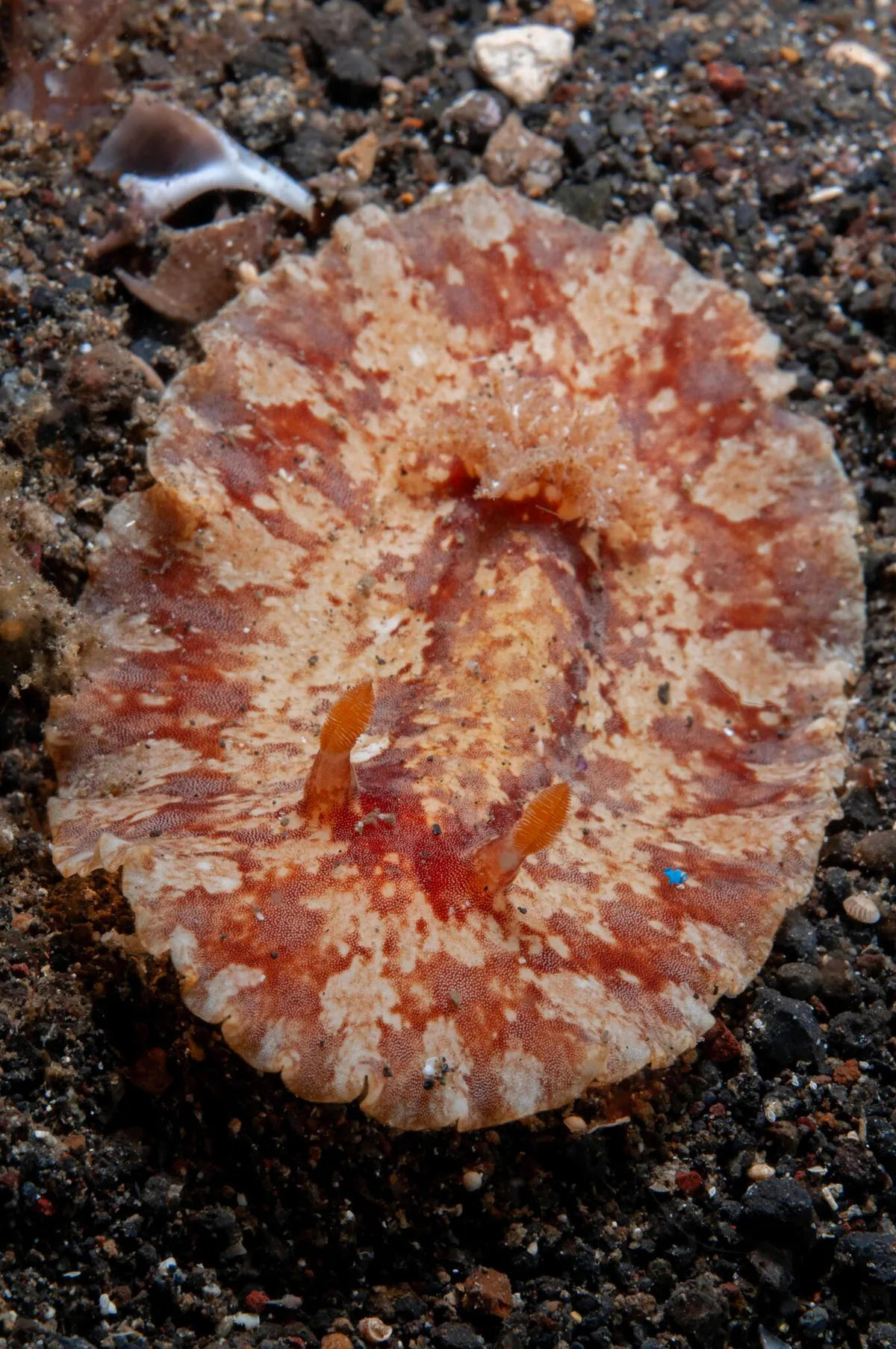
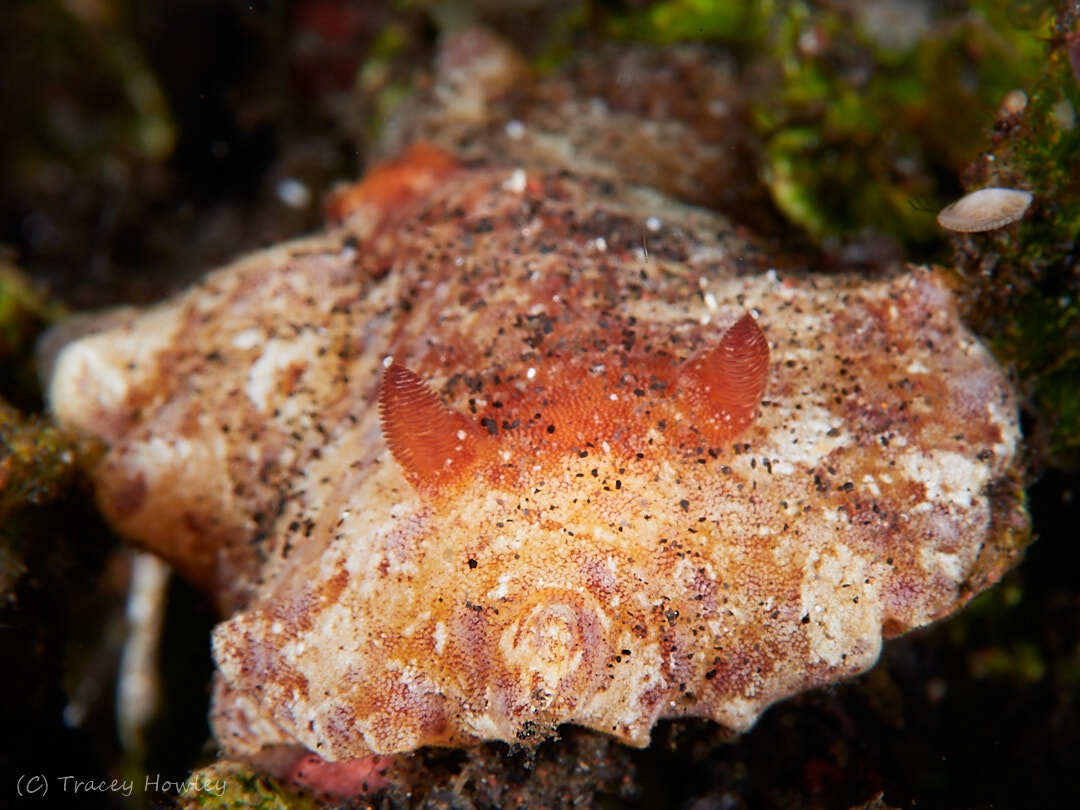
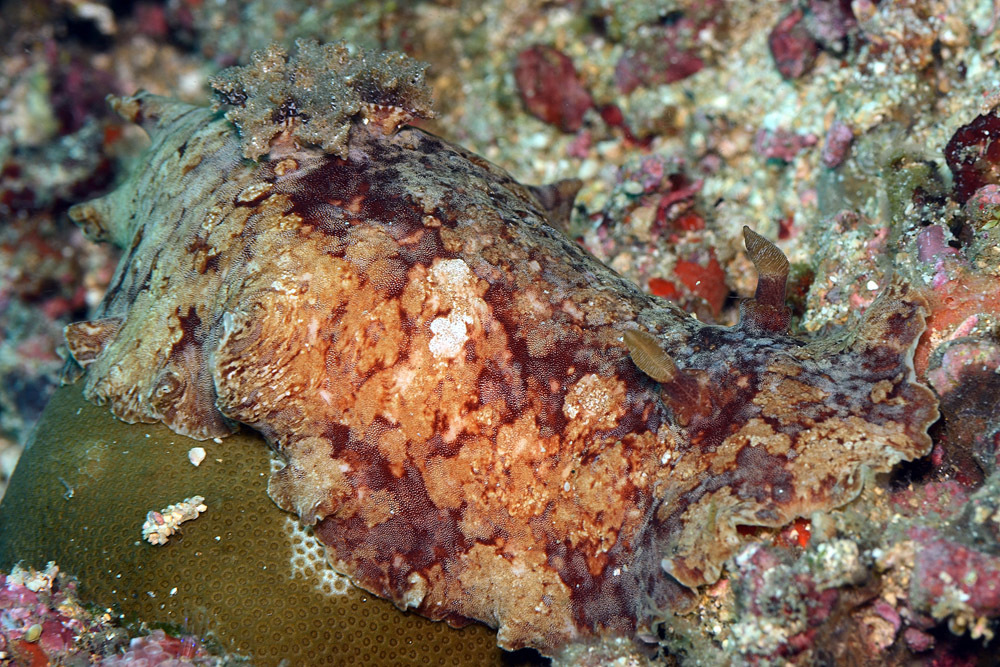
The name points at a part of the animal you are unlikely ever to look at. Infra means below and maculata means spotted: it was named for markings on its underside, which on a living slug lying flat against rock is the one surface that never shows. Nineteenth-century names came off specimens in jars, where the sole is as easy to examine as the back, and every so often that habit produced a label that is useless in the water.
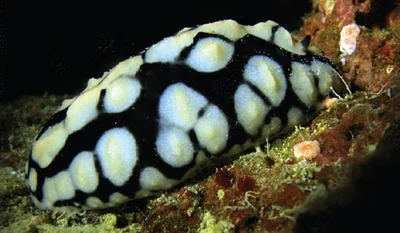
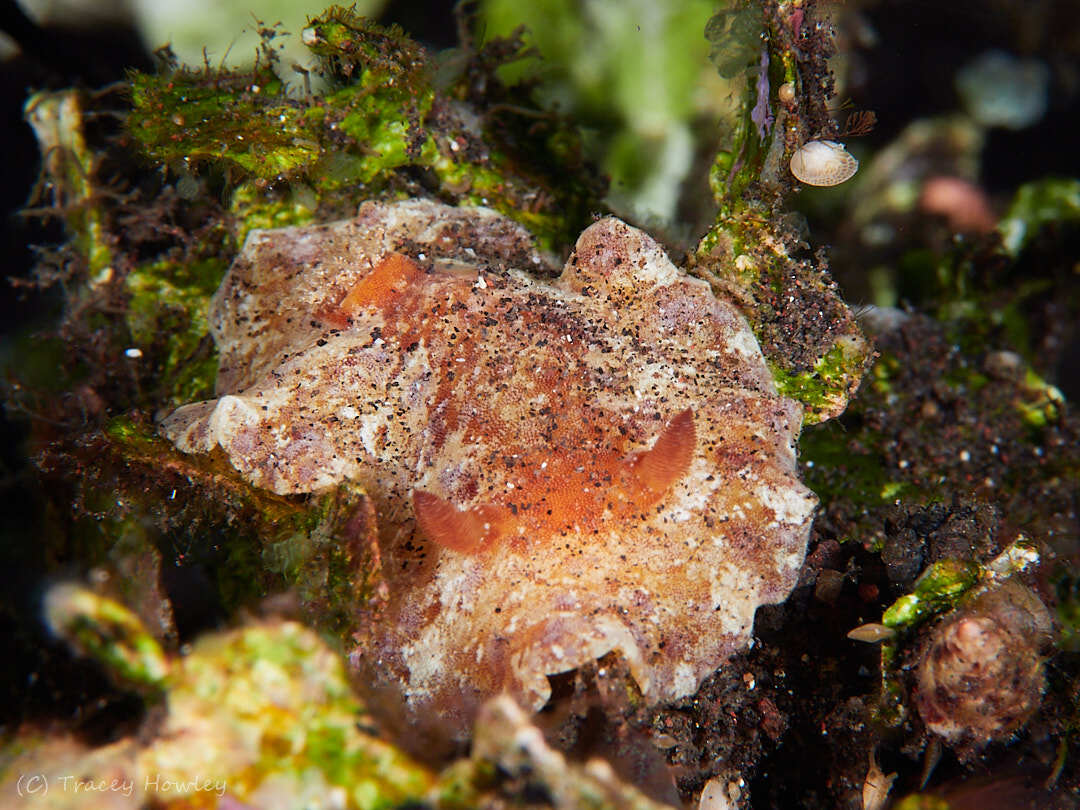
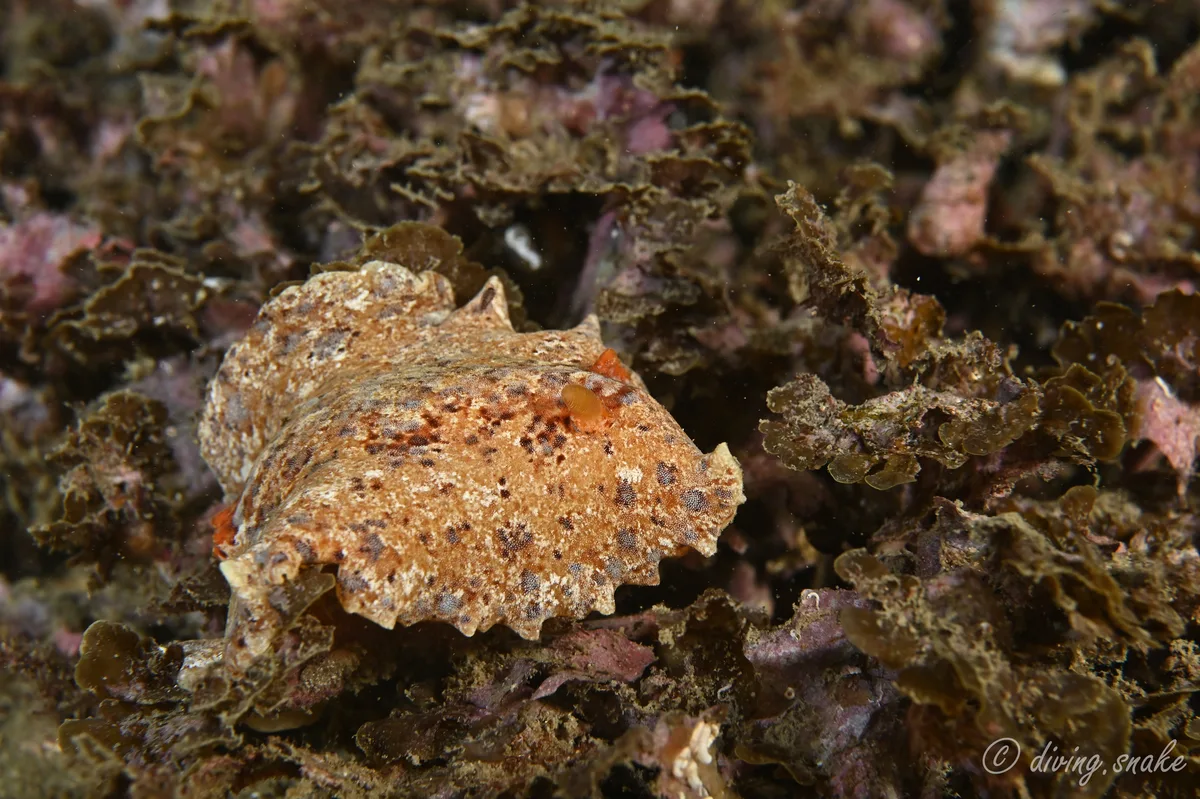
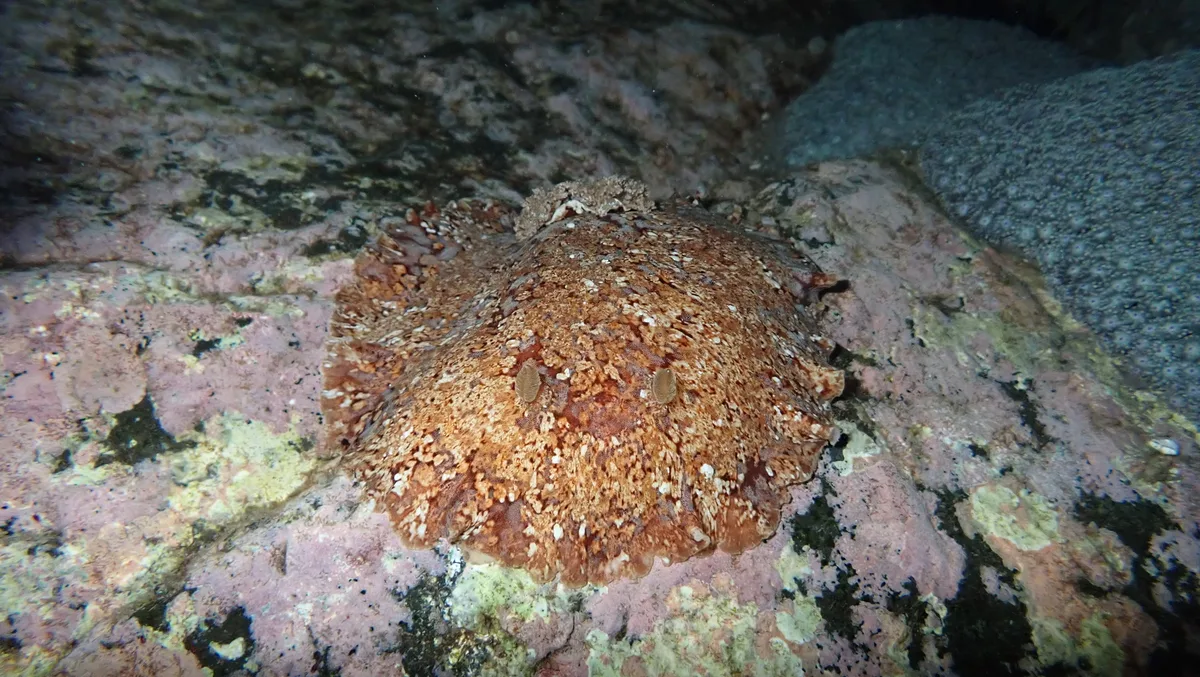
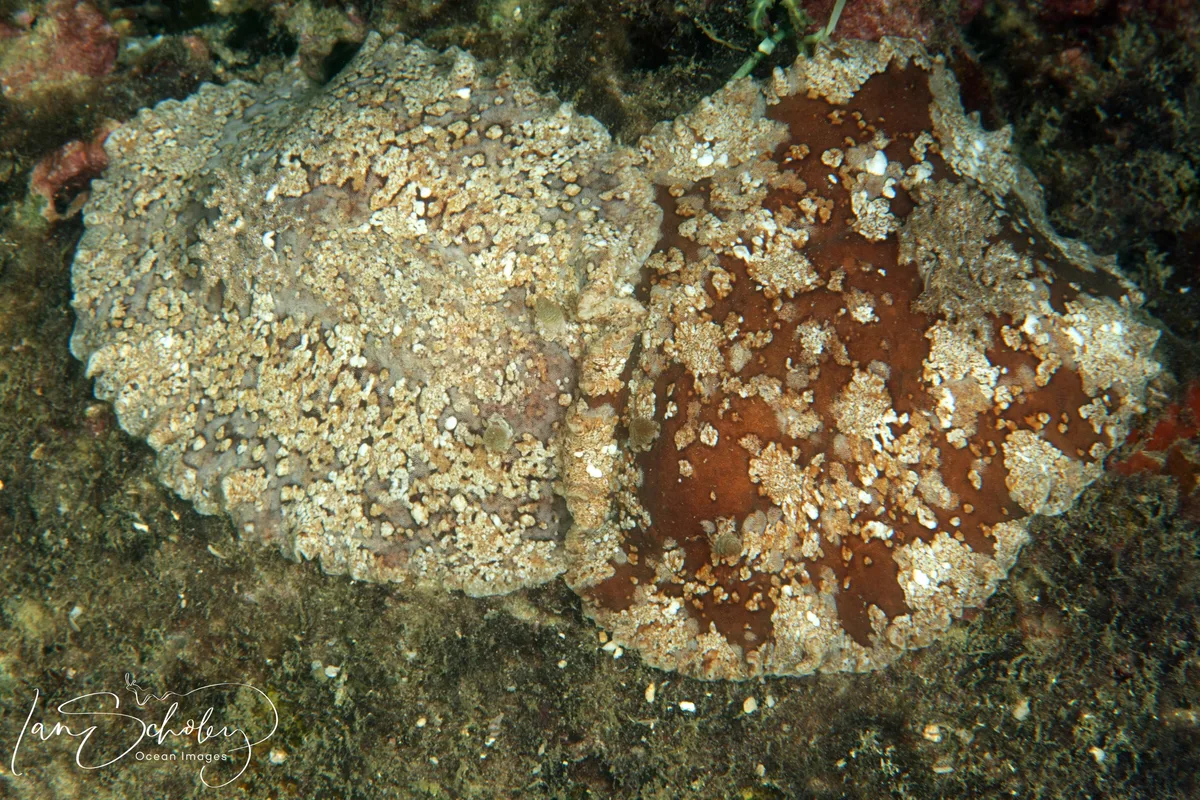
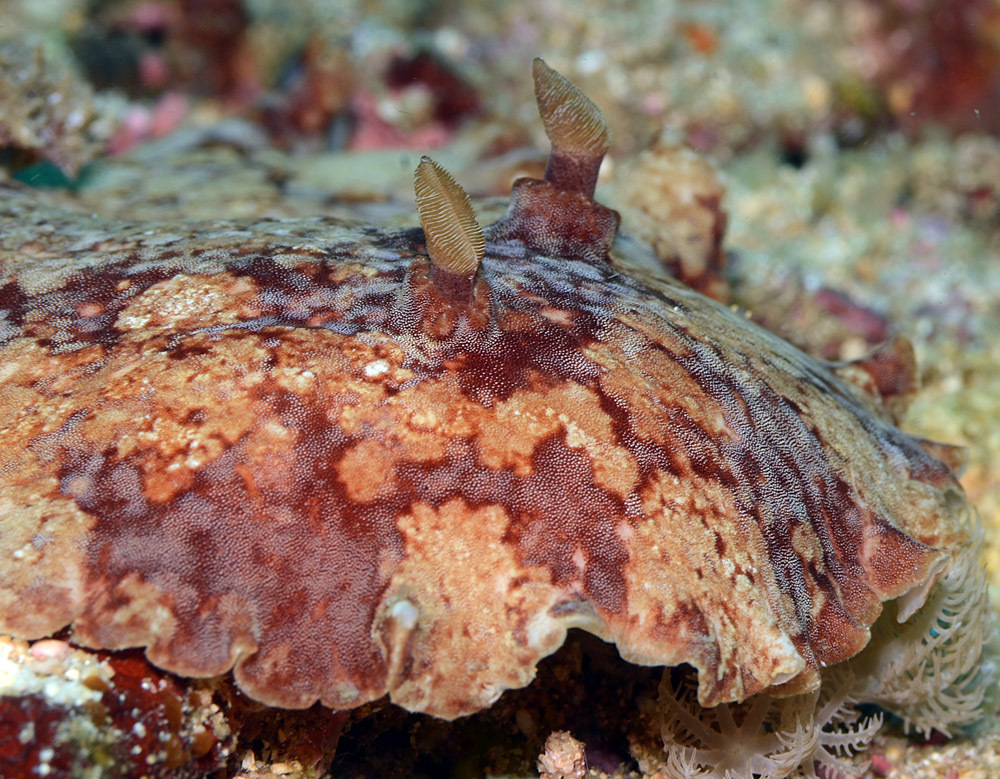
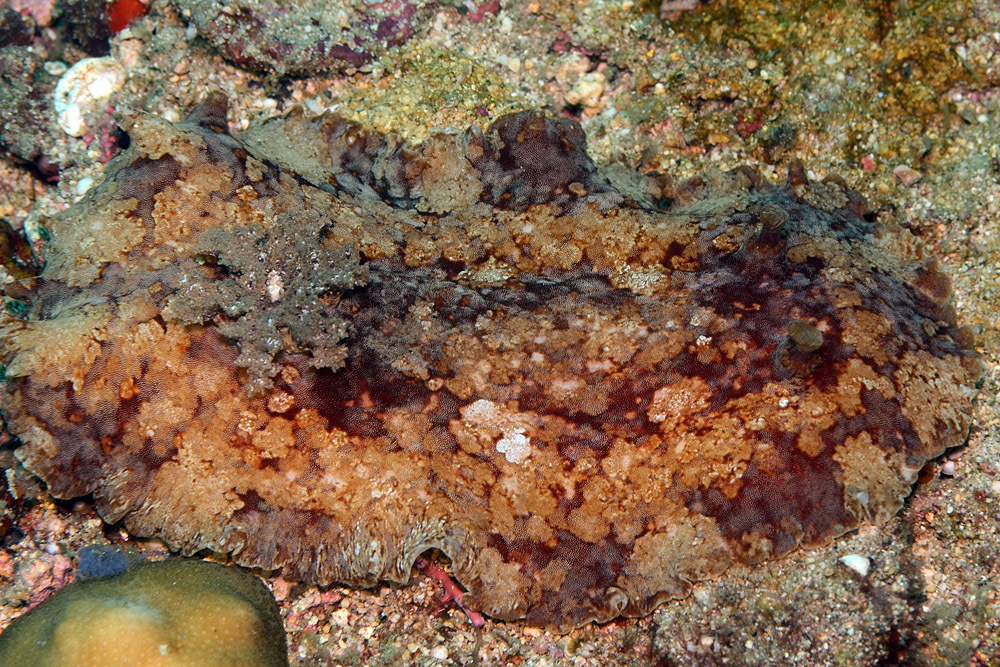
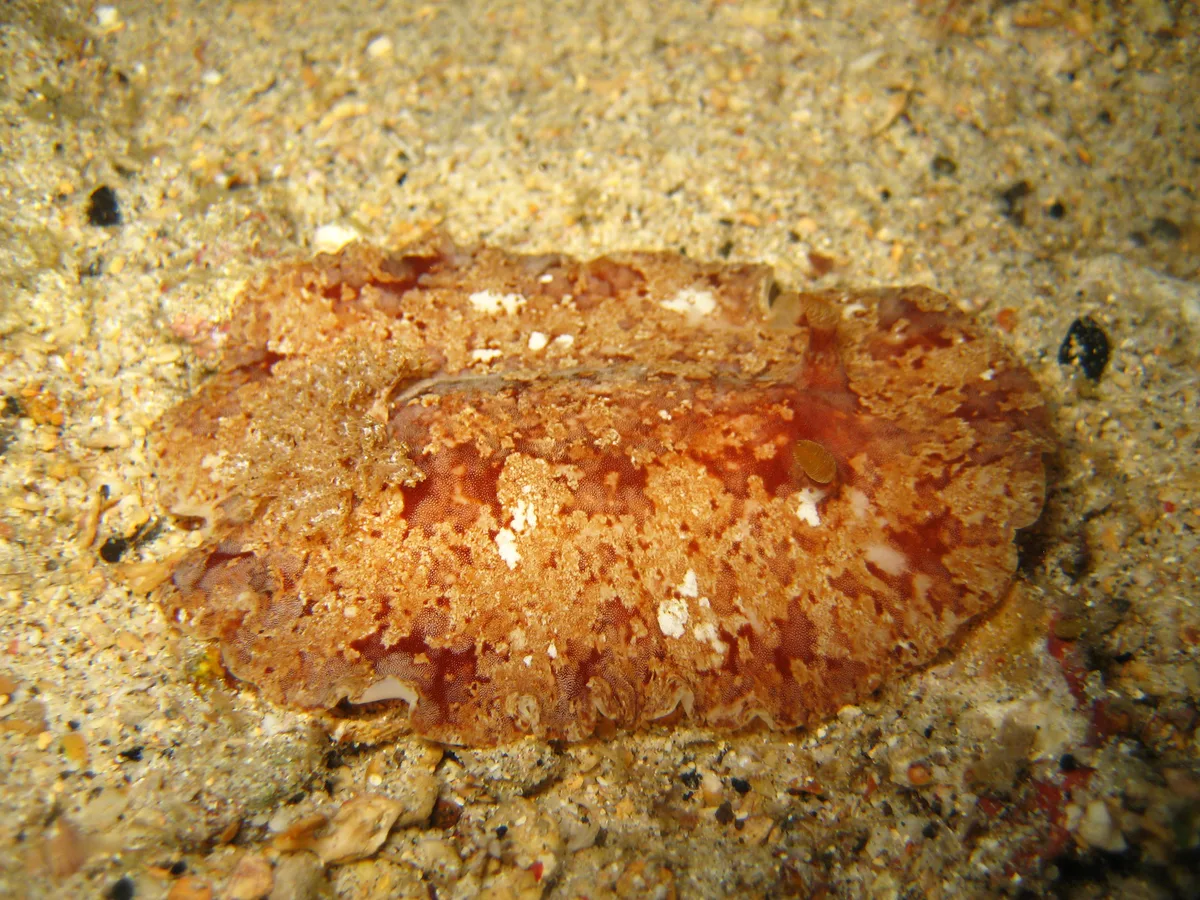
What you can see is twelve centimeters (4.7 in) of brown, broken up by opaque white and yellowish blotches, and hard. Platydoris are the flattest and stiffest of the dorids: the mantle is thin, packed with mineral spicules, and held pressed down with no raised edge anywhere. That is difficult to grip, difficult to lever off and difficult to bite, and it is a mechanical defense where most of this section relies on chemistry alone. This species has the chemistry as well.
The flatness also decides where it lives. By day it is inside cracks and under slabs that a thicker animal could not enter, and it comes out onto open rock after dark to graze sponges.
It is the largest Platydoris on this reef, in a genus that now runs to five here, and the least often recorded: fewer than twenty logged observations worldwide.
- brown, broken up by opaque white and yellowish markings
- twelve centimeters, the largest of its genus here
- flat, stiff and hard-surfaced, pressed down against the rock
- the name refers to marks on the underside, which you will not see on a live animal in place