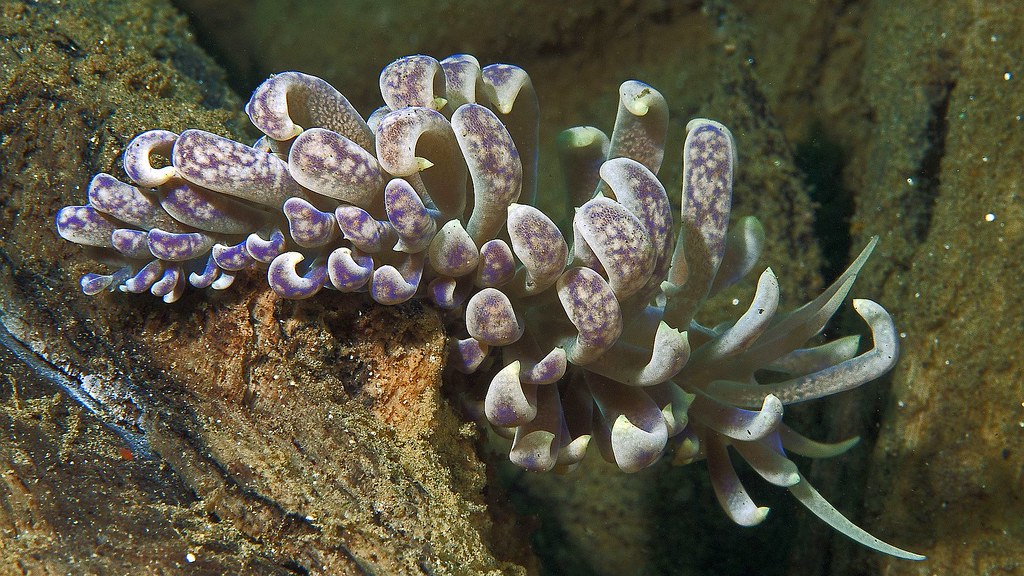
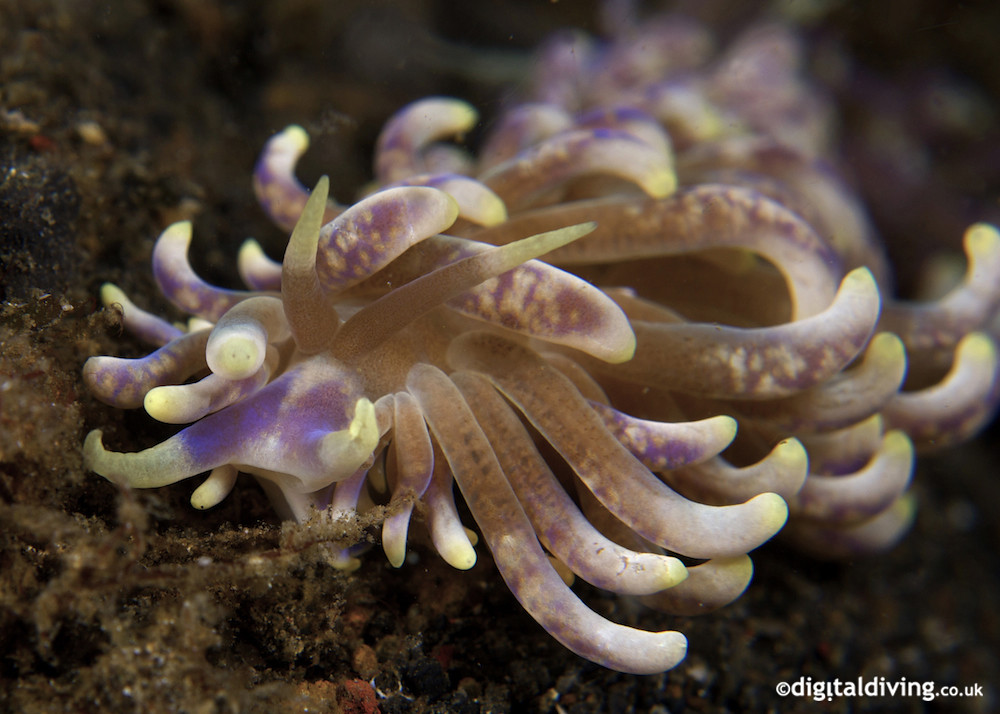
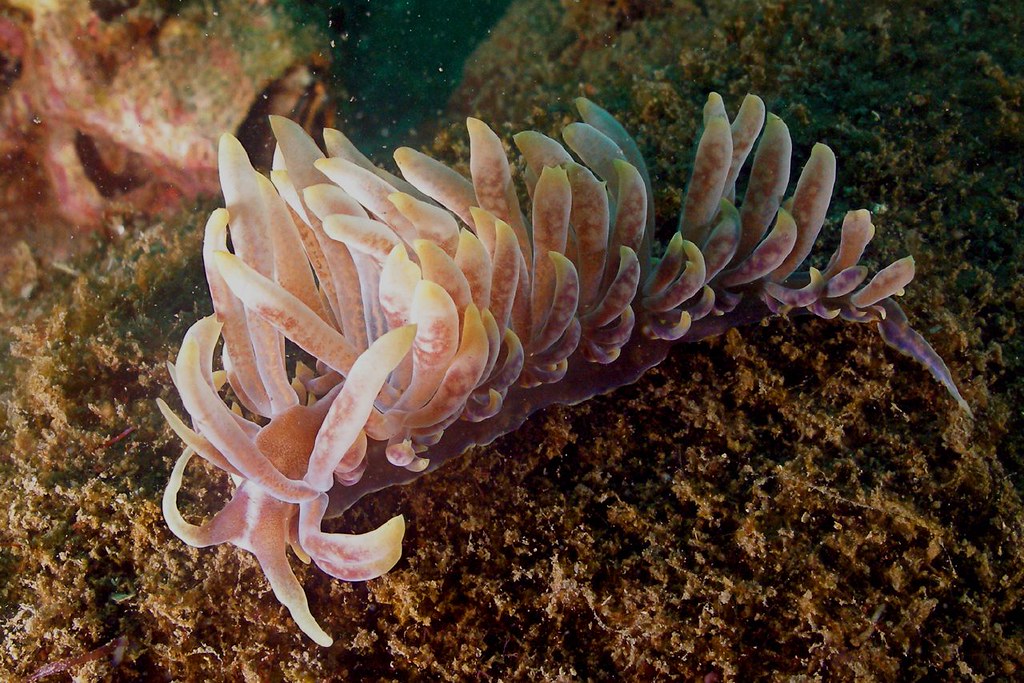
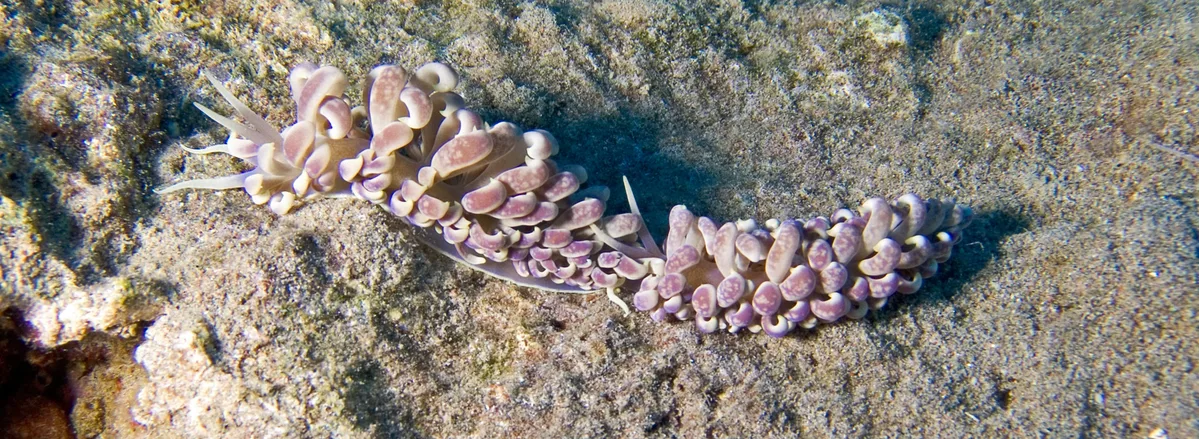
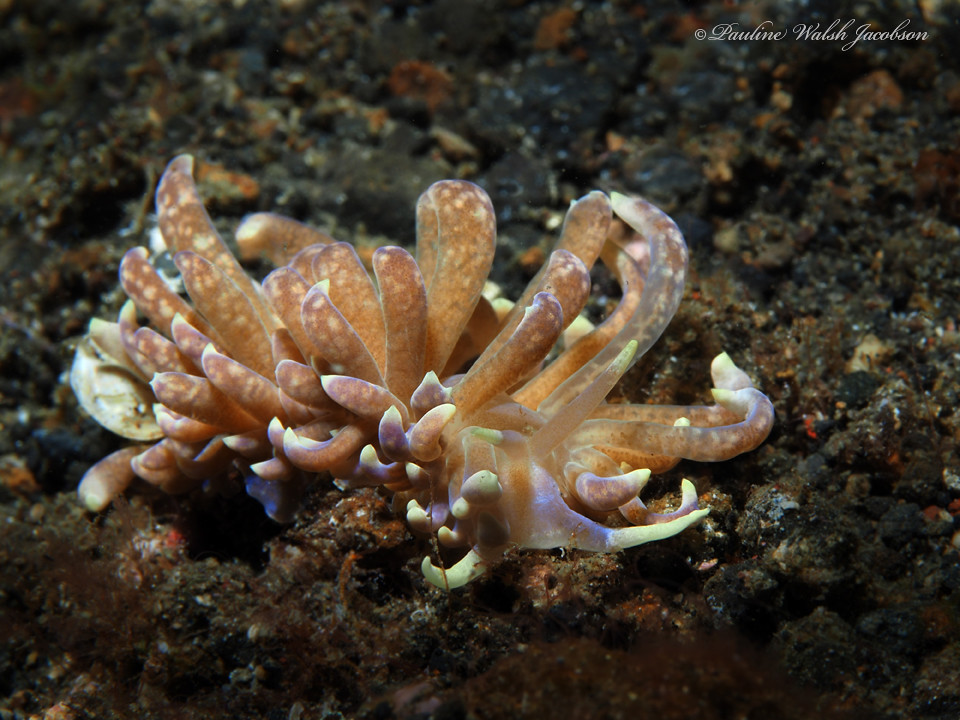
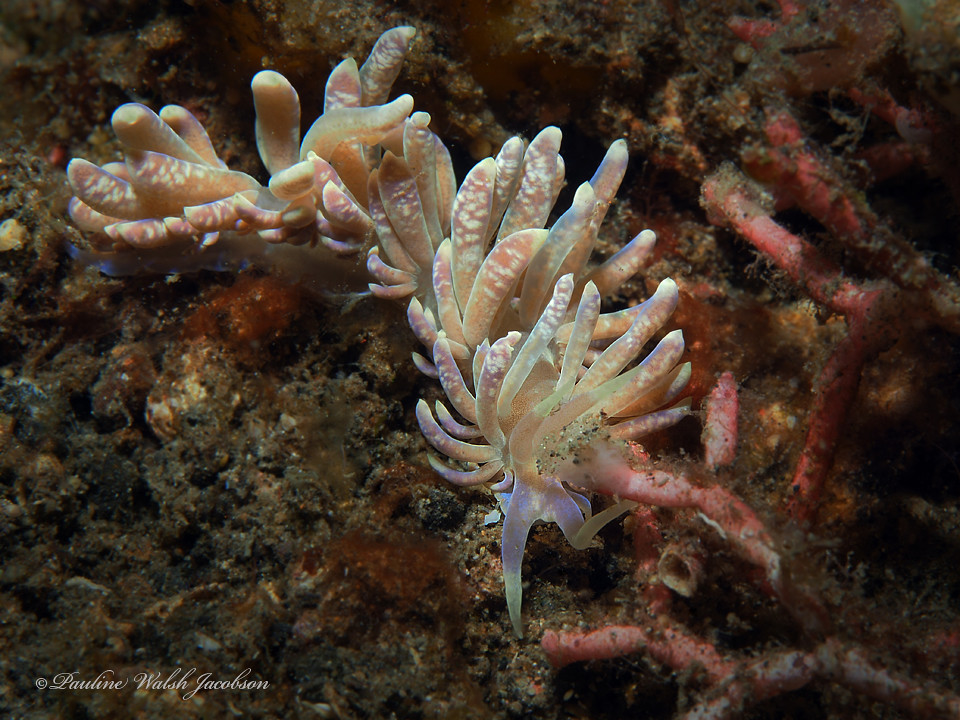
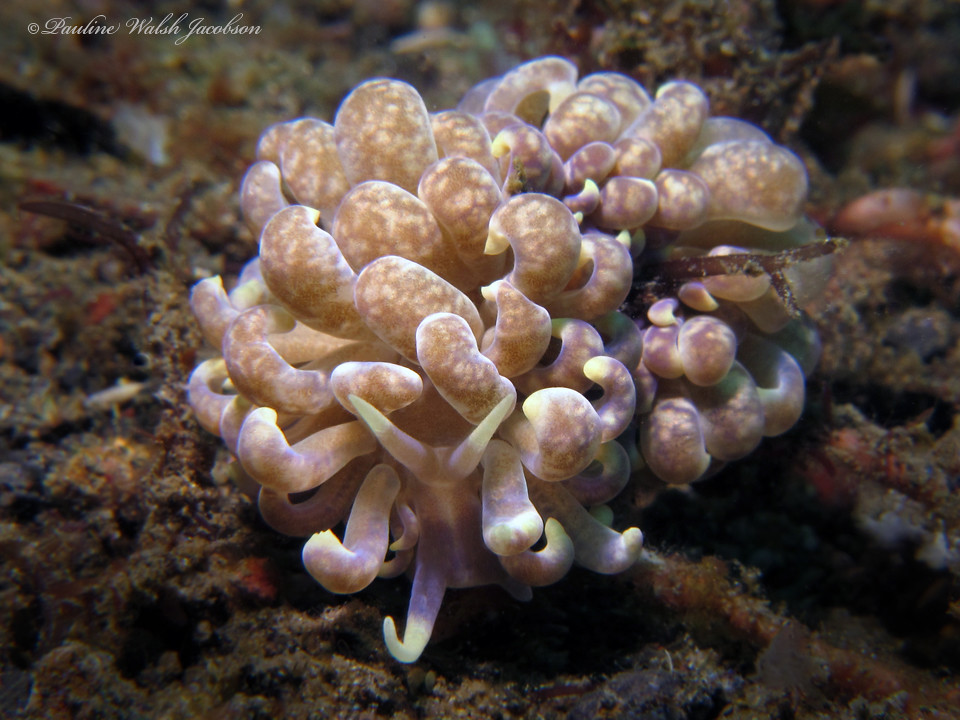
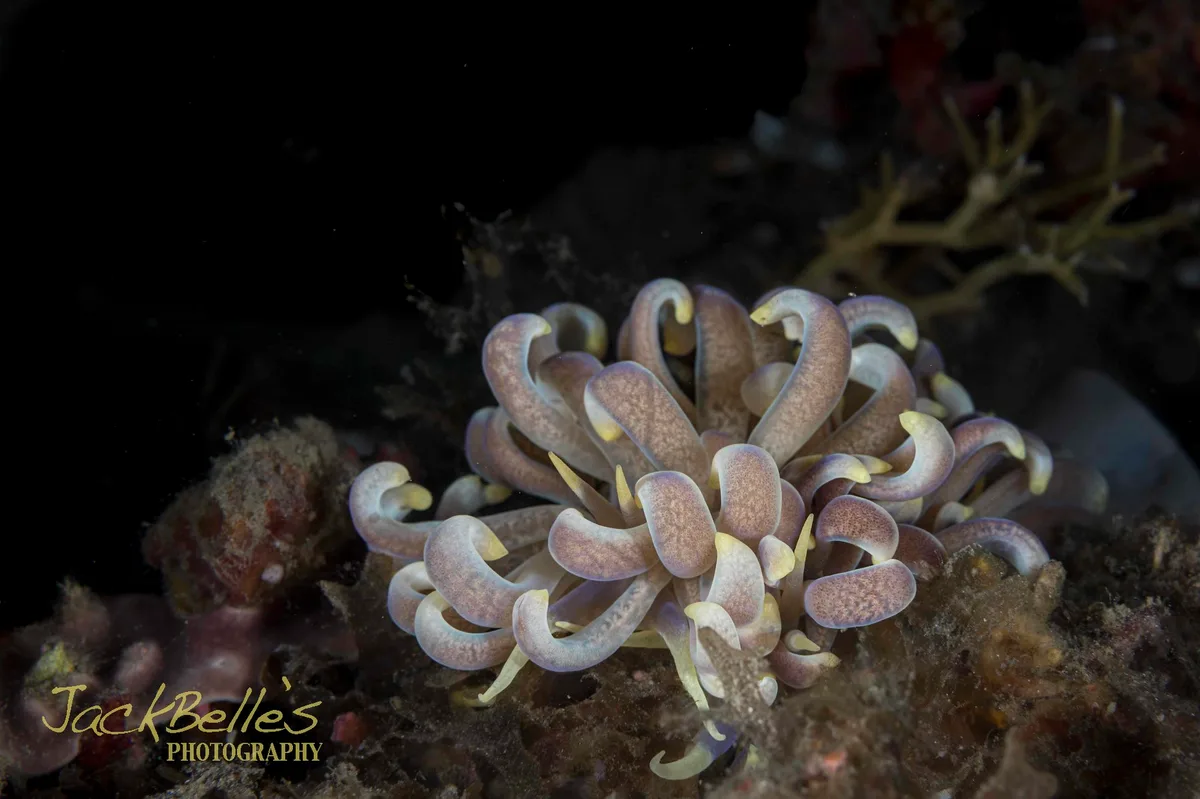
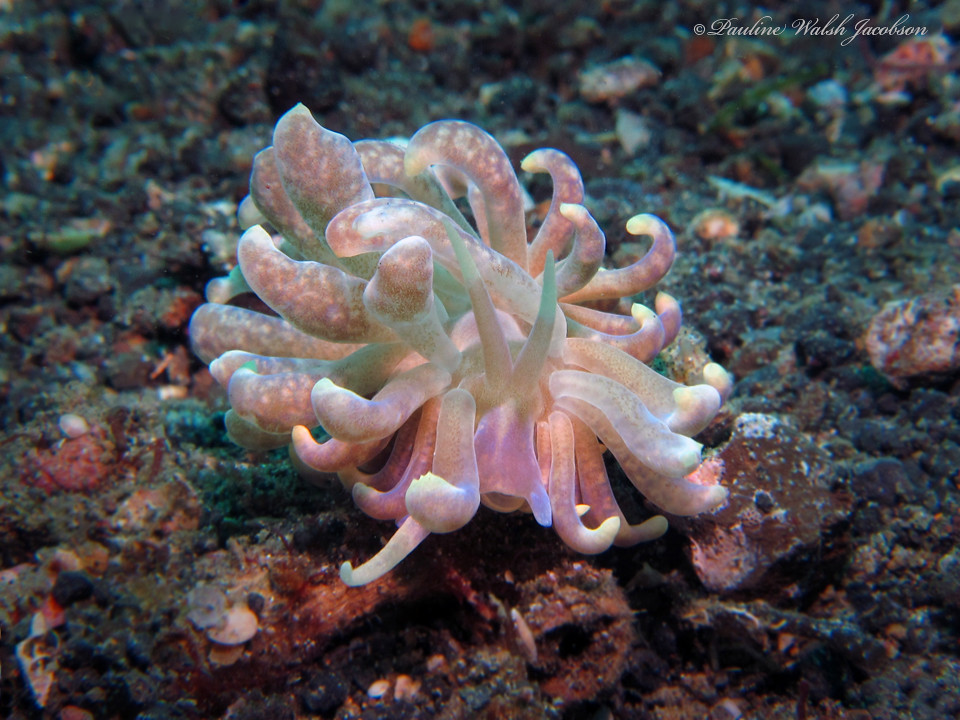
Fifteen centimeters (6 in) makes this one of the largest aeolid sea slugs anywhere, and the size is a direct consequence of how it feeds itself, which is partly by standing in the light.
It eats soft corals. Those corals are full of single-celled algae, the same zooxanthellae that power reef-building corals, and this slug does not digest them. It moves them into the fine branches of its own gut that run out into every ceras on its back and keeps them alive there, and they go on photosynthesizing for it. A well-stocked animal draws a large share of its energy from sunlight and can go long stretches between meals, which is how a soft-bodied grazer gets to be this big.
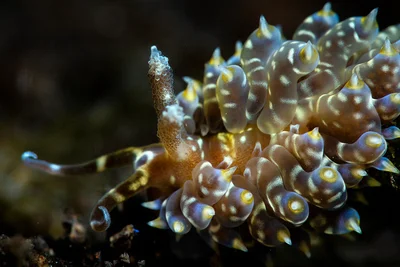
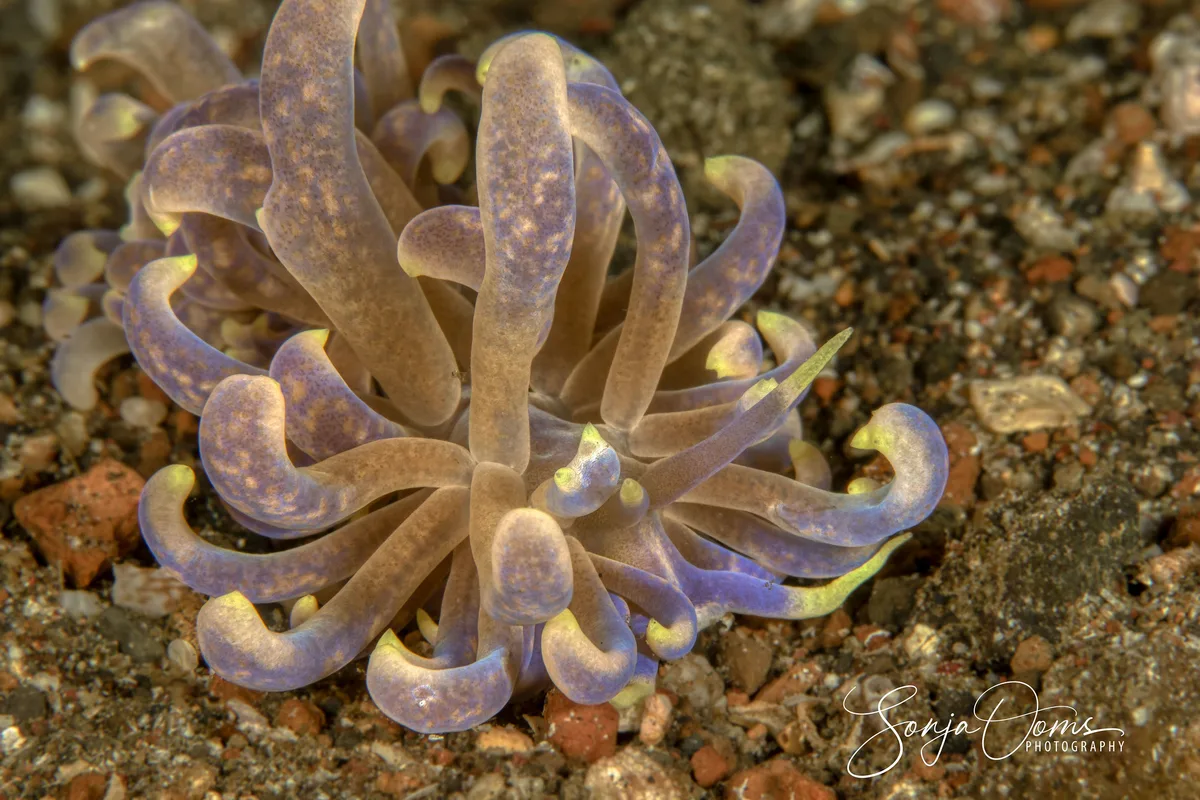
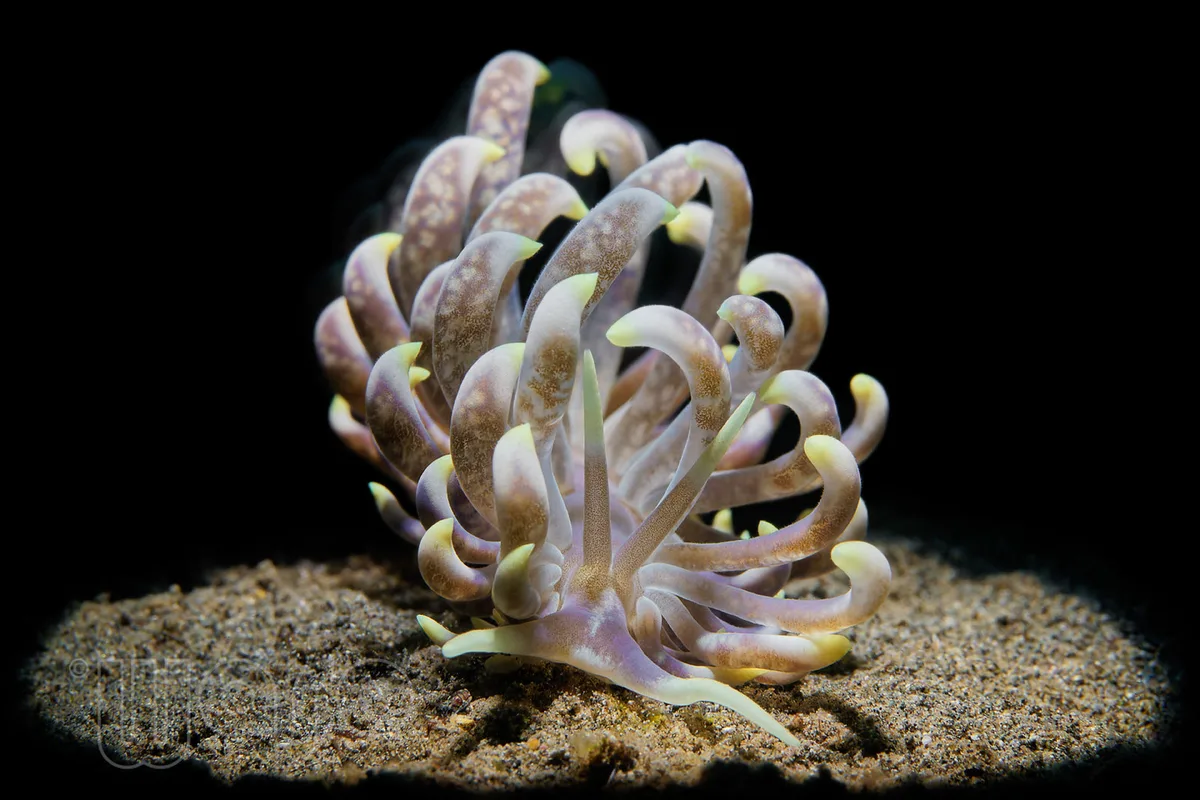
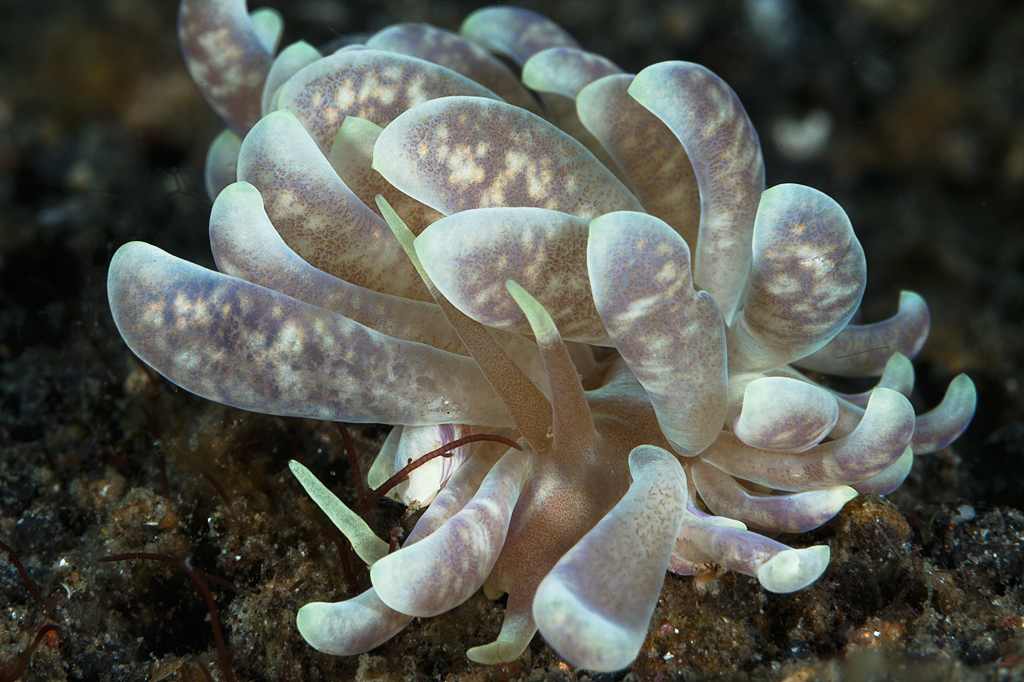
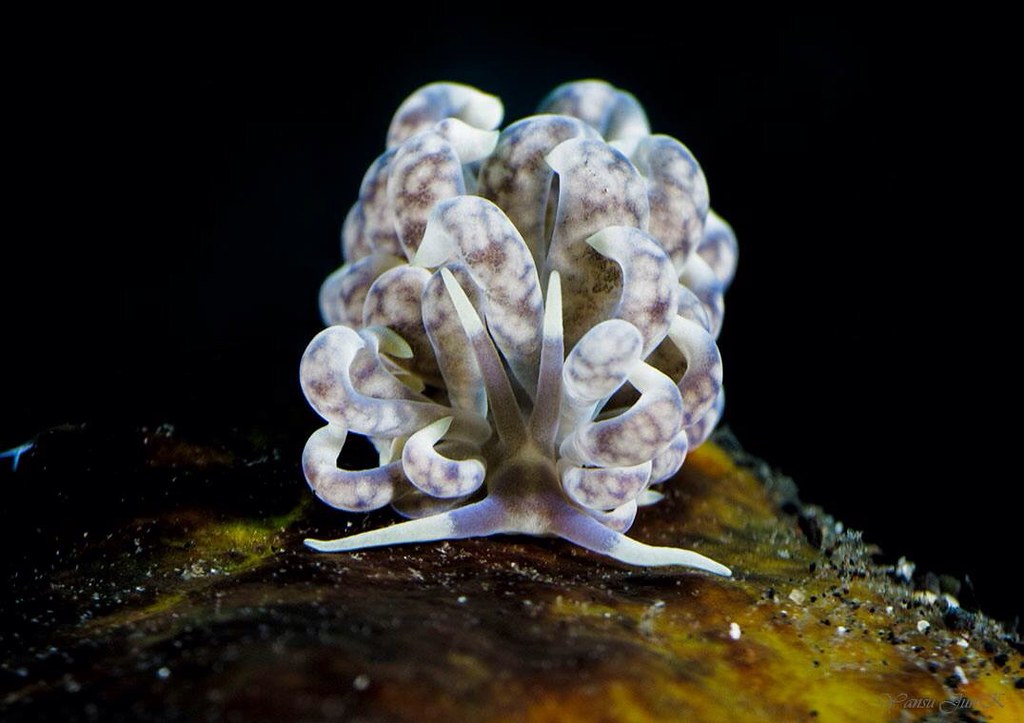
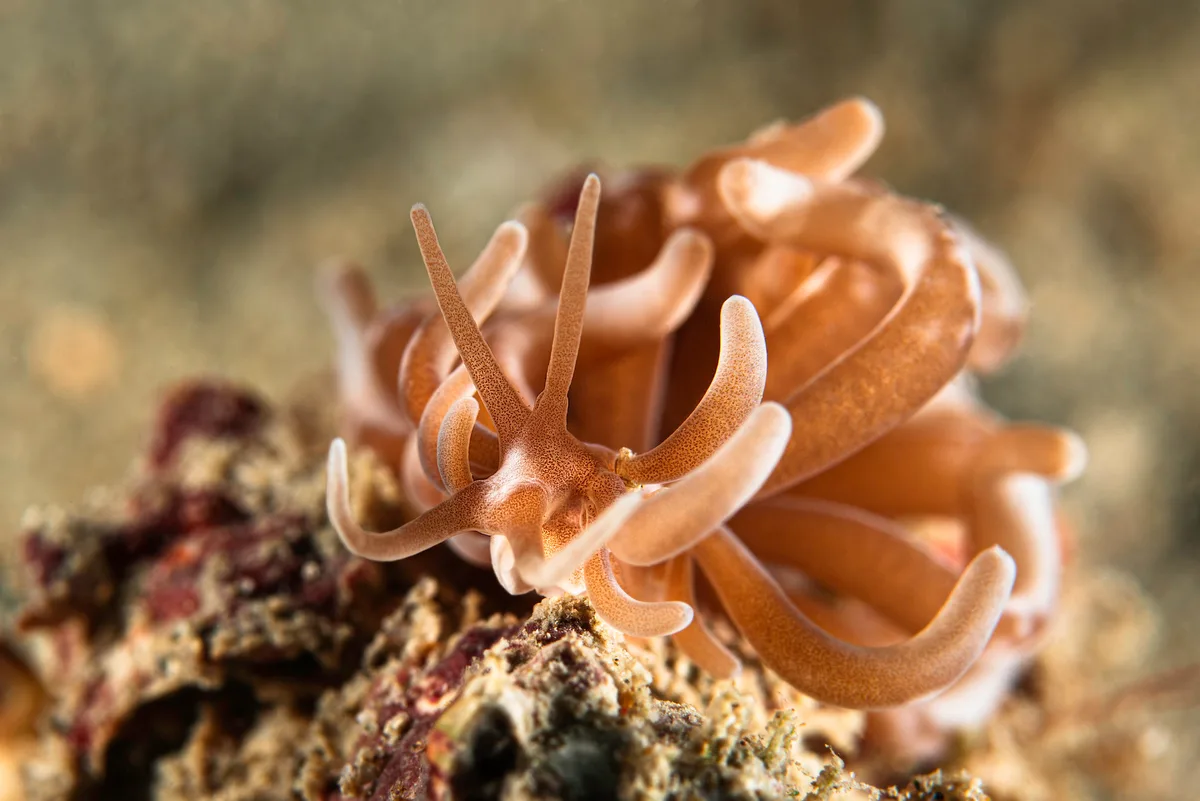
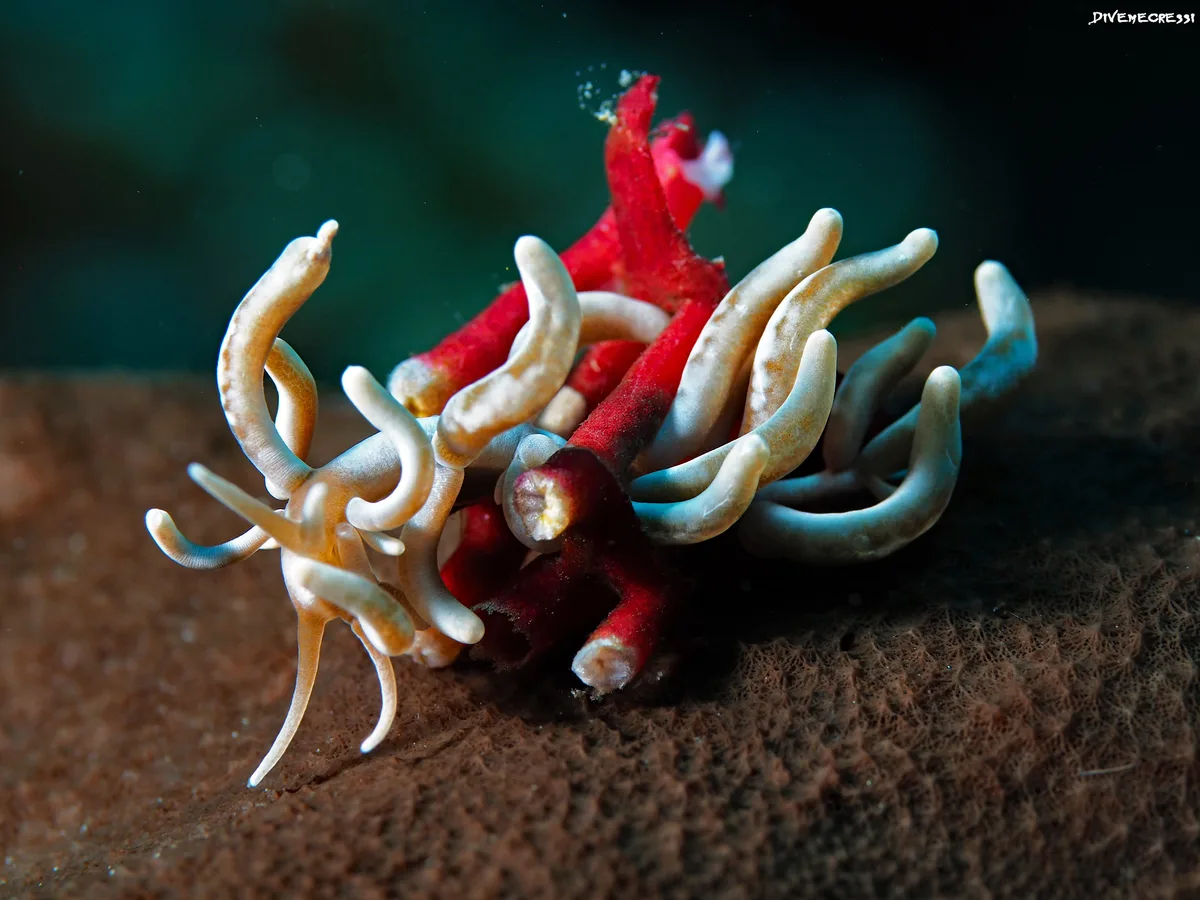
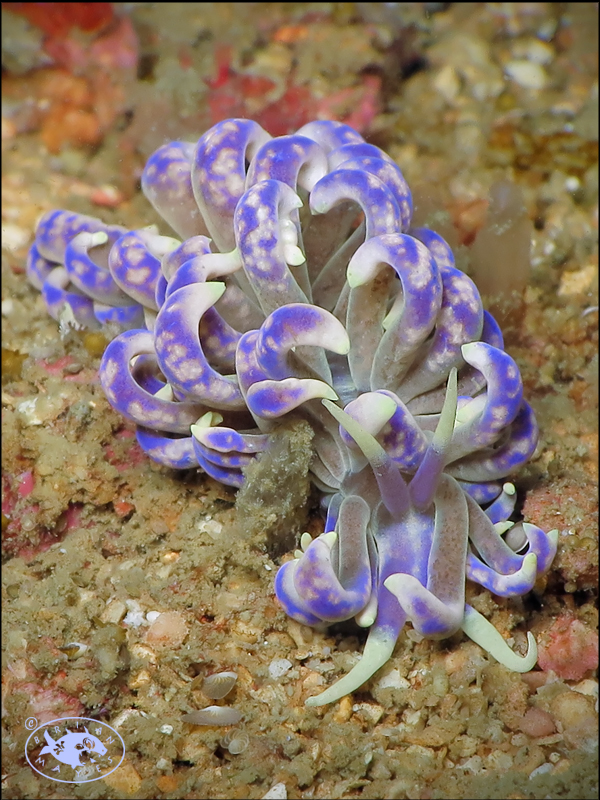
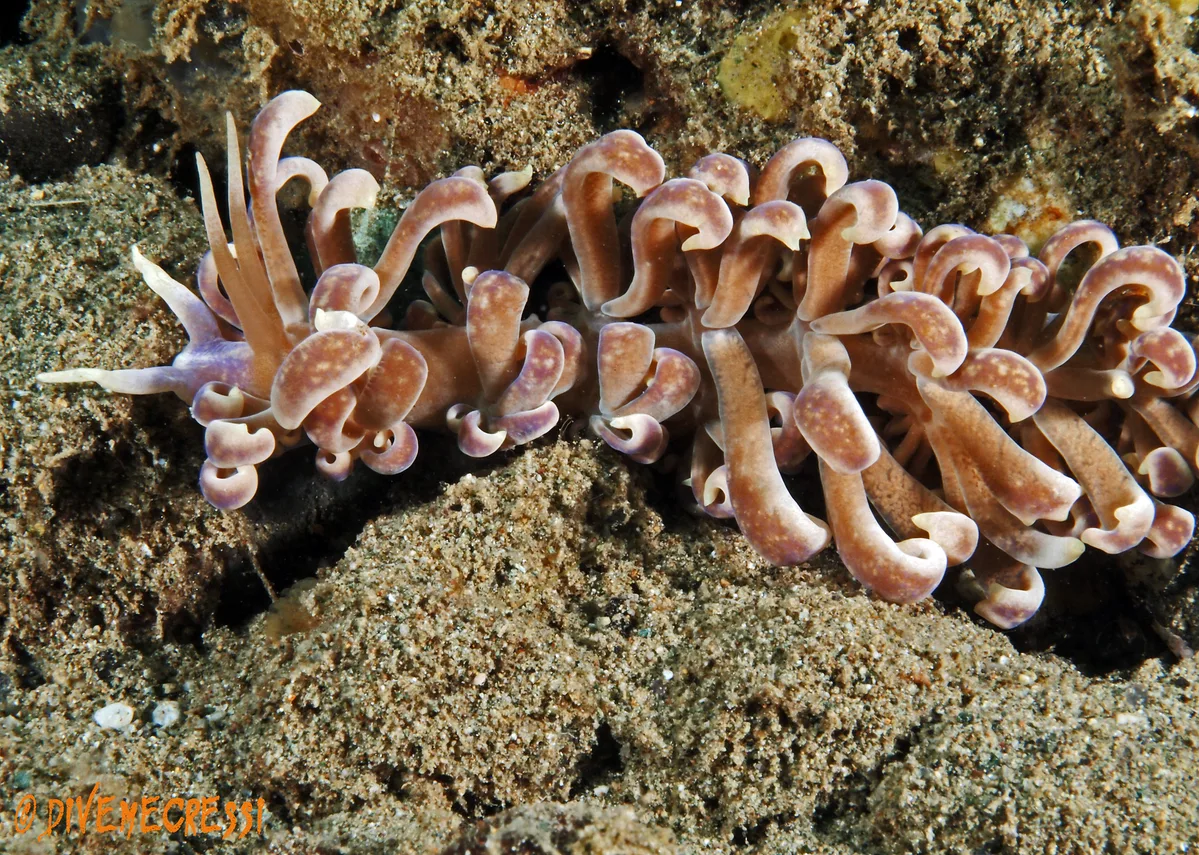
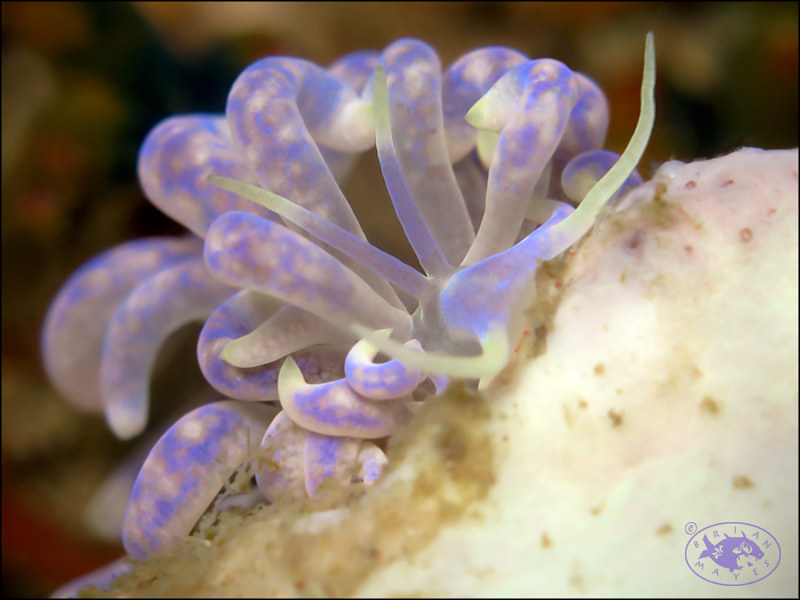
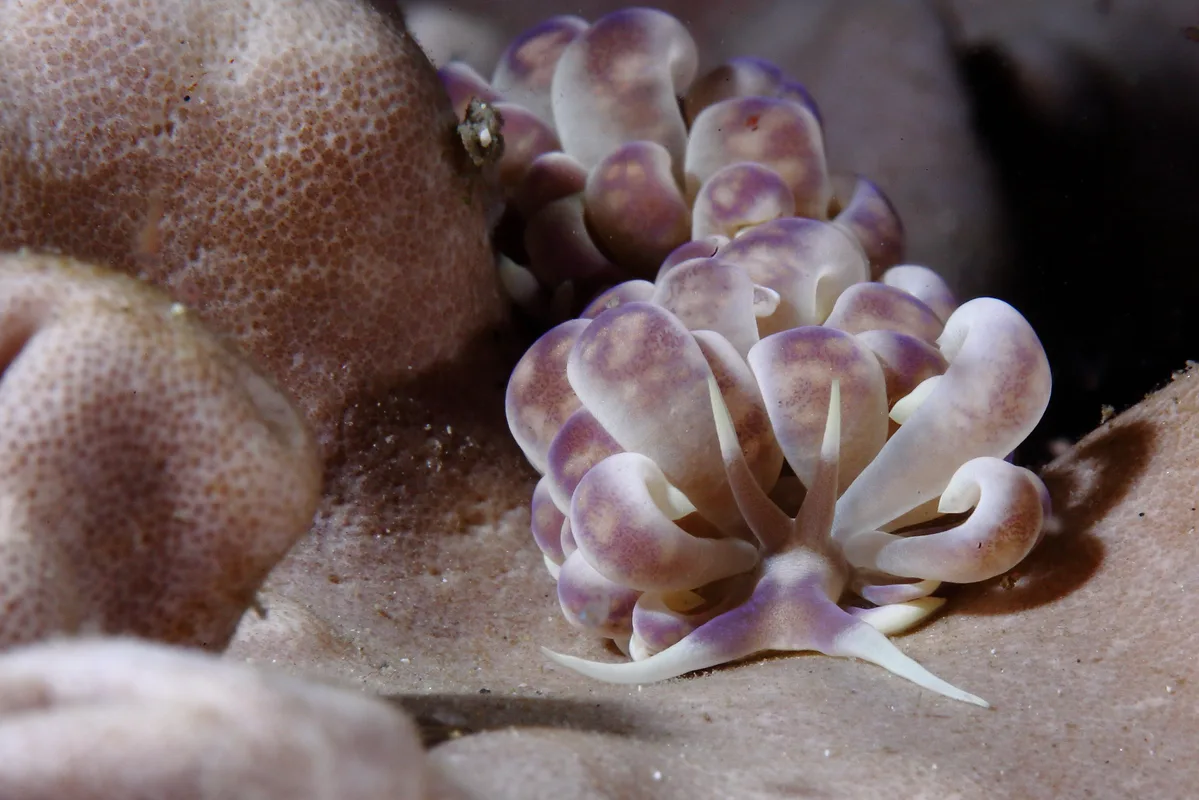
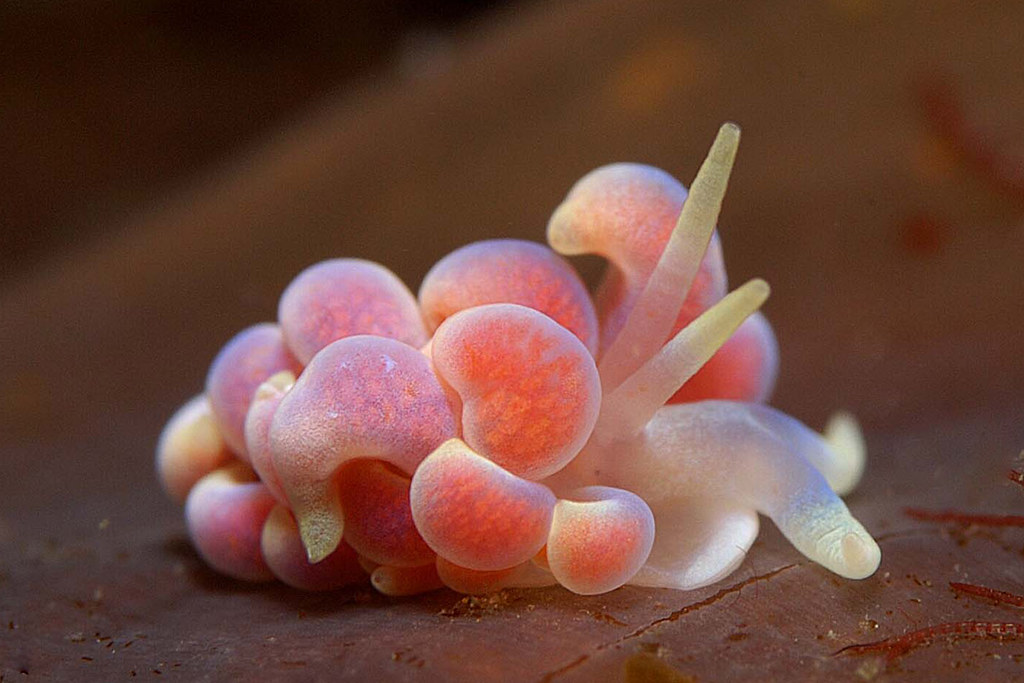
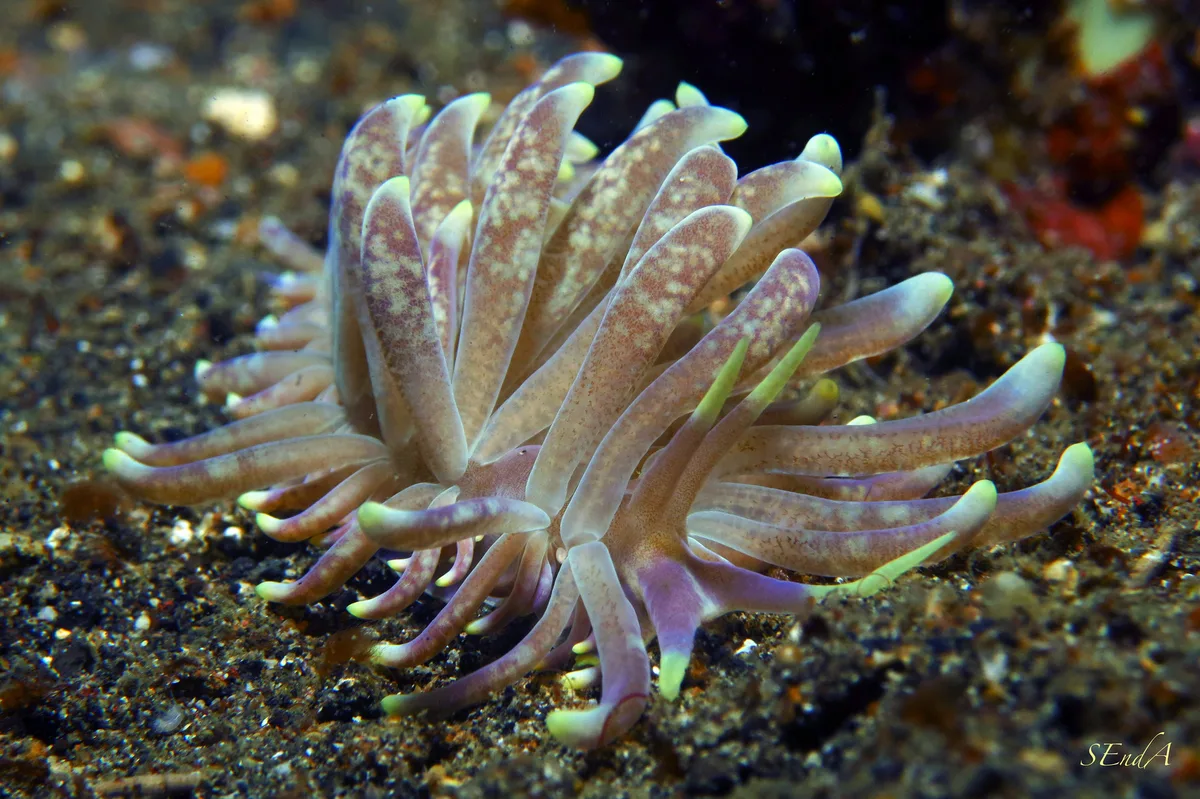
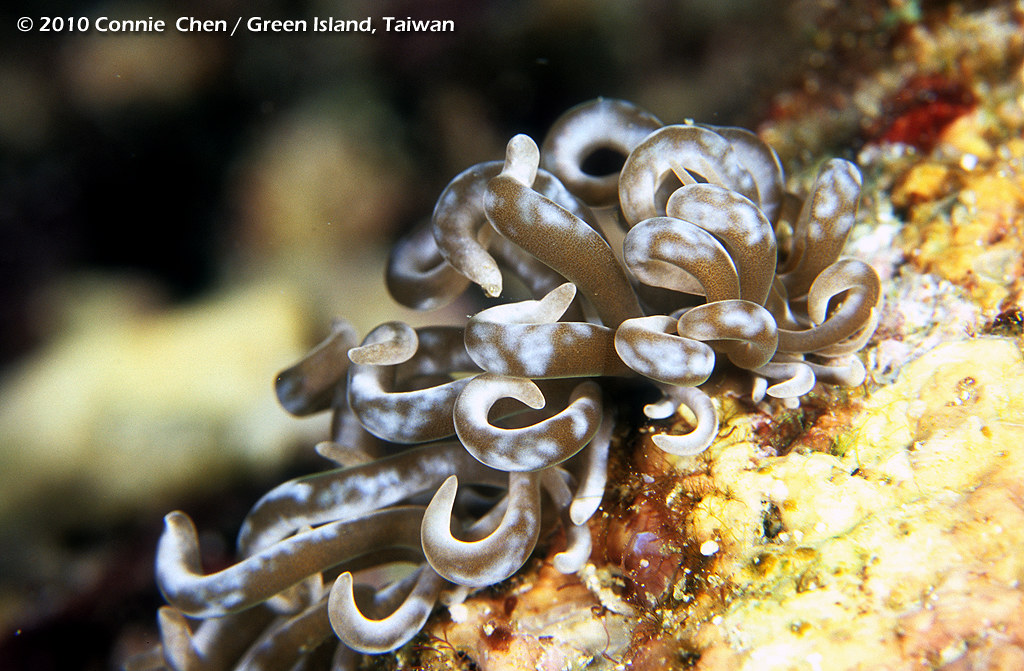
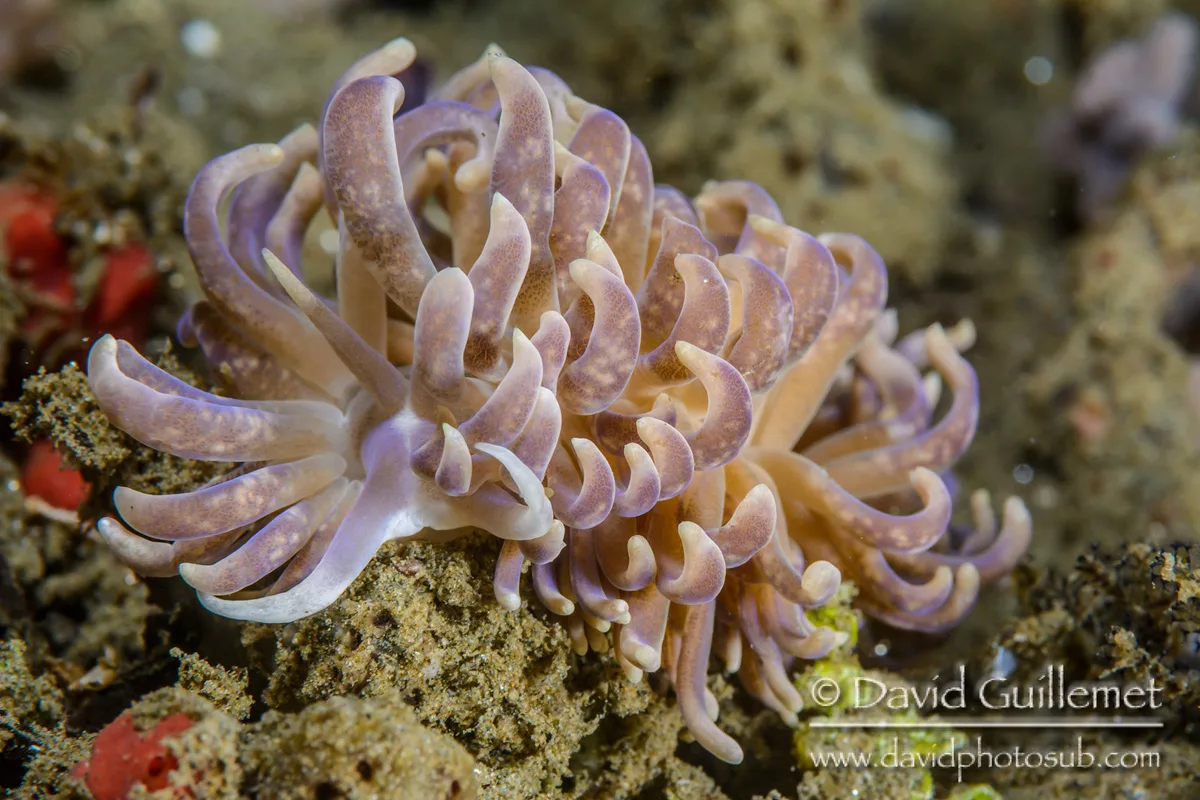
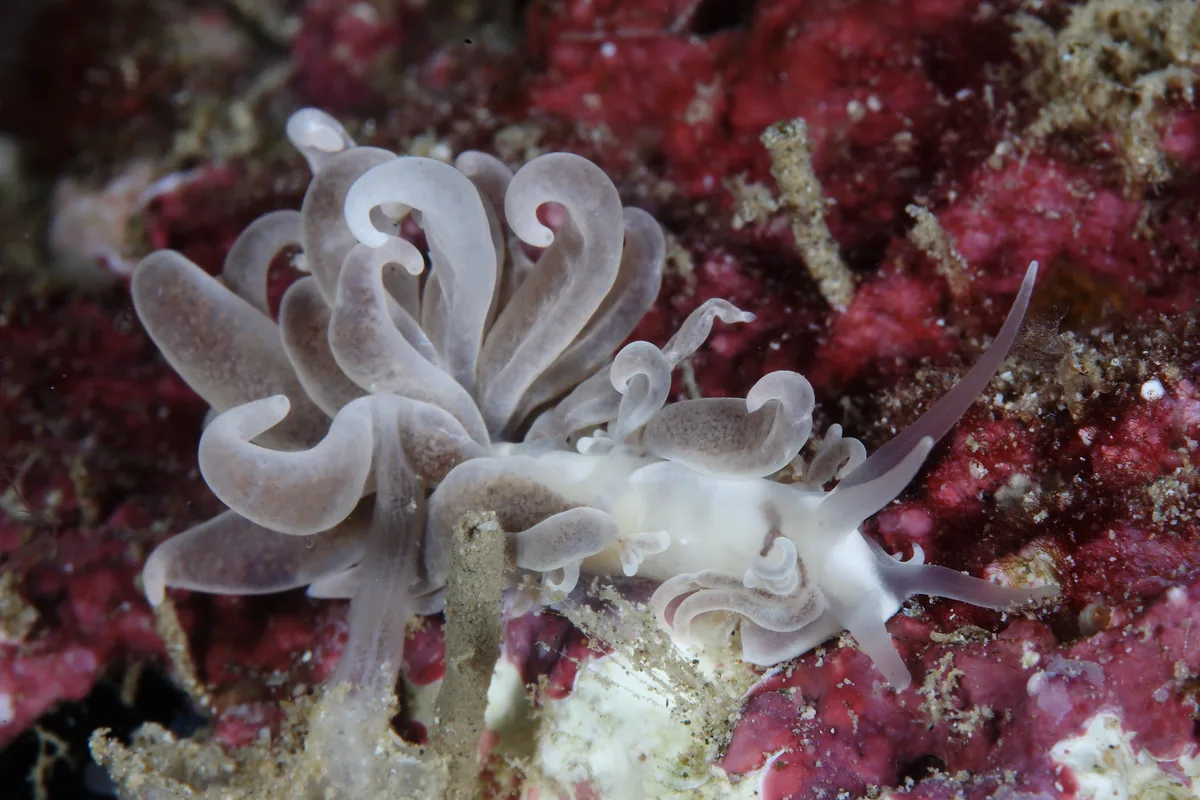
The cerata are the giveaway that this is what is happening. On most aeolids they are simple round fingers. Here they are flattened and held spread out, presenting the widest possible surface to the light, and the gut branches inside them fan out through the flesh so no farmed cell is left in shadow. The shape is a solar panel, arrived at for the same reason a leaf is a leaf.
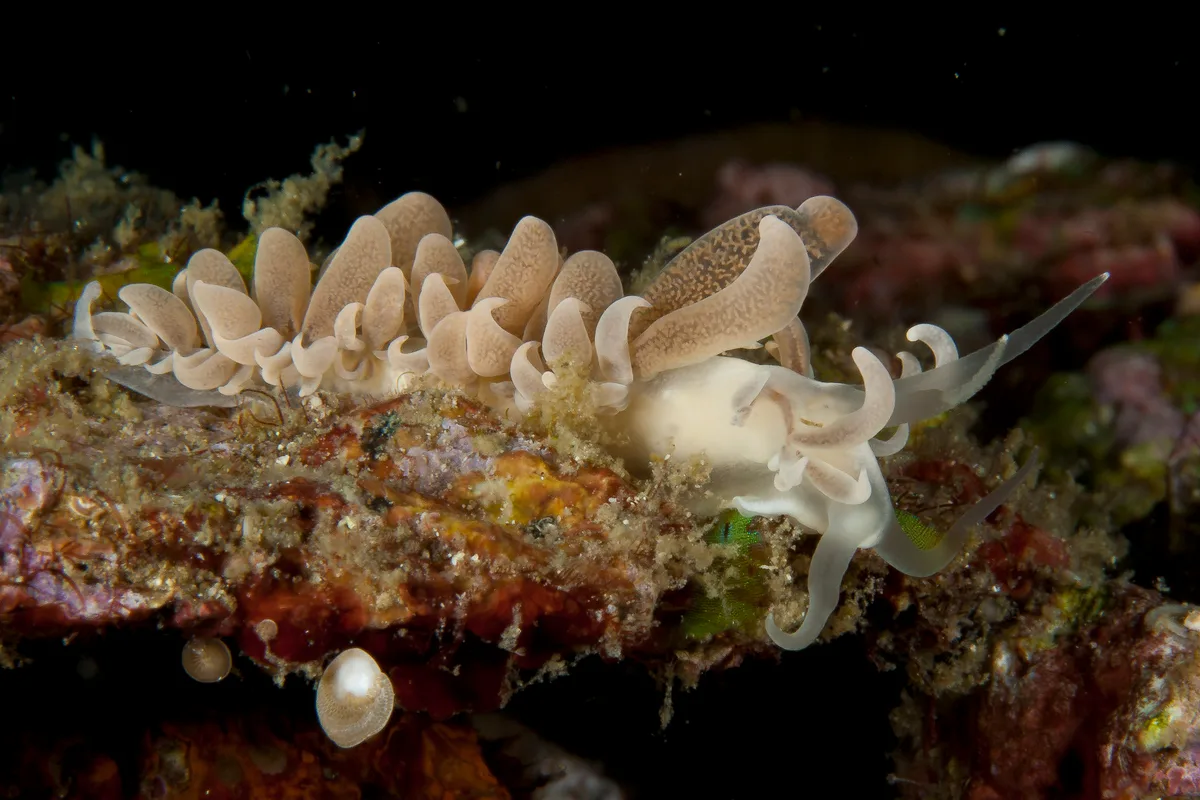
What it has given up is weapons. Aeolids are famous for eating stinging animals and storing the unfired stinging cells at the tips of their cerata, and the entire Phyllodesmium line has abandoned that trick. Nothing on its back will sting anything. Its defenses are camouflage, a body colored and patterned like the soft coral it lives on, and the ability to shed cerata when something takes hold, leaving the attacker with a wriggling piece and the slug with the rest of itself.
- very large for an aeolid, with dense rows of long cerata covering the back
- cerata flattened rather than round, with curved tips
- rhinophores short and smooth, easily overlooked among the cerata
- translucent brown, patterned to match the soft coral it sits on