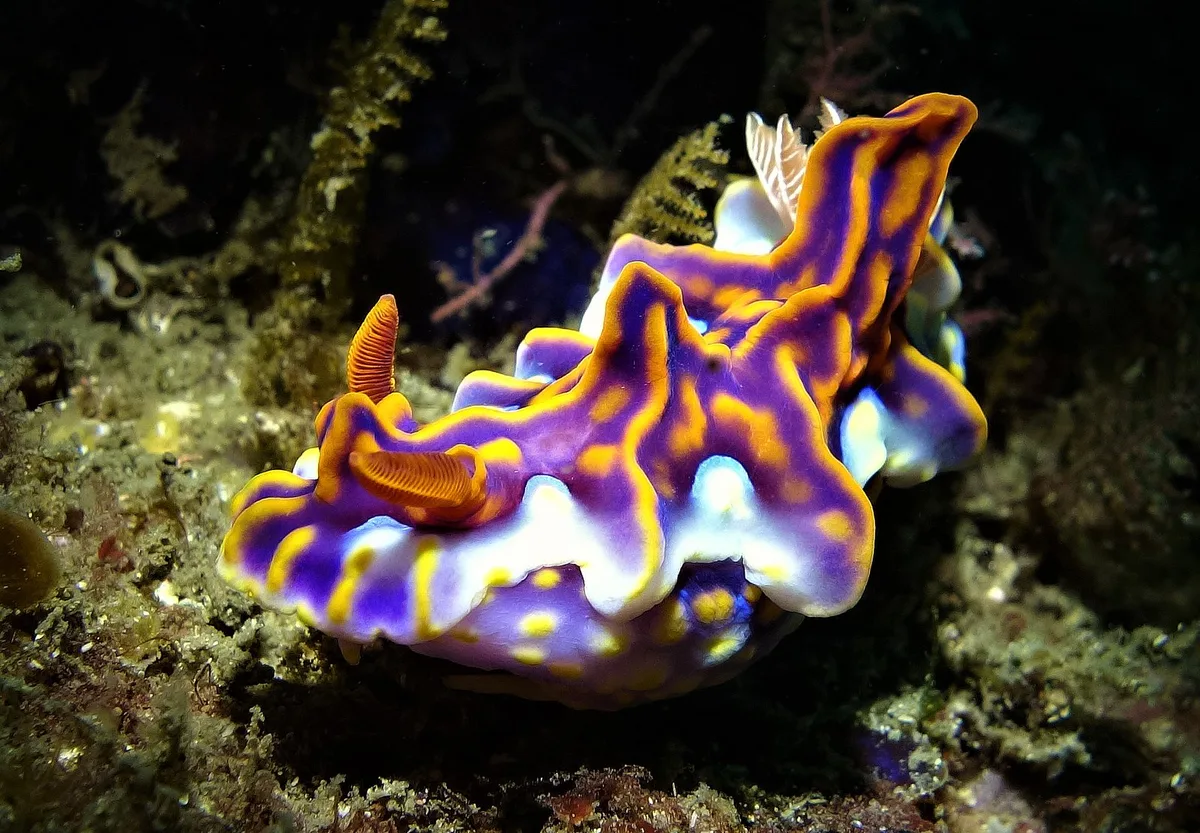
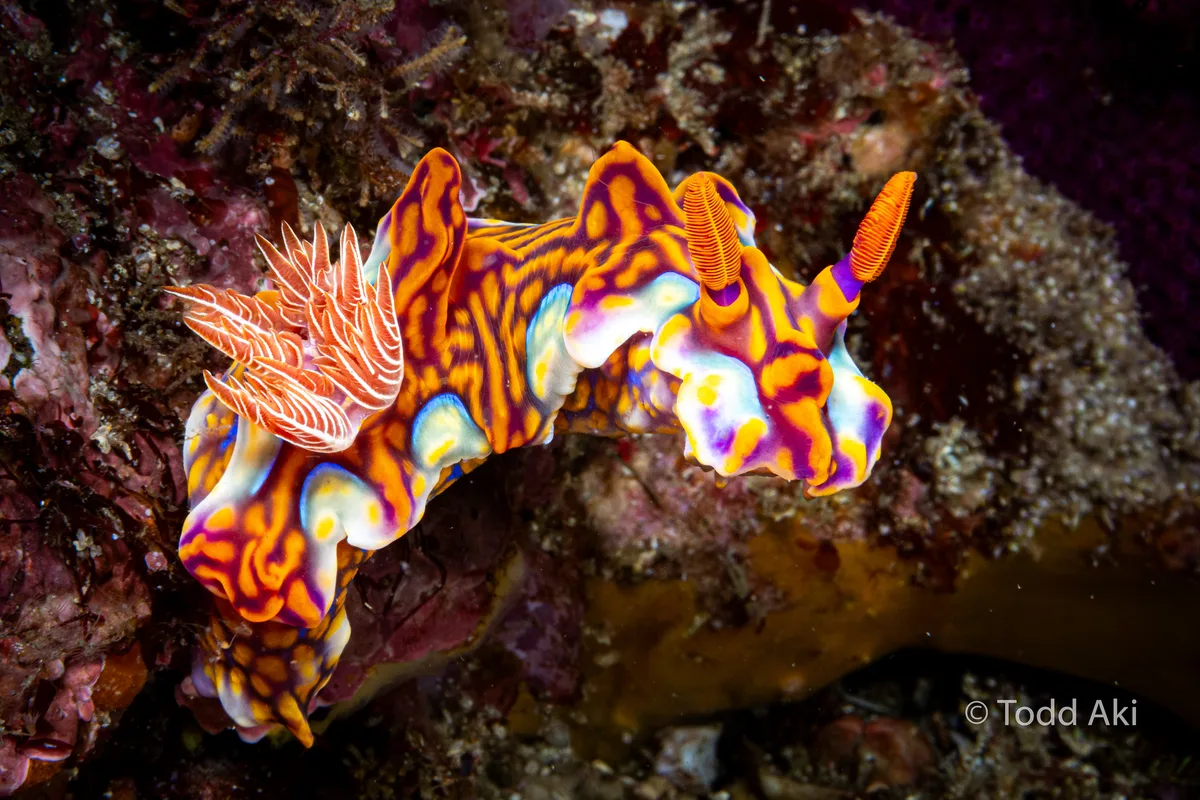
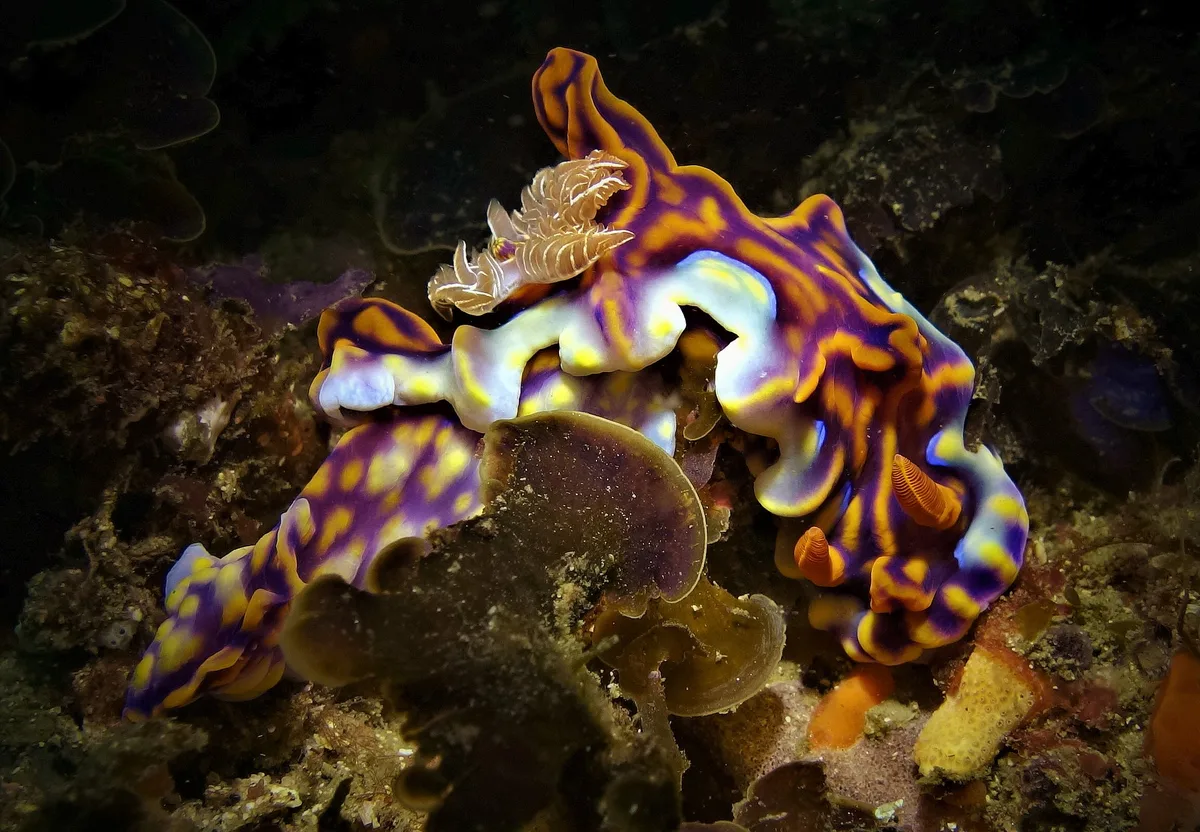
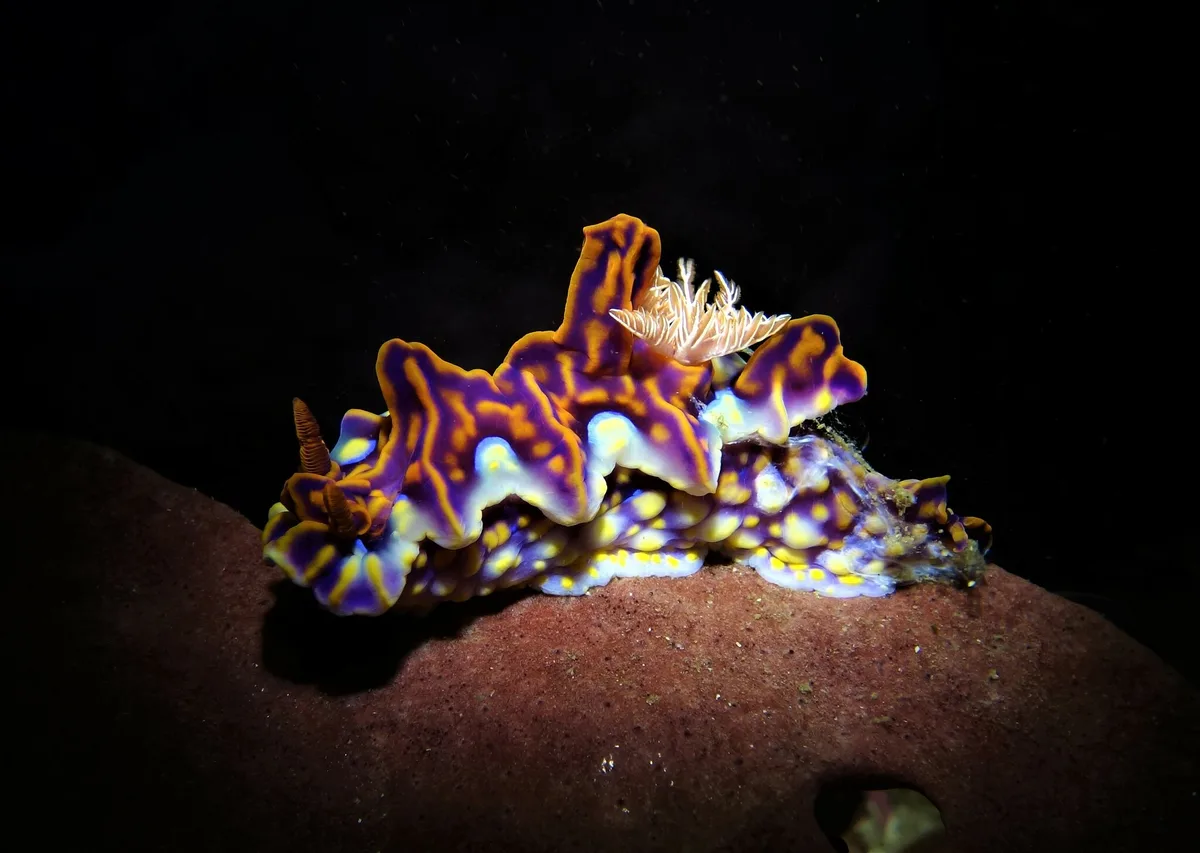
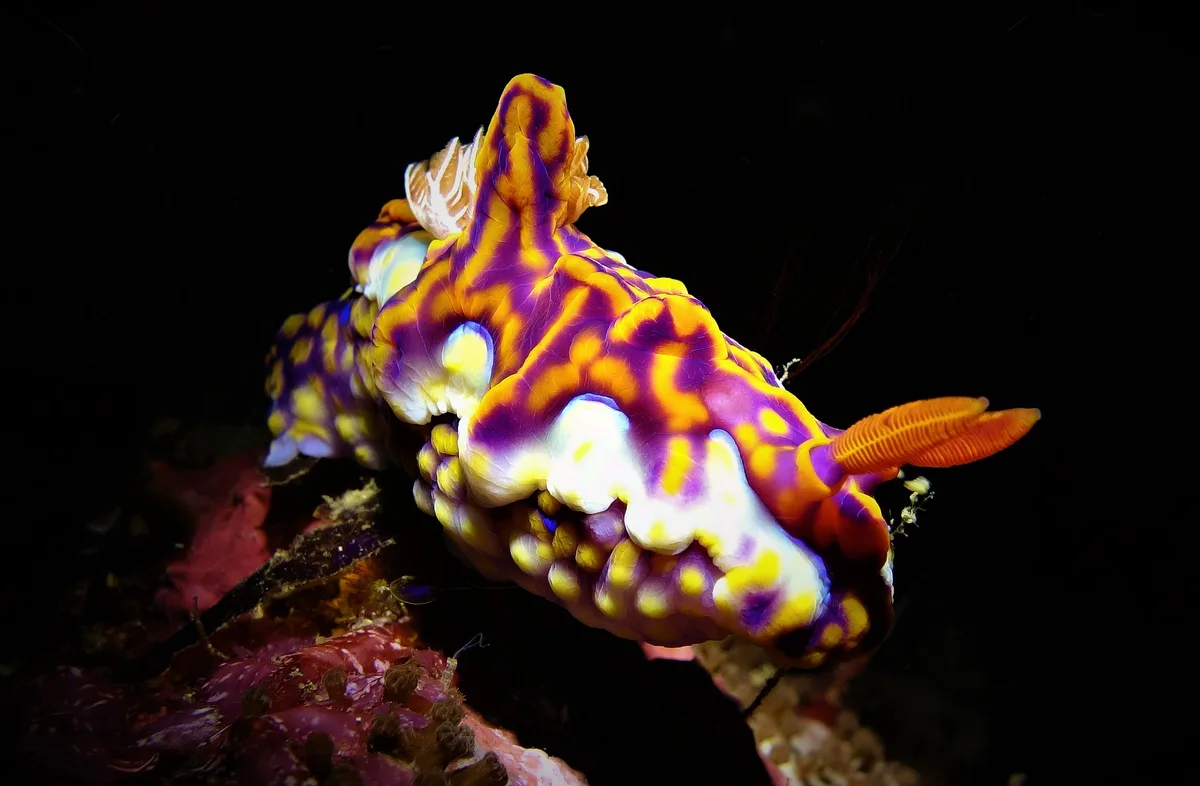
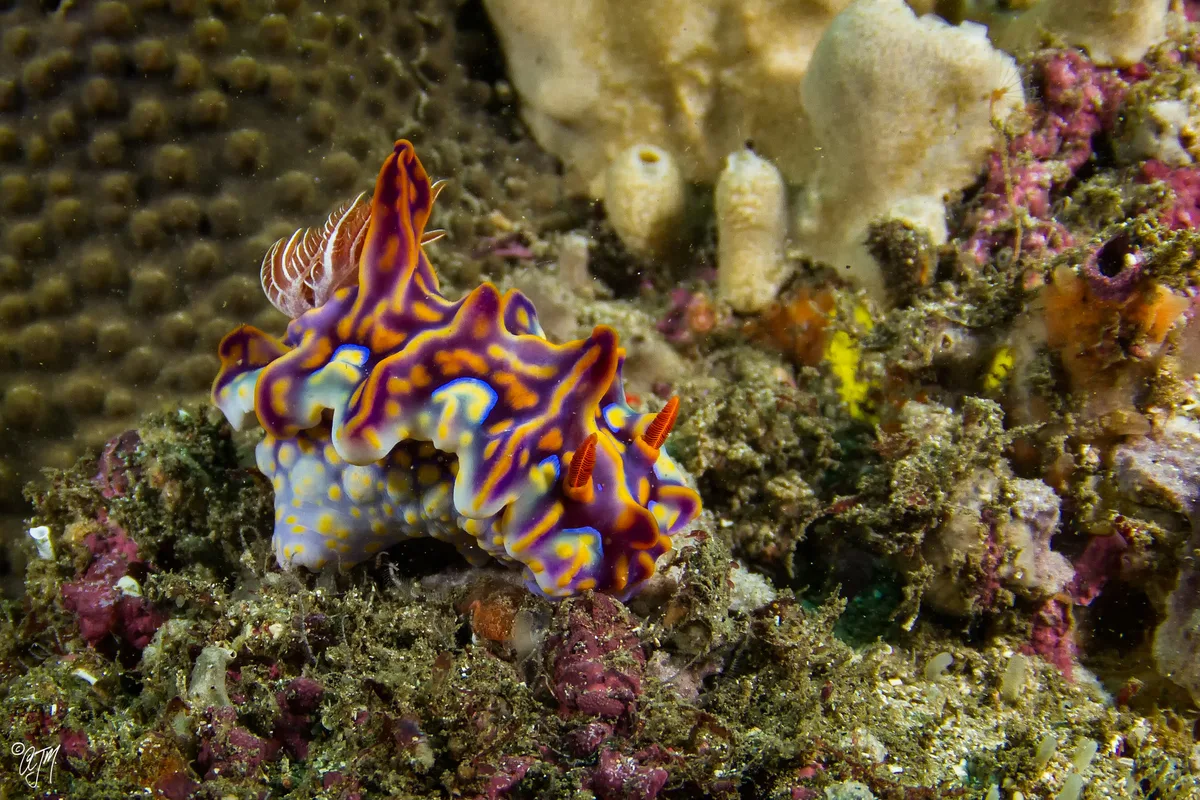
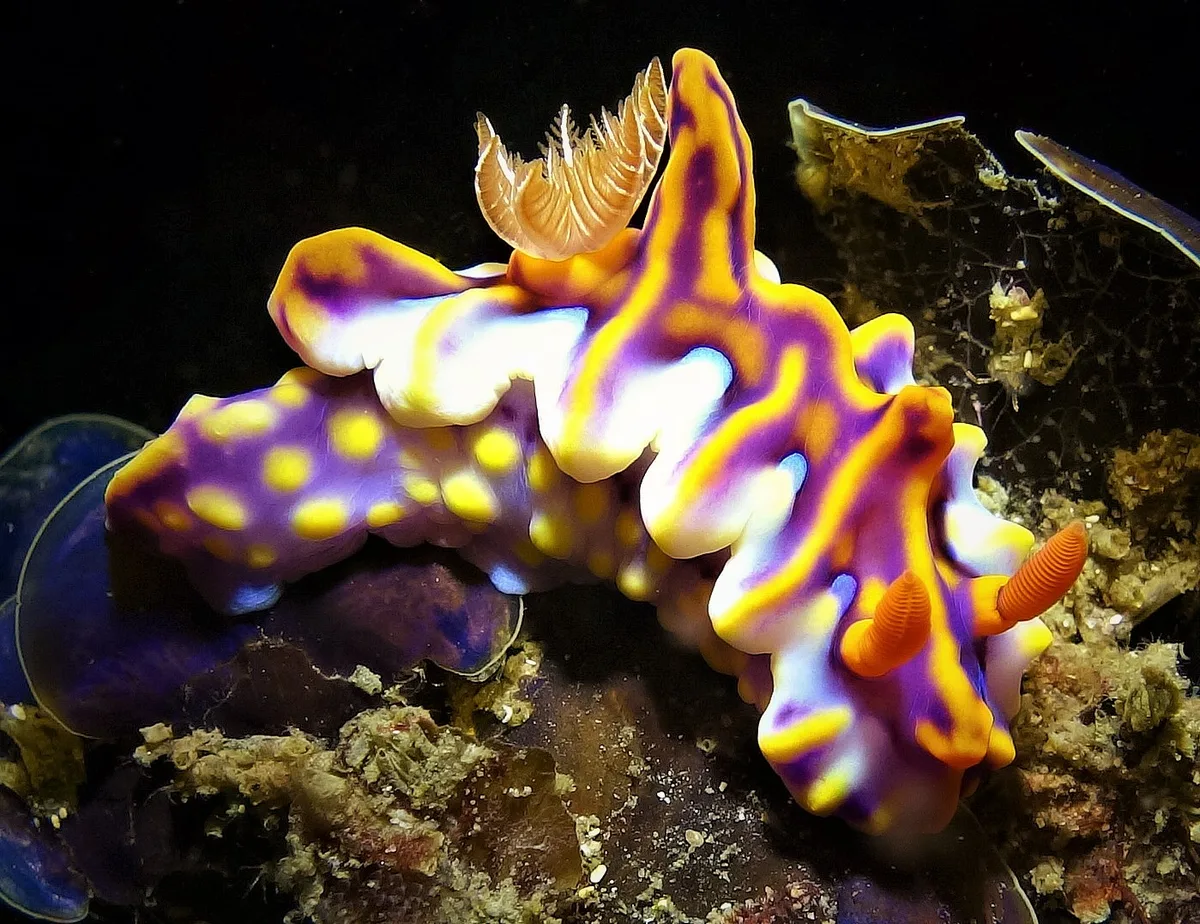
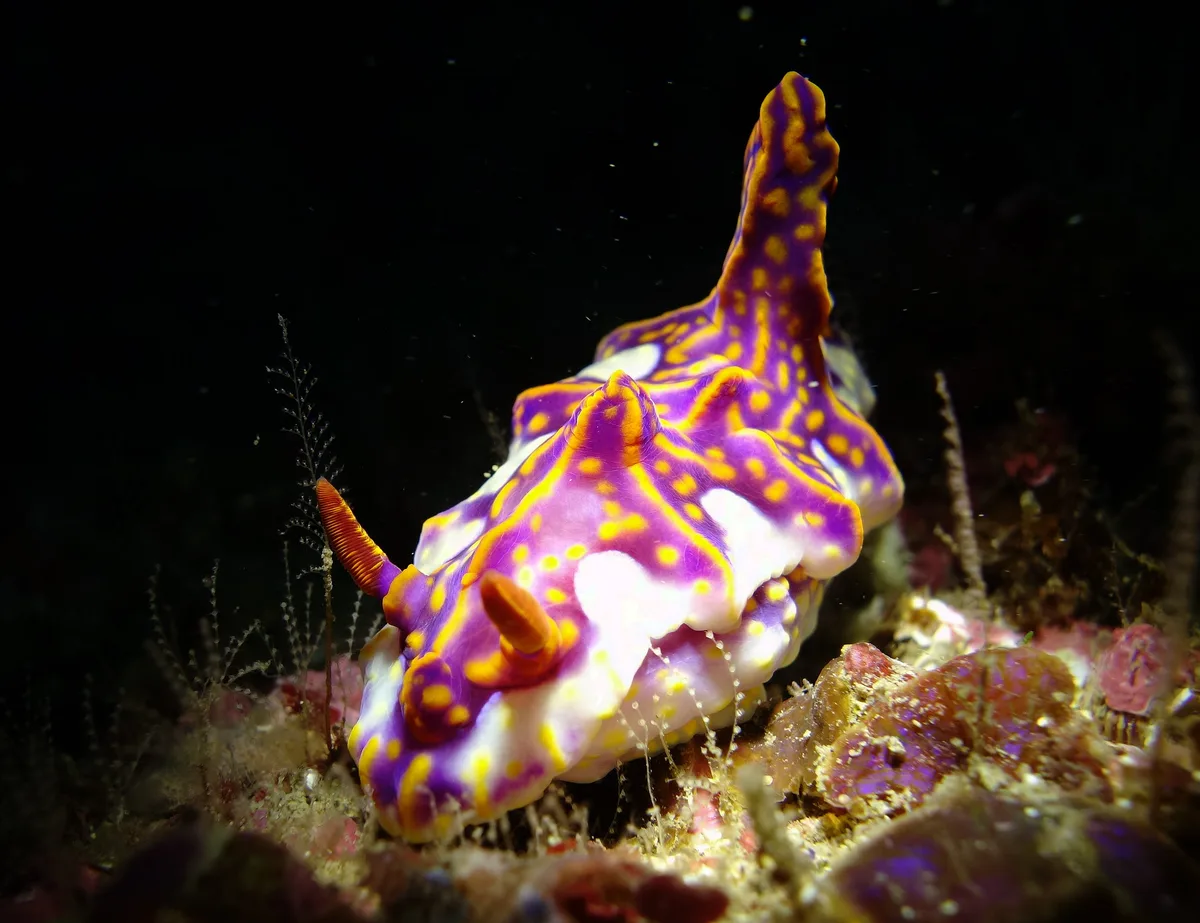
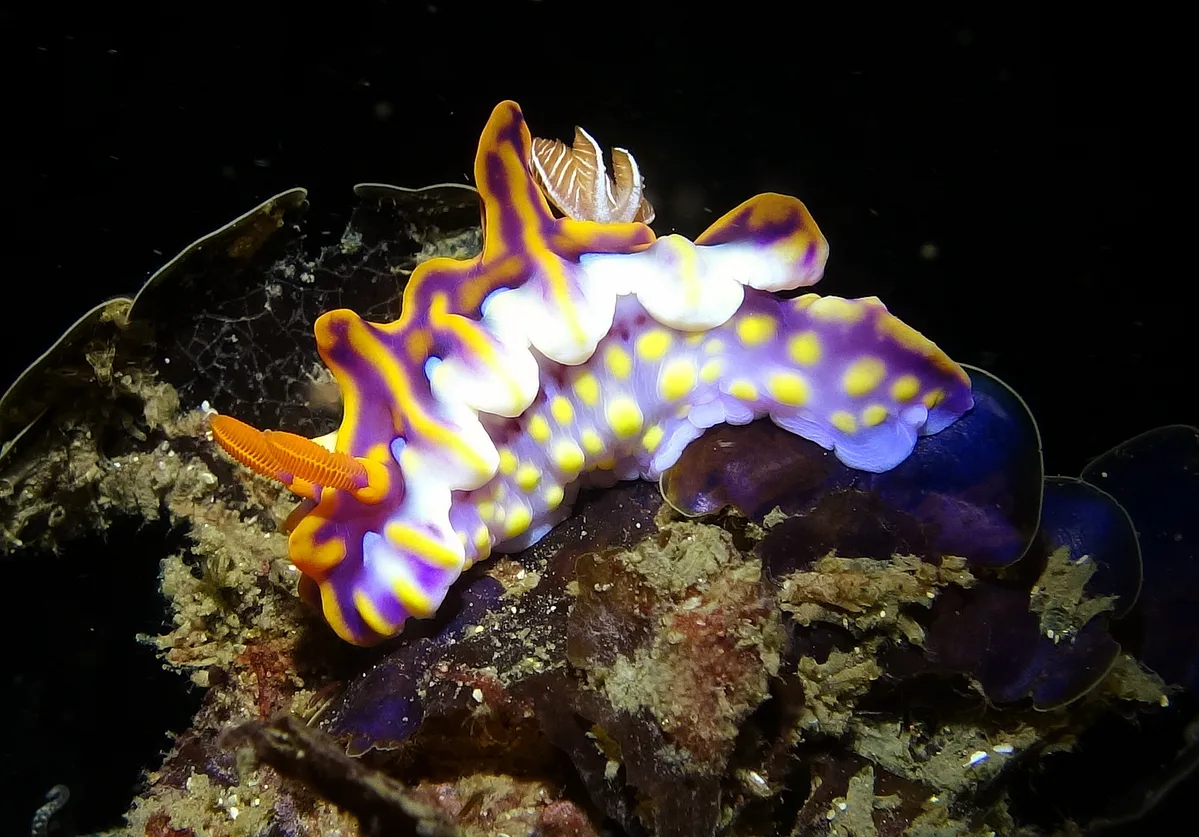
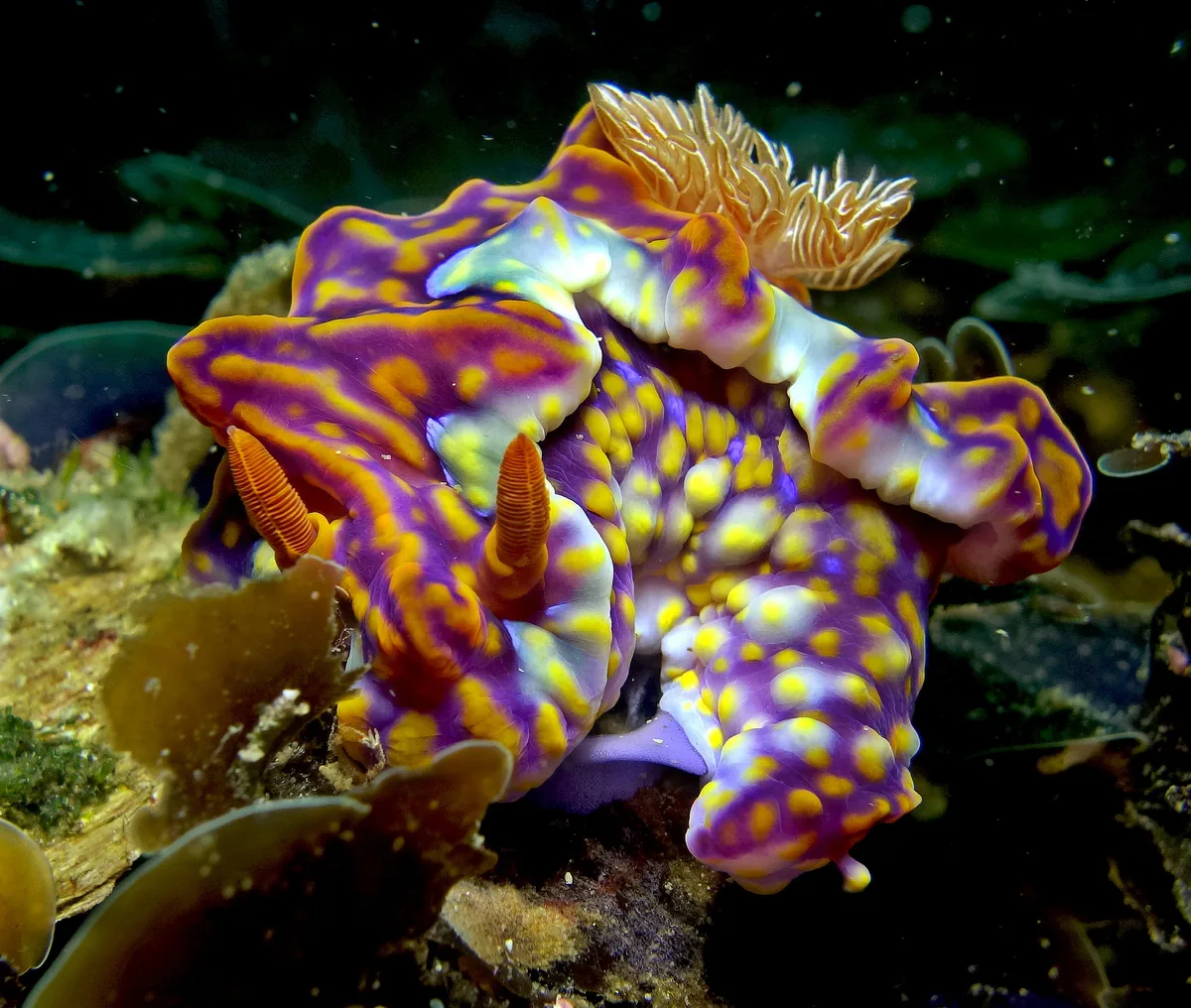
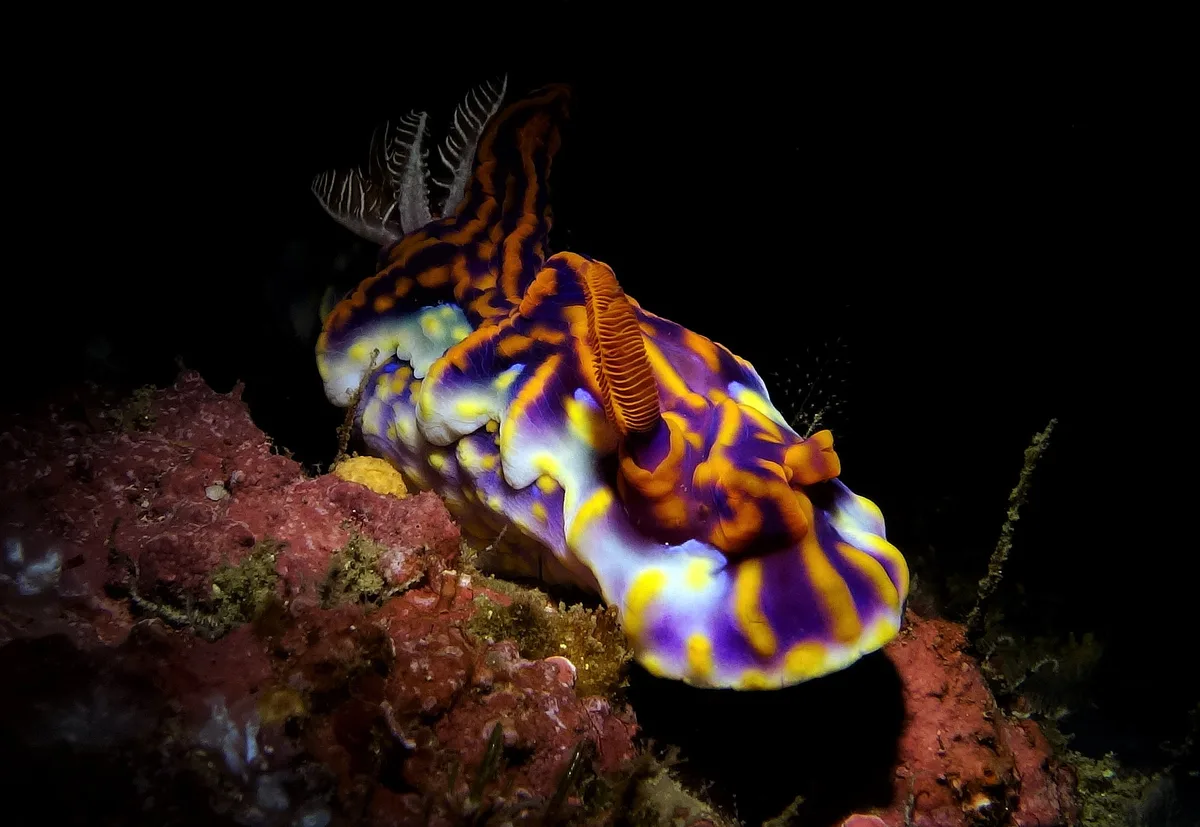
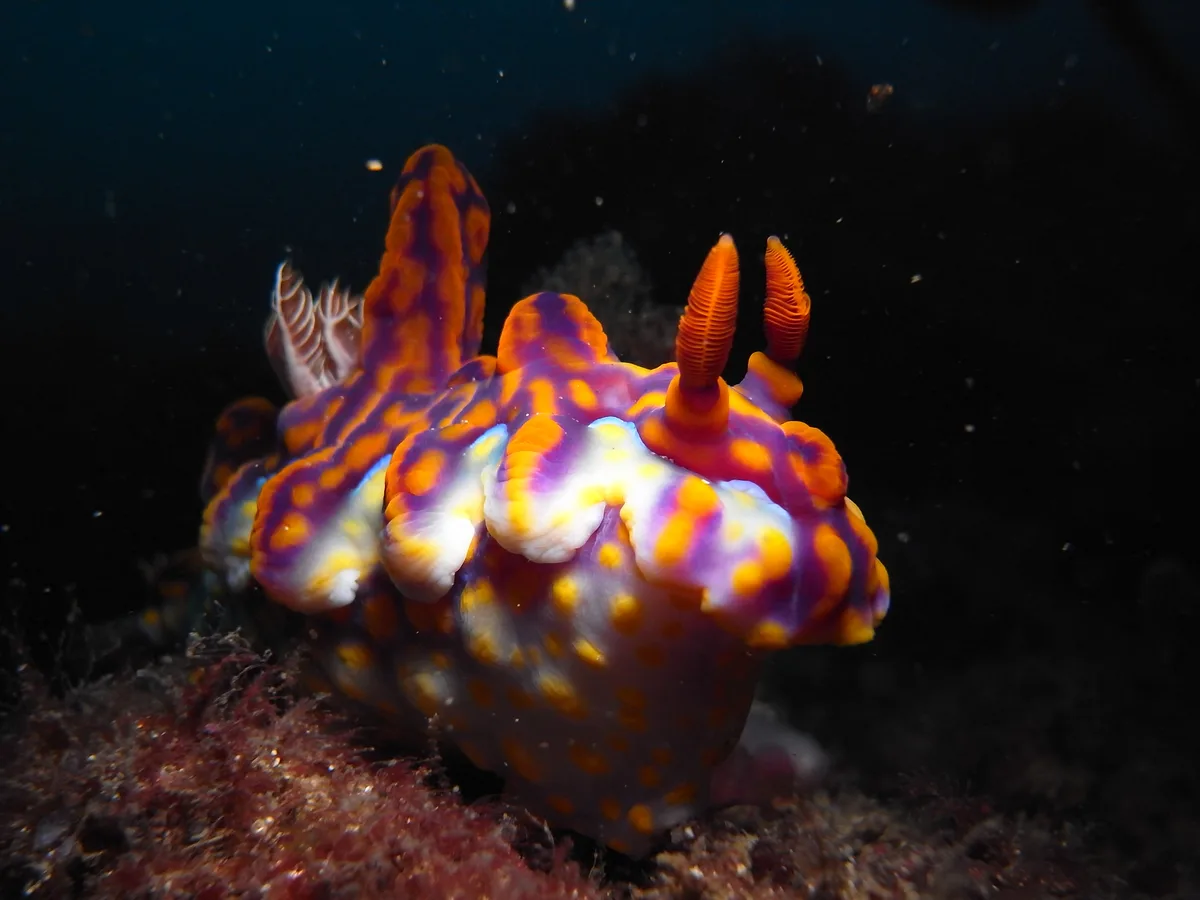
This does not look like it belongs in its family, and the family is the biggest reason to look at it.
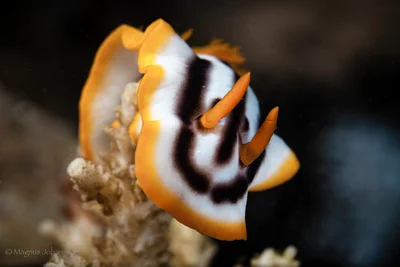
Chromodorids are the flat, smooth, brilliantly outlined slugs that fill most of this section: a low oval, a clean margin, a line of color around the rim. This one is a lumpy green wedge with a ridge running down the middle of its back, three red swellings raised along that ridge, and a mantle edge thrown into irregular lobes. Everything the family does with lines it does with three dimensions instead.
The effect is not decoration. A green, ridged, knobbed animal seven centimeters (2.8 in) long, sitting on a slope covered in encrusting sponge and algal turf, reads as one more lump of growth. The bright red is confined to the raised parts and to the rhinophores and gills, so from a distance it registers as scattered specks rather than an outline, and the slug can afford to feed in daylight in the open.
Underneath the shape it is a normal chromodorid in the way that matters. It eats sponges and it takes their chemistry with it, holding the compounds in the mantle so that the animal is genuinely unpleasant to bite rather than merely conspicuous.
The last thing to know is how unlikely a find it is here. Most records of this species come from 🇦🇺 Australia and 🇮🇩 Indonesia, and the 🌊 Red Sea sits at the far western edge of a range that thins out badly before it gets here. A handful of sightings on this coast, against hundreds in the Coral Triangle: if you find one, photograph it properly.
- green body raised into a ridge down the middle with three bright red swellings on it
- rhinophores and gills red, standing out against the green
- mantle edge thrown into lobes rather than running smooth
- solid and lumpy where its relatives are flat and smooth