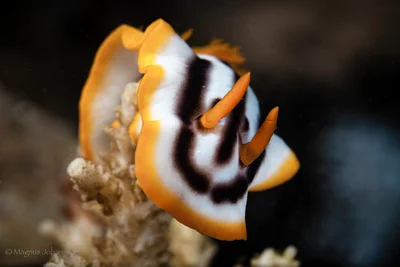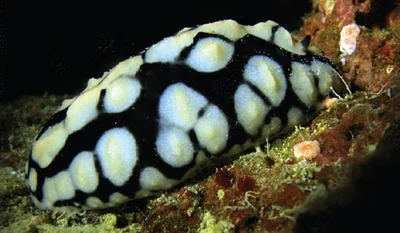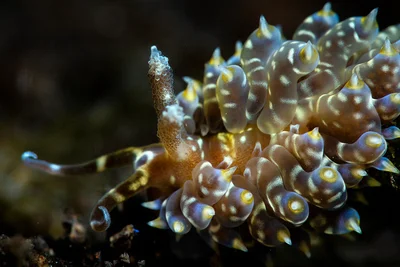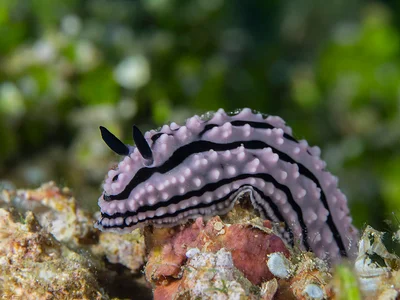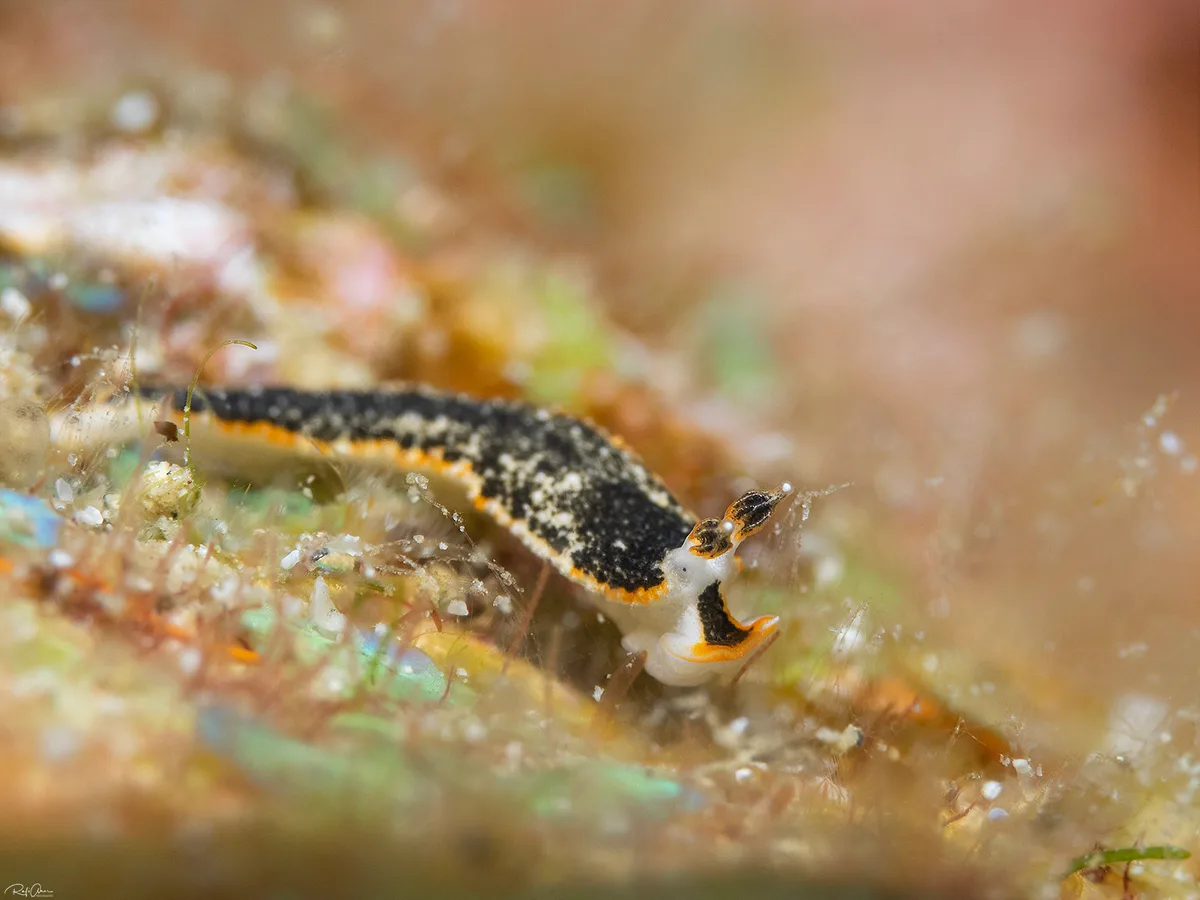
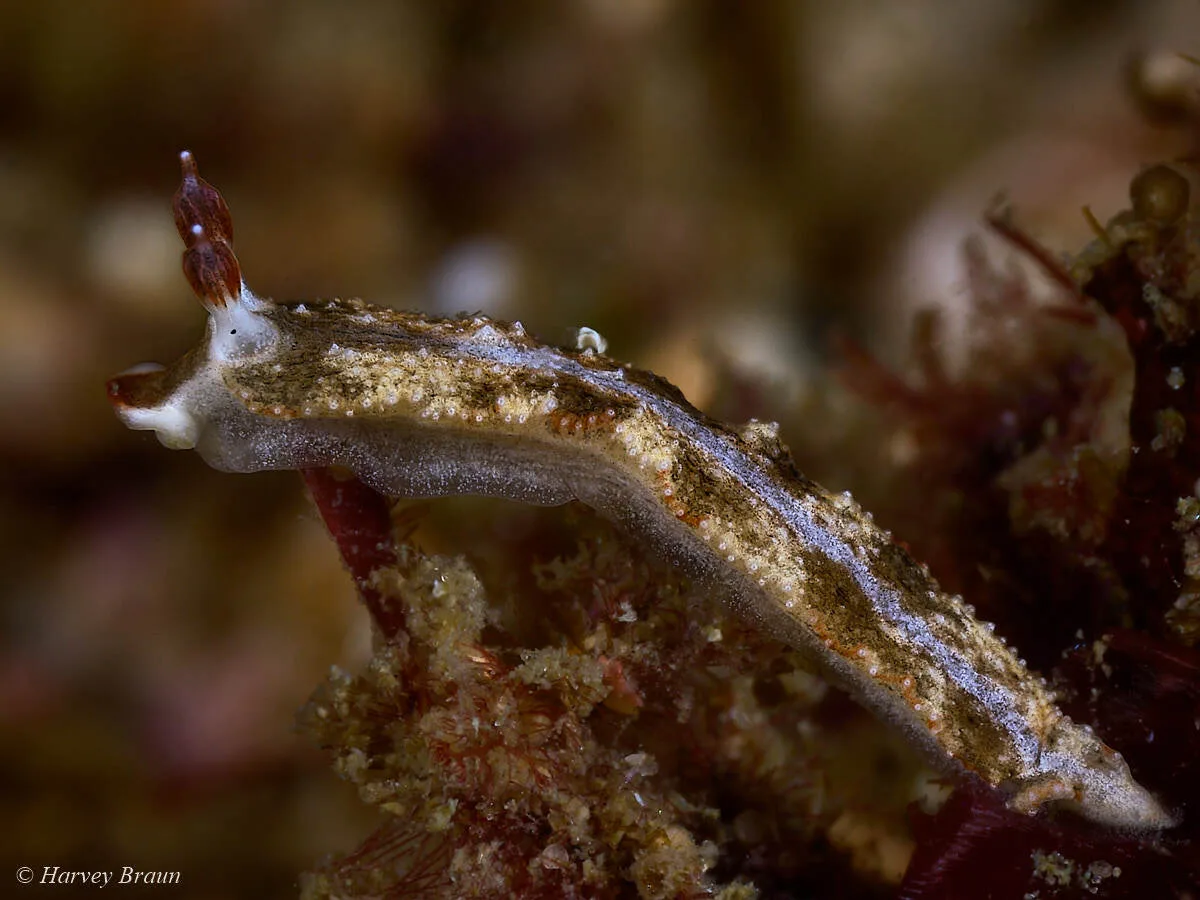
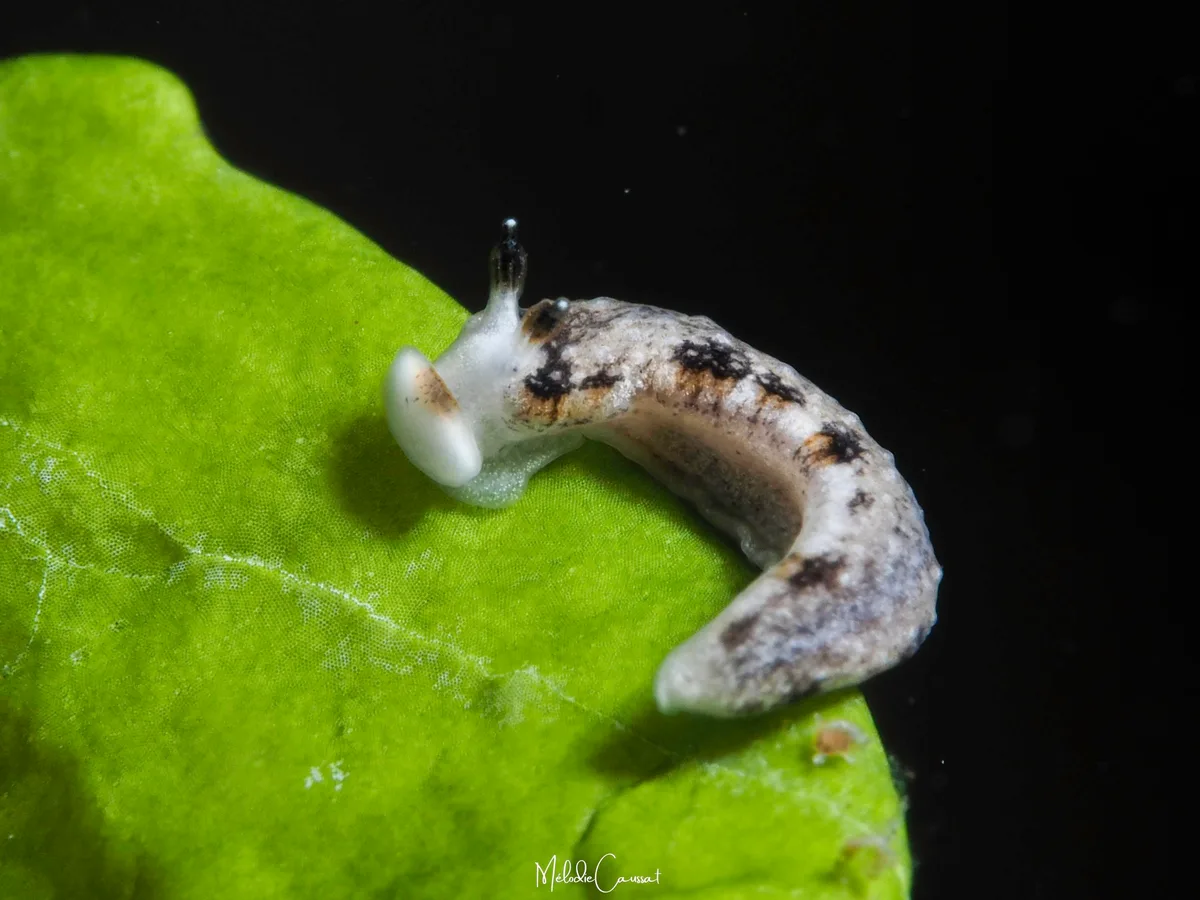
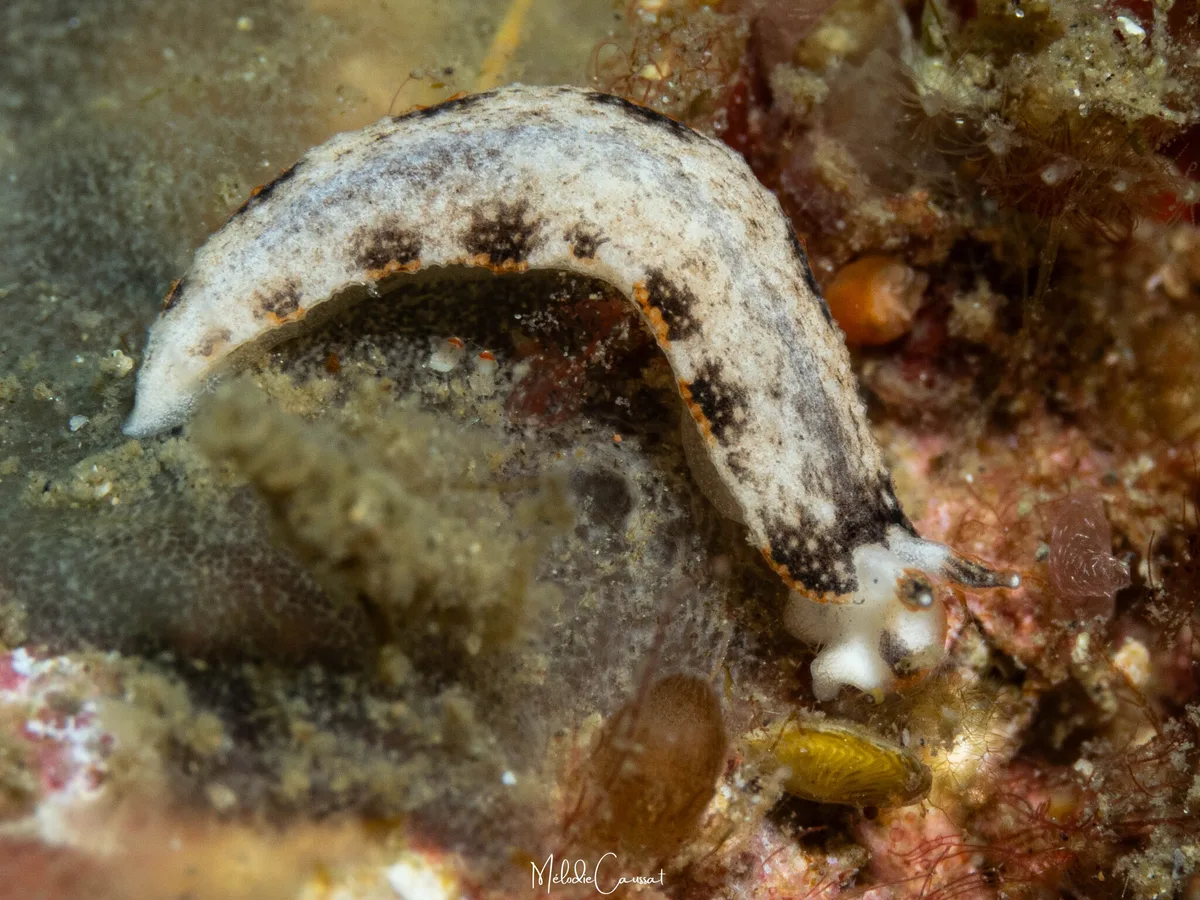
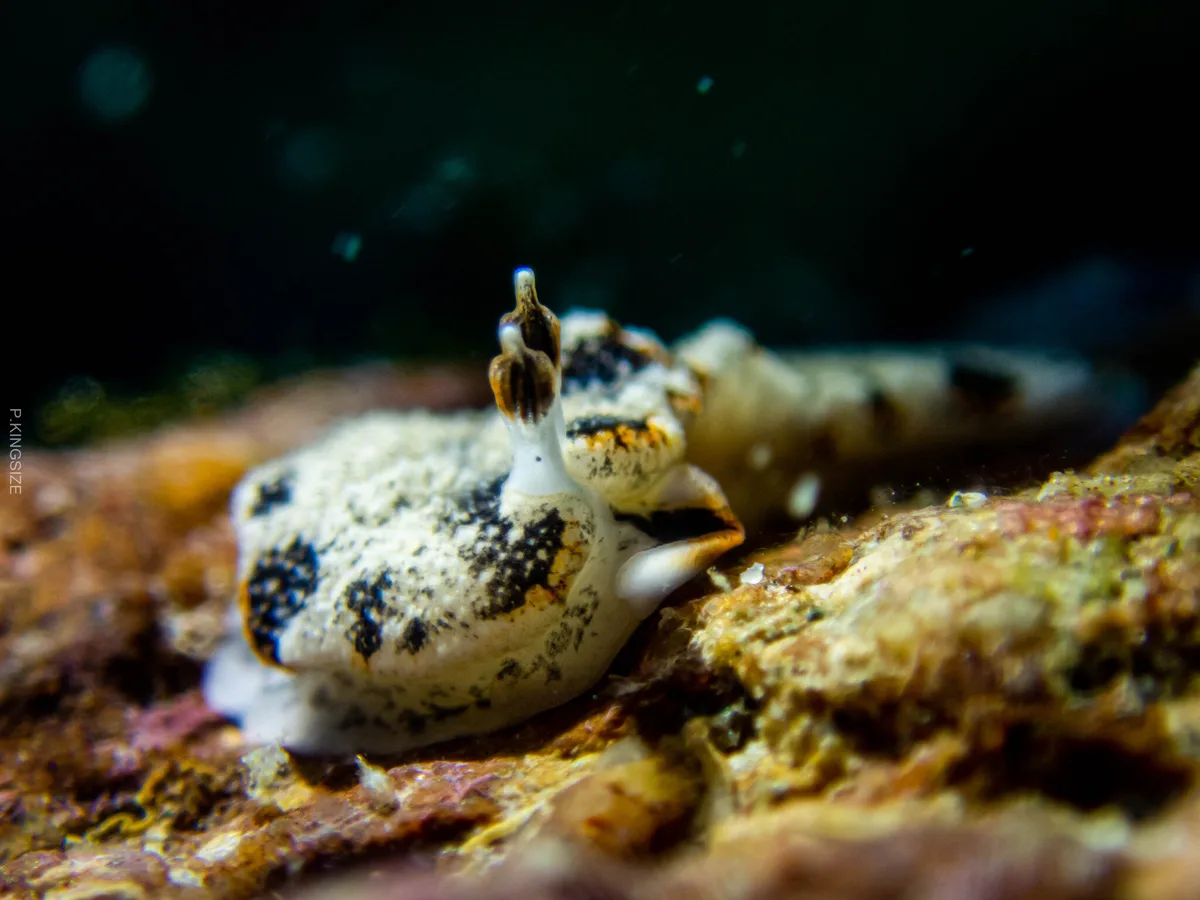
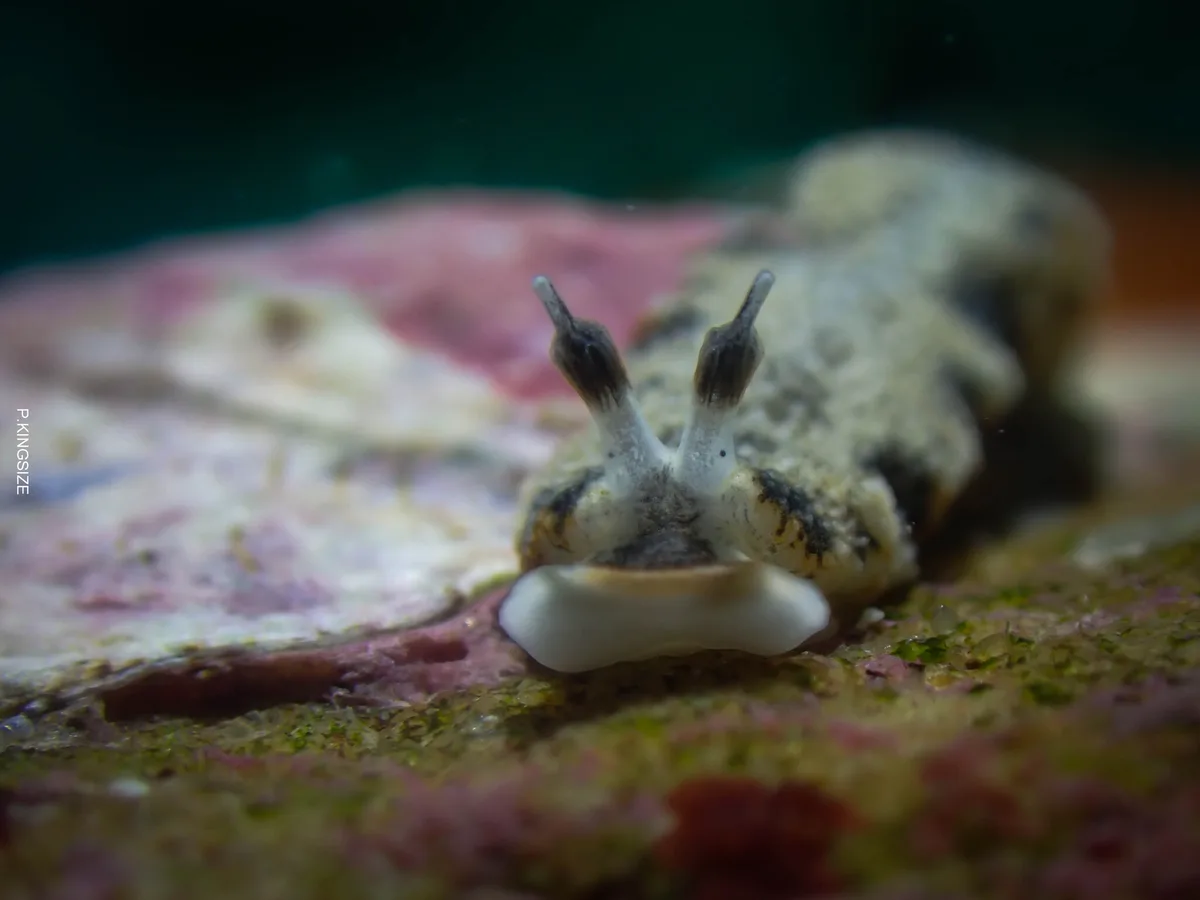
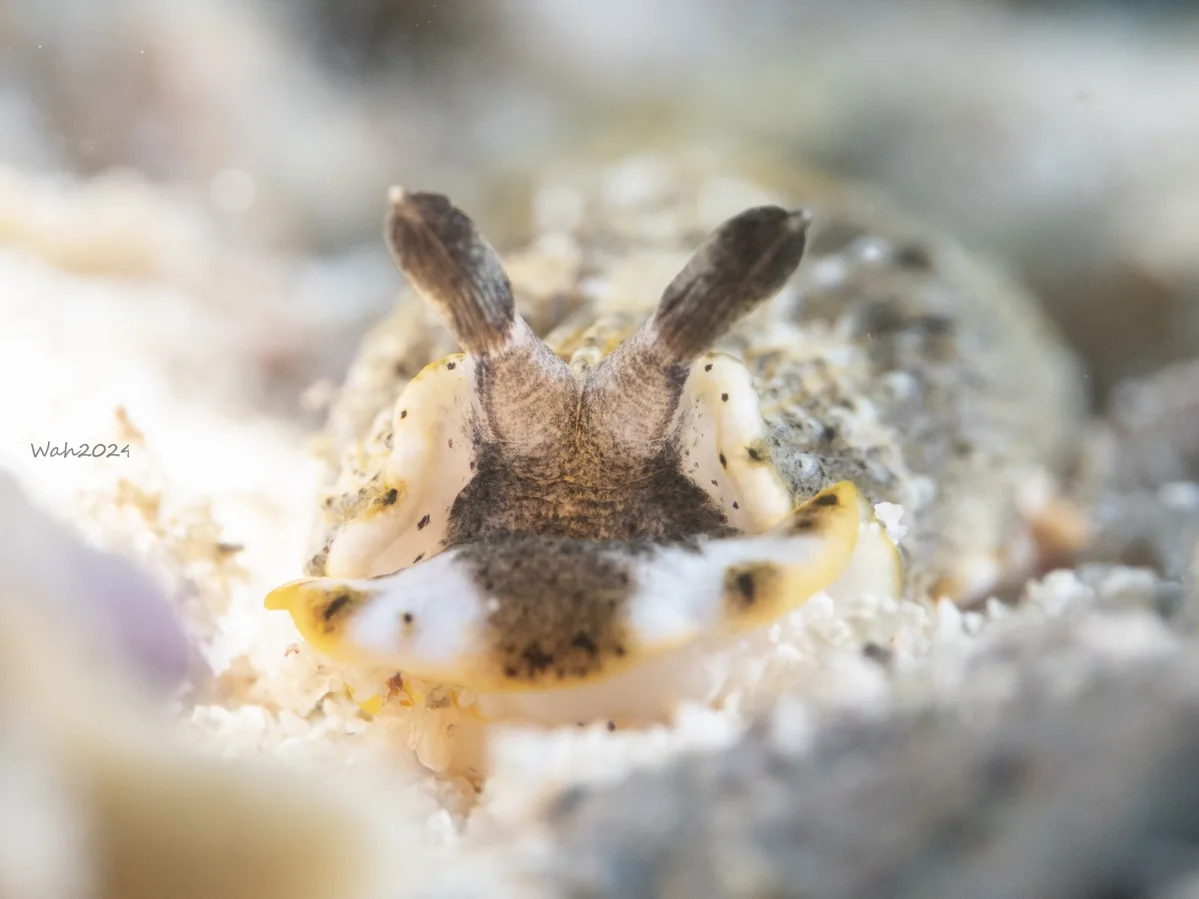
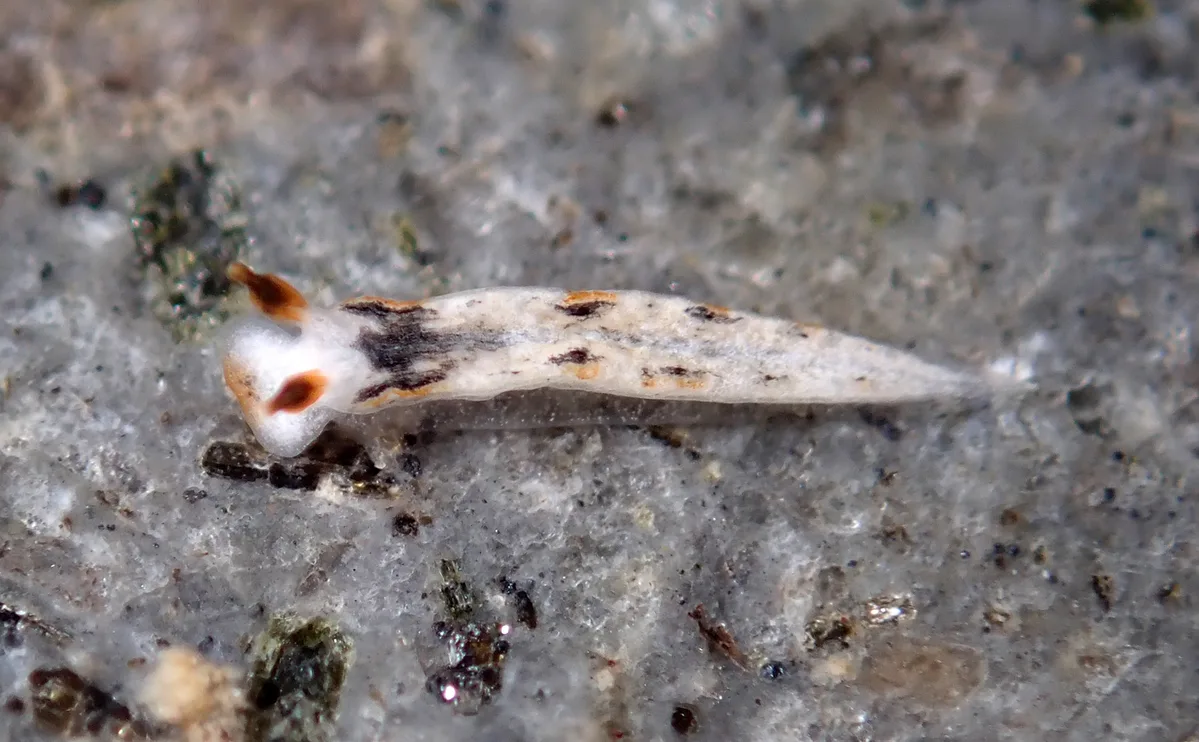
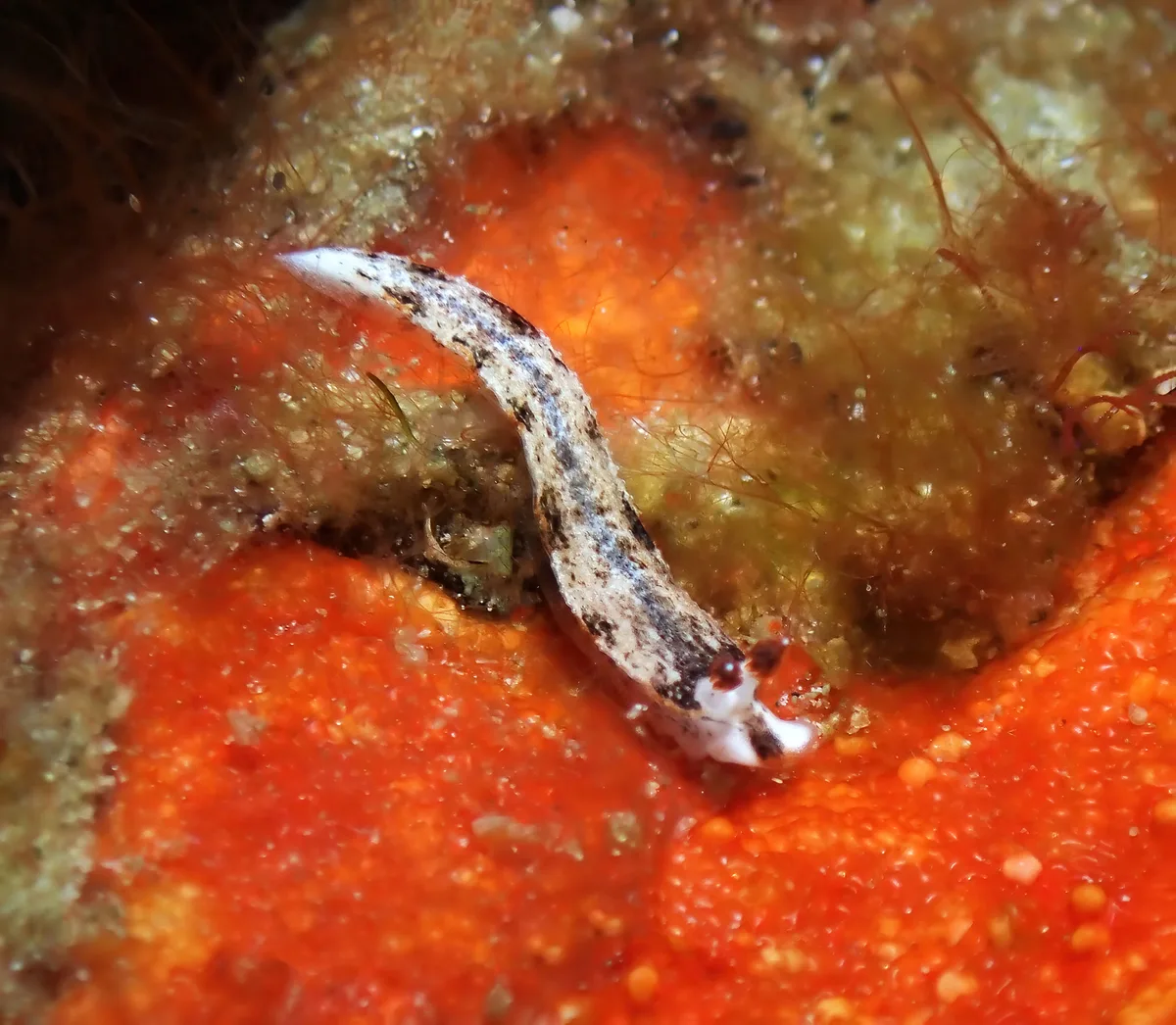
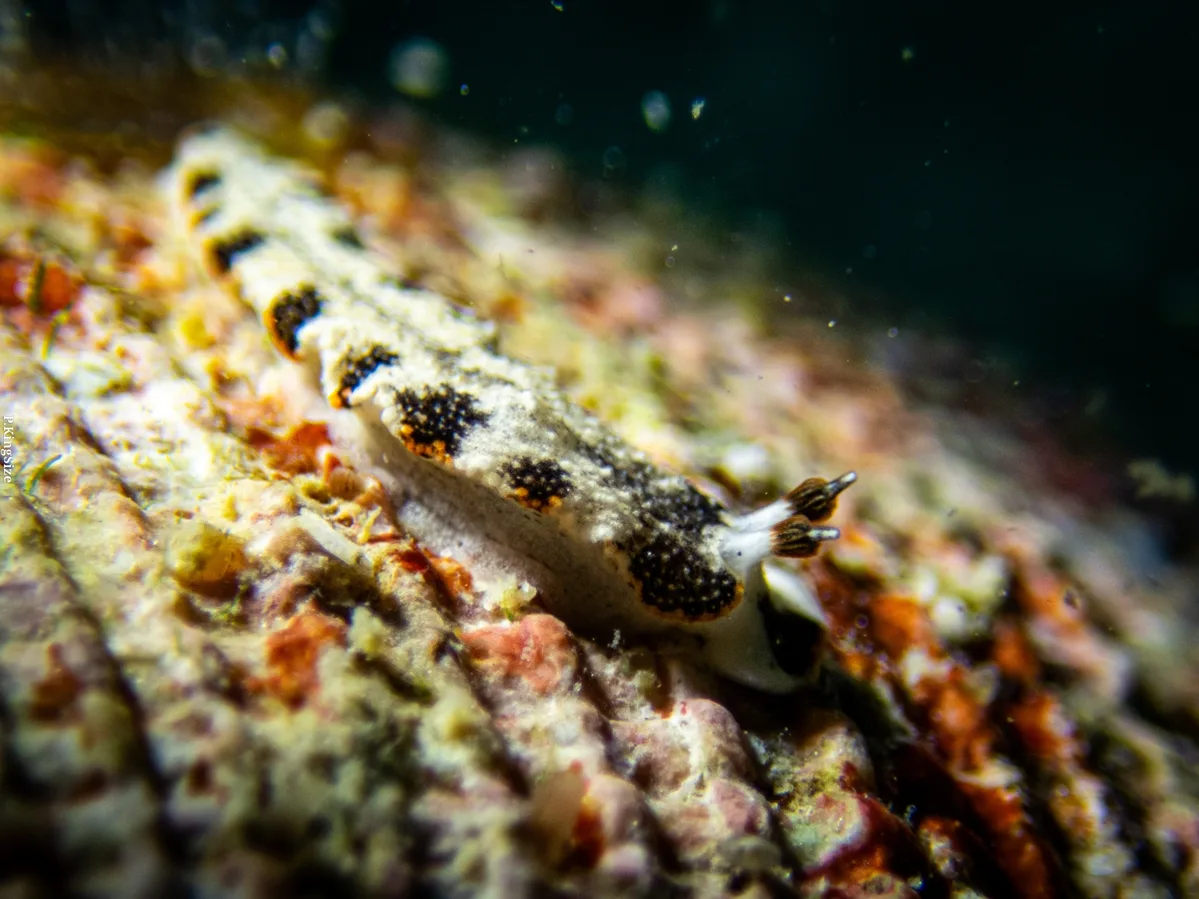
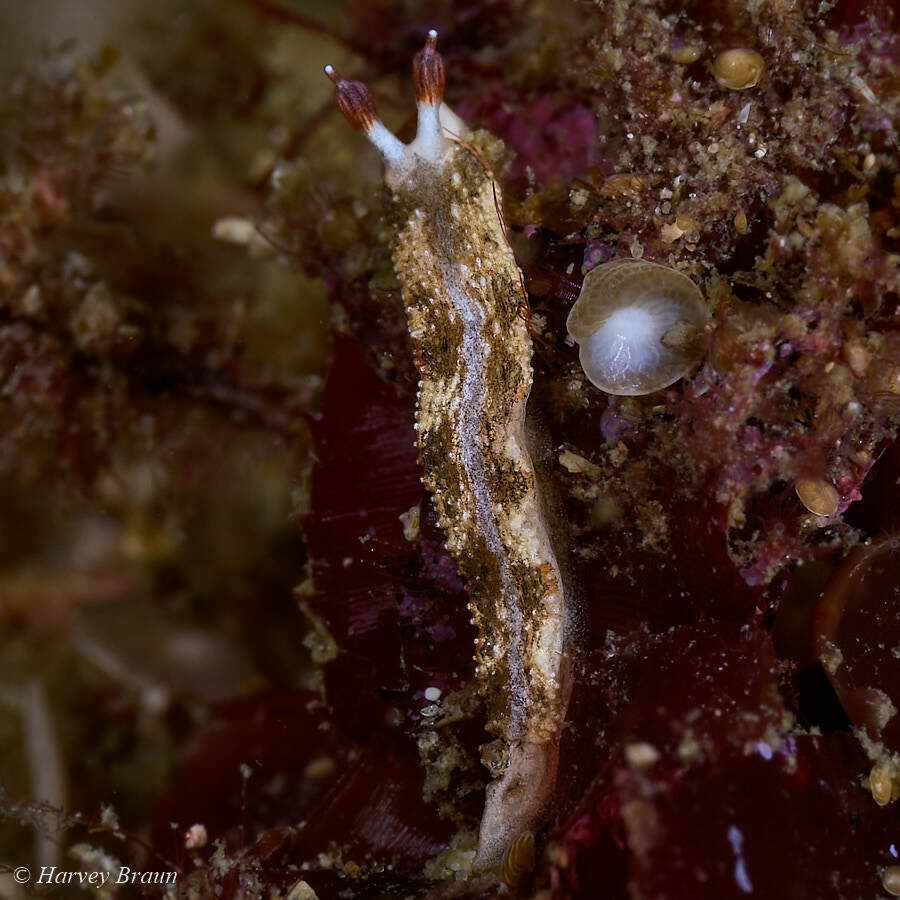
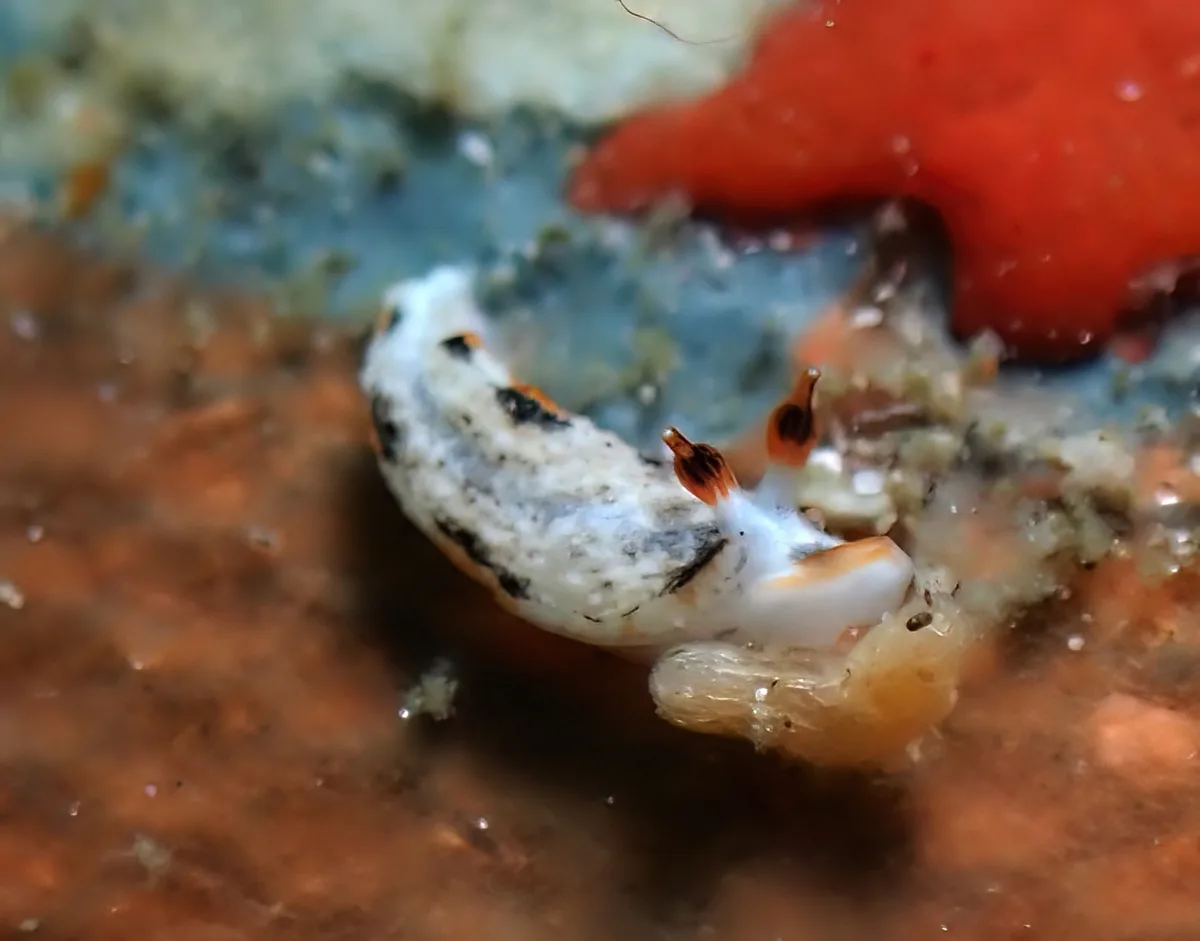
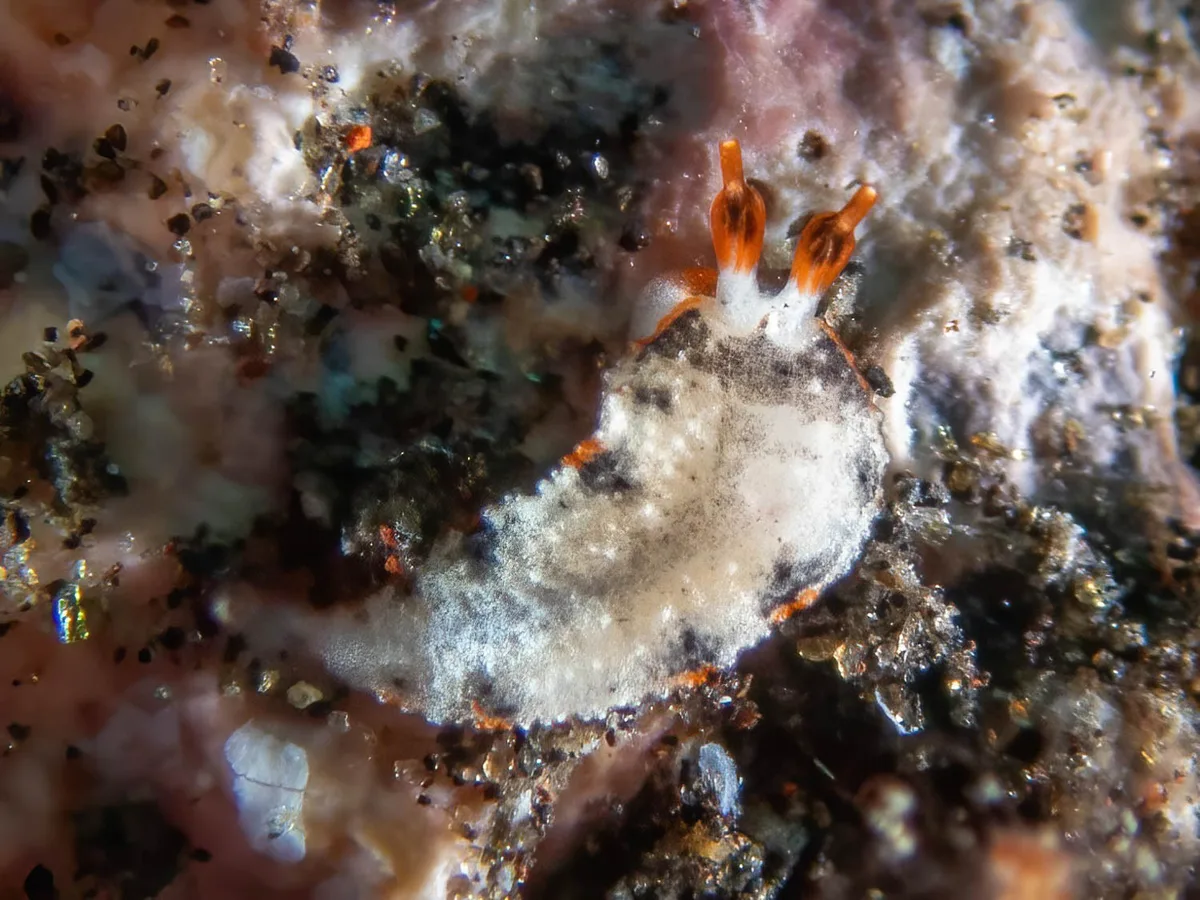
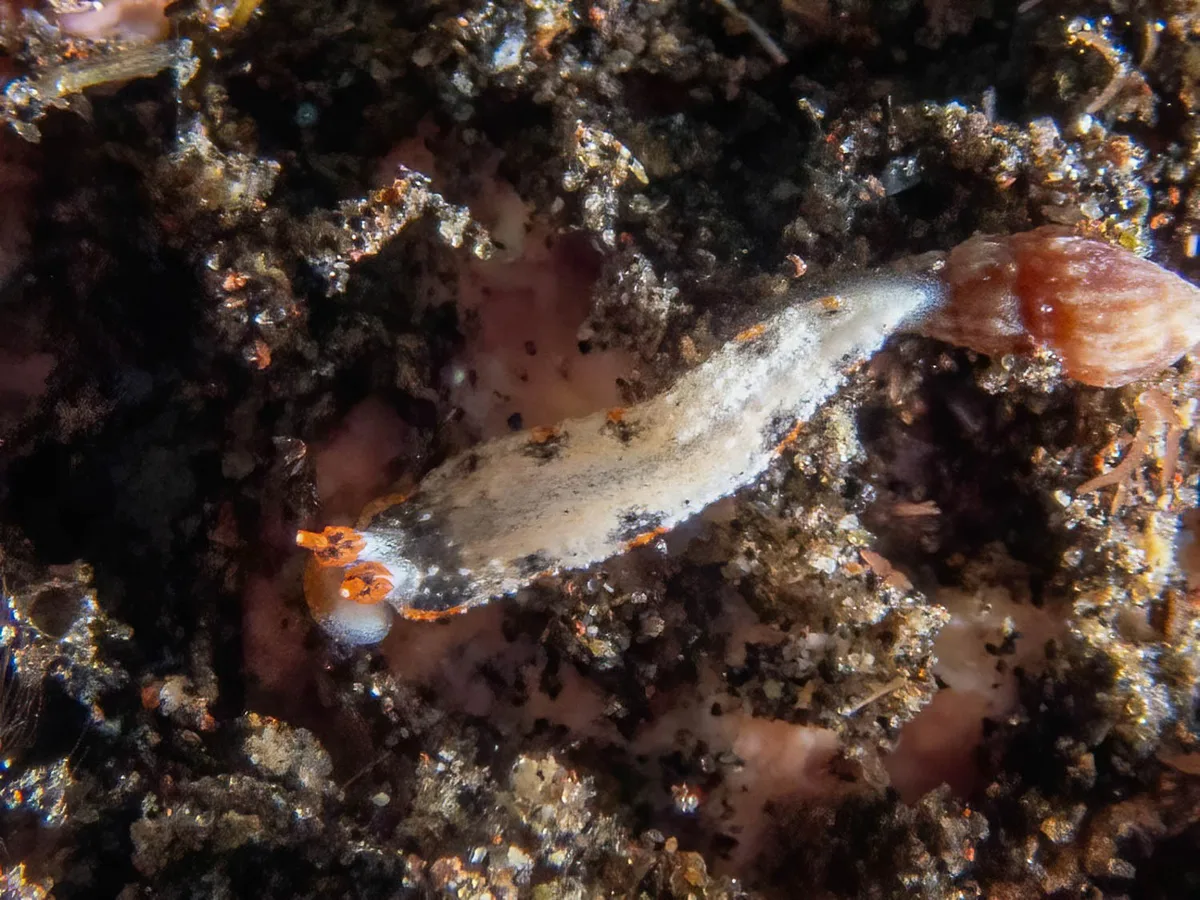
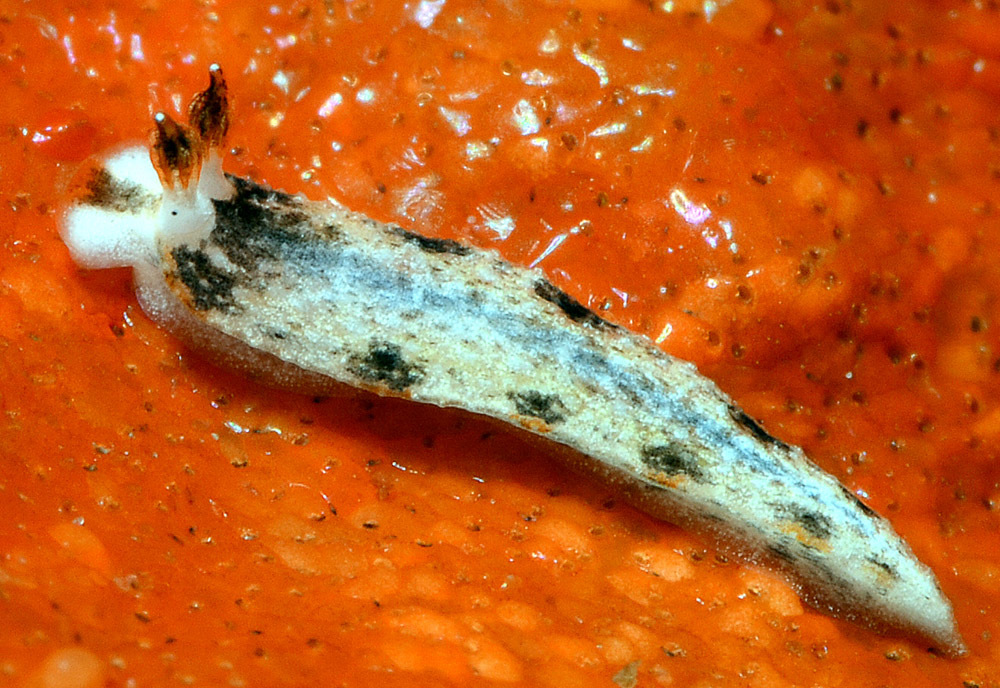
The mark that names this species is not on its back. It is a single broad black bar lying across the oral veil, the flap of tissue the animal pushes ahead of itself as it moves, and on a twelve-millimeter (0.5 in) body that one stroke is the whole identification.
The veil is worth understanding, because it is doing the work in this family. Arminids have no rhinophore-led search the way a dorid does; they plough forward across sand with this broad sensory flap held out in front, reading the bottom chemically as they go, and what they are looking for are octocorals: soft corals and sea pens rooted in the sediment.
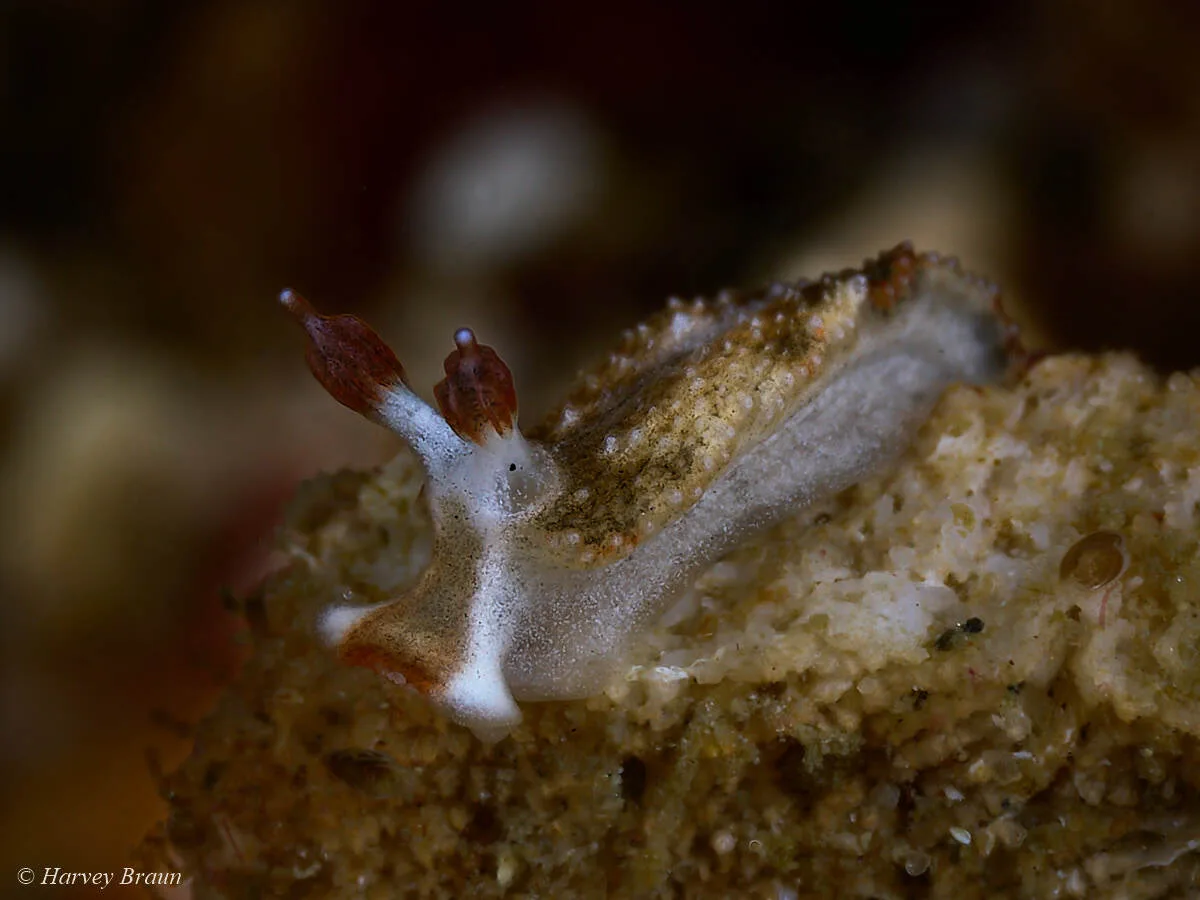
The body behind it is standard for the genus. Fine parallel ridges running lengthwise over a pale ground, and no gill plume anywhere, because arminids fold their breathing surfaces away underneath, into the groove between the mantle skirt and the foot along both sides.
Bergh named it fortunatus in 1888 and left no explanation, so whatever the luck referred to is gone. The animals themselves are recorded across the Indo-Pacific, with the great majority of photographs coming out of the 🇵🇭 Philippines.
- a single large black bar across the oral veil at the front
- the bar is the diagnosis and it is on the veil, not on the back
- longitudinal ridges over a pale body, as in the whole genus
- twelve millimeters