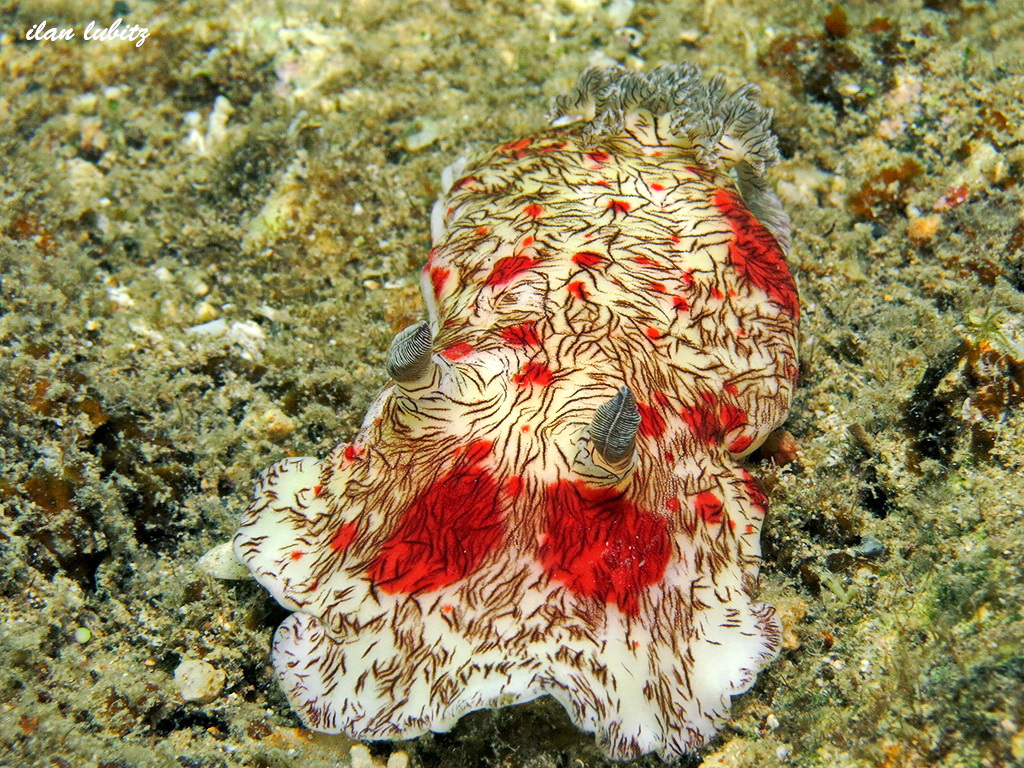
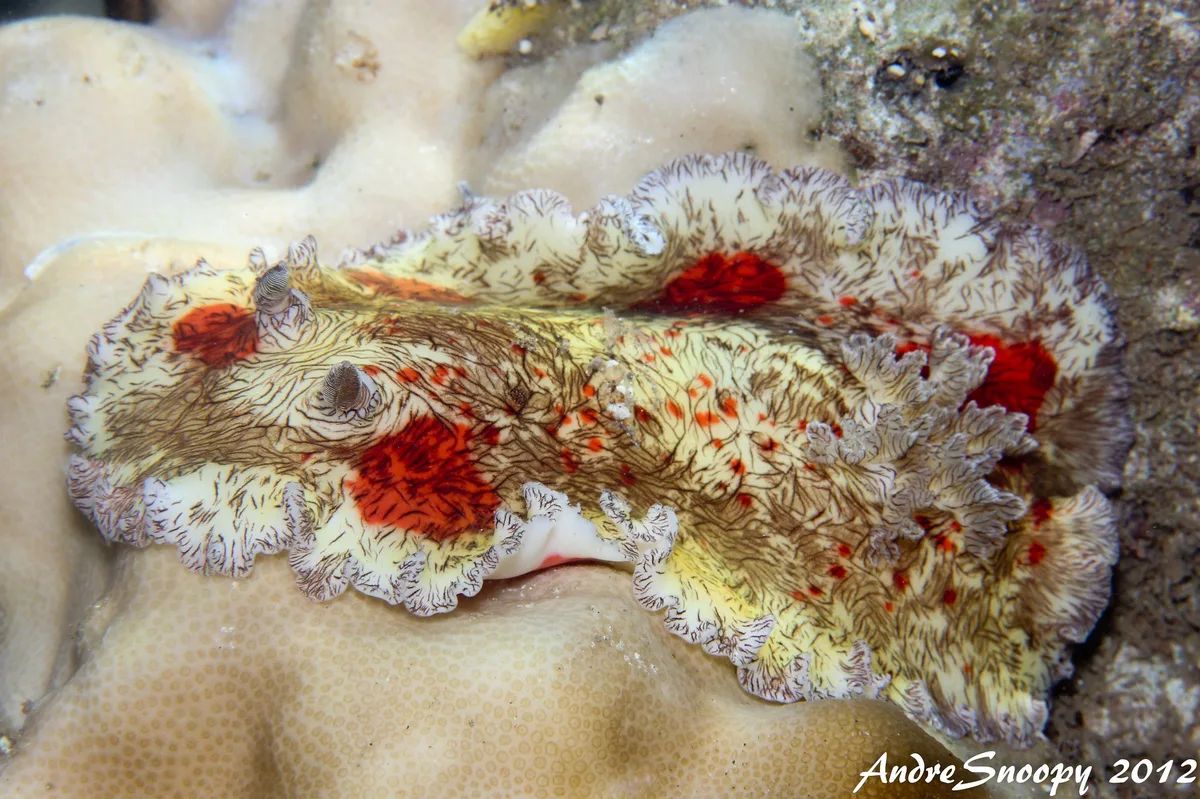
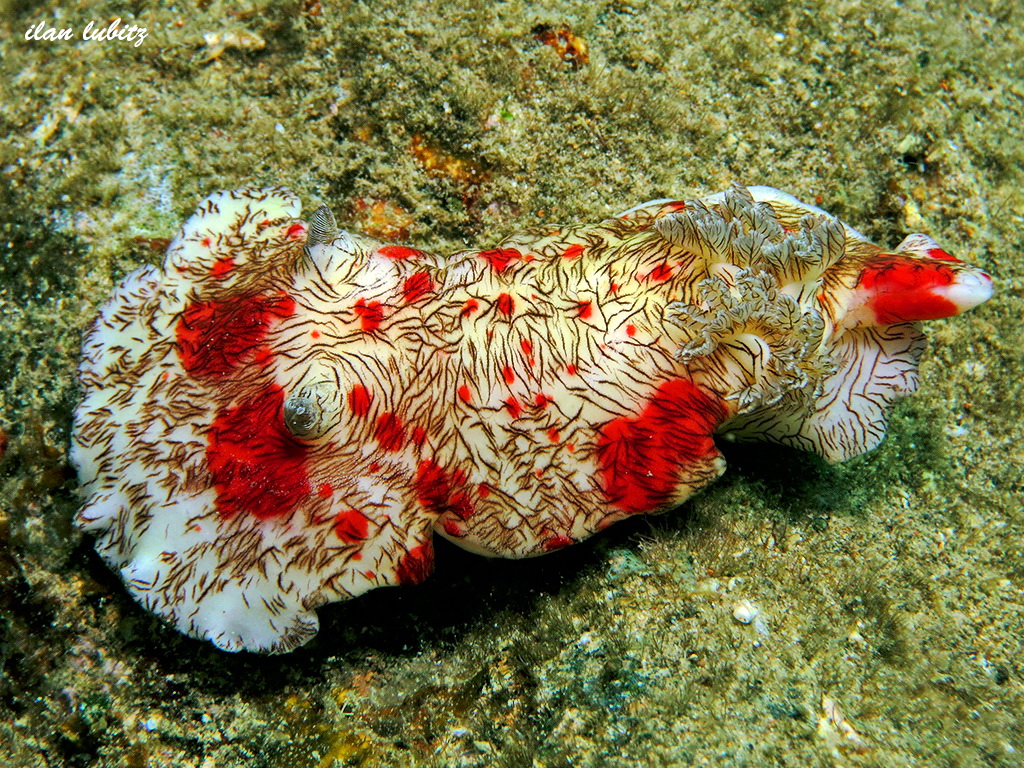
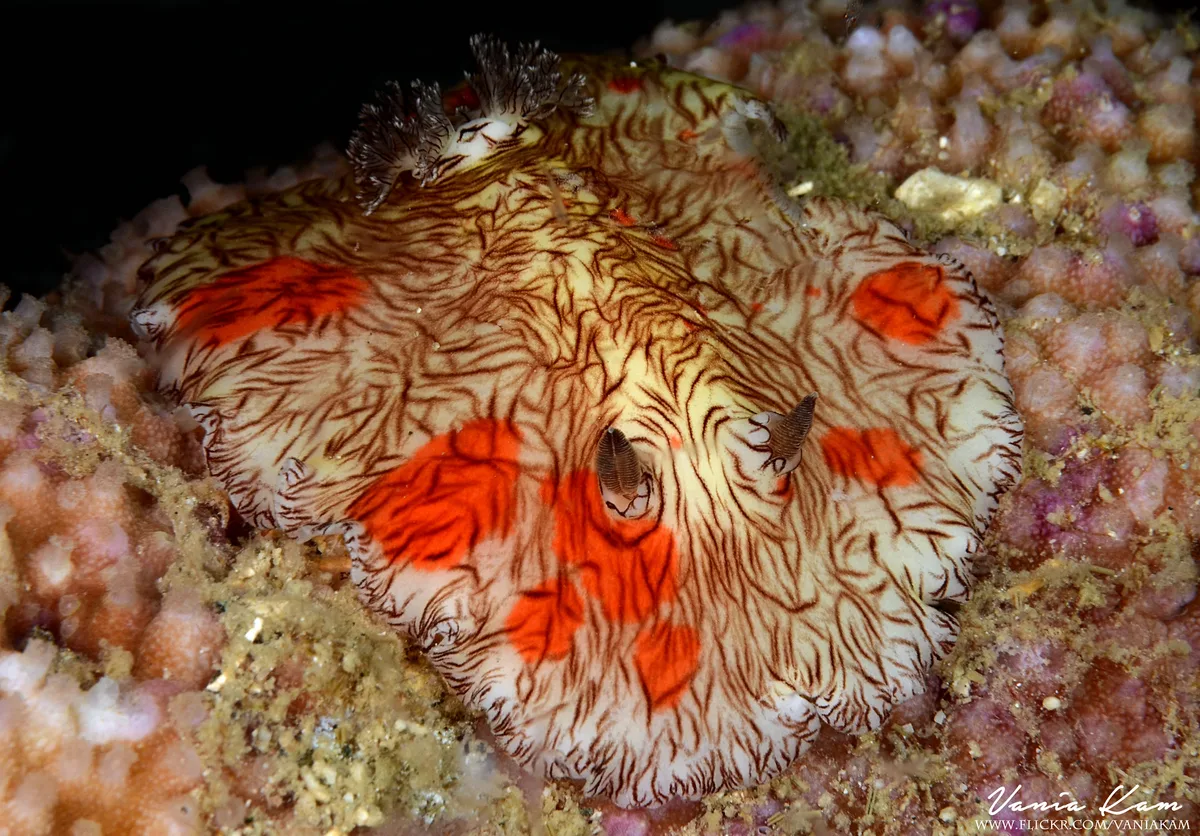
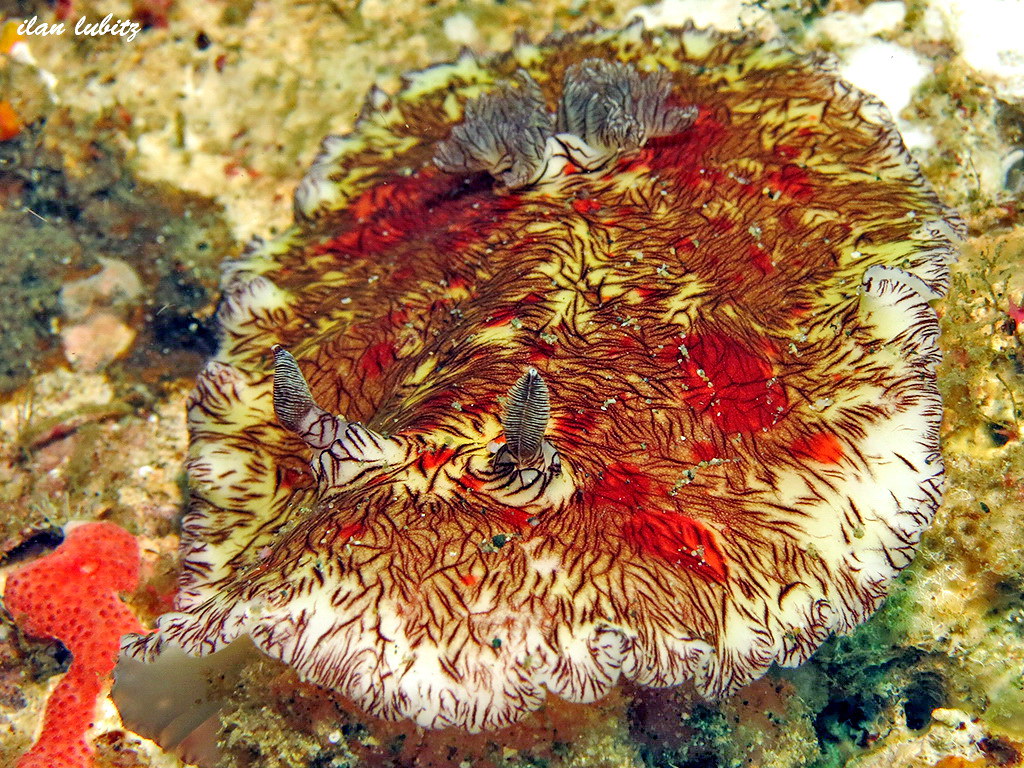
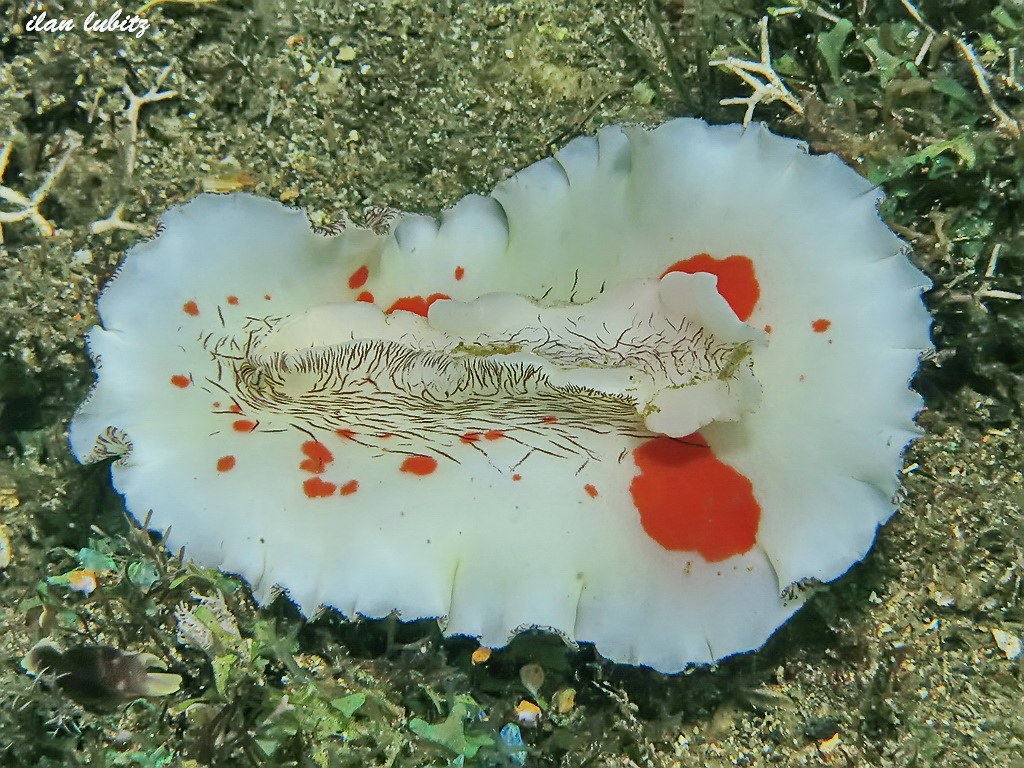
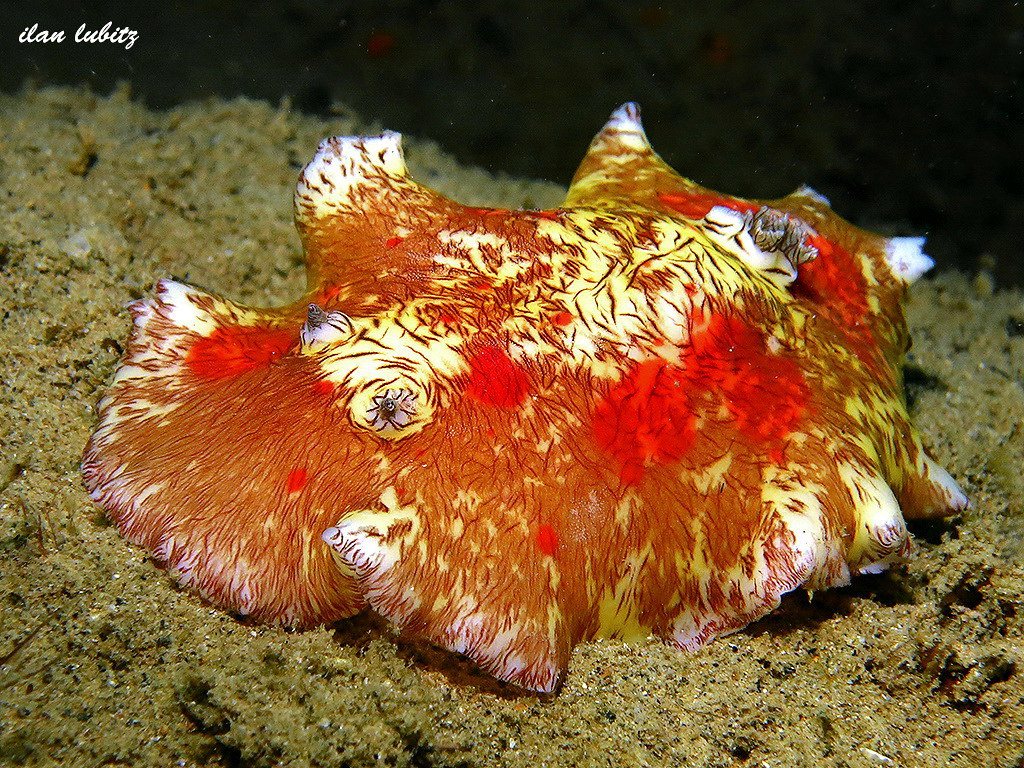
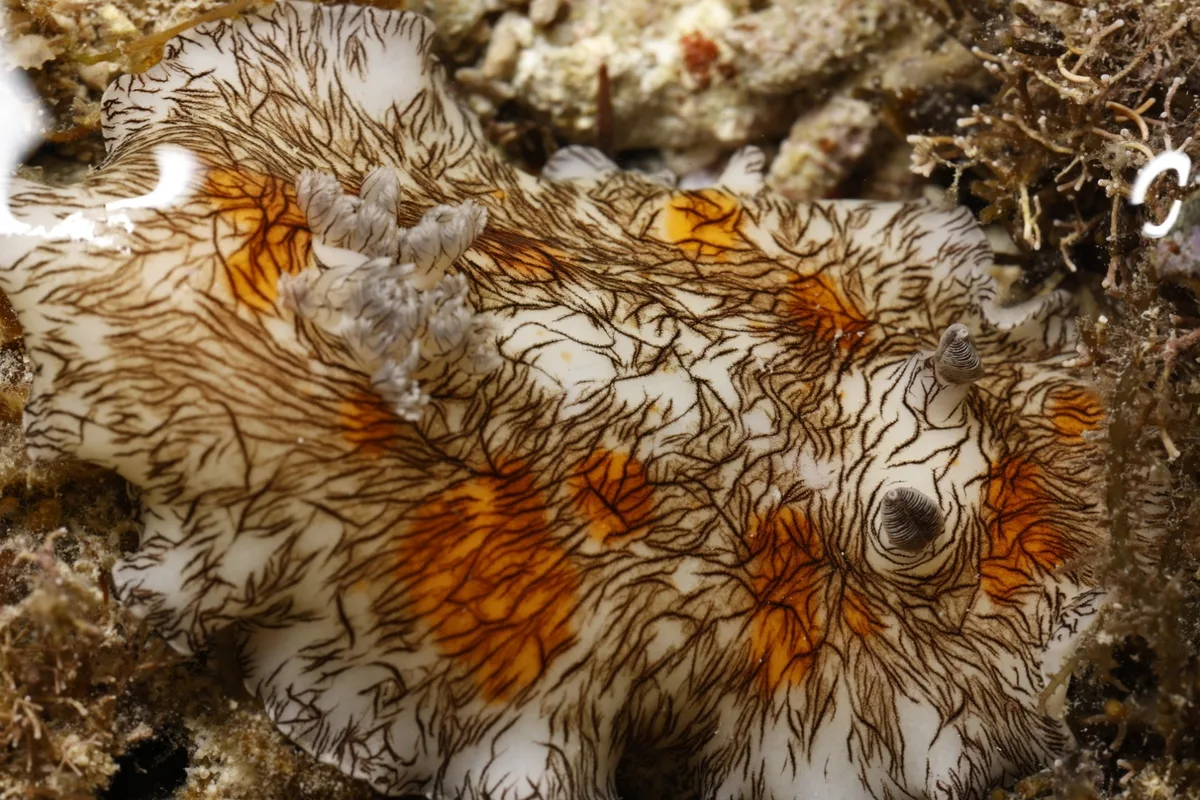
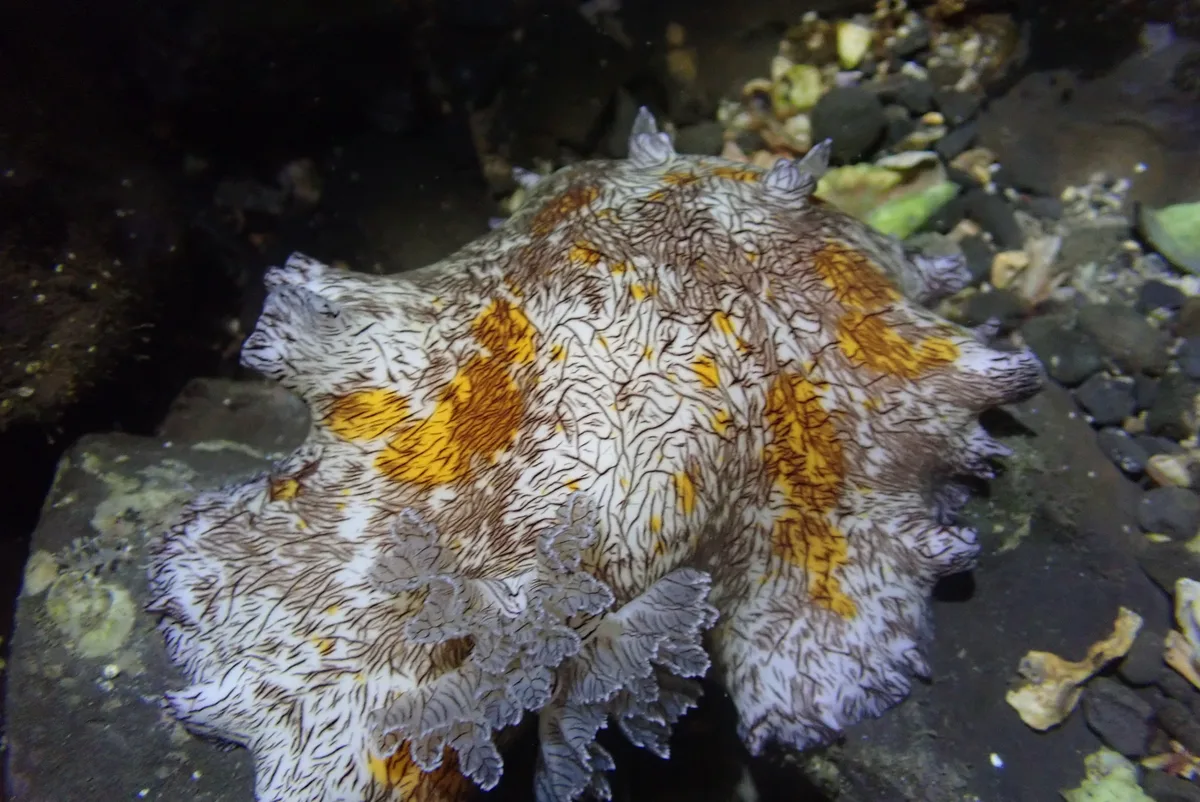
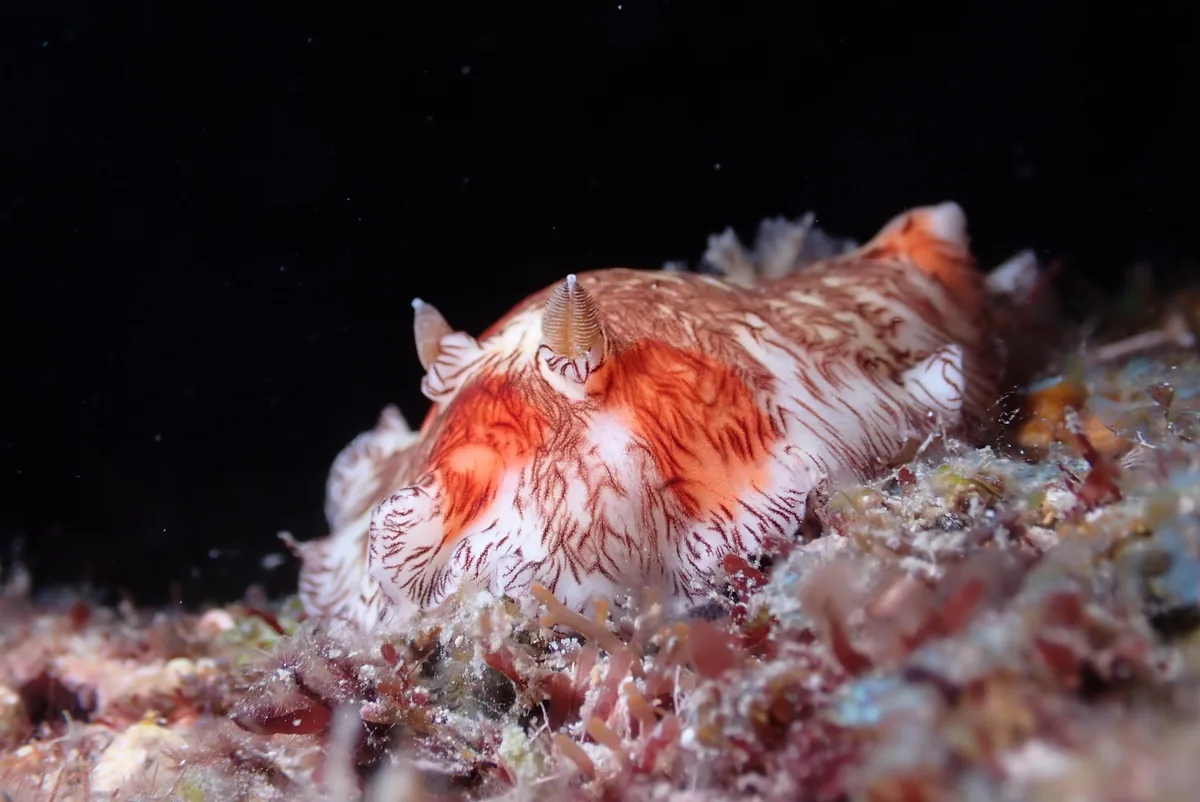
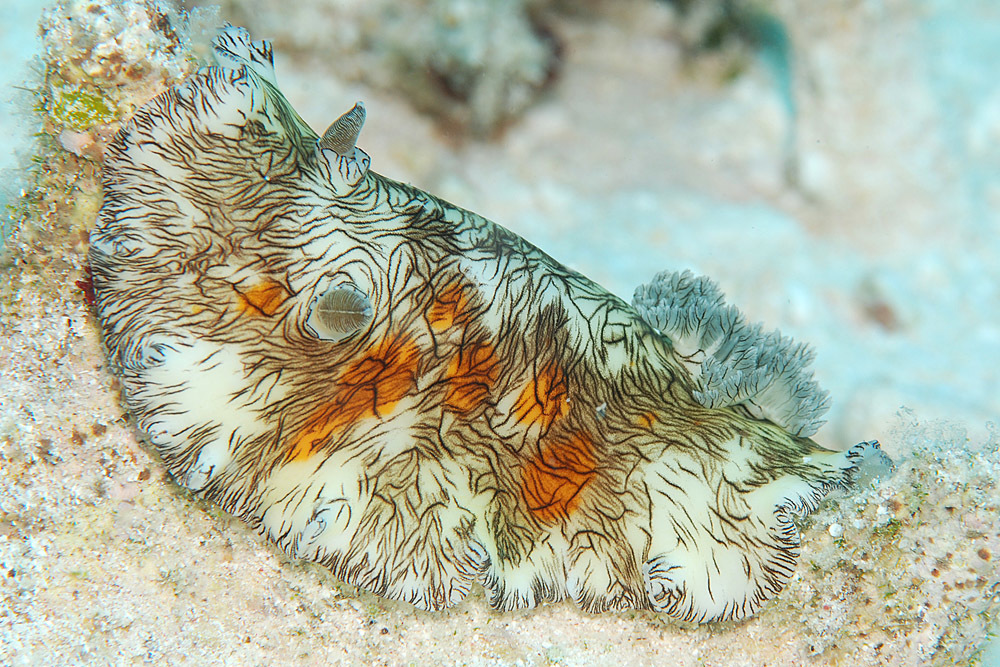
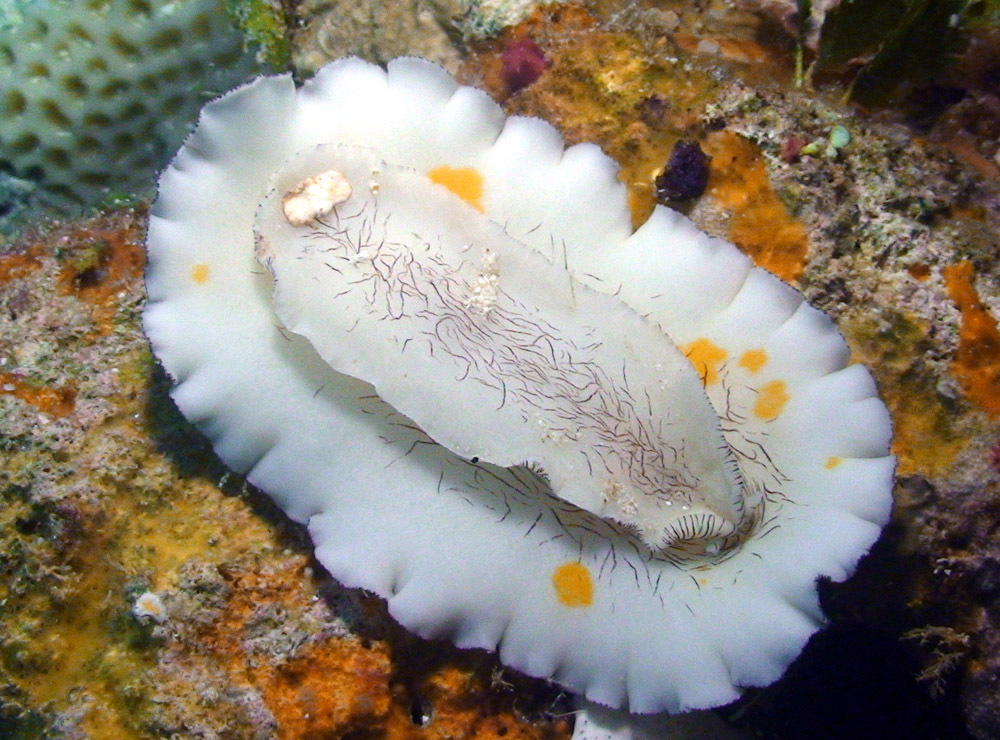
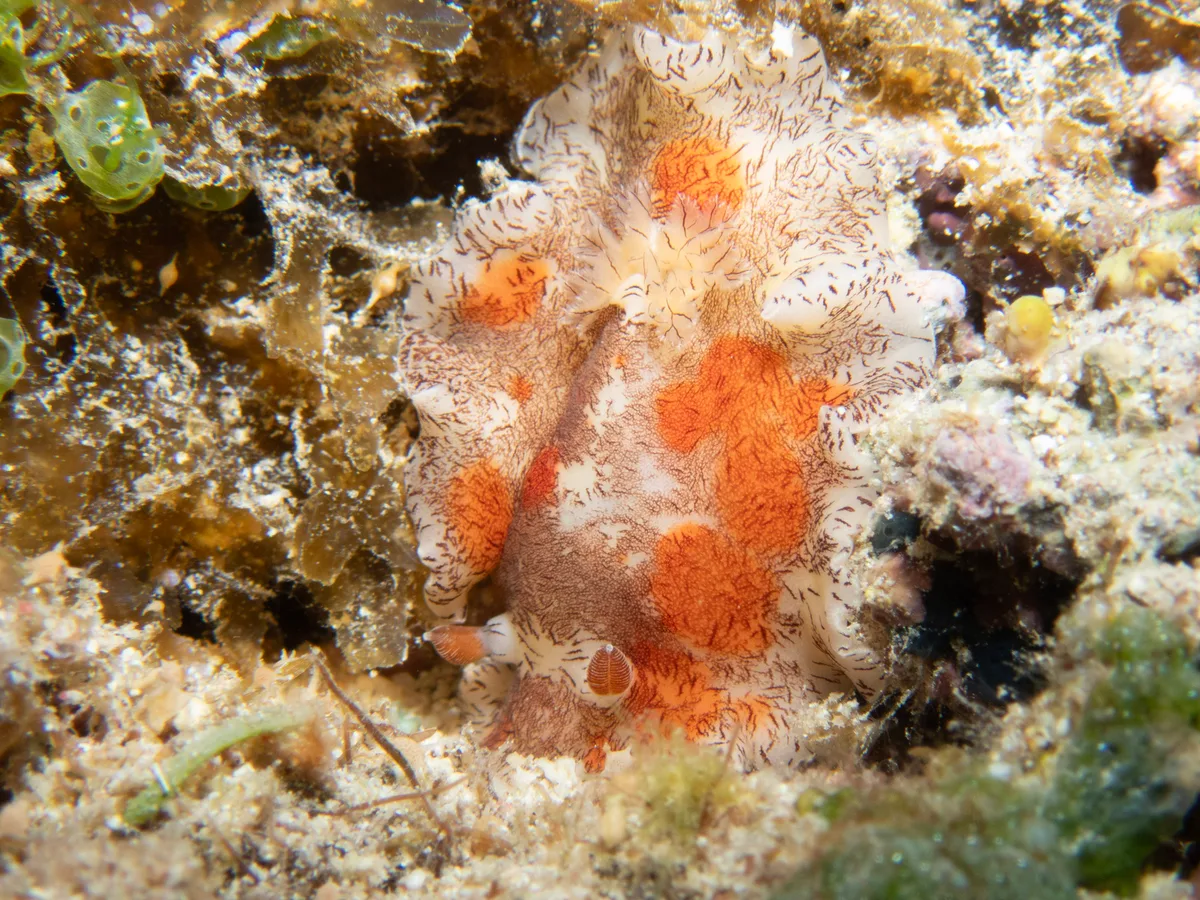
Pick one up and it feels like a piece of leather, which is the point of the whole genus.
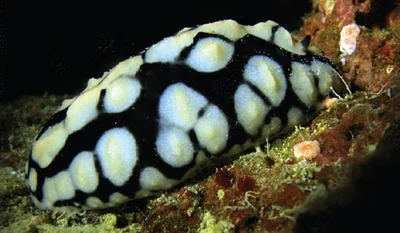
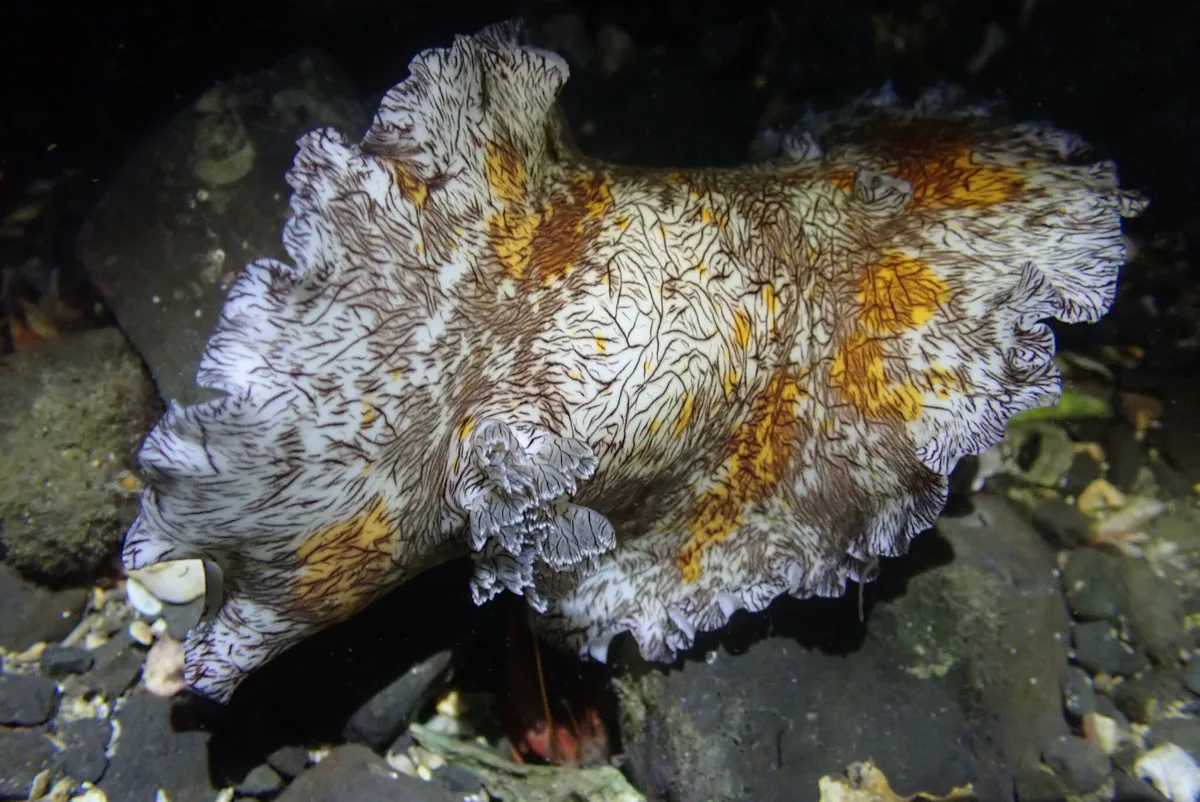
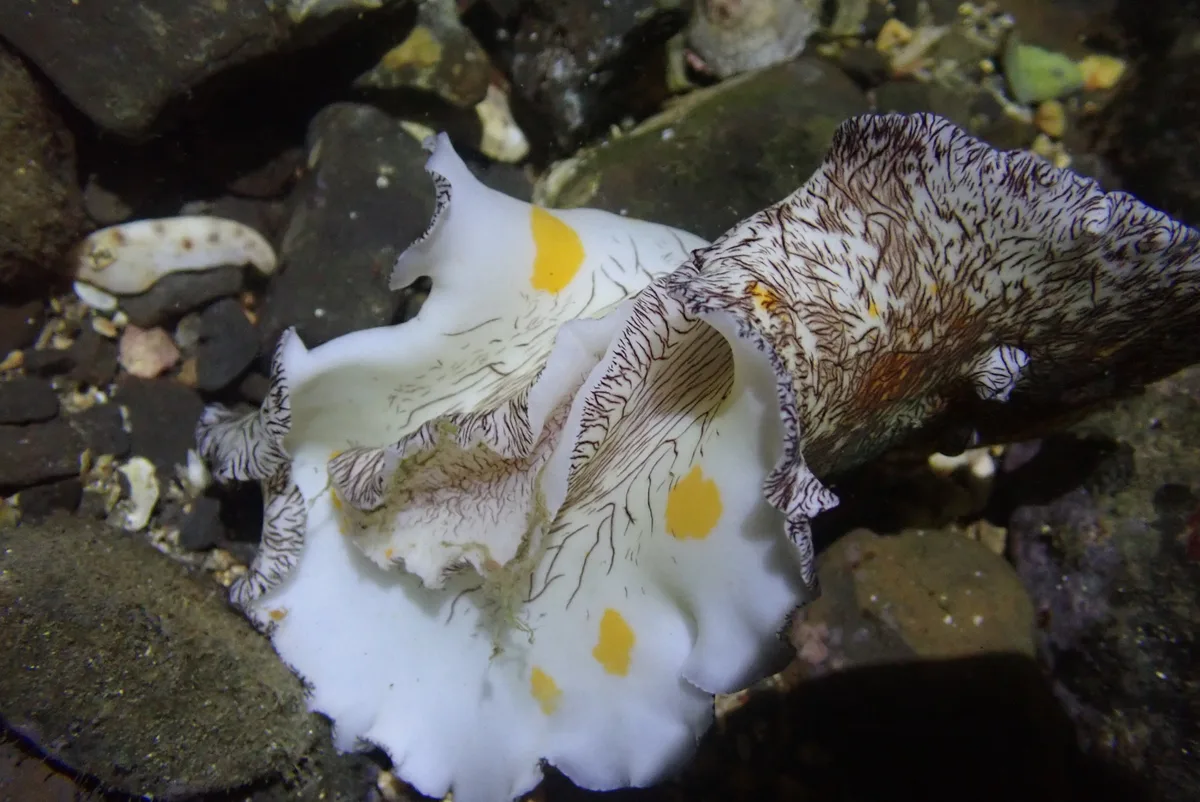
Platydoris are the flattest and toughest of the dorids. The mantle is thin, wide, stiffened, and pressed down hard against the rock, and an animal in that posture is difficult to get a grip on, difficult to lever off and difficult to bite: there is no raised edge to start on. Most sea slugs answer predators with chemistry alone. This one adds mechanics.
The flatness also fits where it lives. It spends daylight under slabs and inside cracks where a thicker animal would not fit, and comes out onto open rock at night to feed on sponges.
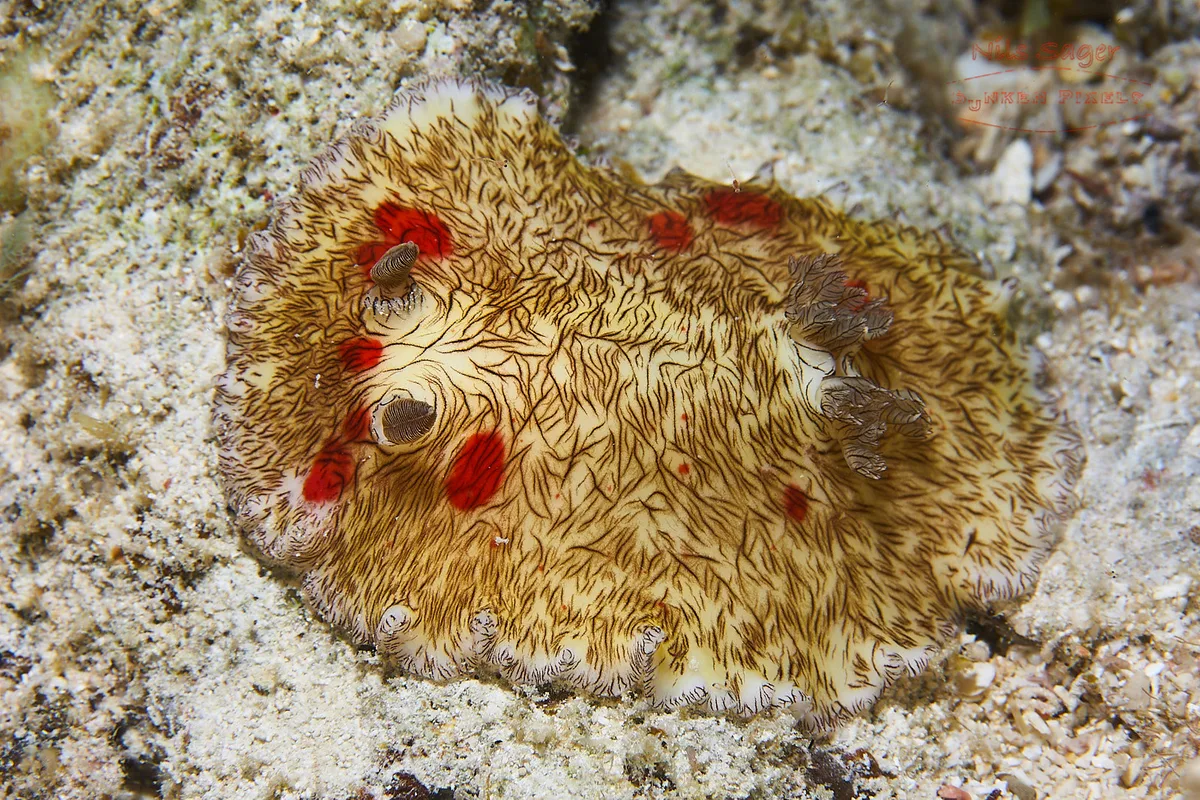
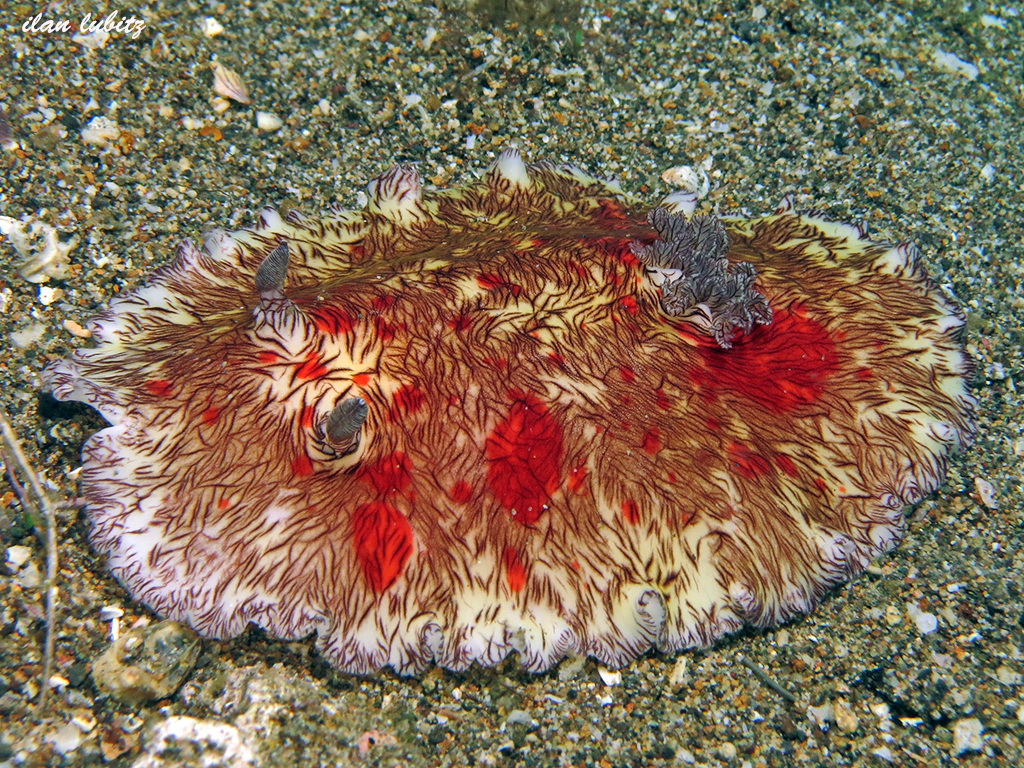
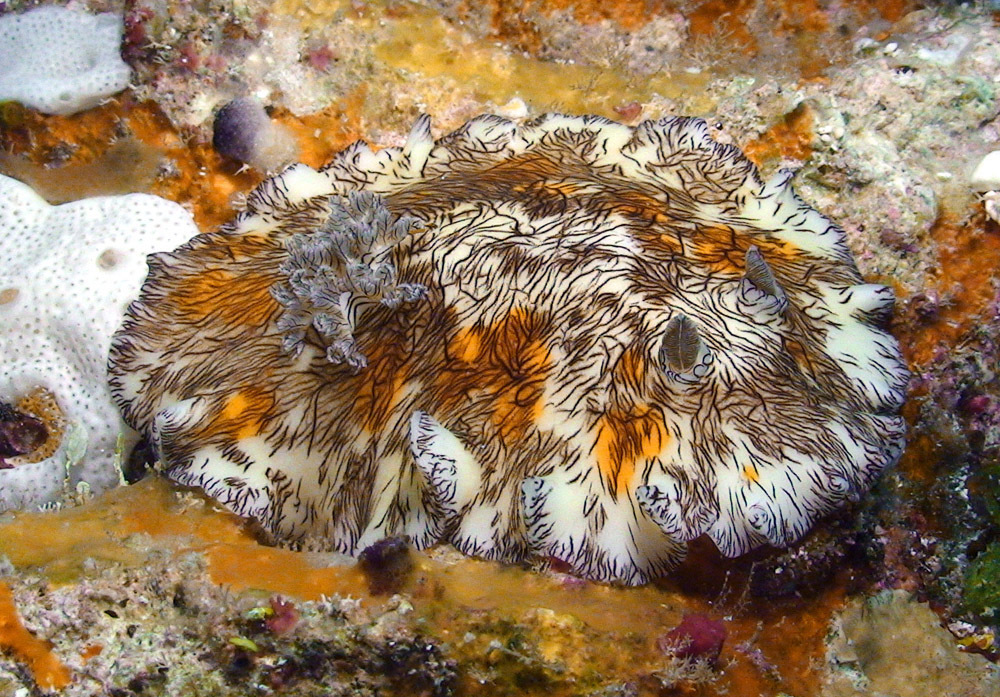
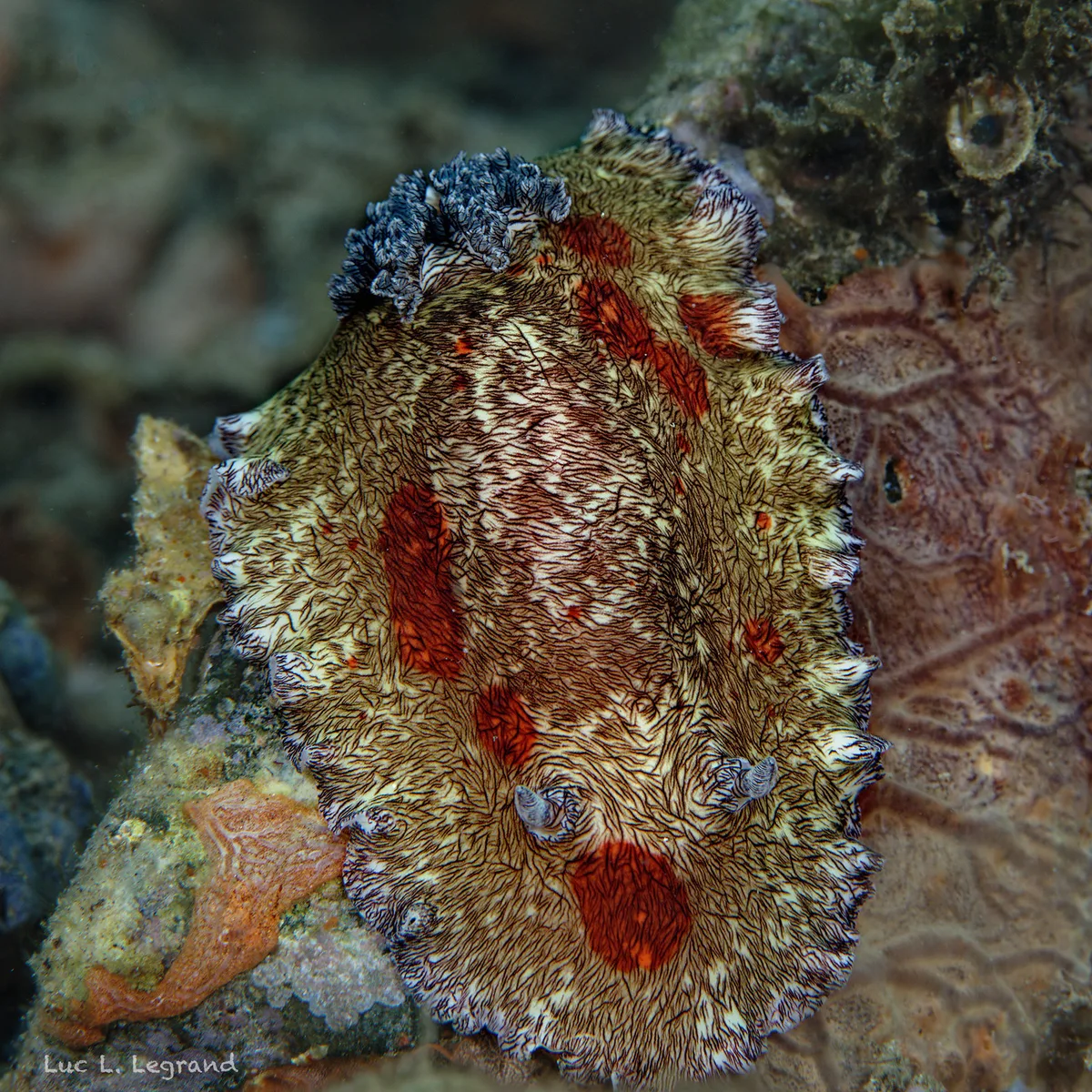
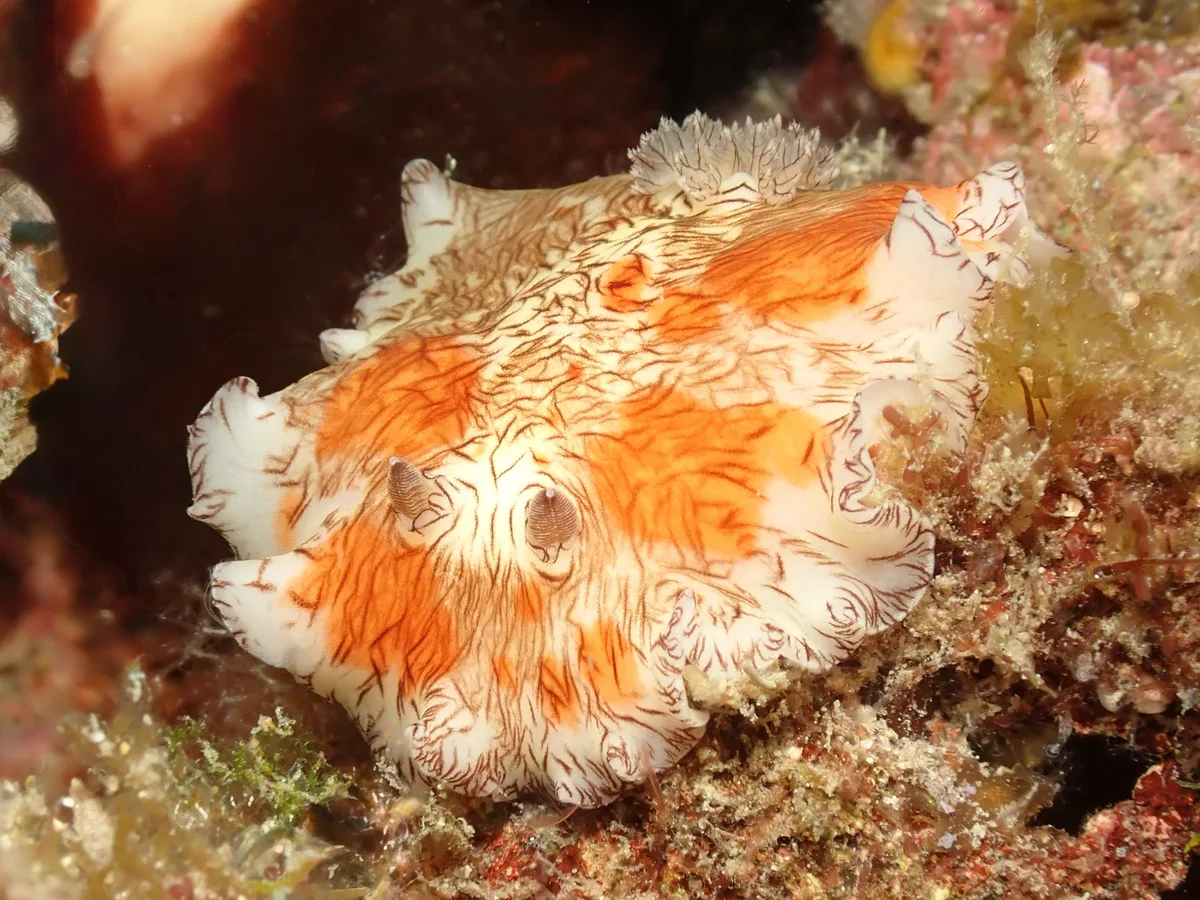
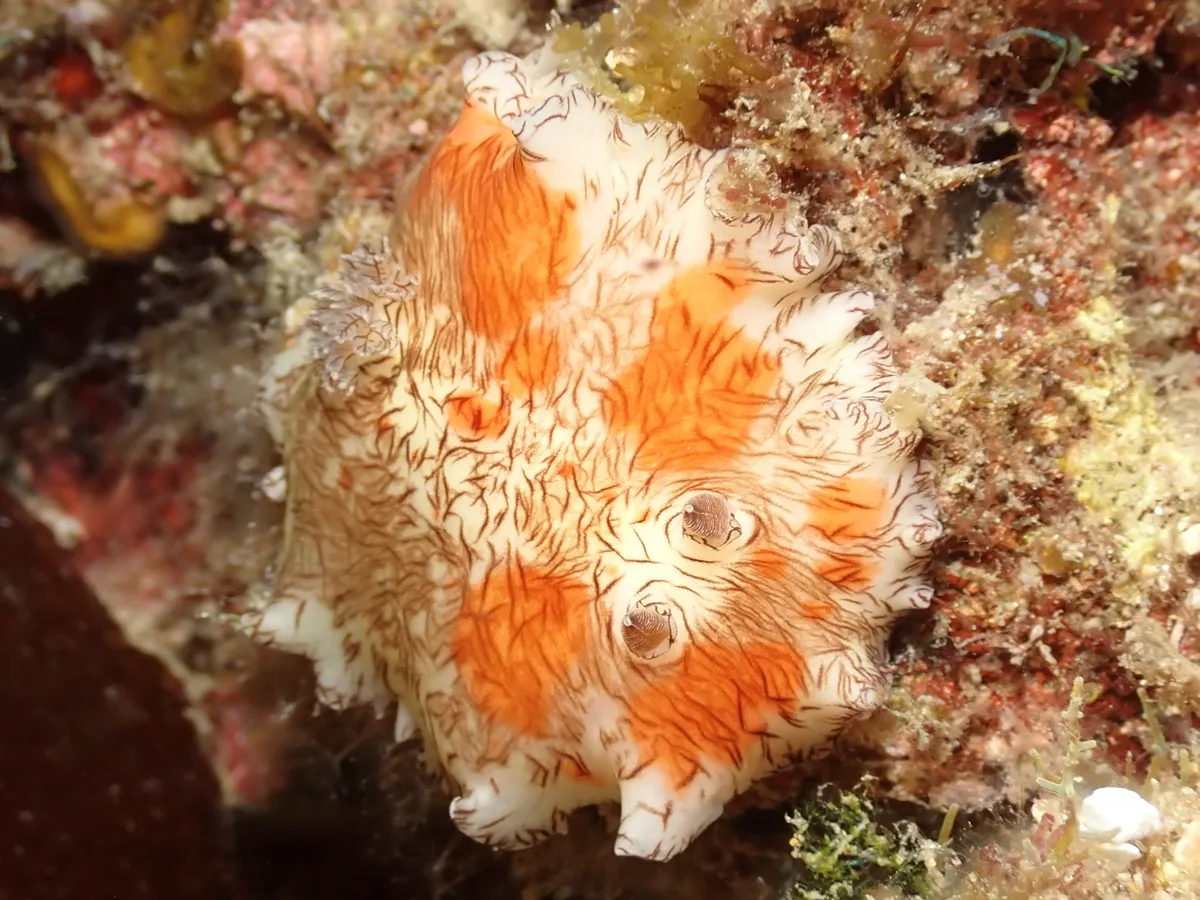
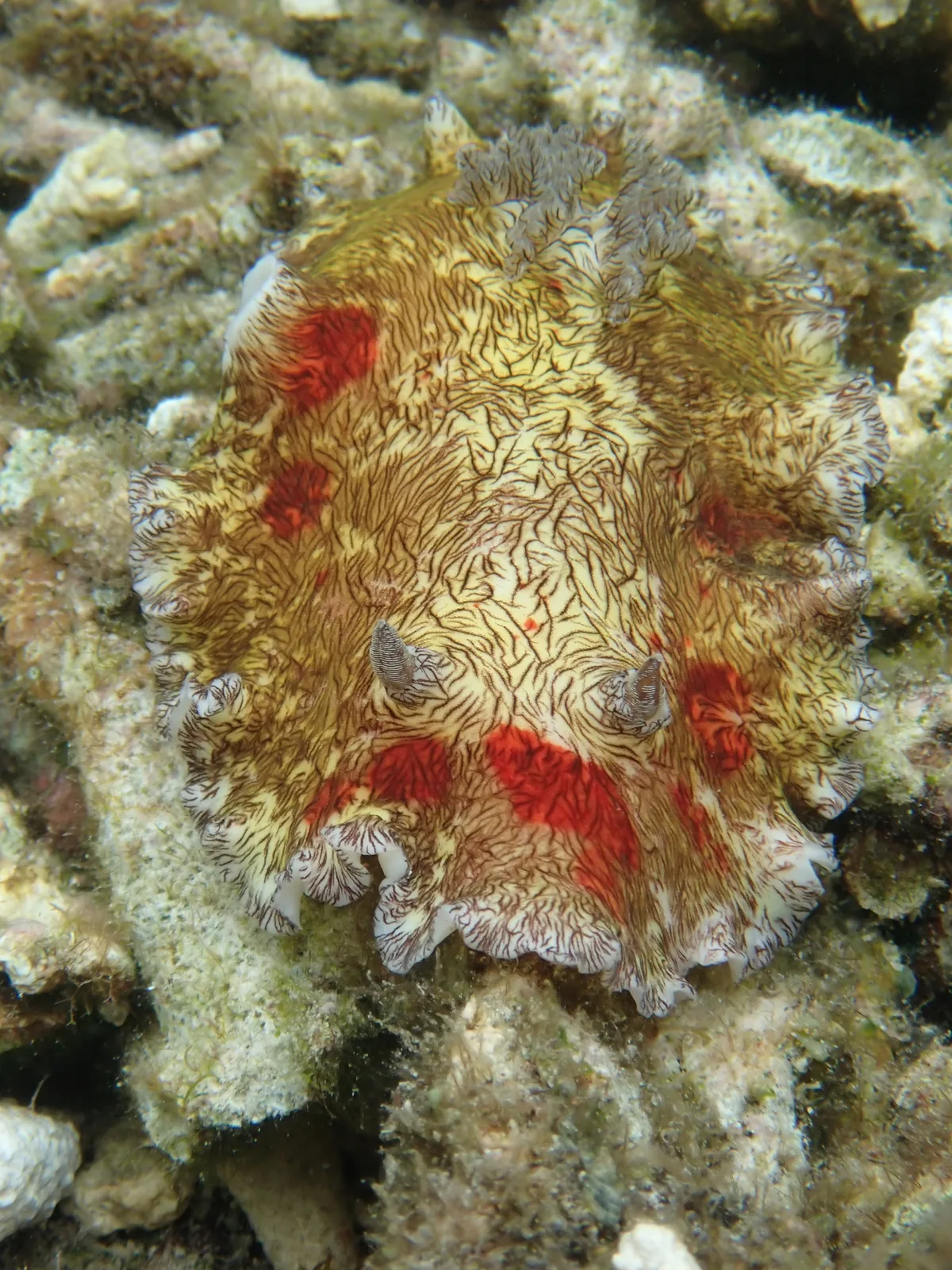
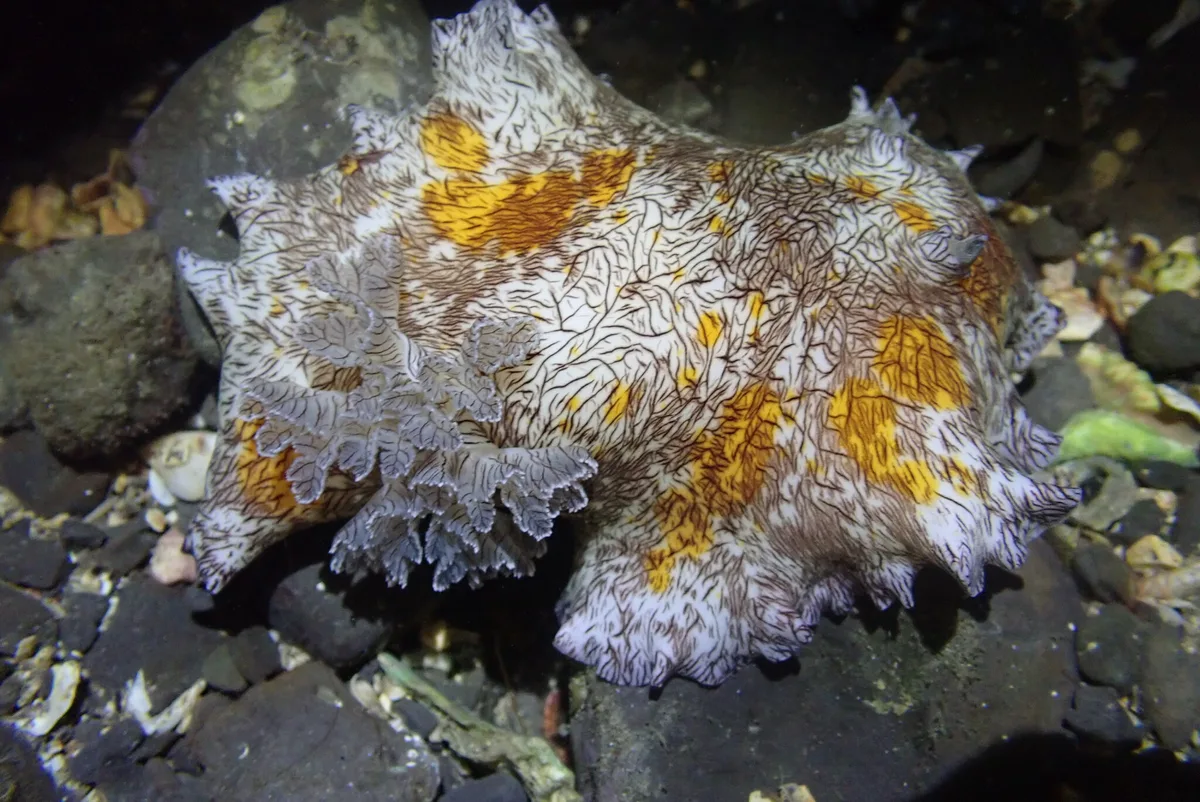
The pattern is a dense brown network over a white to yellowish ground, and the lines continue onto the branches of the gill plume, which is unusual and worth checking: on most dorids the gills are plain or a single color. Ten centimeters across, which makes it one of the larger slugs a night dive here will turn up.
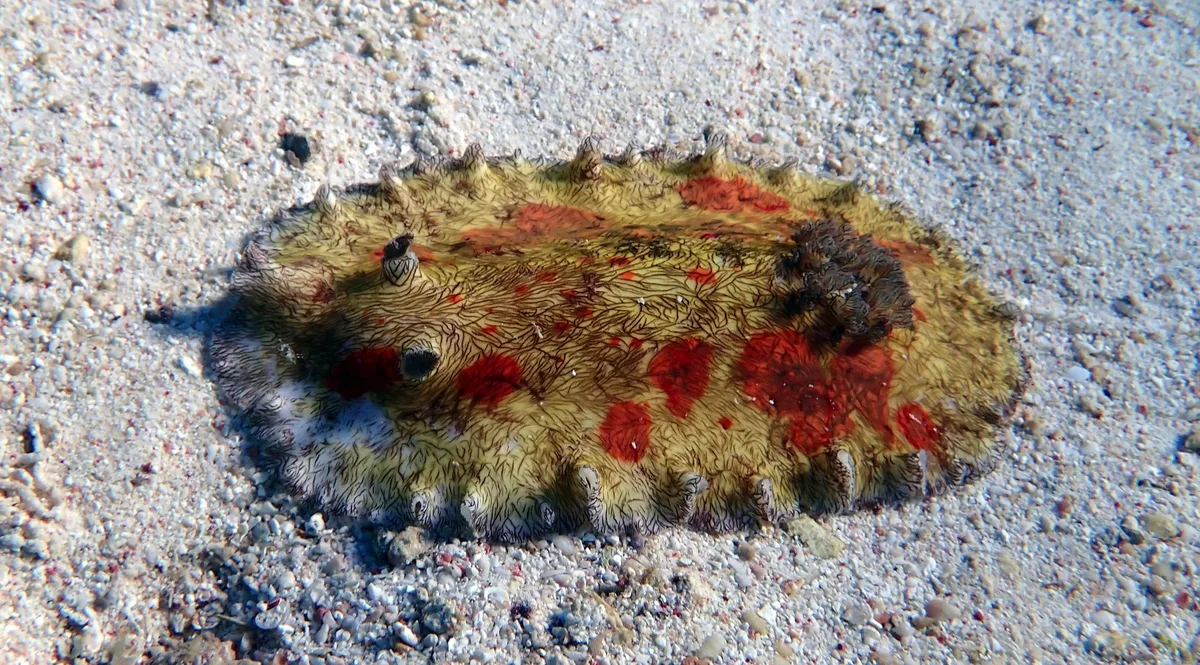
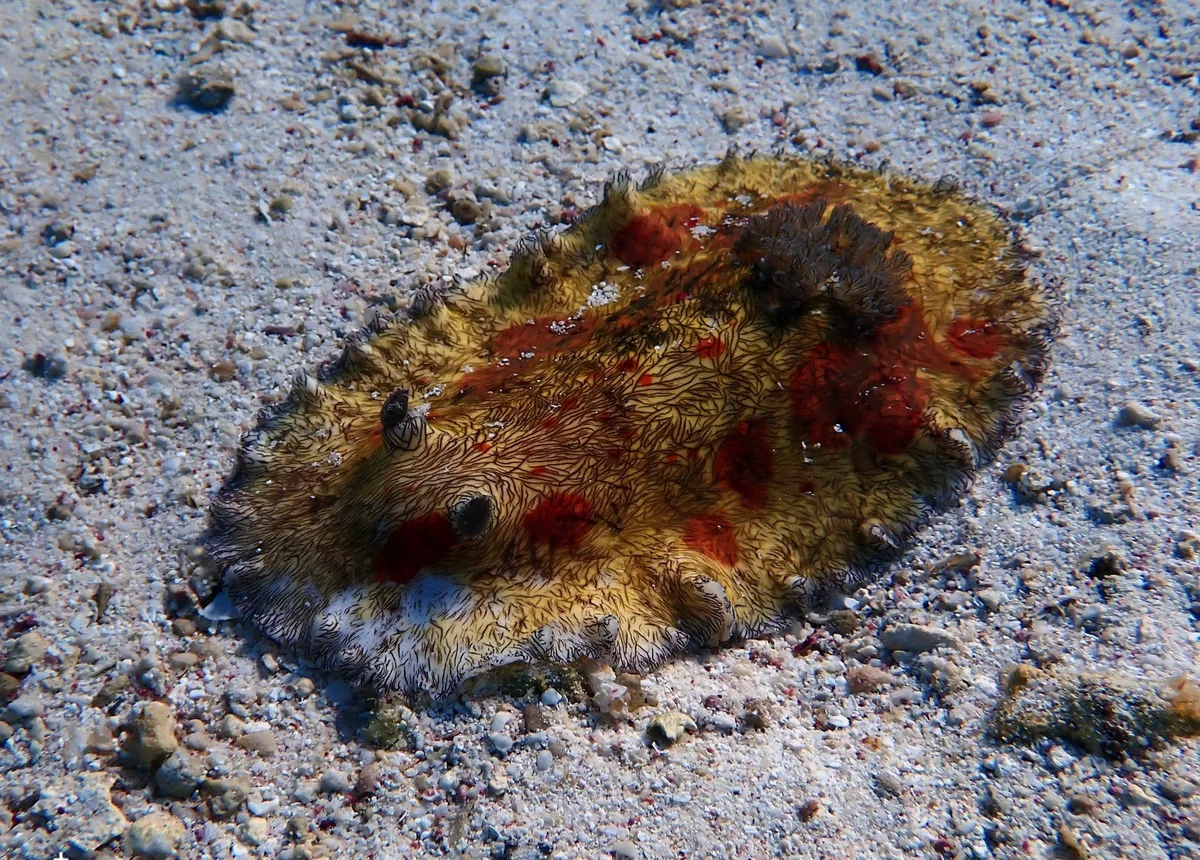
The species is spread across the Indo-Pacific, and the Pacific animals carry red spots on the mantle that the ones here do not, so a photograph from 🇮🇩 Indonesia and one from this coast will not match perfectly.
- flat and stiff, pressed to the rock like a leathery disc
- white to yellowish with a dense network of brown lines
- gill branches marked with dark brown lines as well
- up to 10 cm