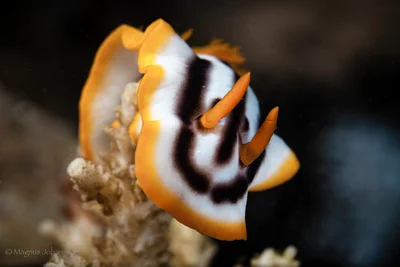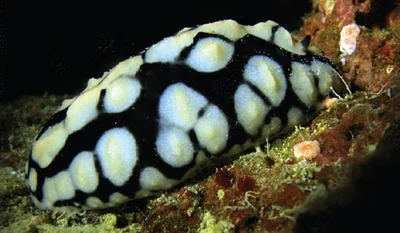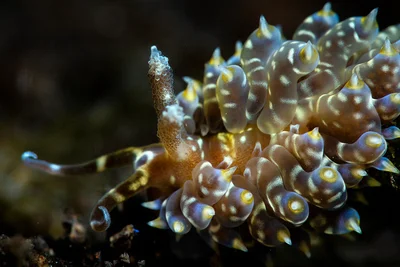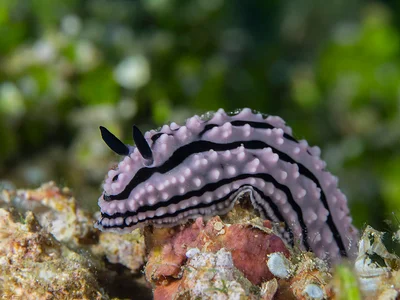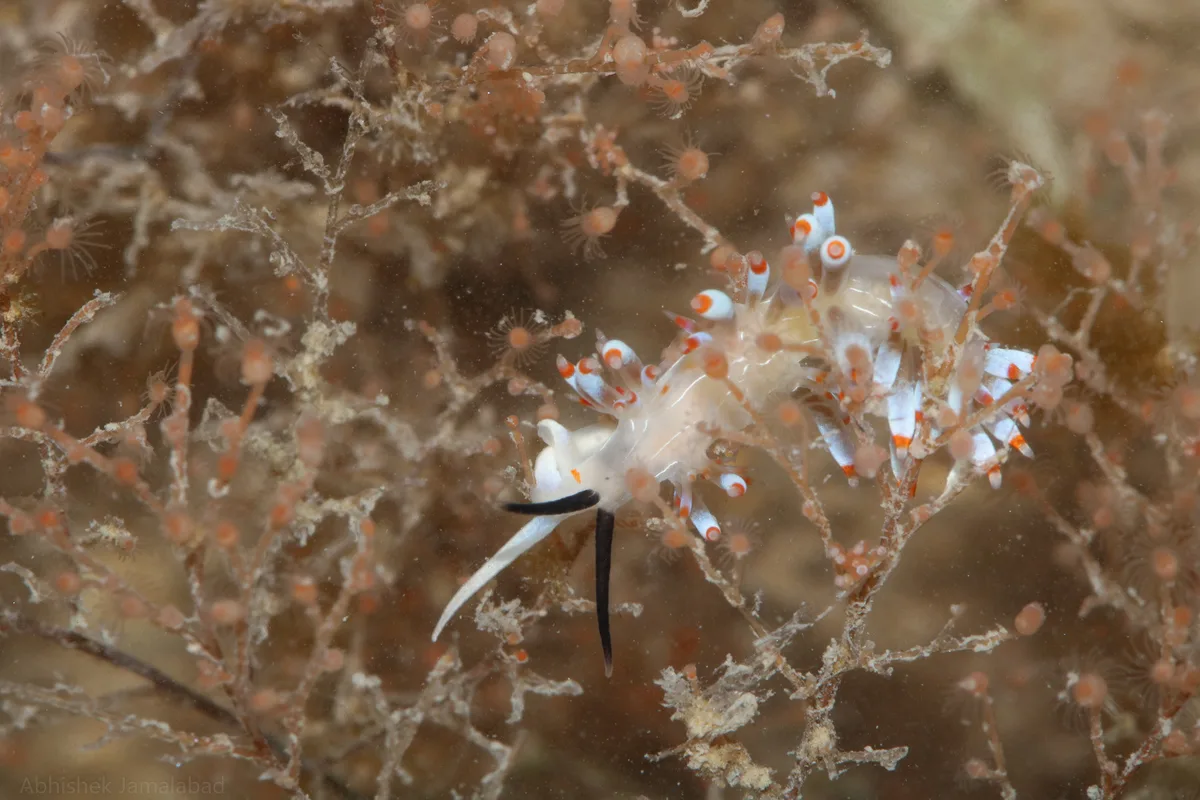
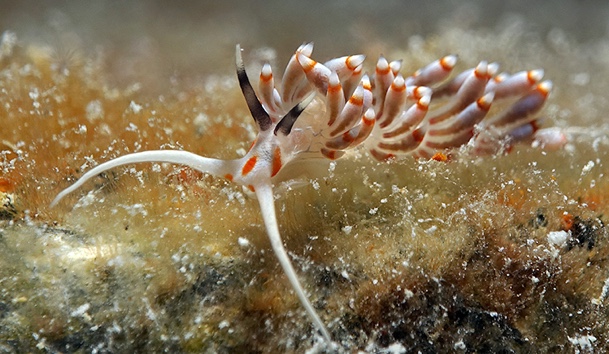
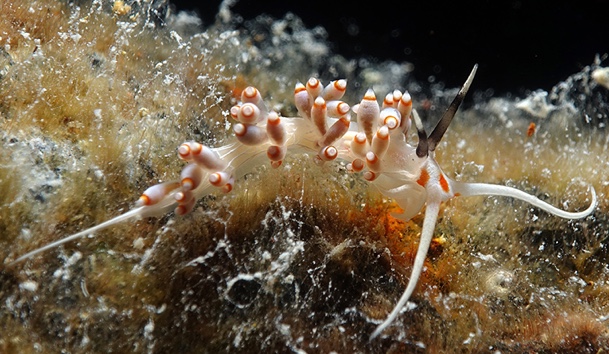
Four separate marks on an animal eighteen millimeters (0.7 in) long, and you need most of them, because the small aeolids on this reef are a crowd.
Work front to back. Two long white oral tentacles reach forward, well past the rhinophores, which is the first thing that registers. The head behind them carries red spots. The rhinophores are black and smooth, with none of the rings, plates or beading that other genera use. The back has opaque white lines running lengthwise along it, and each ceras carries a red band below an opaque white tip. Get three of those and you have this species; any one alone will not do it.
This is also the animal the family is named after. Facelinidae takes its name from this genus, and that covers a large part of what a diver thinks of as an aeolid: the slim ones with long cerata in rows, eating hydroids and storing the stolen stinging capsules in the ceratal tips. Whenever you look at one of those on this reef, you are looking at a relative of this eighteen-millimeter animal.
How little is on record for it is worth stating plainly. The public observation databases hold two entries for the species in the entire world, one from 🇰🇪 Kenya and one from 🇮🇳 India, and not a single logged sighting from this sea. The photographs on this page were taken here anyway. That gap is the point: for an animal this small, most of what people actually see never gets written down anywhere a database can find it, and the difference between a rare species and an unrecorded one is mostly a difference in bookkeeping.
- oral tentacles very long and white, reaching well forward of the rhinophores
- rhinophores black and smooth, without rings, plates or beading
- each ceras with a red band below an opaque white tip
- red spots on the head, and opaque white lines running lengthwise down the back