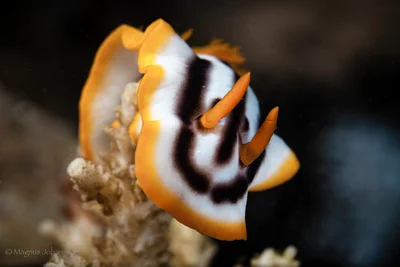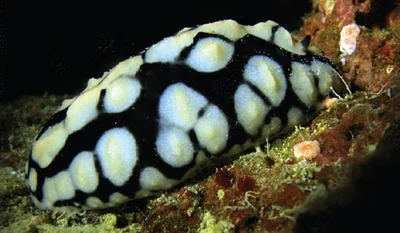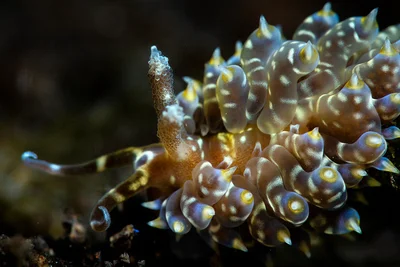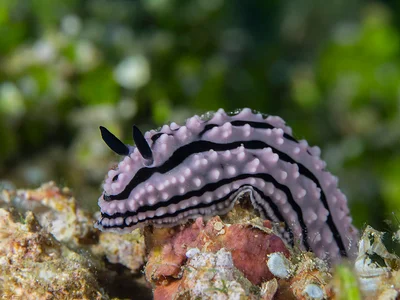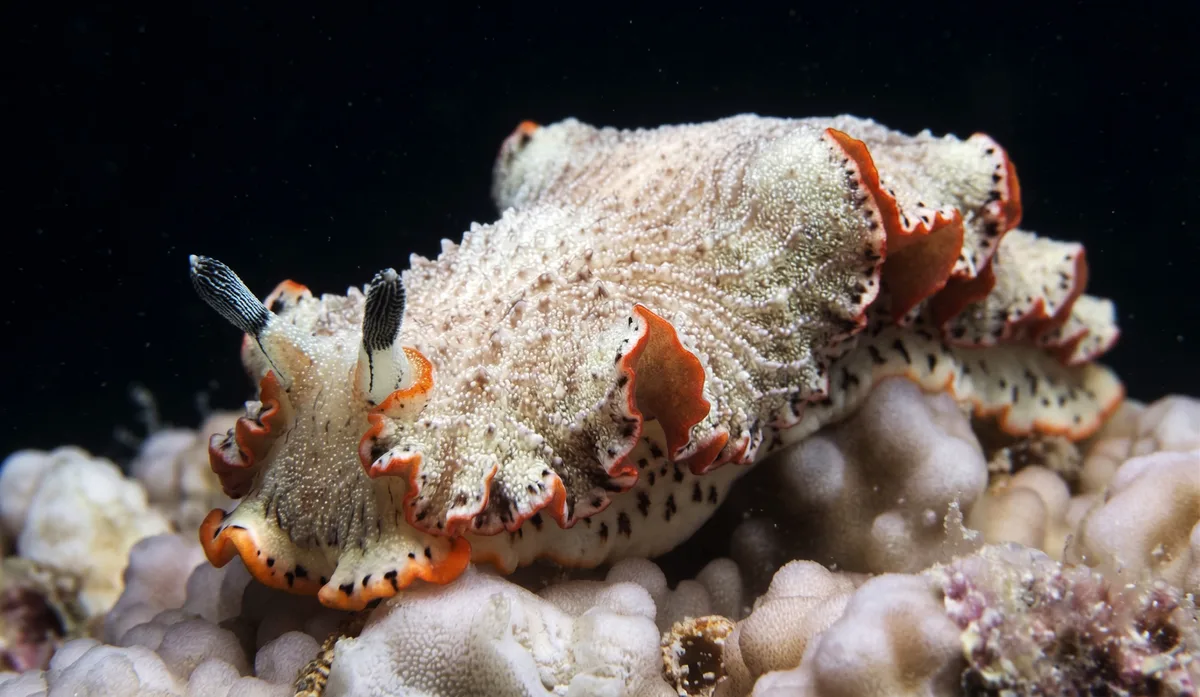
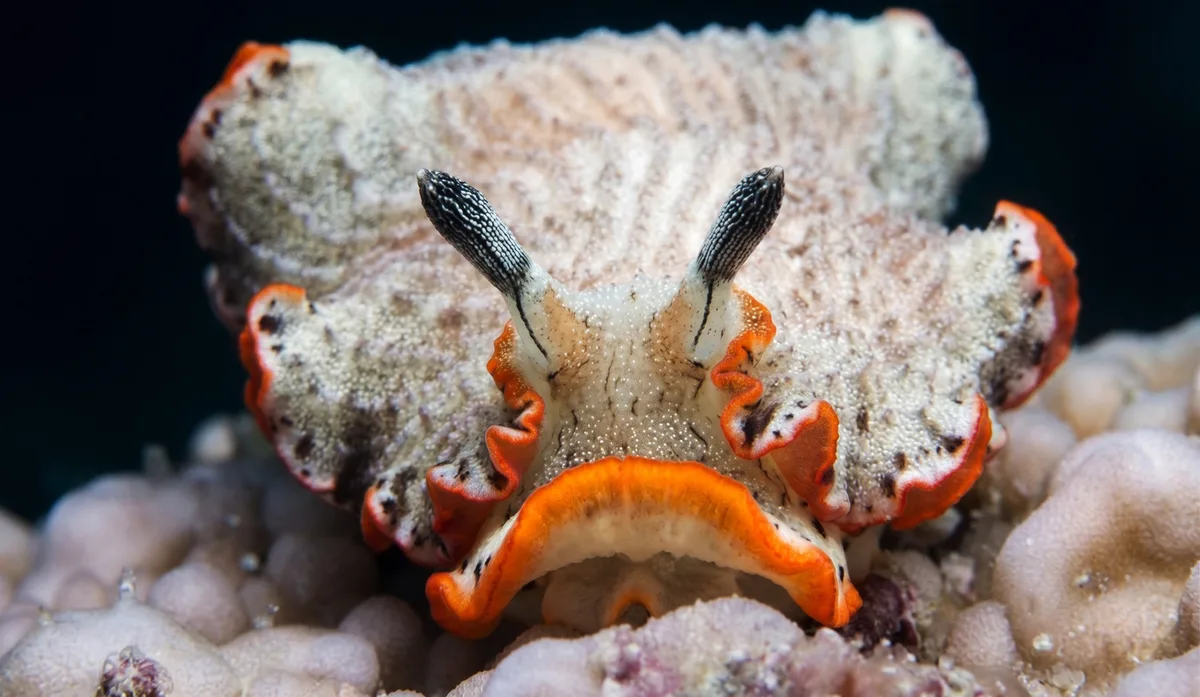
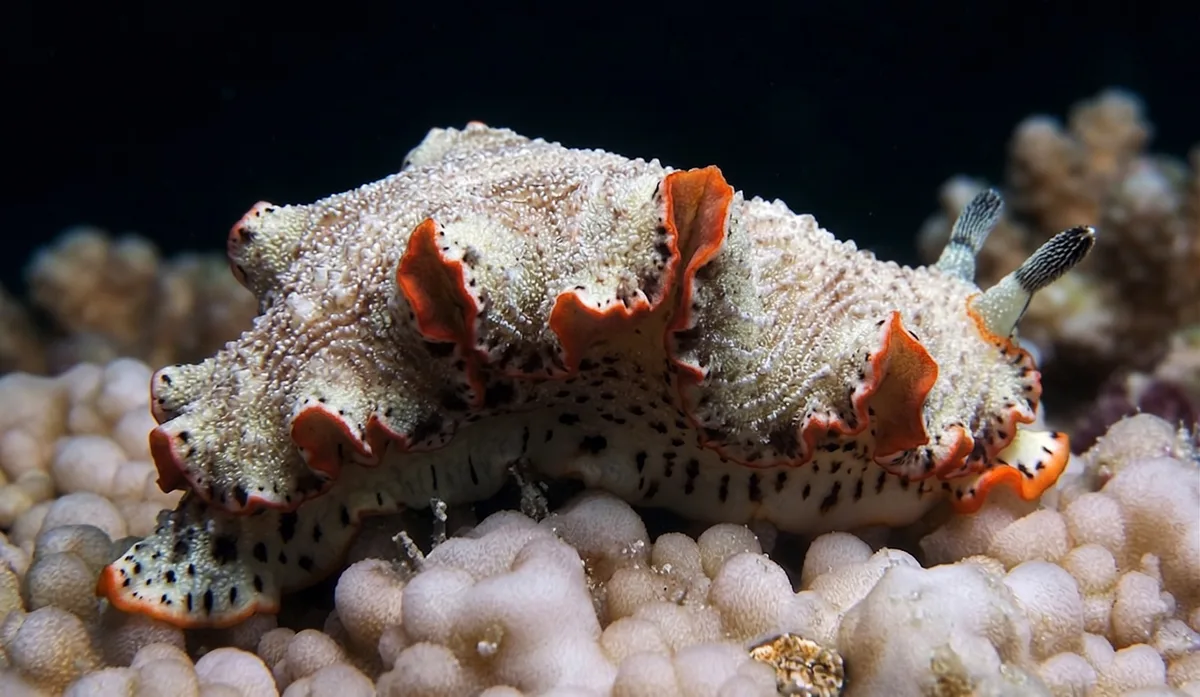
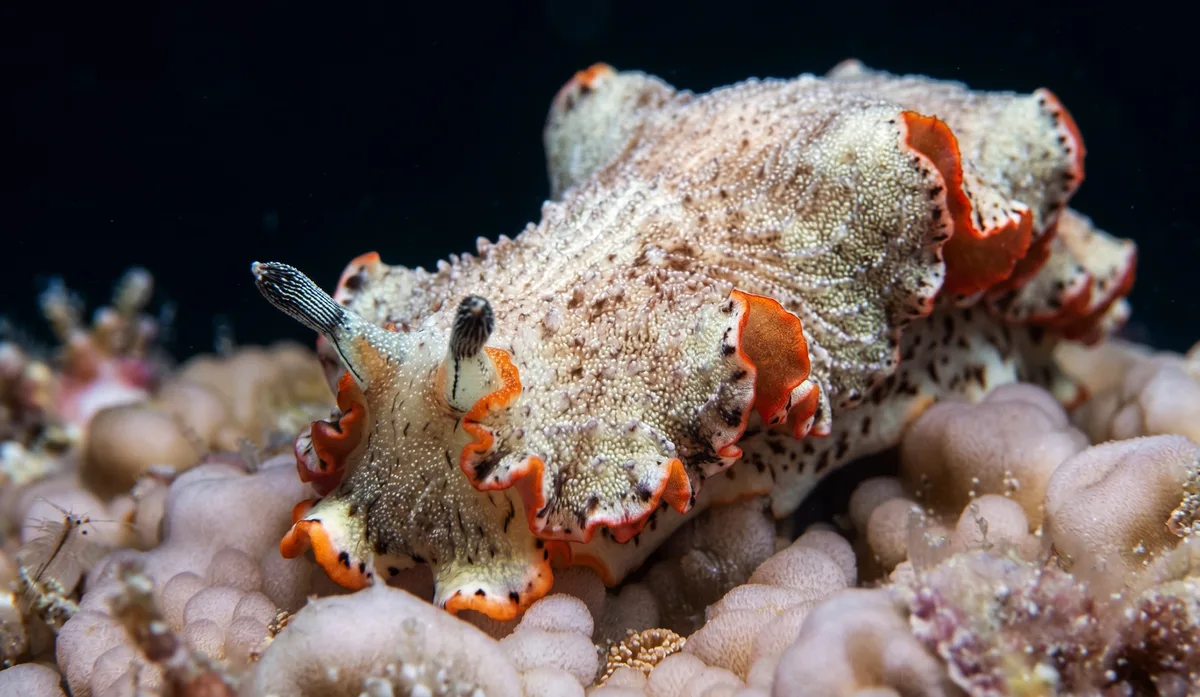
Look at the underside edges. On most of this genus the orange line runs around the mantle margin and stops there. On this species it continues onto the foot and onto the oral veil as well, and black spots are scattered along those orange edges, so the animal is outlined in orange on three separate structures rather than one.
That is a useful character precisely because arminids are hard to tell apart from above. They are all ribbed, all pale, all lacking a gill plume, because the family folds its breathing surfaces away underneath into the groove between mantle and foot. With the back offering so little, the edges are where the differences live.
Four centimeters (1.6 in), on sand and rubble beside octocorals, out after dark and buried or hidden by day like the rest of them.
The honest note on this one is that almost nothing is on record. Gosliner and Fahey described it in 2011, and the largest photographic community for sea slugs currently holds no observations of it at all. If you find one here and photograph the edges properly, that image is worth more than most of what is in this catalogue.
- orange margin on both the foot and the oral veil, not only on the mantle
- black spots scattered along those orange edges
- longitudinal ridges over the back, as in the whole genus
- four centimeters