A sponge normally builds its skeleton out of silica needles or out of protein fiber. Calcareous sponges do neither. They build theirs out of calcite, the same mineral as chalk and shell, in the form of three-pointed and four-pointed spikes packed through the tissue, and the result is a food that is closer to eating gravel than to eating flesh. Almost nothing on the reef takes them on.
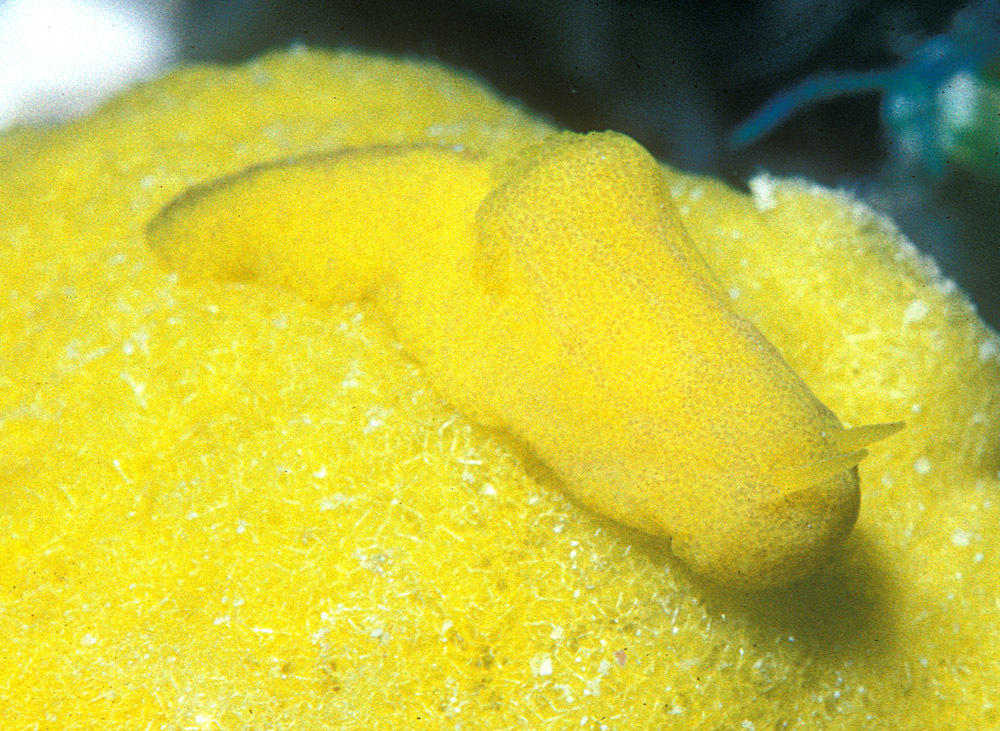
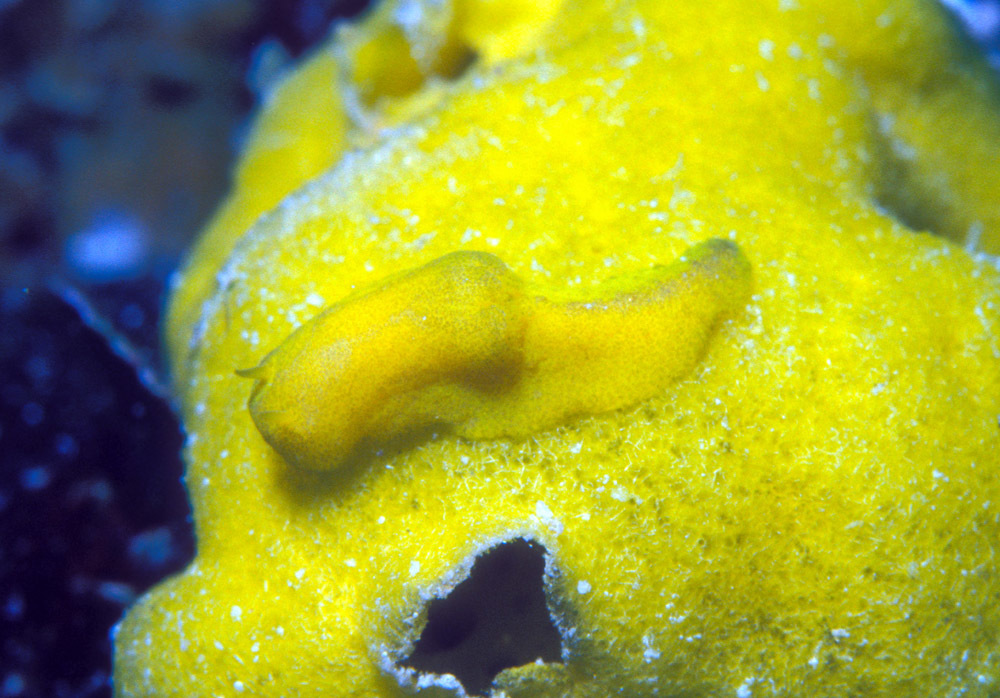
This family does. It works over the chalky lemon-yellow Leucetta sponges that grow in shade, on cave walls and under overhangs, and it takes the mineral with the meal. These slugs are themselves stiffened with spicules through the body wall, which is the same solution applied from the other direction: if your food is full of needles, being full of needles yourself is not a disadvantage.
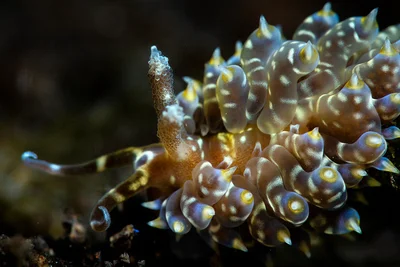
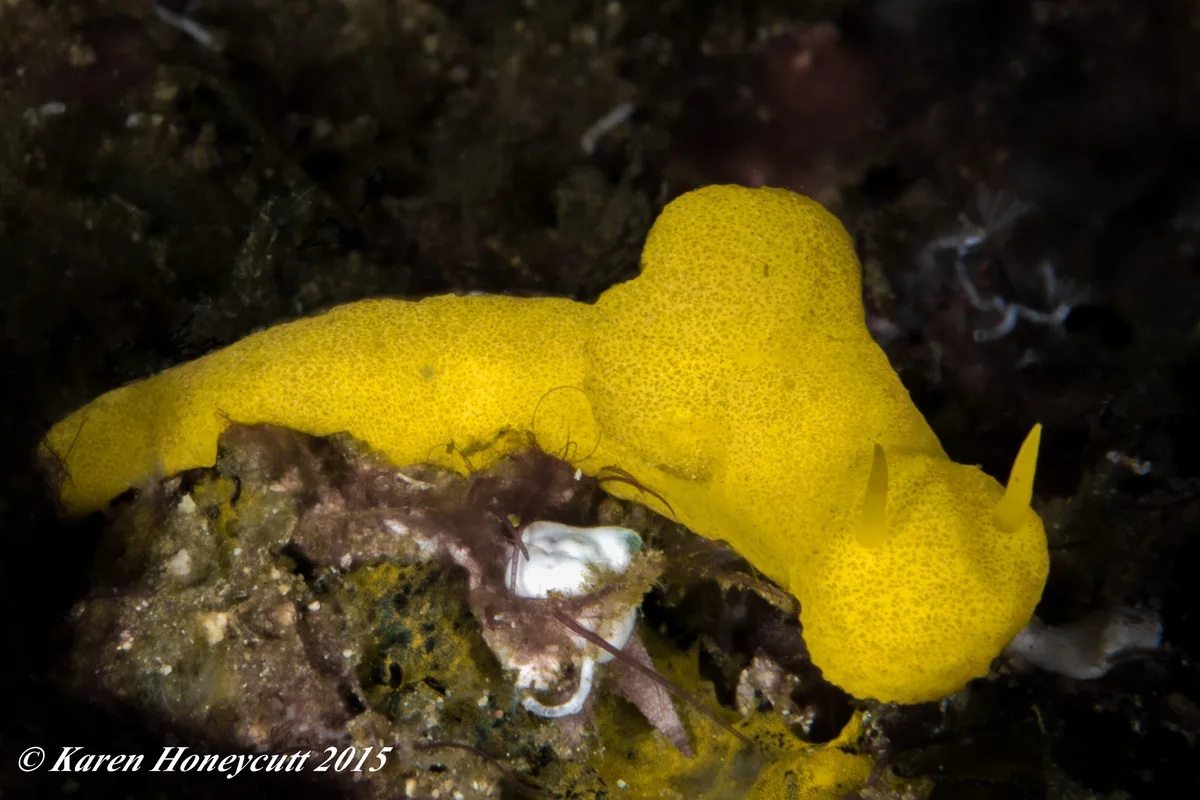
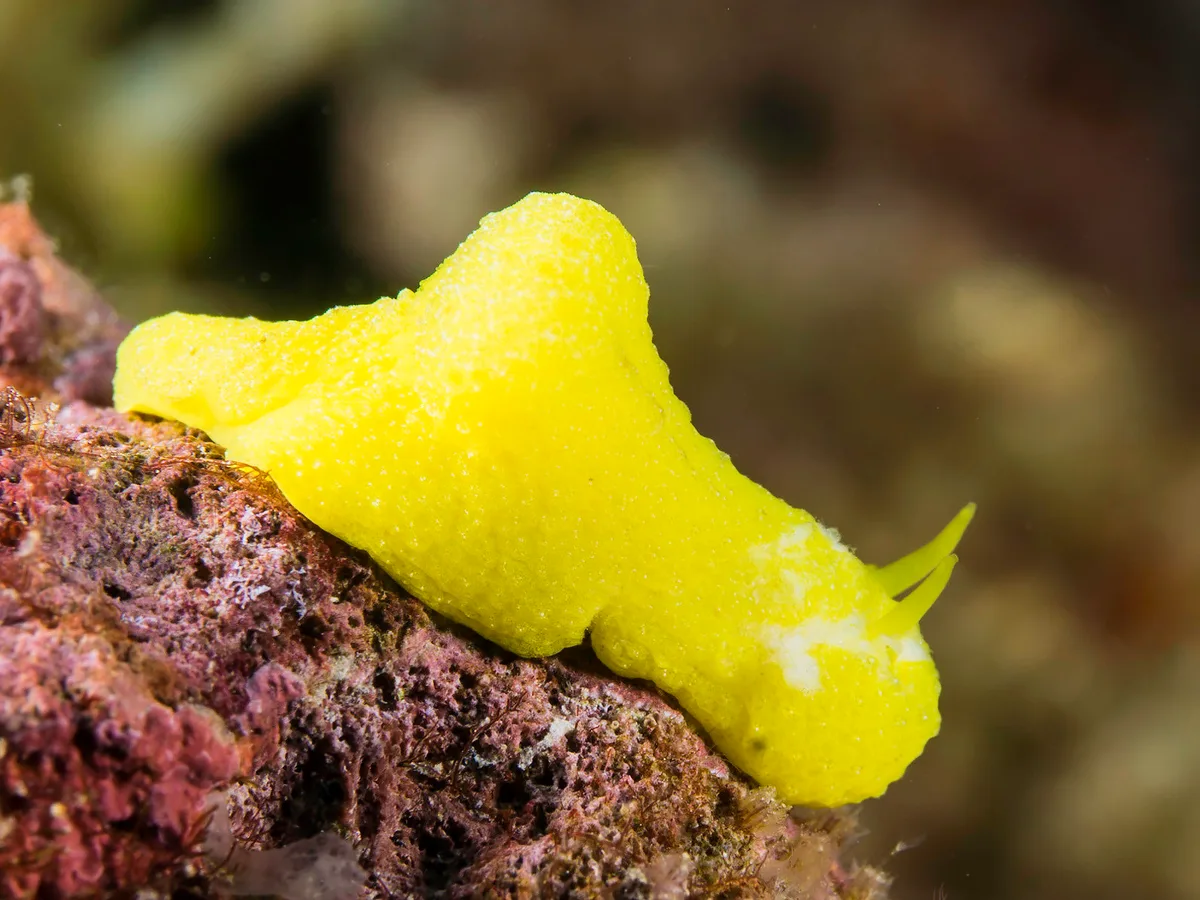
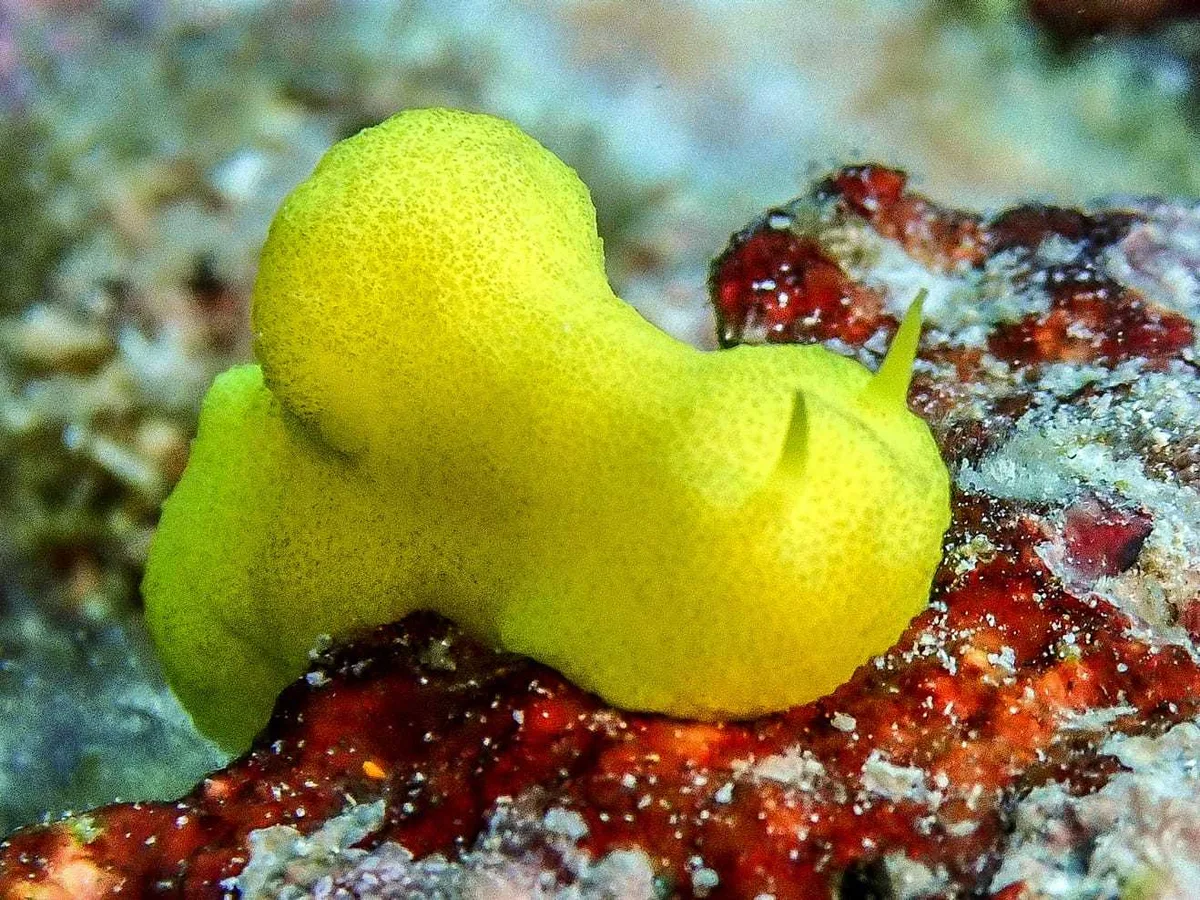
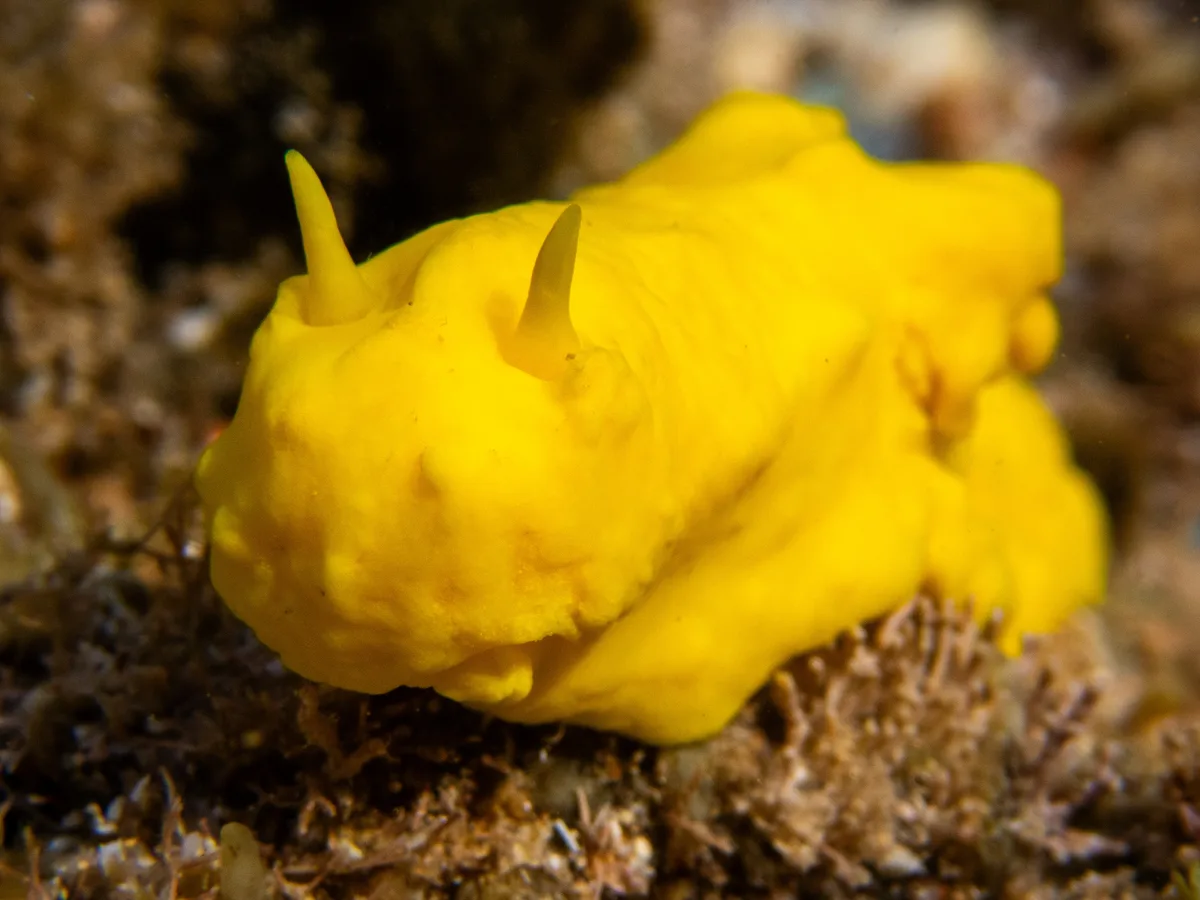
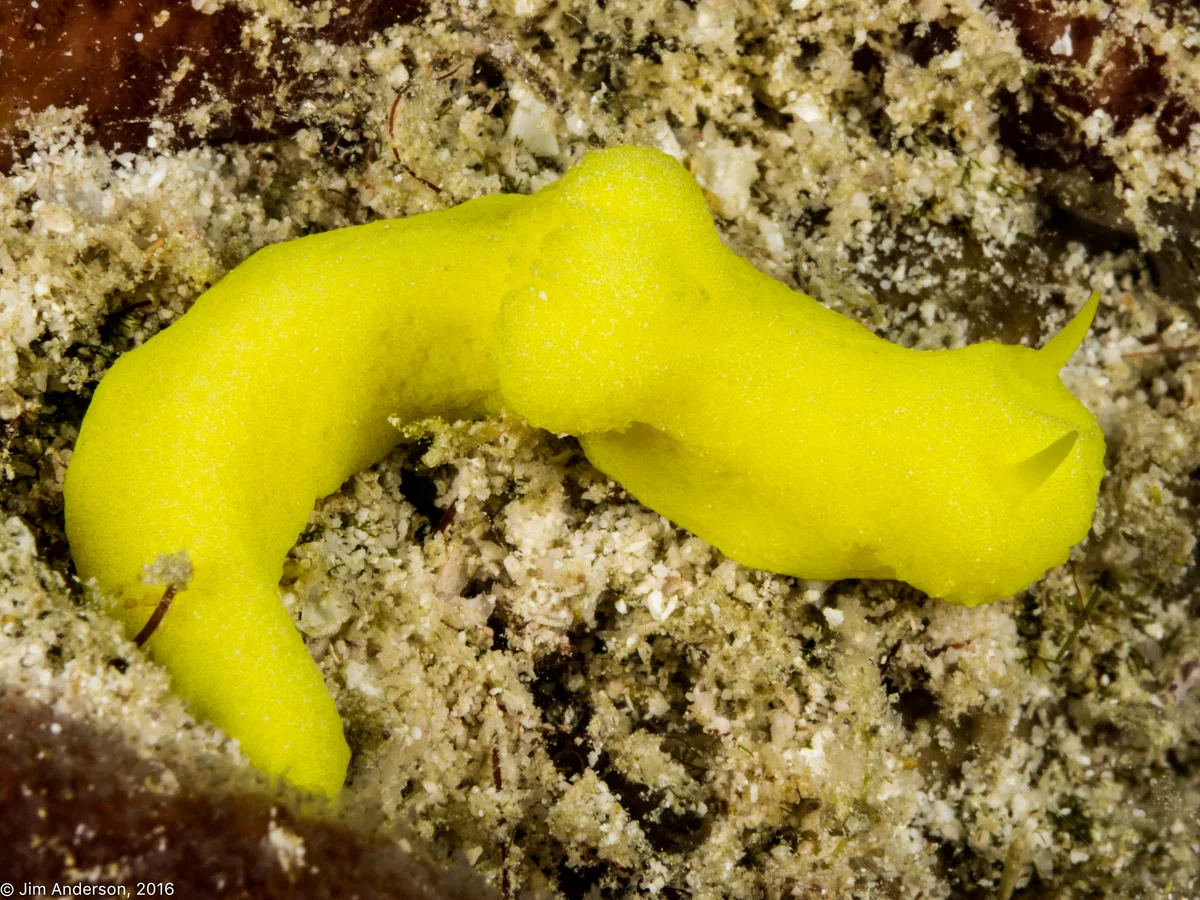
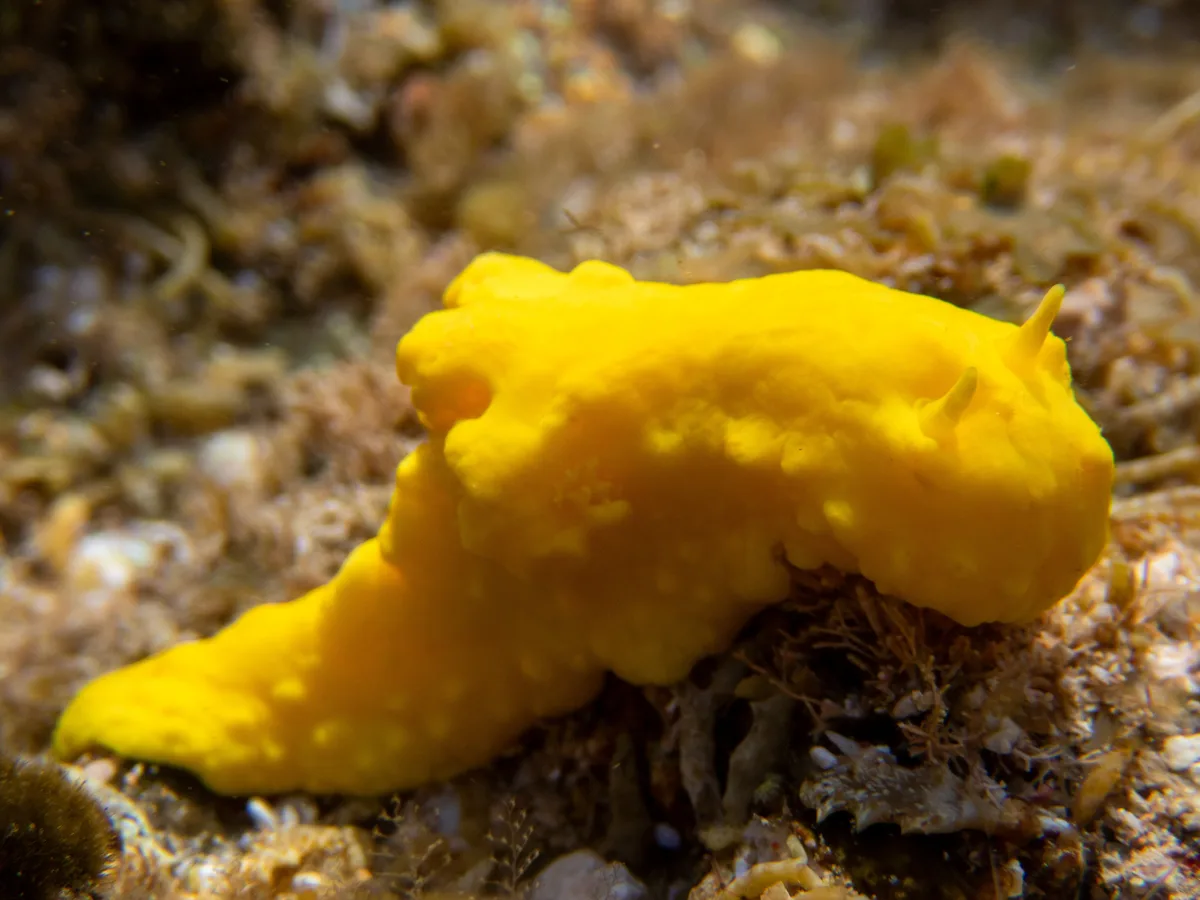
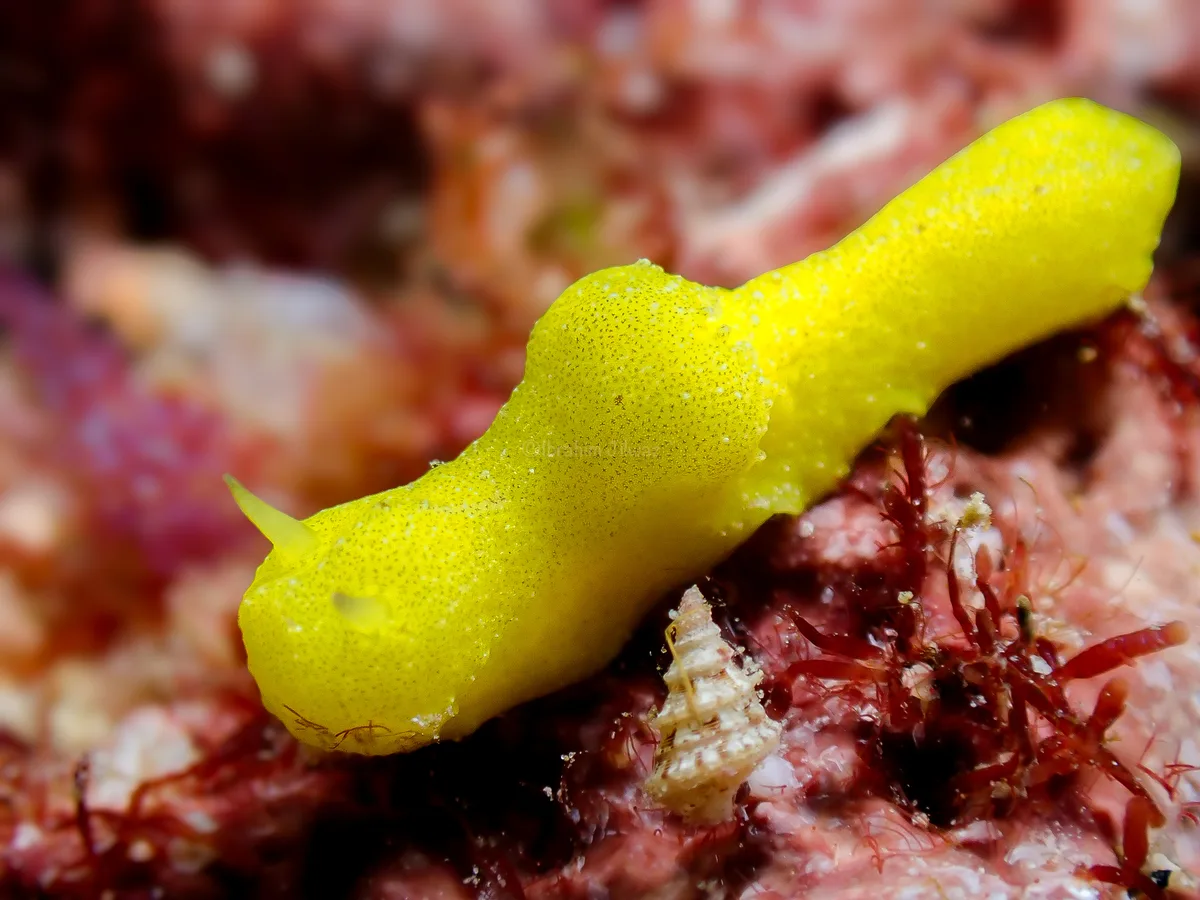
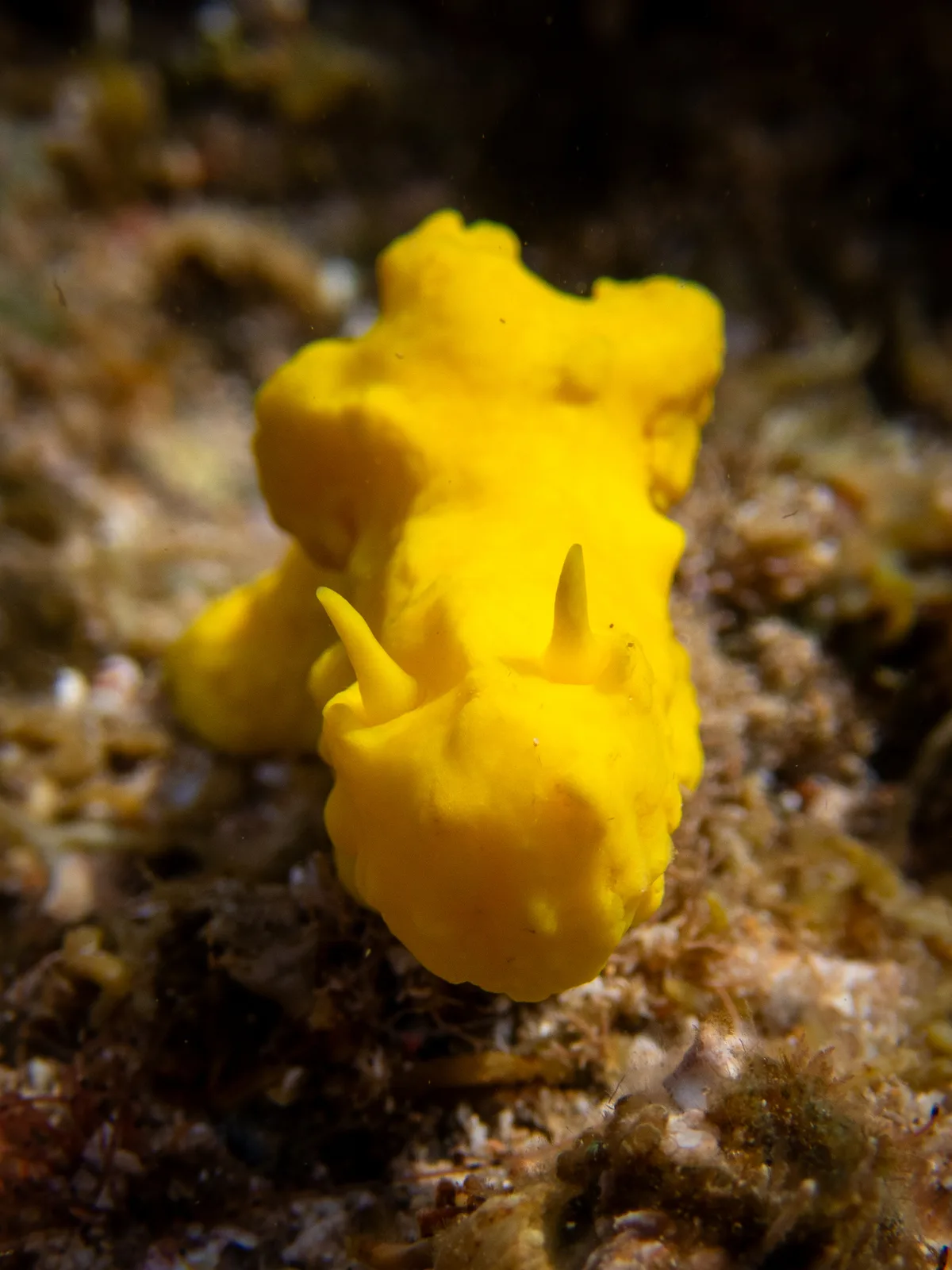
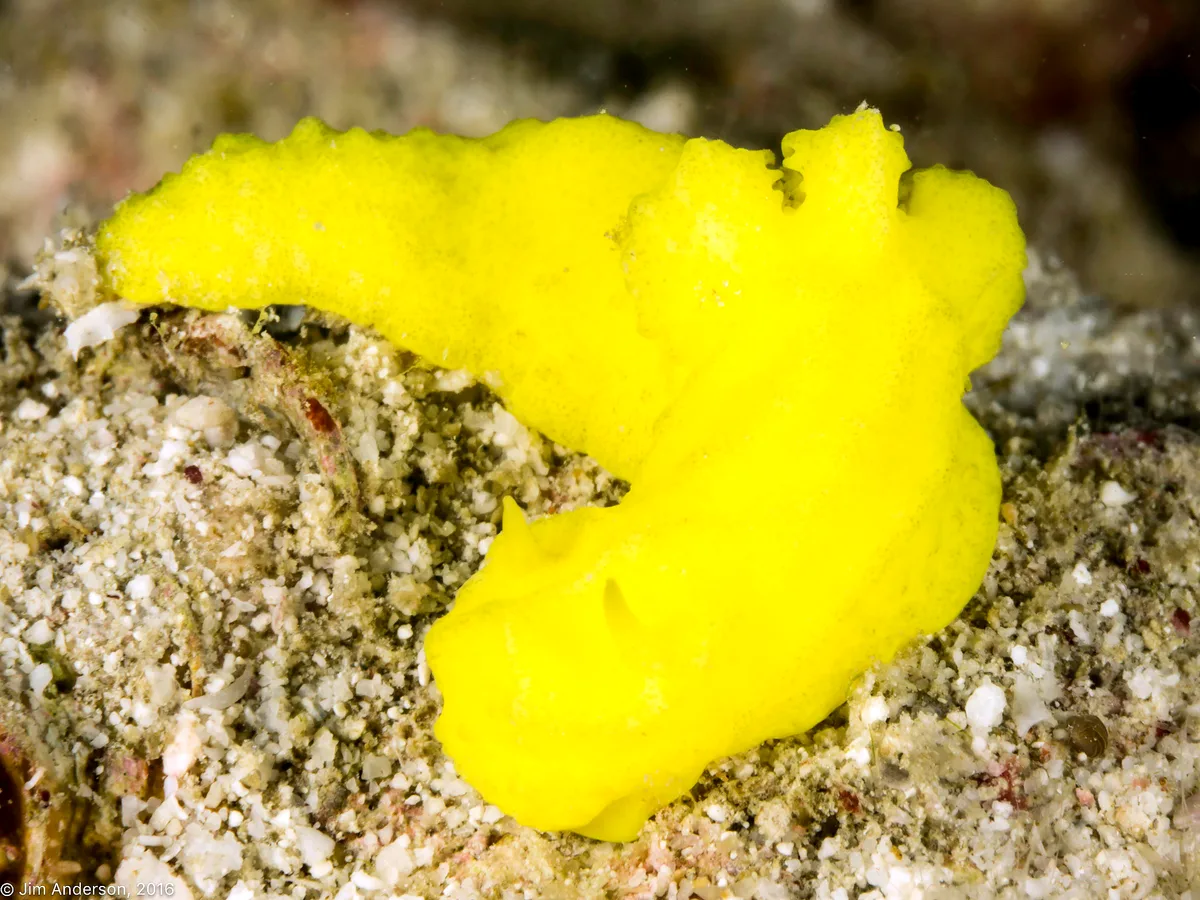
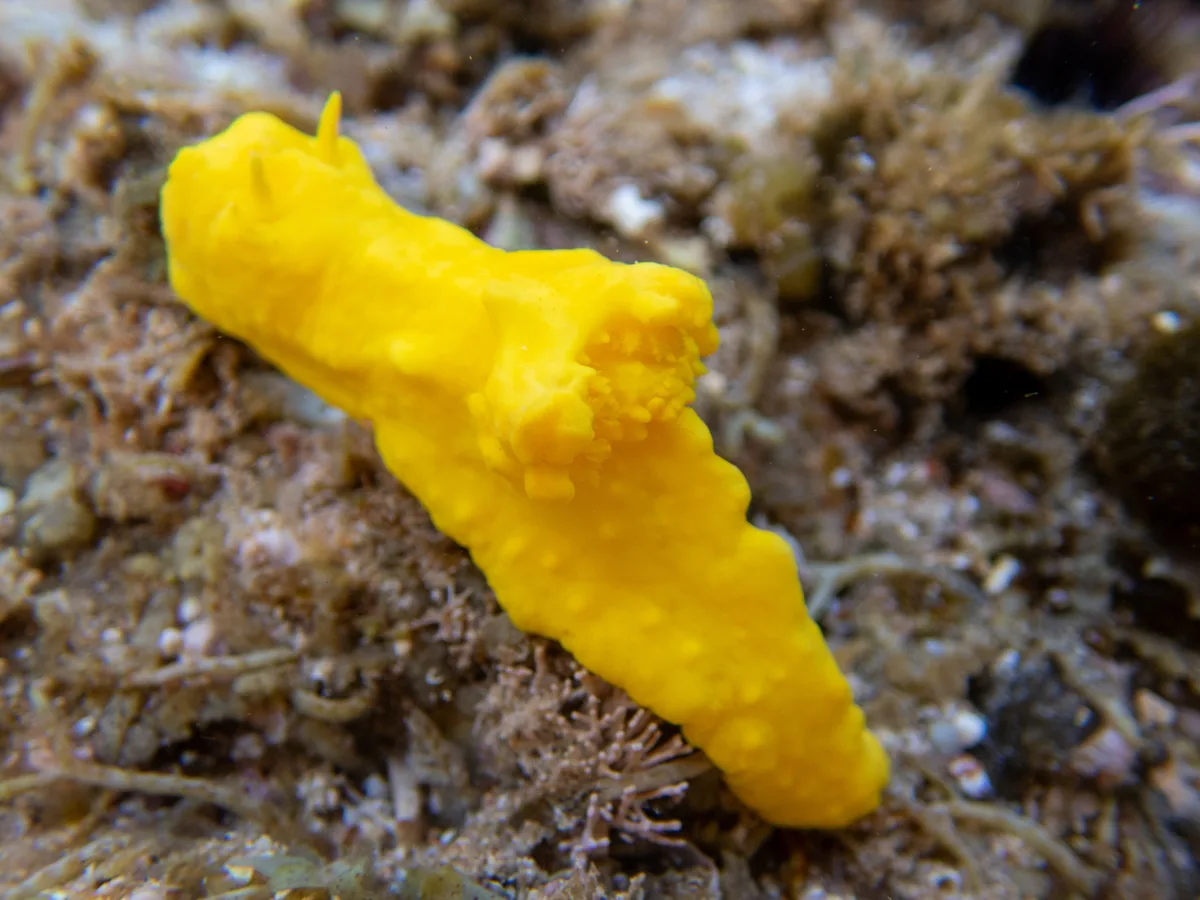
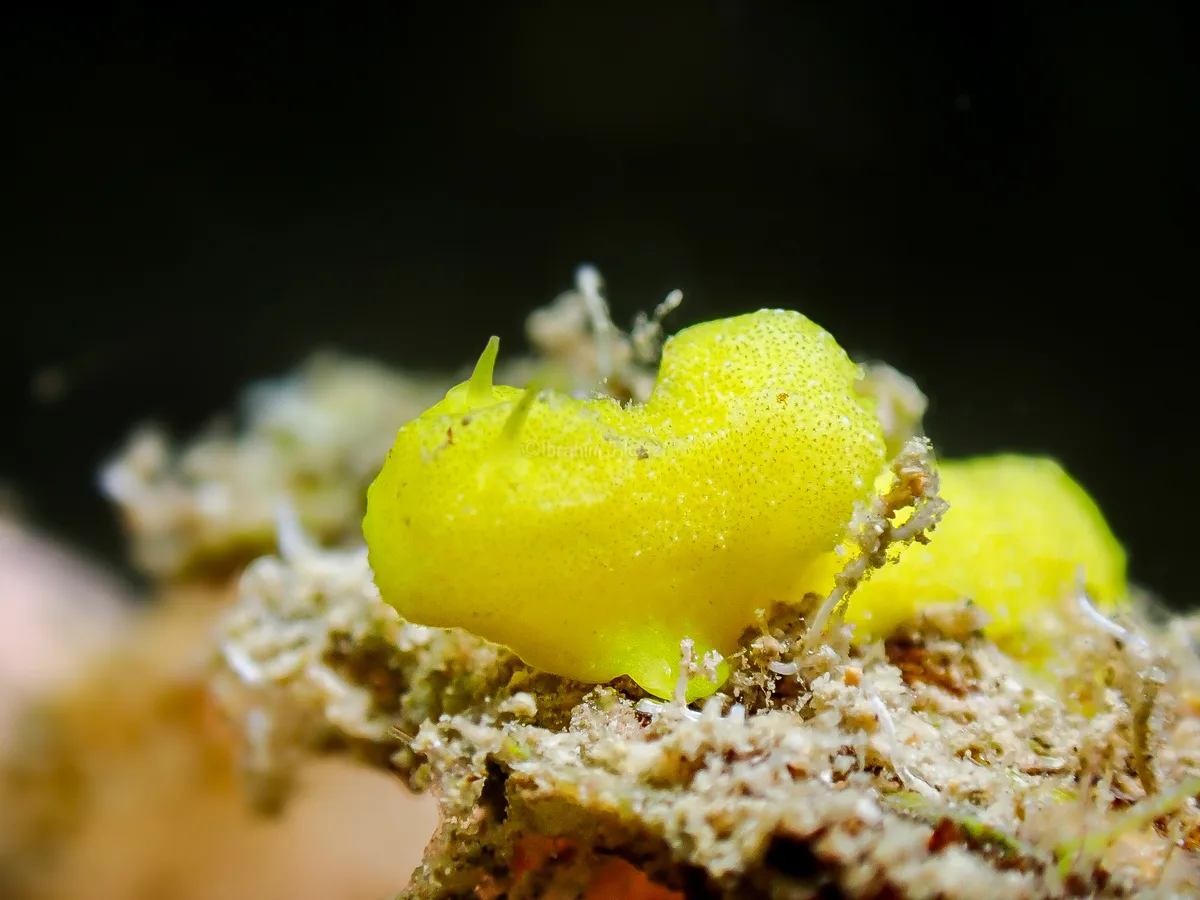
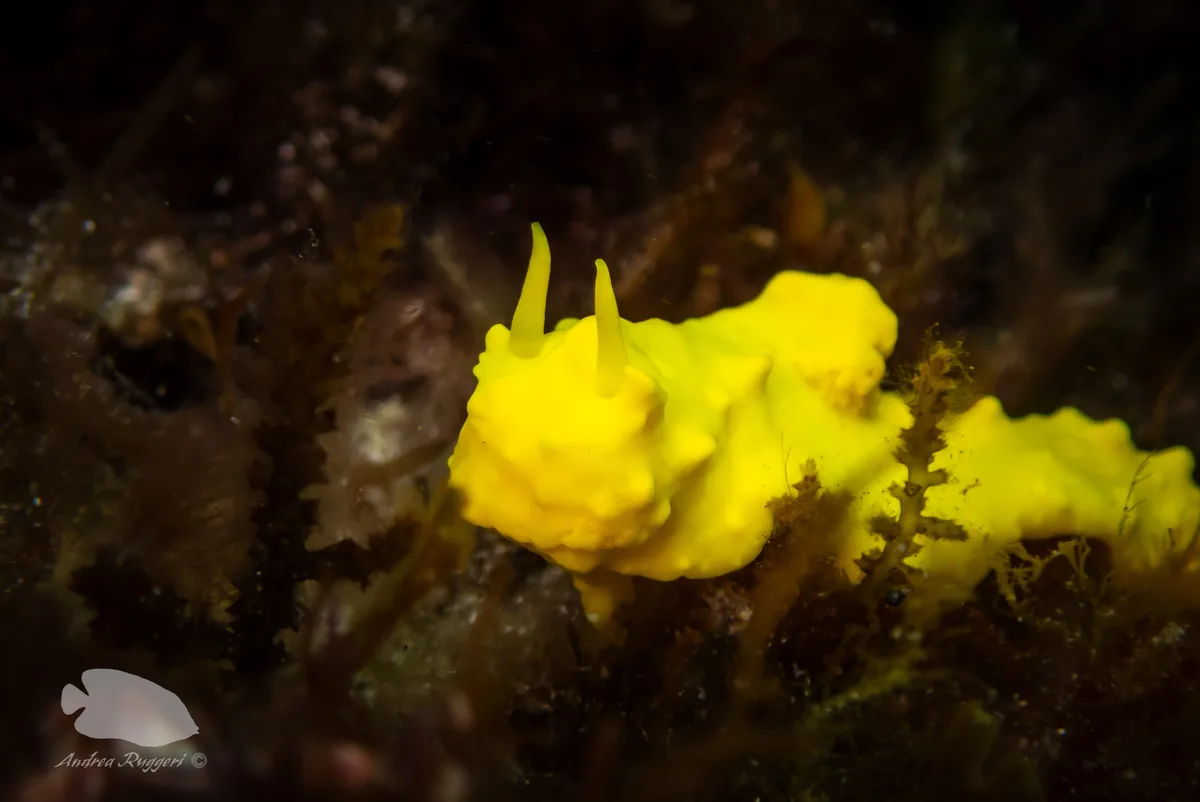
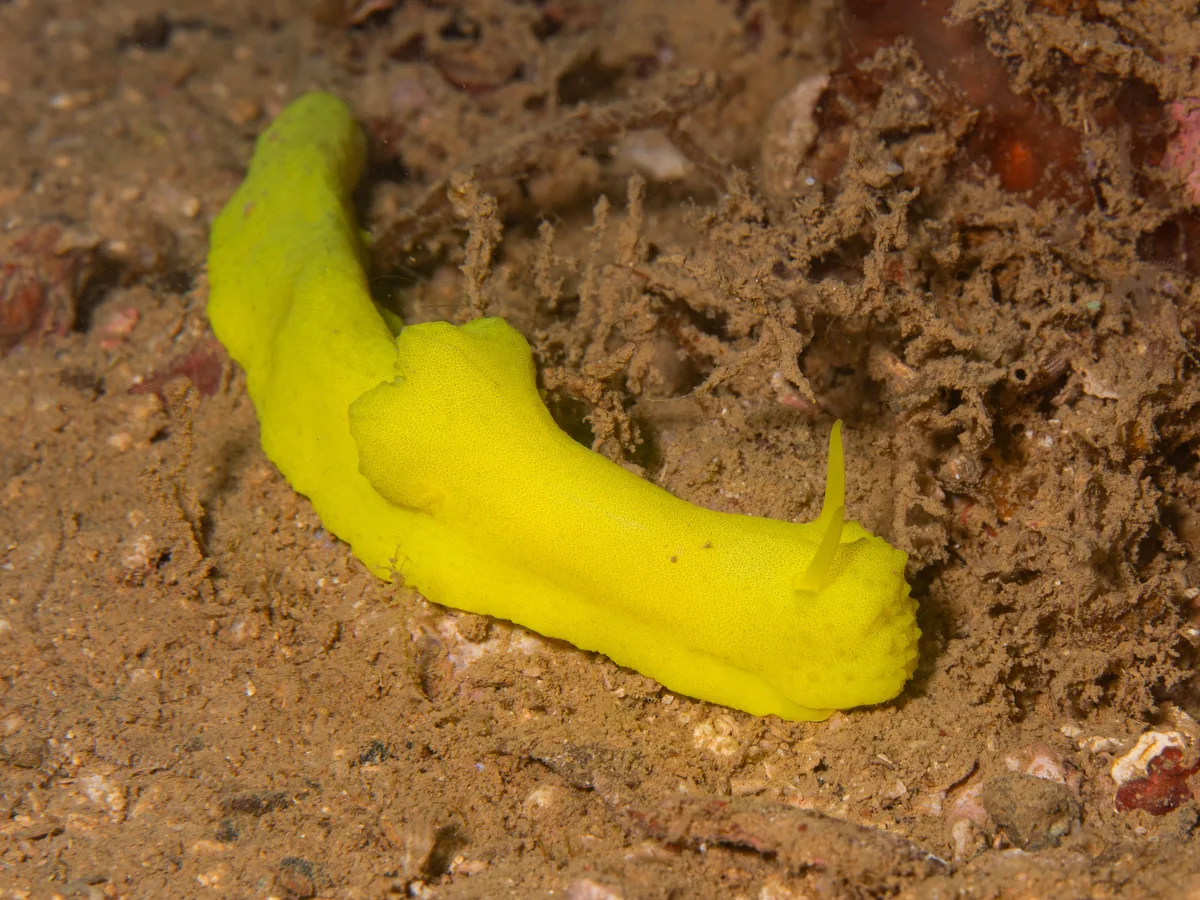
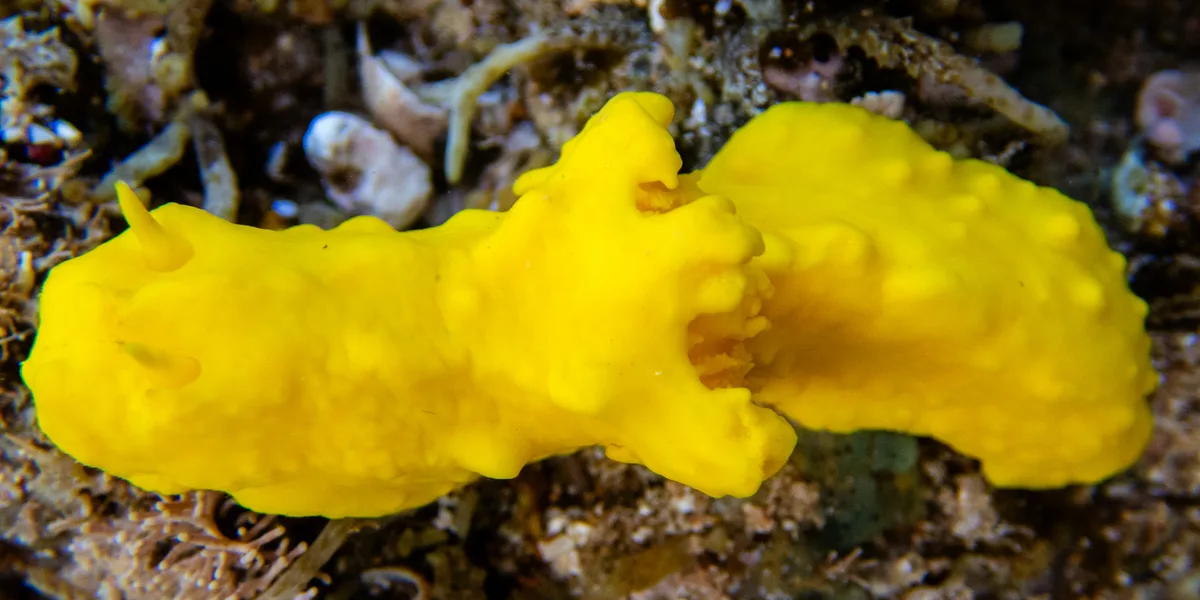
What you see is a slug that is entirely one color. Yellow body, yellow rhinophores, yellow gills, nothing else anywhere on it, on and beside a sponge of exactly that yellow. The surface is broadly smooth with soft raised lobes rather than a field of separate bumps, the body is heavy and elongate, and the rhinophores stand up as blunt yellow cones.
The gills sit under a pair of heavy appendages that stand over them like a roof. This family cannot pull the plume down into the body, and rather than a pocket it grew guards, which on a five-centimeter (2 in) animal are substantial enough to see from above. That size is worth noting on its own: the other aegirid on this reef is twelve millimeters long, the size of a grain of rice, and this is four times that.
One warning if you go looking for pictures of it. Bergh described this animal in 1875, and for a long stretch afterward it was filed under the name Aegires citrinus. That name now belongs to a different species, a smaller Australian slug whose back is covered in distinct rounded tubercles. Photo sites still carry both animals under the old label, so a search returns two things: a large smooth yellow slug and a small bumpy one. The smooth one is this.
- uniformly yellow, gills and rhinophores included, with nothing else on it
- surface broadly smooth with soft raised lobes, not a field of separate tubercles
- elongate and heavy-bodied, with blunt conical rhinophores
- on or beside a yellow calcareous sponge, in shade