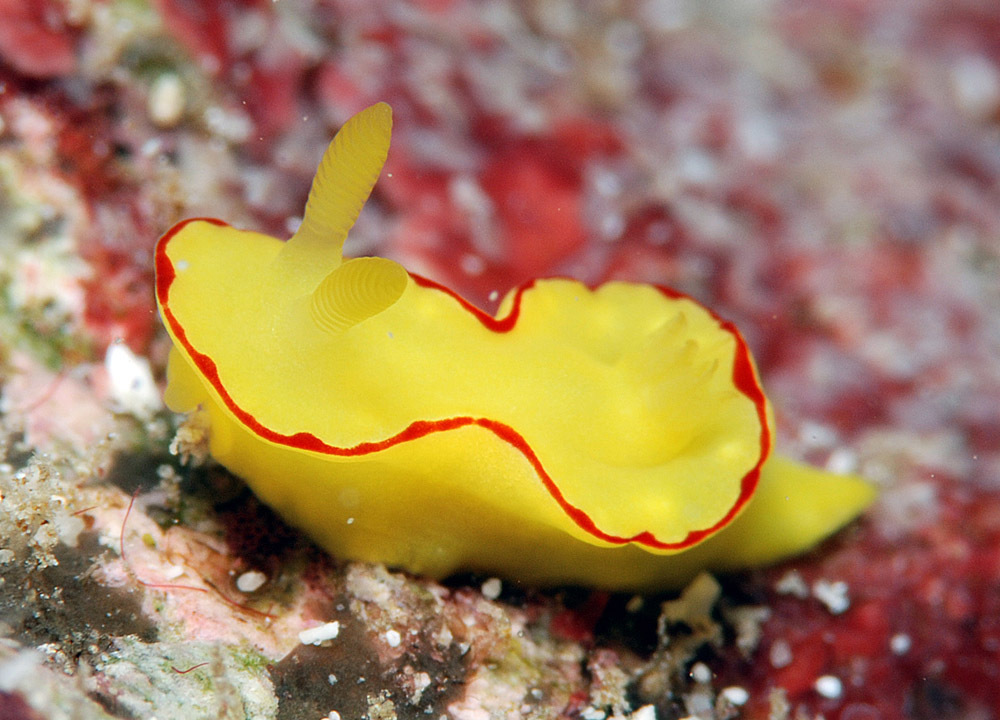
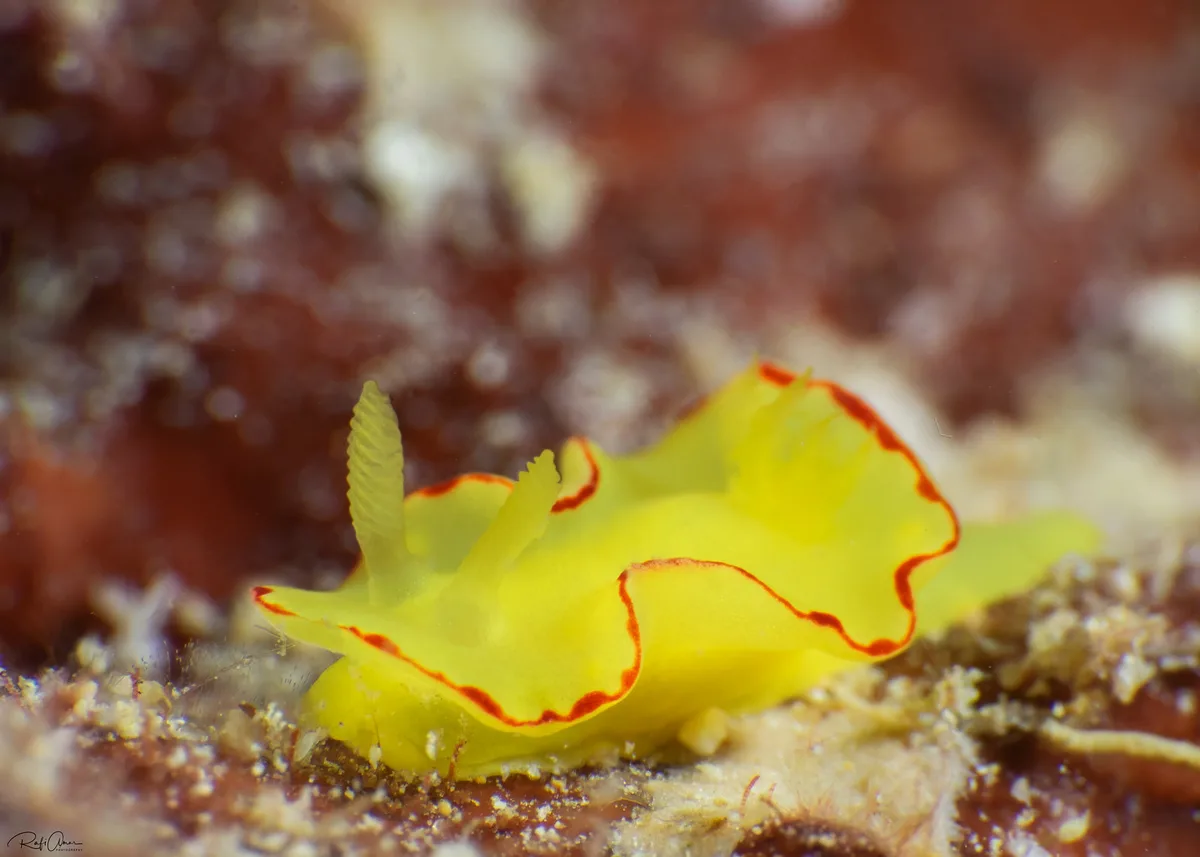
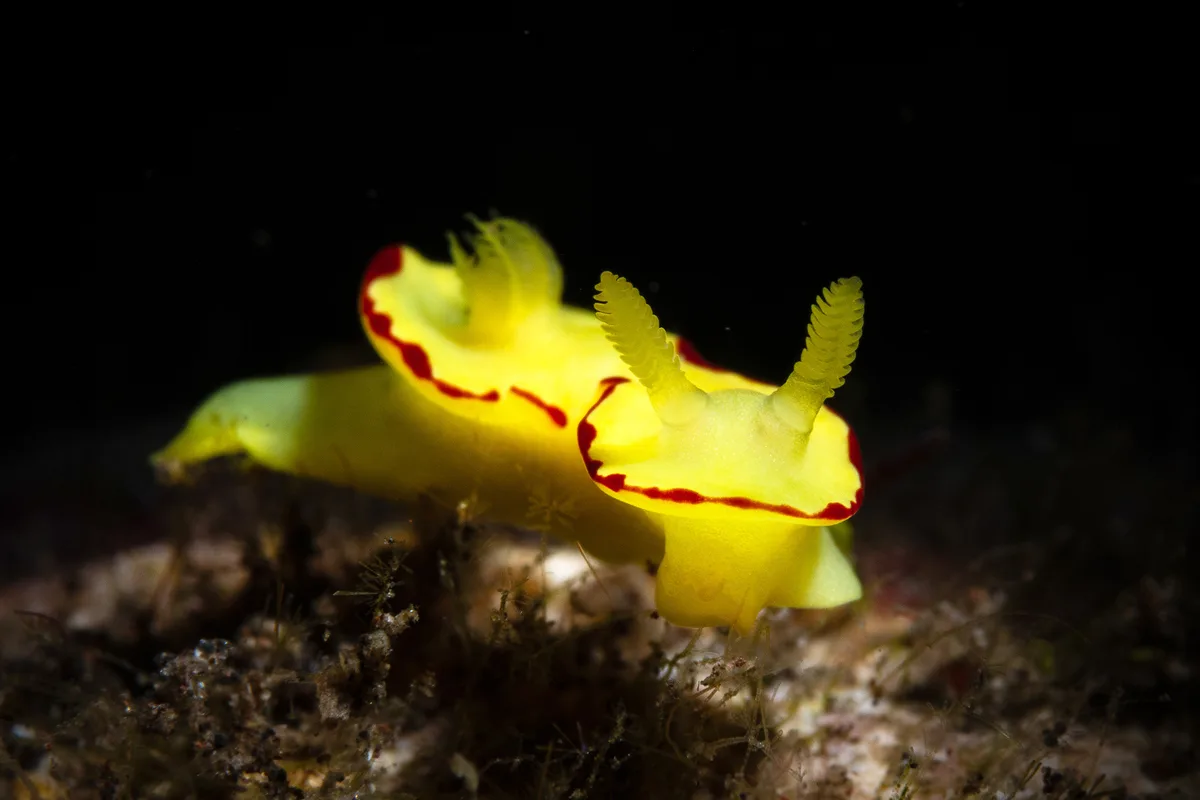
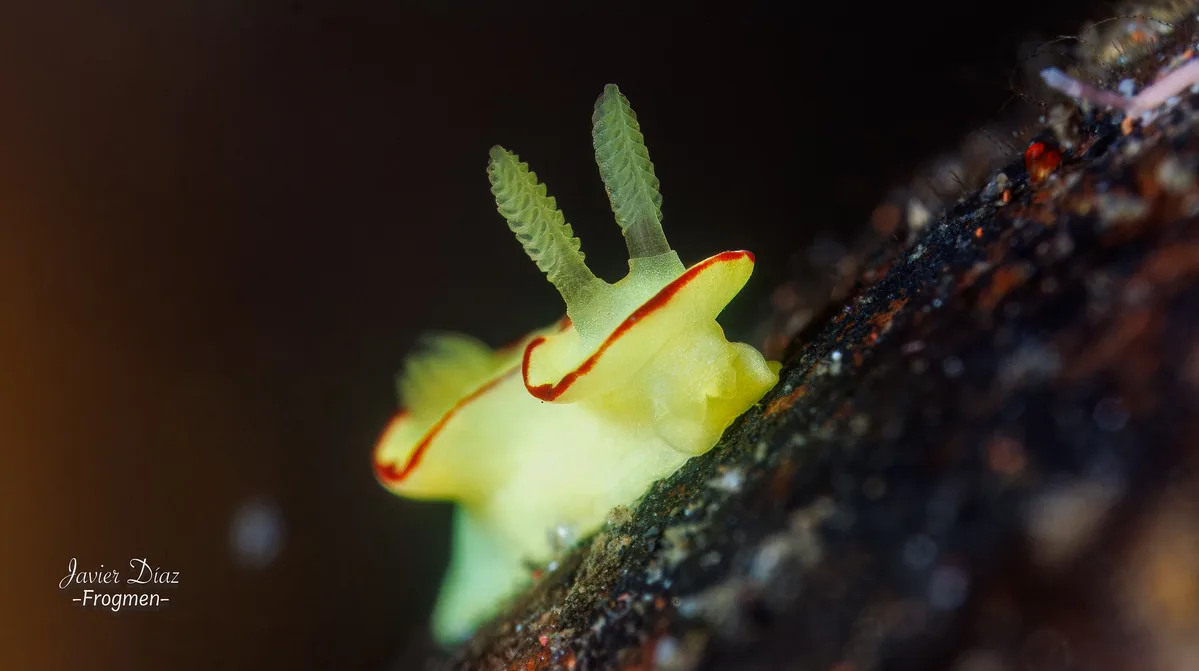
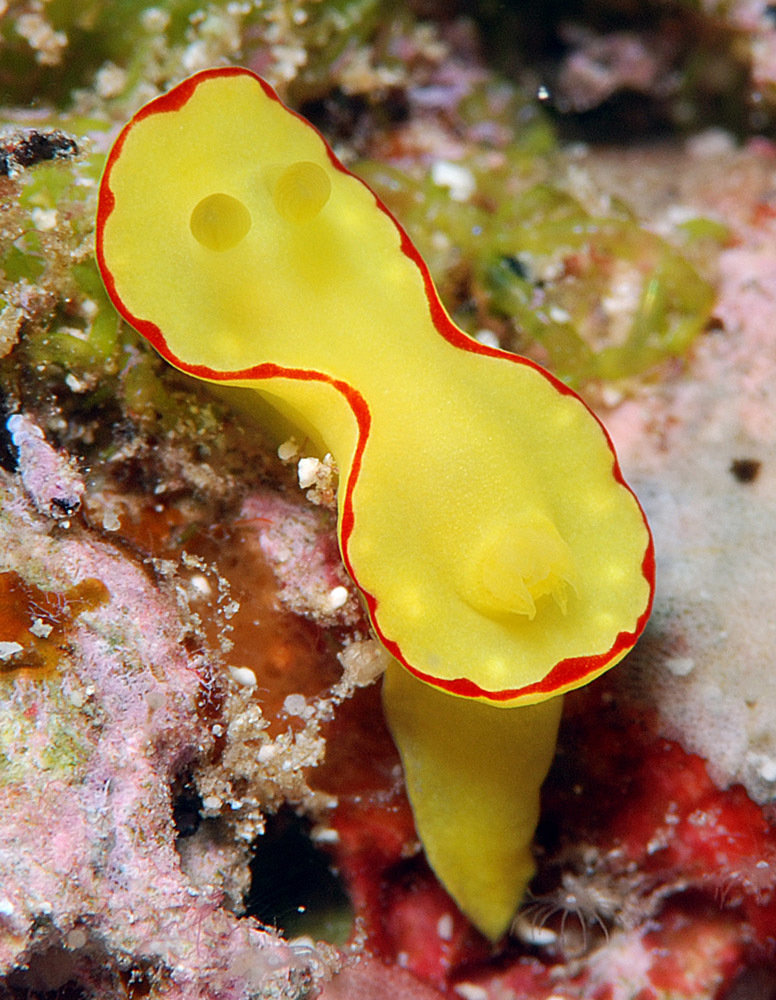
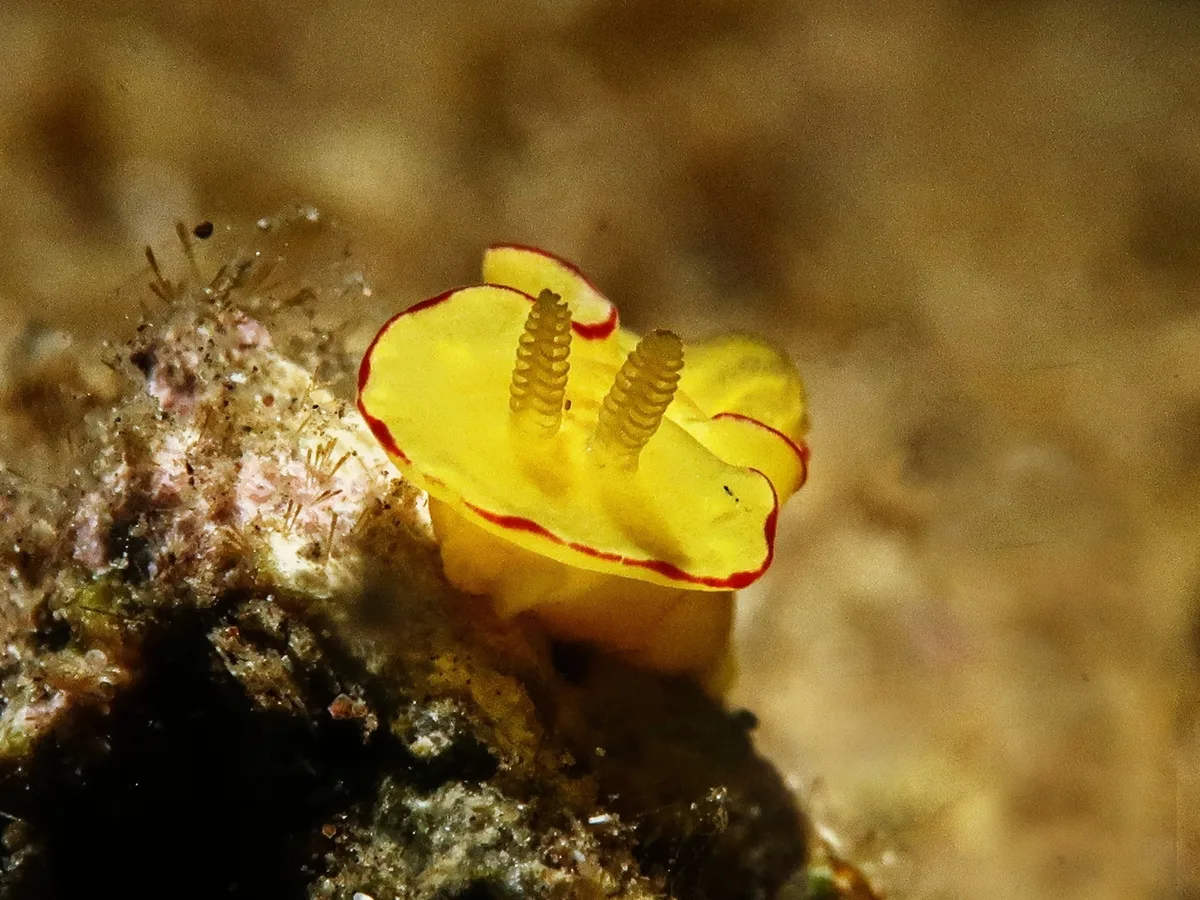
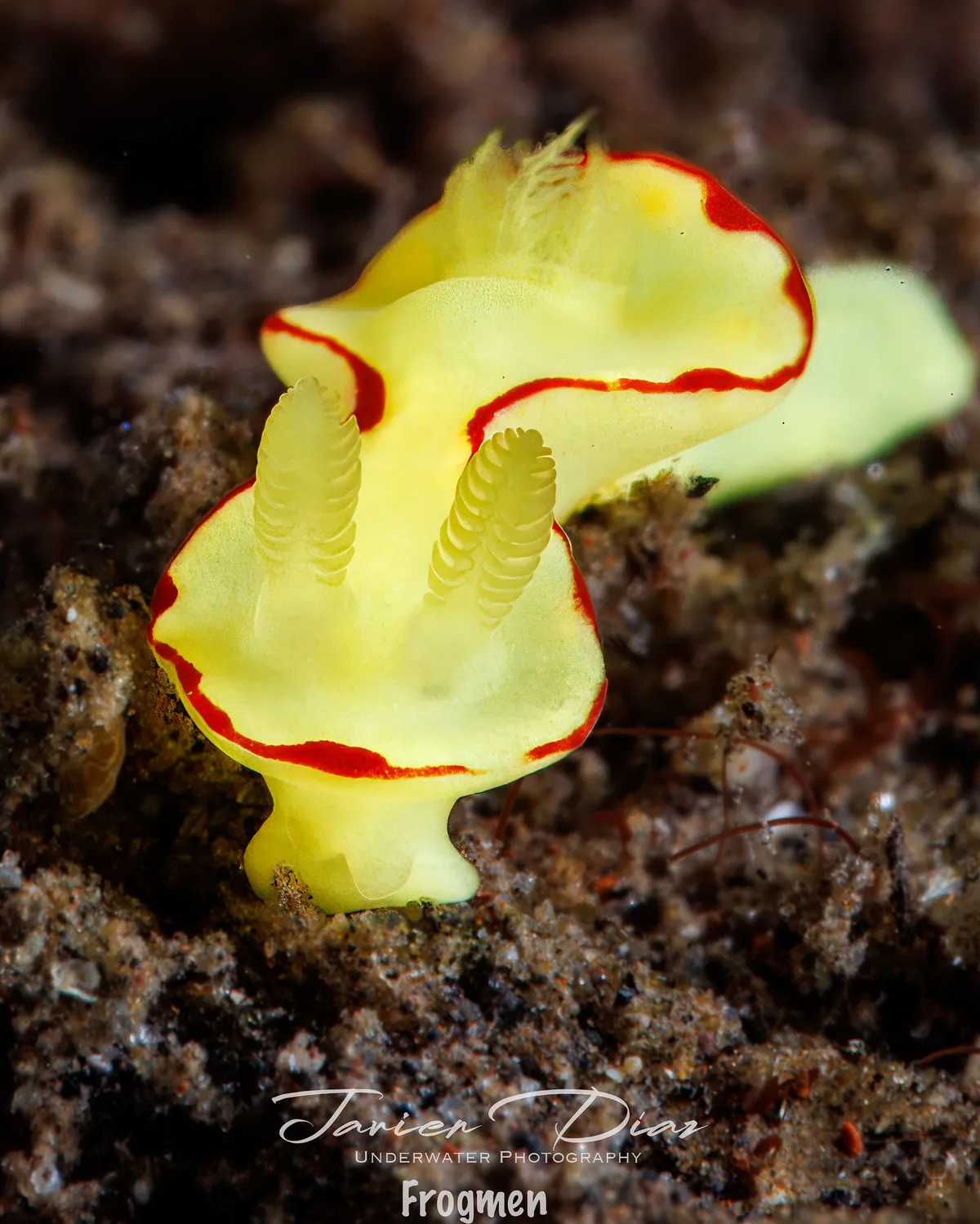
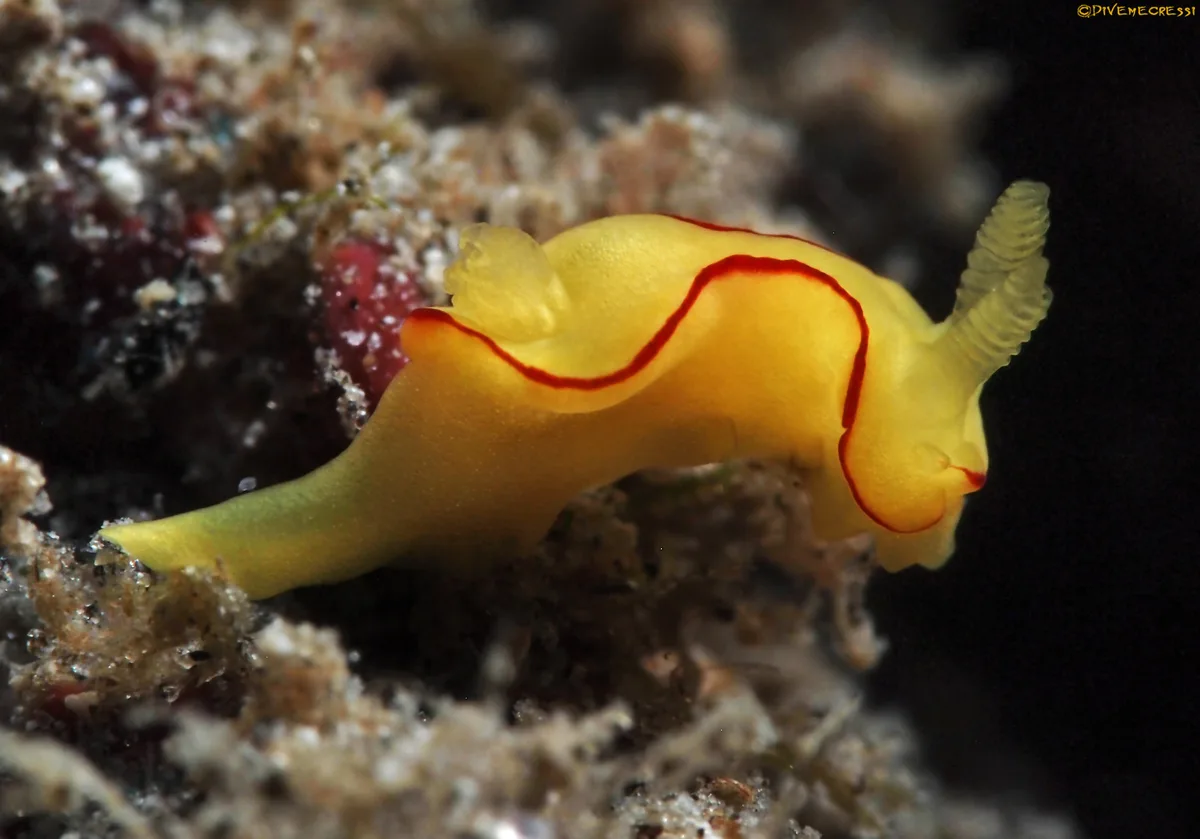
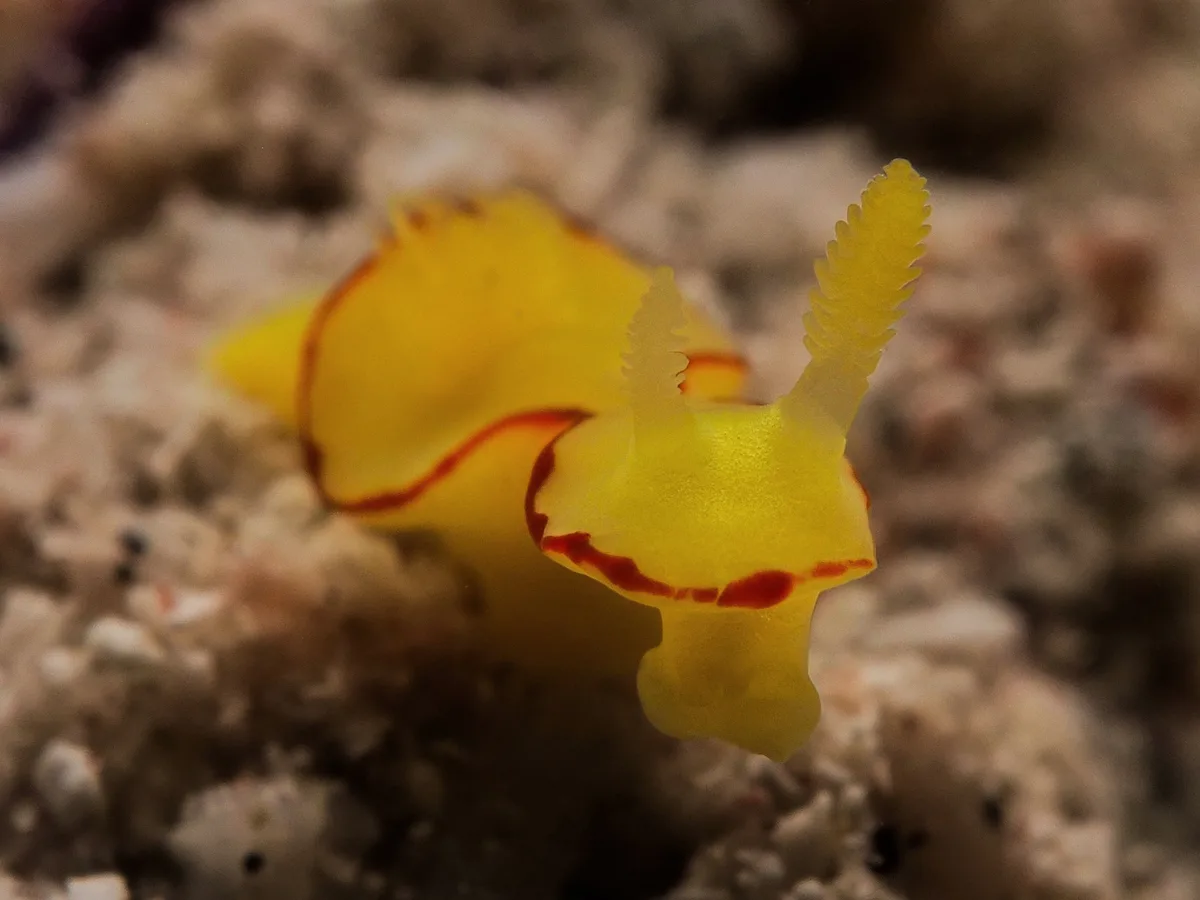
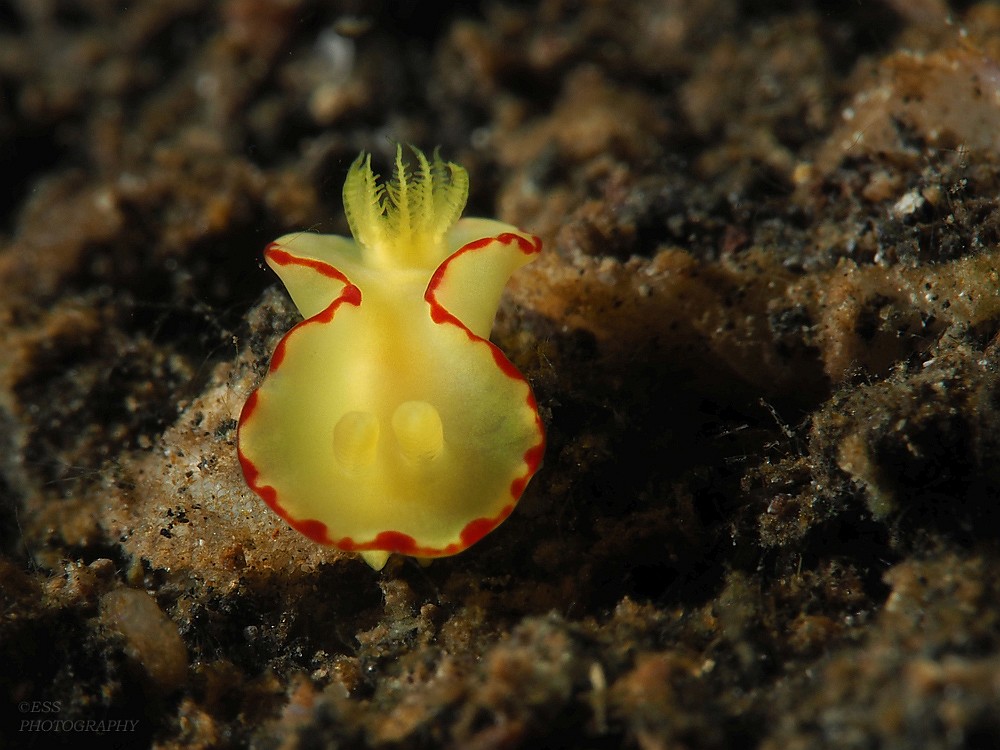
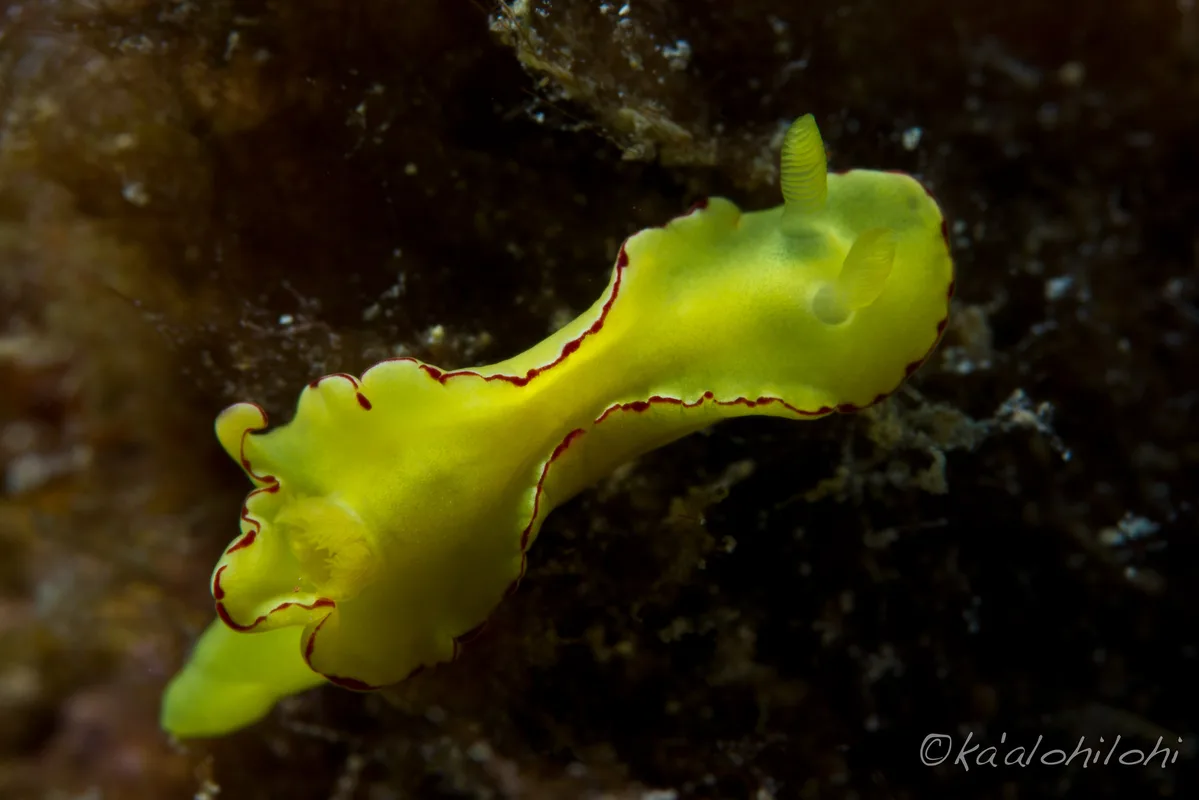
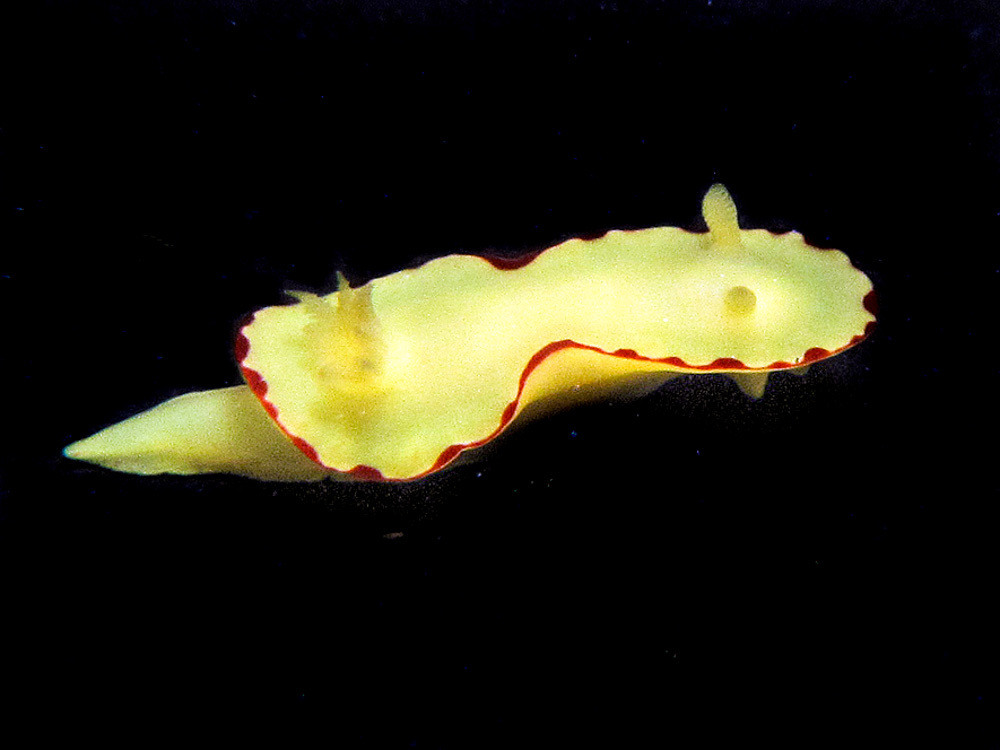
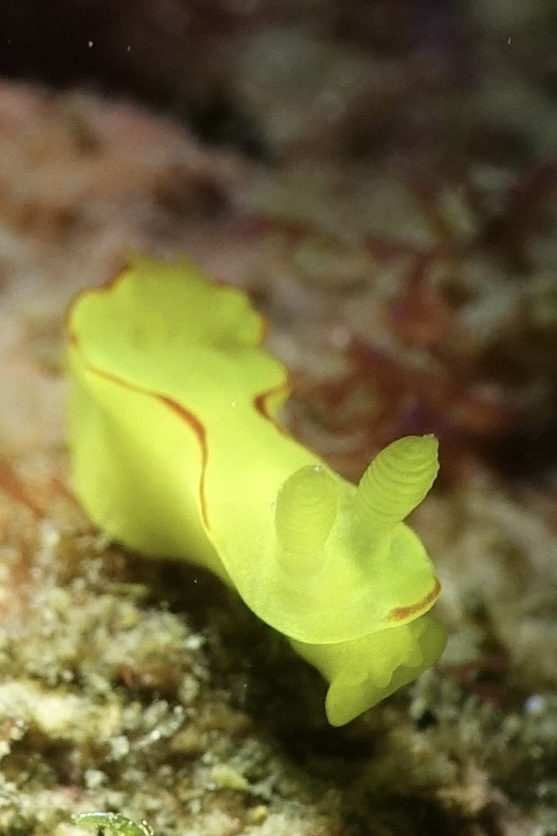
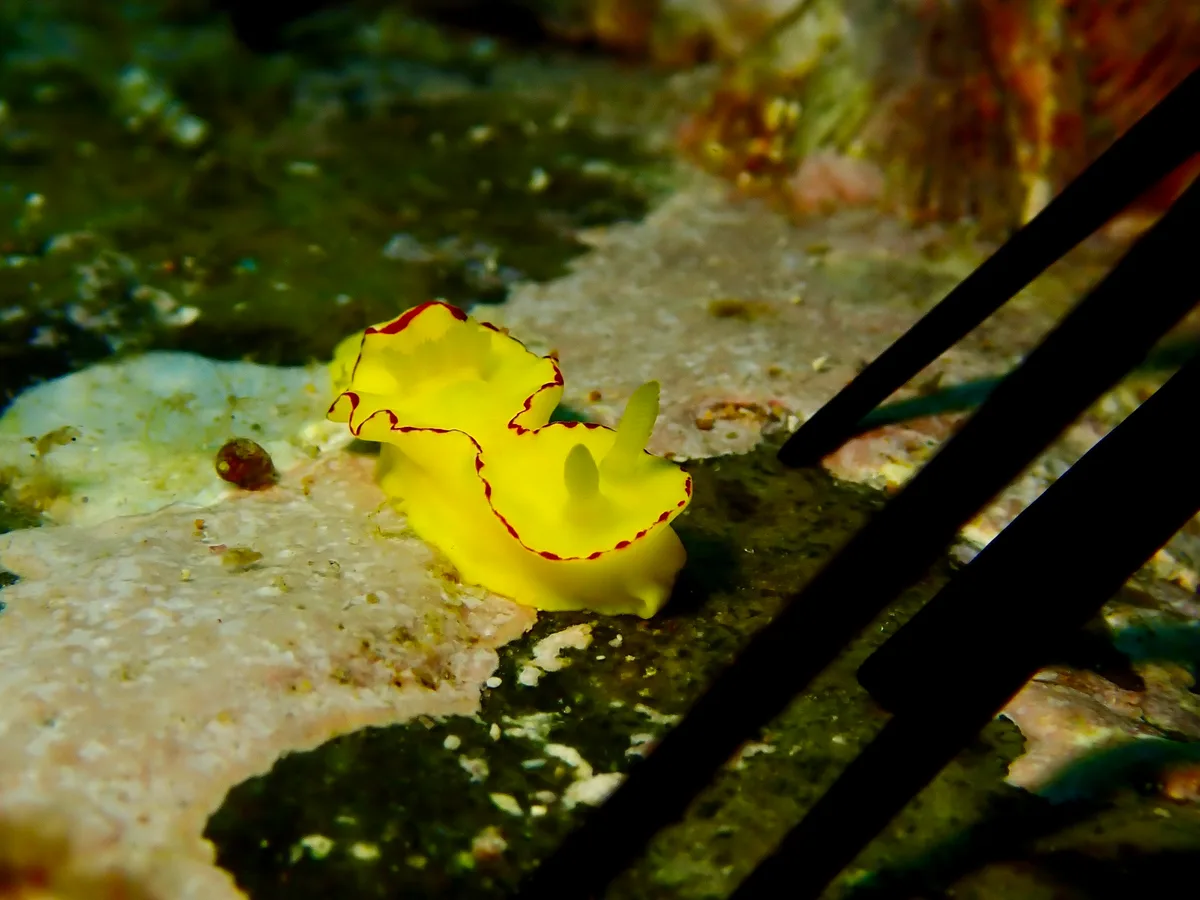
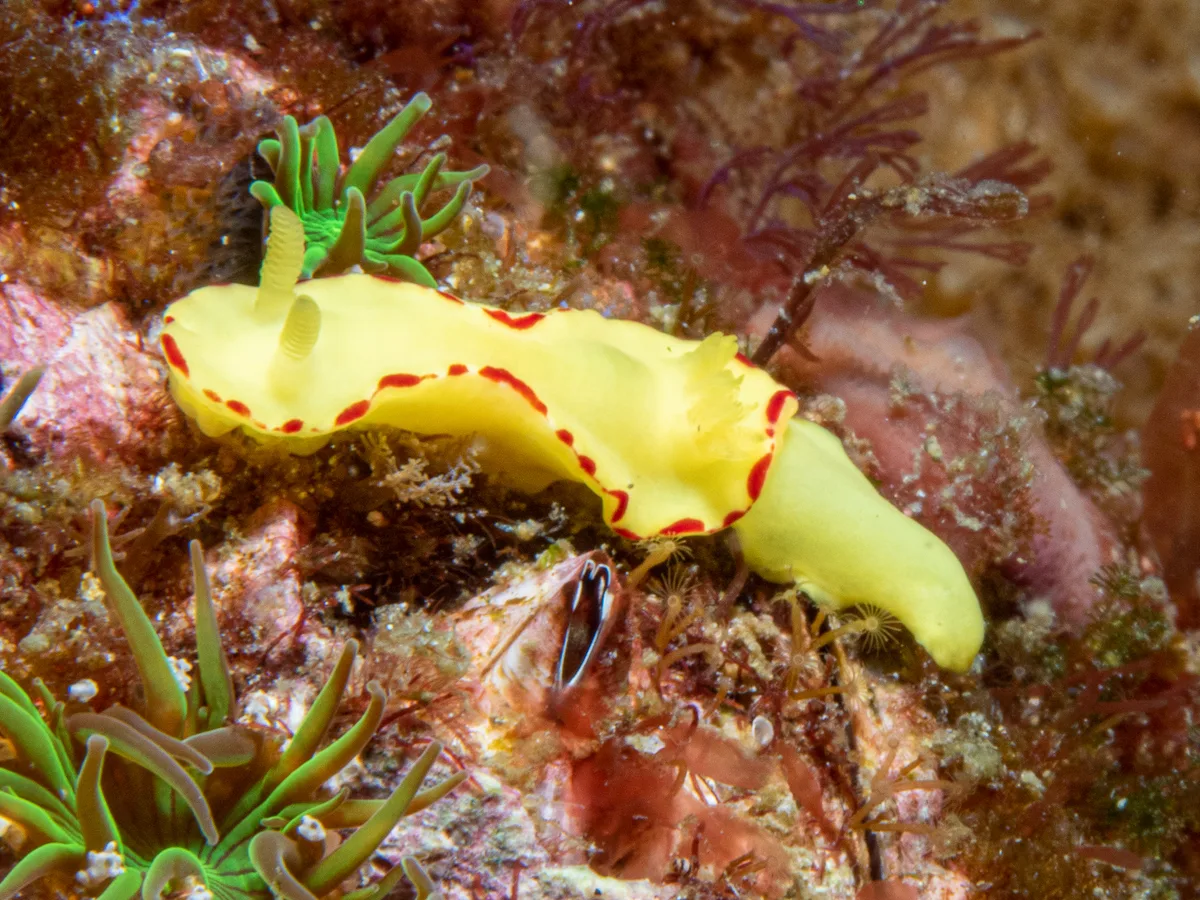
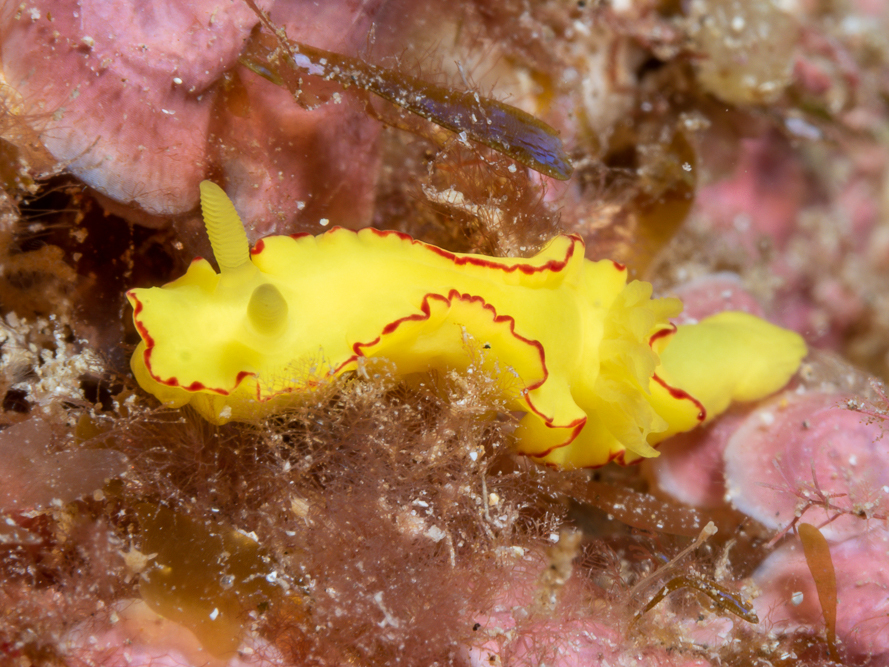
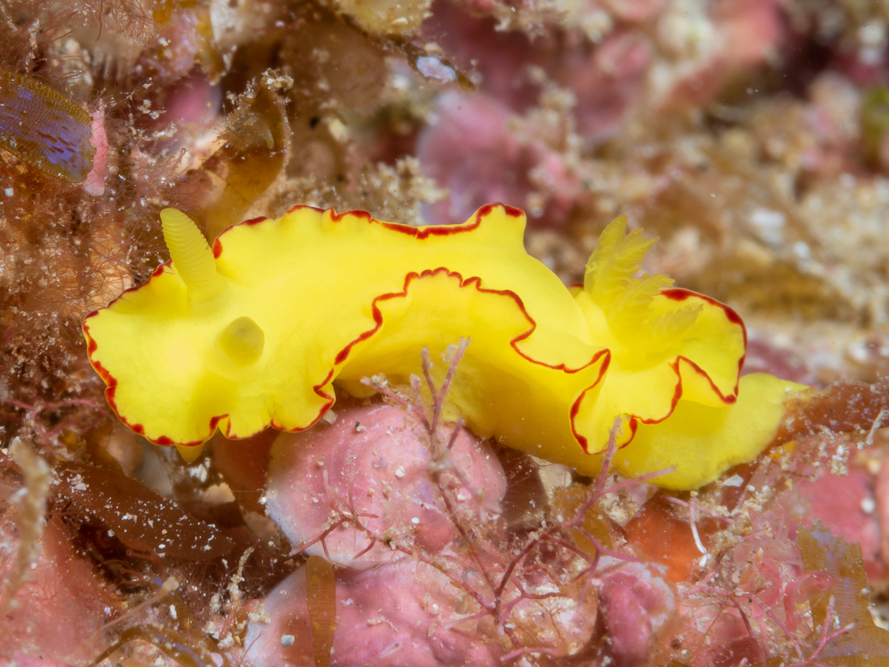
It is the color of its food, and that is not camouflage.
This slug feeds on yellow sponges, and the yellow in its own skin comes from them. Chromodorids take the sponge apart chemically and keep what is useful, and pigment travels with the defensive compounds they are actually after. The result is an animal that matches the thing it sits on without ever having been selected to hide, because hiding is not what it does: it is chemically defended and advertises the fact.
Which makes finding one a matter of finding the sponge. At fifteen millimeters, pale yellow on a yellow crust, it is genuinely hard to see, and the practical method is to search the sponge rather than the rock.
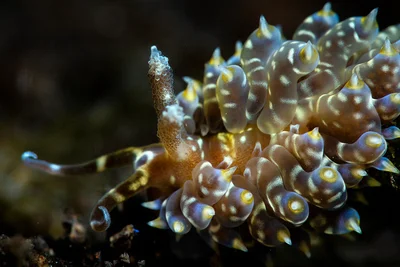
The mark that separates it from its close relative is the gills. This one has red in them; the larger, deeper yellow tulip longtail dorid does not. Both have the tail that projects behind the mantle skirt and gives the group its English name.
It runs from this sea east to Hawaii (🇺🇸 United States), which is a long way for an animal this small, and reflects a larval stage that drifts in open water before settling. The adult never travels more than a few meters in its life.
- pale yellow body with a yellow margin
- gills marked with red, which the tulip longtail dorid lacks
- tail projecting behind the mantle skirt
- tiny, up to 1.5 cm