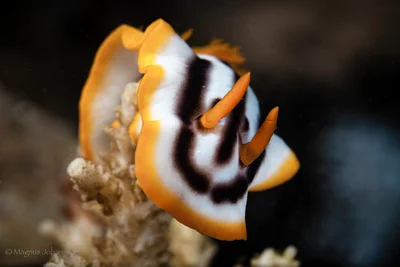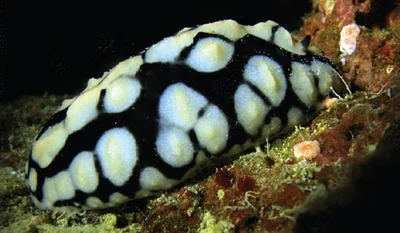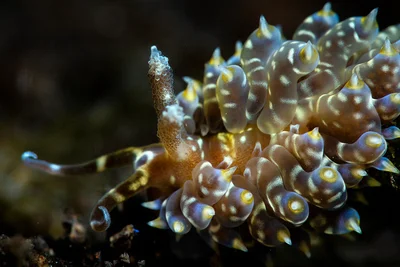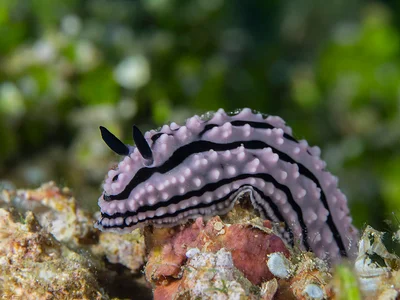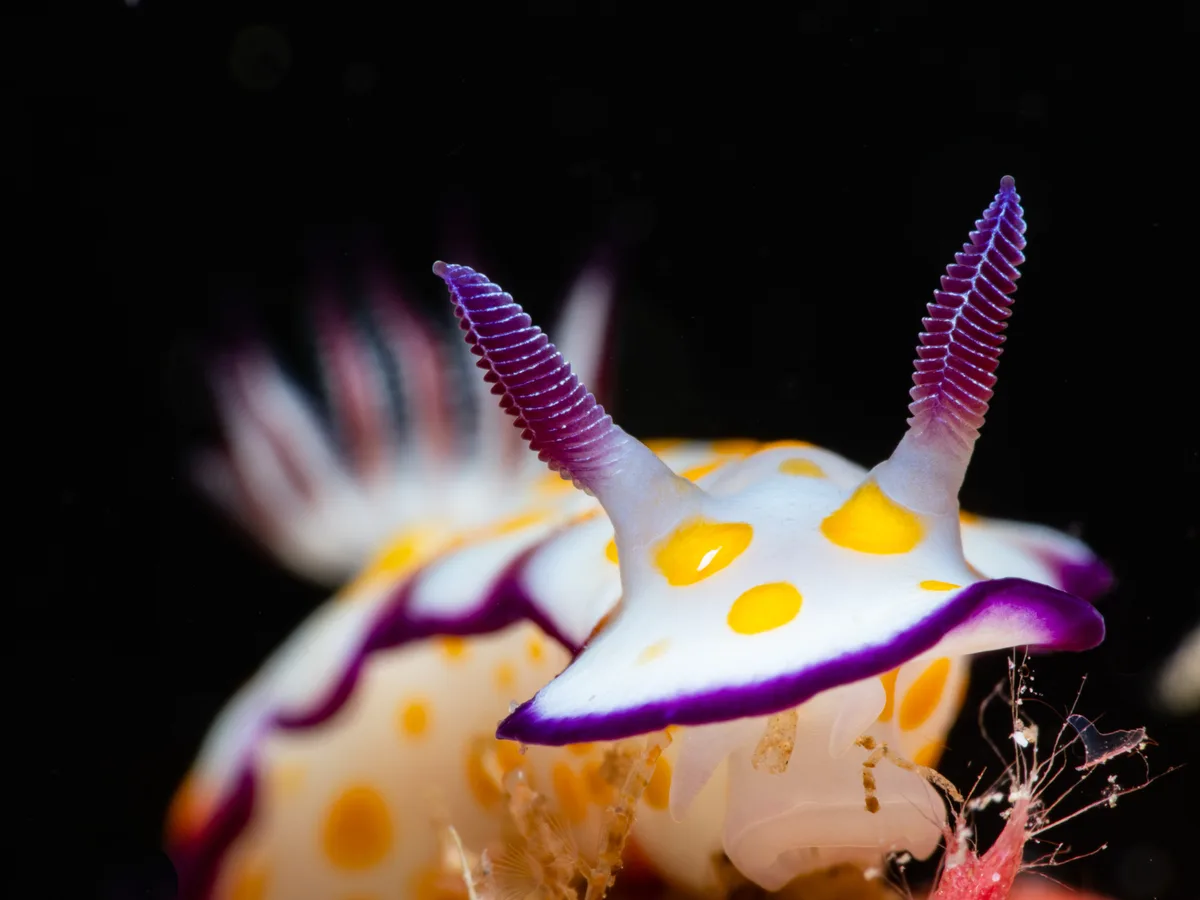
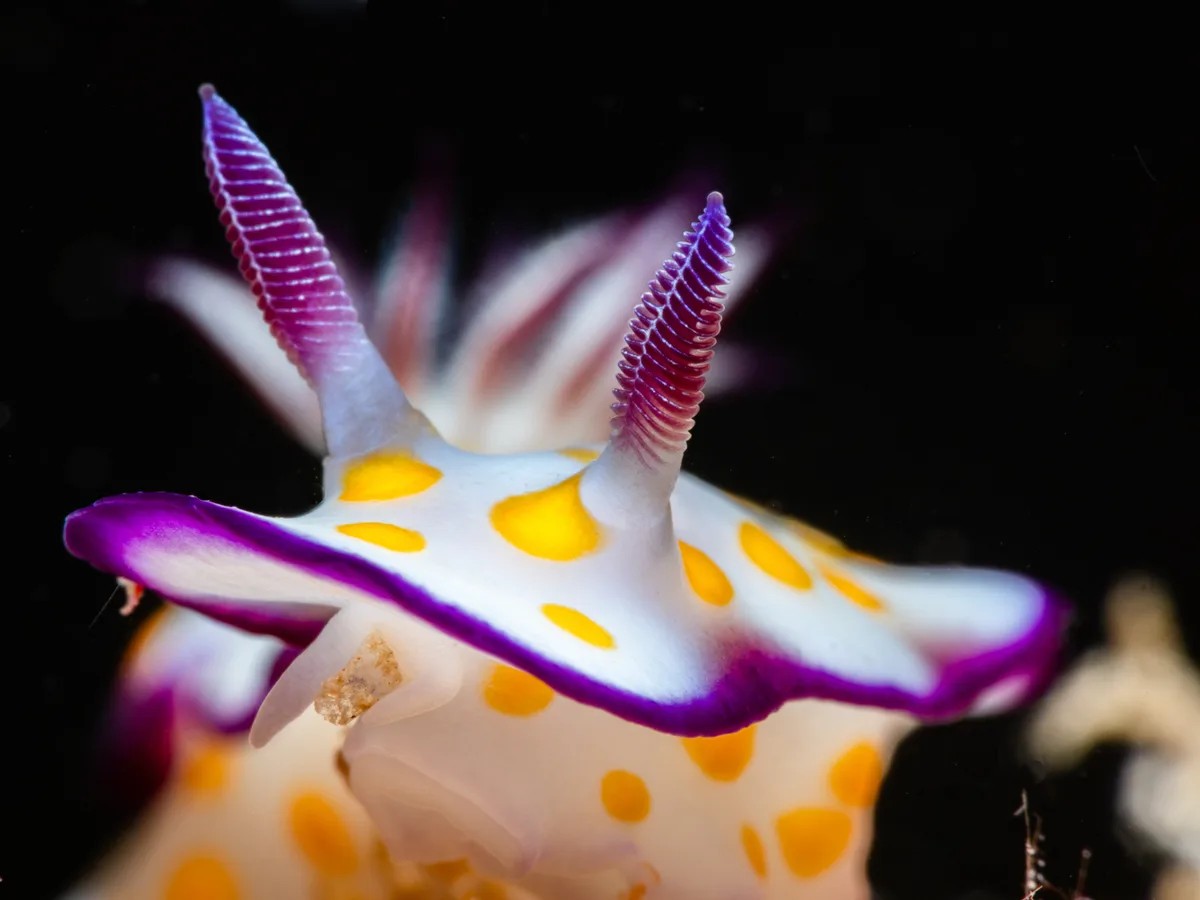
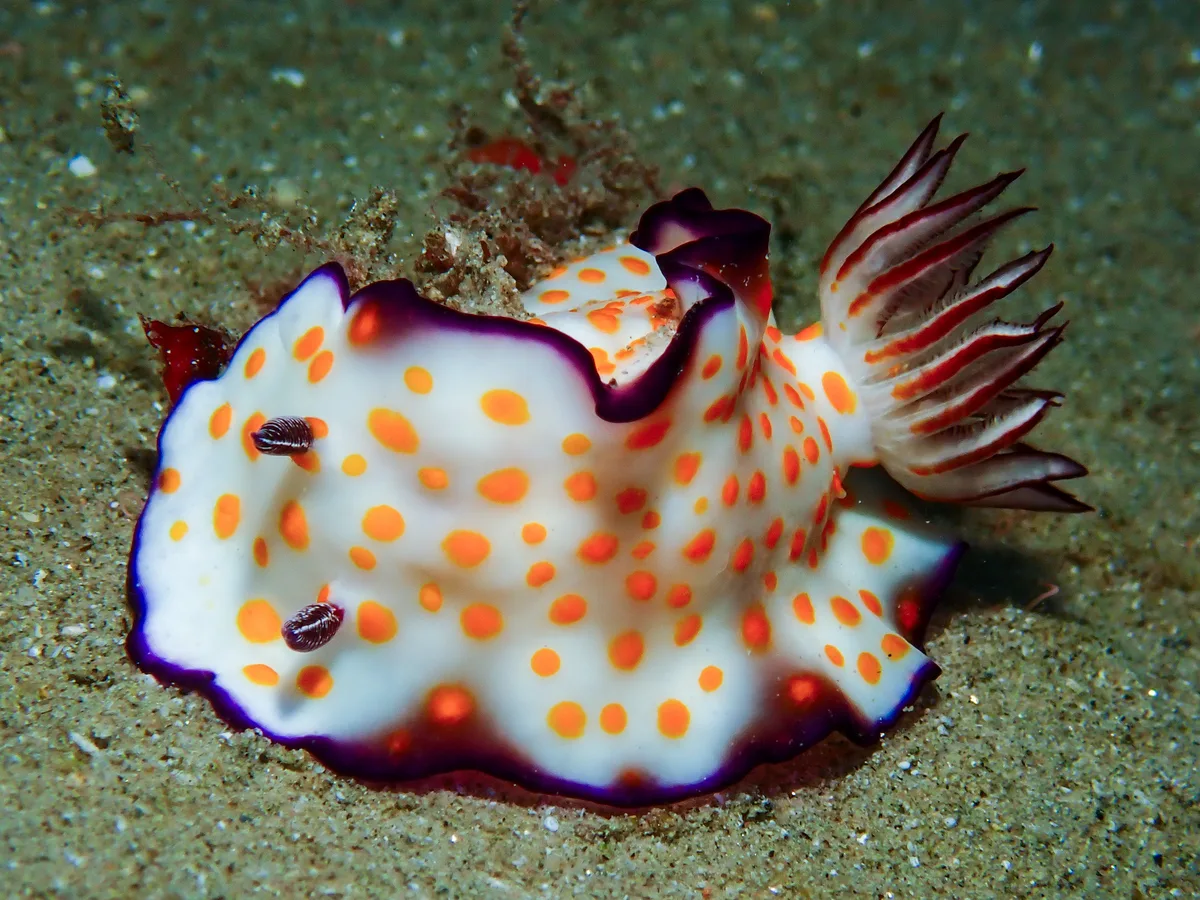
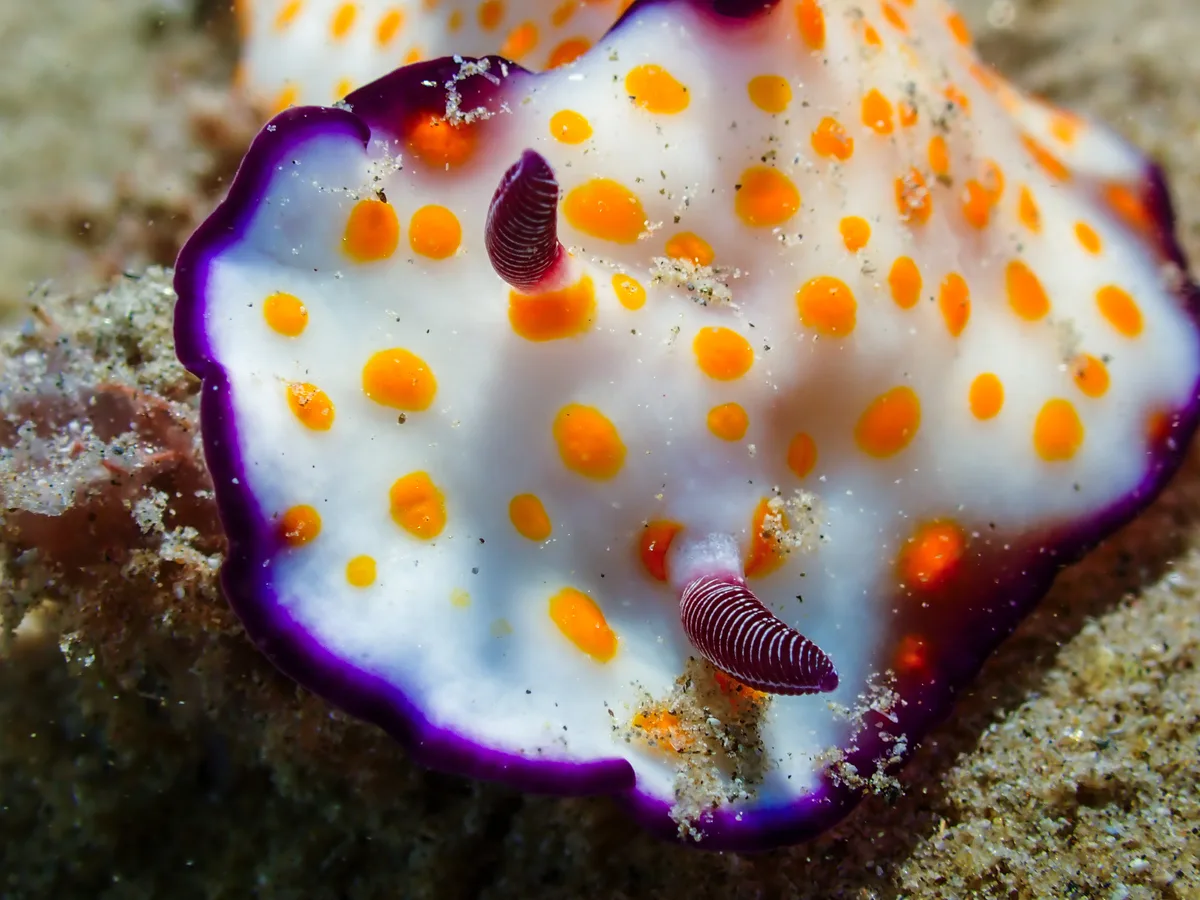
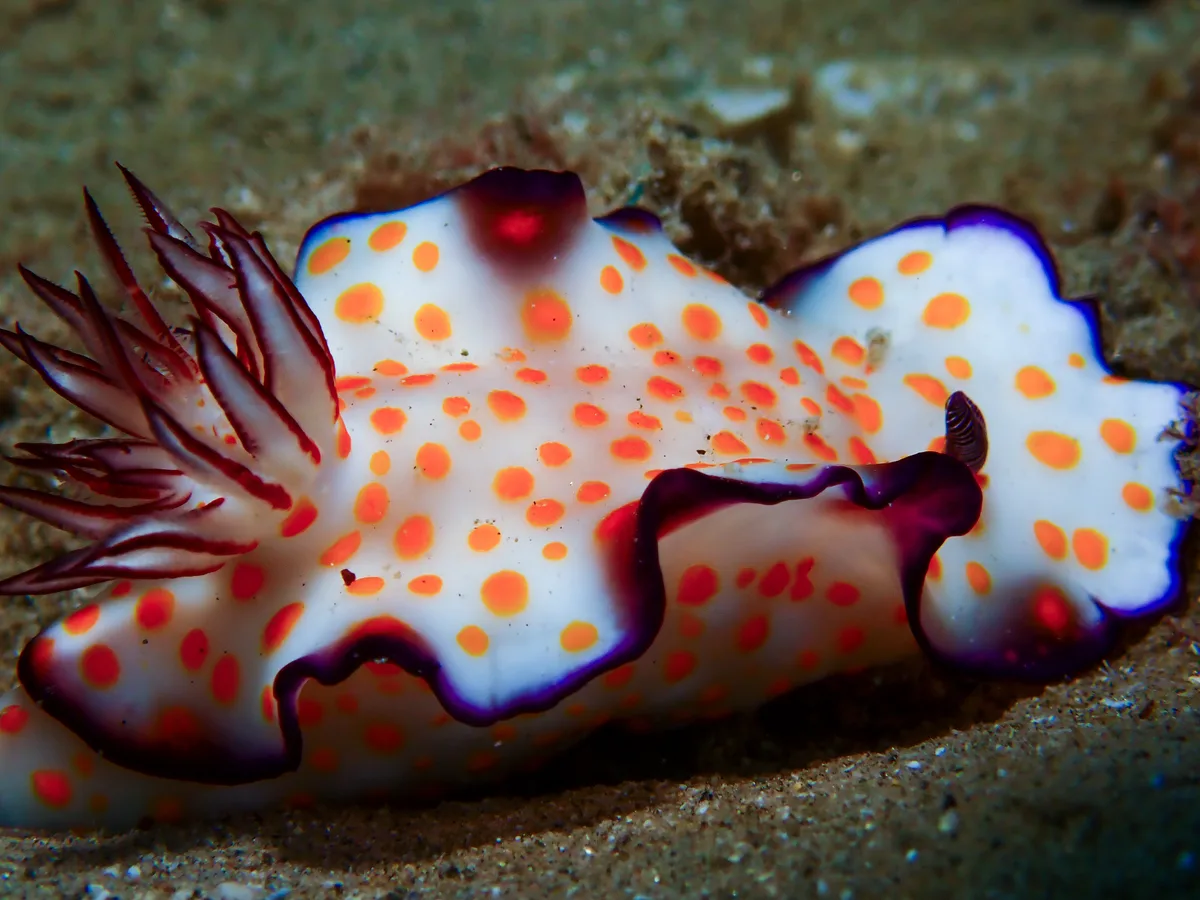
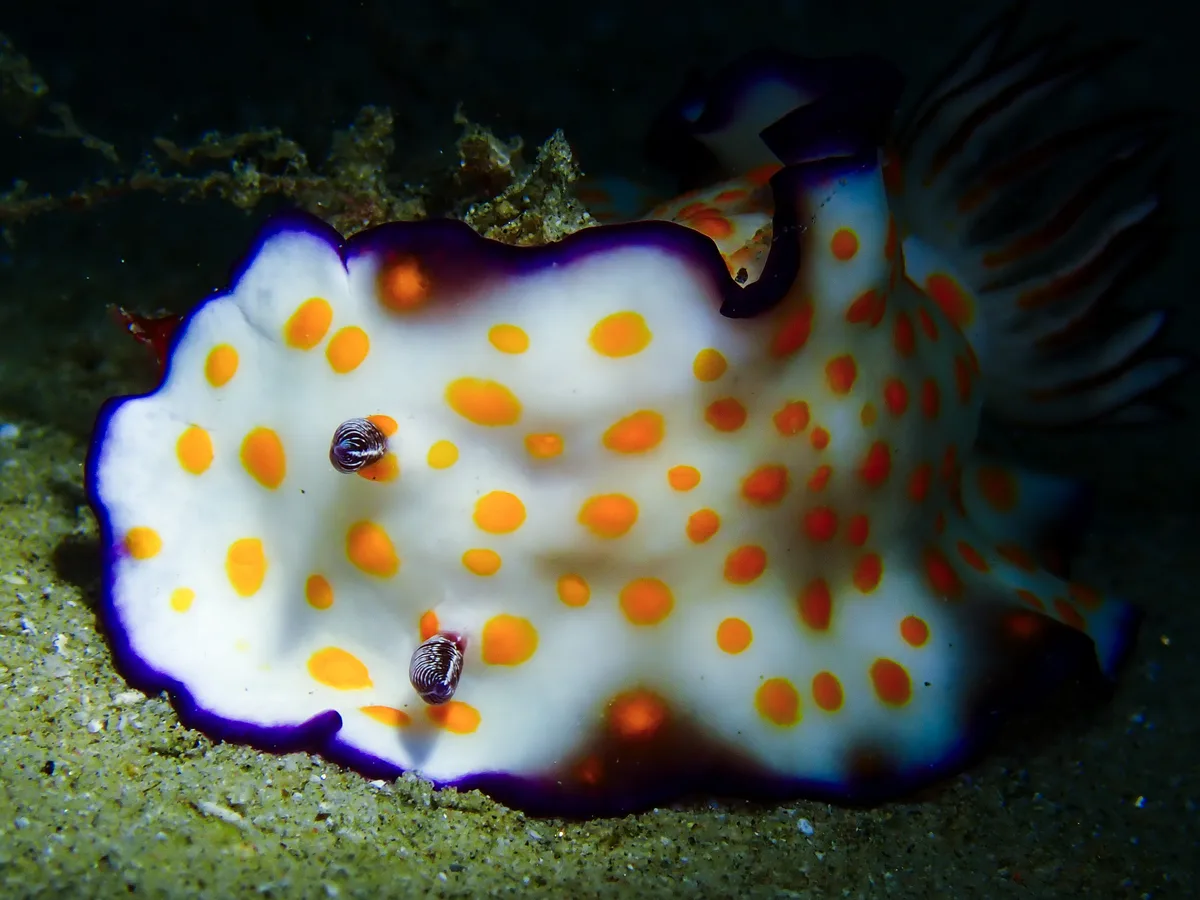
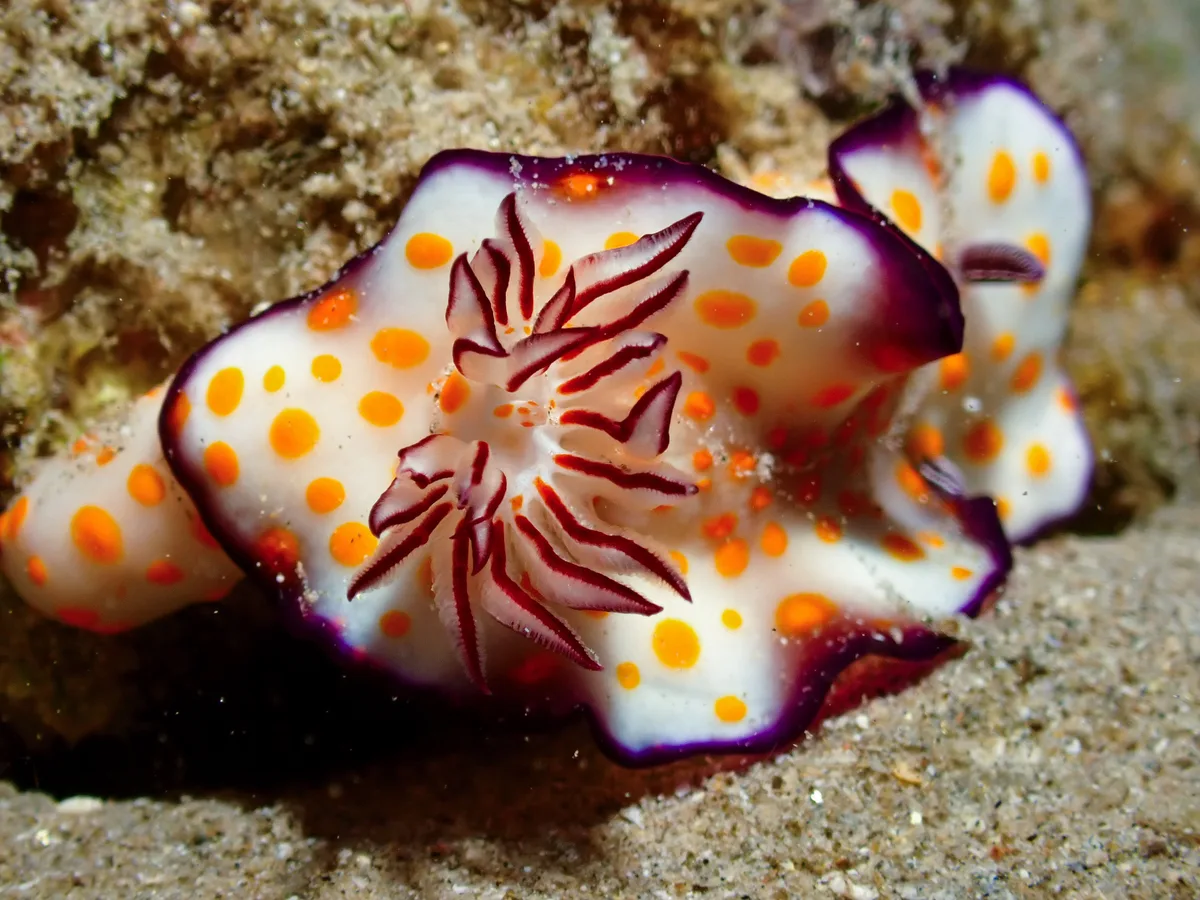
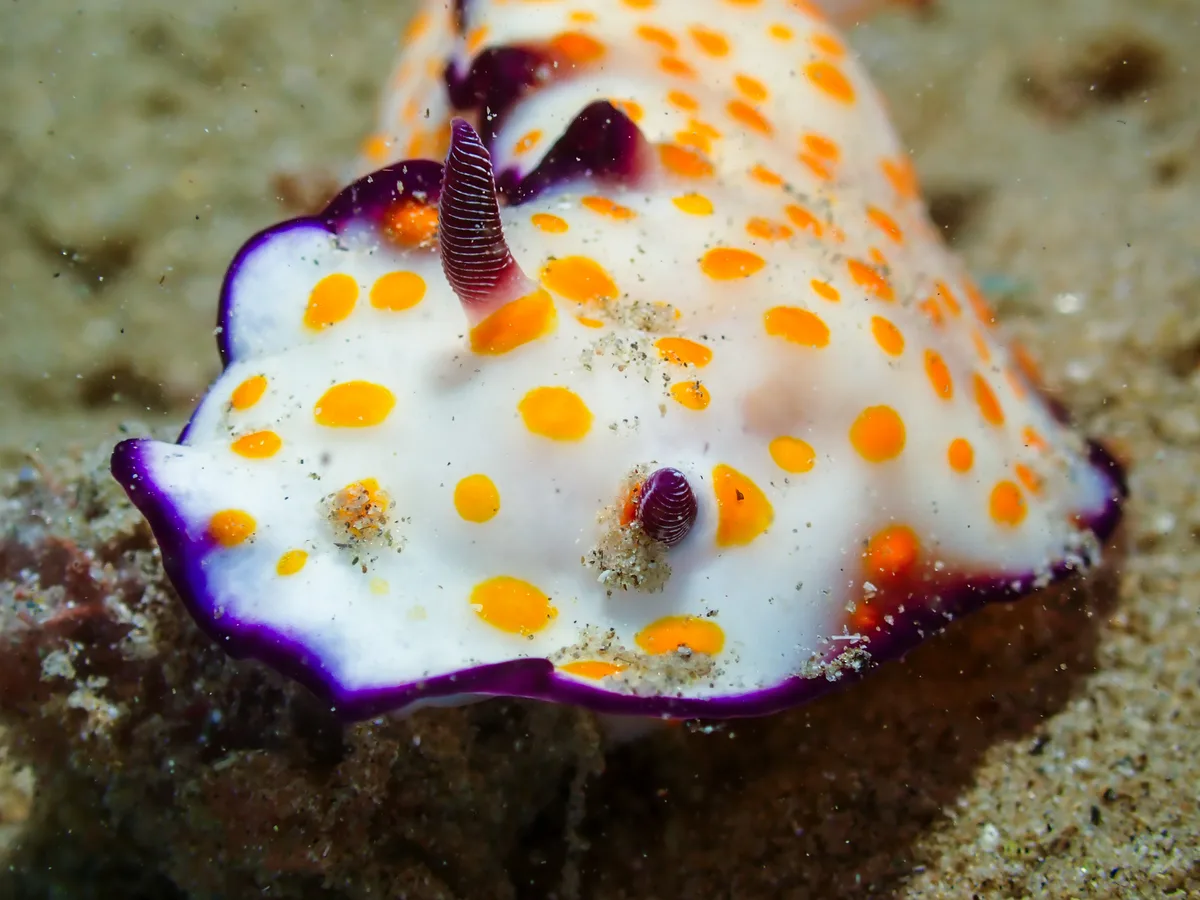
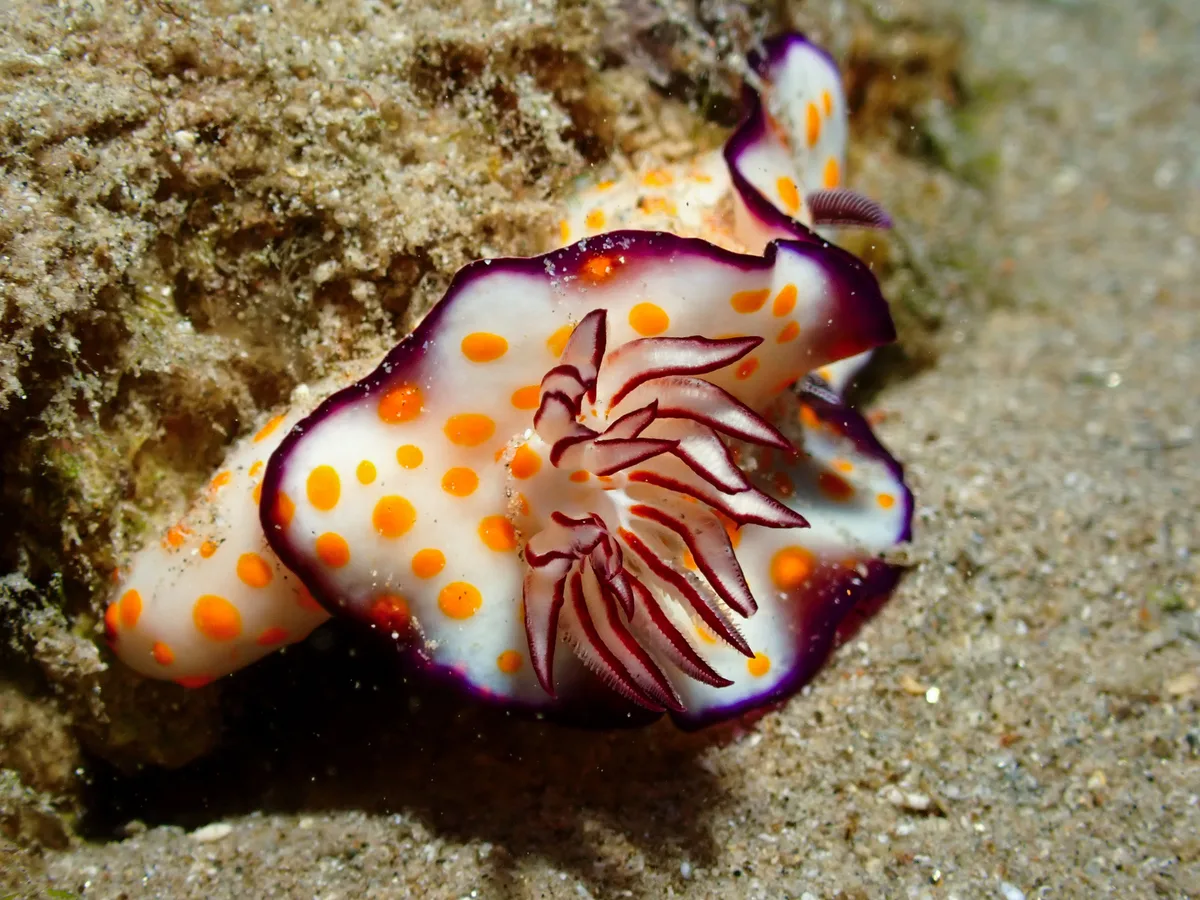
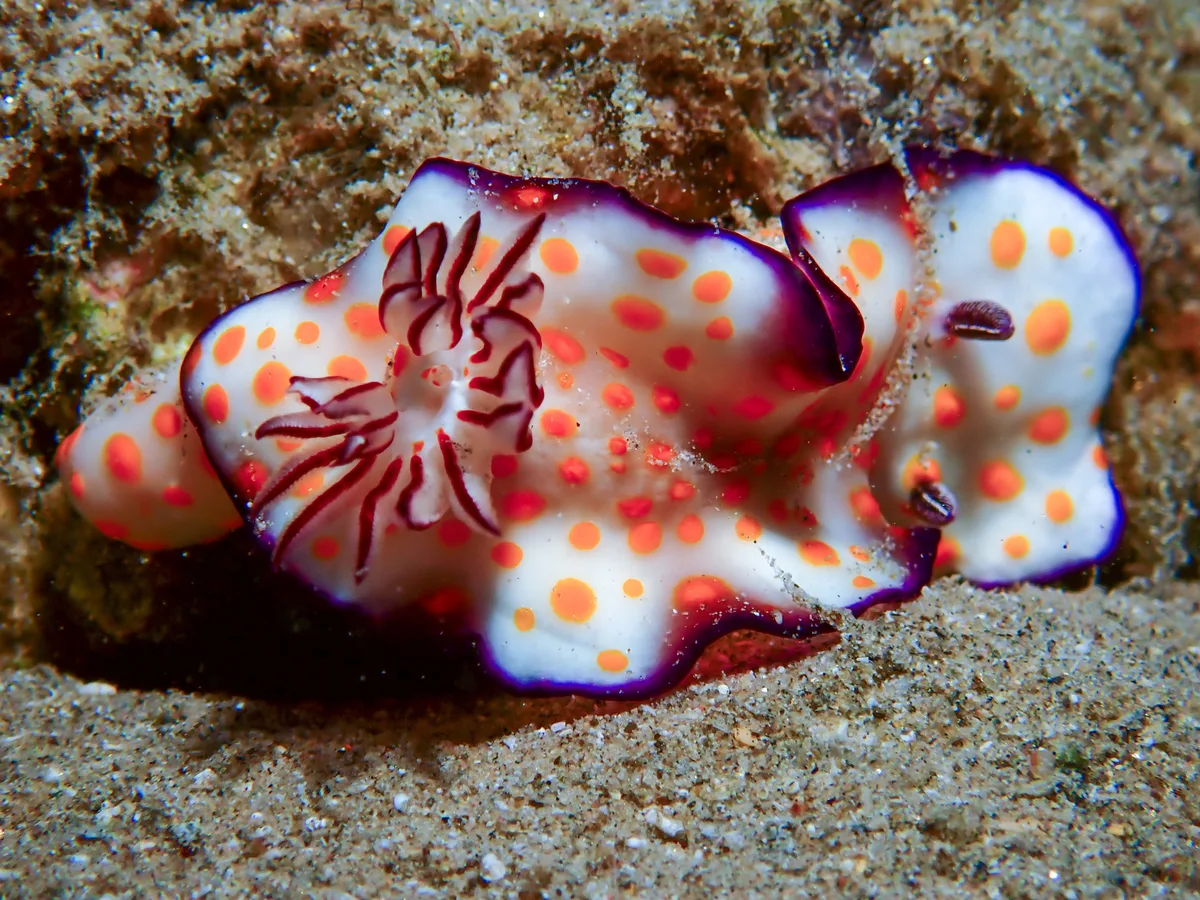
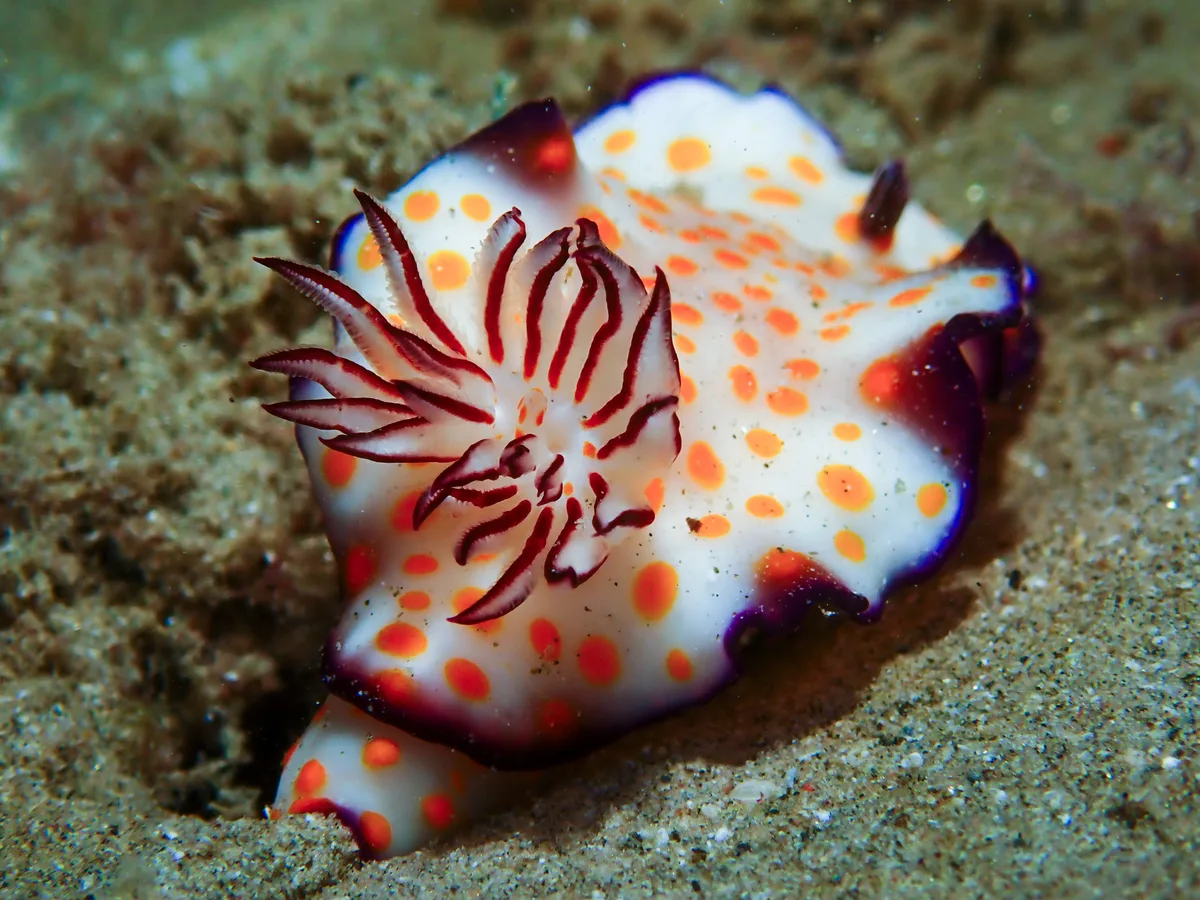
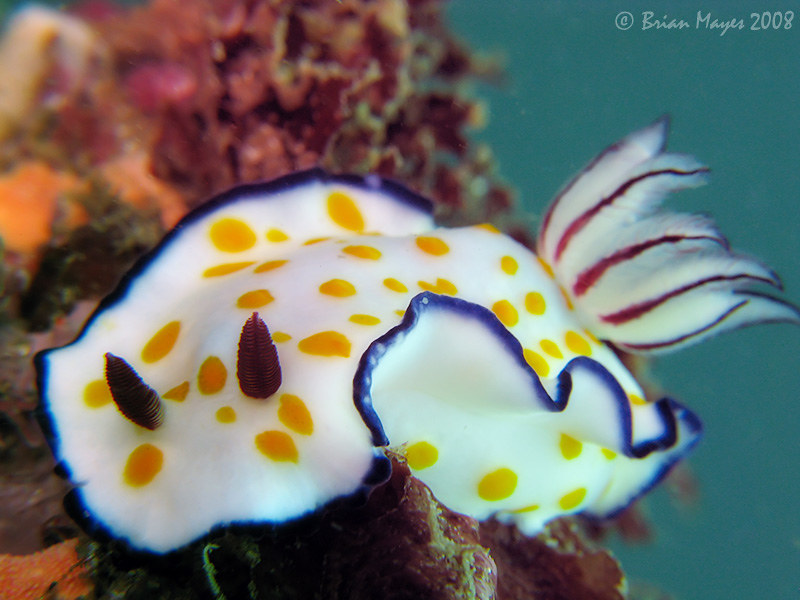
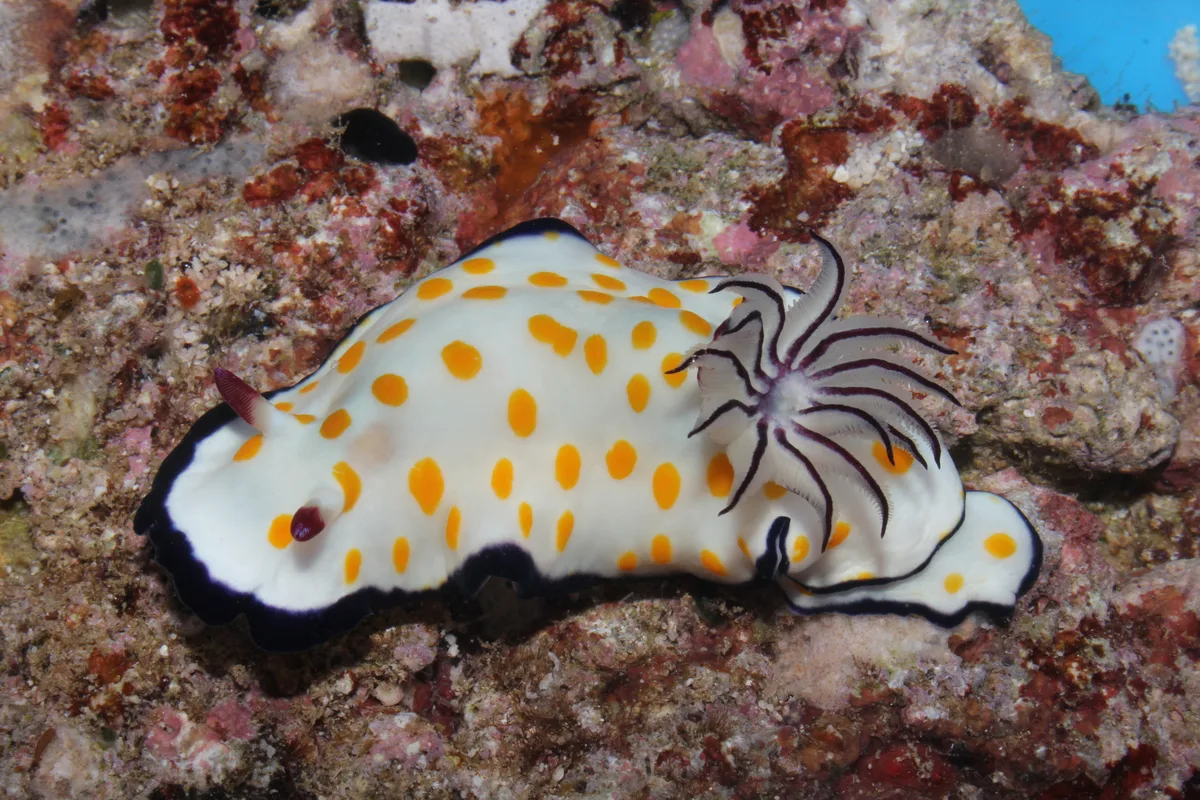
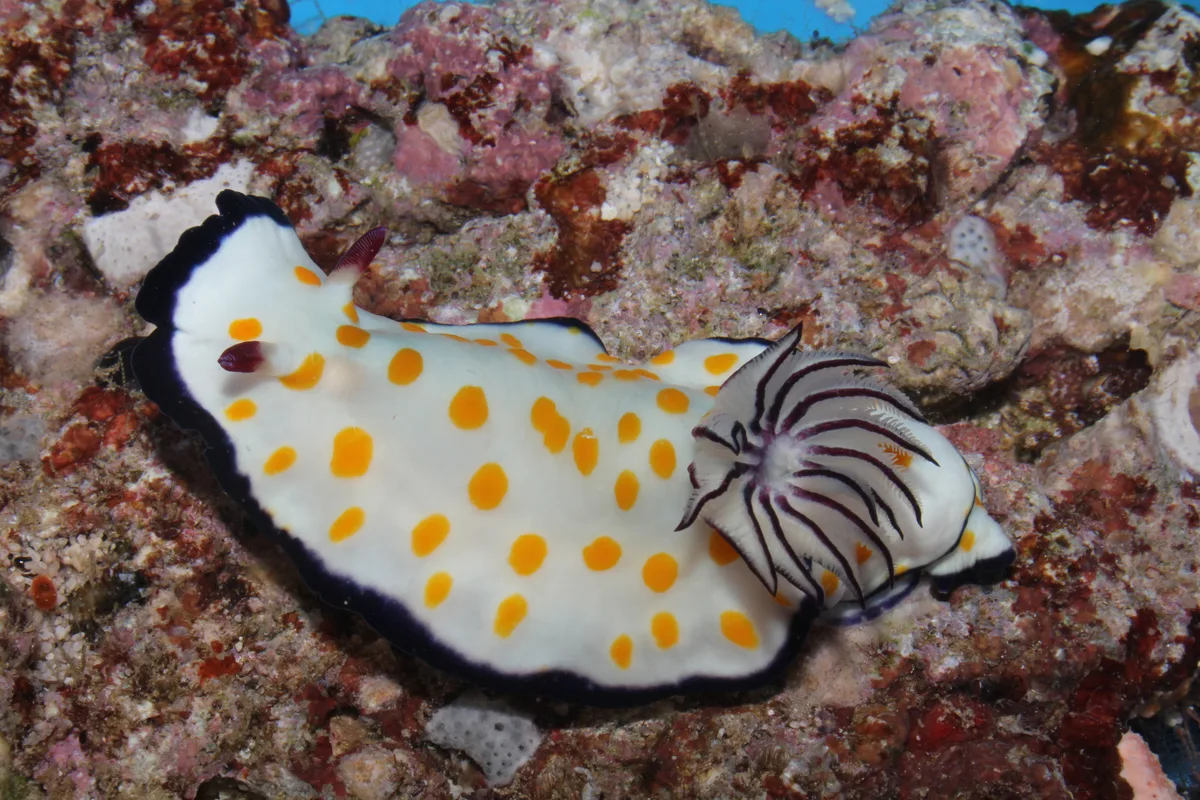
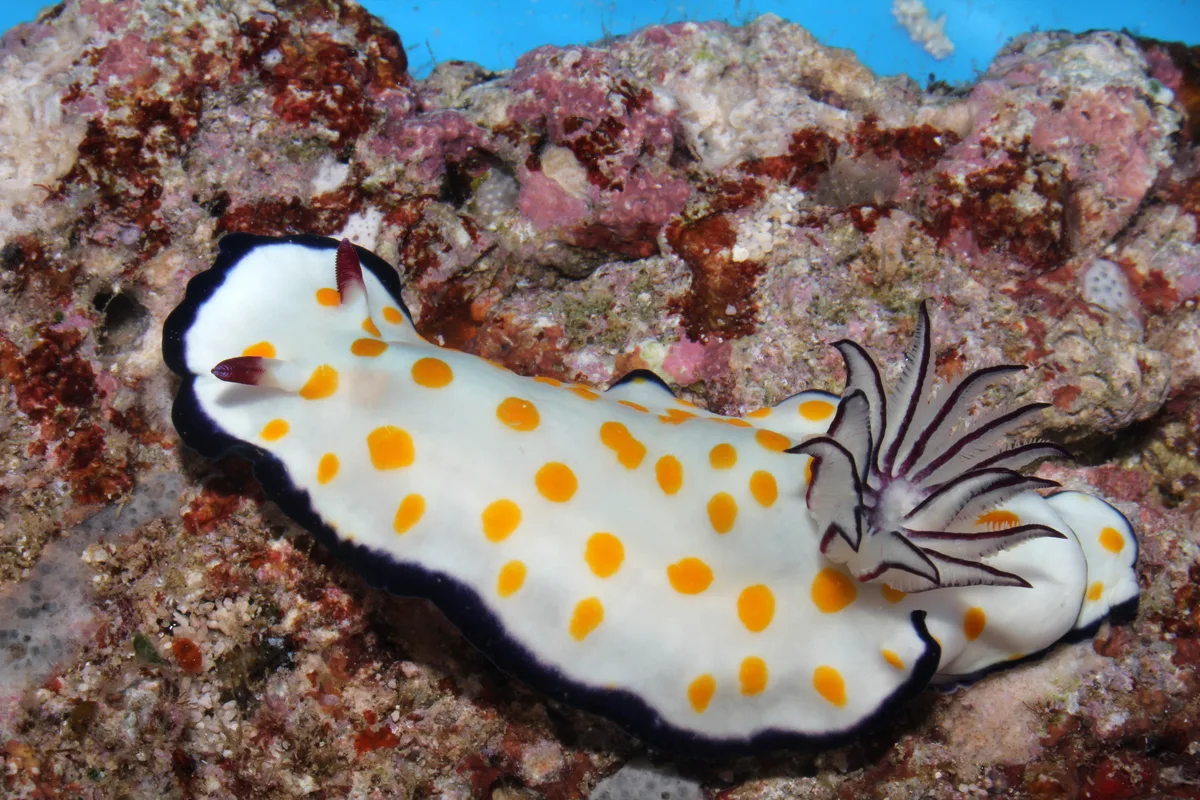
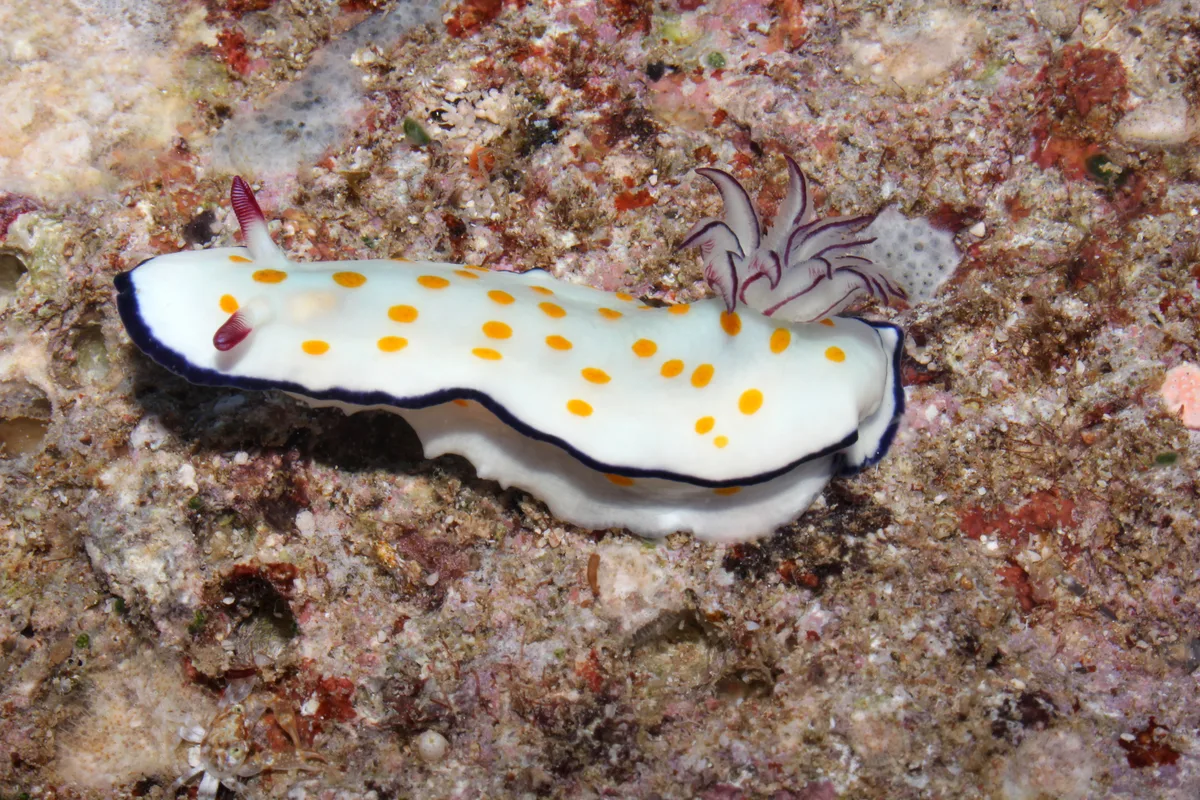
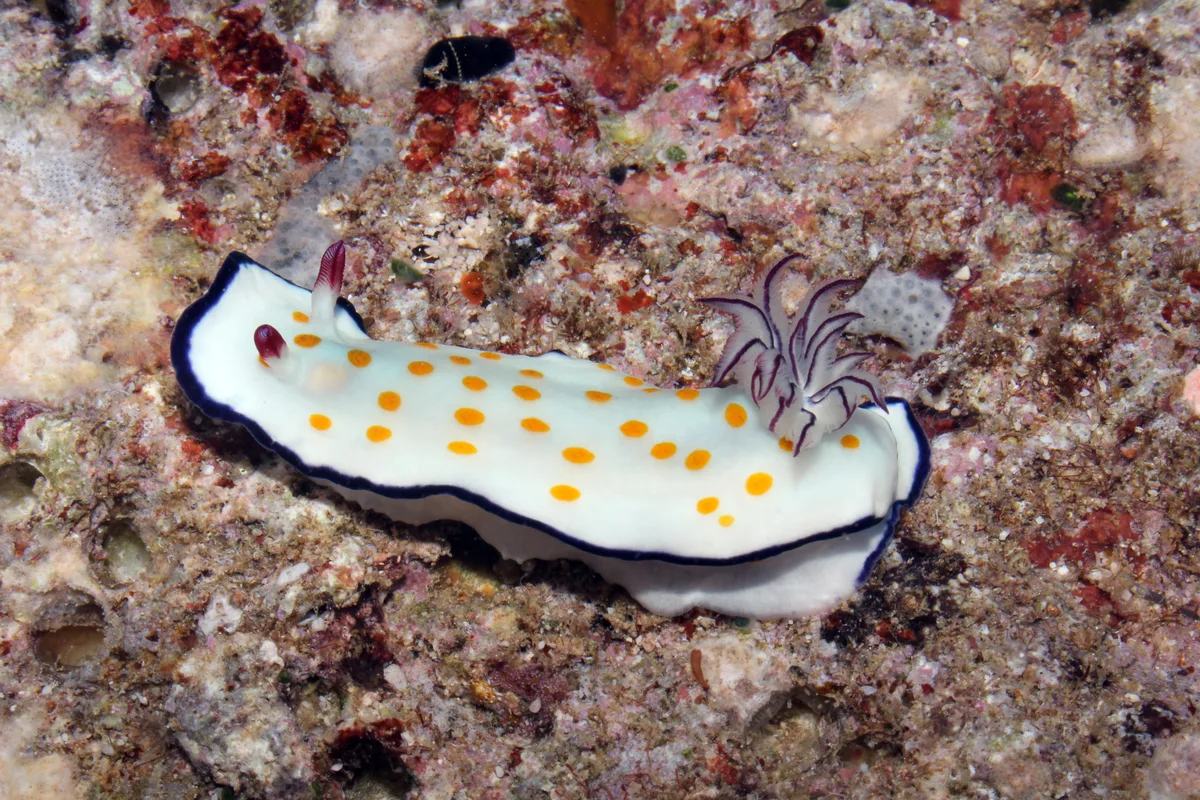
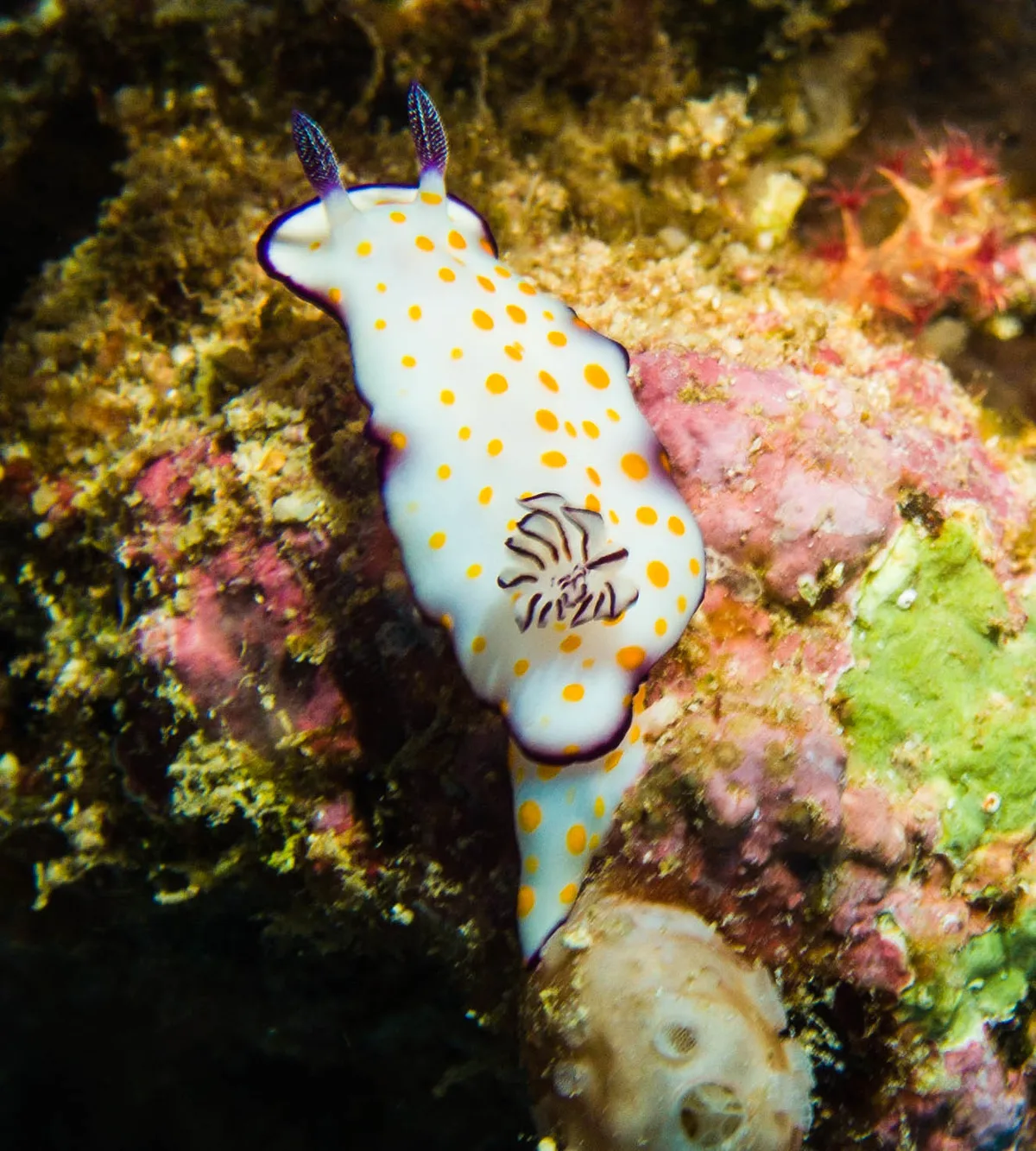
Two slugs in this sea wear almost the same coat: a pale mantle, a yellow-orange rim, and dark spots. They are not close relatives. One of them is this animal, the other is the pretty hypselodoris, and the resemblance is not coincidence.
When a harmless species copies a dangerous one, that is Batesian mimicry and the copy is a free rider. This is the other kind. Both of these slugs take chemical defenses out of the sponges they eat and store them in the mantle, so both are genuinely unpleasant, and by sharing one pattern they share the cost of teaching it. Every fish that learns the lesson on one species learns it for both, and fewer of each get eaten in the process of teaching it. Mullerian mimicry, and it is why so many warning patterns in the sea look alike.
The species was described from Ghardaqa, which is what Hurghada used to be called, and that is where its name comes from. It also turns up across the 🌊 Indian Ocean.
To separate the two underwater, count spots: this one carries fewer and they sit further apart.
- pale cream to bluish mantle with a yellow-orange border
- dark spots scattered over the mantle, fewer and more spaced than on the pretty hypselodoris
- rhinophores and gill plumes darker than the mantle
- up to 50 mm