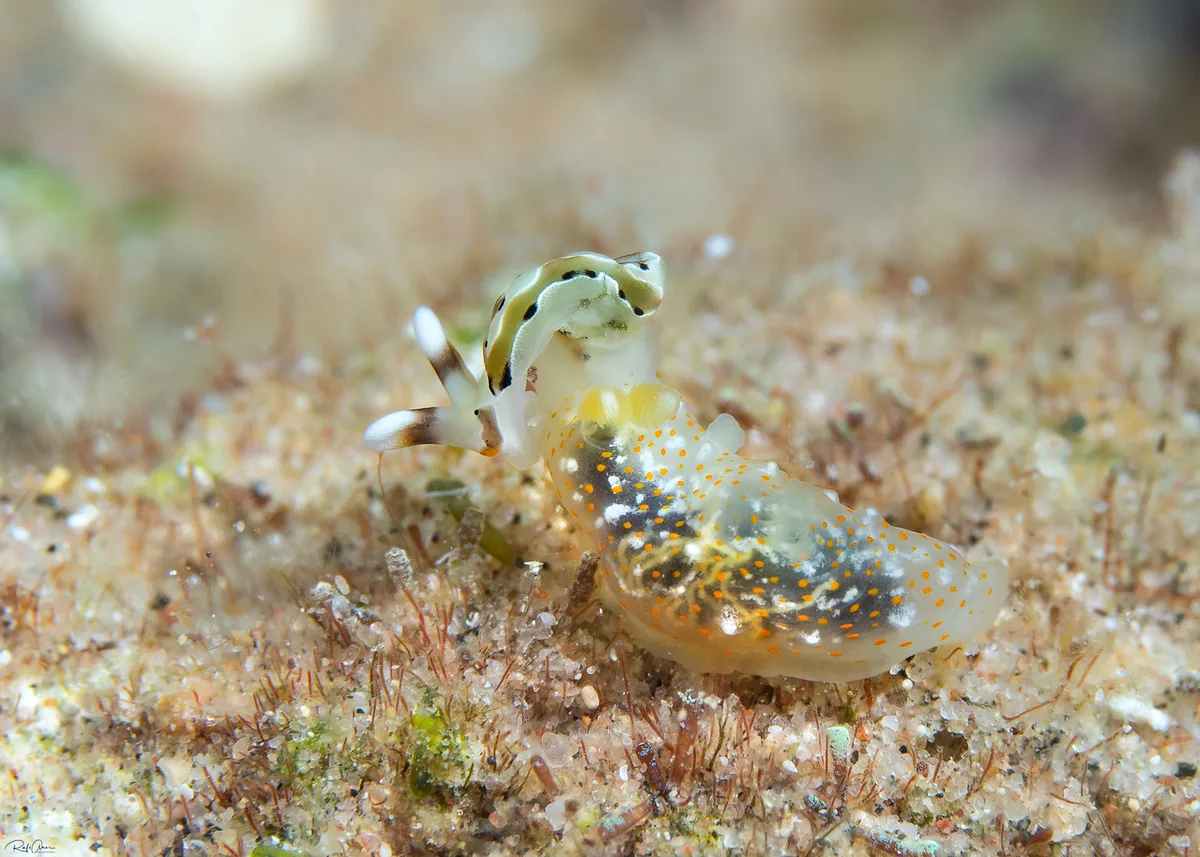
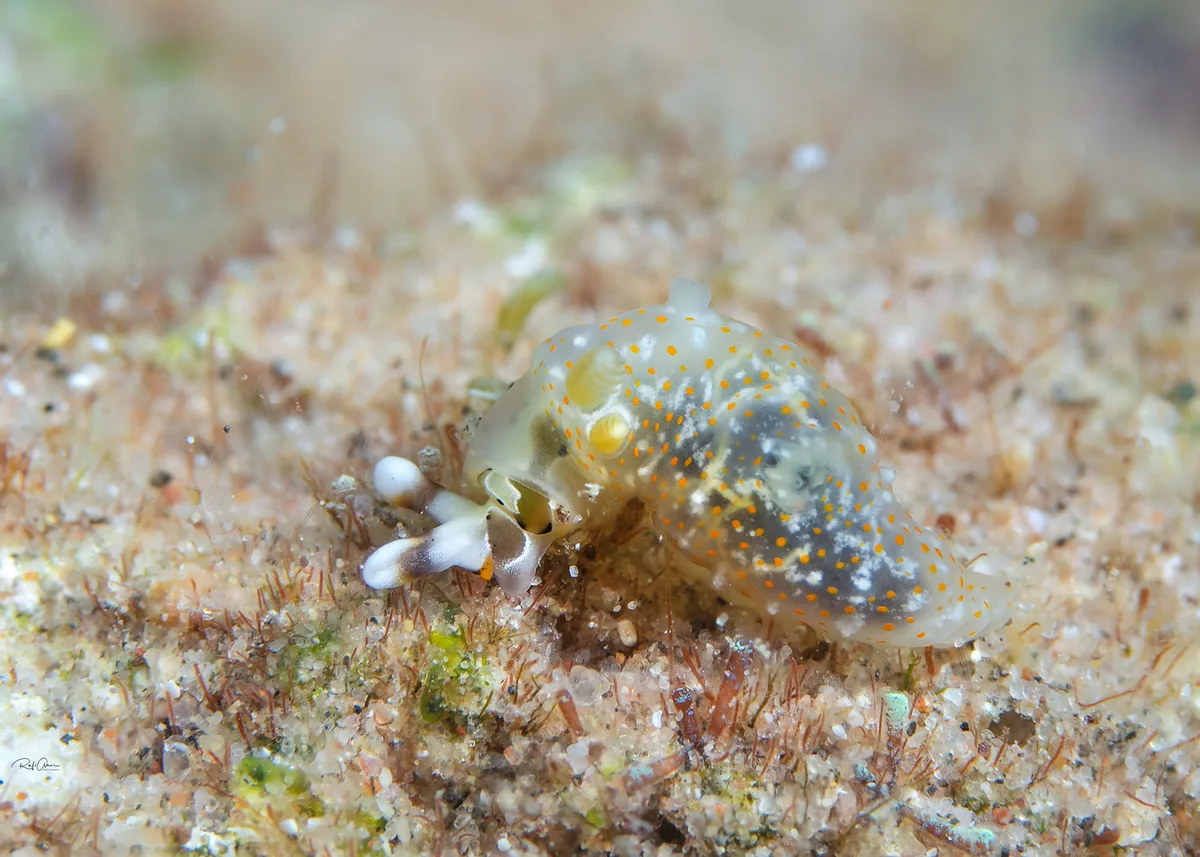
This genus hunts other sea slugs, and it is built for it. There is no mantle skirt overhanging the foot the way there is on every grazing dorid; the sides are exposed, the outline is a smooth torpedo, and the animal moves noticeably faster than anything it is chasing. A slug that has to catch its food cannot afford the frill.
What separates this species from its larger relative here is the menu. That one takes sea hares. This one takes sacoglossans, the sap-sucking slugs that pierce algal cells and drink the contents, and in several species keep the stolen chloroplasts alive in their own tissue and run on sunlight.
Which puts this animal at the top of an unusually strange little food chain. Algae make sugar from light. A sacoglossan steals the machinery that does it and becomes partly a plant. And then this thing eats the sacoglossan, and all of that borrowed solar equipment ends up as slug.
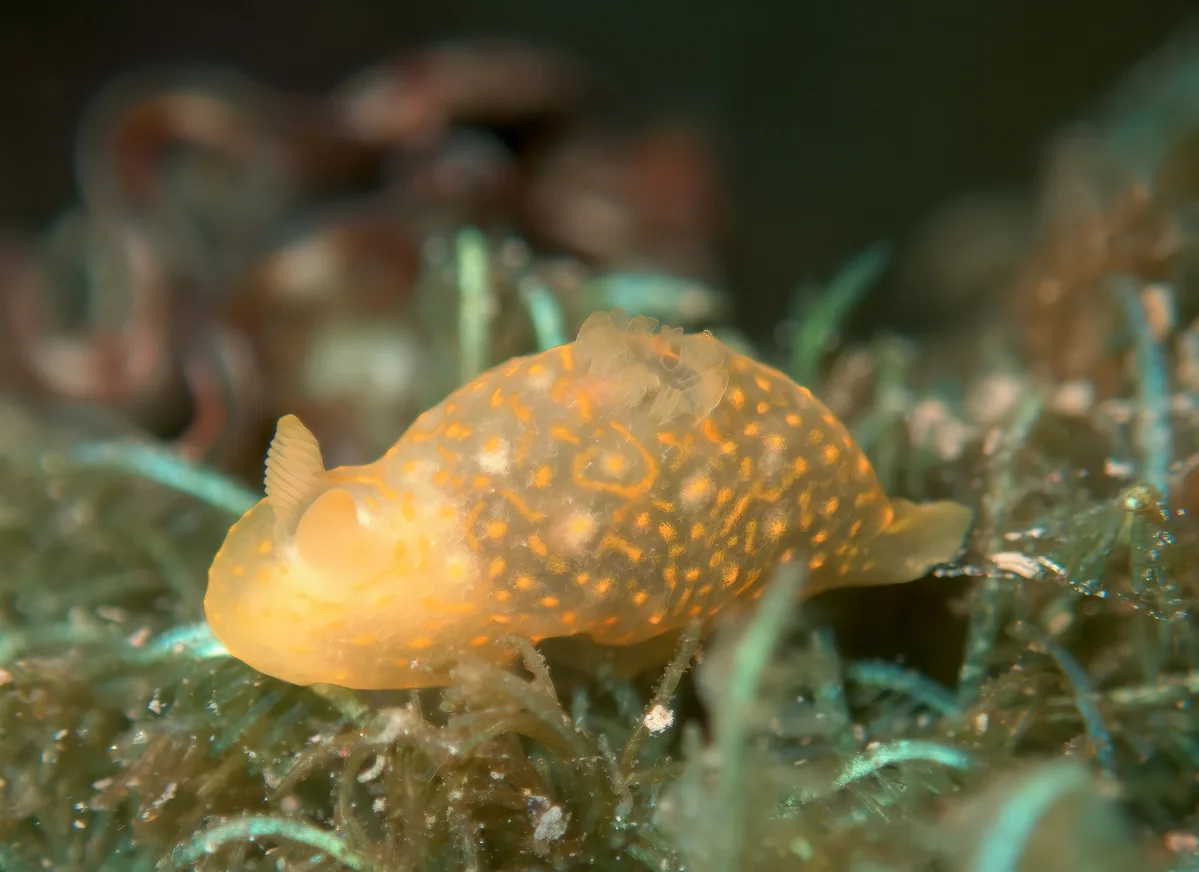
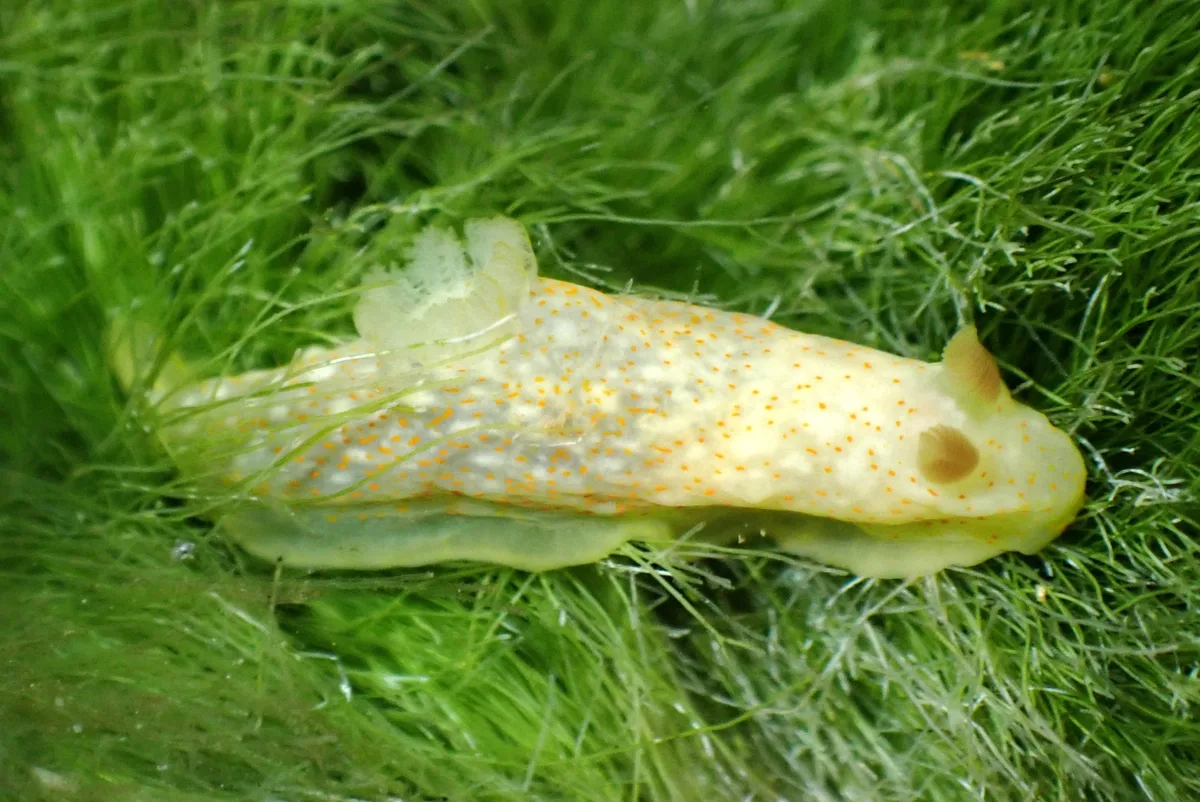
It also tells you where to look. Sacoglossans live on algae, not on sponge or coral, so the search is in the green stuff: filamentous turf, weed on rubble, the fringes of seagrass. That is a habitat most divers swim straight over.
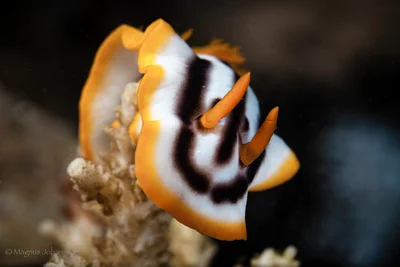
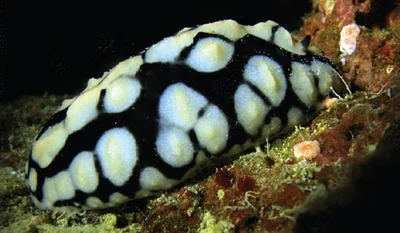
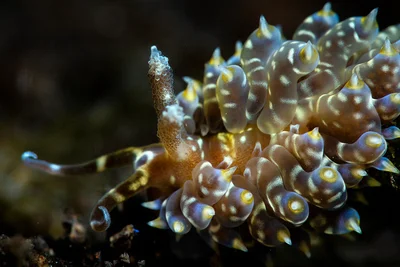
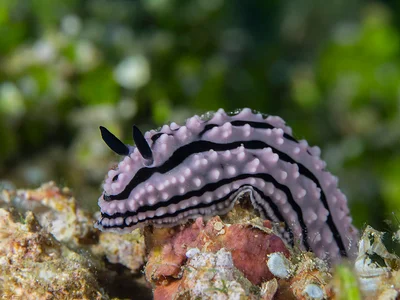
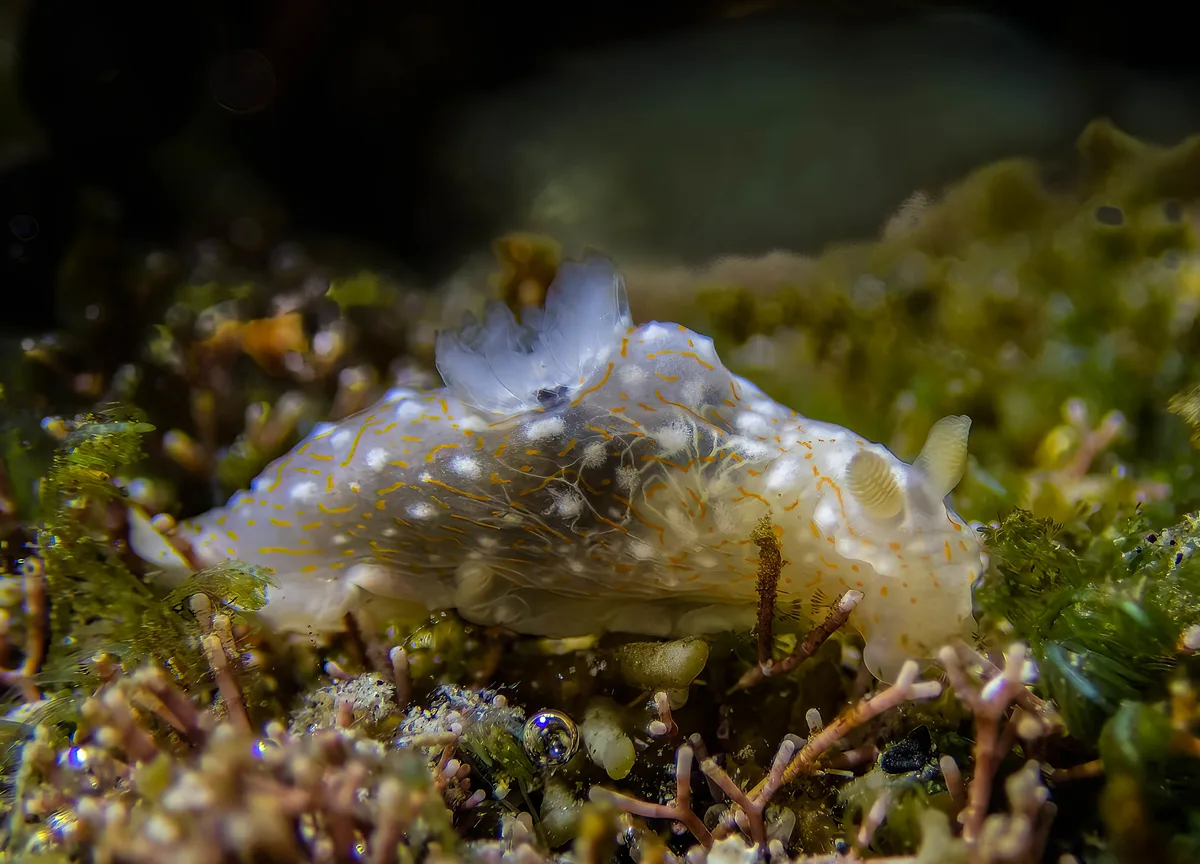
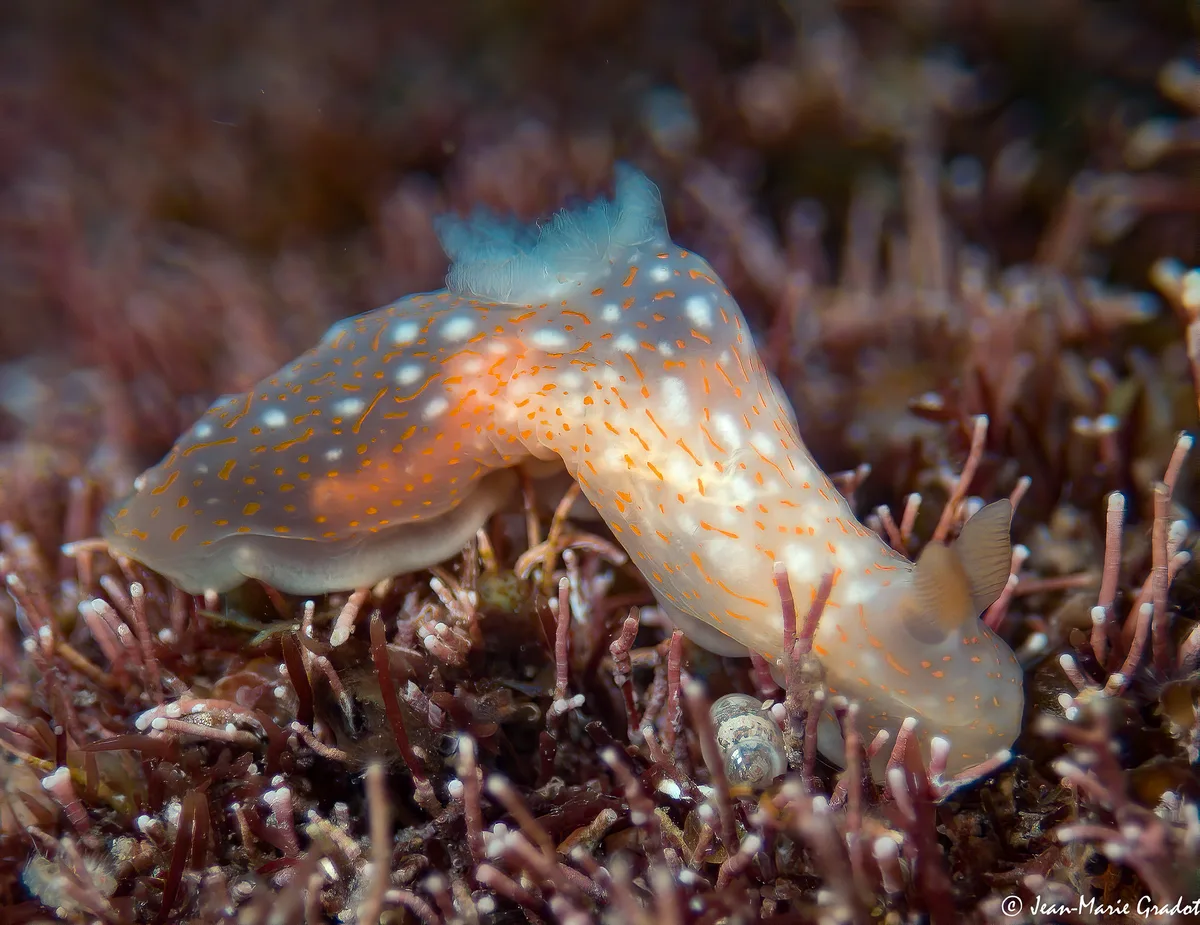
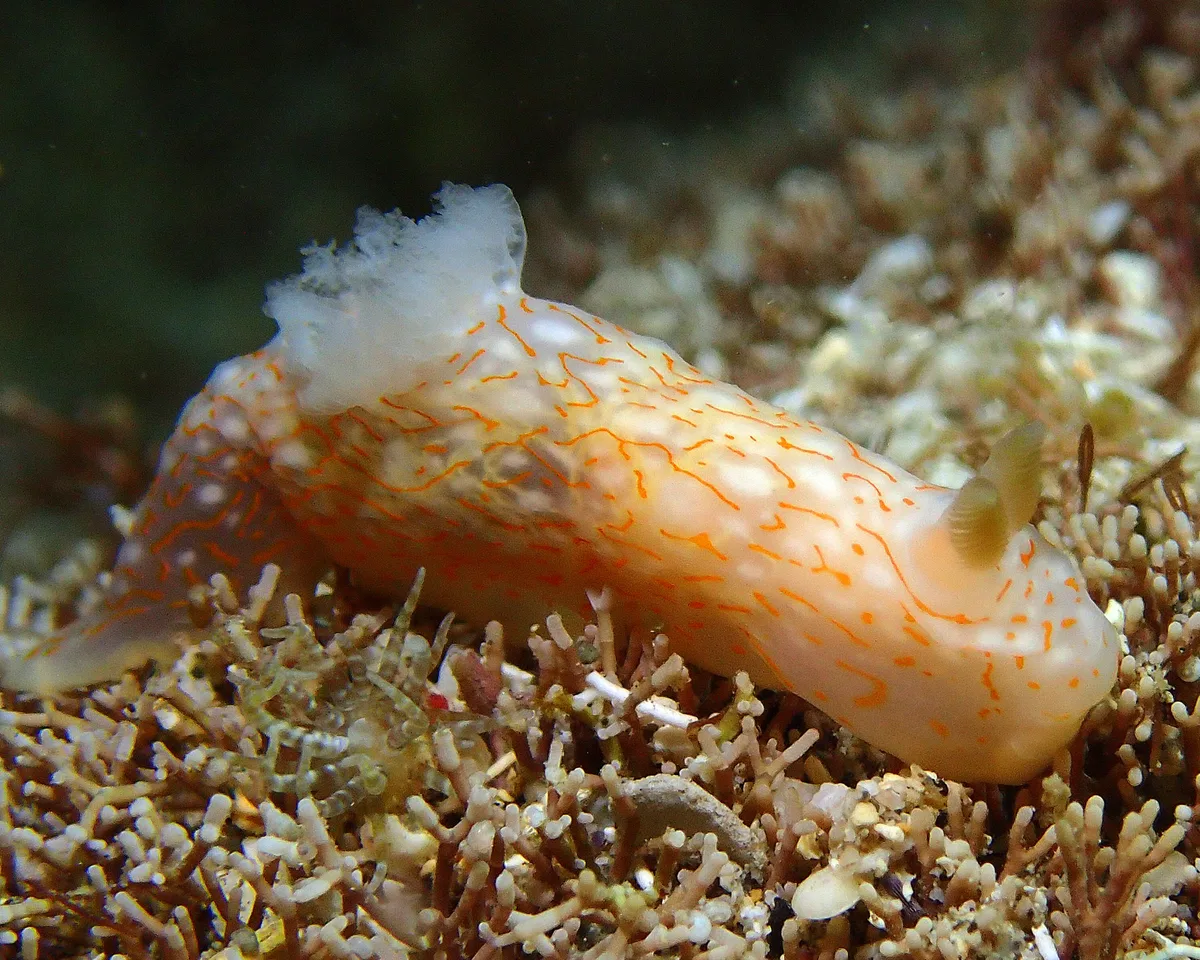
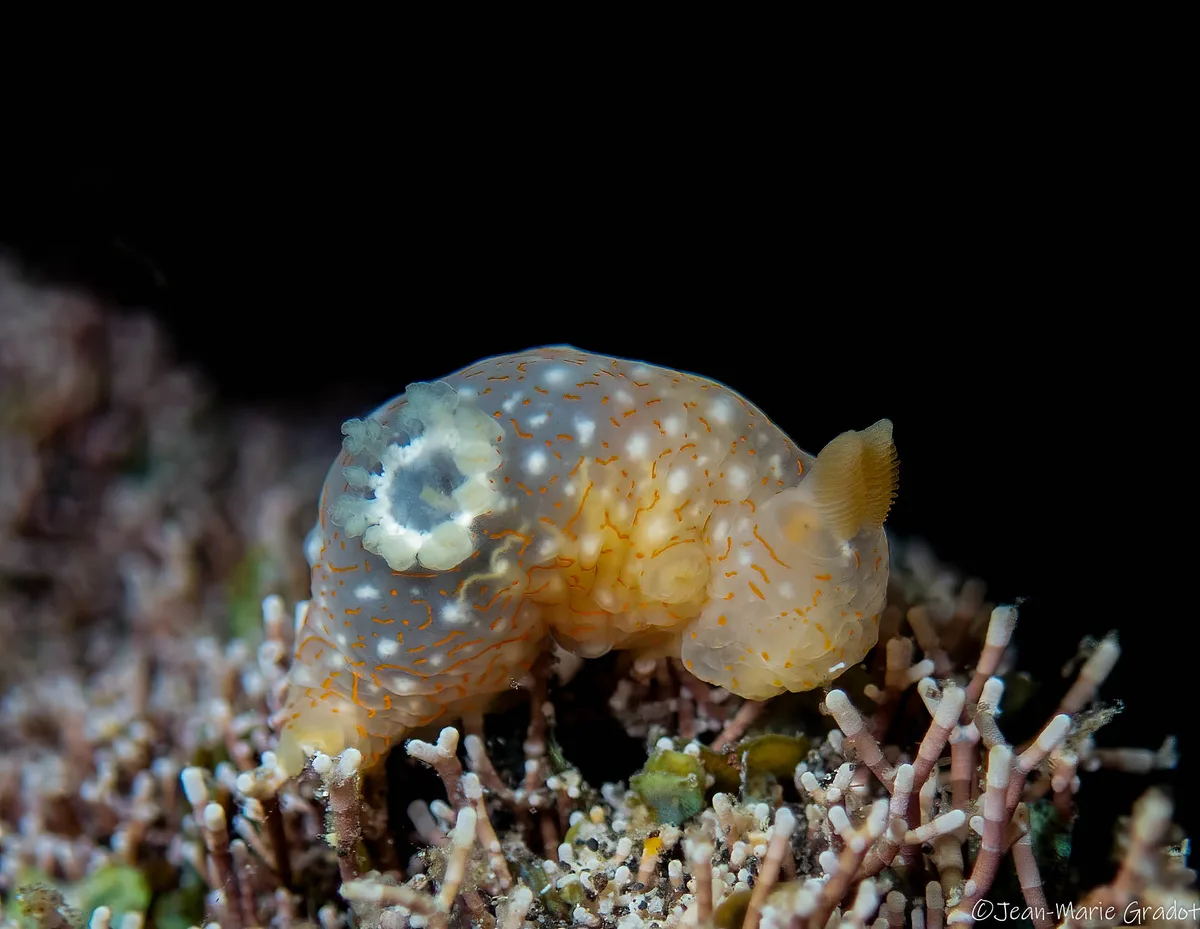
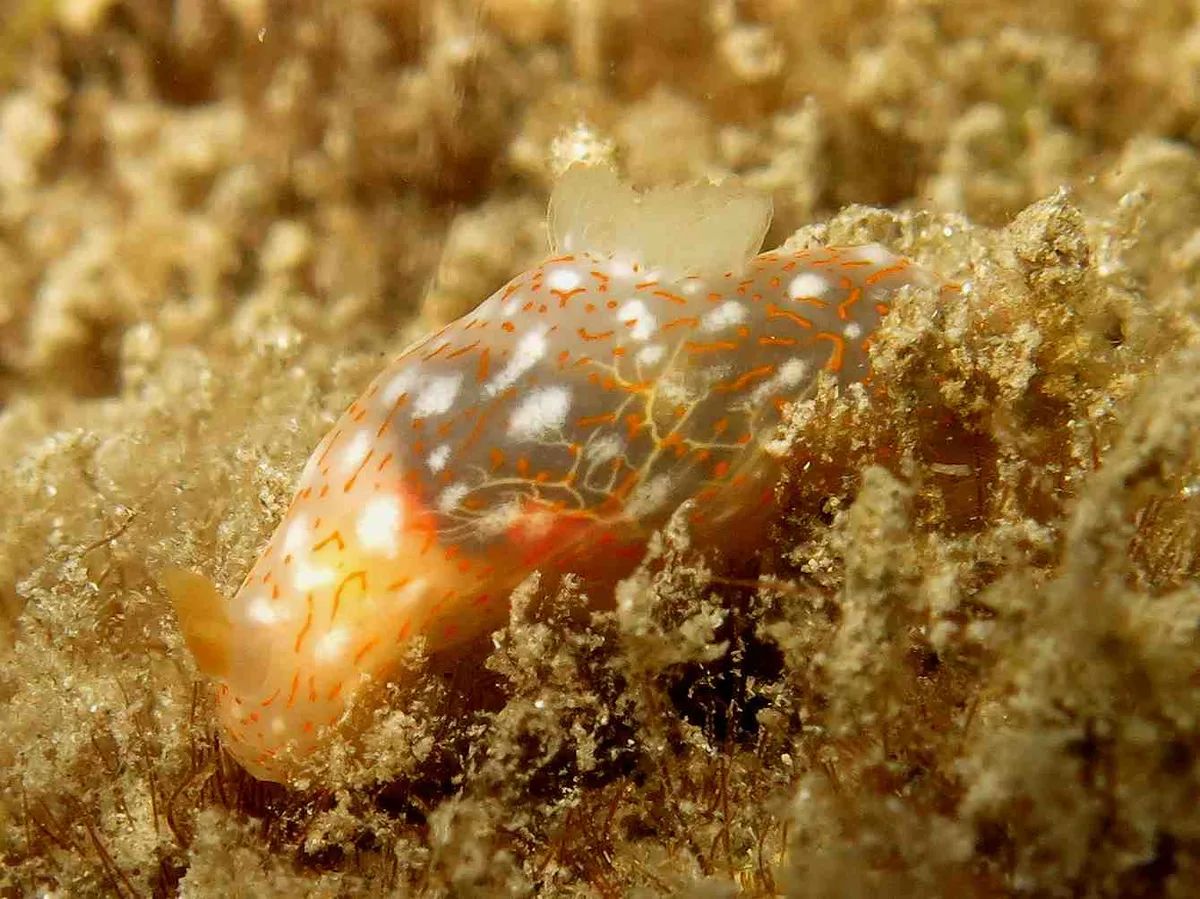
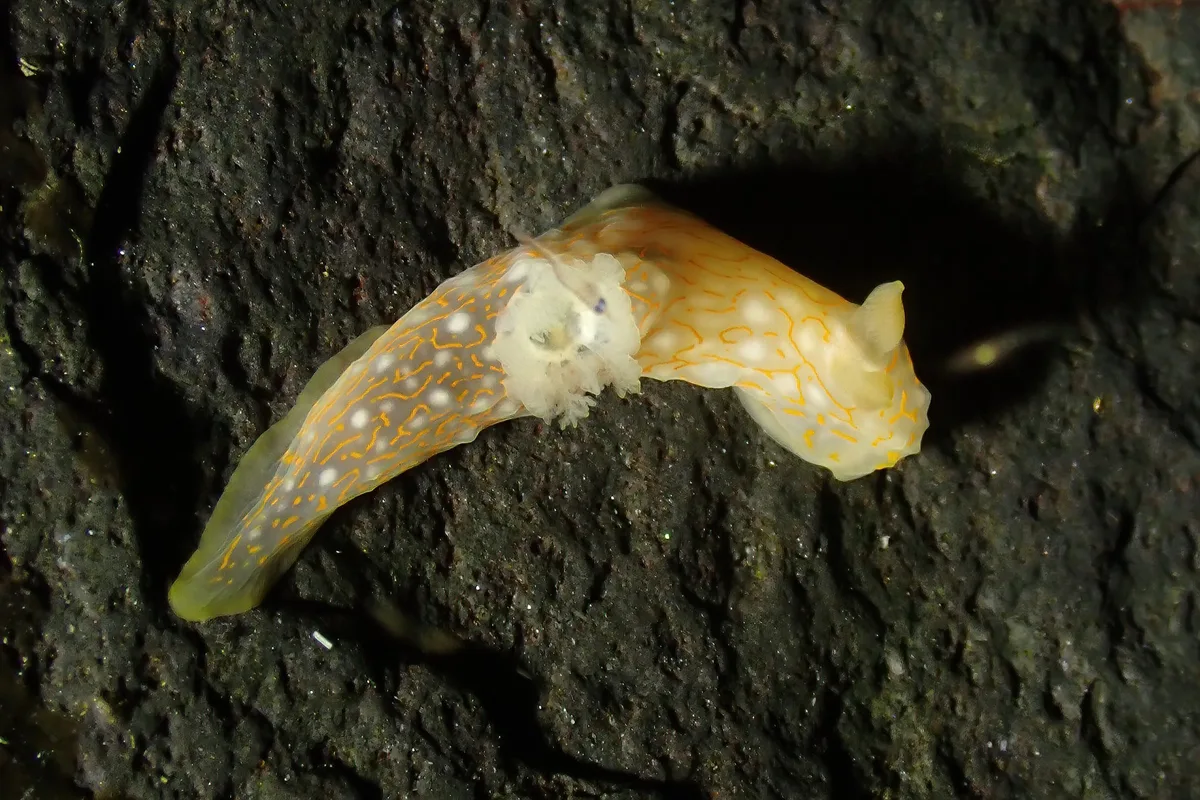
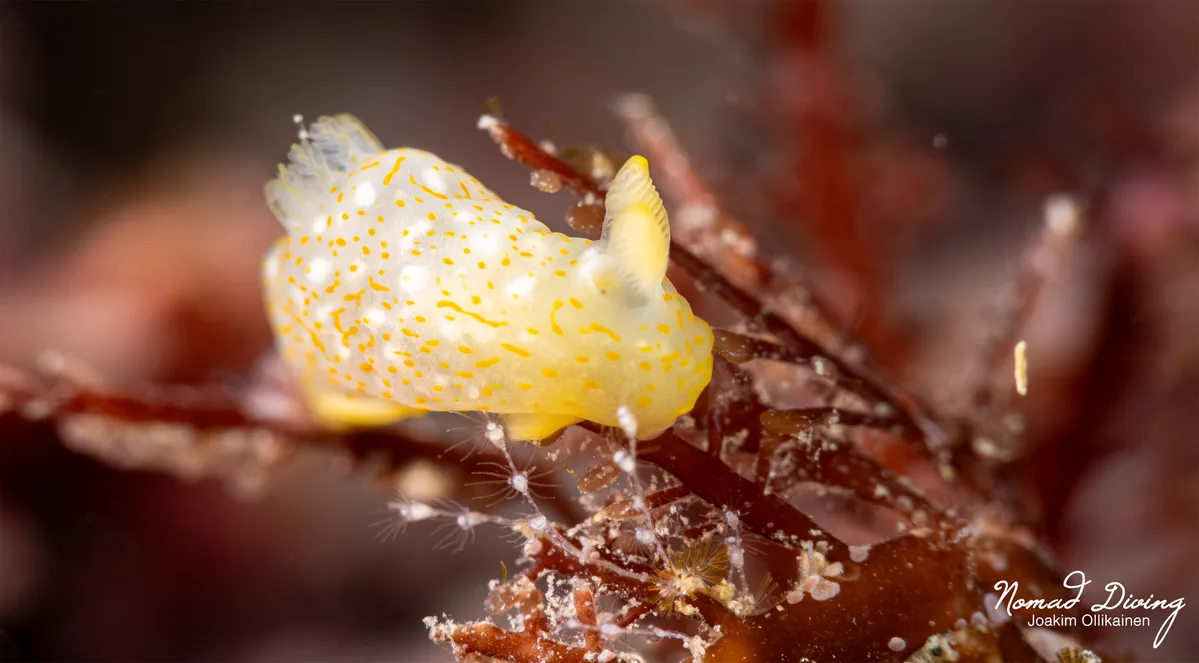
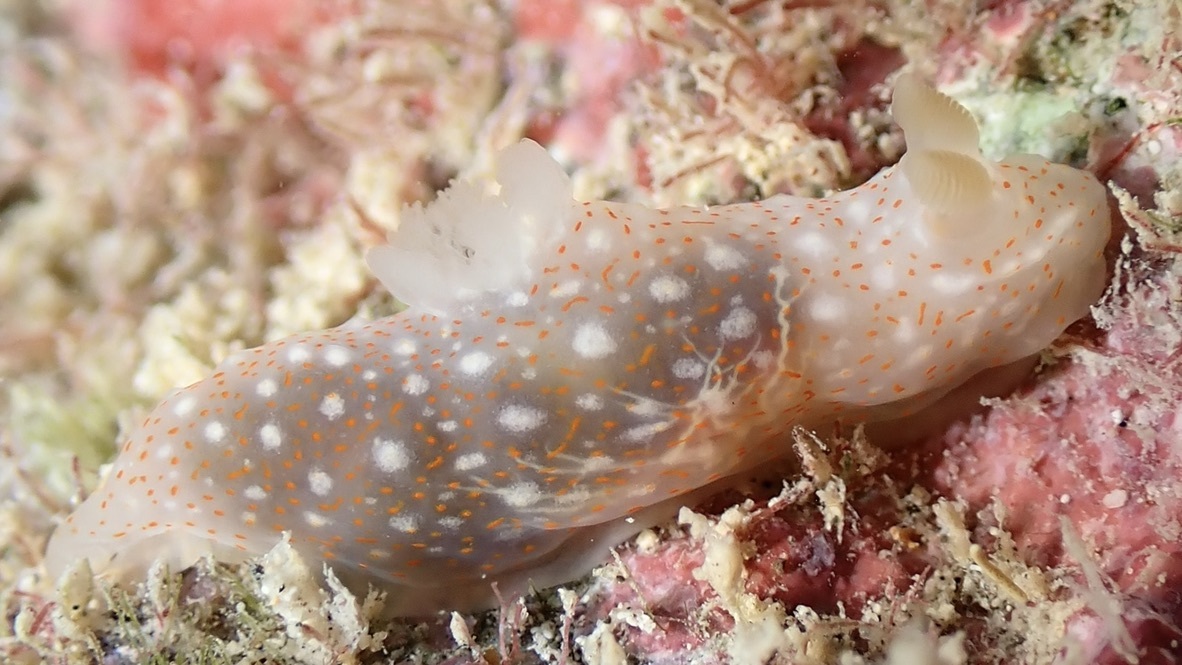
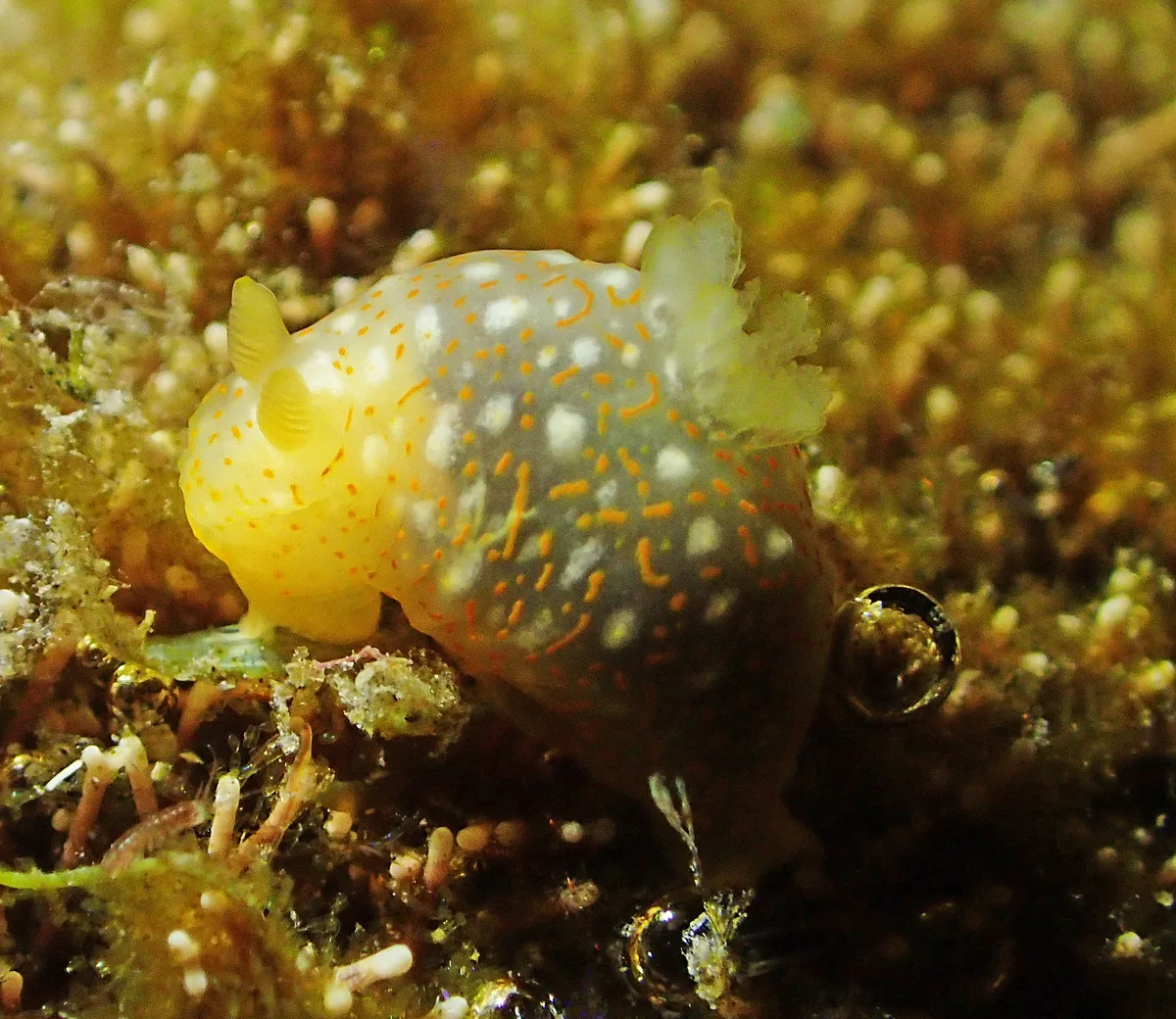
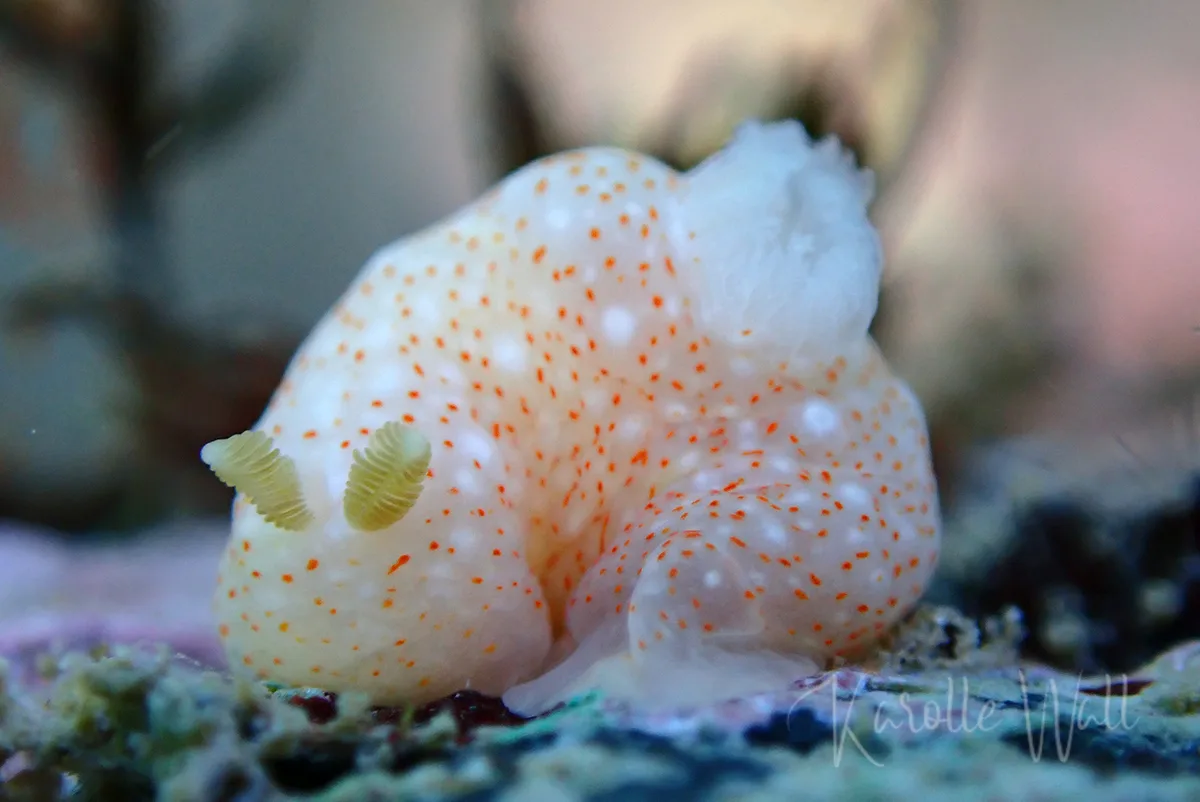
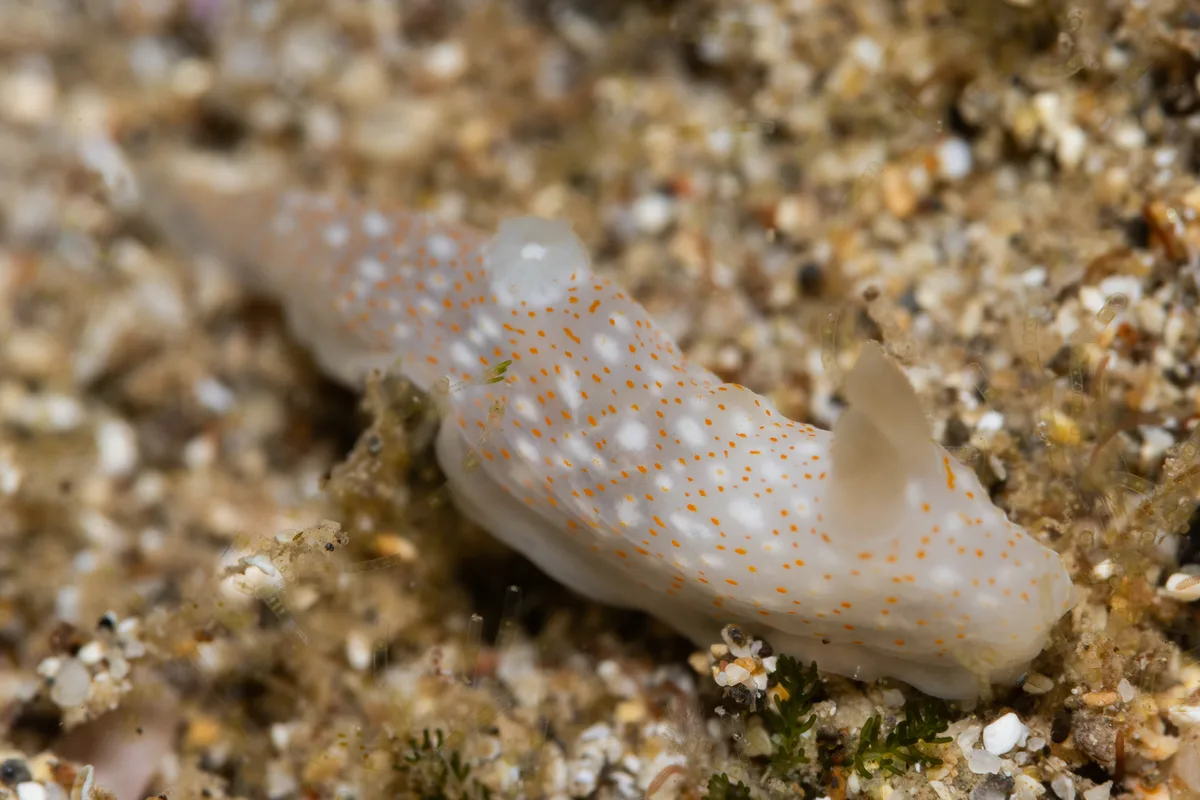
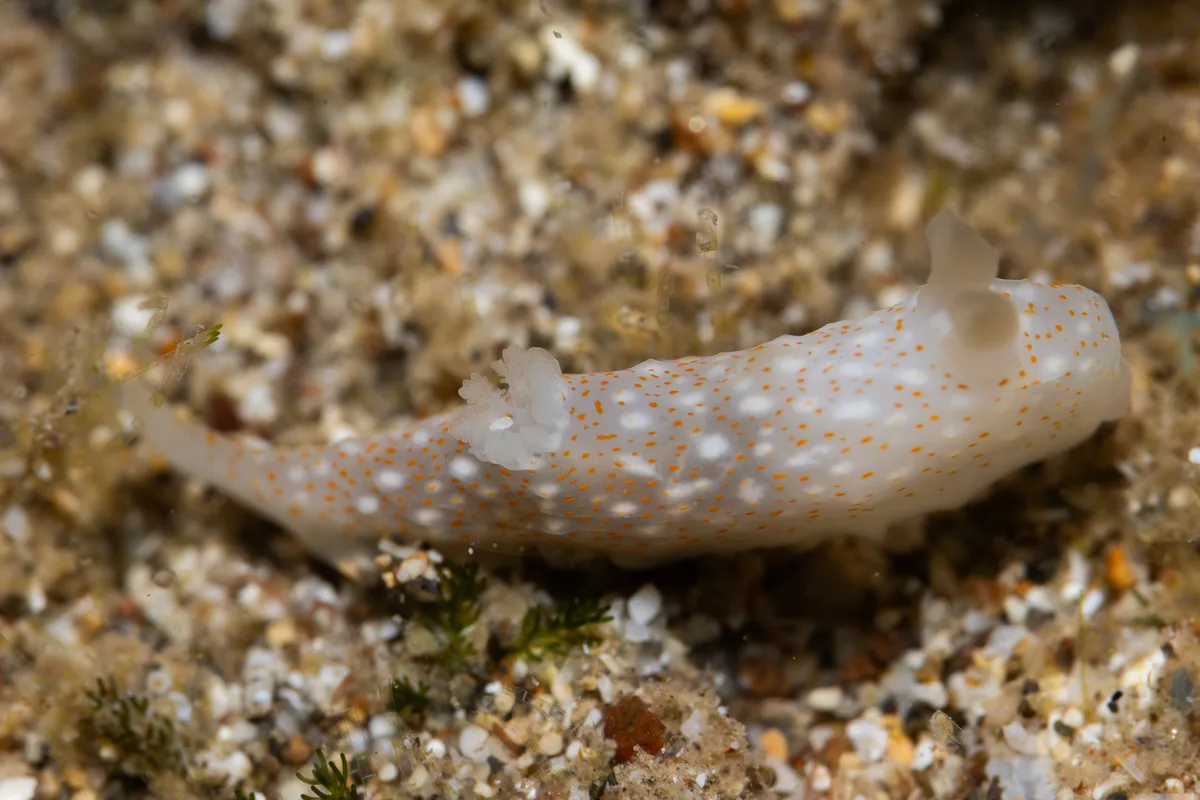
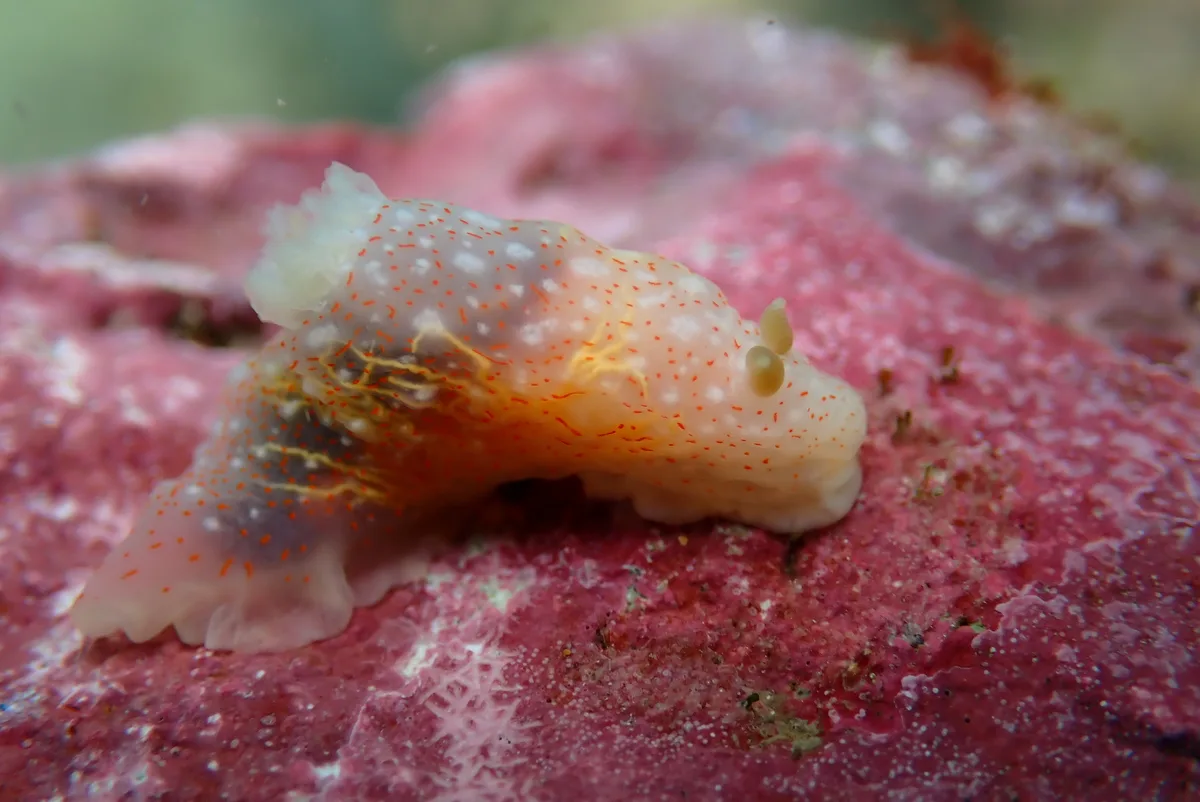
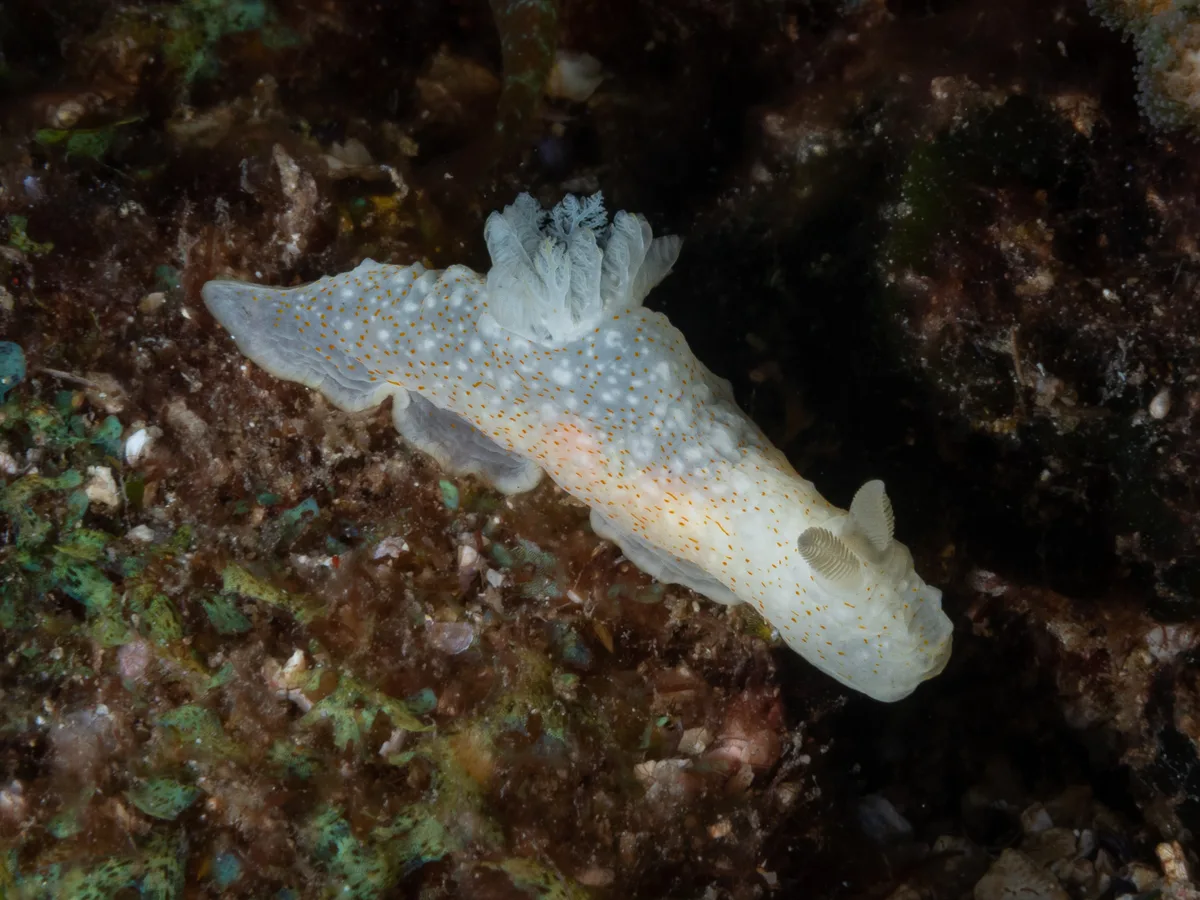
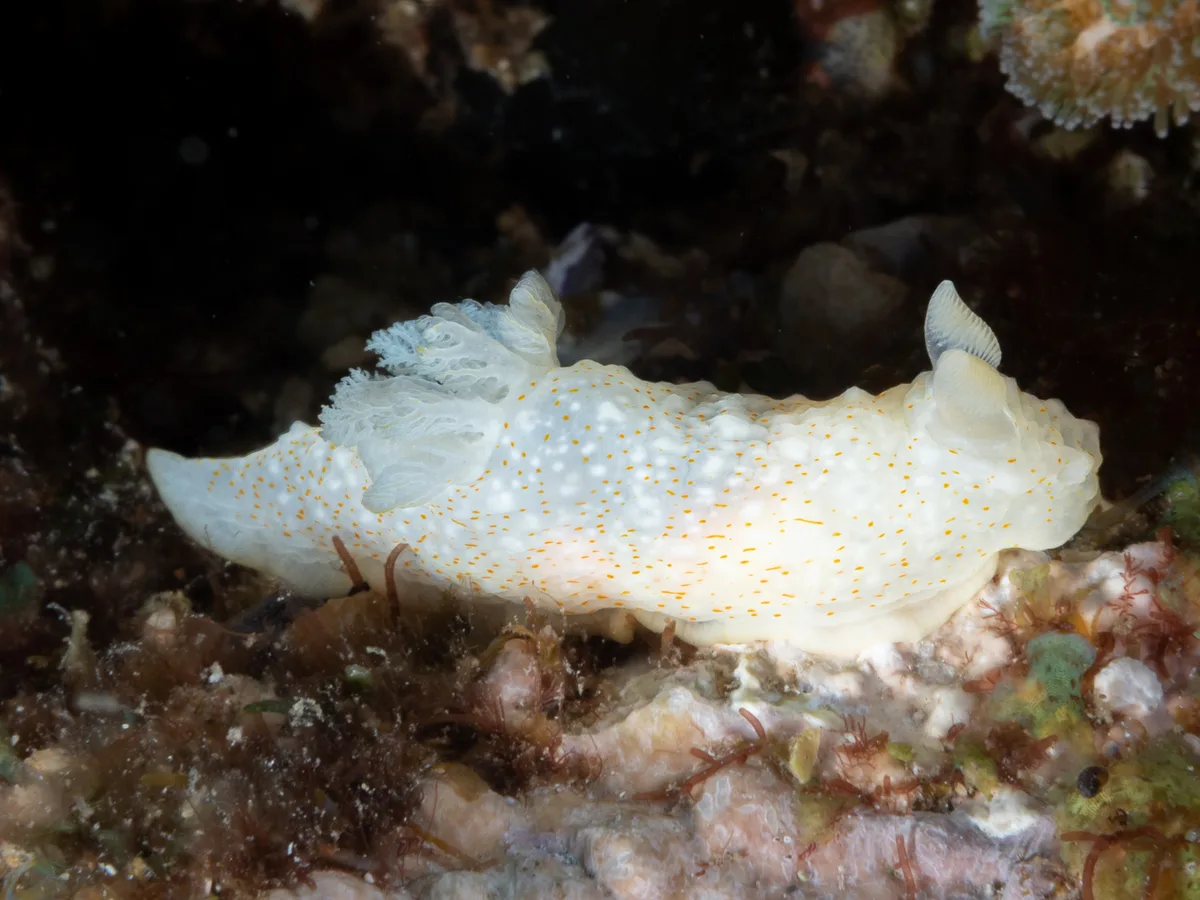
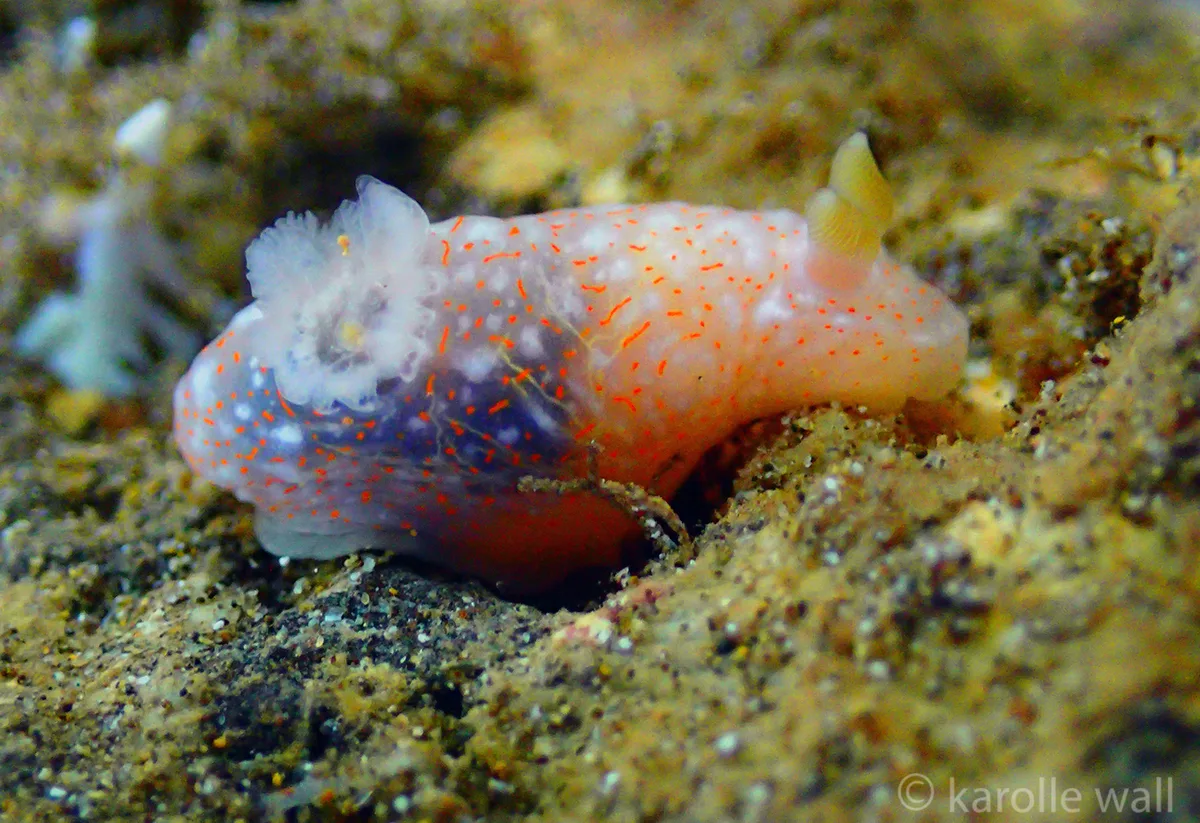
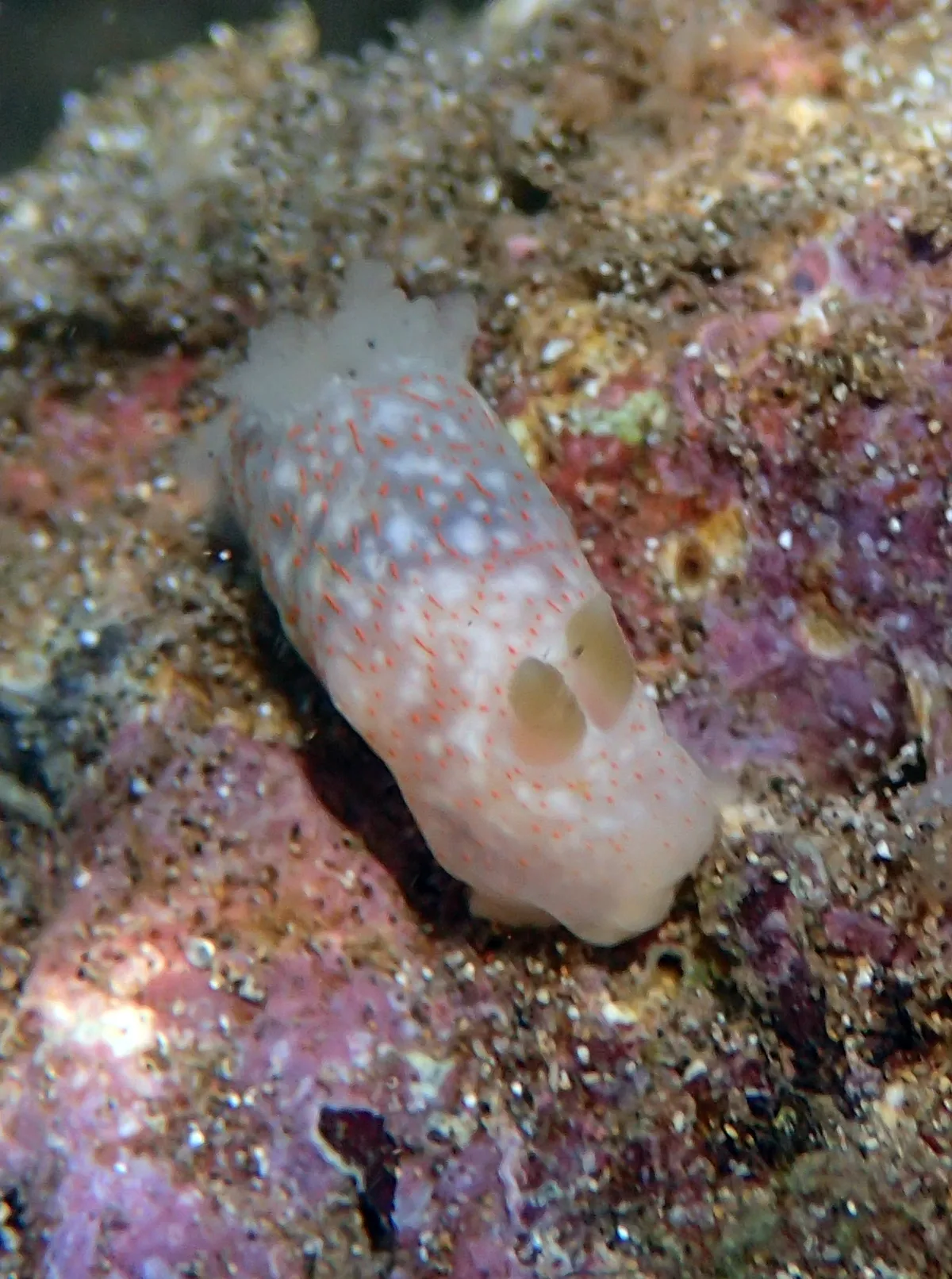
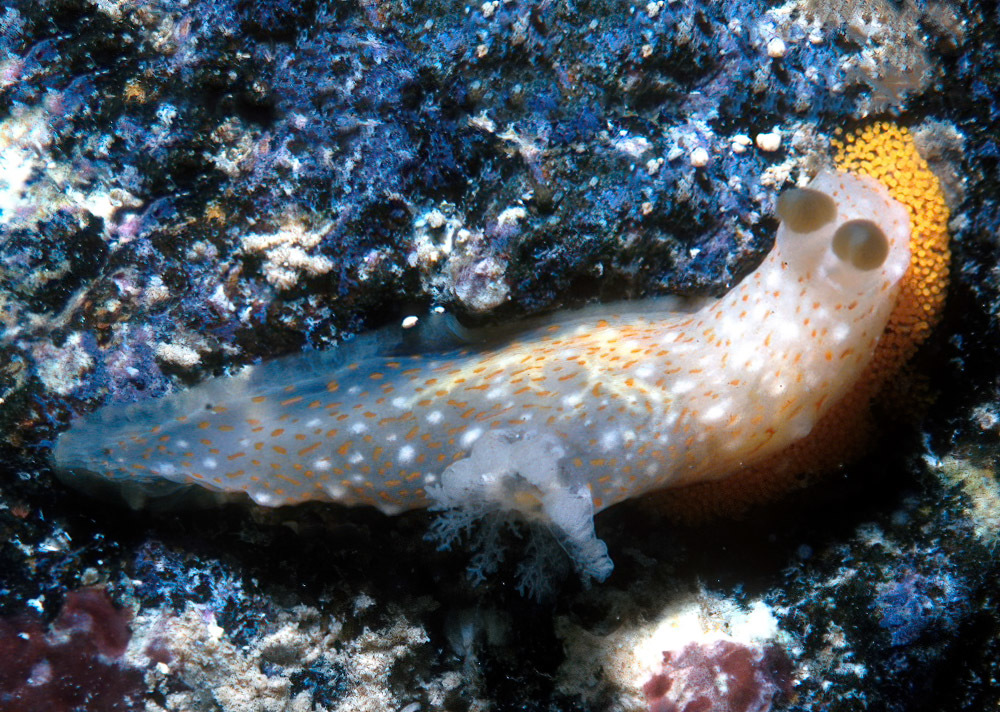
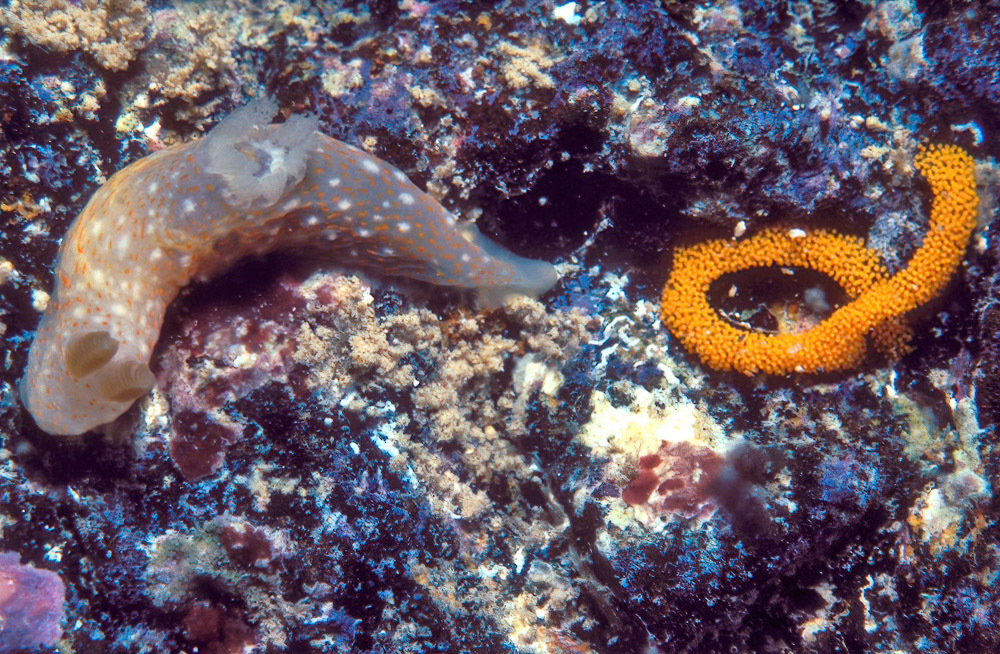
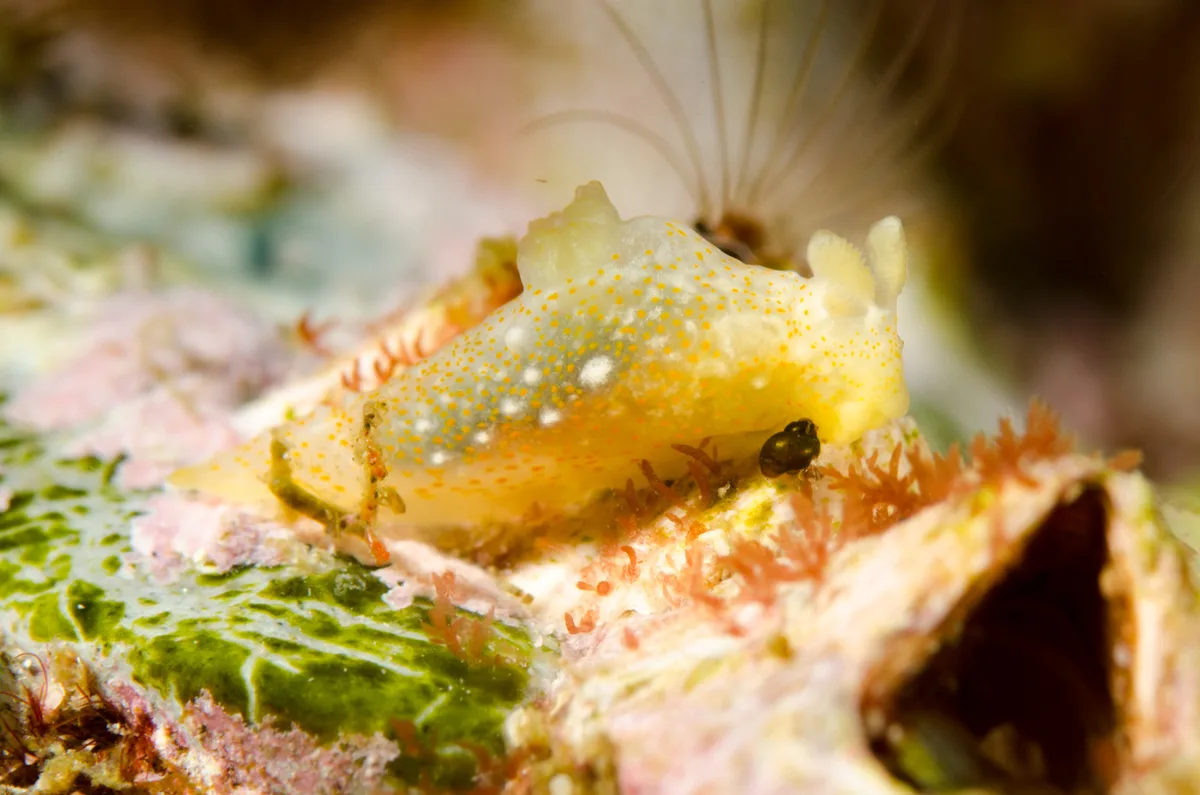
Two and a half centimeters (1 in), translucent, and the surface is studded with opaque white pustules with small orange spots between them, which at close range looks like hail sitting on glass.
- translucent body studded with opaque white pustules, like hail on glass
- small orange spots scattered between the white ones
- no mantle skirt: the sides of the foot are exposed along the body
- found among algae rather than on sponge or coral