Twelve and a half centimeters (5 in) makes this the largest soft coral slug on the reef, and almost nobody has seen one, because everything it does happens at night inside a colony.
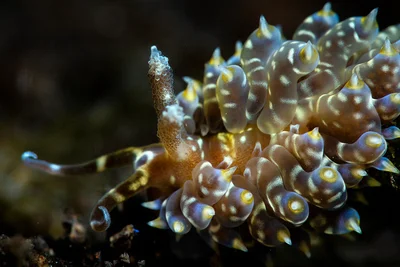
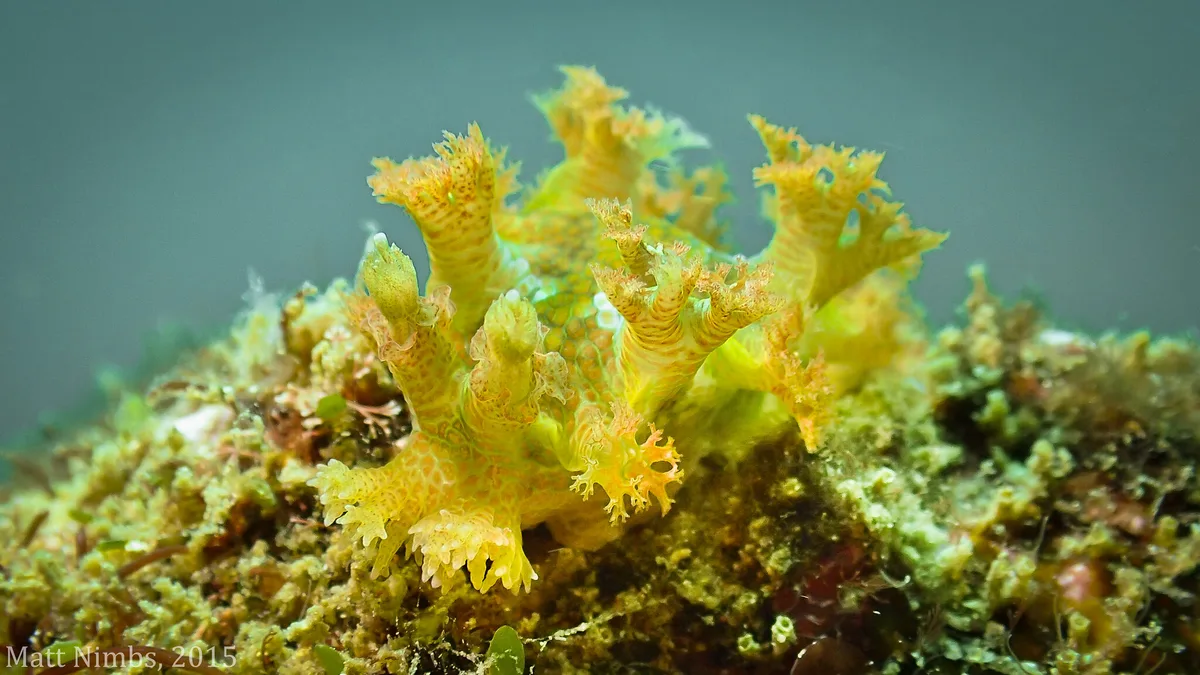
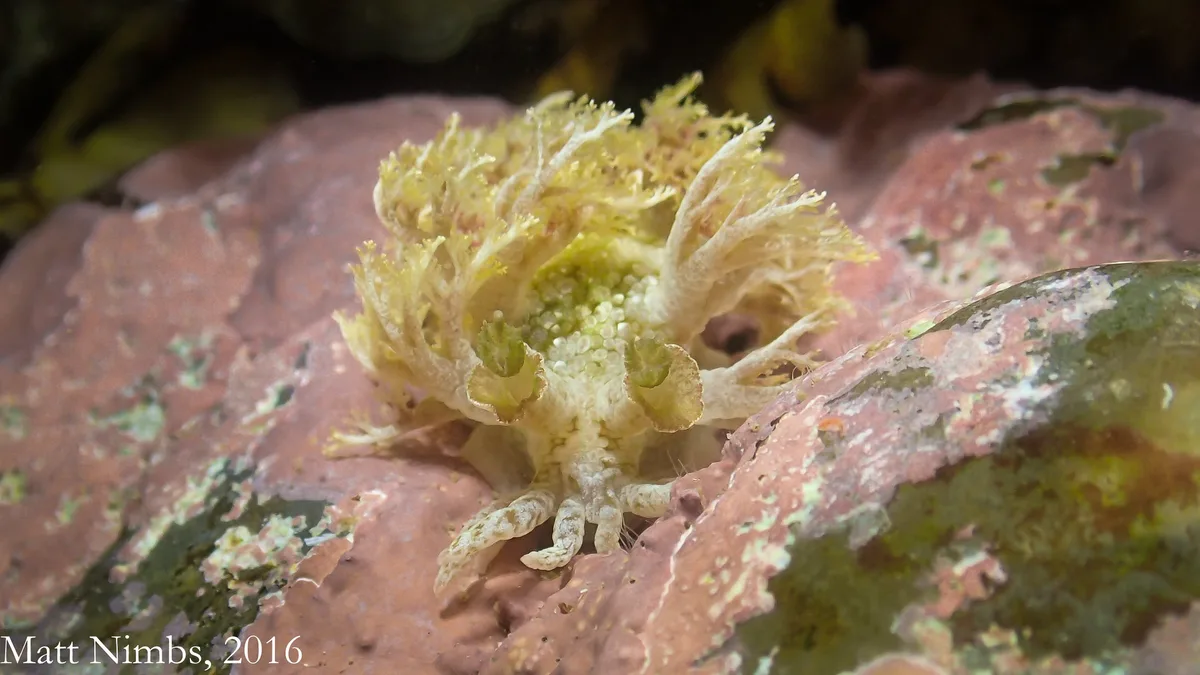
The layout is tritoniid and it is not a dorid layout. There is no gill rosette on the back. Instead a row of finely branched tufts runs down each side, and across the front of the head sits a veil divided into fine branches and covered in chemical sensors, which the animal uses to feel its way to soft corals in the dark. The veil is a search tool that happens to look exactly like the thing it searches for.
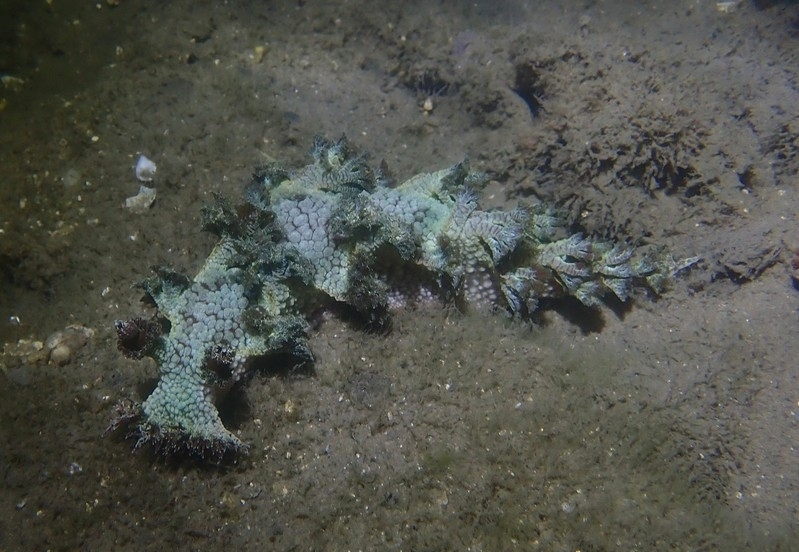
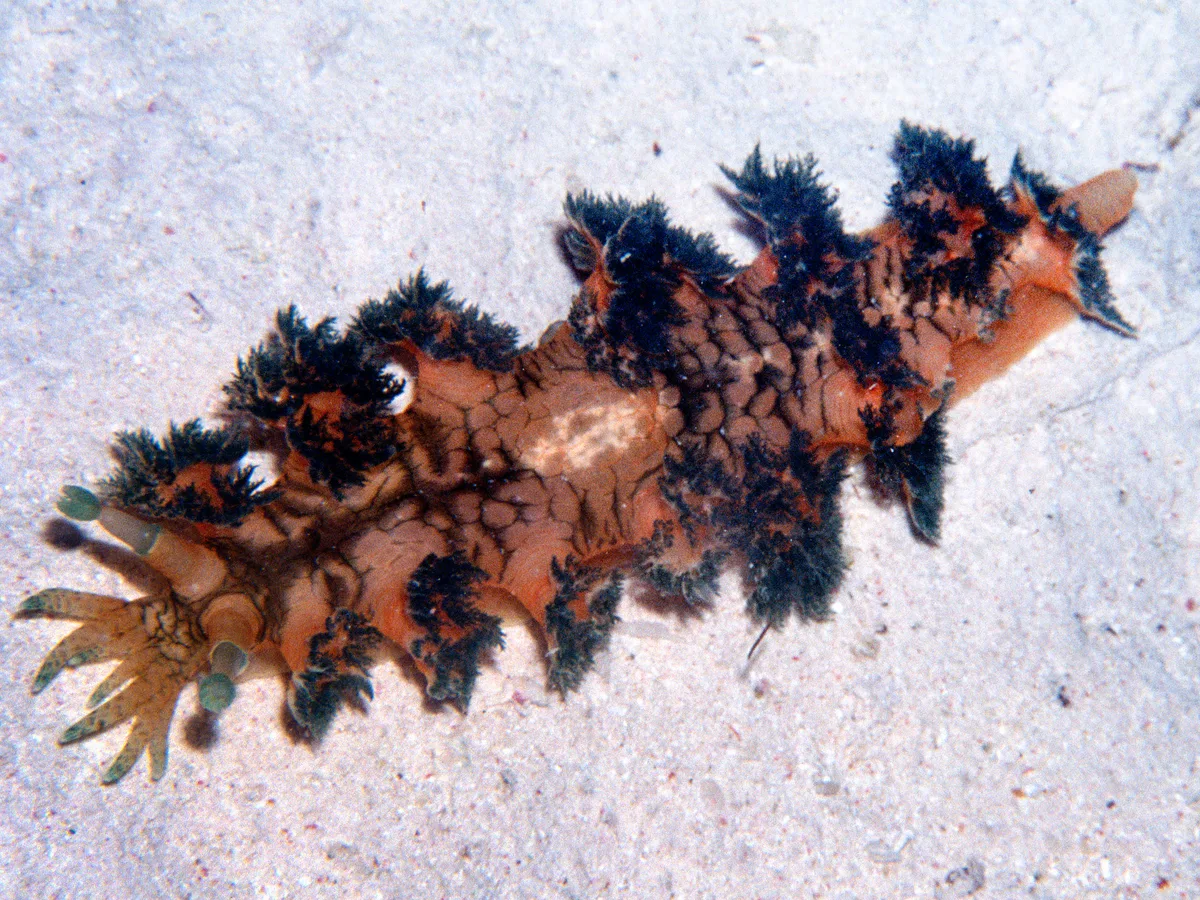
On this species everything at the edges is green. The gills are greenish and branched so finely they read as moss along the flanks, the rhinophores are green as well, and against a light brown body with dark markings gathered in the middle of the back, that green trim is the identification. Nothing else in this section carries it.
It feeds on soft corals polyp by polyp through the night and spends daylight pushed back into a crevice, which is the standard arrangement in this family and the reason a slug the size of your hand goes unrecorded.
One note on the label. Rüppell and Leuckart described it from 🌊 Red Sea material in 1828, and taxonomists have since moved the species into the genus Marioniopsis. The regional literature and the photographic databases still carry it as Marionia, which is why it appears under that name here.
- gills greenish and very finely branched, standing in a row down each side
- rhinophores green, which nothing else here has
- dark markings gathered in the middle of the back on a light brown ground
- very large: twelve centimeters, the biggest tritoniid on this reef