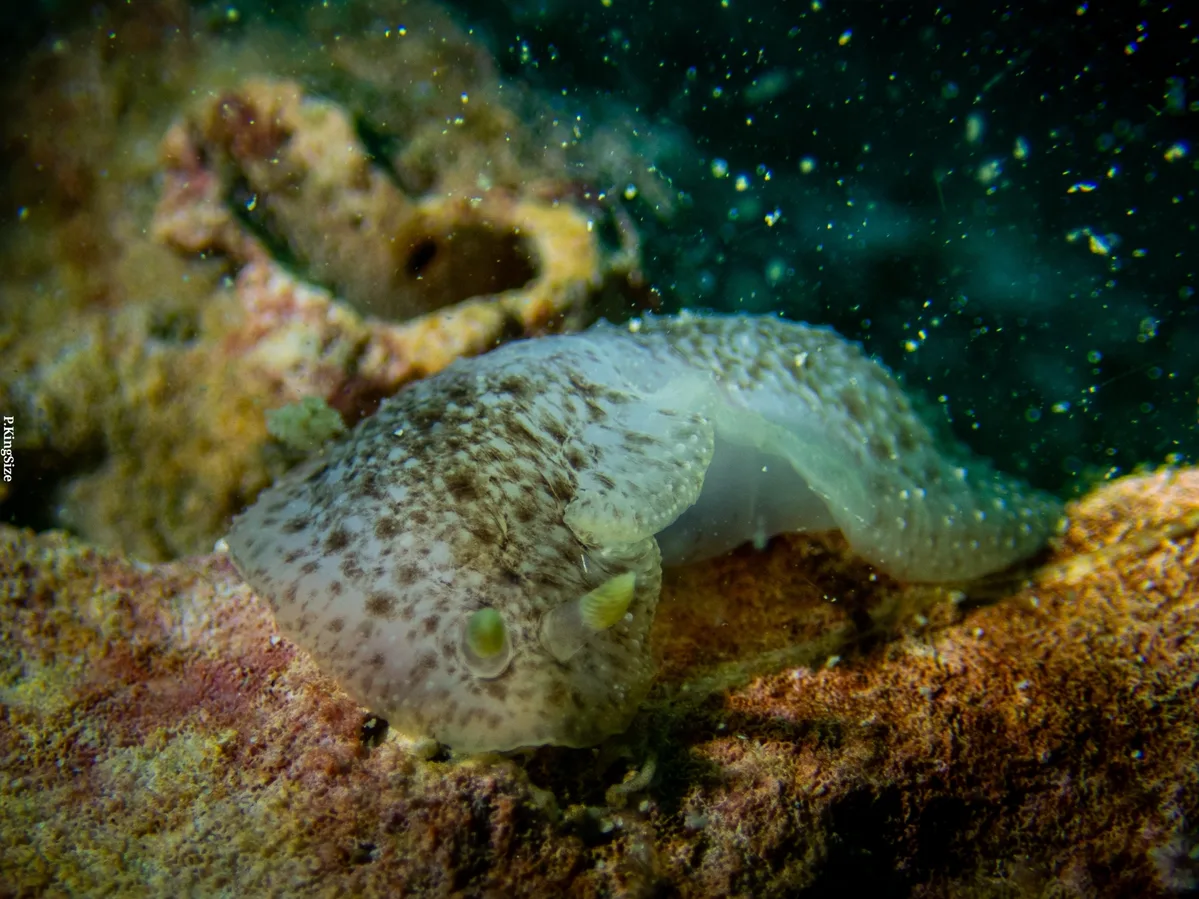
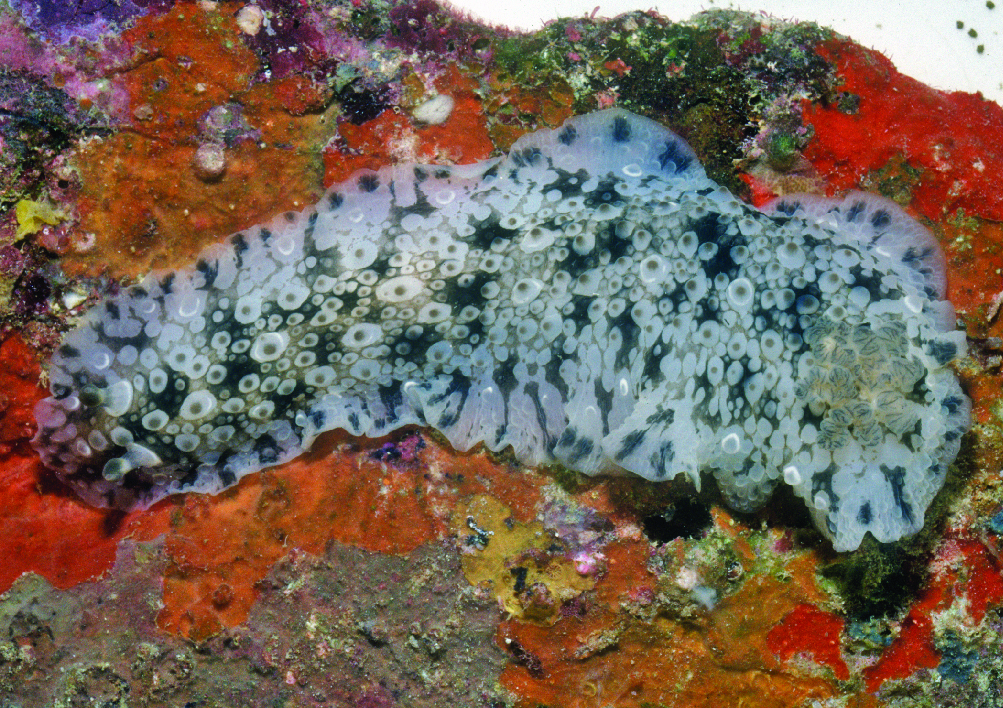
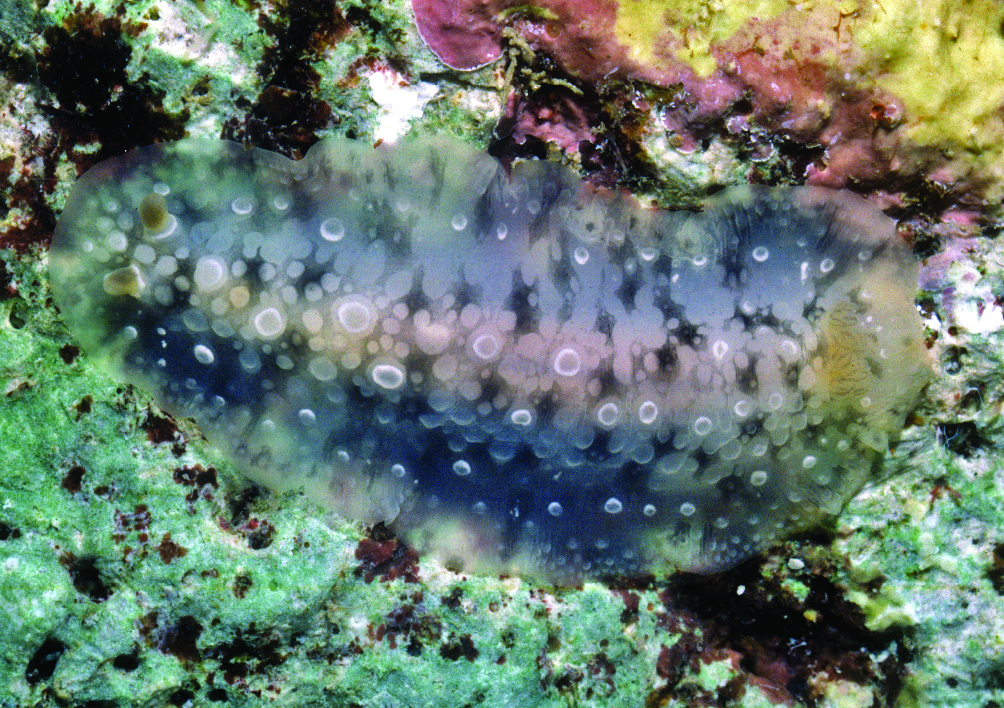
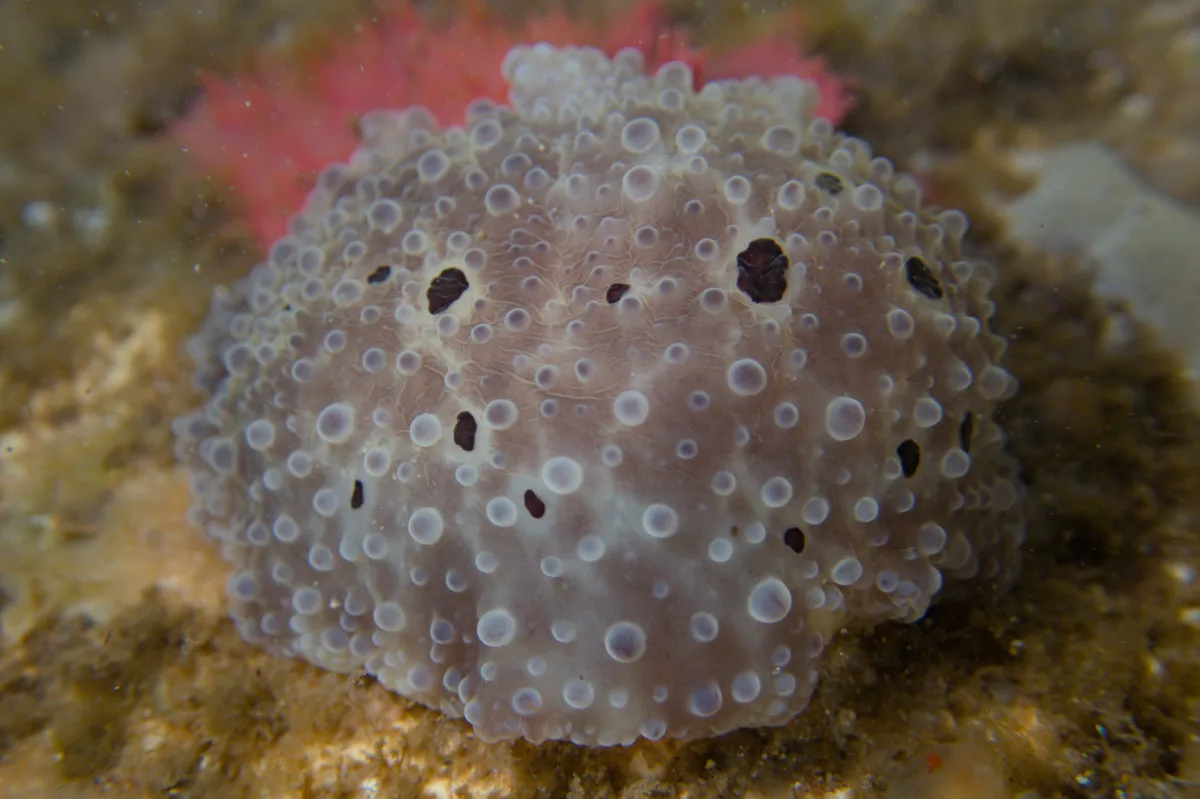
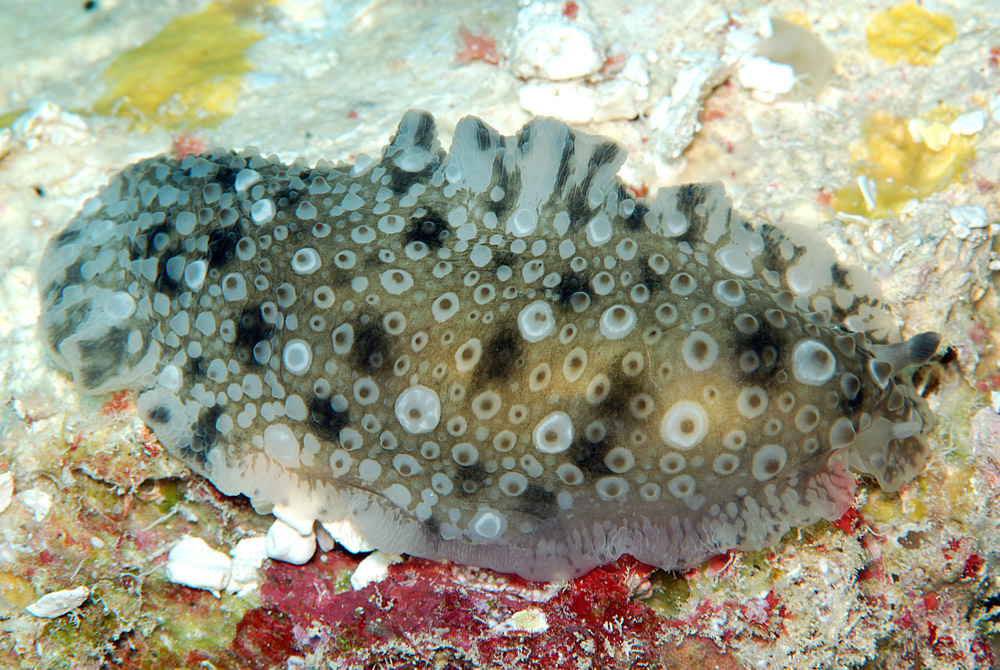
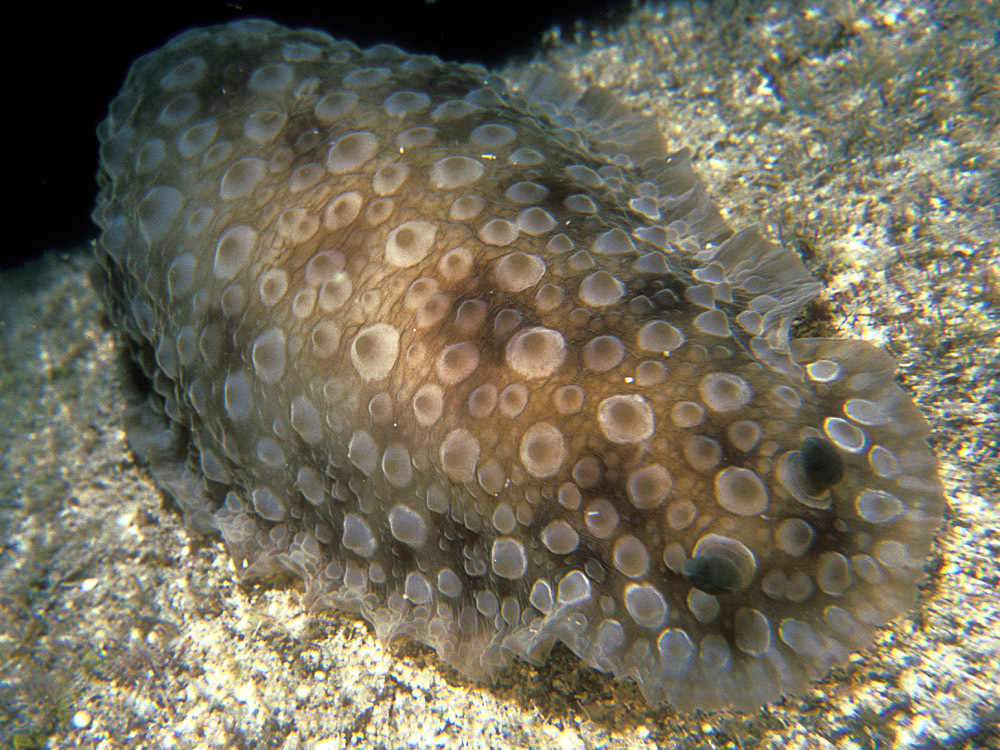
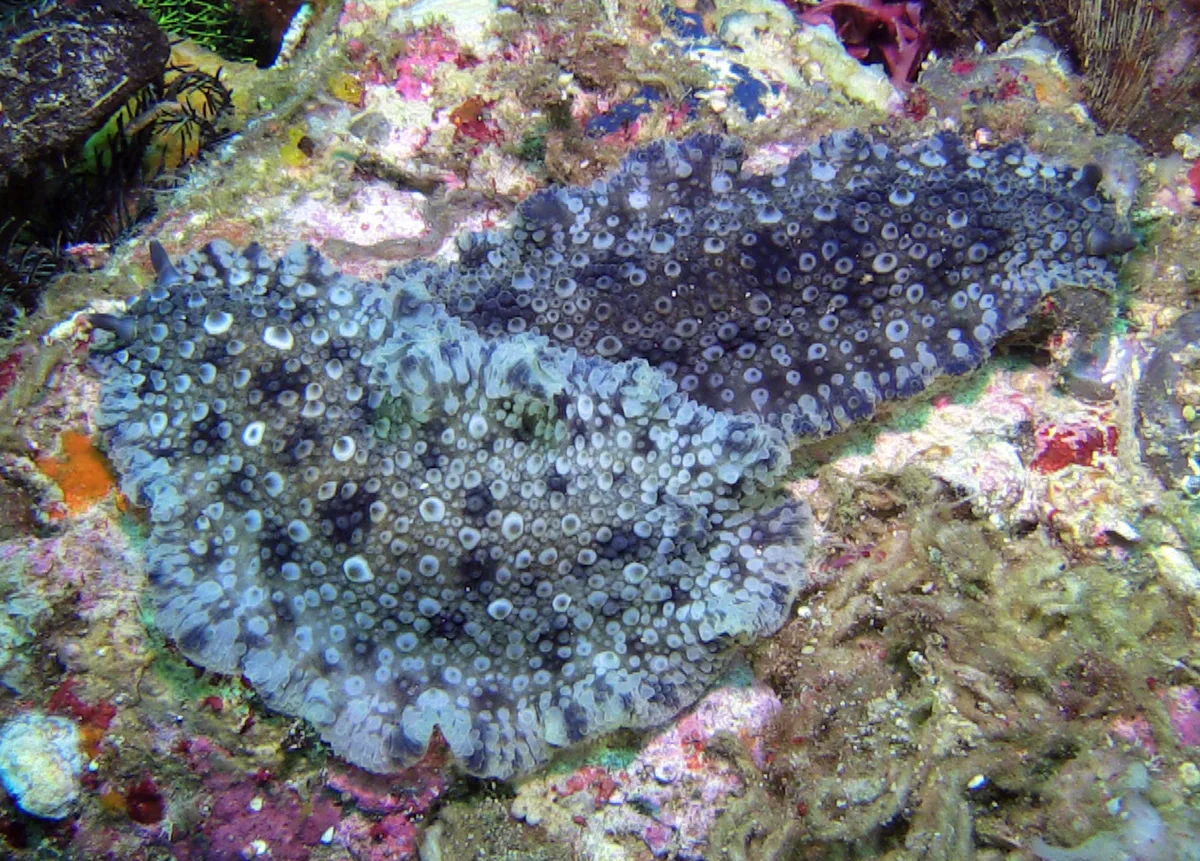
Fifteen centimeters (6 in) of soft, boneless animal. Only a handful of sea slugs on this reef get bigger, and every one of them is doing something to earn the size.
Here the size comes from the way the genus feeds. Dendrodoris has no rasping teeth at all, which every other snail and slug uses; instead the animal presses its mouth to a sponge, floods it with digestive fluid and drinks the tissue back already broken down, leaving the mineral skeleton behind. That is a low-effort way to eat and it scales well. There is no scraping to be done, no wear on any structure, and nothing limiting how much a large animal can process except how much sponge it can cover.
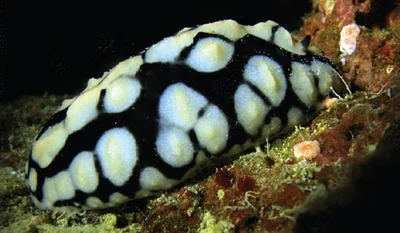
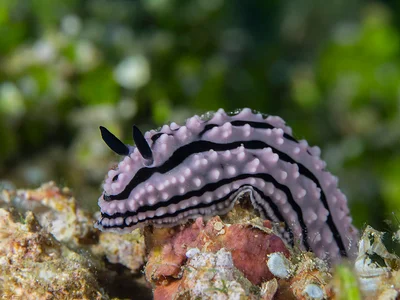
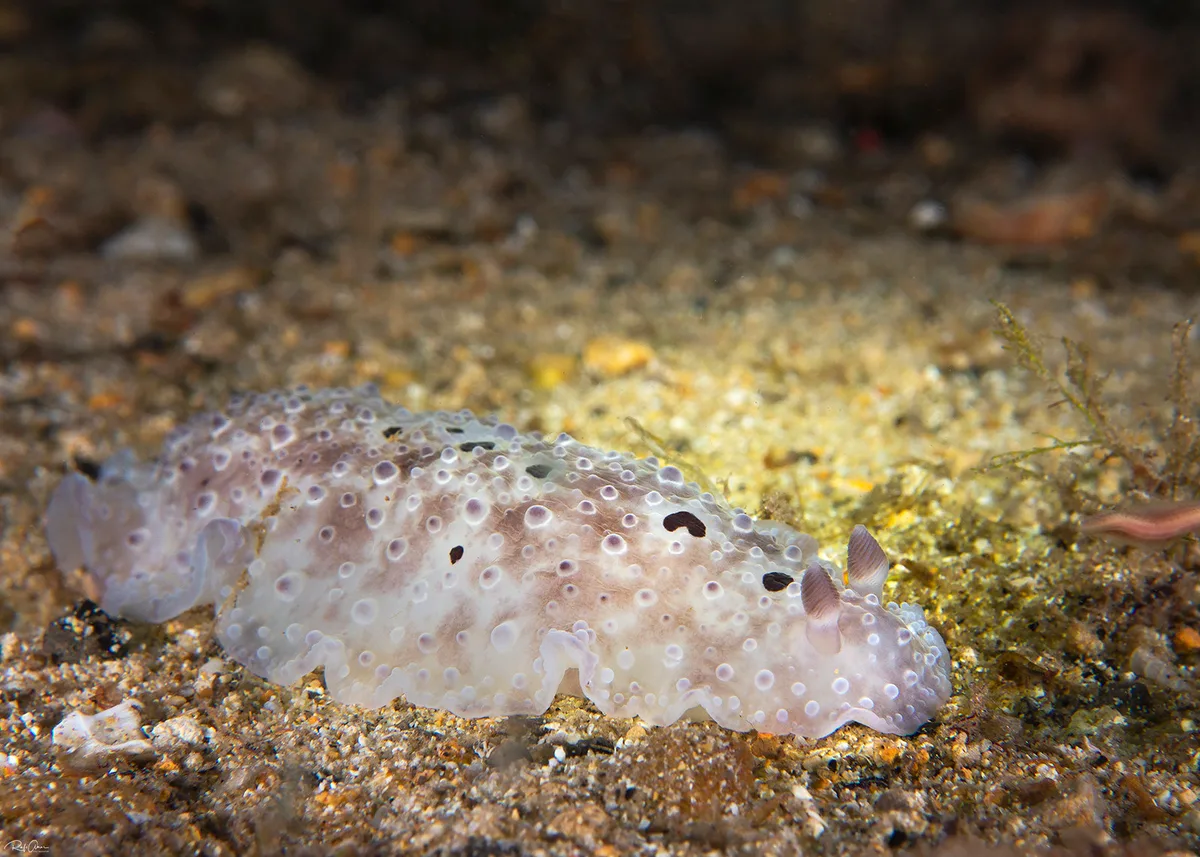
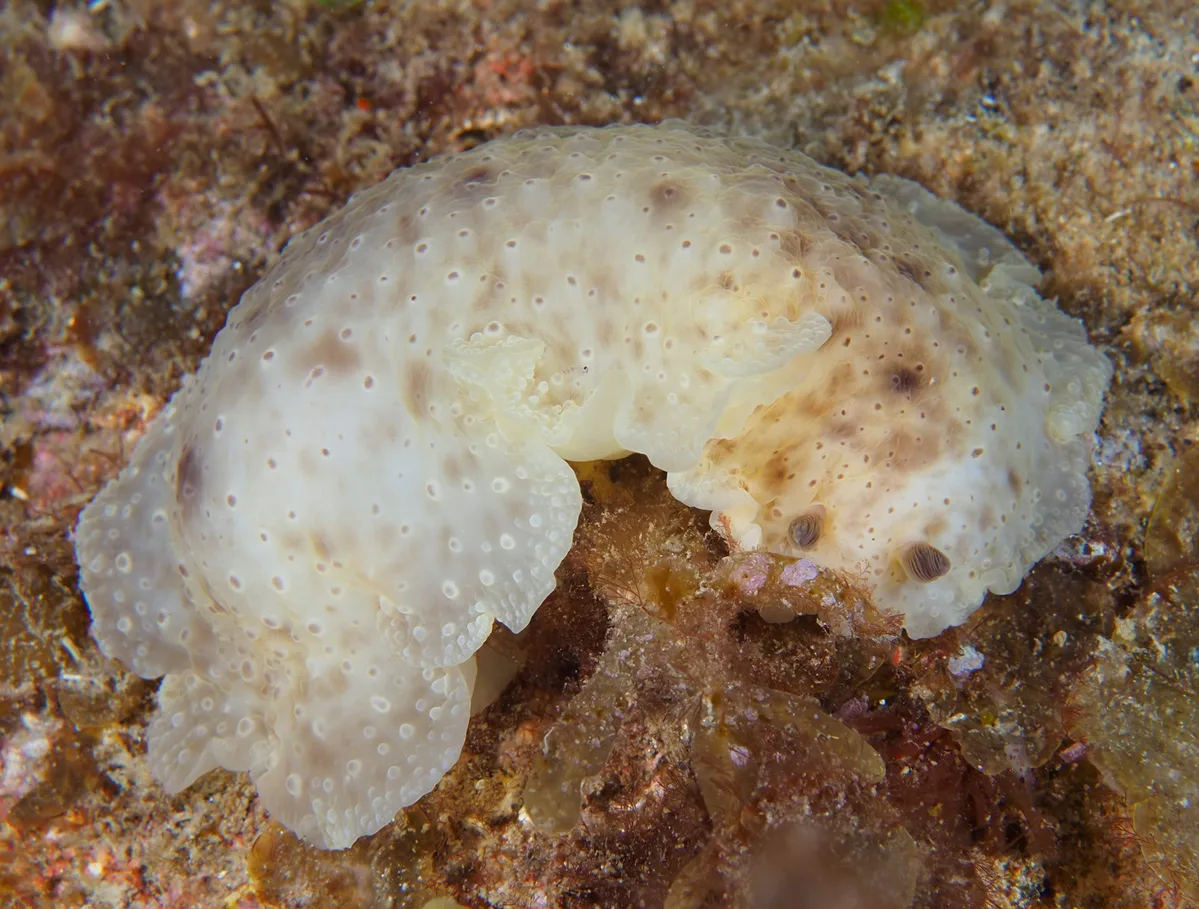
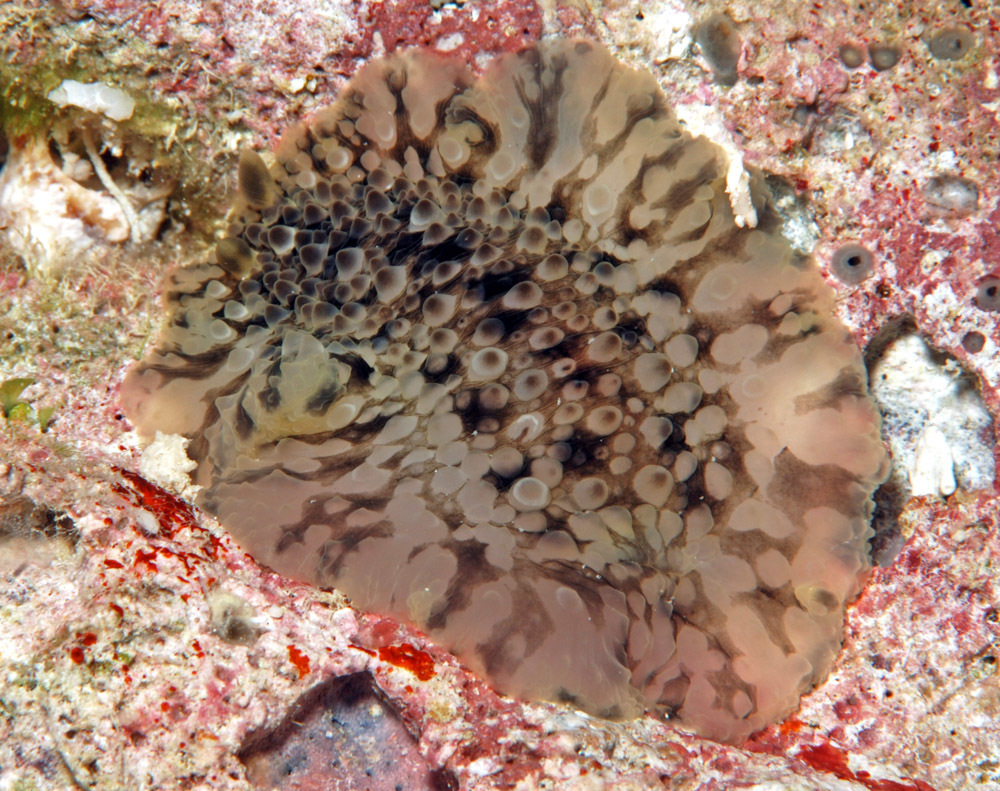
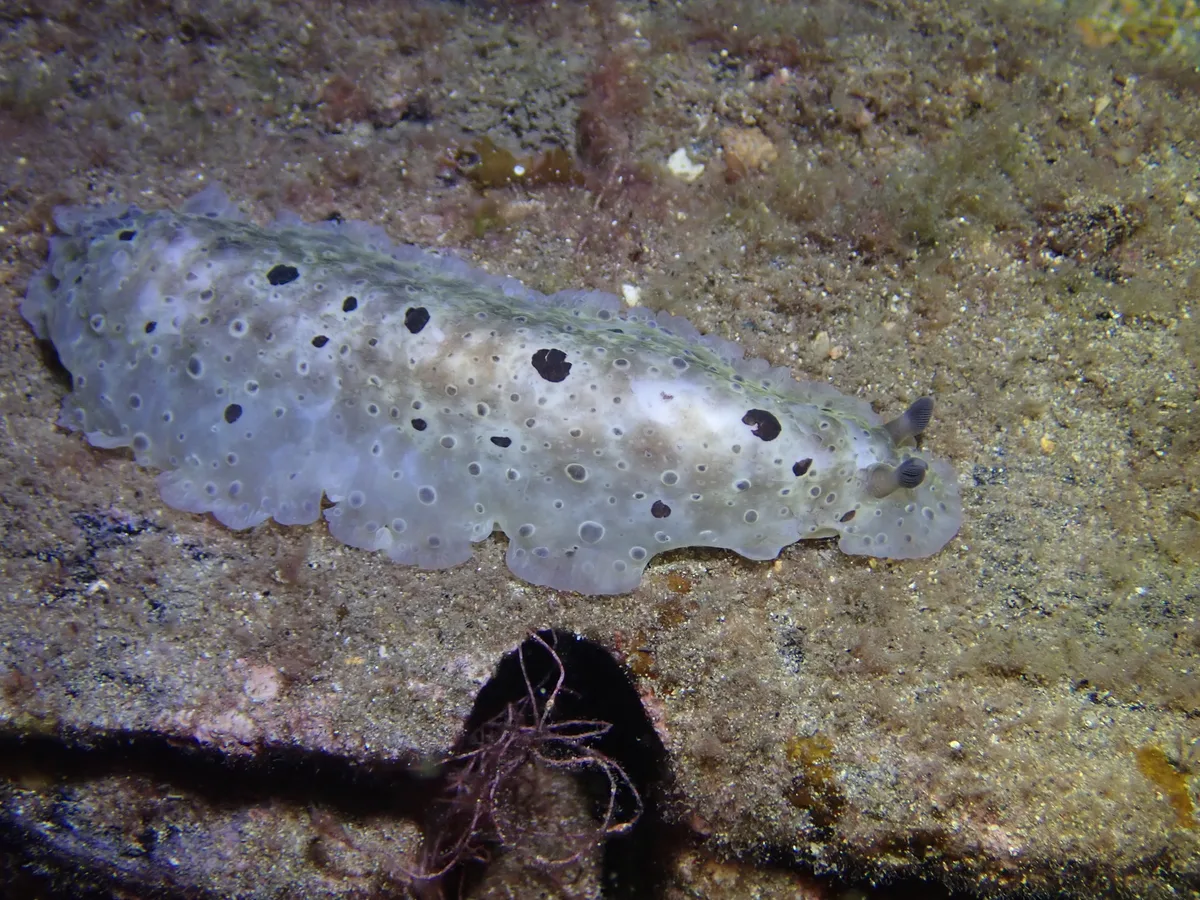
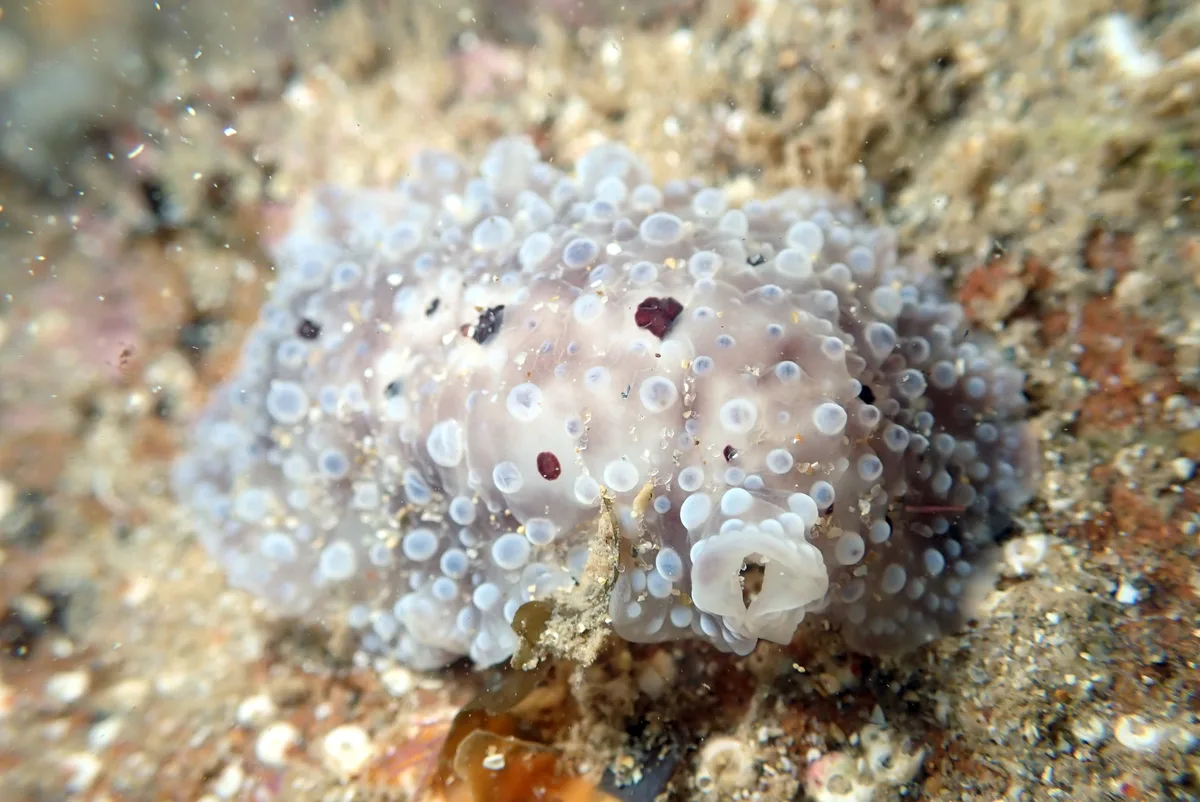
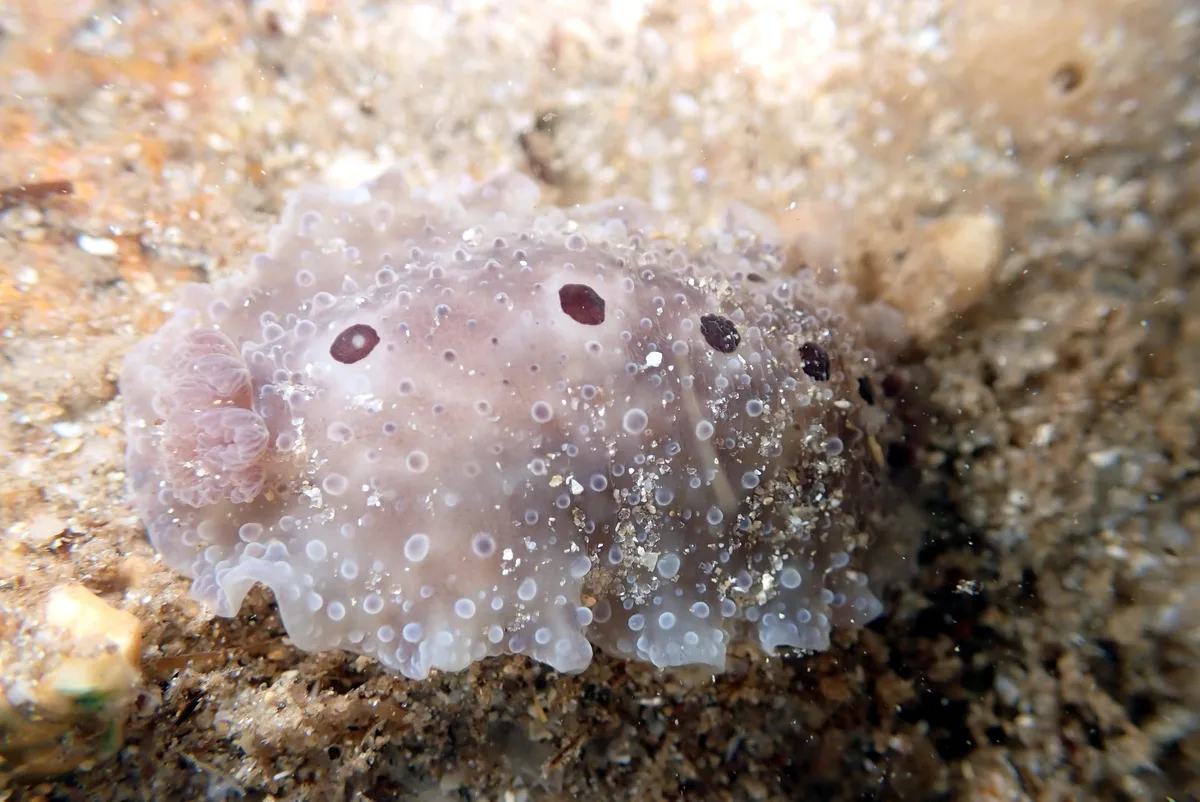
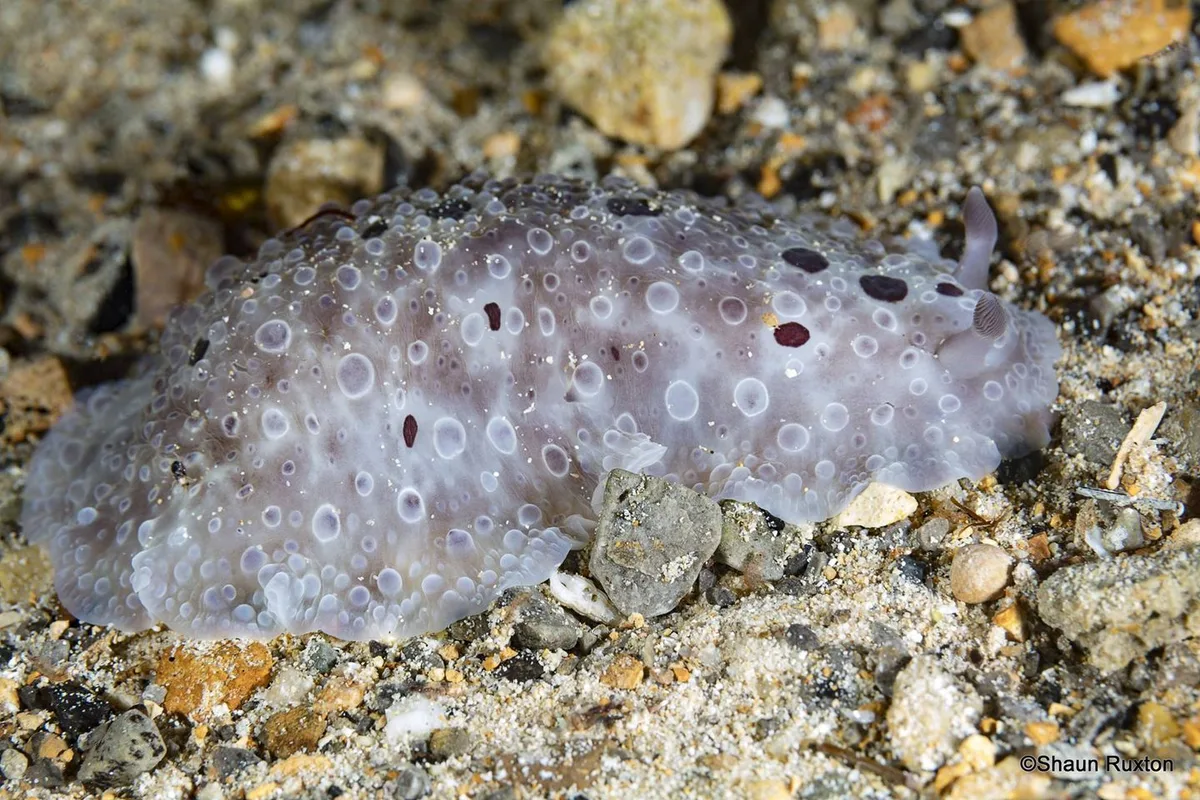
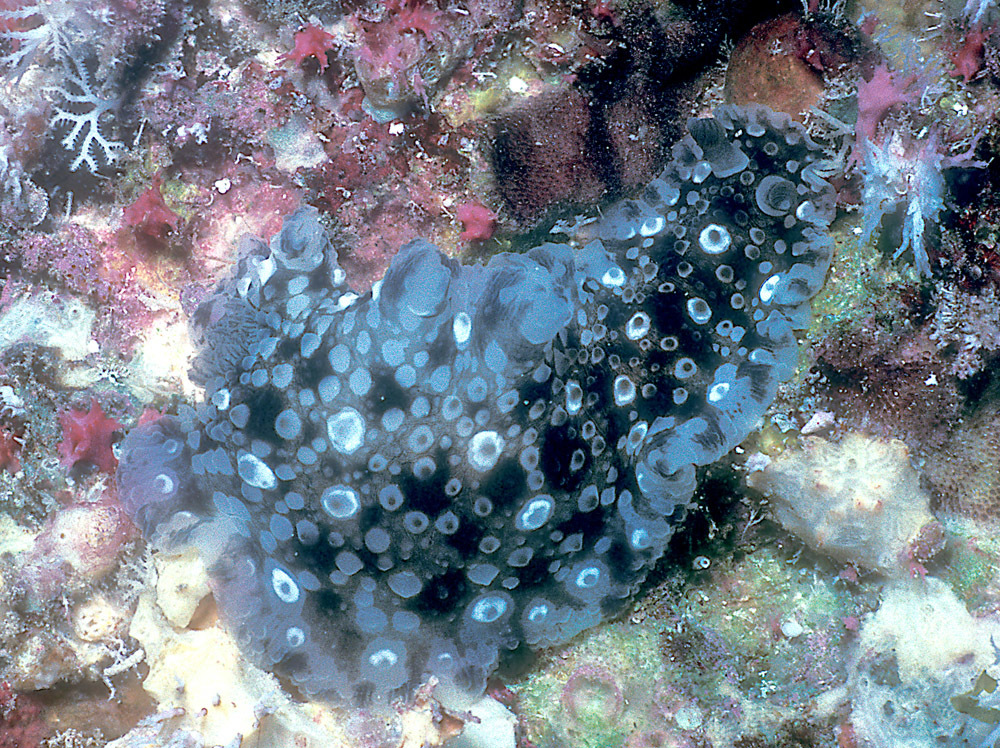
The body has nothing hard in it anywhere. It is gray, studded with pale pustules that carry dark tips, and it flows rather than holds a shape, which at this size makes it look less like a slug than like something spilled onto the rock.
The gills are the identification. On most dorids the plume sits reasonably close behind the rhinophores. Here they are set far apart, the gills pushed well back toward the rear of the mantle with a long stretch of bare back between, and on a fifteen-centimeter animal that gap is obvious from above.
It is out at night. In daylight something this soft and this large is under a ledge.
- very large: fifteen centimeters, among the biggest sea slugs on this reef
- gray, covered in pale pustules with dark tips
- gills set unusually far apart from the rhinophores, well back on the body
- soft throughout, holding no firm shape