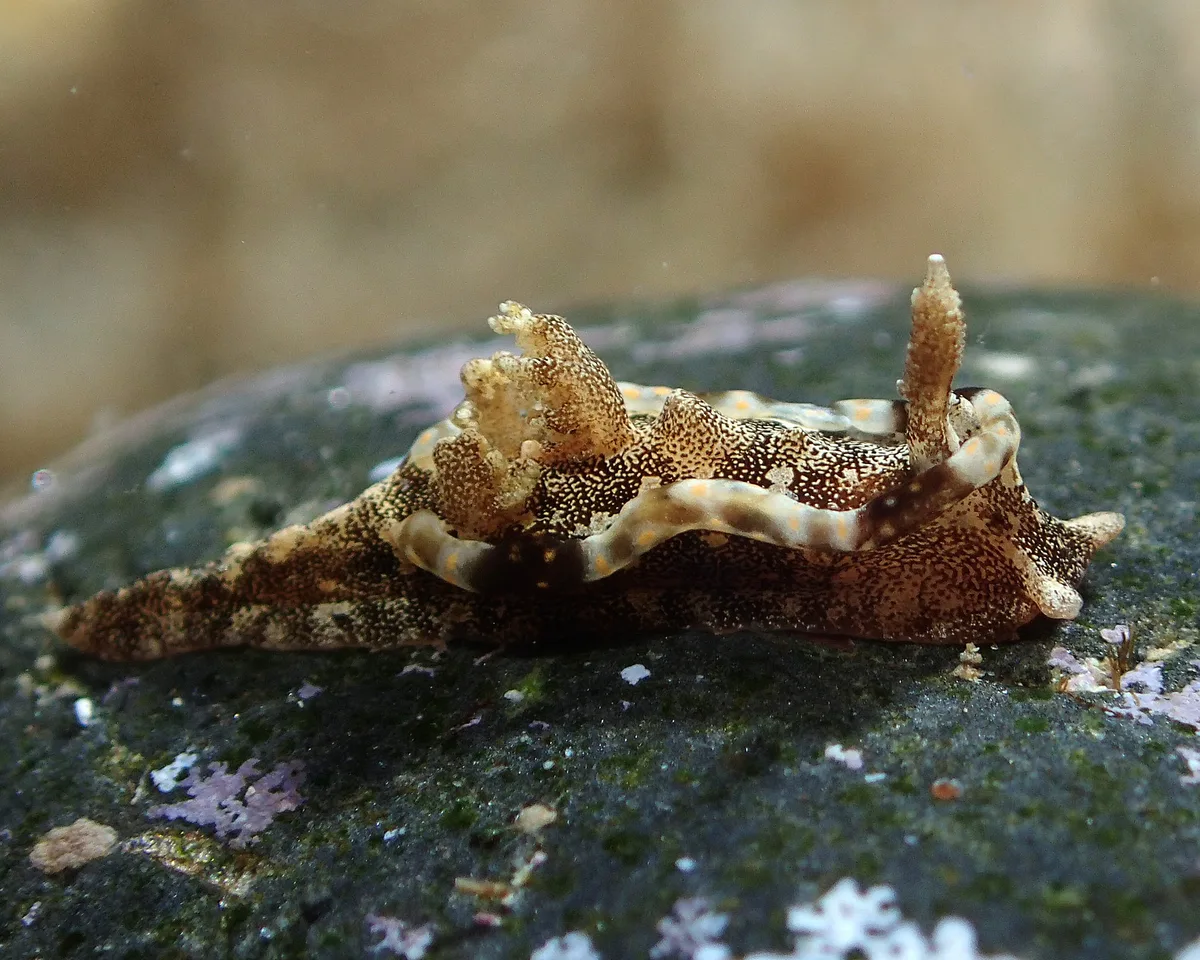
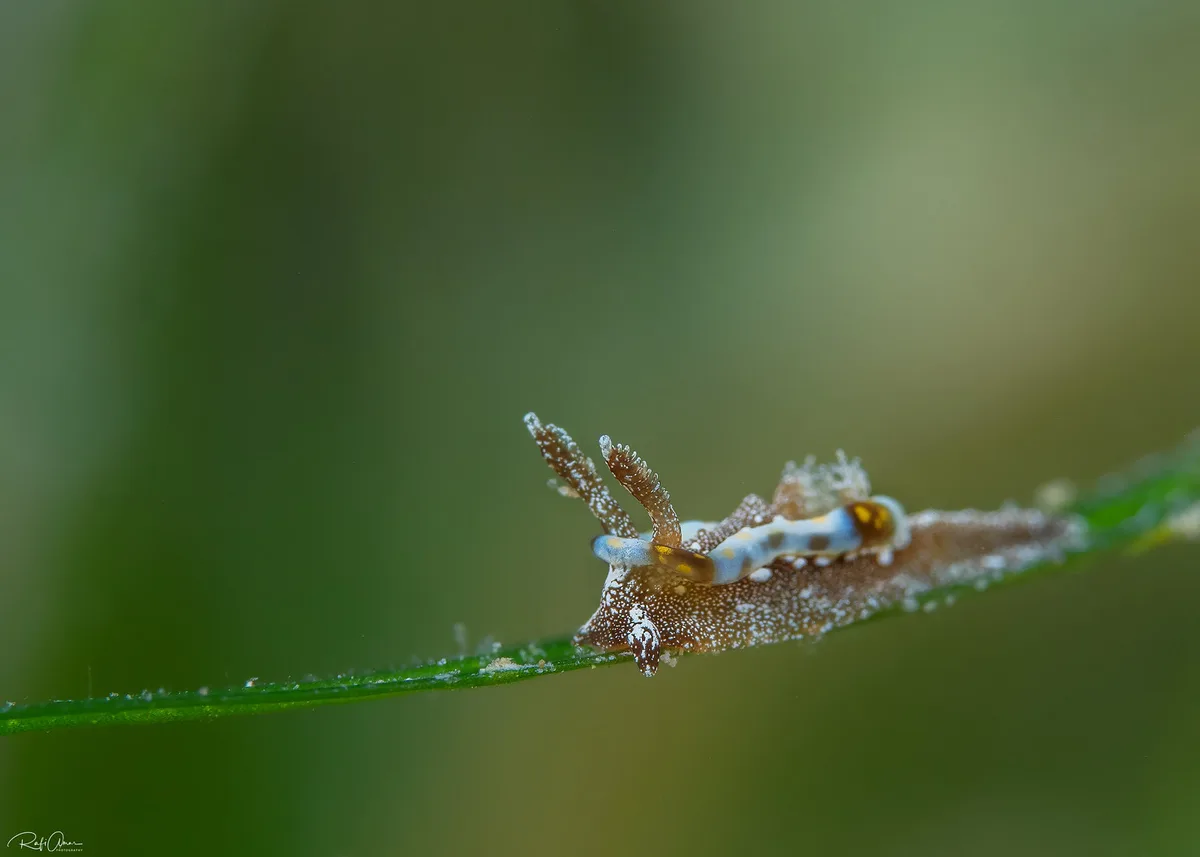
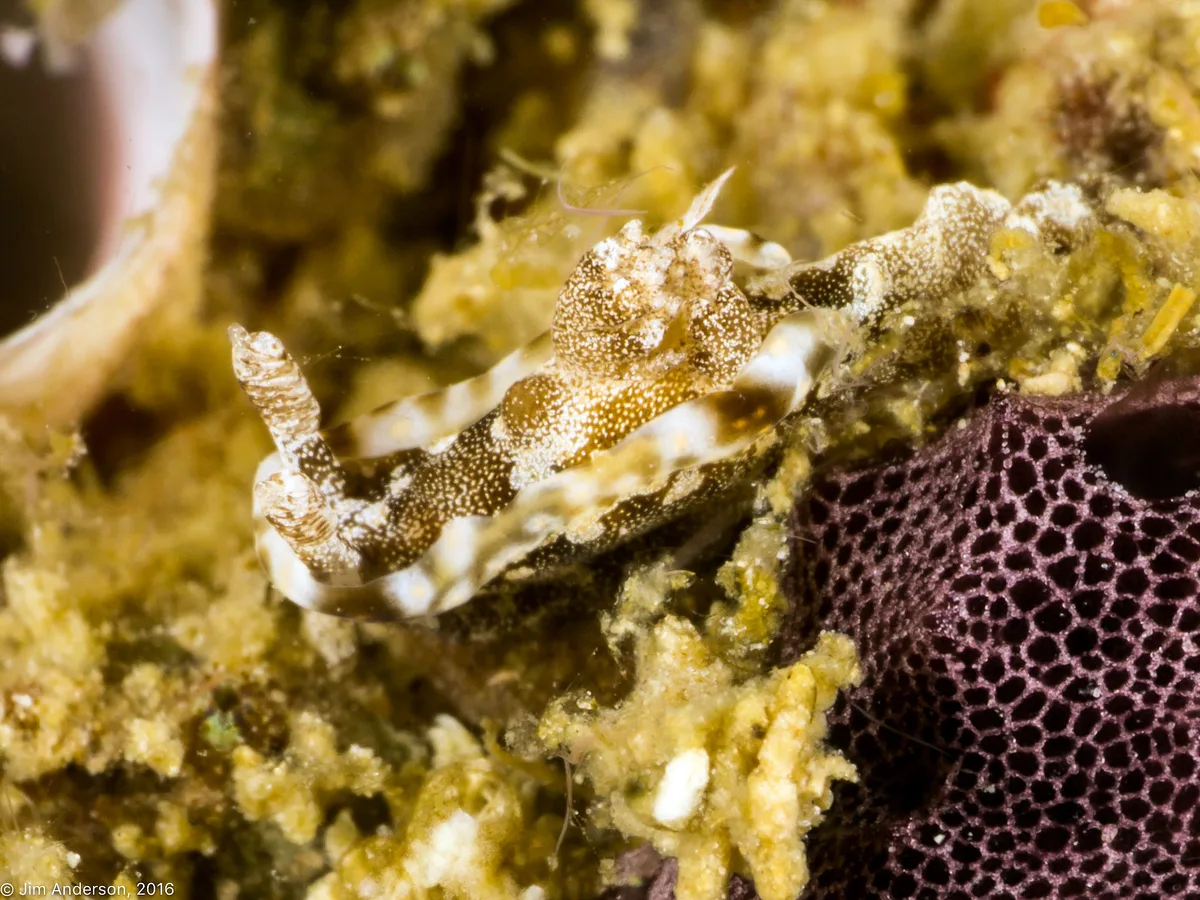
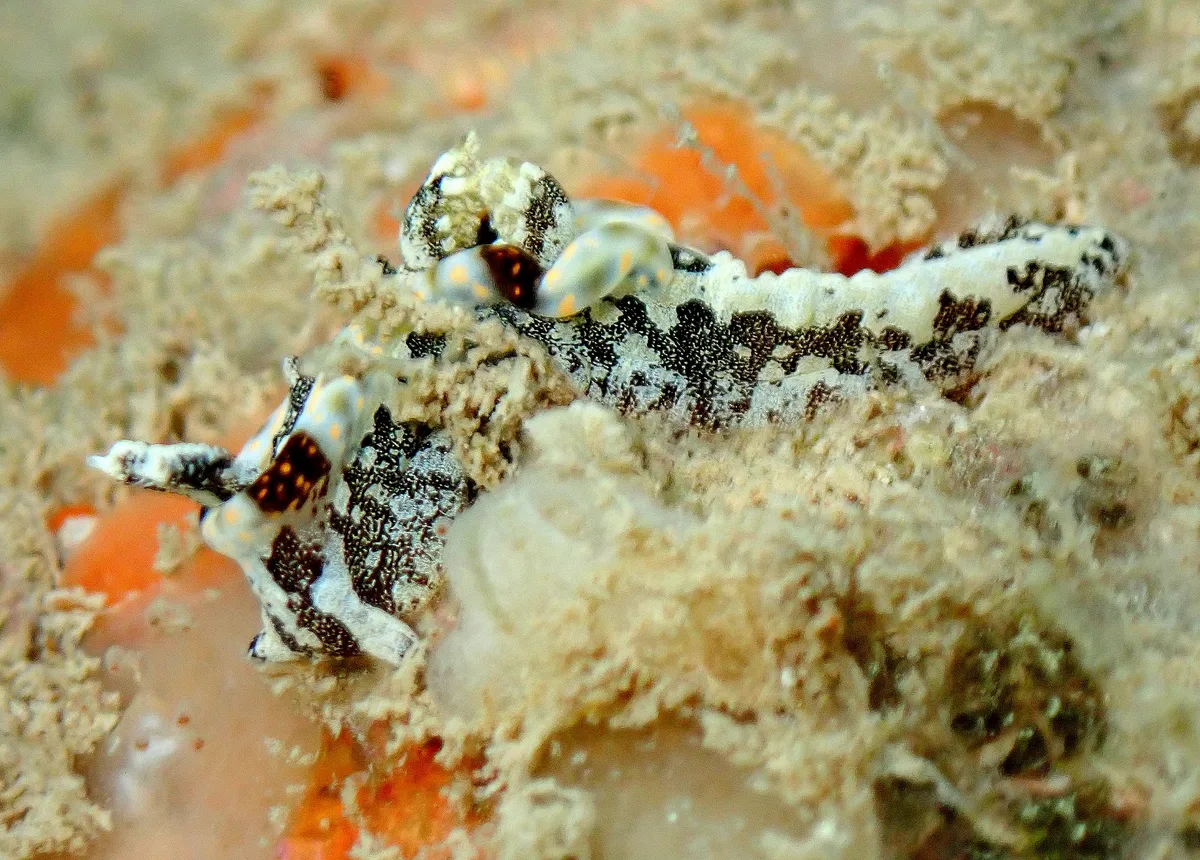
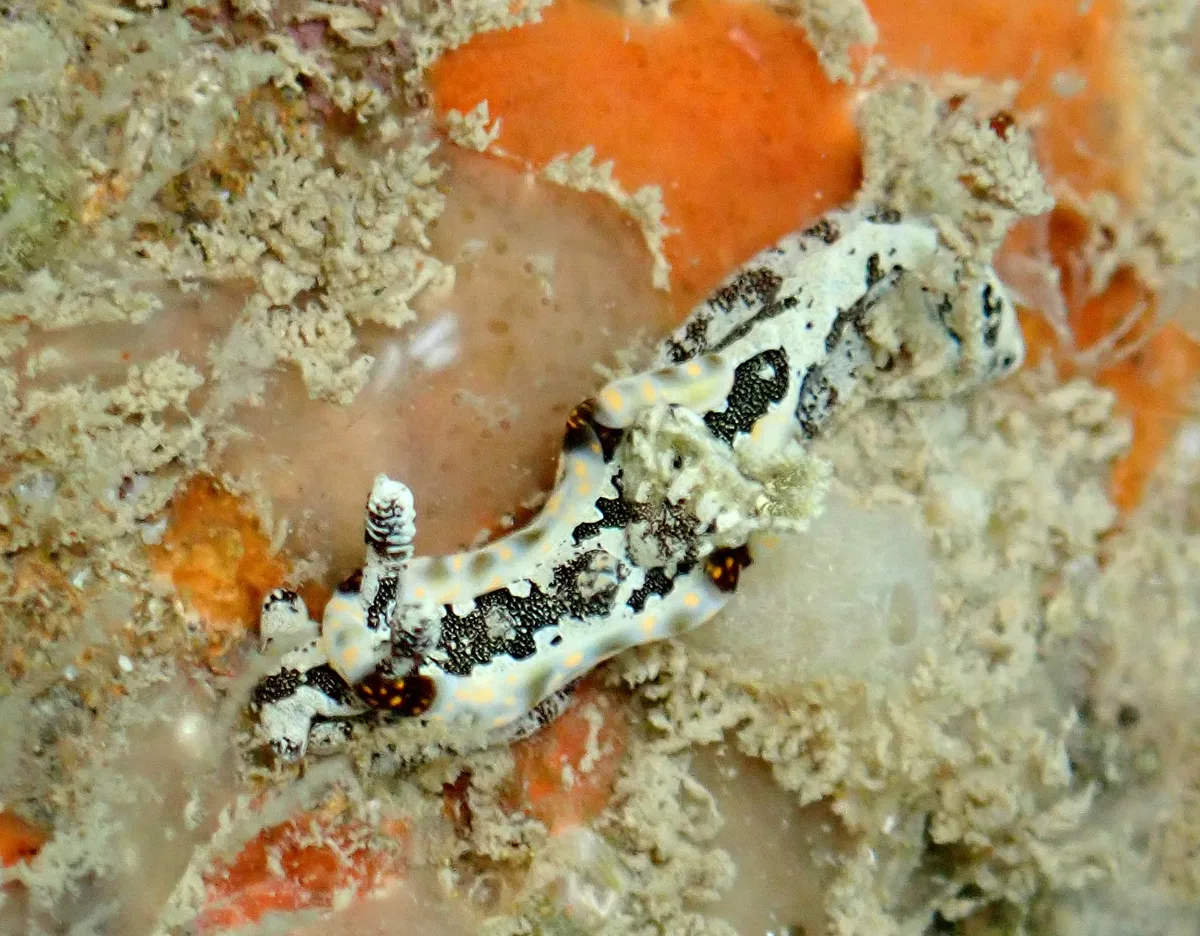
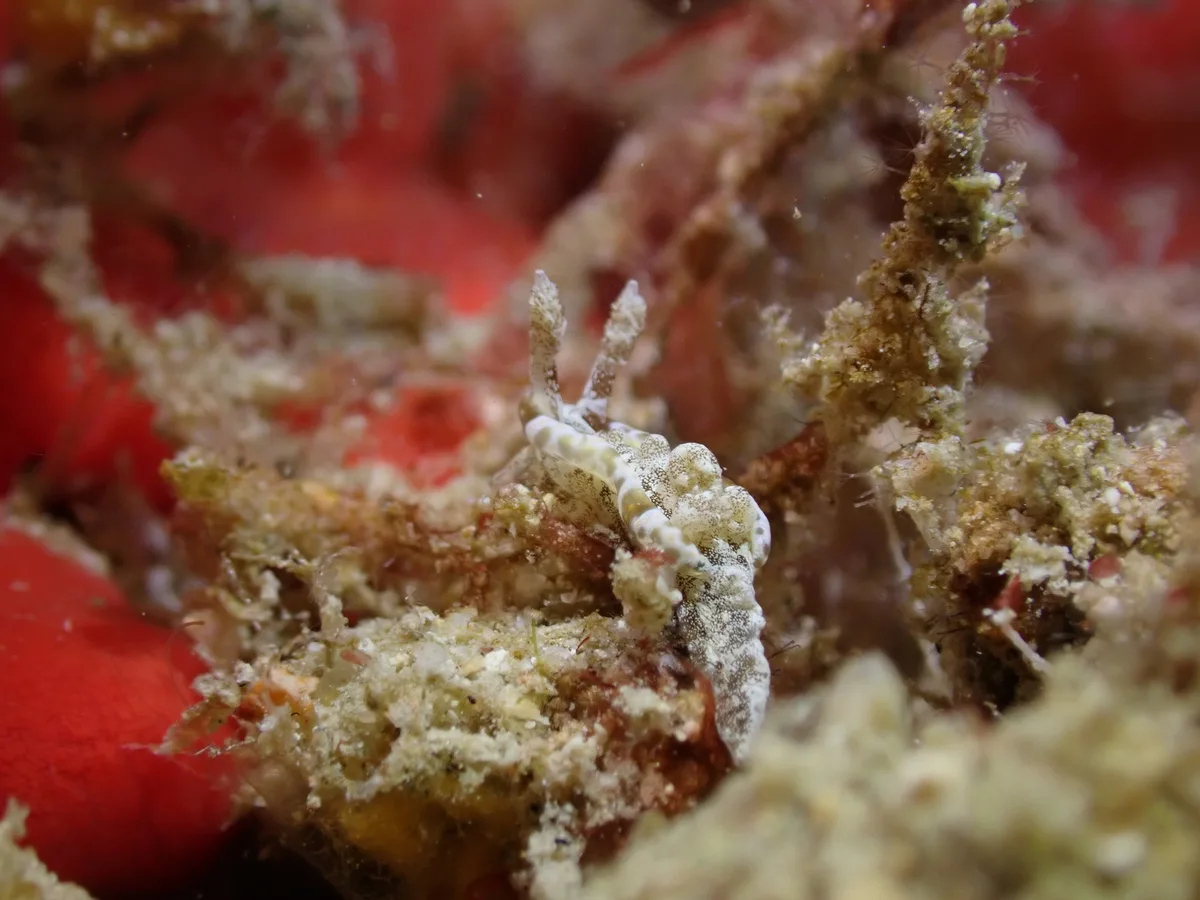
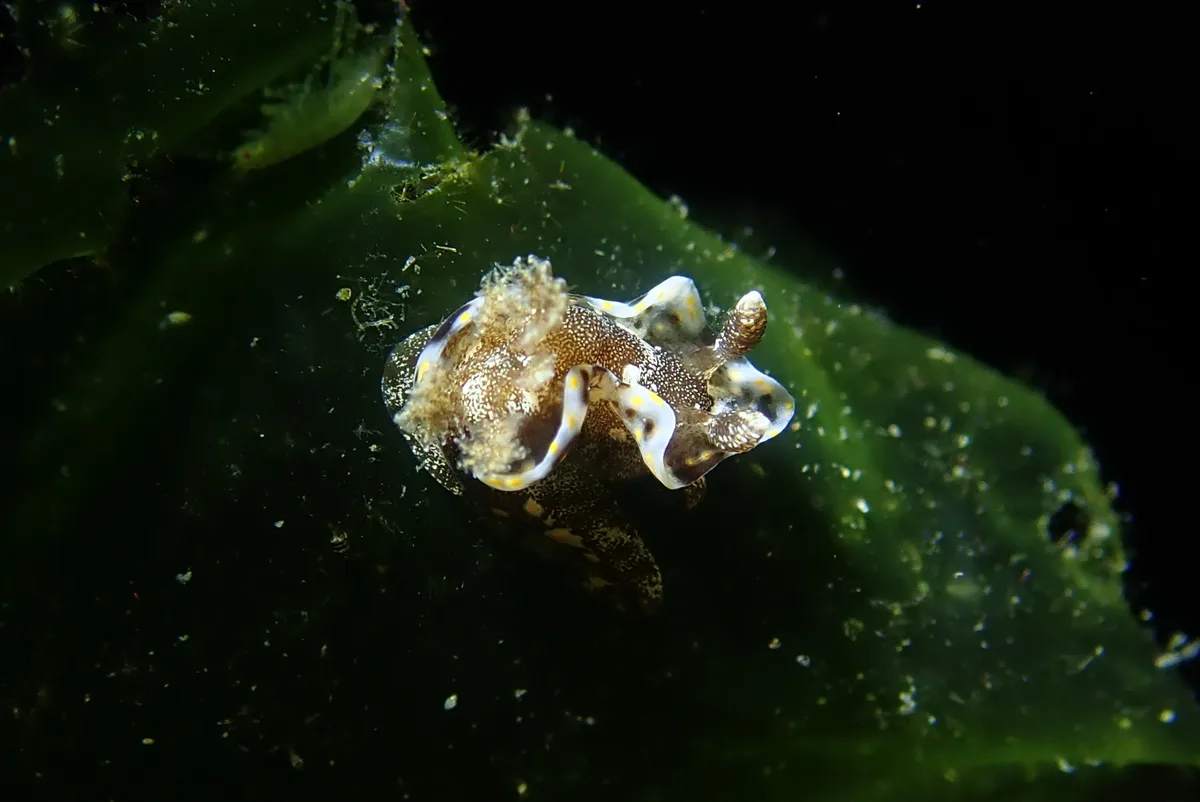
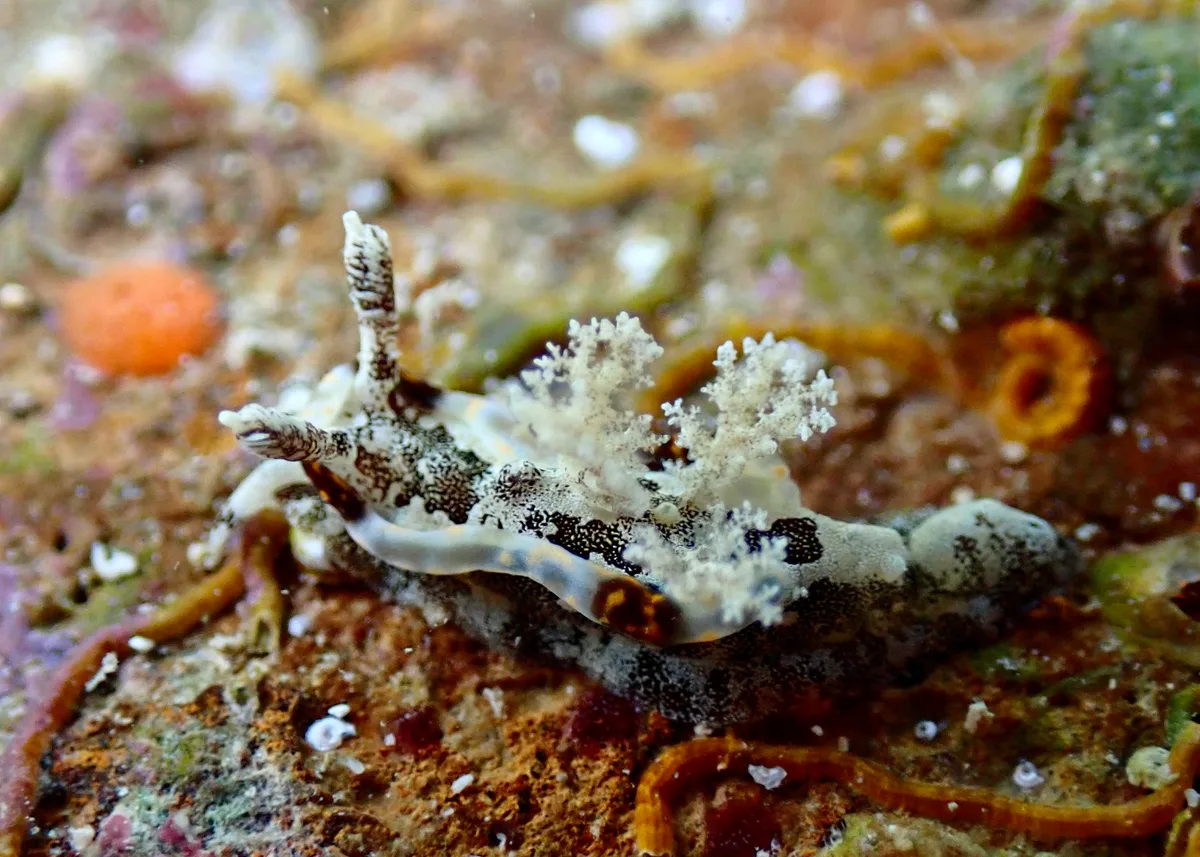
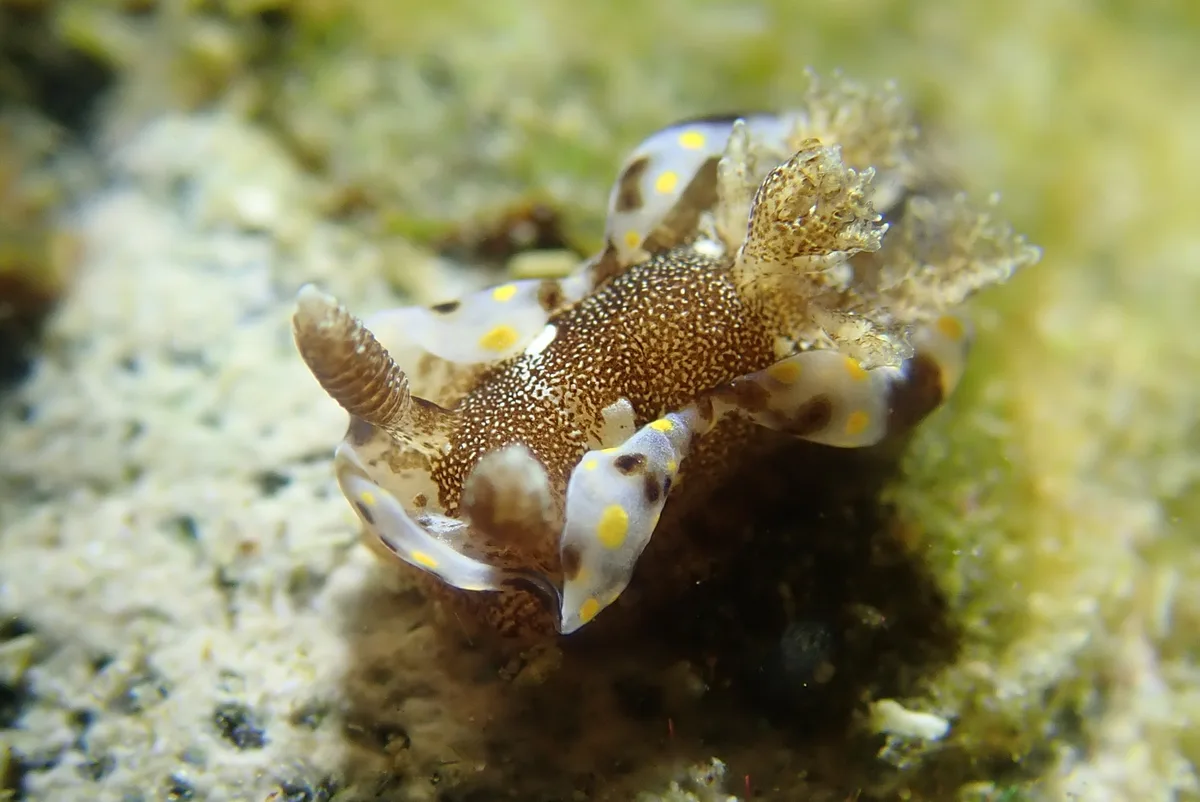
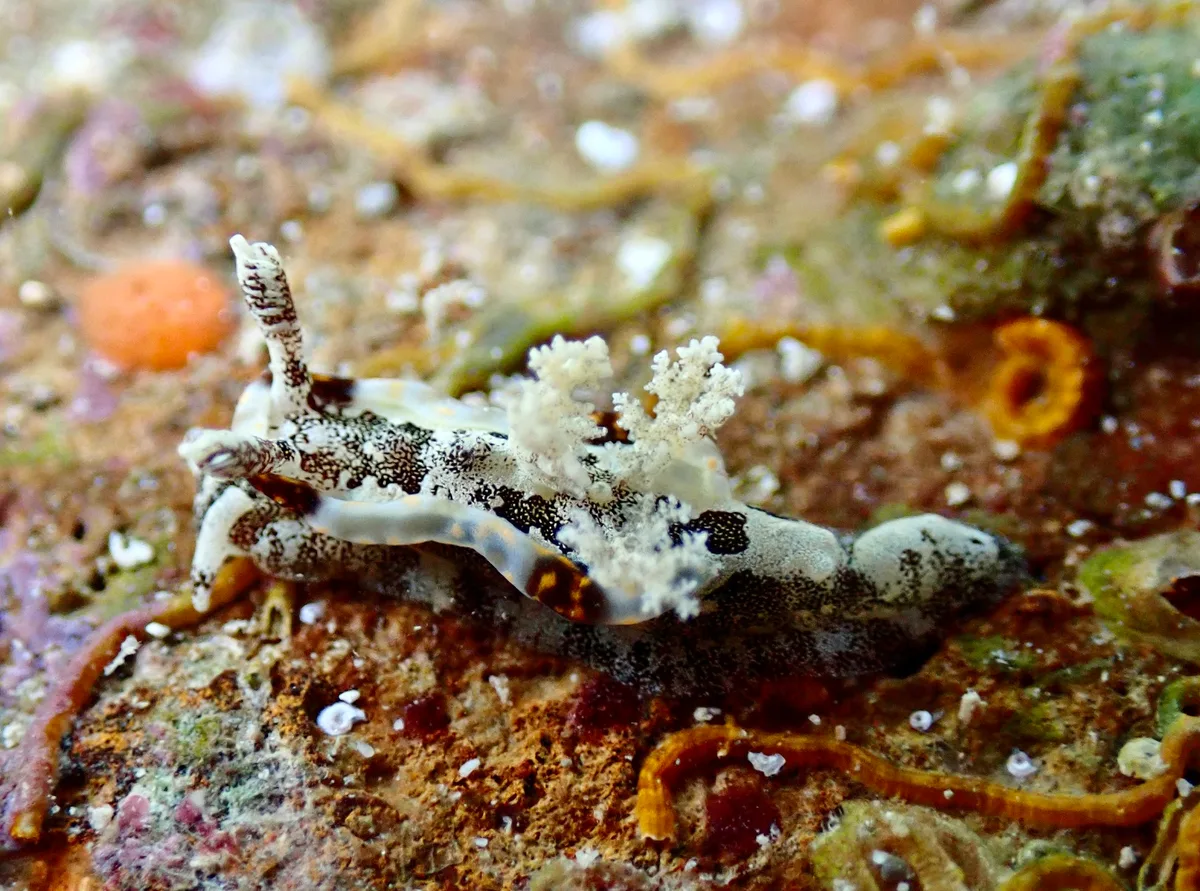
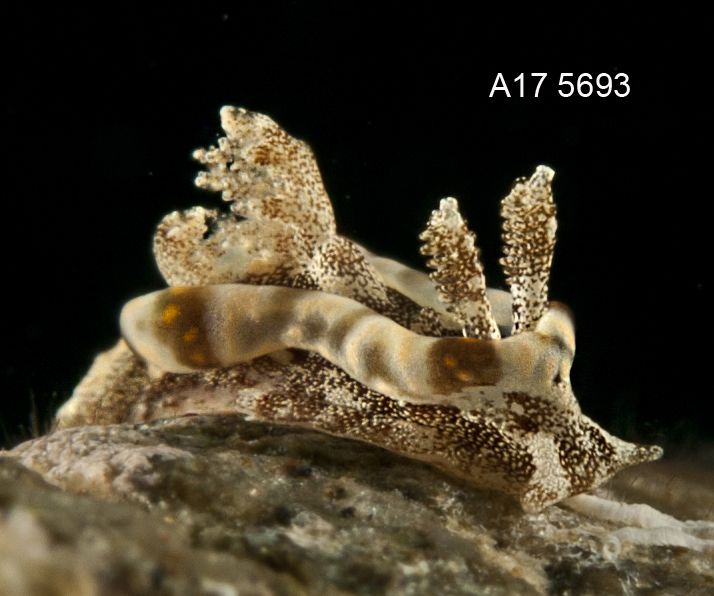
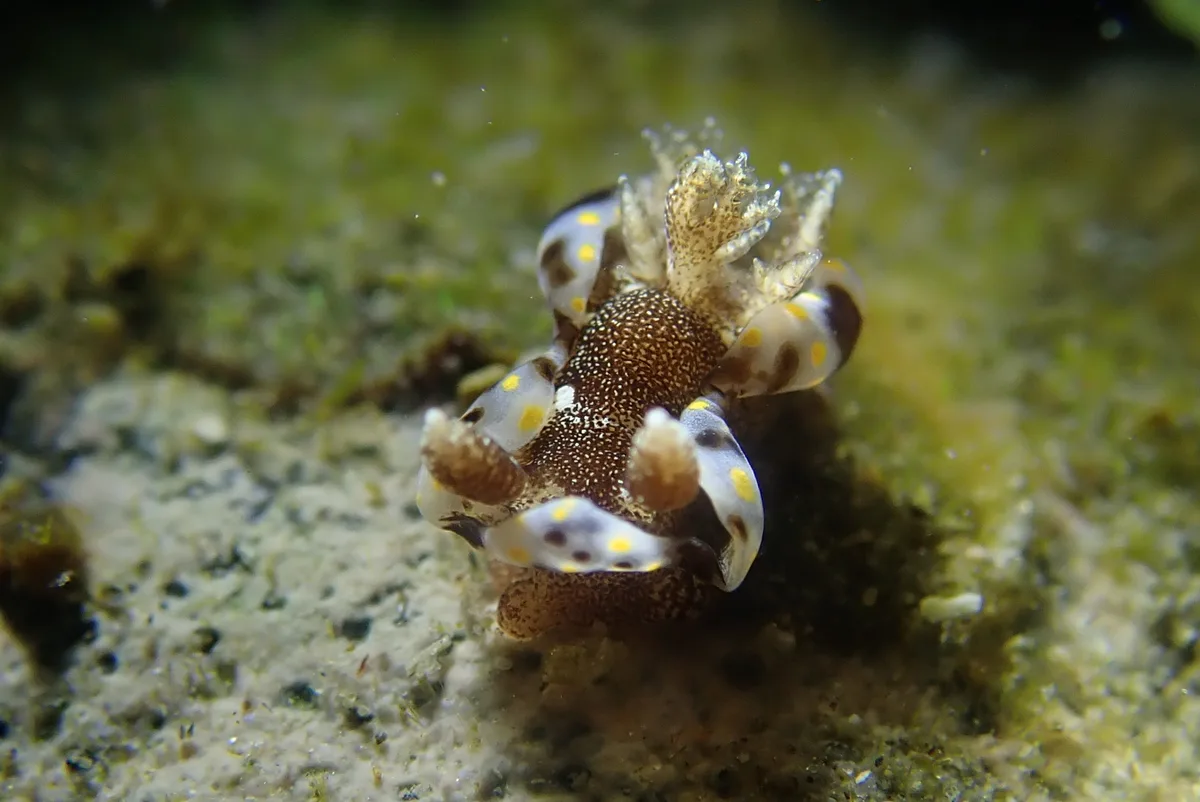
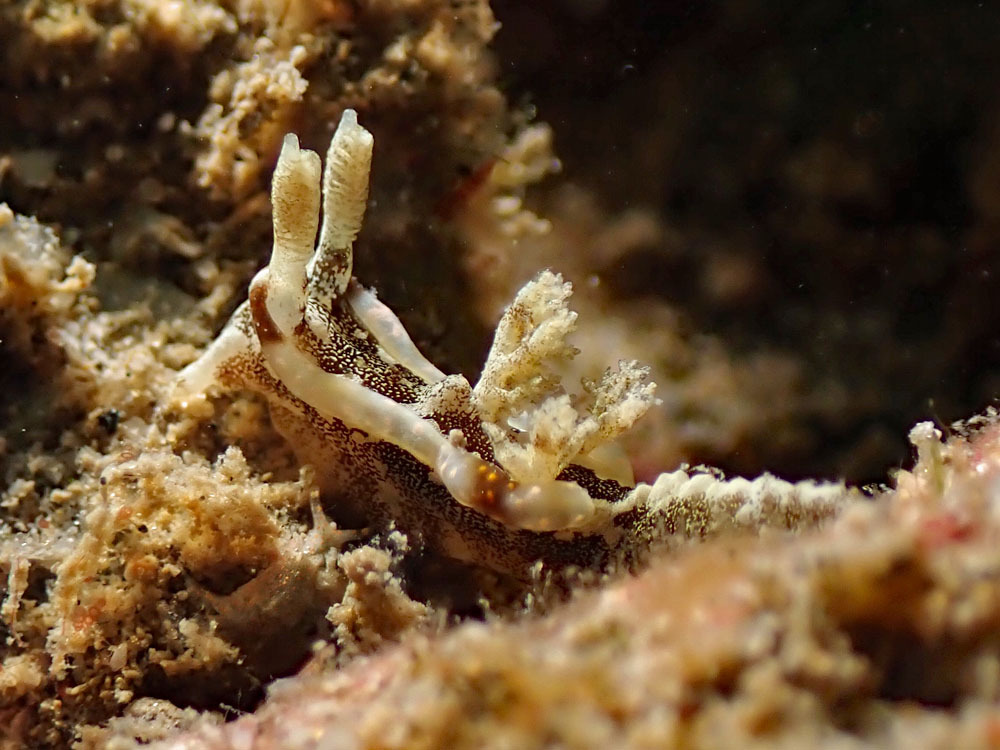
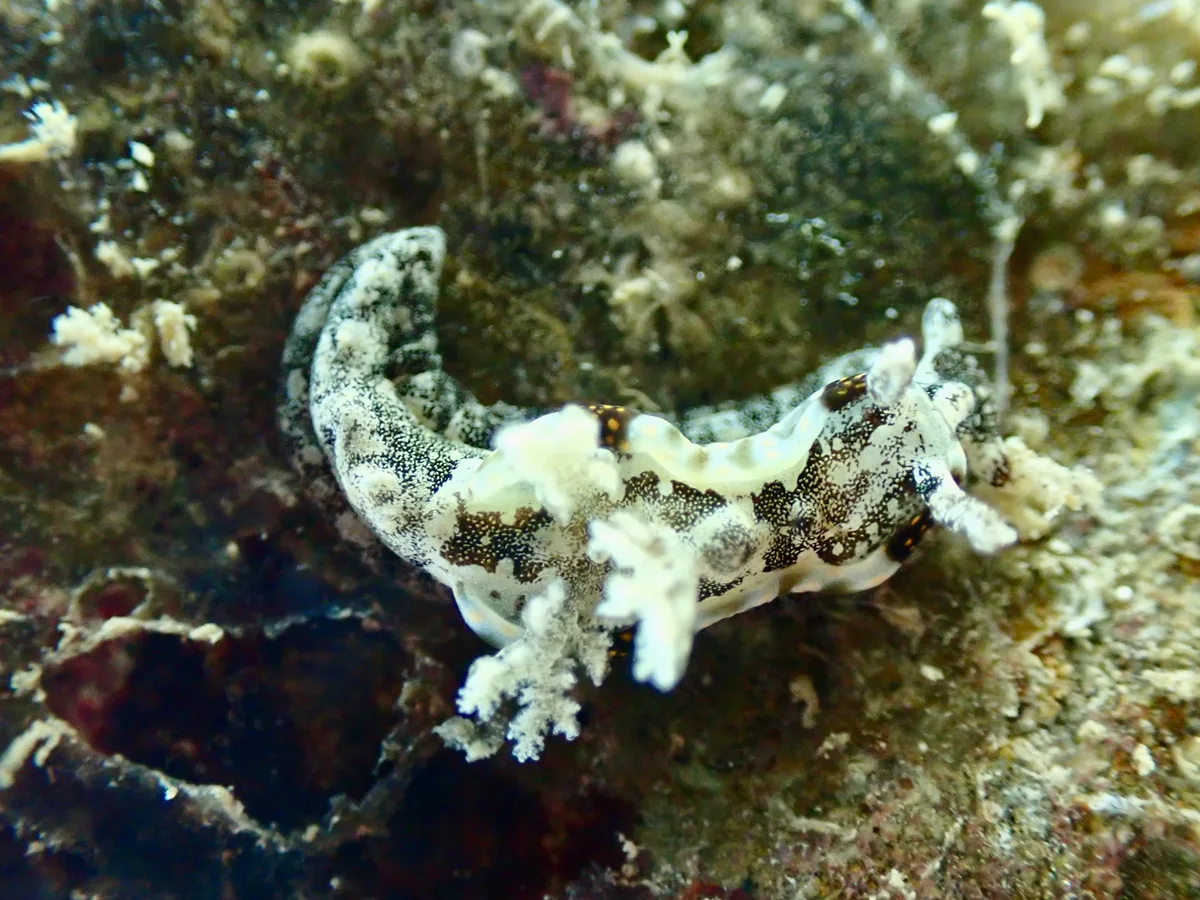
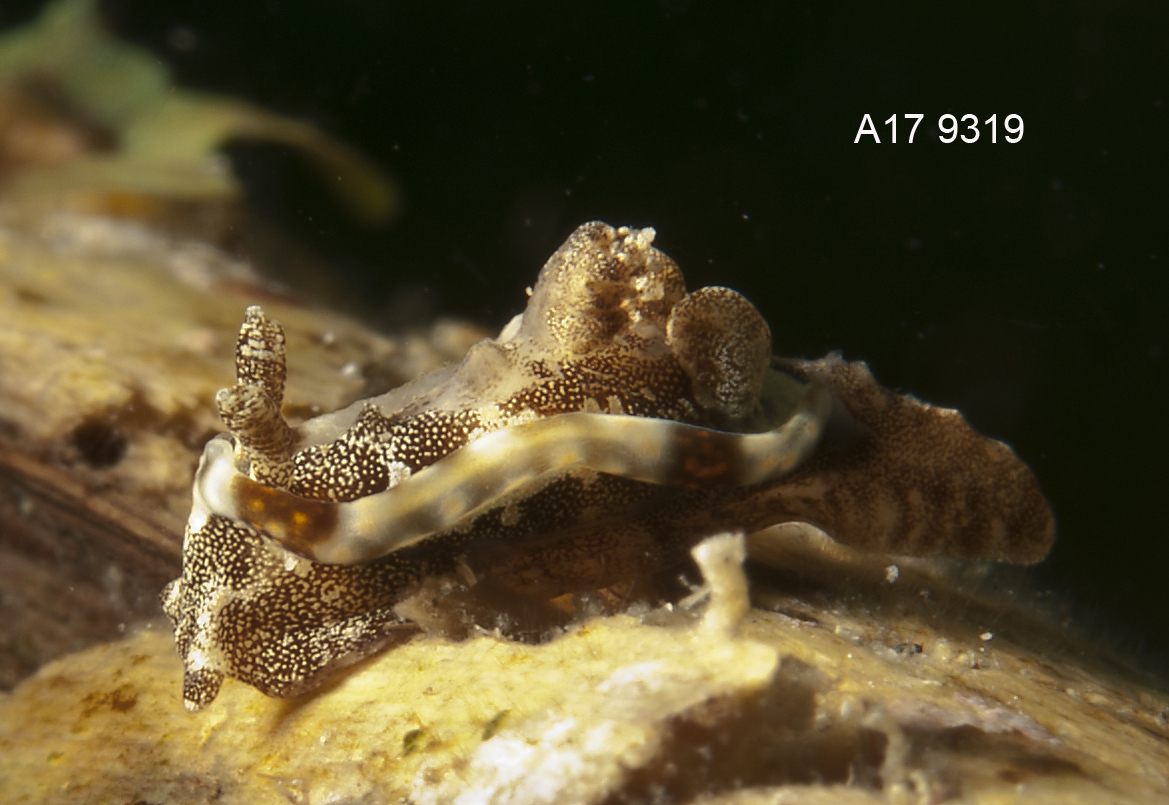
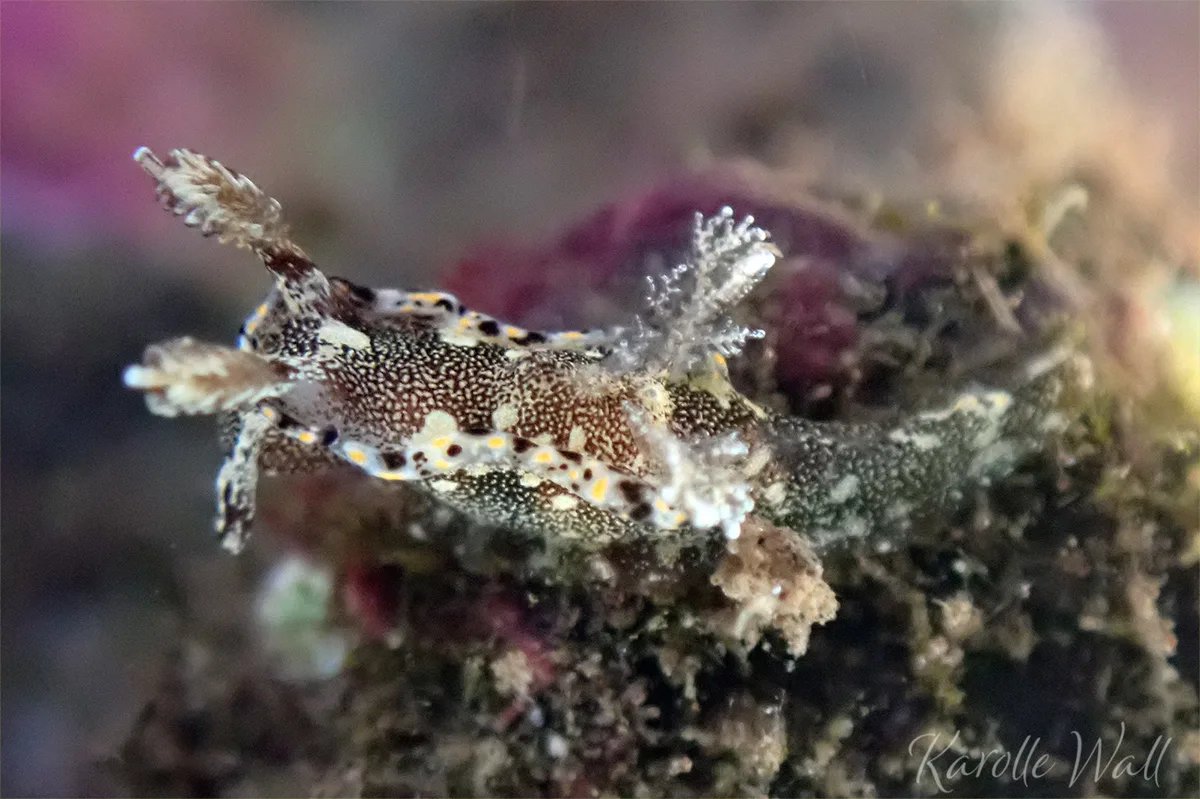
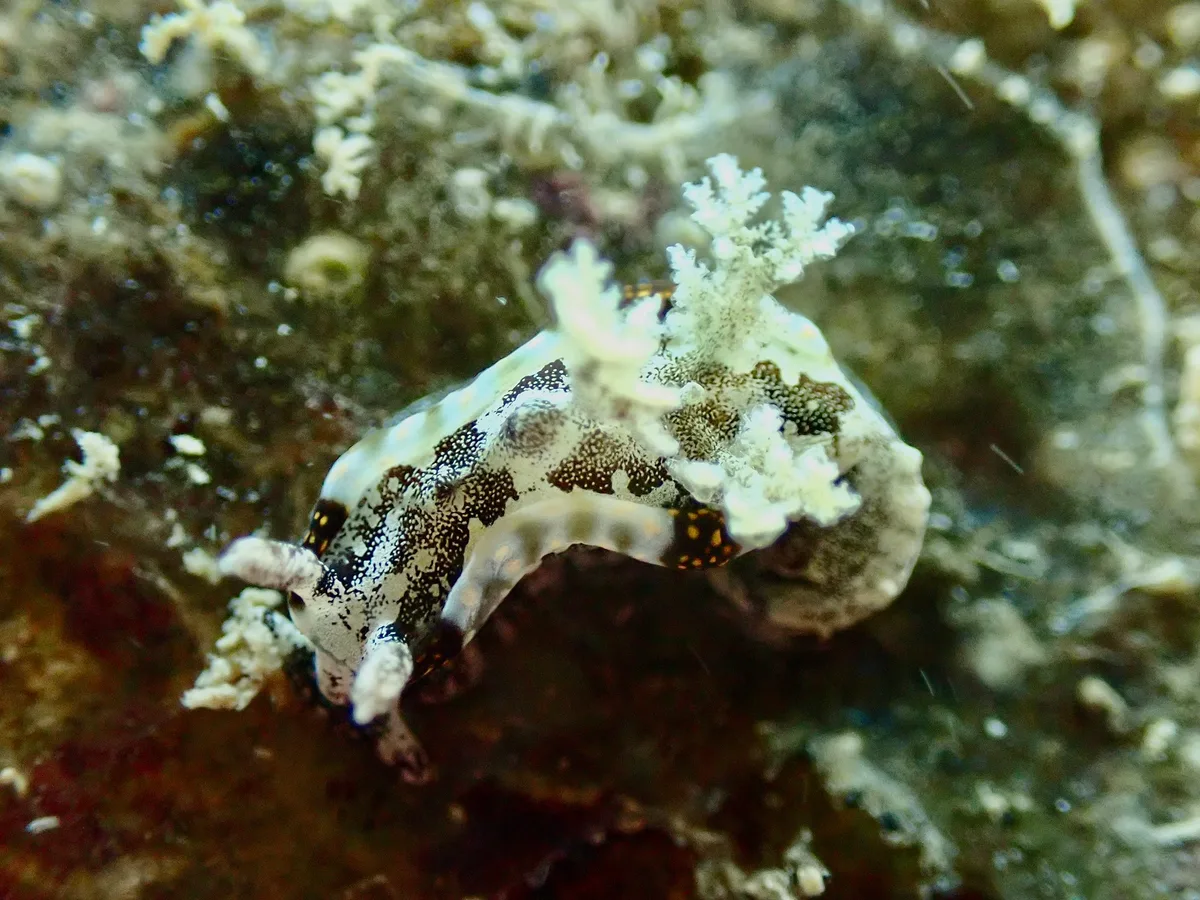
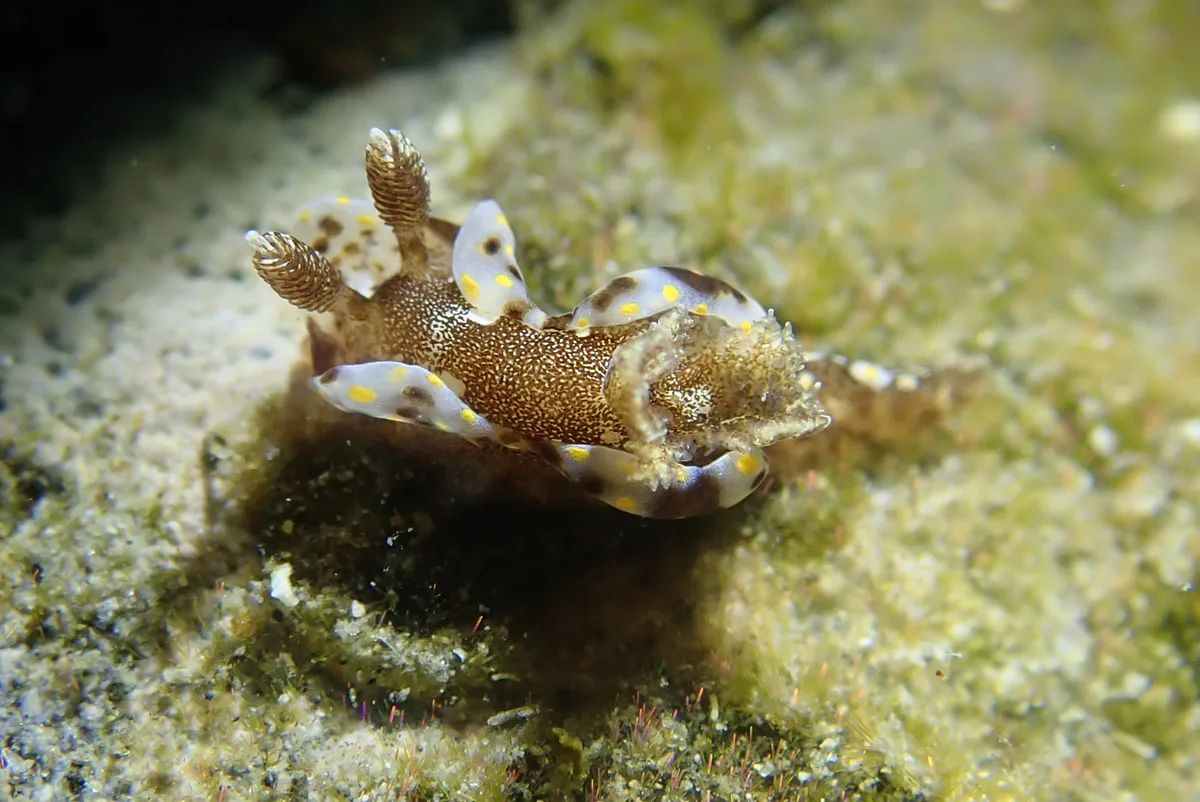
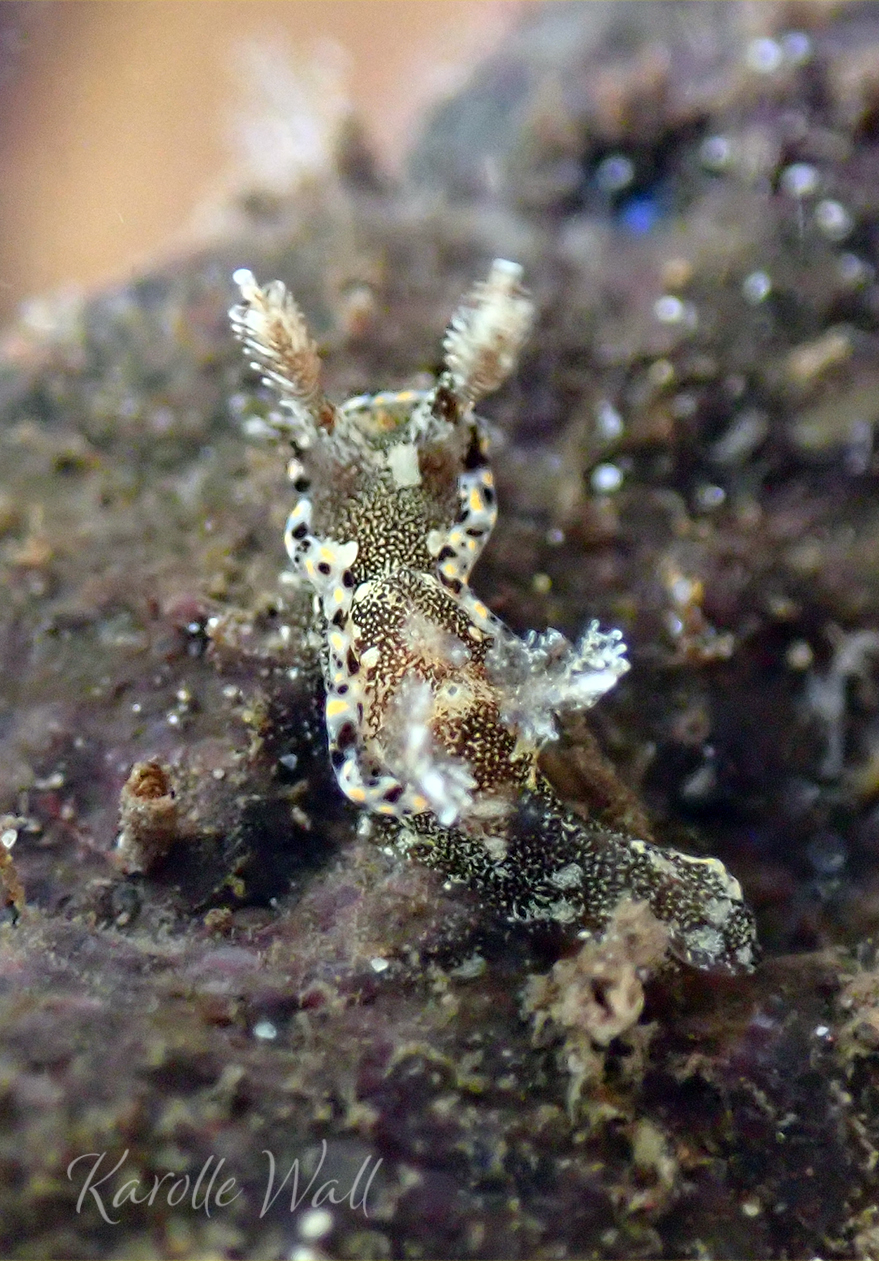
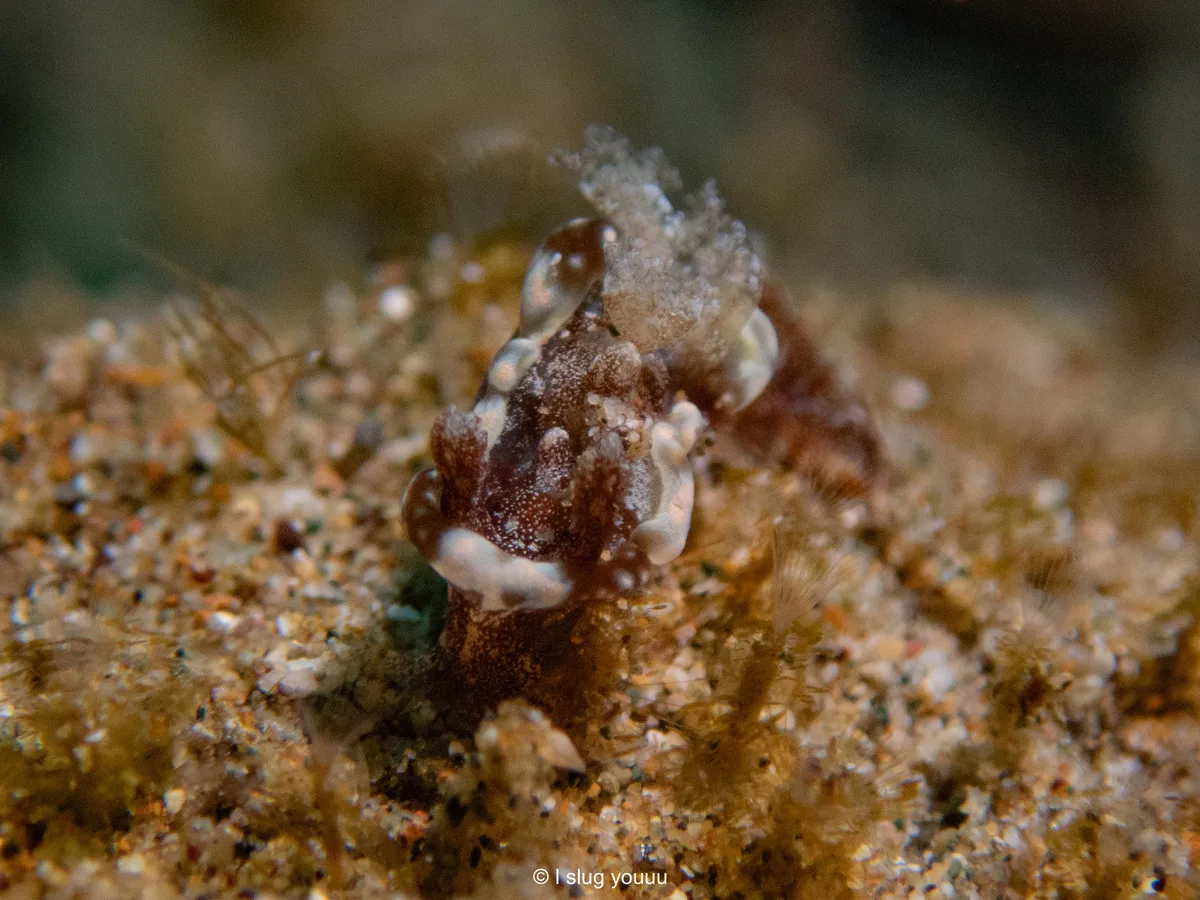
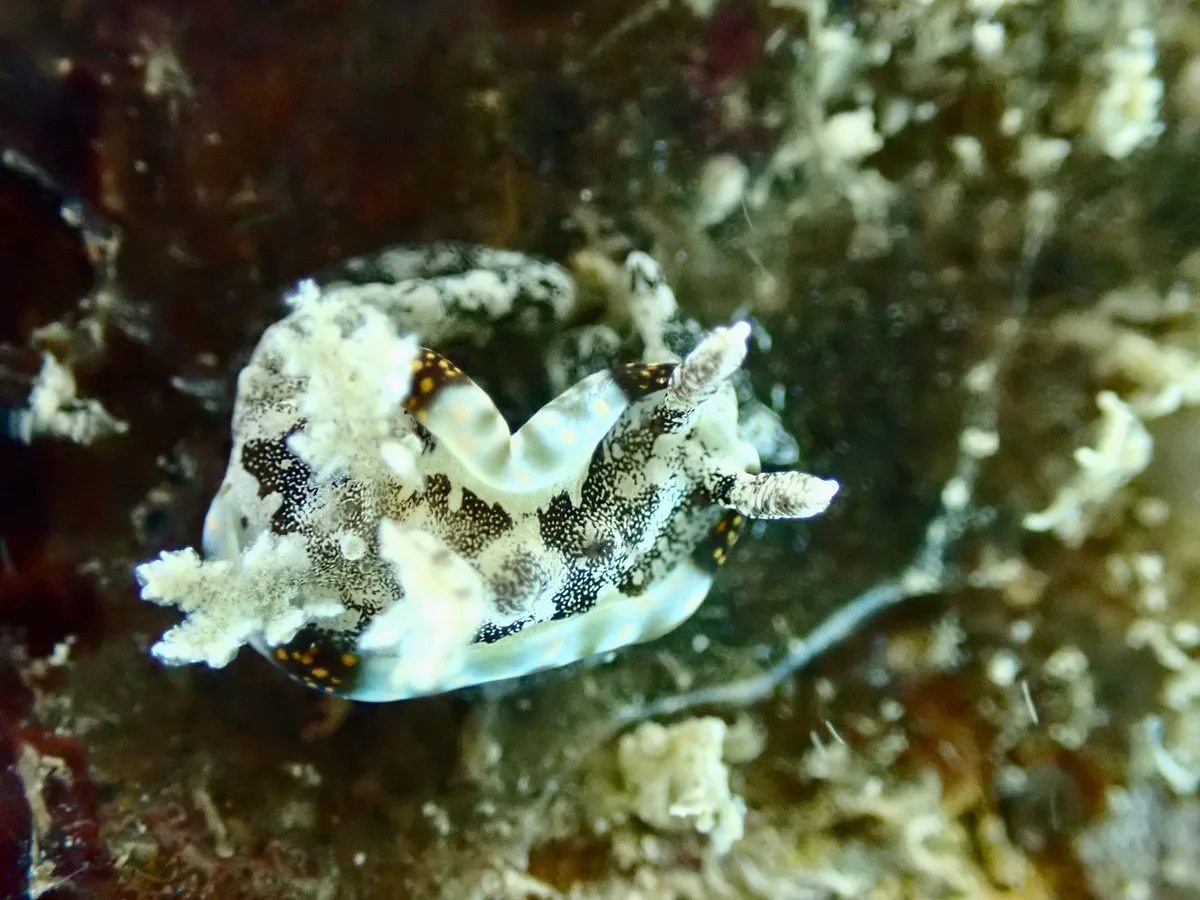
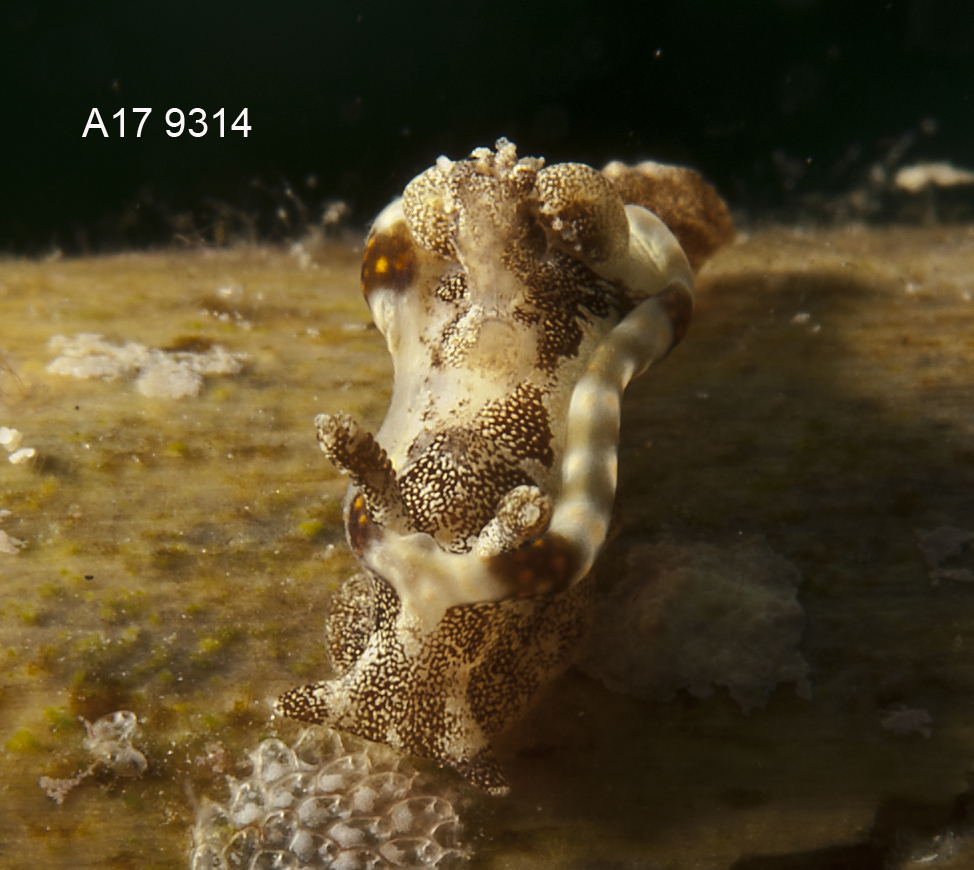
The margin is what you look at. On most small dorids the mantle edge is a thin skirt lying flat; here it is thick and raised, standing up around the body like a rim on a dish, and on a twelve-millimeter (0.5 in) animal that is the character which survives a bad photograph.
The rest of the pattern is a brownish ground broken up by yellow areas and scattered with tiny opaque white spots. Against the encrusting film of bryozoans and sea squirts that coats rubble and dead coral, which is where it lives and feeds, that combination reads as more crust.
This family are the specialists on colonial encrusting animals, the ones that spend their lives on growths most divers never resolve as living things at all. It is a large and reliable food supply that almost nothing else competes for, which is how animals this small hold a place.
One thing to know before searching for photographs. The regional book prints this species as Goniodoris joubini, and that is the name to look up in the book; everywhere else, including the databases and the photographic sites, it now sits in the genus Pelagella. Search under Pelagella joubini and there are a couple of hundred images. Search under the printed name and you will find very little.
Risbec described it in 1928 from 🇳🇨 New Caledonia (🇫🇷 Overseas France).
- mantle margin thick and raised, standing out as a rim around the body
- brownish ground scattered with tiny white spots
- yellow areas breaking up the brown
- twelve millimeters, on encrusting growth rather than on the reef face