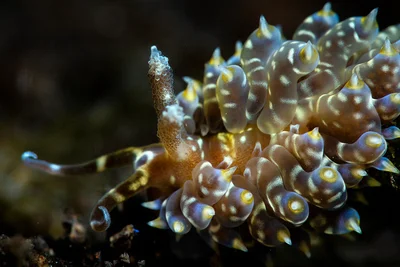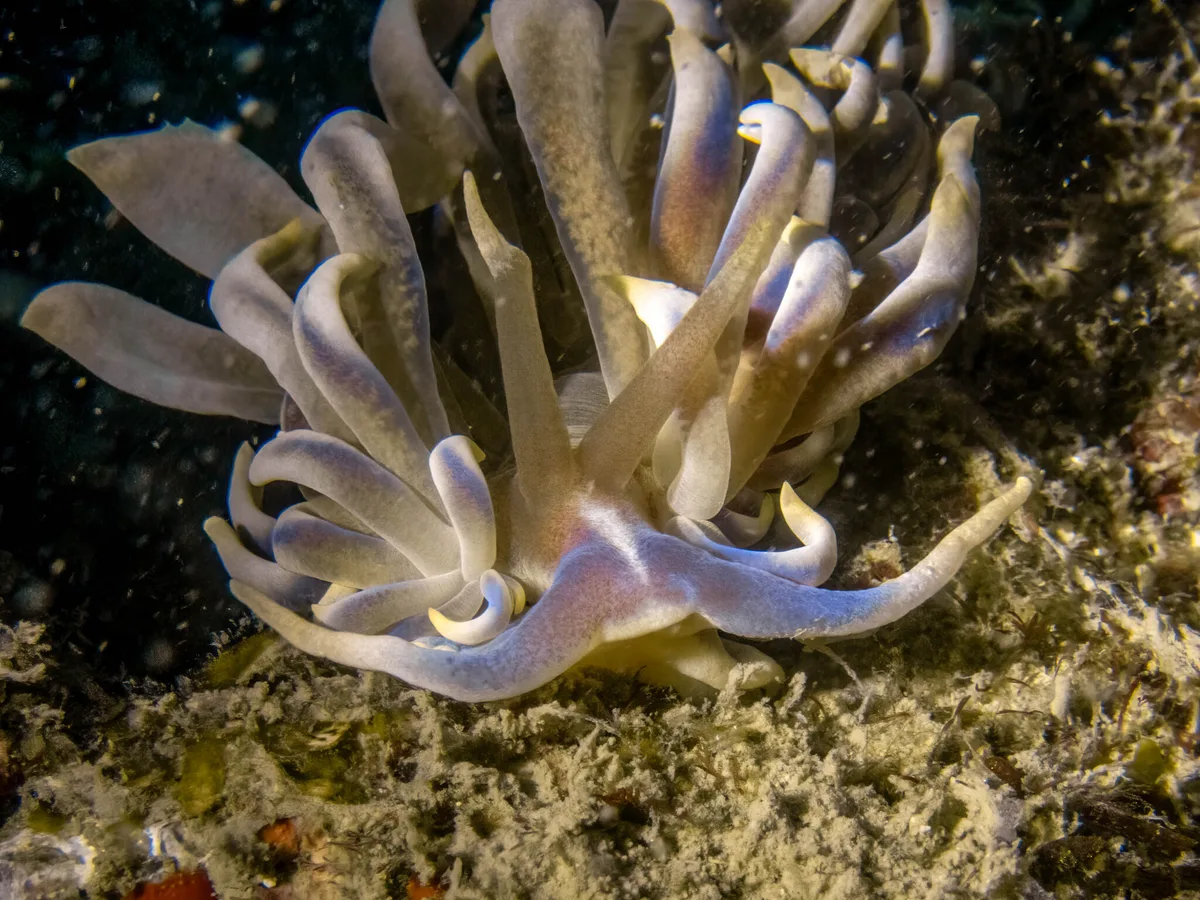
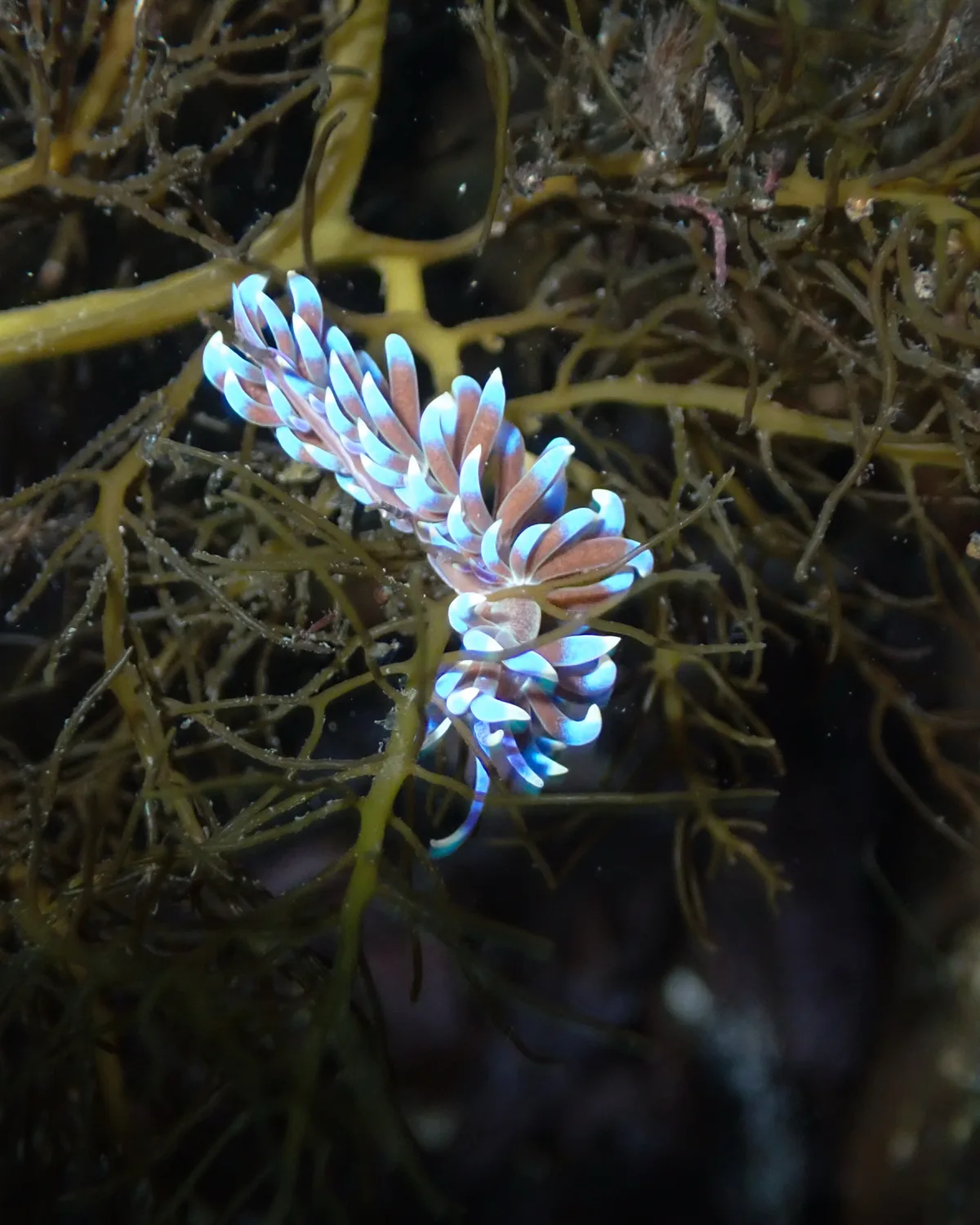
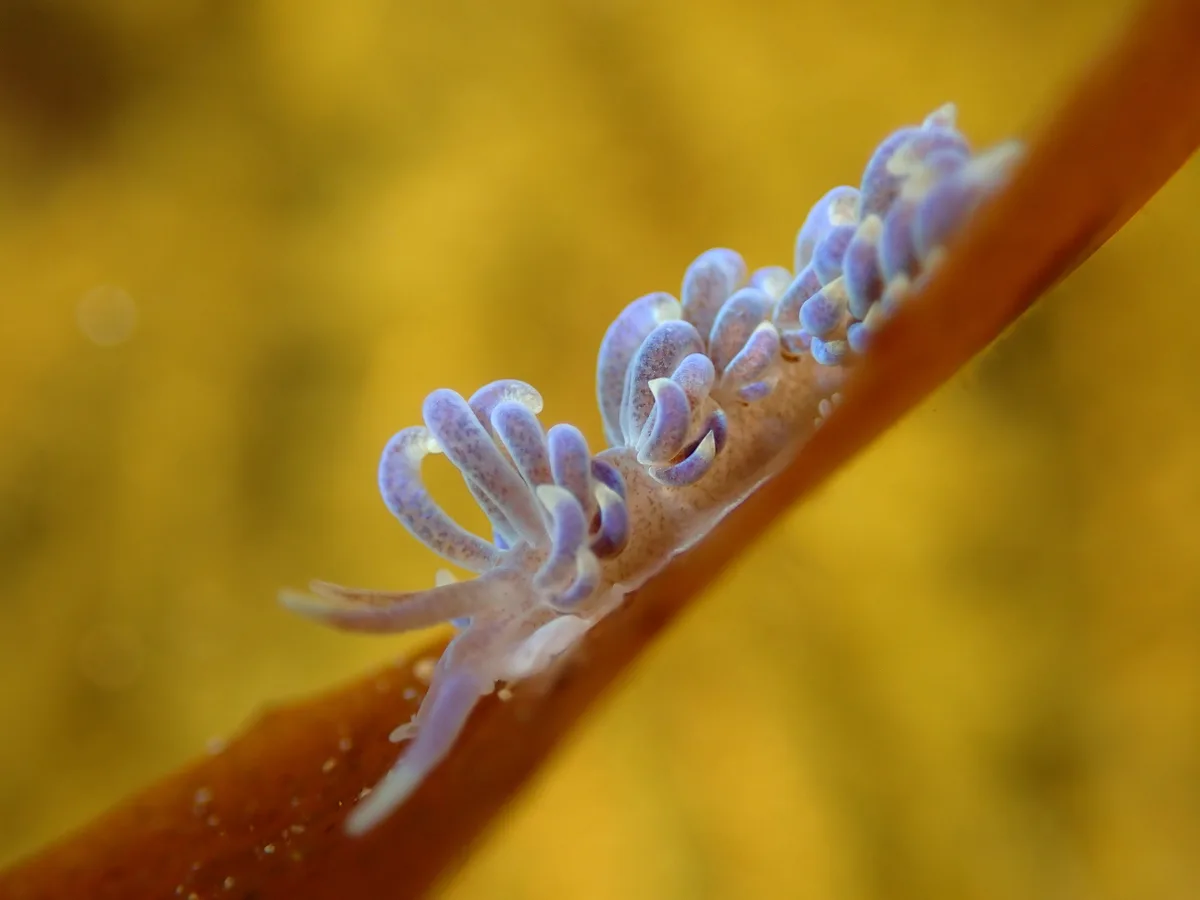
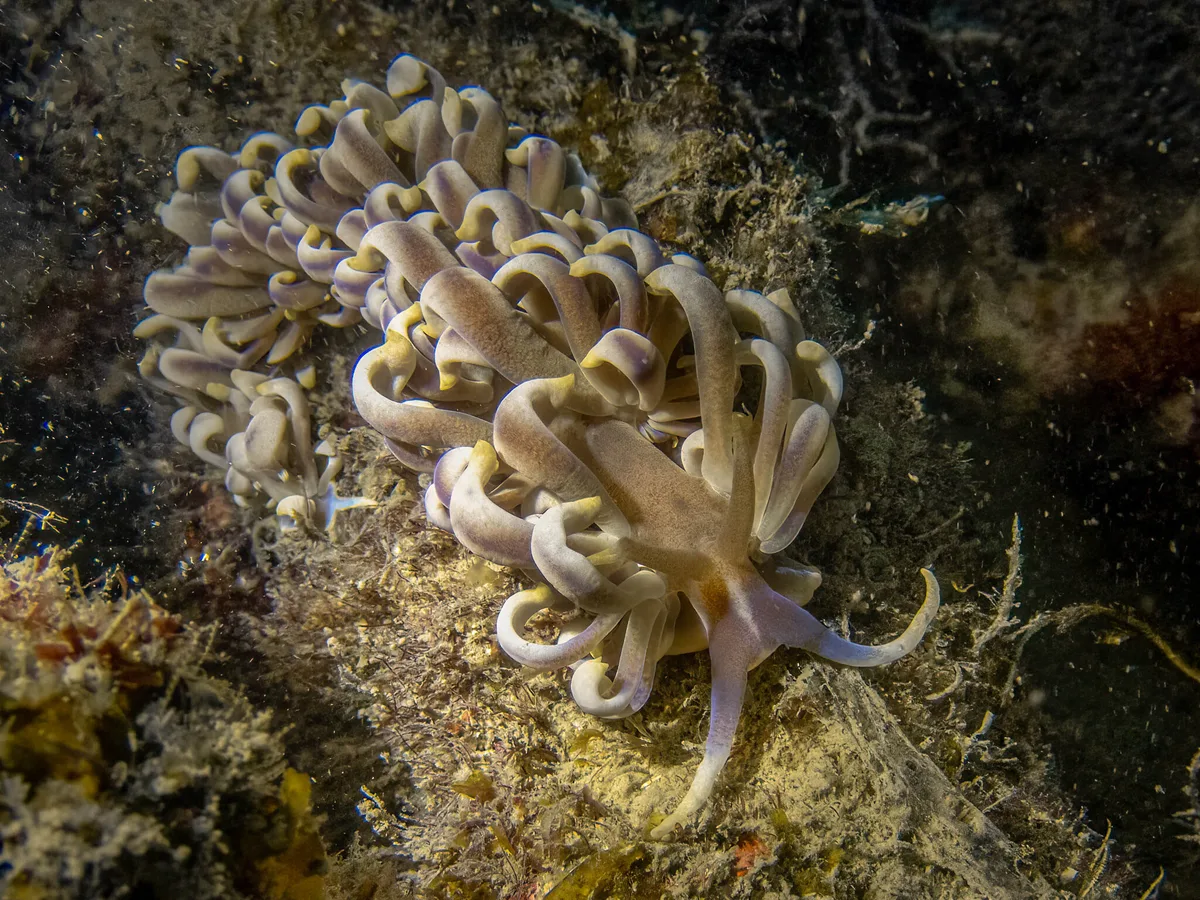
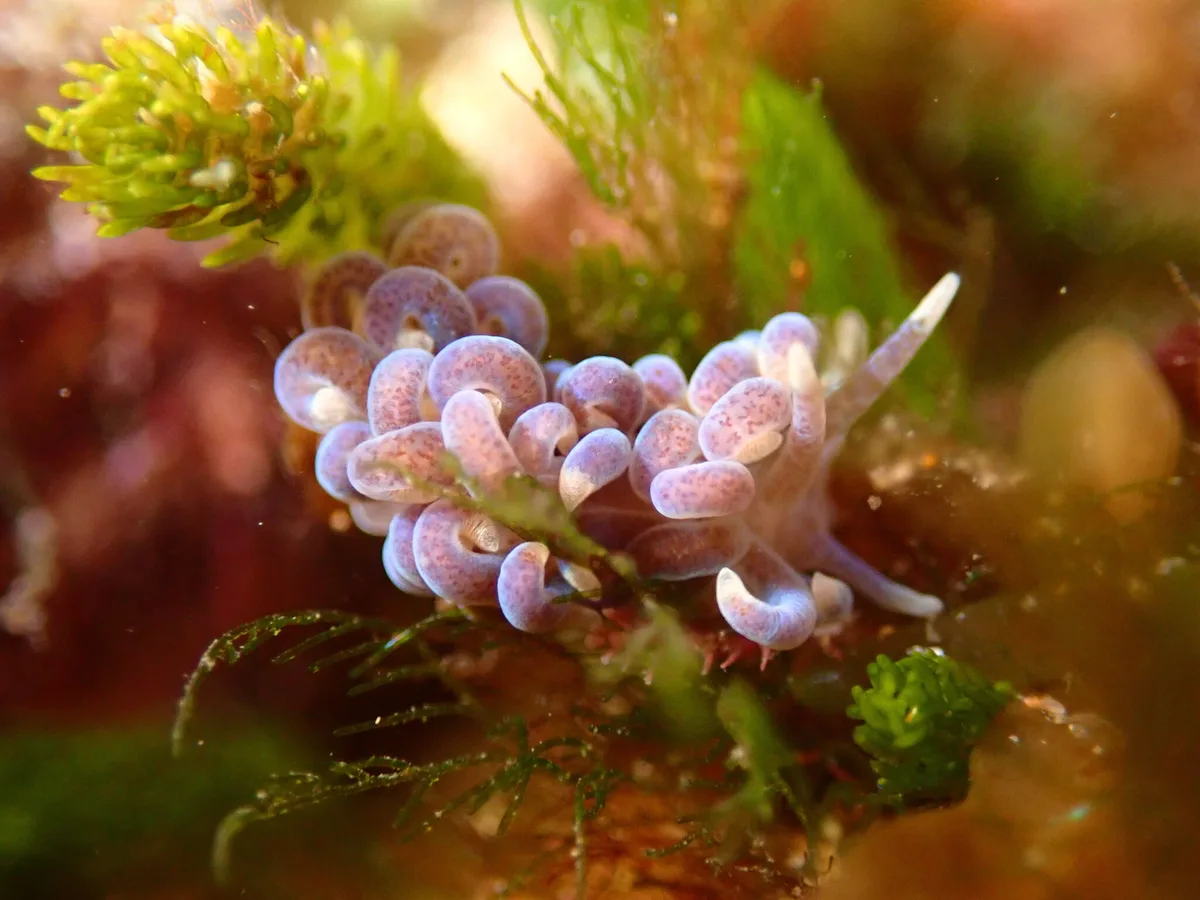
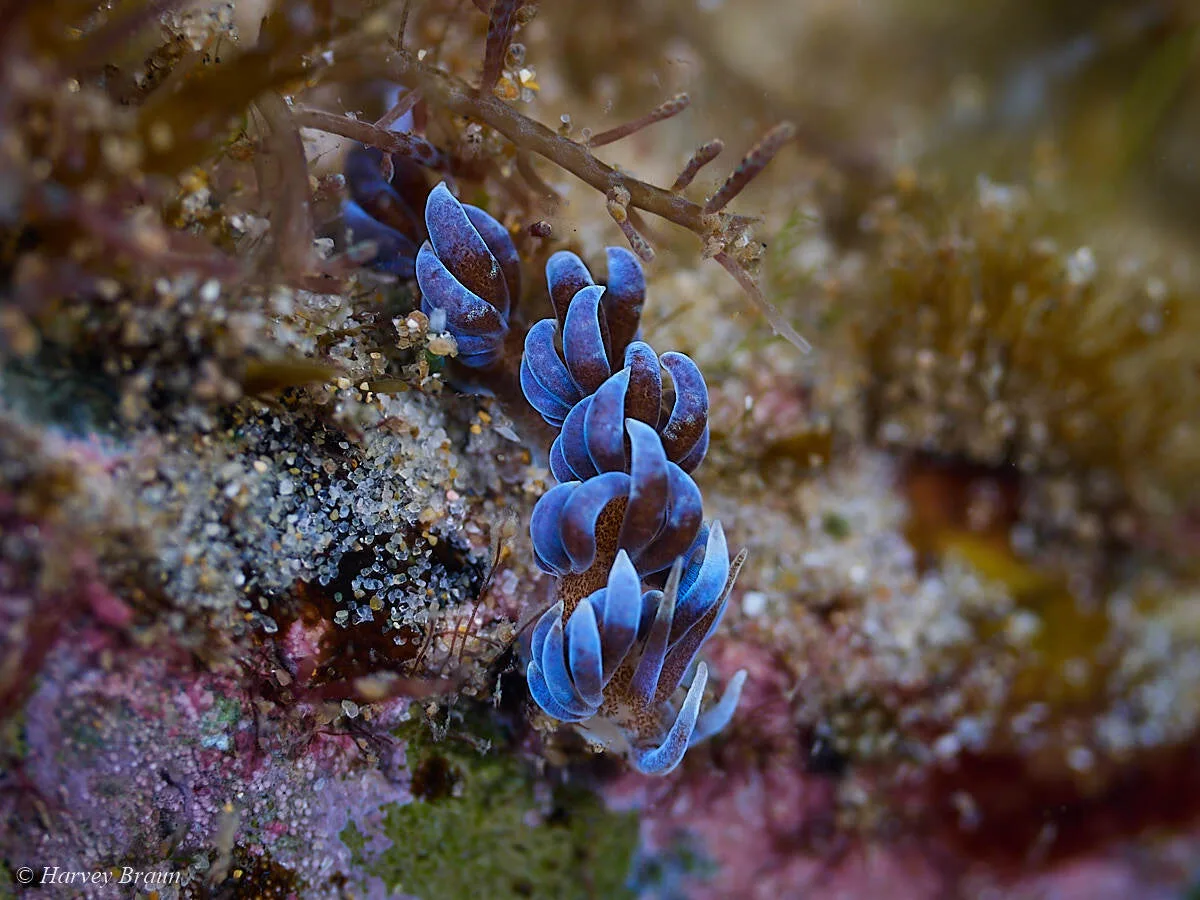
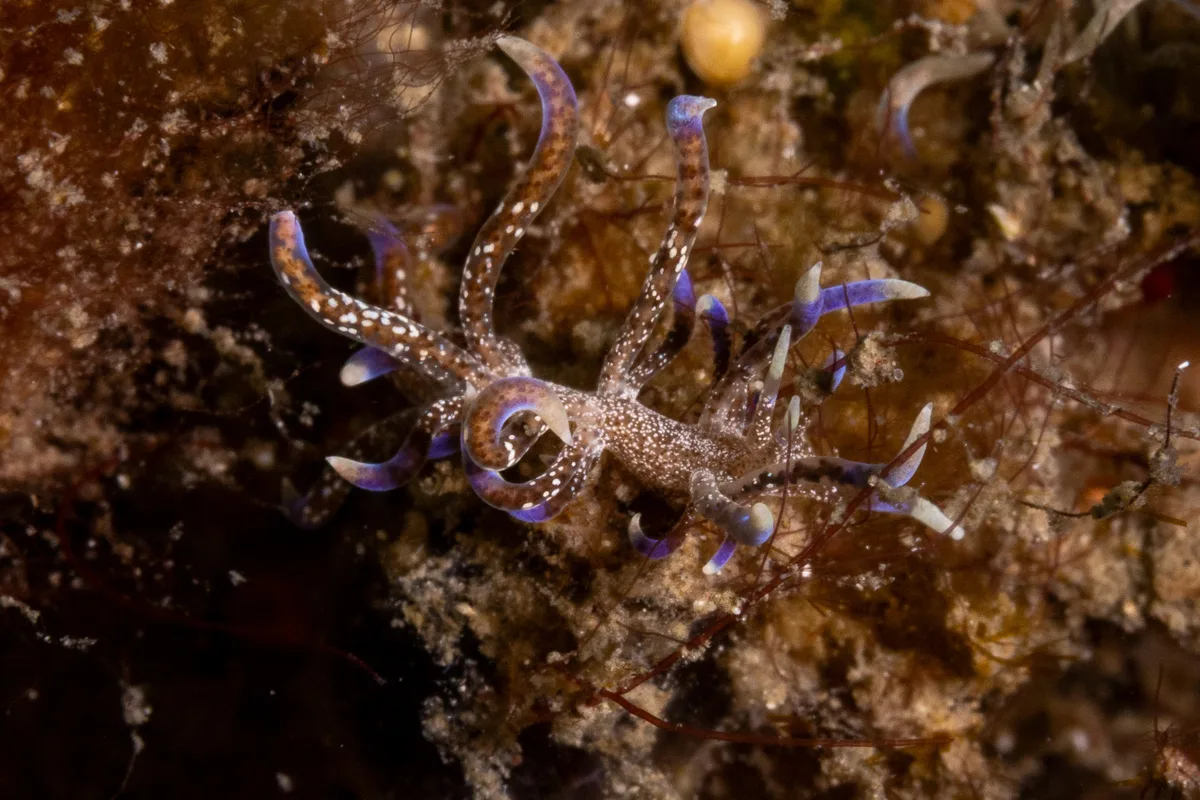
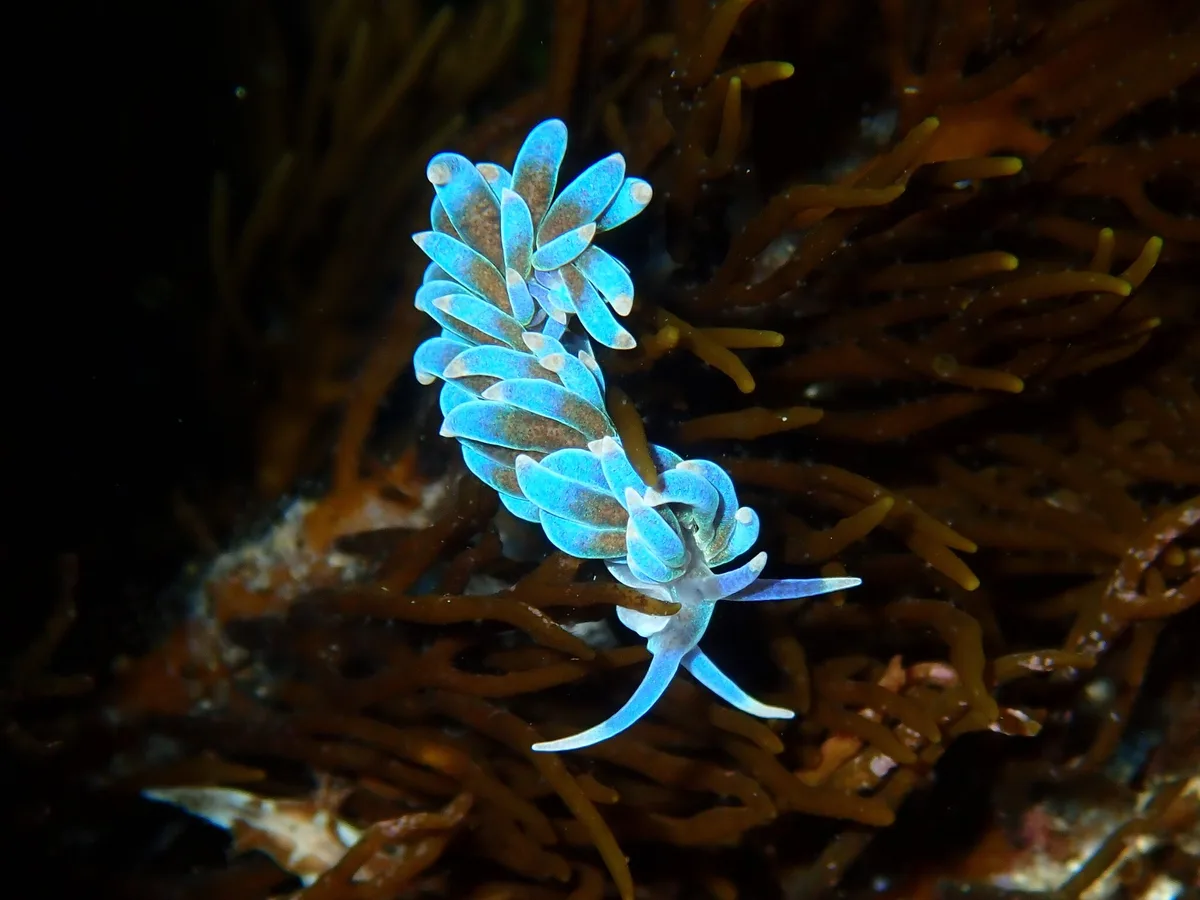
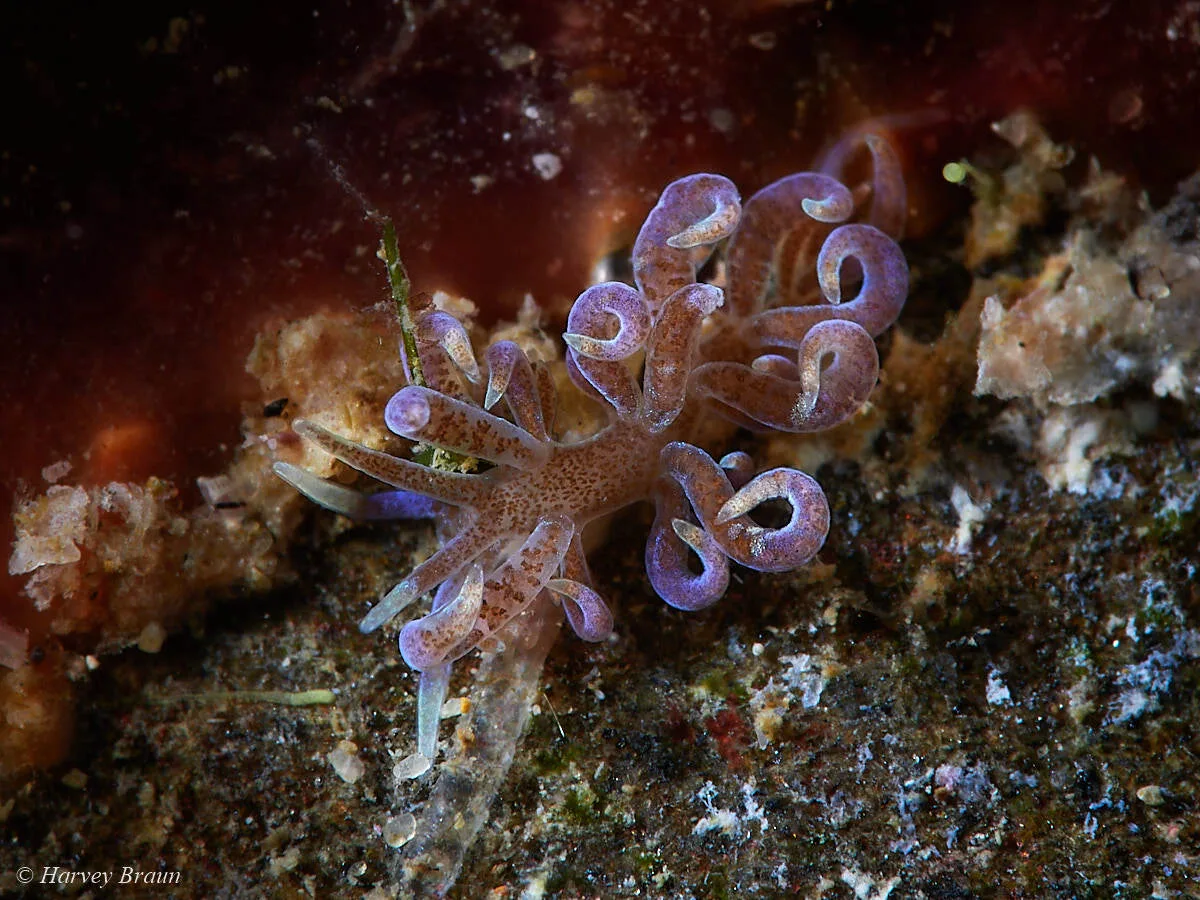
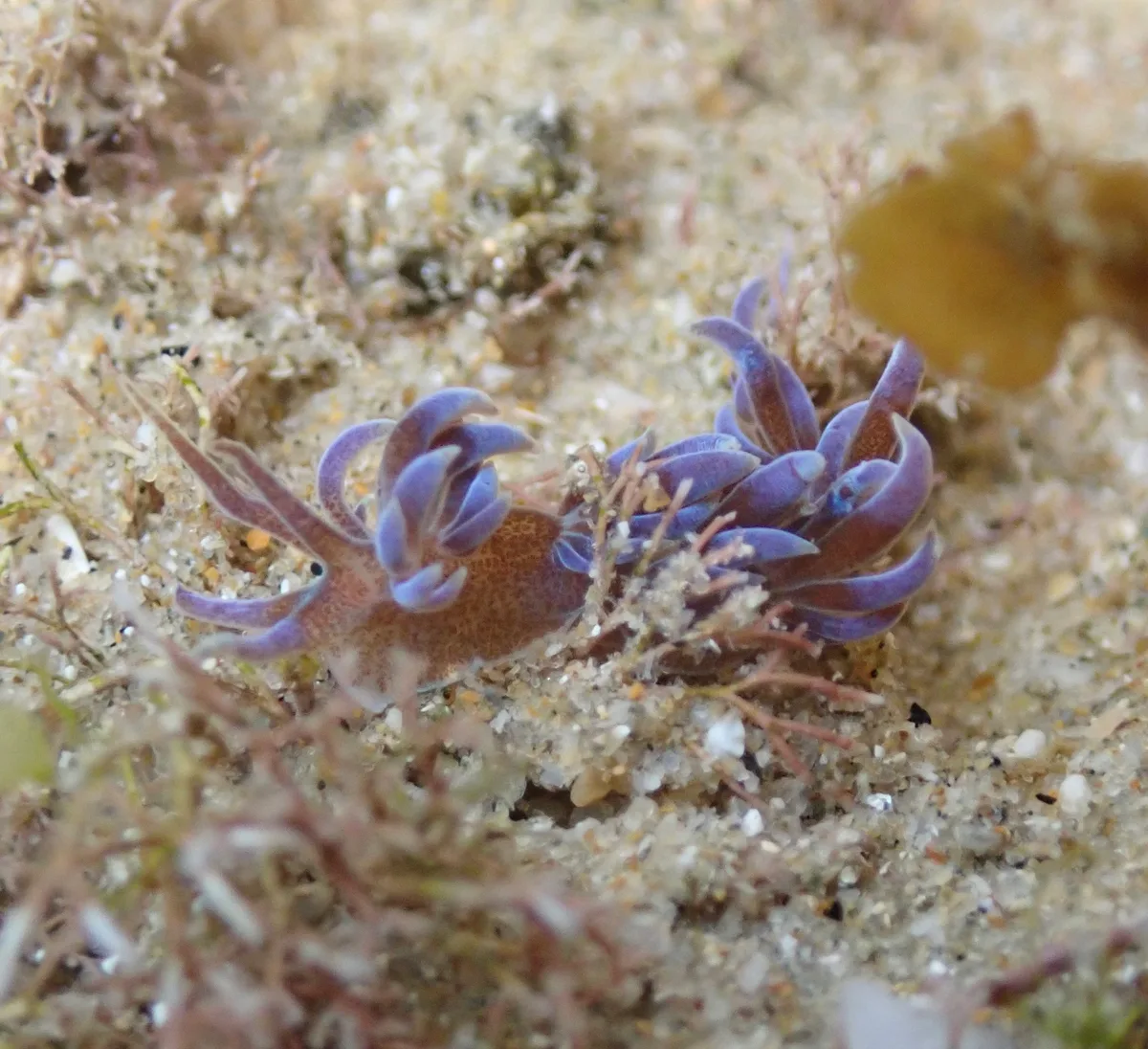
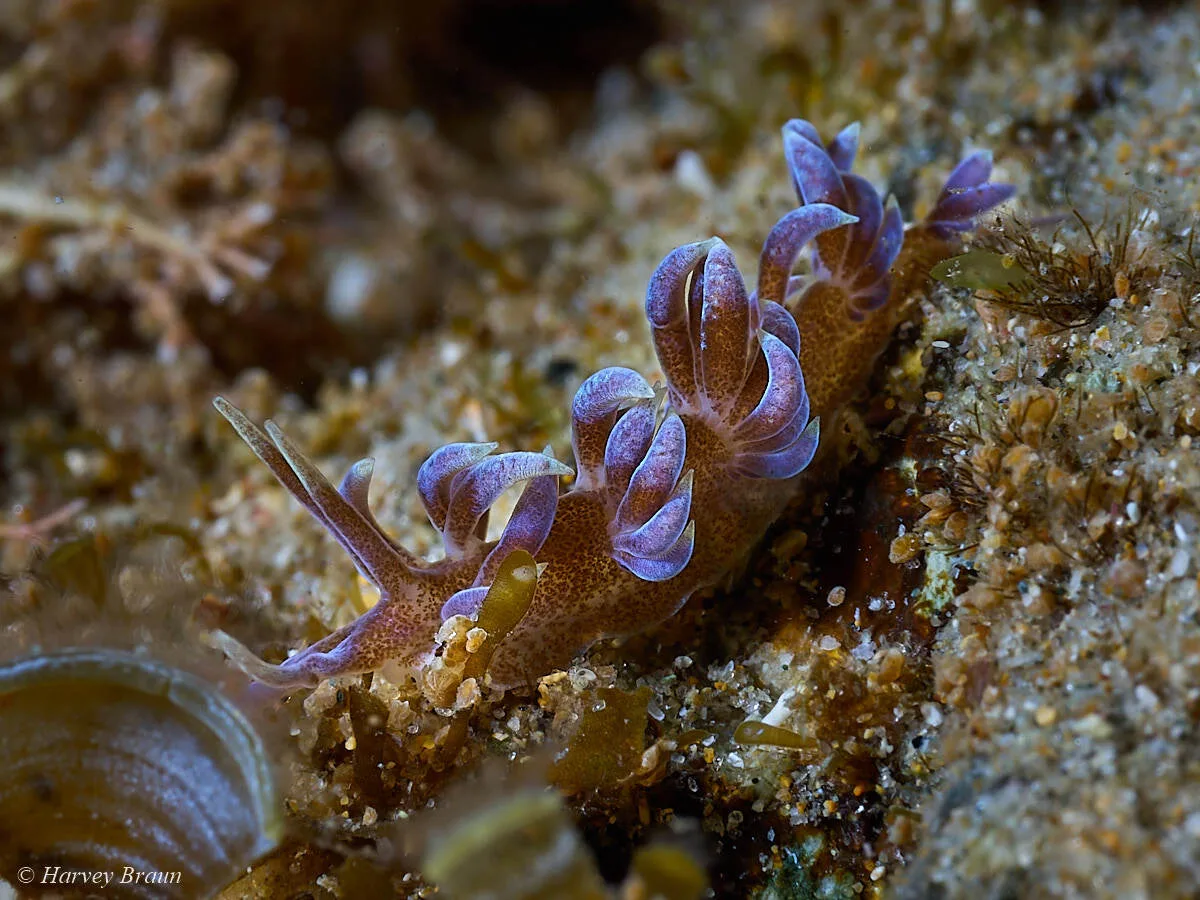
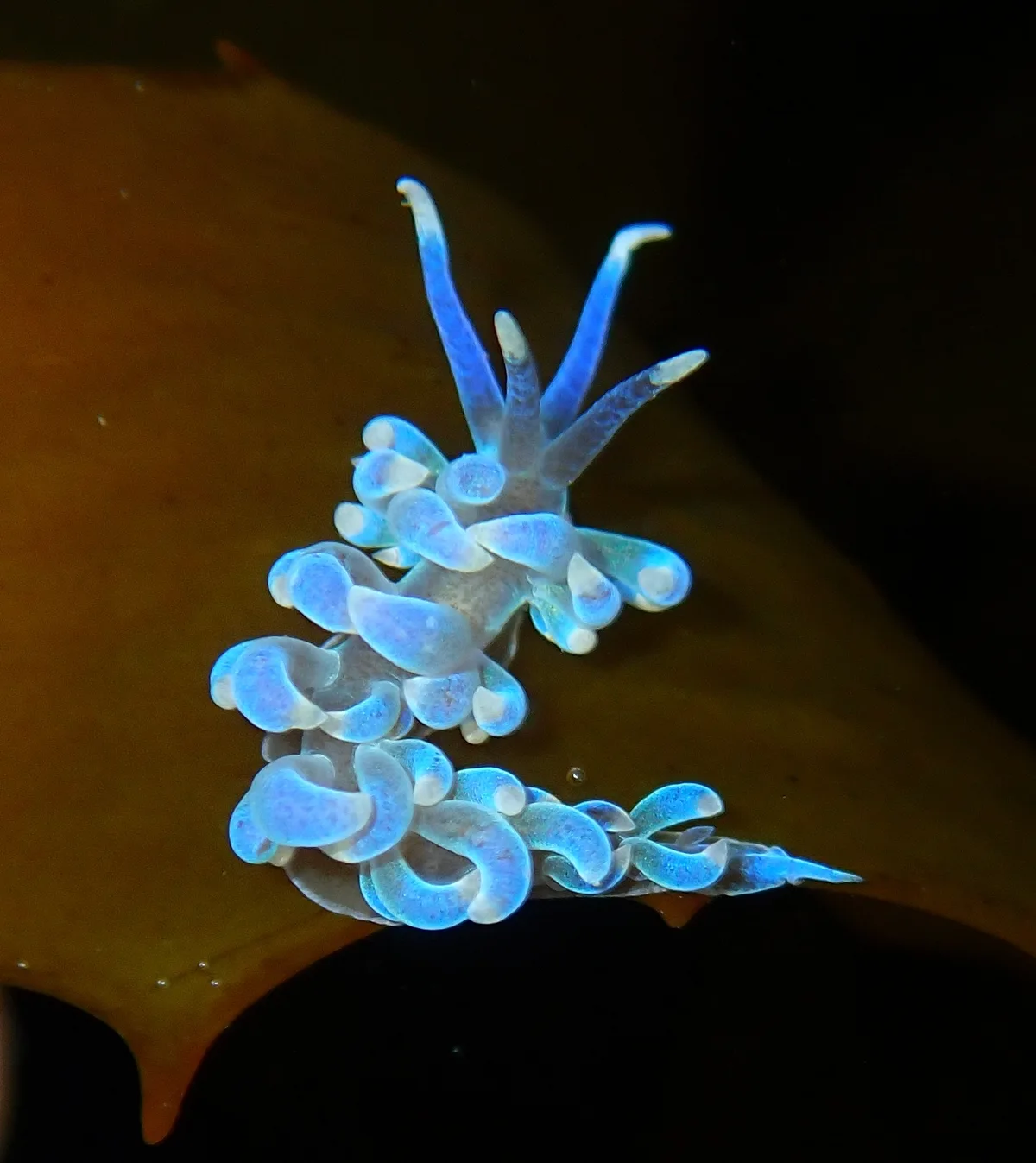
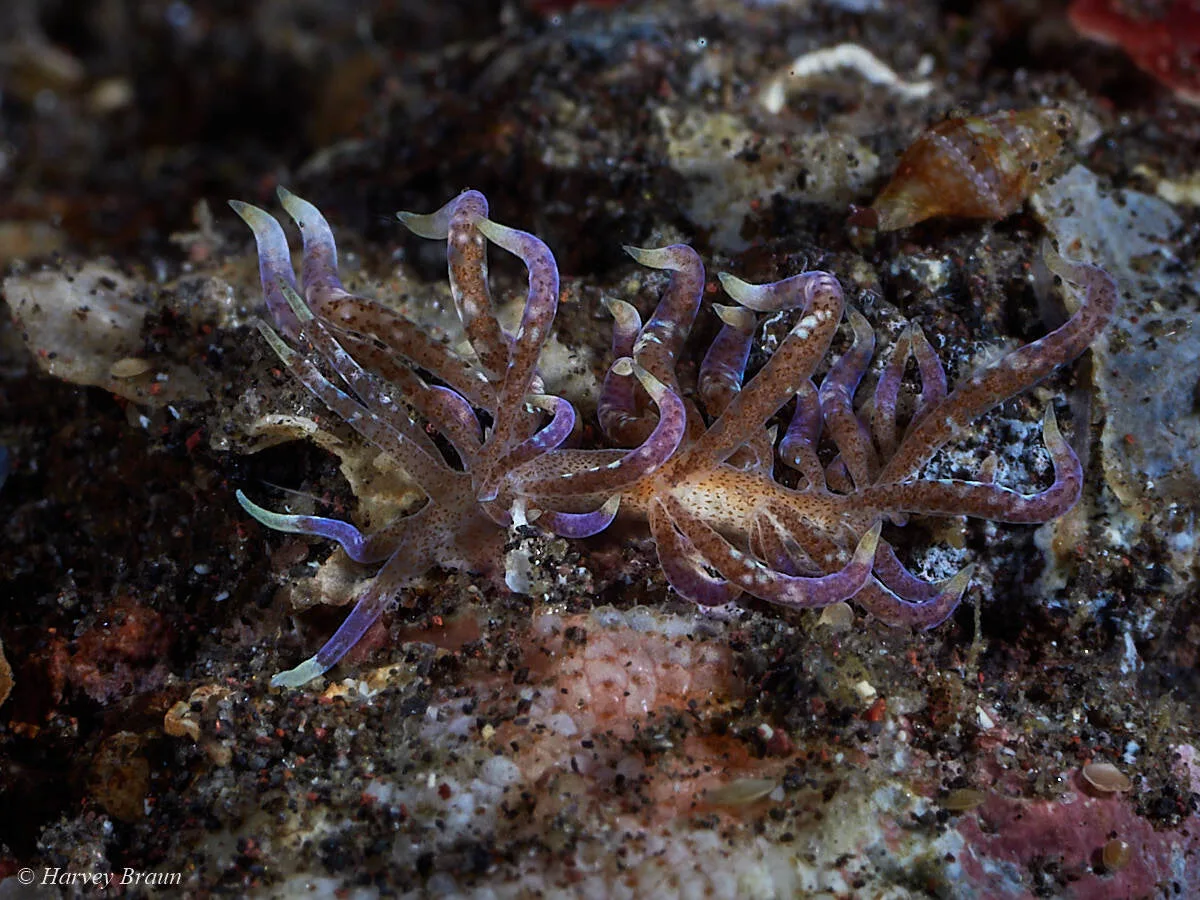
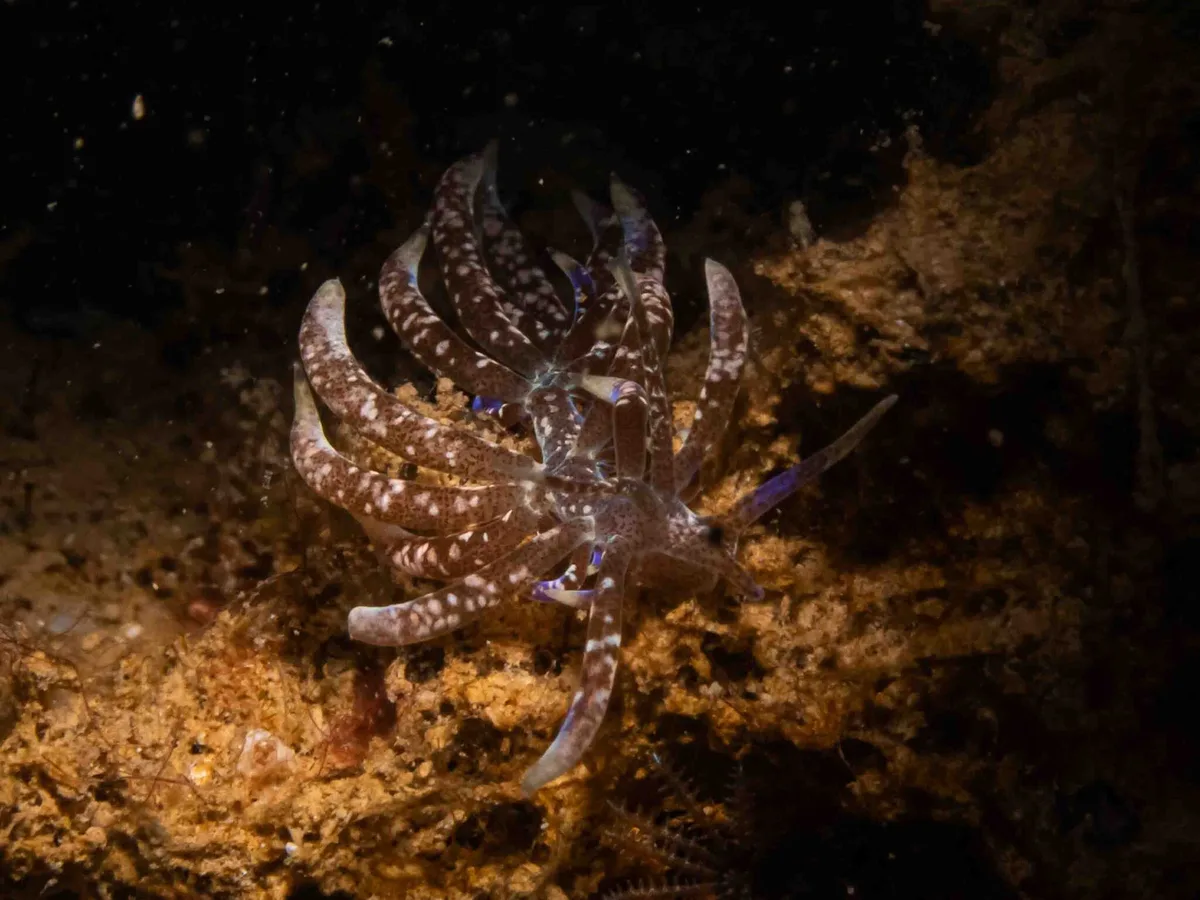
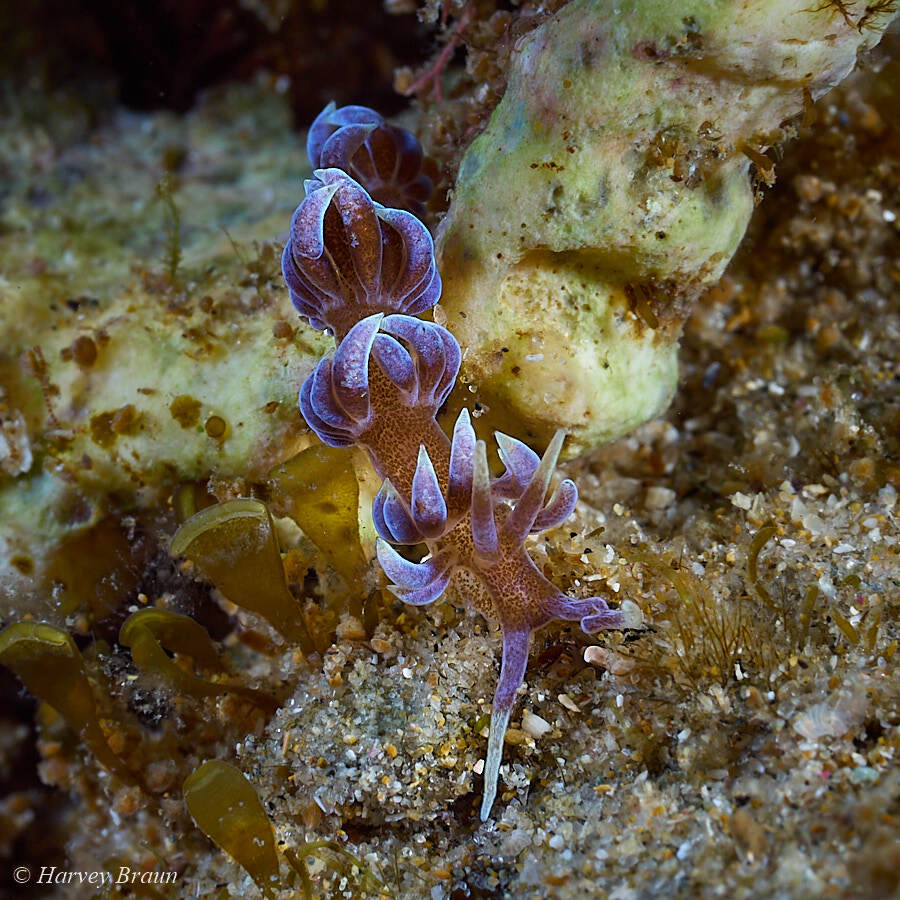
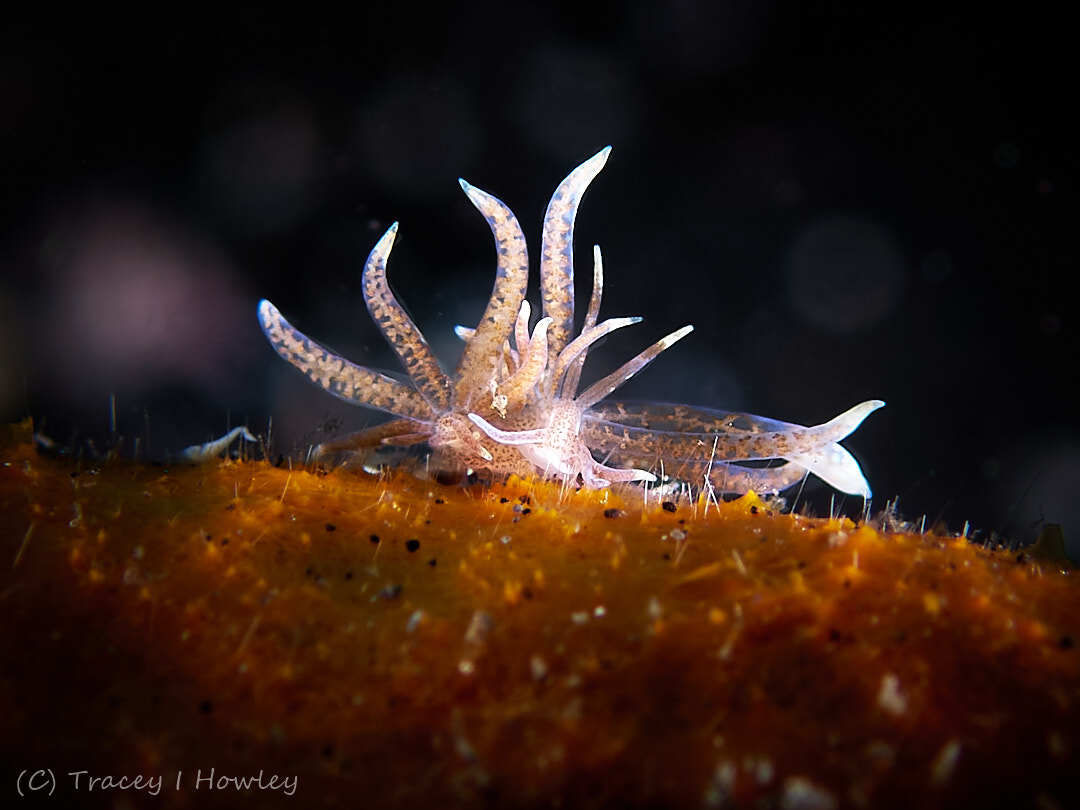
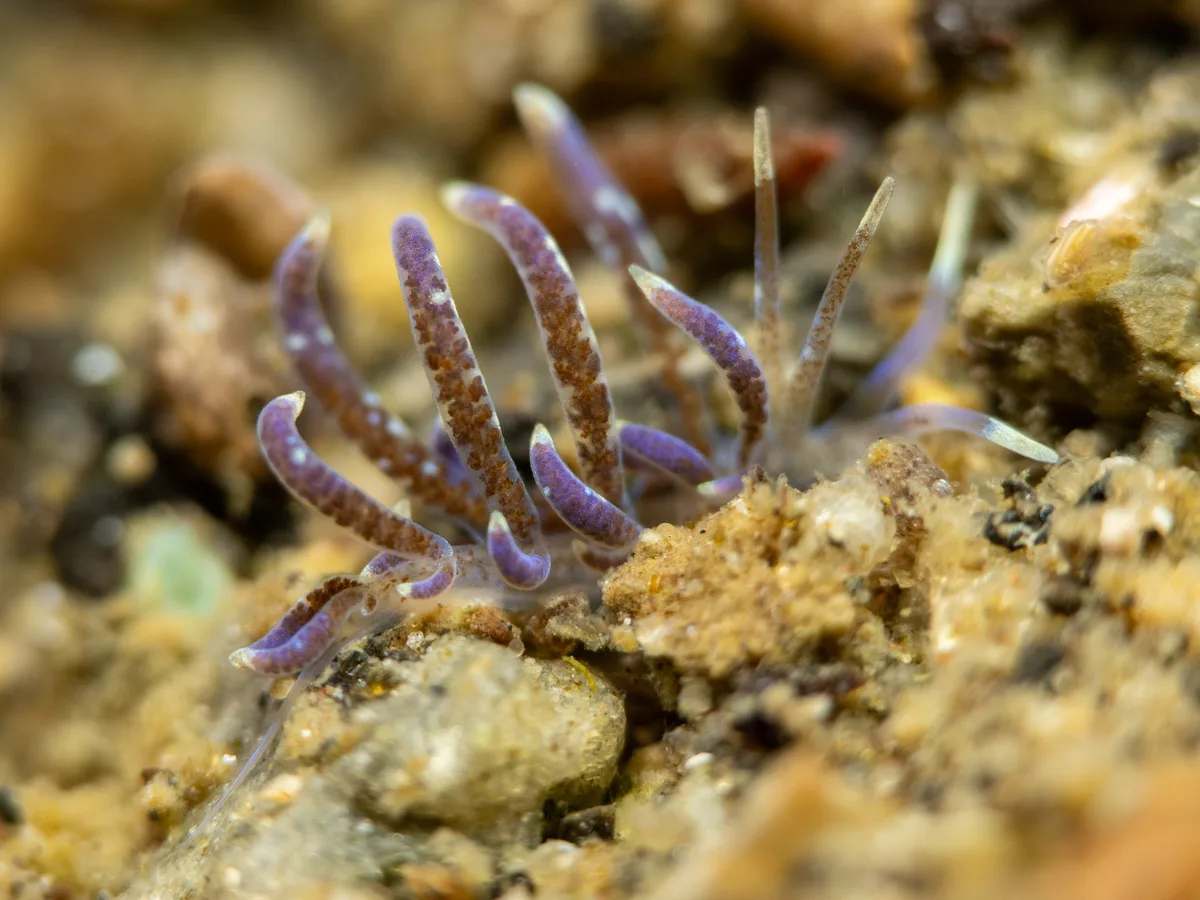
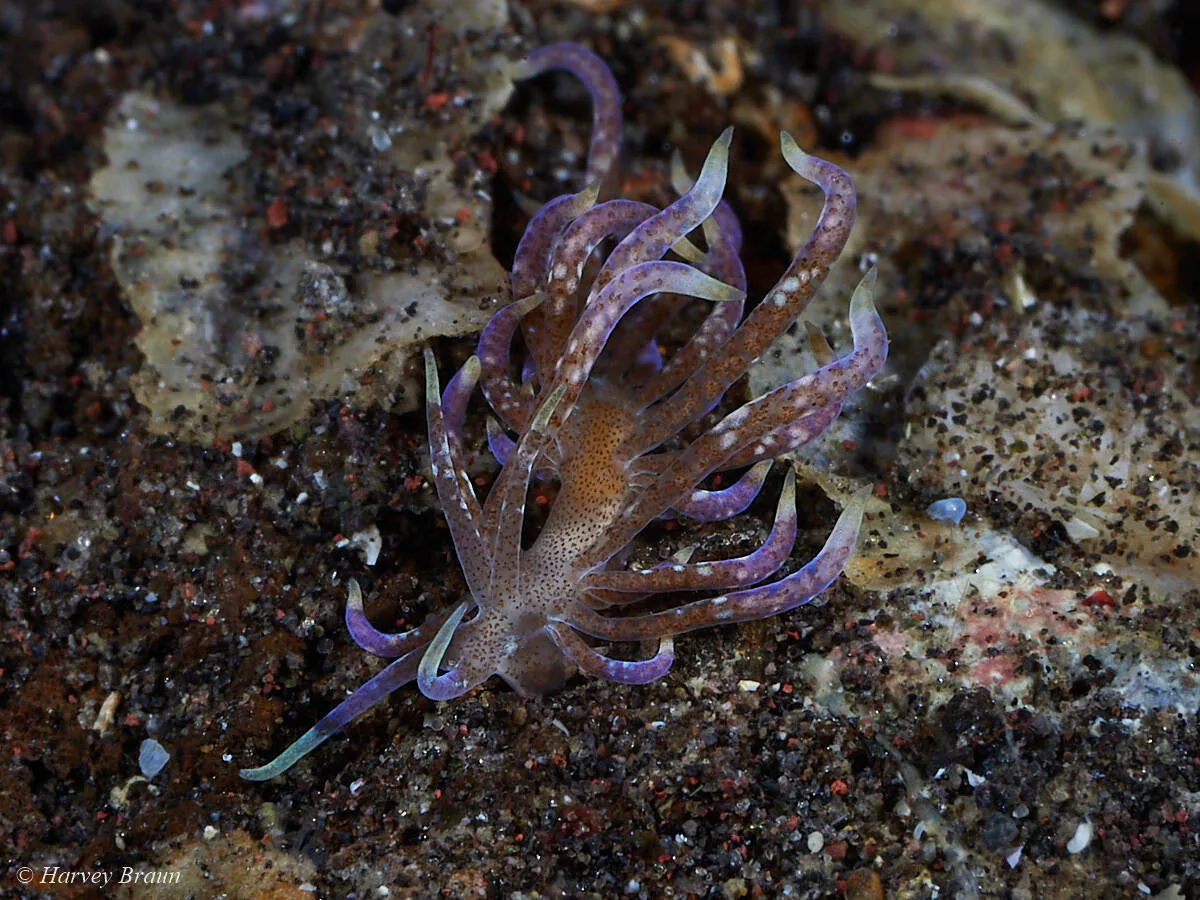
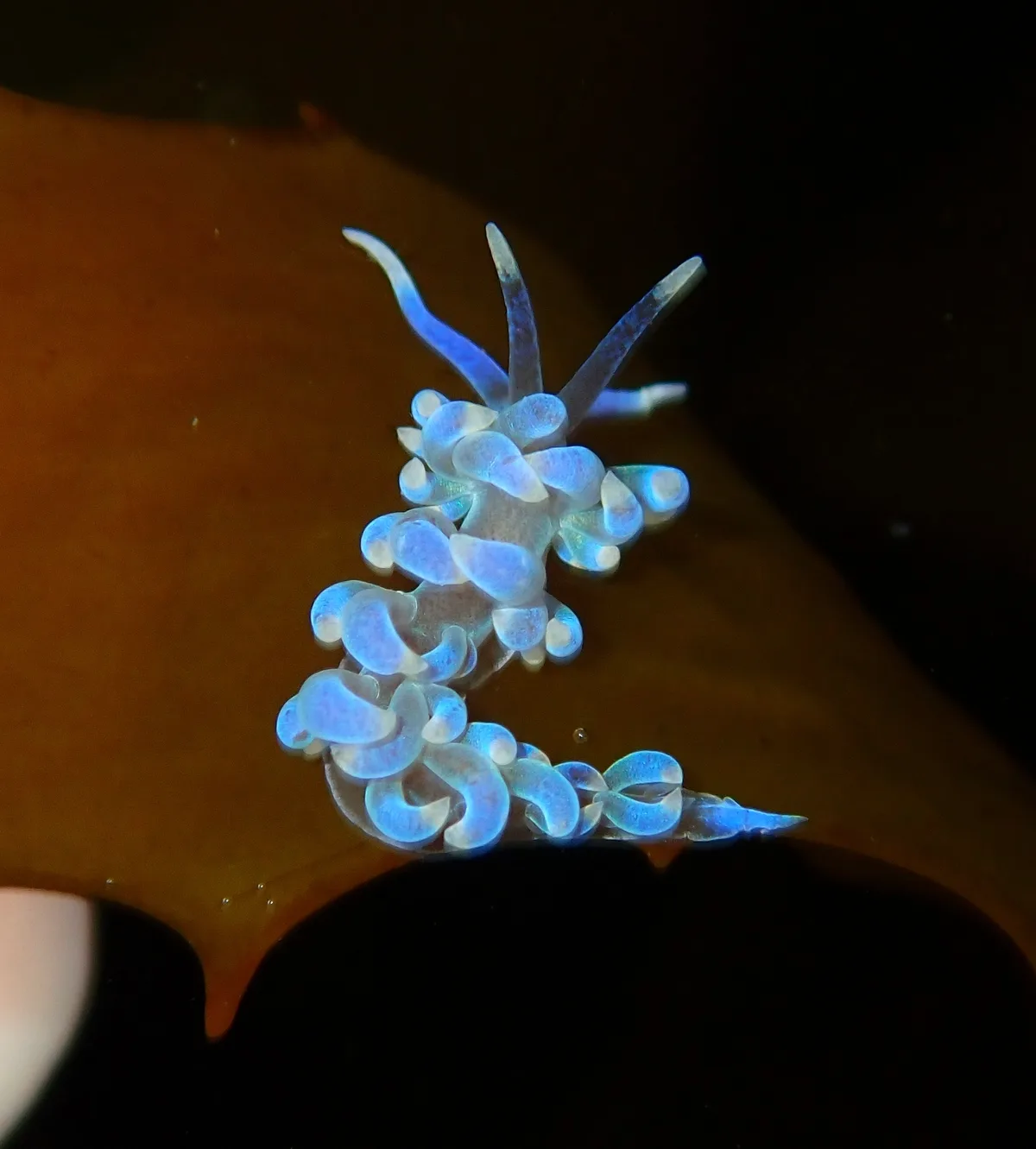
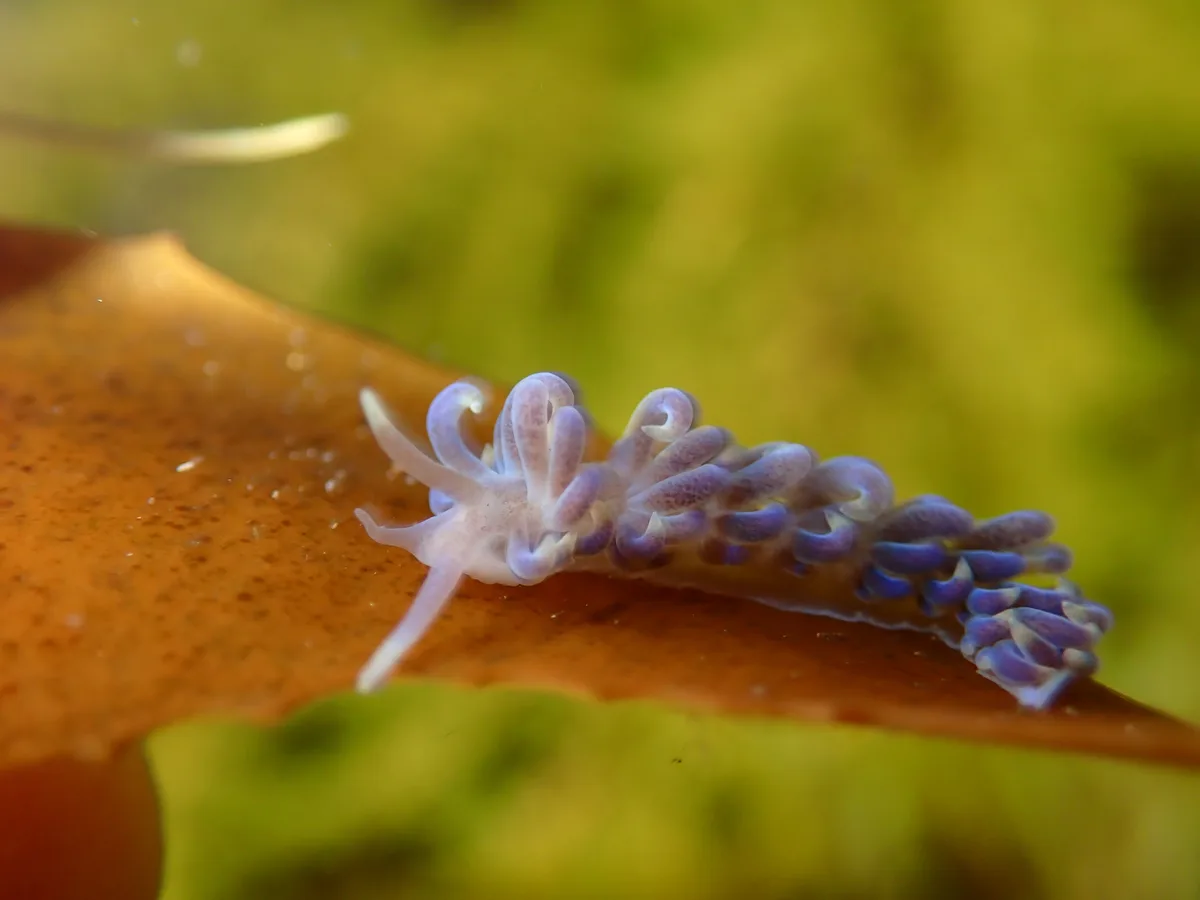
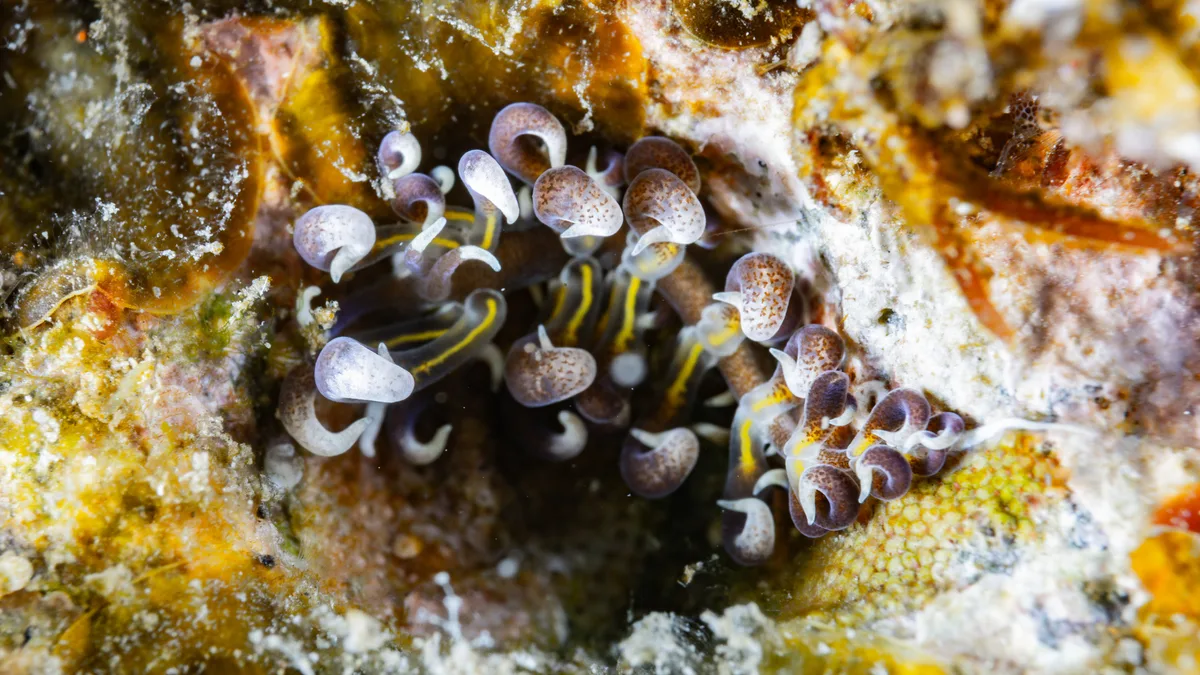
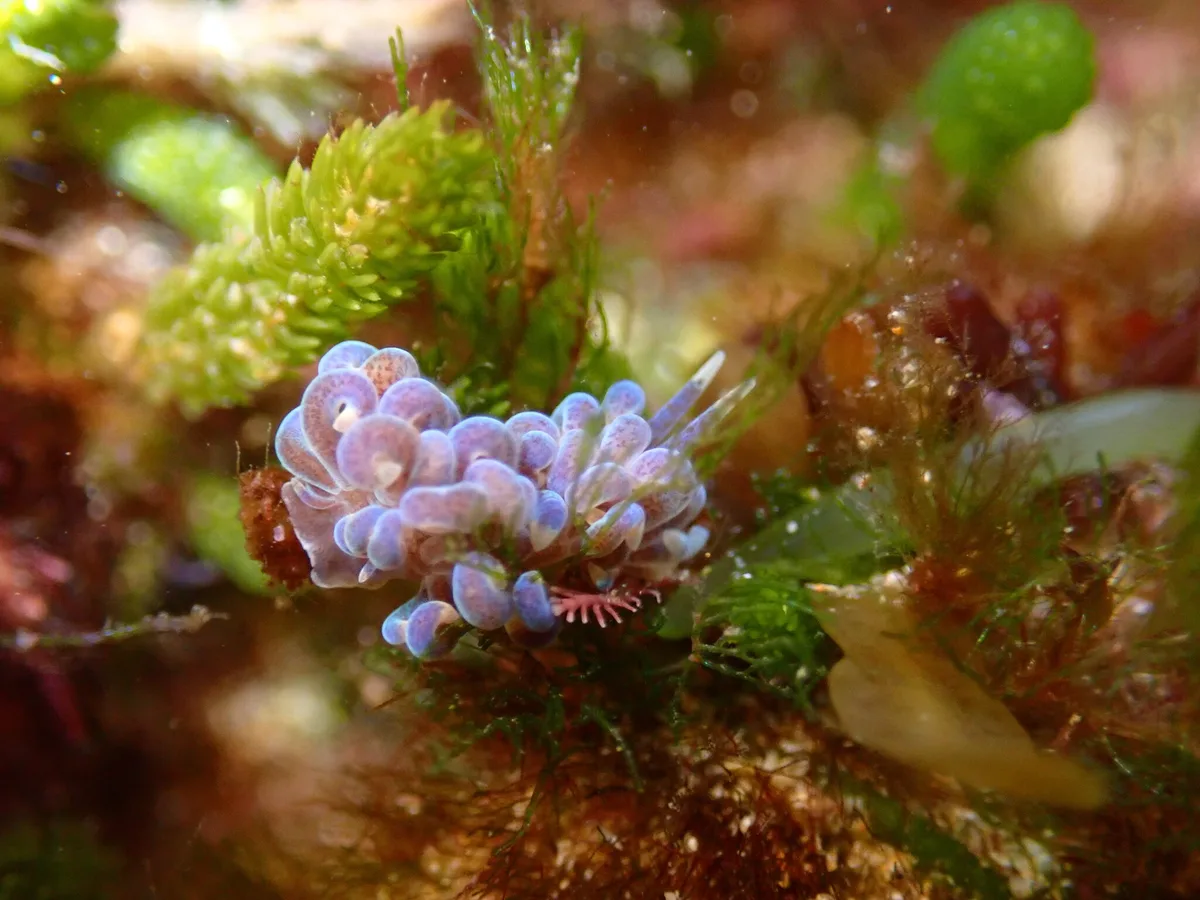
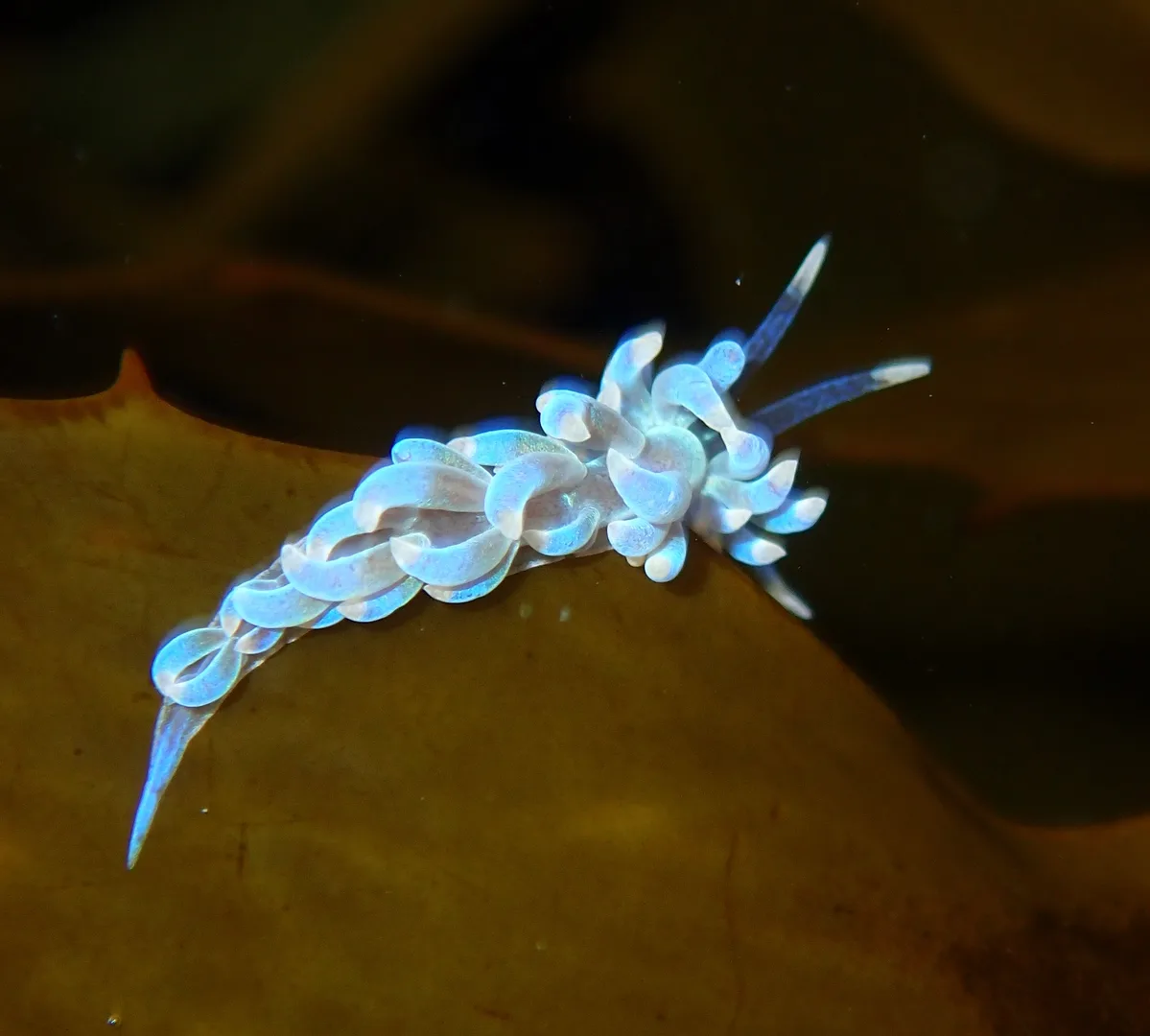
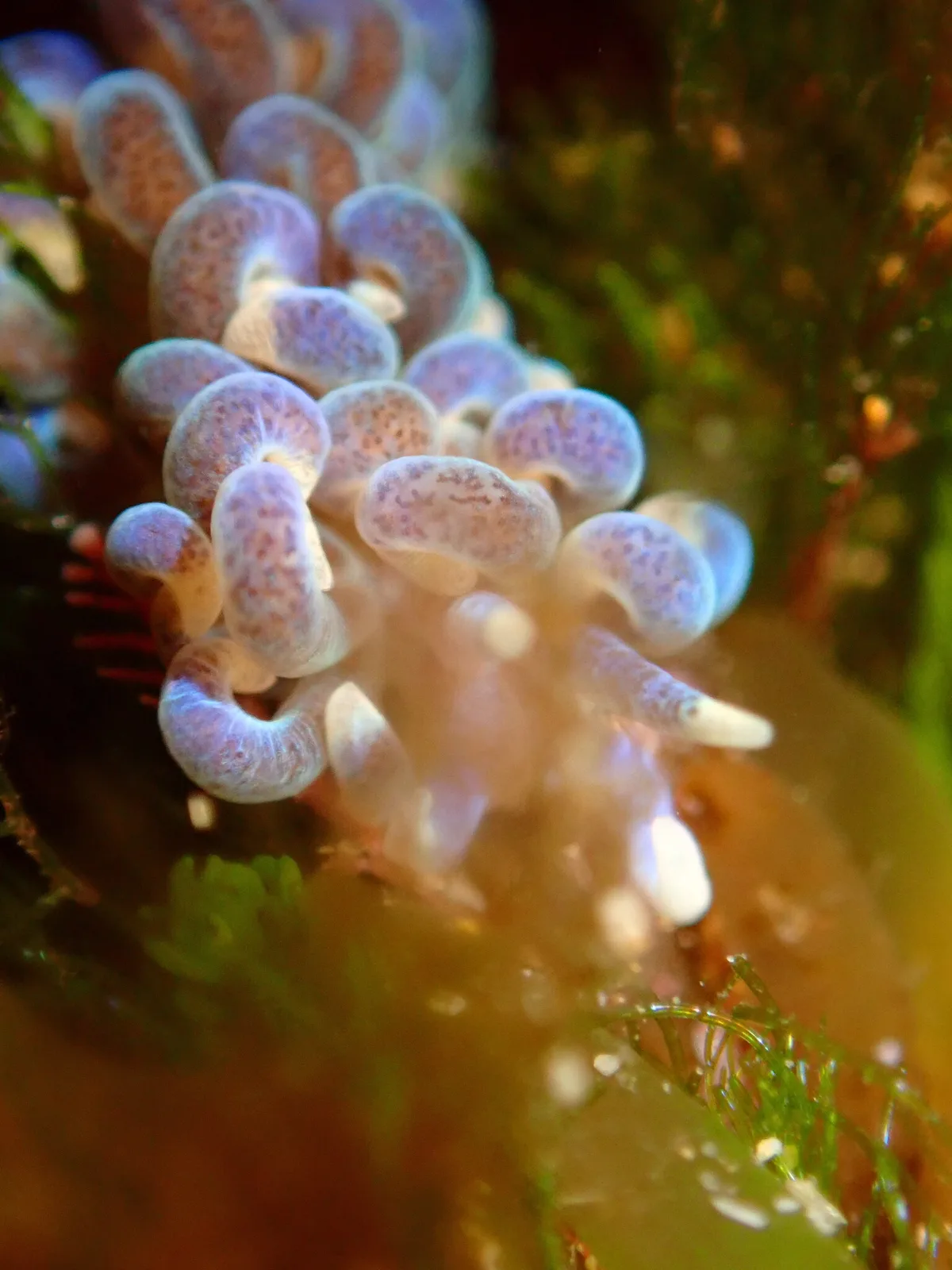
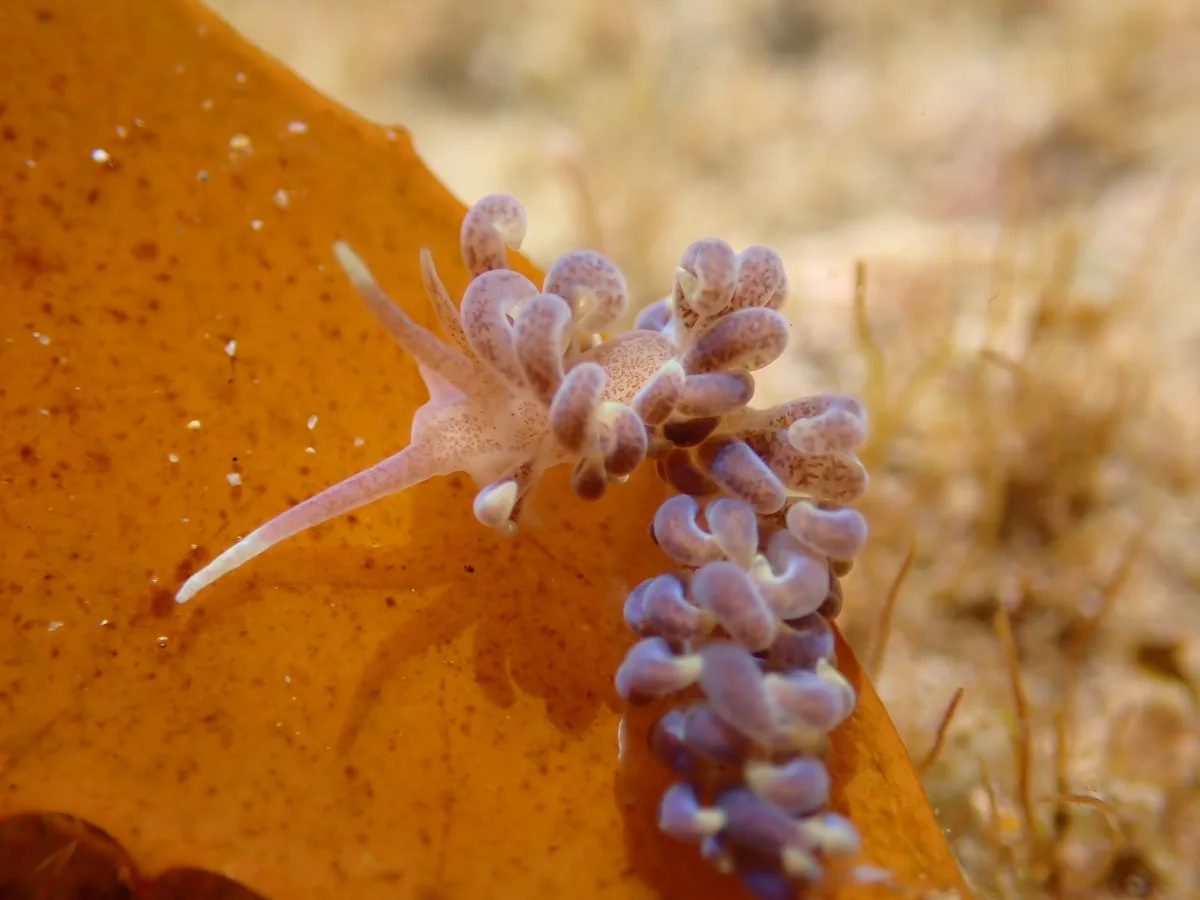
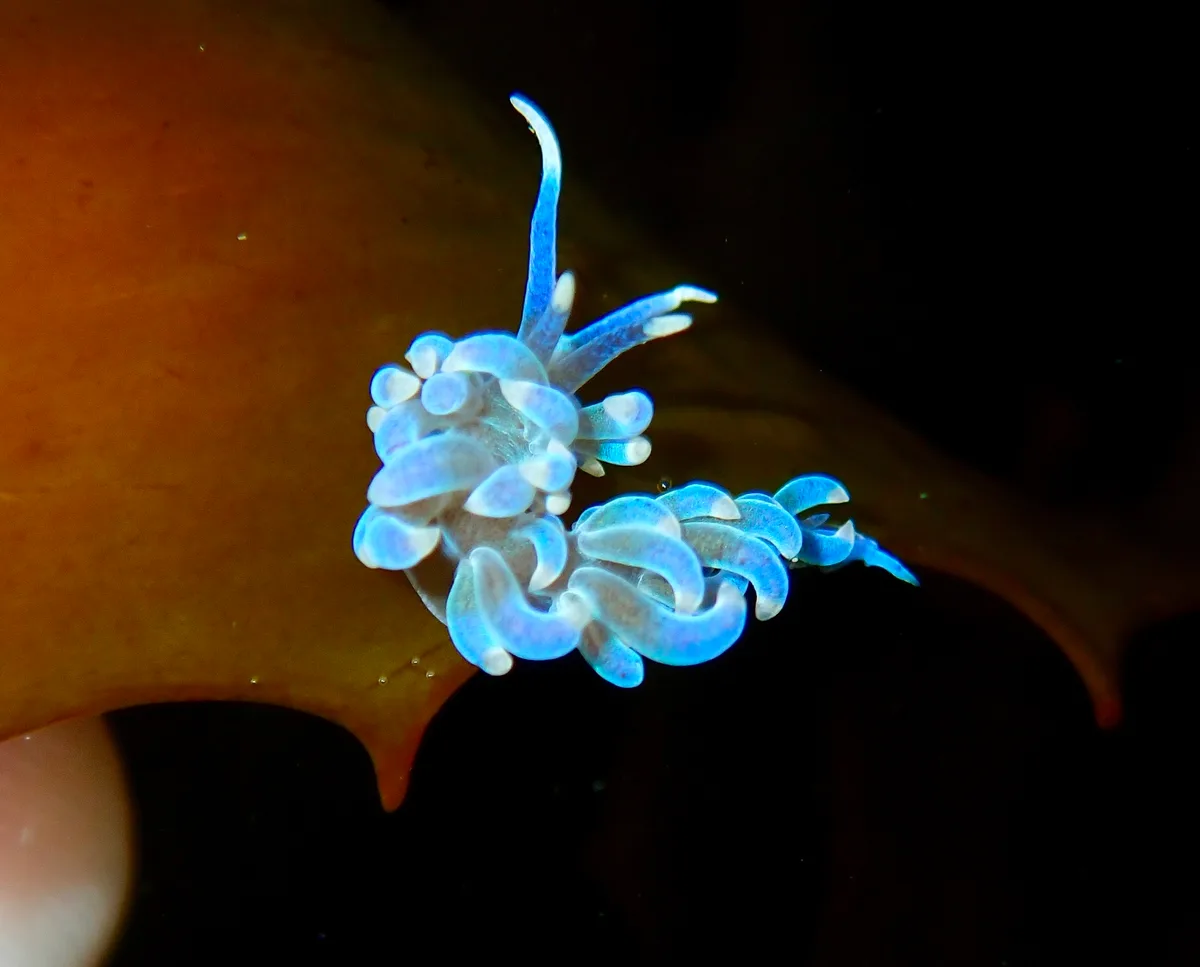
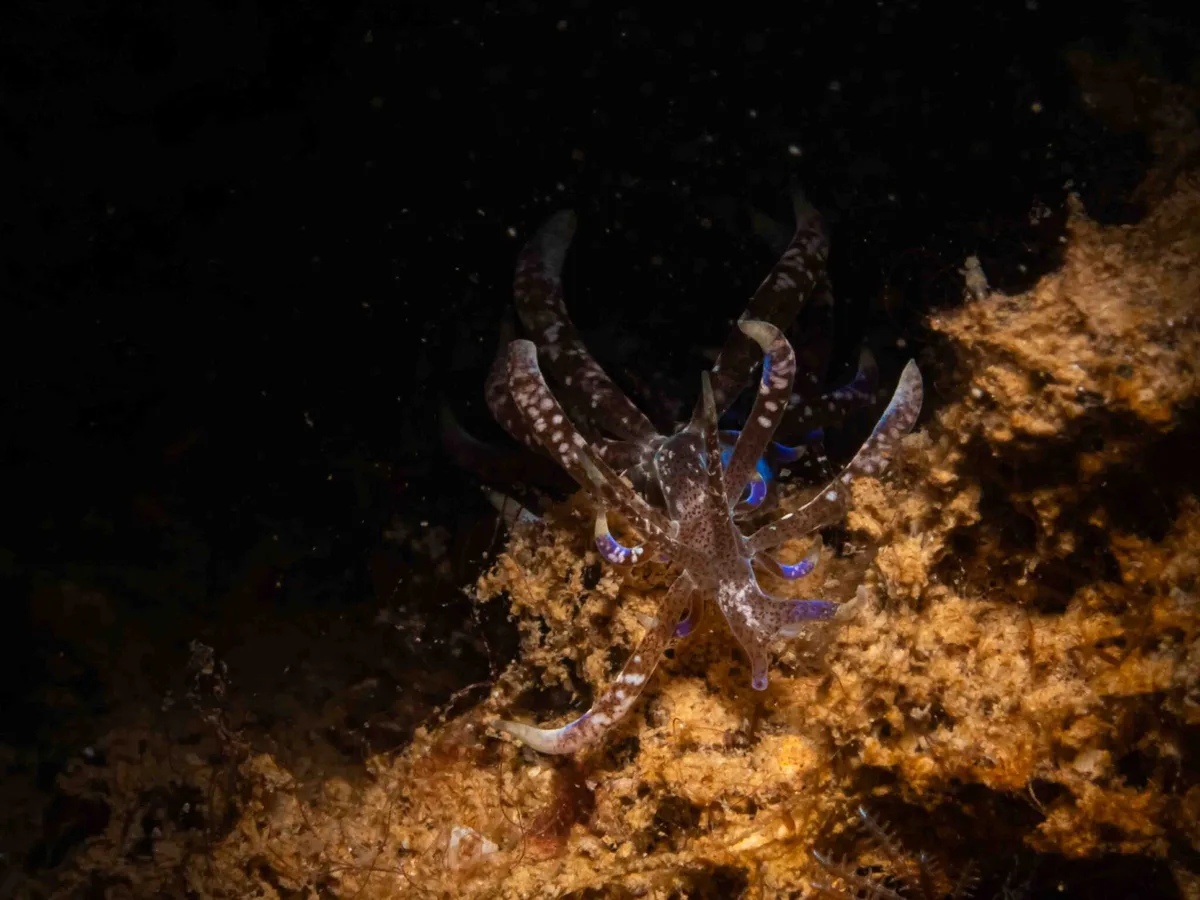
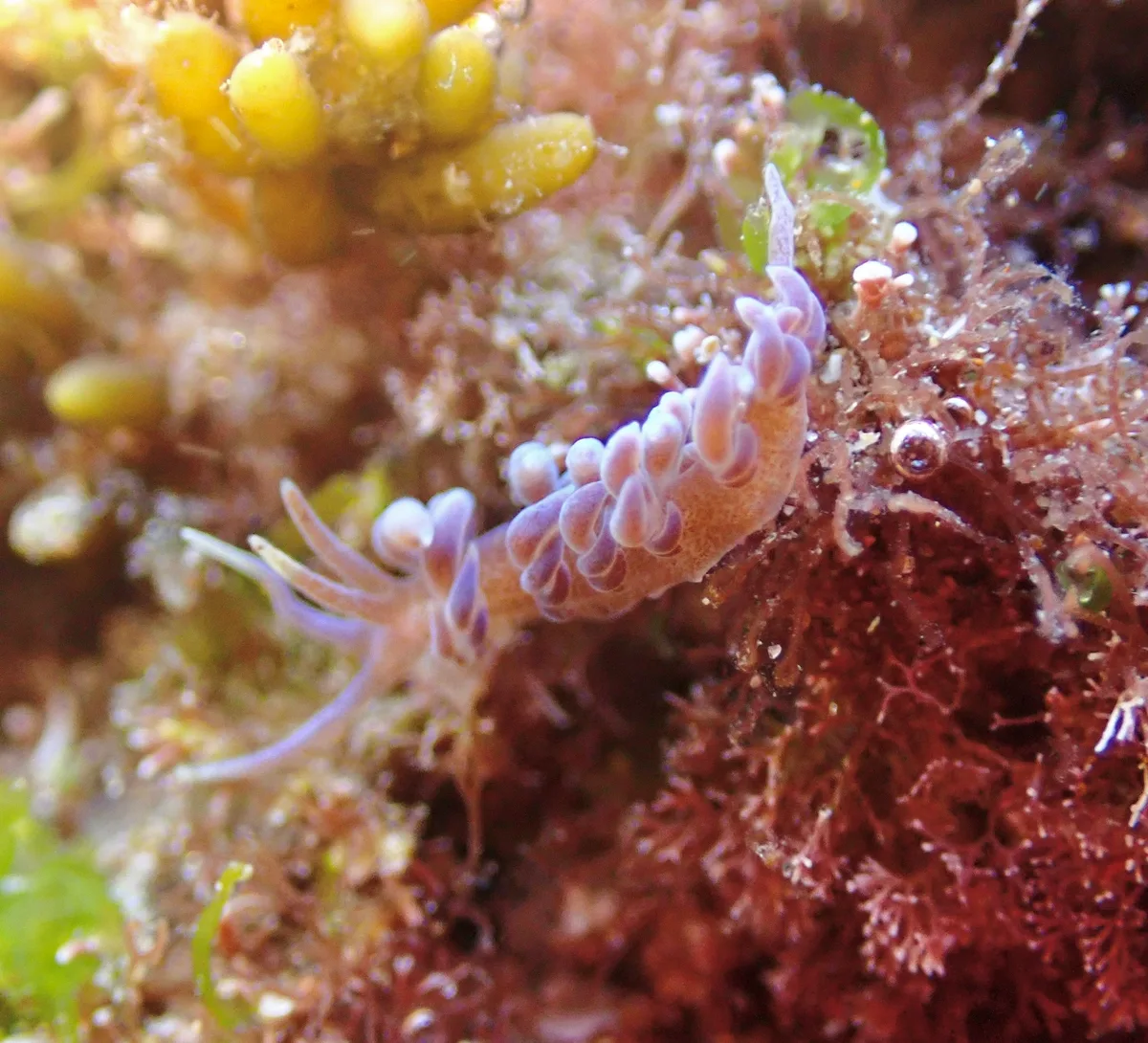
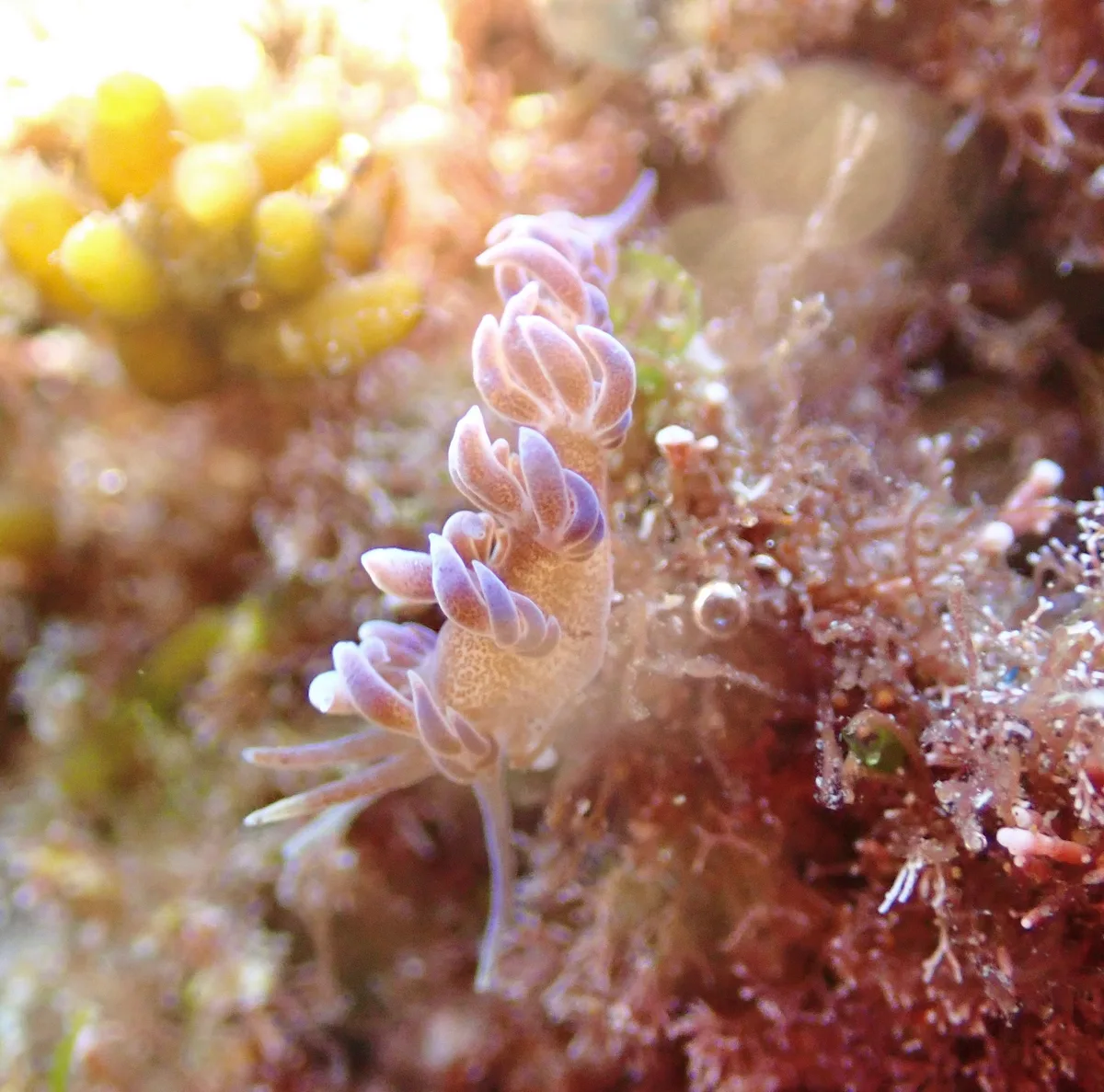
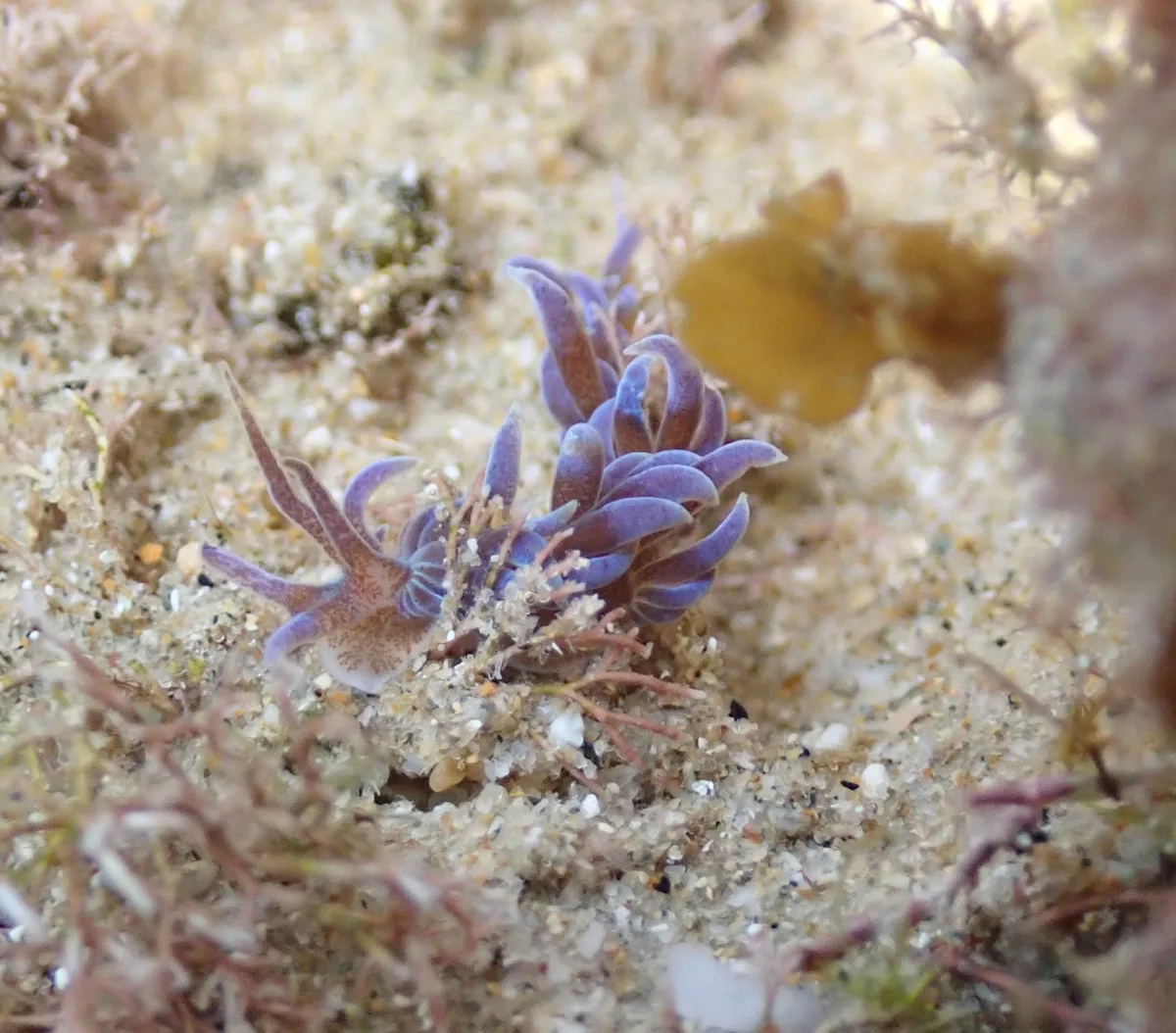
This is the transparent one. Two centimeters (0.8 in), and so nearly clear that the only thing printed on it is a scatter of fine brown dots, with the branches of its own gut visible running up inside each ceras like a diagram of itself.
Being see-through is a serious strategy on a reef, and it is more common in open water than on the bottom, because a transparent animal on a patterned surface still casts a shadow and still bends the light behind it. What makes it work here is that the animal sits on a soft coral whose polyps are themselves translucent and full of the same branching internal lines. Against that, a transparent slug with brown freckles is one more polyp.
The genus is the one that gave up stealing weapons. Every other aeolid eats stinging animals and keeps the unfired capsules at the tips of its cerata; this whole line abandoned the practice. What is left is looking like the food, and shedding cerata when something grips them.
It was described from 🇦🇺 Australia in 1962 by Robert Burn, who worked through the sea slugs of Victoria over a fifty-year career, and named for Hope Macpherson, curator of molluscs at the museum in Melbourne and one of the first women to lead scientific fieldwork on that coast.
Here it turns up in the channels and on the reef, on colonies, and it is the smallest of the five in its genus on this page.
- almost completely transparent, with fine brown dots as the only marking
- the gut shows through the body as a branching line inside each ceras
- two centimeters, the smallest of its genus here
- on a soft coral colony rather than on rock