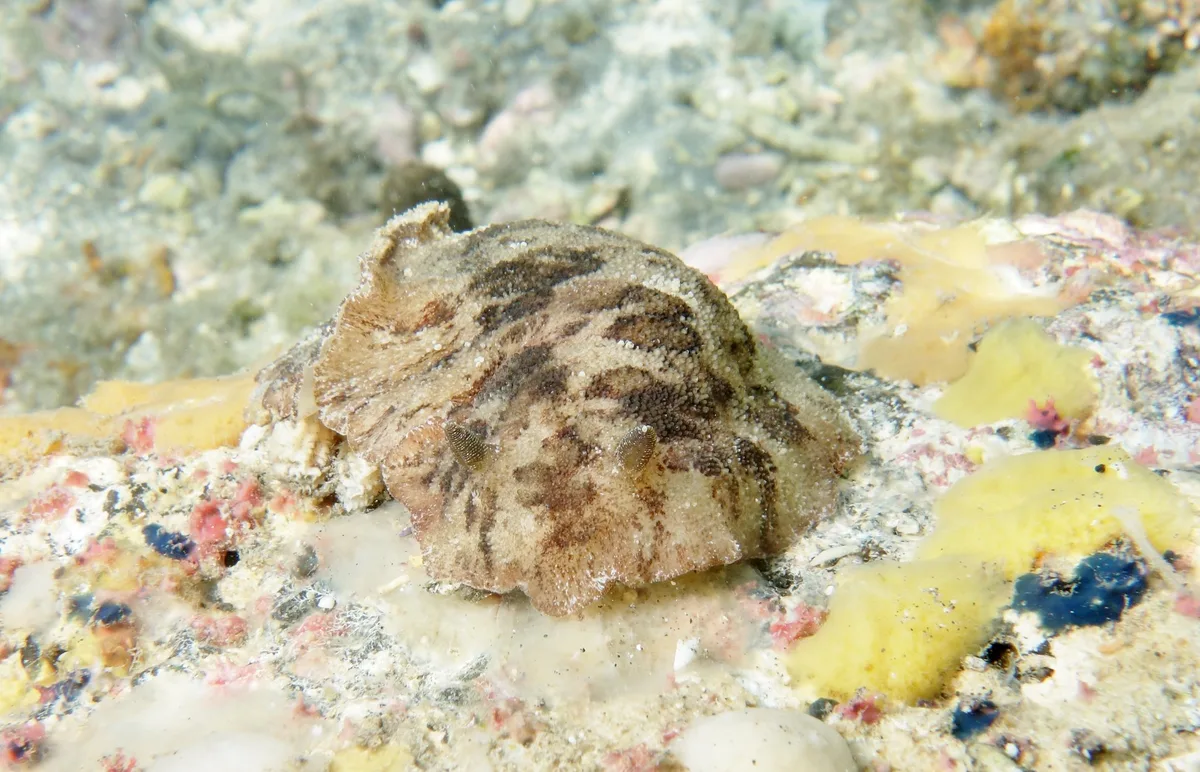
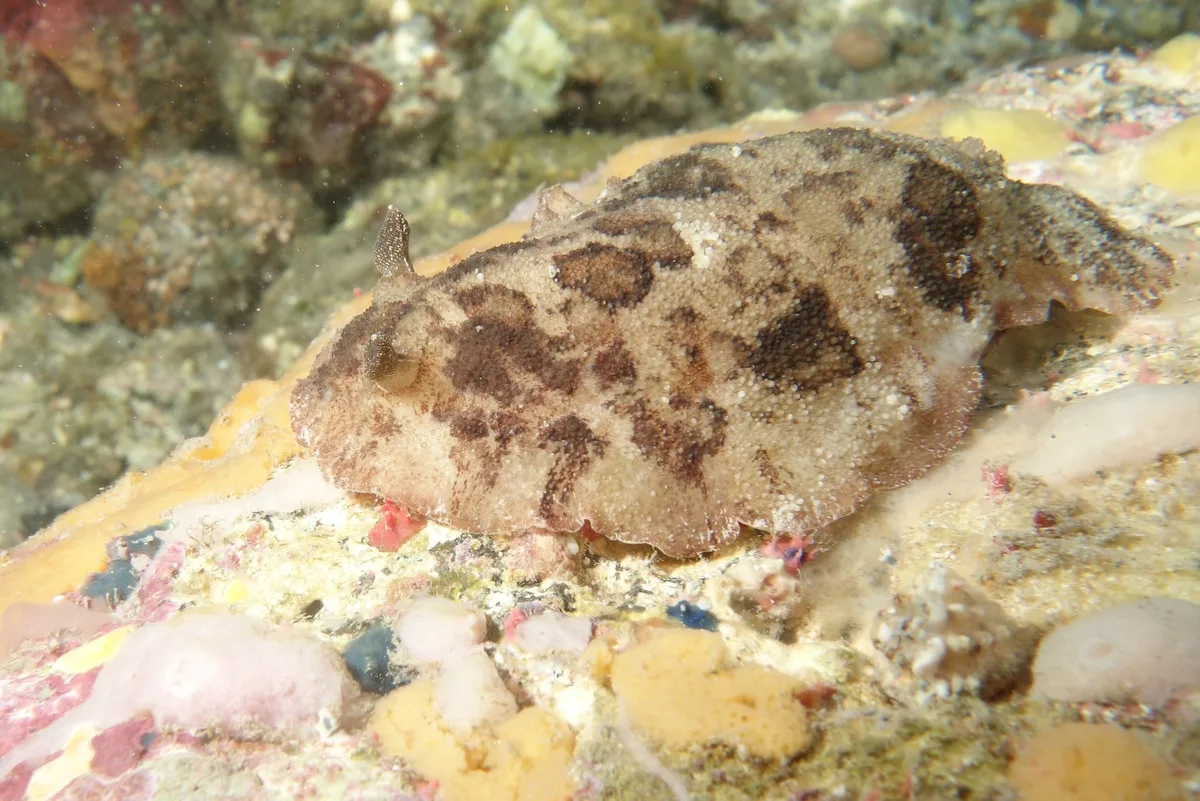
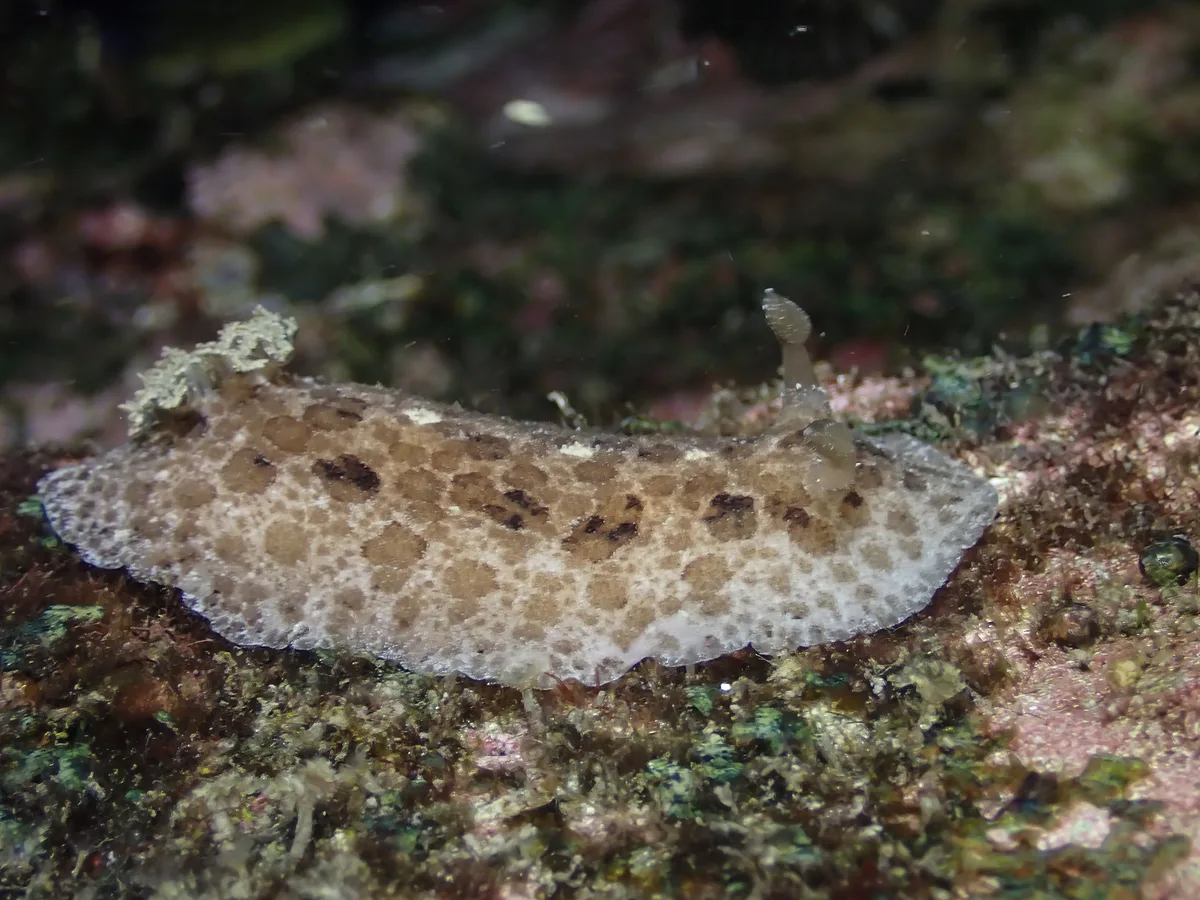
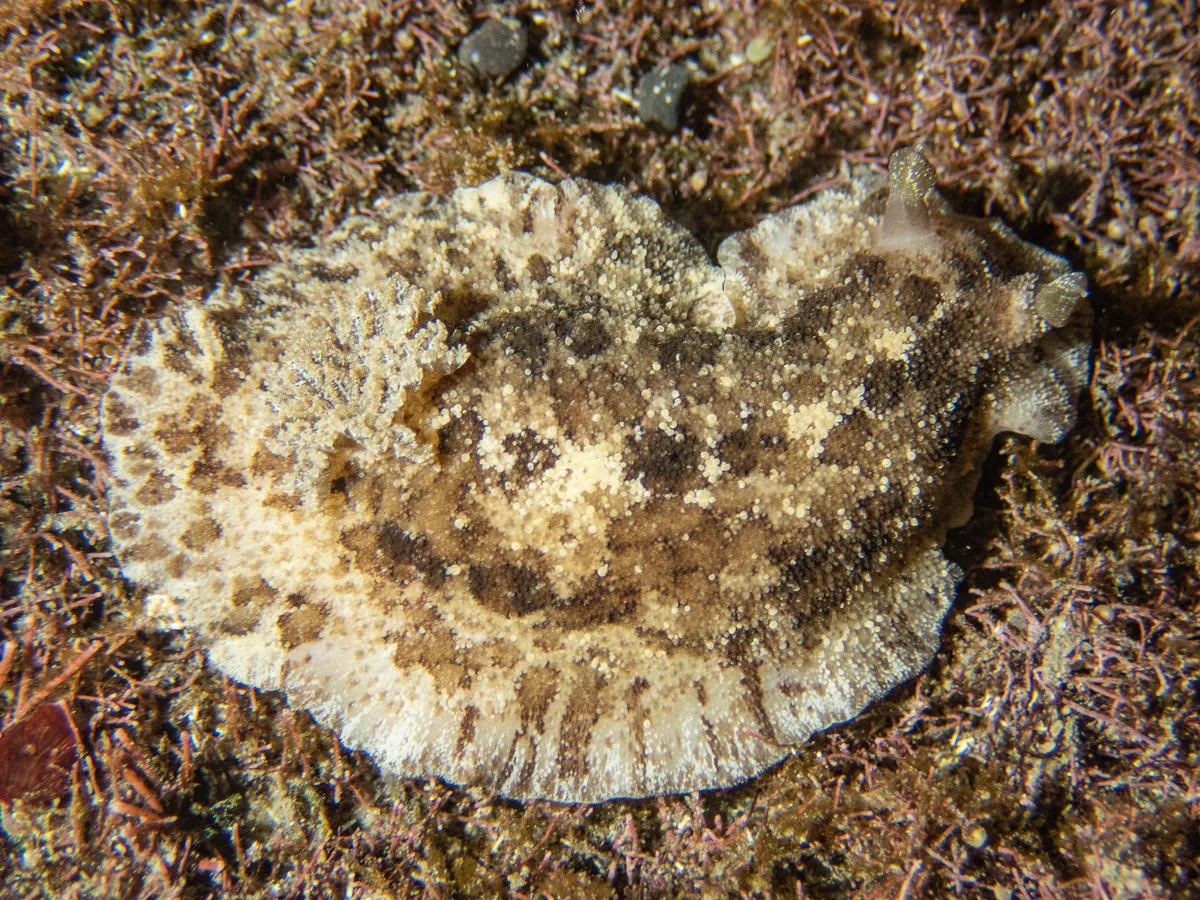
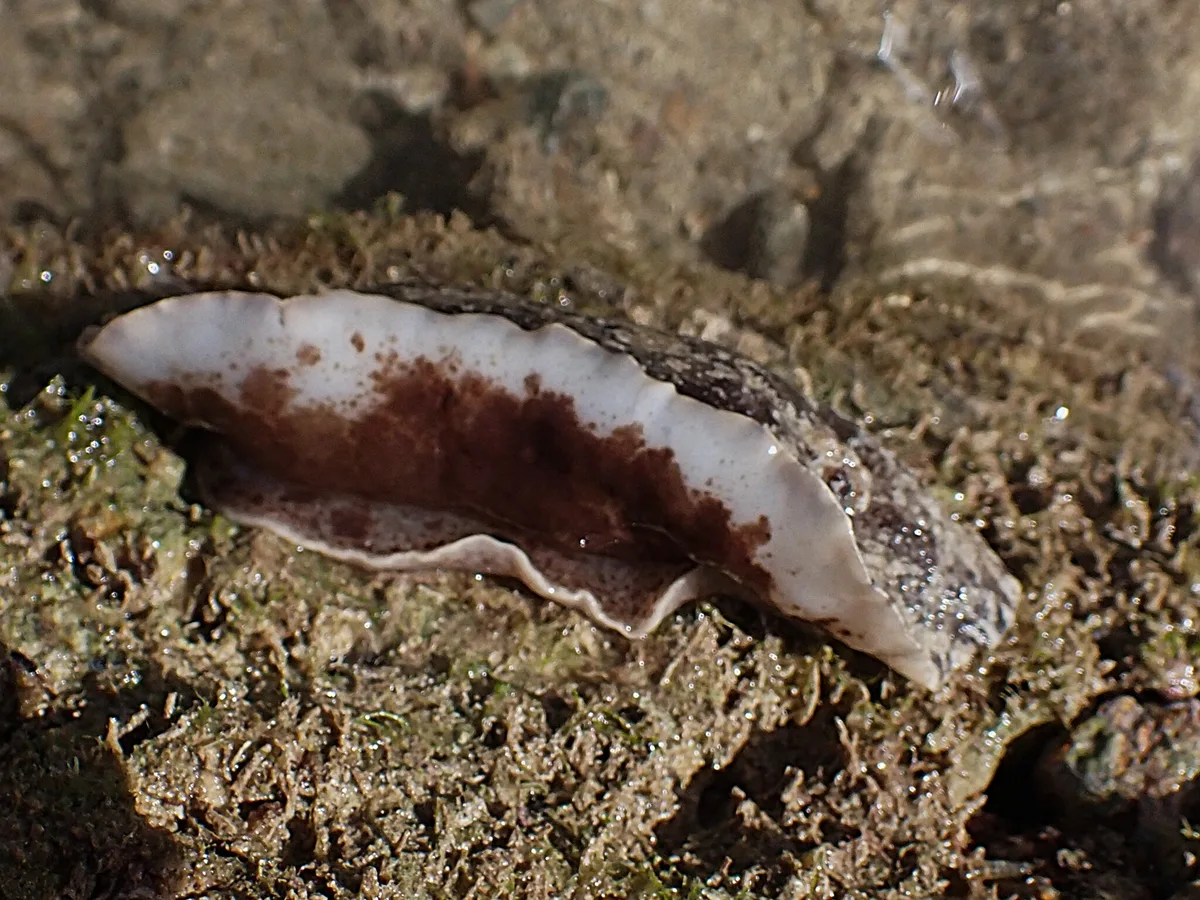
The name is a warning about handling, and it is accurate. Sebadoris are among the softest dorids on the reef: no stiff spicule-packed mantle, no firm edge, nothing holding the body in shape. Picked up, the animal slumps and tears. This is the opposite solution to the one the pancake dorids reached, where the mantle is stiffened into a hard flat disc that a predator cannot grip. These went the other way entirely and simply stay where nothing has to grip them.
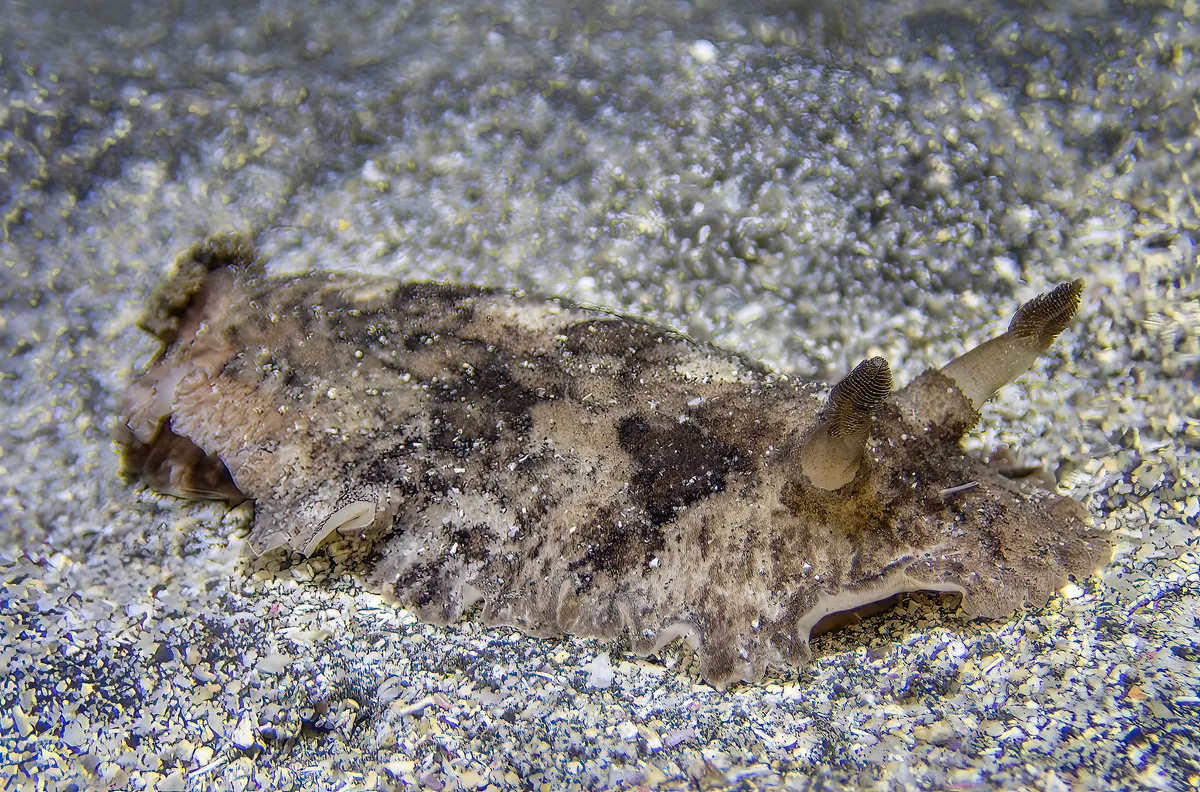
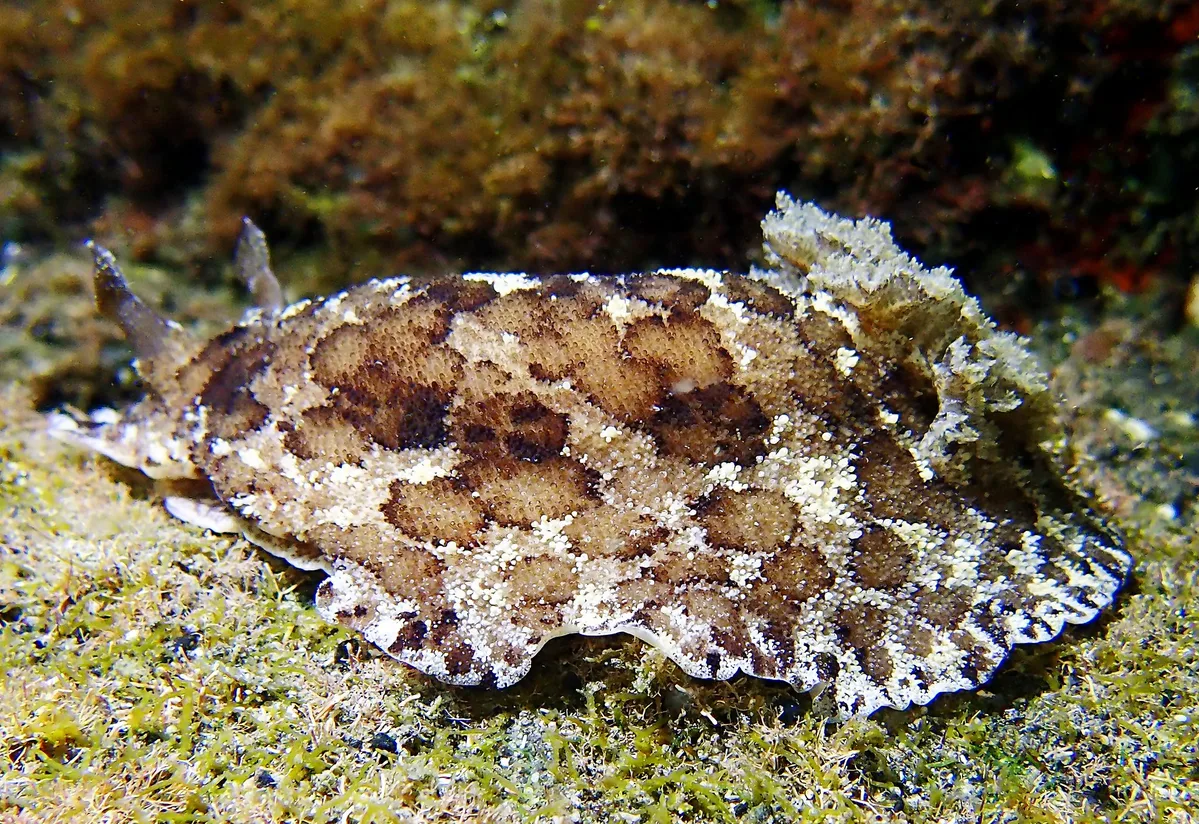
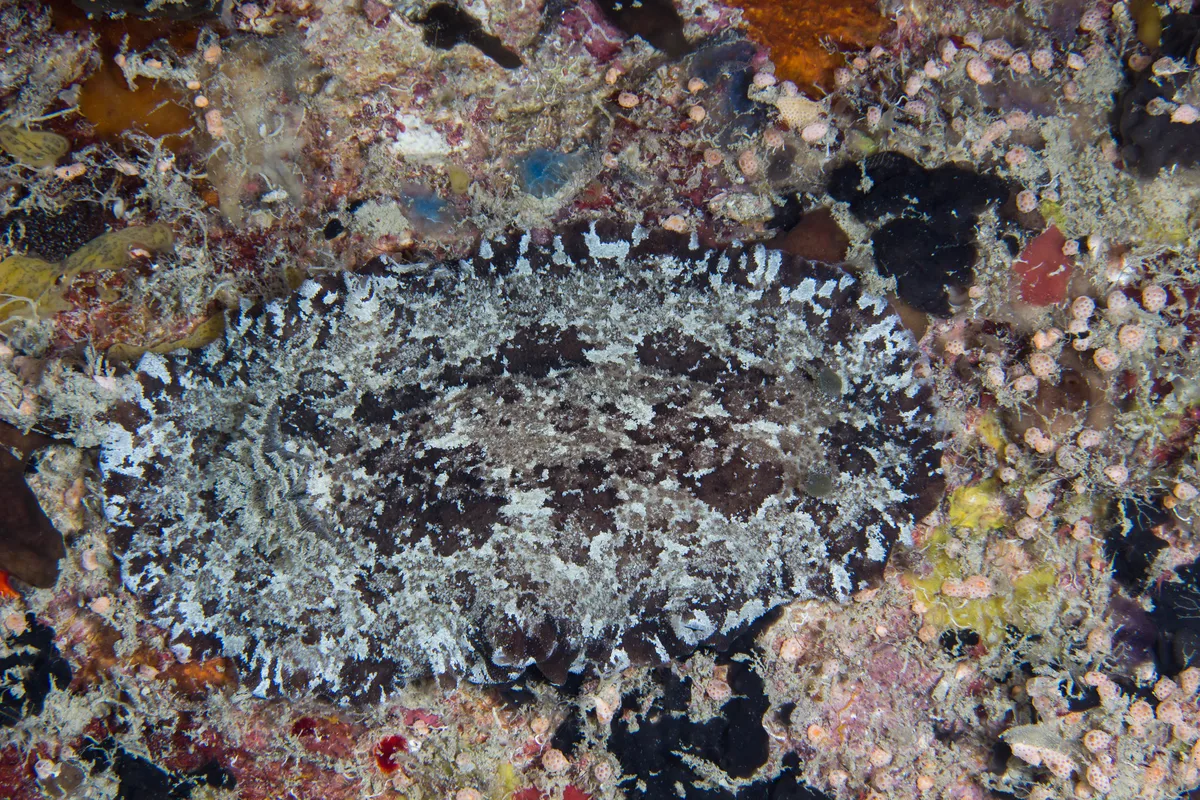
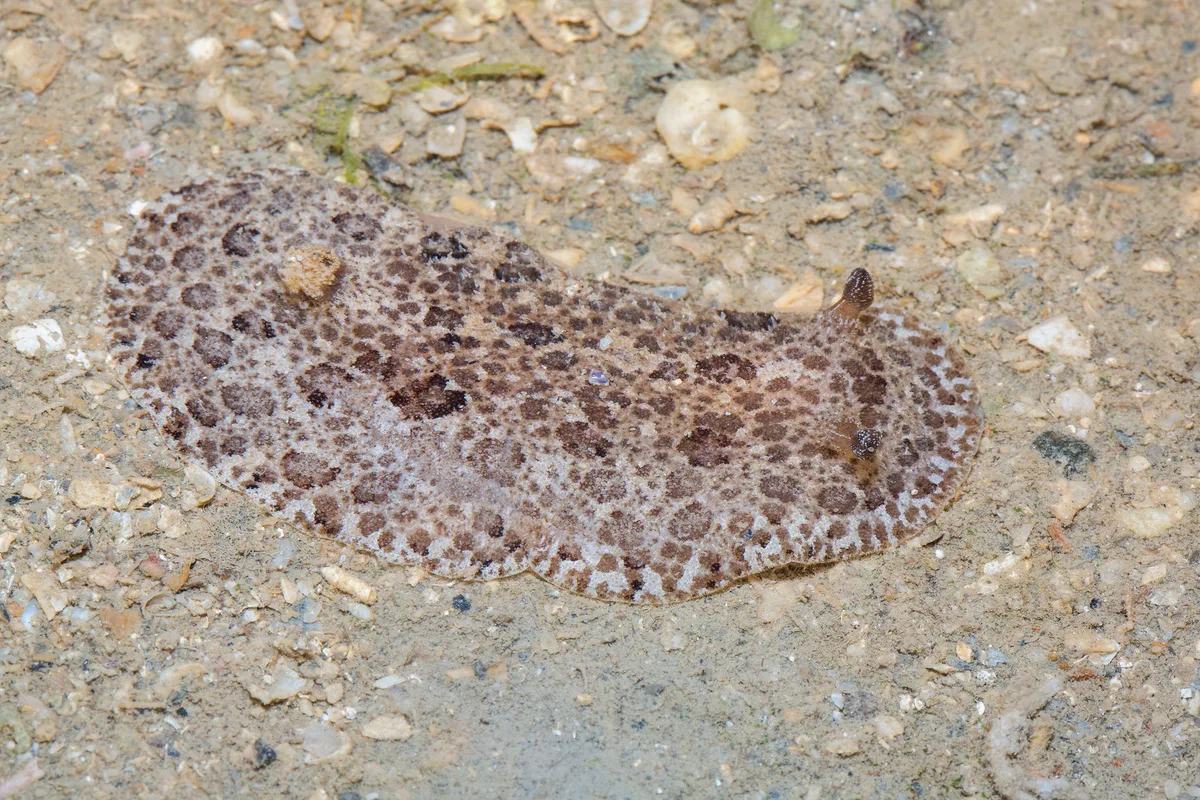
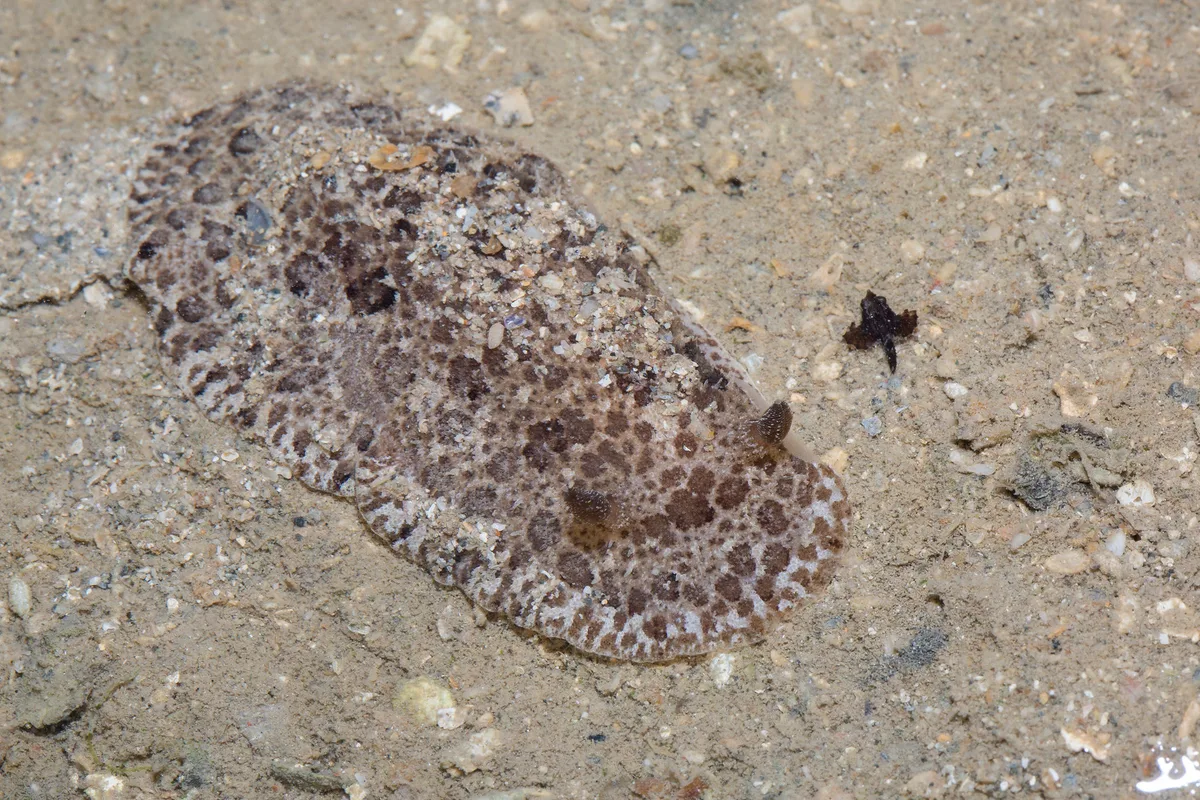
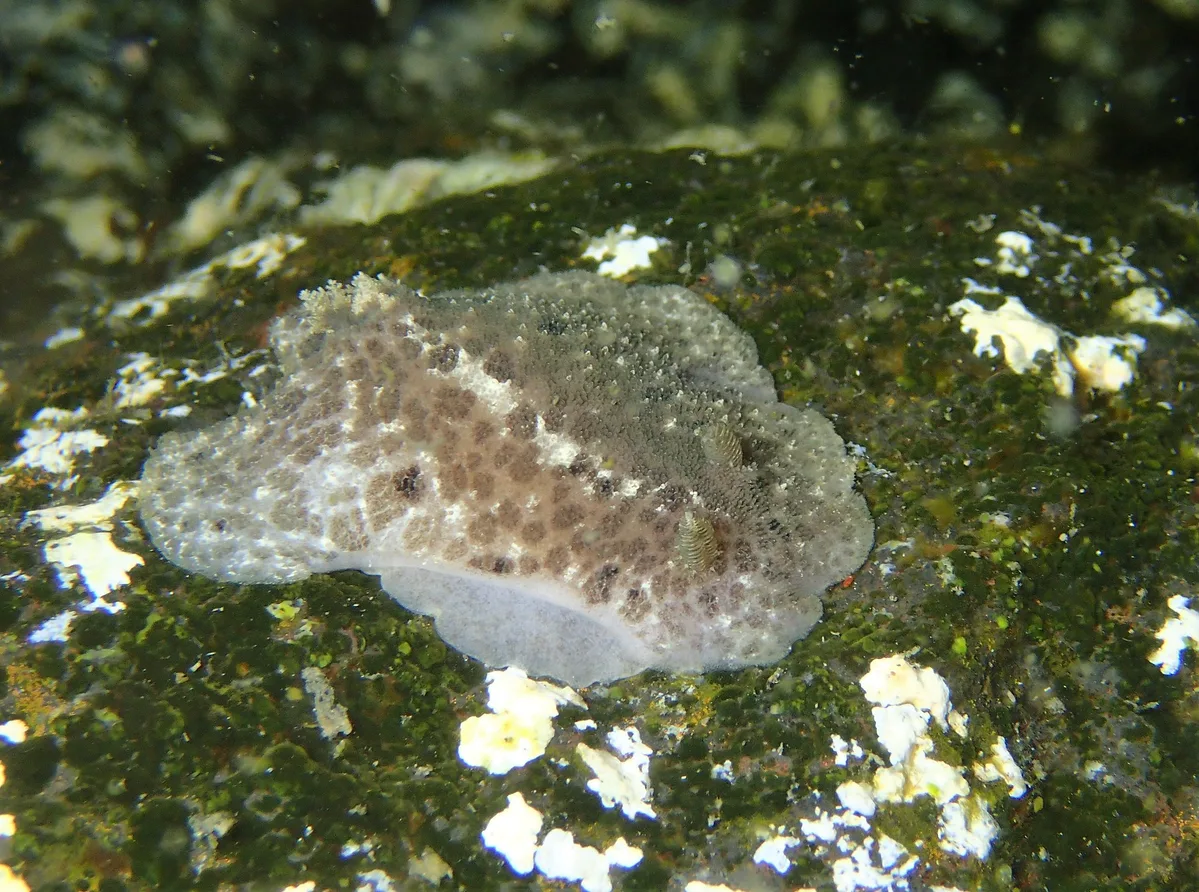
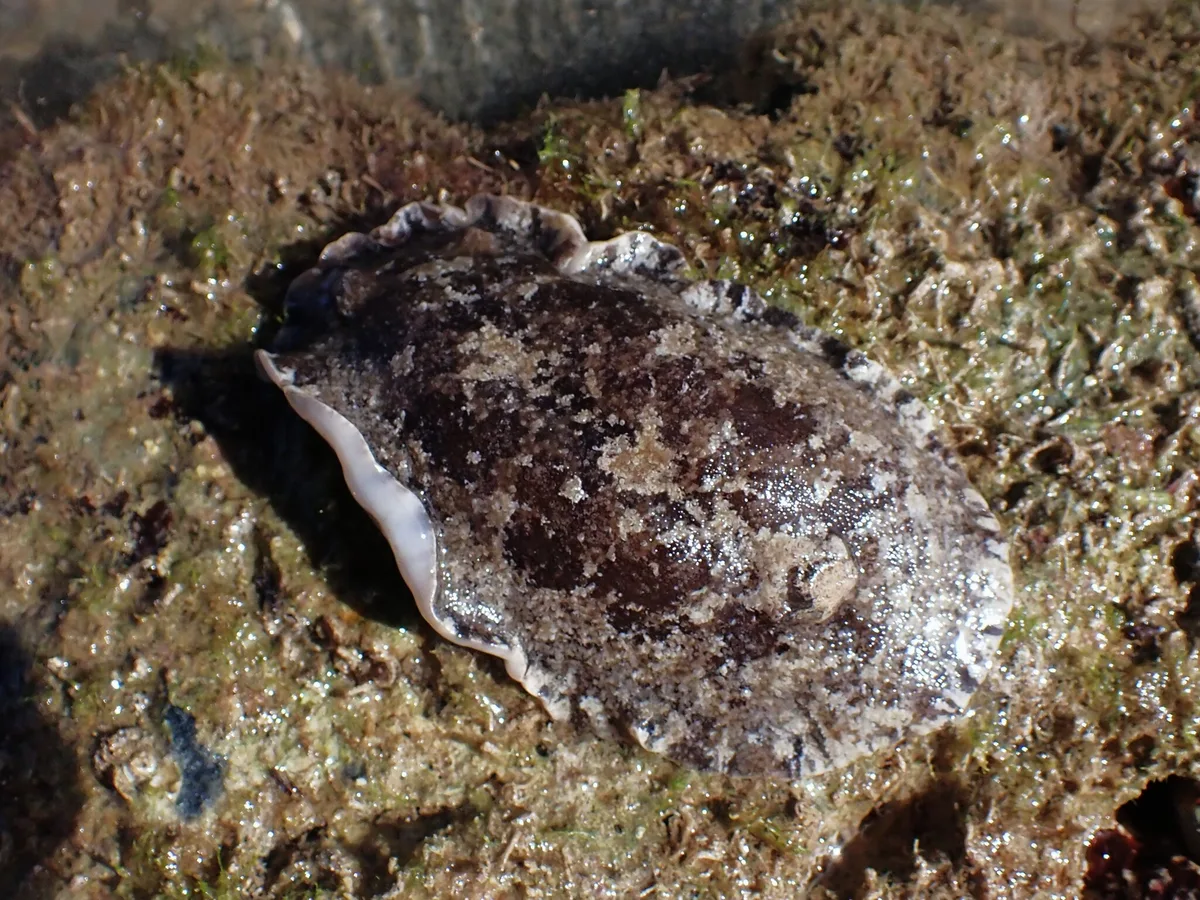
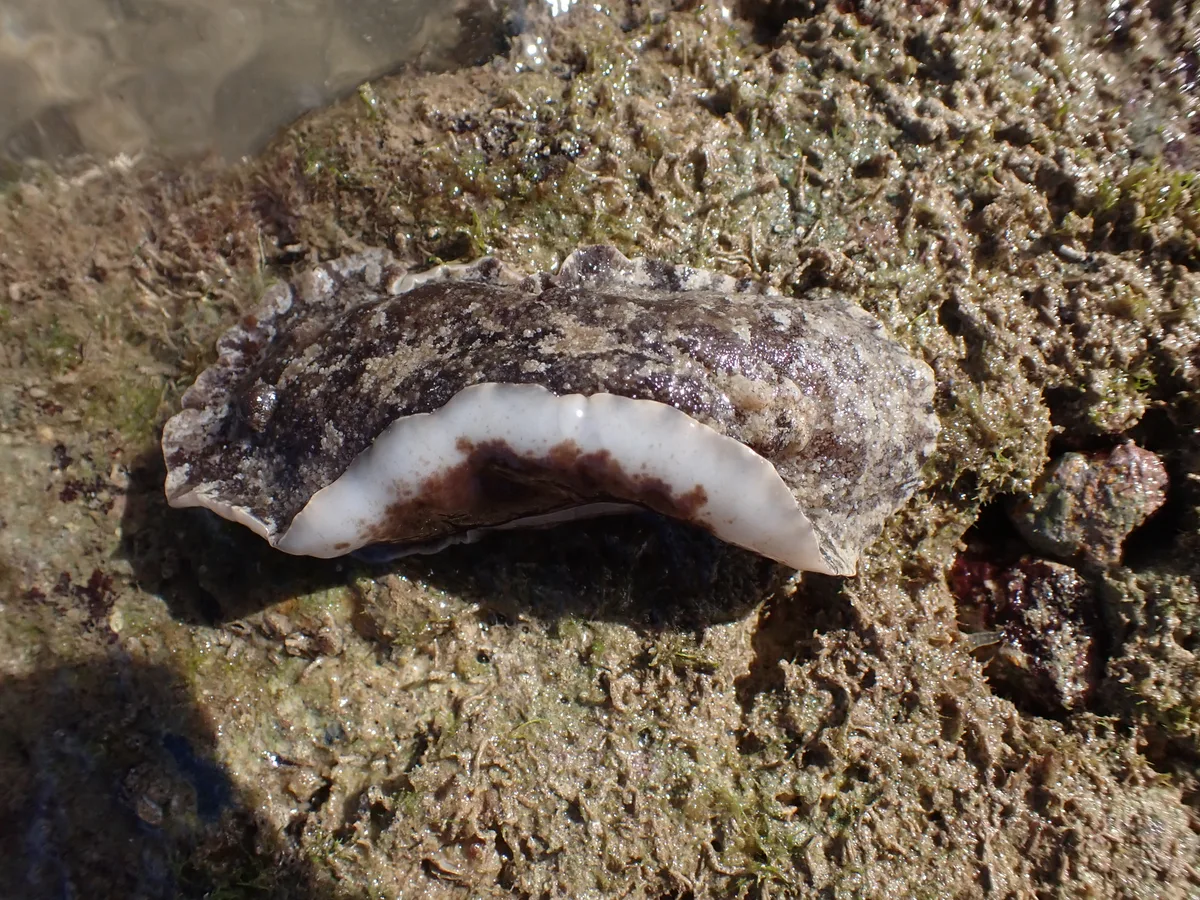
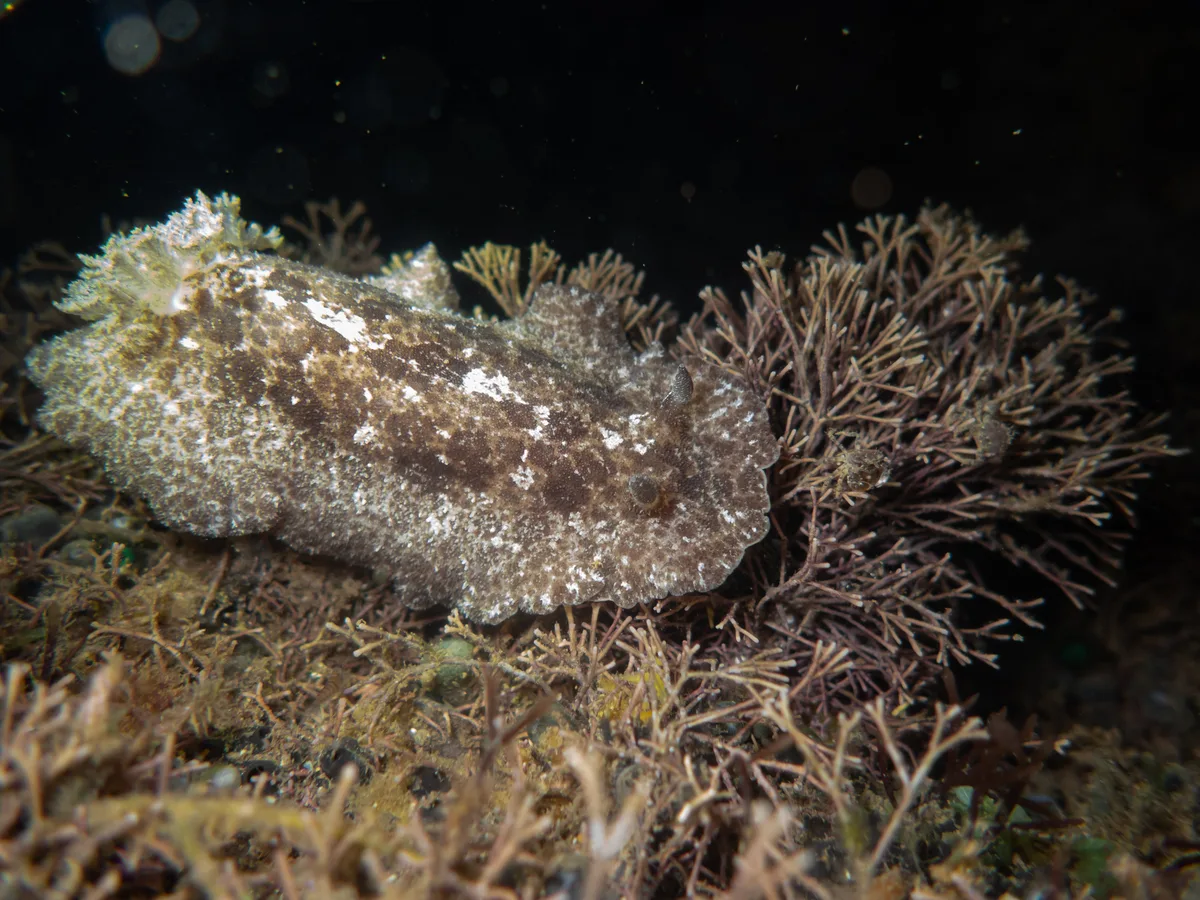
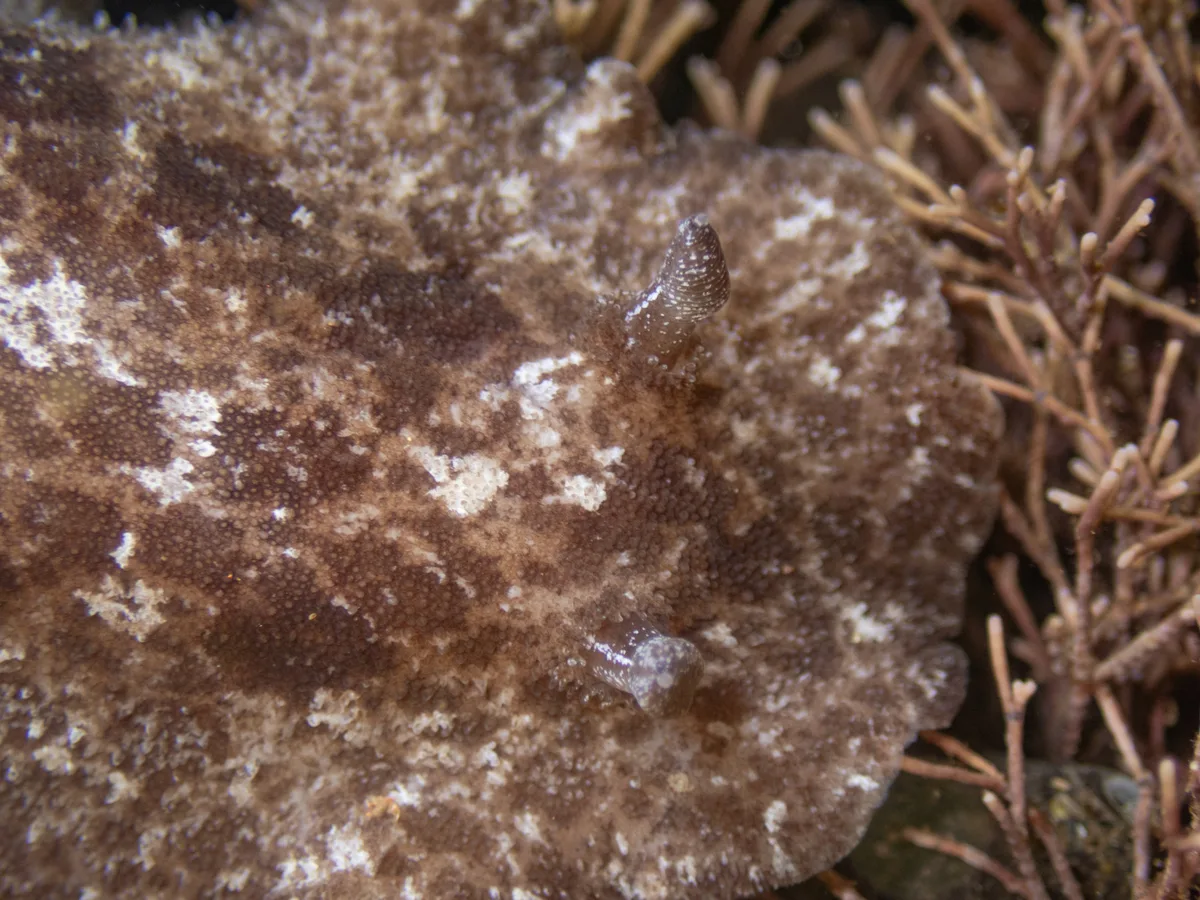
Which is under things. This species lives in the shallows on the undersides of dead coral slabs, in the dark wet gap between the rock and the sand, and it is one of the reliable finds if you look there. Gray-brown, blotched darker, six centimeters (2.4 in) of soft animal that reads as a smear on the underside of a rock rather than as a slug.
A note on how to look, because this is the habitat where divers do damage without meaning to. If you turn a slab over, turn it back the same way up. Everything living on that underside - this slug, the sponges it grazes, the tunicates, the brittle stars - is there because it is dark and sheltered, and a slab left upside down kills the lot of them in a day of sunlight.
The genus also contains one of the few dorids that can swim, which is a strange thing to share a genus with an animal this reluctant to leave the underside of a rock.
- gray-brown with irregular darker patches and no bright color anywhere
- body soft and slack, holding no firm outline
- found underneath dead coral slabs in the shallows, not out on the reef
- six centimeters, and shaped like the underside it was sitting on