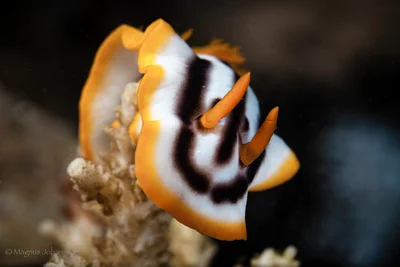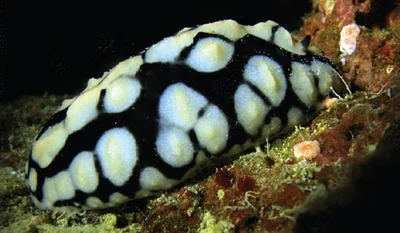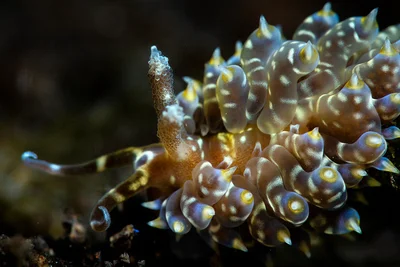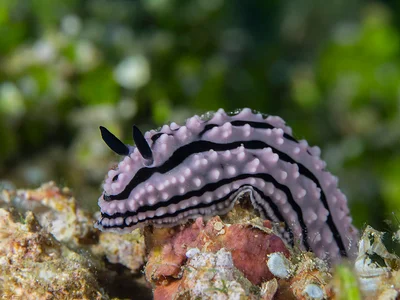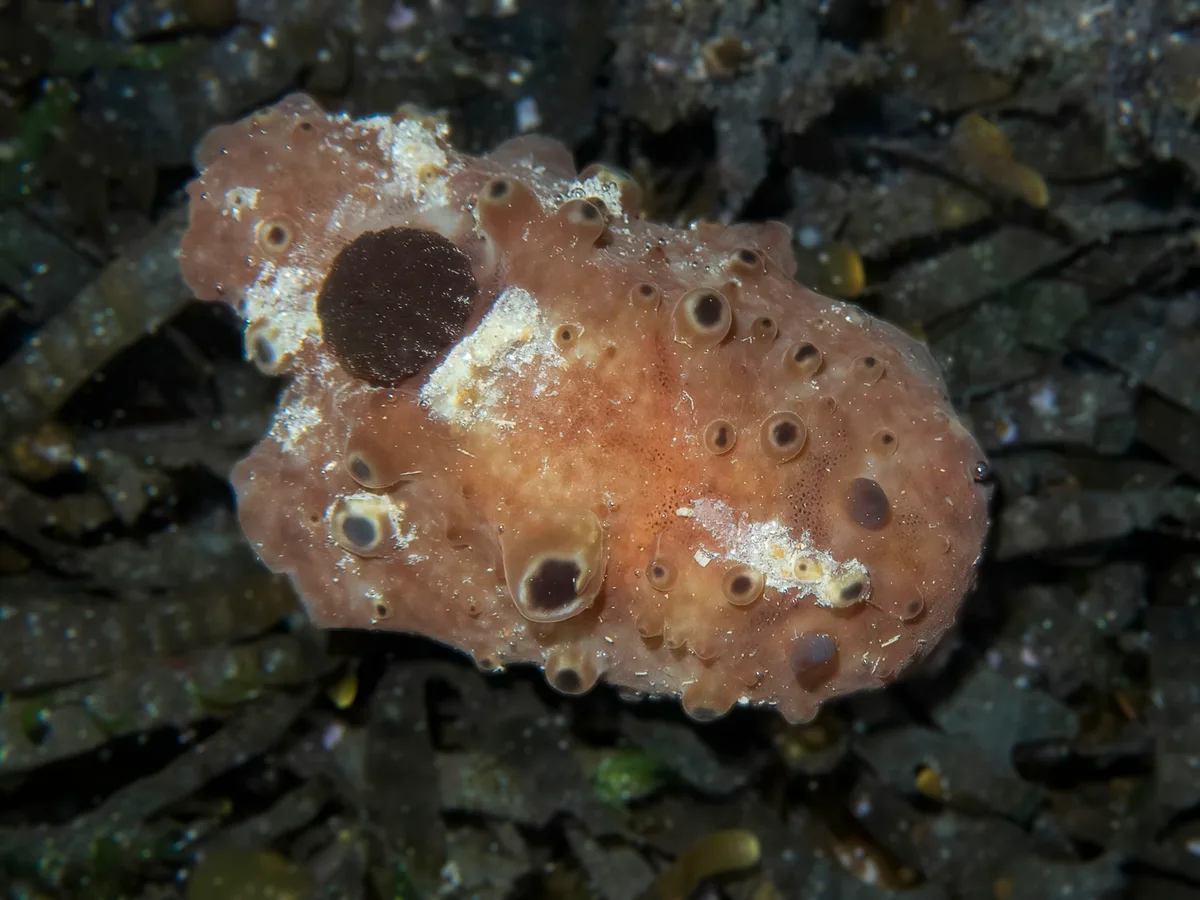
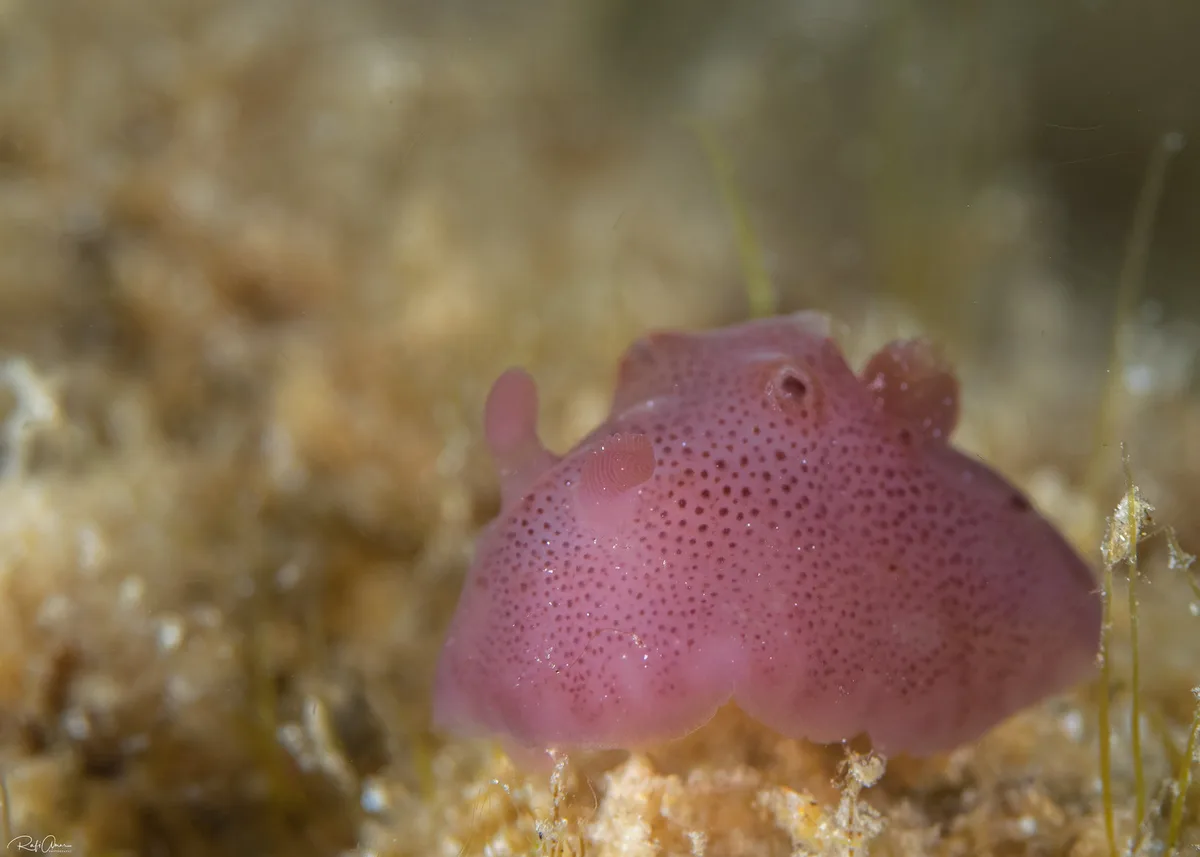
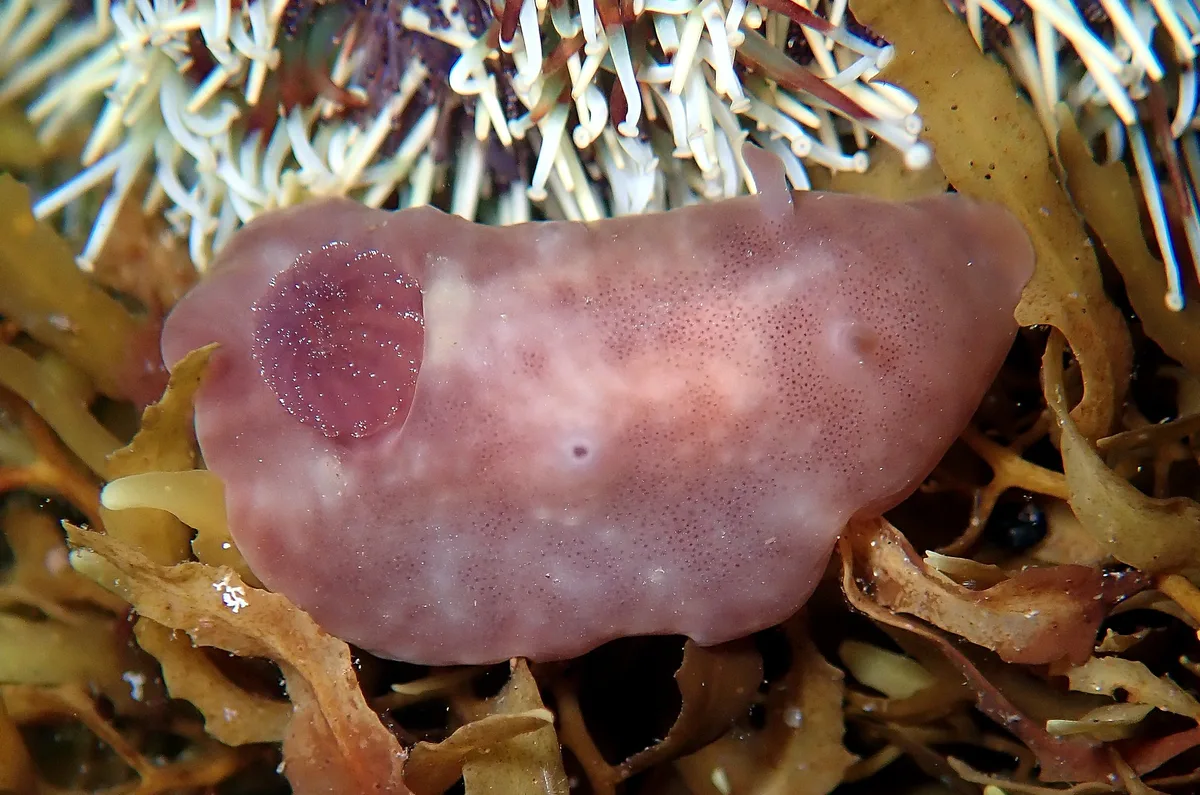
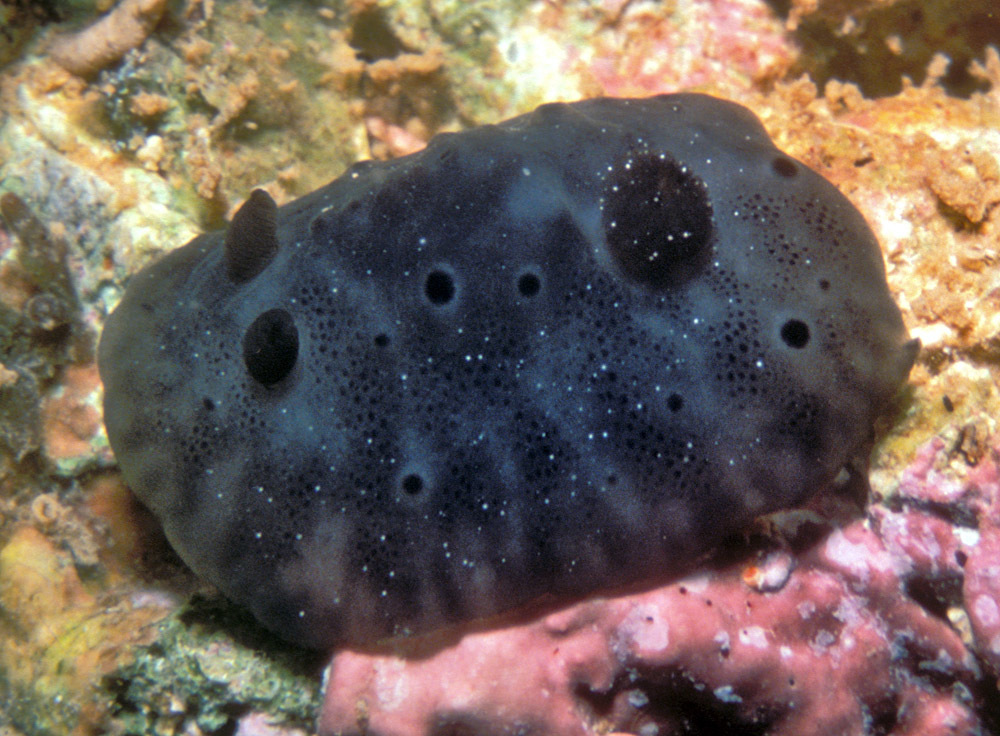
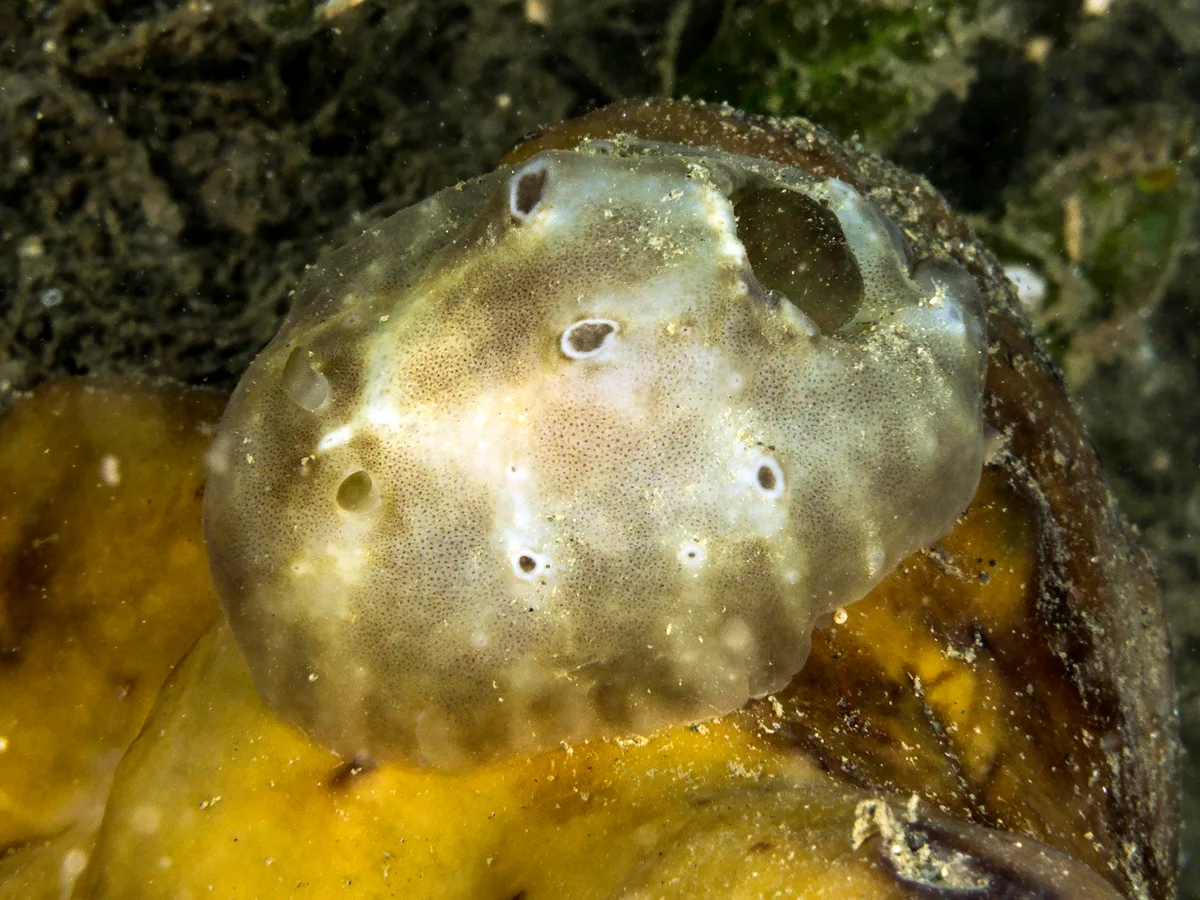
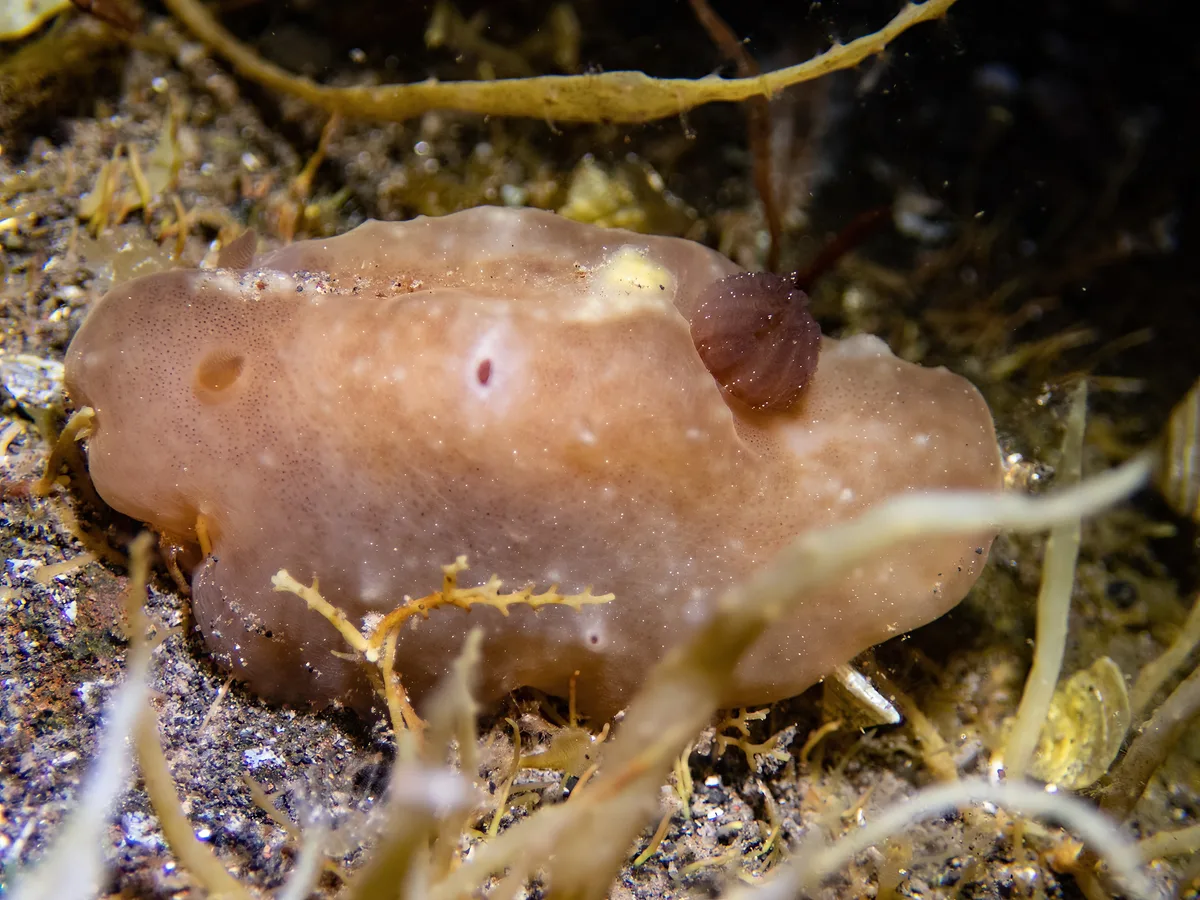
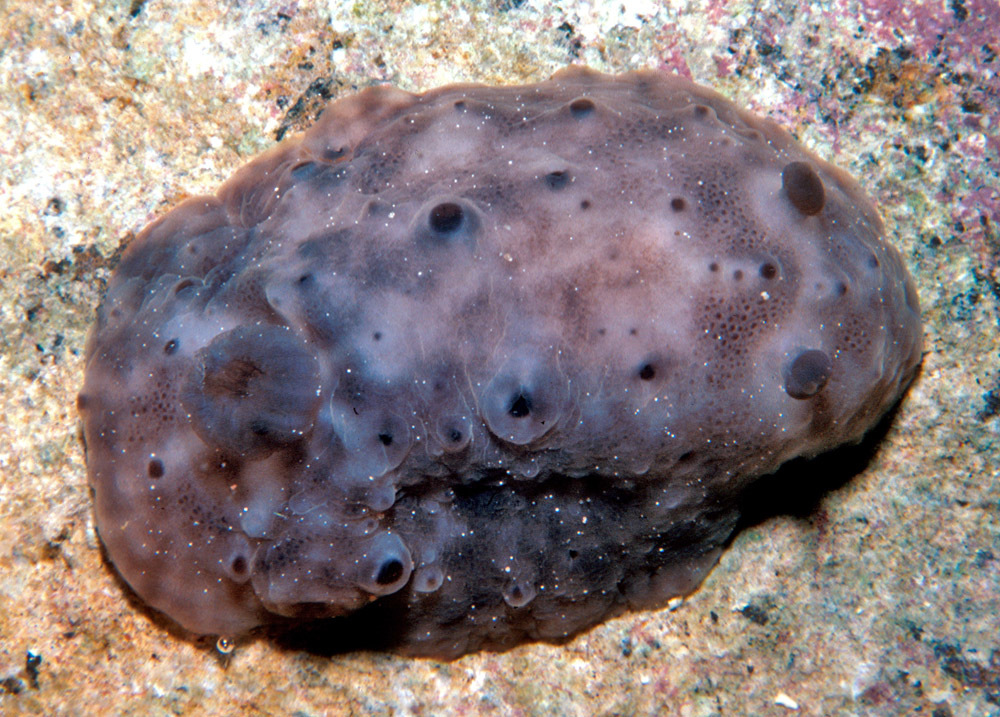
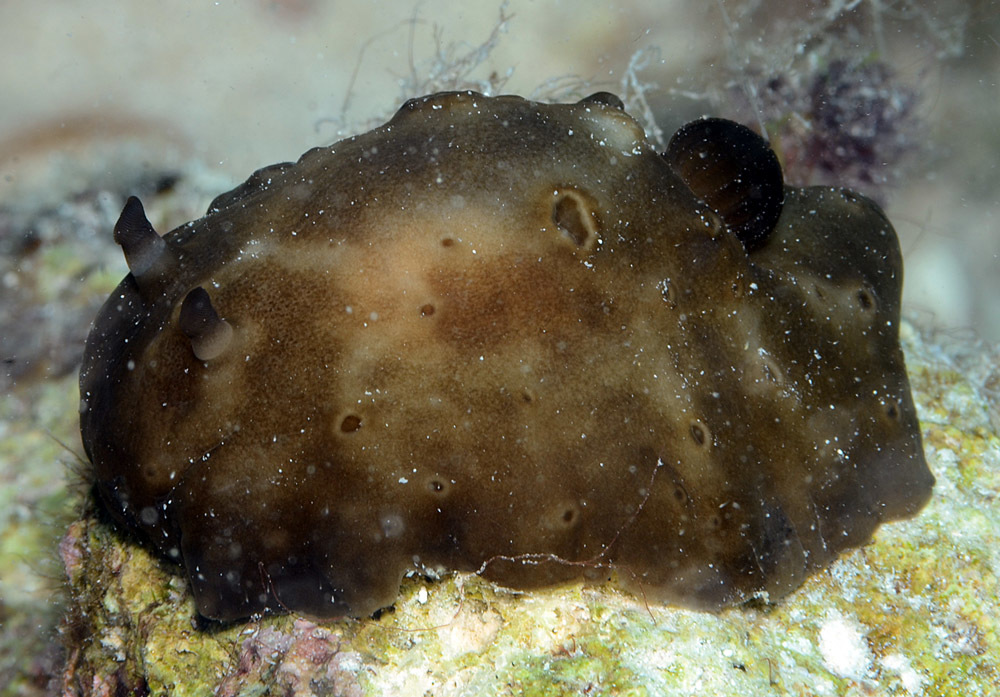
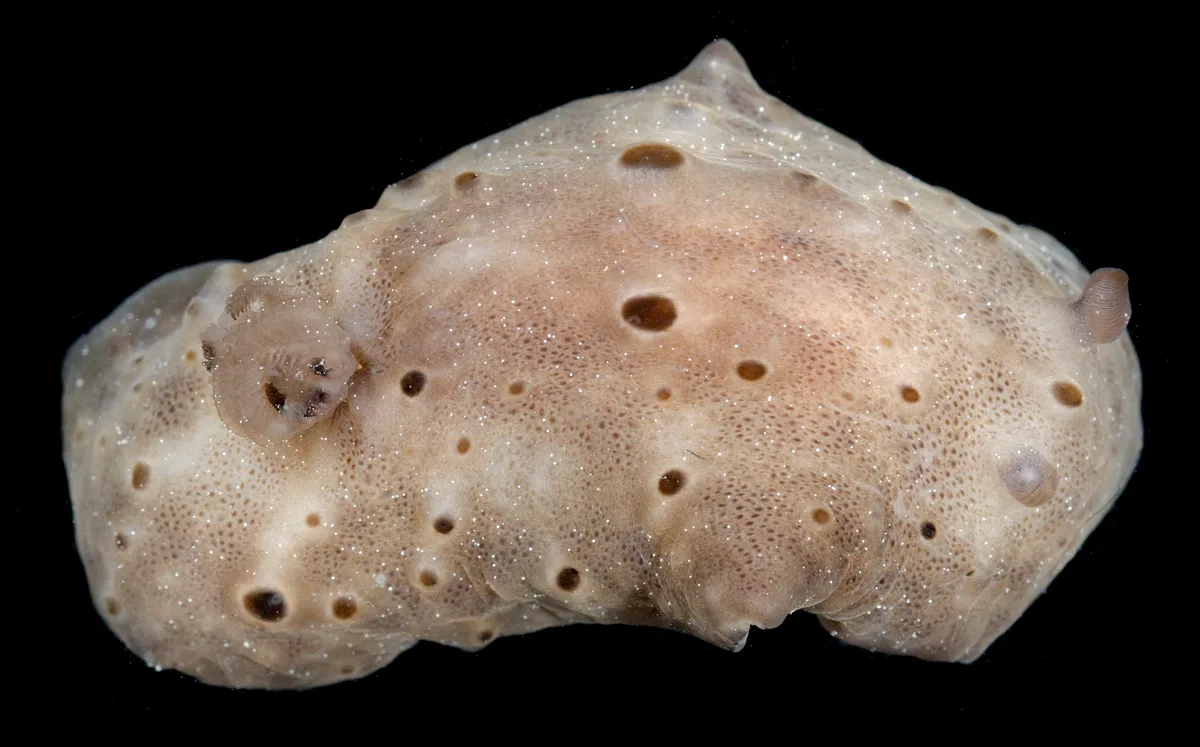
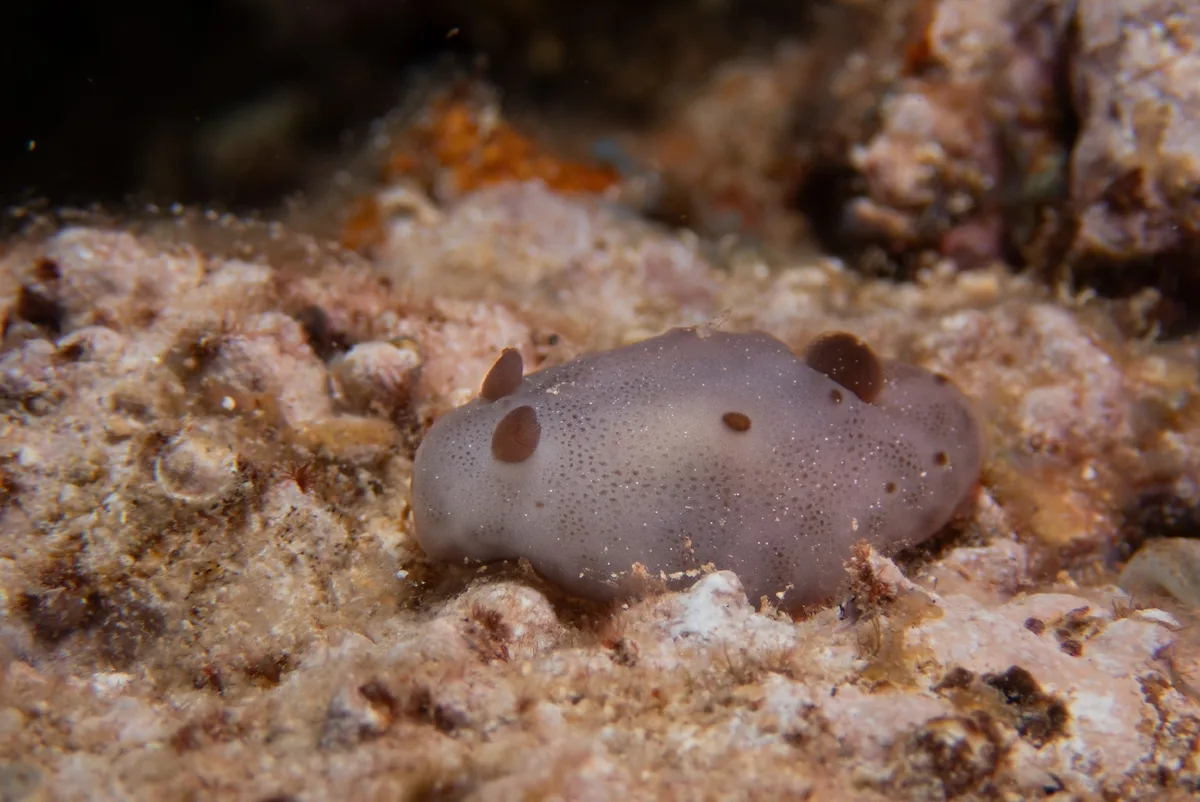
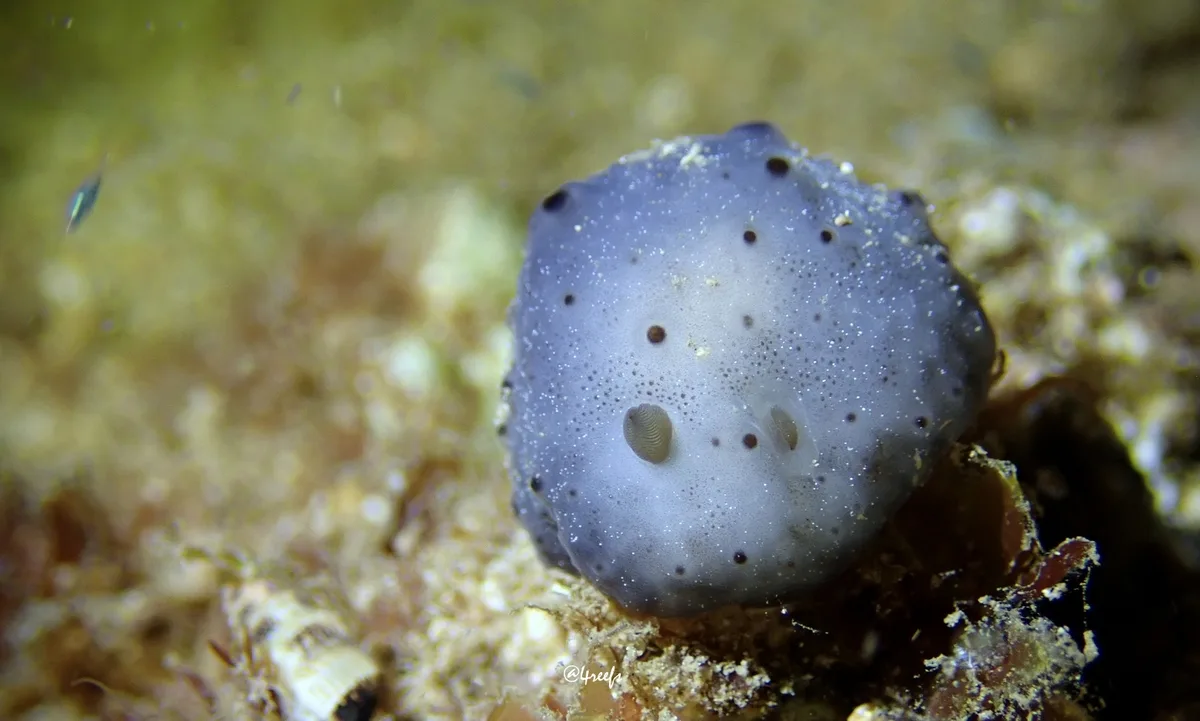
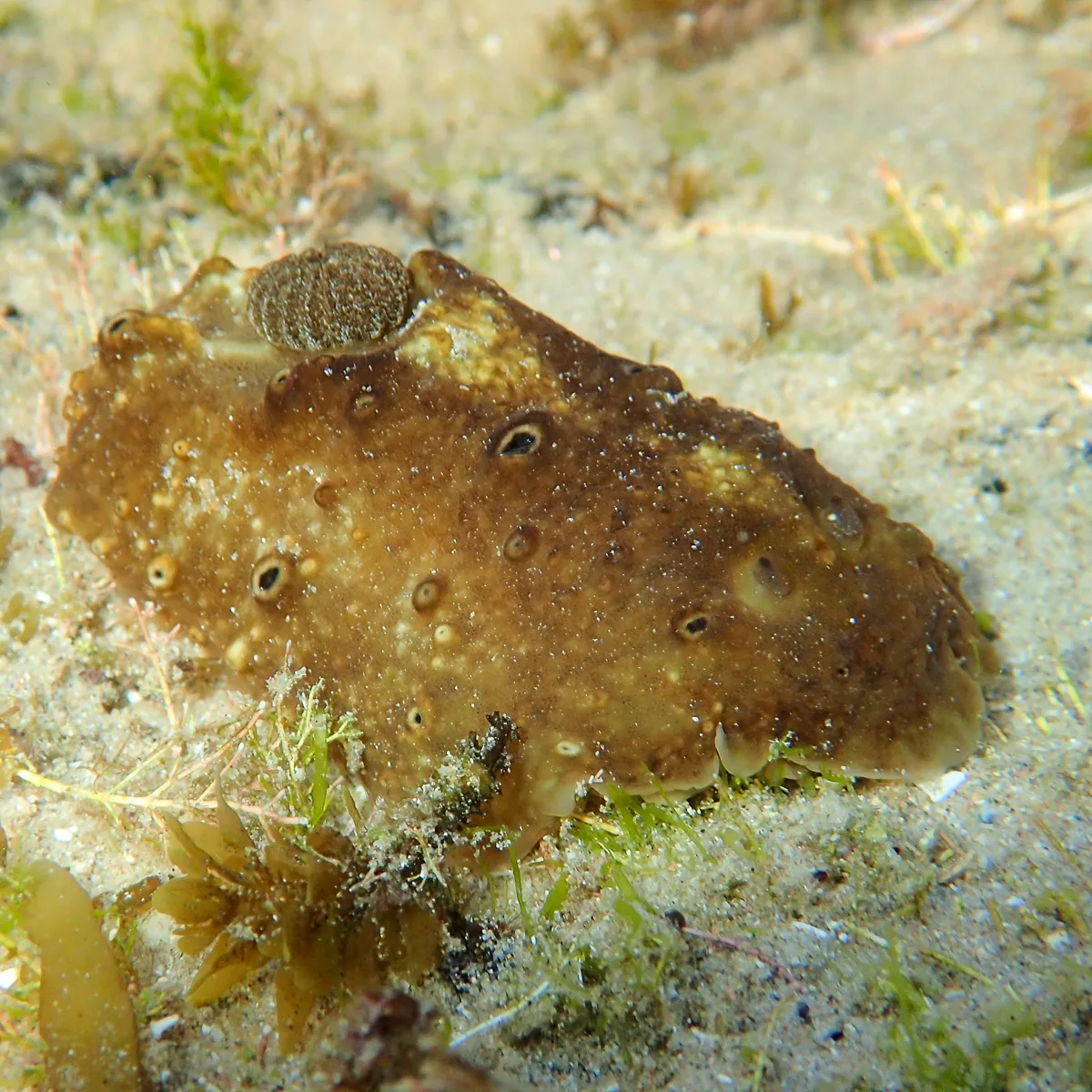
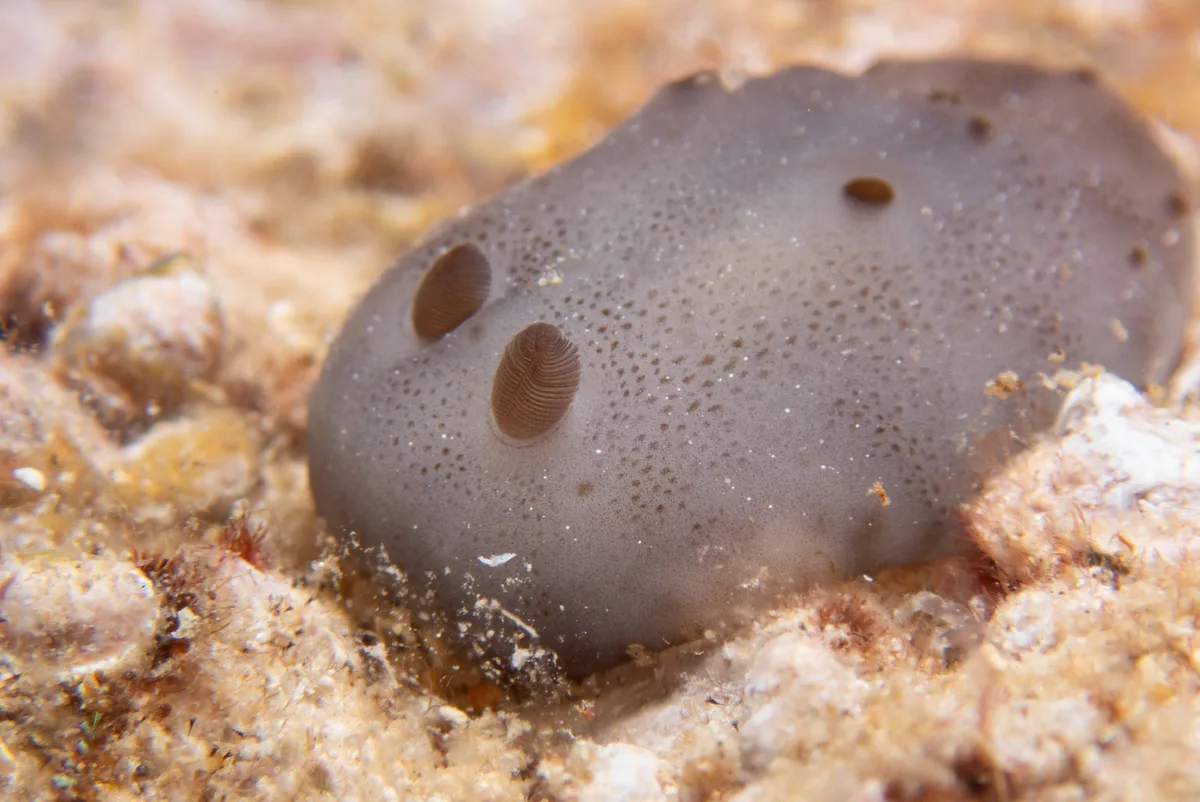
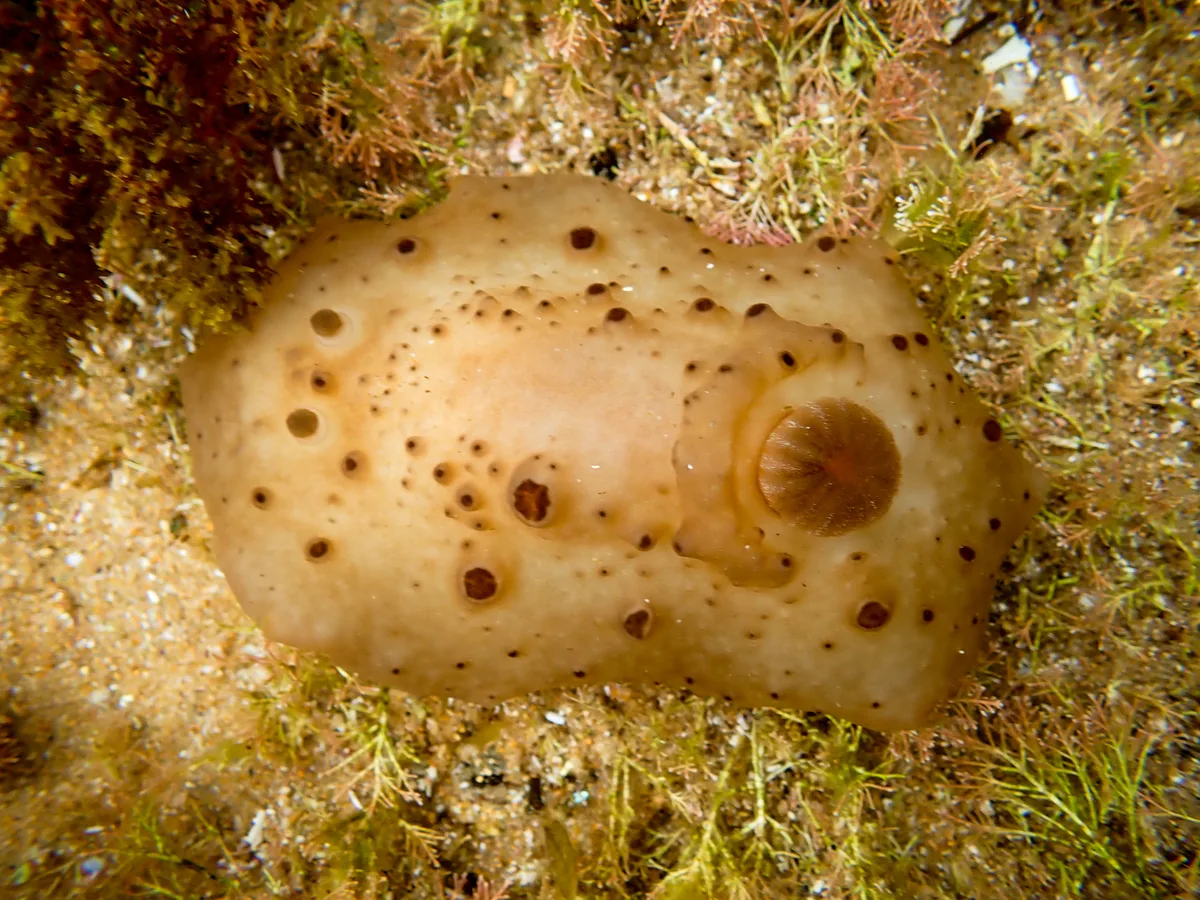
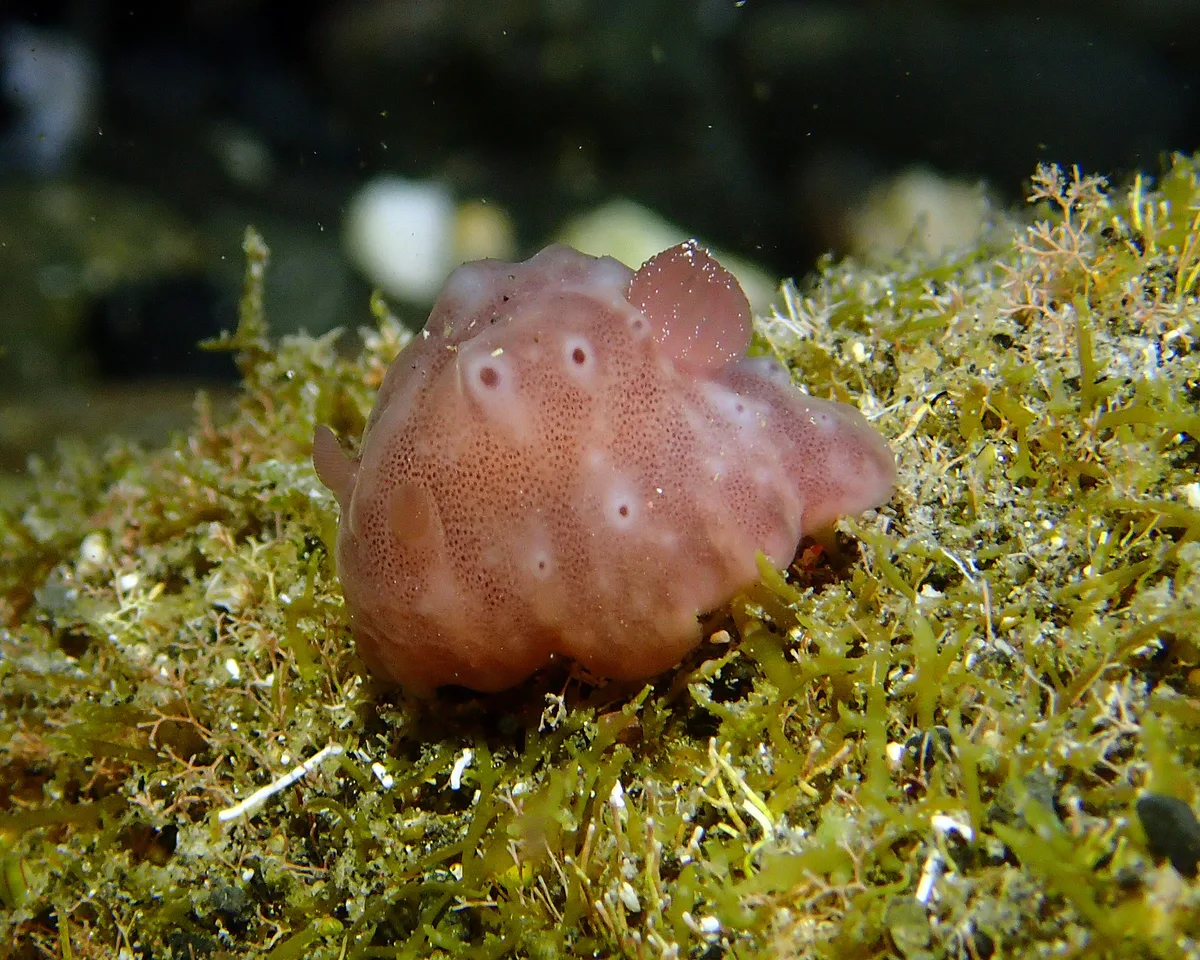
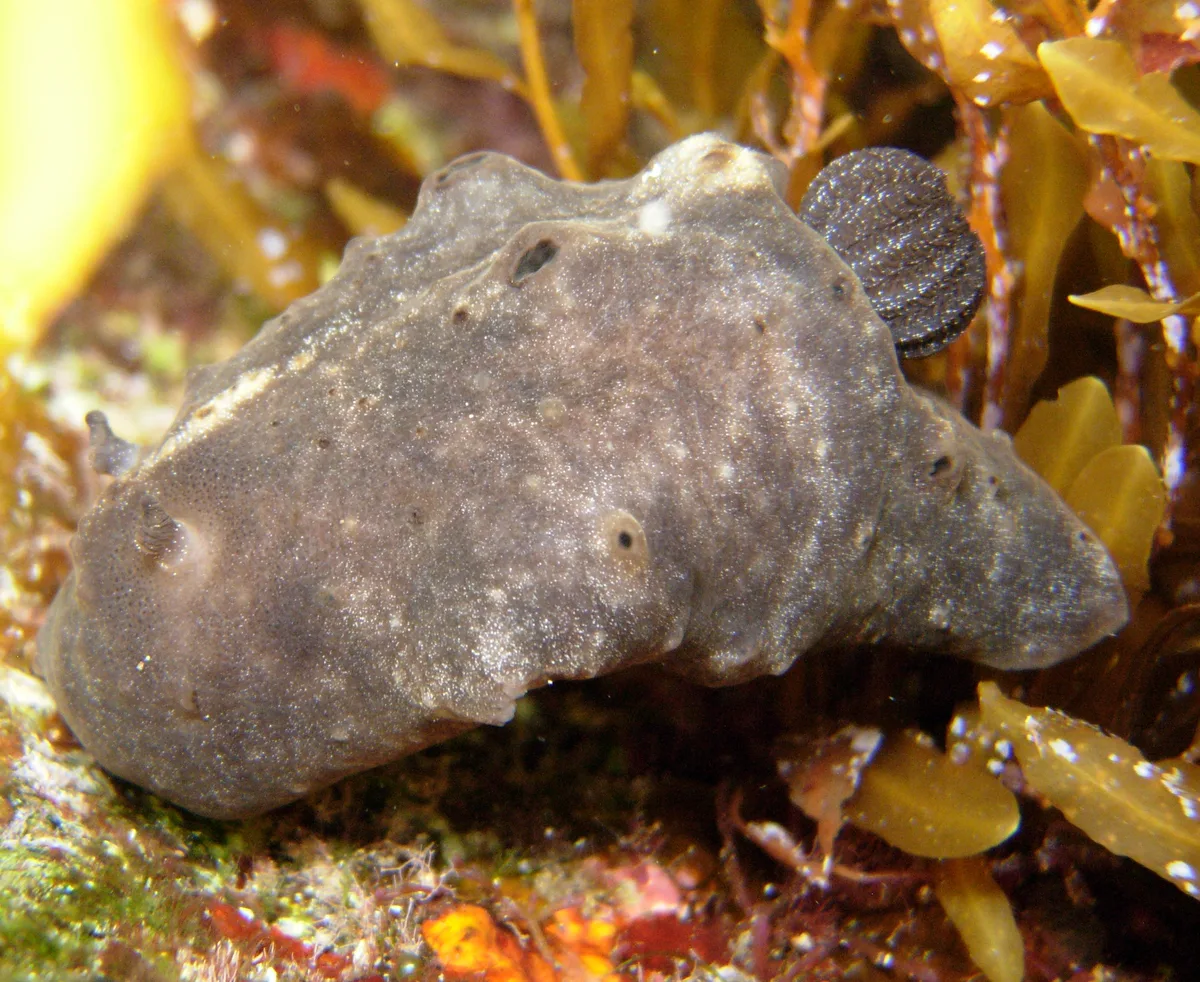
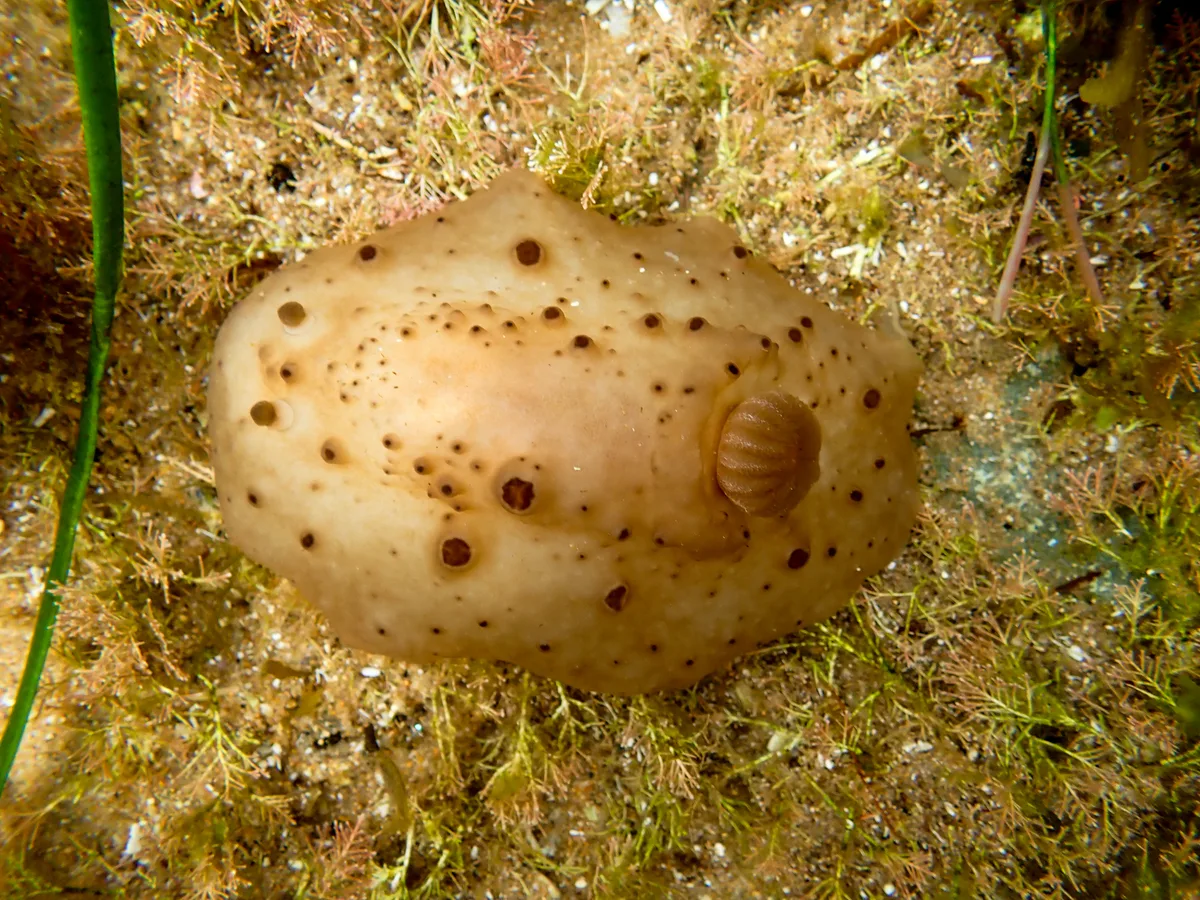
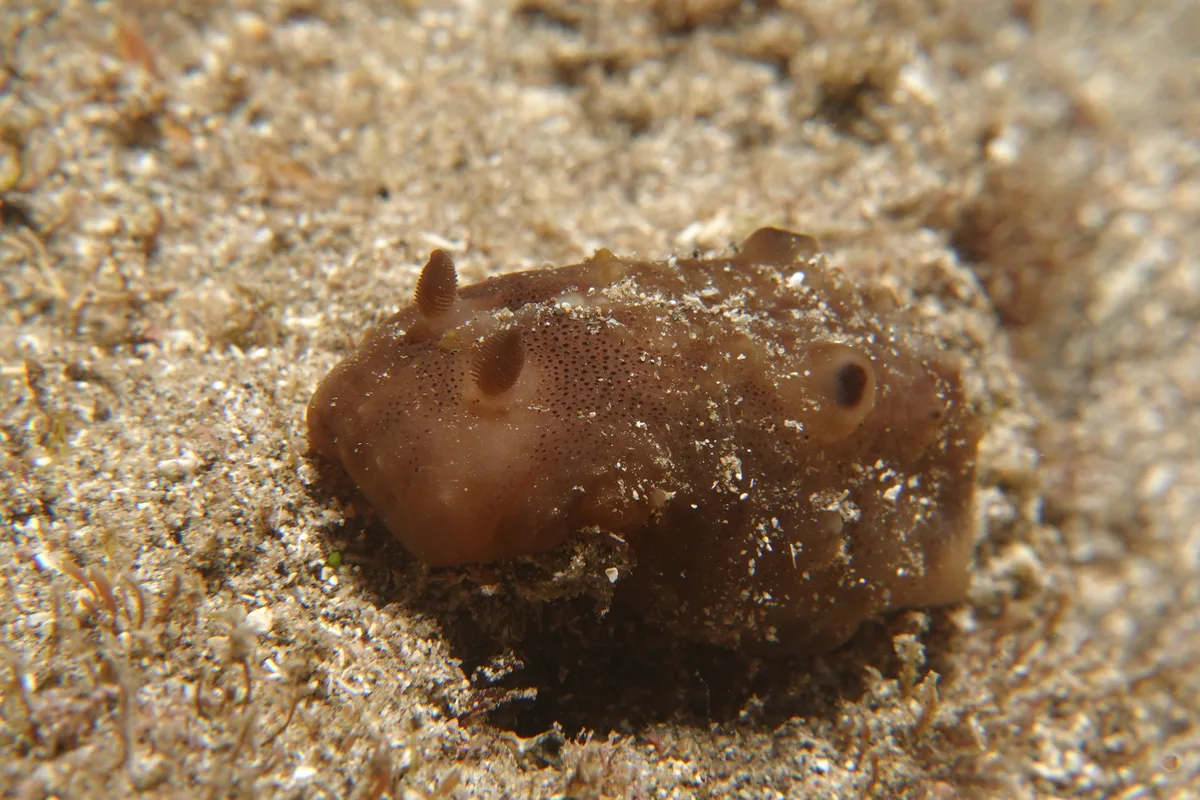
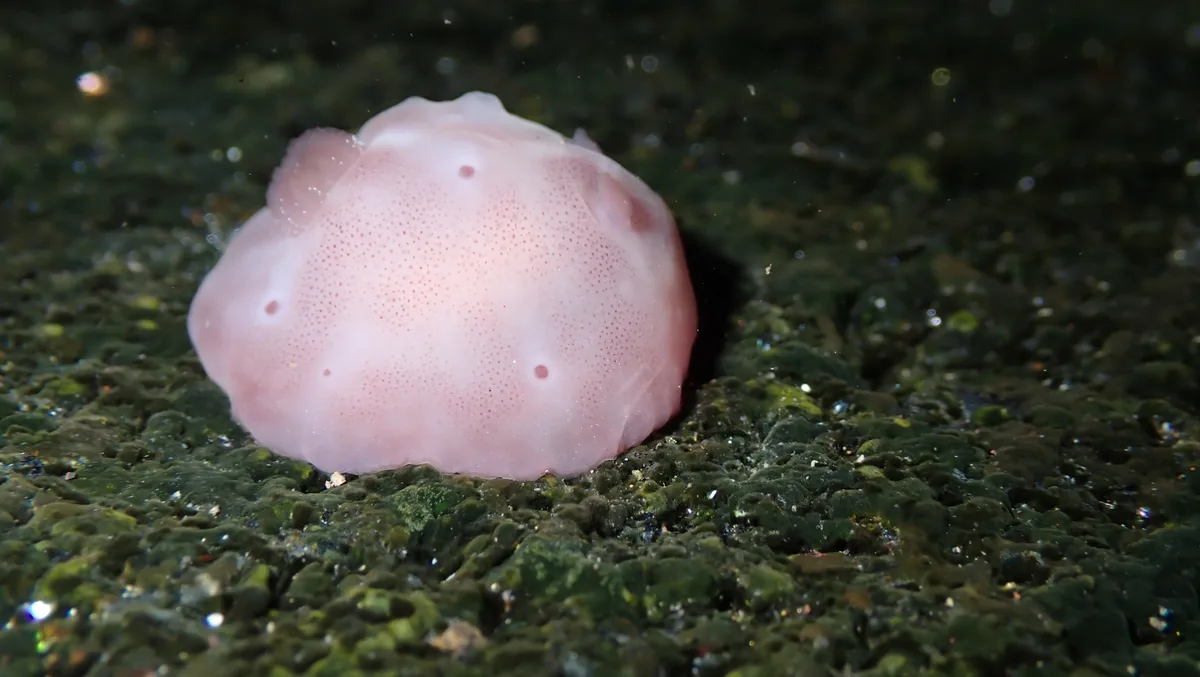
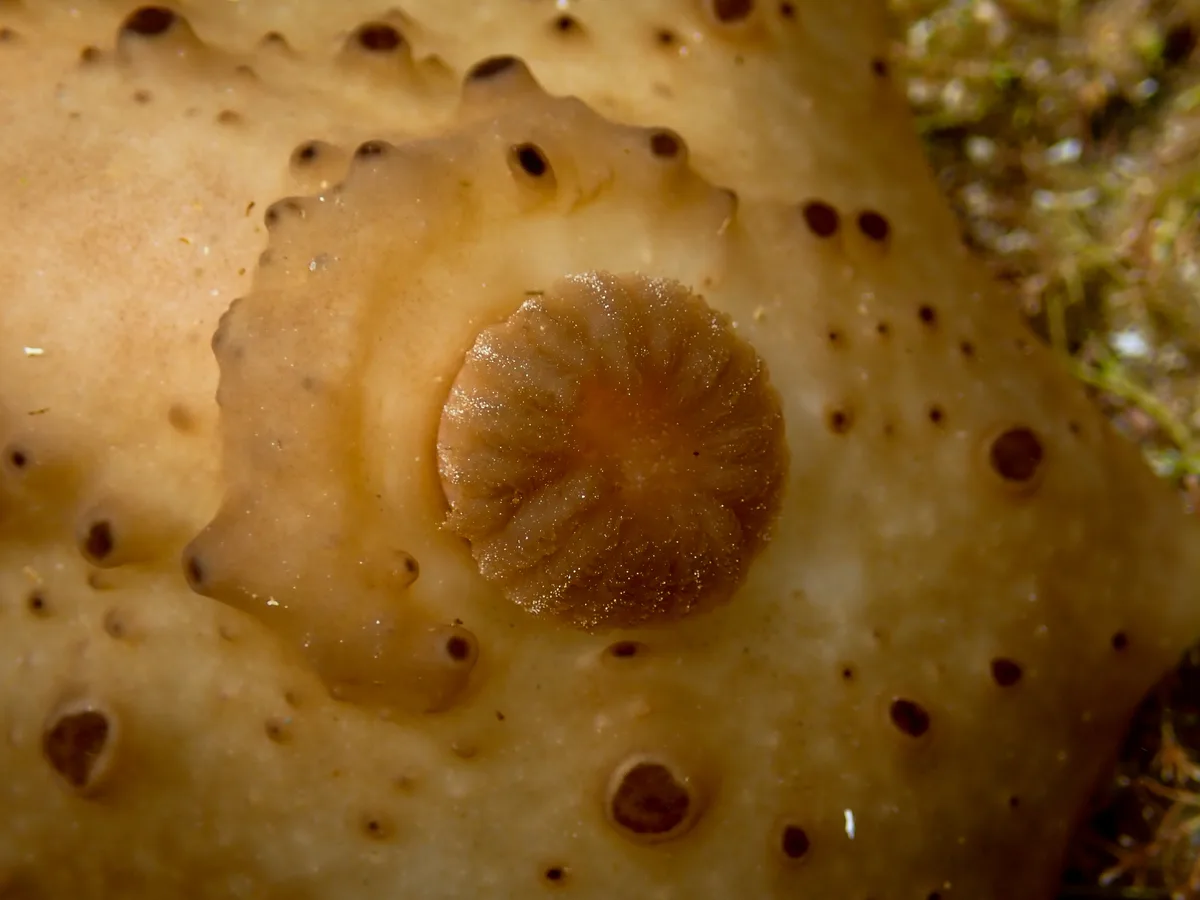
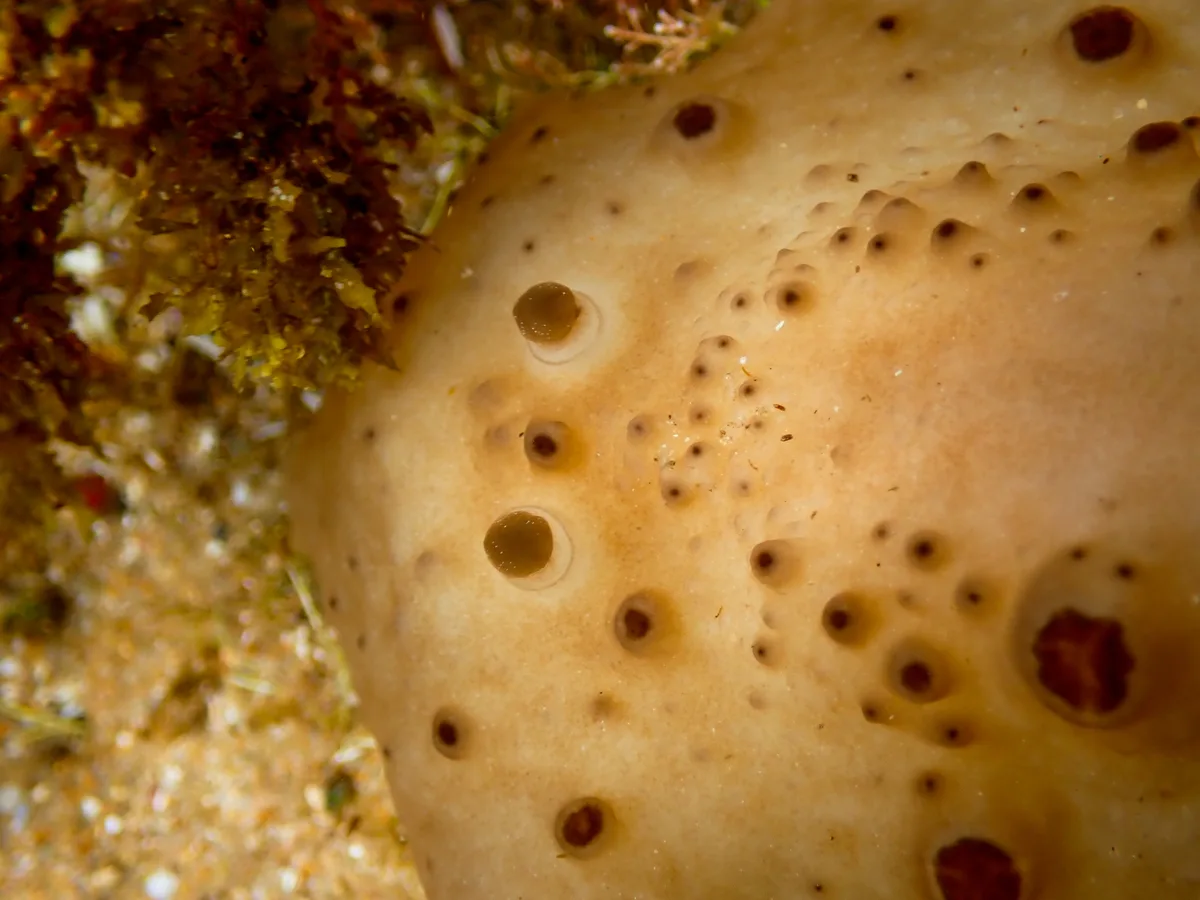
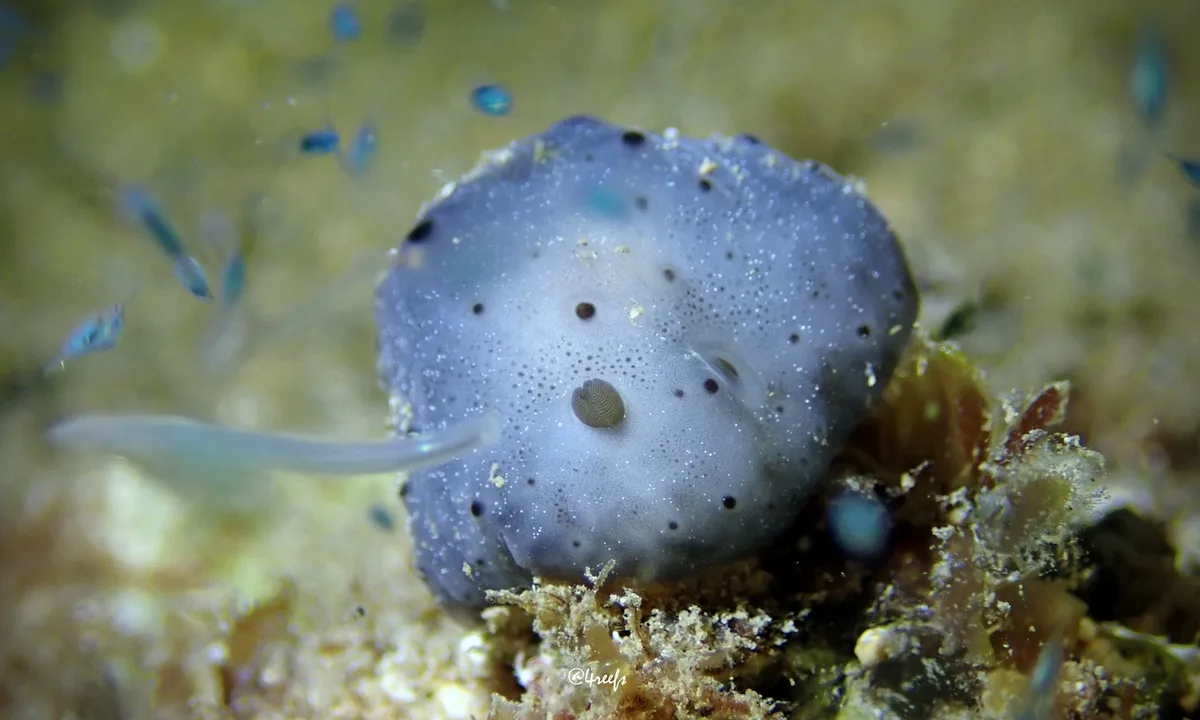
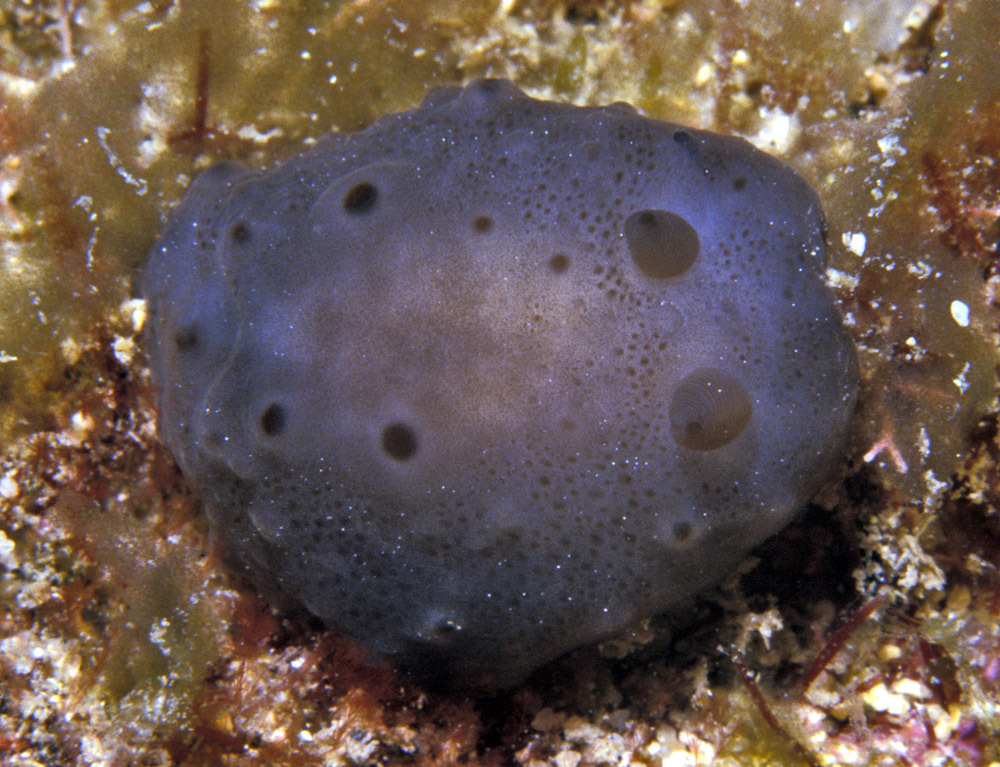
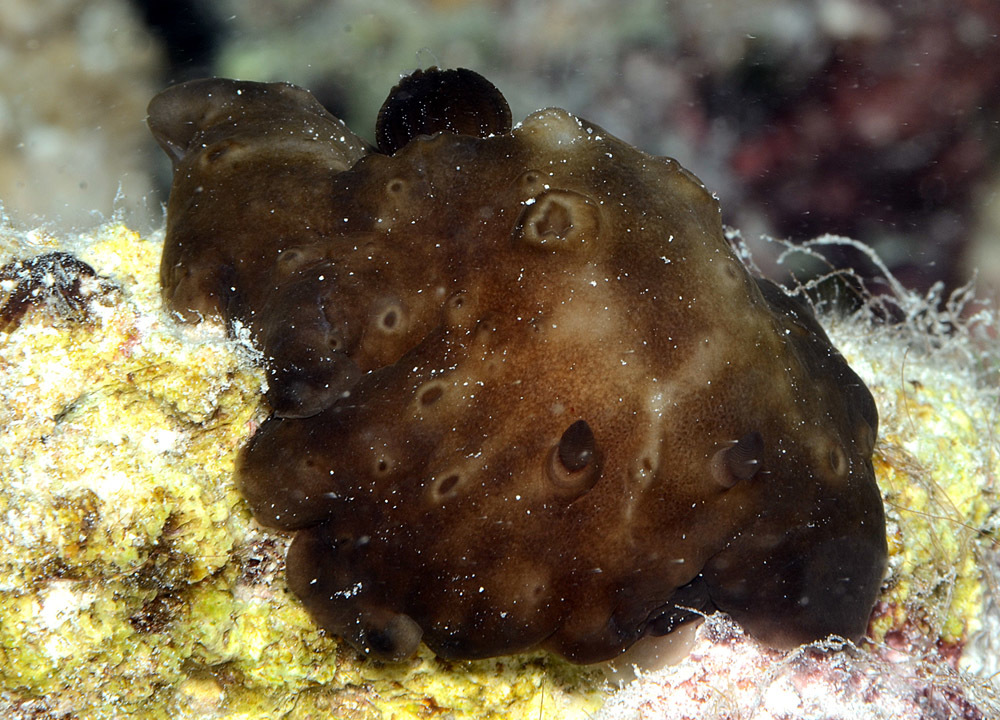
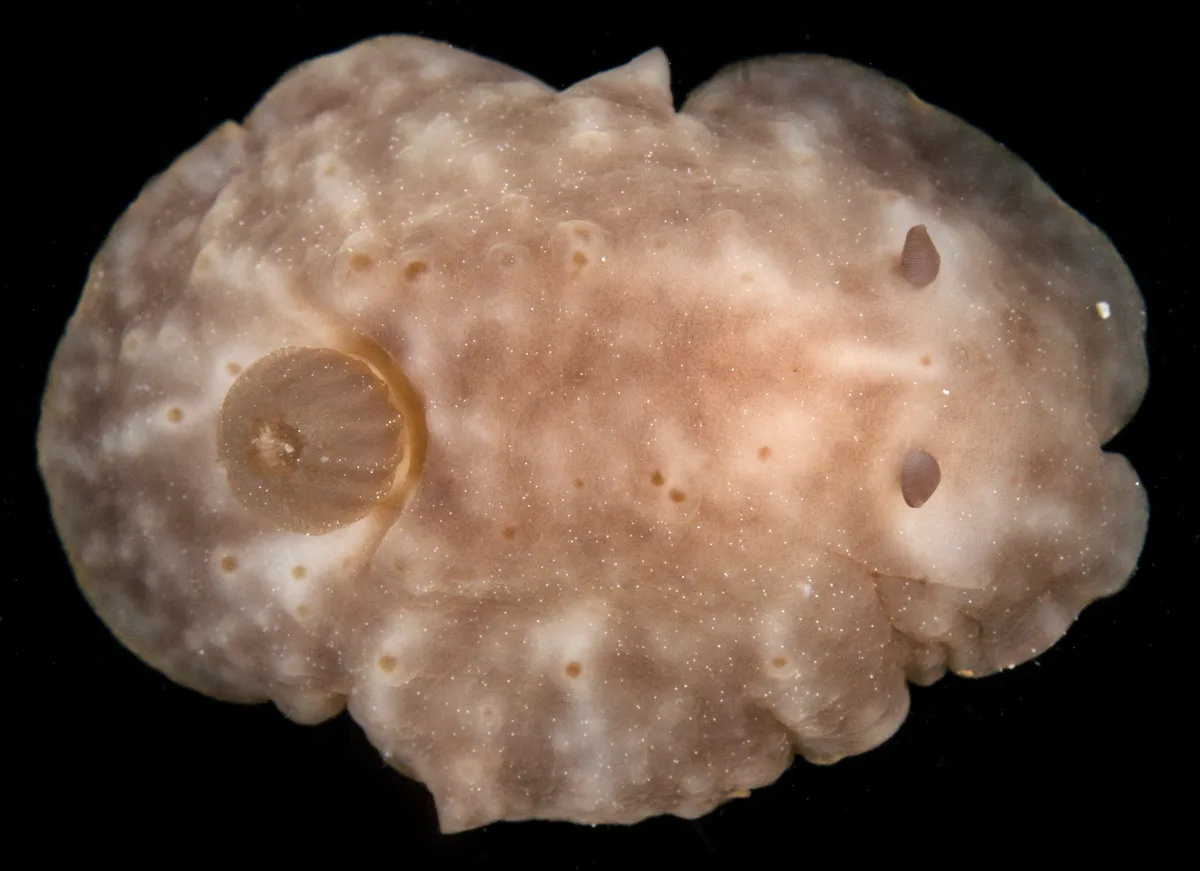
Do not try to identify this one by color. The species runs through so many shades that two individuals side by side can look unrelated, and any description that starts with the ground color is describing one animal rather than the species. Go to the texture instead.
The back is covered in low pale tubercles, and every one of them carries a dark tip. At any distance that reads as a field of small dark-centered rings scattered over the whole animal, which is a texture rather than a pattern and stays constant whatever color the individual happens to be. Once you have seen it you will not confuse it with the granular discodorids or the smooth chromodorids around it.
The family is the other thing worth noting, because you will not meet it often. Actinocyclidae is a small group that sits between the big dorid families and gets a paragraph in the literature where the chromodorids get chapters, and this is effectively its representative on this reef. Six centimeters (2.4 in), on shallow reef, grazing encrusting sponges, in no hurry and not hiding.
The name at the end of the label goes back to Ehrenberg in 1831, from the collections the Prussian expeditions brought out of this sea in the 1820s. A surprising share of the animals in this catalogue were first written up from that one burst of collecting, by people who never saw any of them alive underwater.
- pale tubercles each carrying a dark tip, so the back reads as a field of small rings
- color of the body itself highly variable and not usable for identification
- six centimeters, on shallow reef rather than deep
- the only member of its family you will meet here