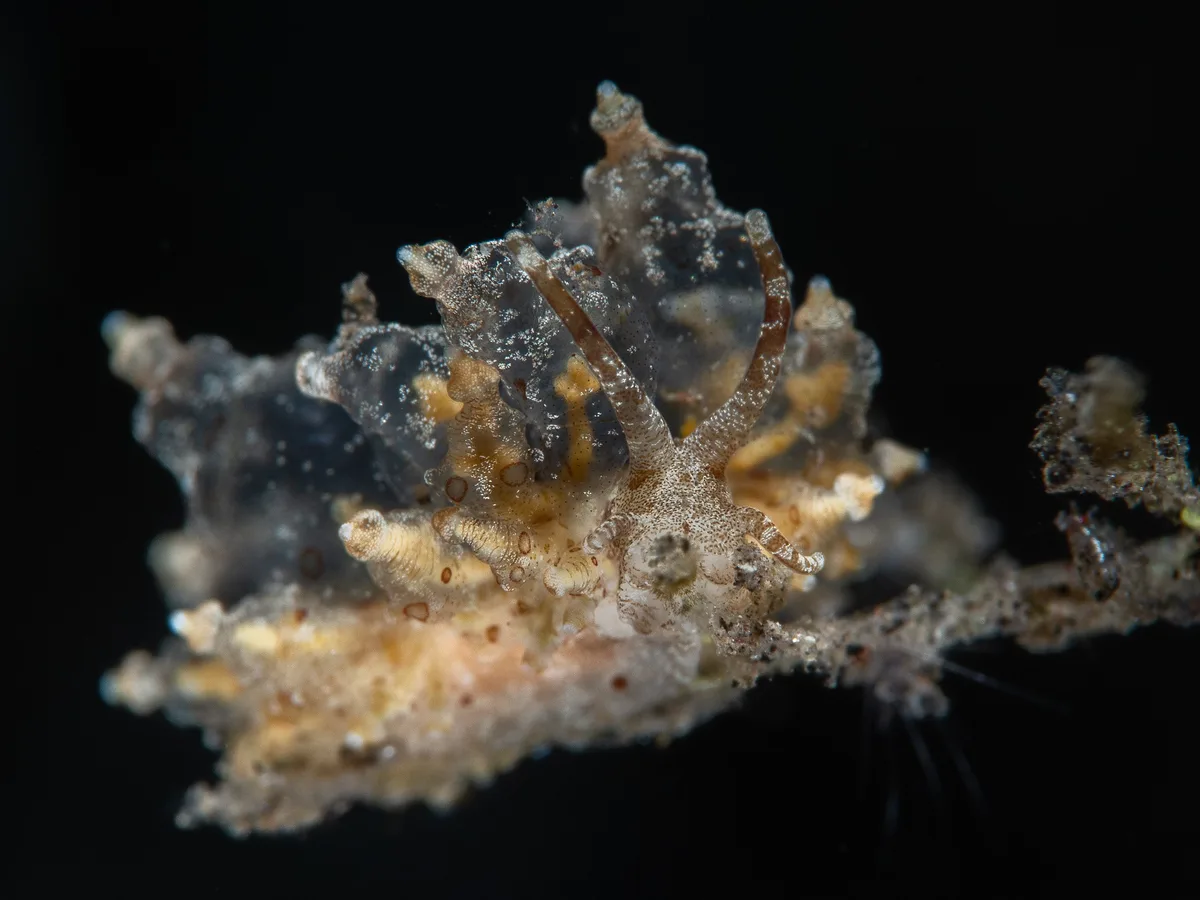
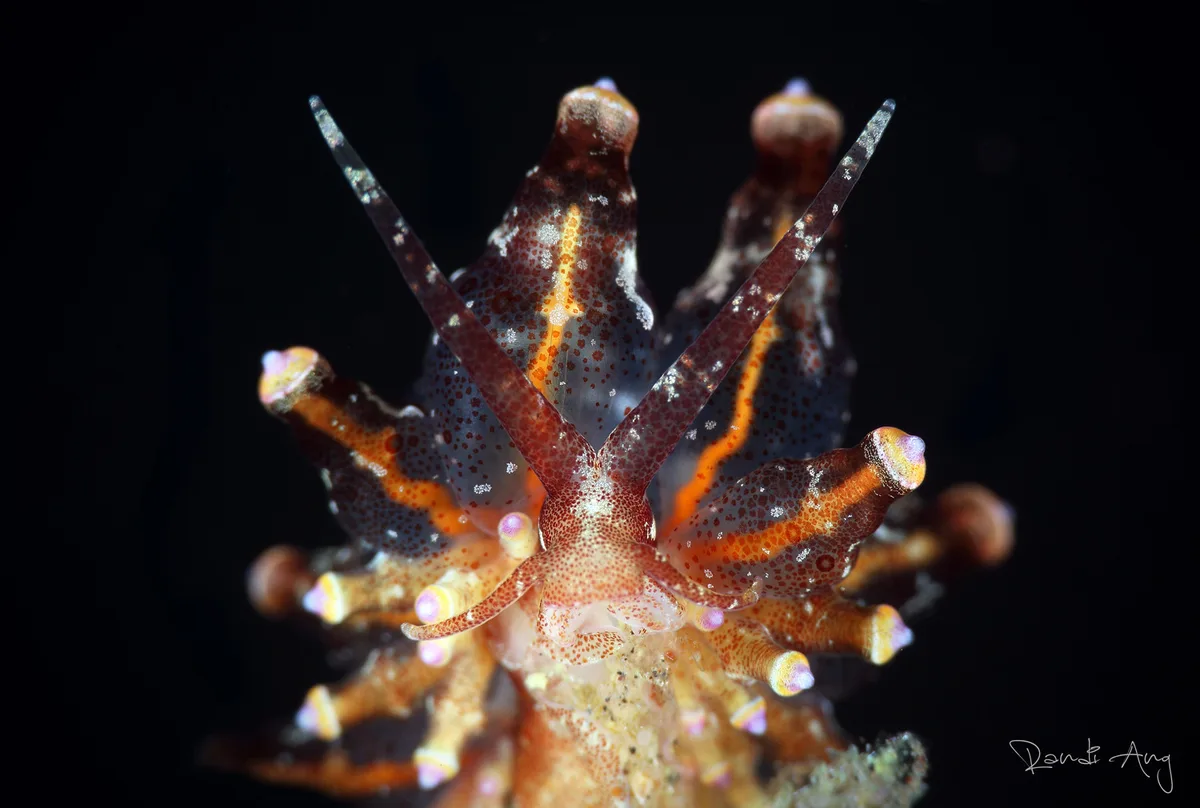
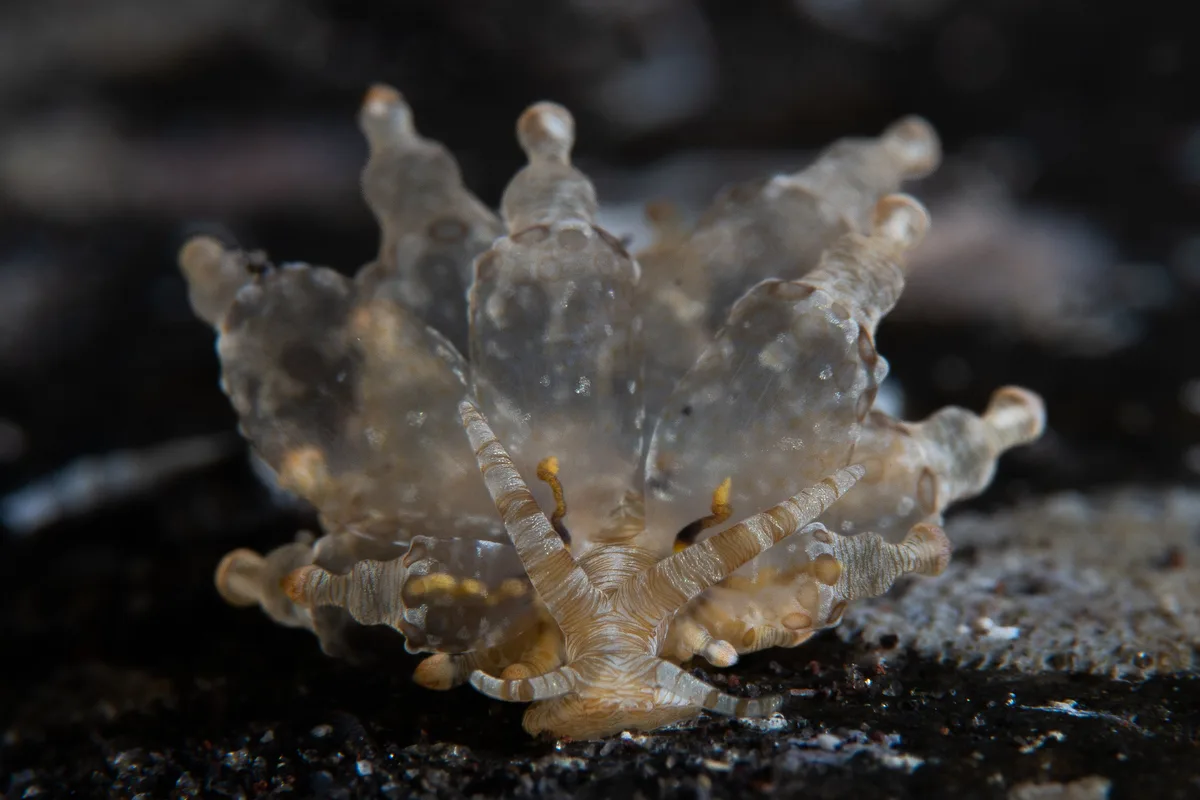
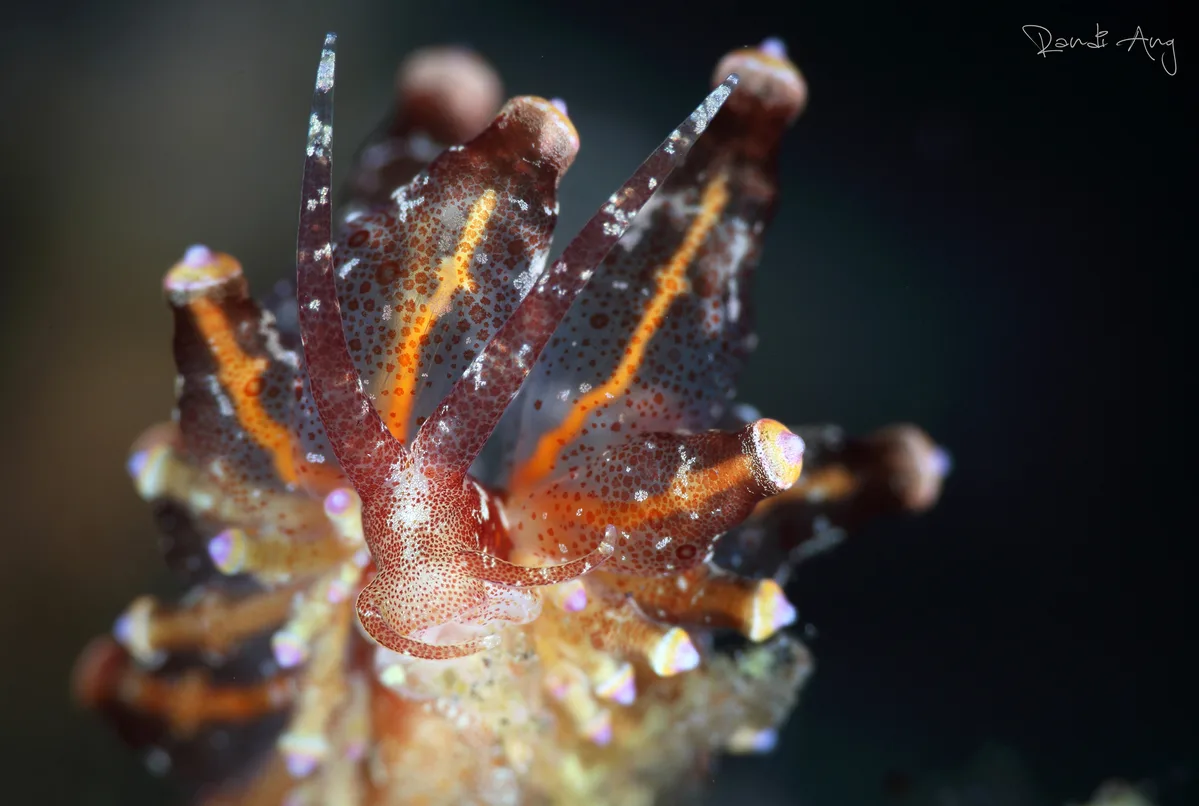
For this animal a single hydroid colony is not a feeding station. It is the entire world.
Hydroids are the fine branching growths that fur over wreck plating, jetty pilings and any rock left standing in current. Each one is a colony of clones with the work divided up between them: polyps that catch food, polyps that do nothing but reproduce, and in some groups polyps that exist only to sting. They look like plants and they are colonial predators.
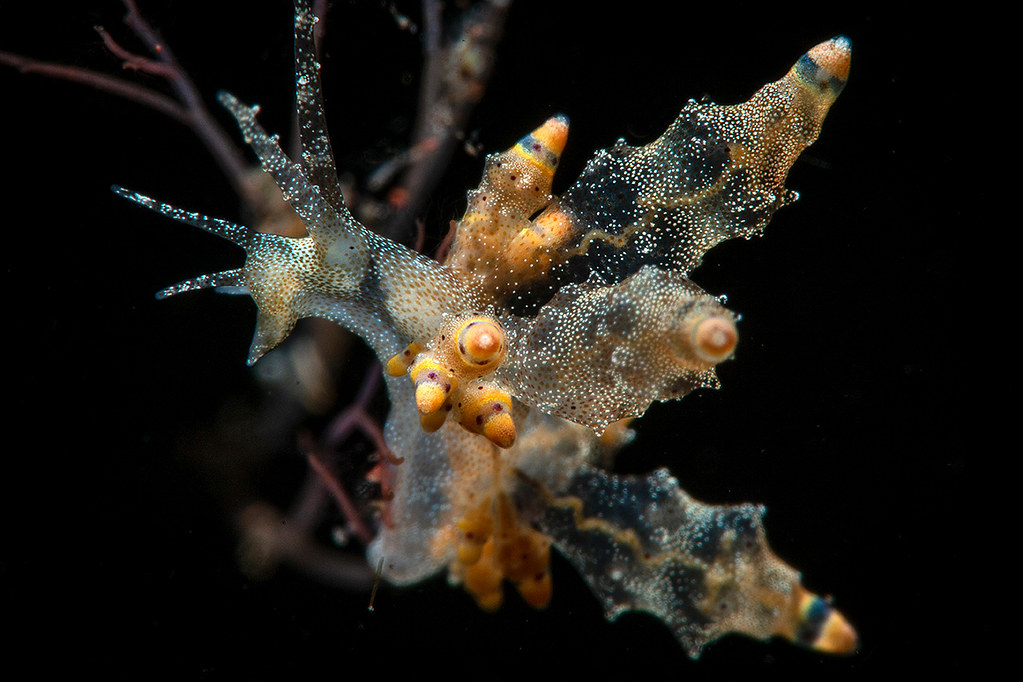
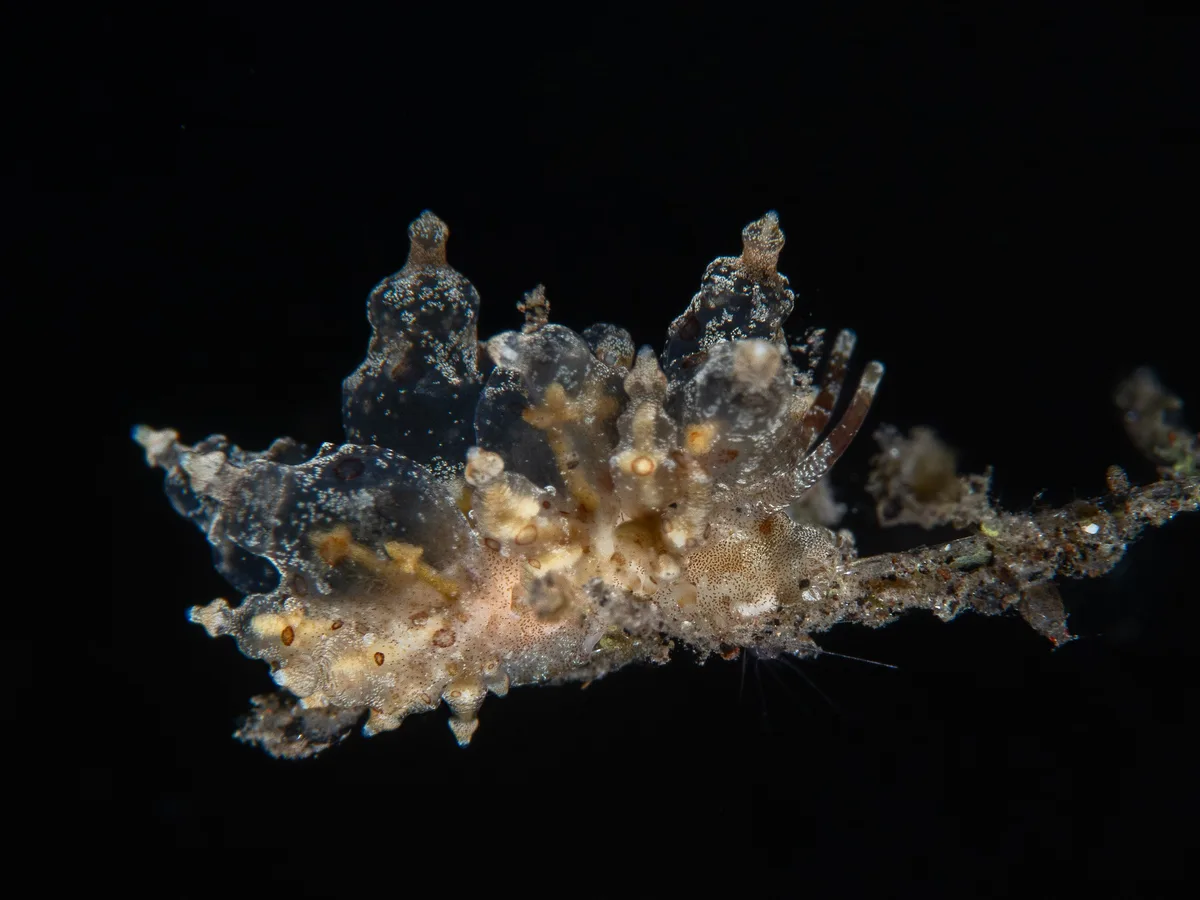
A two-centimeter (0.8 in) slug living on one of these has everything it needs in one place. It eats the polyps. It shelters among the branches, transparent enough that the branch shows through it. It meets other members of its species there, because they are all on the same colony for the same reason. It lays its eggs on the stems, in small coiled ribbons, and the young end up on the colony their parents fed on. A patch of hydroid growth the size of a hand can hold a whole population going through its full life cycle.
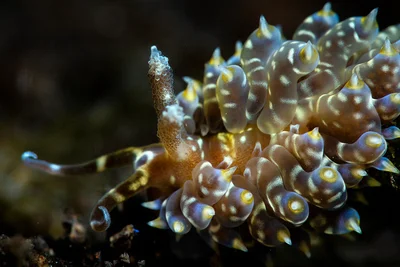
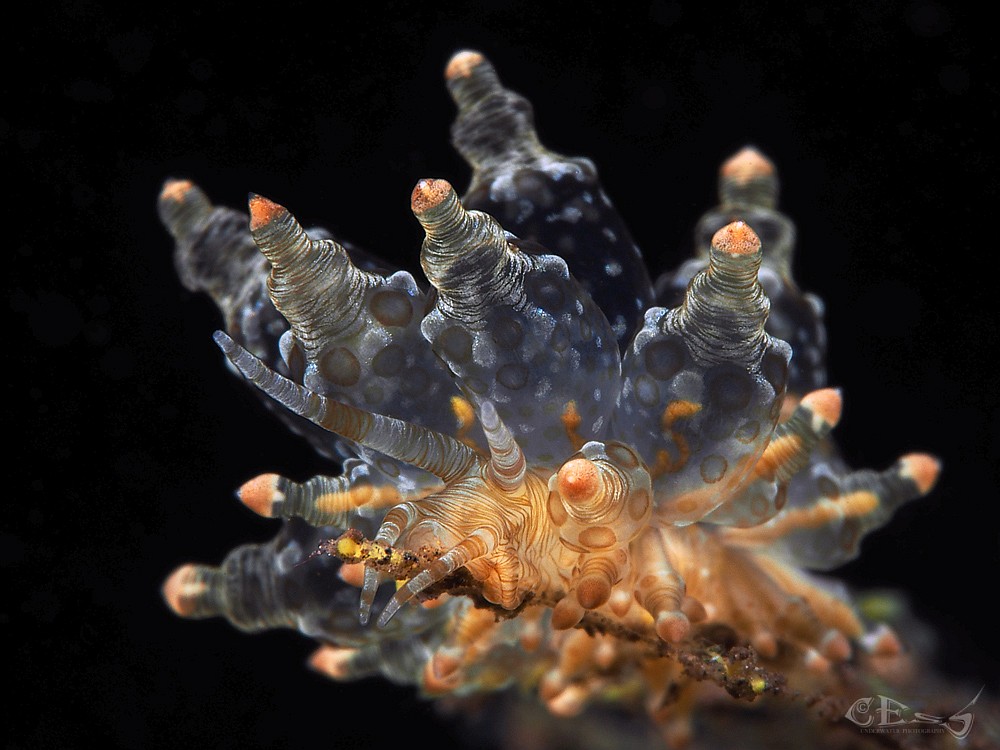
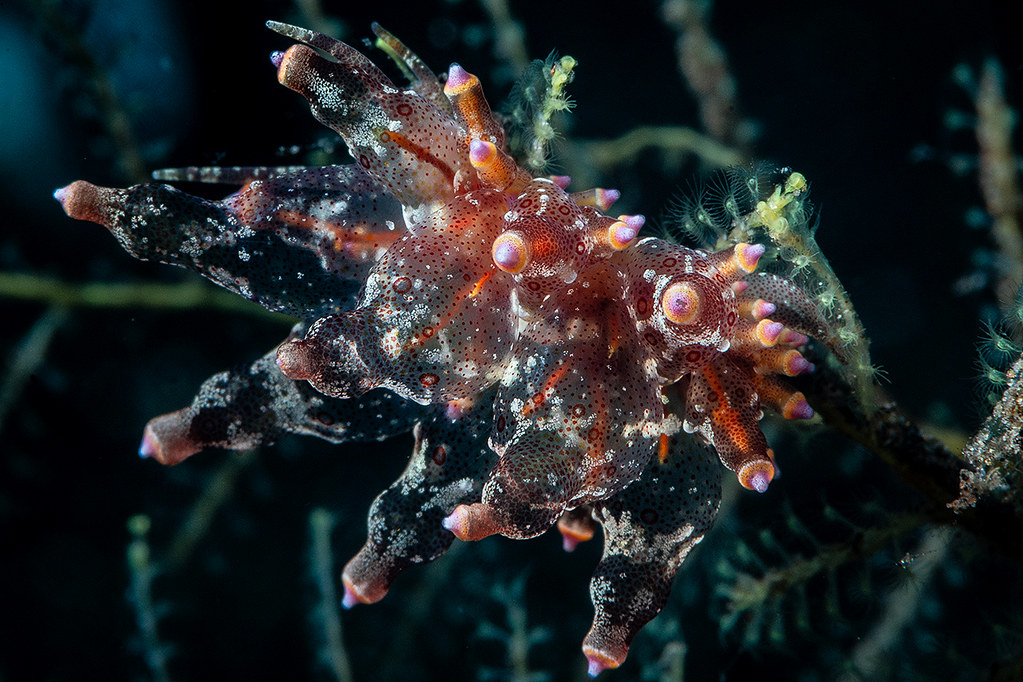
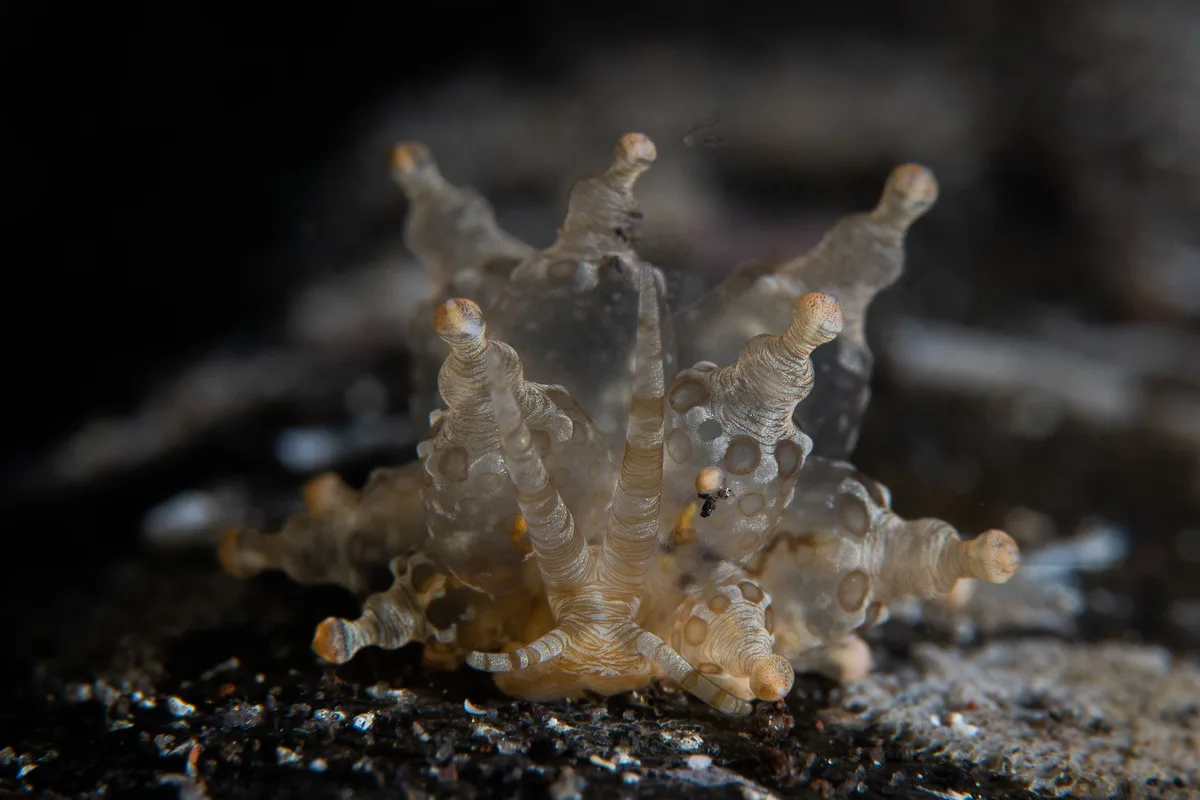
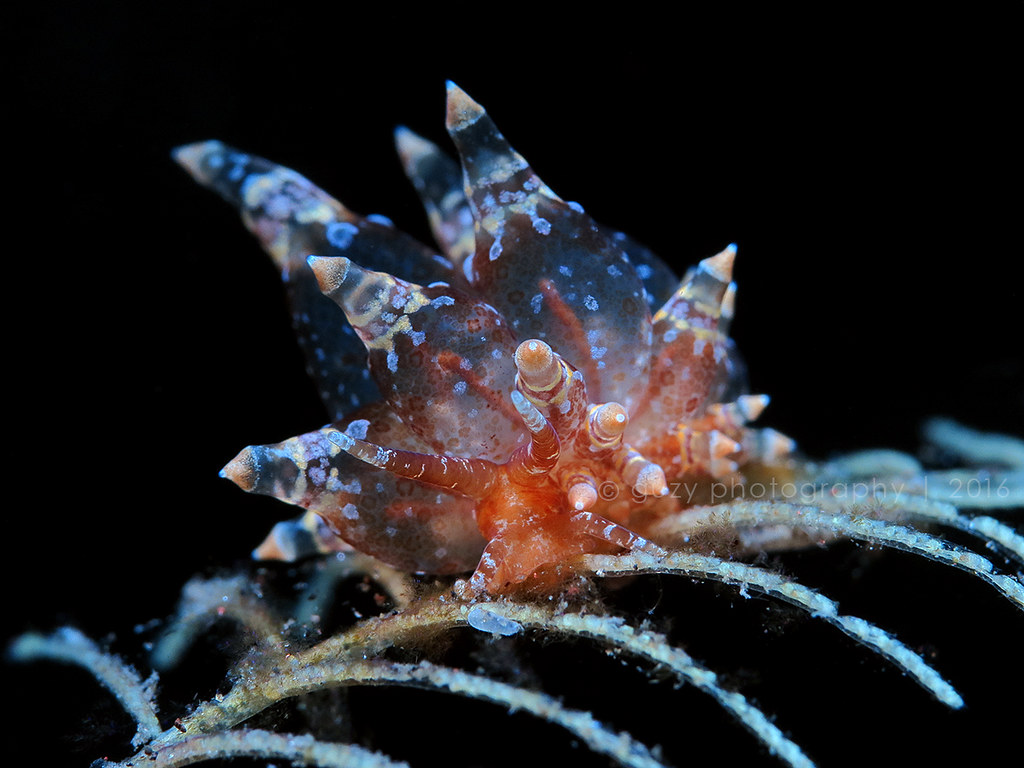
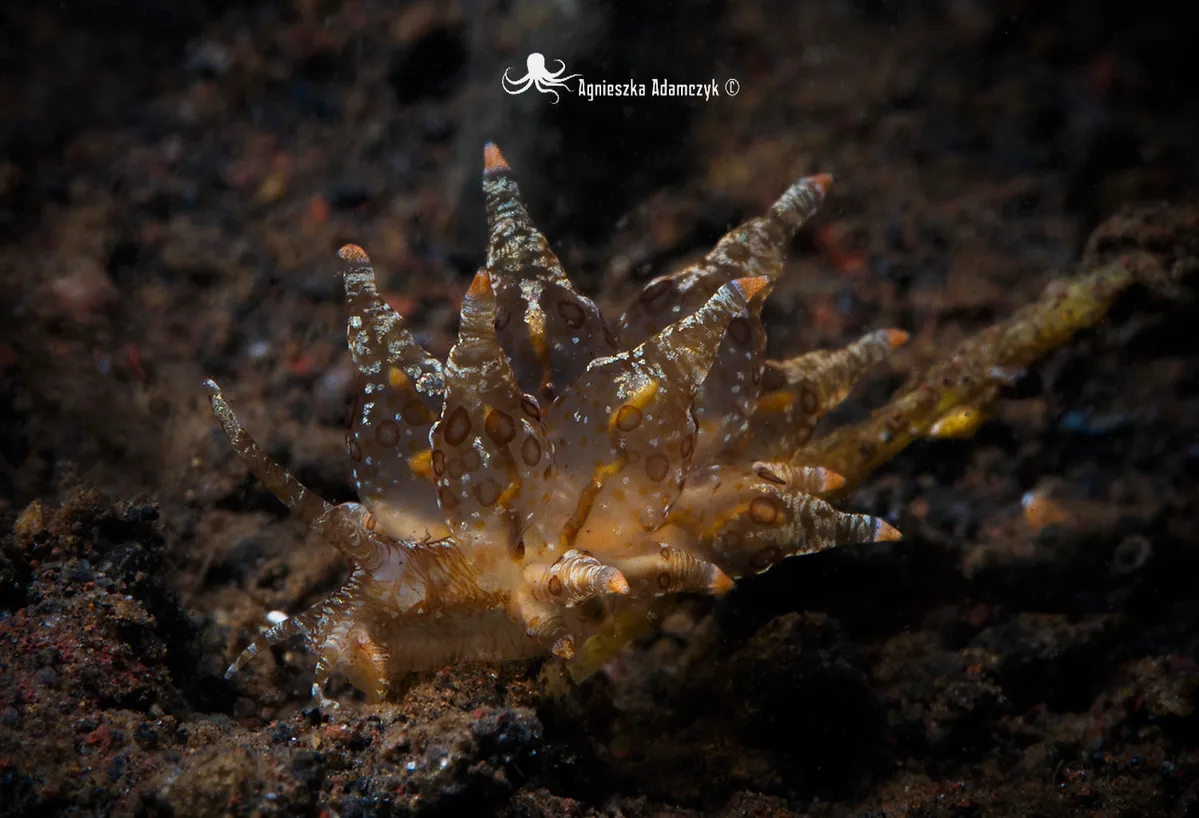
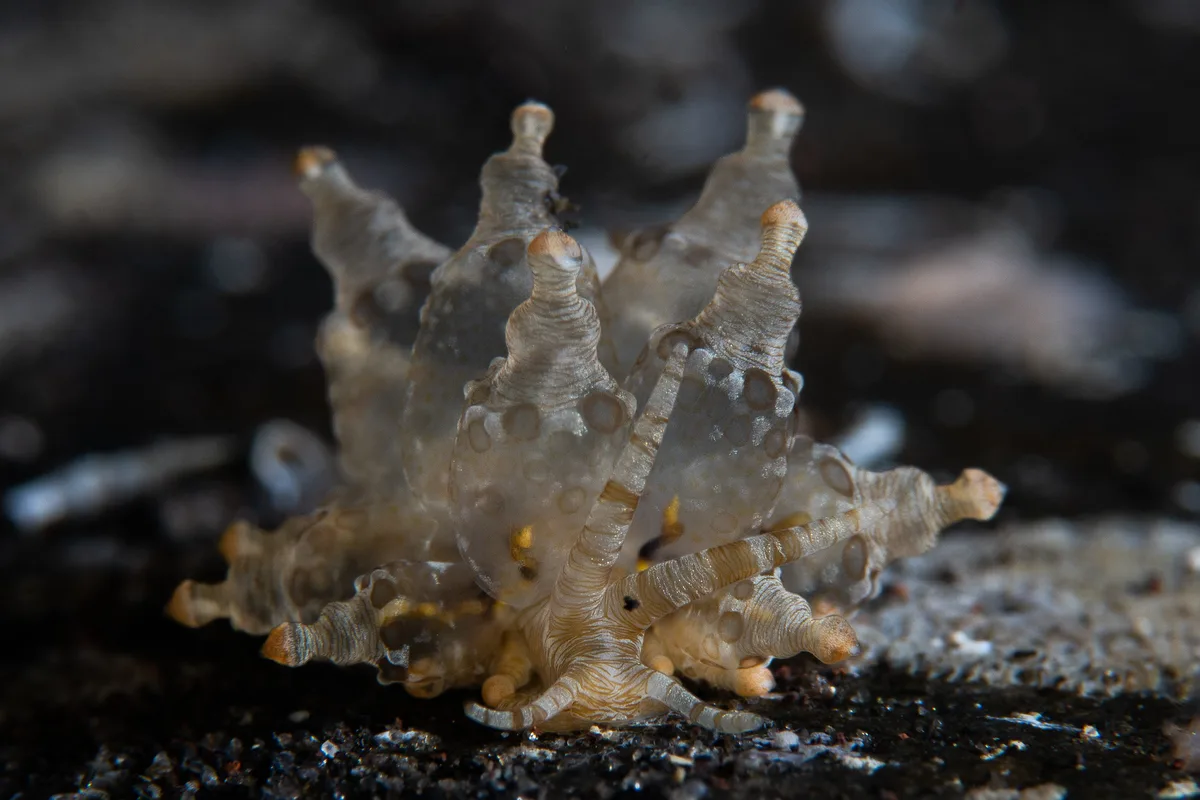
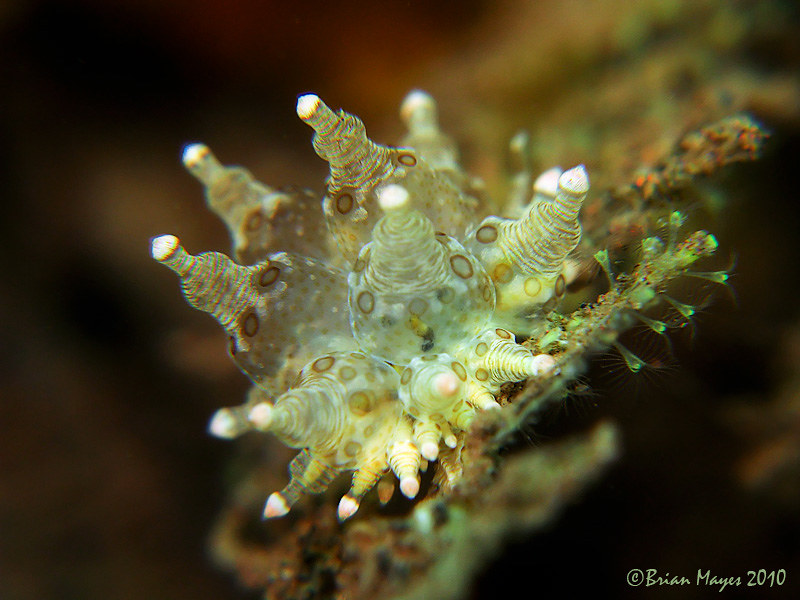
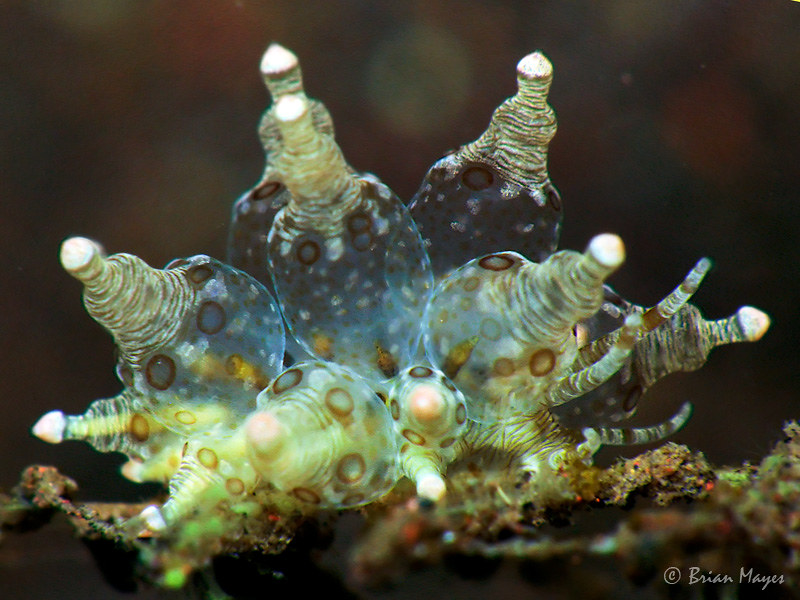
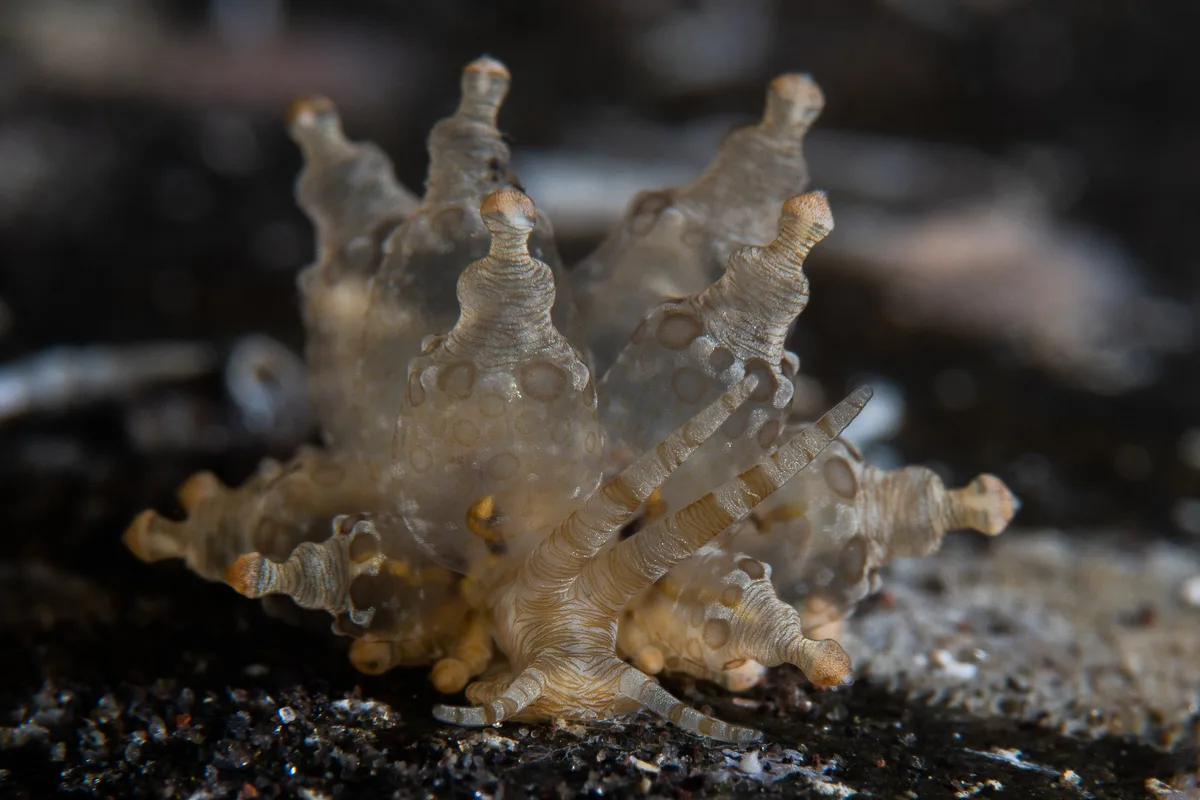
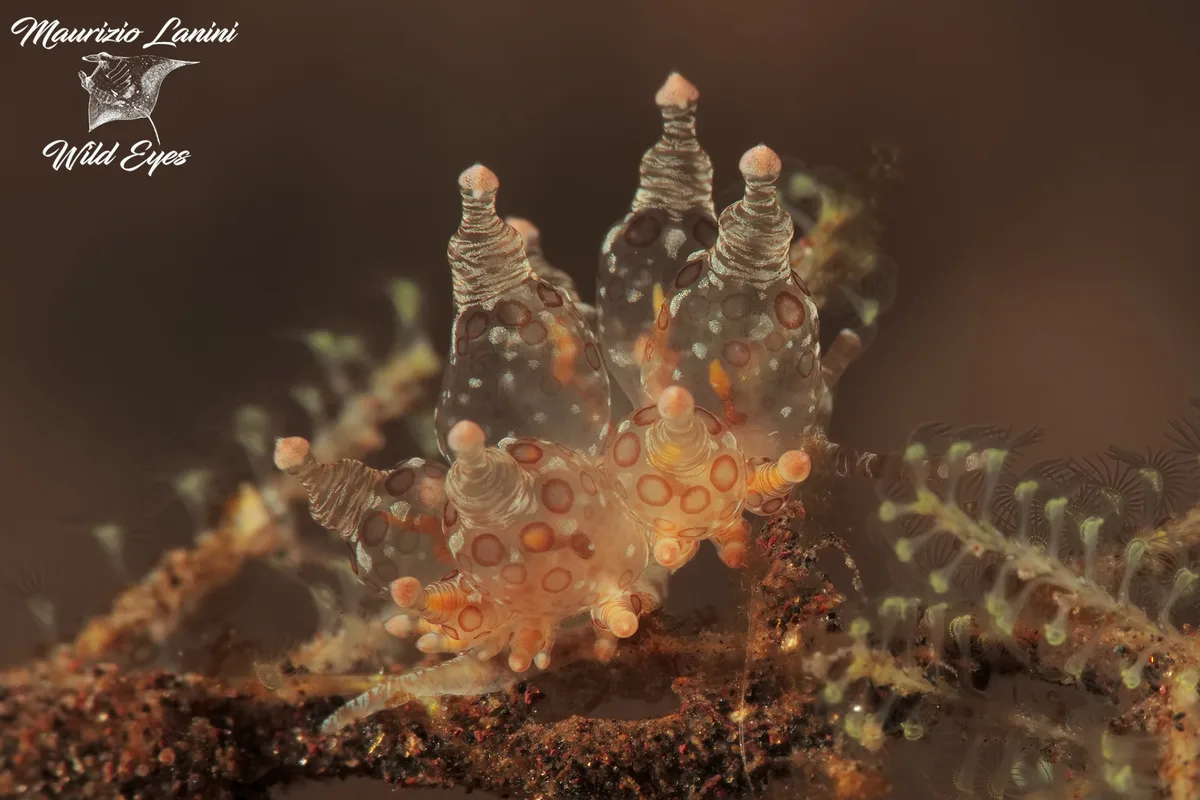
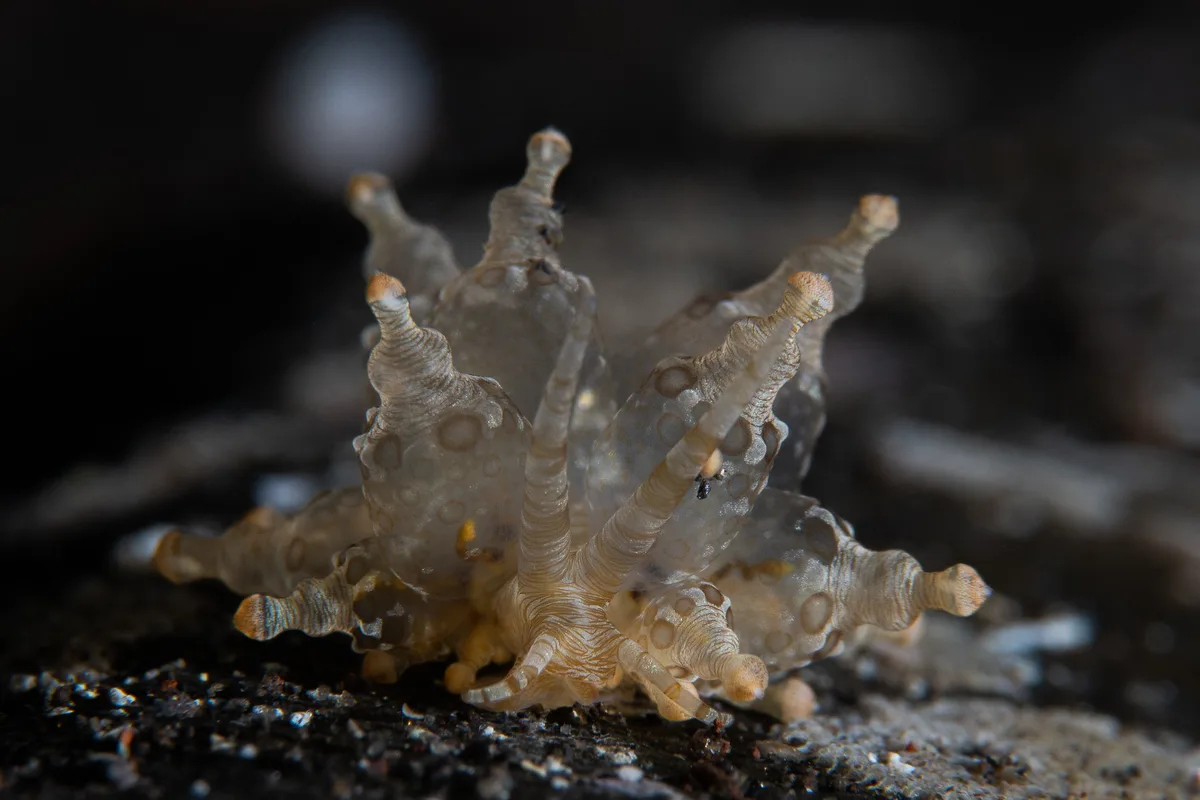
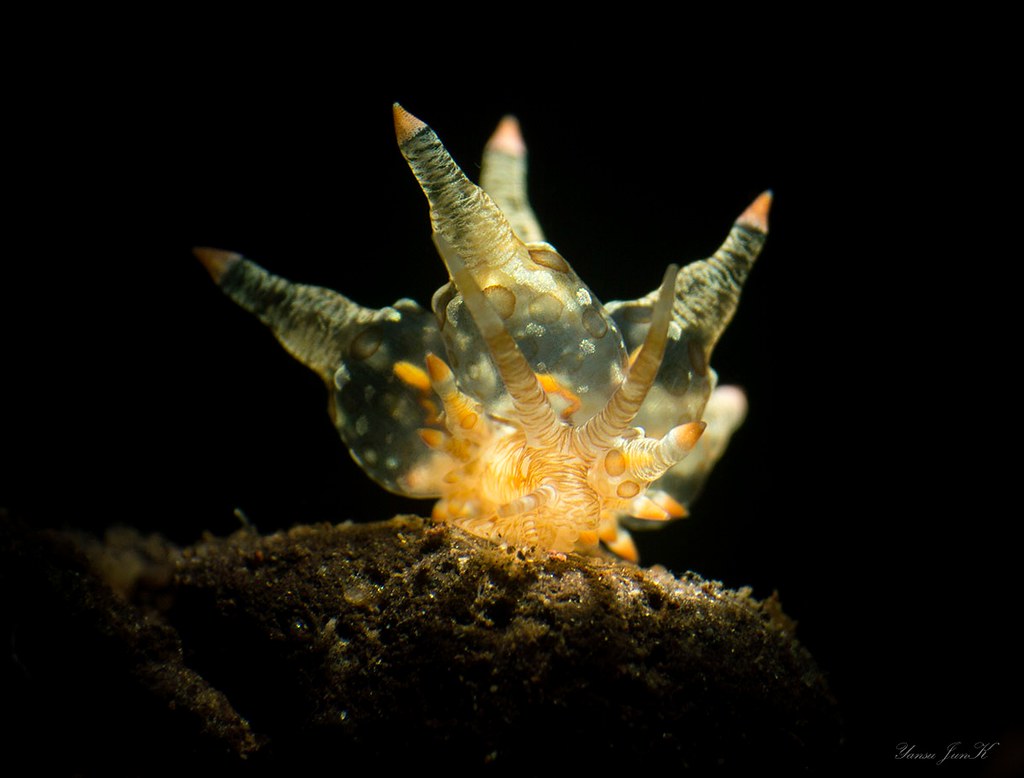
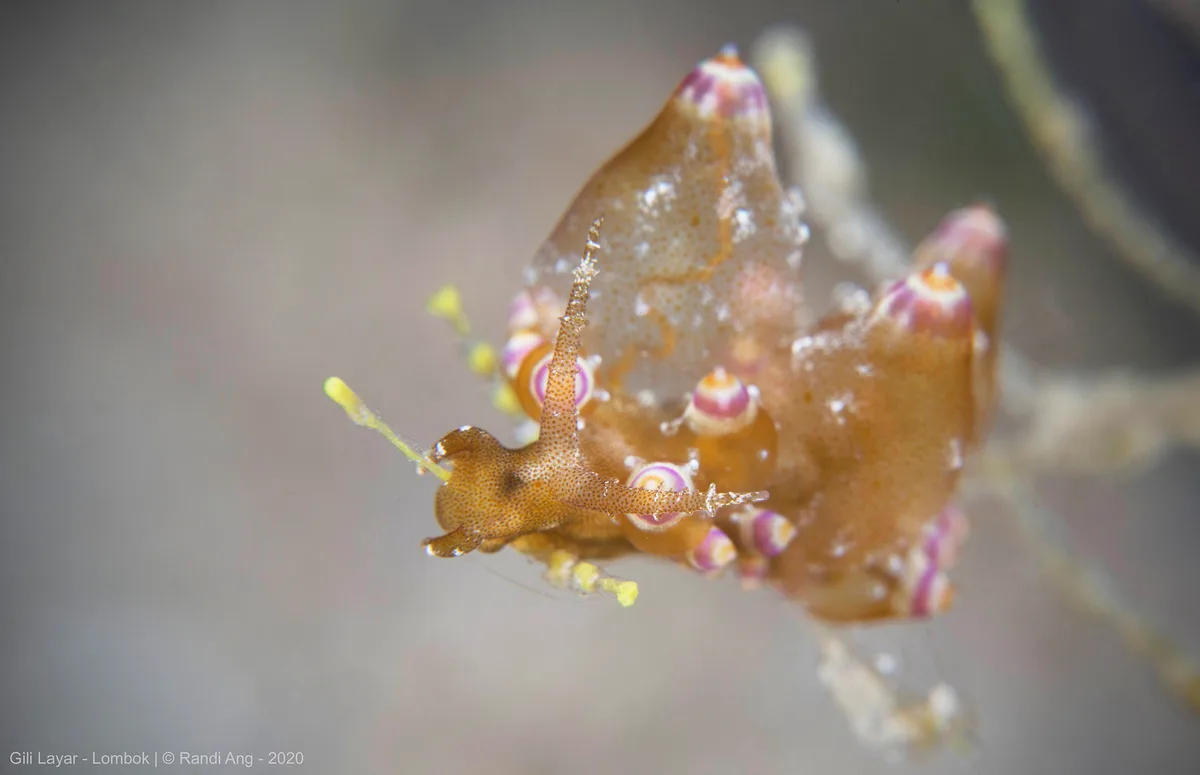
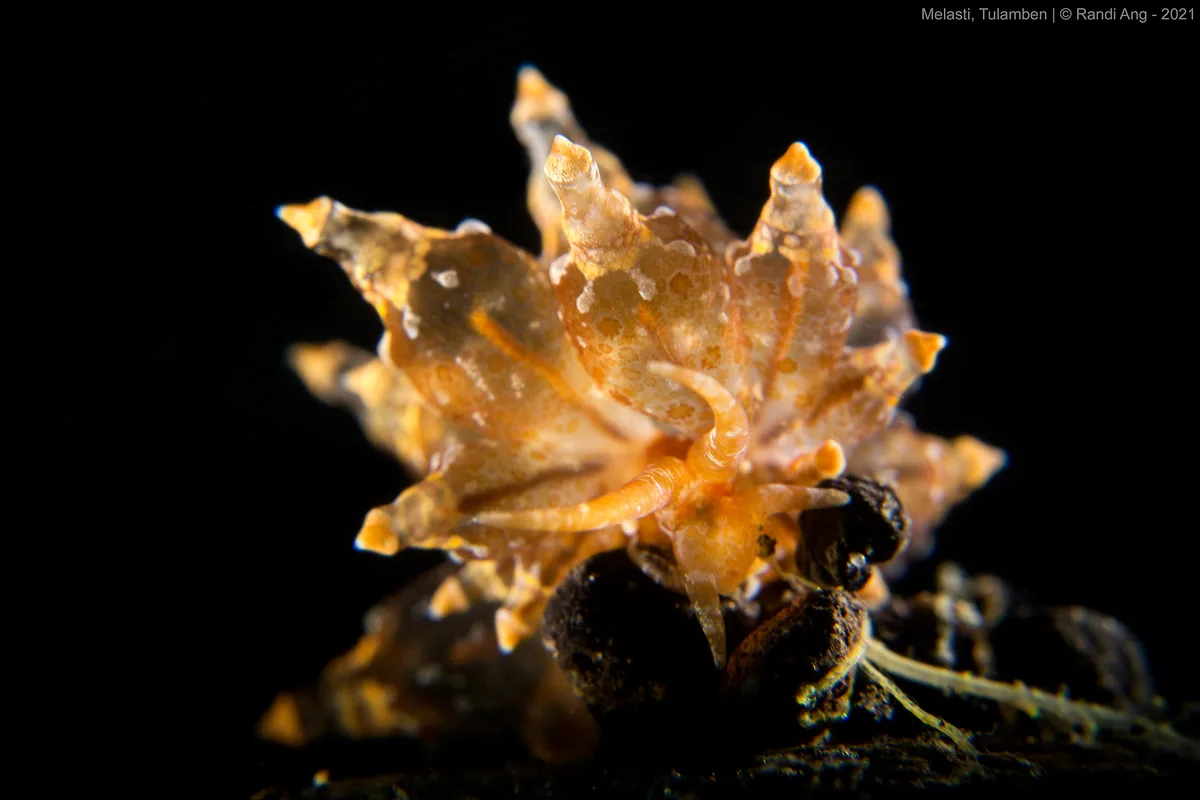
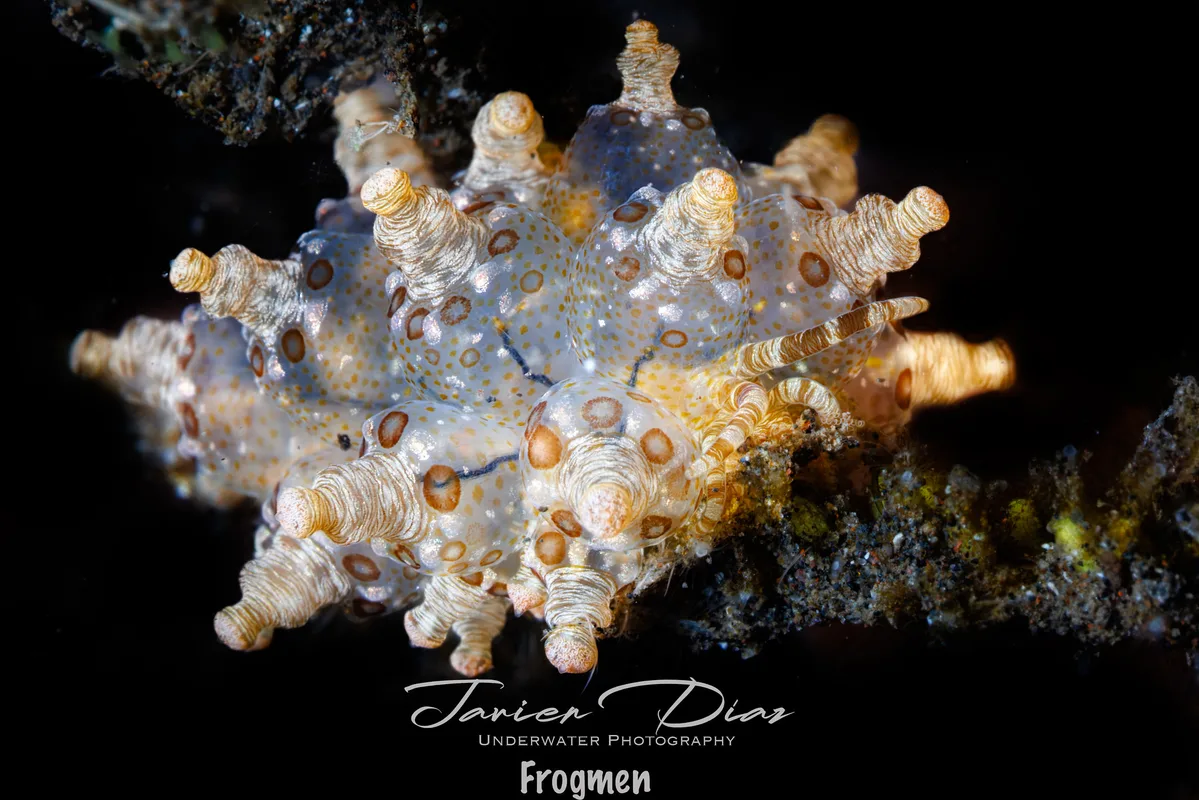
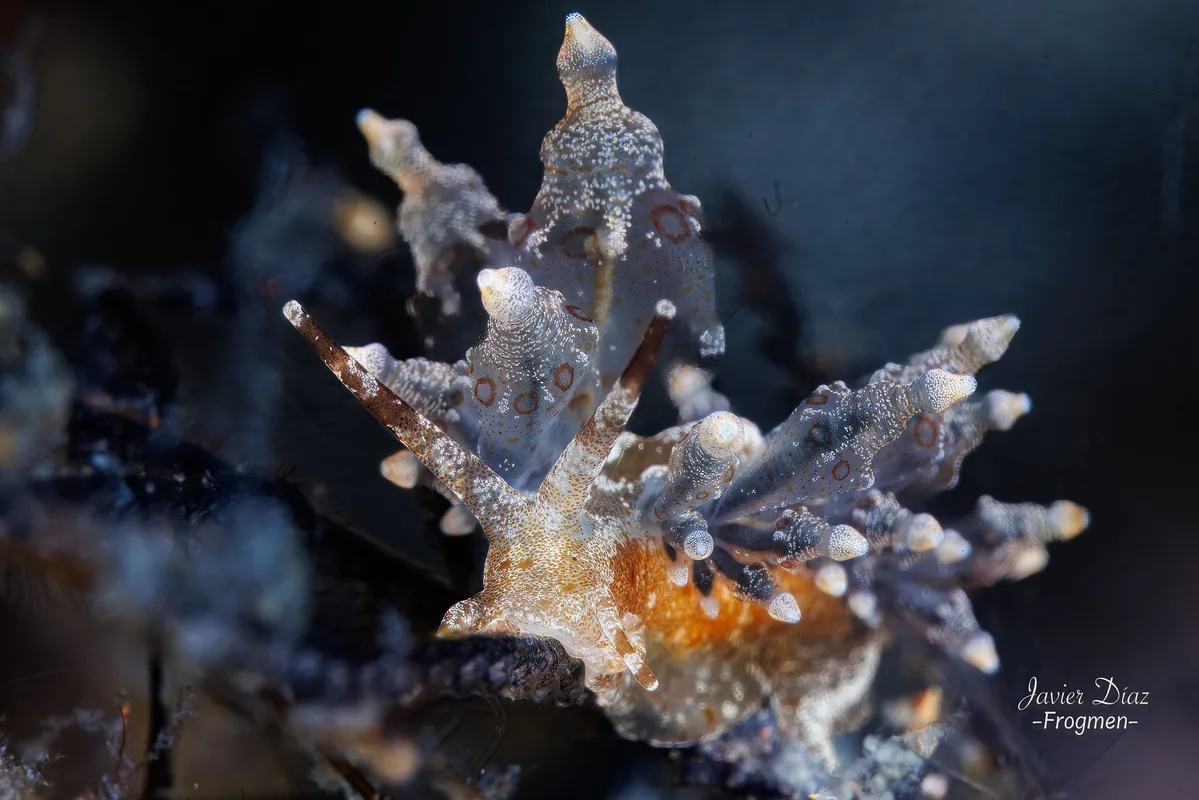
It also arms itself there. The colony's stinging cells pass through the slug's gut without firing and are stored in the swollen tips of the cerata, which is what those inflated, brown-ringed clubs on its back are for.
Which is the argument for slowing down at the ugly parts of a dive site. The fuzz on a piling is a whole habitat, and the animals living in it are small, transparent and worth the stop.
- cerata swollen toward the tip and ringed with brown
- body almost transparent, with the gut visible as a branching line inside
- always on a hydroid colony, usually several animals on the same one
- two centimeters at most, and normally much less