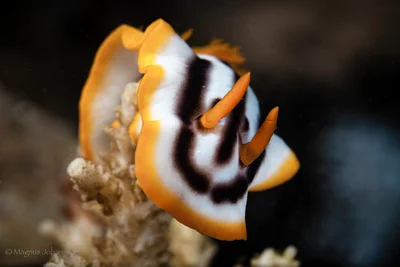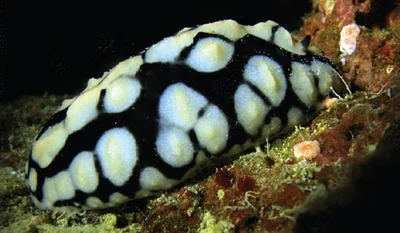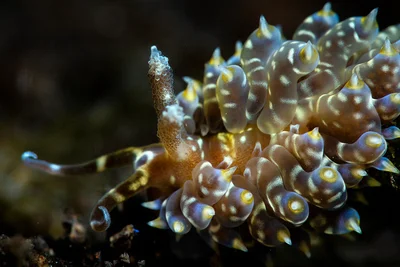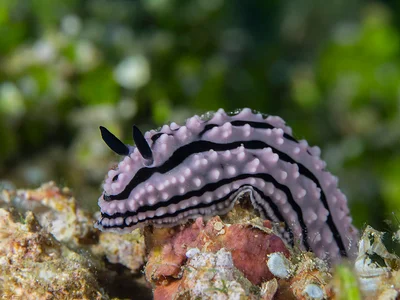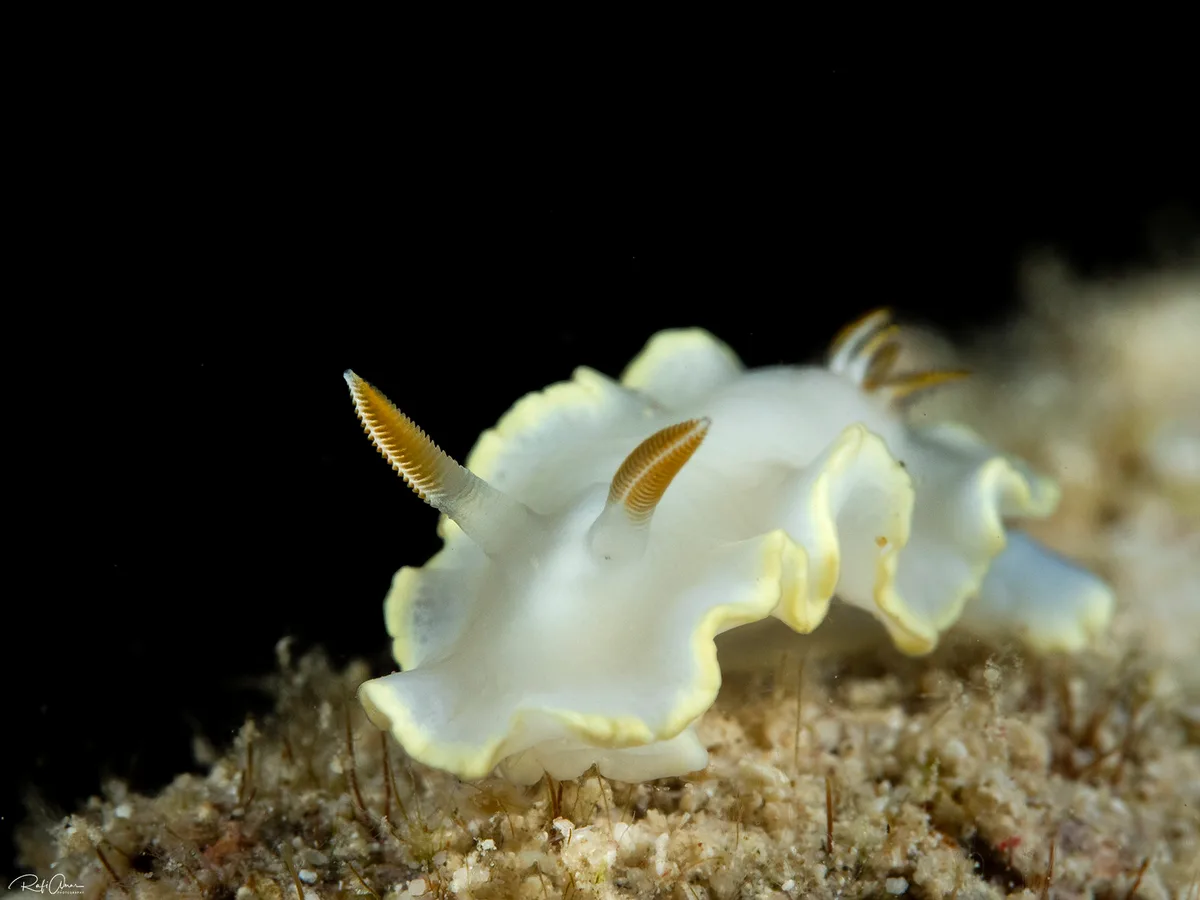
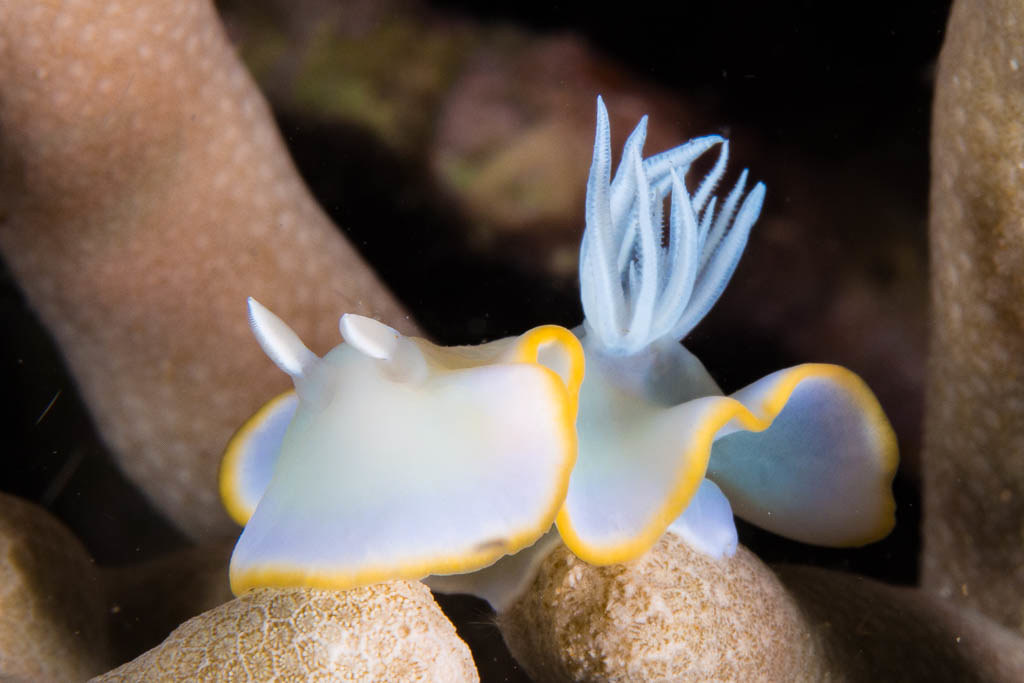
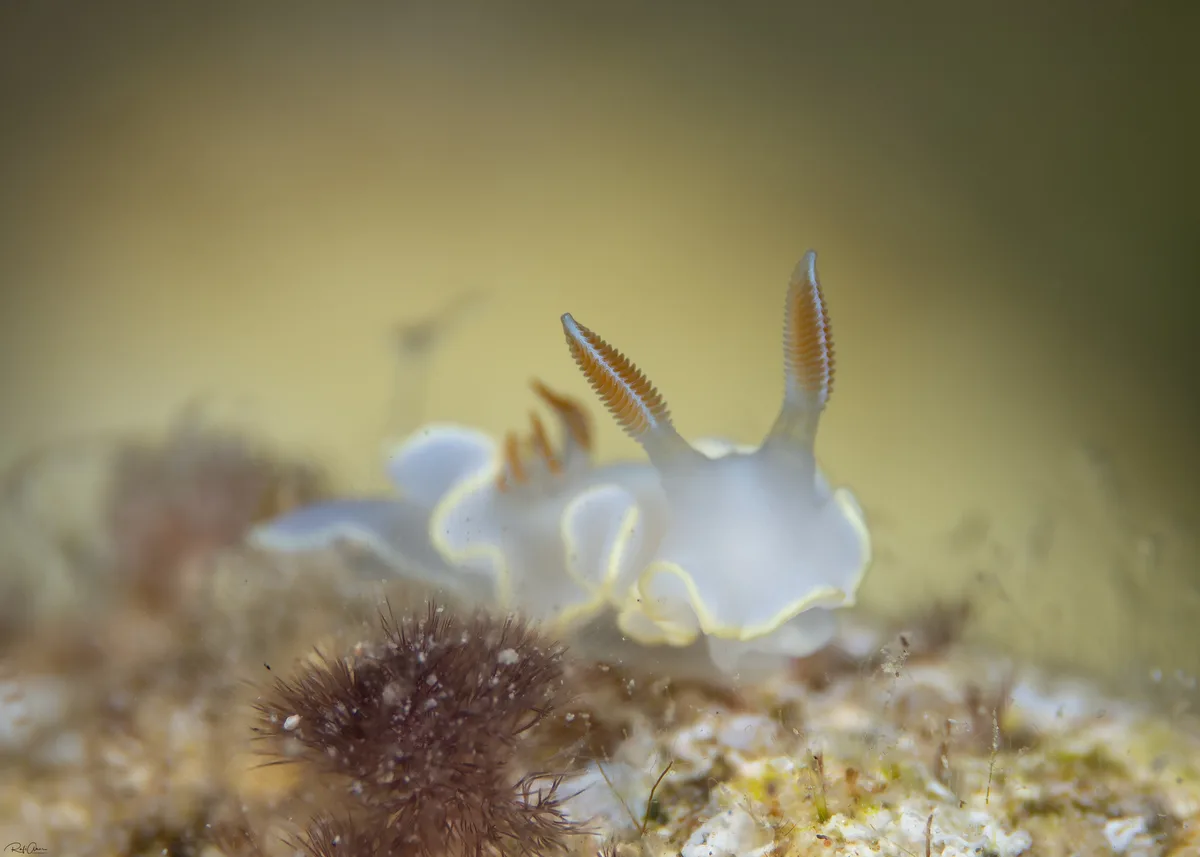
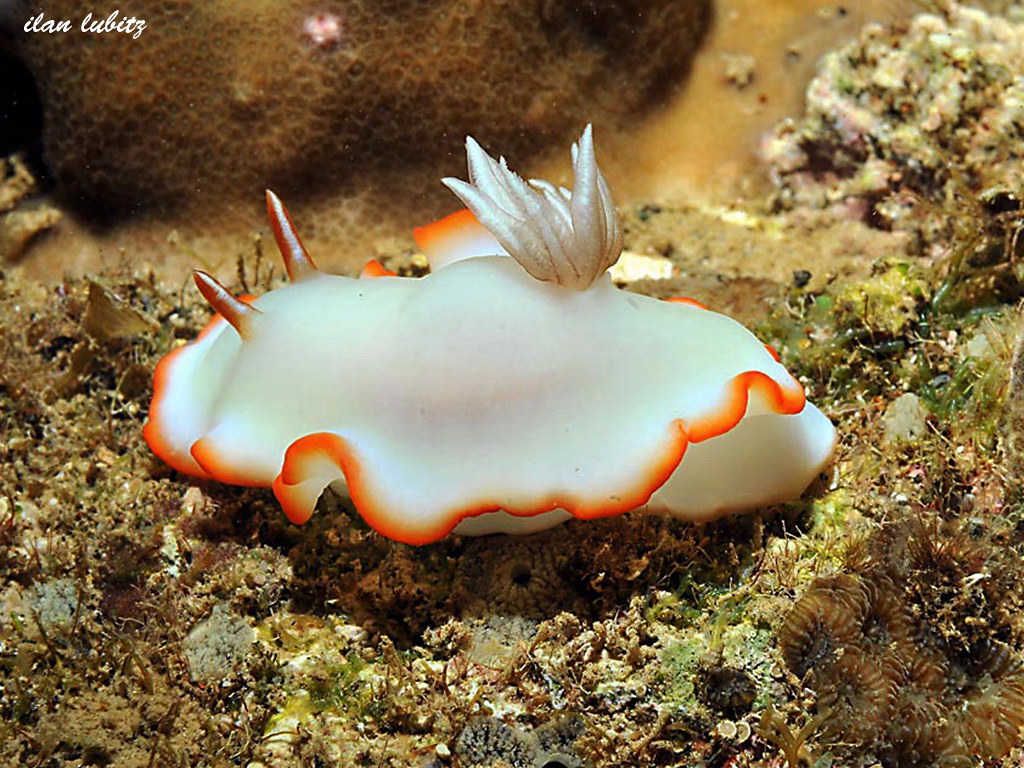
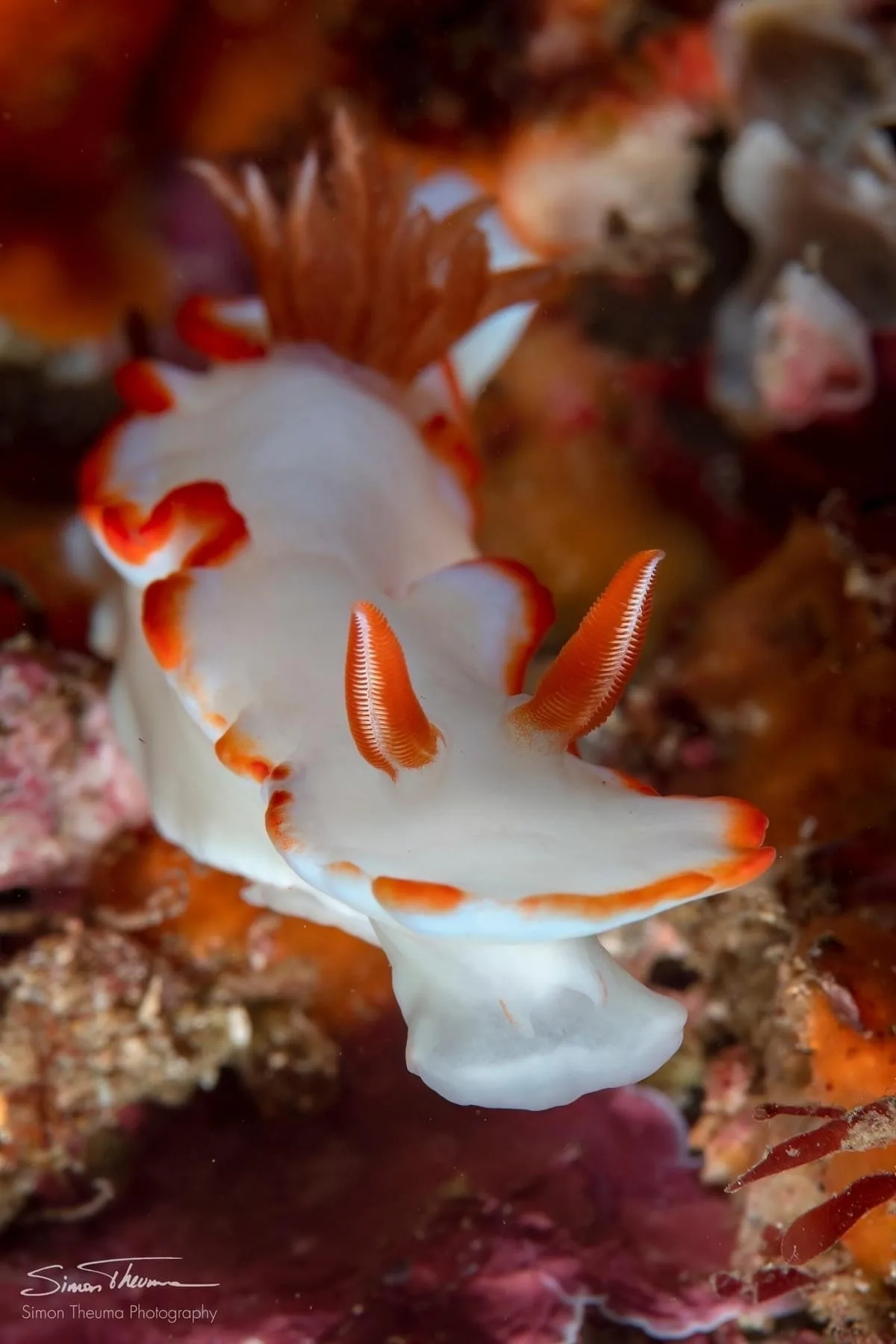
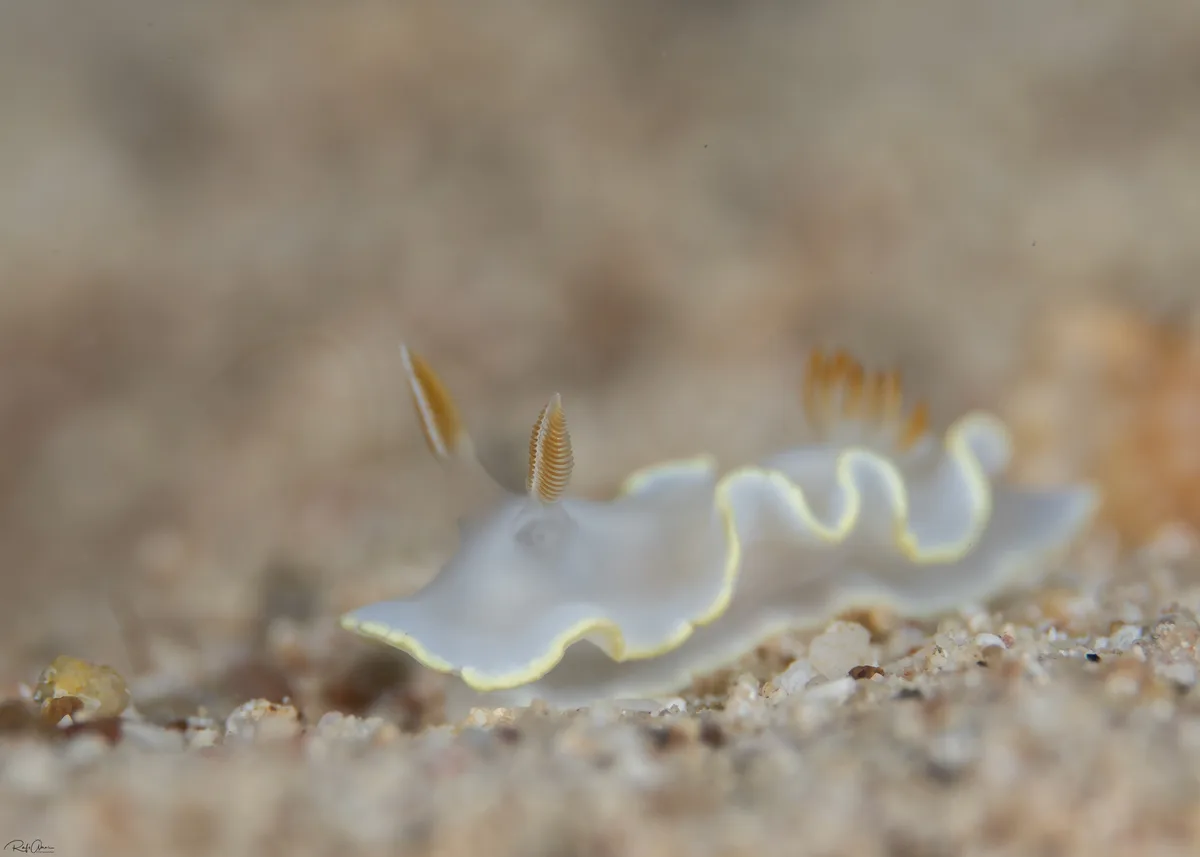
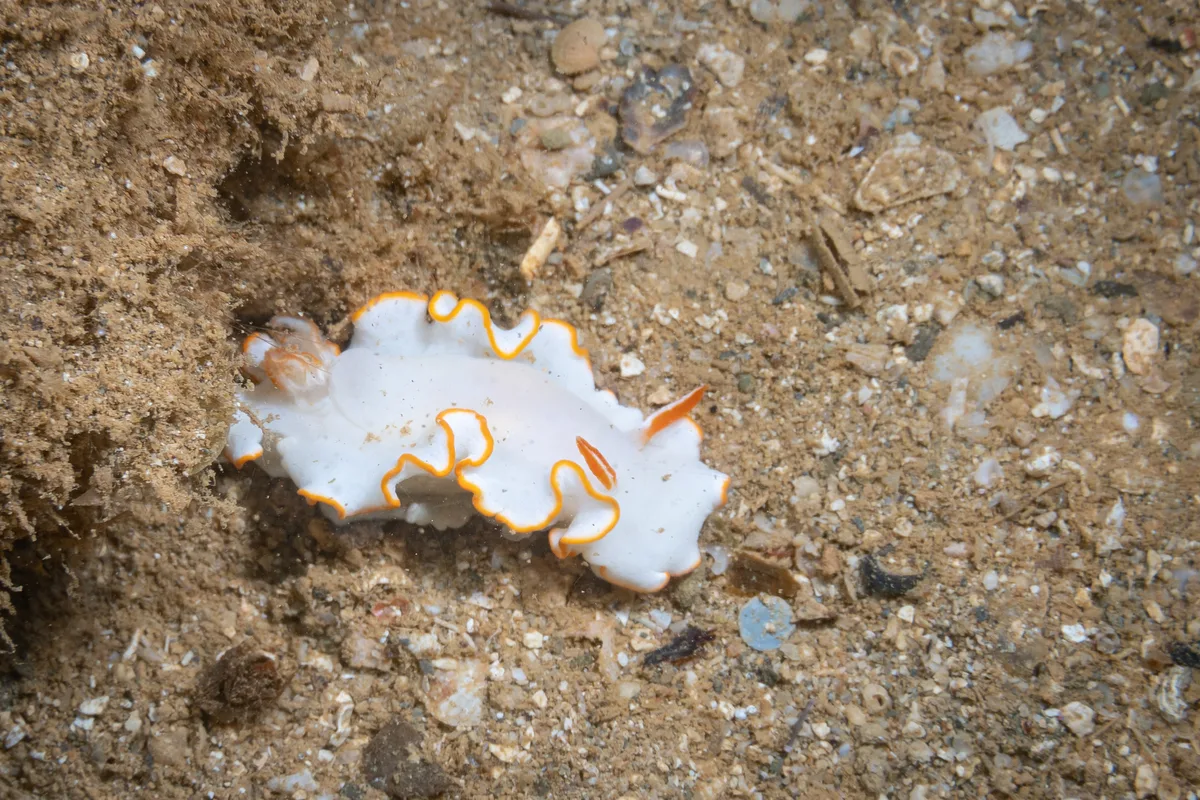
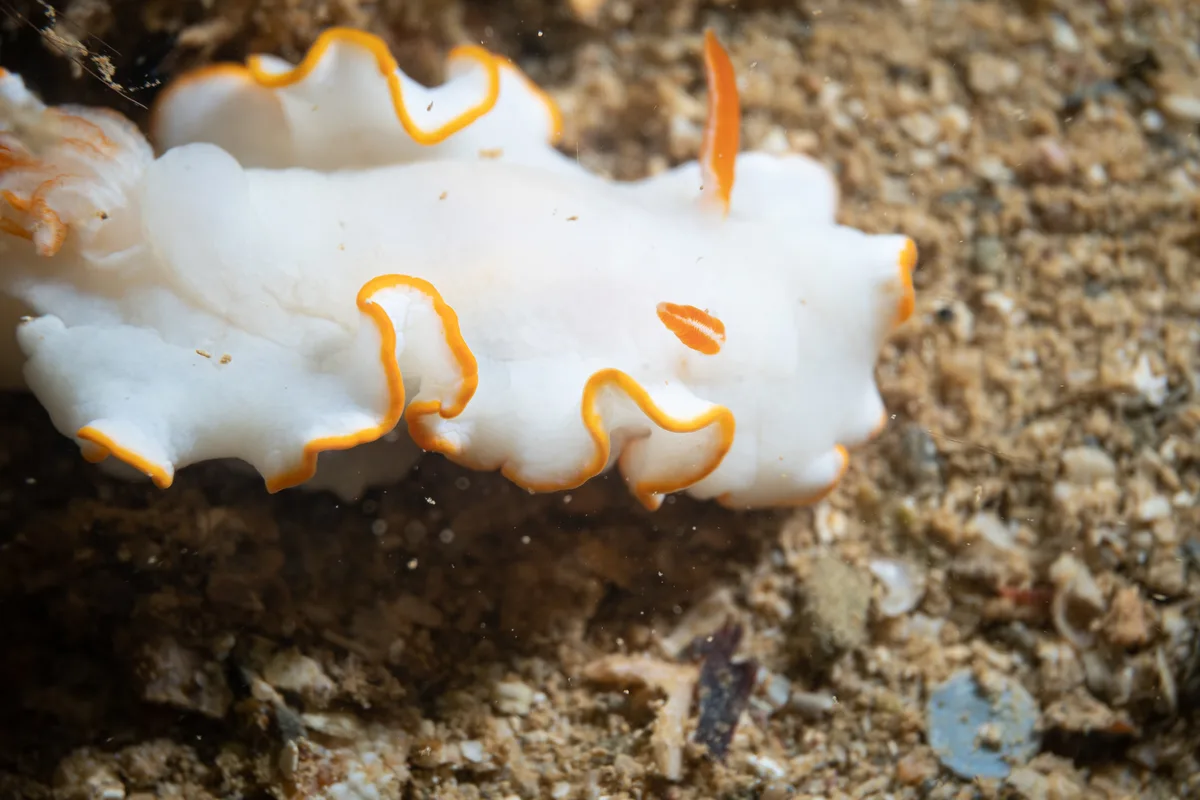
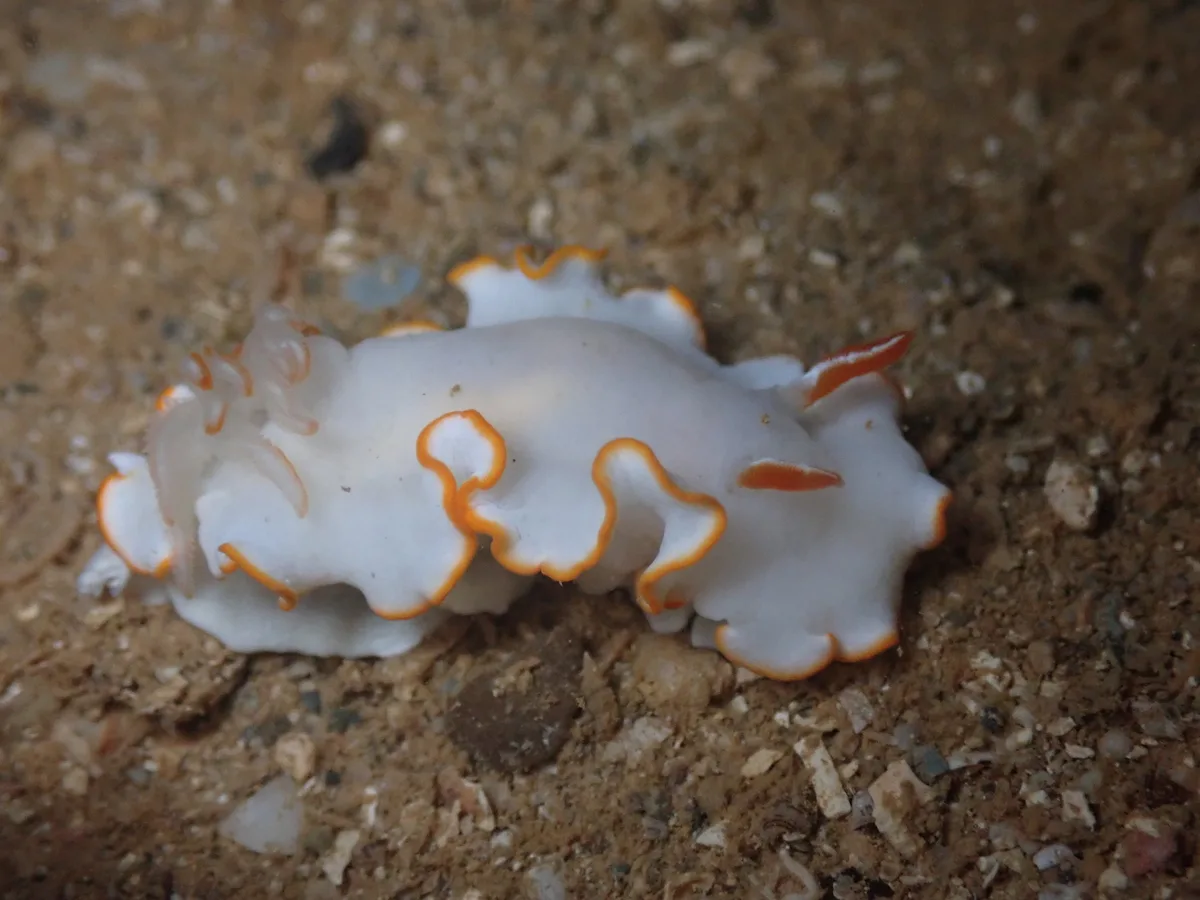
Look at the mantle edge in good light and you will see opaque white flecks in it. Those are organs, and they are the reason the animal can afford to be white.
Chromodorid slugs store the chemistry they take from sponges in structures called mantle dermal formations: glands packed into the rim of the mantle, arranged in a line or a ring, and often visible from the outside as chalky spots. Where they sit is not arbitrary. Work on this family has shown the compounds sorted as they move outward, with the mildest kept back in the digestive gland and the most repellent pushed to the margin, so the concentration rises toward exactly the tissue a fish reaches first.
That is a real anatomical answer to a question the bright colors only hint at. The pattern says the animal is defended; the flecks are where the defense is kept.
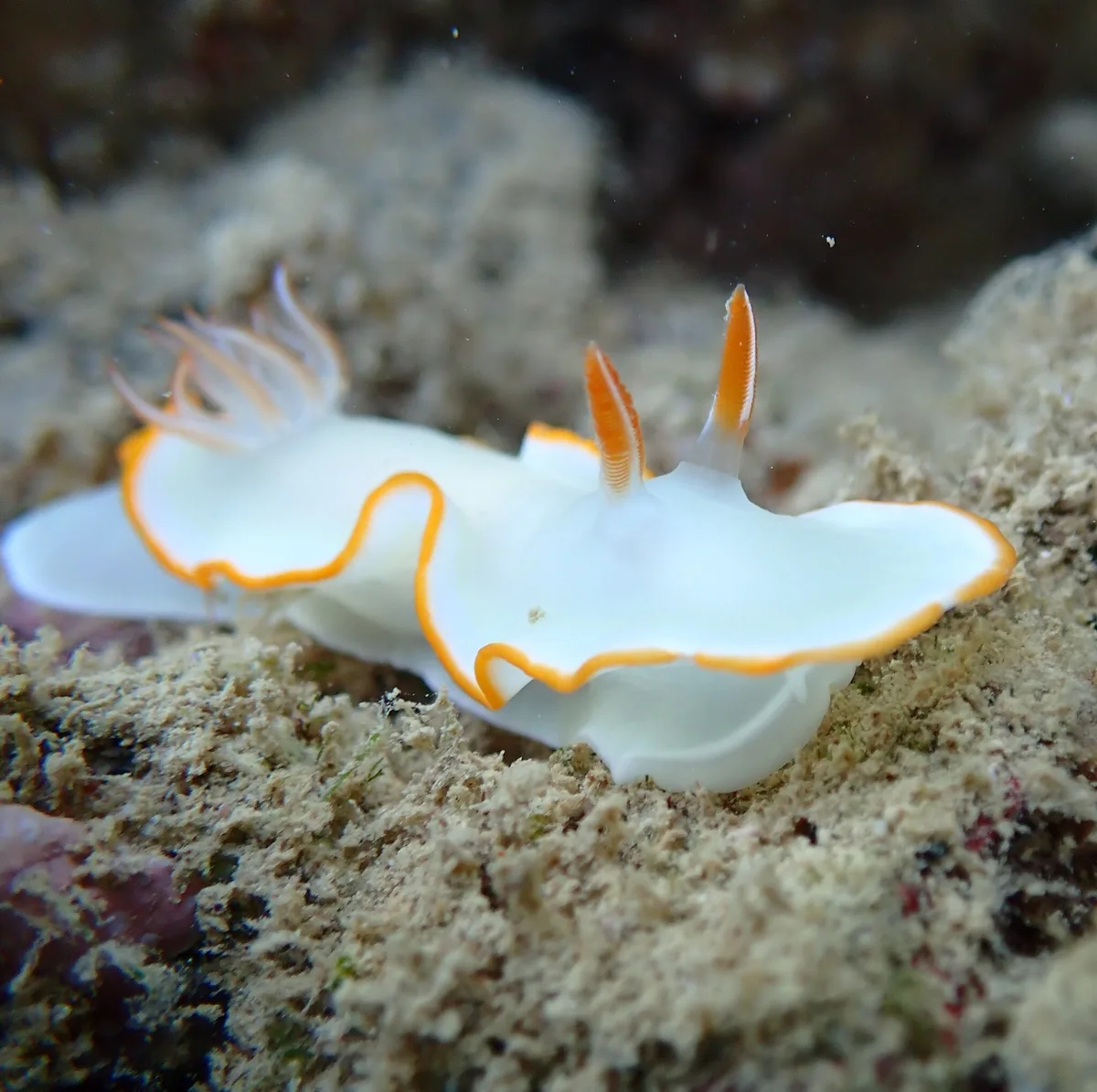
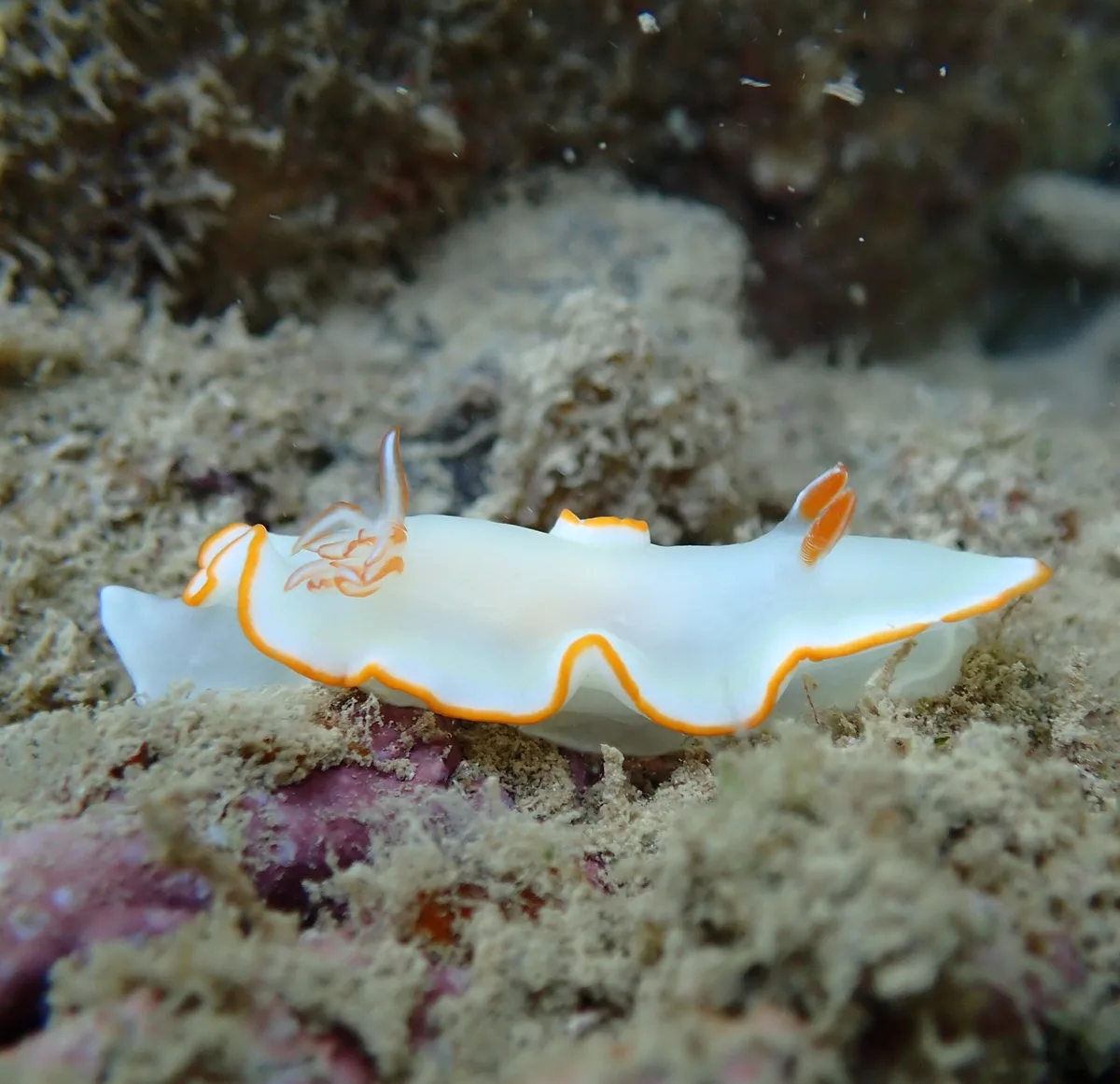
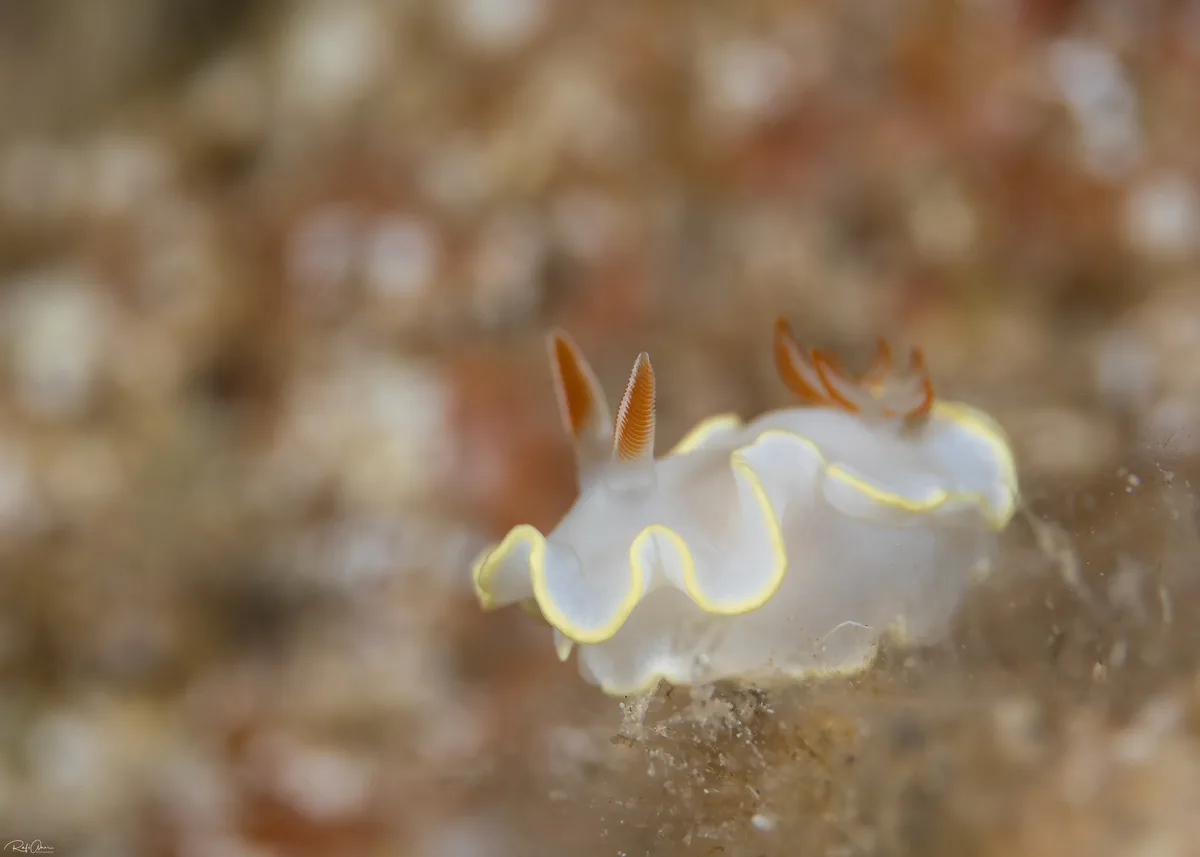
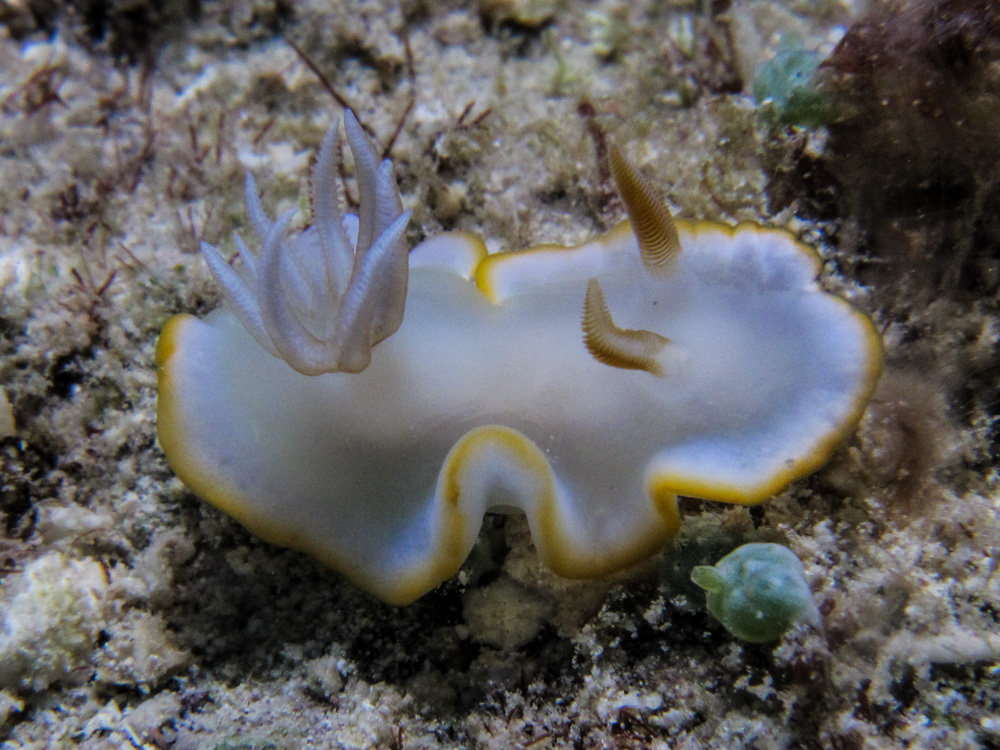
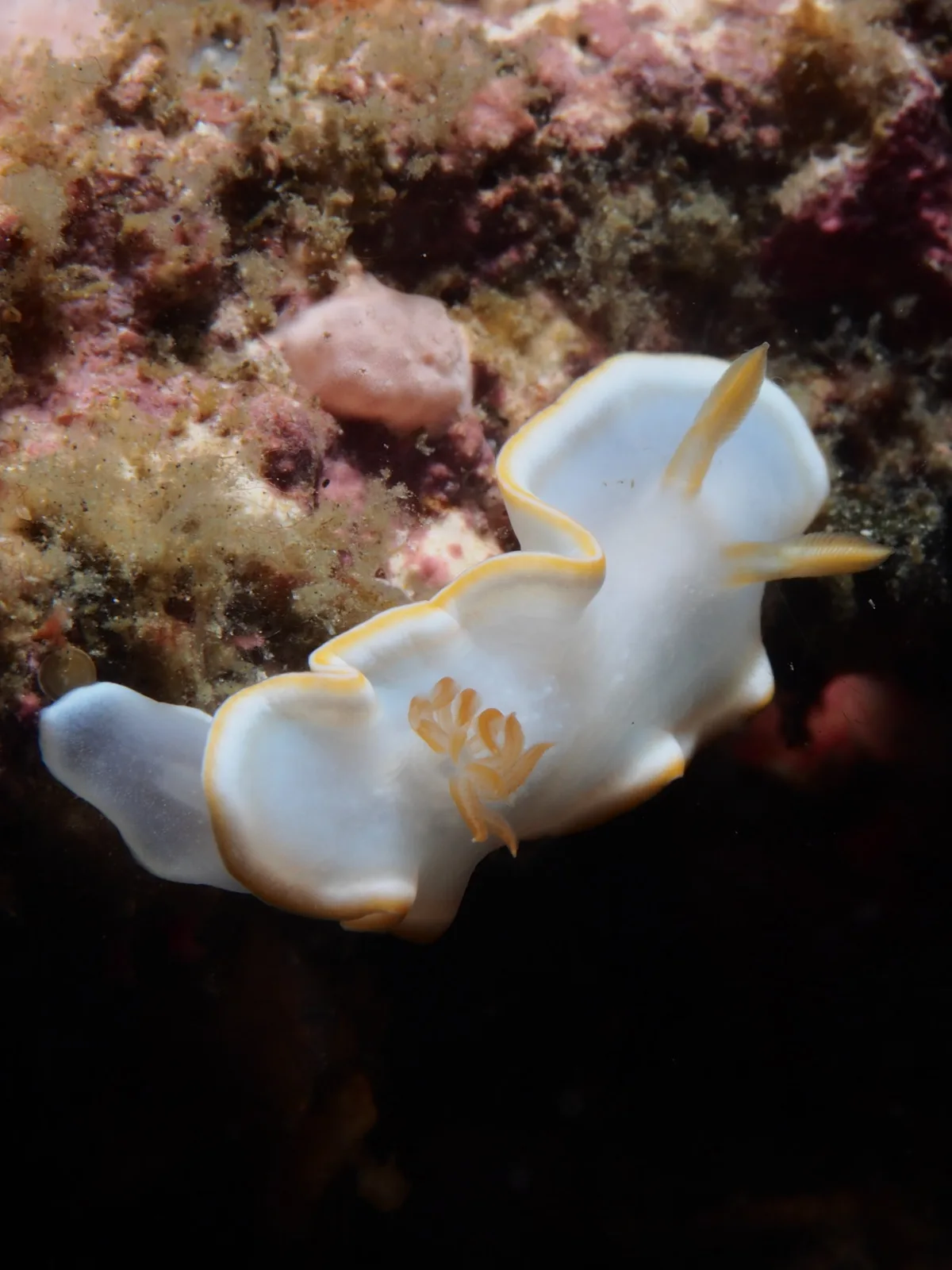
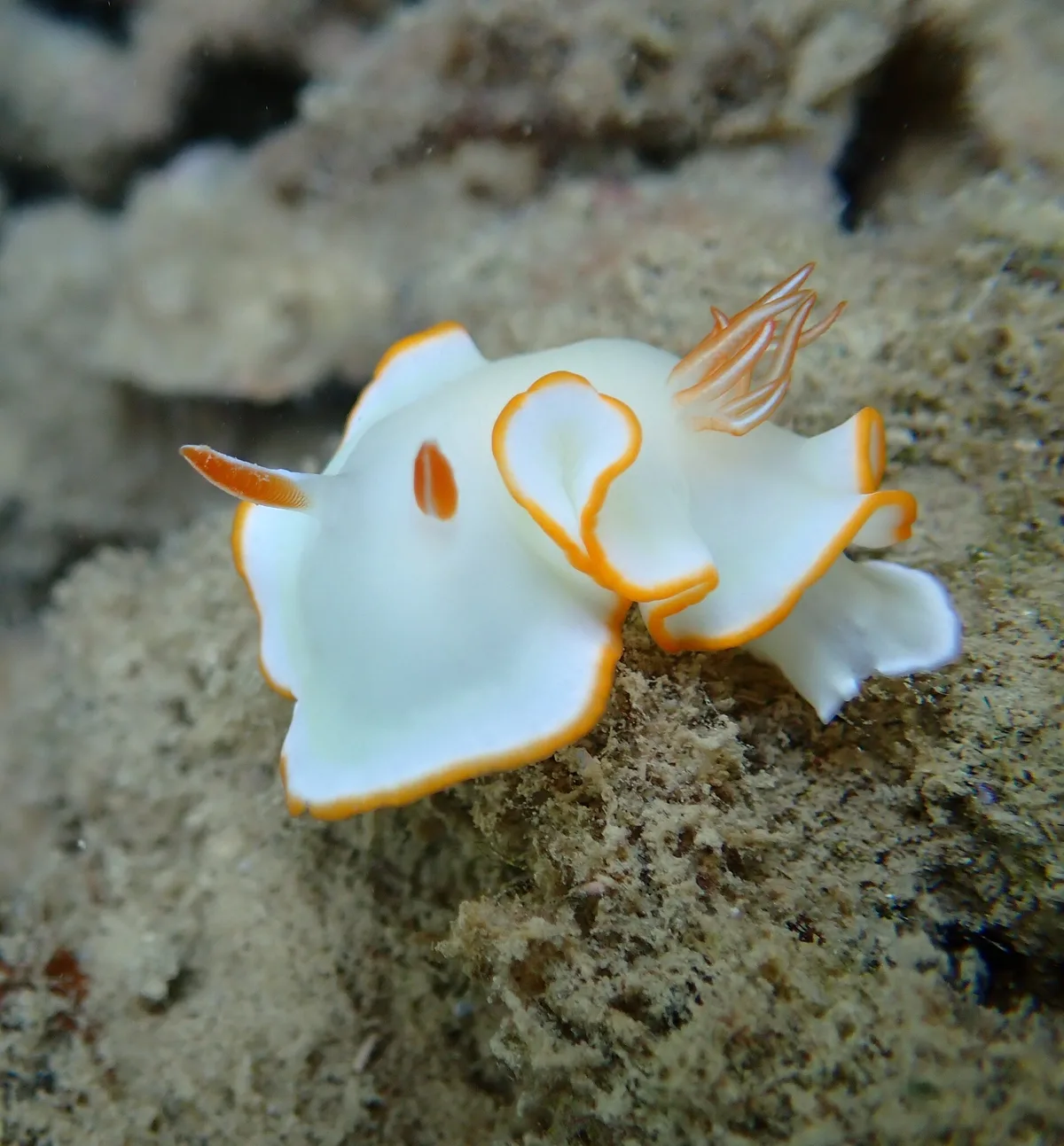
This one is plain white with a clean yellow band around the edge, yellow rhinophores and yellow gill tips, up to four centimeters. It is the yellow-margined counterpart of the red-margined species on the neighboring page, and the two are separated by margin color and nothing else.
What it eats has not been recorded in this sea, which is ordinary for the group: the sponge diets of most chromodorids are known from a handful of observations, and a diver who photographs one actually feeding is contributing something.
- white back with a clean yellow margin and no other pattern
- yellow rhinophores and gill tips
- opaque white specks visible along the mantle edge in good light
- up to 4 cm