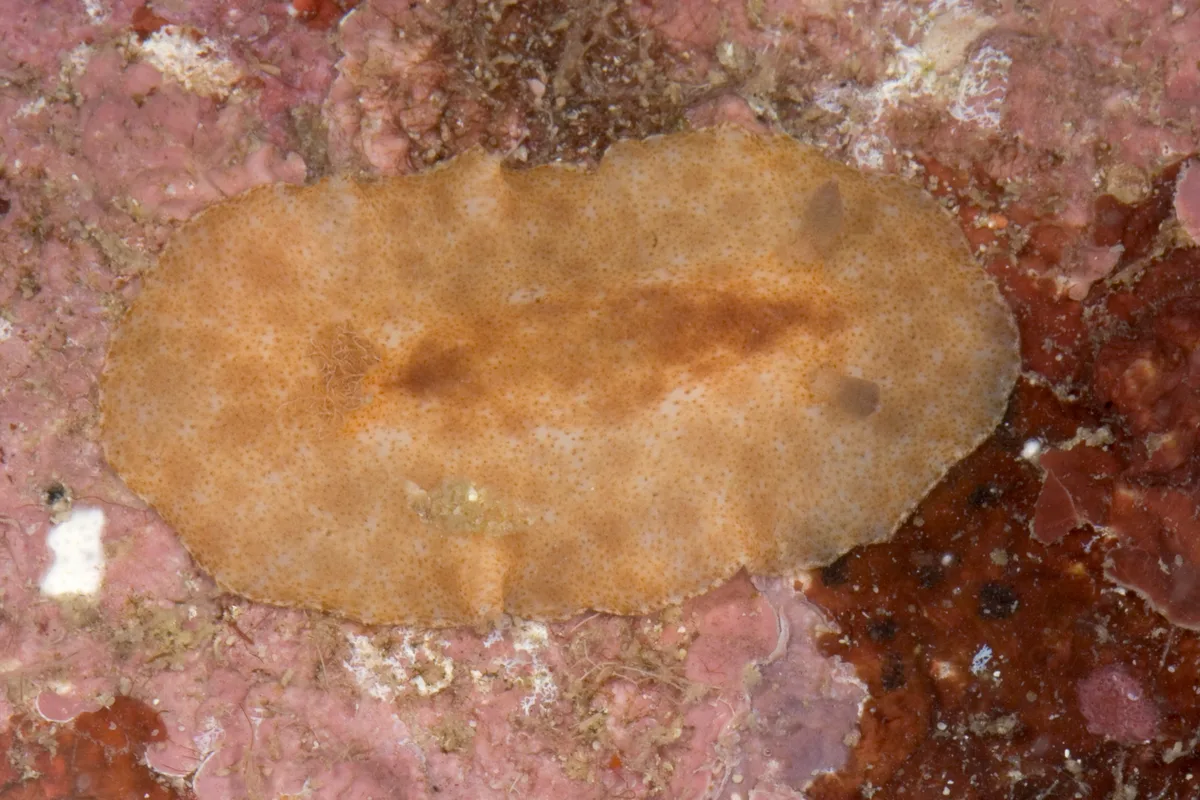
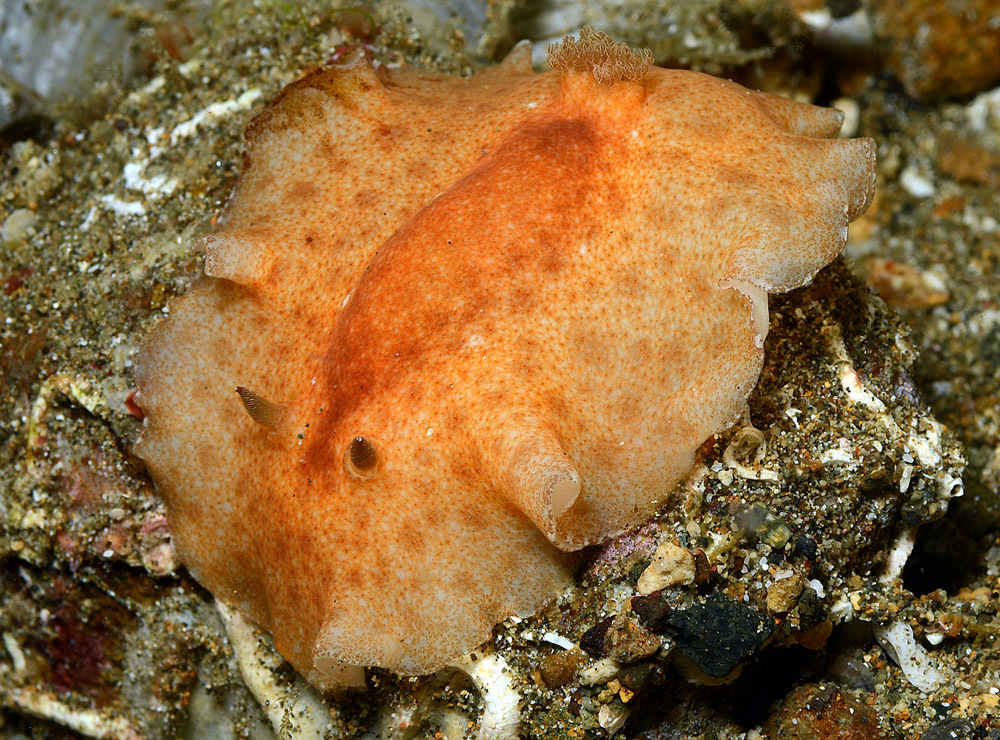
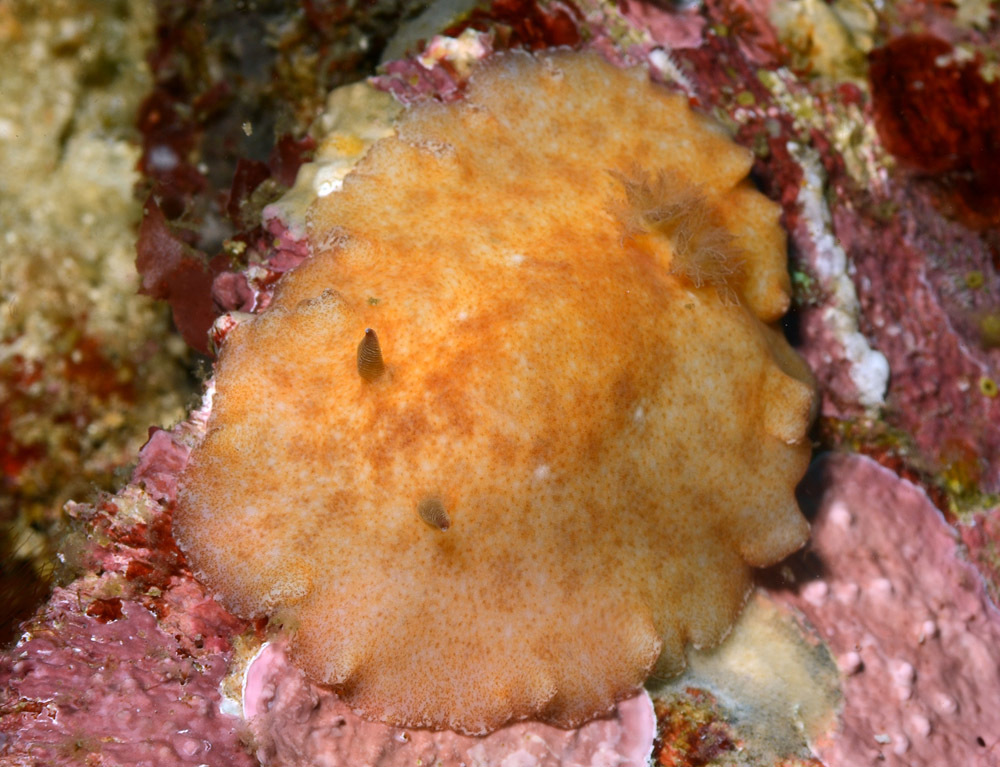
Somebody looked at this animal in 2002 and called it unadorned, and then in the same genus there is one that got called beautiful. Both are on this reef, both are in this catalogue, and the pair is a decent illustration of how much of taxonomy is one person's opinion written into a permanent record.
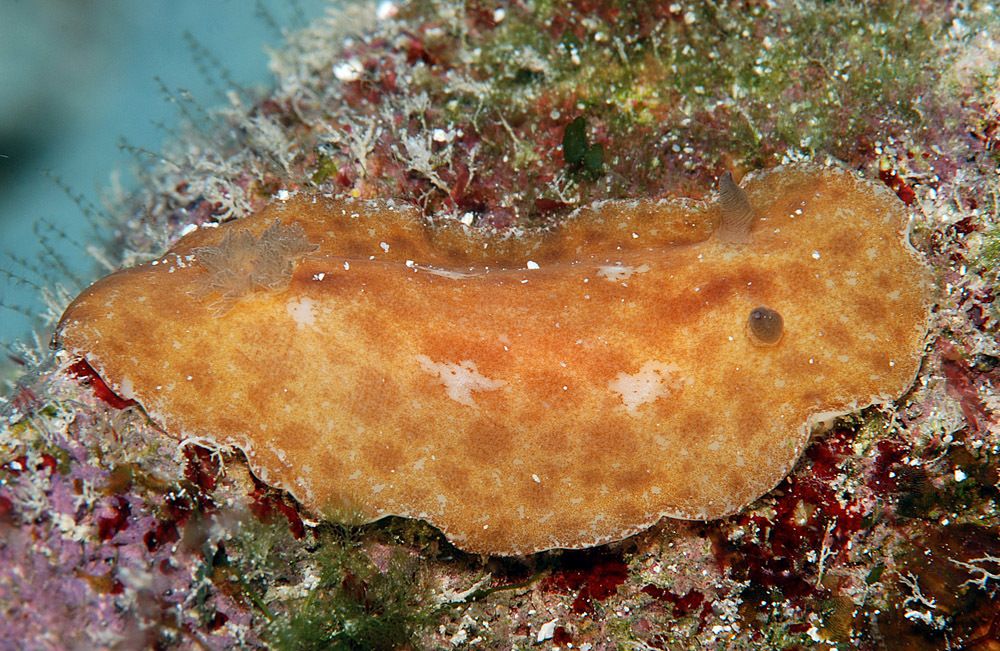
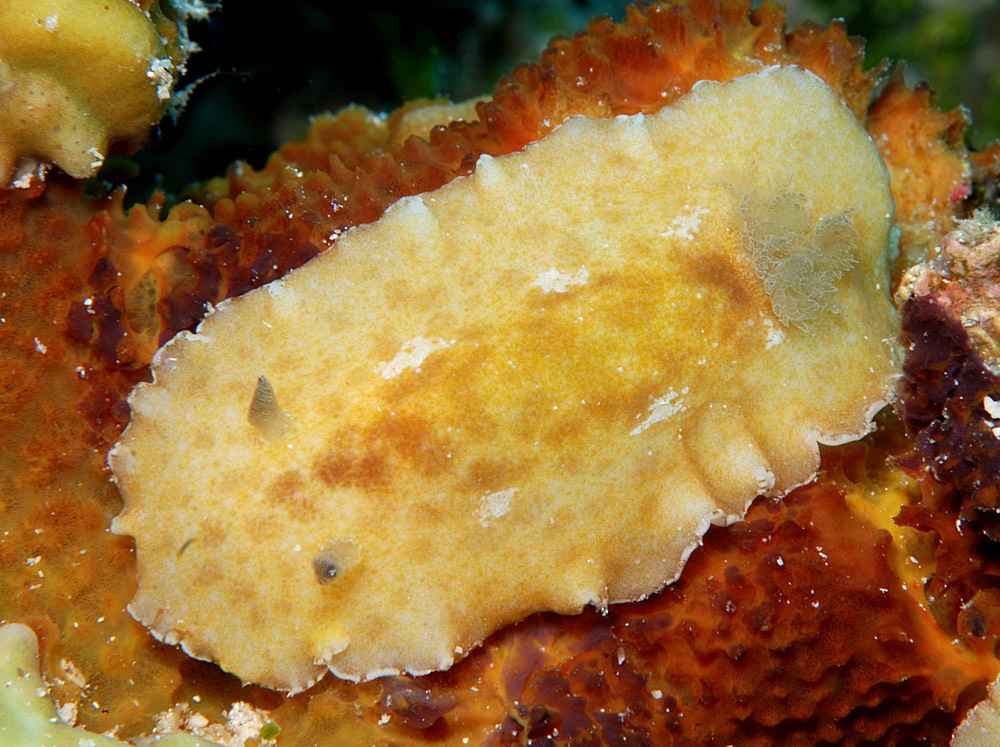
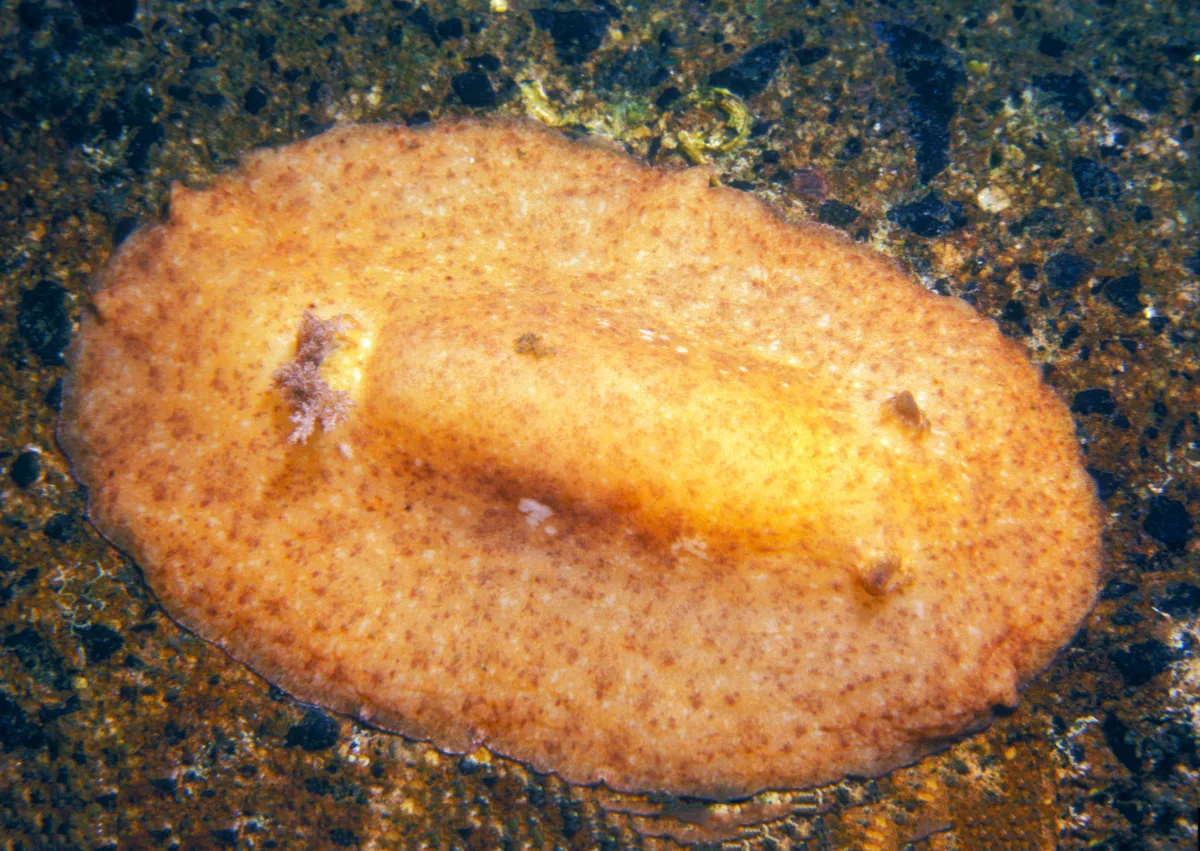
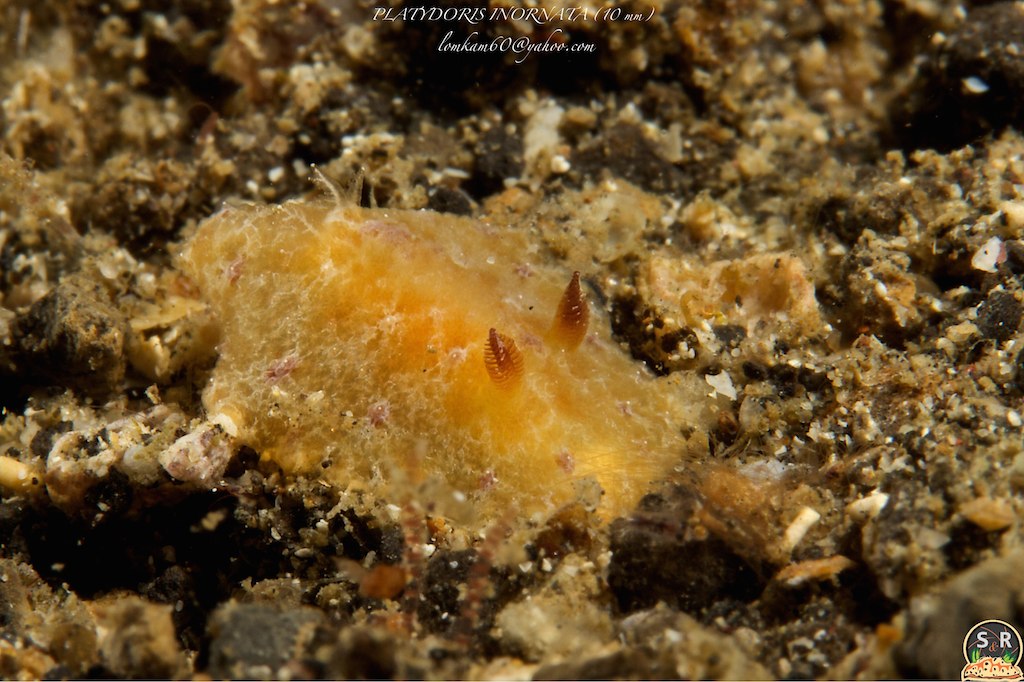
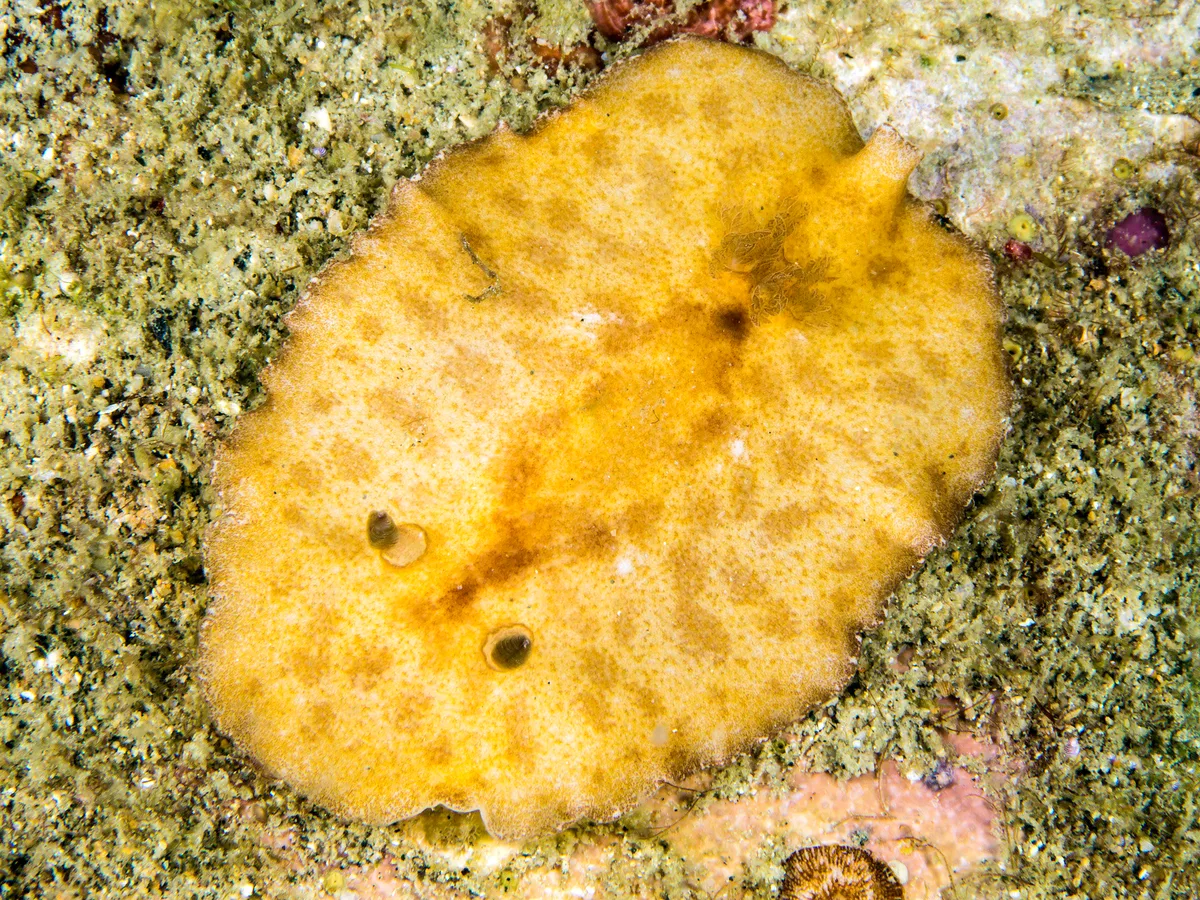
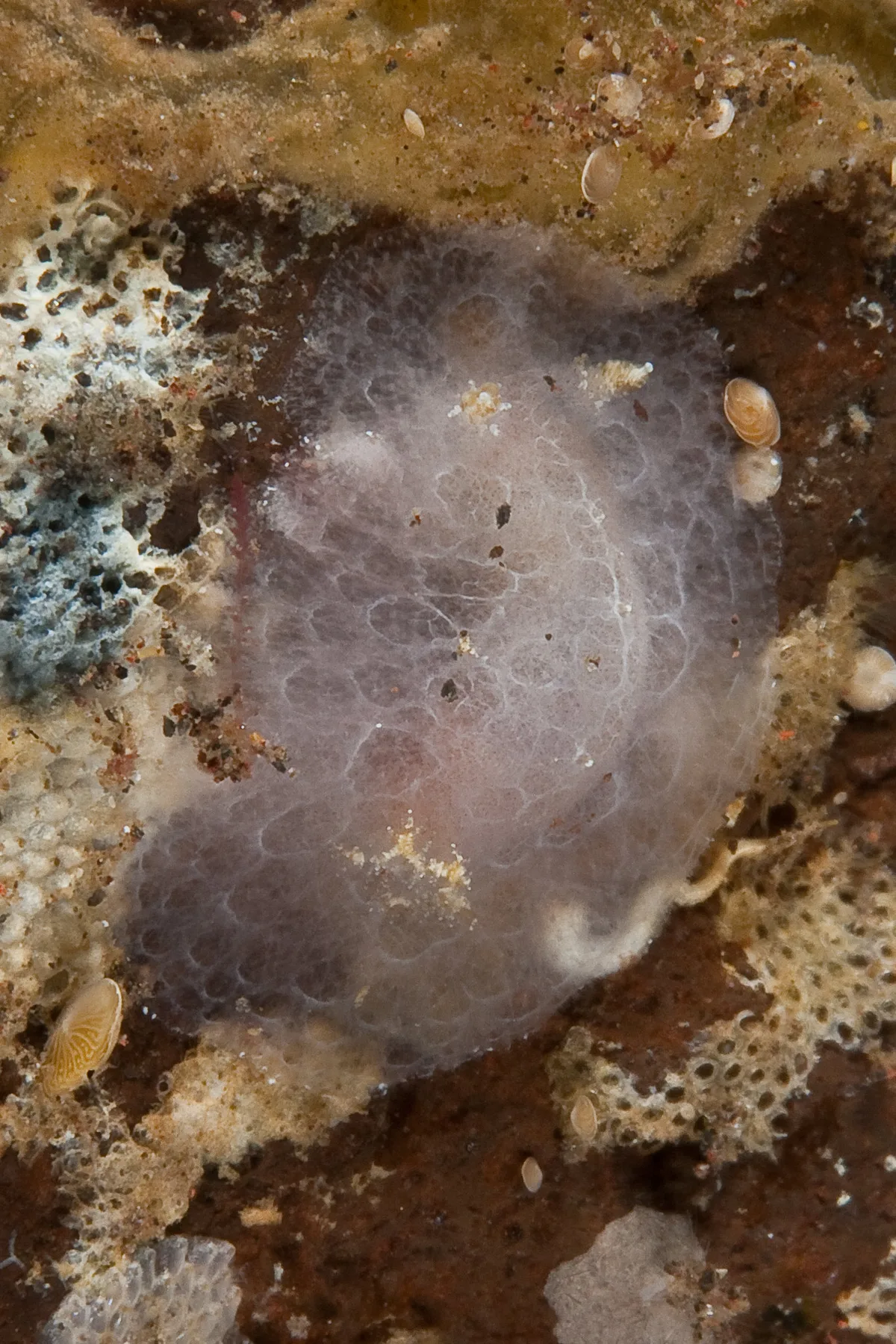
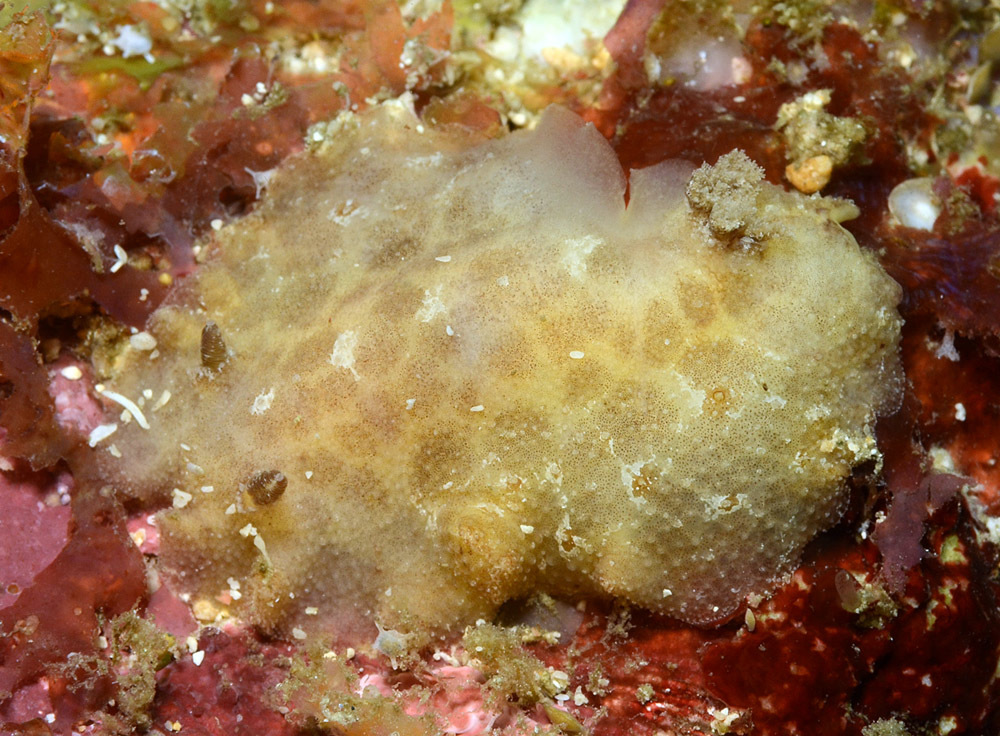
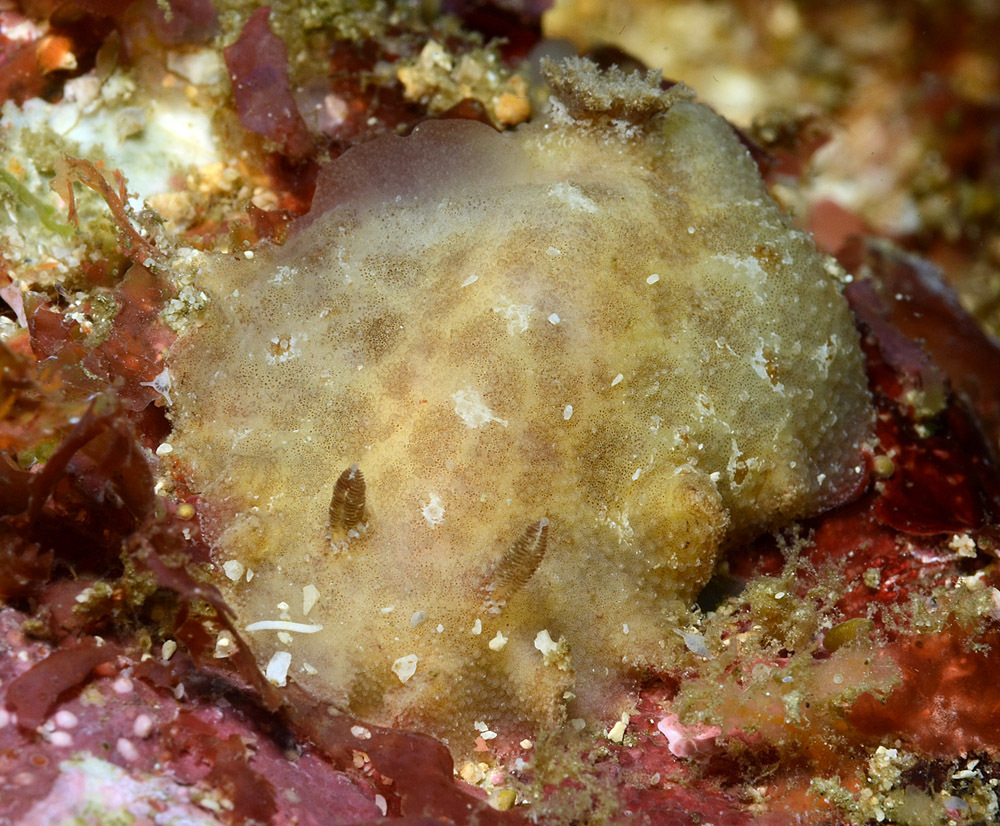
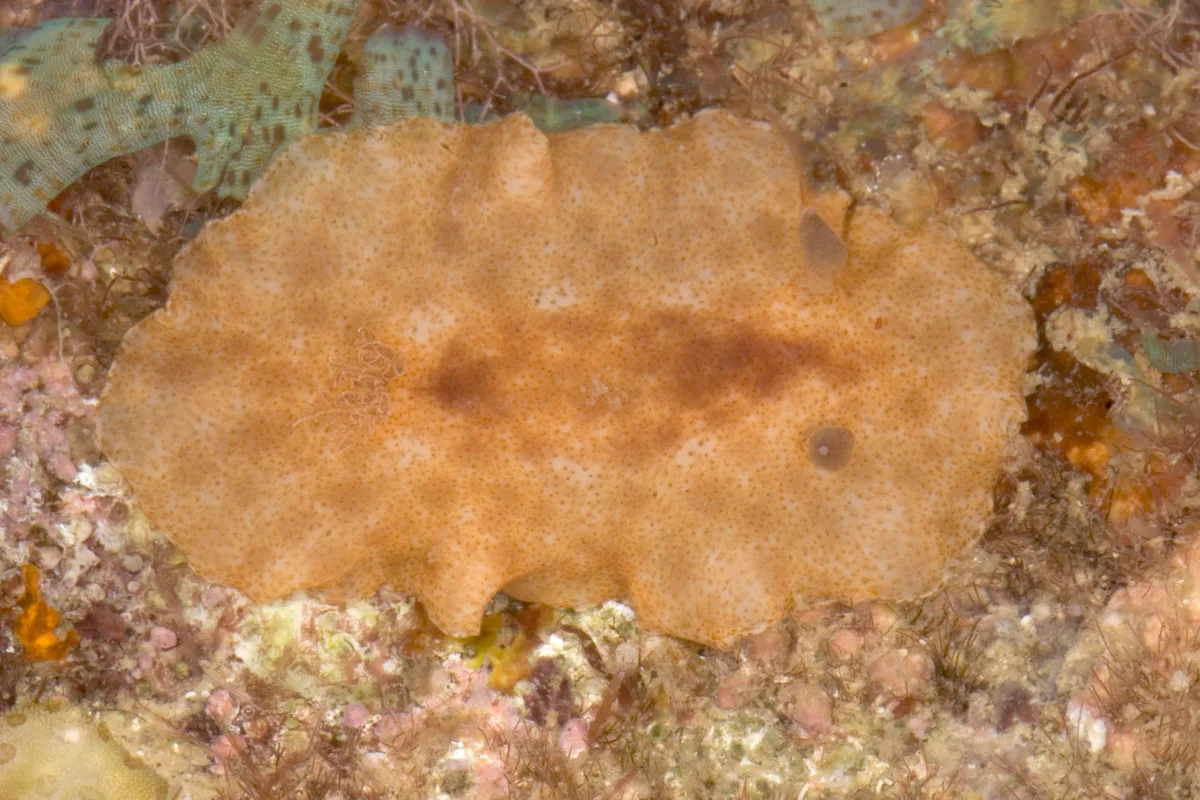
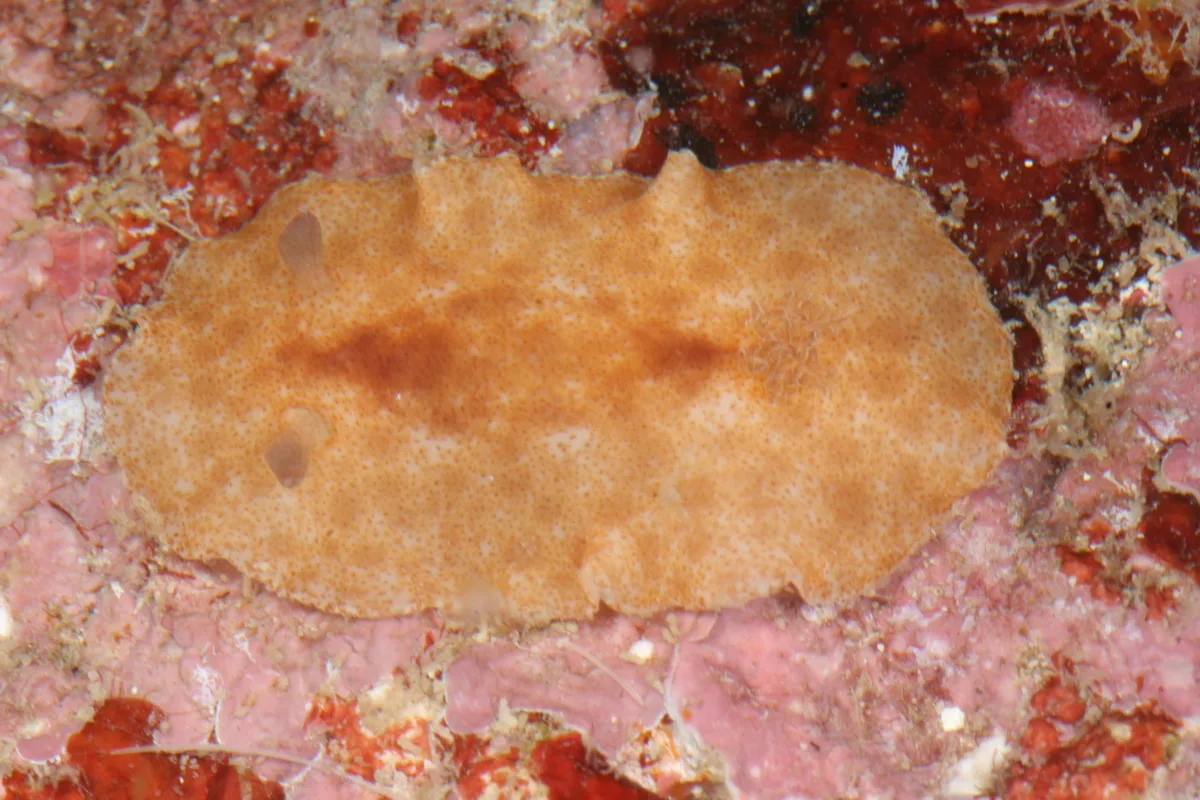
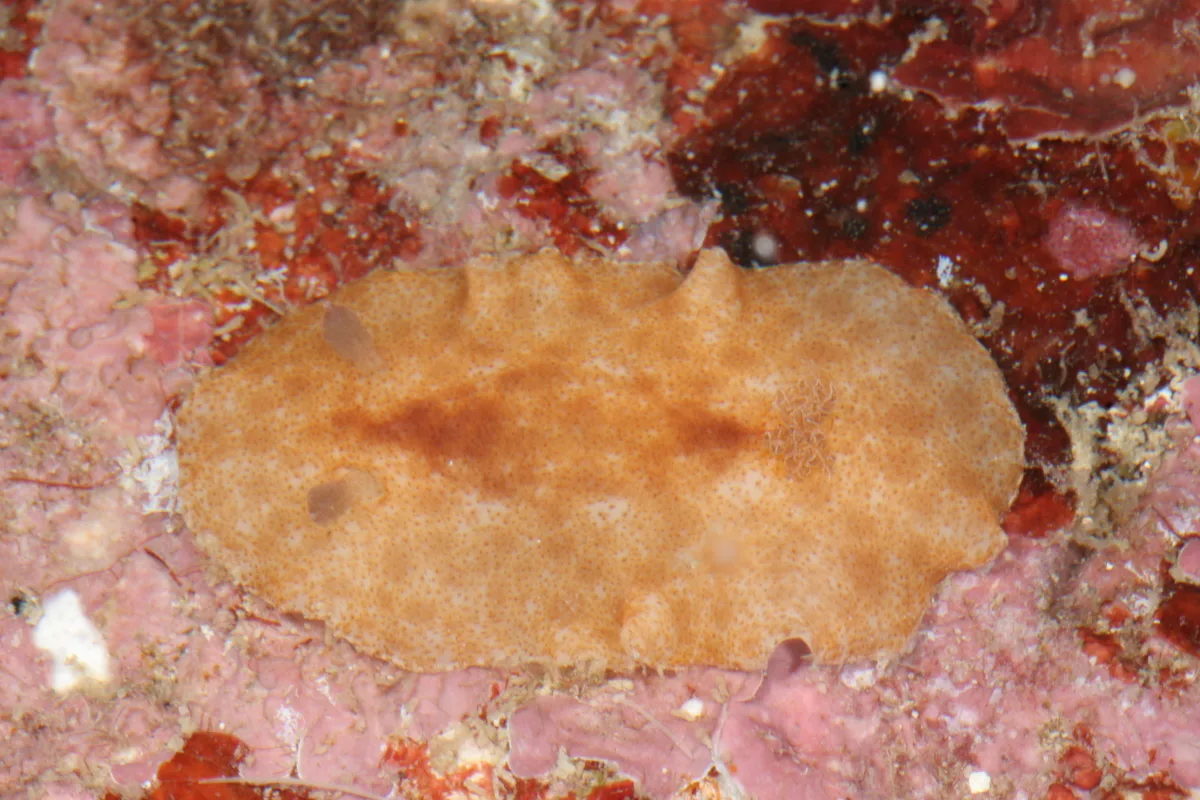
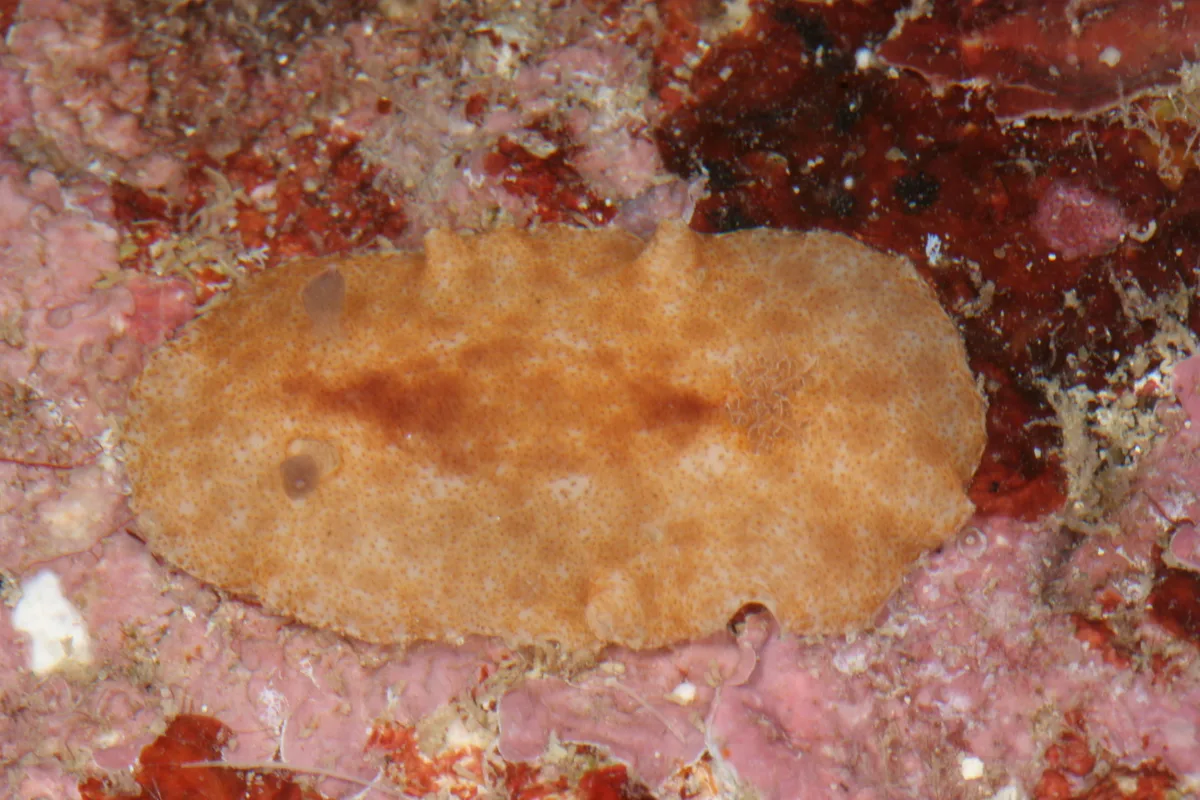
The unadorned one is tan with scattered brown spots, four centimeters (1.6 in), flat and stiff. What is worth checking is not the body but the gills: they are white with brown dots on them, and the dots are on the plume rather than on the mantle. Marks on the gills and a plain back is an unusual arrangement, and on a genus where the body pattern does most of the identification it is the fastest character here.
The rest is what Platydoris are. The mantle is thin, hard, packed with mineral spicules, and pressed flat against the rock with no raised edge to grip, which is a physical defense to go with the chemical one that the sponge diet supplies. Being flat lets it spend daylight inside cracks and under slabs that thicker animals cannot enter, and it grazes sponges on open rock after dark.
It was described from Indo-Pacific material, and the world's records for it are thin: a couple of dozen logged sightings, most from 🇳🇨 New Caledonia (🇫🇷 Overseas France) and the 🇵🇭 Philippines.
- gills white with brown dots on them, which the body does not have
- tan ground color with scattered brown spots
- flat, stiff and leathery, held pressed to the rock
- four centimeters, small for the genus