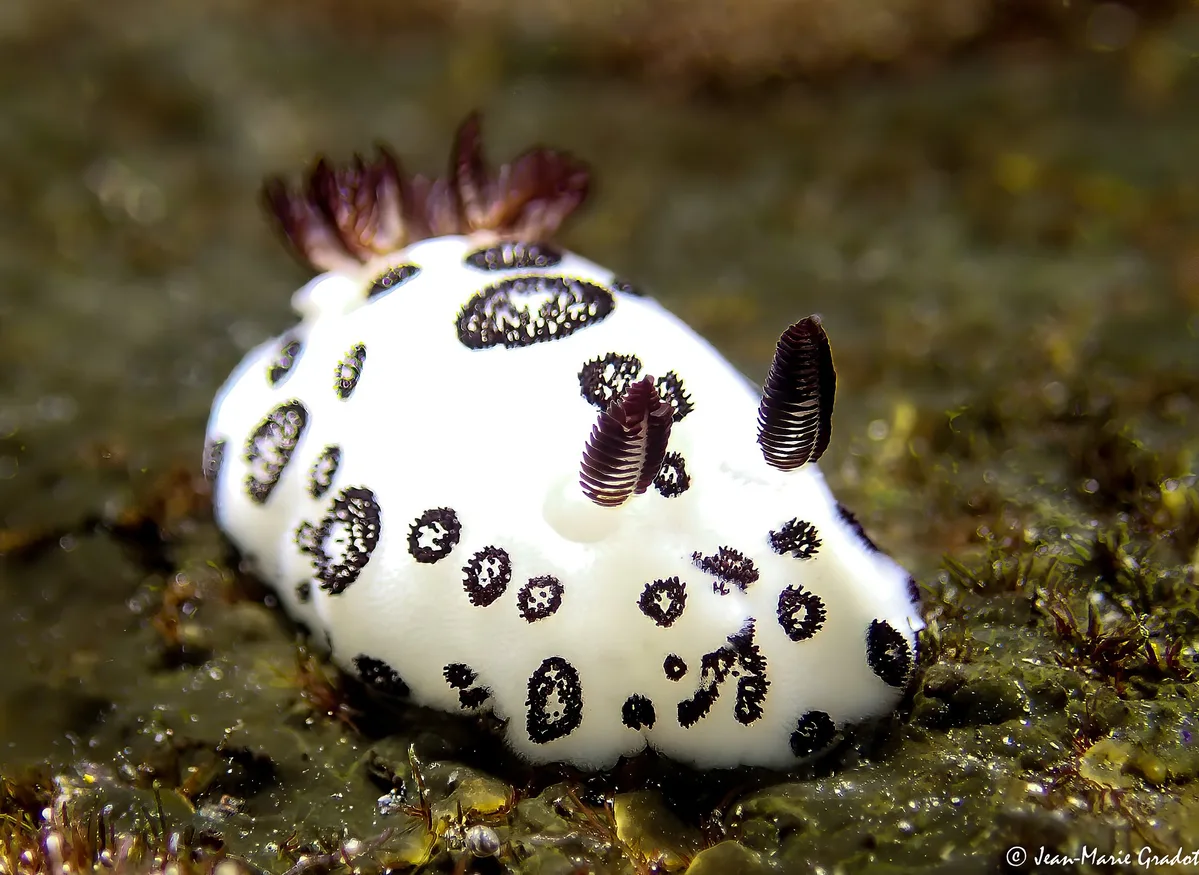
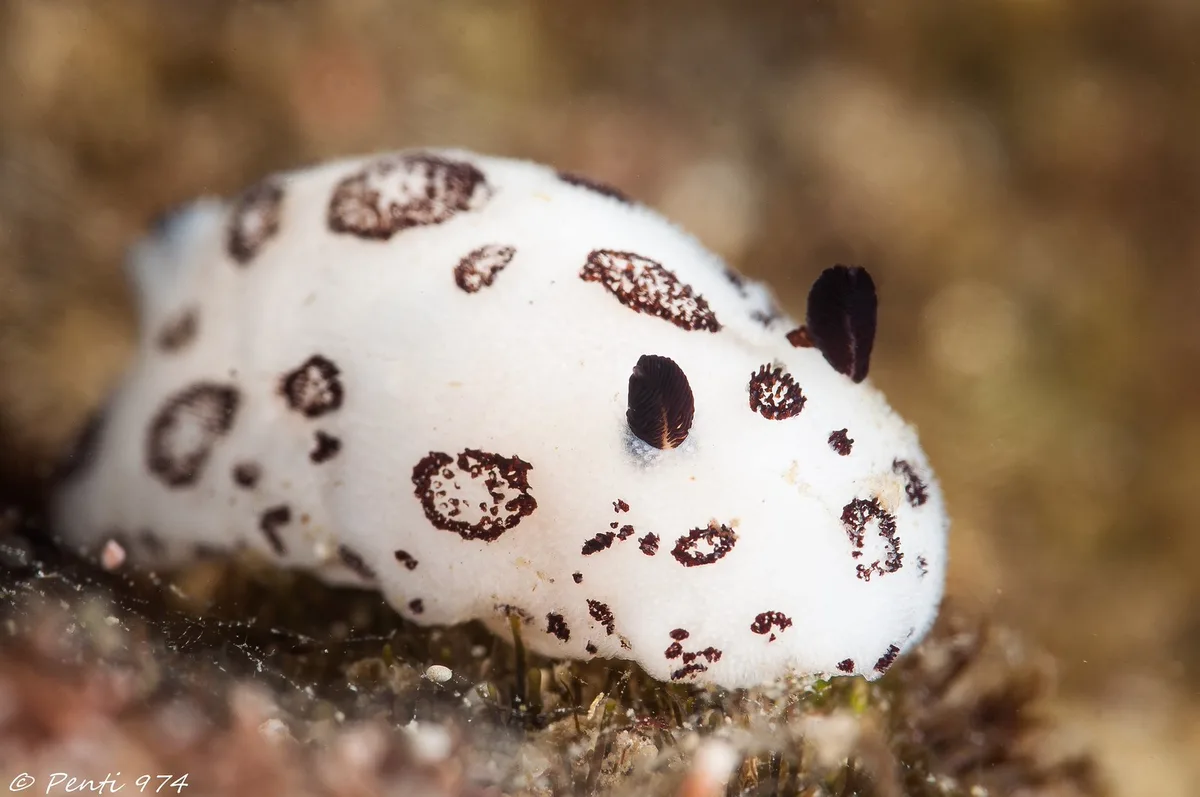
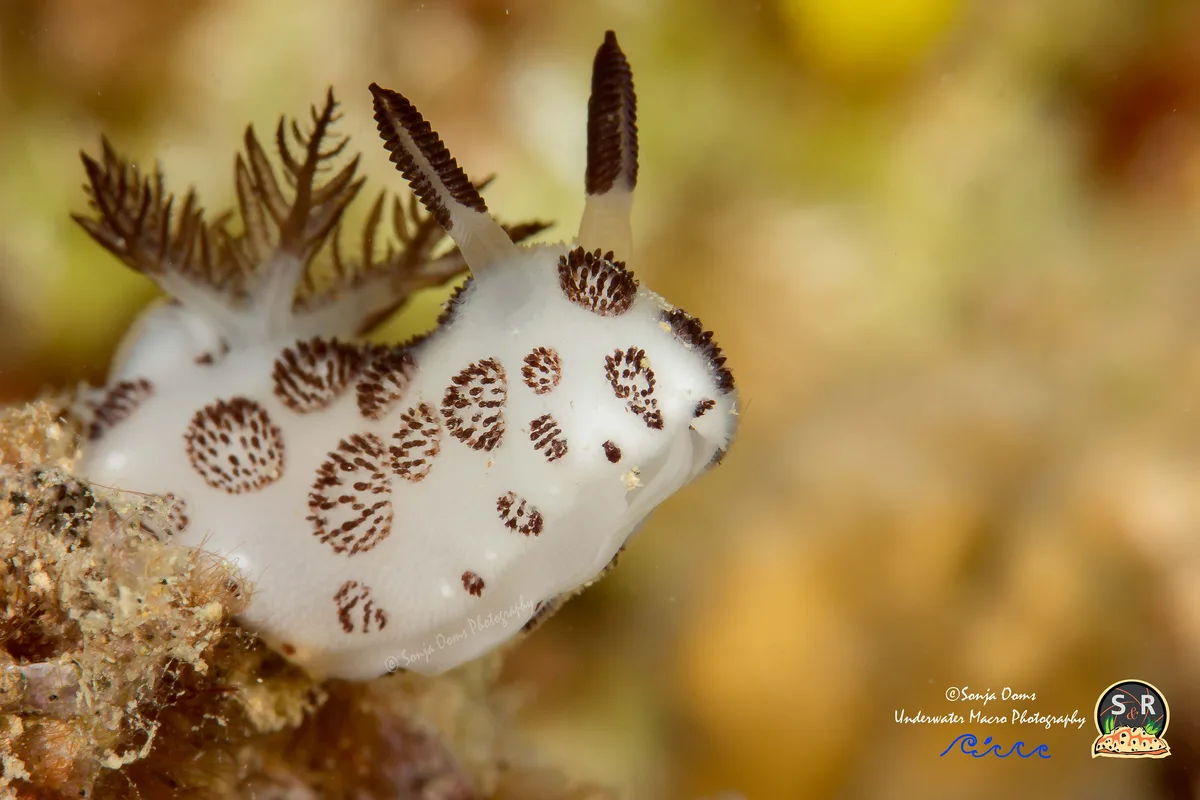
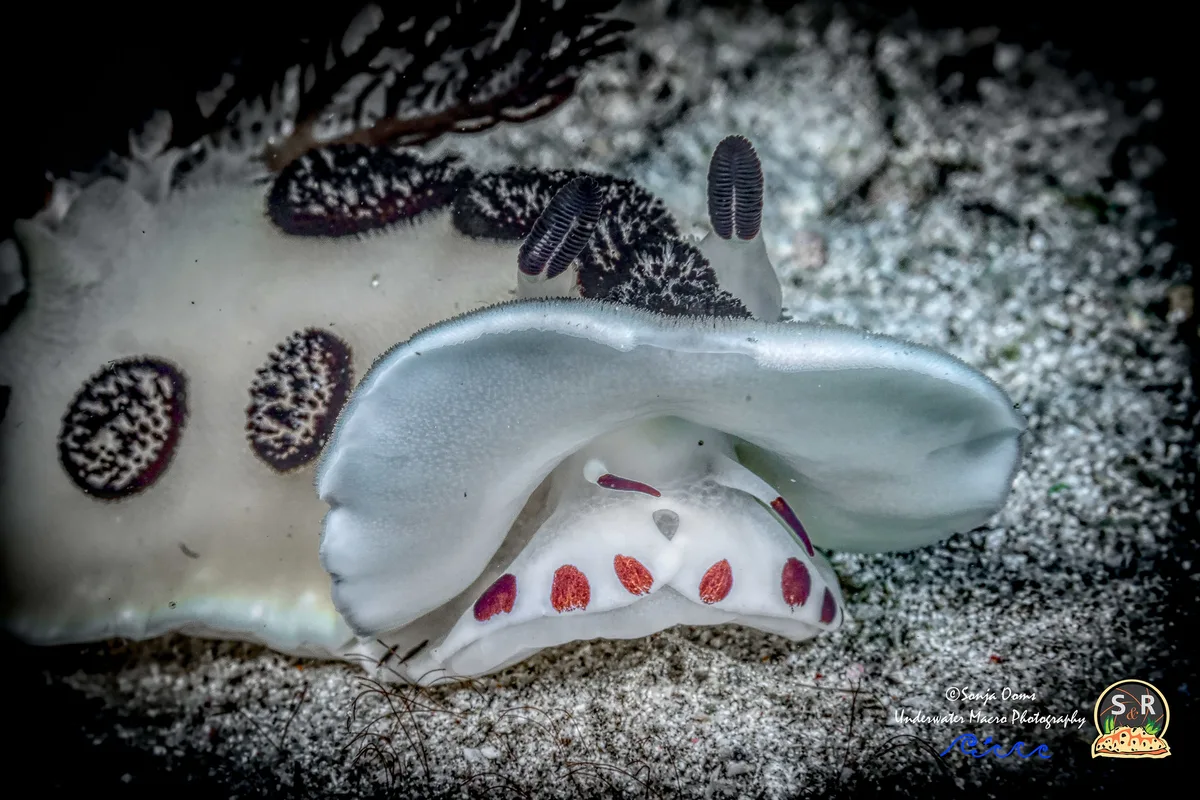
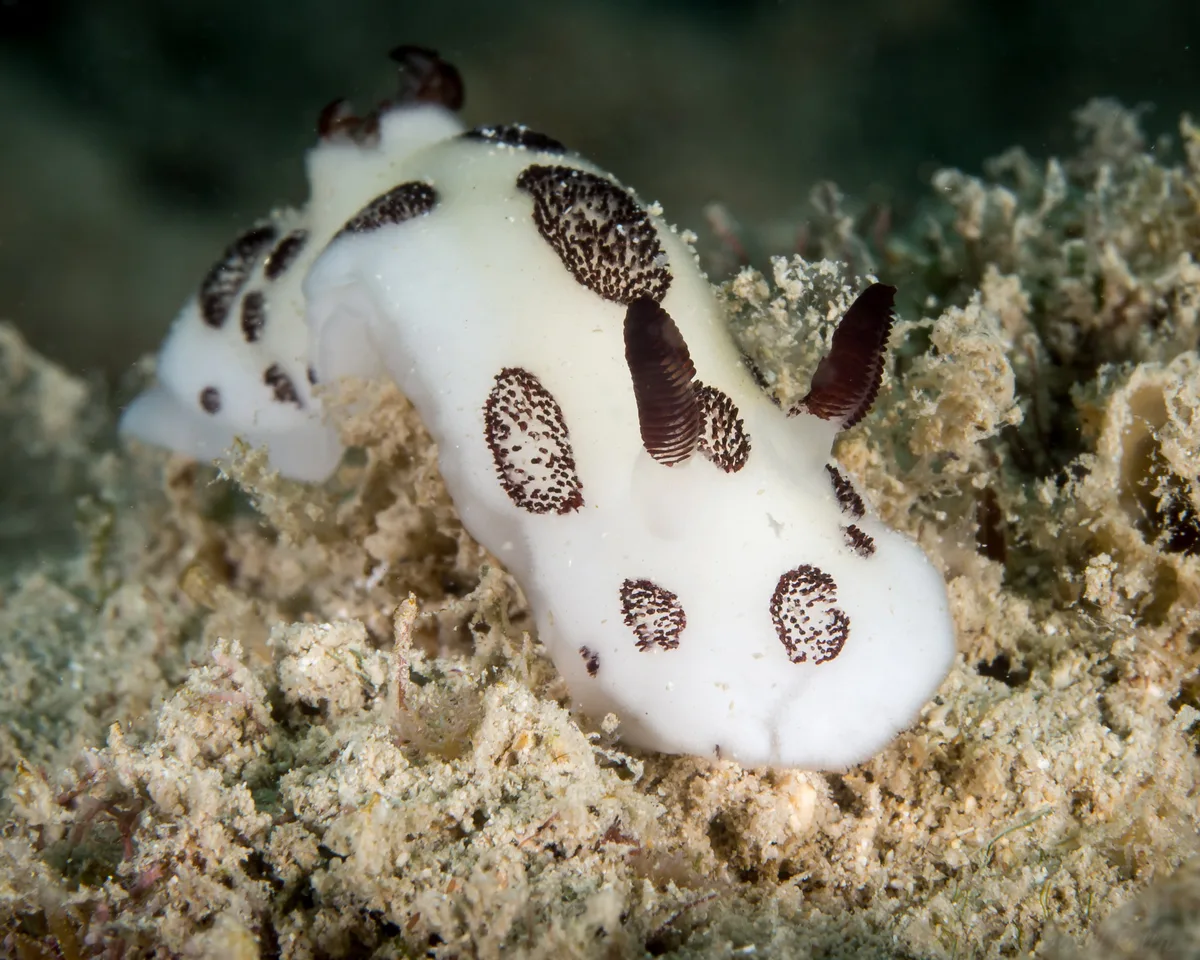
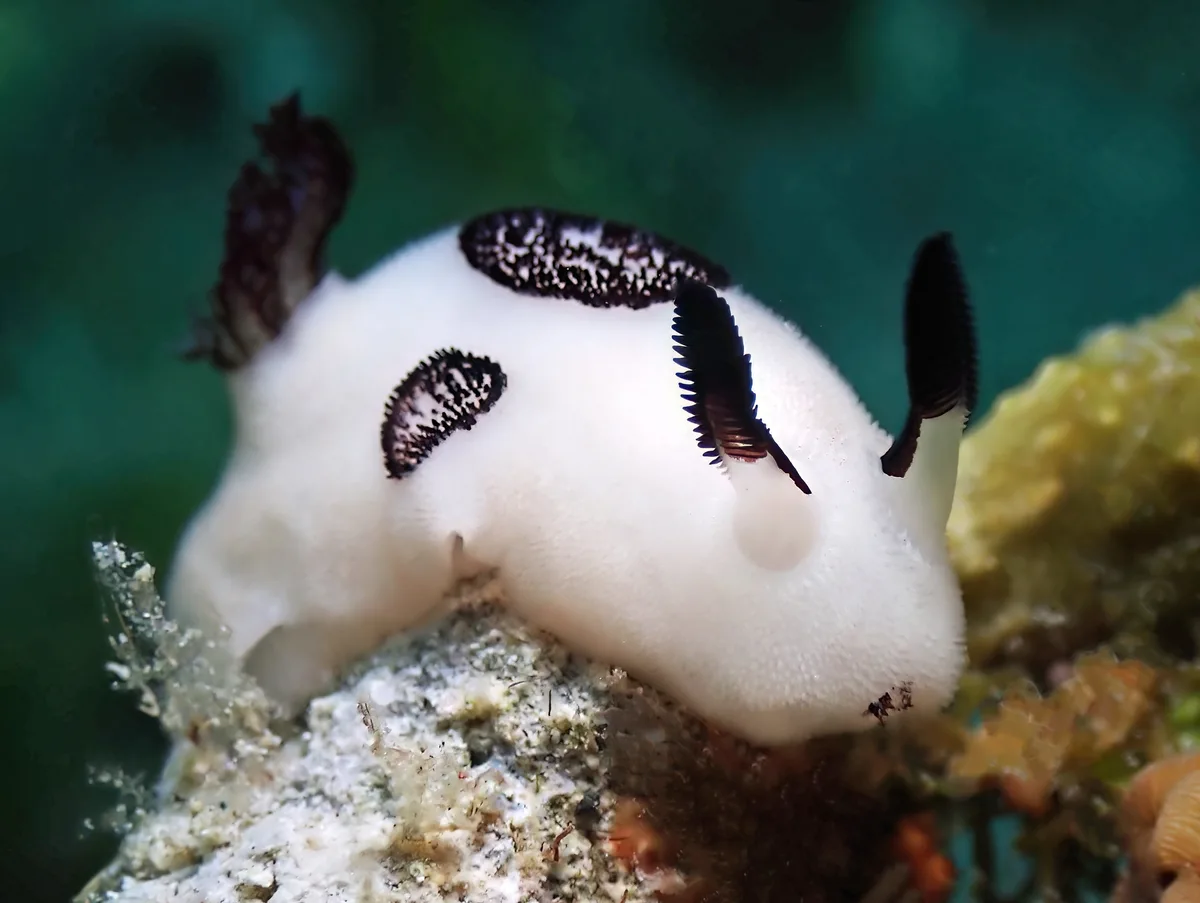
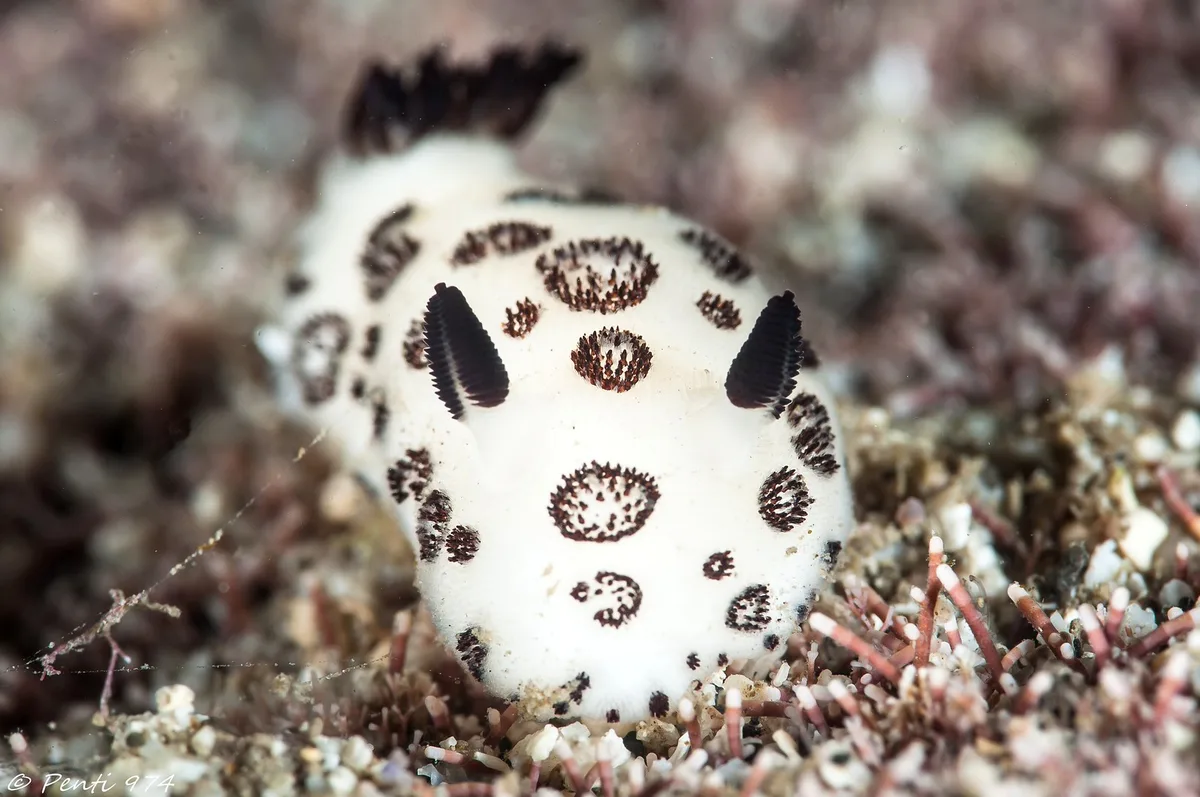
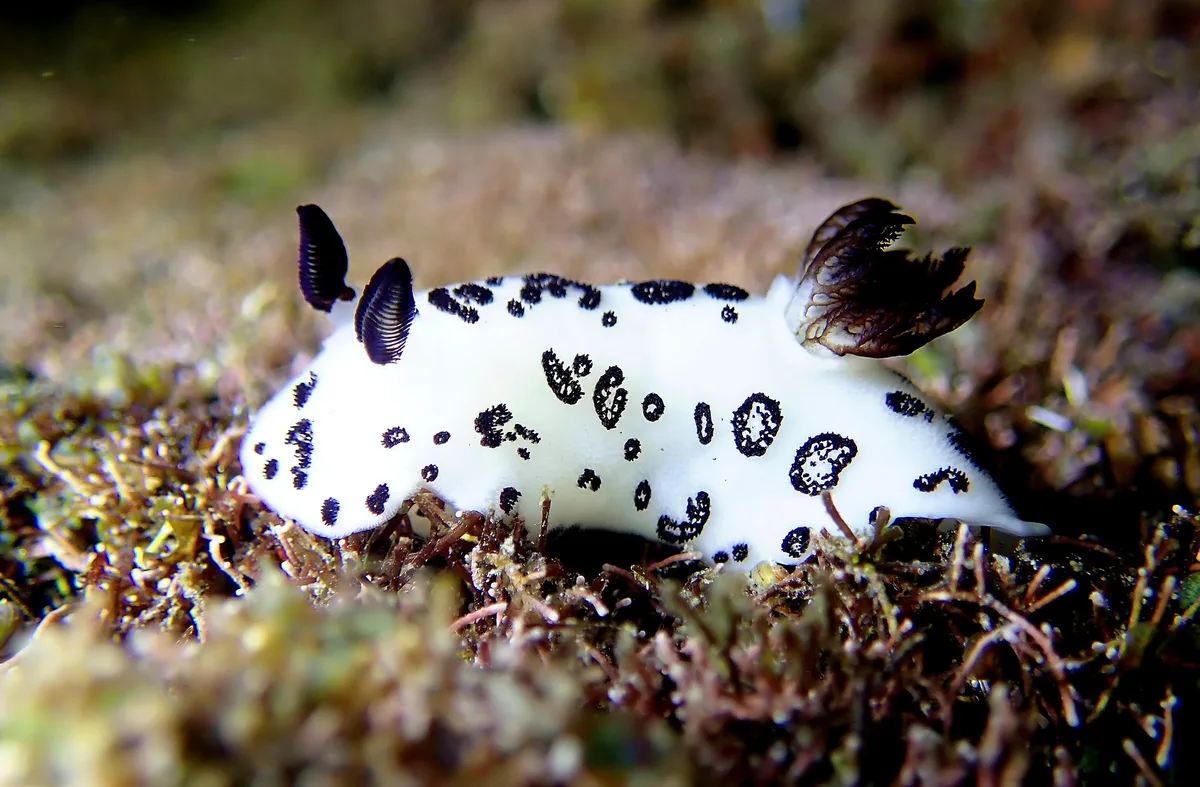
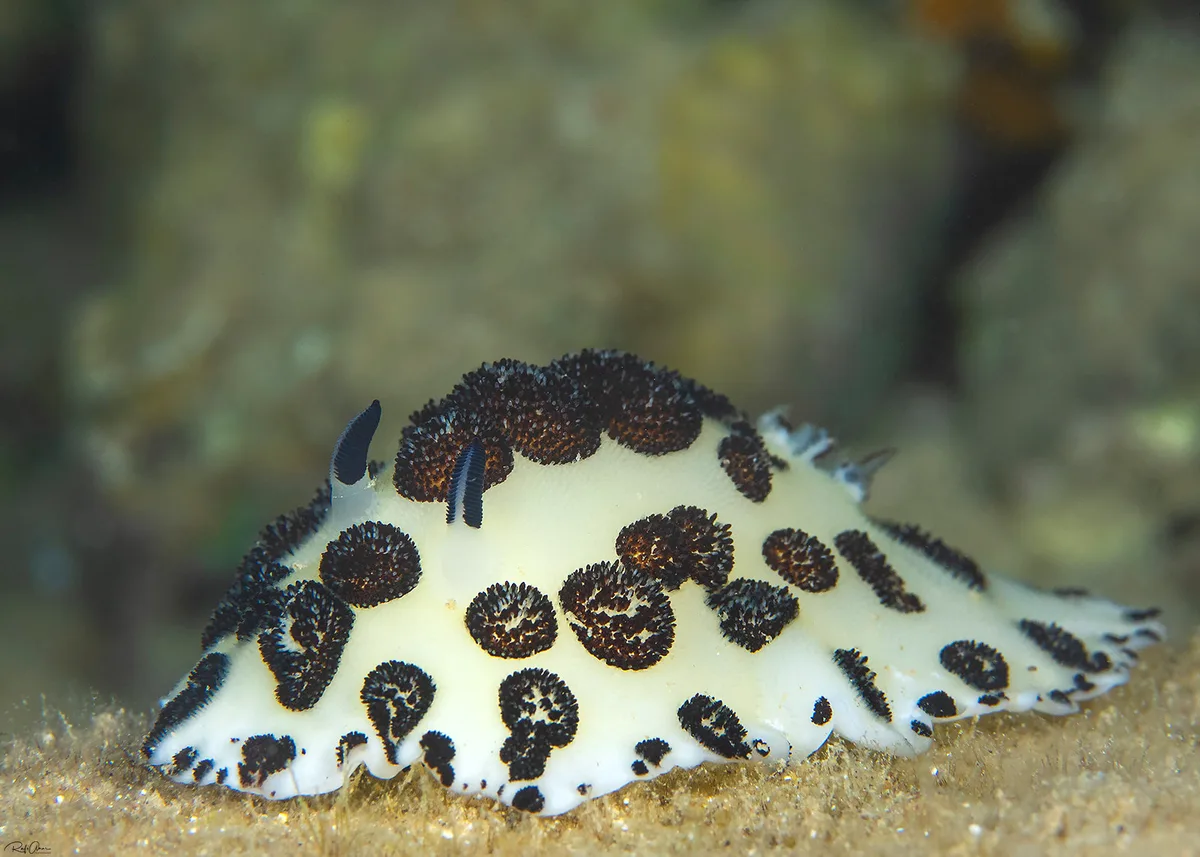
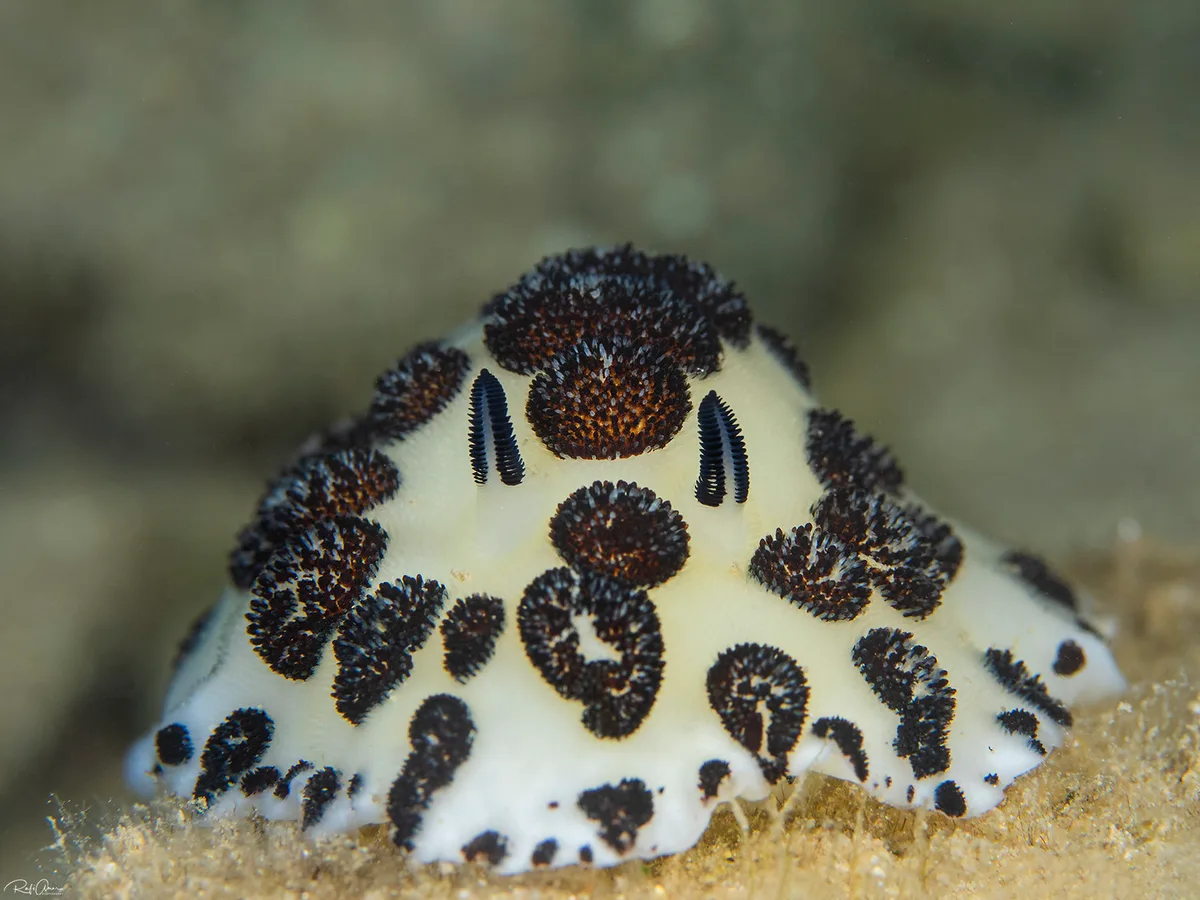
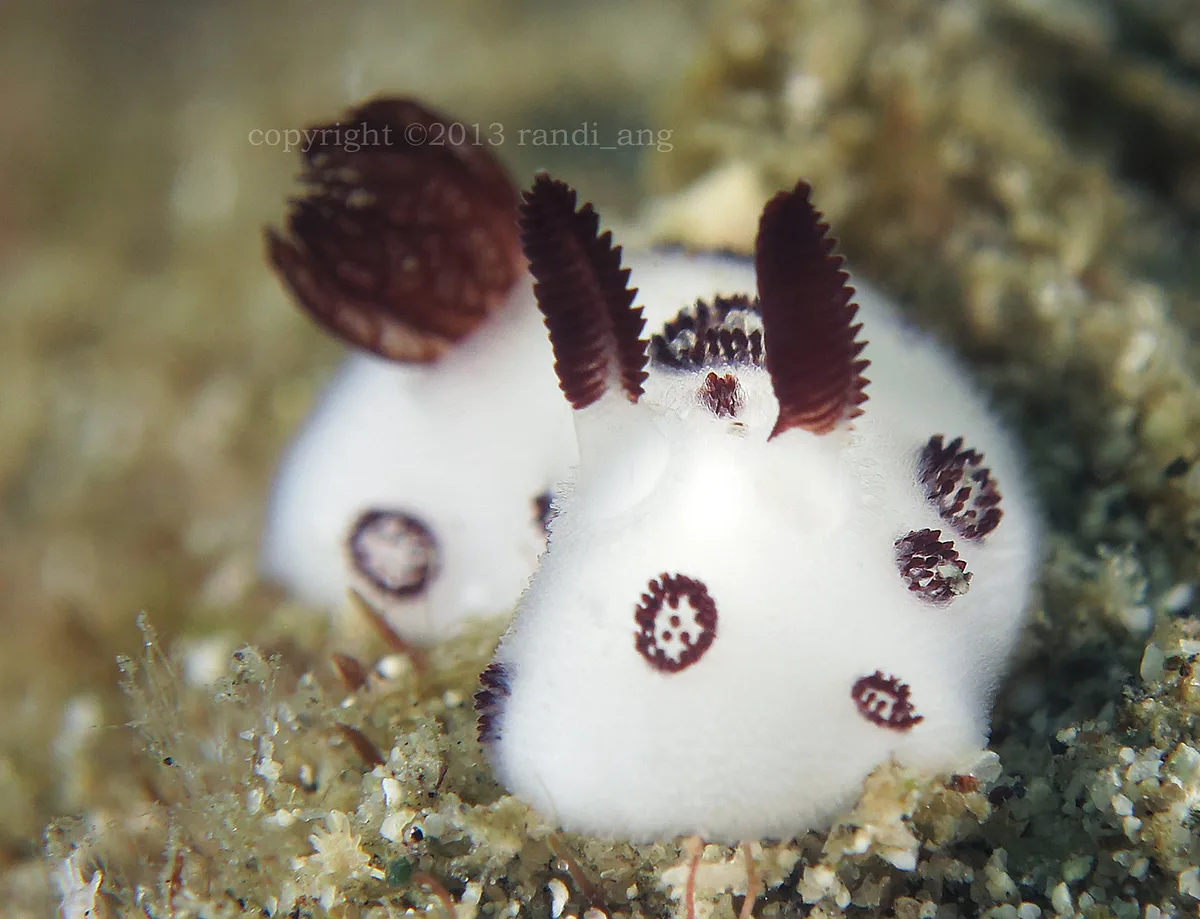
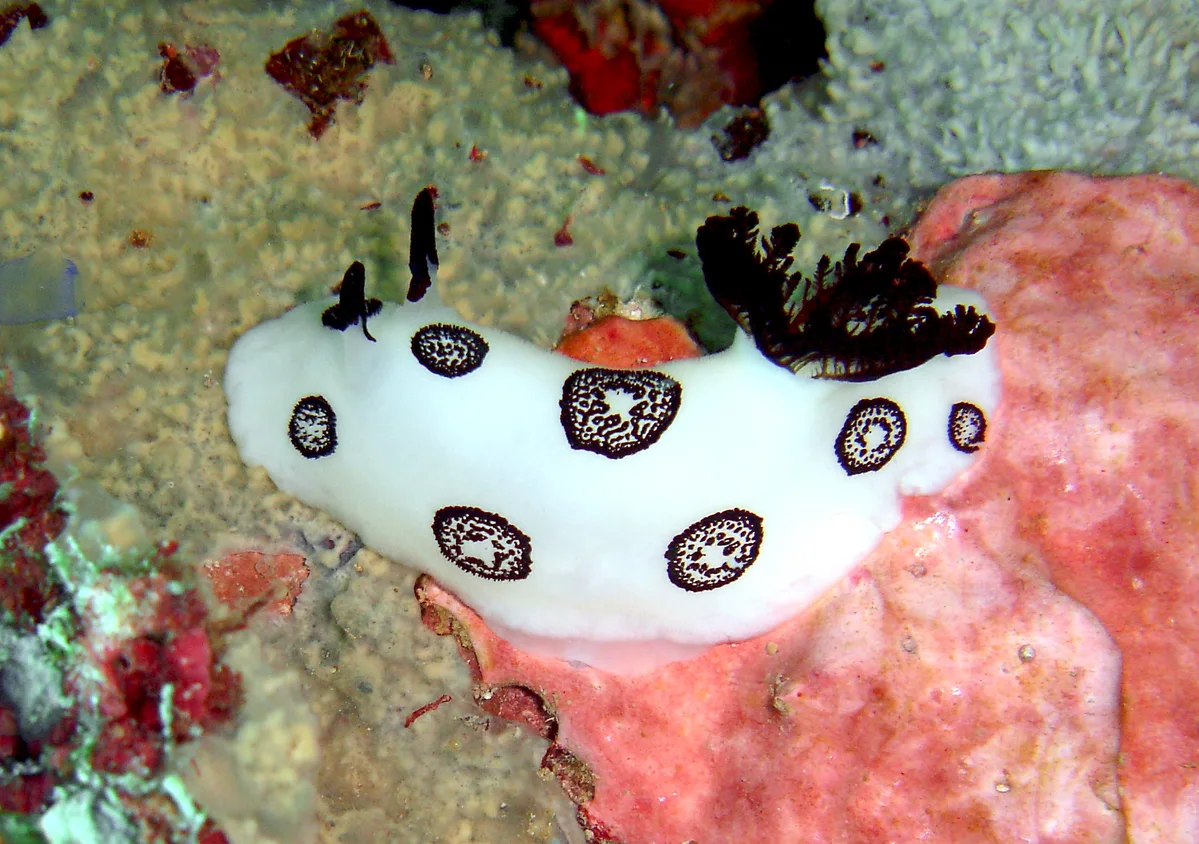
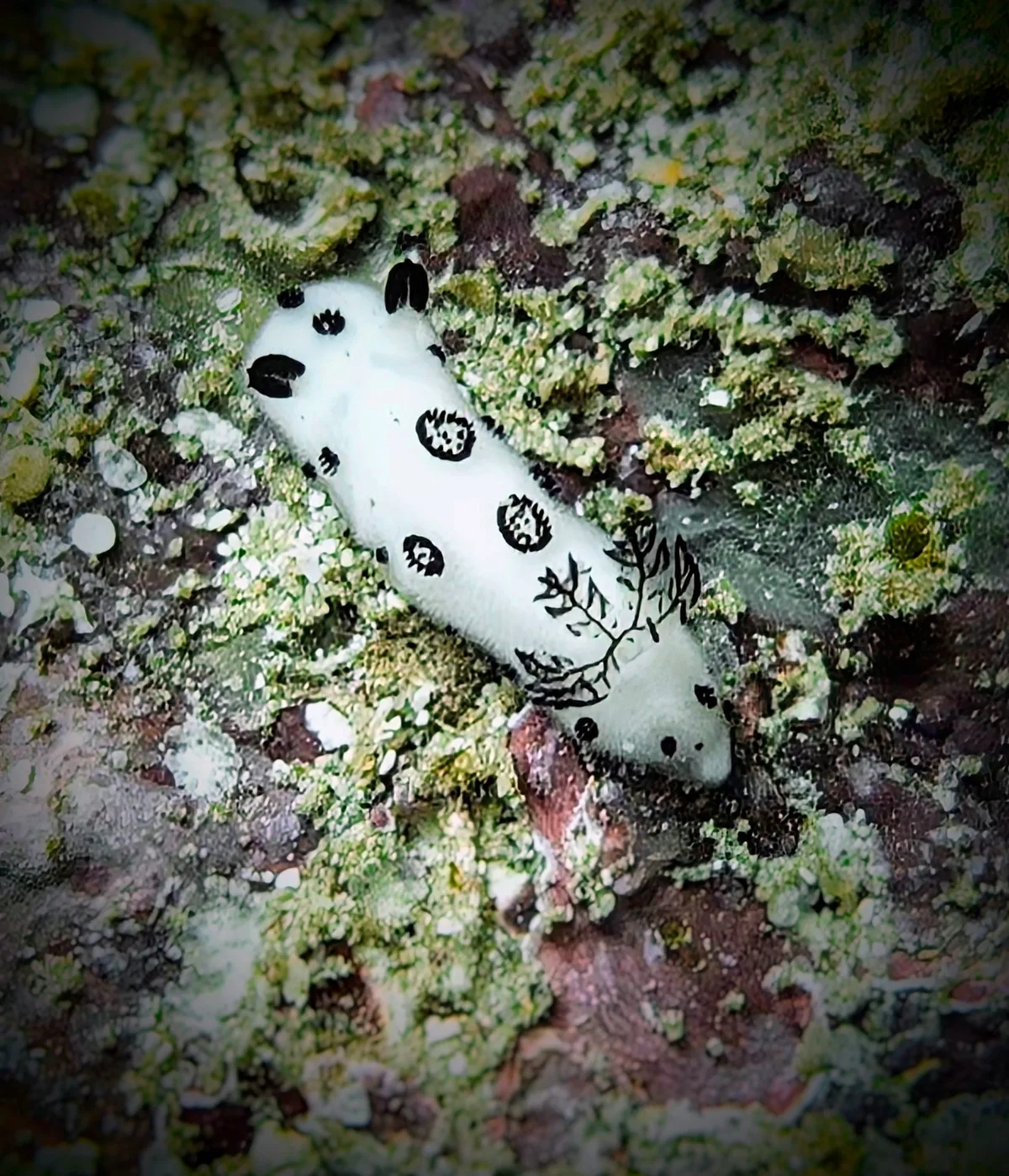
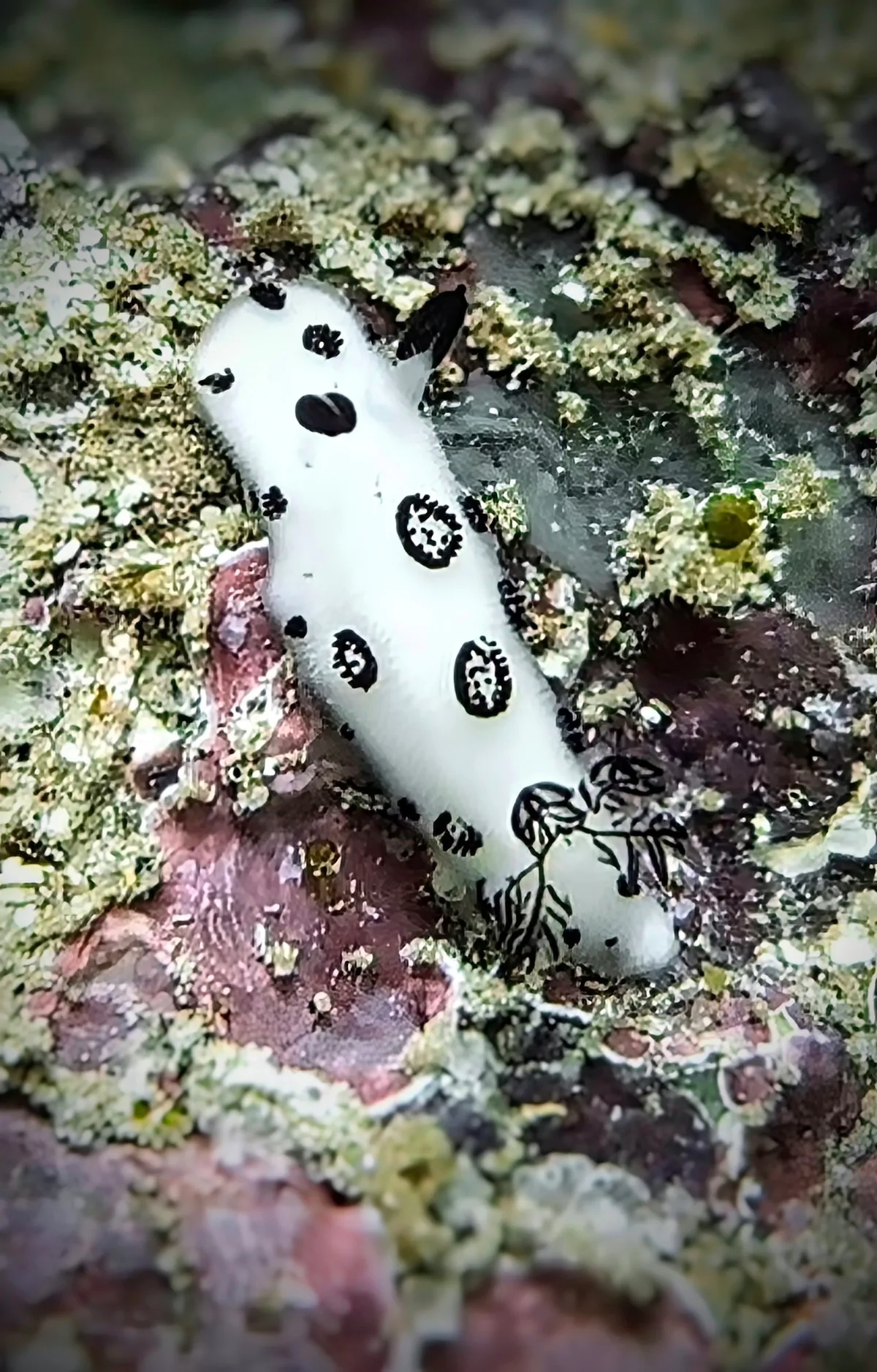
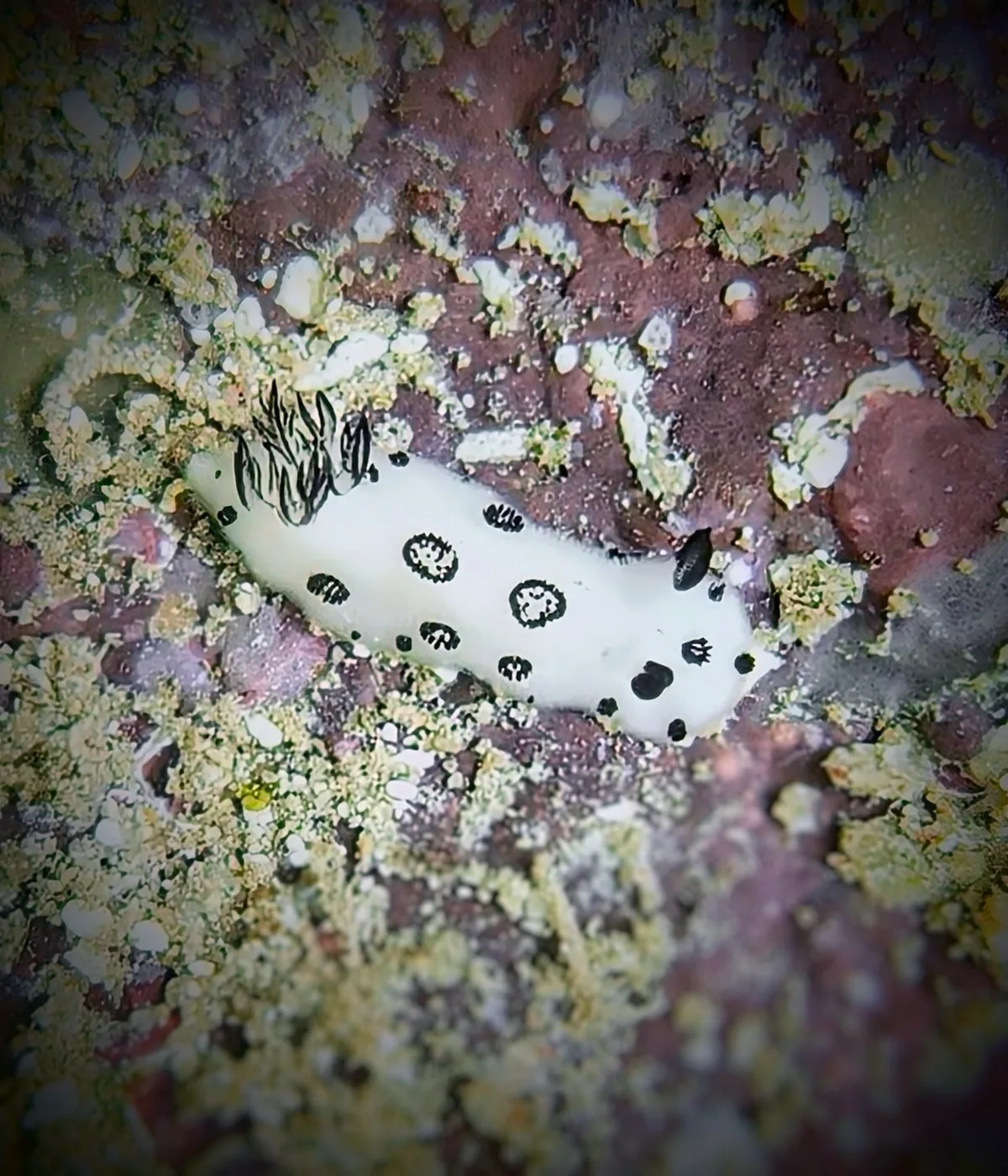
The velvet on this animal is not fur and not skin. It is thousands of tiny stiffened papillae, each one propped upright by a bundle of mineral spicules, and each one carrying sensory cells at the tip.
They are called caryophyllidia, and they are what gives this whole group the look people describe as fuzzy. Run a light across the back at an angle and the surface breaks into rows of minute posts, each ringed by spicules like a tiny crown. They stiffen the skin against being bitten and they give the animal a sense of what is touching it, which matters for a slug that cannot see and cannot move quickly.
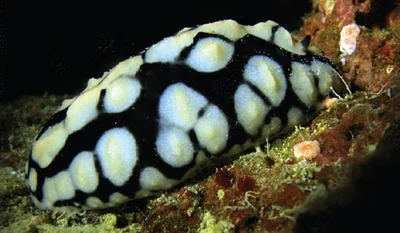
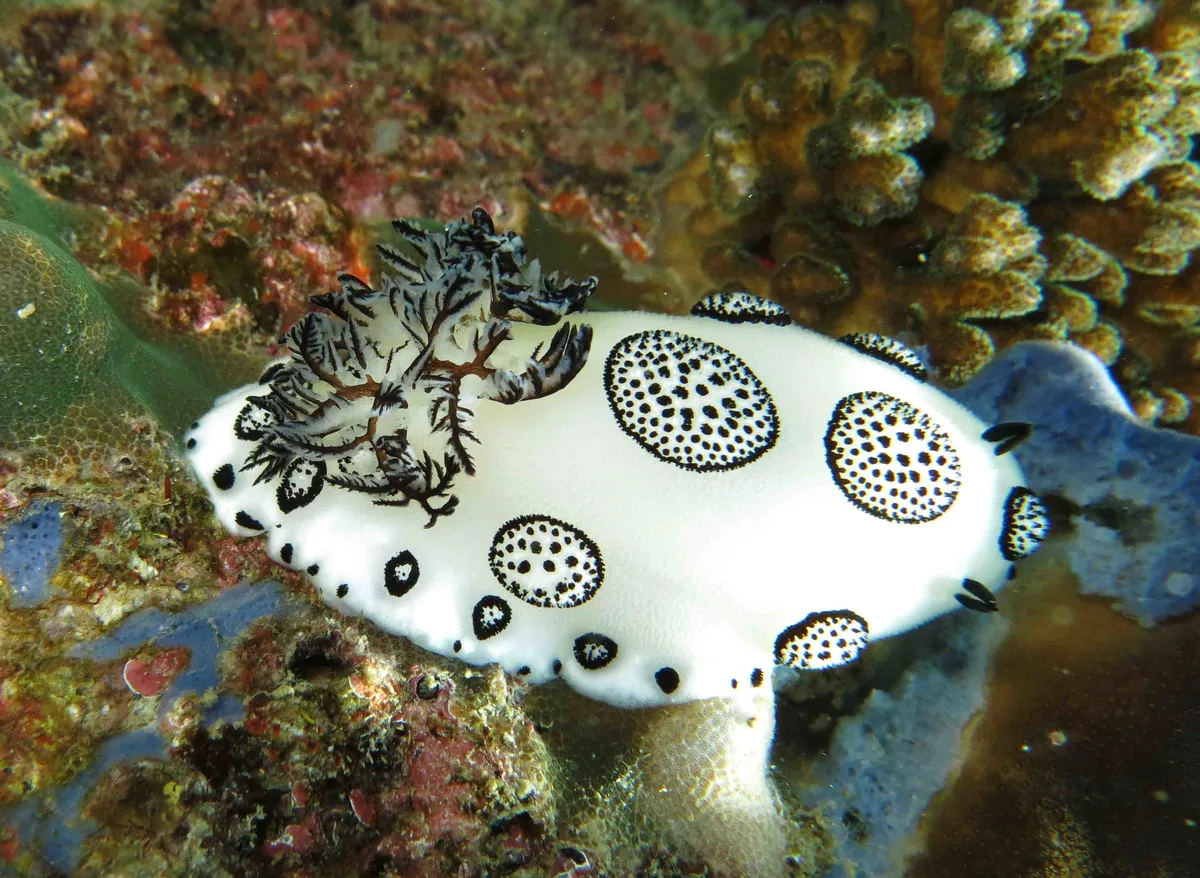
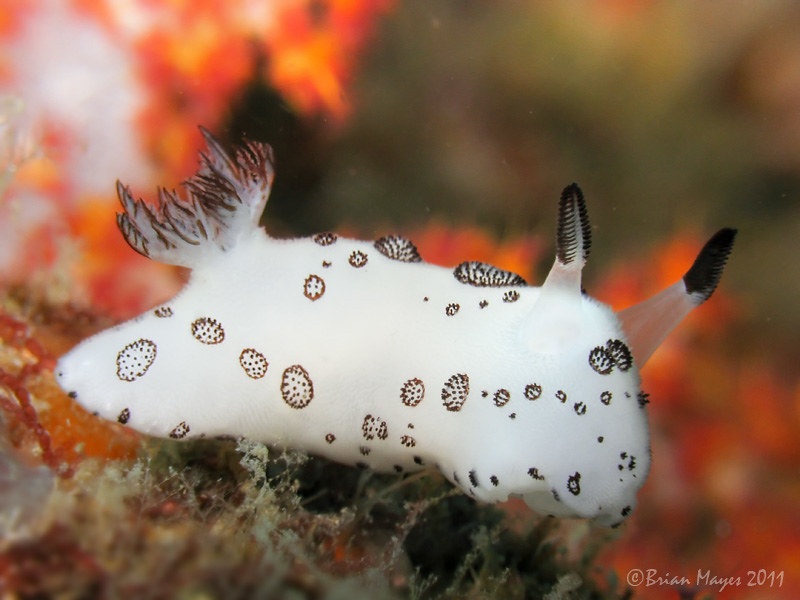
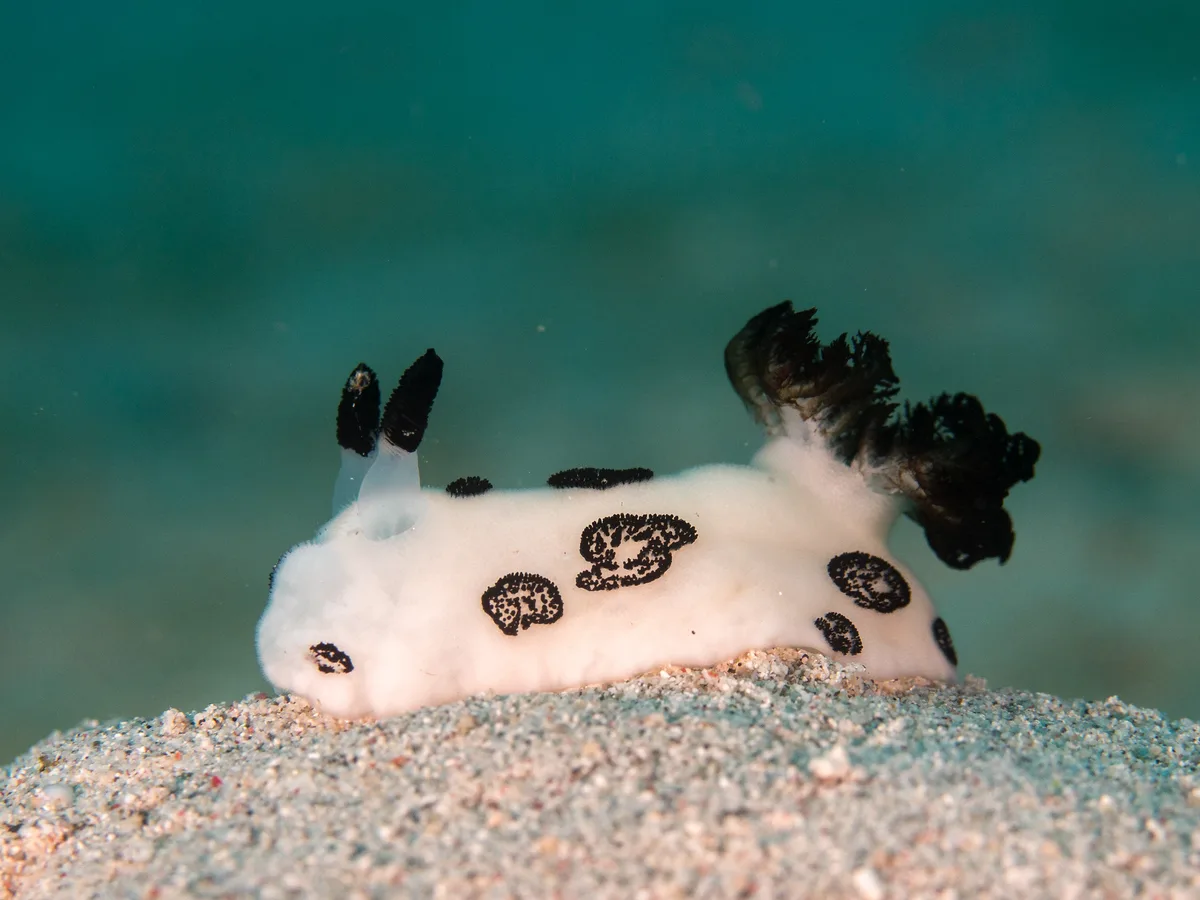
The same structures are why the small yellow relative already in this catalogue is sold to the internet as a sea bunny: the fuzz and the two upright rhinophores read as fur and ears. This is the large version of the same design, up to fifteen centimeters, white with big grey ring-shaped blotches, and among the biggest sea slugs anyone will find here.
It is out mostly at night on sponge-covered rock, and it eats one particular blue sponge across much of its range. English names for it are a small industry: dotted, funeral, mourning, panda. The Latin one is the only label everyone agrees on.
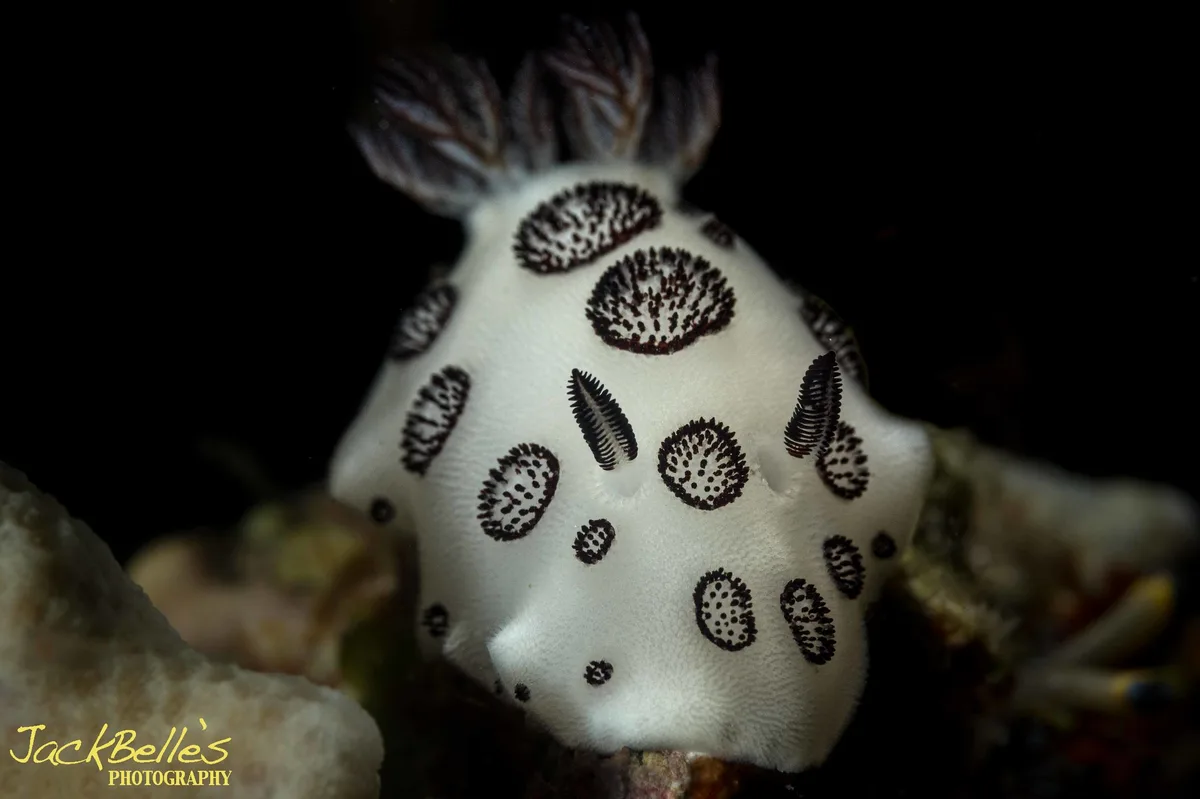
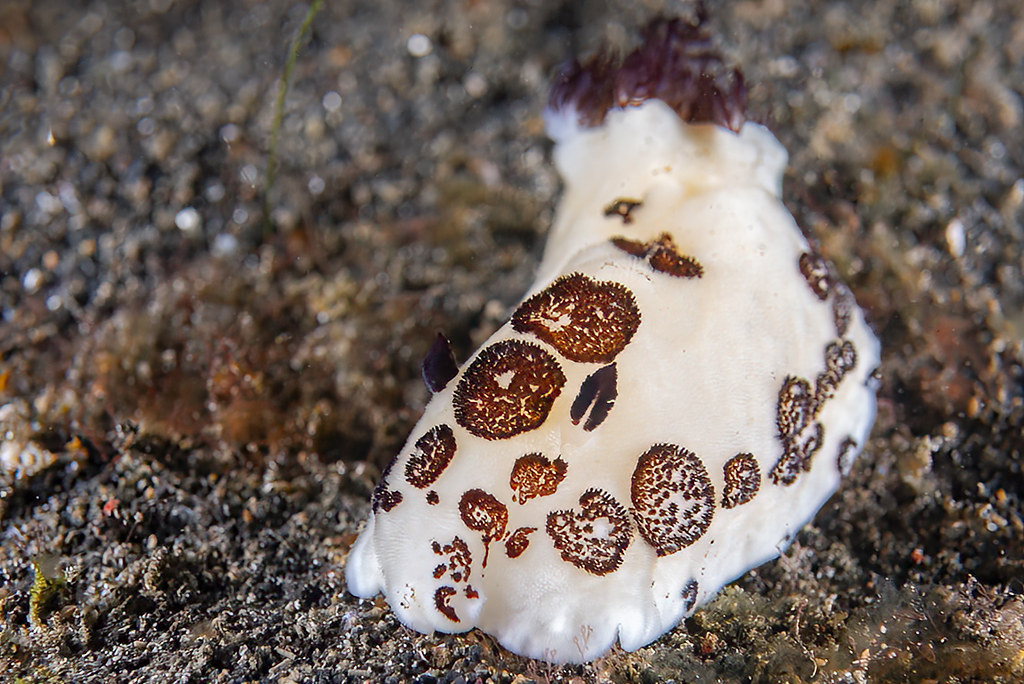
- white back marked with large grey to black ring-shaped blotches
- velvety surface, not smooth: covered in minute stiffened papillae
- large for a dorid, up to 15 cm
- gill plume and rhinophores dark