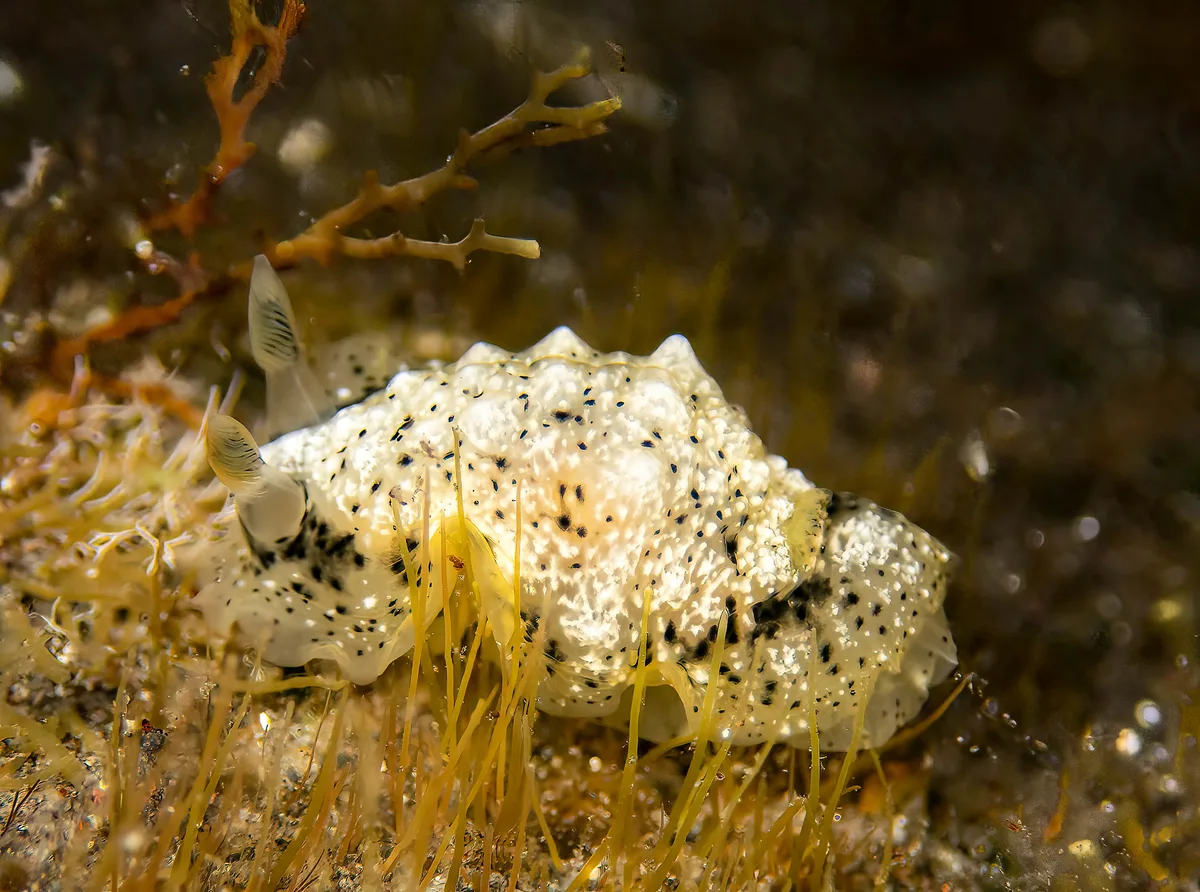
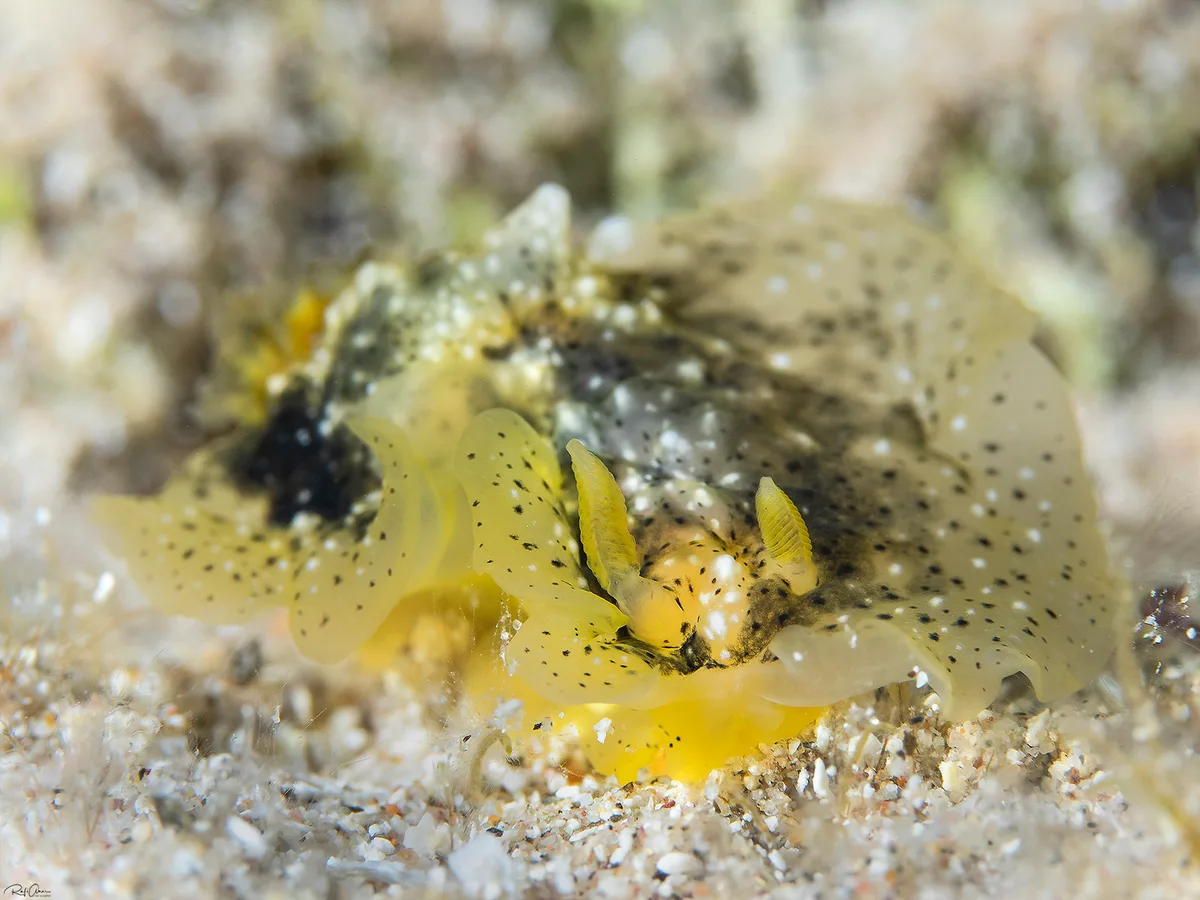
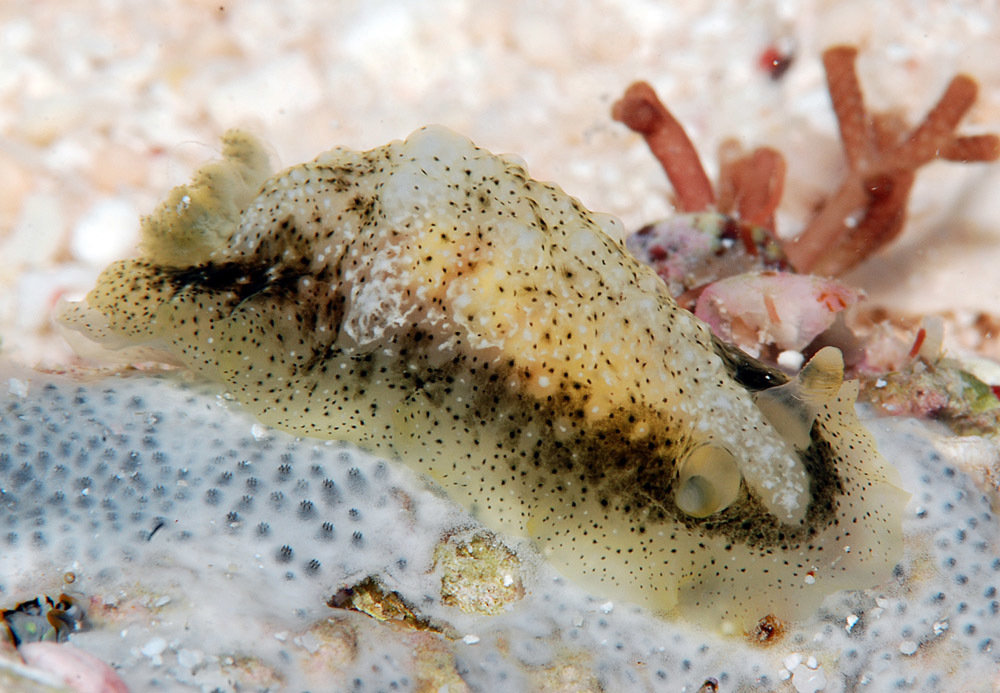
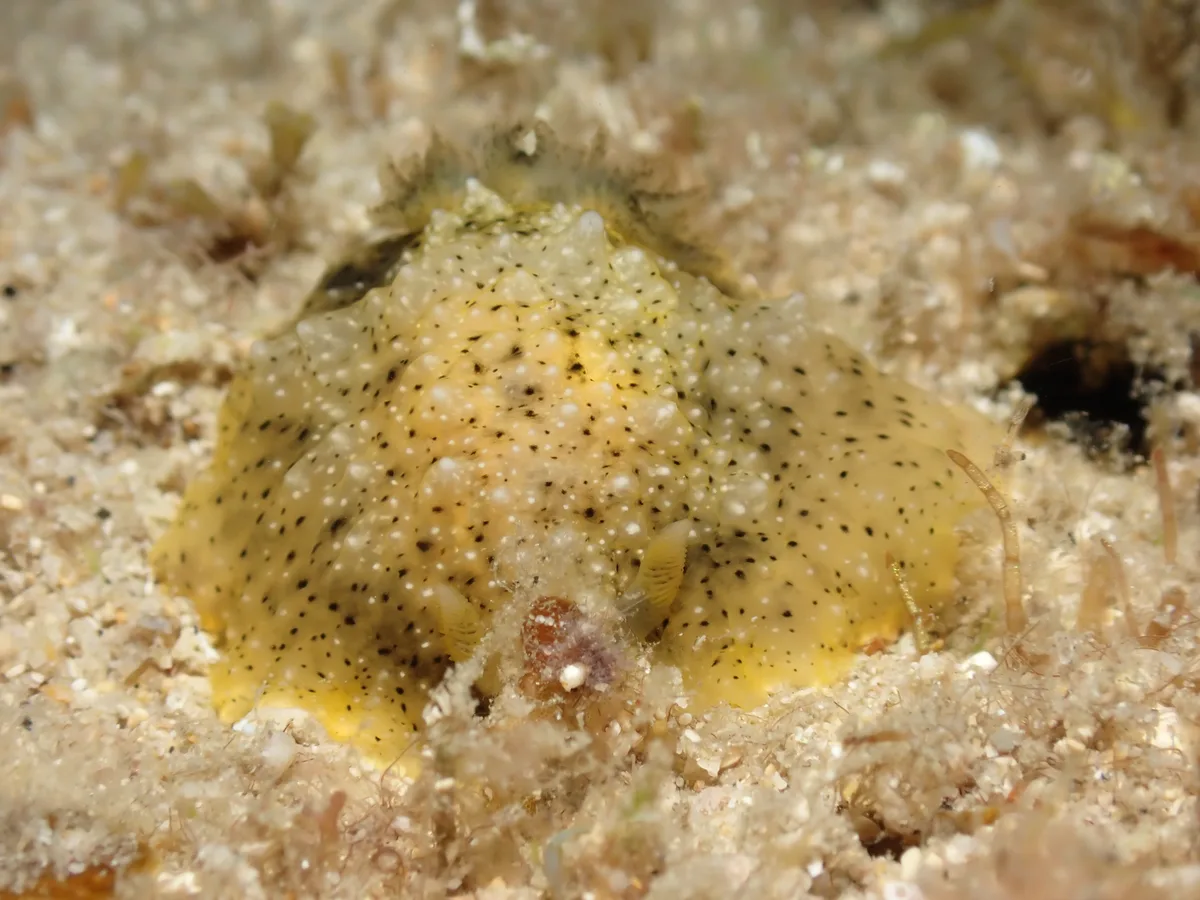
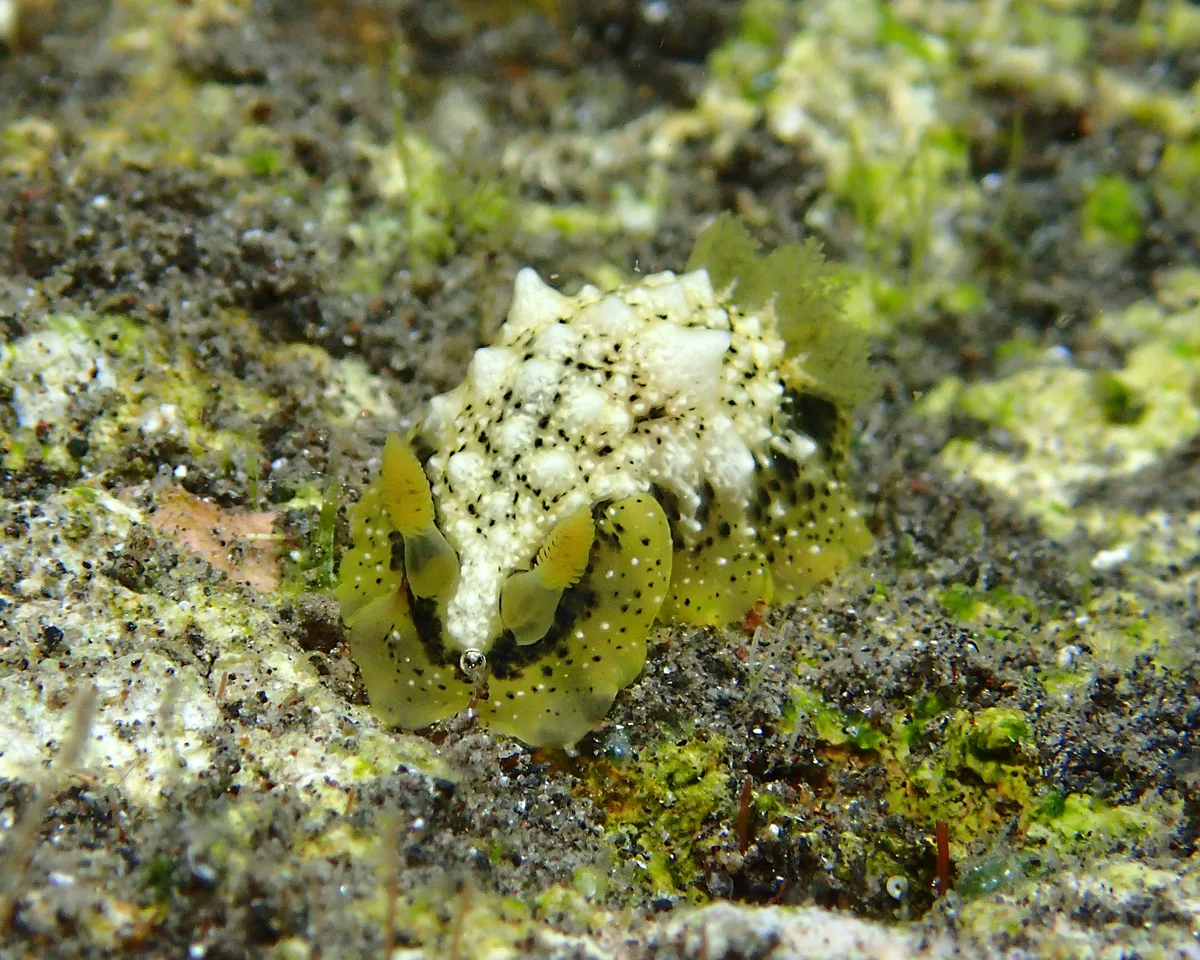
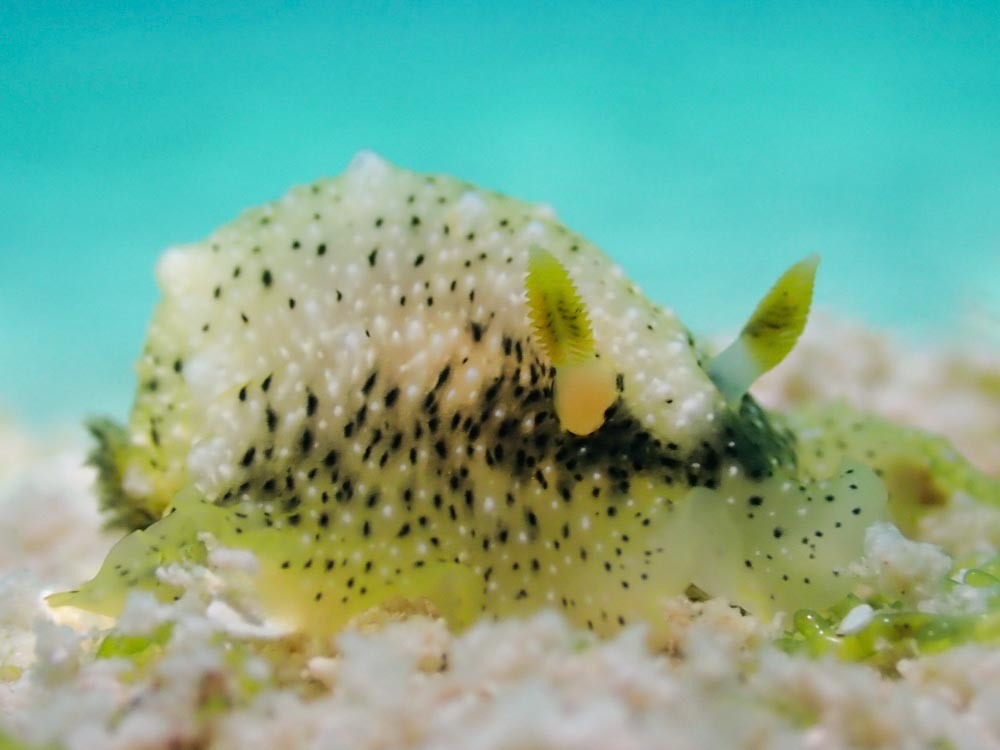
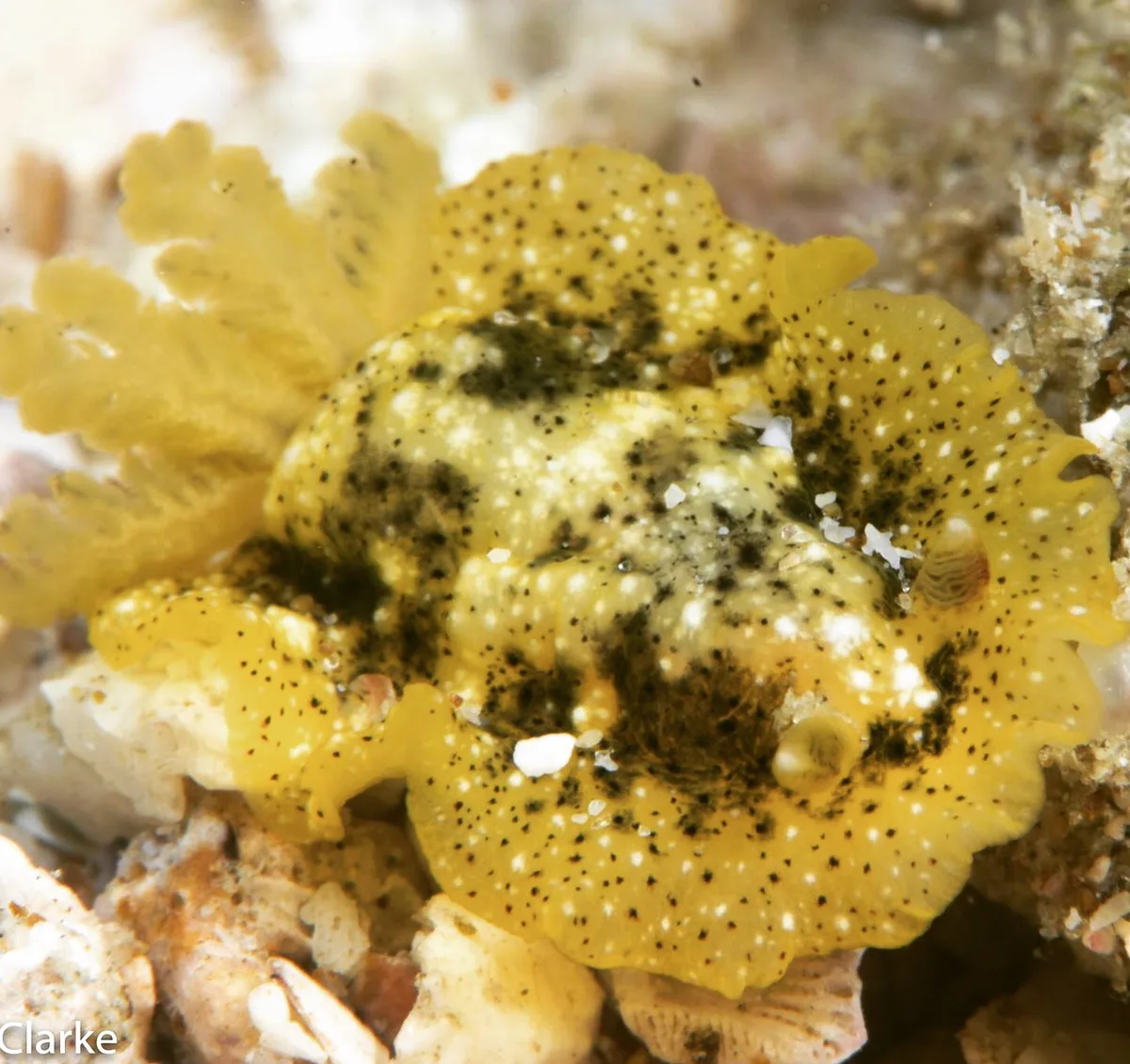
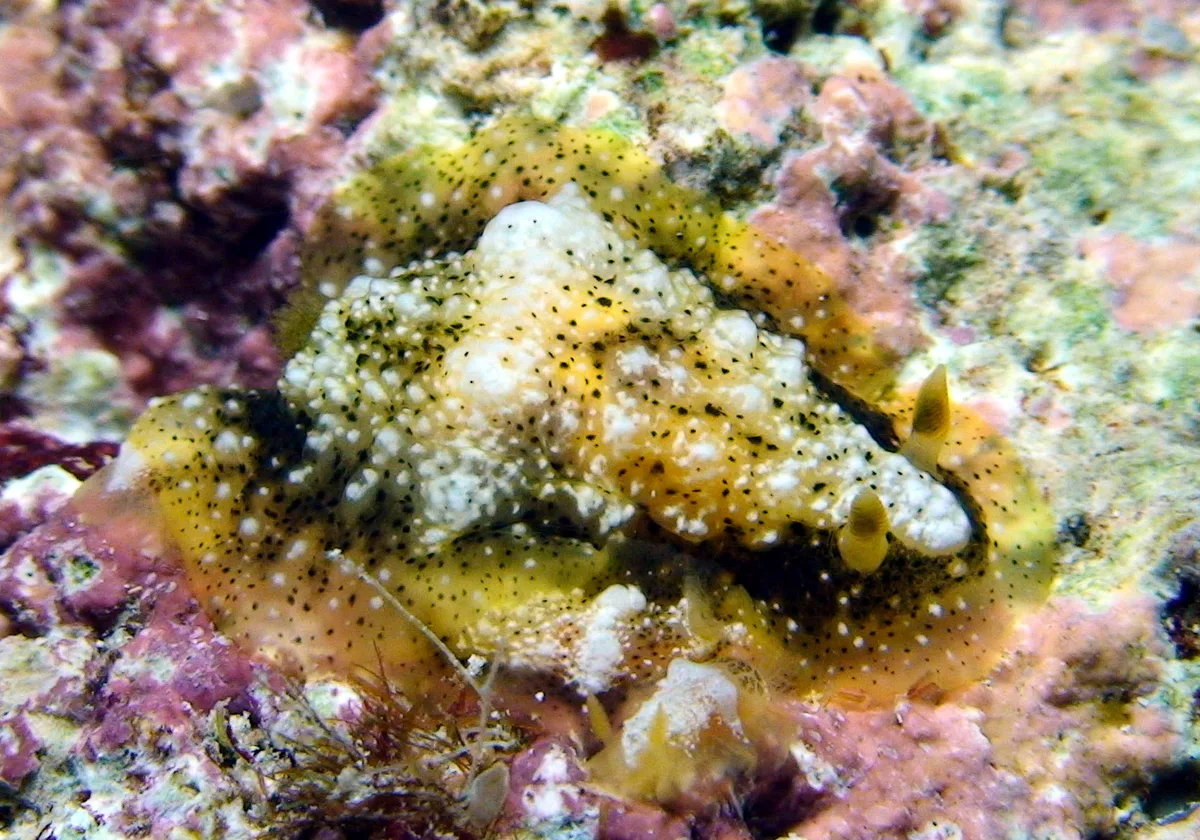
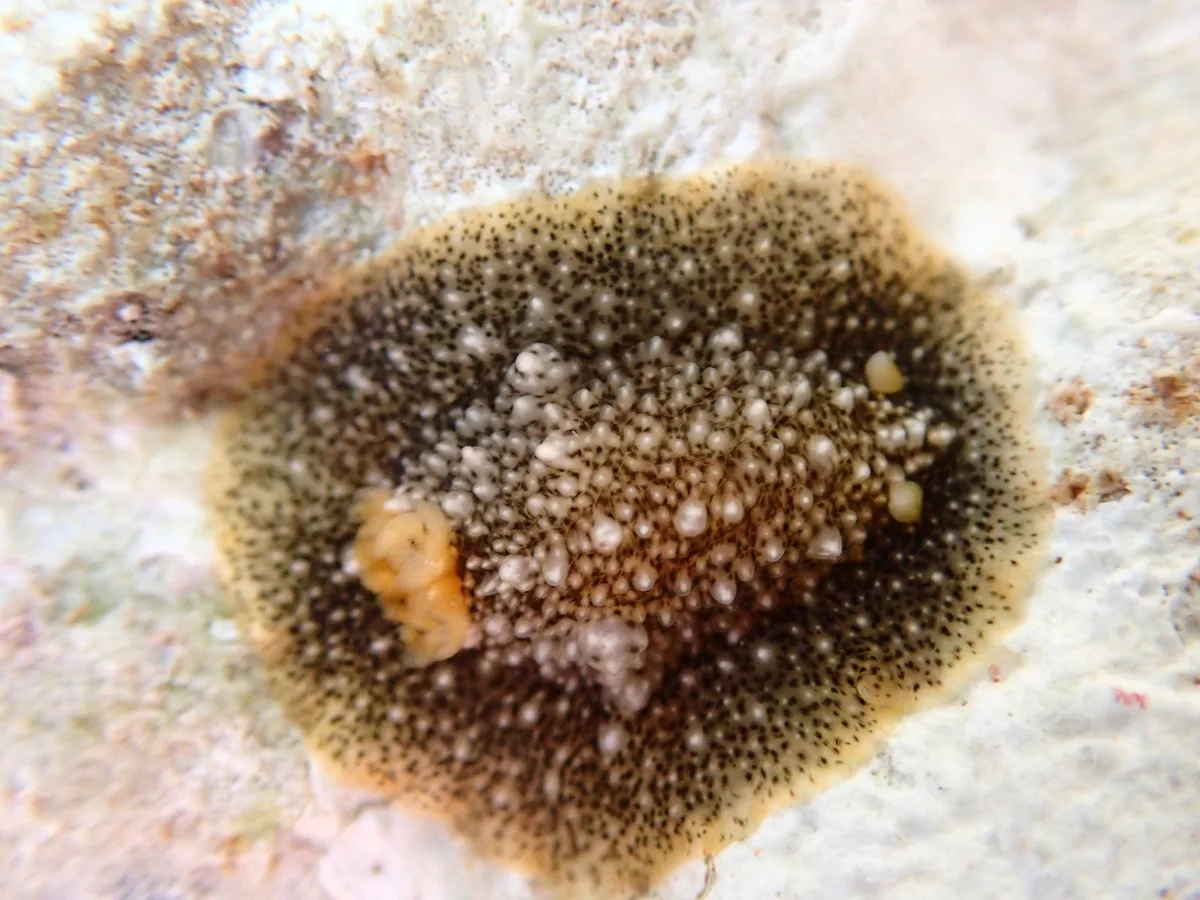
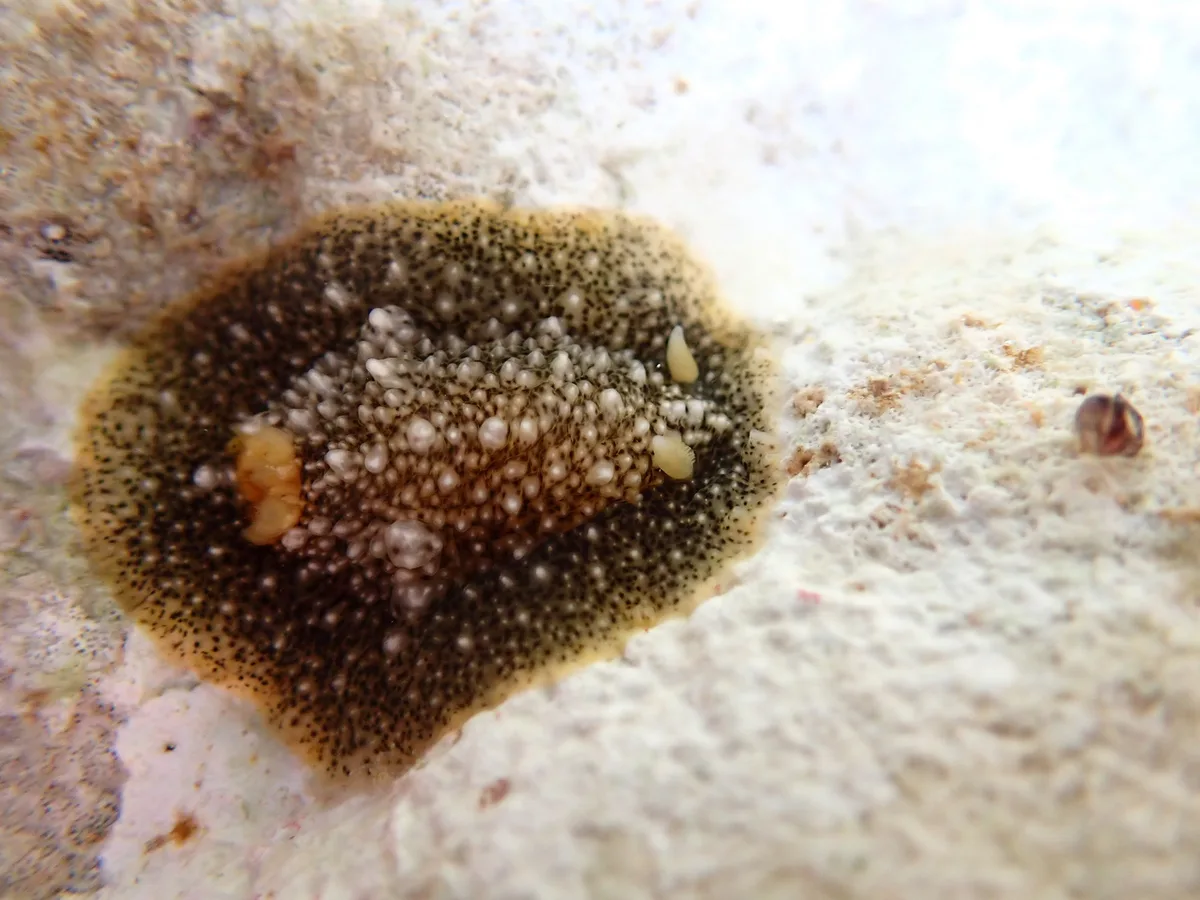
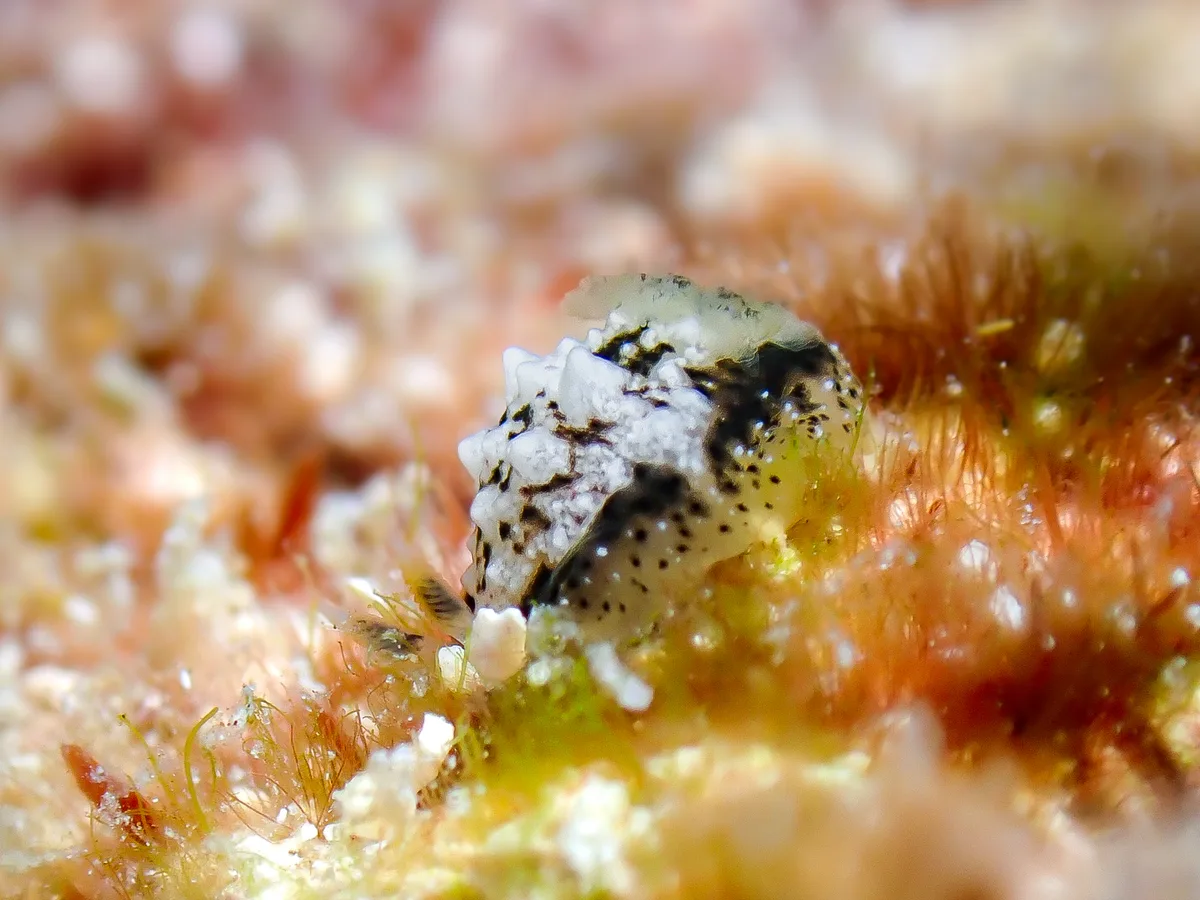
The other members of this genus are smooth. This one is not, and the difference is what it uses to disappear.
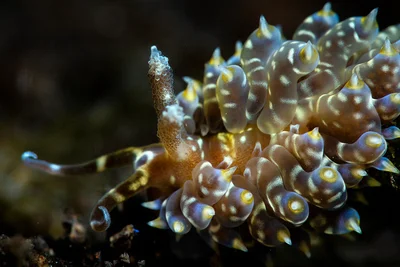
The back is packed with lumpy irregular tubercles, and every one of them carries a black dot. On a translucent yellowish body, that produces a surface of bumps and dark specks that reads exactly like the encrusted underside of a shallow rock: uneven, blotched, and not obviously alive. Which is where it lives. Turn a slab in the shallows and this is one of the animals on the underside, four and a half centimeters (1.8 in) of it, already looking like the slab.
Underneath the texture it is a Dendrodoris and it eats the way the rest of them do, which is without any teeth at all. There is no rasping belt of teeth in this genus. The animal presses its mouth to a sponge, releases digestive fluid, and sucks back the tissue already dissolved, so the whole apparatus that every other snail feeds with has simply been dispensed with.
Its defenses are homemade. Most chemically protected slugs on this reef are carrying compounds taken out of their food; this genus builds its own from scratch, which is one of the few genuine exceptions in the section.
And the usual request, since this is a species you find by lifting things: put the rock back the way it was. The community on that underside is there because it is dark.
- back densely covered in lumpy tubercles, each carrying a black dot
- translucent yellowish ground color
- found underneath shallow rocks rather than out on the reef
- under five centimeters, and reading as a piece of the rock it is on