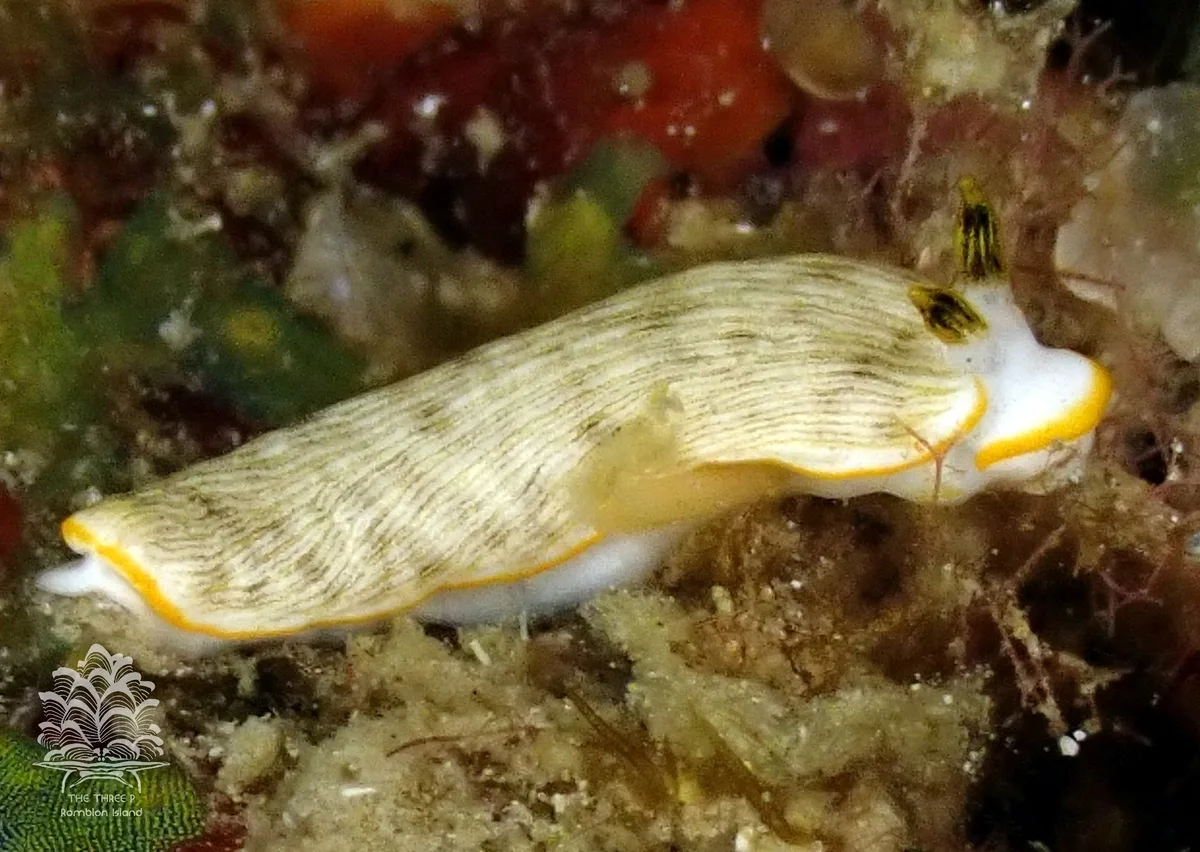
Nothing on the back of this animal is a gill, and that is the first thing to know about the whole group.
Arminids look like dorids and are built differently. There is no feathery plume standing up behind: the breathing surfaces are folded away underneath, in the groove between the mantle skirt and the foot, running down both sides of the body. Seen from above the back is a closed, ridged surface with nothing projecting from it at all, which is why these animals read as flat and finished where a dorid reads as decorated.
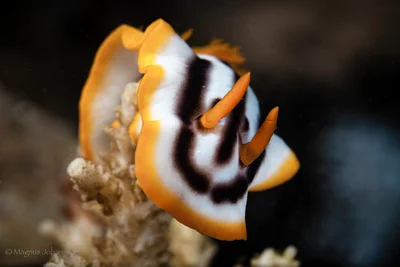
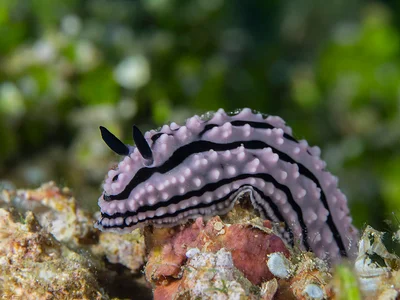
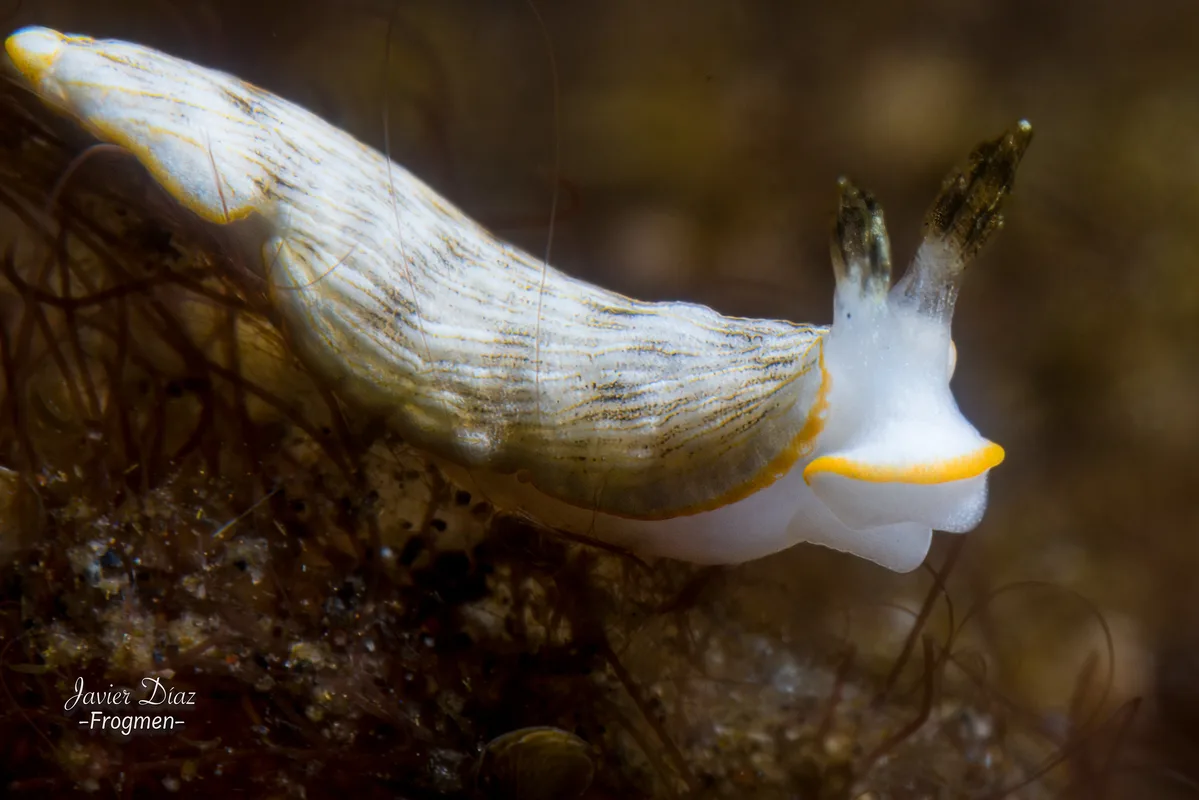
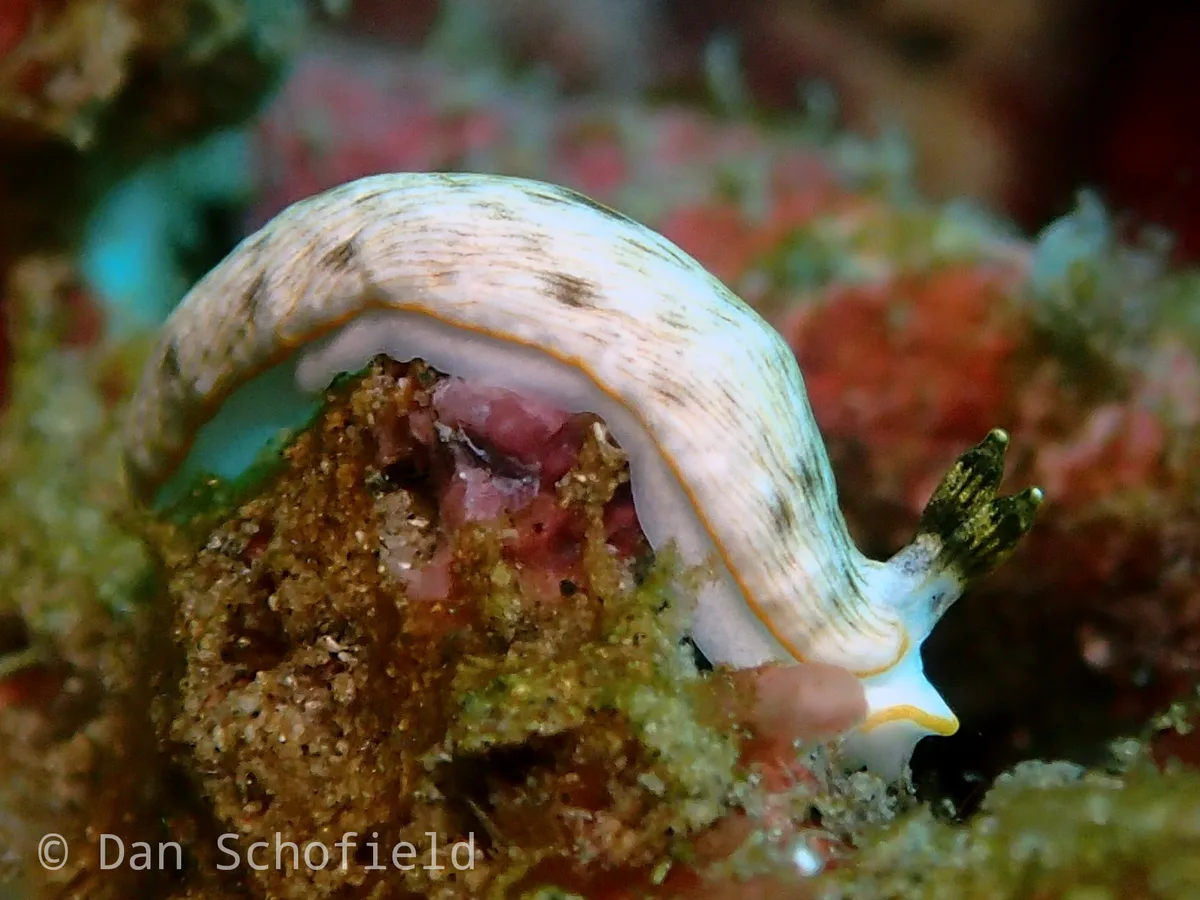
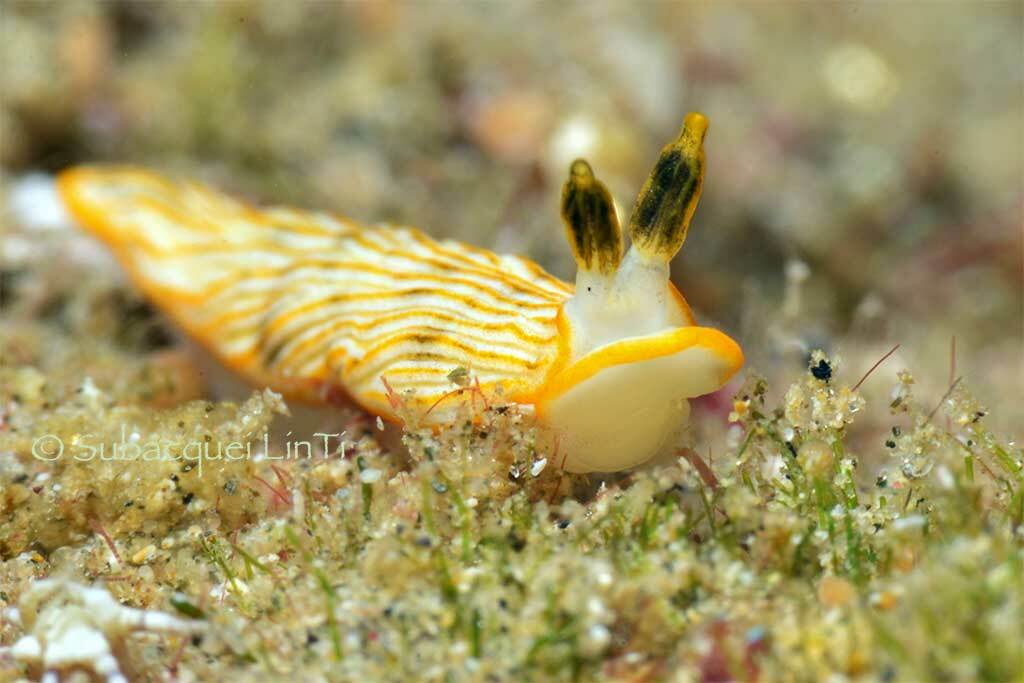
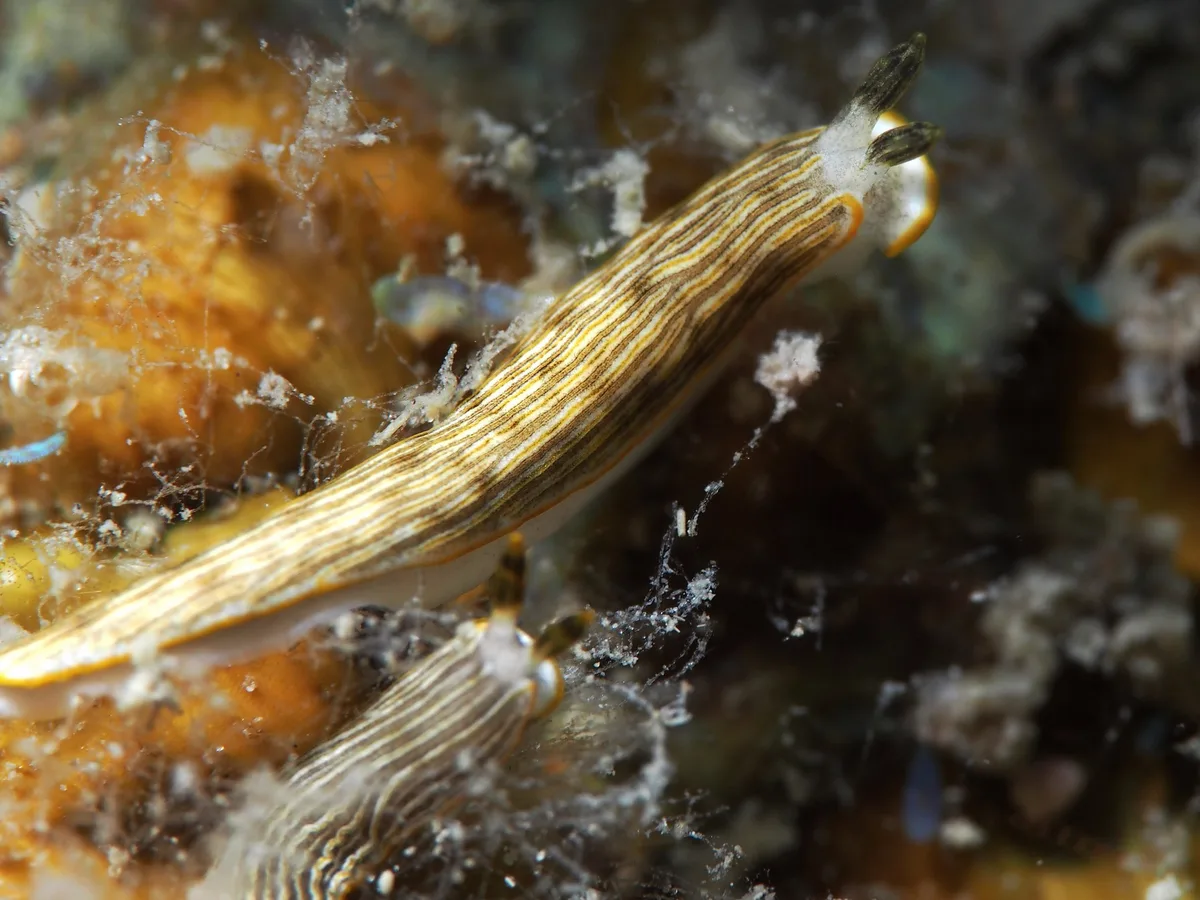
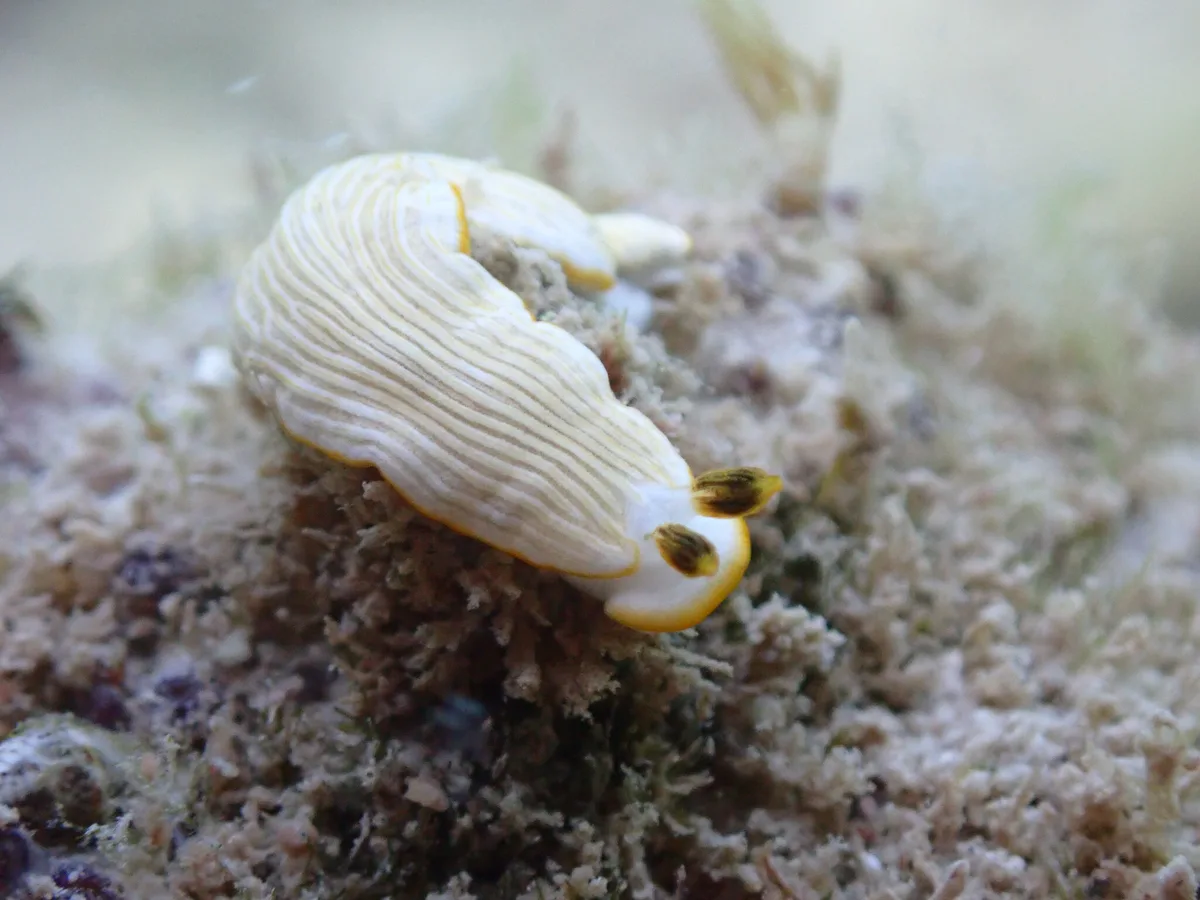
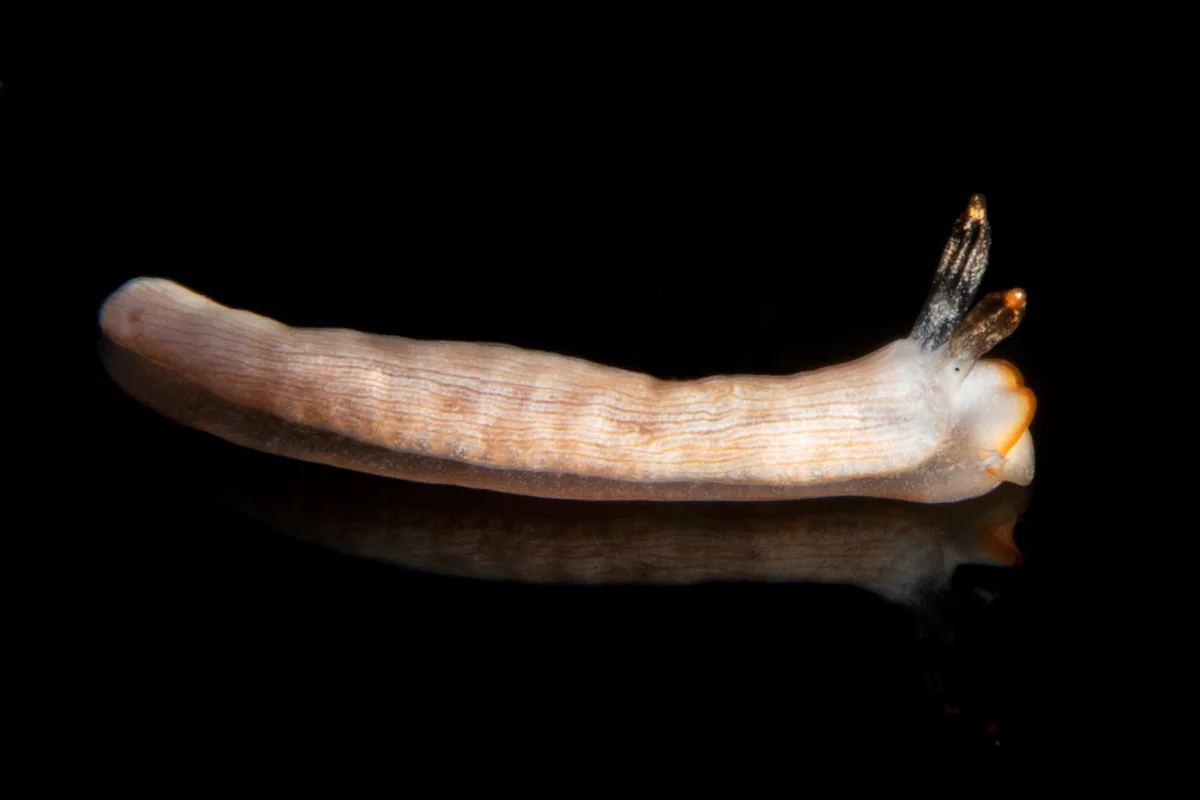
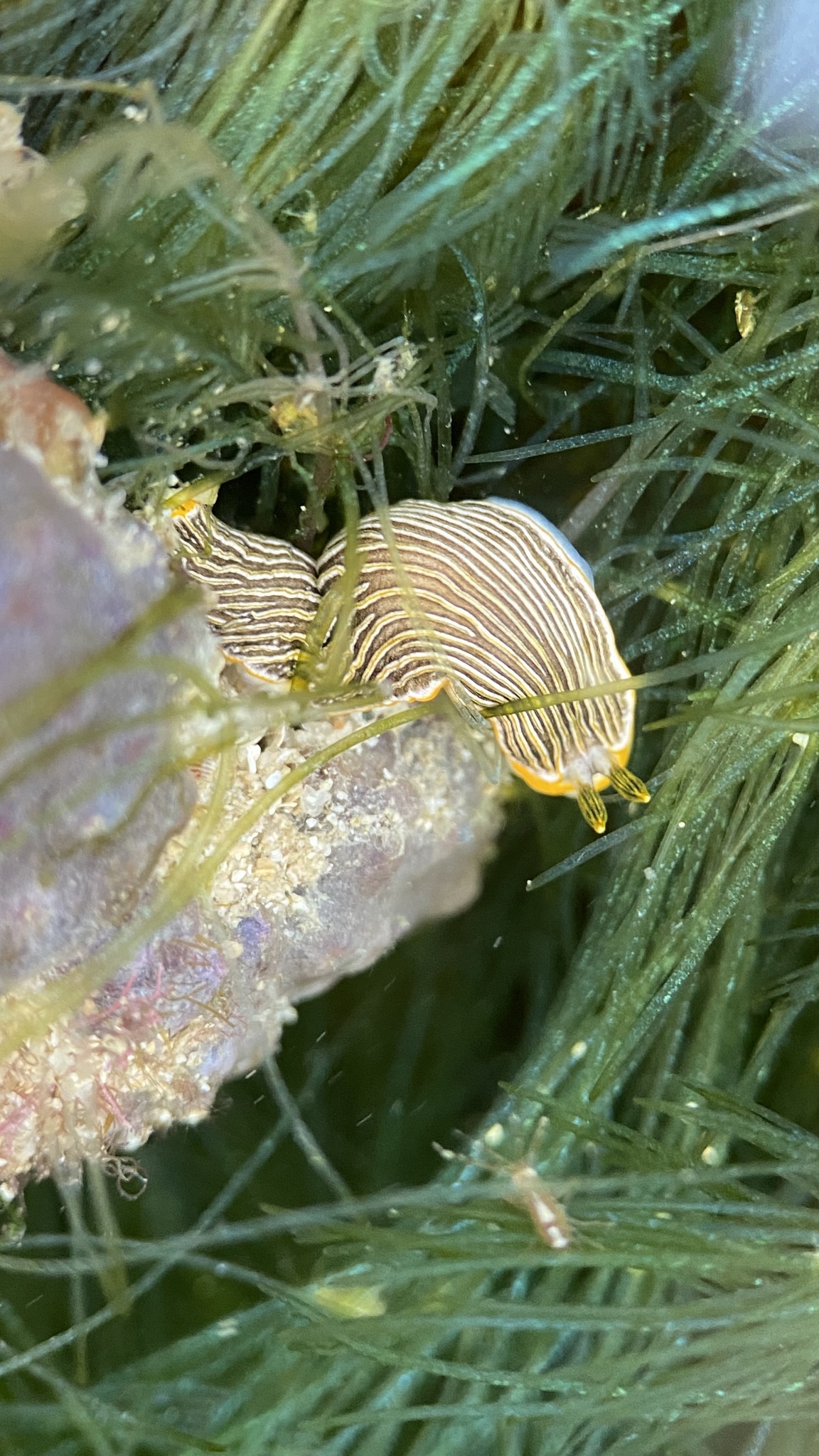
What the back does carry is ridges. Fine, sharp, parallel, running the length of the body, and on this species they stand out clearly on a pale ground with an orange line drawn around the margin. That ribbing is the family signature and the reason the whole genus is called pinstripe in English.
This is the small one, fifteen millimeters (0.6 in) against relatives here that reach eight centimeters, and the mark that separates it is at the front: the rhinophores are noticeably darker than the body behind them.
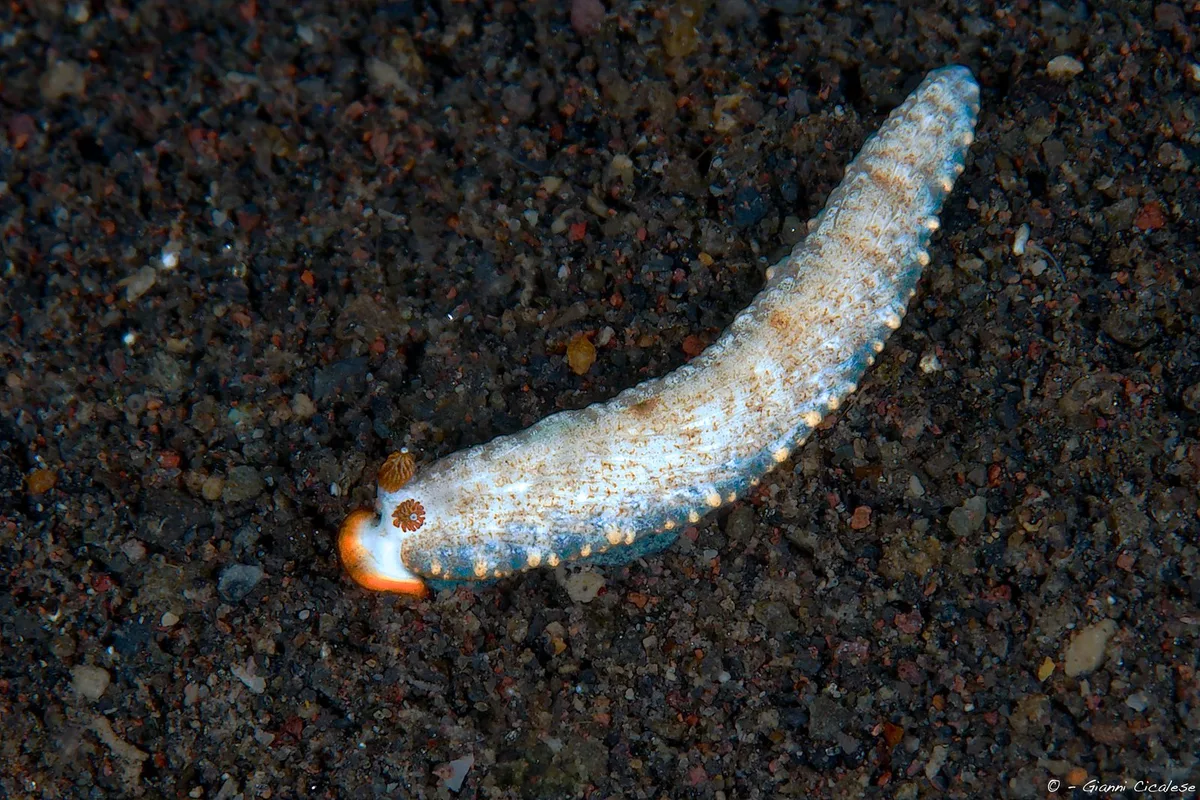
Like the rest of the genus it lives on sand and rubble beside octocorals, spending daylight buried or tucked under something and coming out after dark to feed. Of the seven arminids in this catalogue it is one of the few with confirmed sightings from this sea.
- sharp longitudinal ridges running the length of a pale body
- orange line around the margin
- rhinophores darker than the body, which is what the English name records
- fifteen millimeters, the smallest of the seven here