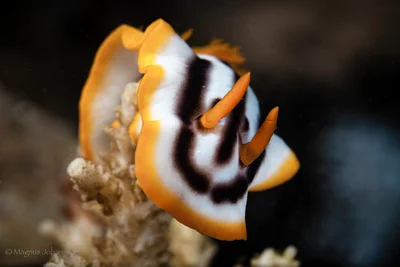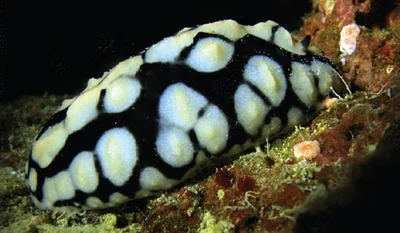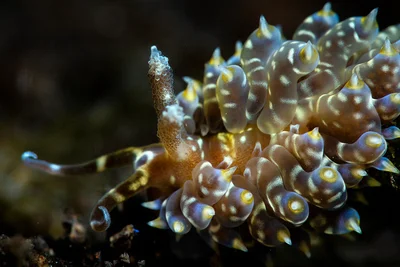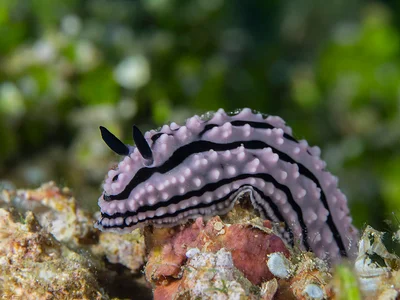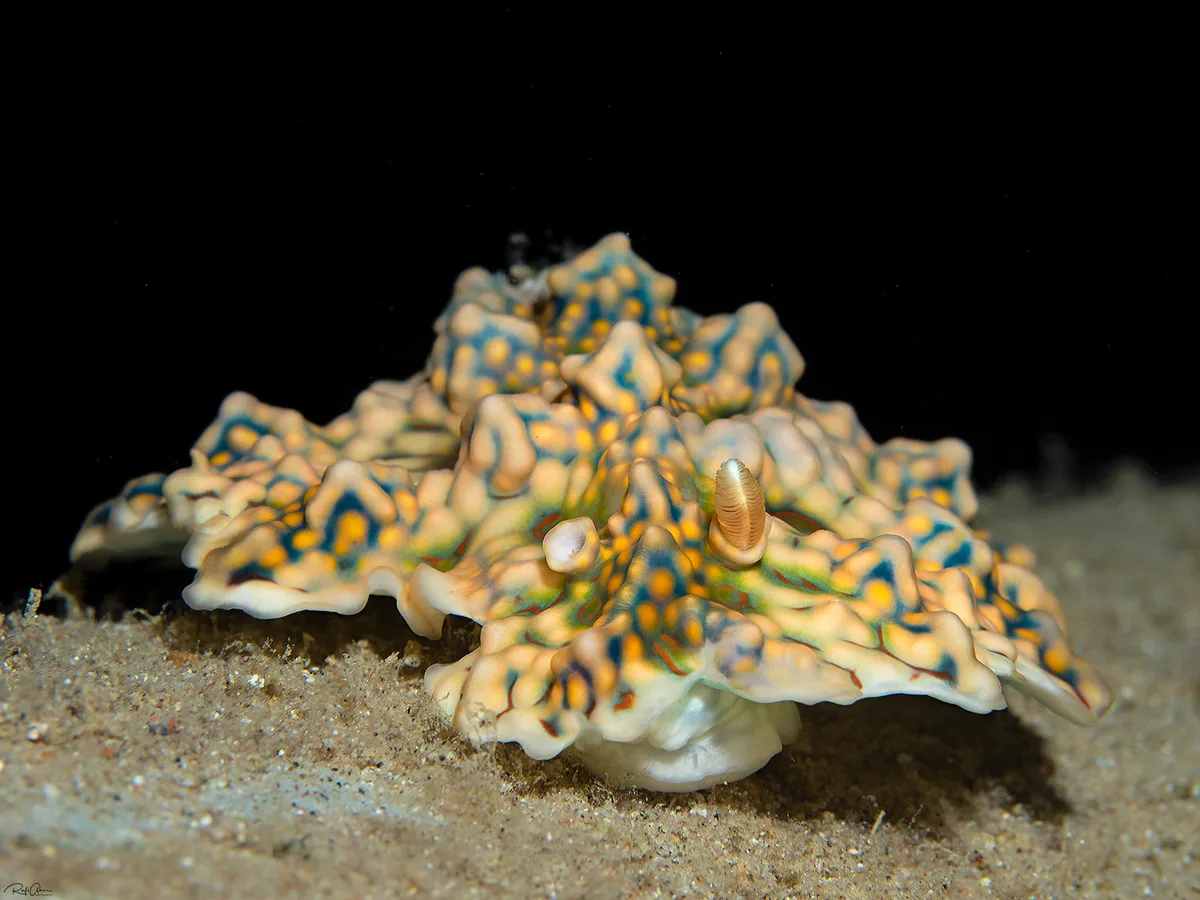
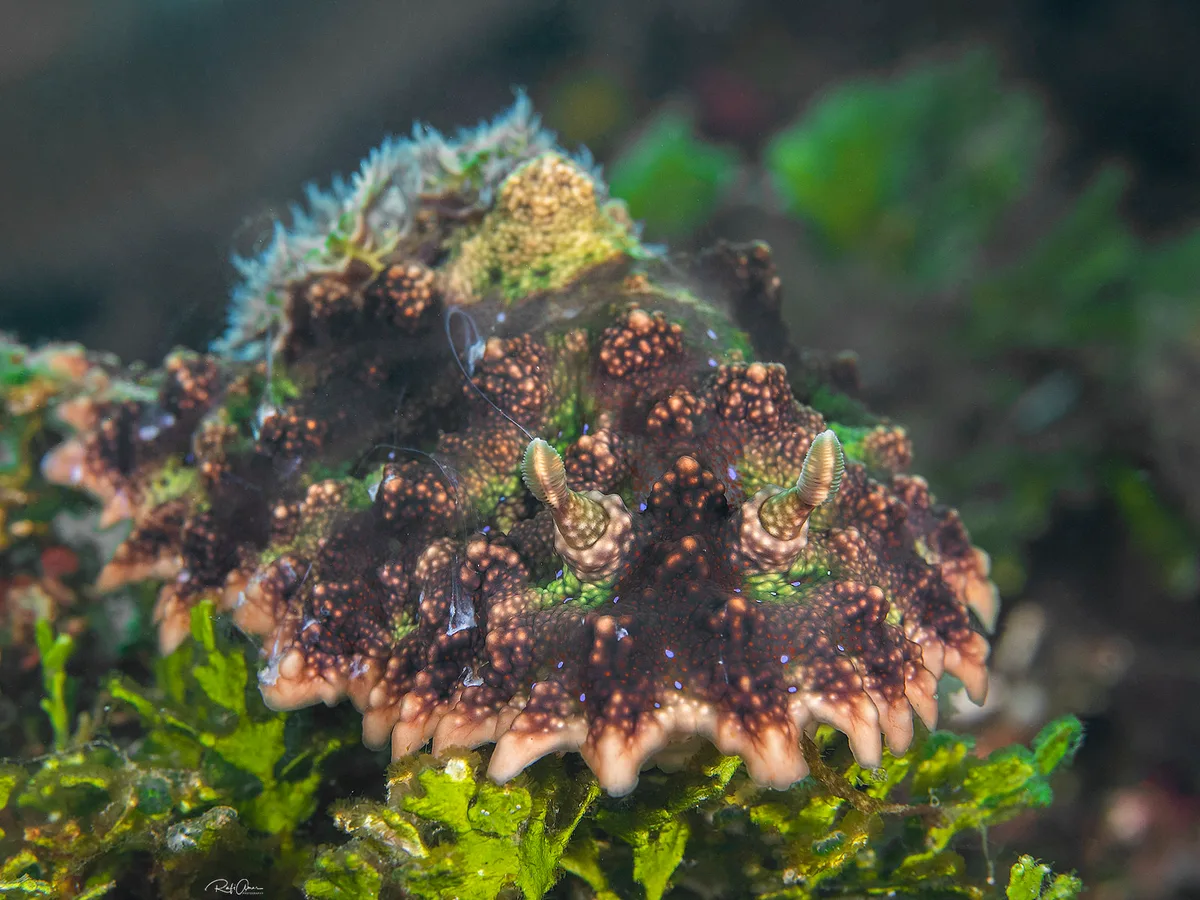
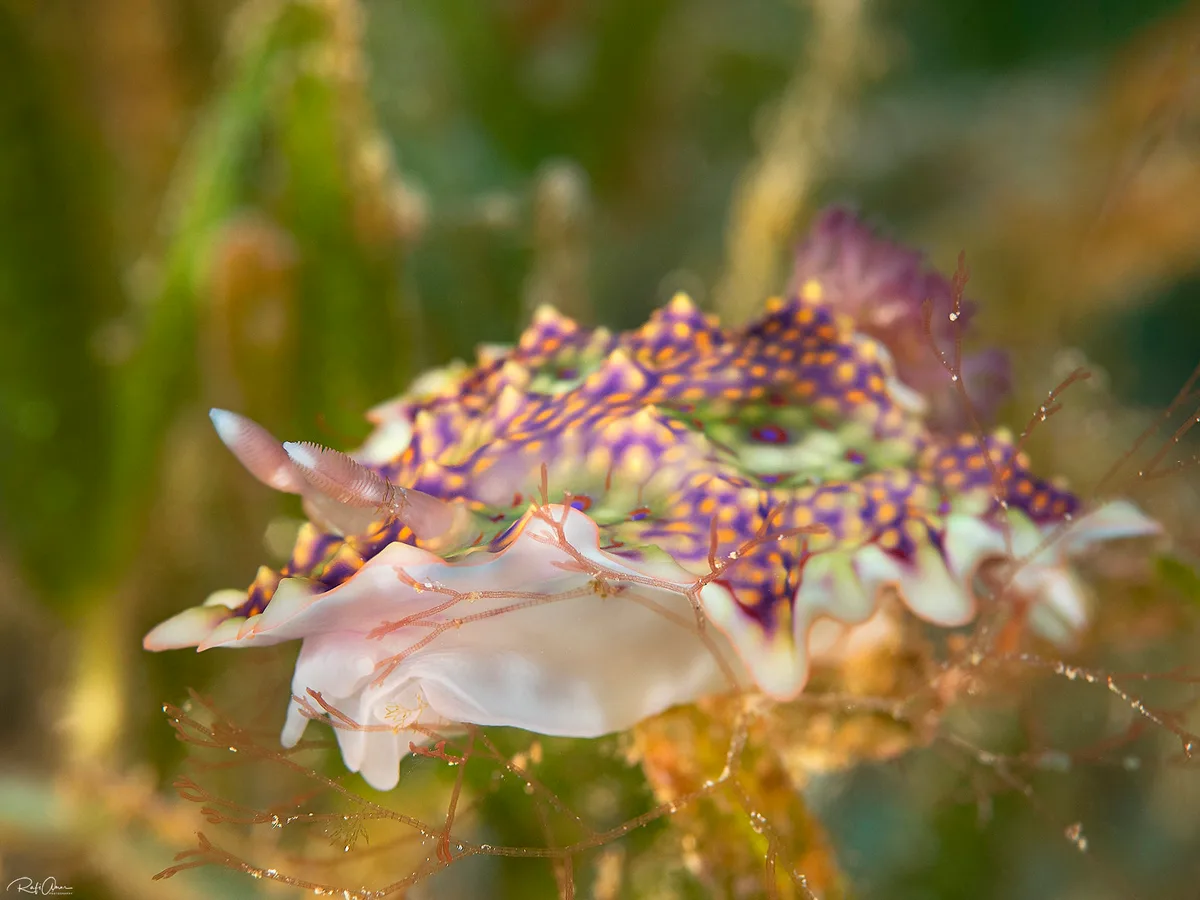
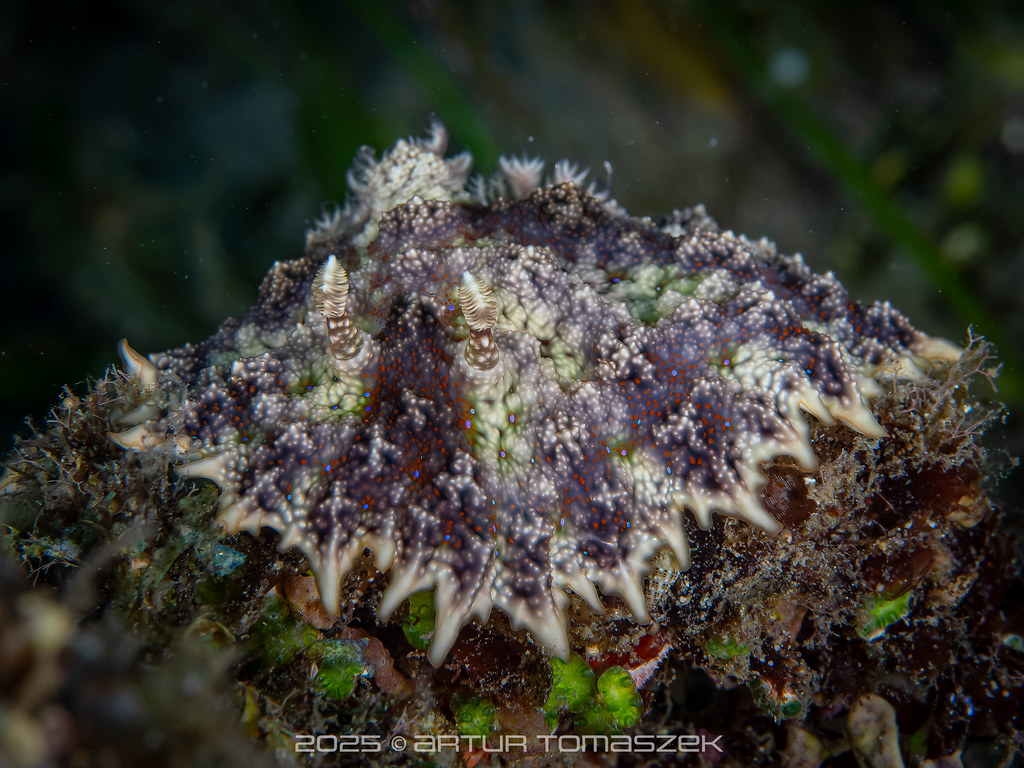
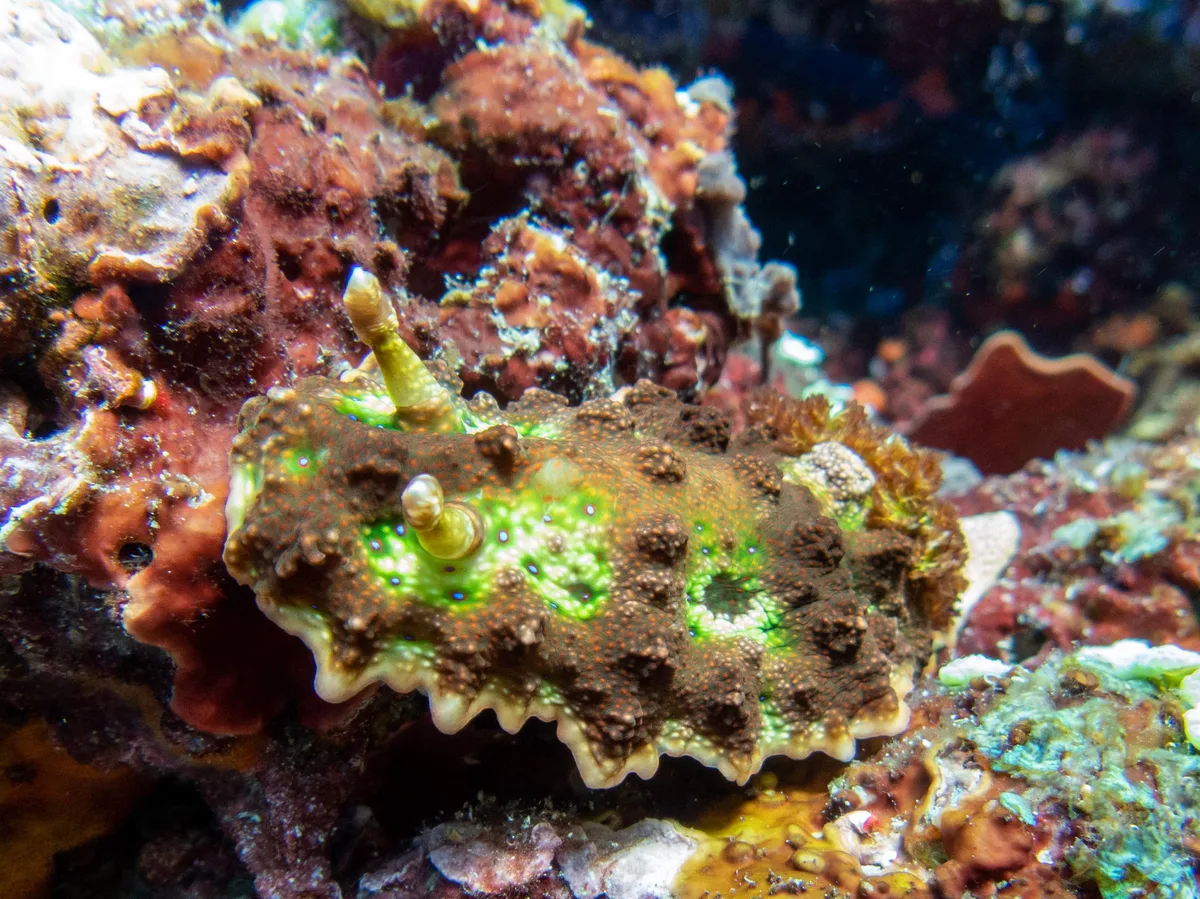
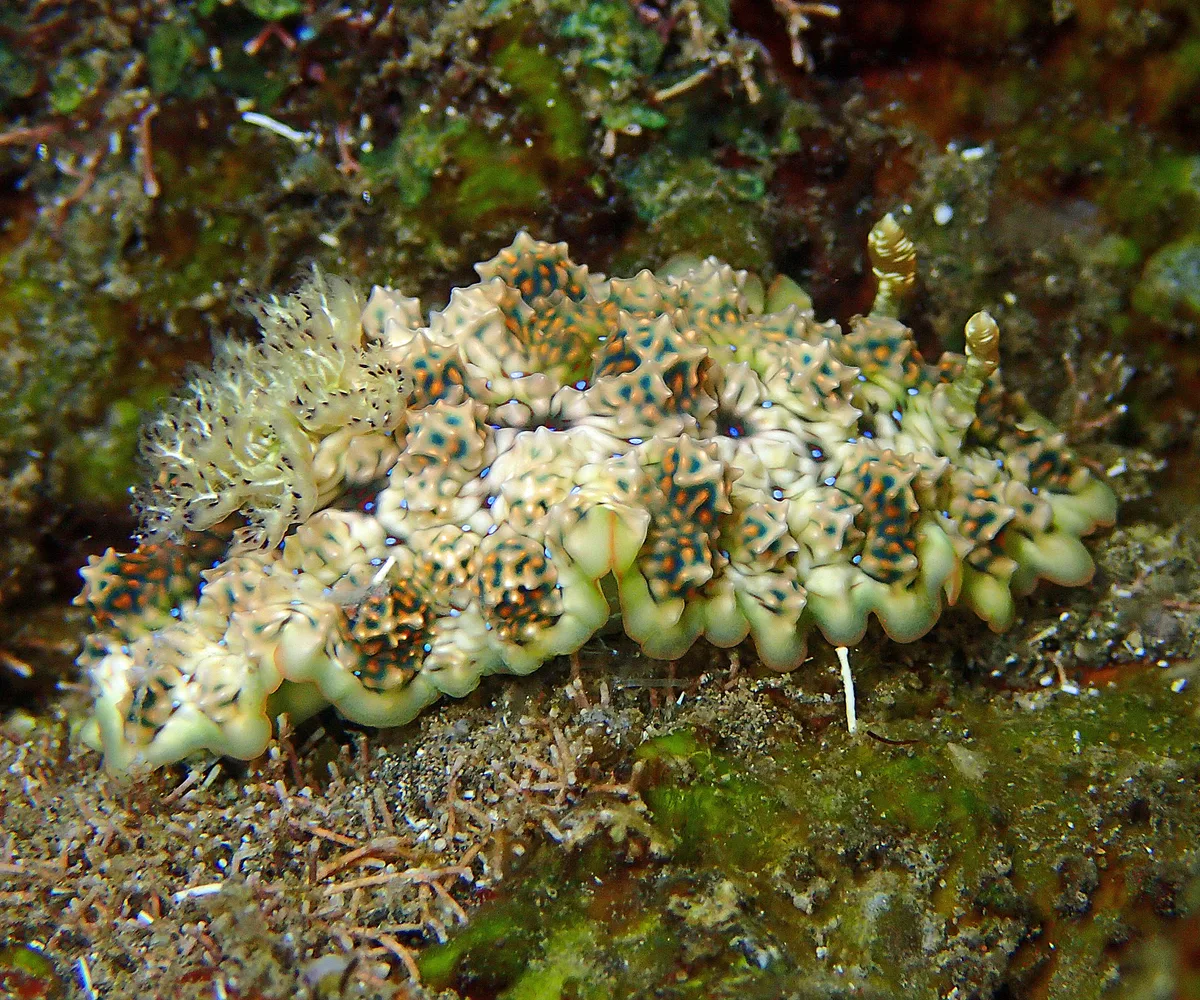
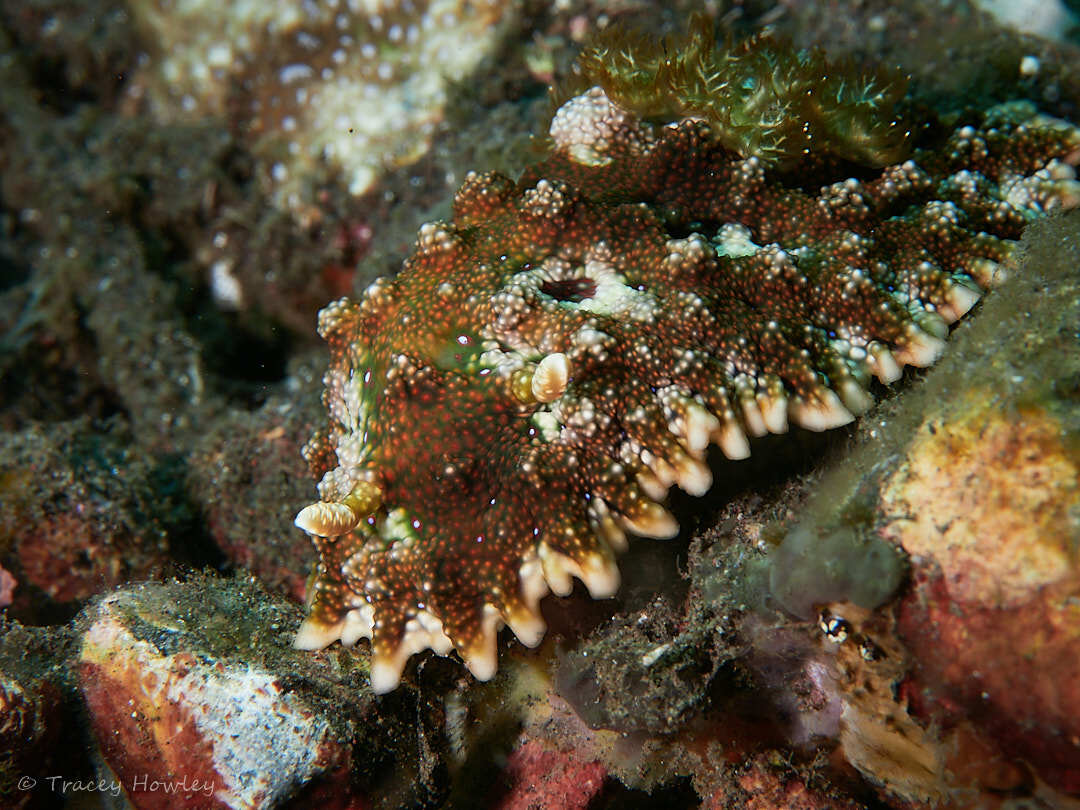
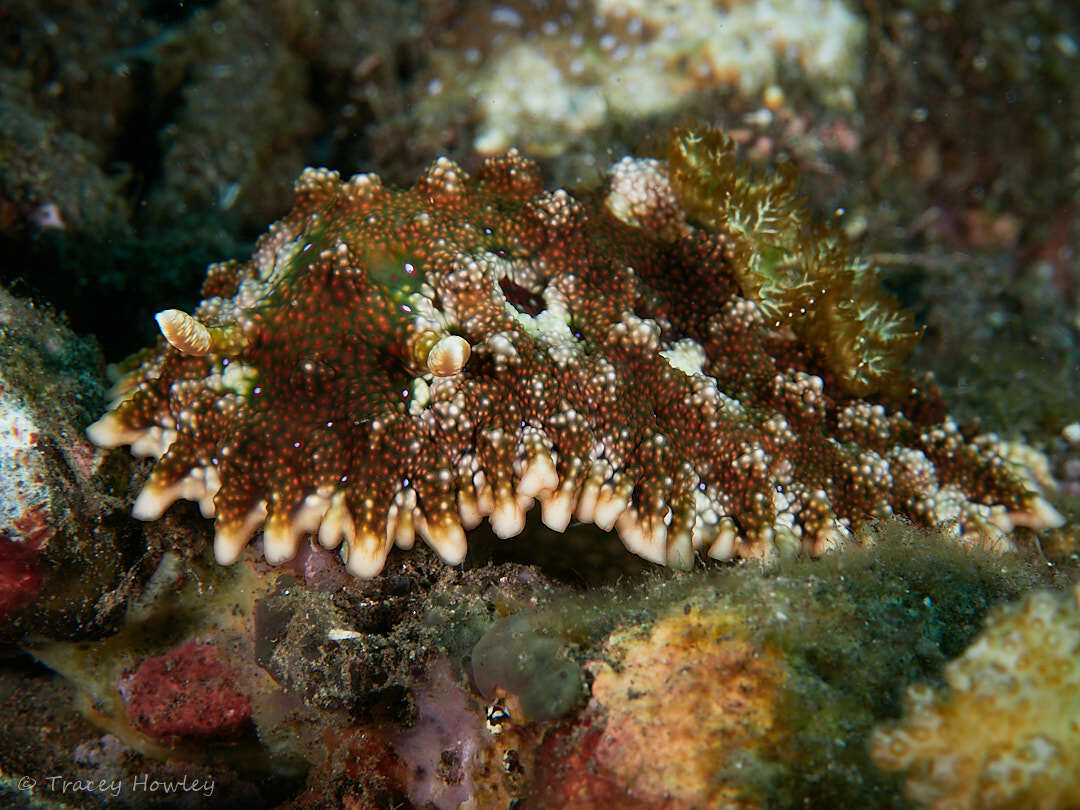
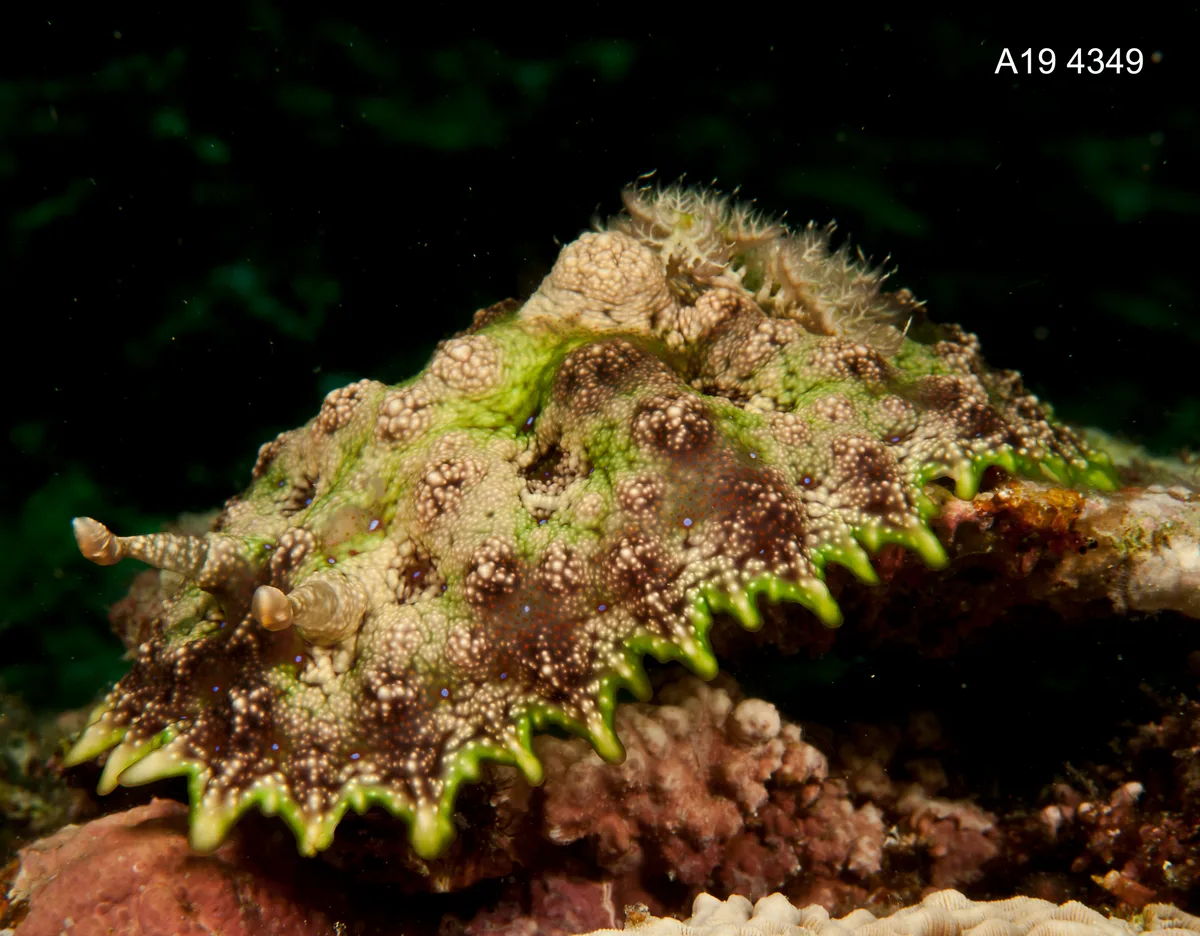
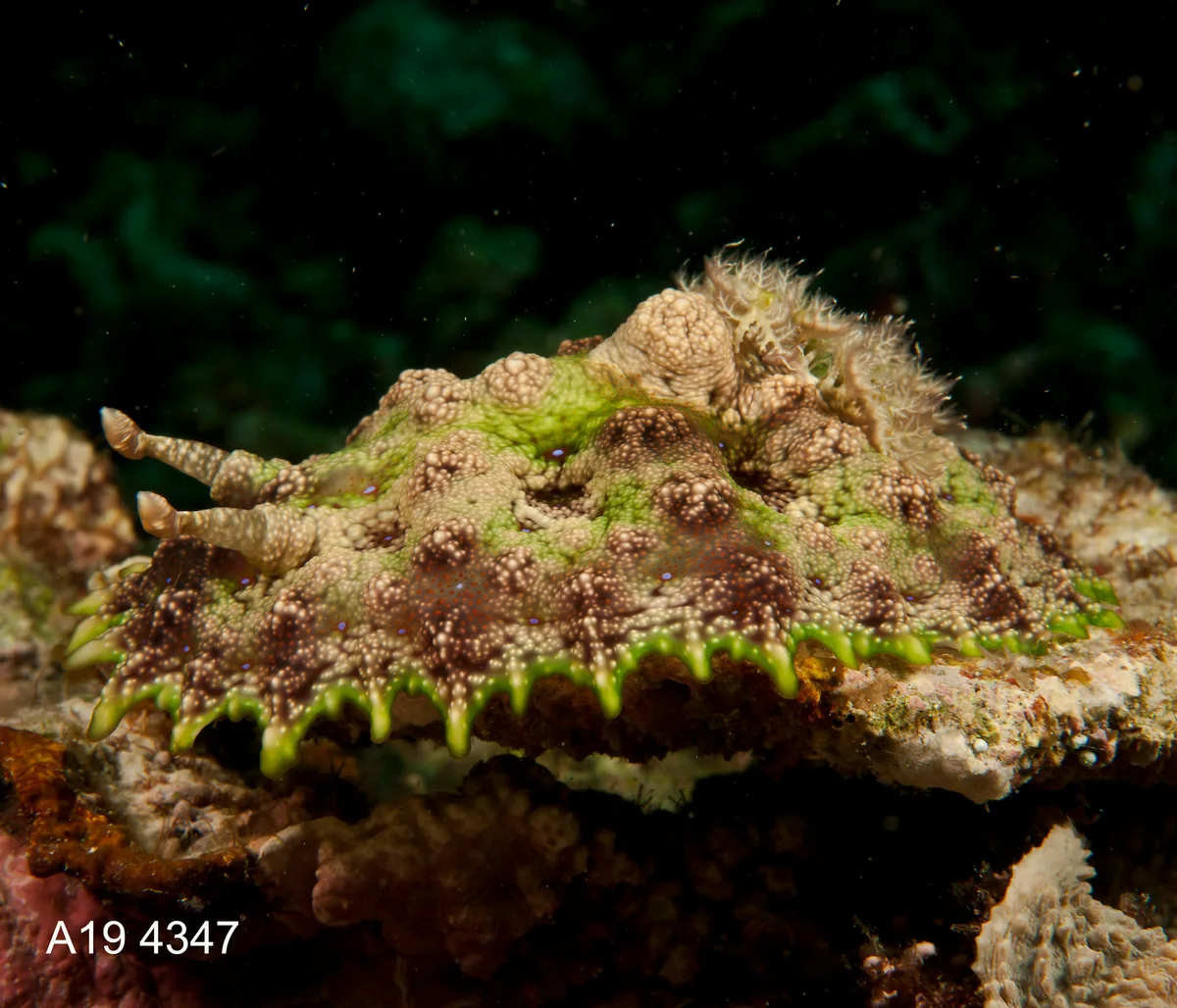
The other Miamira on this reef solves the problem of being a soft animal in daylight by looking like reef growth. This one goes further: it looks like the particular sponge it happens to be sitting on.
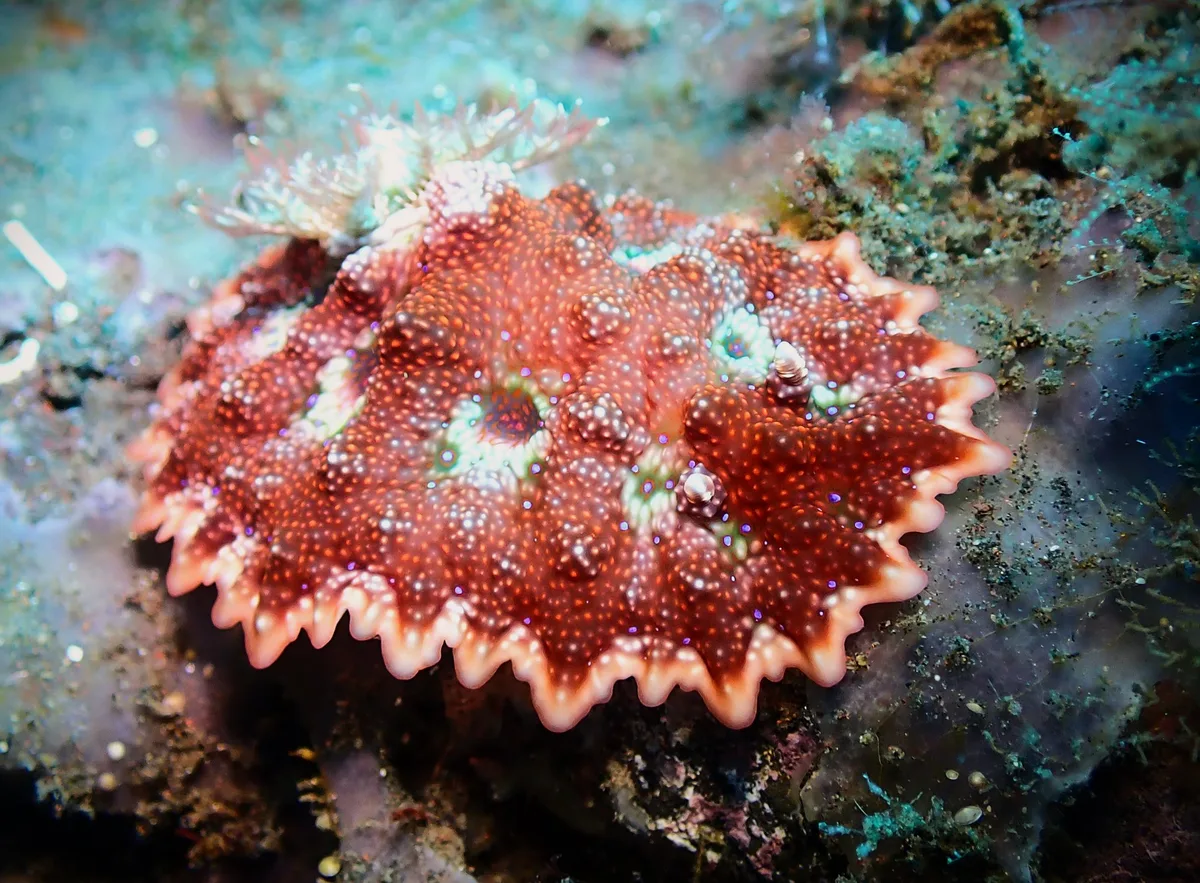
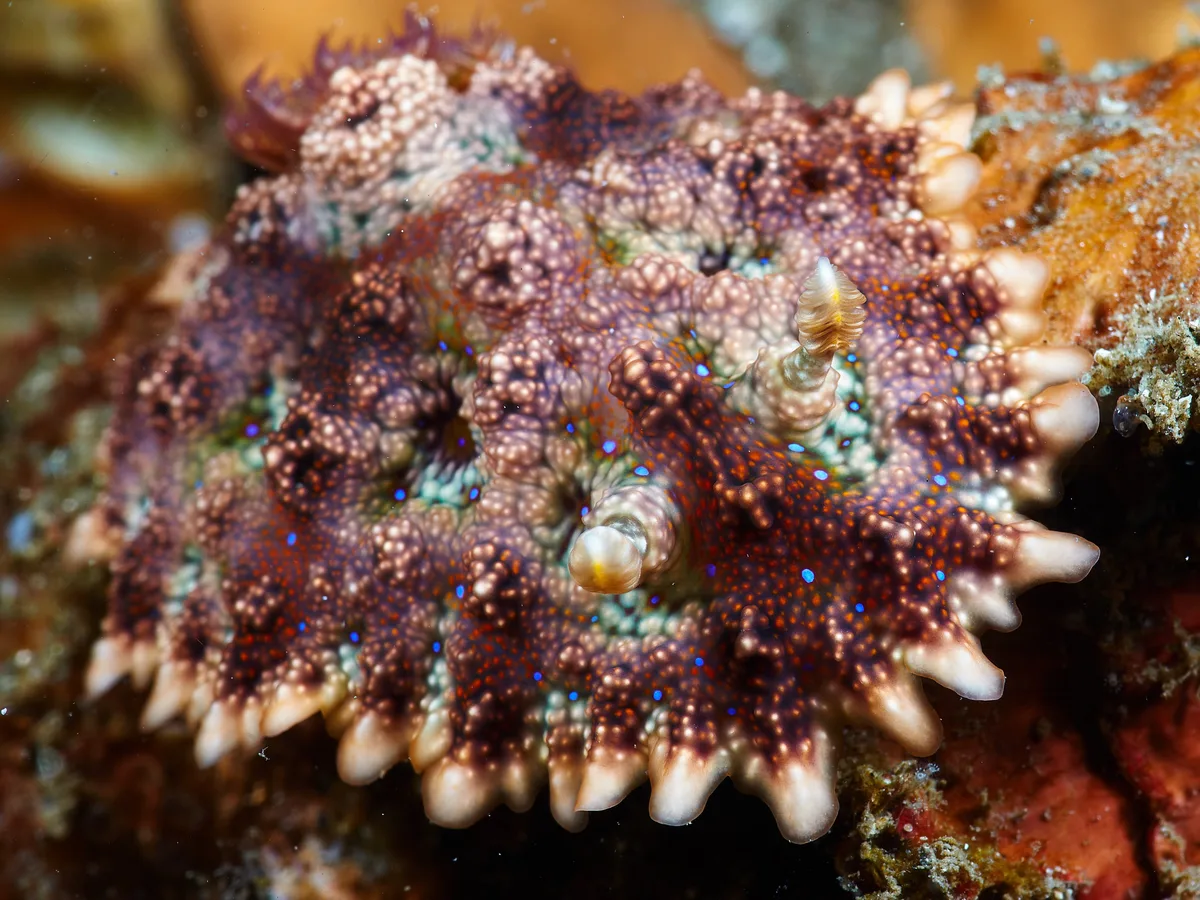
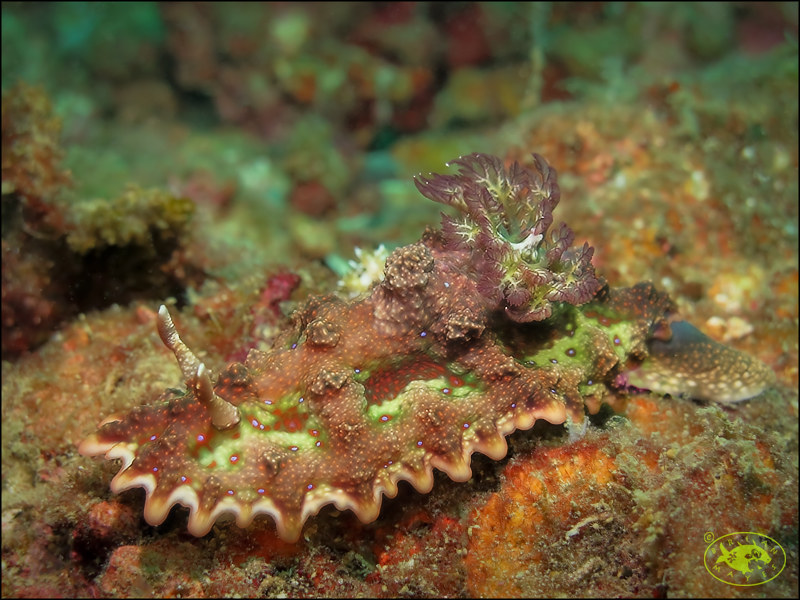
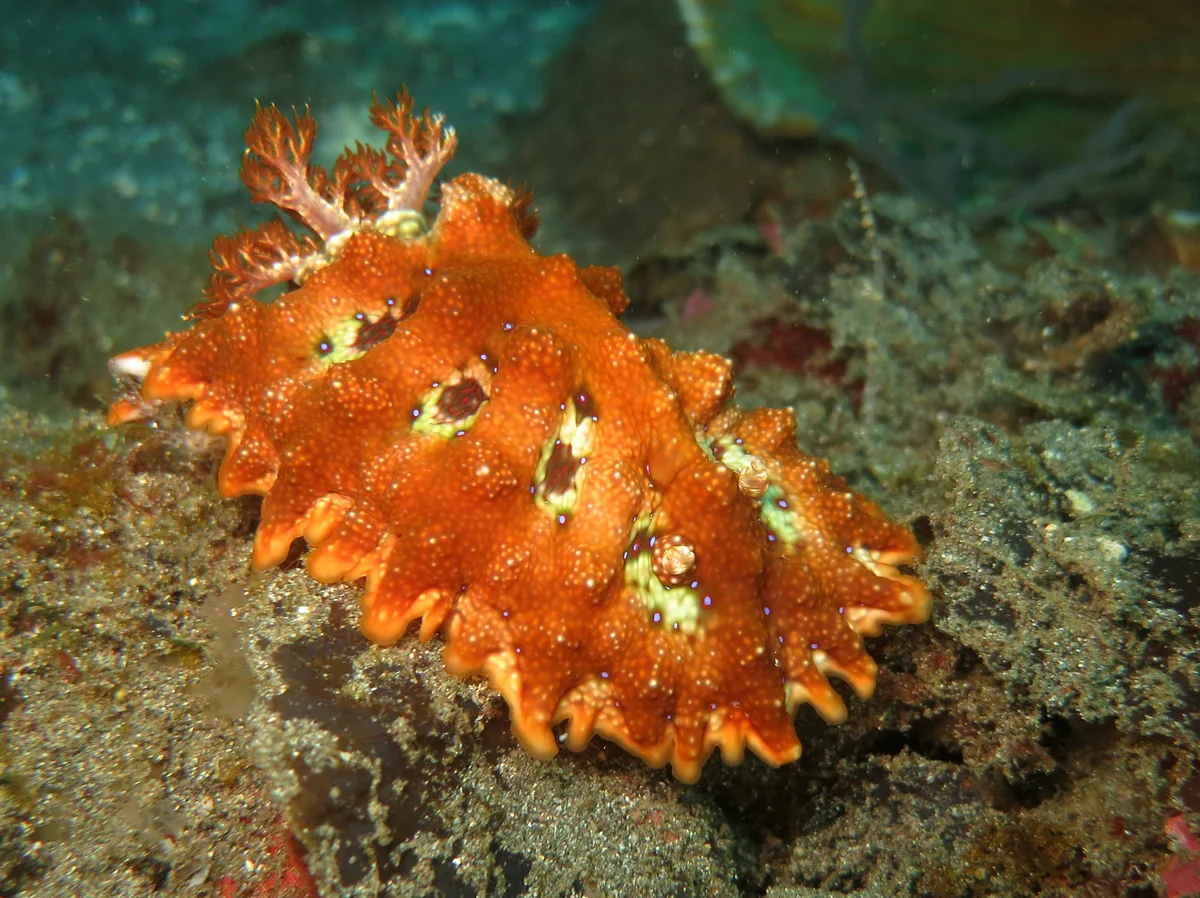
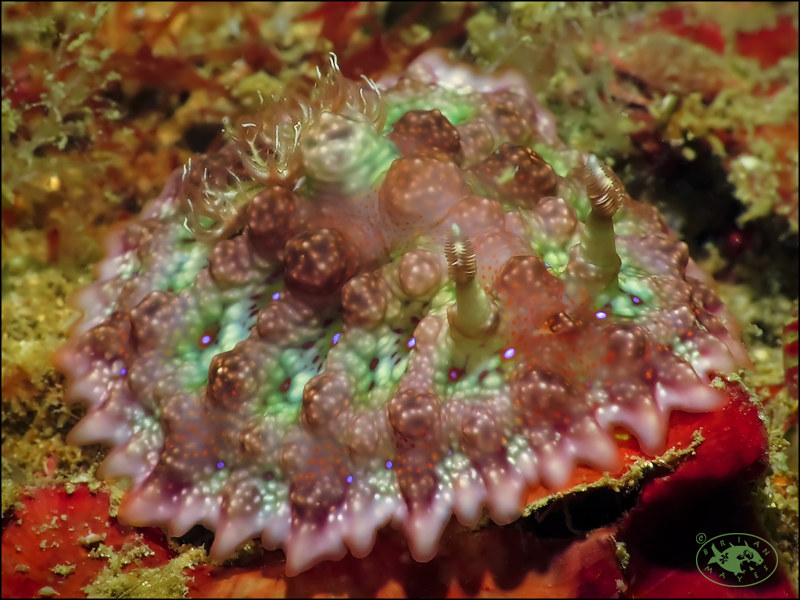
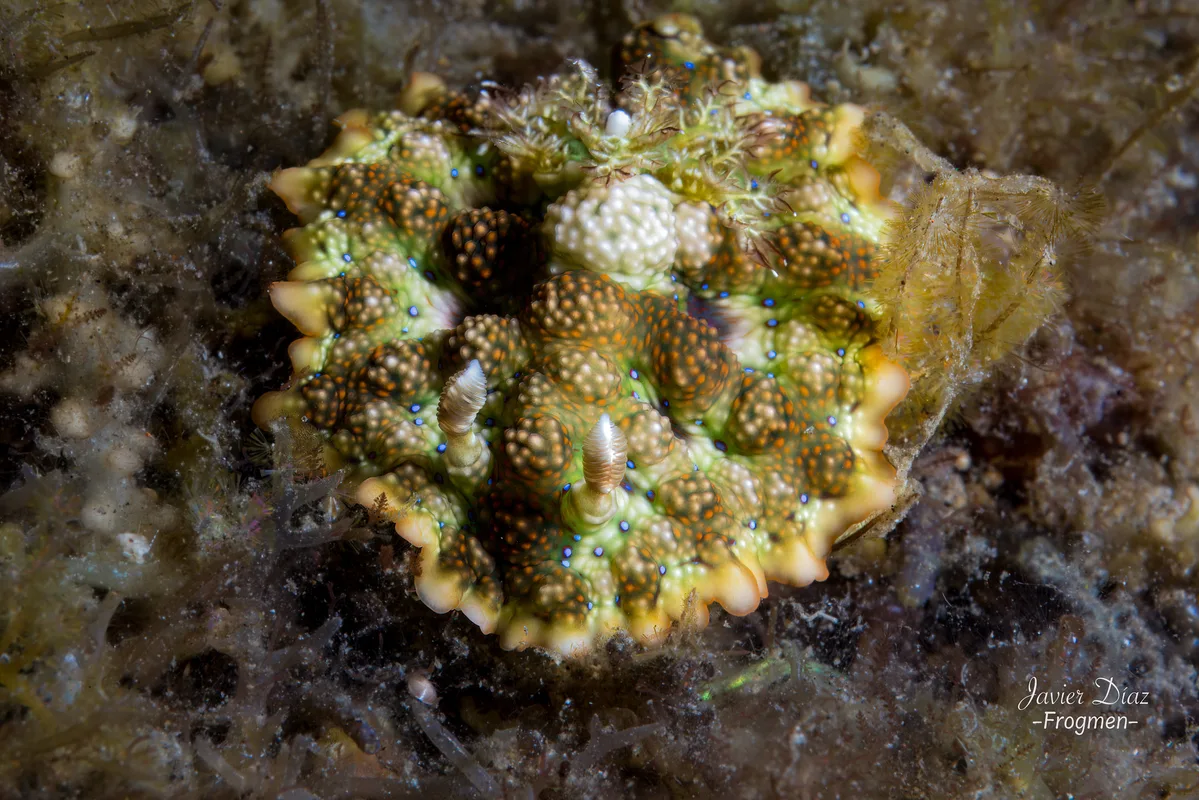
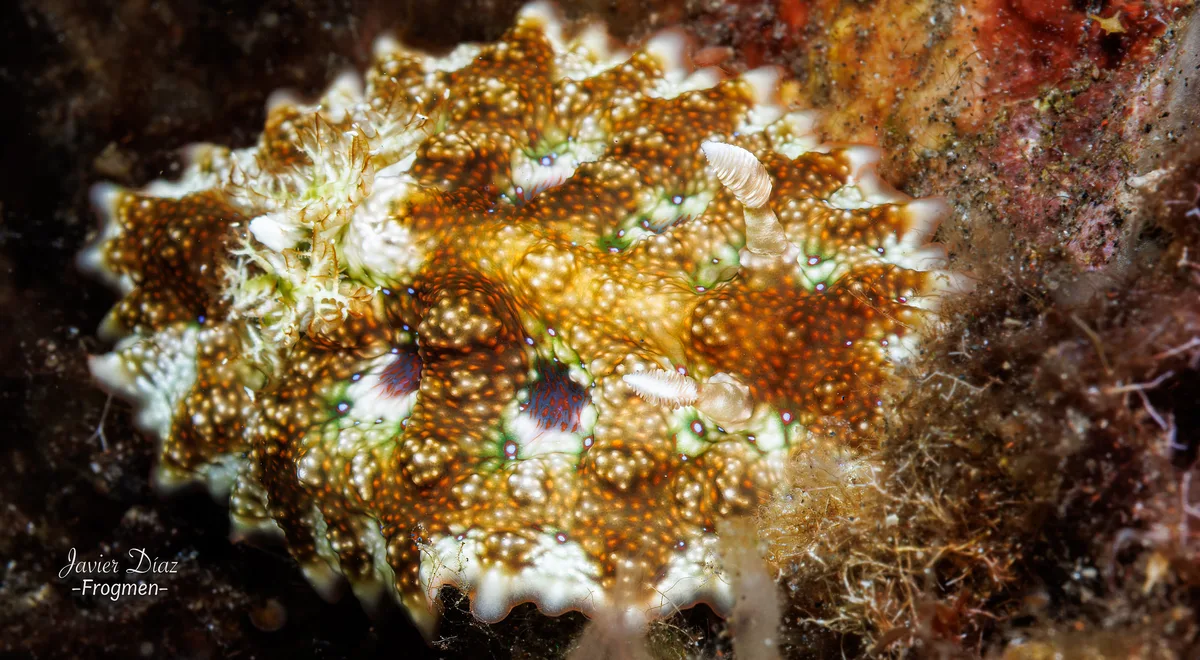
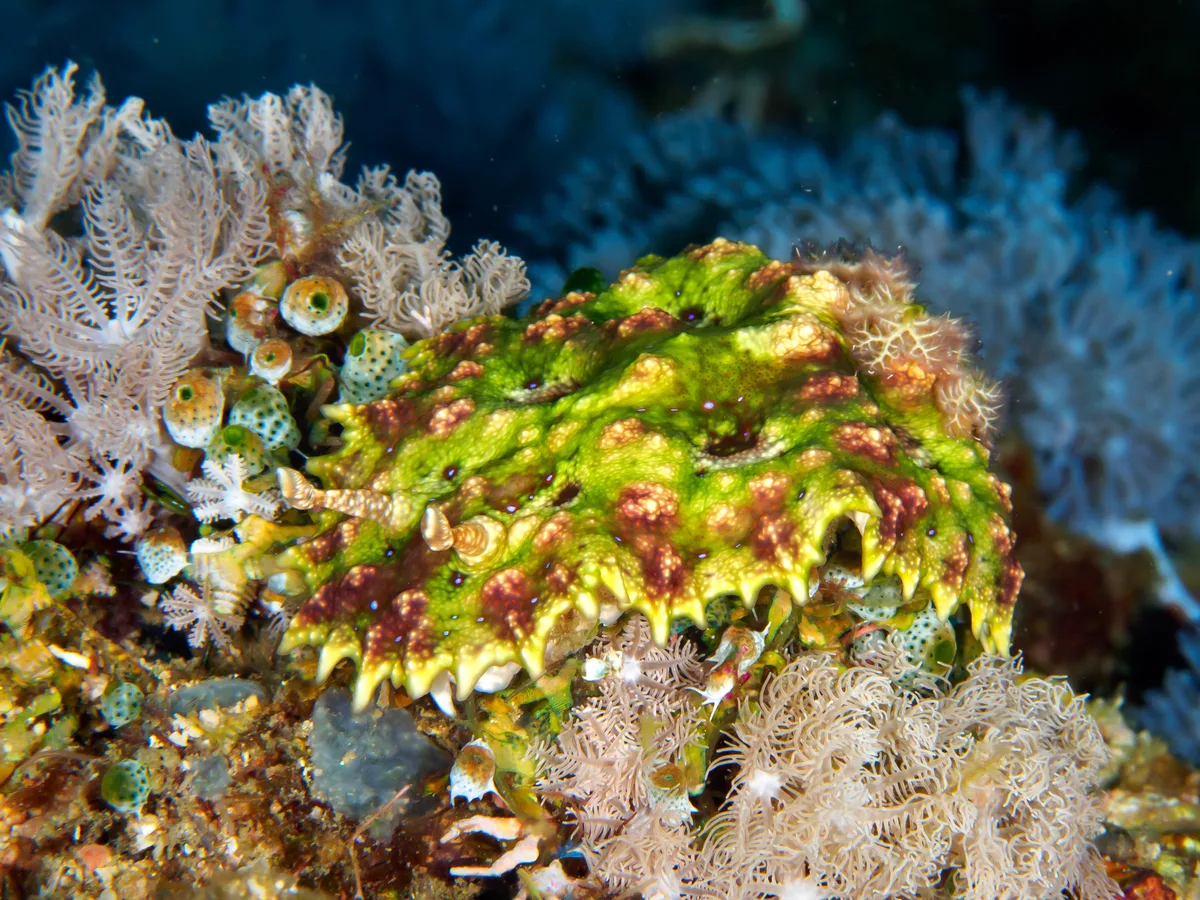
Individuals turn up anywhere from greenish through olive to deep red-brown, and the color tracks the sponges around them. It is not a switch thrown on demand, the way an octopus changes in seconds. It follows what the animal has been eating and living on, and it means color is useless for identifying this species. Two photographs of the same slug from two different reefs can look like two different animals.
So you read the shape instead. The mantle edge is not a smooth curve; it runs in a distinct zigzag, a series of shallow points around the whole outline, and the back is raised and ridged rather than flat. Seen against an encrusting sponge, the zigzag margin breaks the last thing that would otherwise give the animal away: a clean edge. Nothing that grows on a reef has a clean edge.
At seven and a half centimeters (3 in) it is one of the larger slugs in this section, and that is not a contradiction. Among these animals size tends to run with strategy. The bright, conspicuous, chemically defended ones stay small and let their pattern do the work; the ones that get big usually do it by not being seen at all.
It eats sponges and holds their chemistry the way the rest of the family does, so it is protected either way. This one just prefers not to have the argument.
- mantle margin thrown into a zigzag rather than running as a smooth curve
- color anything from greenish to red-brown, and matching whatever it is sitting on
- raised, ridged, lumpy body, not the flat oval of a normal chromodorid
- large: seven centimeters and still hard to see