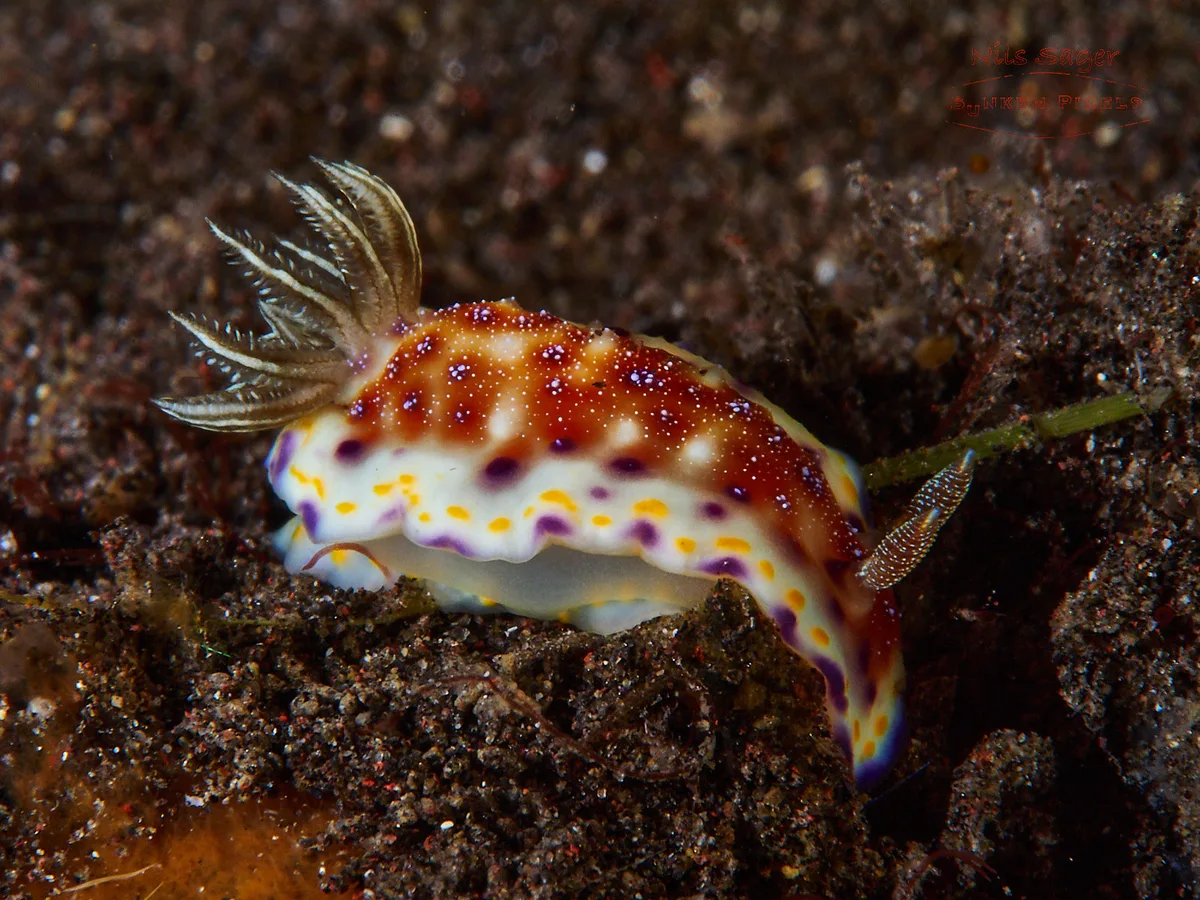
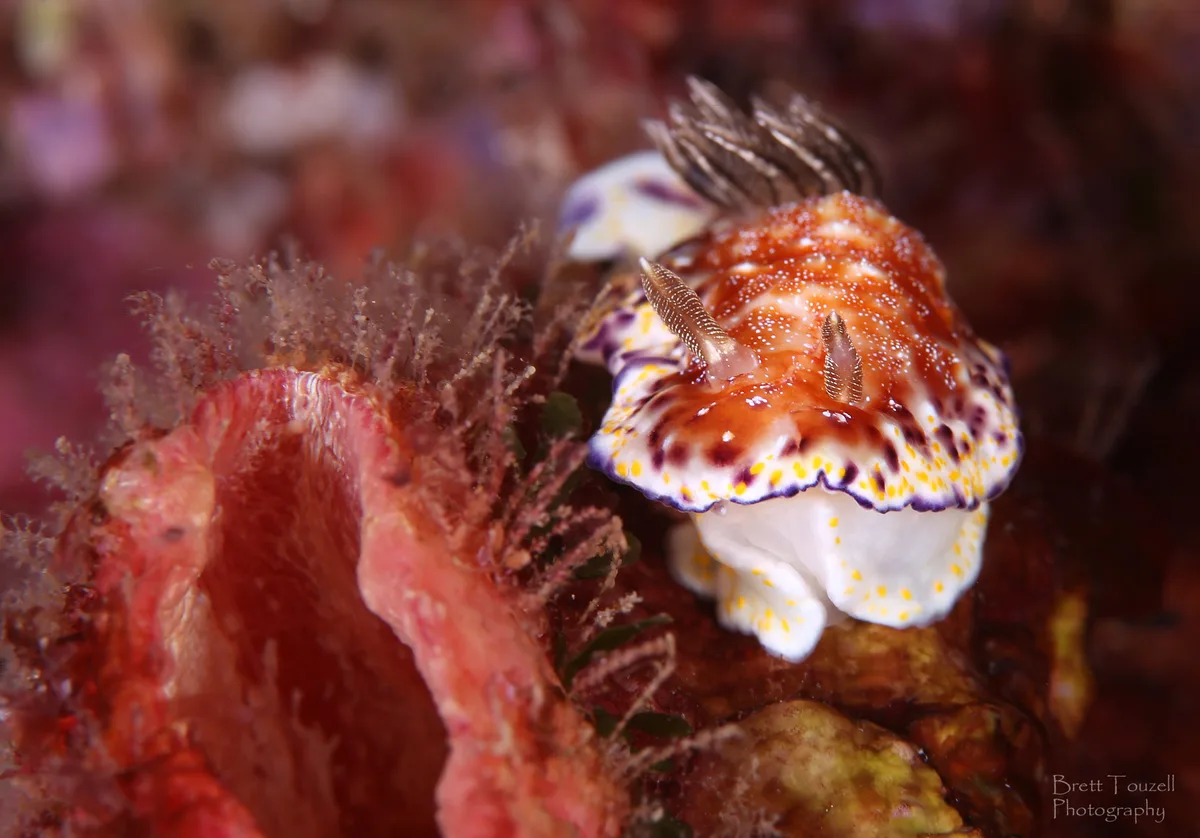
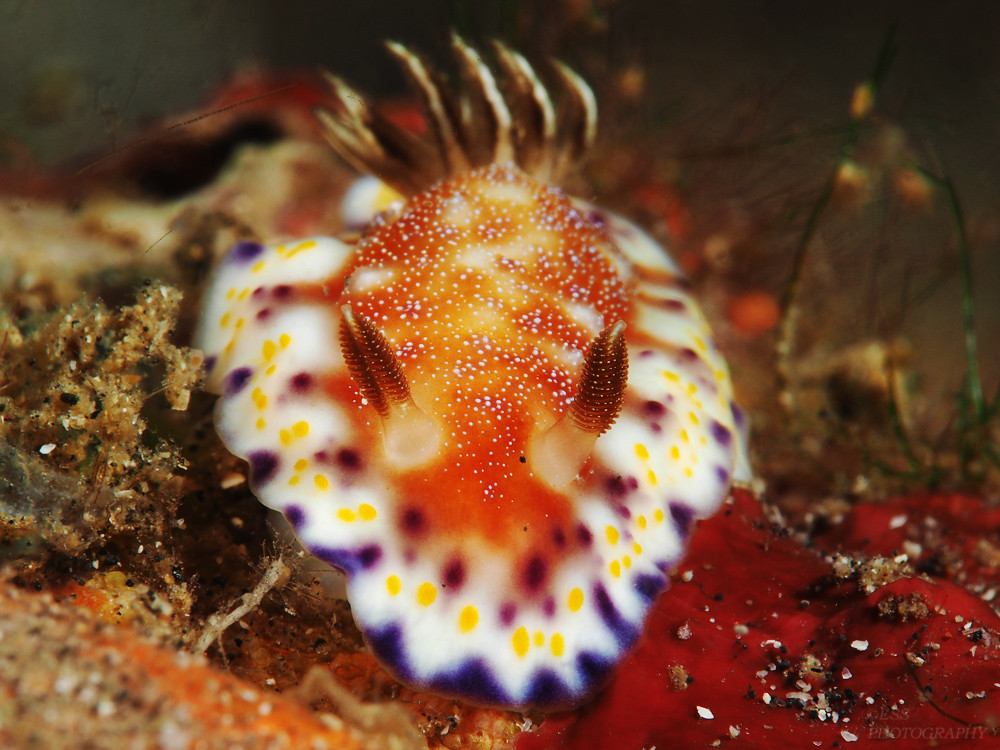
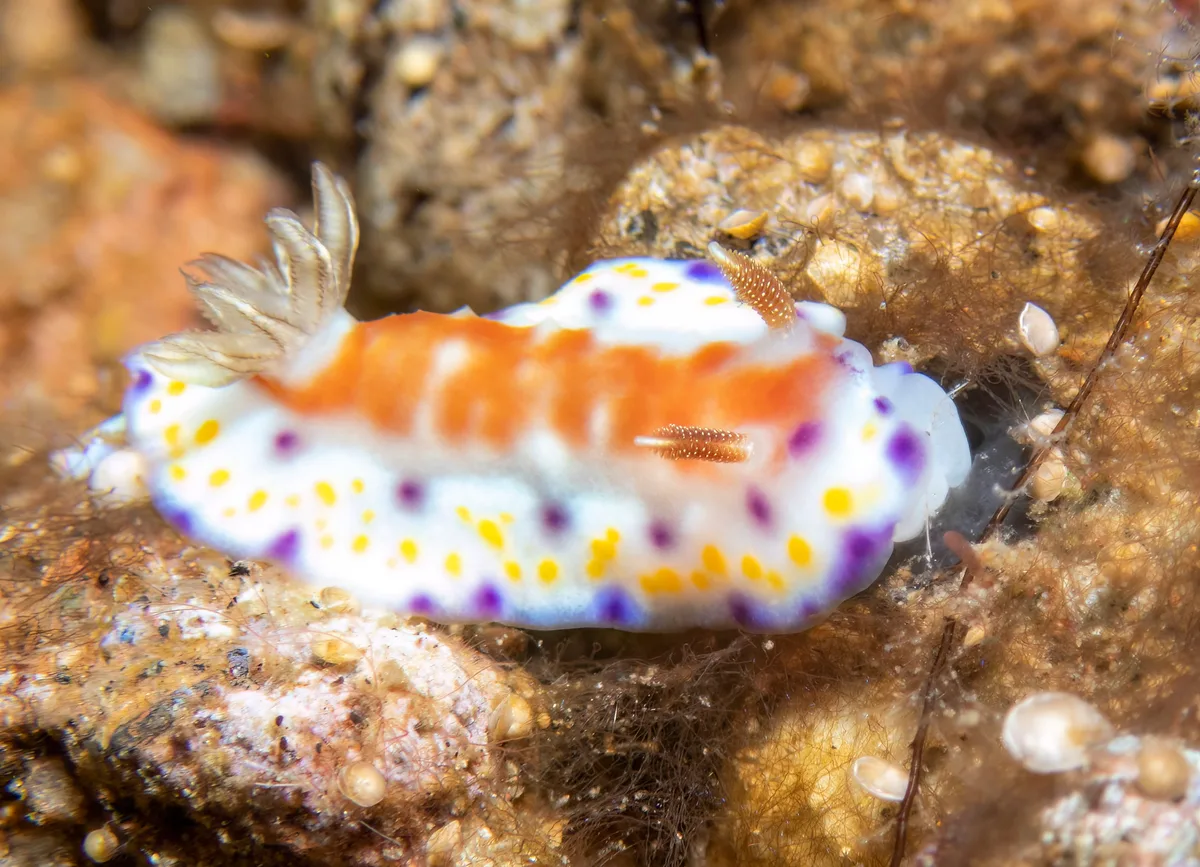
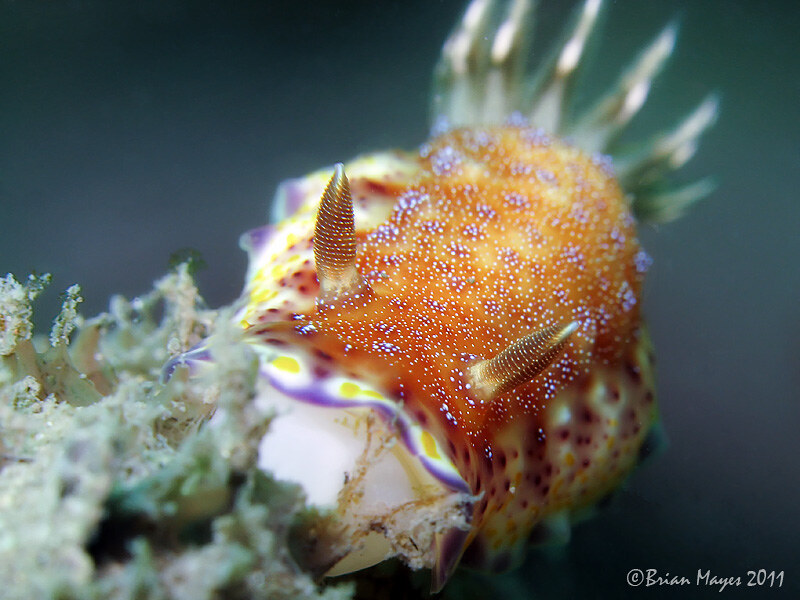
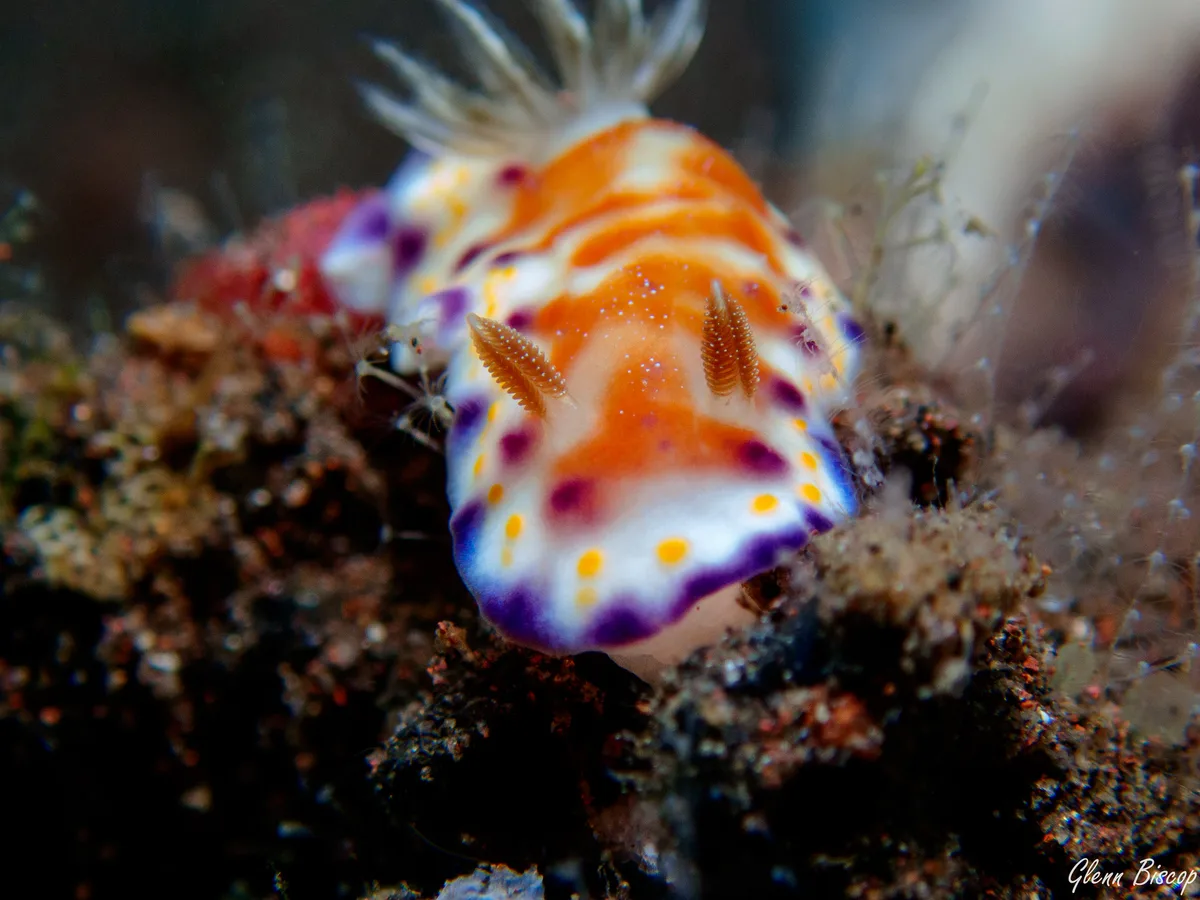
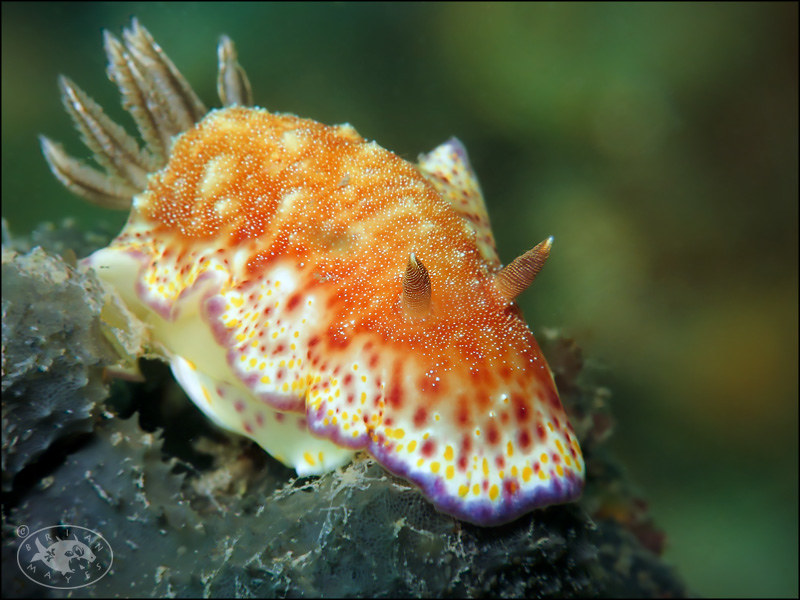
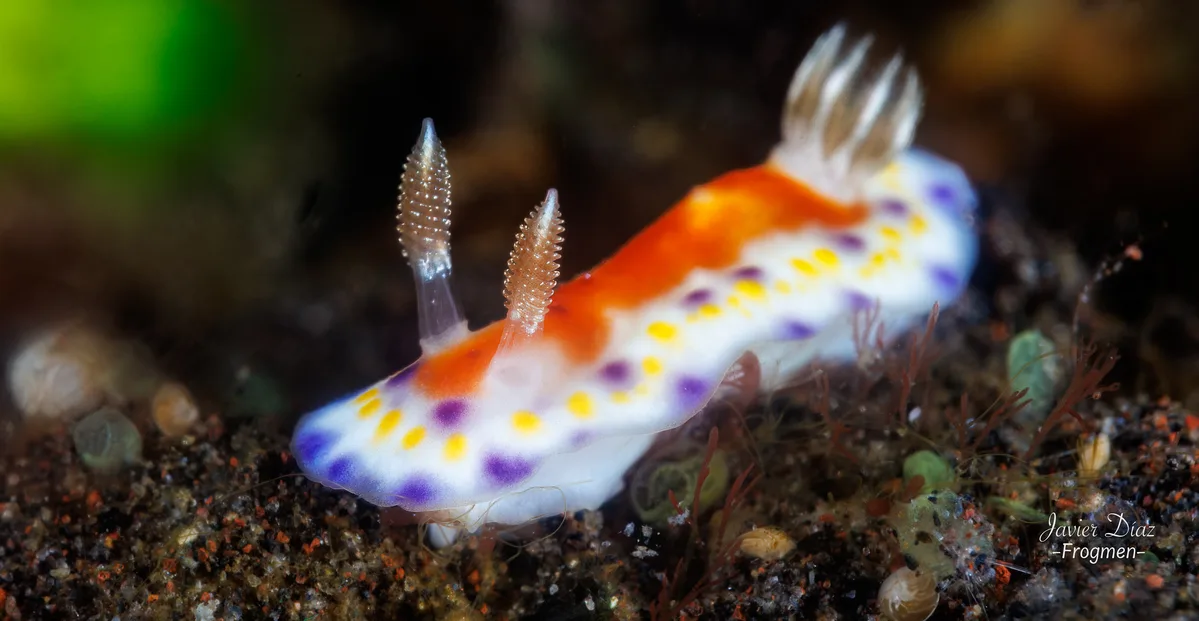
Read this one from the outside in, because it is built in rings and the order is the identification.
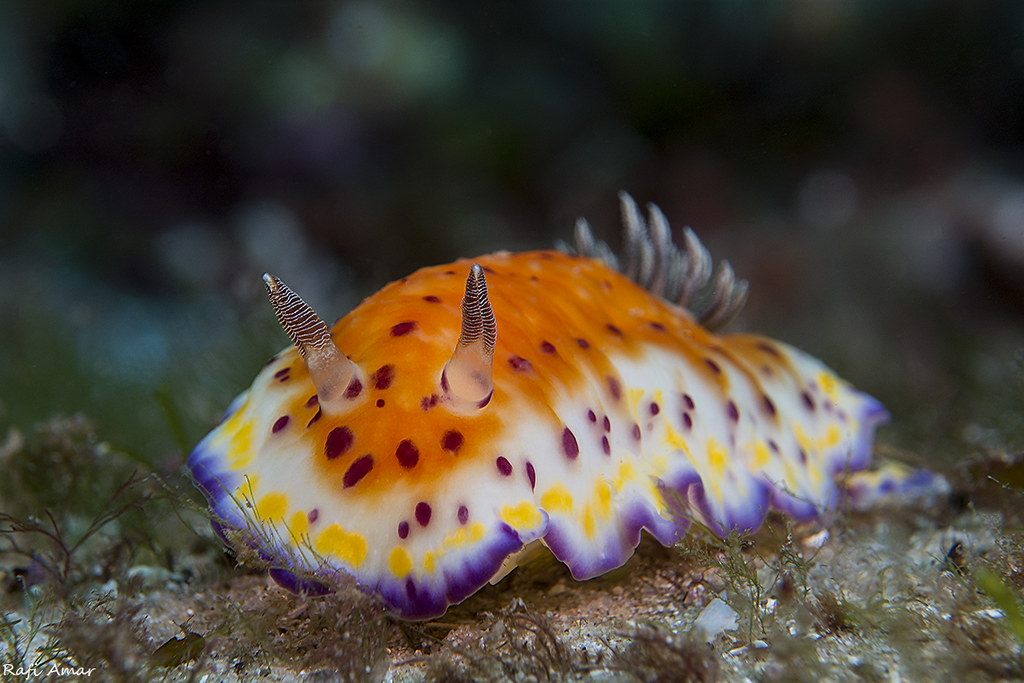
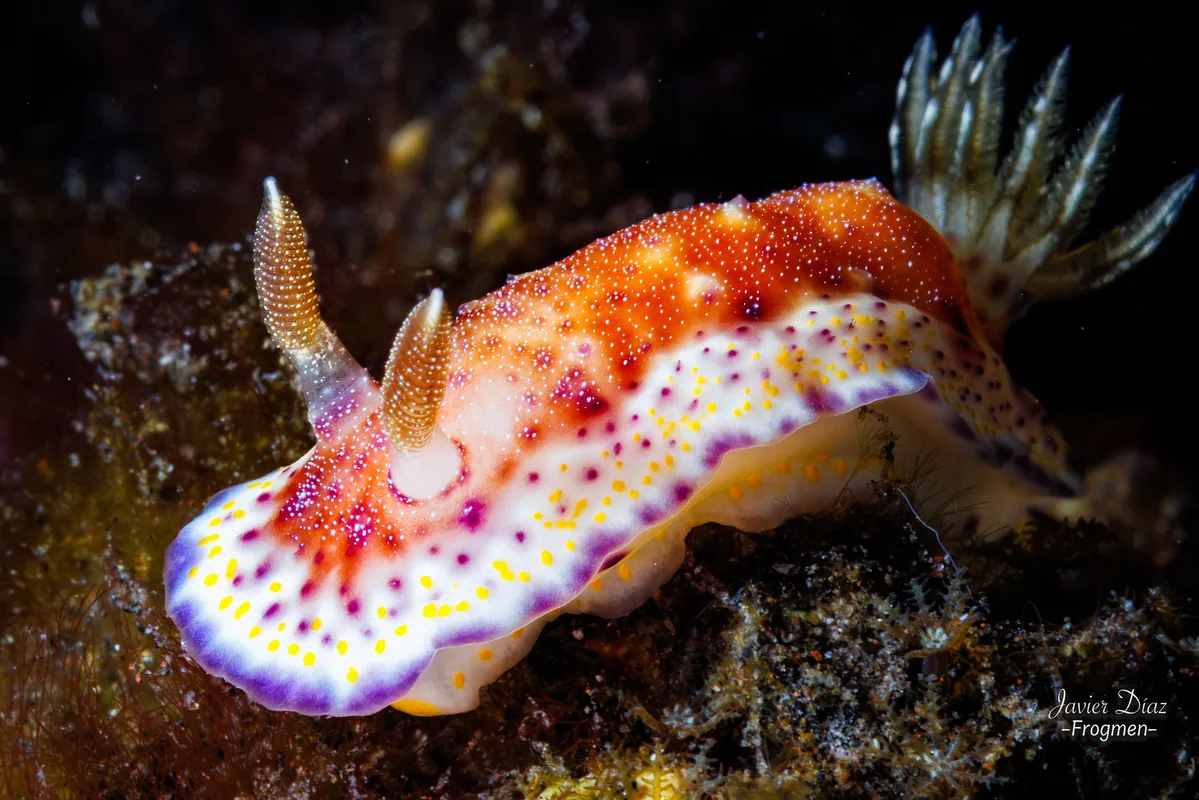
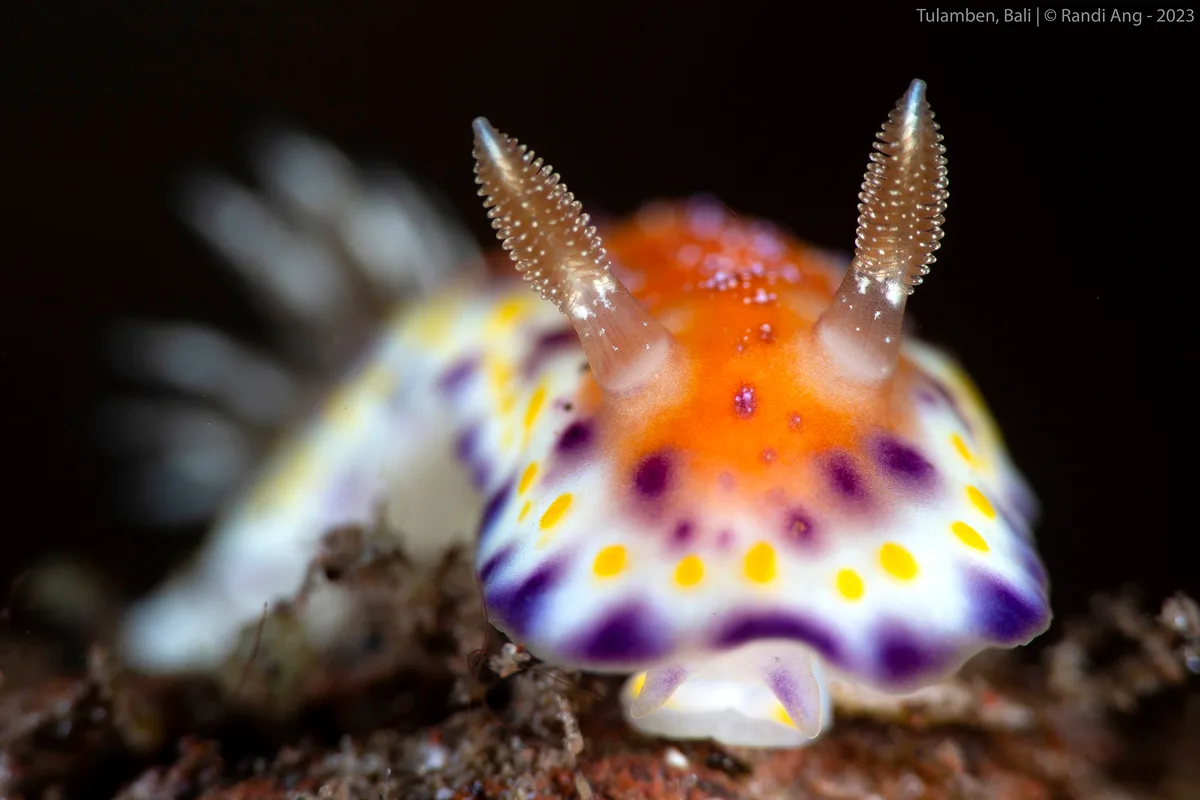
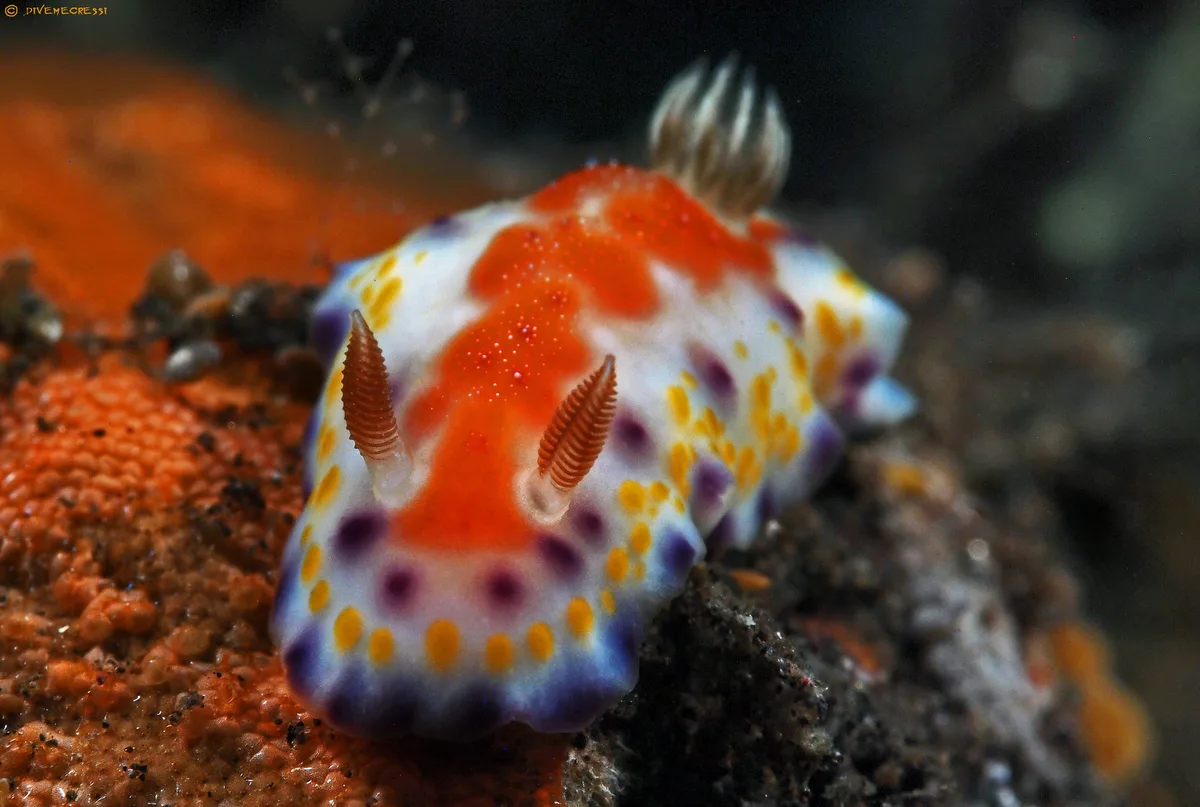
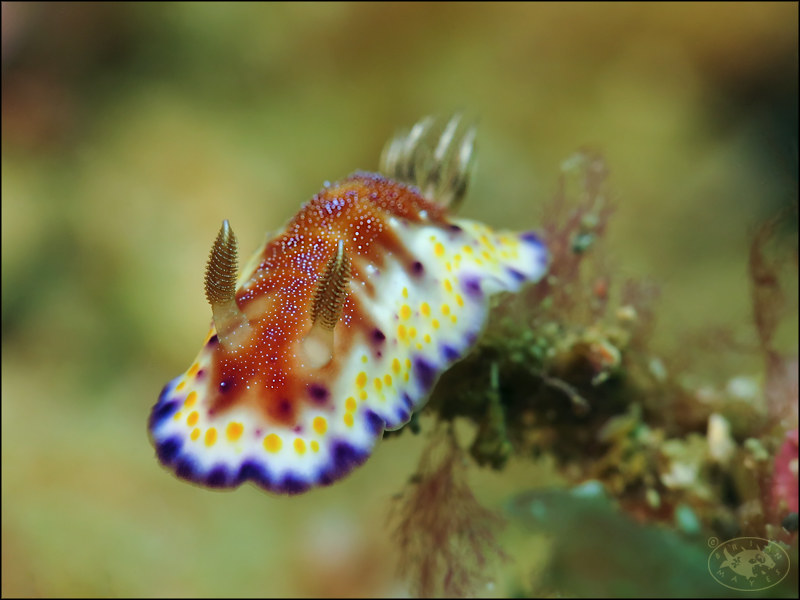
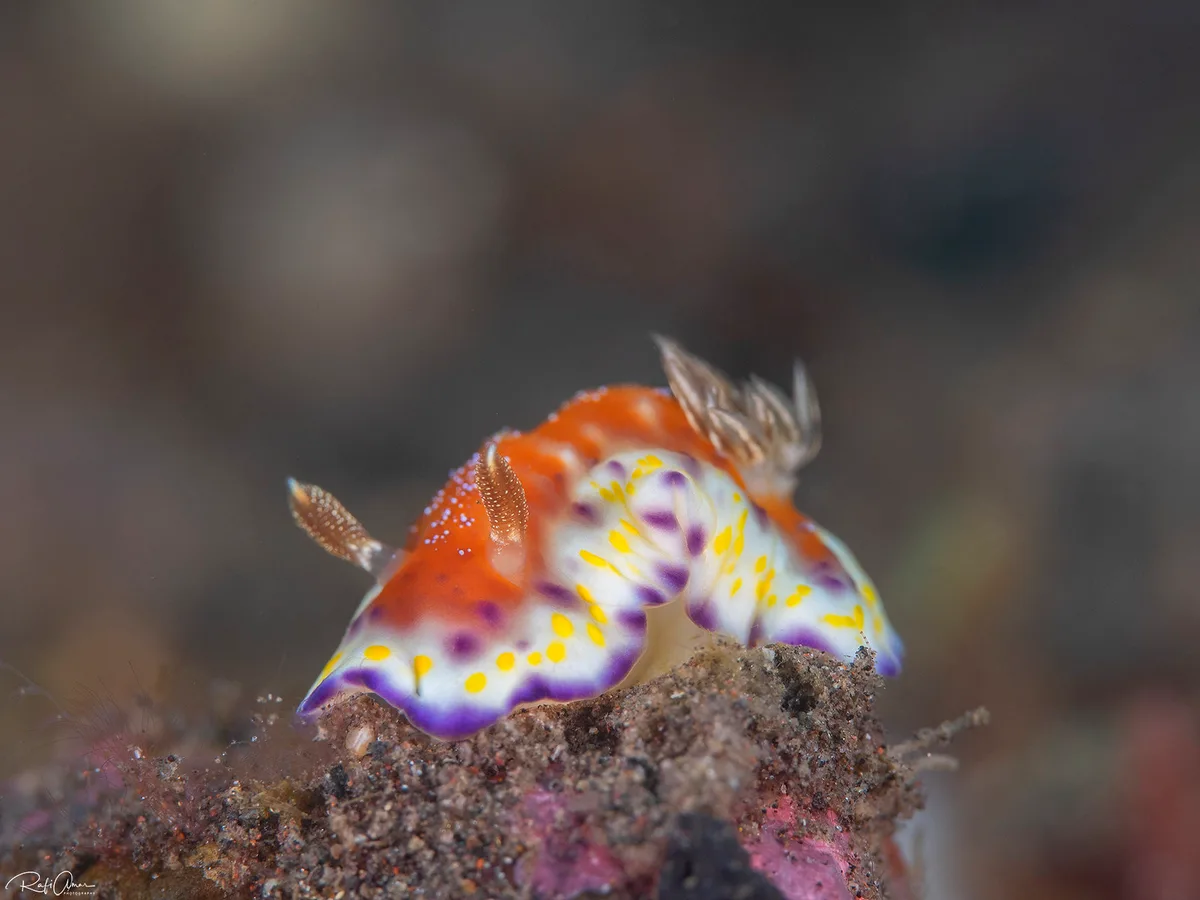
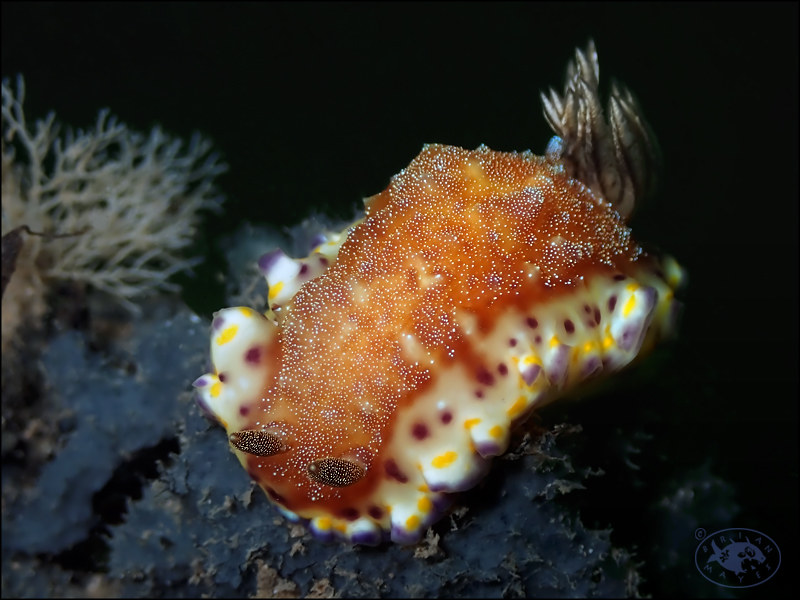
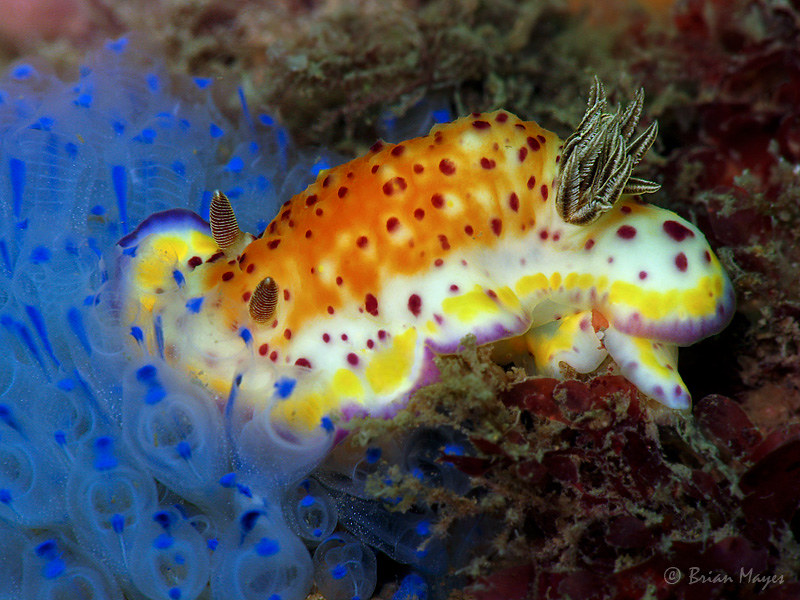
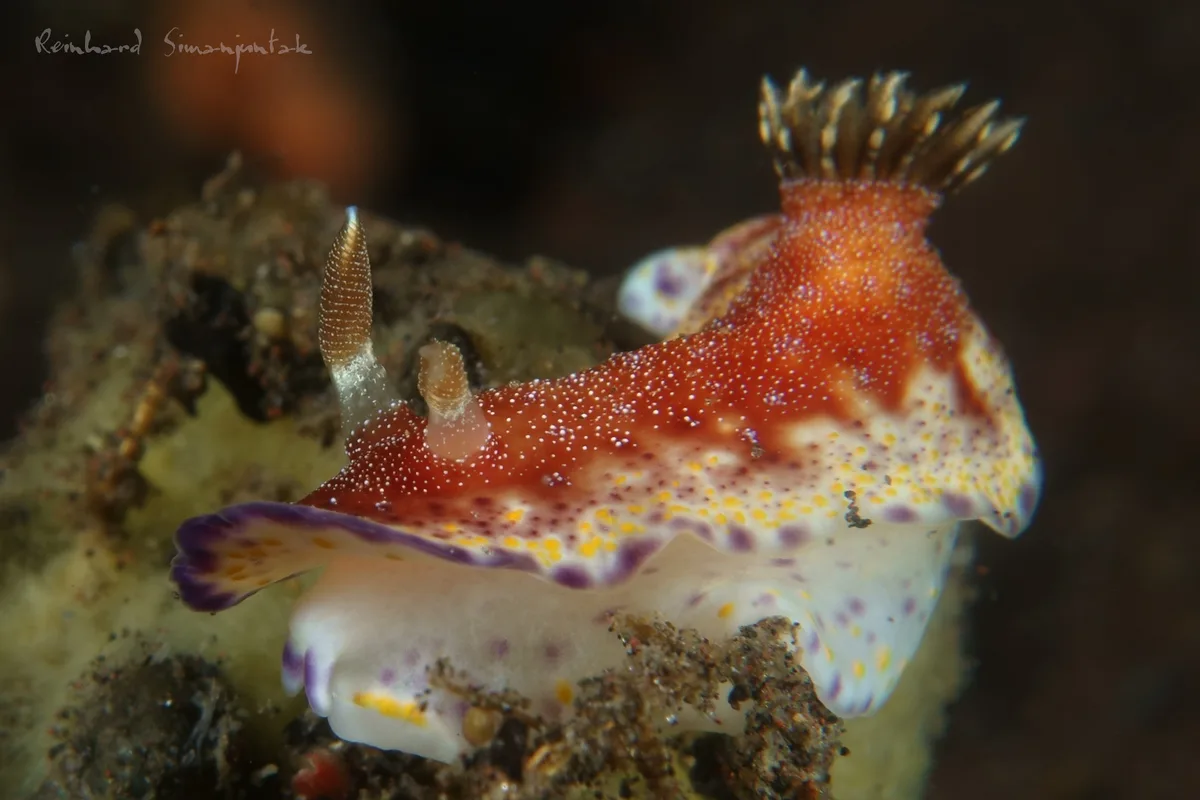
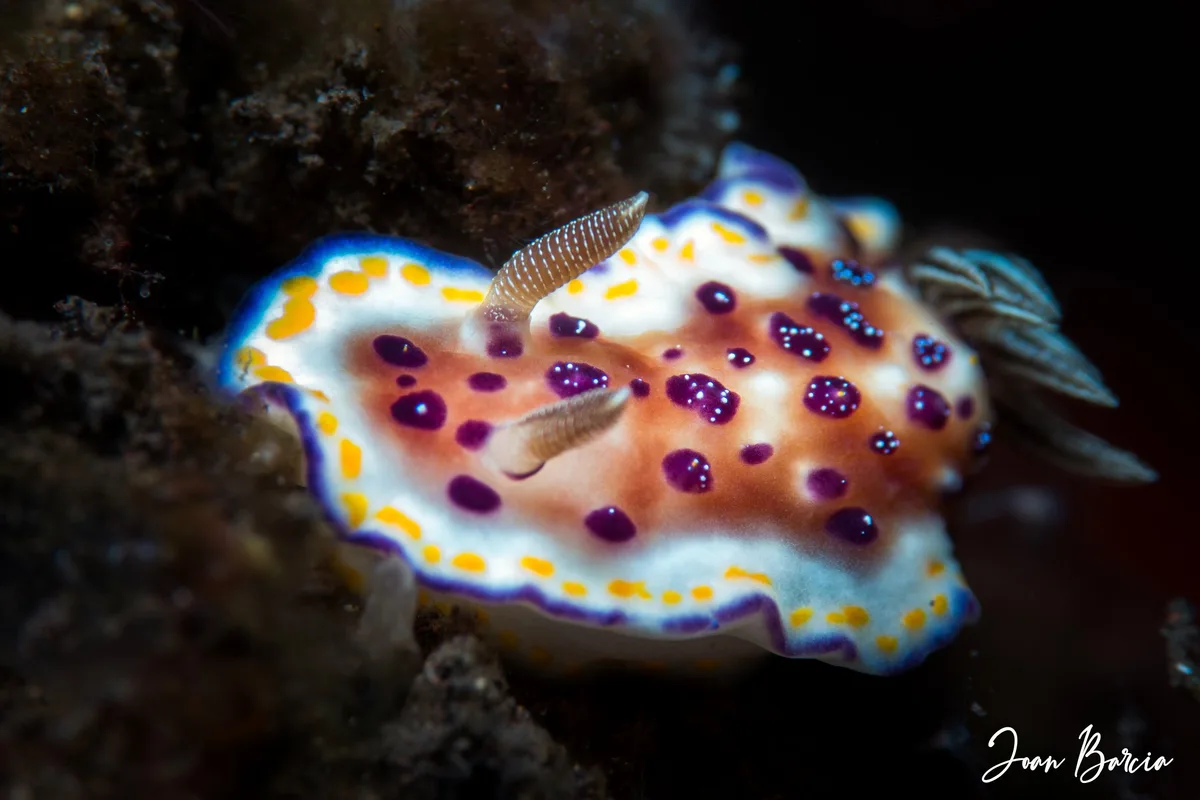
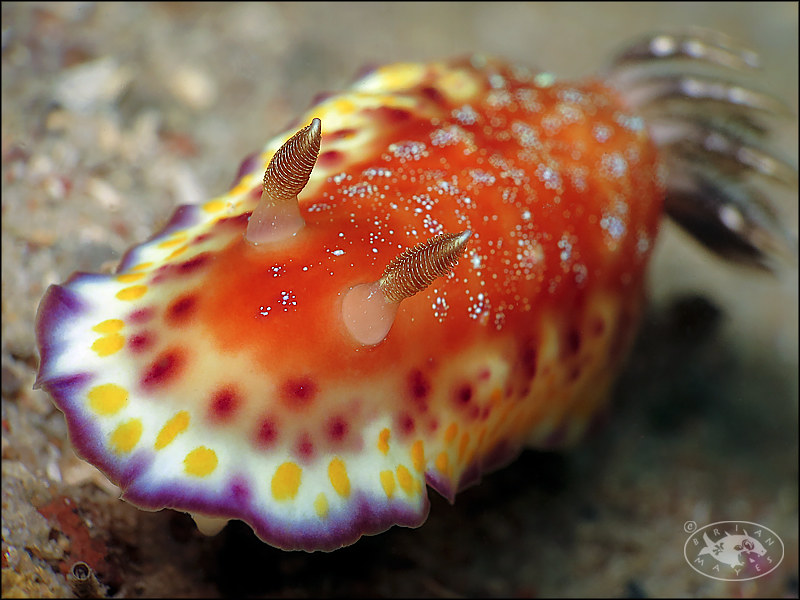
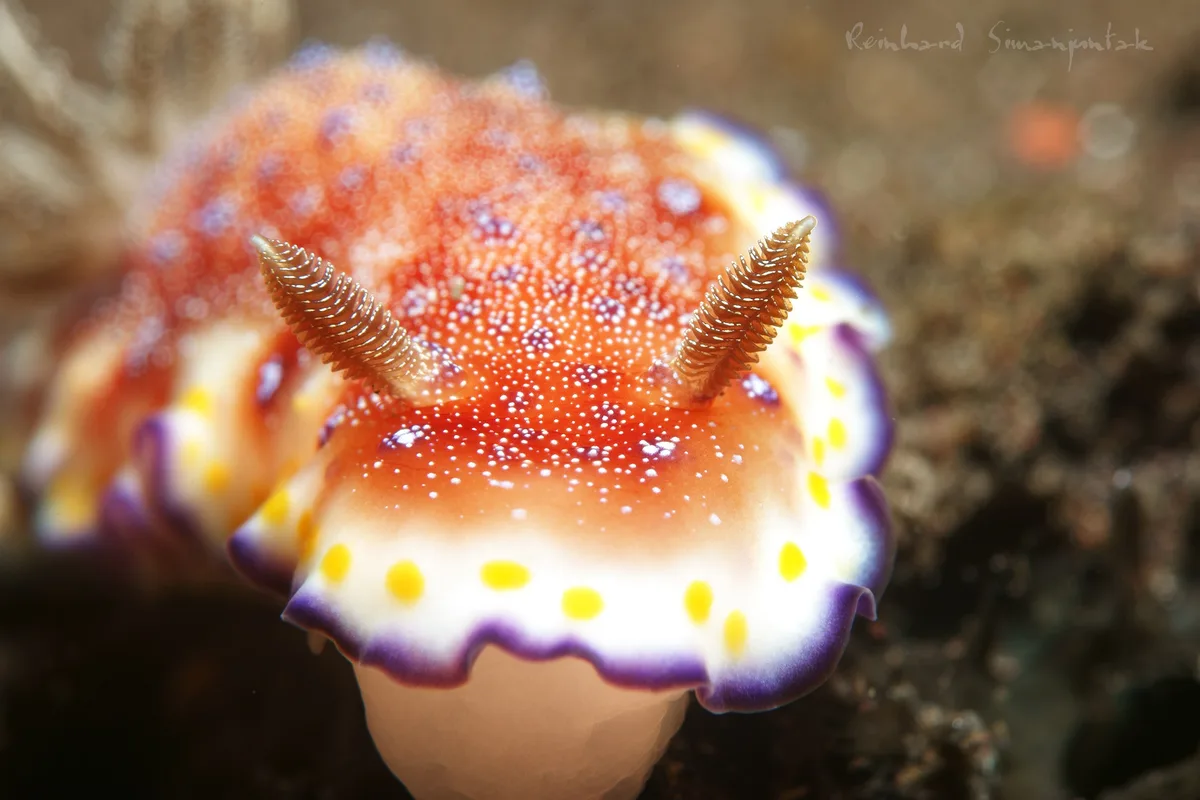
The outer edge is violet, sometimes with a paler line beyond it. Inside that sits a ring of yellow to orange spots. Inside that, a second ring of dark purple spots. And inside both, the central field of the back is red-brown, dusted all over with small opaque white dots. Four zones, concentric, with the spots staying separate rather than running together into bands. No other chromodorid on this reef is assembled that way.
The gills are the other thing you notice. They are large for the size of the animal and held well up off the back in a spreading plume, which on a four-centimeter (1.7 in) slug reads almost as a crest.
It eats sponges and keeps their chemistry the way the family does, concentrating the compounds toward the mantle rim, which is why an animal this conspicuous can graze in the open in daylight without hurrying.
One caution if you are comparing against printed descriptions. The regional book gives the central tubercles as bluish; photographs of the species consistently show them white against the red-brown ground. Either the color varies or the printed line is loose, so go by the ring structure rather than by that detail.
- four zones from the edge inward: violet margin, ring of yellow-orange spots, ring of dark purple spots, red-brown center
- the red-brown center is dusted all over with small white dots
- gill plume large and spreading, held well up off the back
- the spots are separate and countable, not merged into bands