To find this one you have to know its coral, and its coral is the strangest thing in its own group.
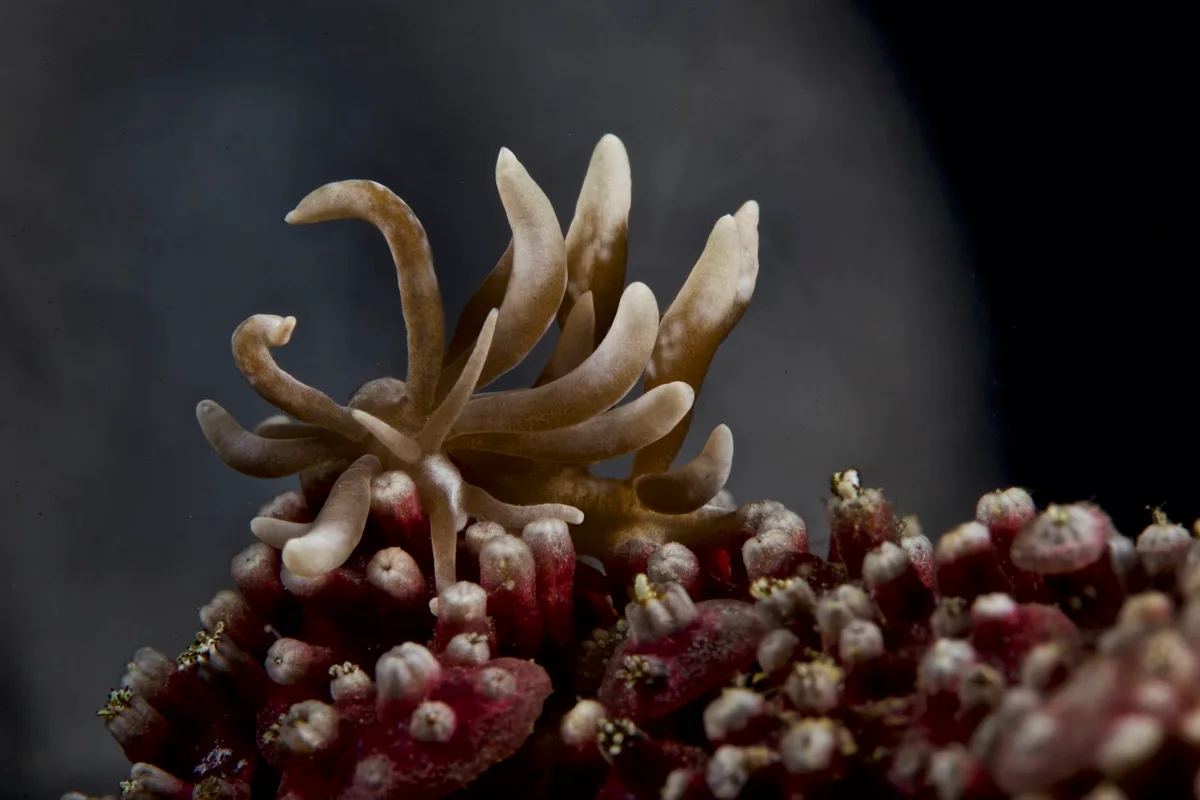
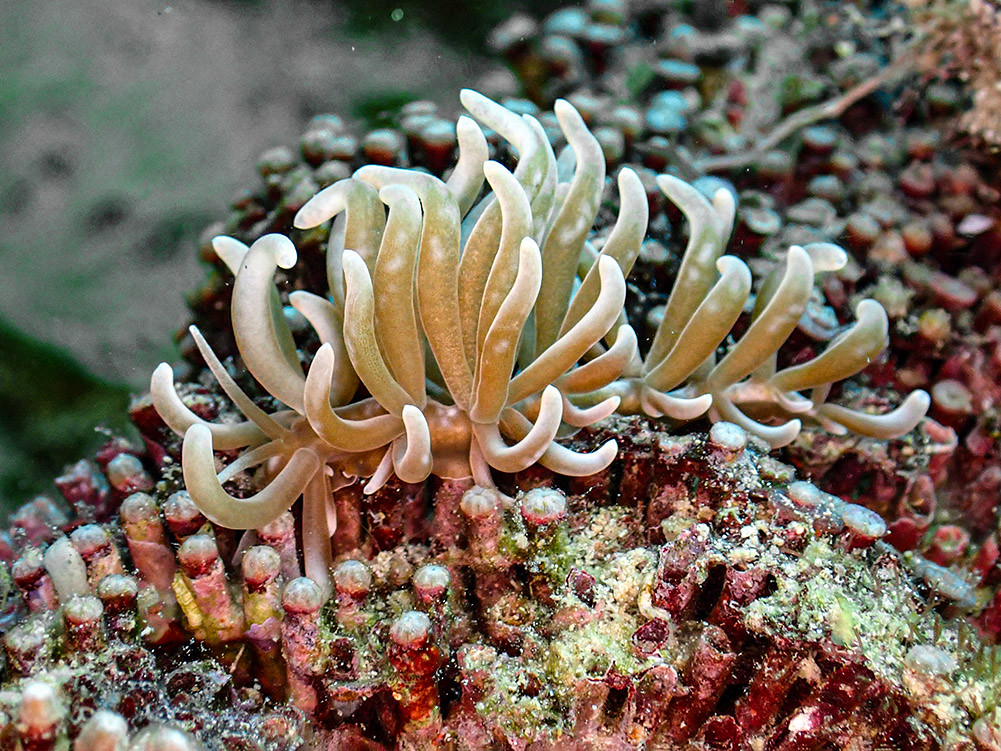
Organ-pipe coral, Tubipora musica, is a soft coral that decided to build. Its colony is a stack of vertical crimson tubes joined at intervals by flat horizontal platforms, the whole structure a deep brick red, and most people who have seen it have seen it dead: a lump of red pipes washed up or sold on a shelf. Alive, none of that shows. The skeleton is buried under a layer of tissue with grey-green polyps standing up out of it, and the colony looks like an ordinary patch of soft coral.
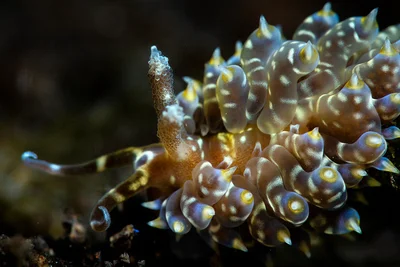
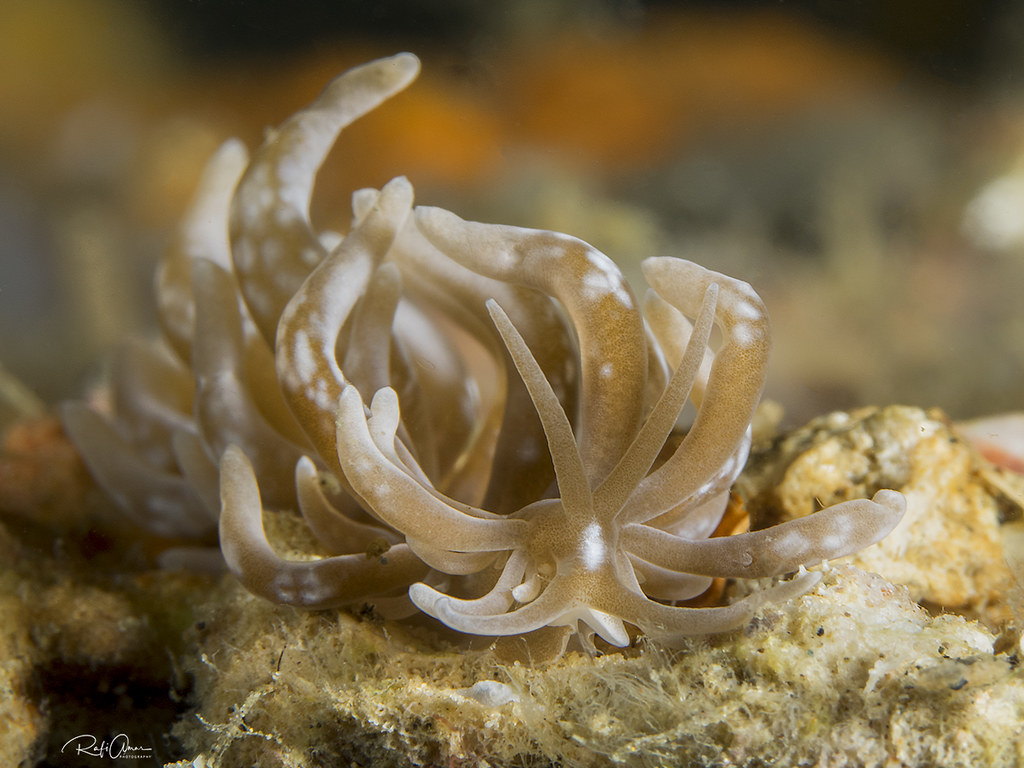
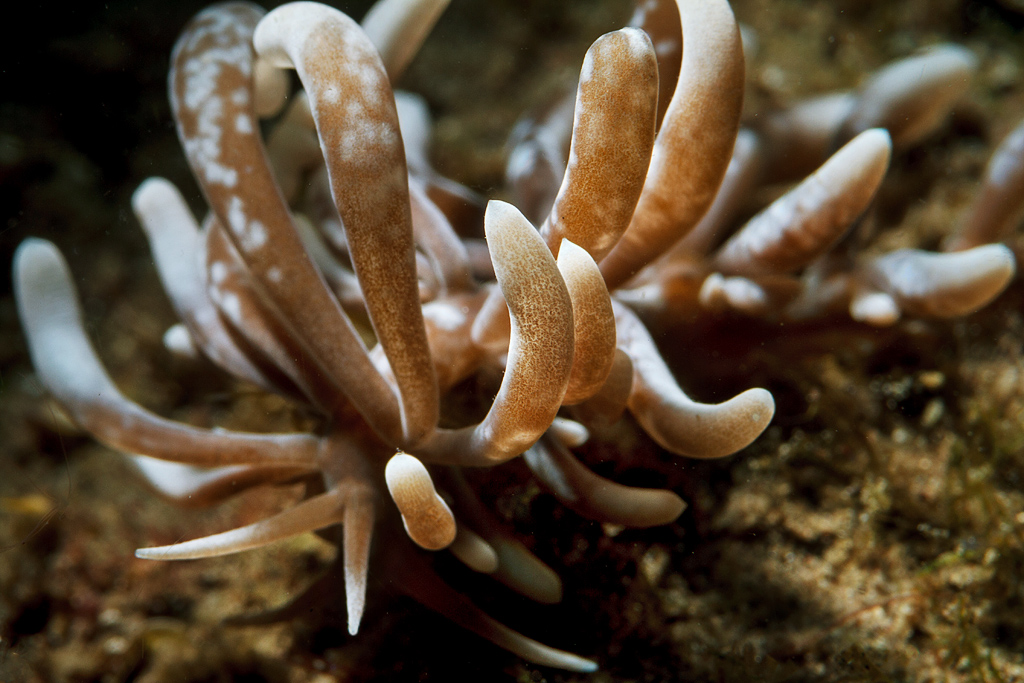
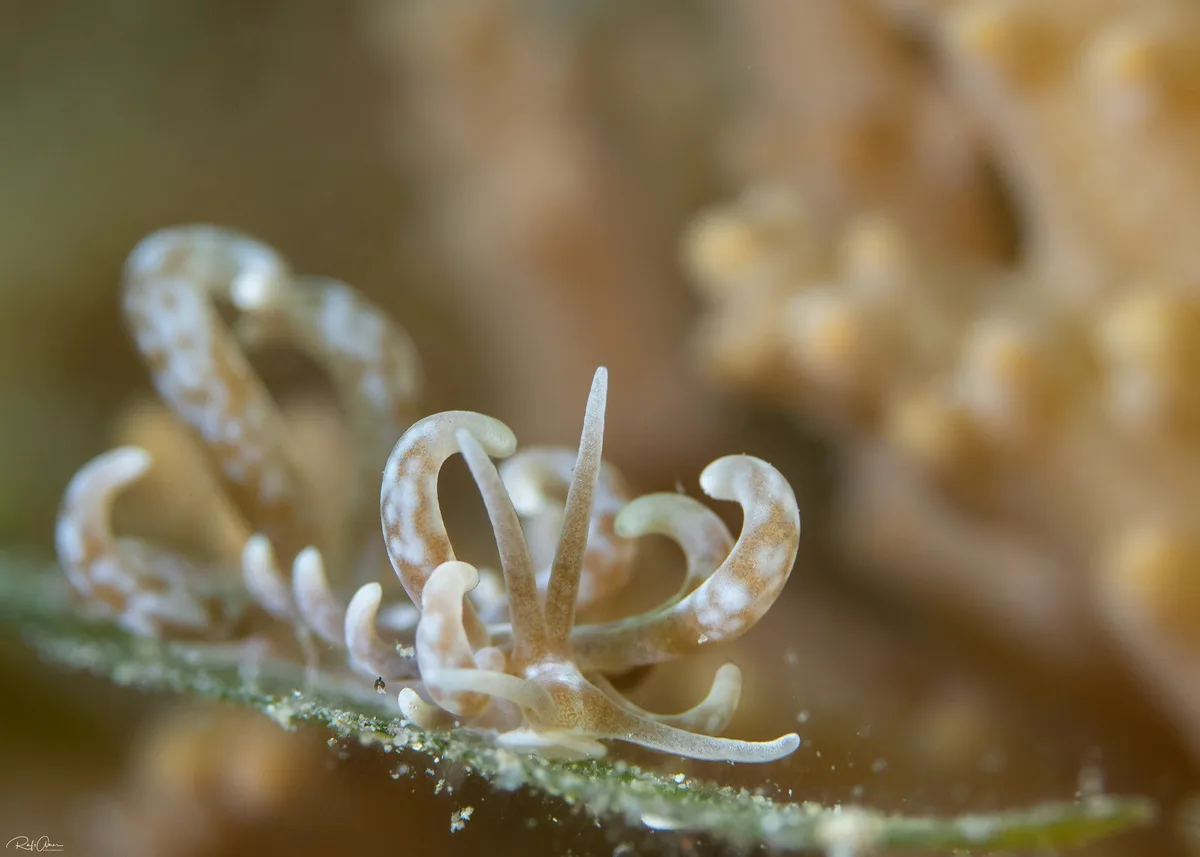
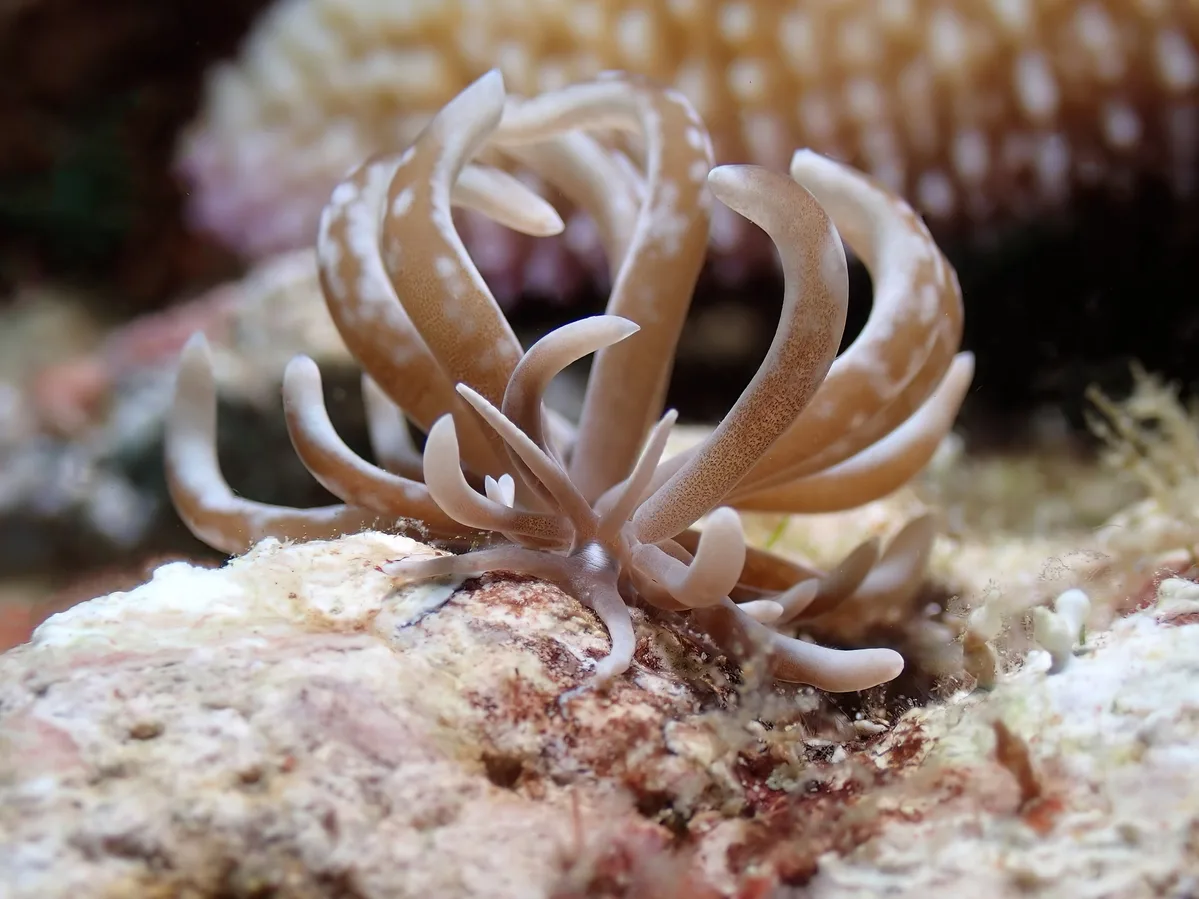
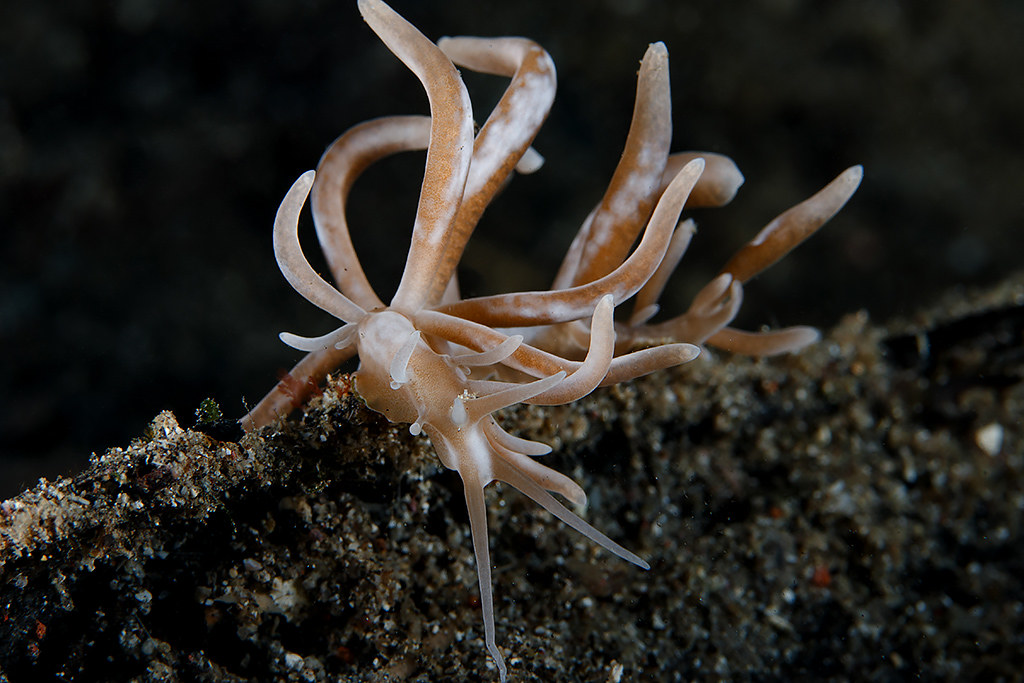
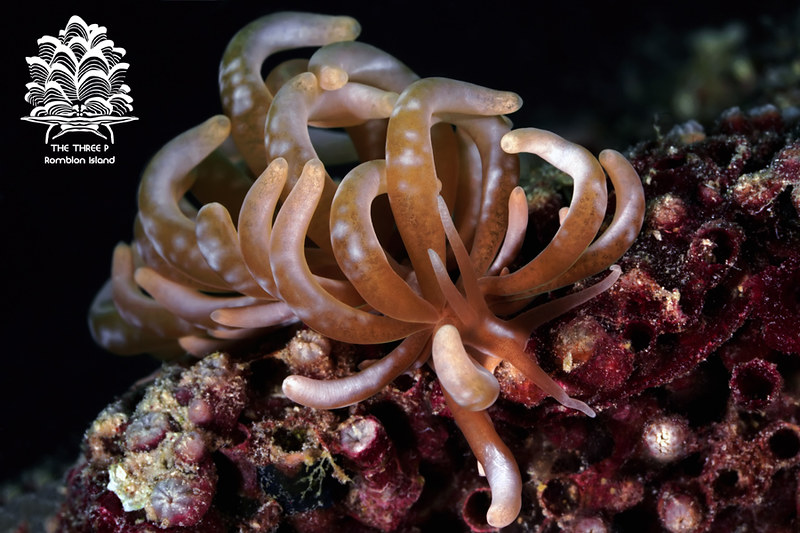
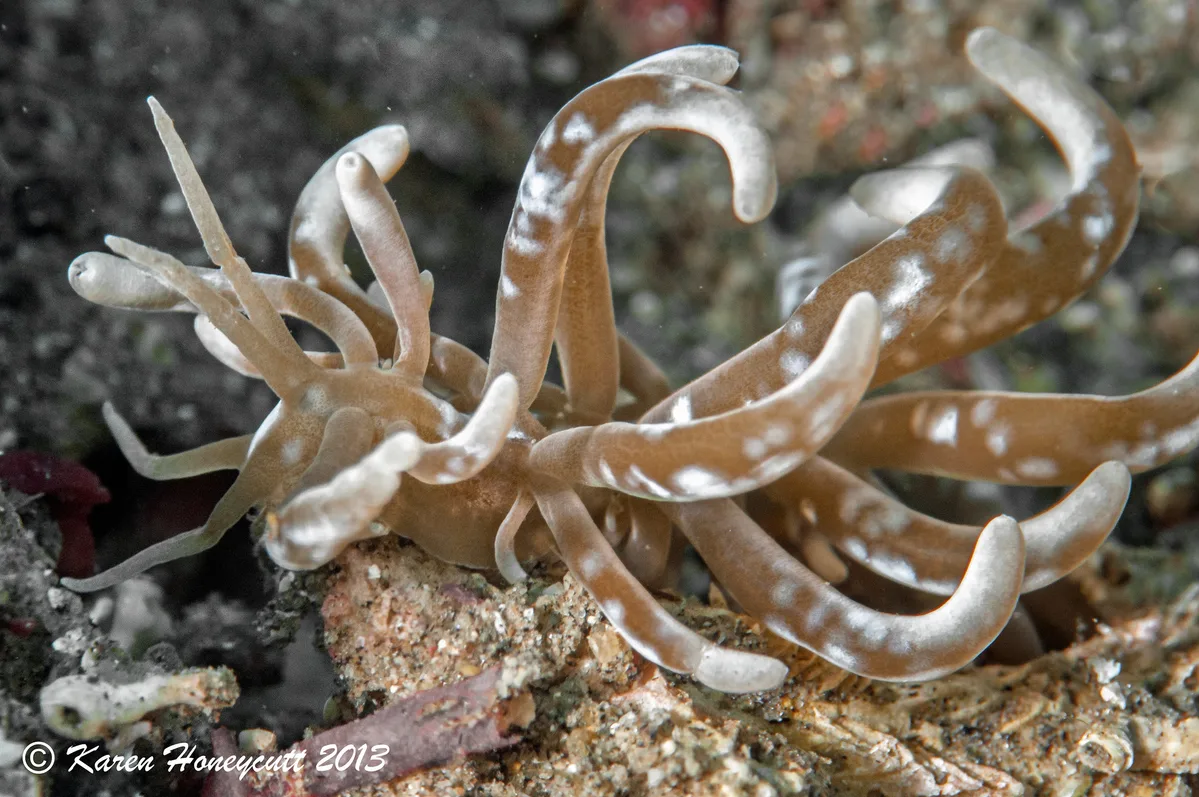
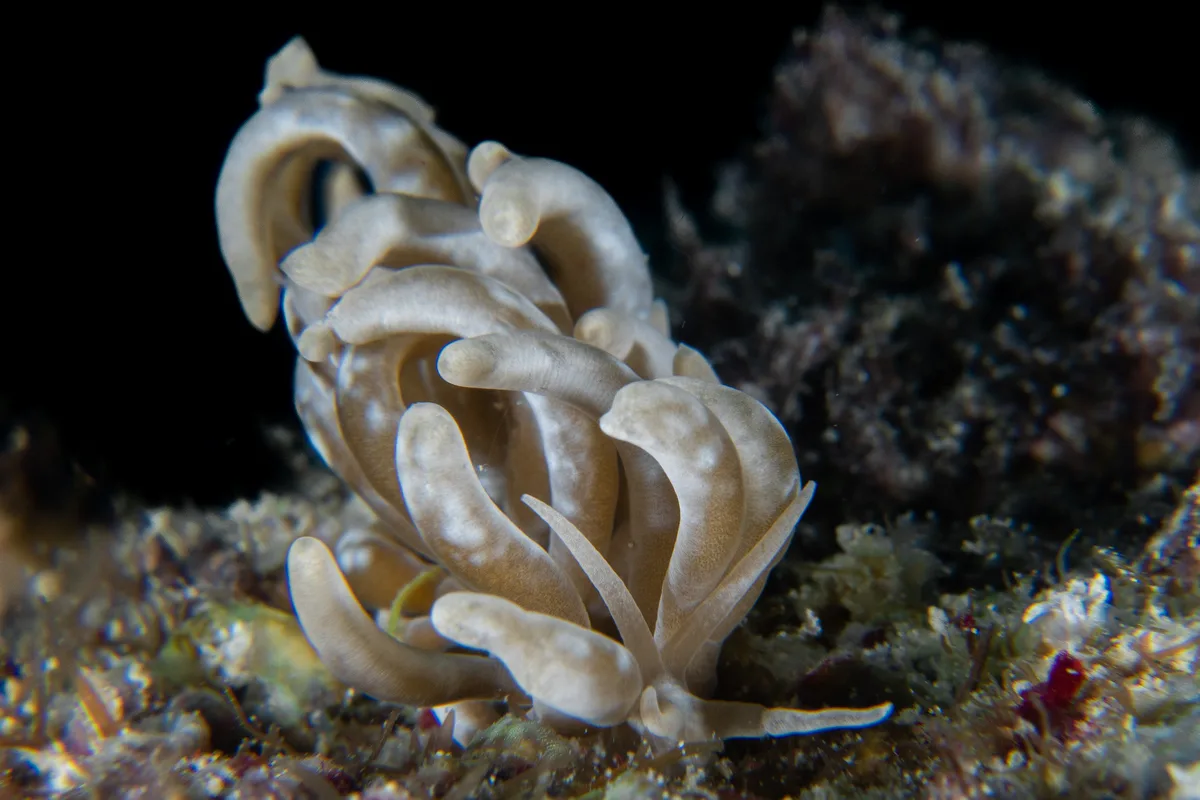
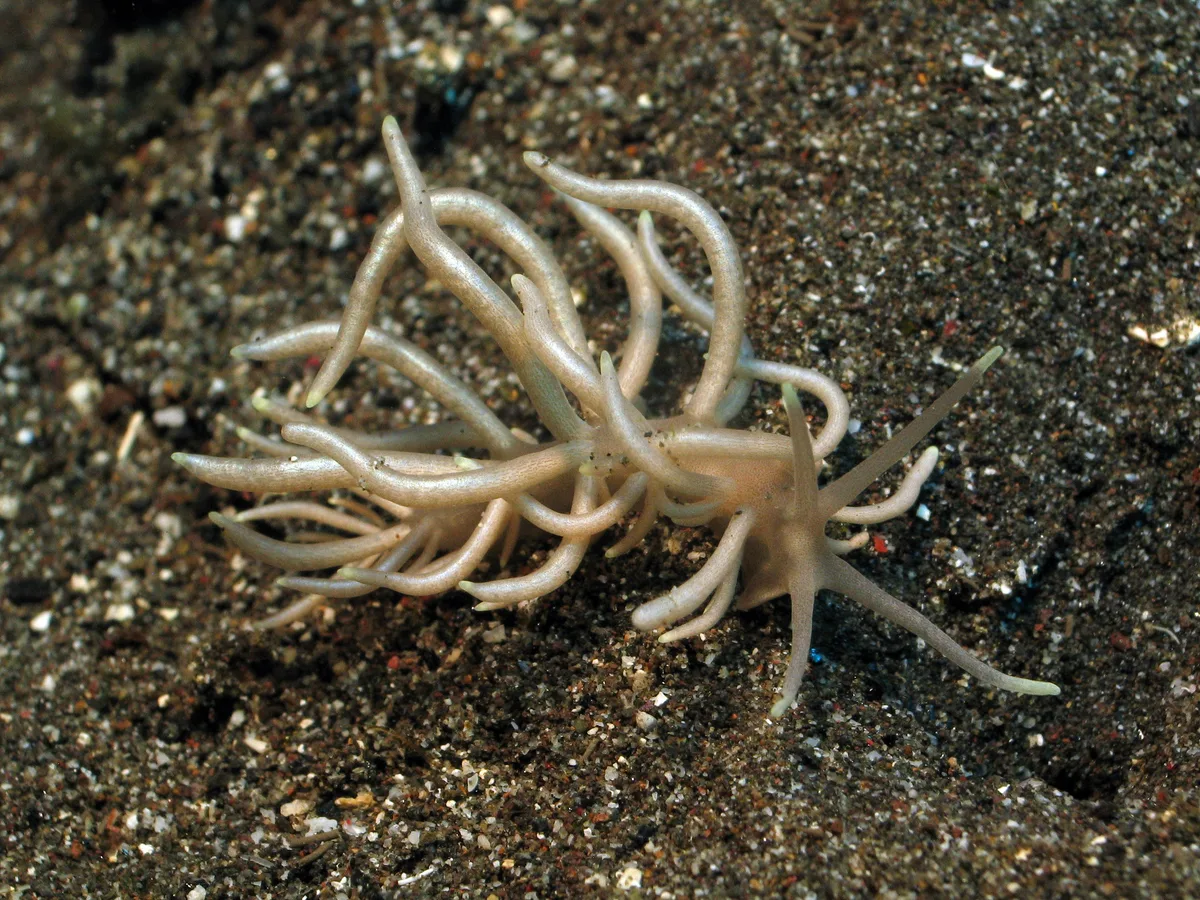
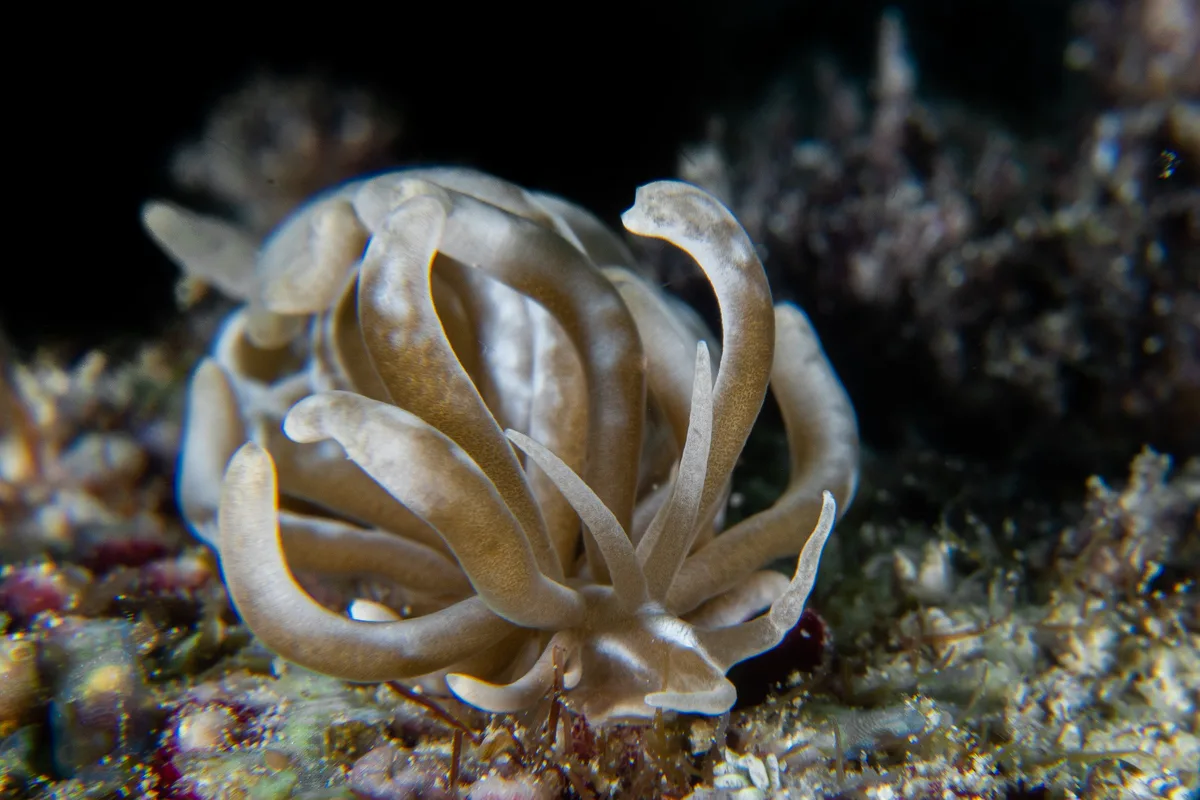
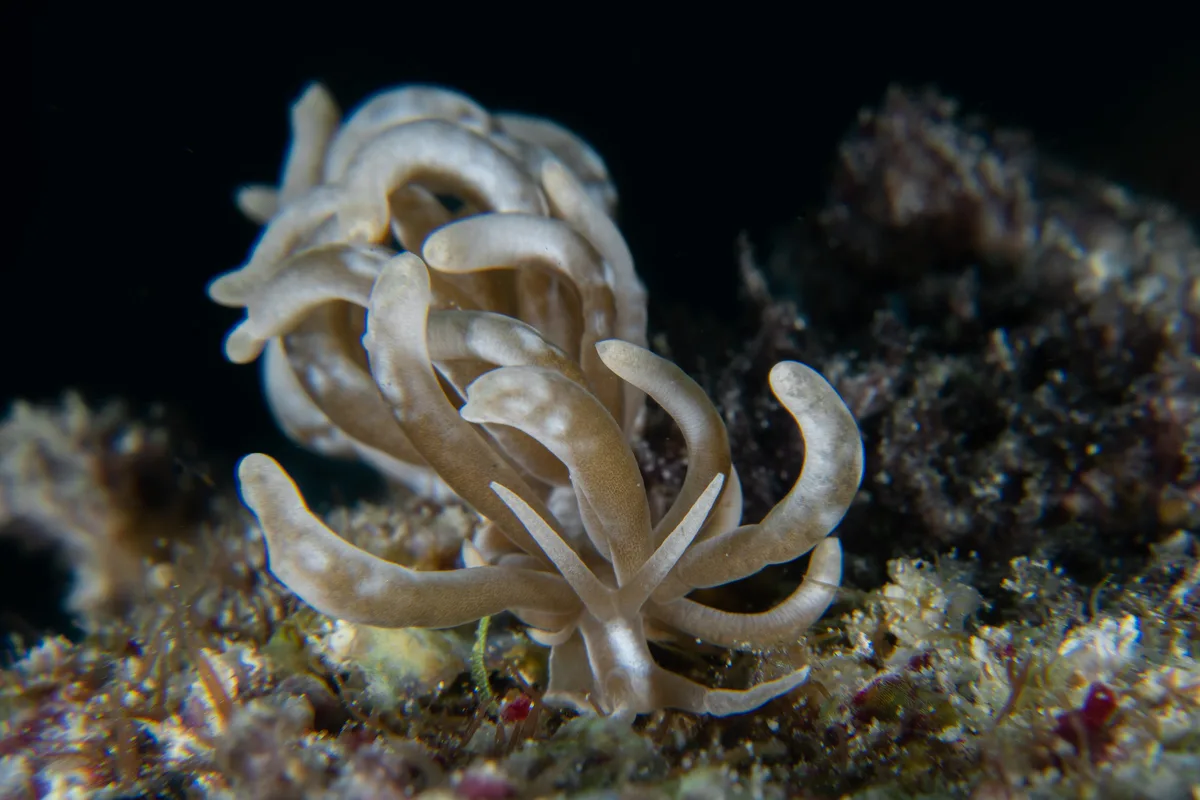
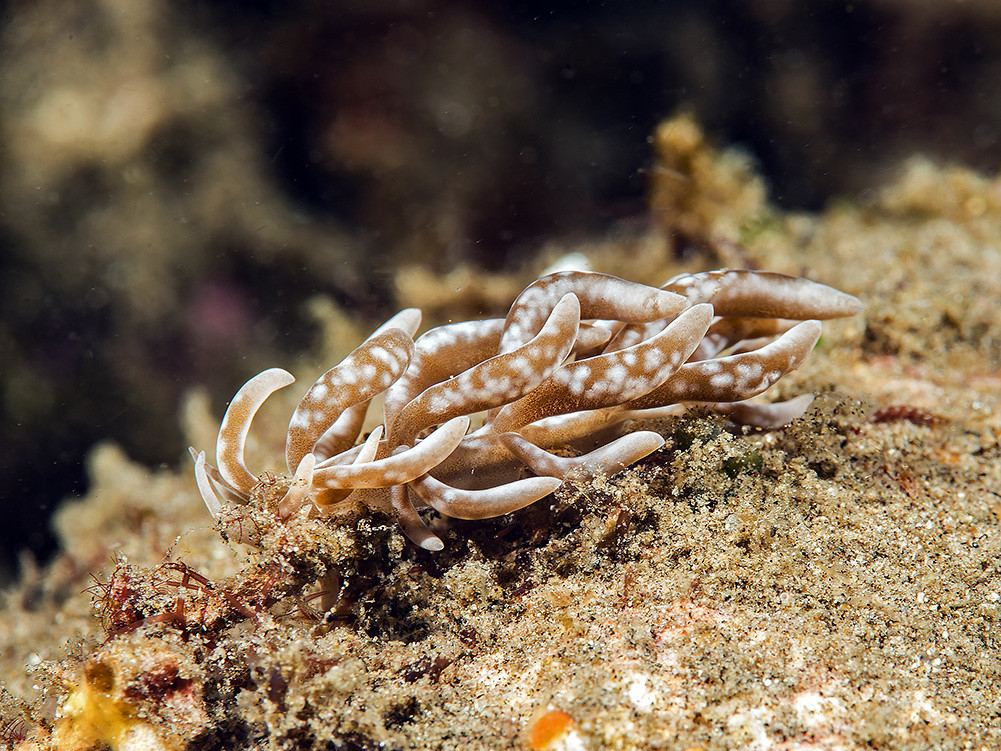
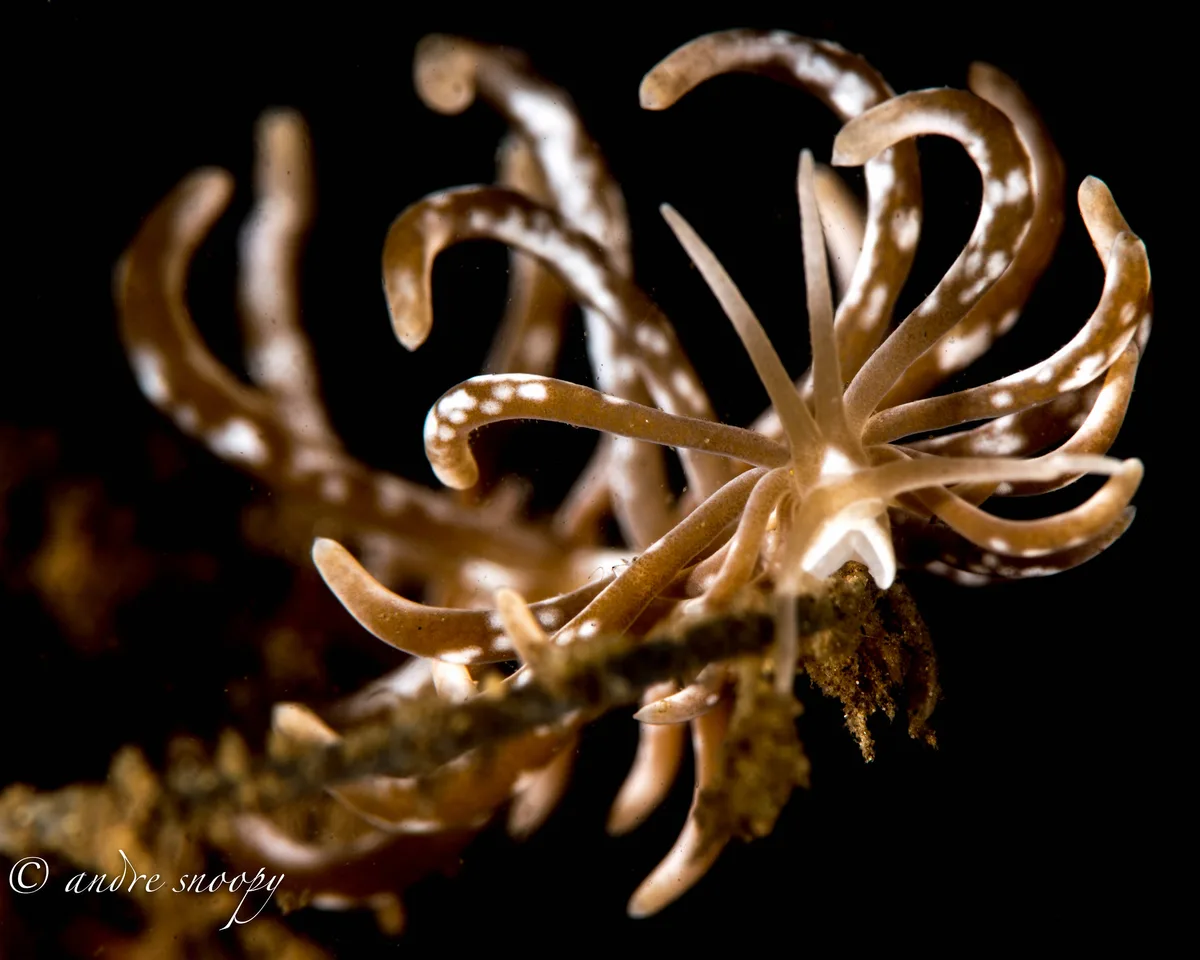
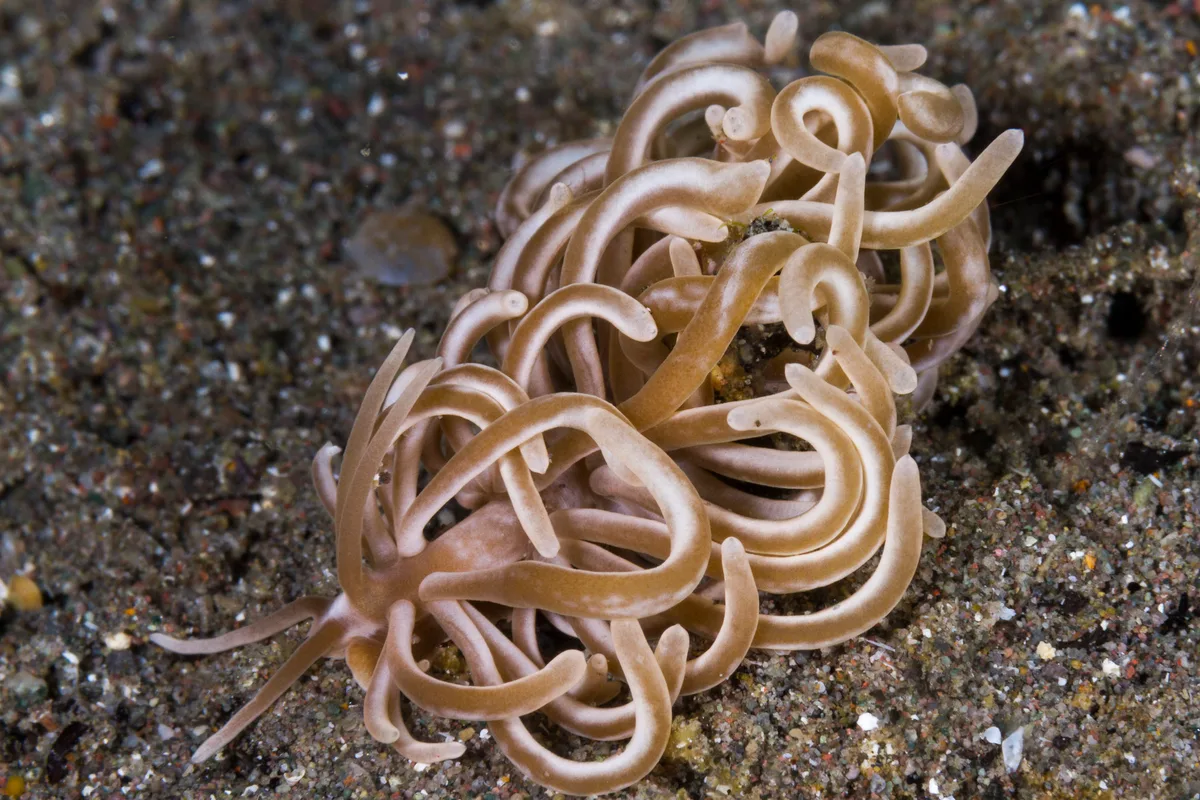
This slug lives on that patch and eats it. Two centimeters (0.8 in), translucent, with long slender cerata held up off the back in exactly the density and length of the polyps around it. It is not colored like the coral so much as shaped like it, and among expanded polyps it stops being visible as a separate animal at all.
That specialization is total, and it makes the search simple. There is no point scanning reef for a two-centimeter slug. You find organ-pipe coral, which is uncommon enough here to be worth noting on its own, and then you go over that one colony properly. The animal will be on it or it will not be anywhere.
- found only on organ-pipe coral, and effectively never anywhere else
- translucent body with long slender cerata that match the coral's polyps
- two centimeters, and shaped to disappear into the polyp field
- look for it among expanded polyps in daylight, not at night