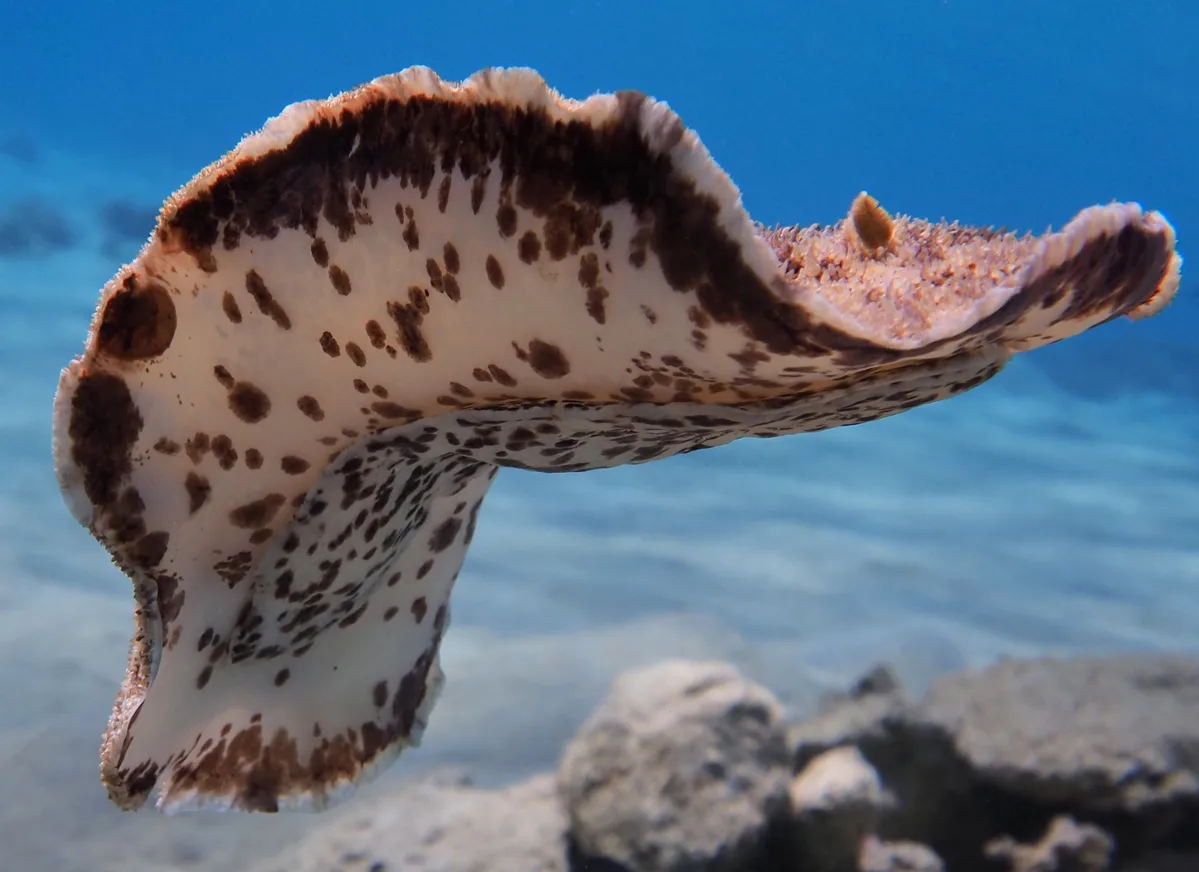
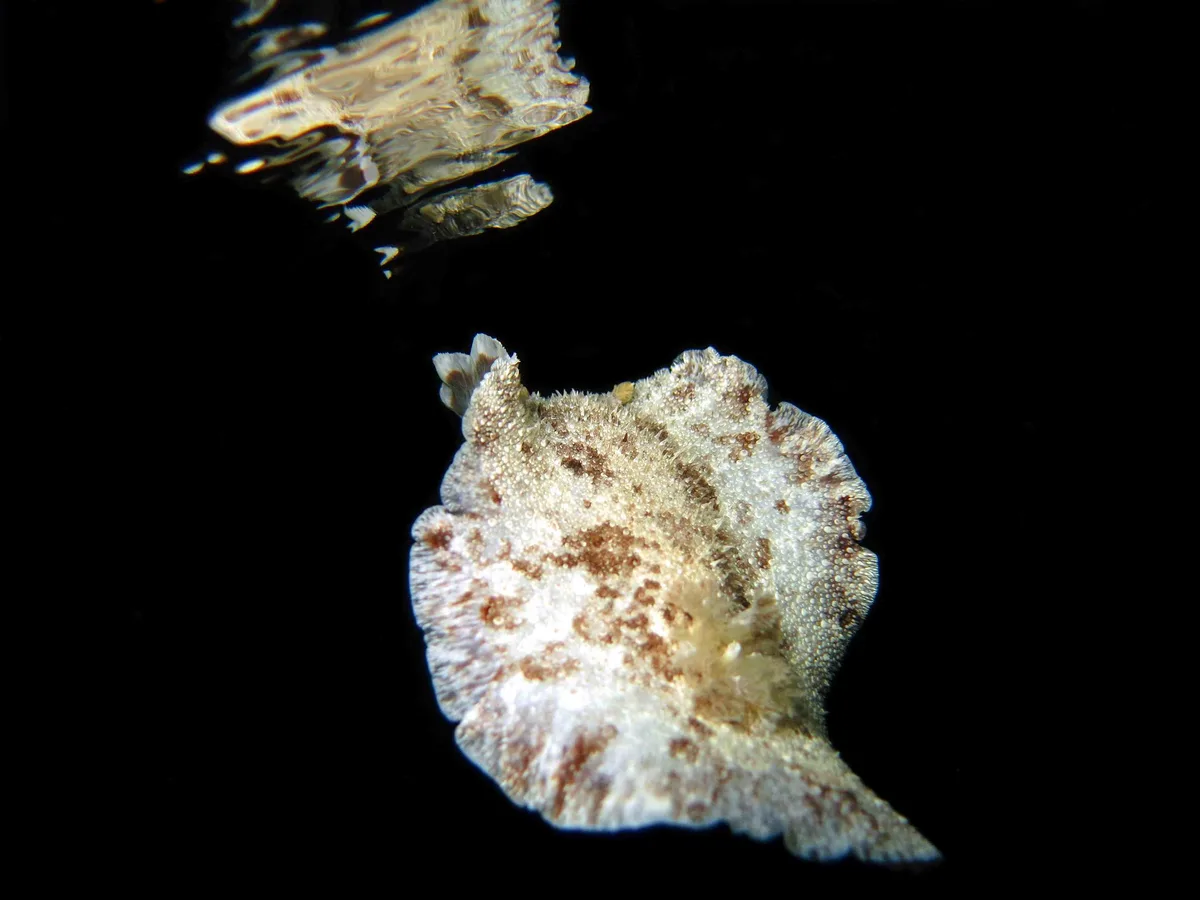
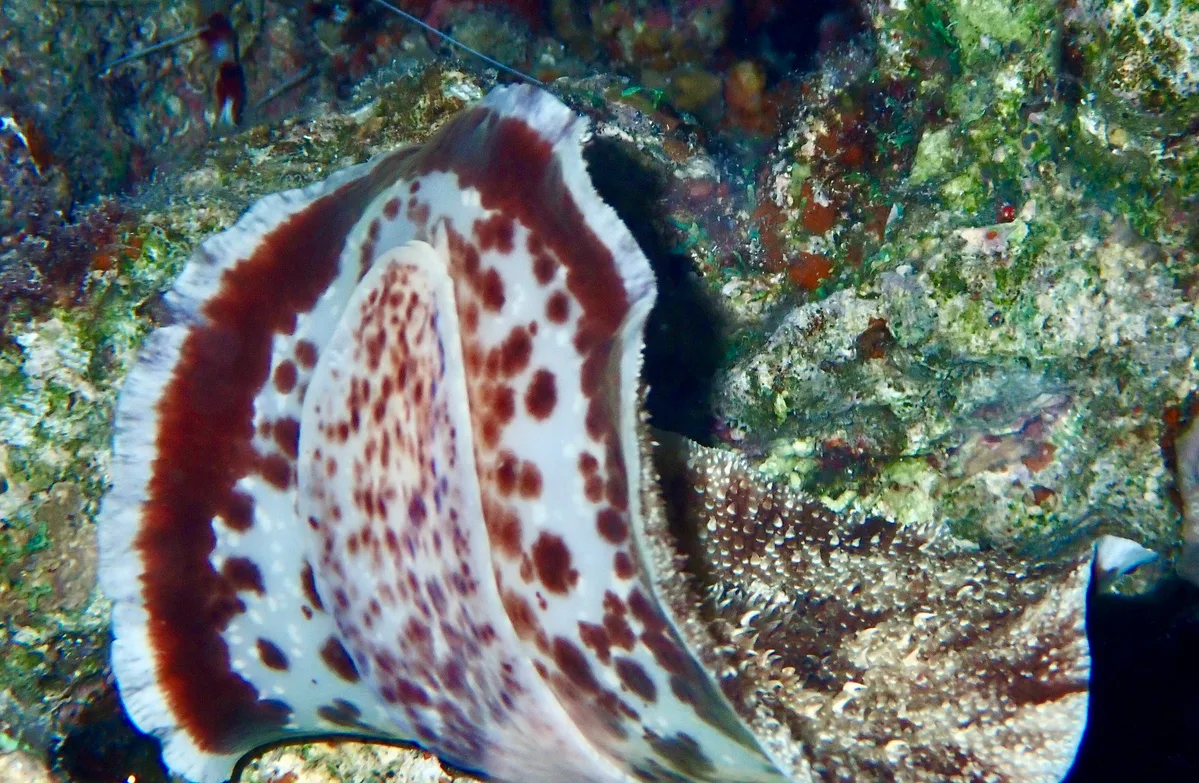
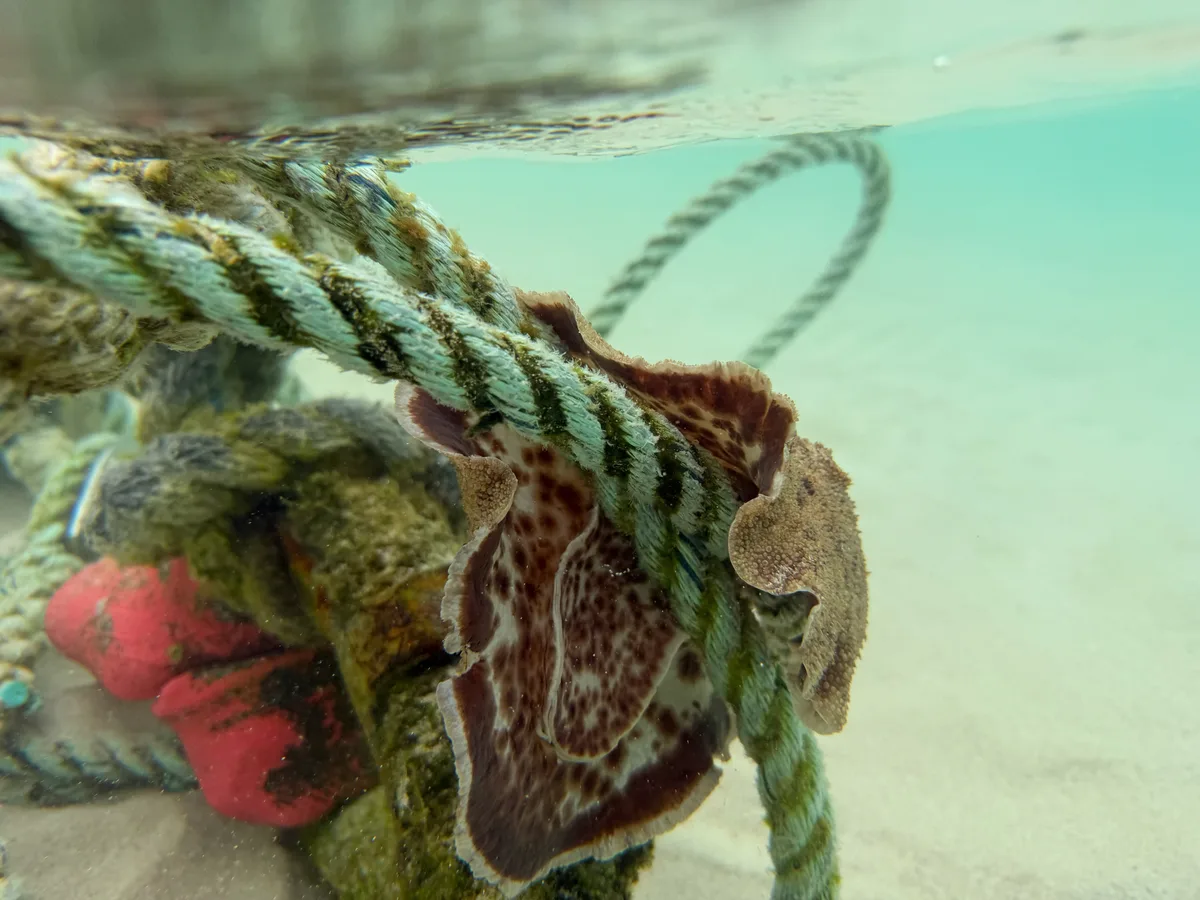
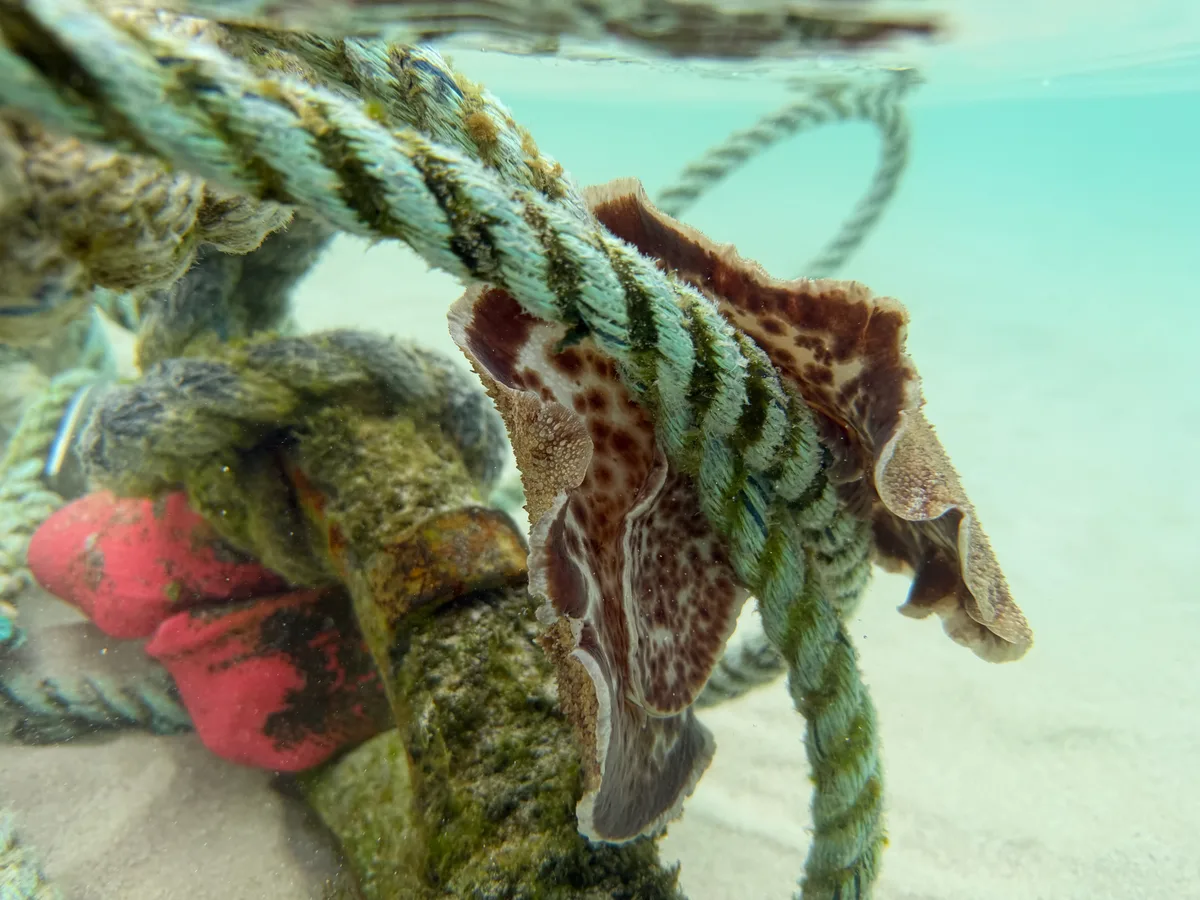
Most dorids cannot swim. This one can, and it does it at night.
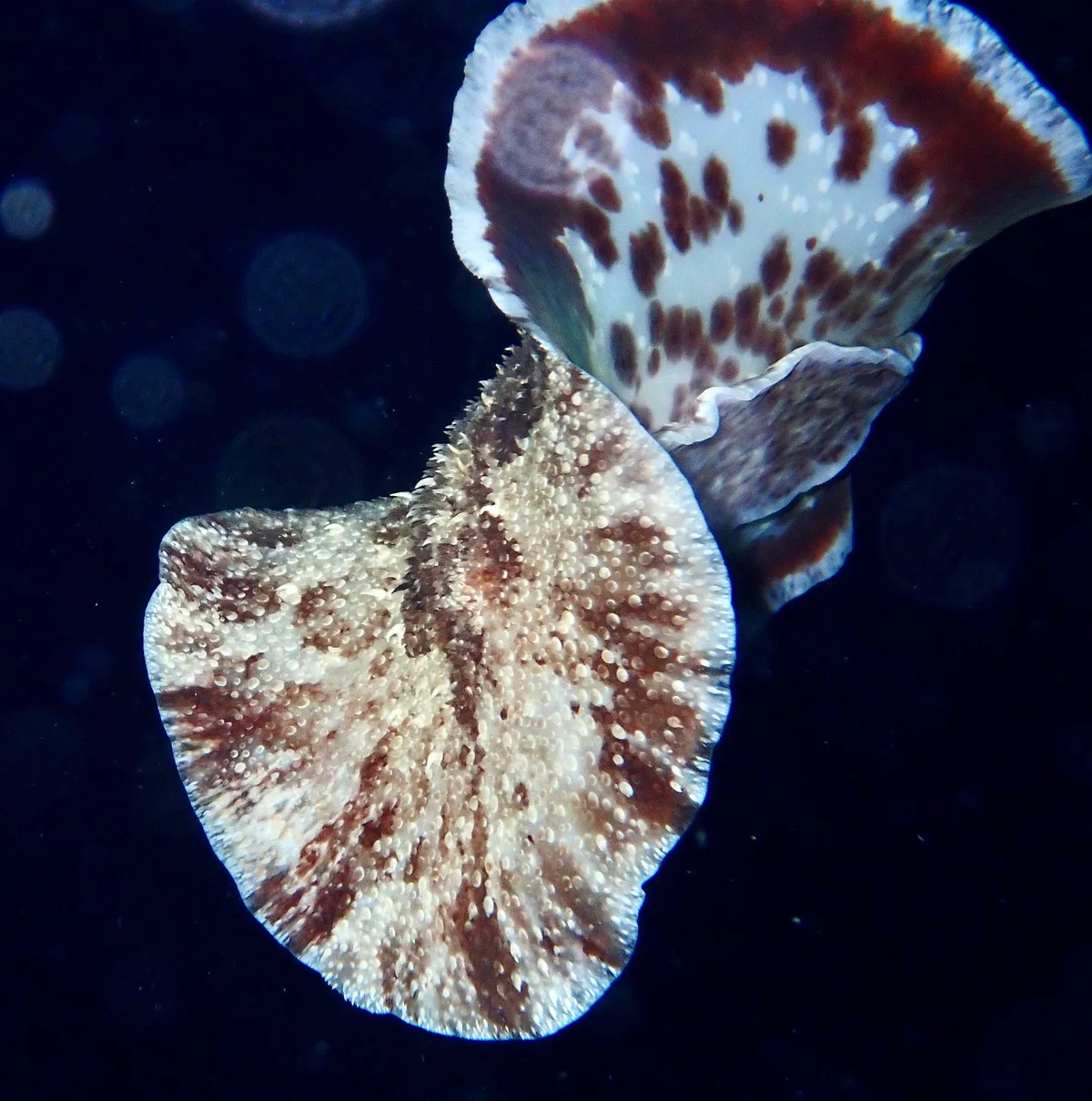
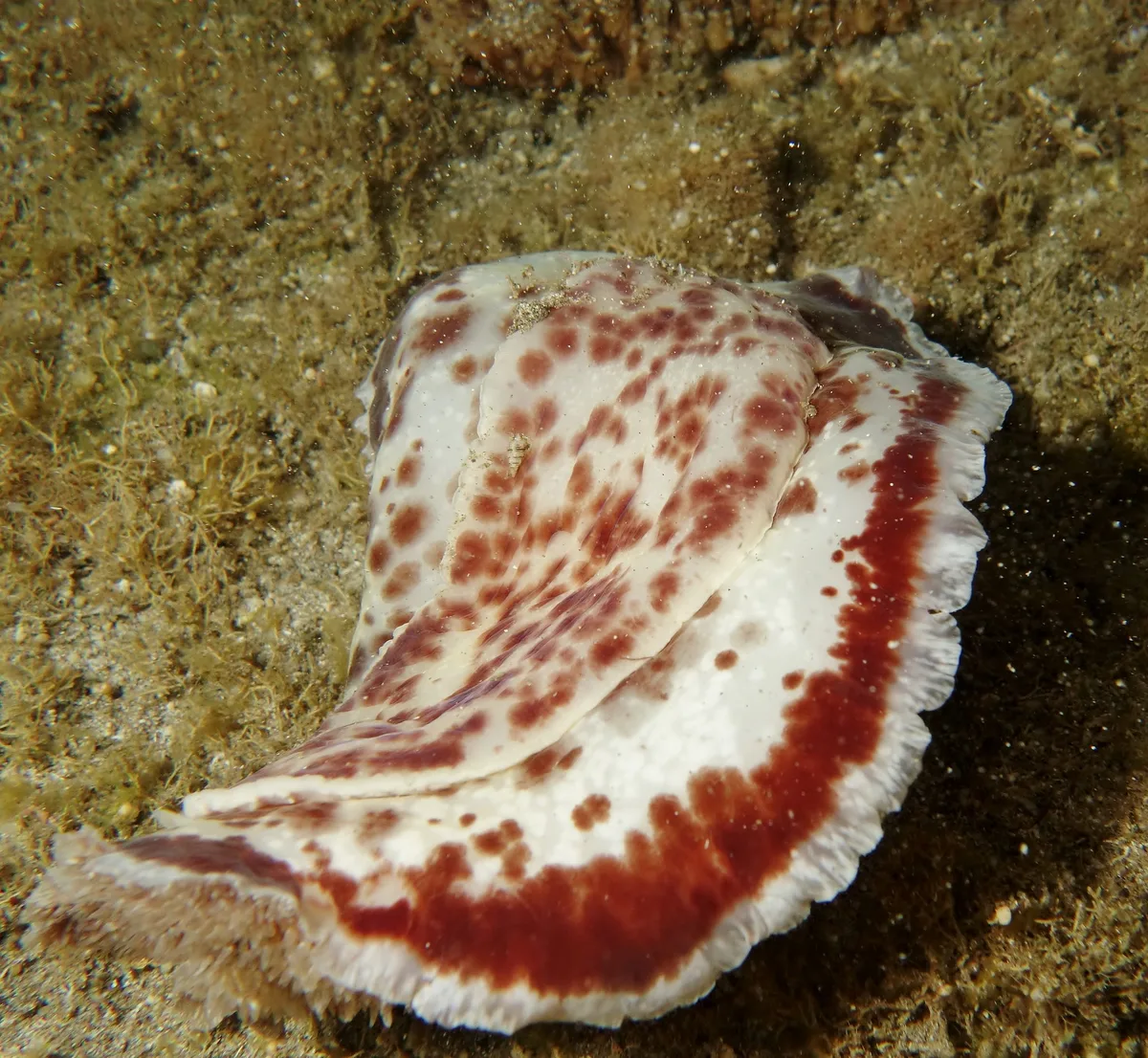
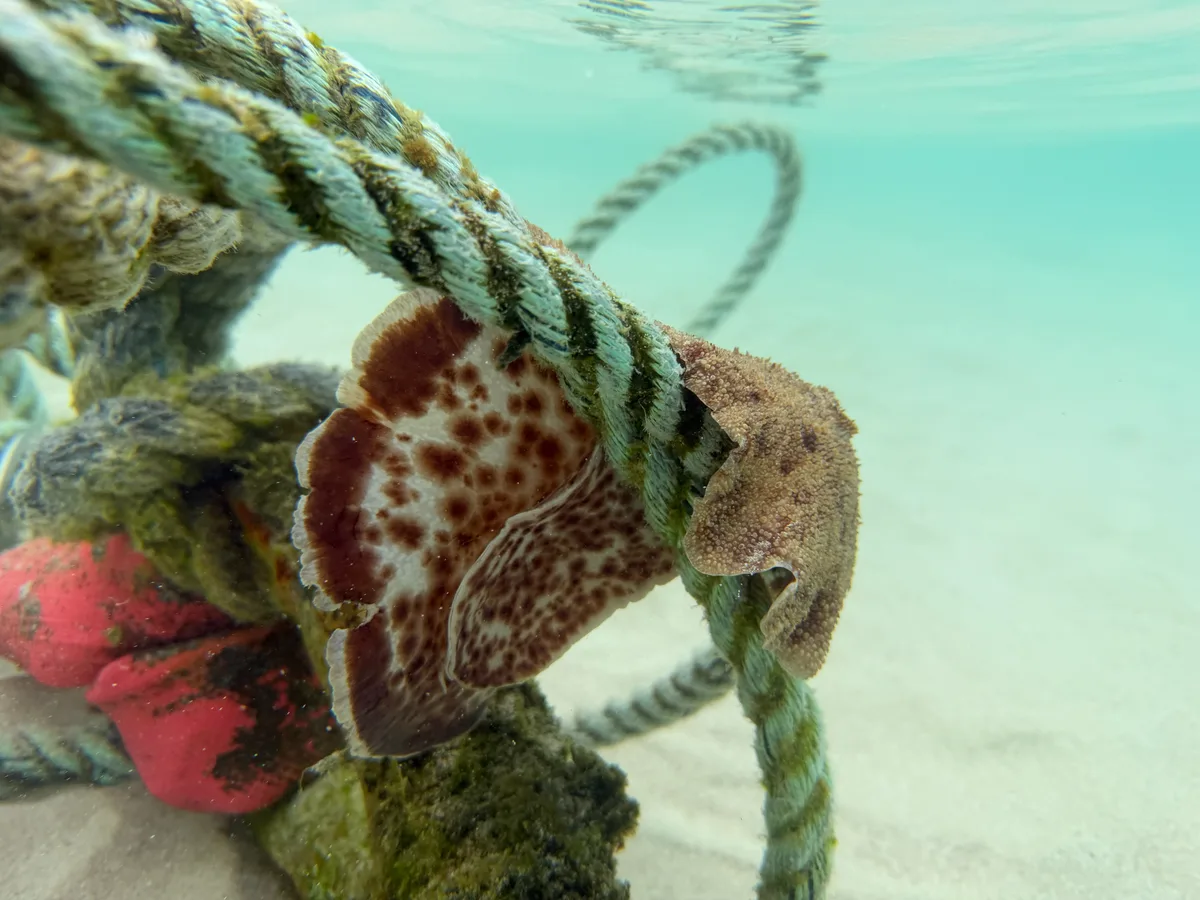
The dorid body is built for clamping to rock: a broad flat foot, a heavy mantle, no fins and no obvious way to move through water. A few species have found a way around that anyway, and this is one of them. Disturbed after dark, it lifts off and swims by flexing the whole body from side to side, which for an animal twenty centimeters long is a startling thing to watch and completely unlike how it behaves the rest of the time.
Why it bothers is not settled. Escaping a predator that has found it on open rock is the obvious answer, and moving between feeding patches without crawling is another; a slug that can cross open sand in a few seconds instead of an hour has options a crawling one does not.
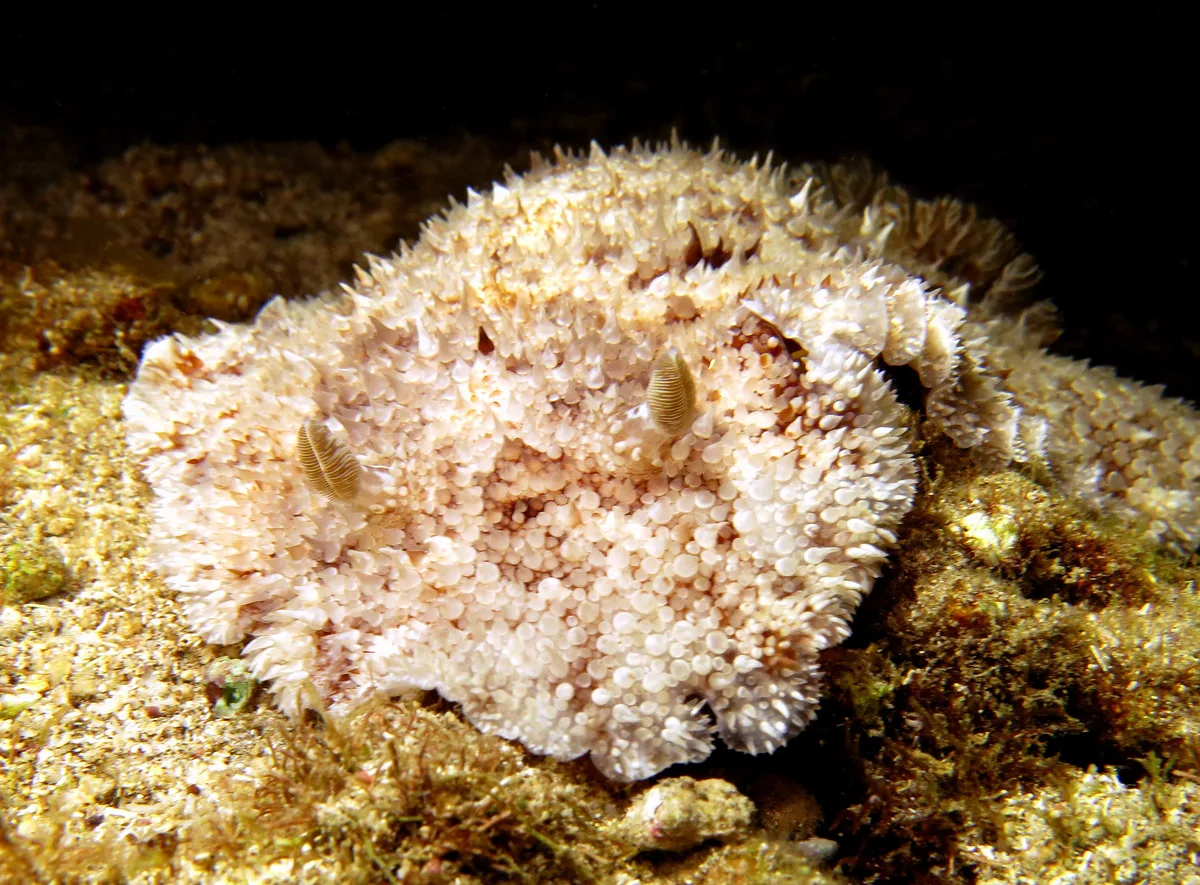
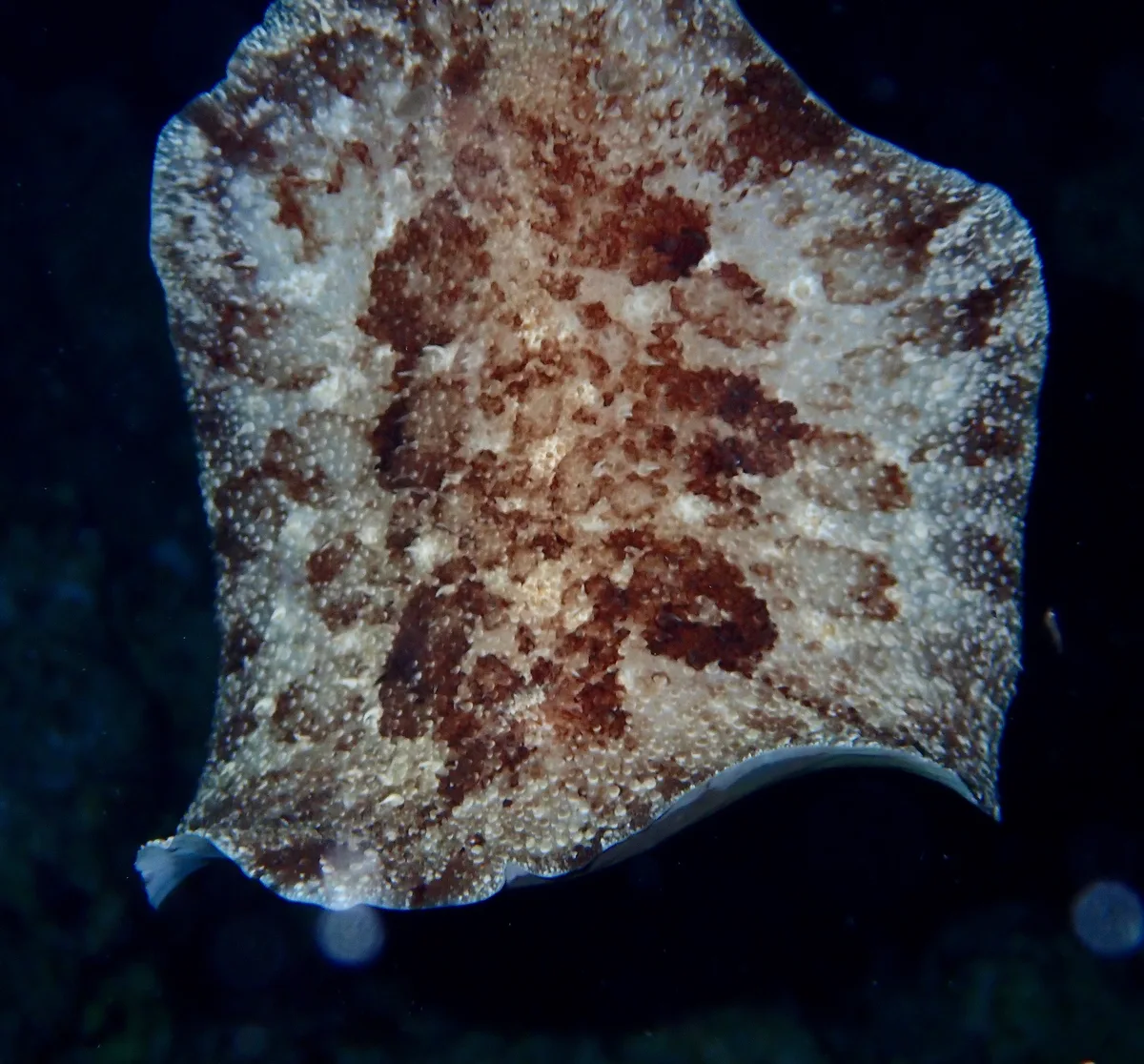
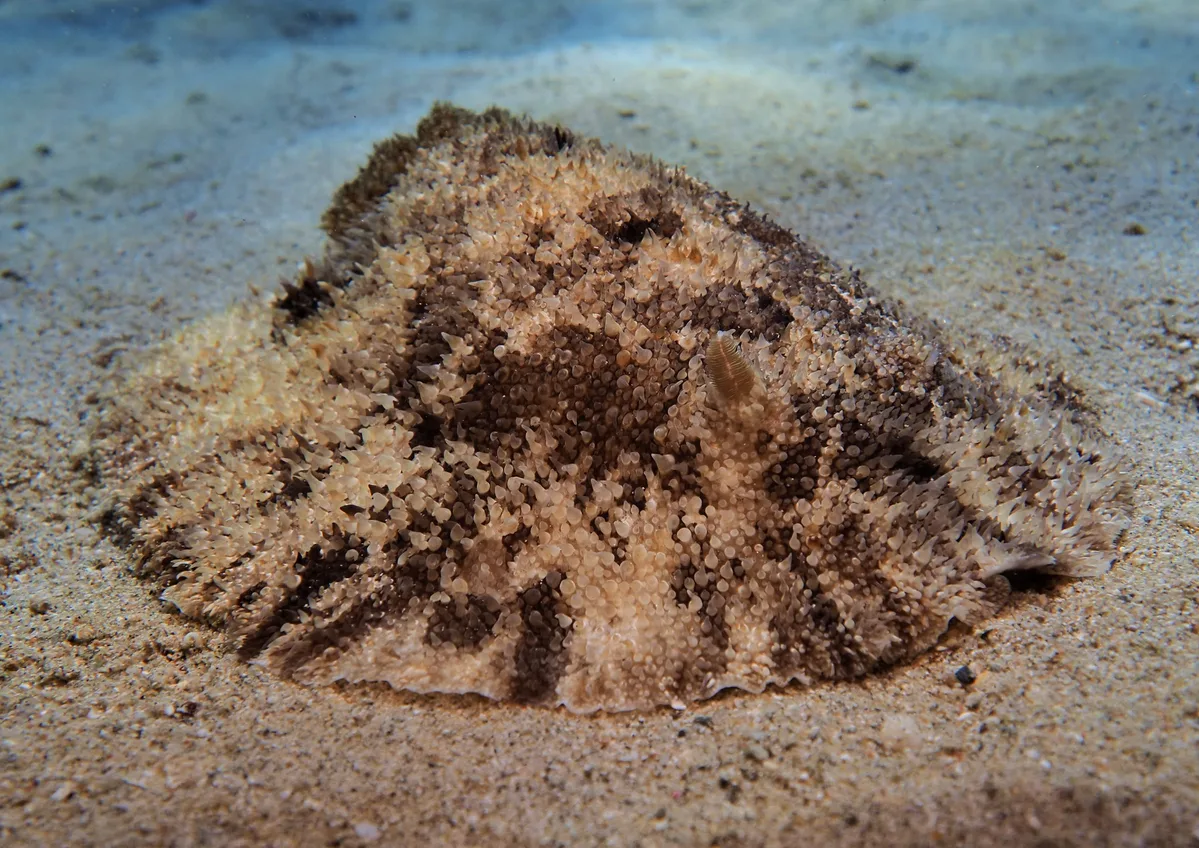
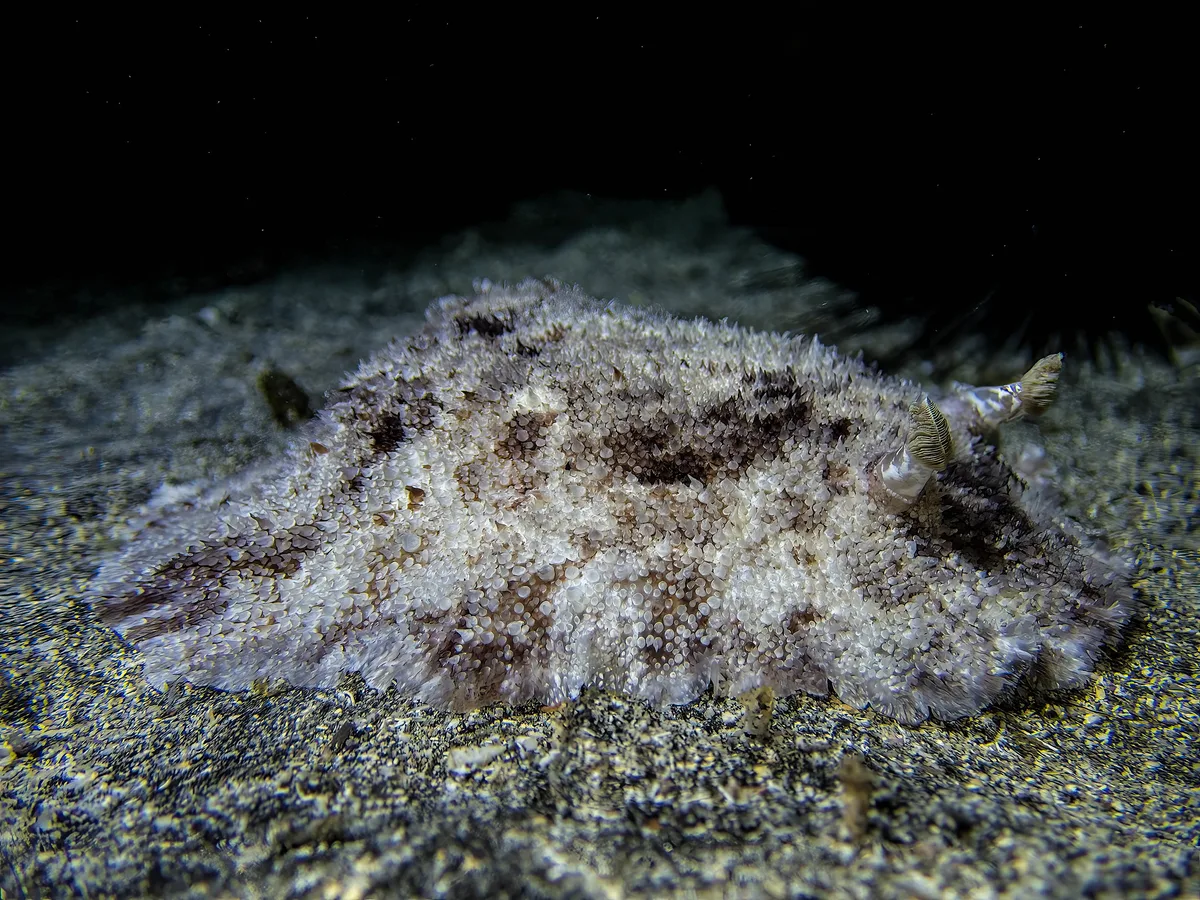
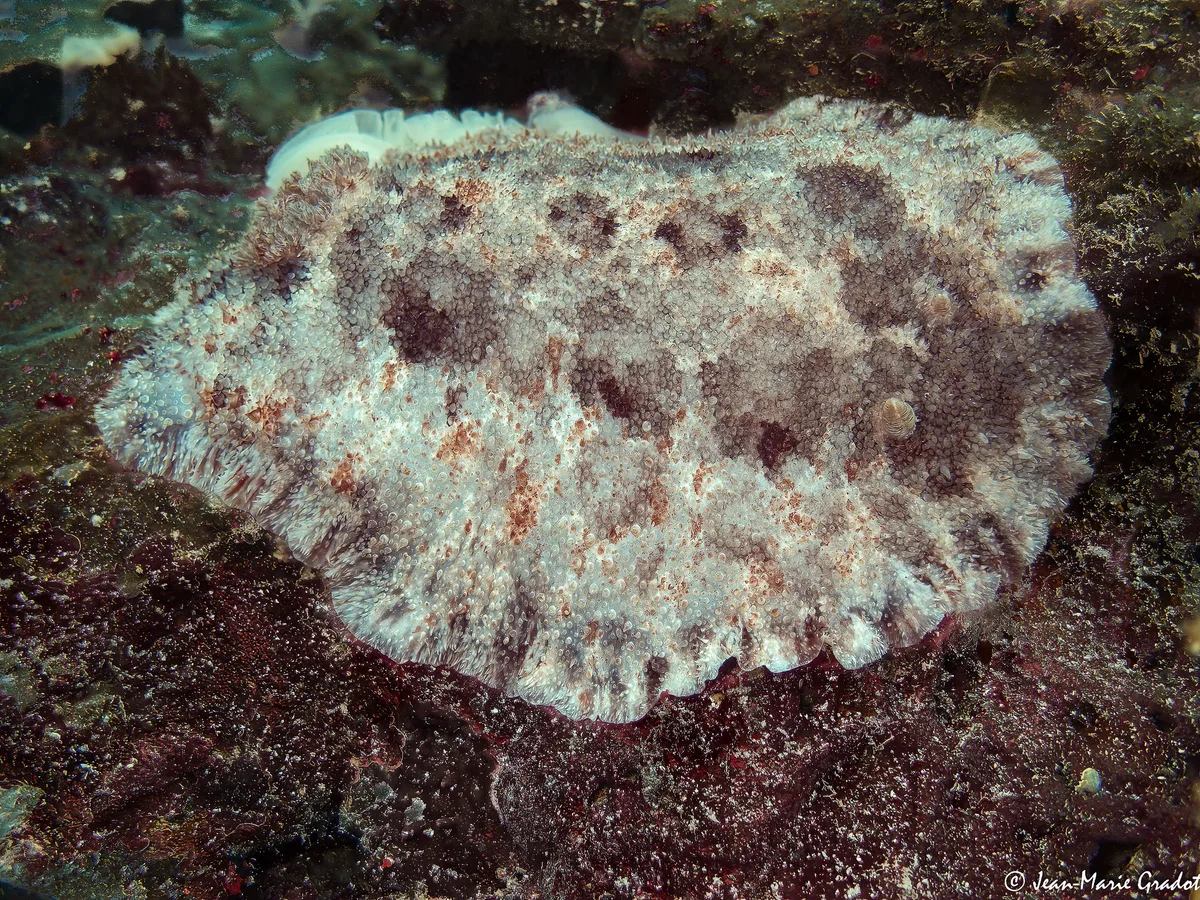
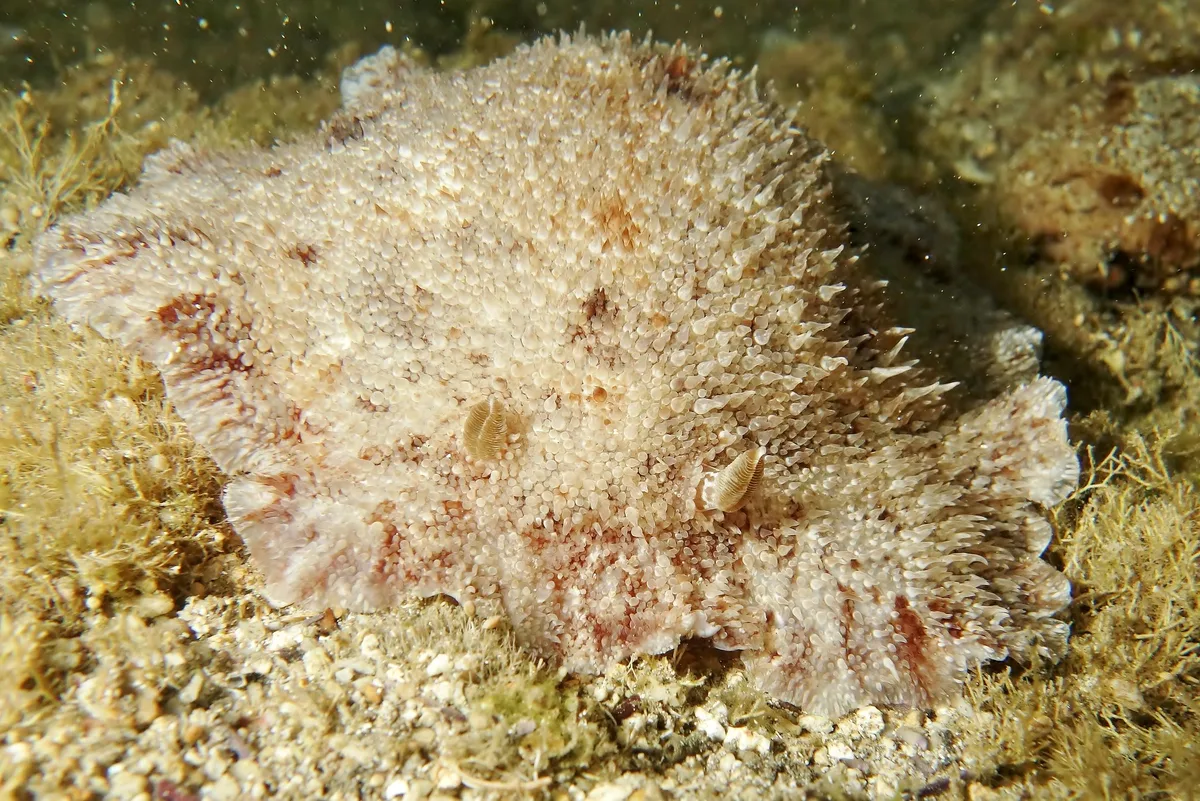
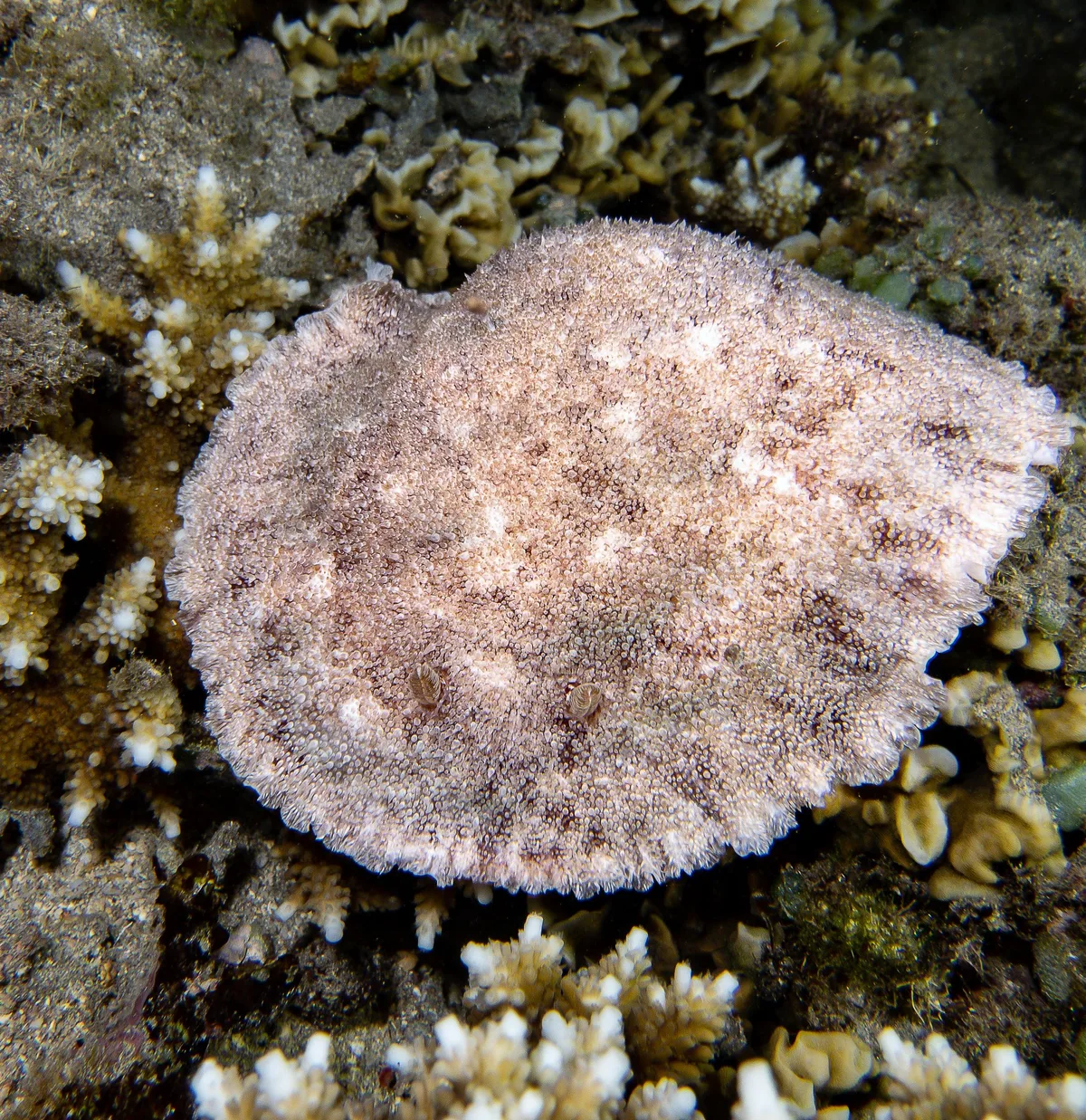
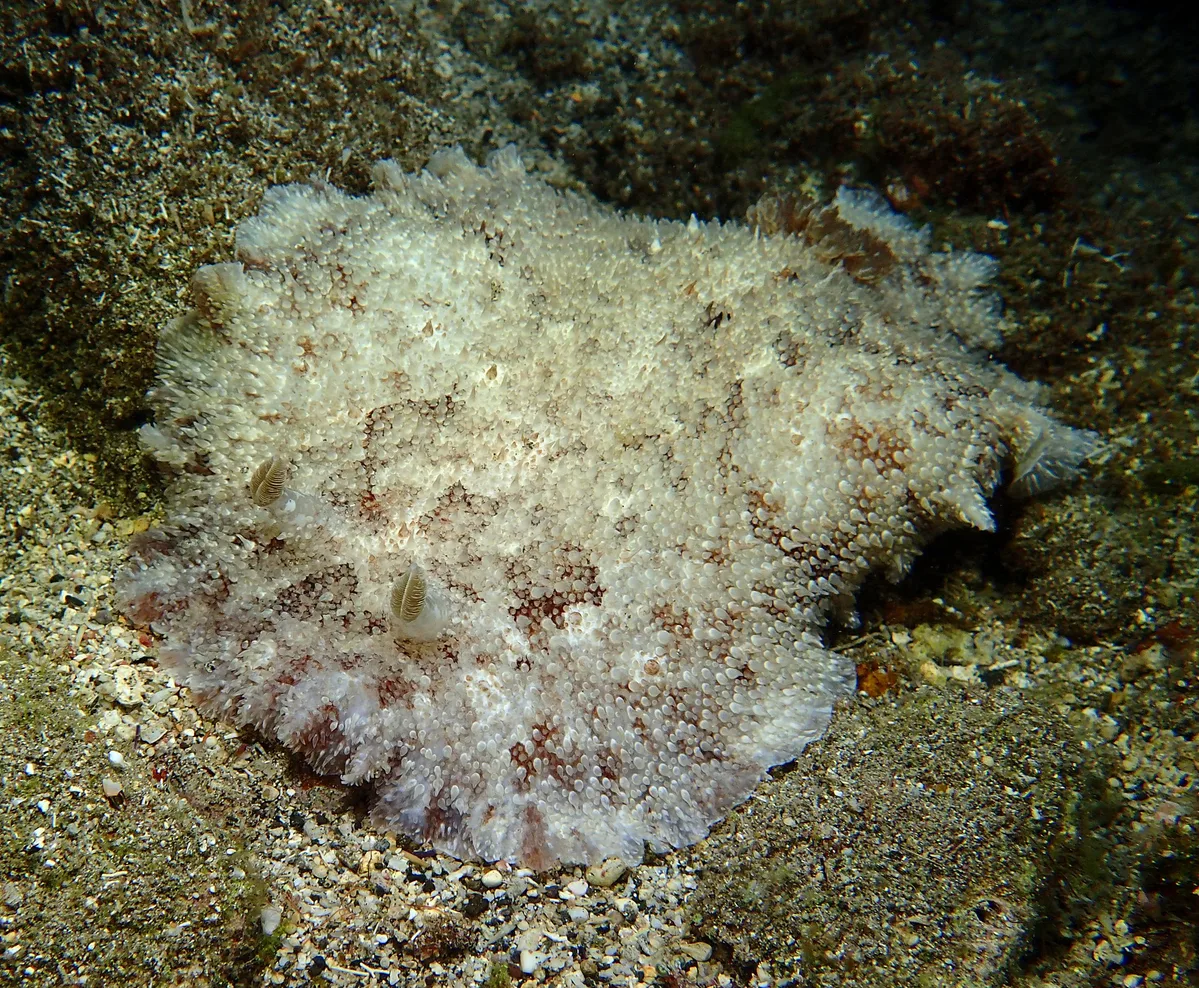
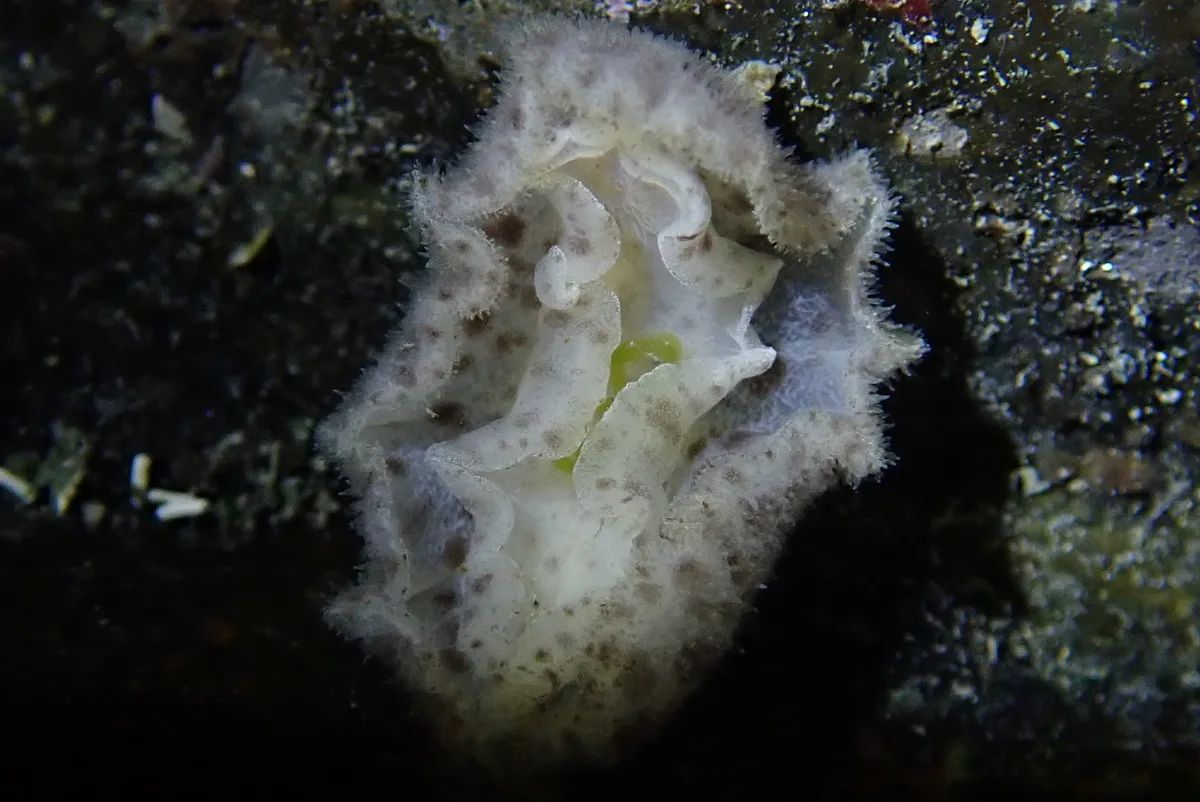
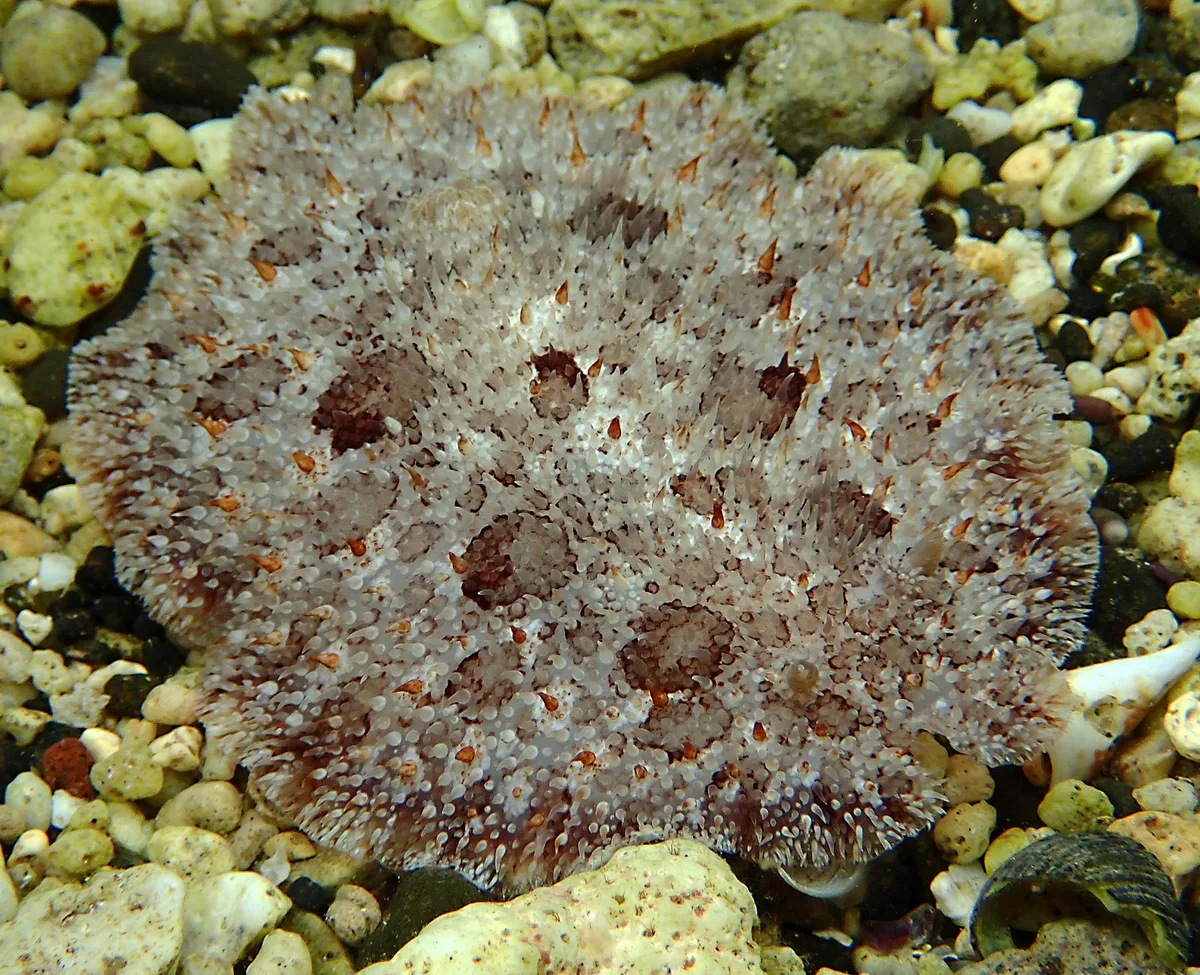
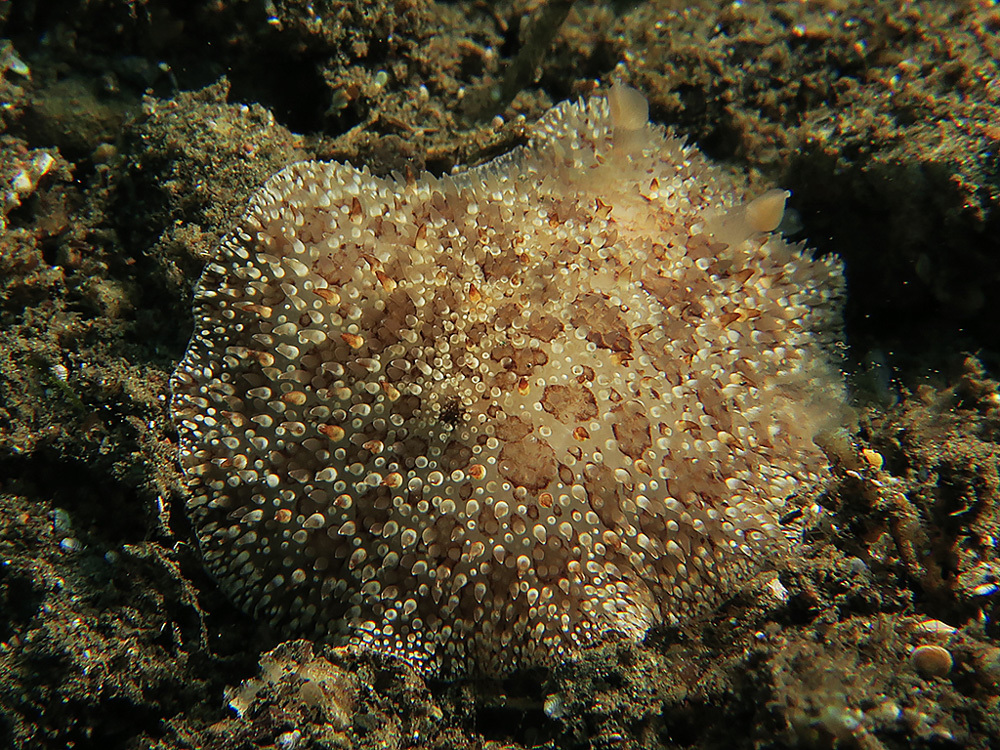
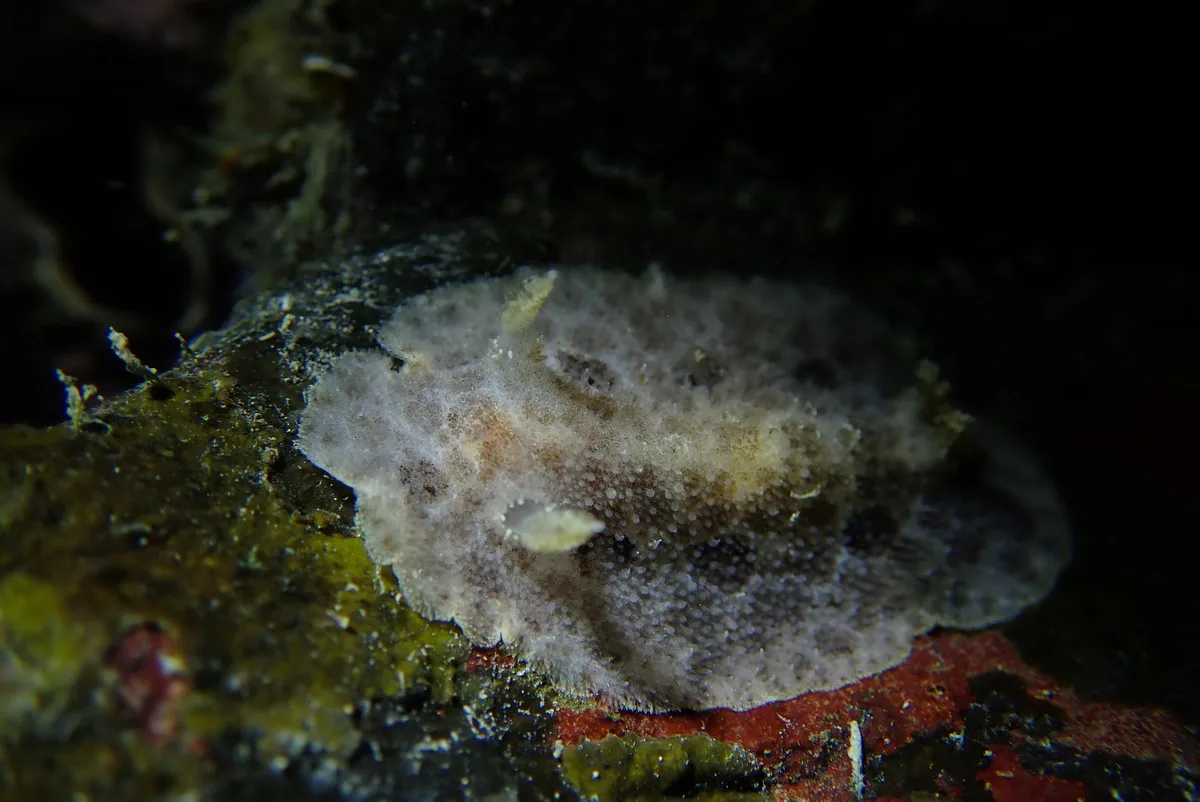
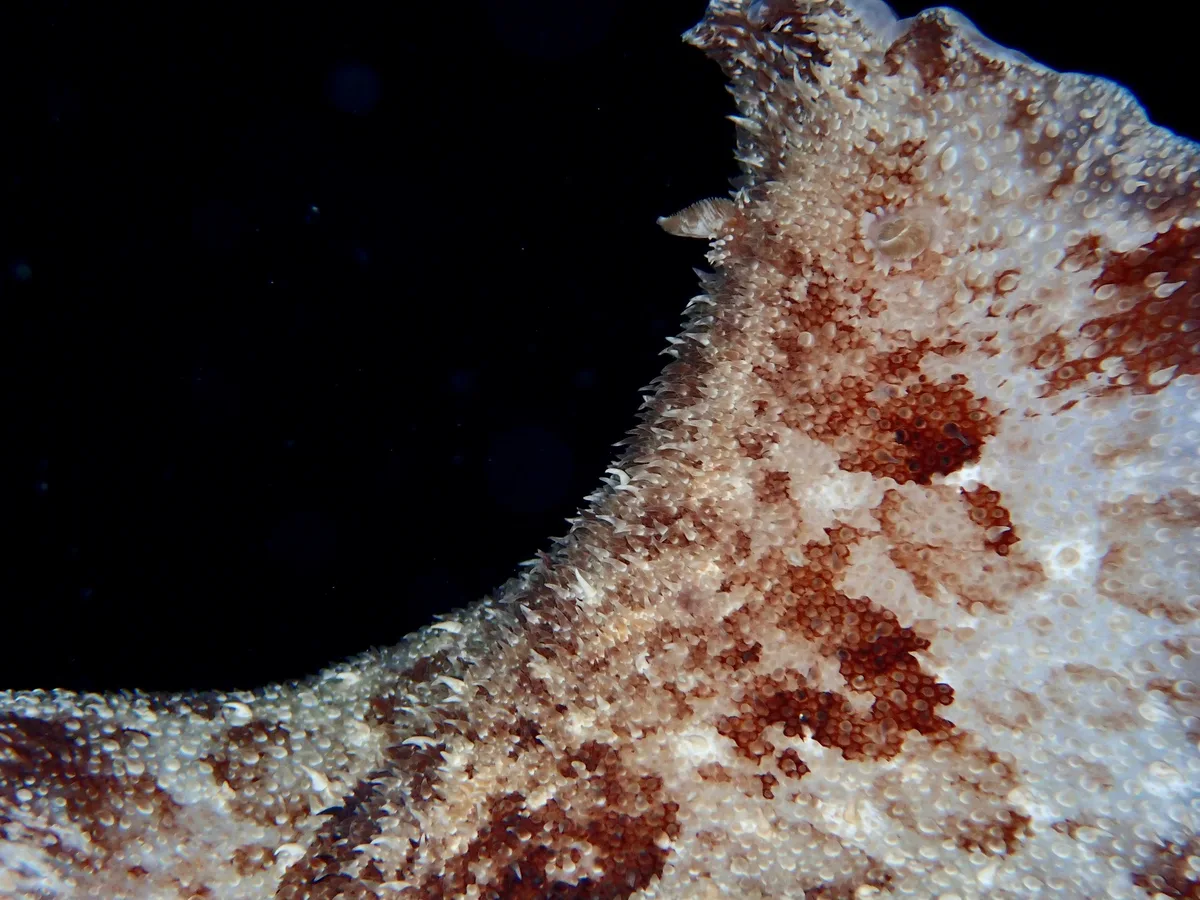
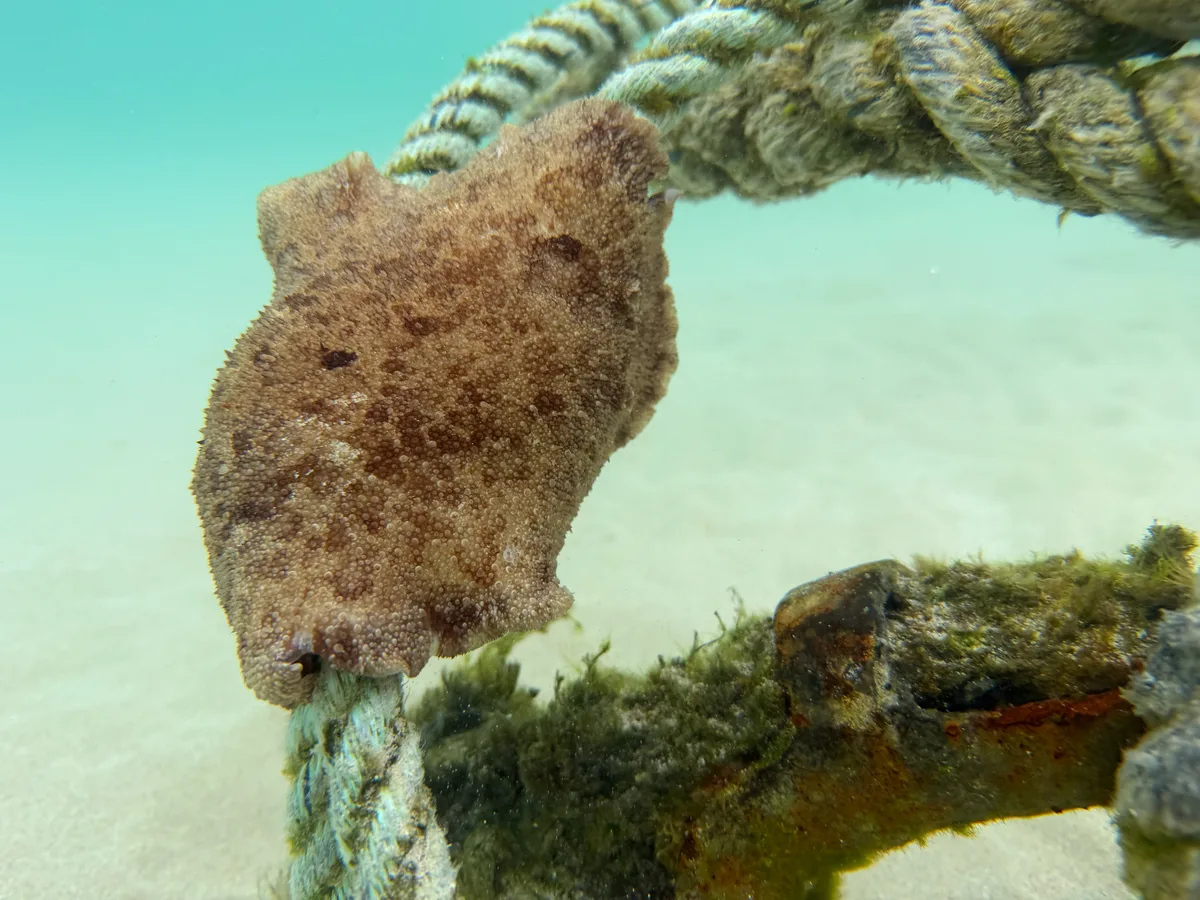
The animal is grey with dark cloudy blotches, which is what the name records, and covered in long conical tubercles rather than the low bumps most dorids carry. It works shallow water, under stones during the day and out on rock at night.
At twenty centimeters it is among the largest slugs here, and the size makes the swimming easier to see rather than harder to believe.
- grey with dark cloudy patches
- covered in long conical tubercles rather than low bumps
- large, up to 20 cm
- shallow water, under stones by day