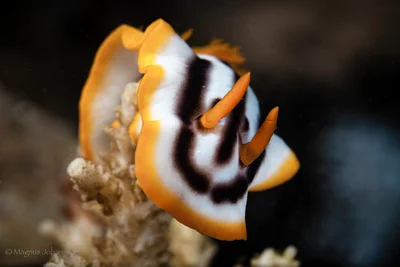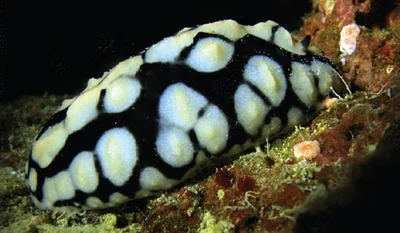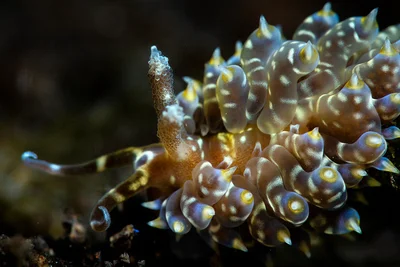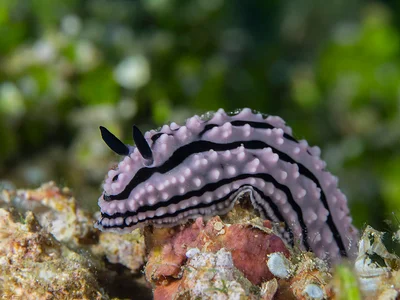
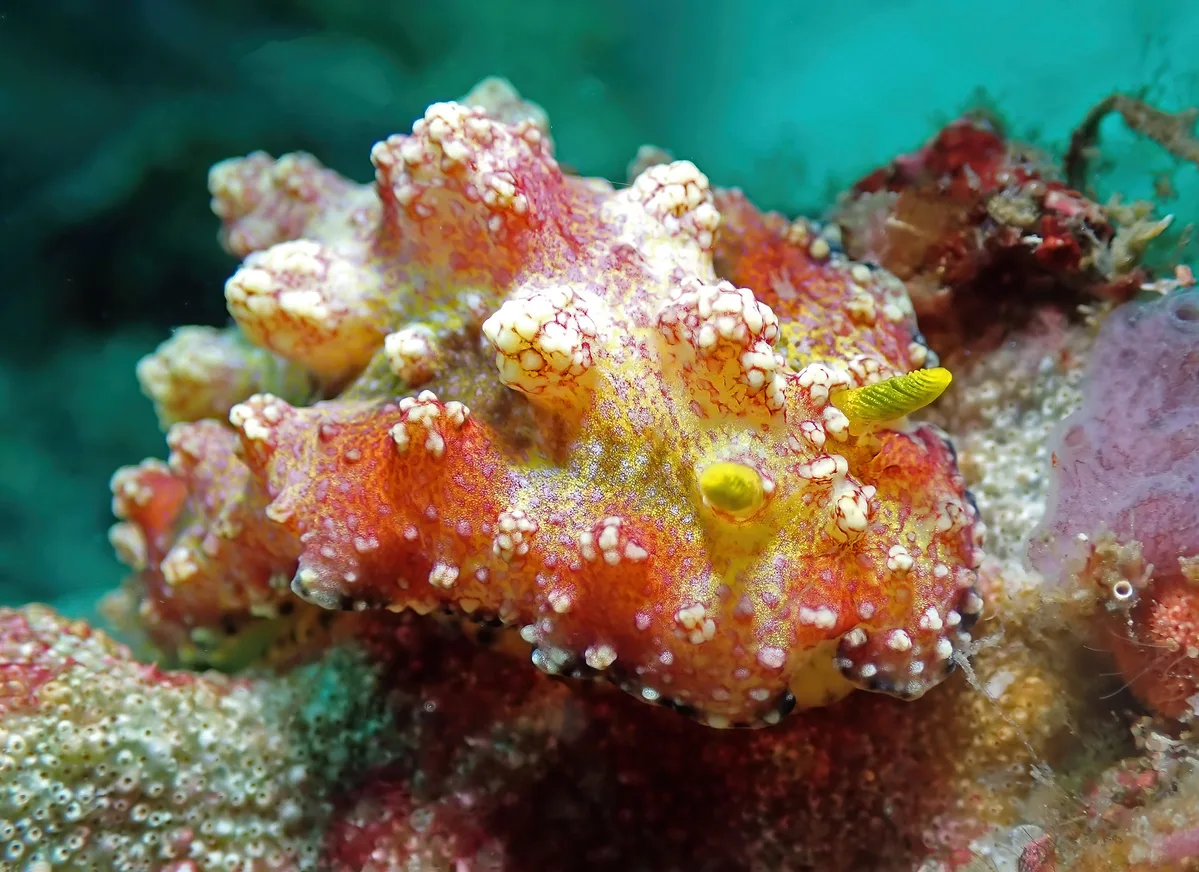
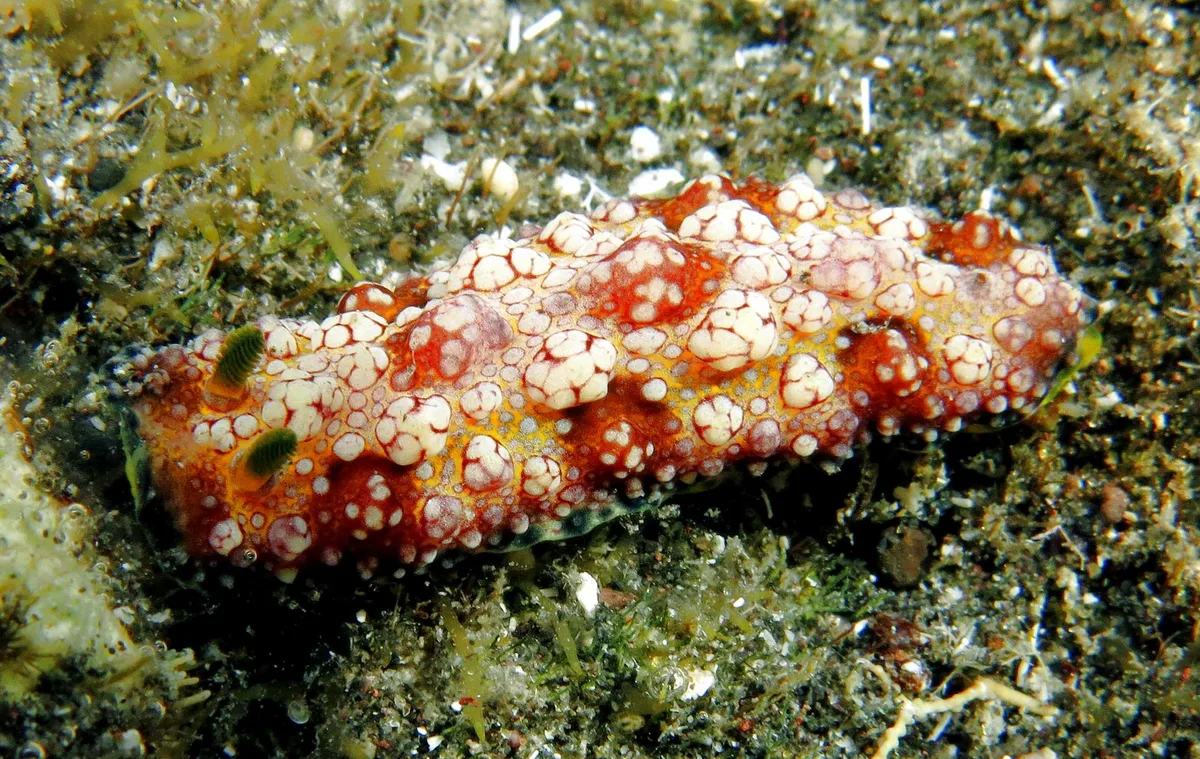
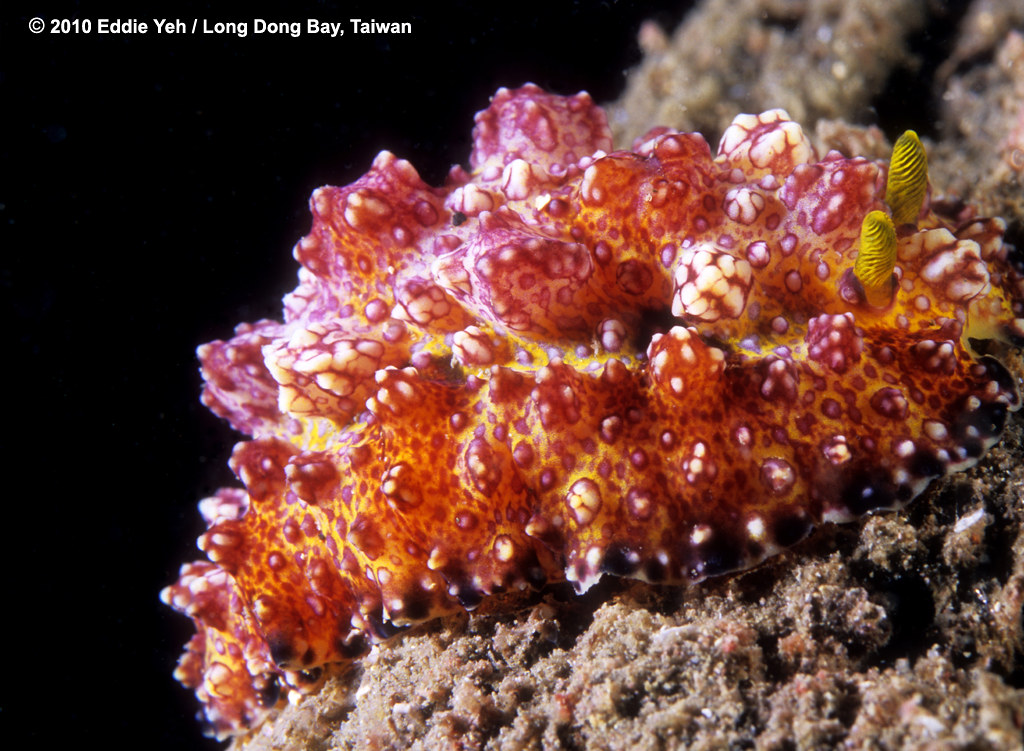
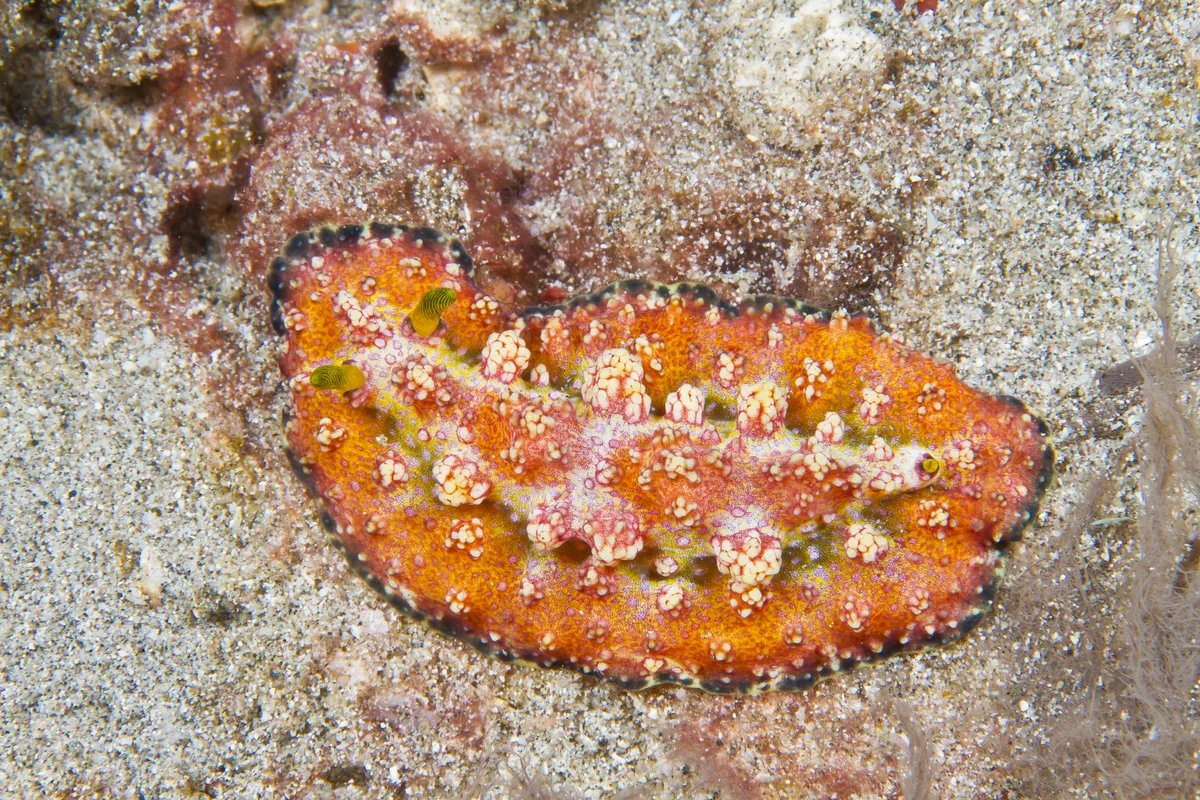
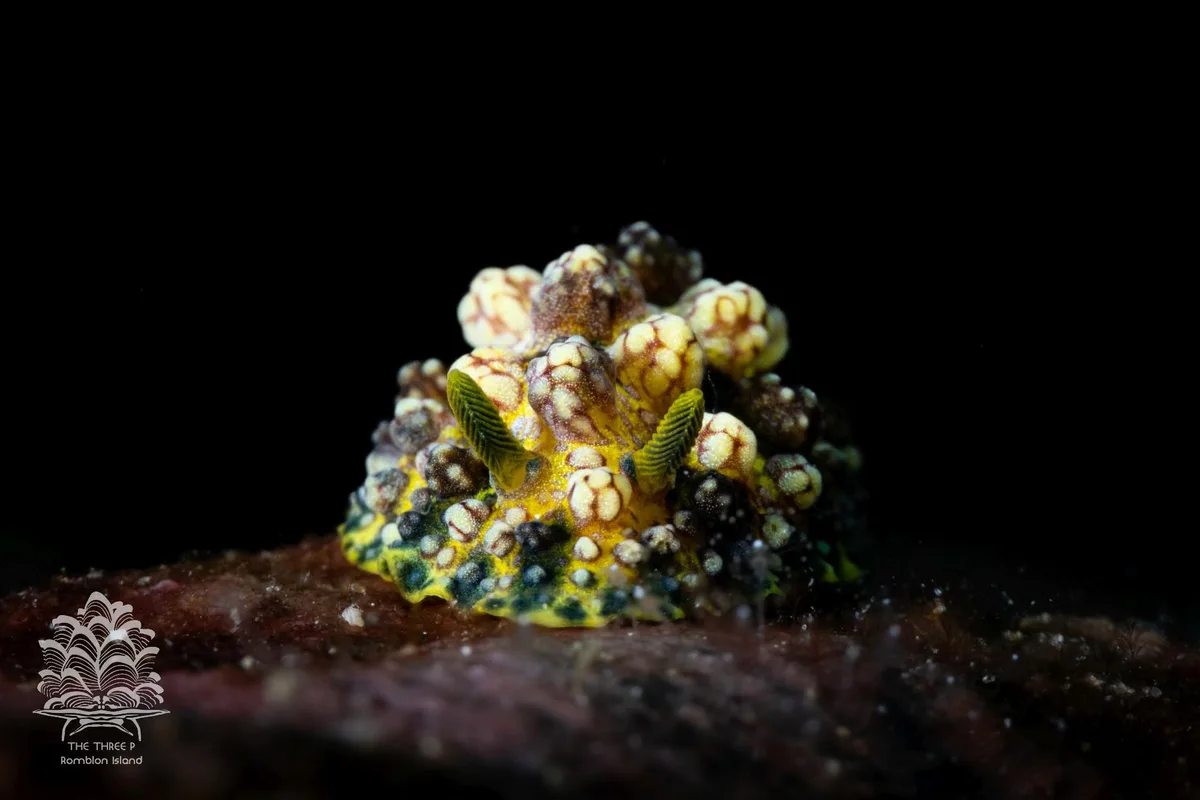
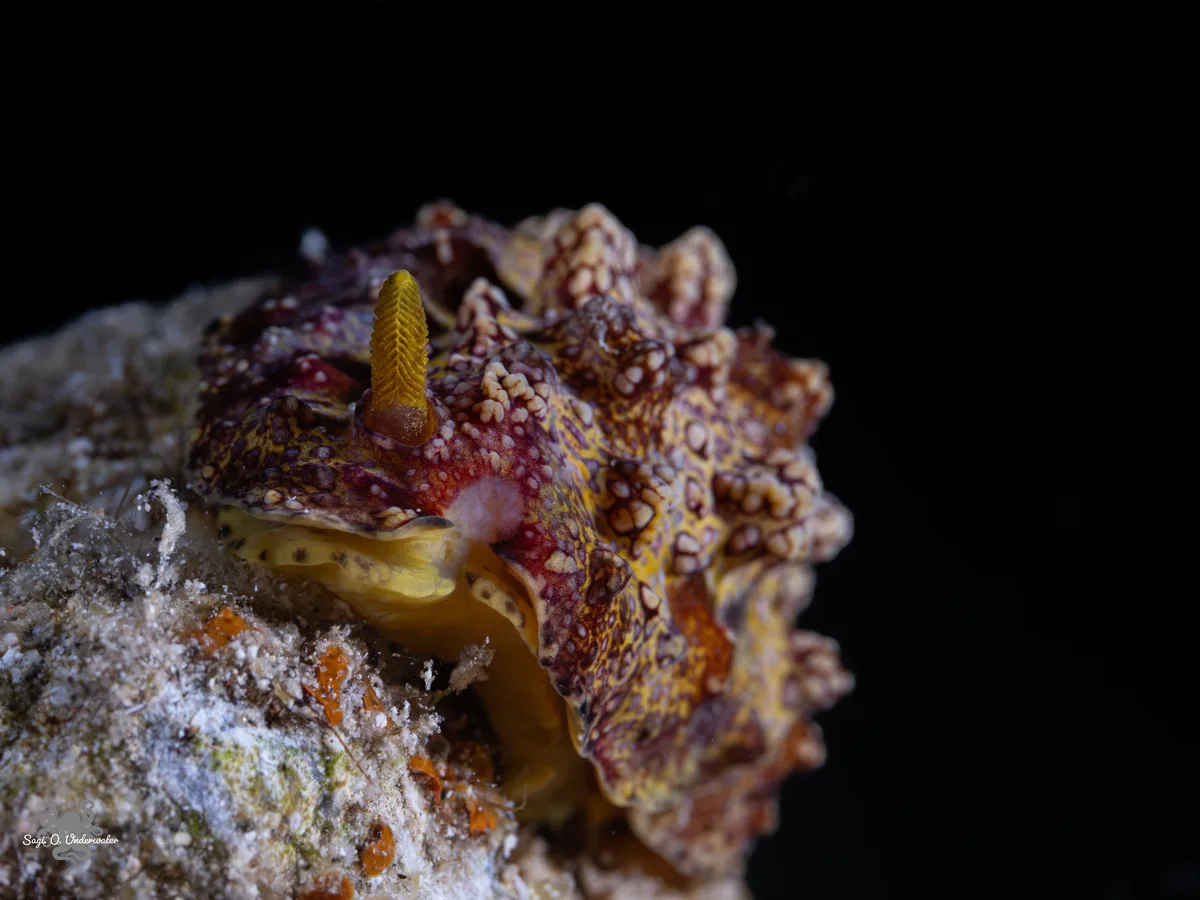
Wart slugs have no gill plume. The rosette that nearly every other large sea slug carries on its back is gone in this family, and they breathe instead through a row of small leaflets tucked under the mantle rim, out of sight. Everything you see from above is defense: a firm, rubbery, spicule-loaded body studded with tubercles, carrying sponge-derived toxins spread through the whole animal. That combination is why they crawl in the open in daylight without hurrying and why nothing touches them.
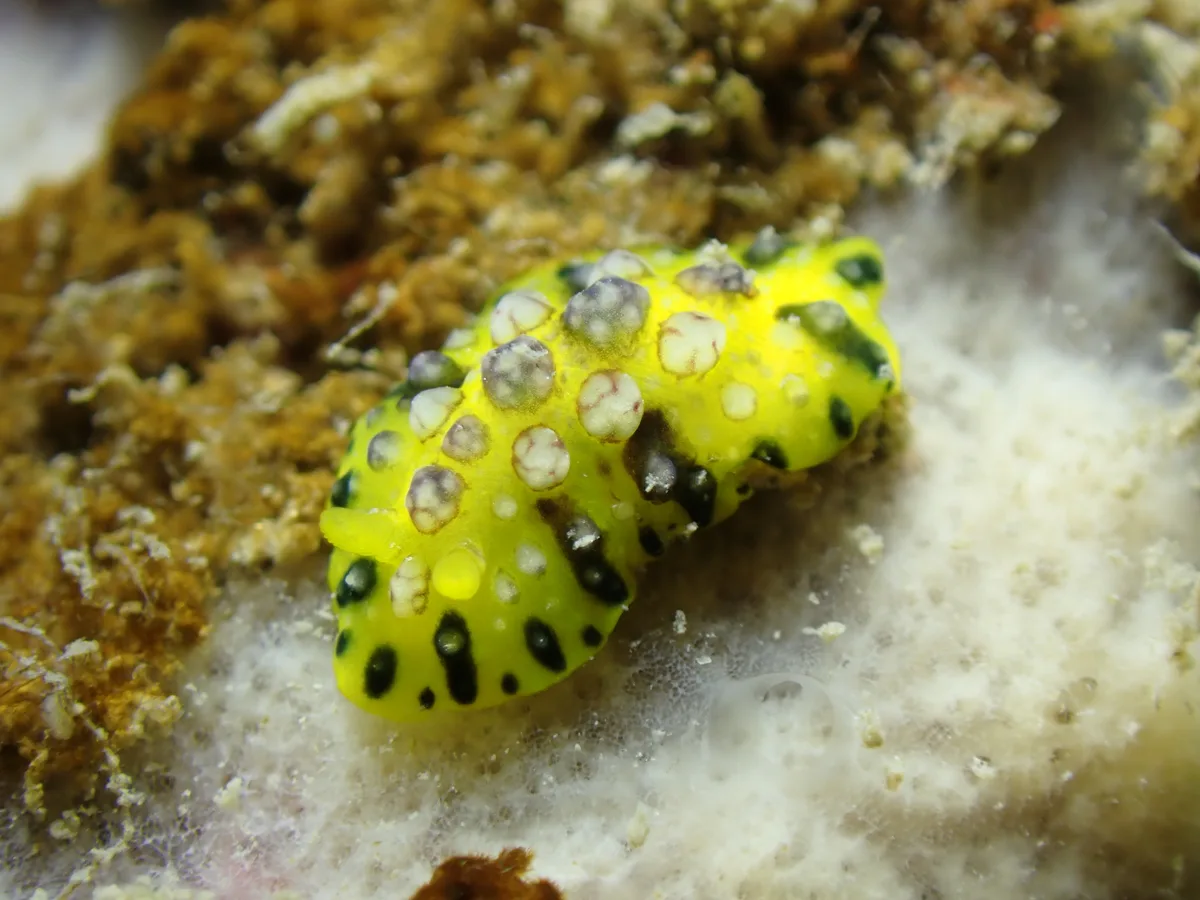
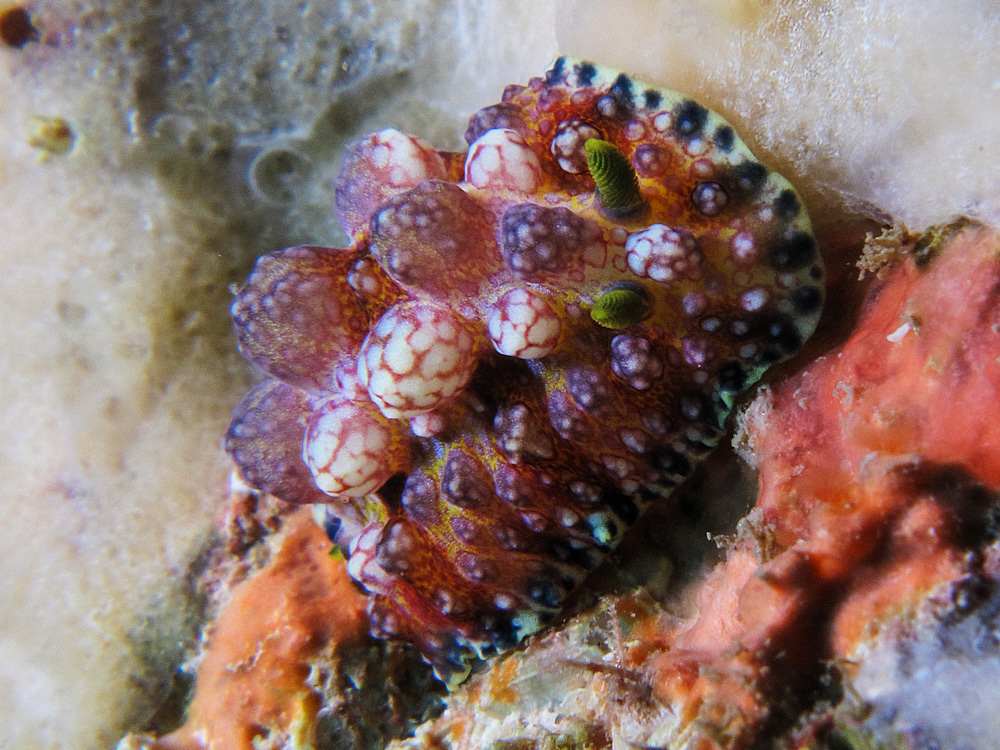
They are also hard to tell apart, because half a dozen species here share the same black, yellow and white scheme on purpose. A warning pattern is cheaper to teach a predator once than six separate times.
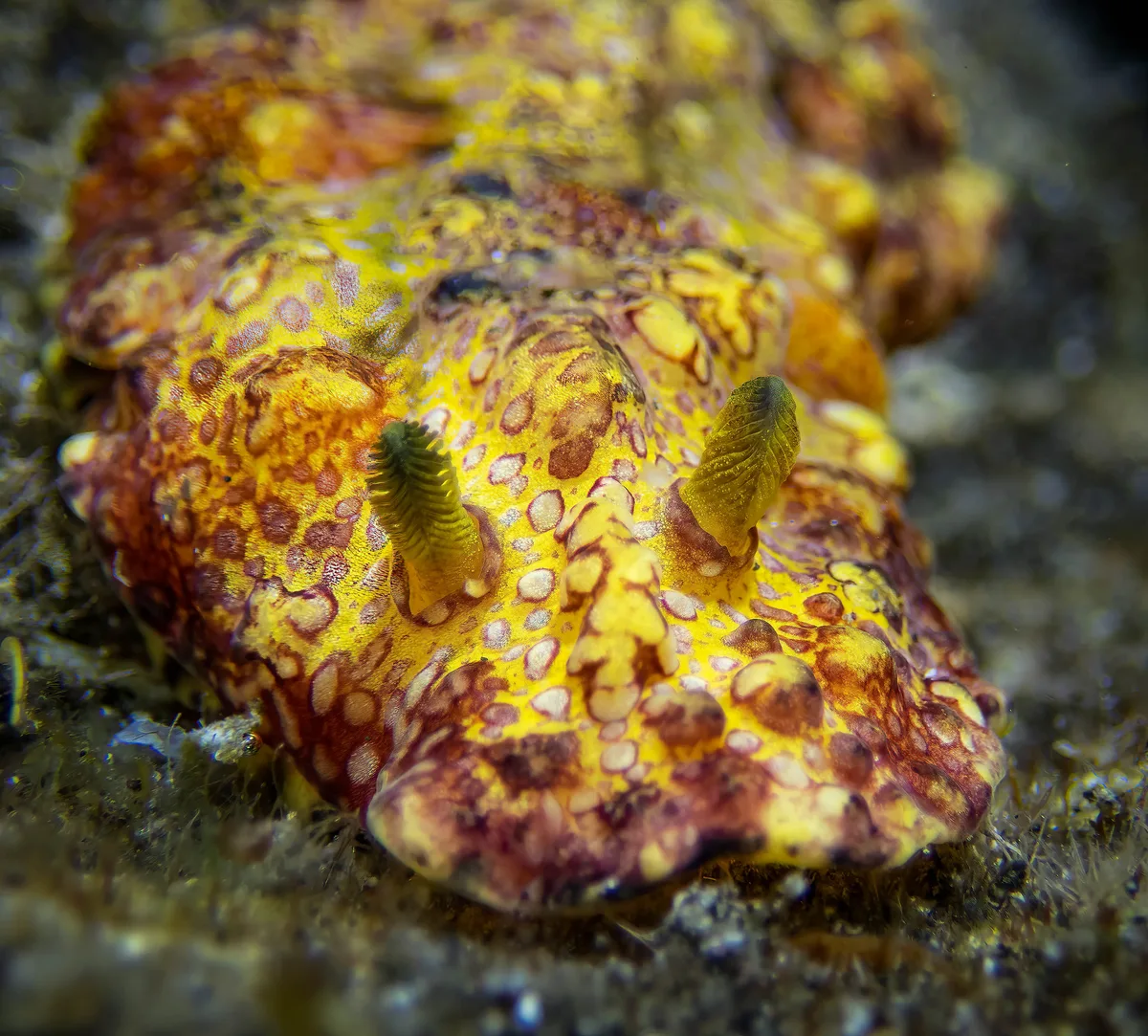
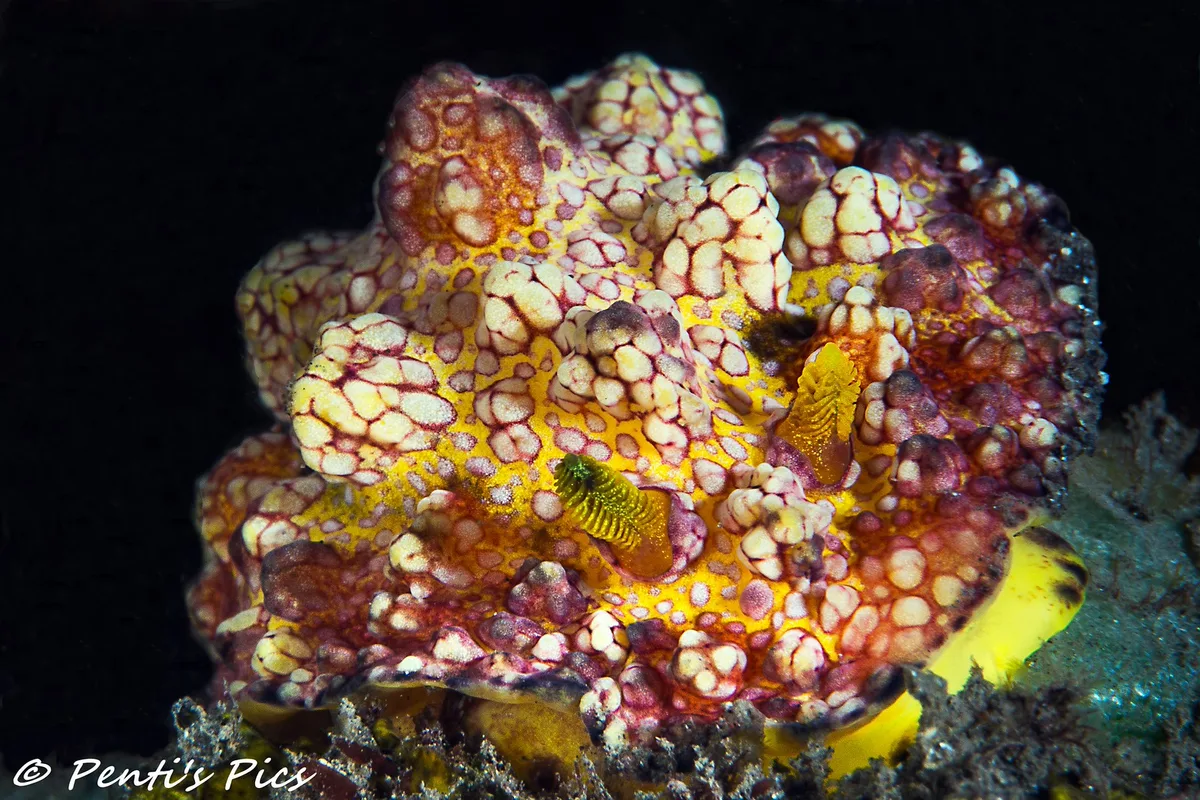
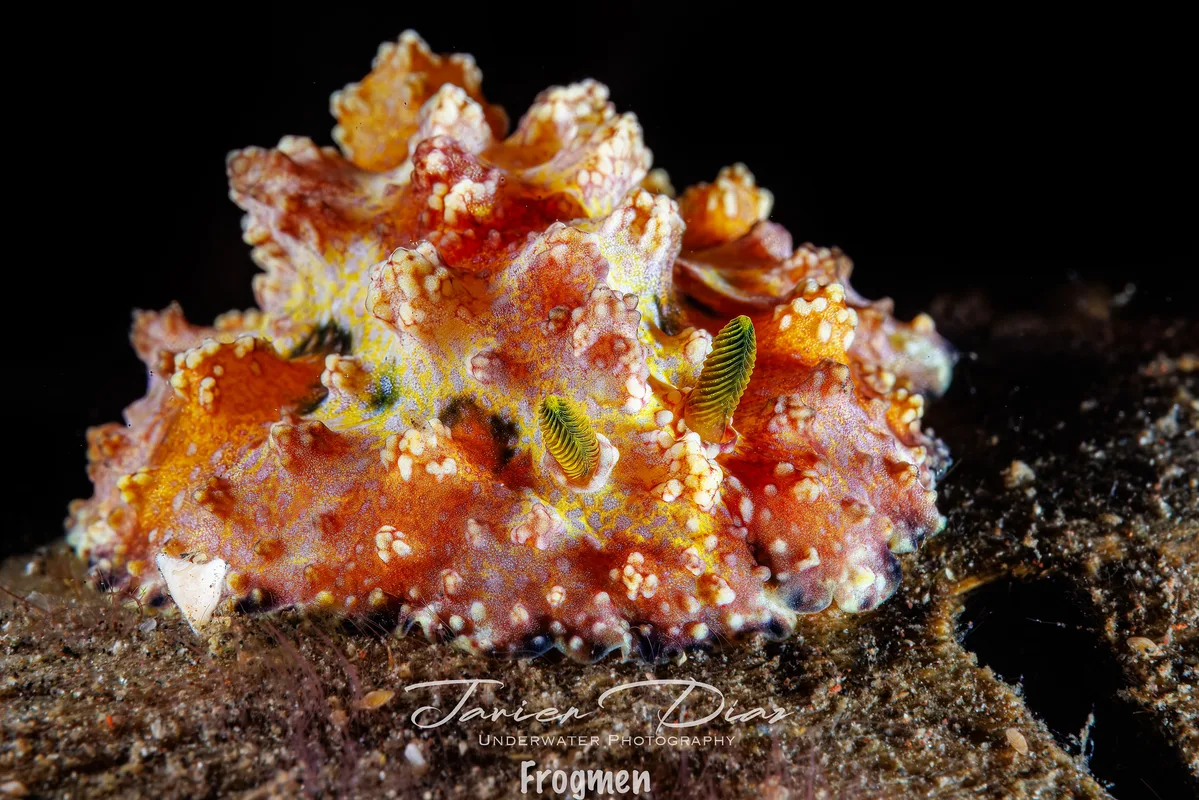
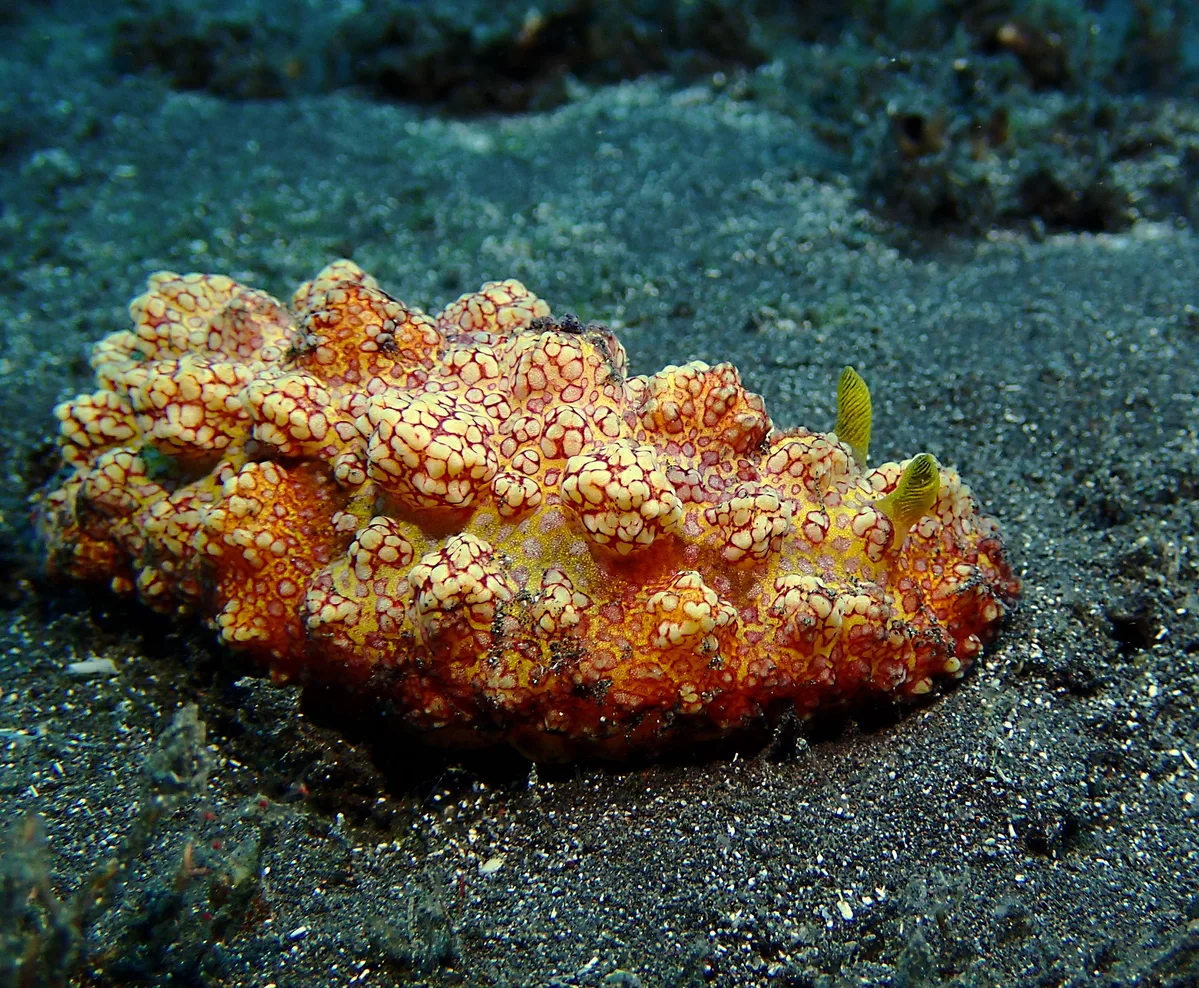
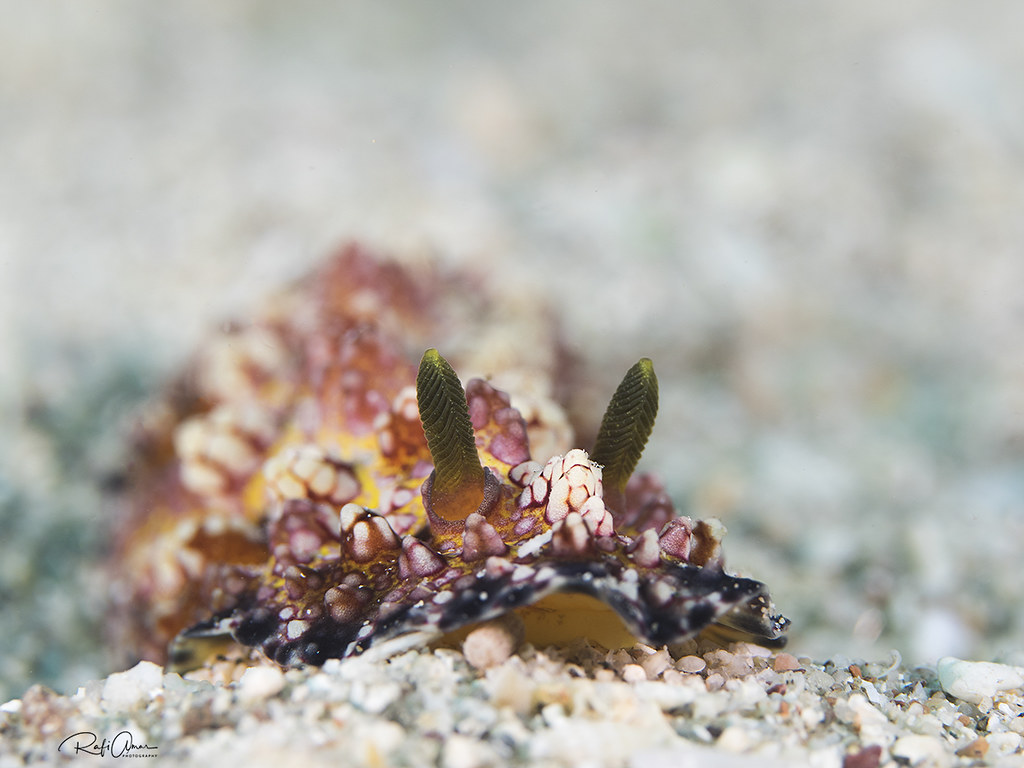
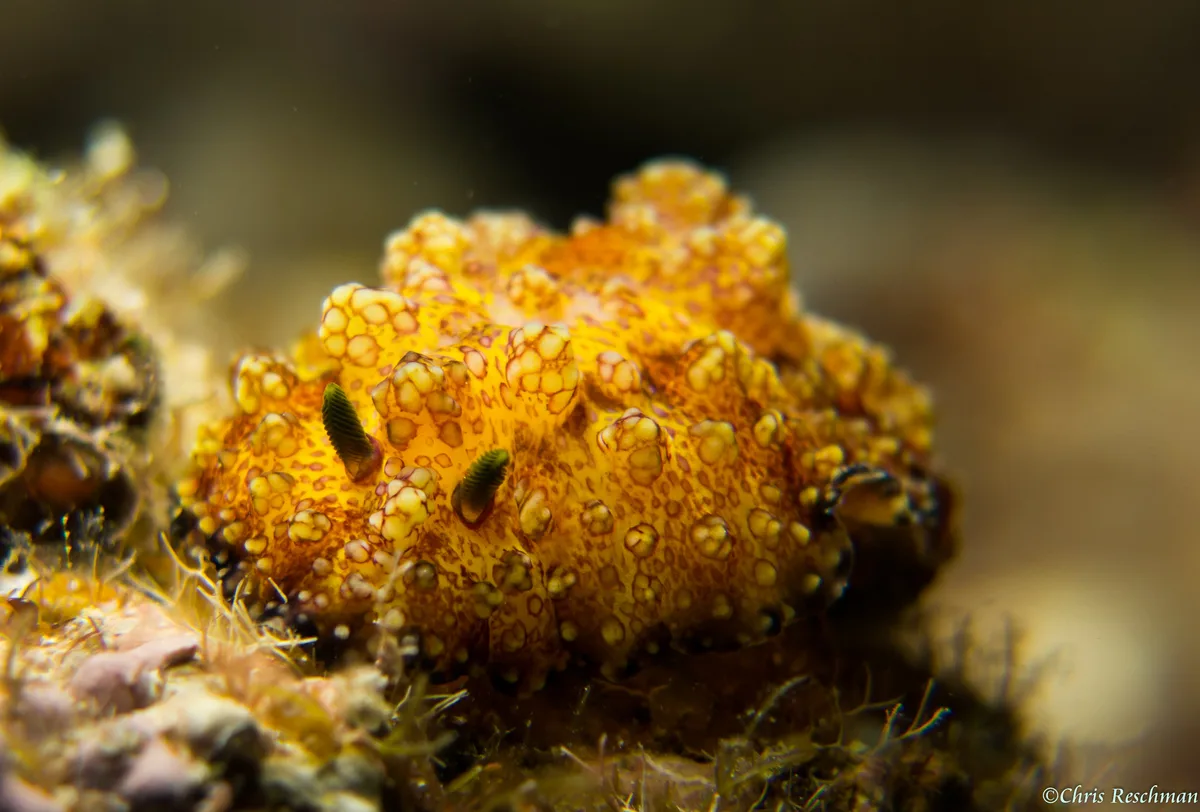
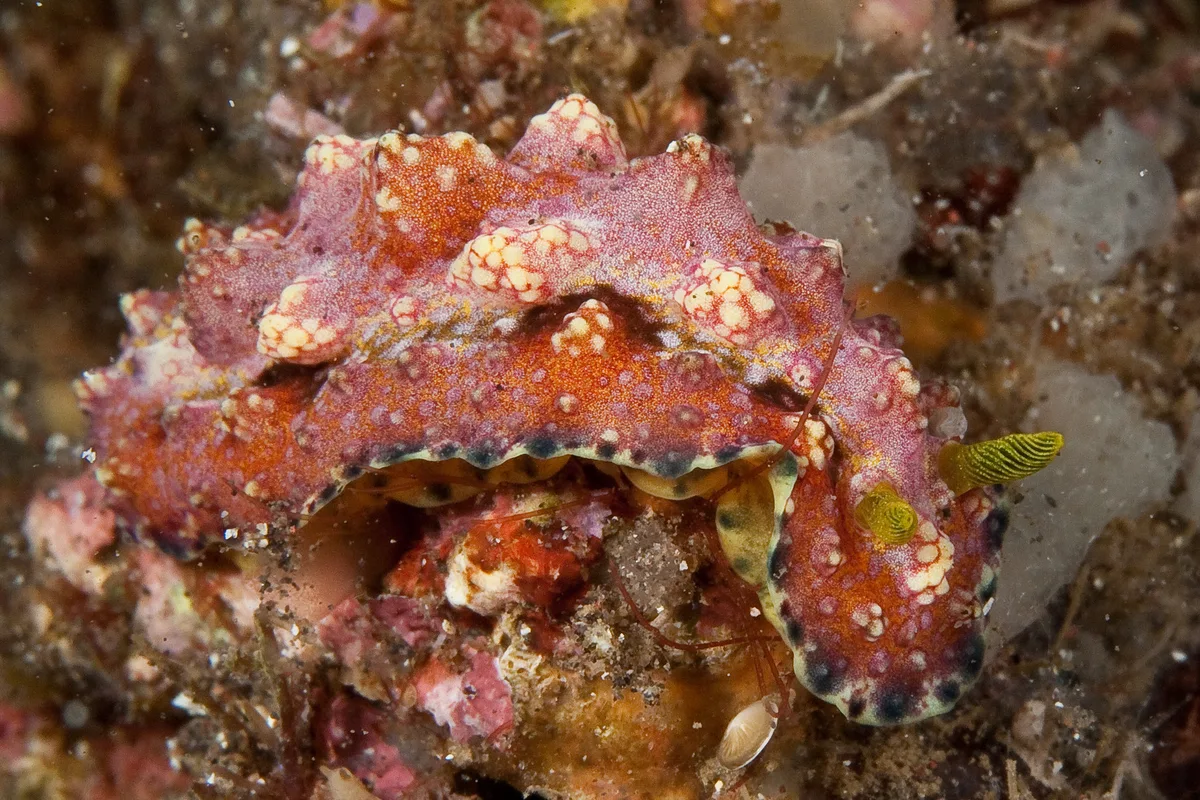
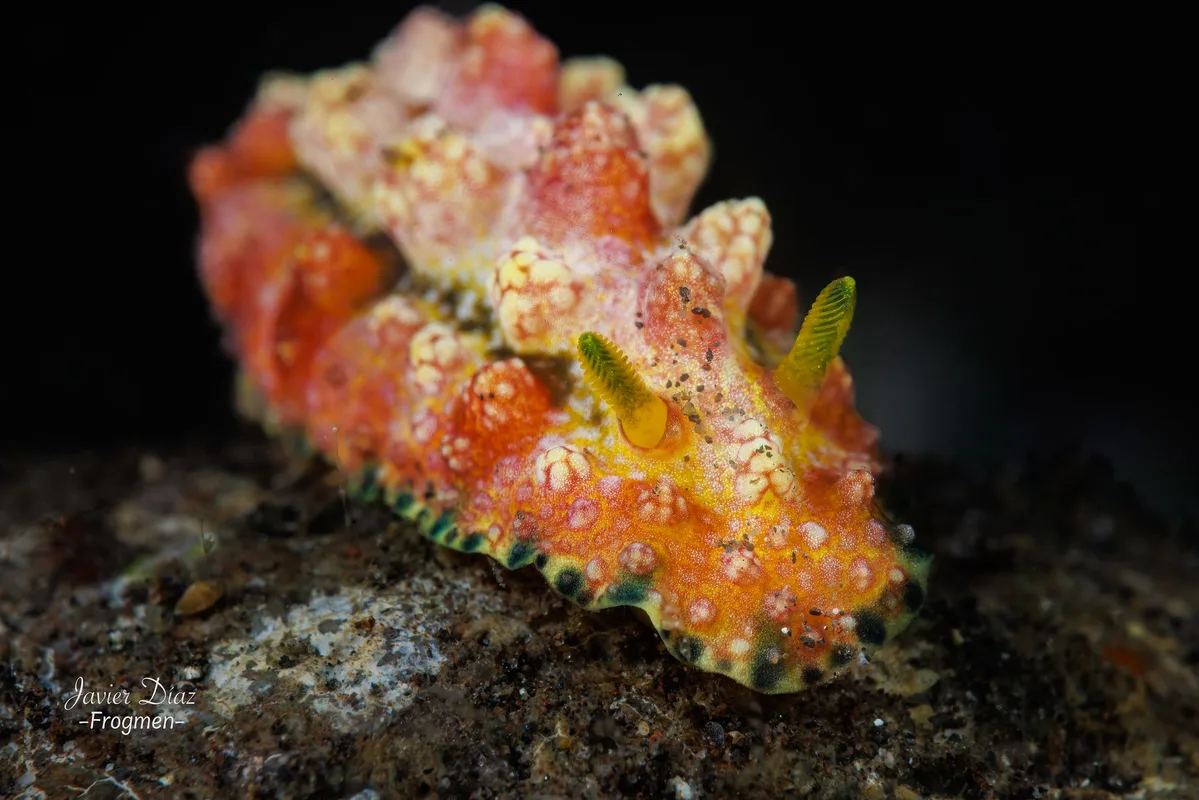
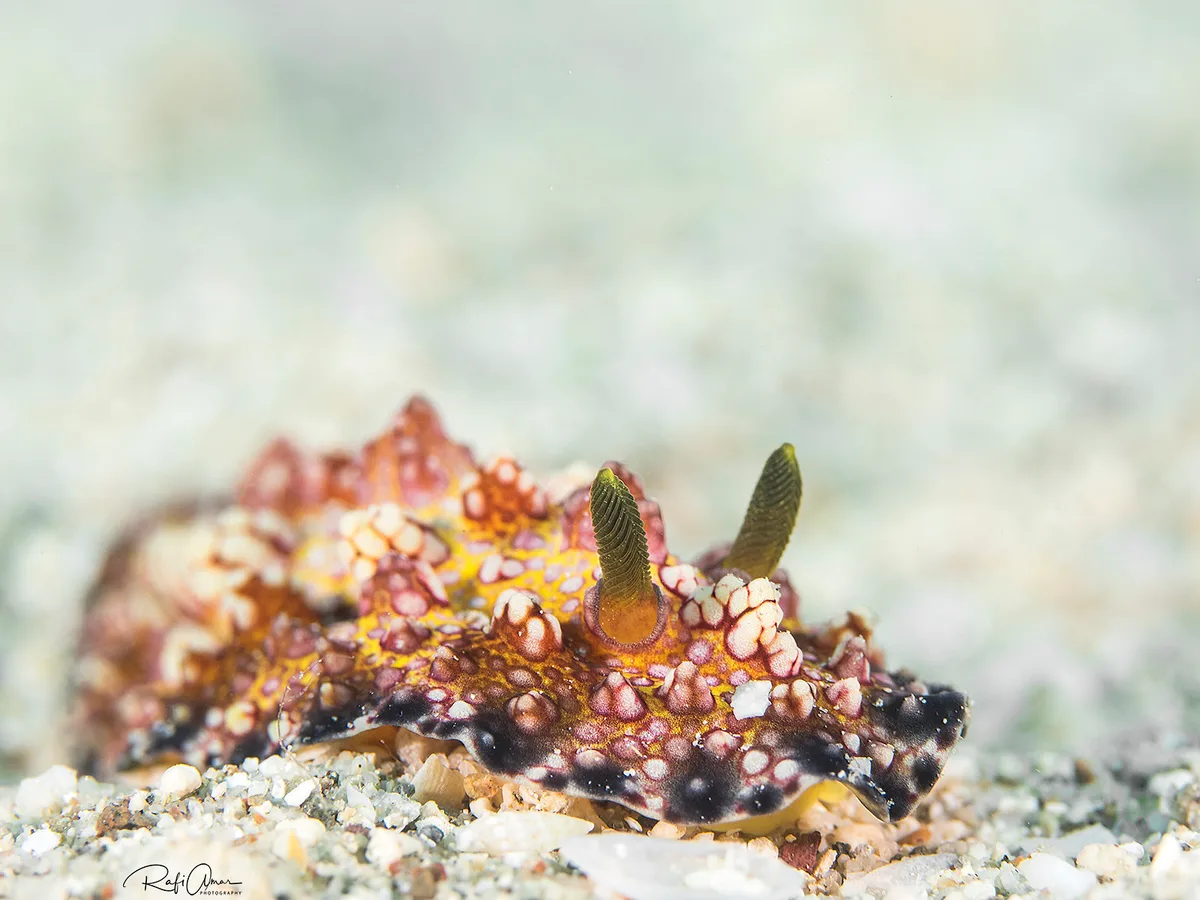
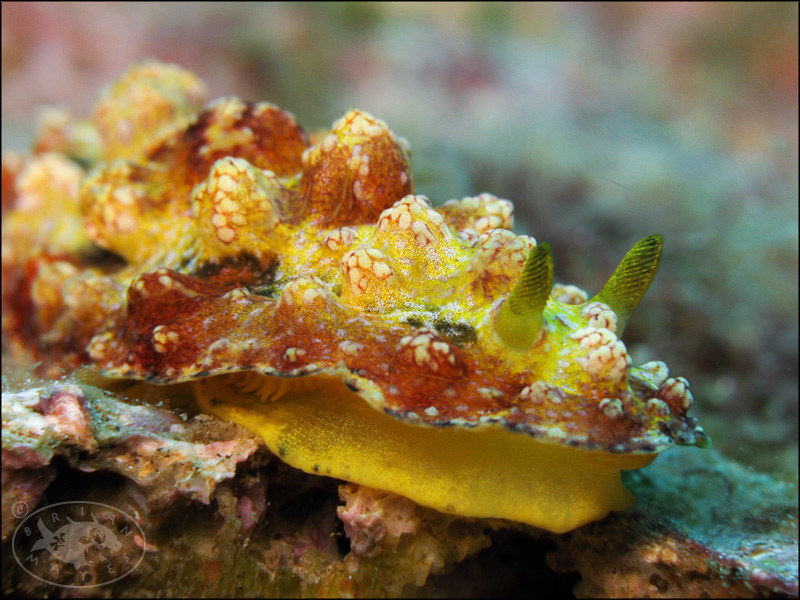
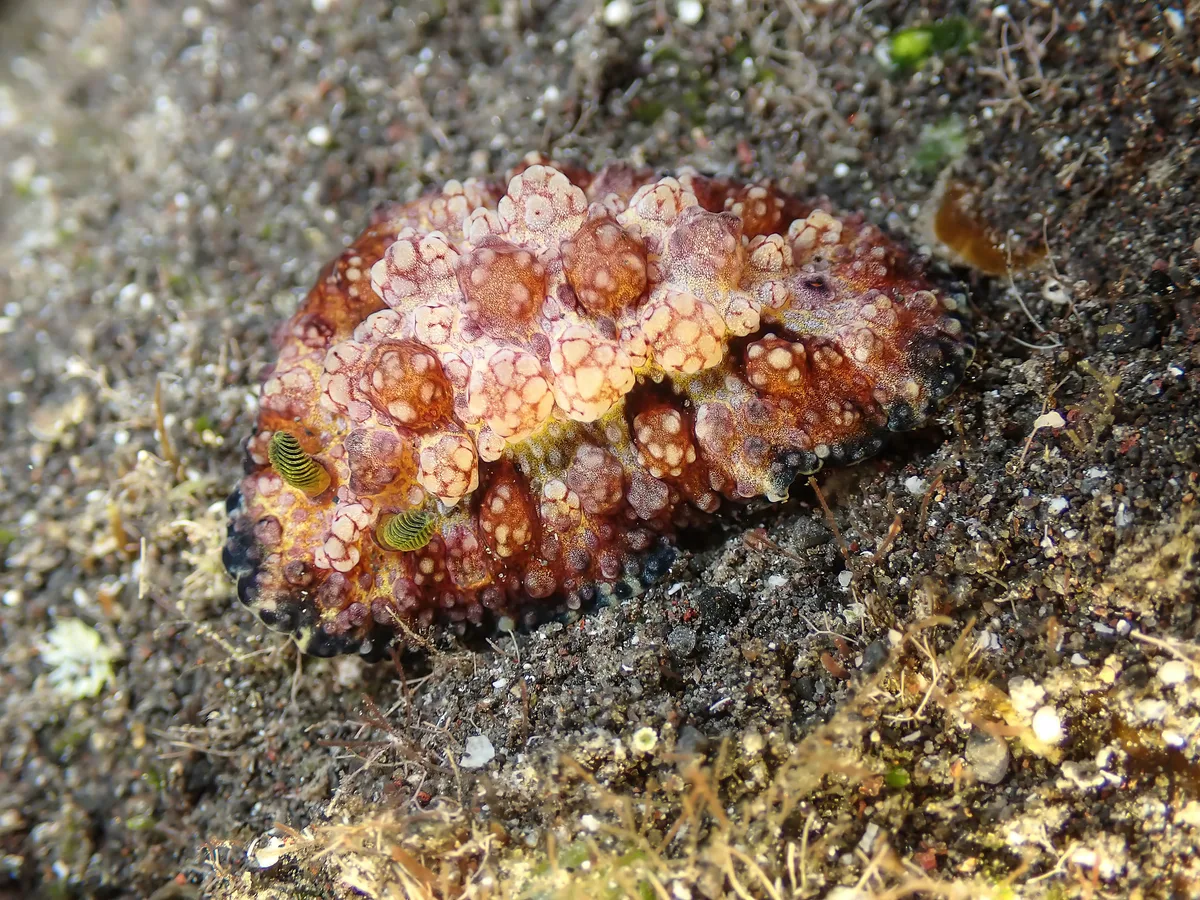
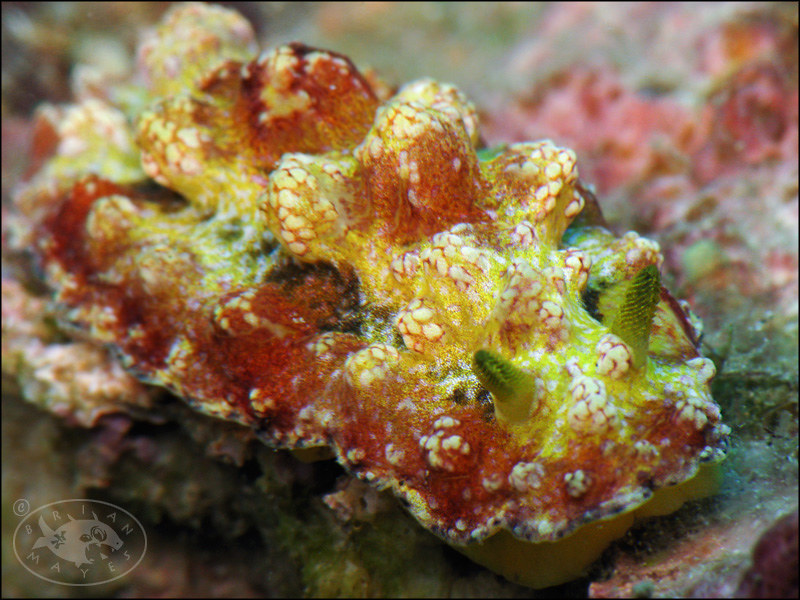
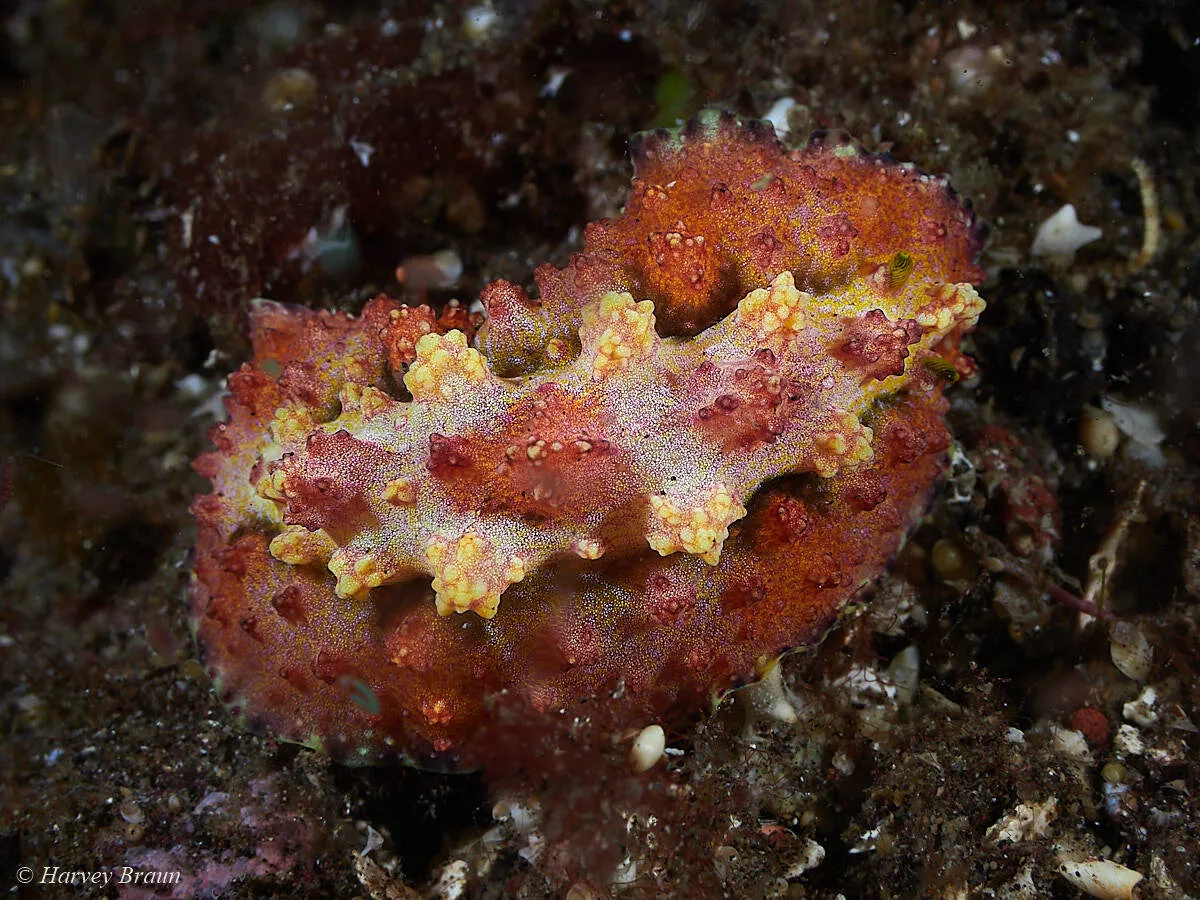
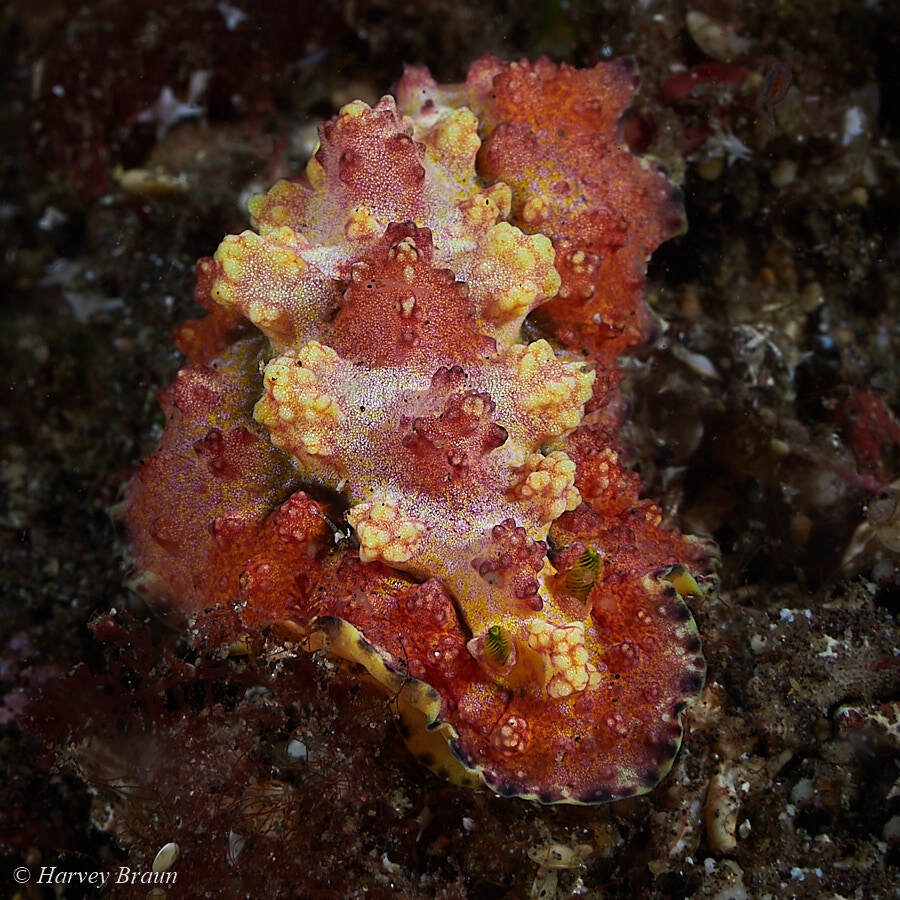
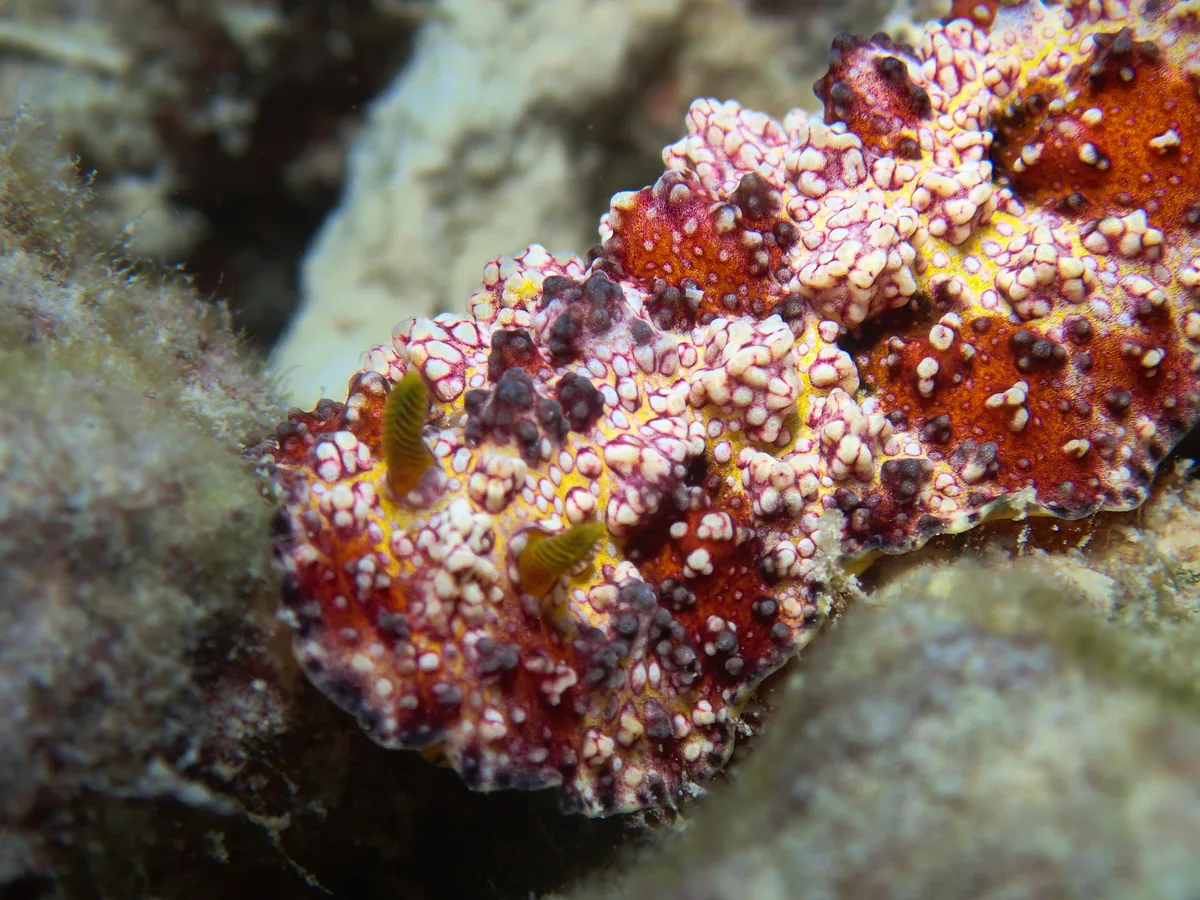
This one opts out of the uniform. The ground color is red-brown, which nothing else in the family here carries, and that alone will usually name it across a two-meter gap.
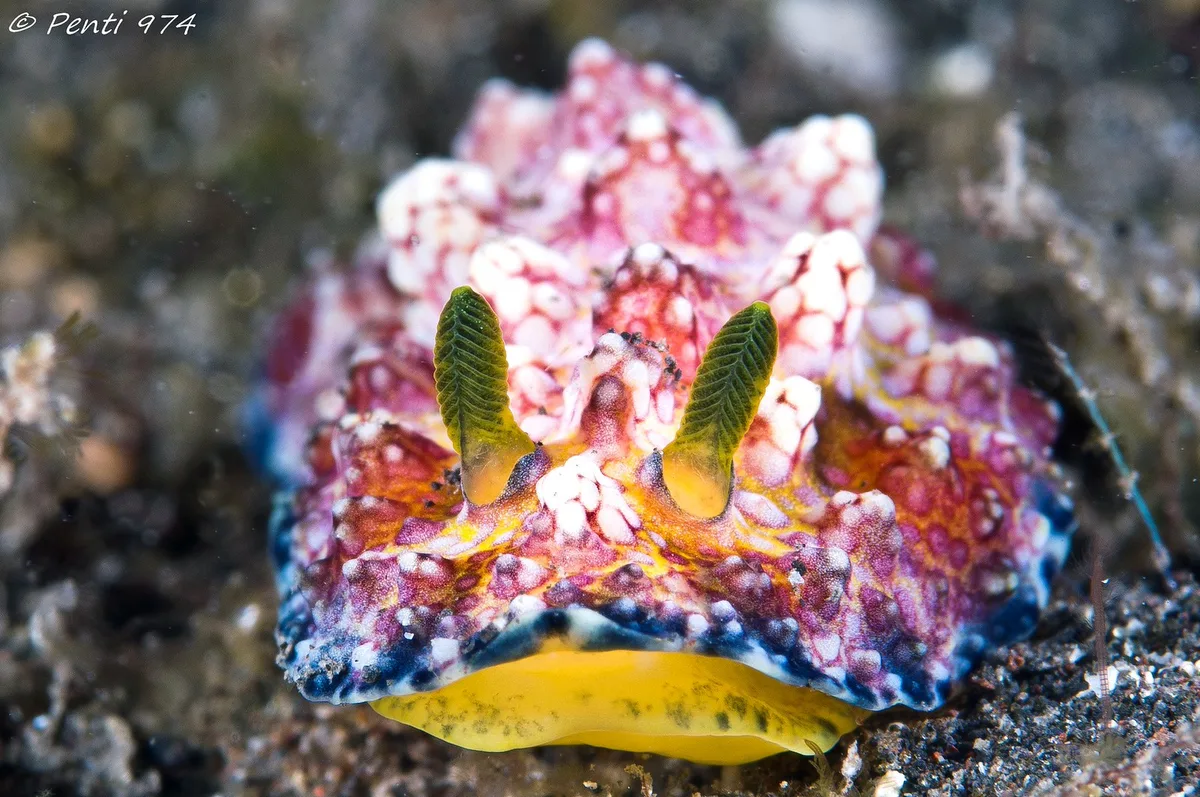
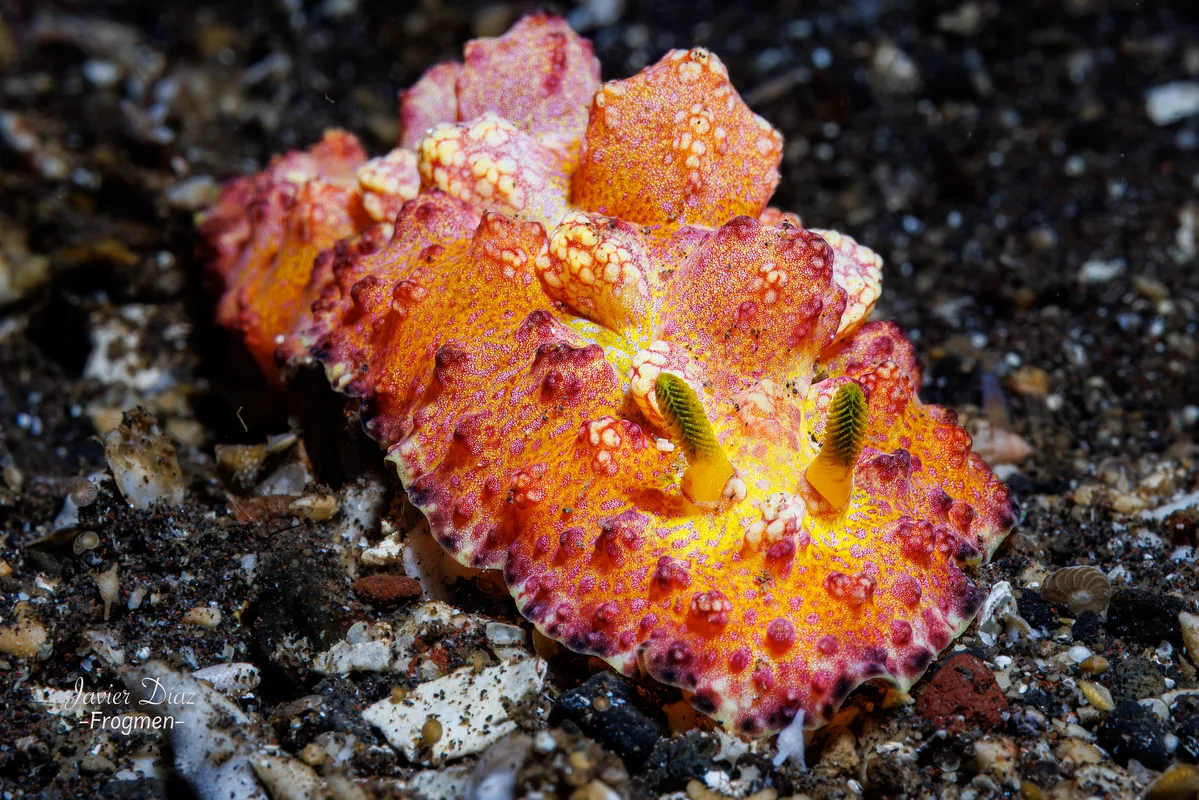
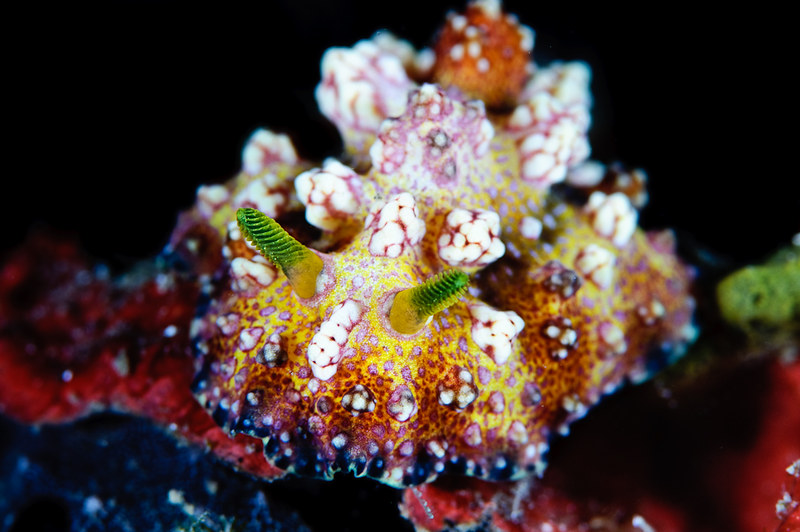
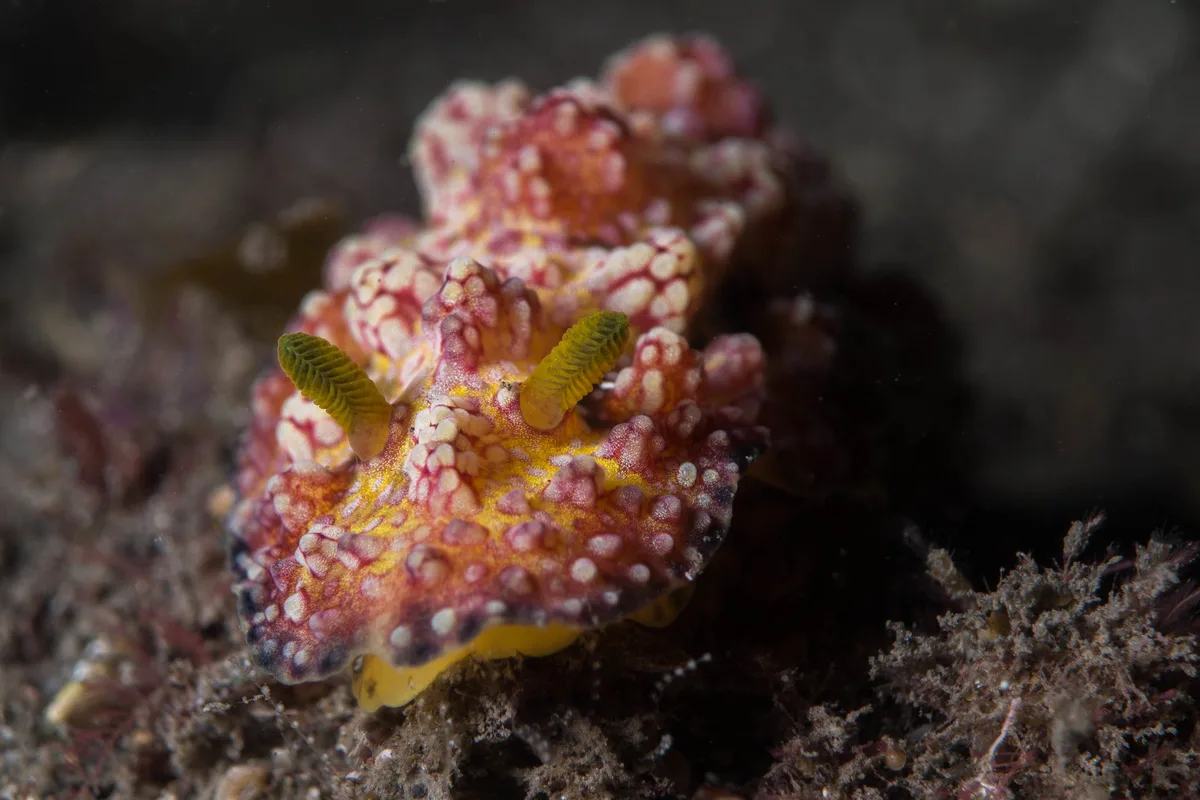
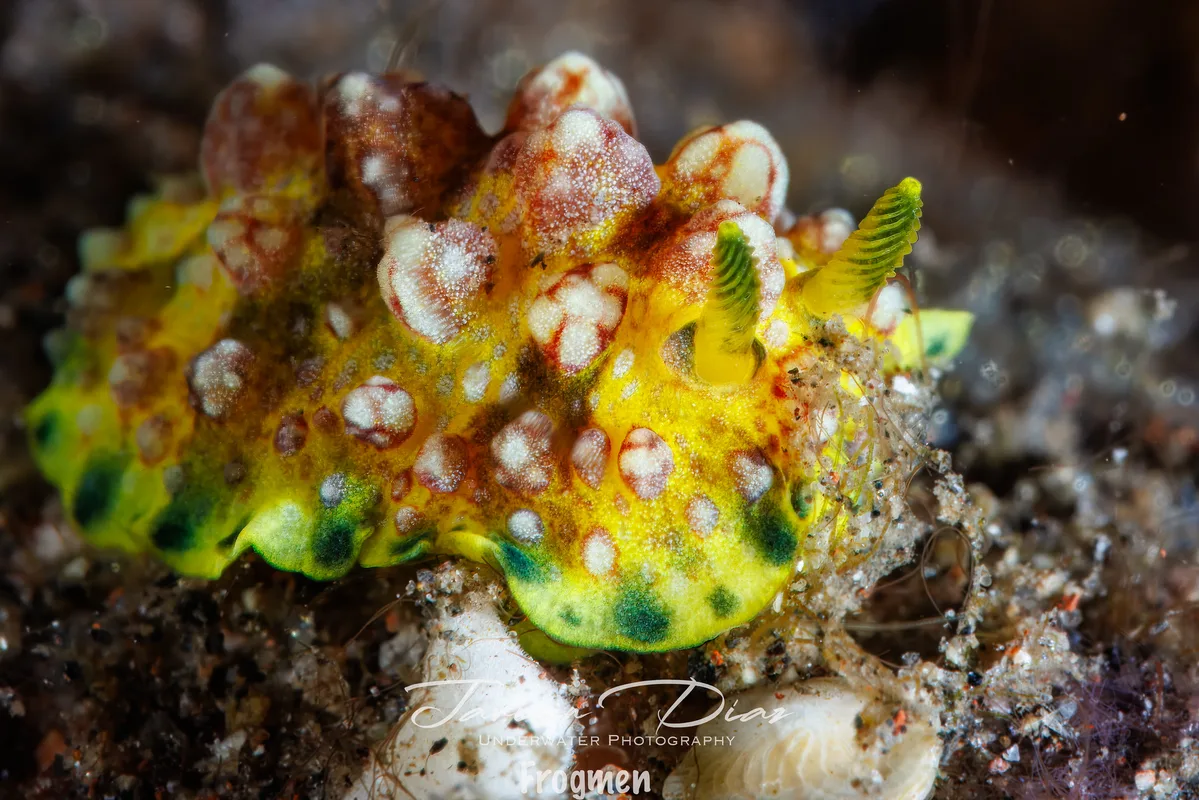
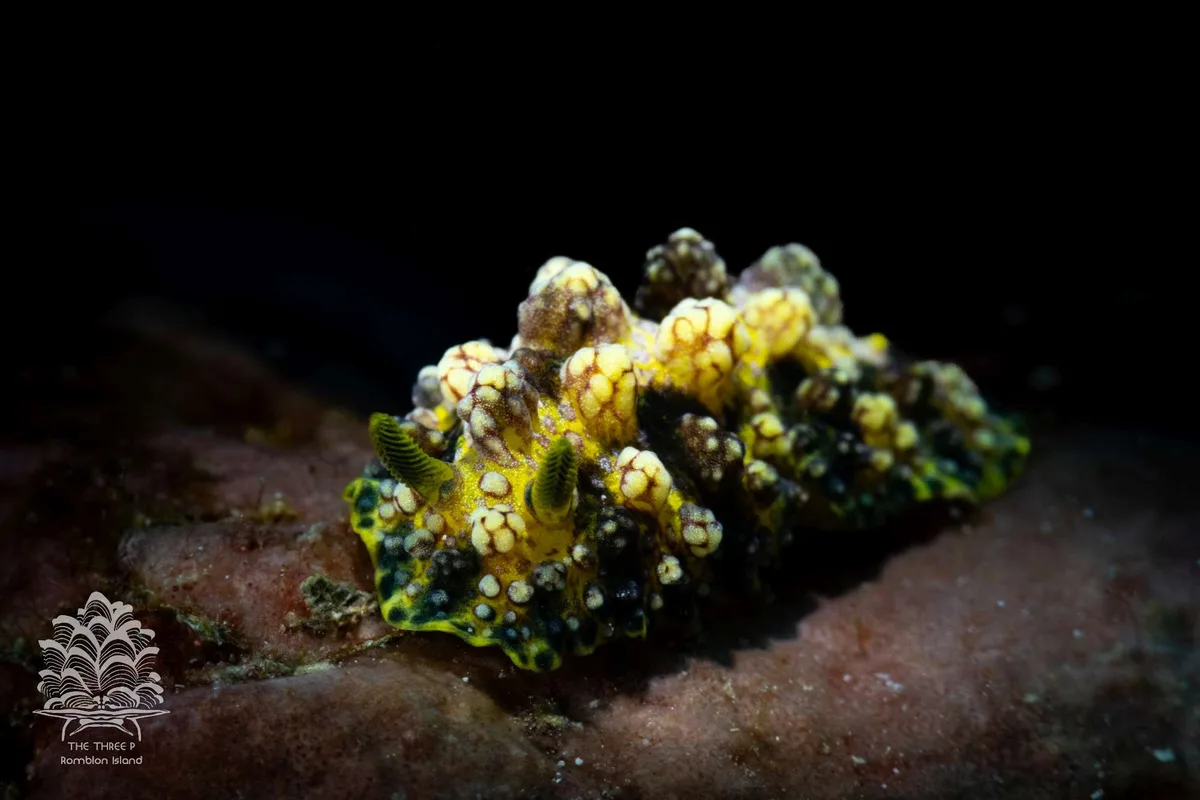
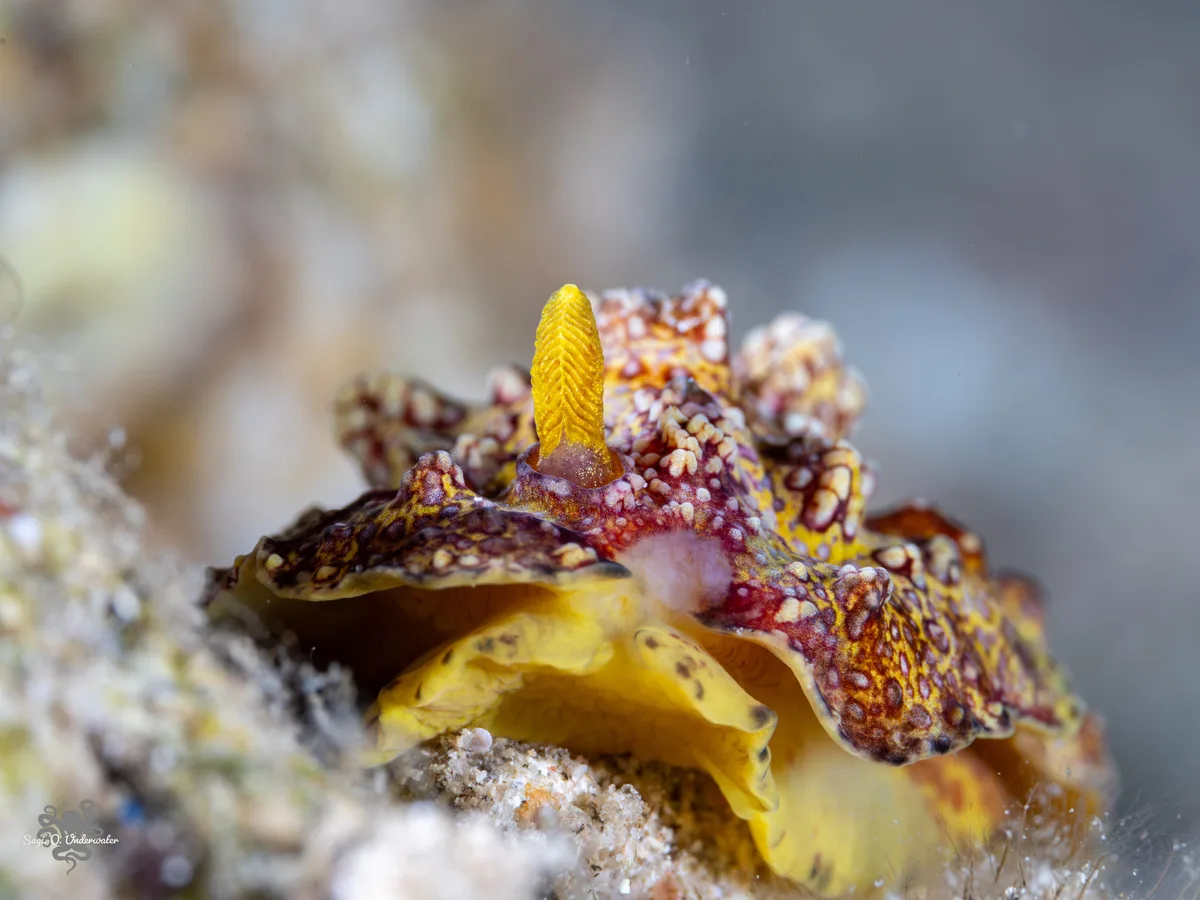
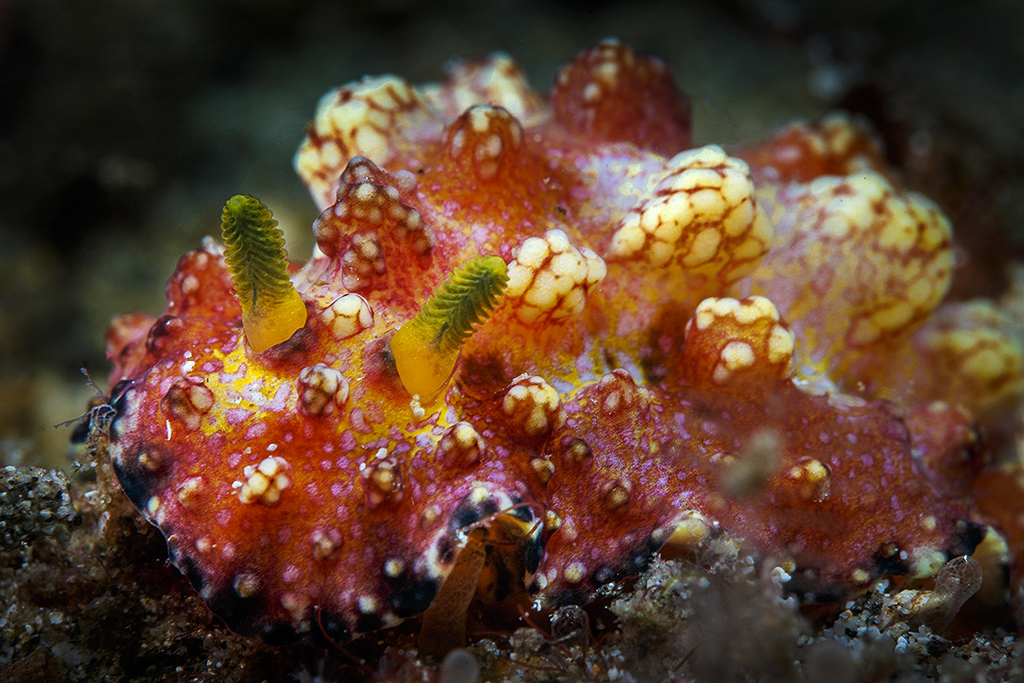
Up close the tubercles are the confirmation. On most wart slugs each raised bump is a single dome. Here they are compound: every raised area is a cluster of smaller bumps grouped together, giving the back a texture like coarse gravel rather than like studded leather. The rhinophores are greenish, and a scatter of greenish spots runs around the mantle edge.
At six and a half centimeters (2.6 in) it is among the larger wart slugs on the reef, and like the rest of them it is a slow, entirely untroubled animal that will let you photograph it for as long as you have air.
- red-brown ground color, which no other wart slug here carries
- tubercles compound: each raised area is a cluster of smaller bumps, not one dome
- rhinophores greenish, and greenish spots scattered around the mantle edge
- hard-looking, ridged, with no gill plume showing on the back