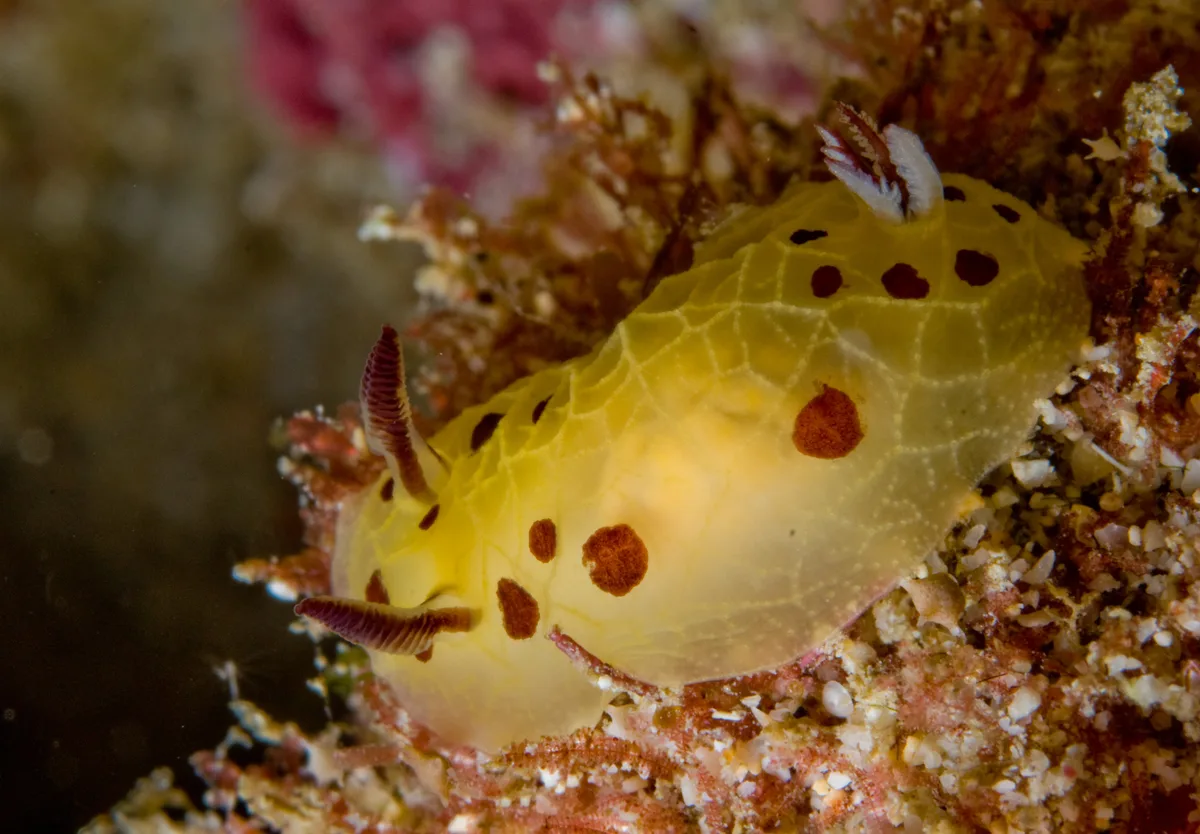
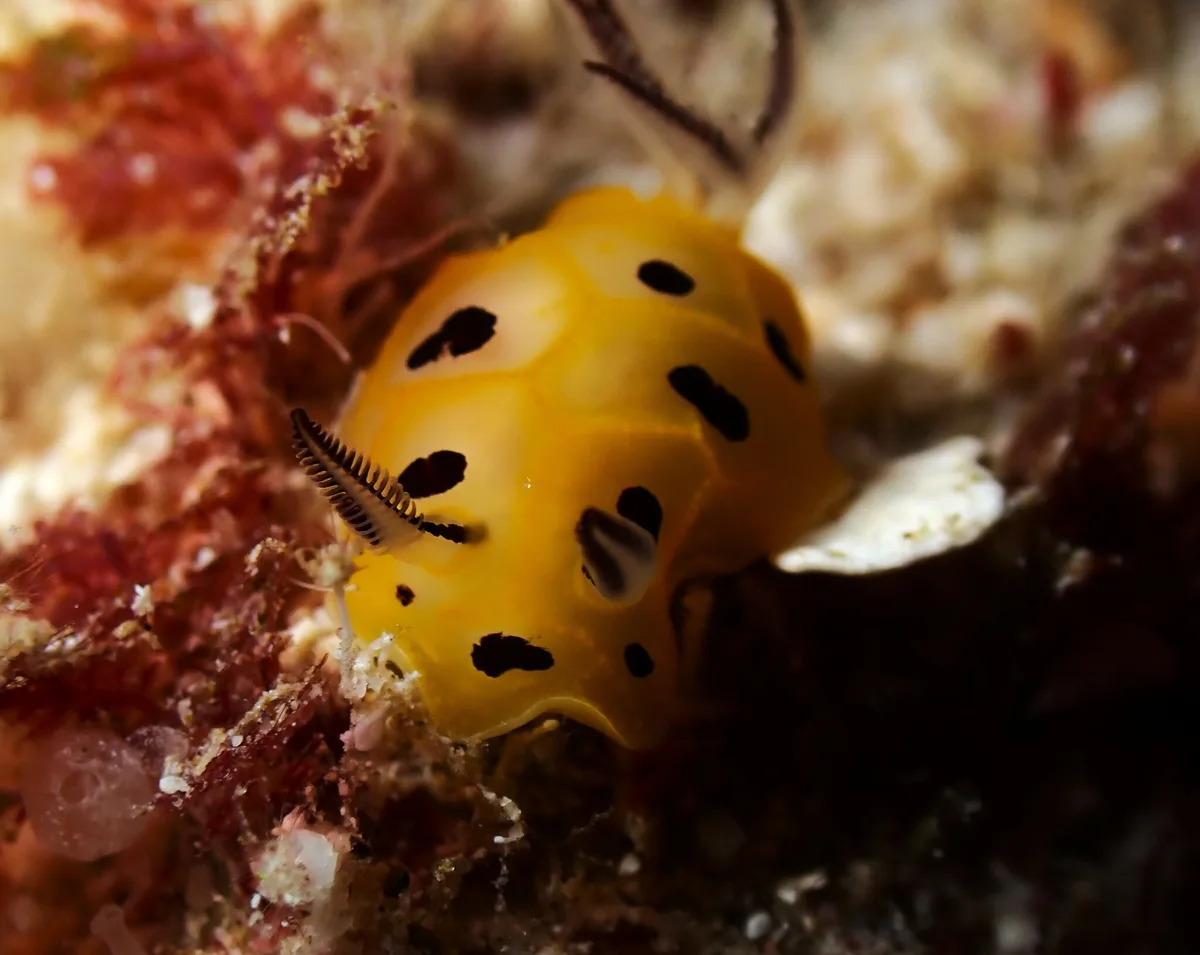
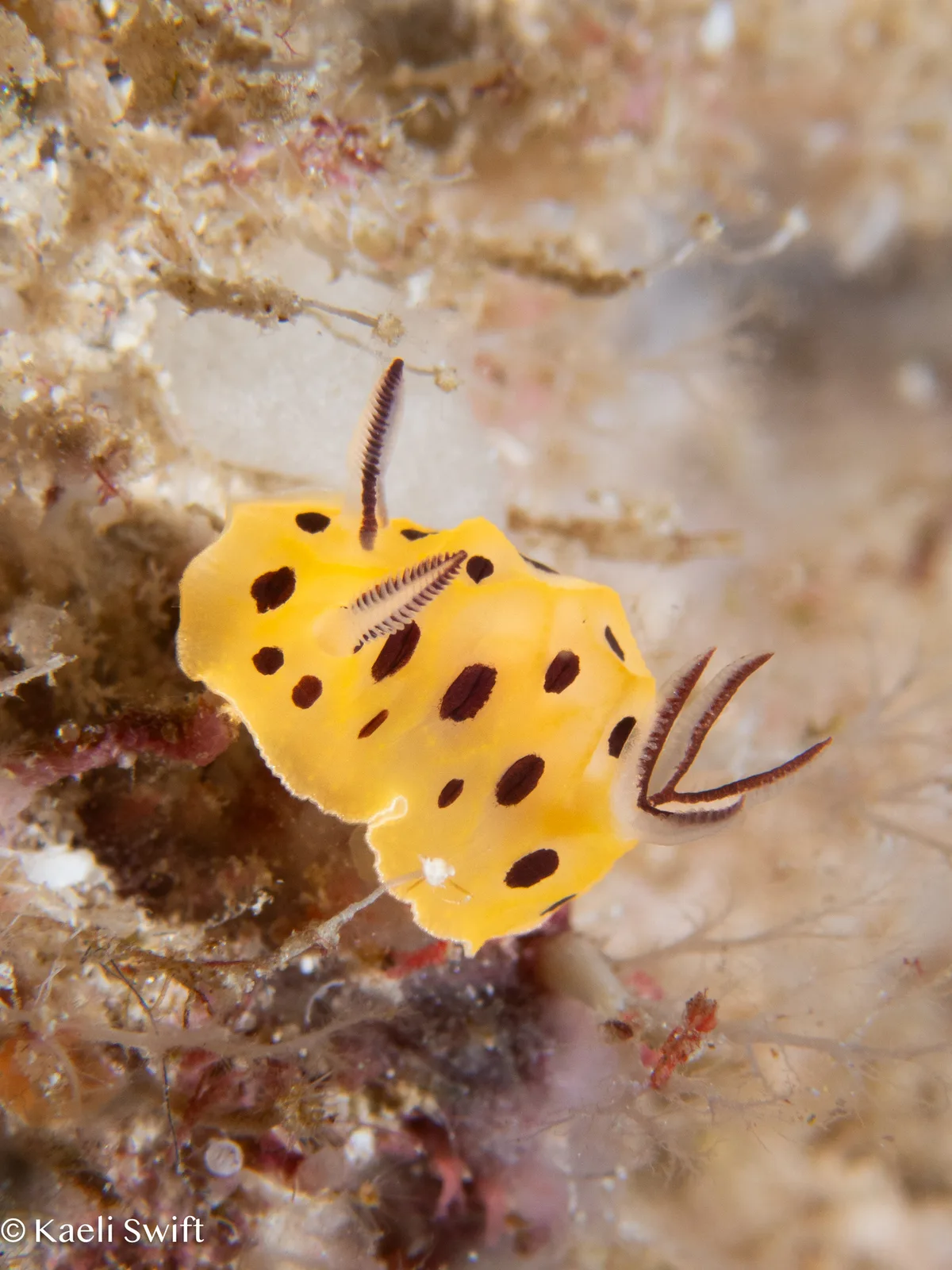
The ridges on a Halgerda look like a skeleton showing through, and the effect is deliberate enough to be the genus's signature.
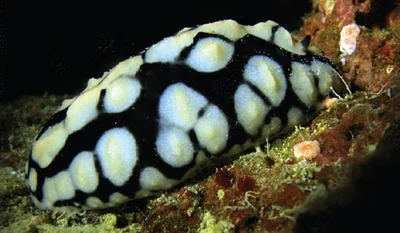
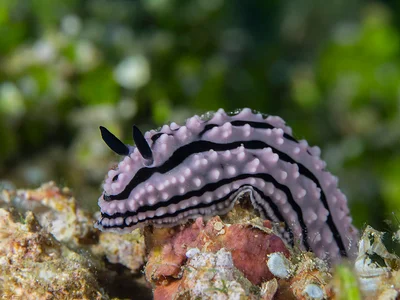
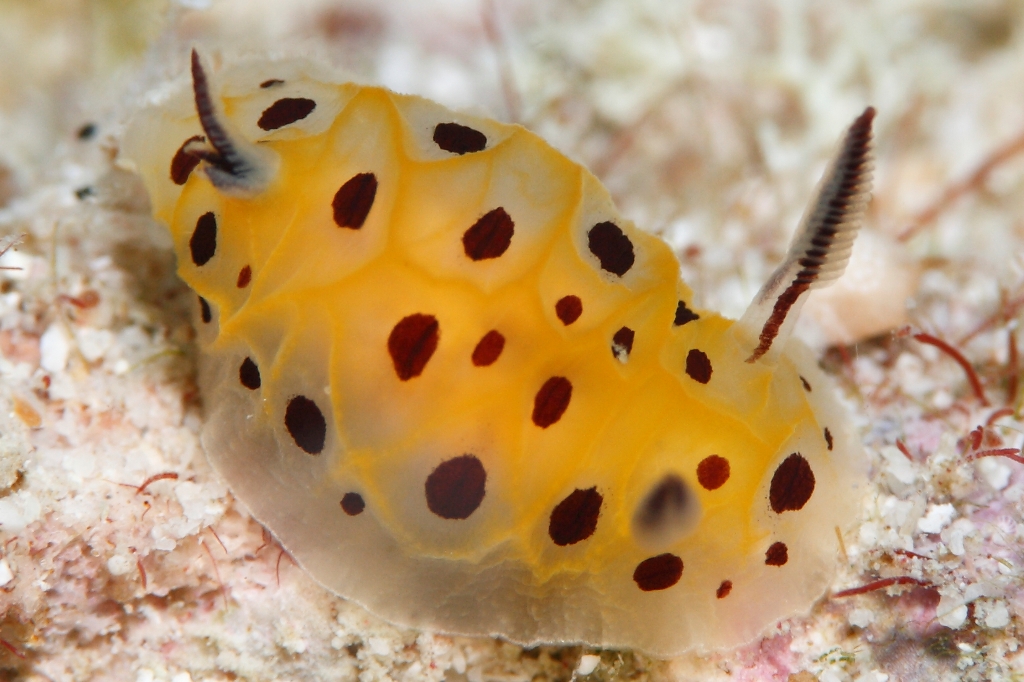
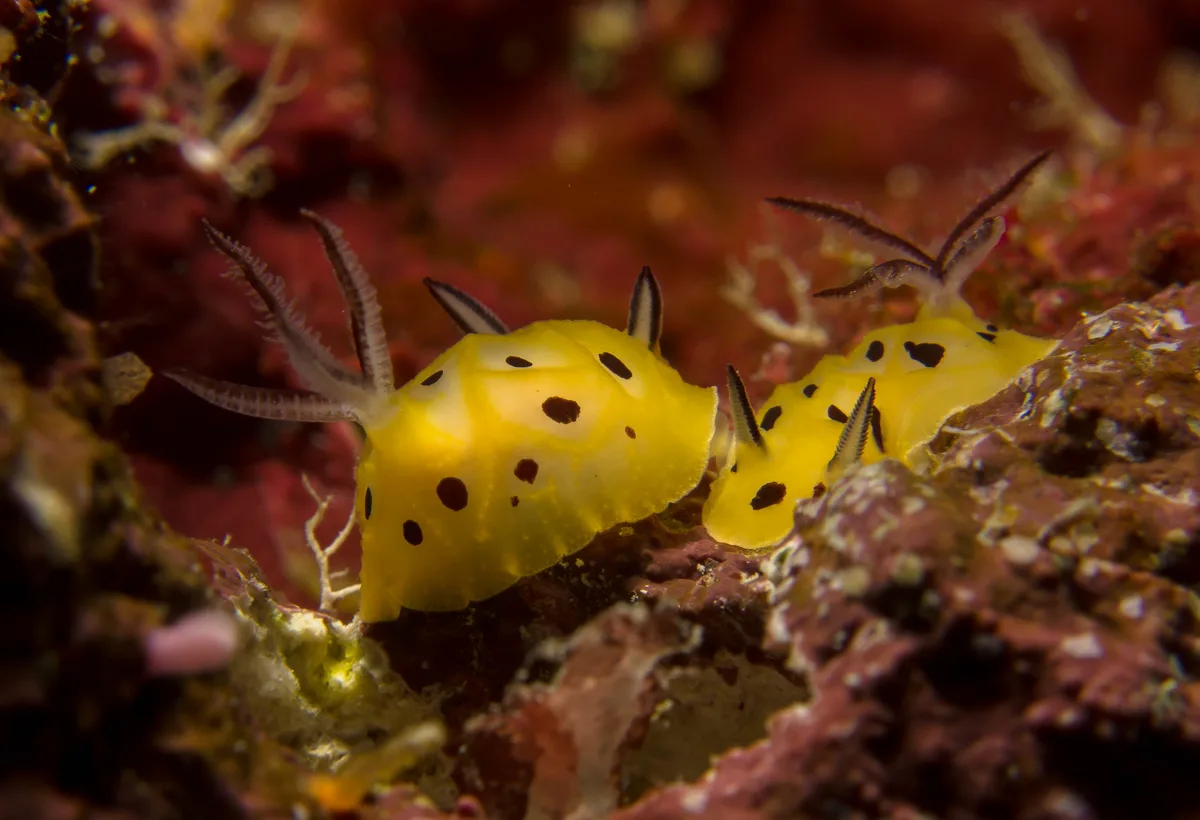
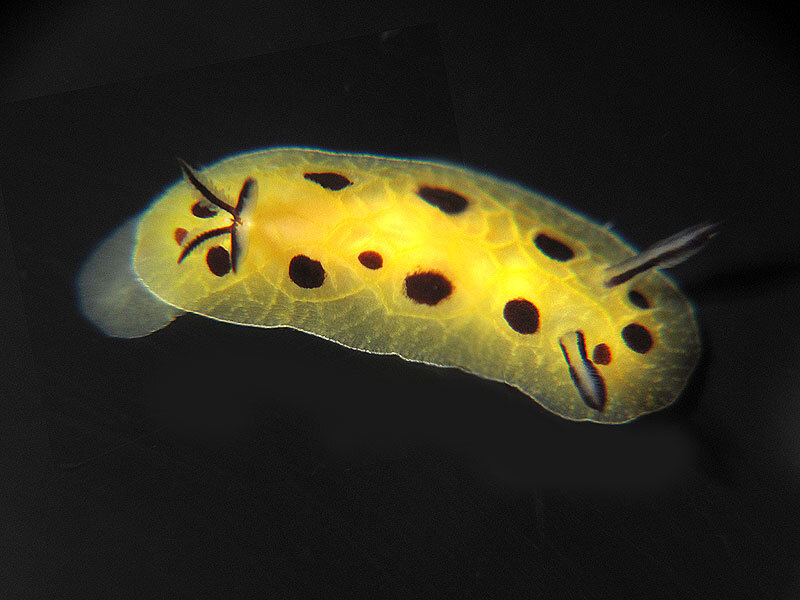
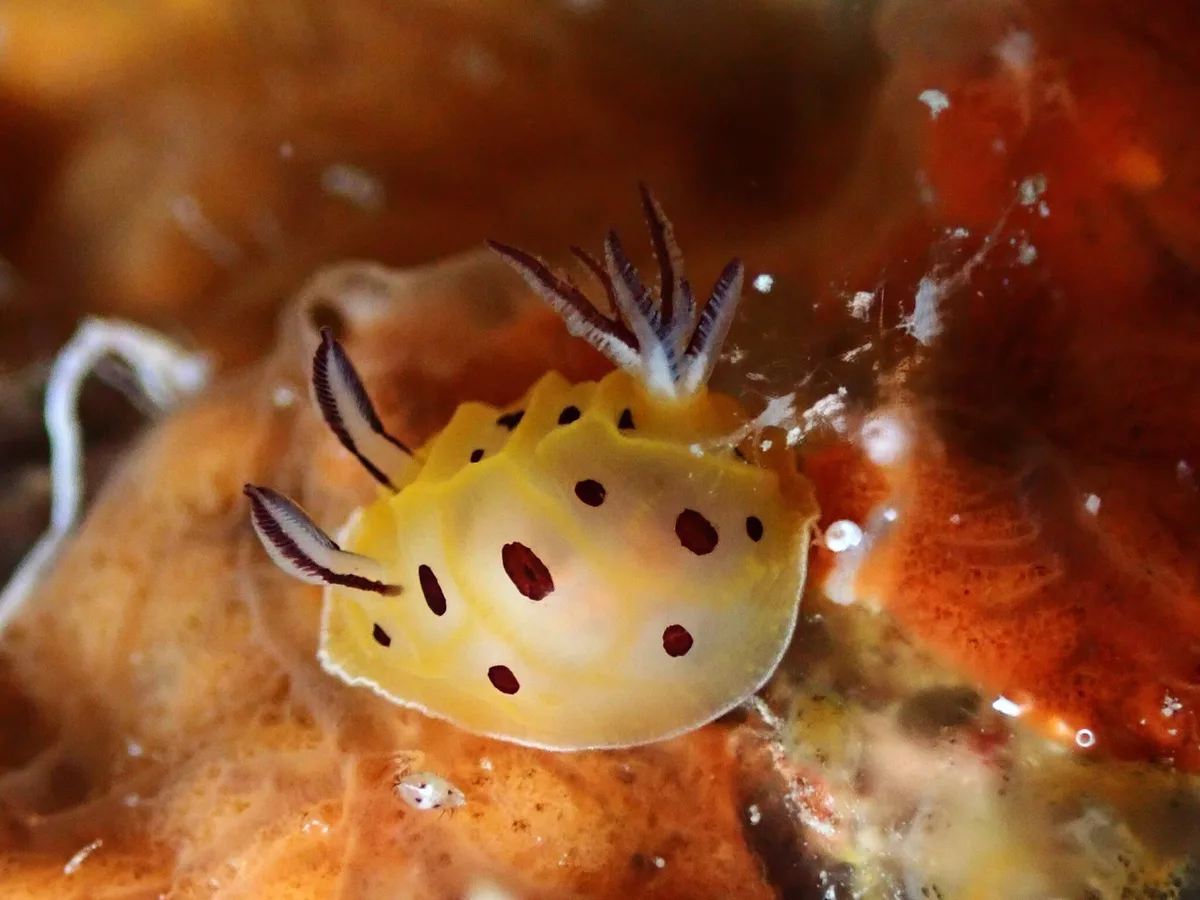
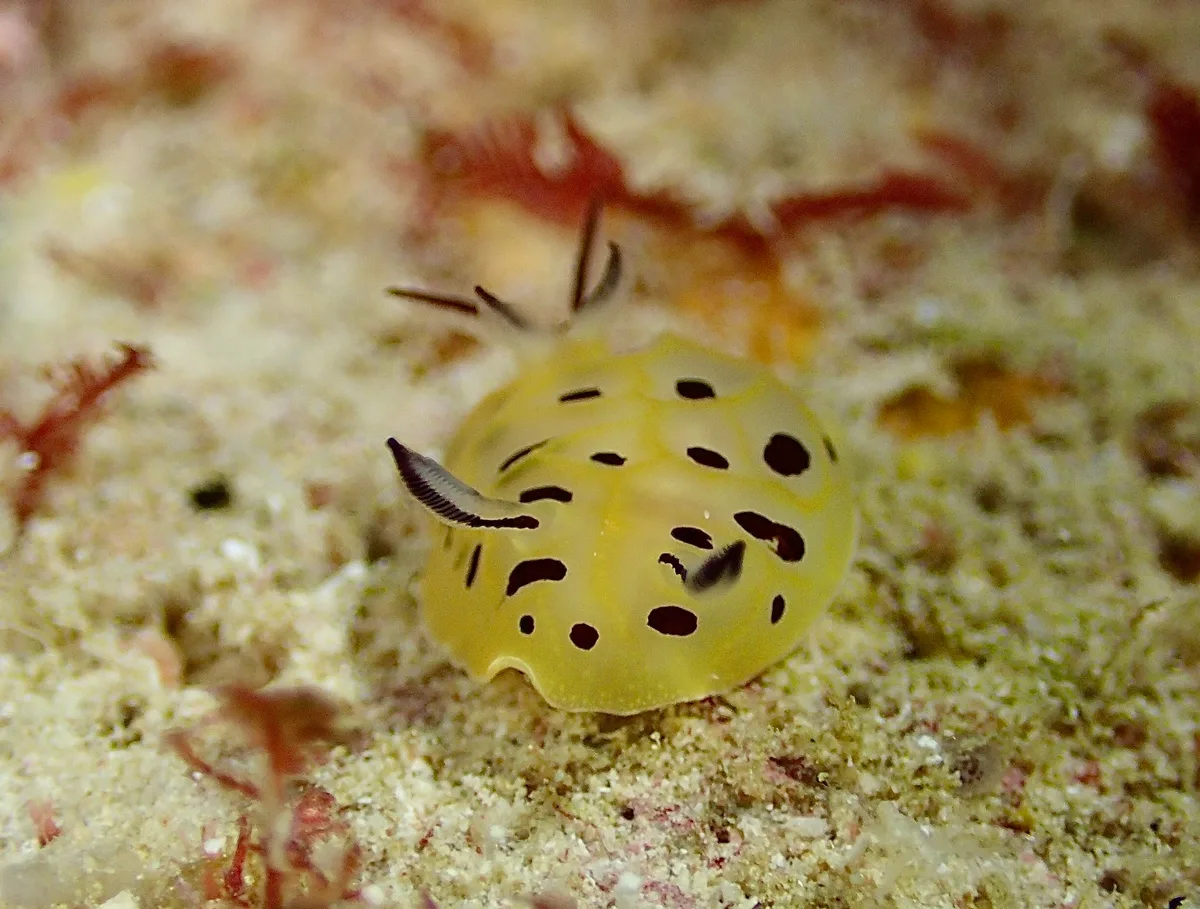
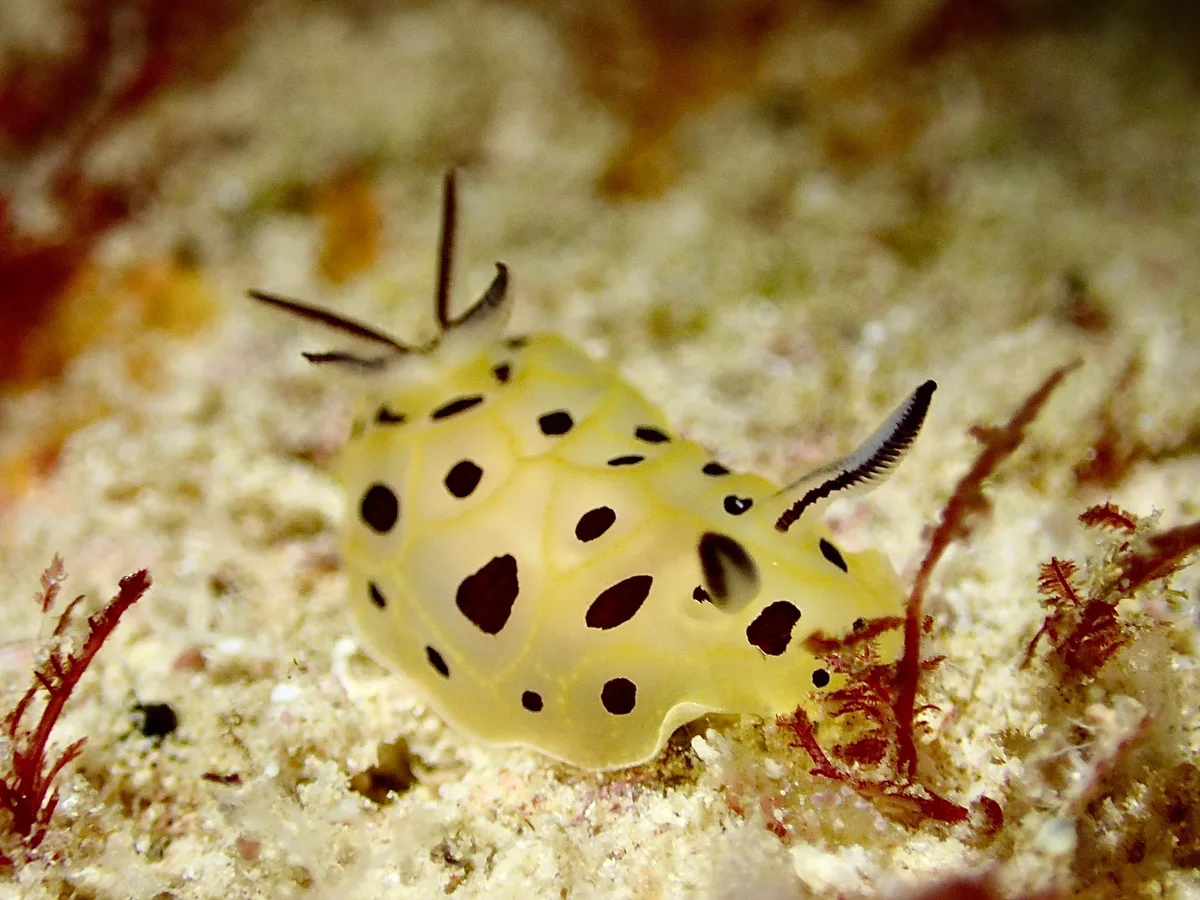
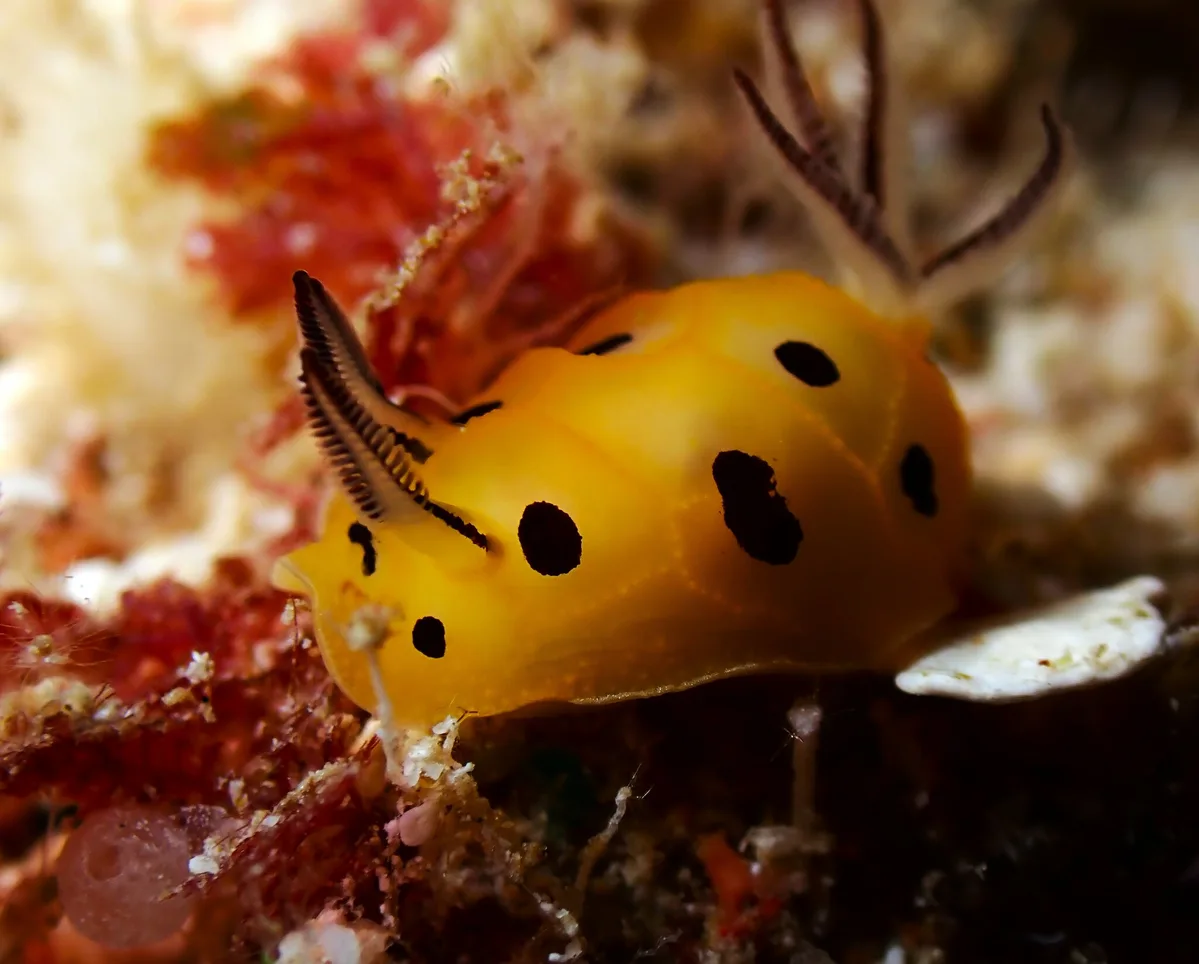
The back carries a raised network of low ridges, usually pale, running between shallow hollows. On this species the dark spots sit in the hollows rather than on the ridges, so the pattern reads as a pale lattice with something dark showing underneath it. That distinction, spots between the ridges rather than along them, is what separates the Halgerda species from each other, and it is the kind of character that only works from a photograph taken close and from above.
They are small, this one at two and a half centimeters, and they are among the more sought-after slugs on a reef because the geometry photographs so well: hard-edged, symmetrical, and unlike the soft blobs most of their relatives present.
What they eat is sponges, like most dorids, and what they do about predators is the usual arrangement of stored chemistry advertised by pattern. They work shaded rock, walls and overhangs and are mostly out at night.
Several undescribed Halgerda are known from this sea and appear in the regional guide as numbered forms rather than names, so a photograph of one here is worth keeping: the genus is still being sorted out.
- network of low ridges standing up over the back
- black or dark brown spots in the hollows between the ridges, not on them
- small, up to 2.5 cm
- translucent white ground between the markings