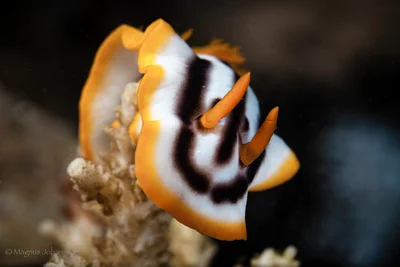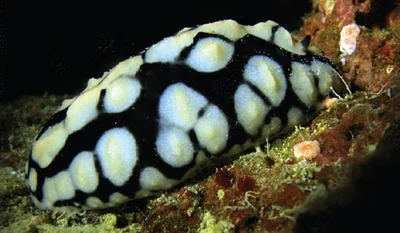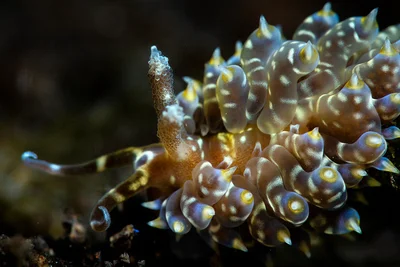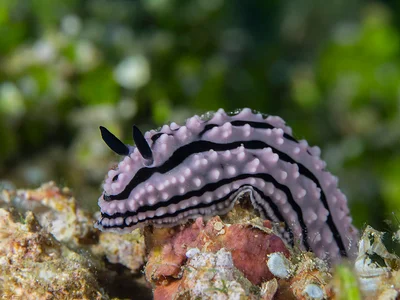
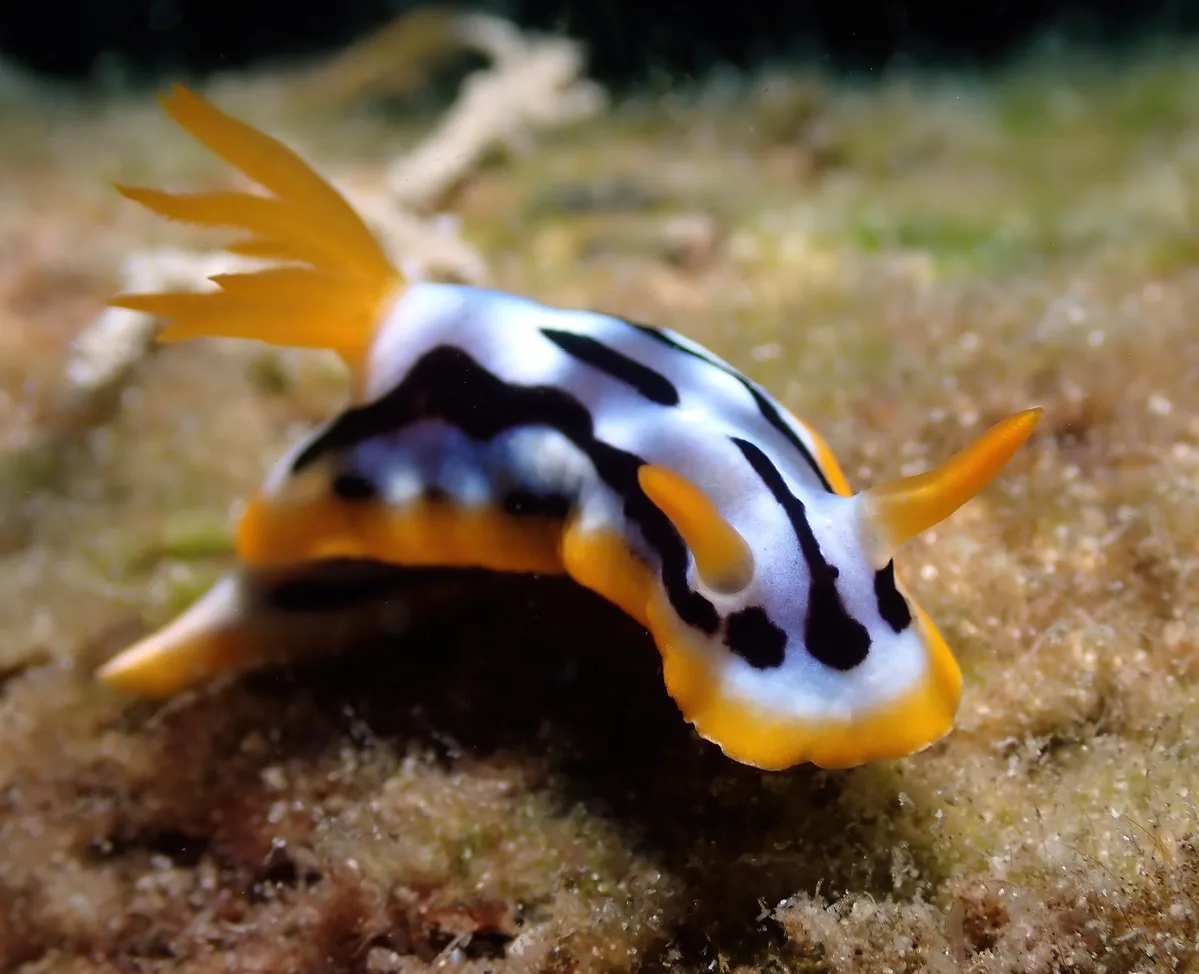
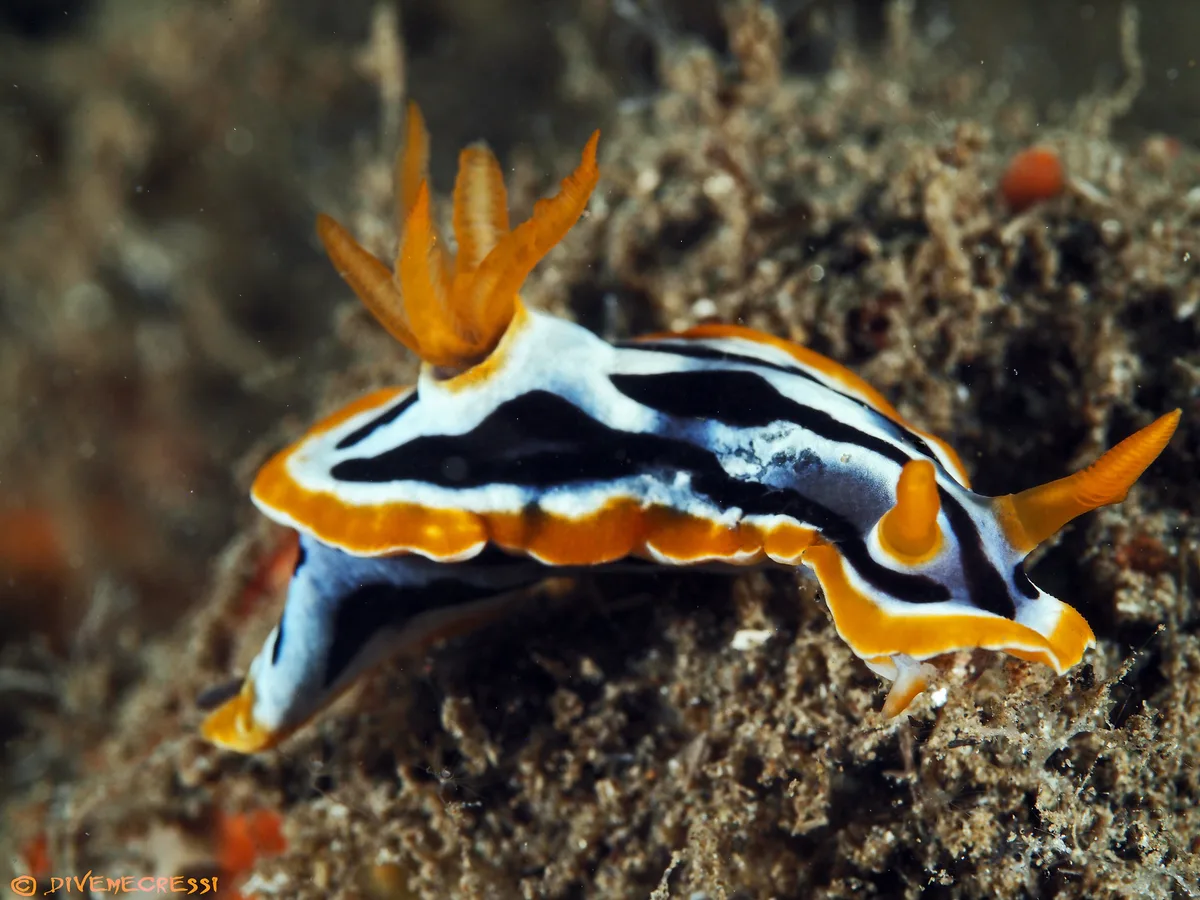
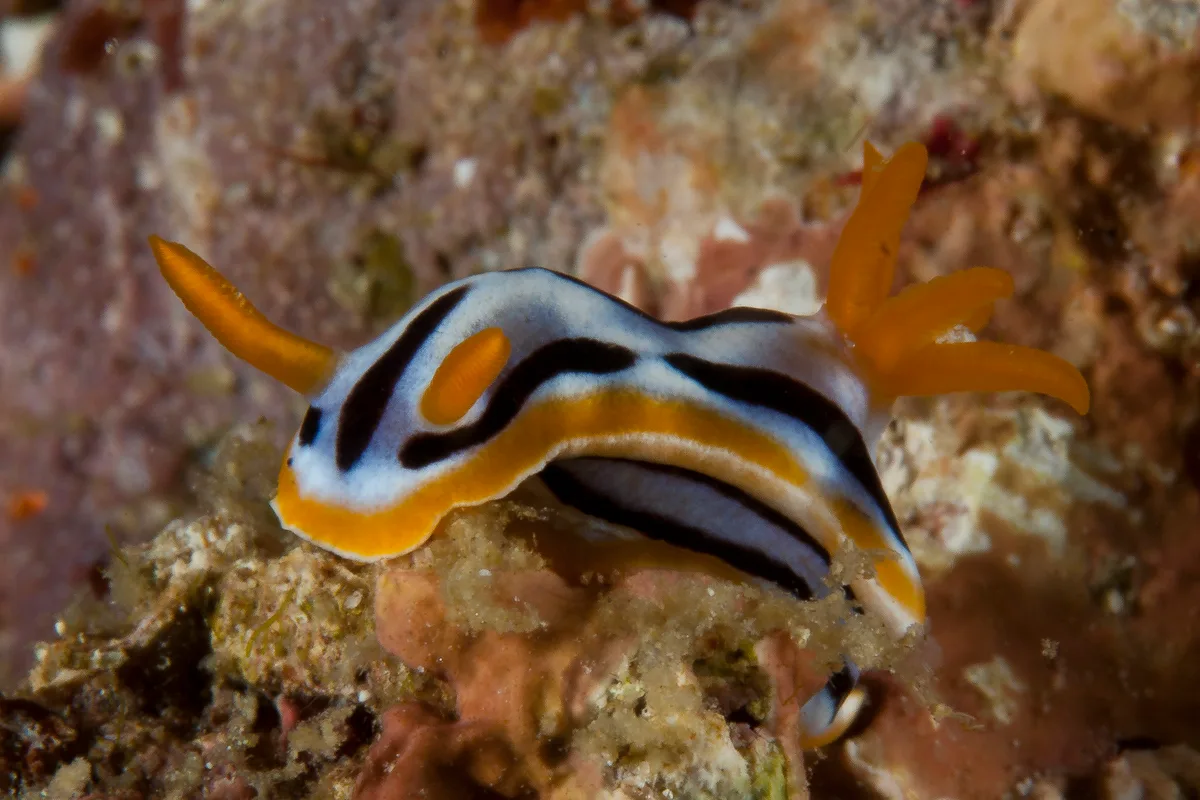
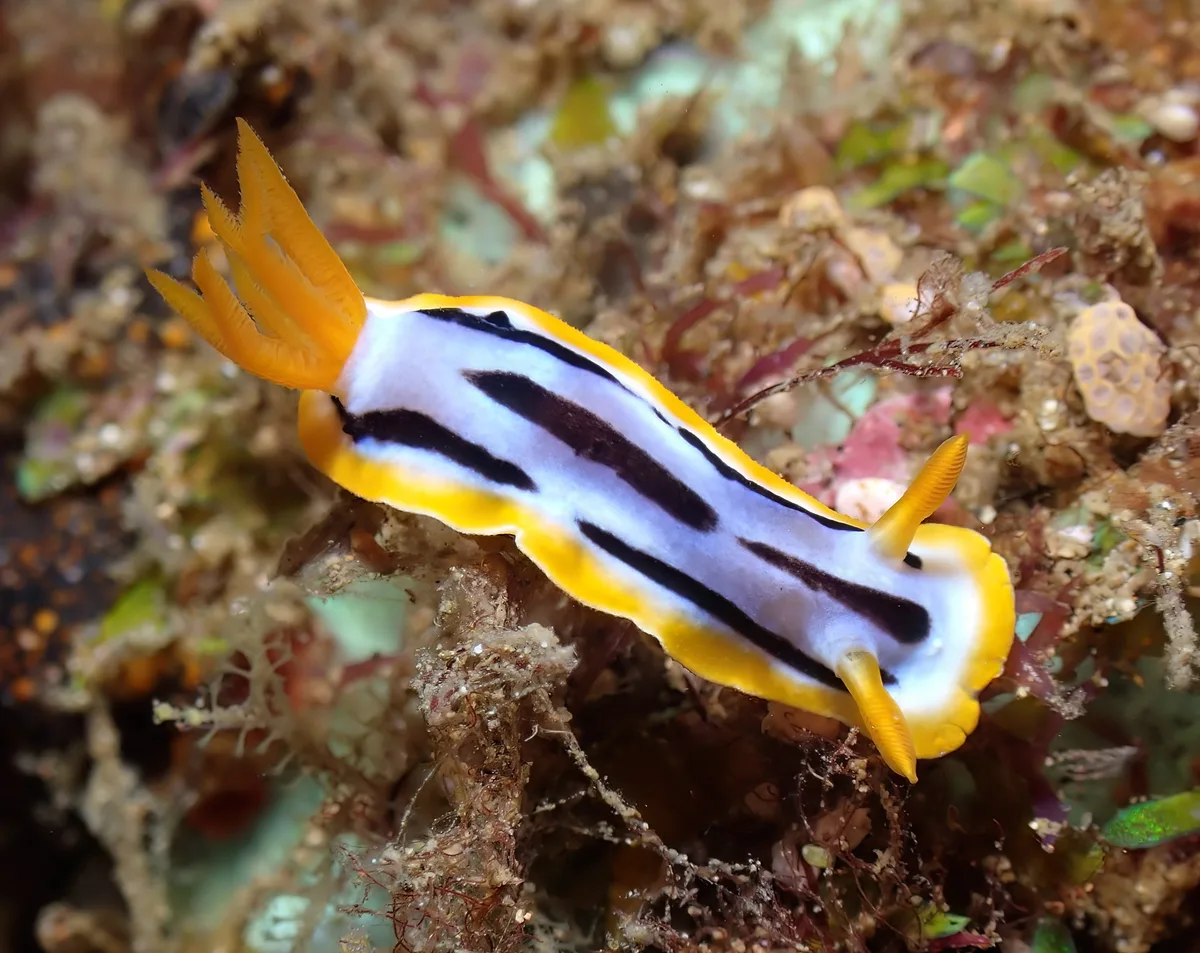
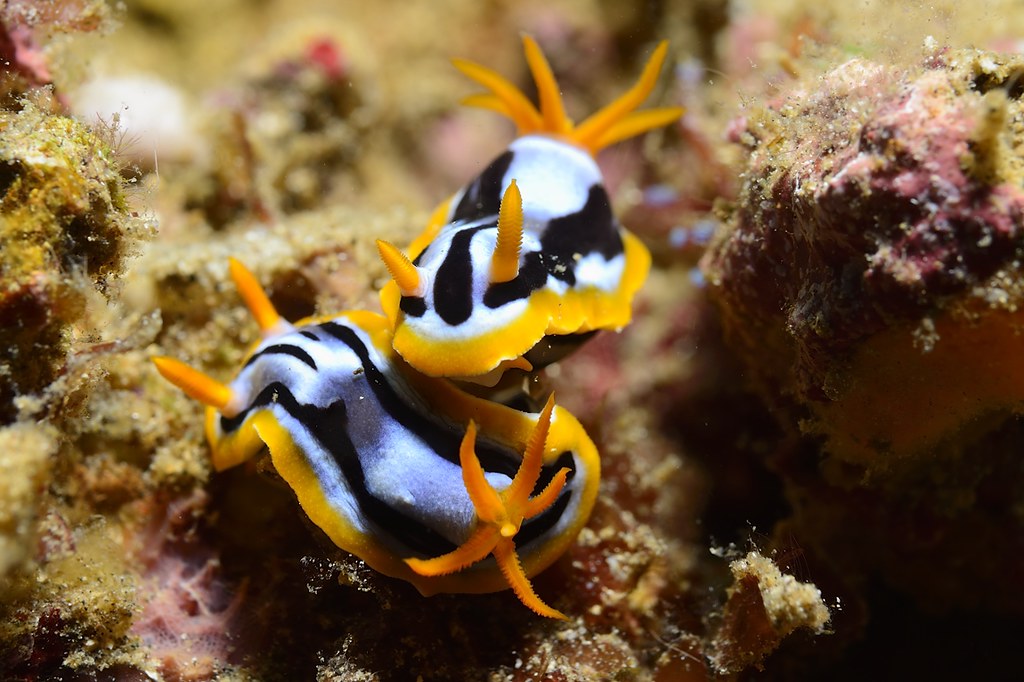
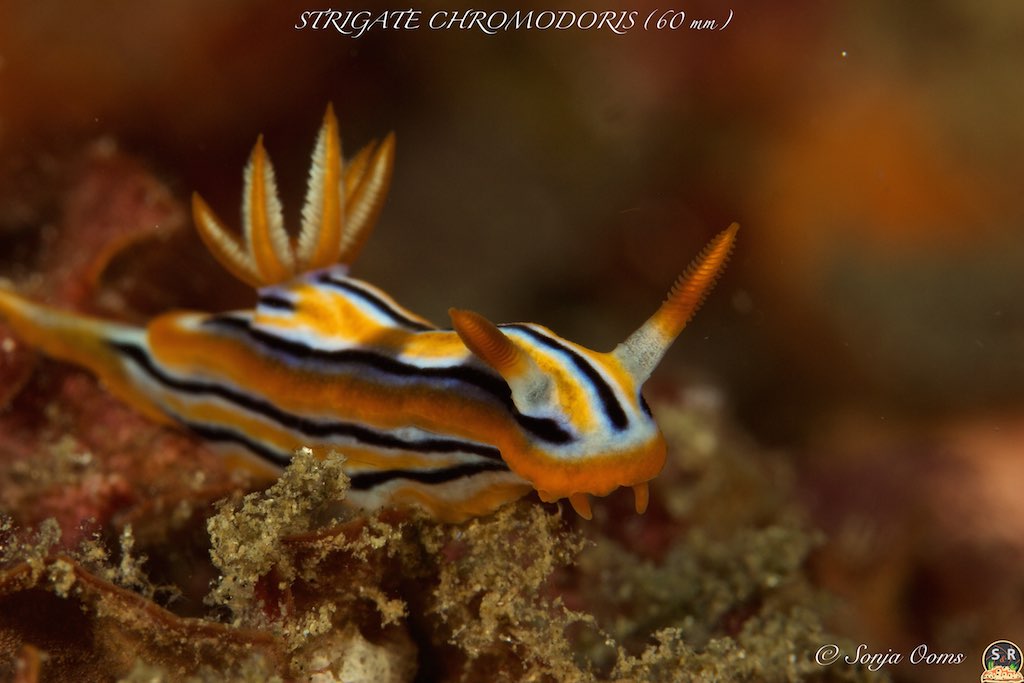
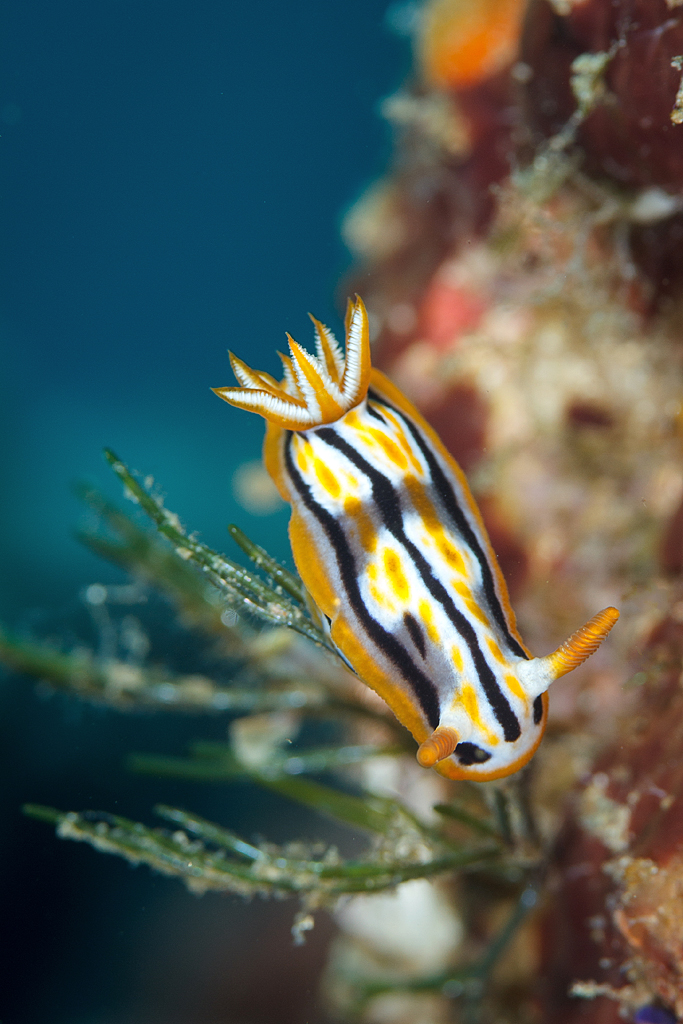
Counting the stripes is the obvious way to name a striped chromodorid, and it is the way that fails.
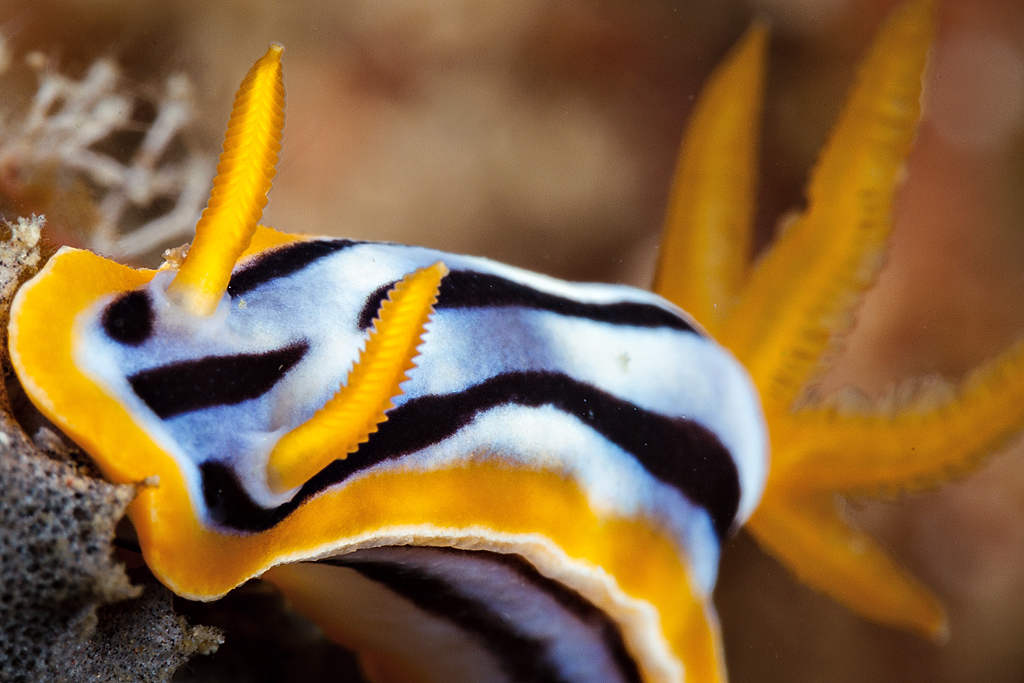
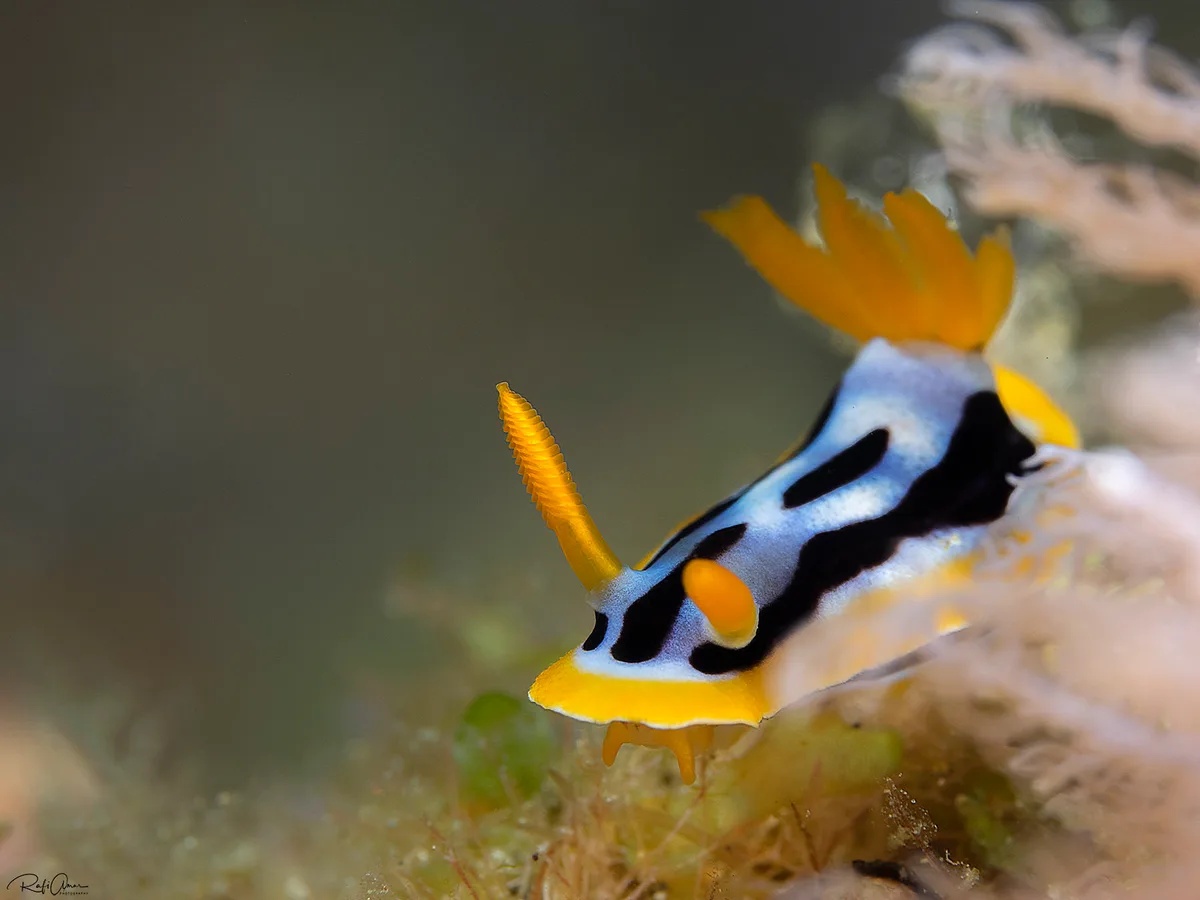
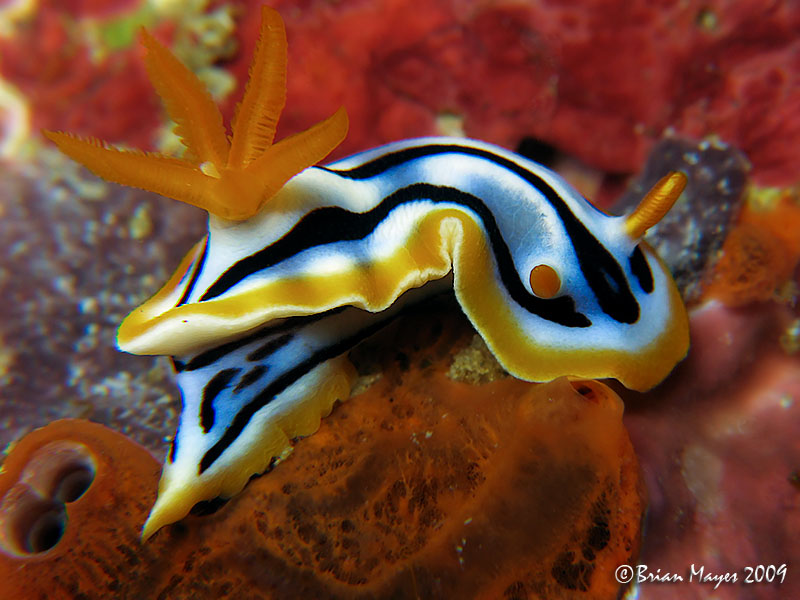
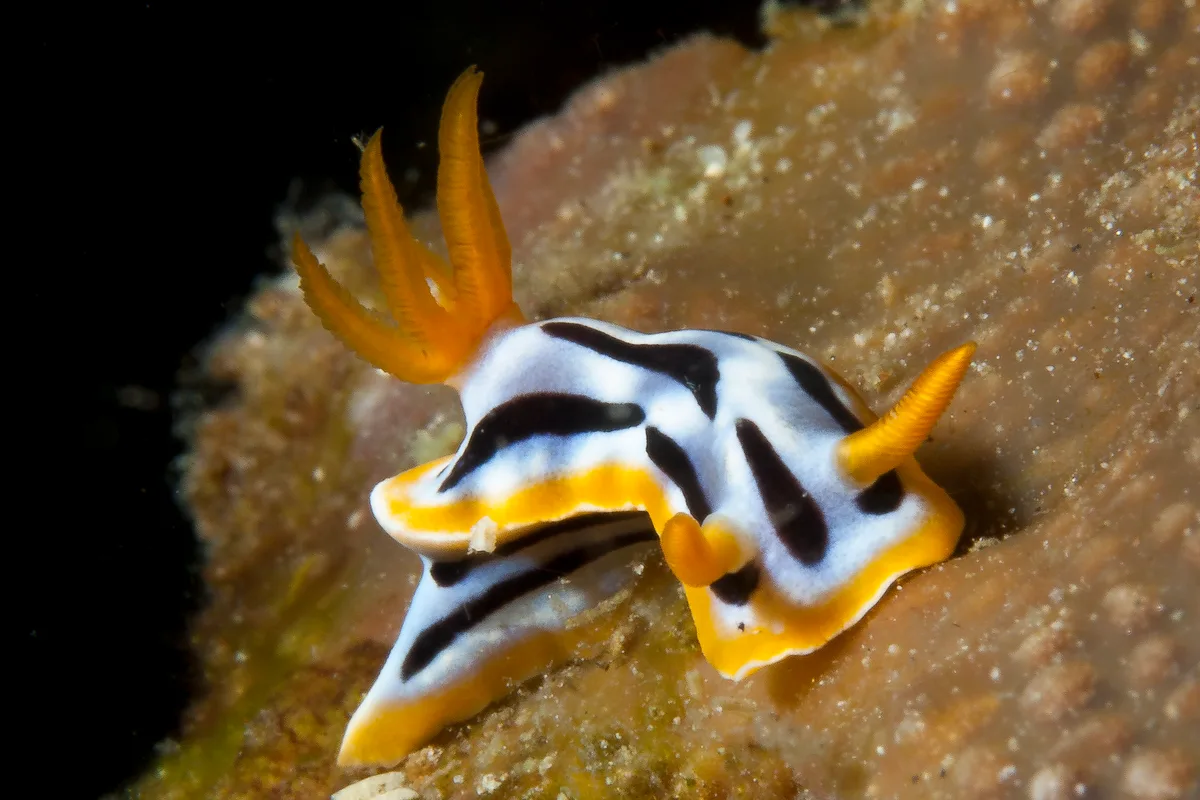
This species carries about five black lines down a white back, and on most individuals they are not lines at all: they break into dashes, run together in places, stop short of the head or the tail, and differ between two animals on the same piece of rock. The blue-lined slug in this catalogue has continuous lines and blue between them. The African one has three wide black bands and a broad orange rim. All three are white with black markings and an orange edge, and a photograph taken from above at arm's length will not separate them.
What does separate them is the edge and the ends. How far the orange runs onto the underside, whether the lines reach the margin, the color of the rhinophores against the color of the gills. Photograph the animal from the side as well as the top, and the identification becomes possible.
Why they look alike at all is the interesting part. All of them are chemically defended, all of them advertise it, and a predator that learns one pattern avoids the others, so there is a steady advantage in converging on a shared uniform rather than each species teaching its own lesson.
Five centimeters, on sponge-covered rock, out in daylight, and entirely unbothered by being watched.
- white back with about five black lines running head to tail, usually broken into dashes
- narrow orange to yellow margin
- orange rhinophores and gills
- up to 5 cm