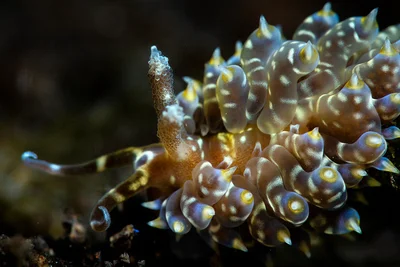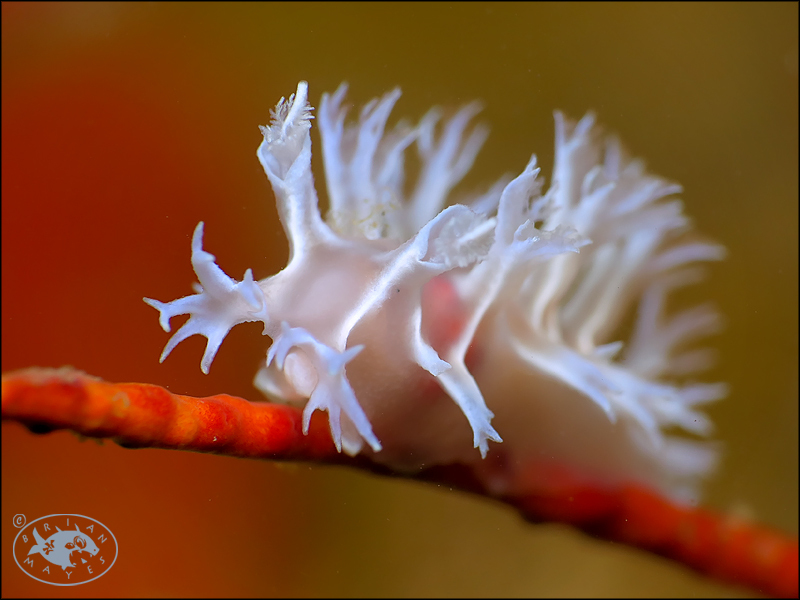
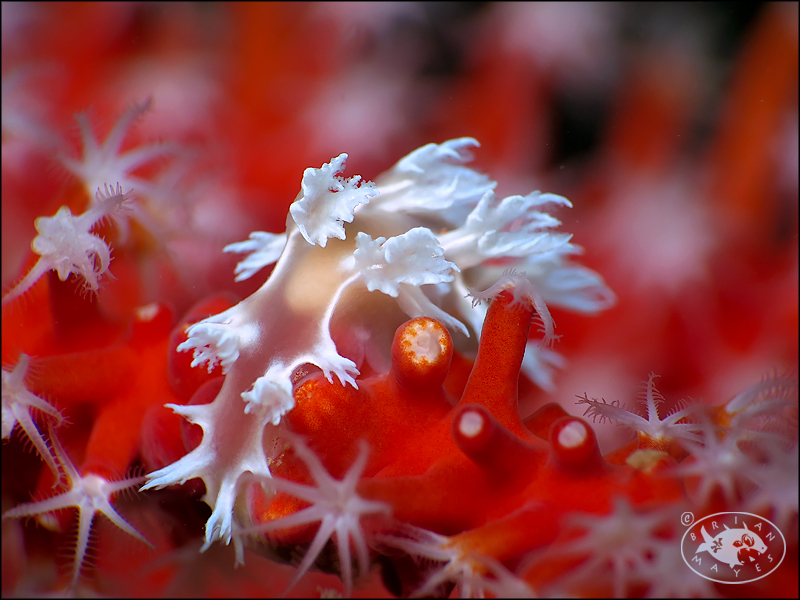
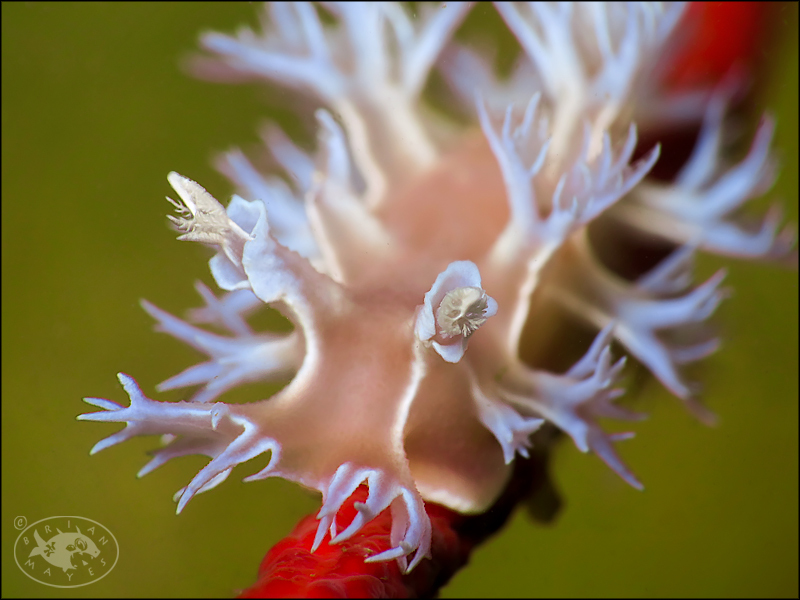
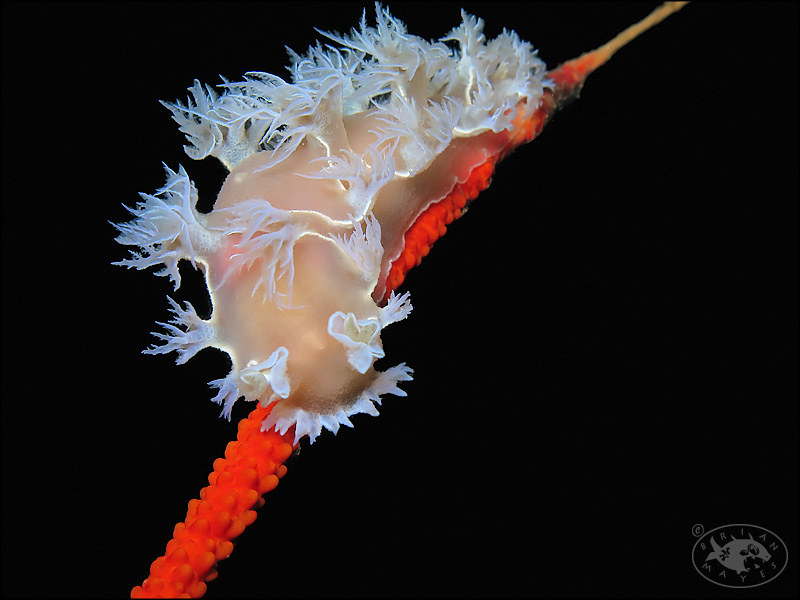
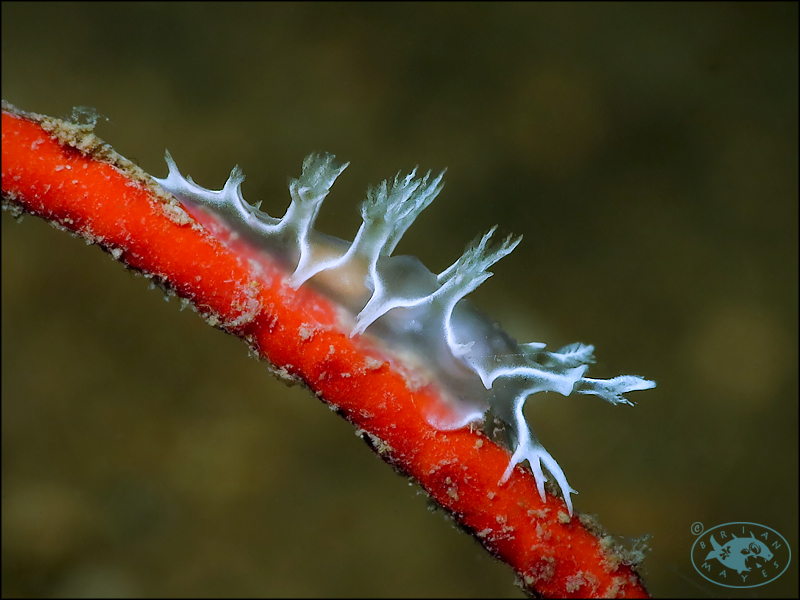
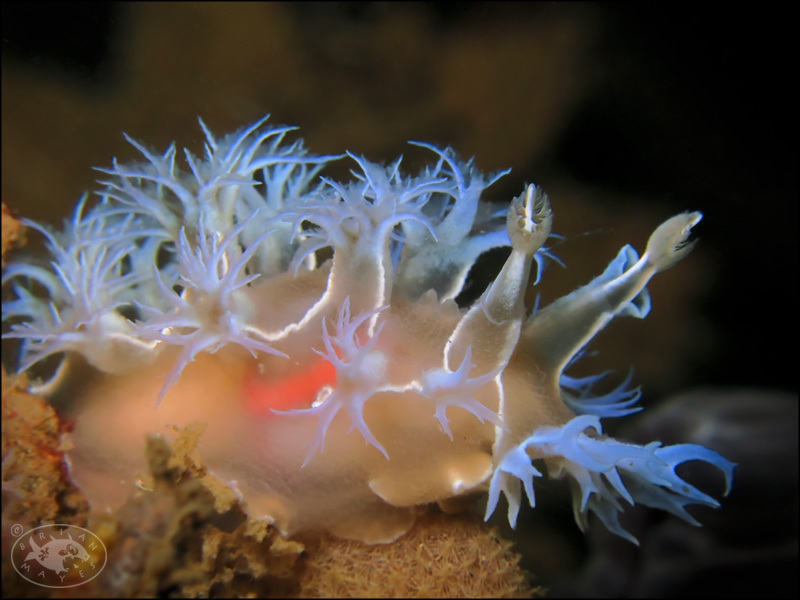
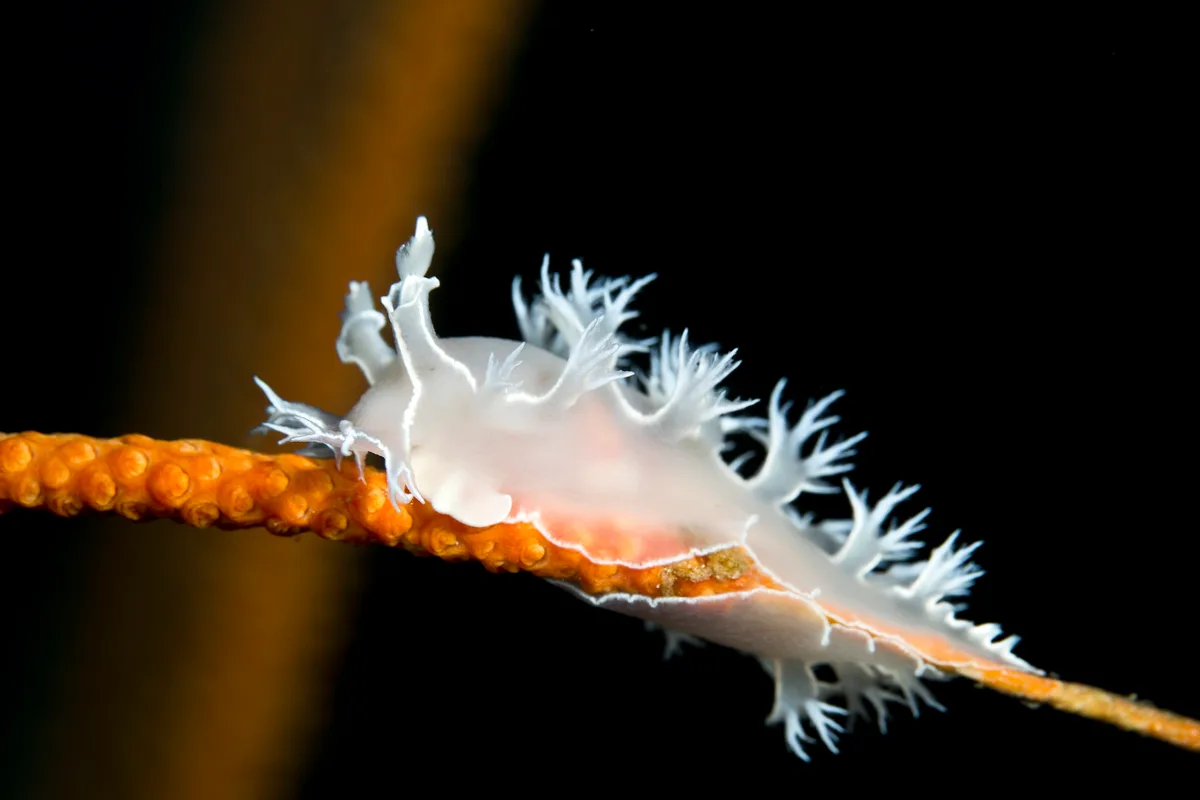
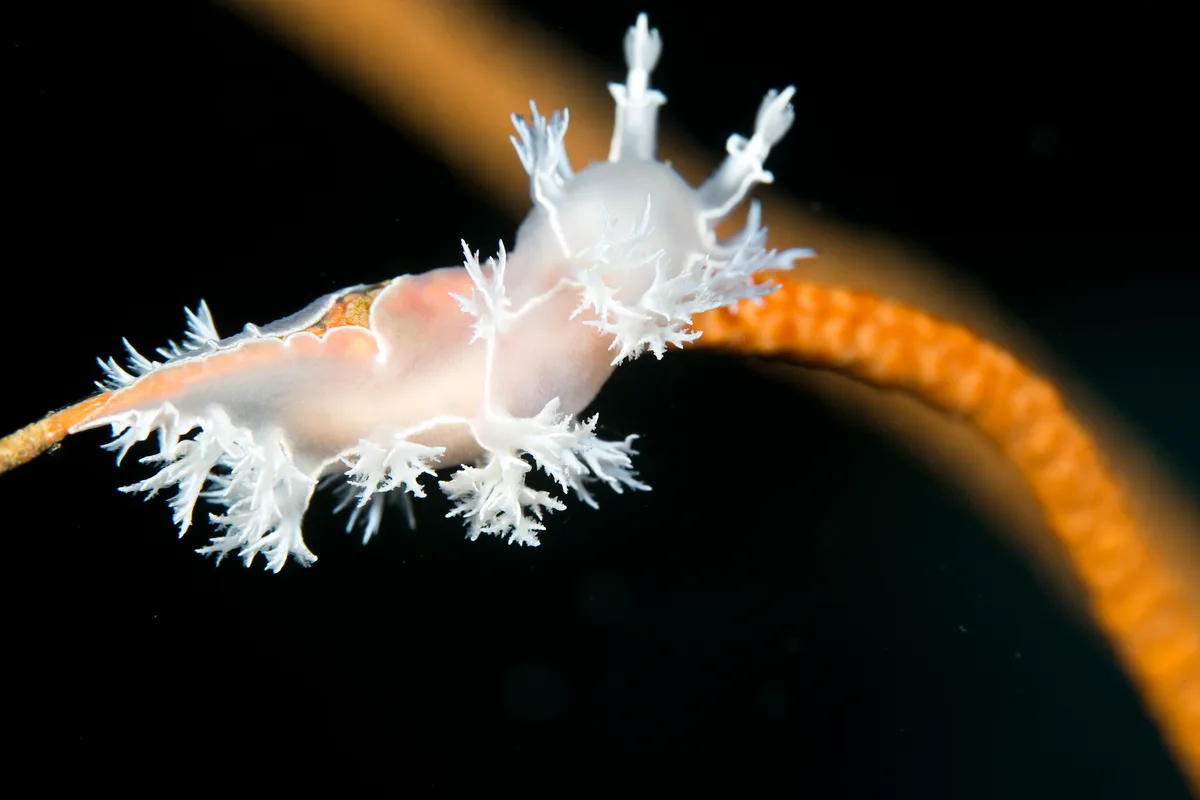
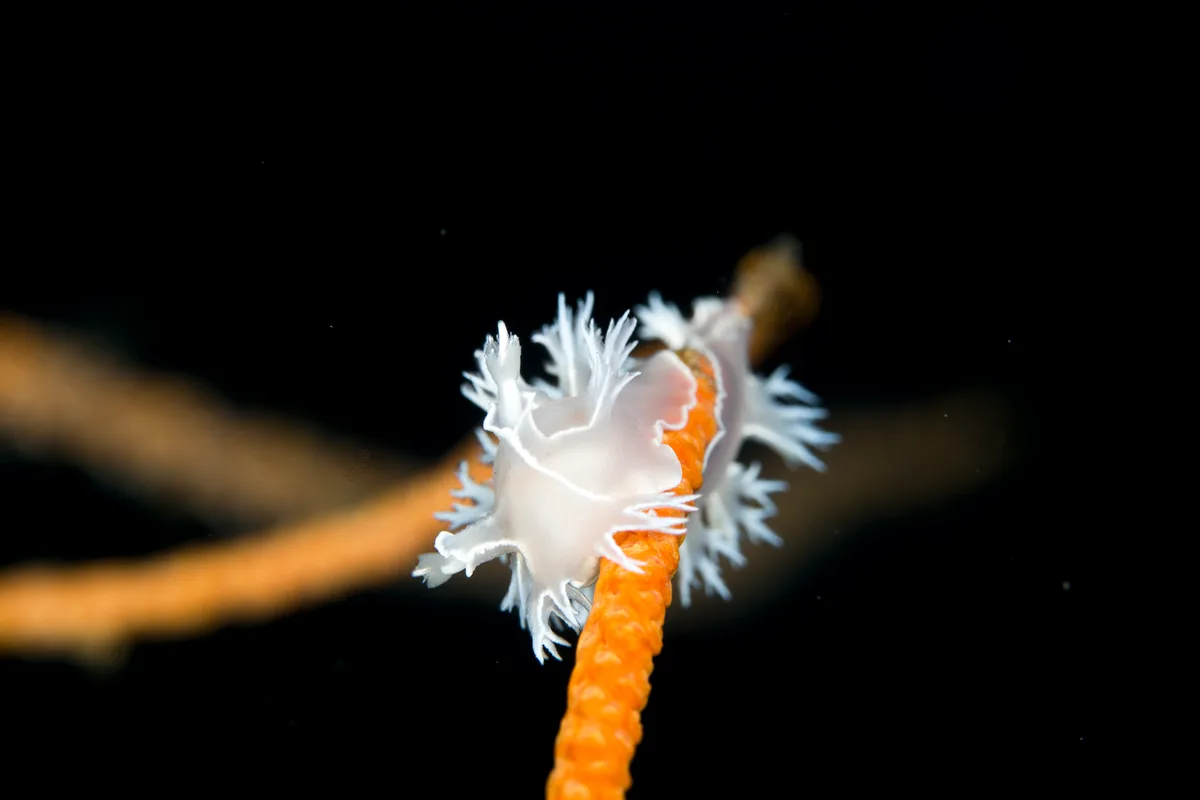
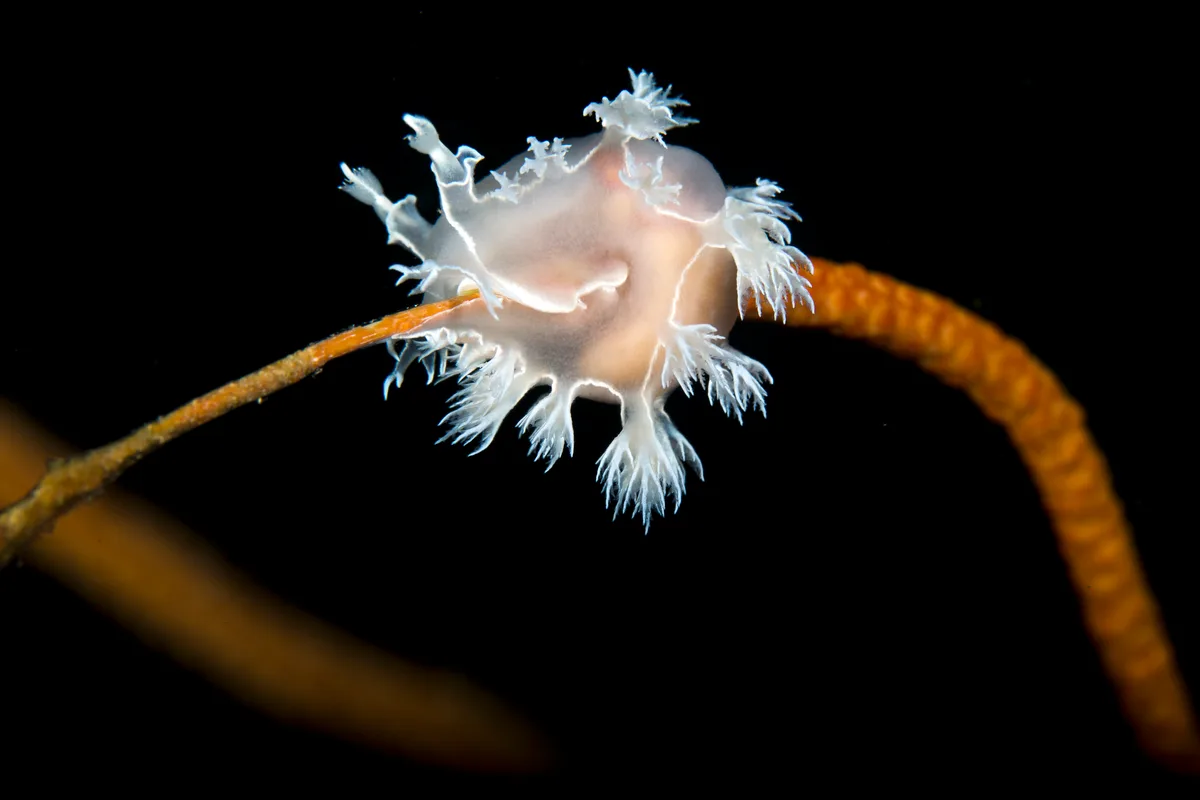
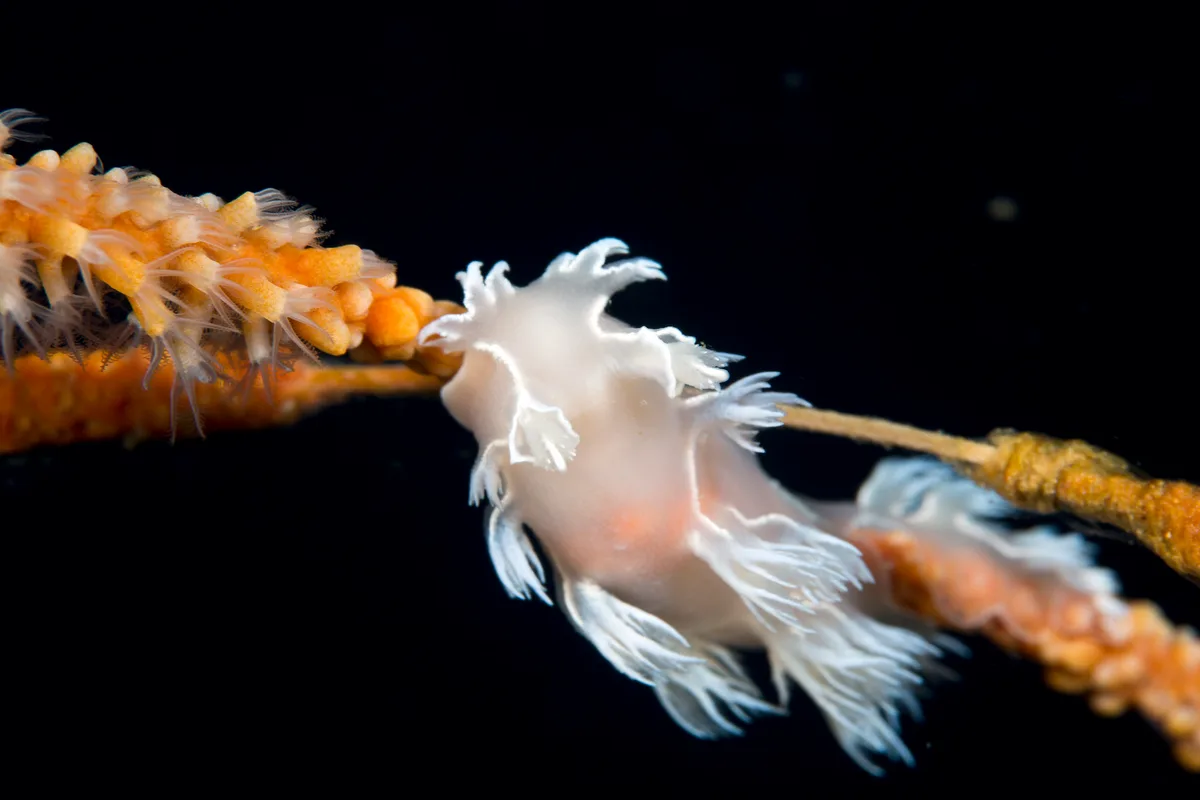
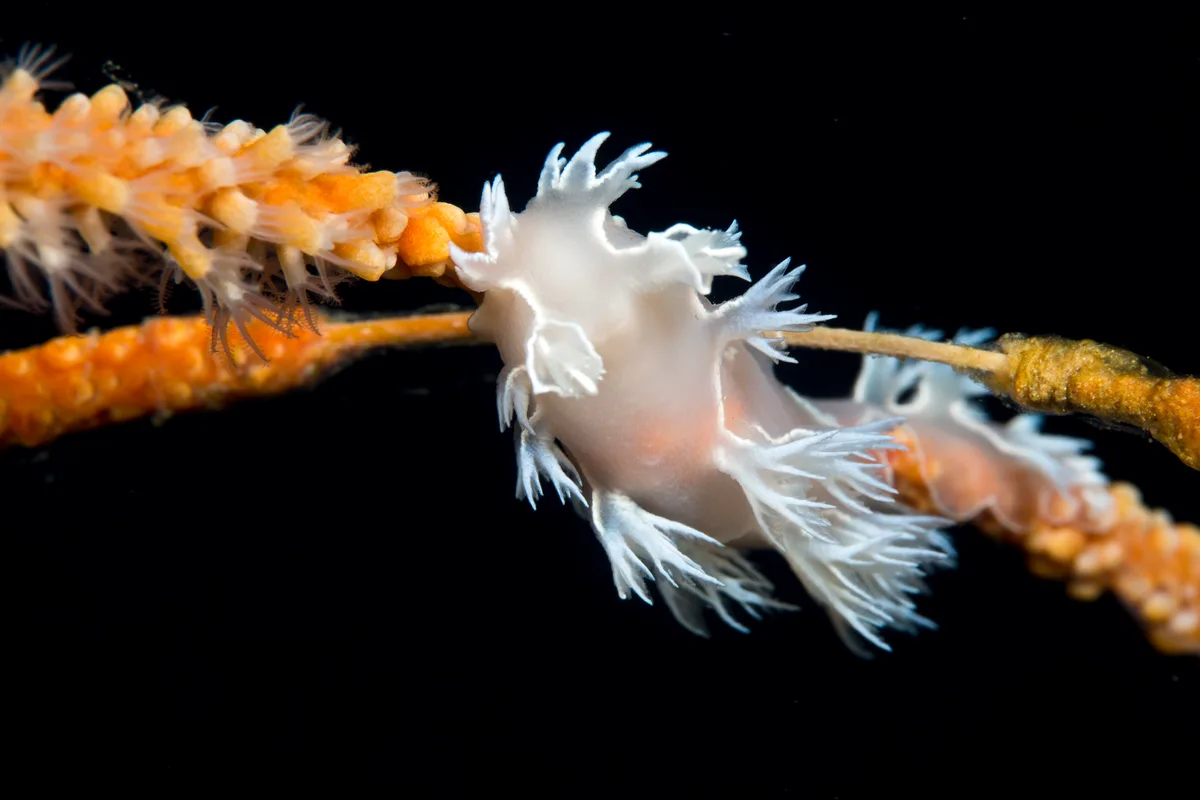
Count the gills. Tritoniids do not carry a plume on the back the way a dorid does; they carry a row of separate branched tufts running down each flank, and on this species that row is long and closely set, more tufts than its relatives on this reef manage. On a nine-centimeter (3.5 in) animal it gives the whole flank a fringed look, as though the sides of the slug were unravelling.
Breaking the breathing surface into a row rather than gathering it into one rosette has an obvious advantage. A dorid that loses its plume to a fish has lost all of it. This arrangement can lose several tufts and keep going.
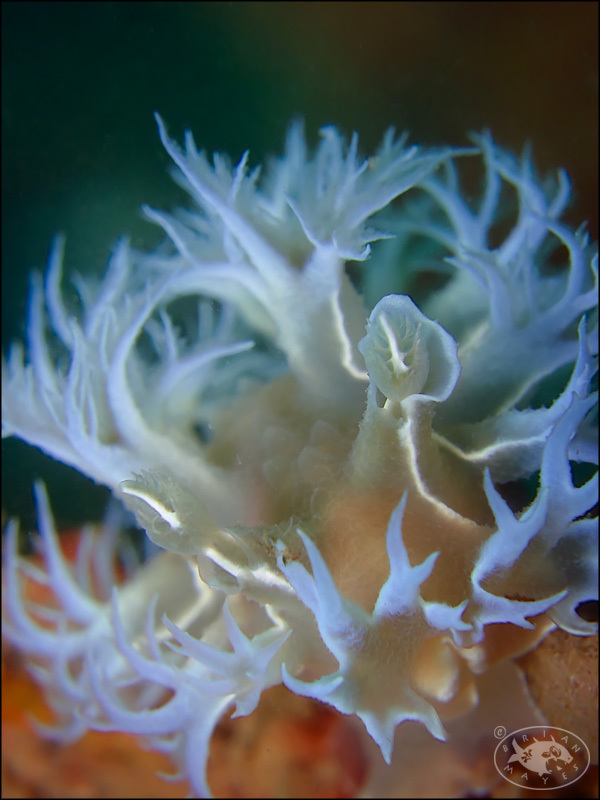
The front of the head carries the family's other signature, a veil divided into fine branches and covered in chemical sensors, used to feel out soft corals in the dark. It looks exactly like a piece of the thing it is hunting for, which is a convenient accident.
It grazes soft corals through the night, polyp by polyp, and spends daylight pushed into a crevice or under an overhang. Almost every record comes from a night dive.
The name honors Robert Bolland, an American who spent decades diving the same stretch of Okinawan coast at night, documenting sea slugs nobody else was looking at, and turning up species that turned out to be new. A large share of the animals in this section were first noticed by people doing exactly that.
- an unusually long row of gill tufts down each side, more than its relatives carry
- a branched veil across the front of the head
- large and heavy-bodied, approaching nine centimeters
- on soft coral after dark, not on the reef surface