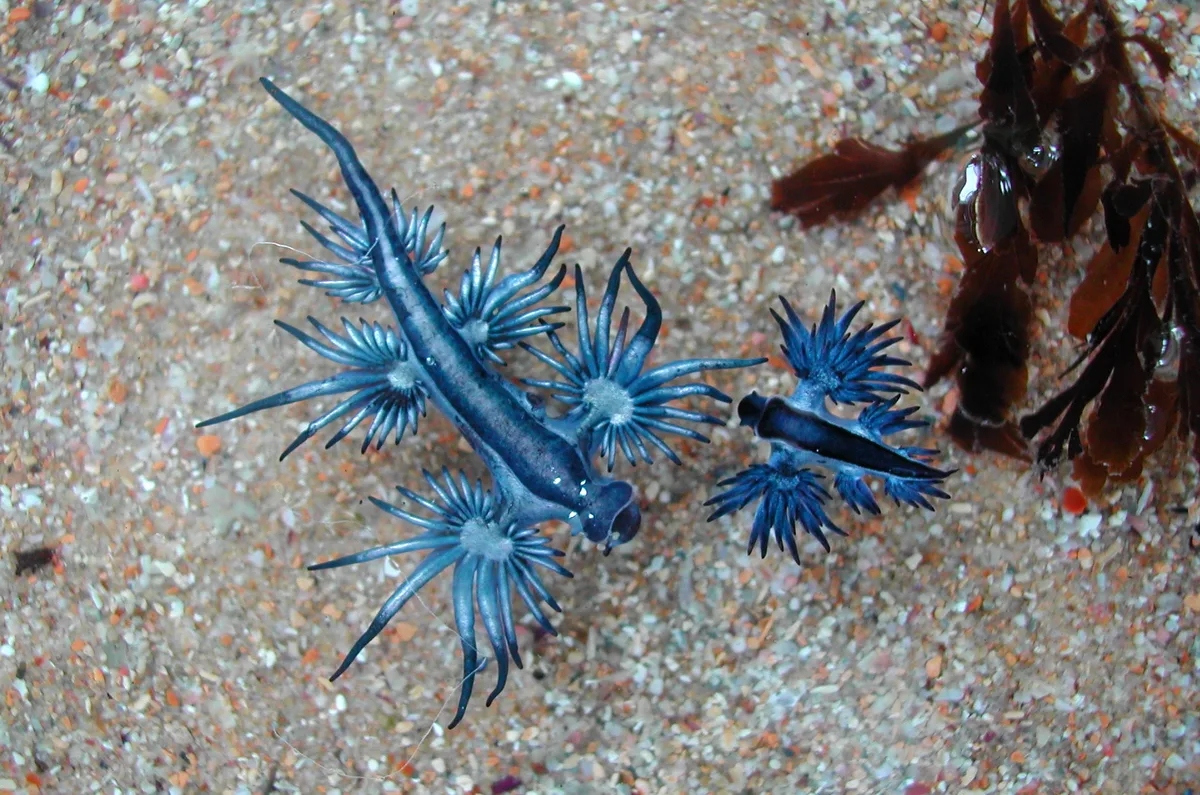
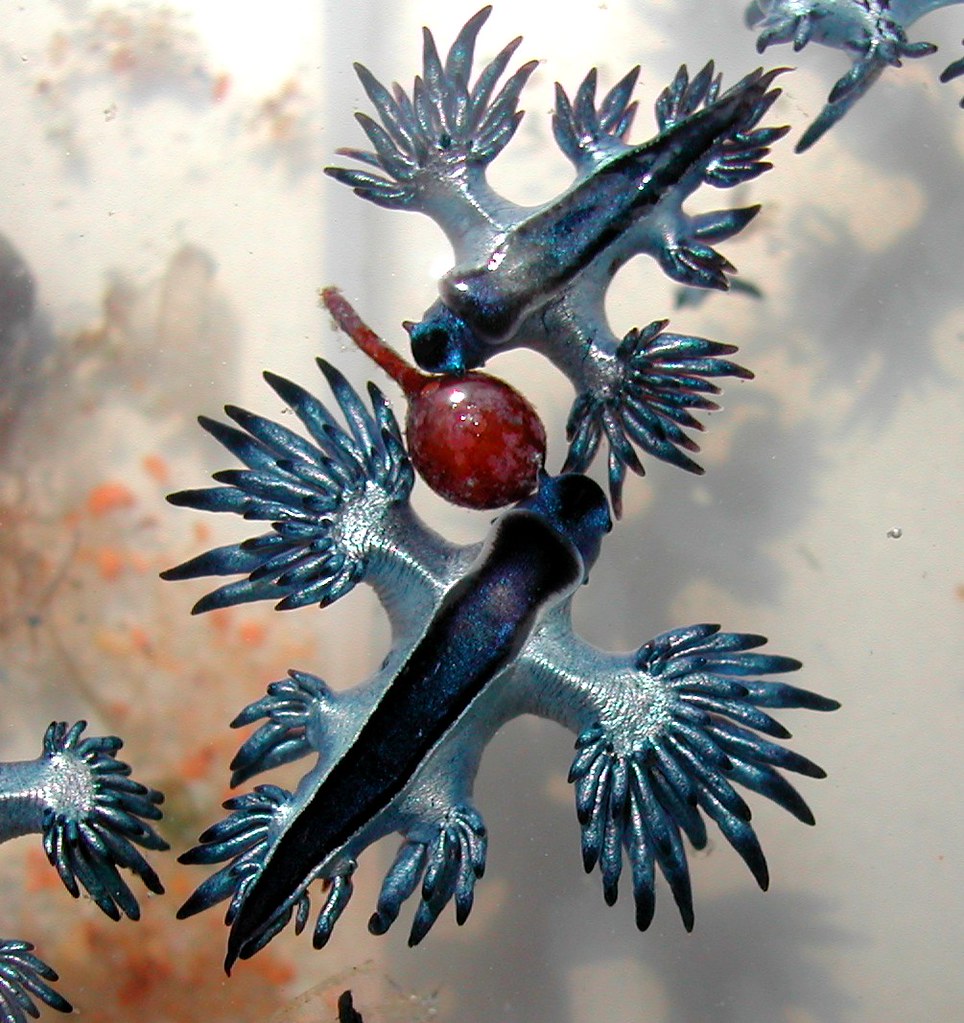
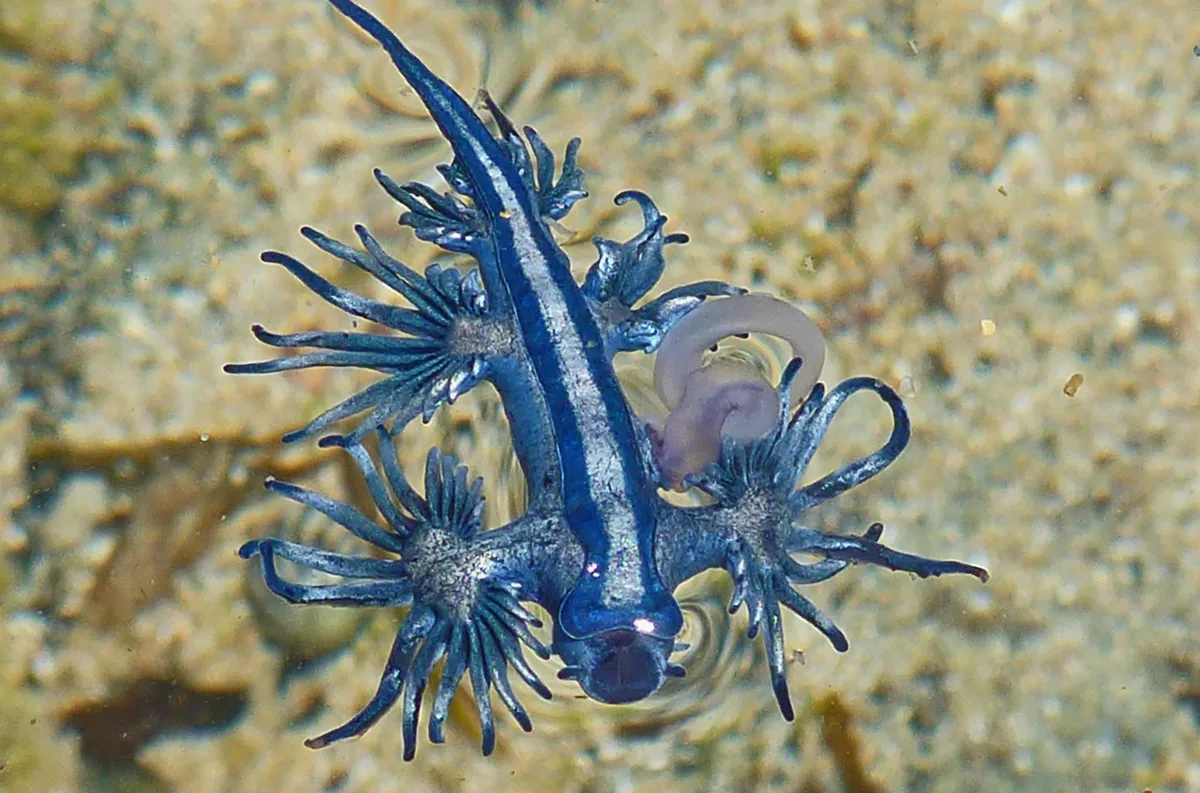
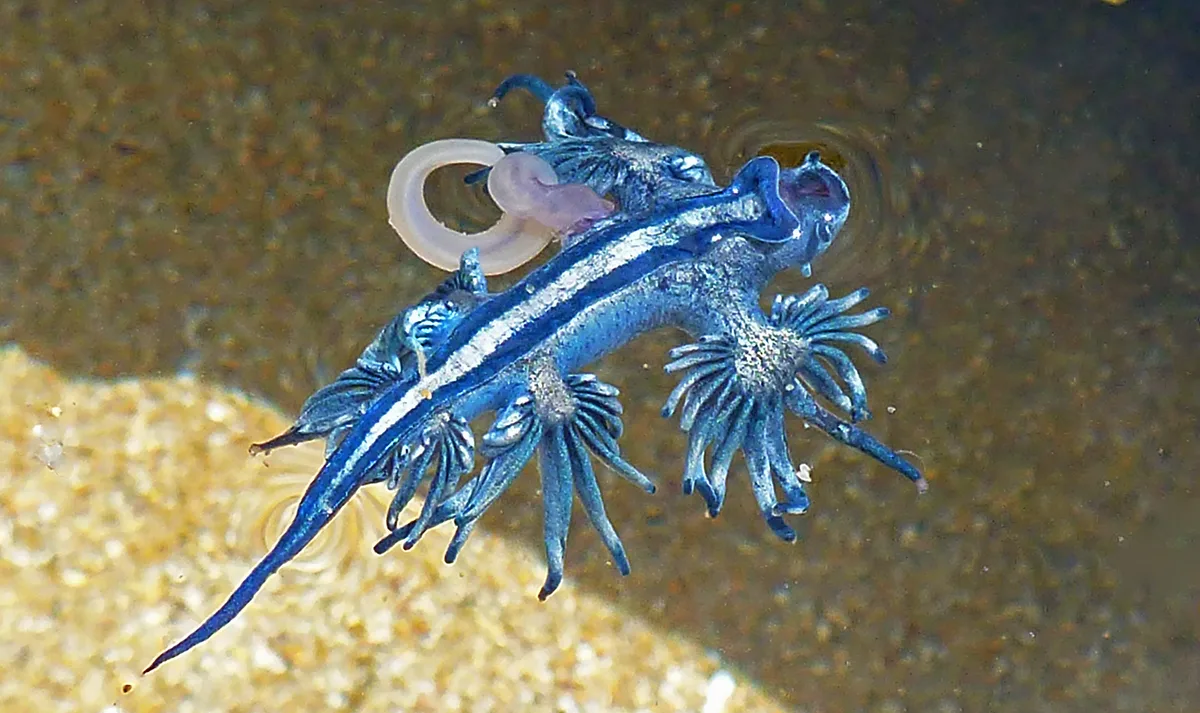
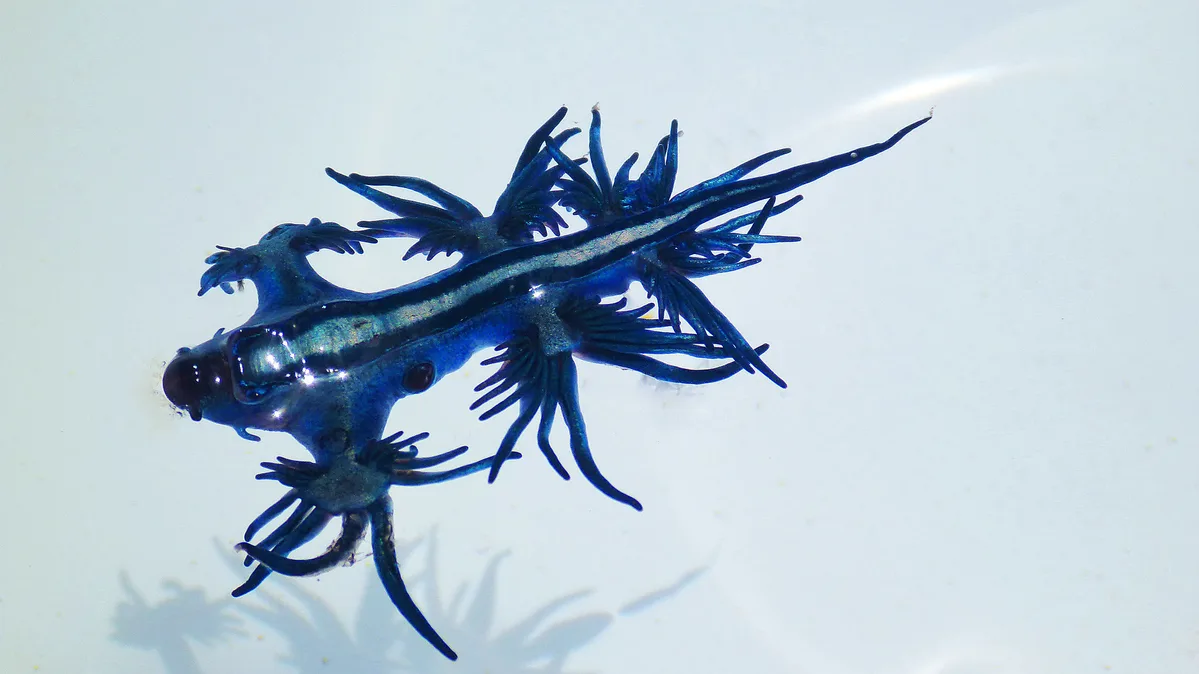
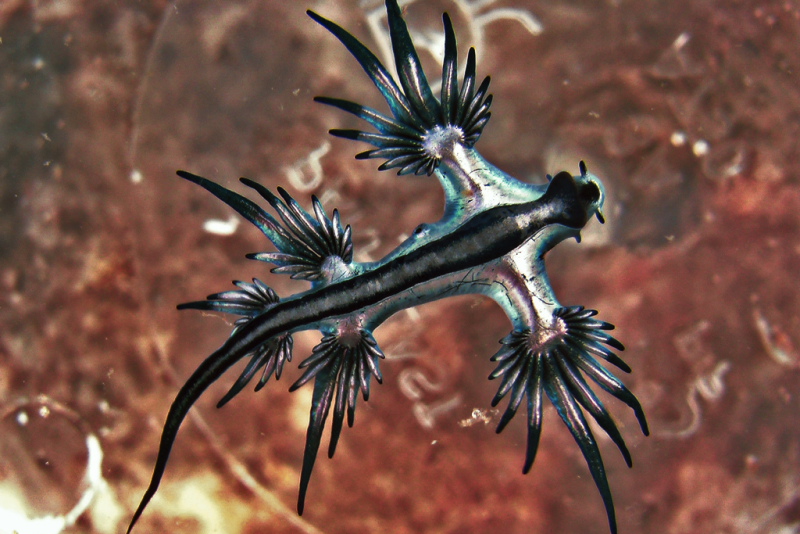
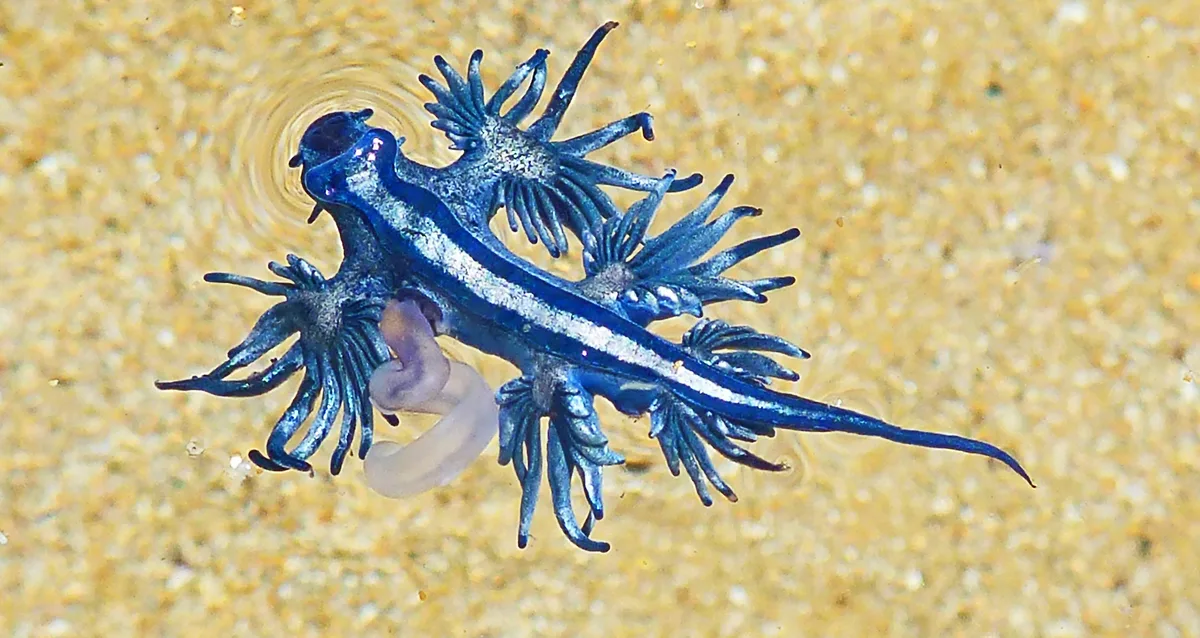
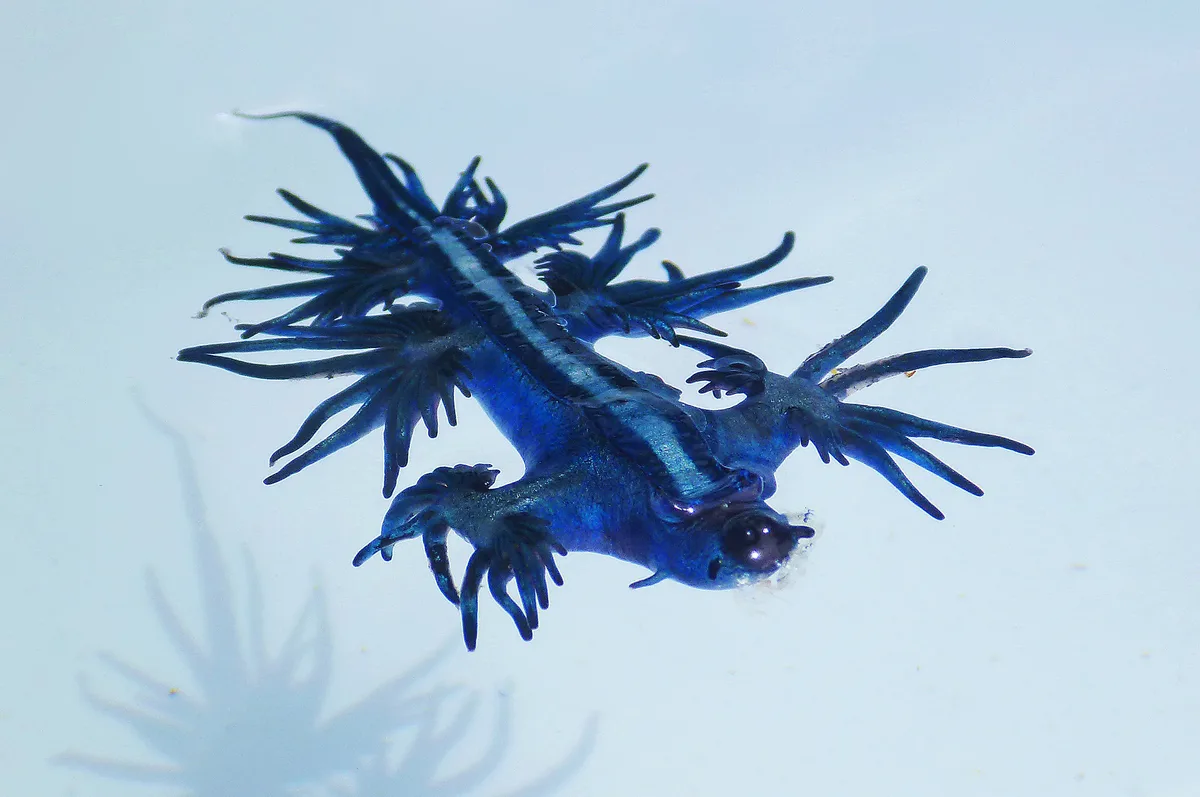
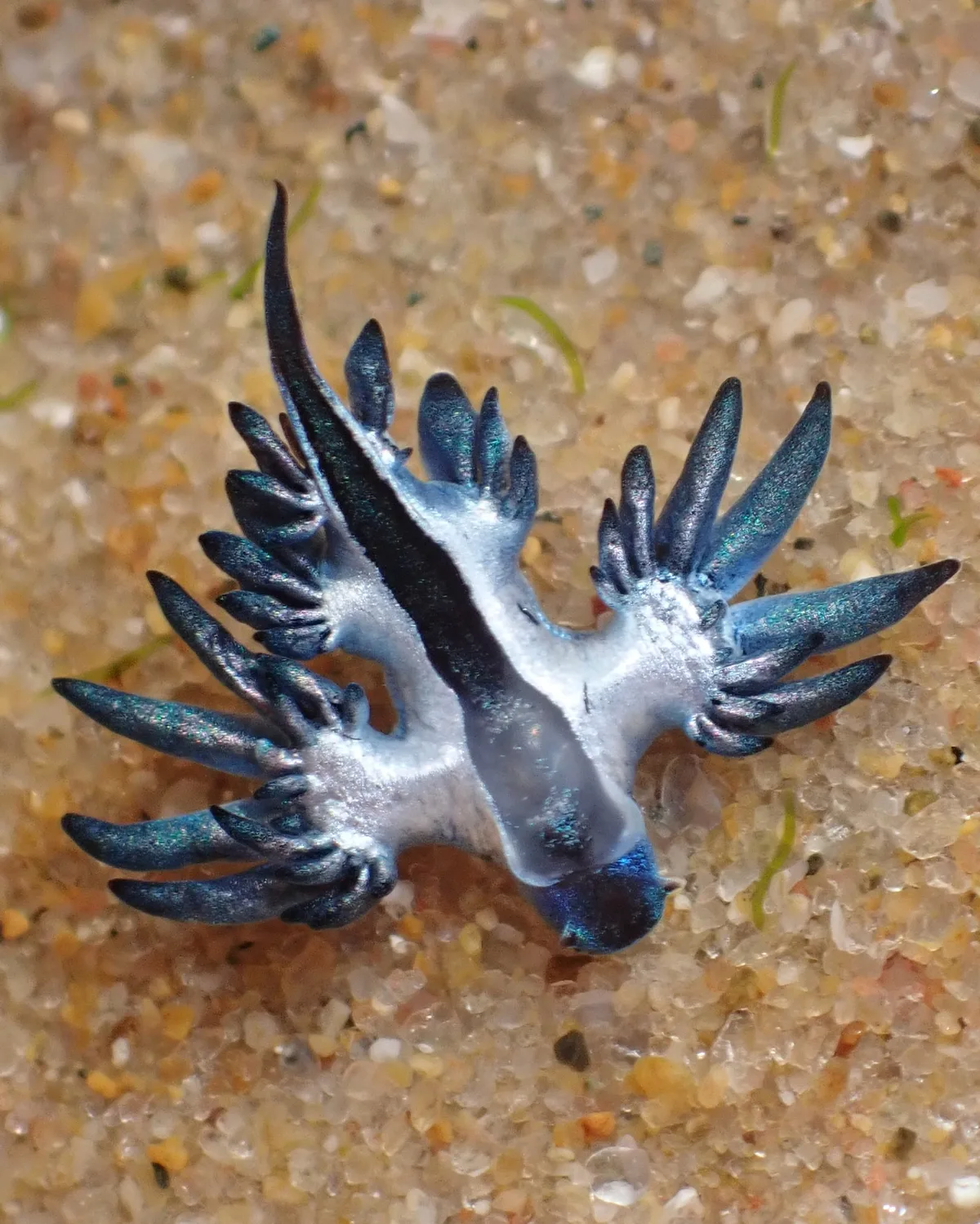
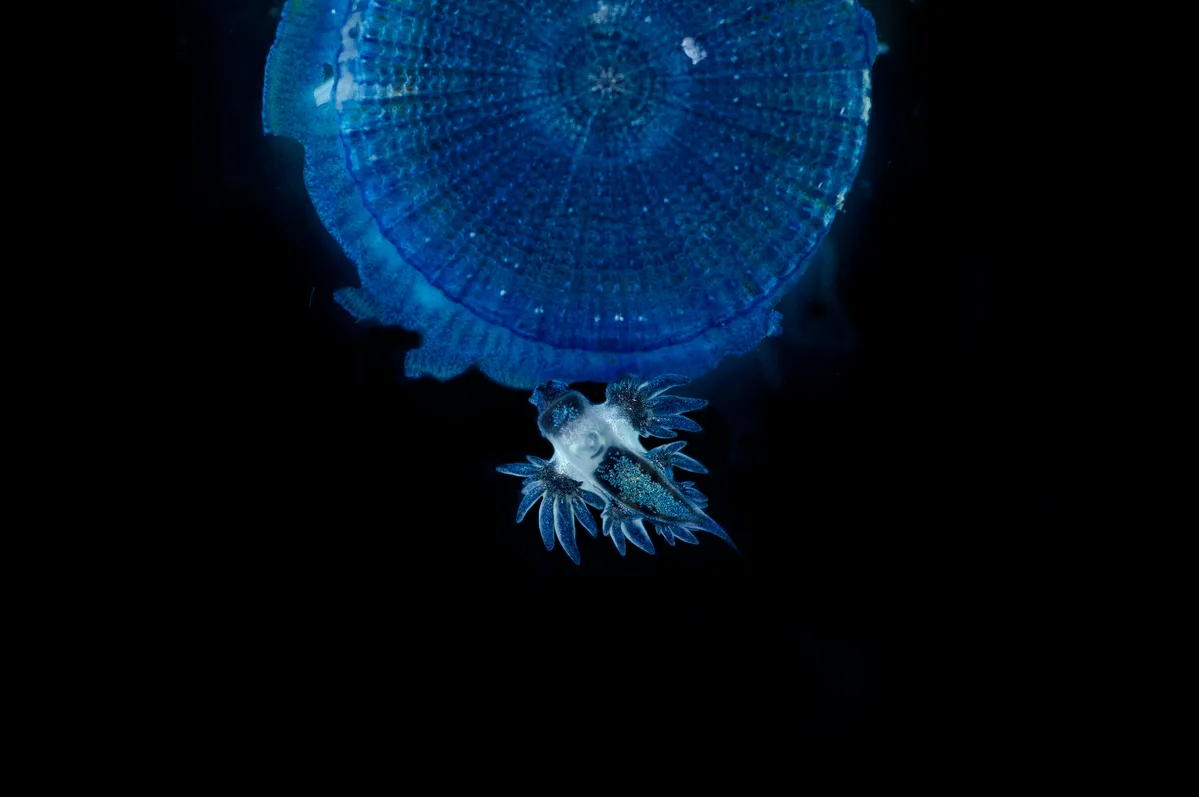
This one is not on the reef and never will be. It lives in the top few centimeters of the open ocean, upside down, hanging from the underside of the water surface, and it gets around by letting the wind push it.
It stays up there by swallowing air. A bubble held in a pouch of the stomach makes the animal buoyant, the foot spreads against the surface film from below, and the whole two-centimeter (0.8 in) animal drifts at the mercy of the weather with a community of other blue drifters: by-the-wind sailors, blue buttons, and the Portuguese man o' war. Those are also its food.
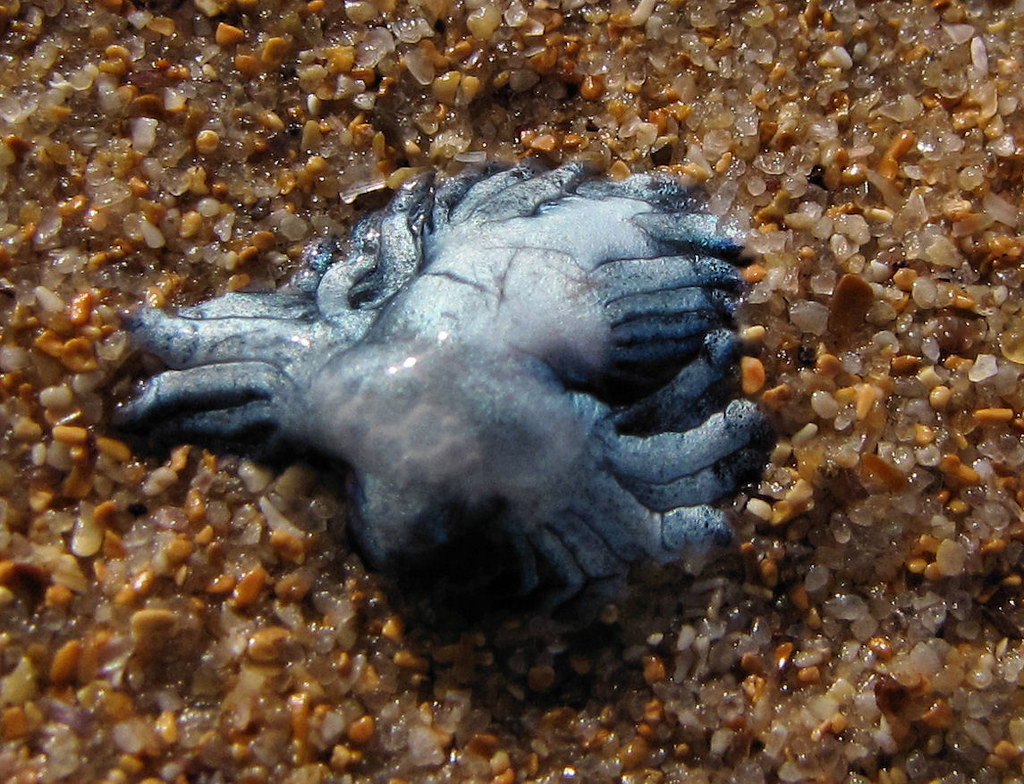
Eating a man o' war means eating one of the most heavily armed animals in the sea, and this slug does it without setting the weapons off. The stinging cells pass through the gut unfired, and the slug sorts them: the largest and most powerful types are selected out and stacked into the tips of the cerata on its back. The result is that a two-centimeter slug carries a concentrated version of the sting of an animal many times its size. People are stung by these on beaches, from bodies washed up and apparently dead, which is worth knowing before picking up something small and beautiful in the wrack line.
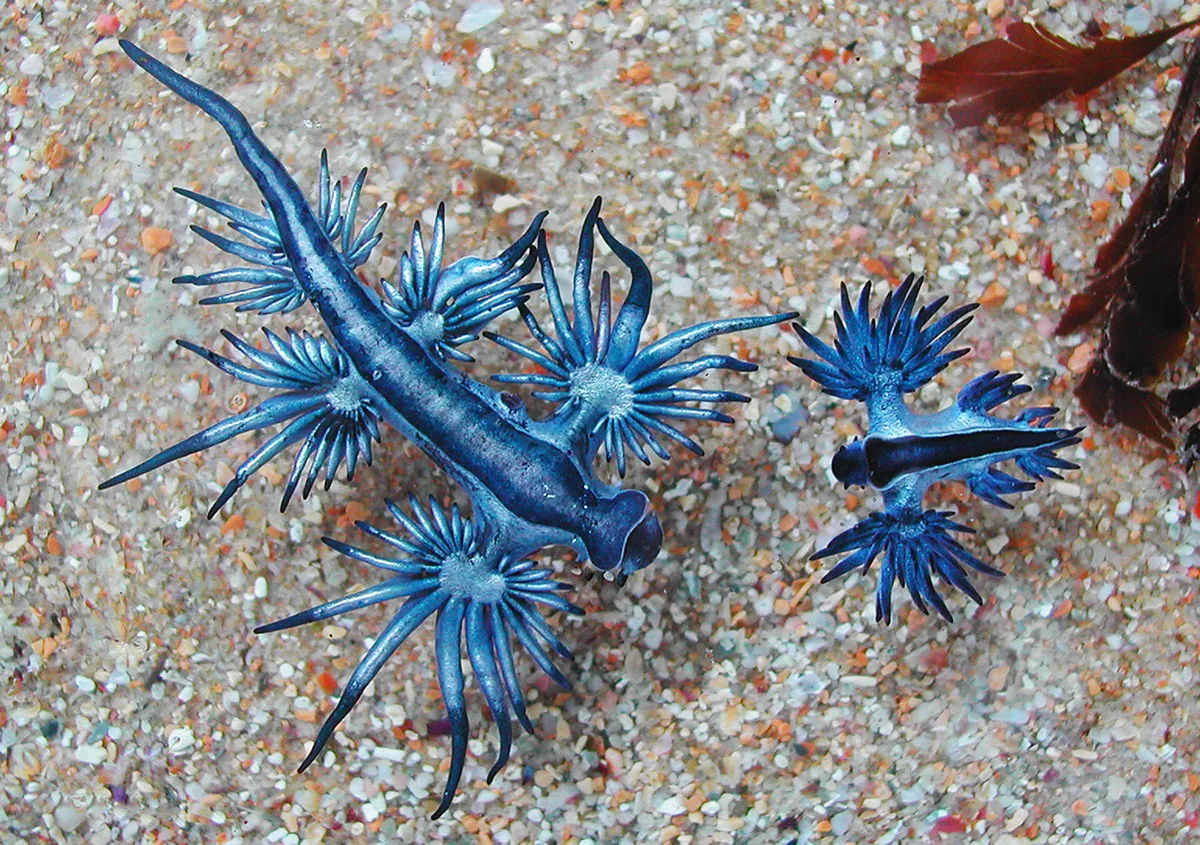
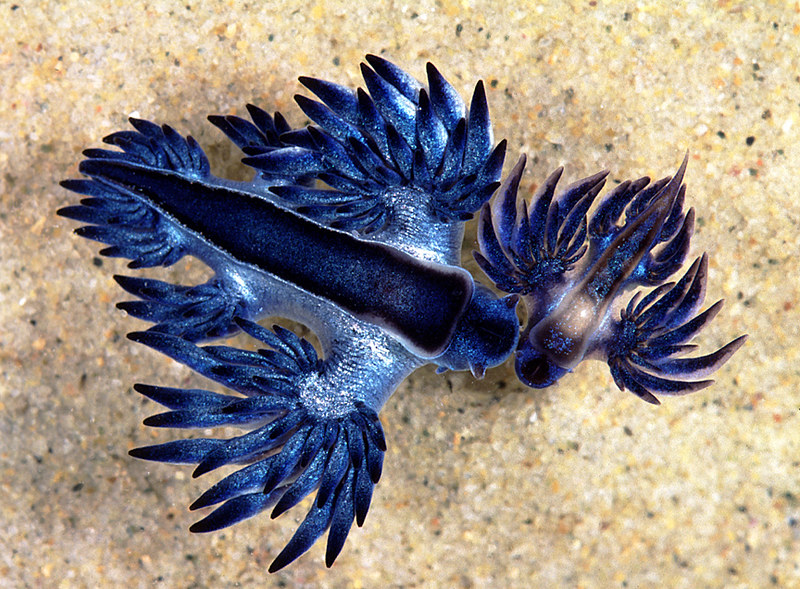
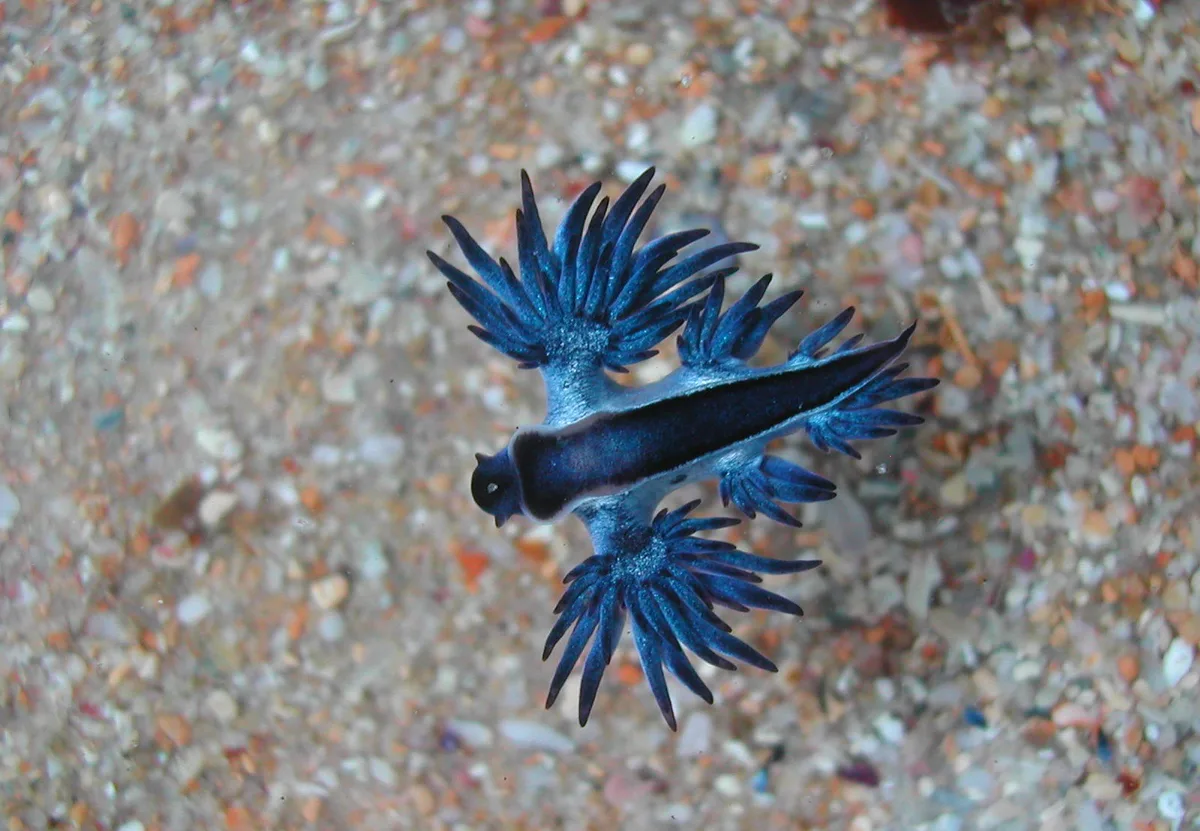
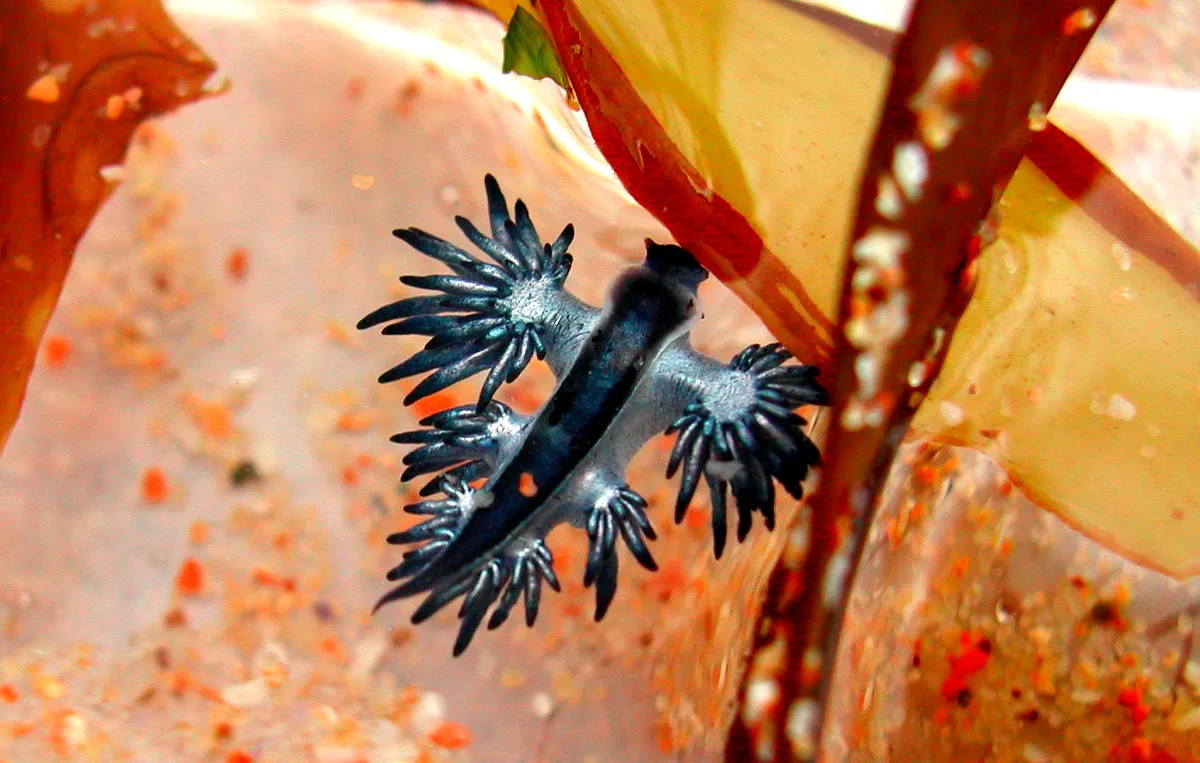
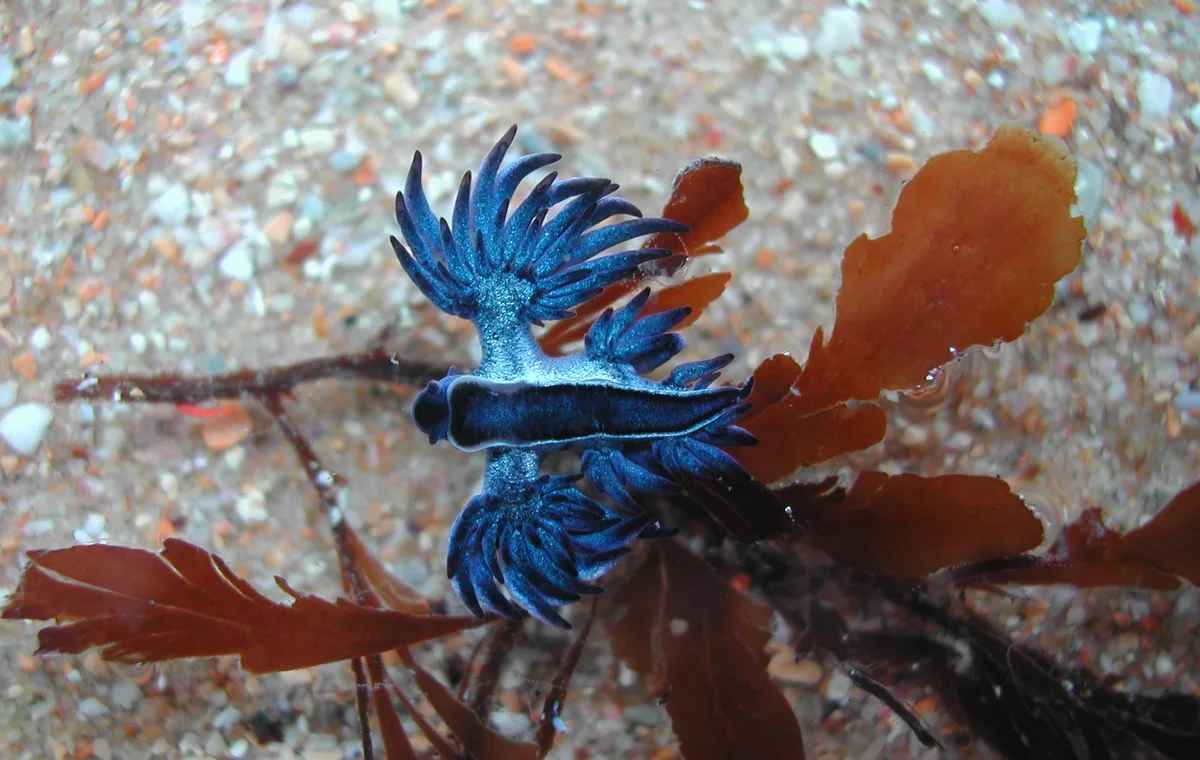
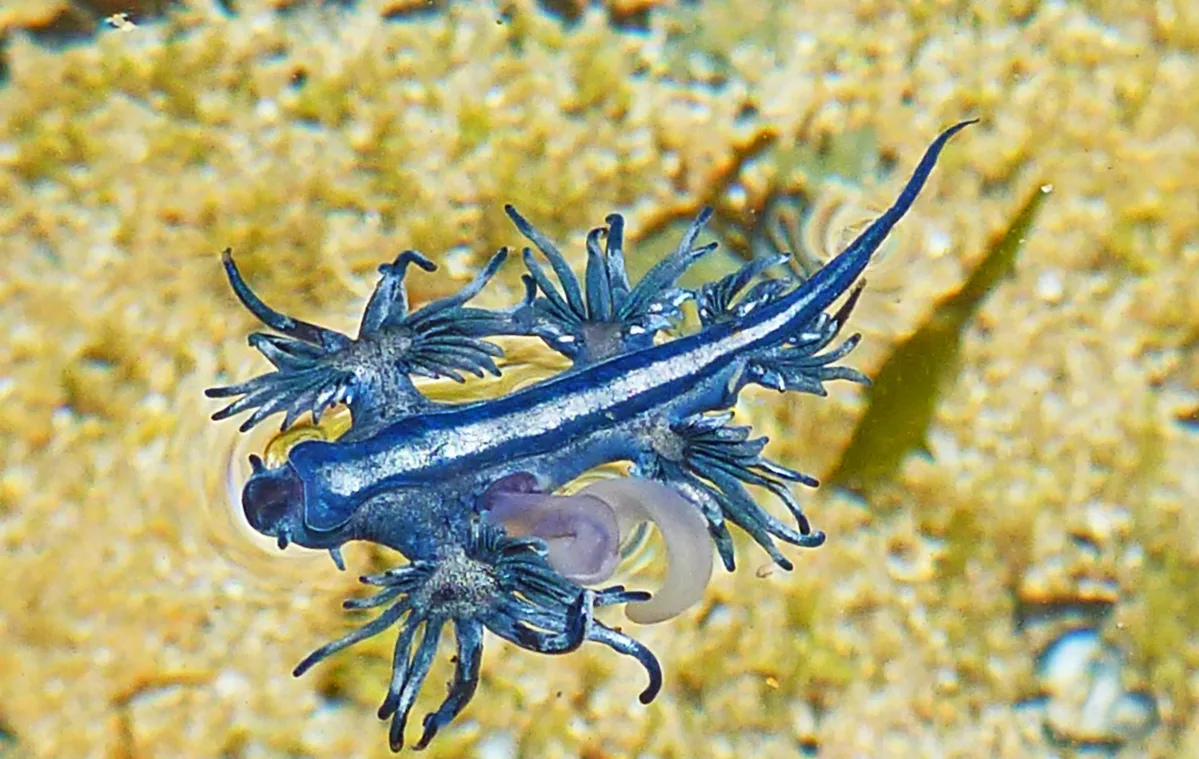
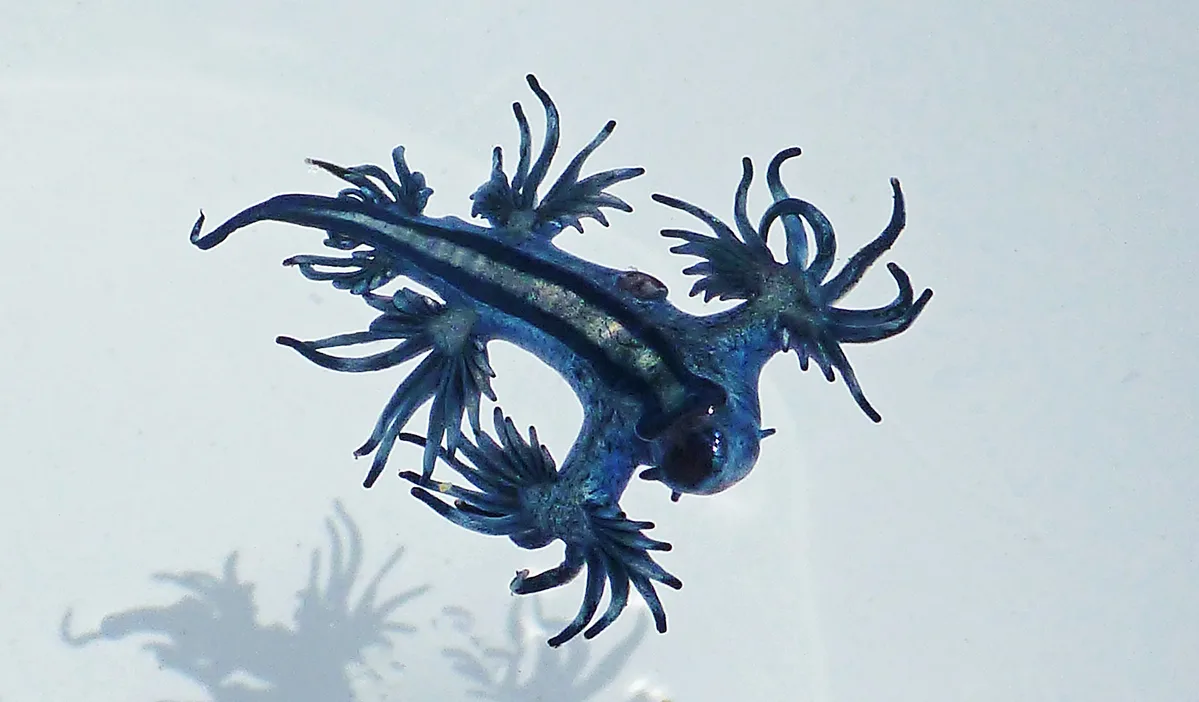
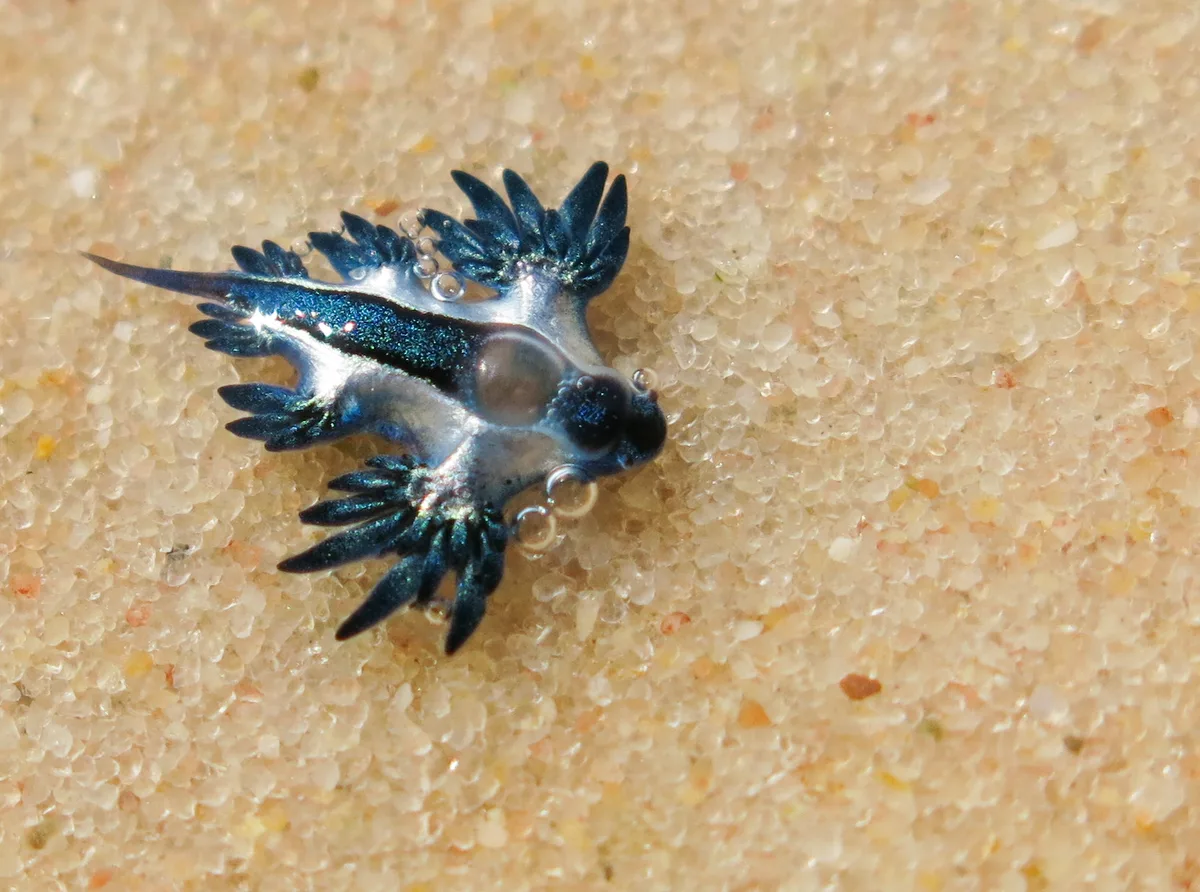
The coloring is a two-sided solution to living at the surface. The upper side, which faces down into the water, is silver-white and vanishes against the glare above. The lower side, which faces the sky, is deep blue and vanishes against the sea. Seen from below, nothing; seen from above, nothing. A bird and a fish are equally out of luck.
In this sea it is a chance encounter on a blue-water safety stop or after a hard onshore blow, when a whole drifting fleet can be pushed against a coast at once.
- silver-white underside and deep blue upper side, and it floats with the blue side down
- cerata arranged in several fan-shaped clusters on each side
- never on the reef: only at the surface in blue water, or washed up on a beach
- two centimeters, and stinging out of all proportion to that