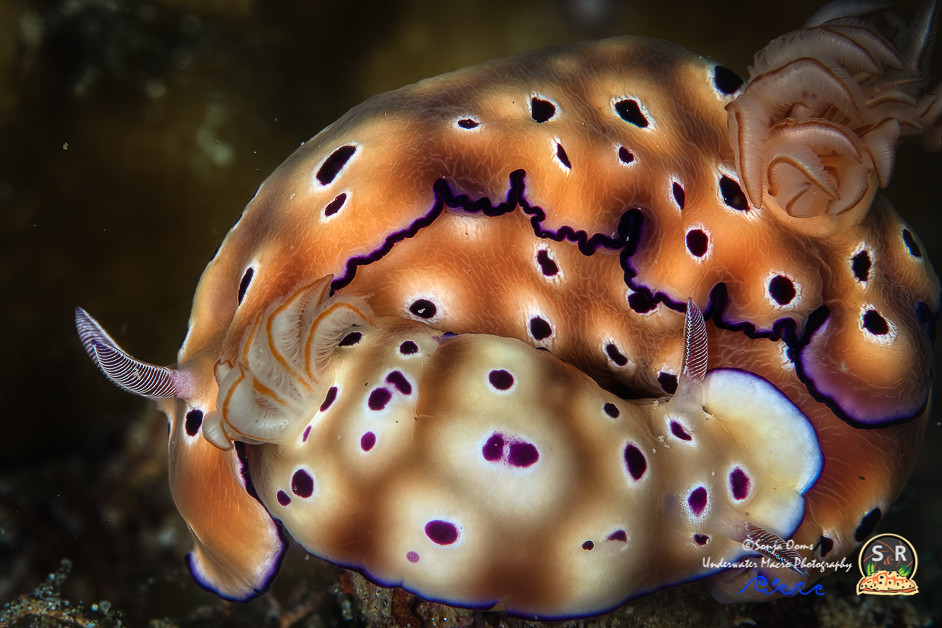
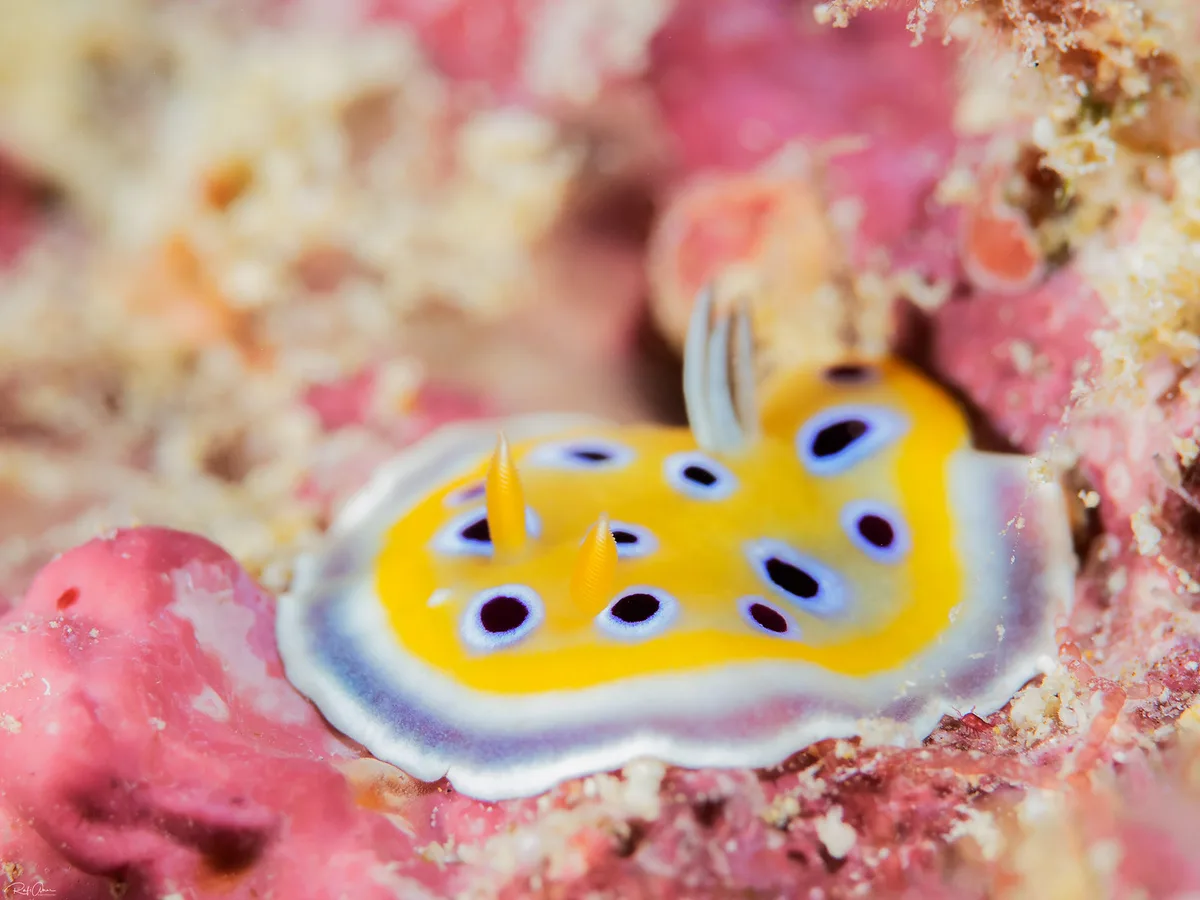
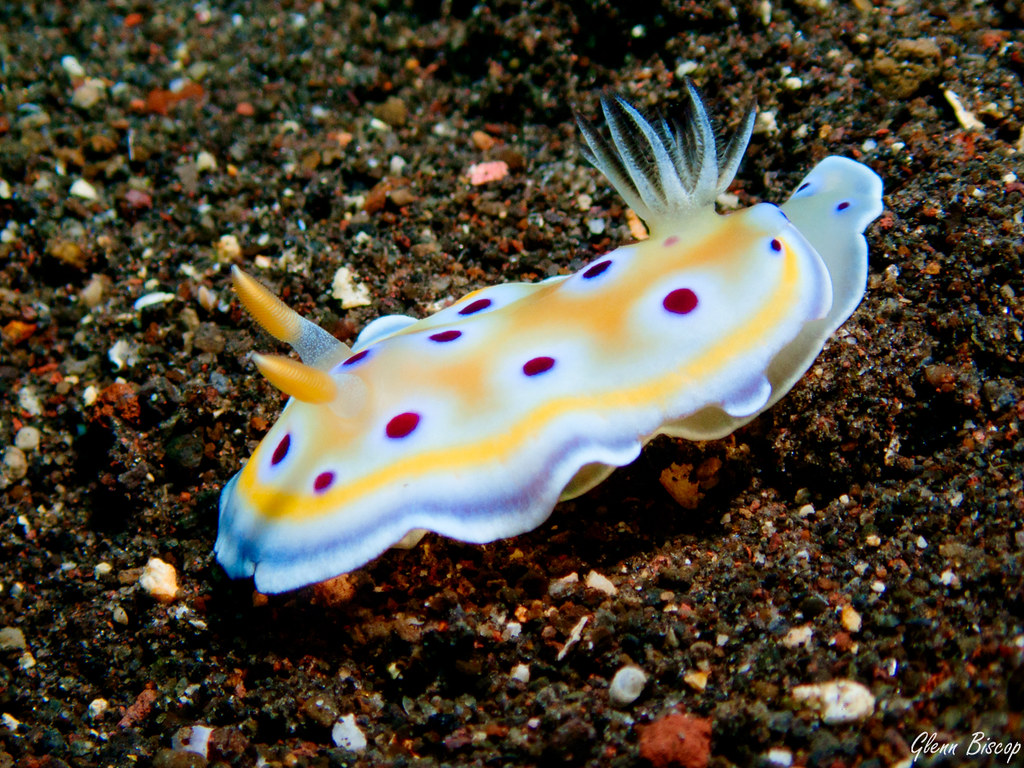
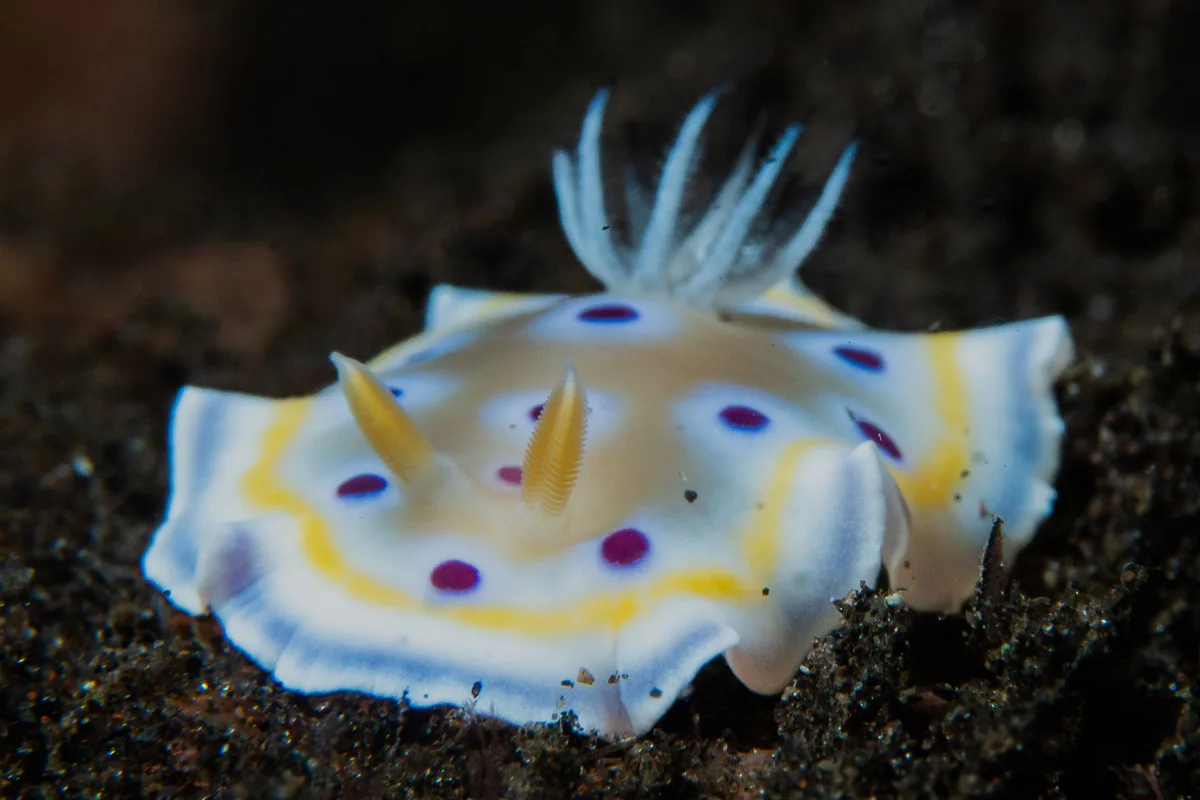
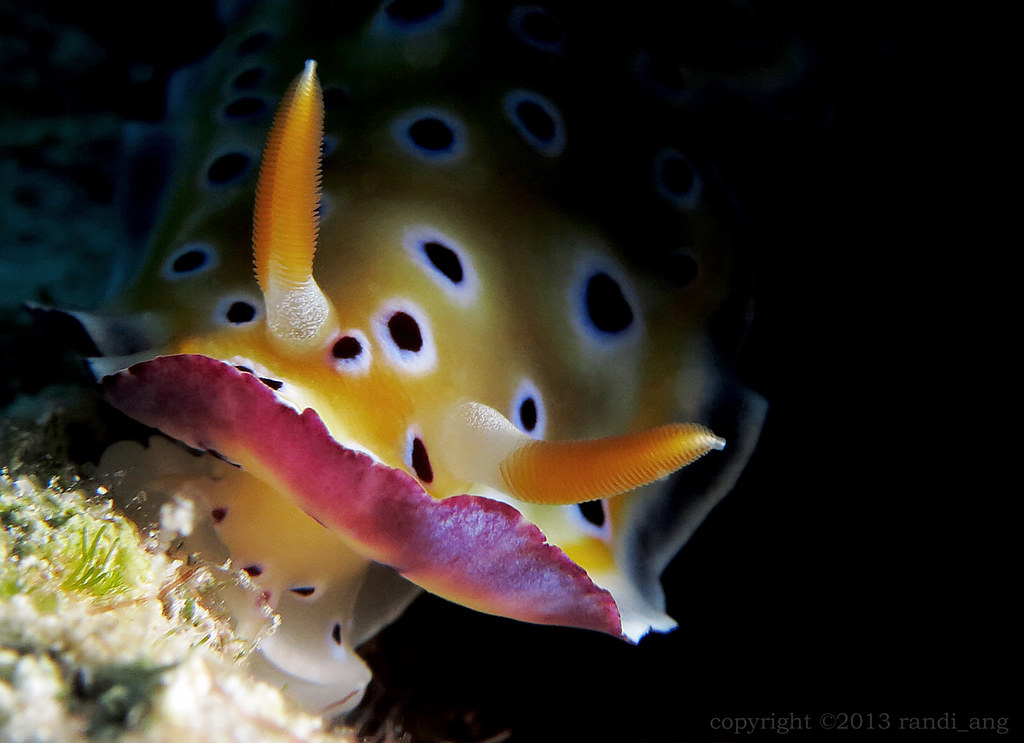
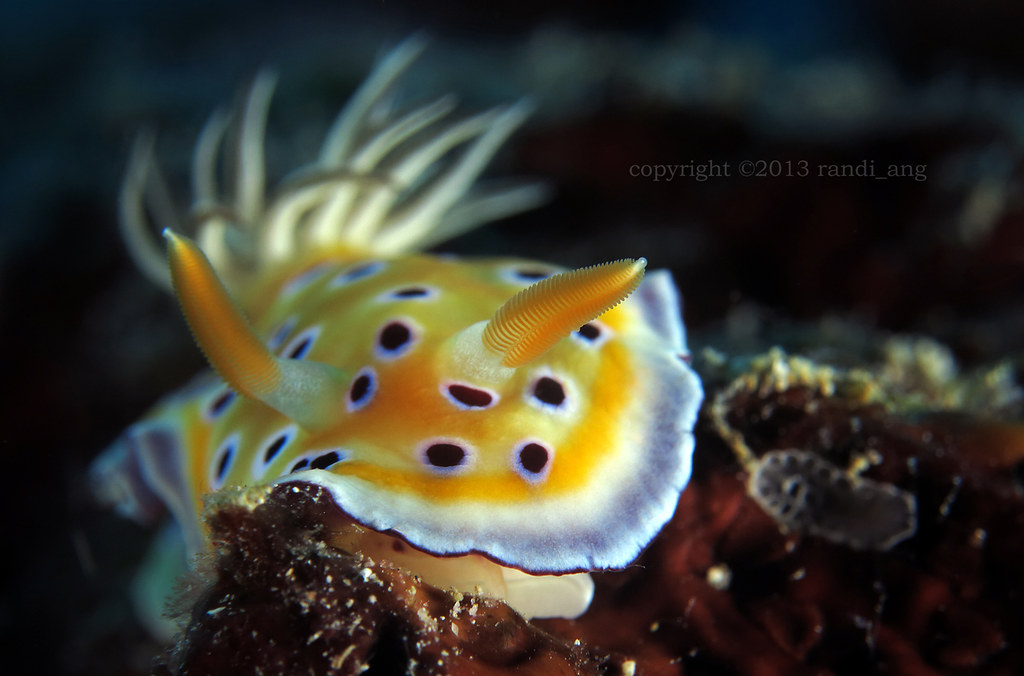
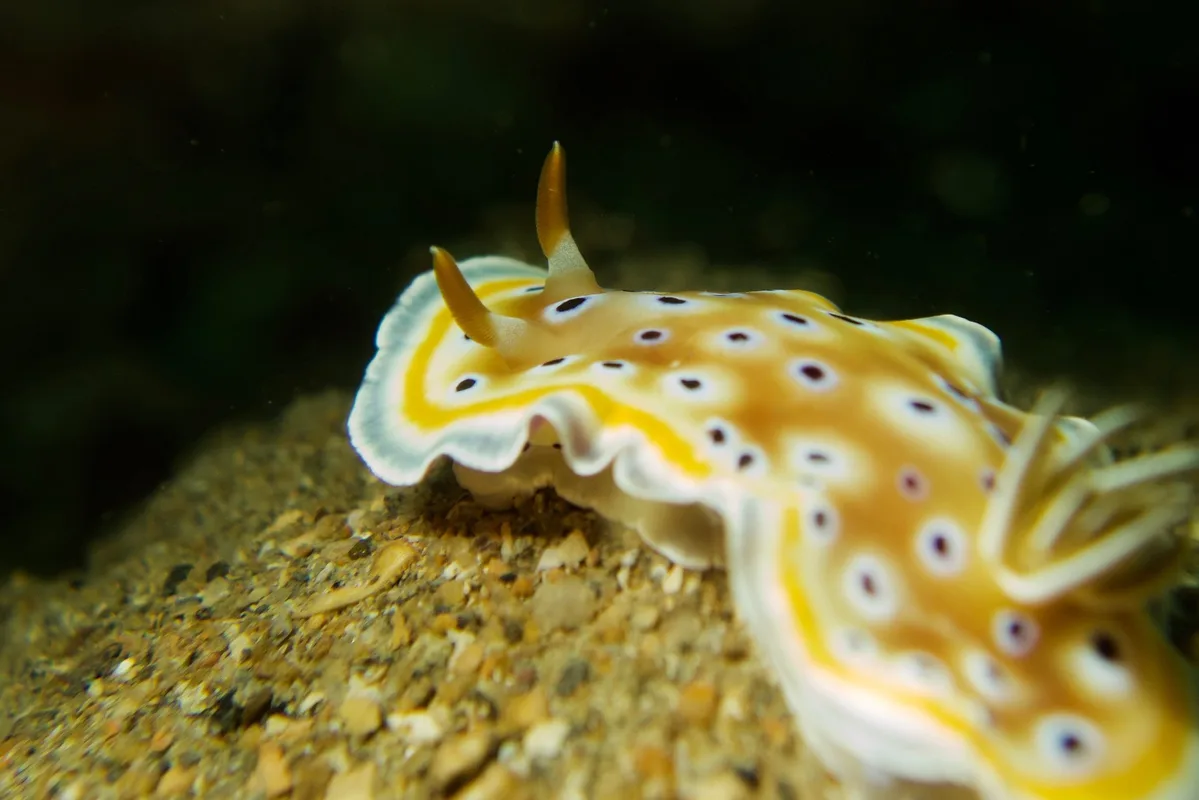
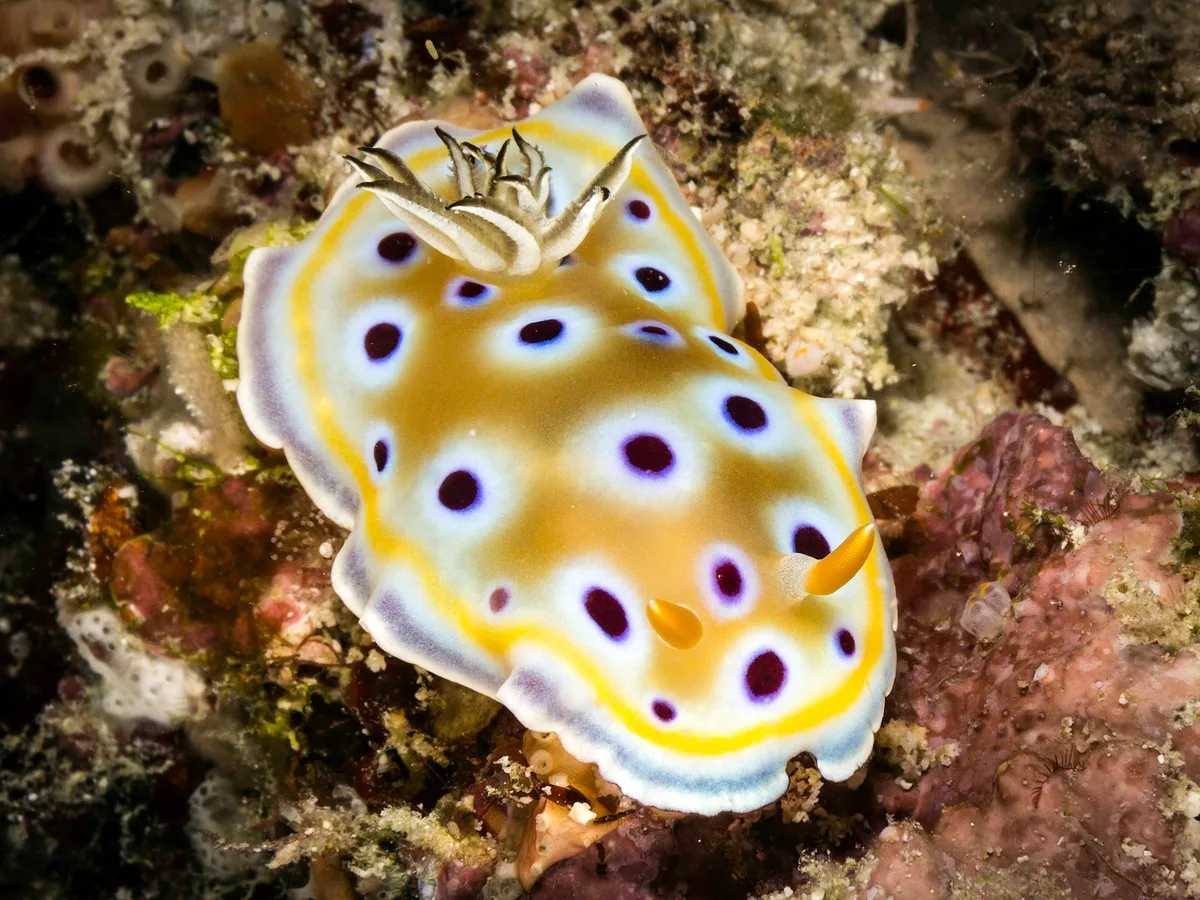
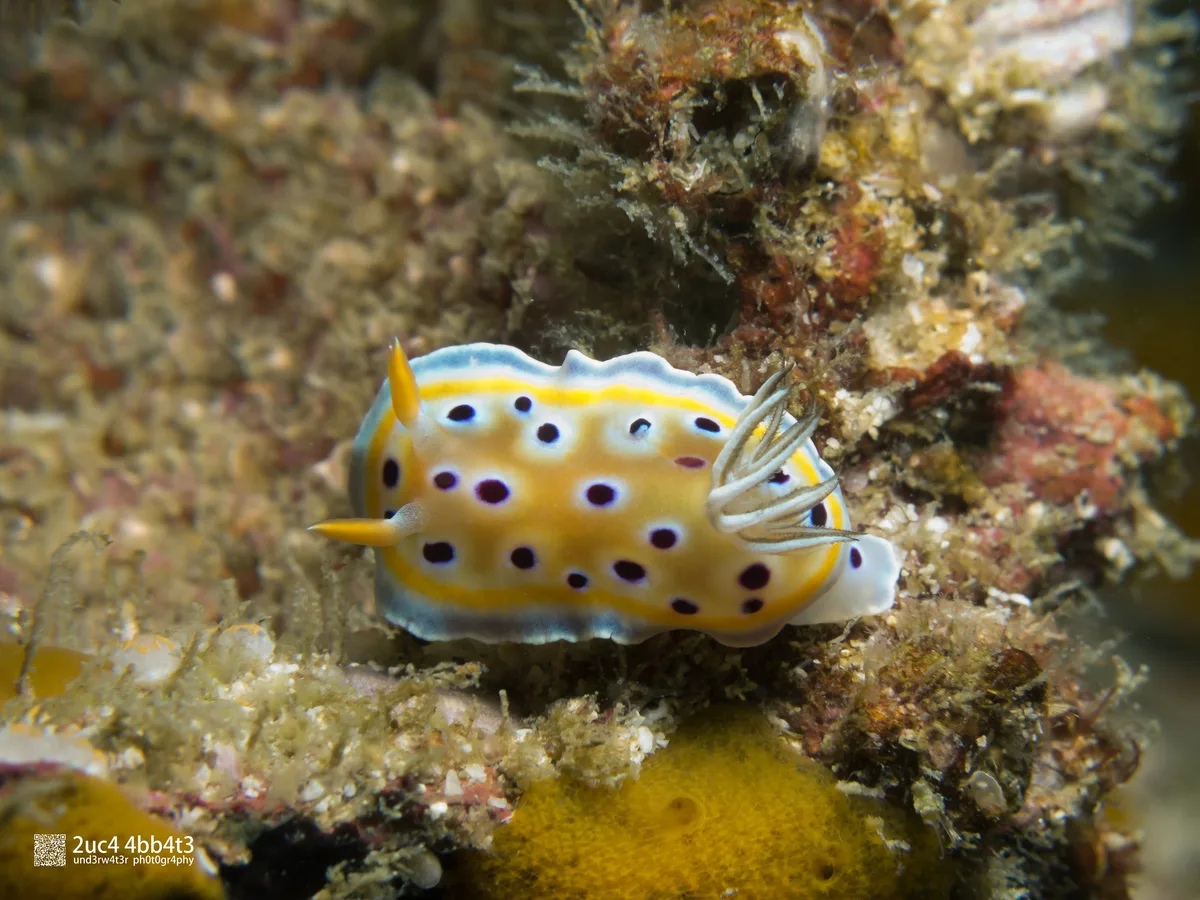
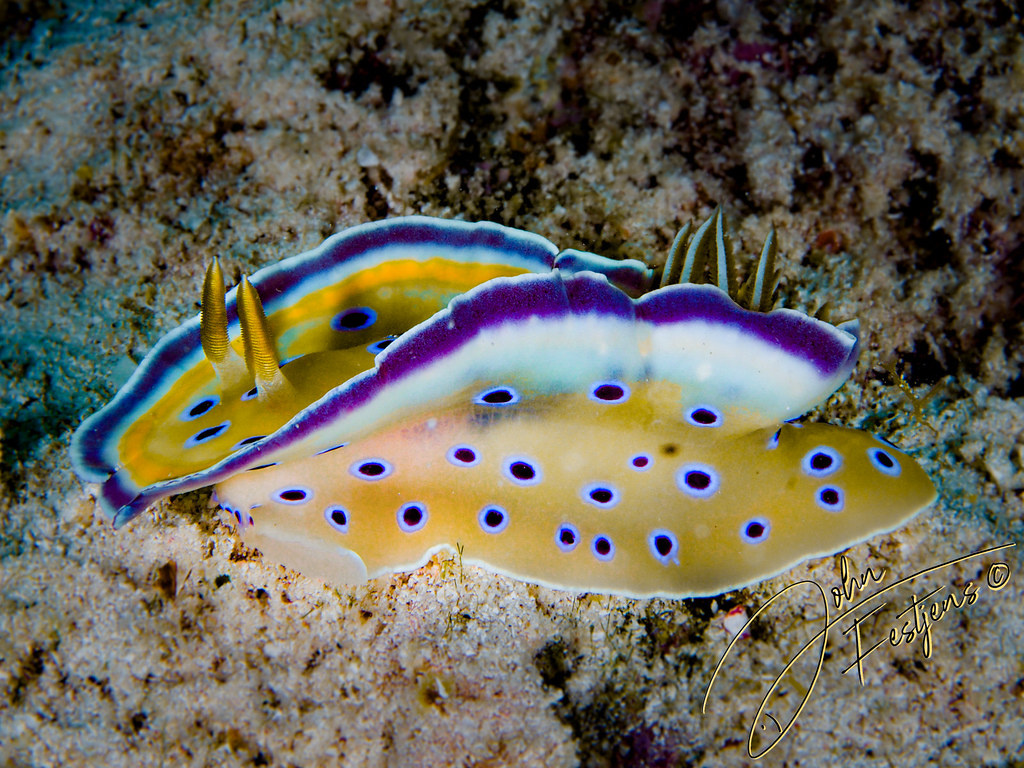
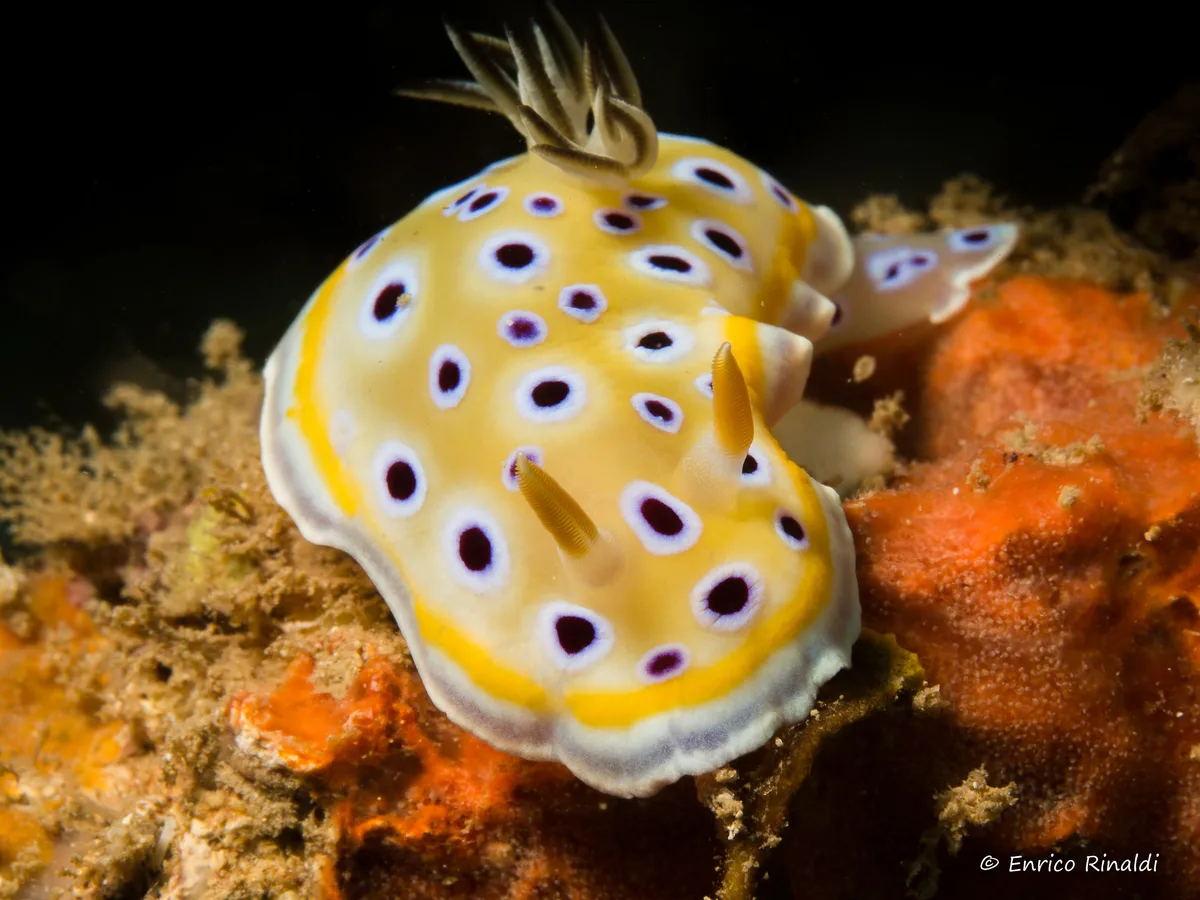
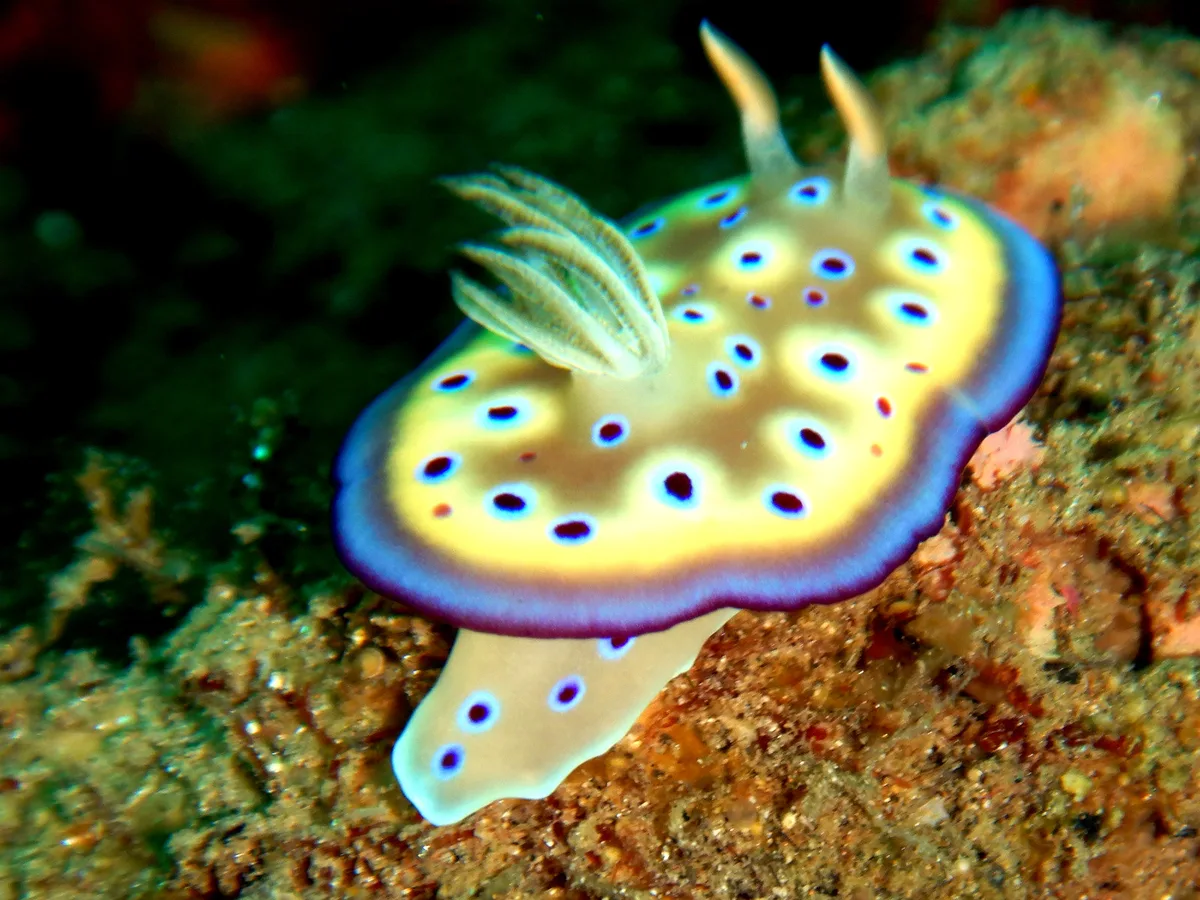
A slug this conspicuous ought to be sitting in the open, and this one is not. It works the shaded ground: cave mouths, the undersides of overhangs, ledges where the light stops.
That is worth thinking about, because the bright pattern only functions as a warning if predators can see it. Blue rings on yellow in a dark overhang are a signal nobody is reading. The likeliest explanation is the food: the sponges this genus eats grow best out of direct light, and a slug tied to one sponge goes where the sponge is and takes the lighting that comes with it. The color is then doing its work in the moments the animal is exposed, and doing nothing the rest of the time.
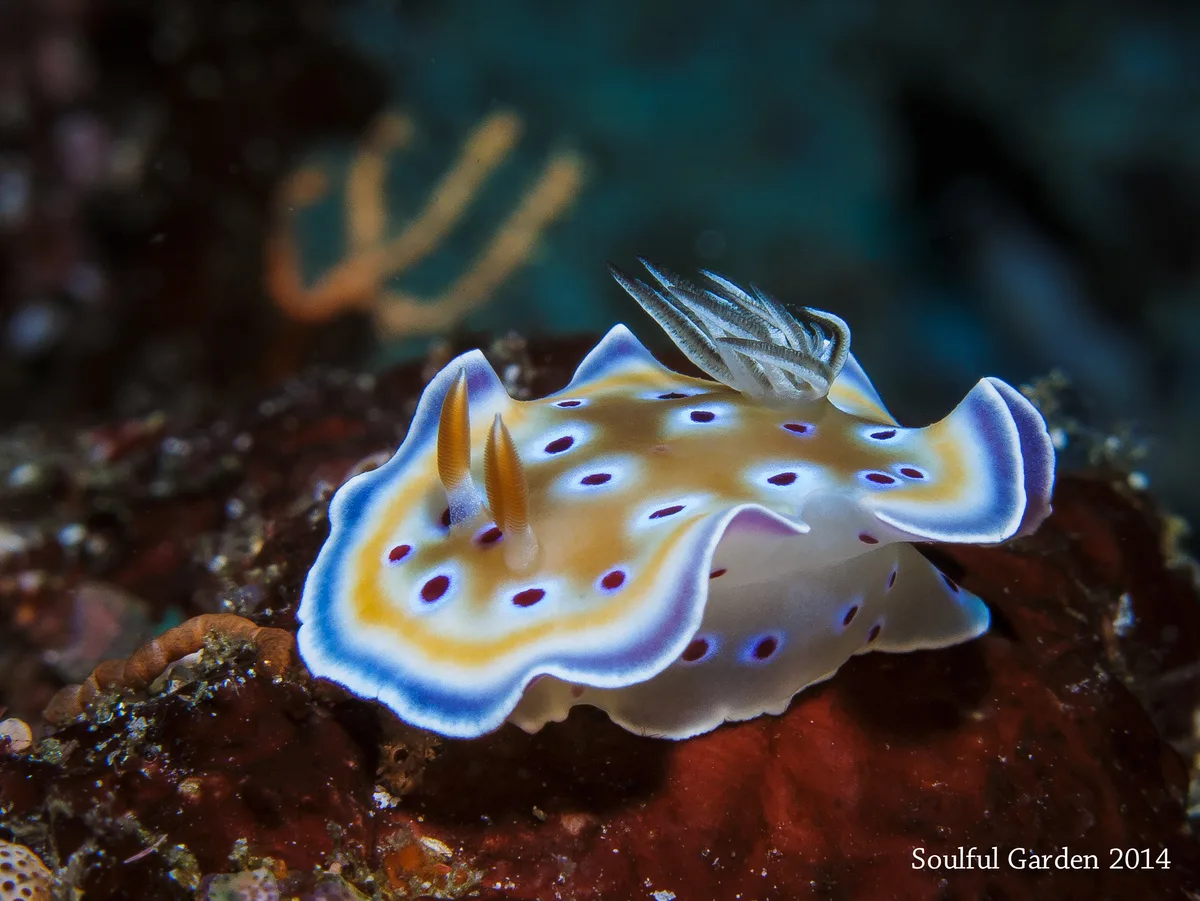
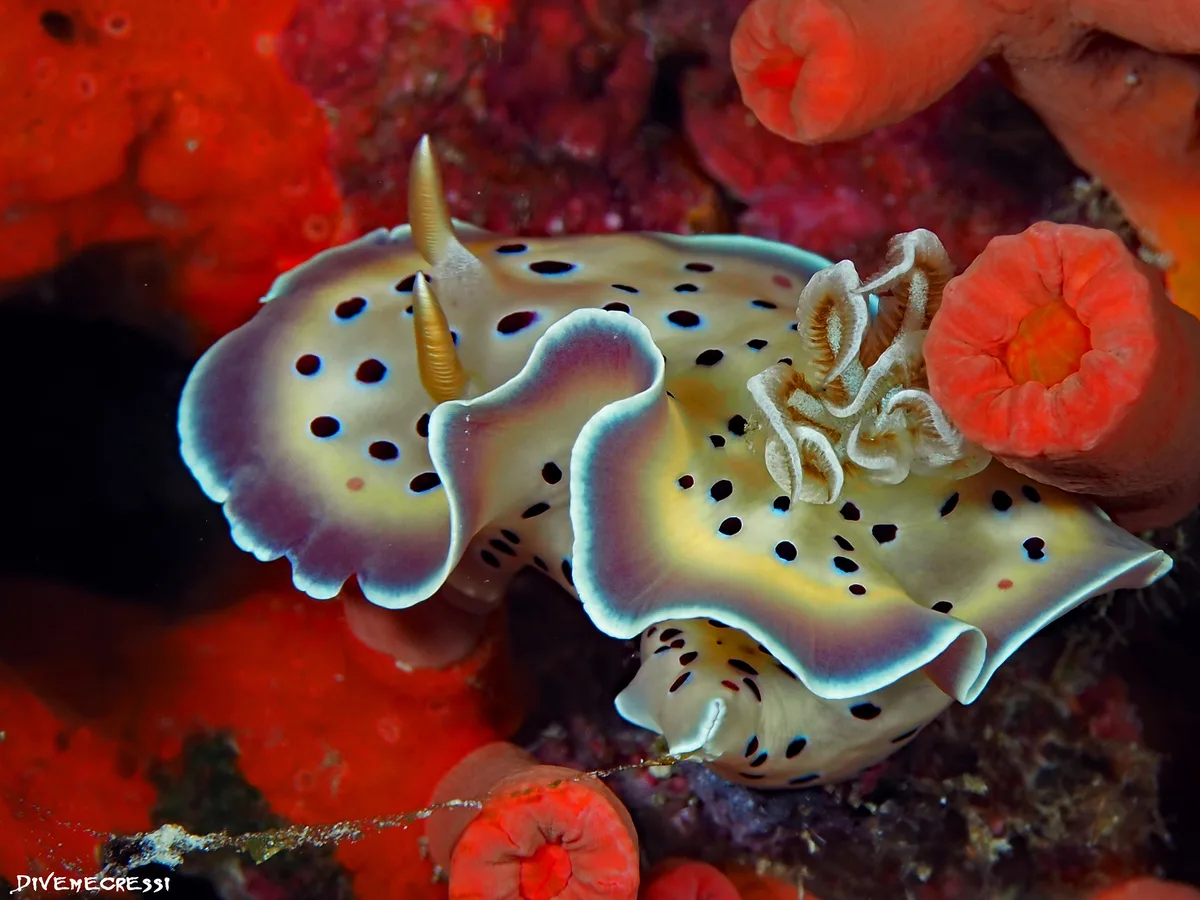
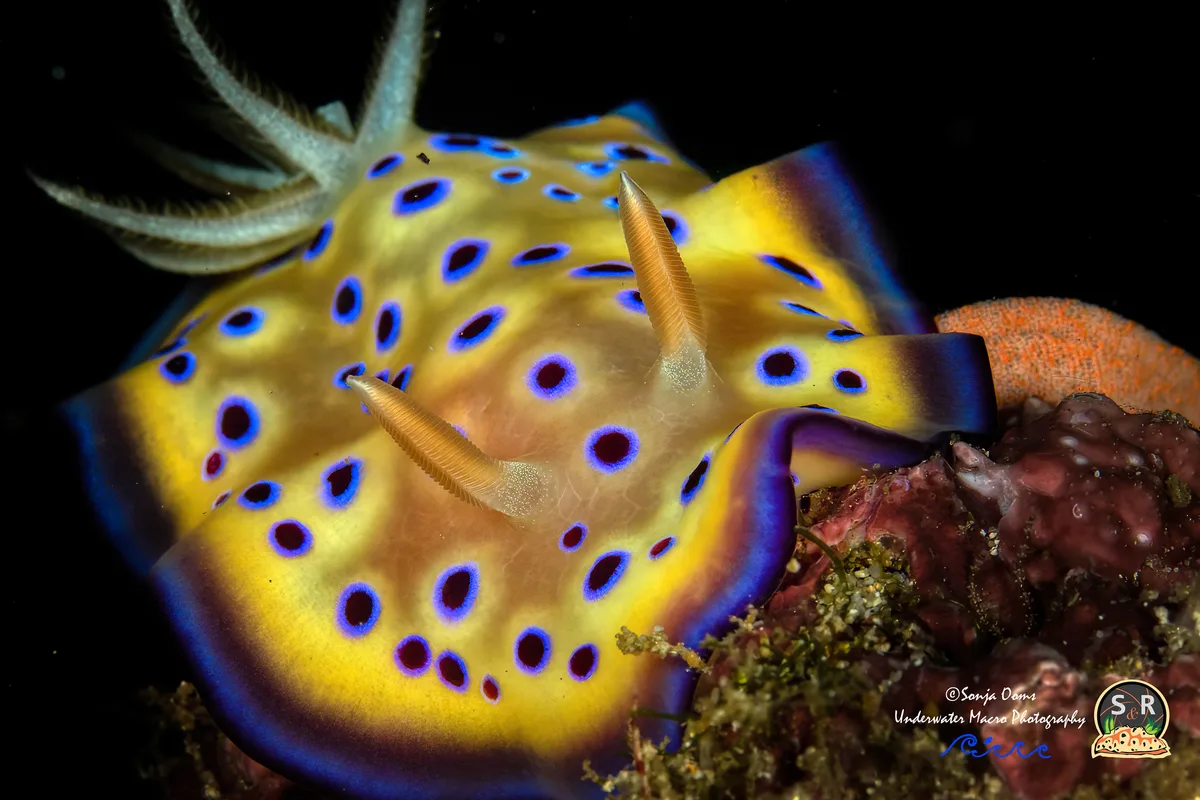
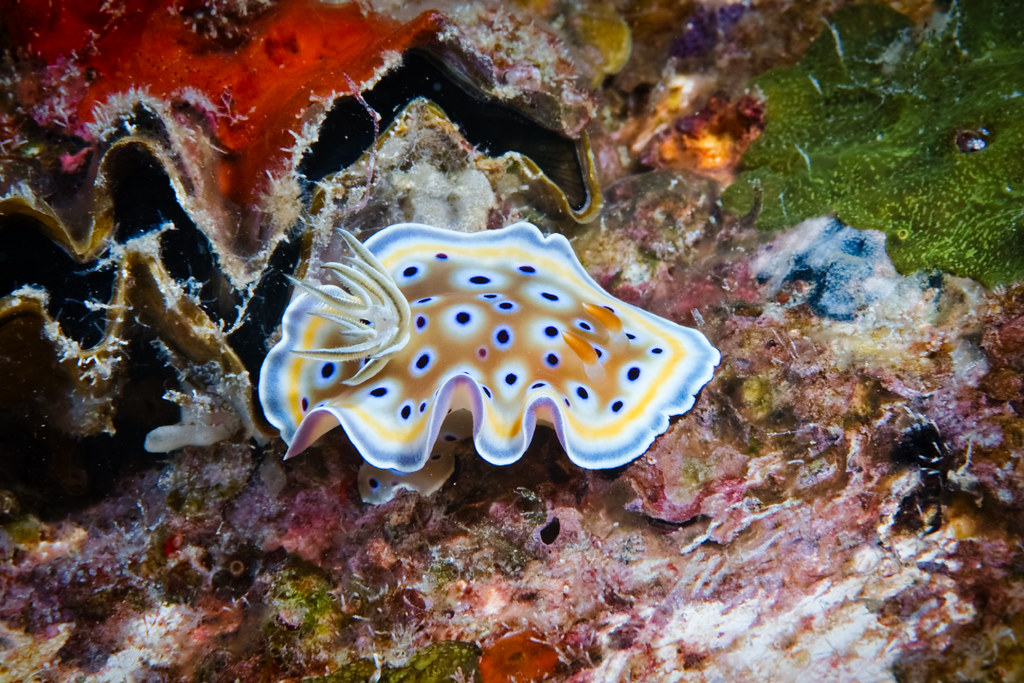
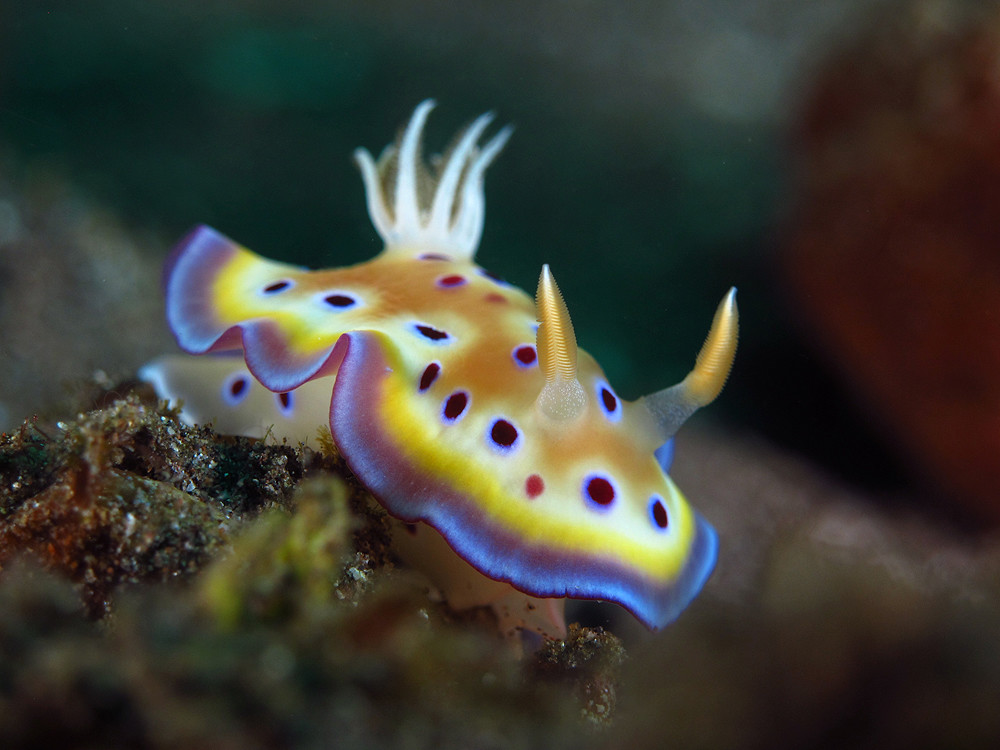
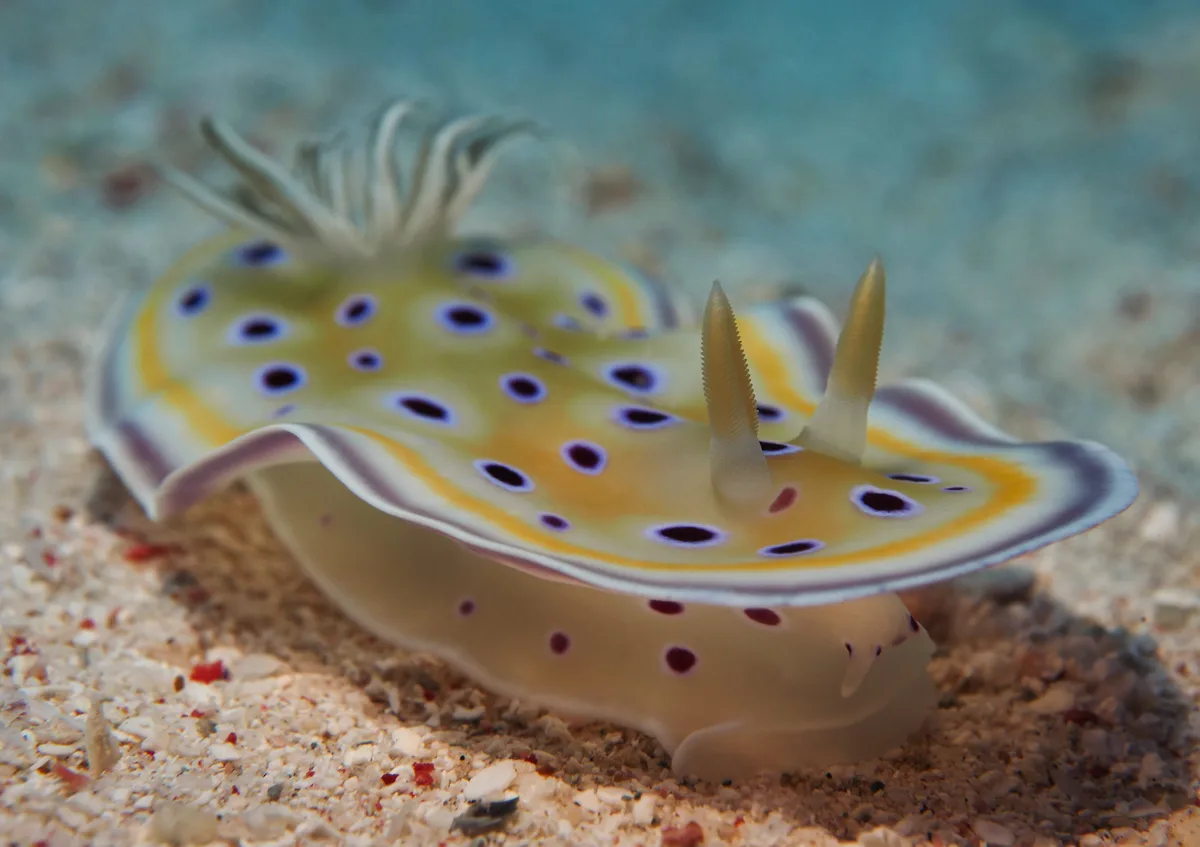
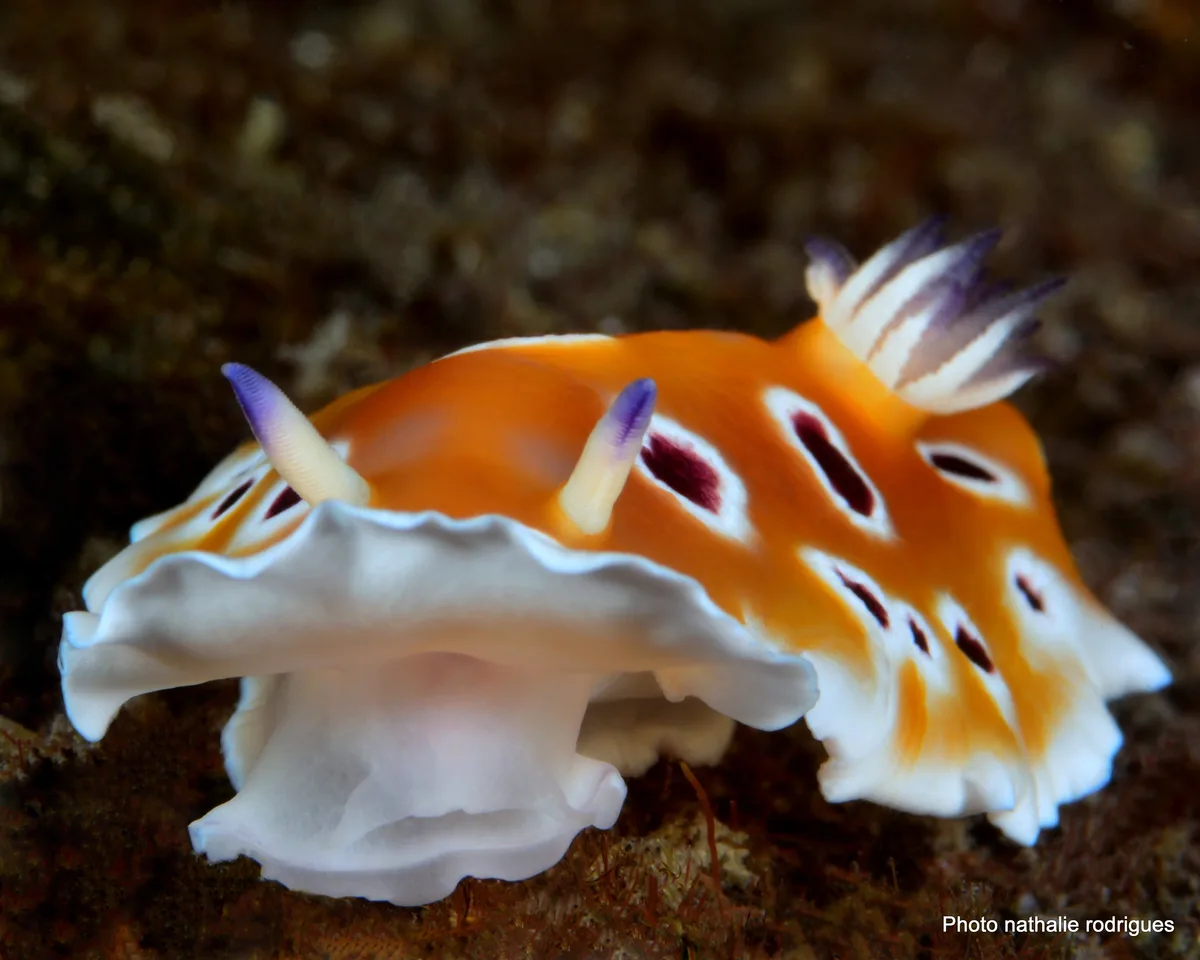
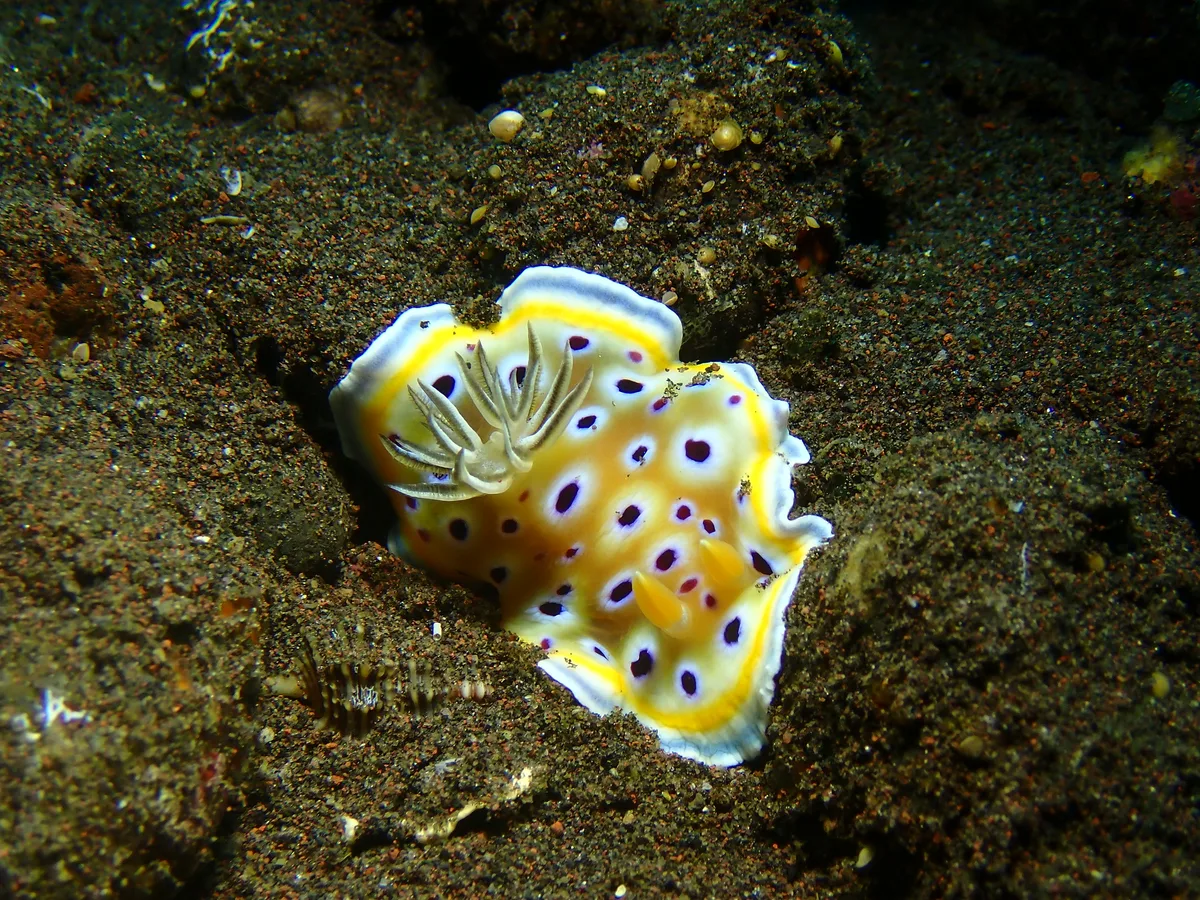
It is a small animal, three and a half centimeters, yellowish, covered in round dark blue spots each set in a paler ring, with orange tips to the gills and the rhinophores. Nothing else here looks like it.
The chemistry is the usual chromodorid arrangement, taken from the sponge and concentrated at the mantle rim, so the animal has no reason to flee and does not: it will keep feeding while a camera is a hand's width away.
It runs from this sea down the East African coast, and the regional guide notes what most divers find, which is that you meet it by putting a light into a hole rather than by scanning open rock.
- yellowish back covered in round dark blue spots, each ringed
- in shade rather than in the open: caves, overhangs, the undersides of ledges
- small, up to 3.5 cm
- orange-tipped gills and rhinophores