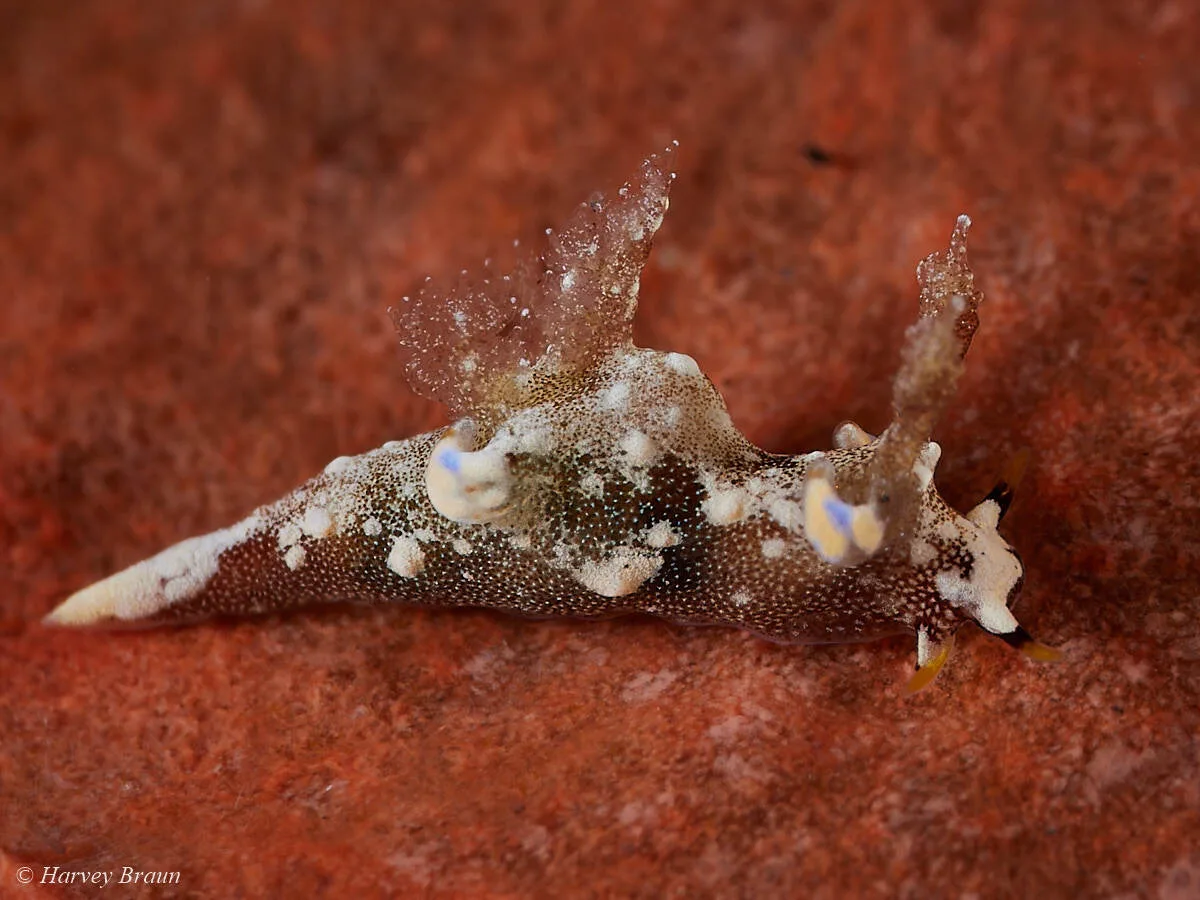
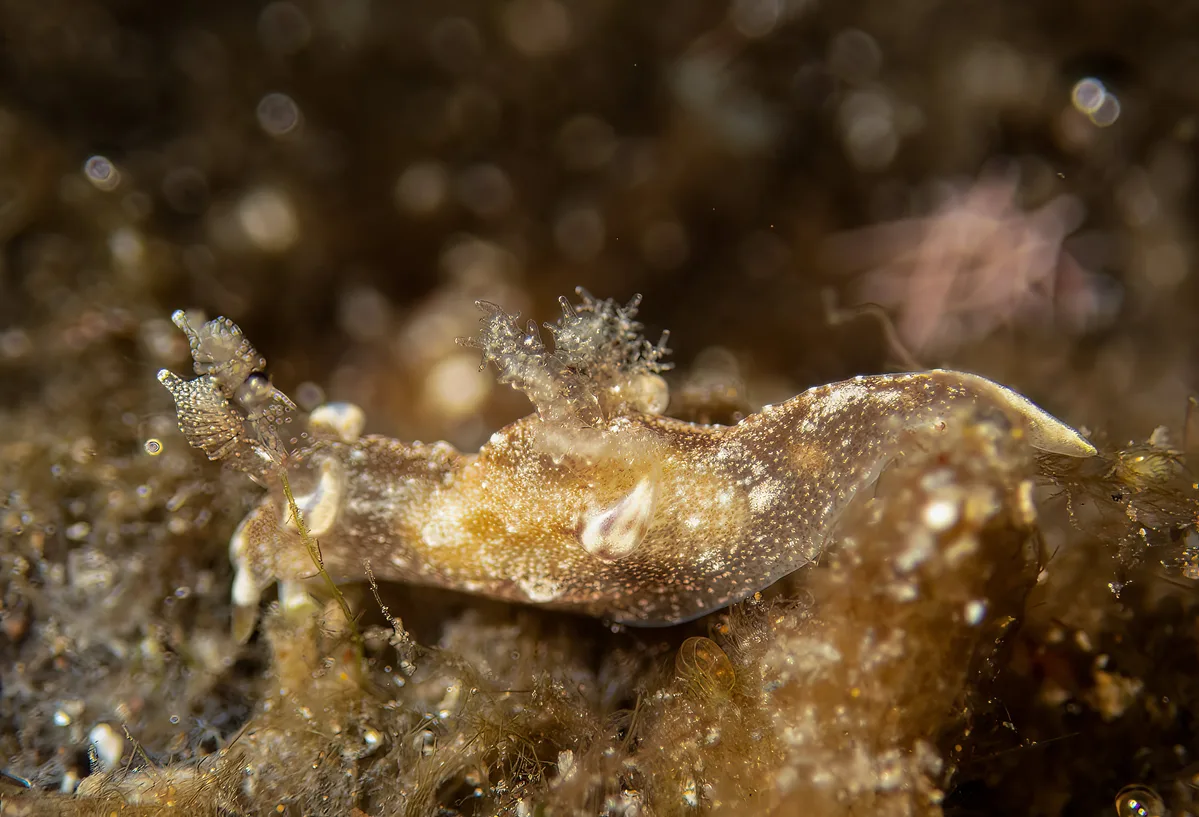
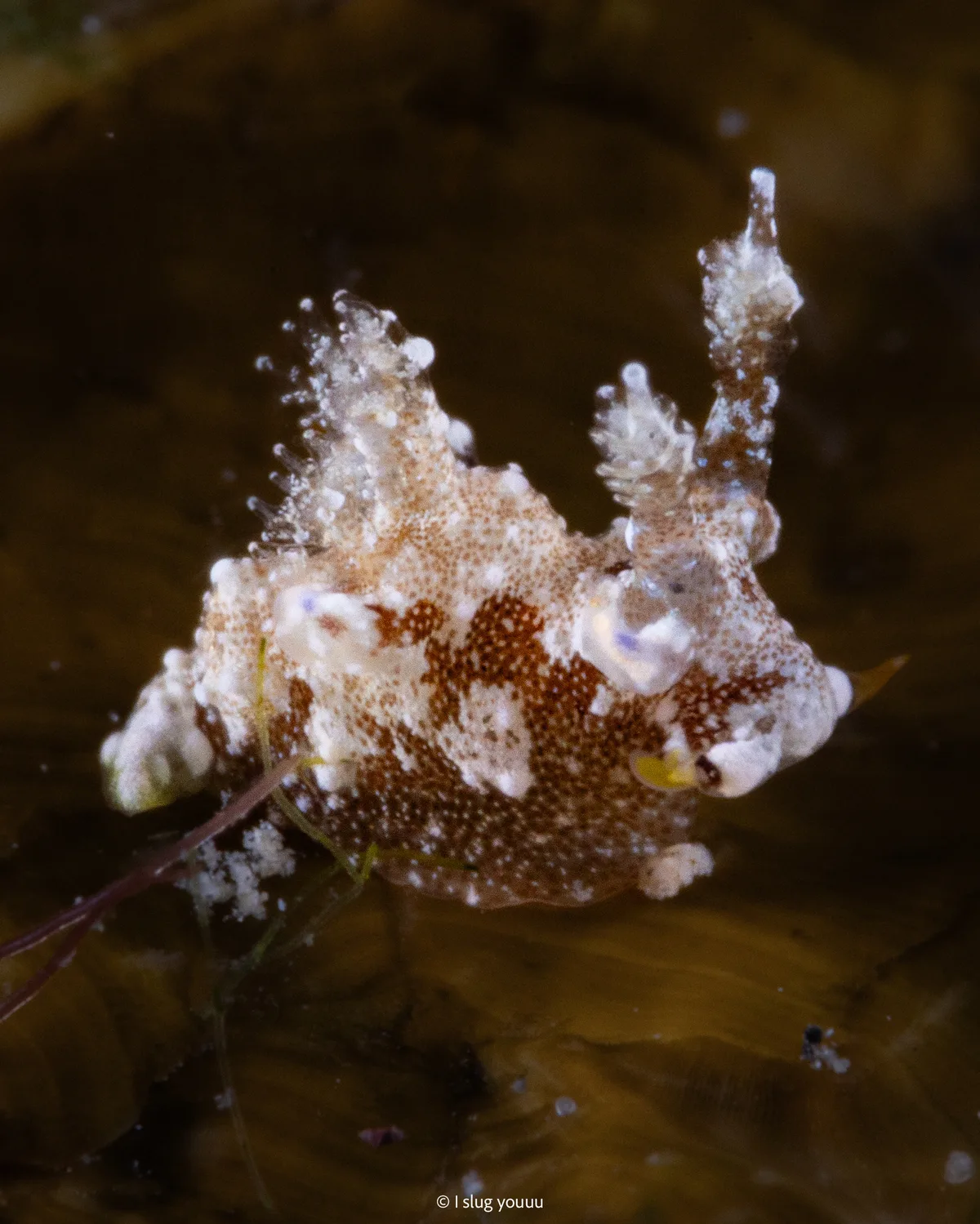
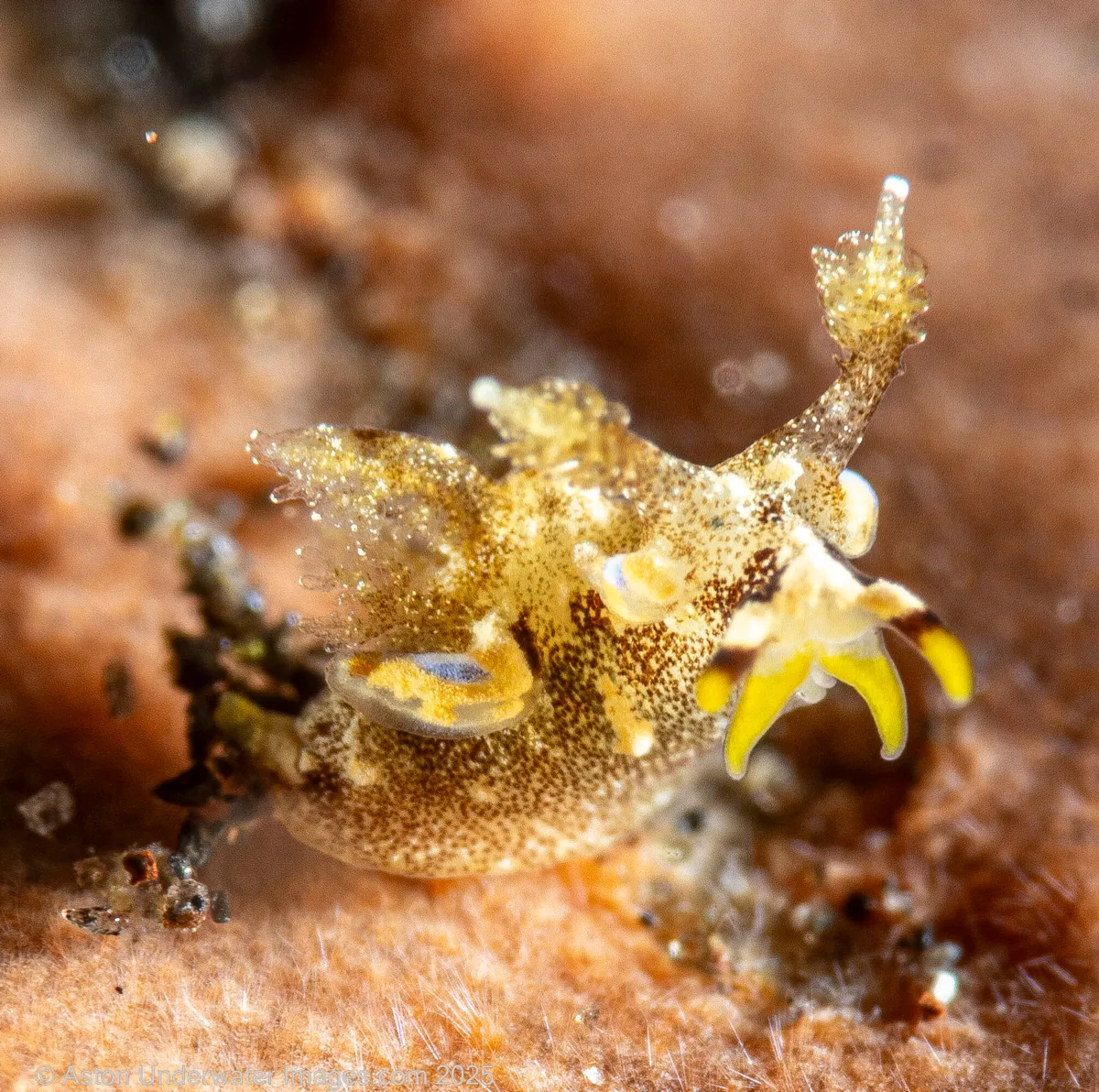
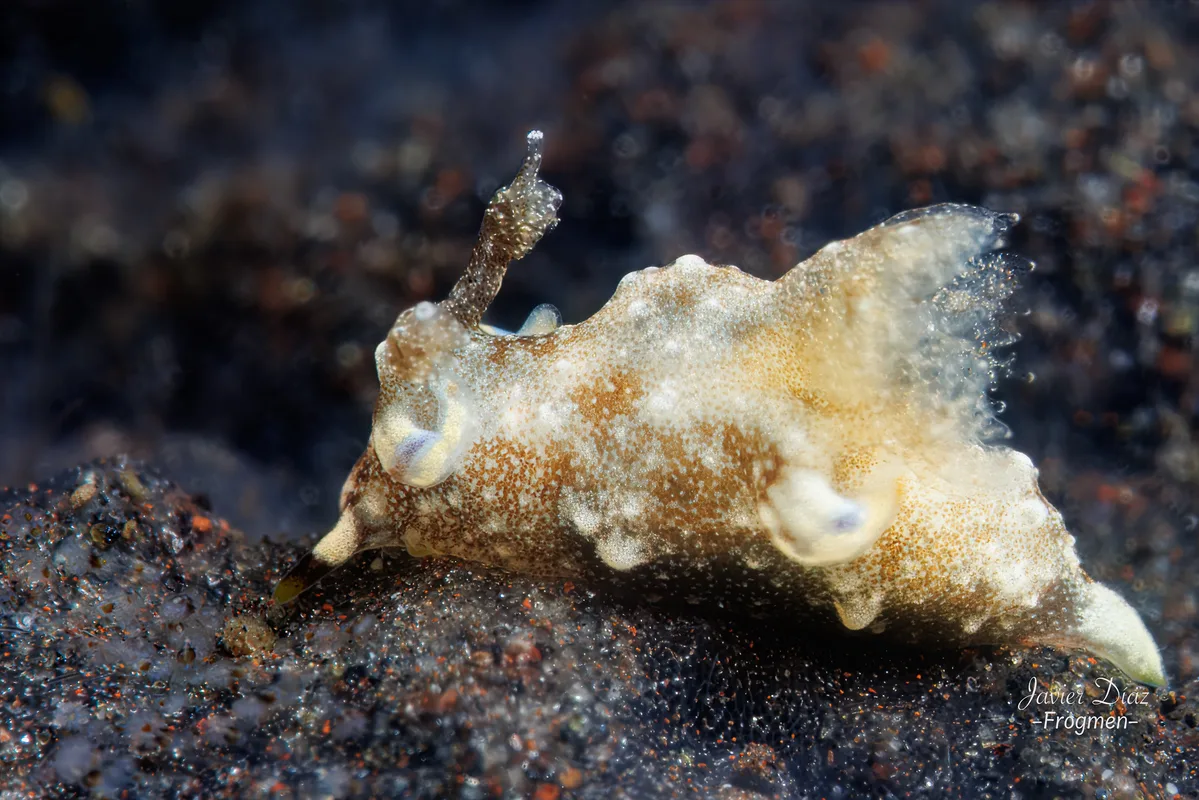
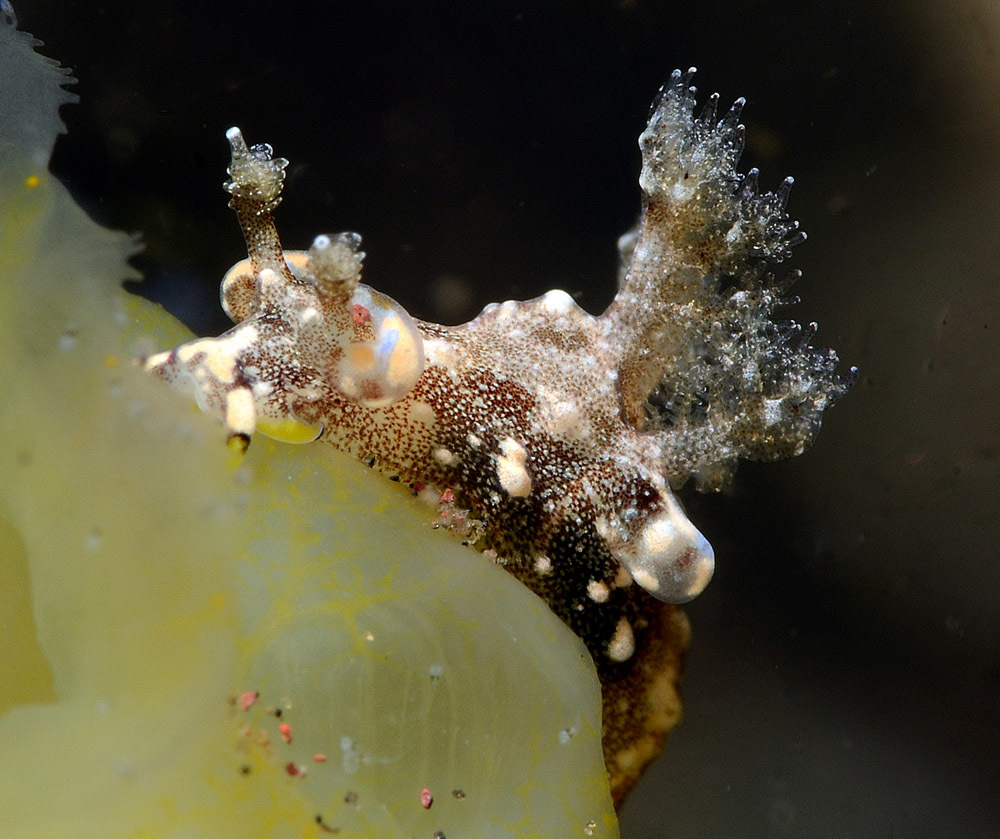
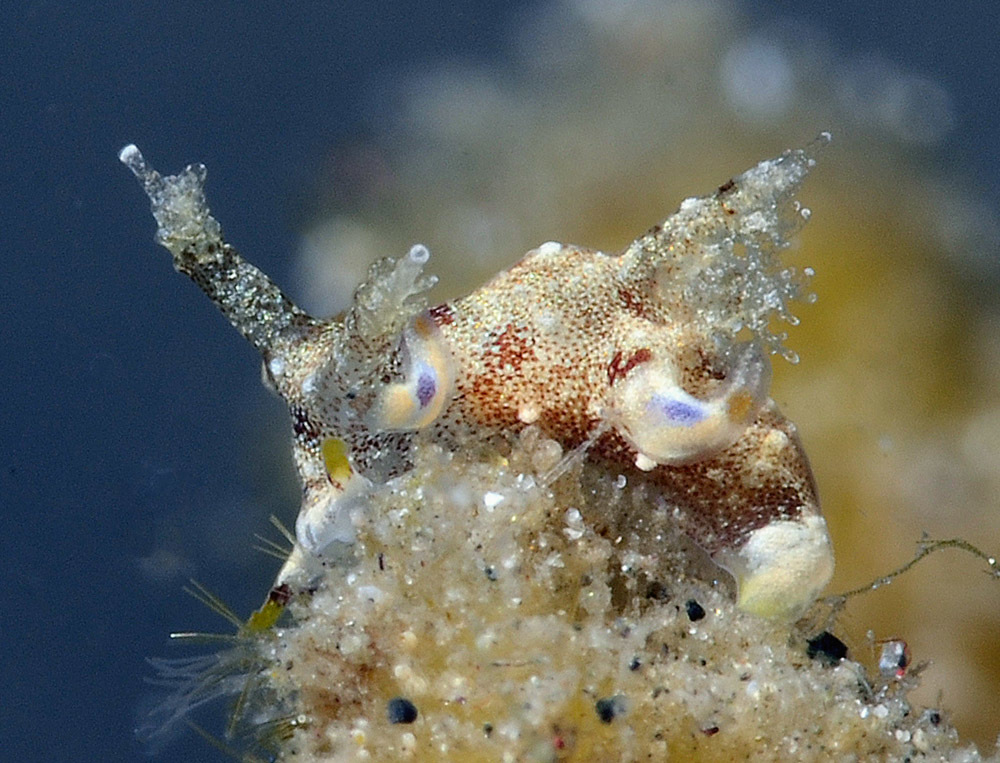
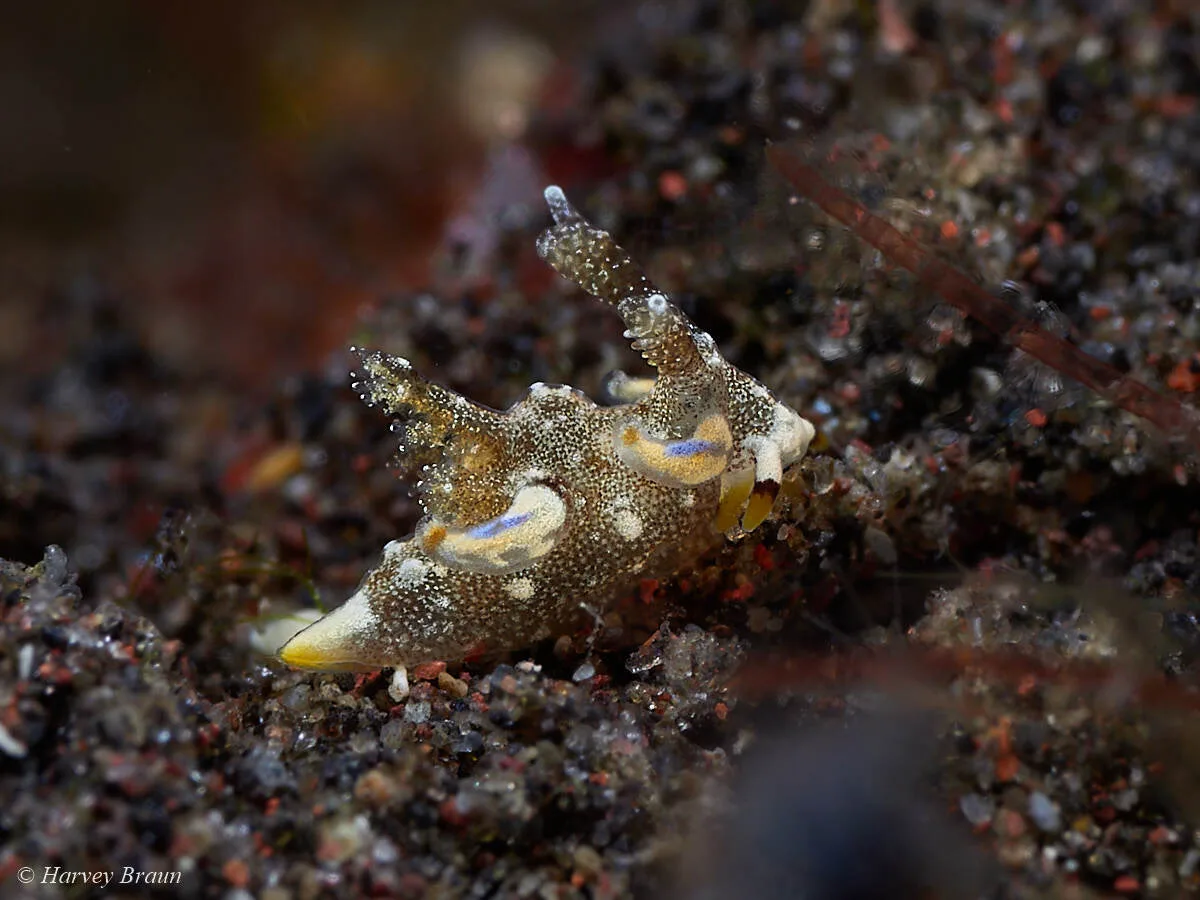
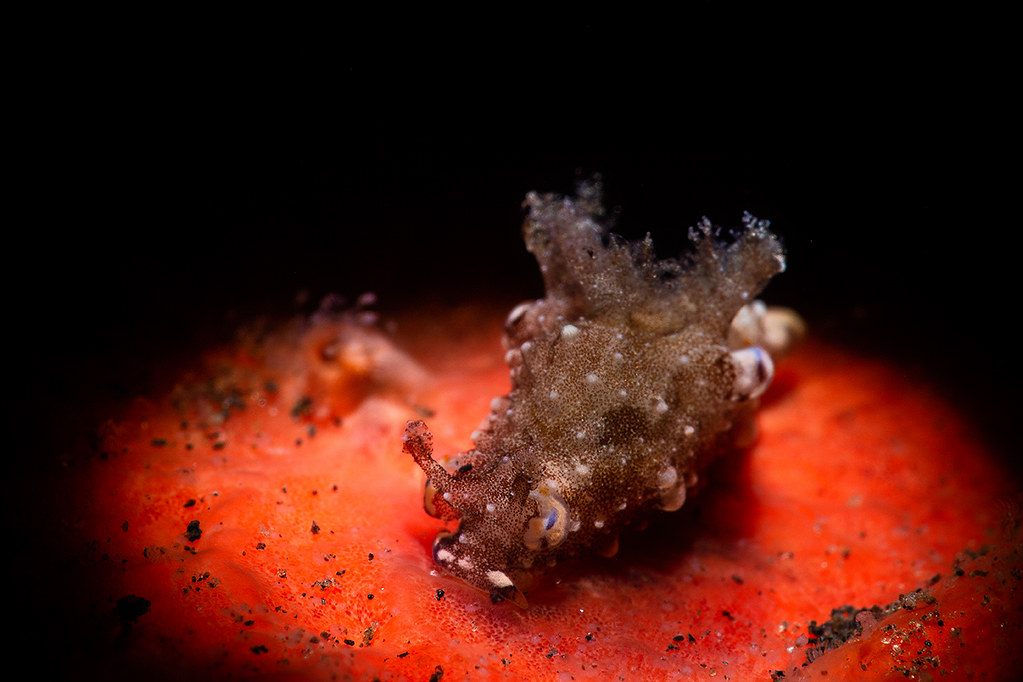
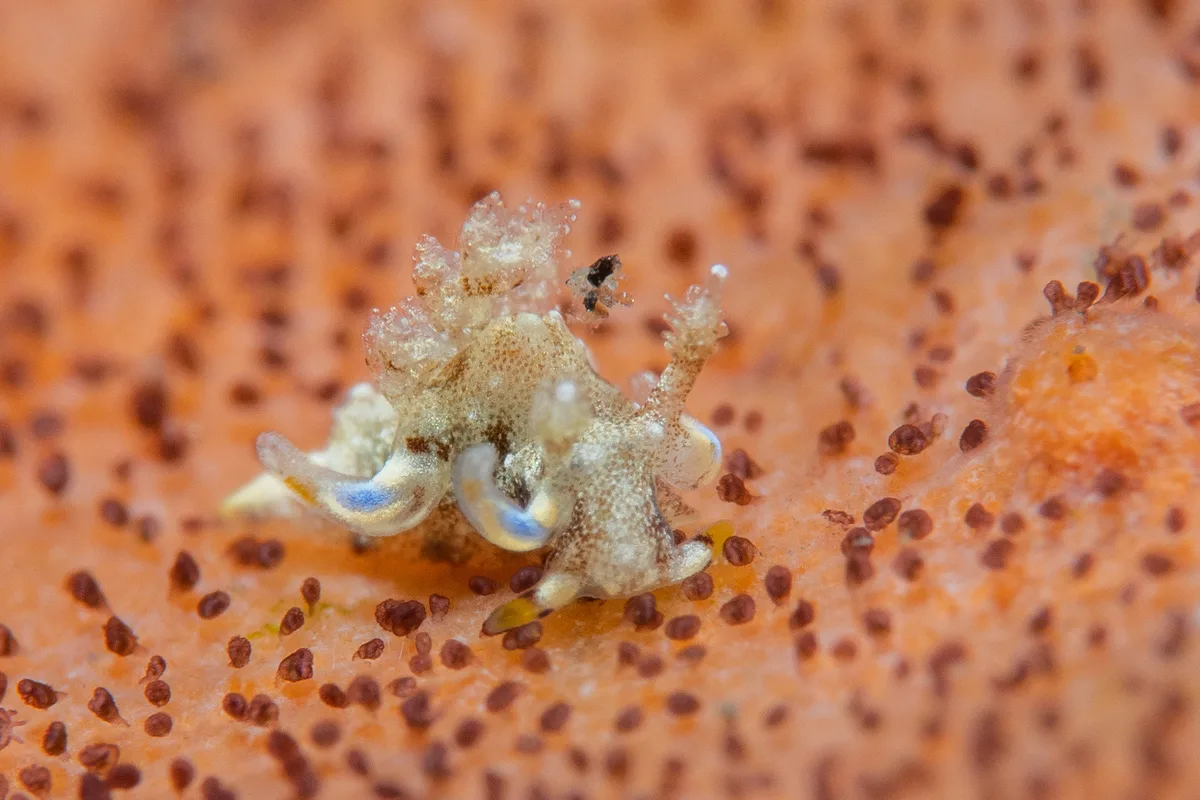
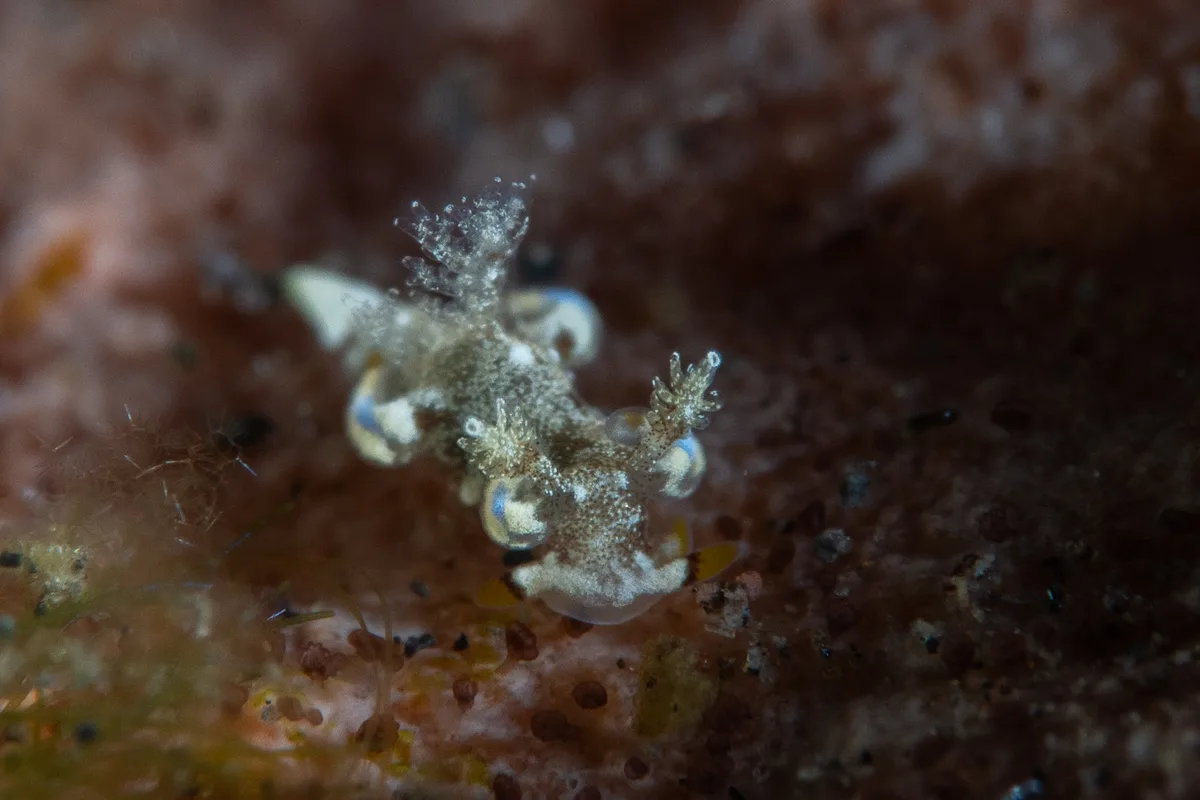
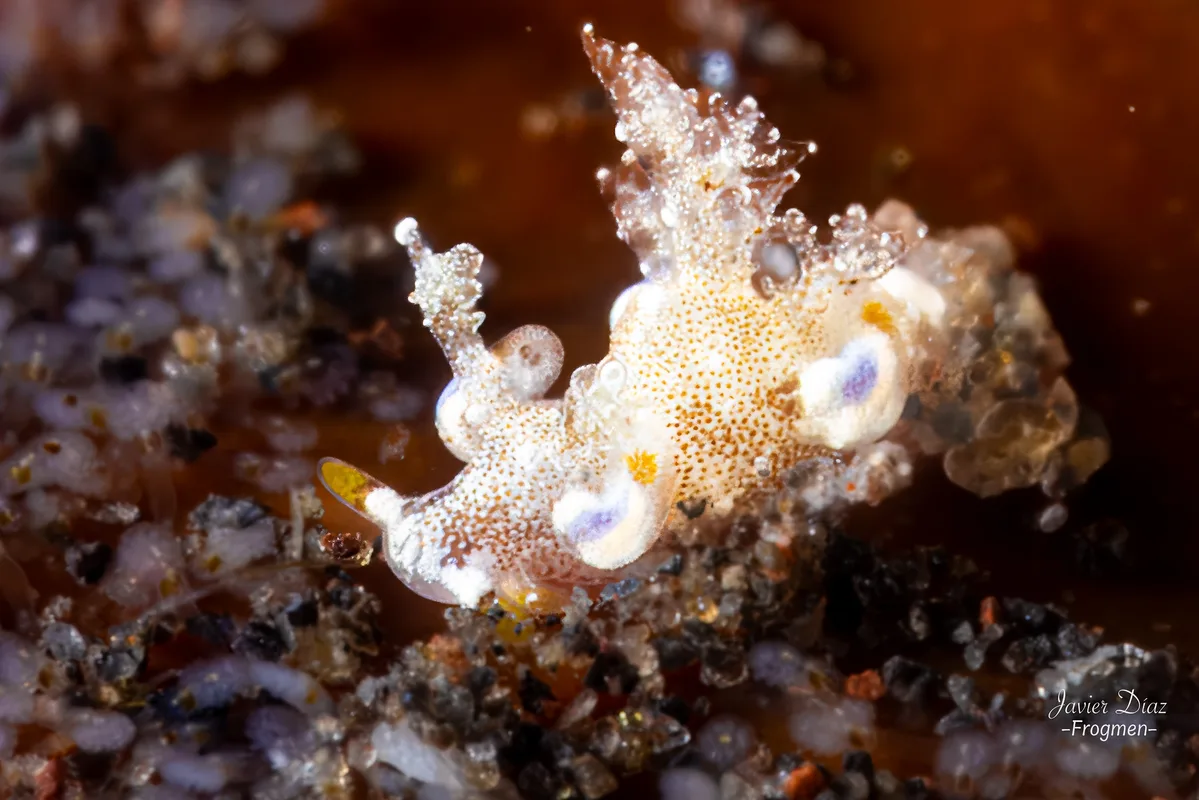
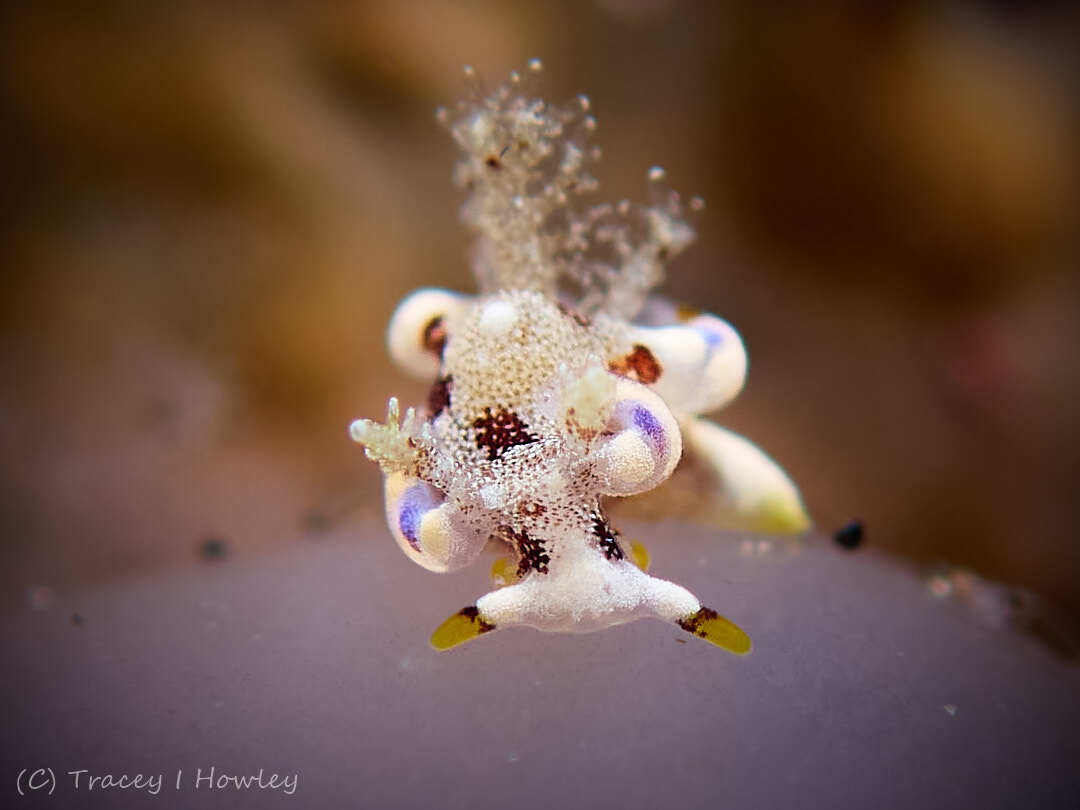
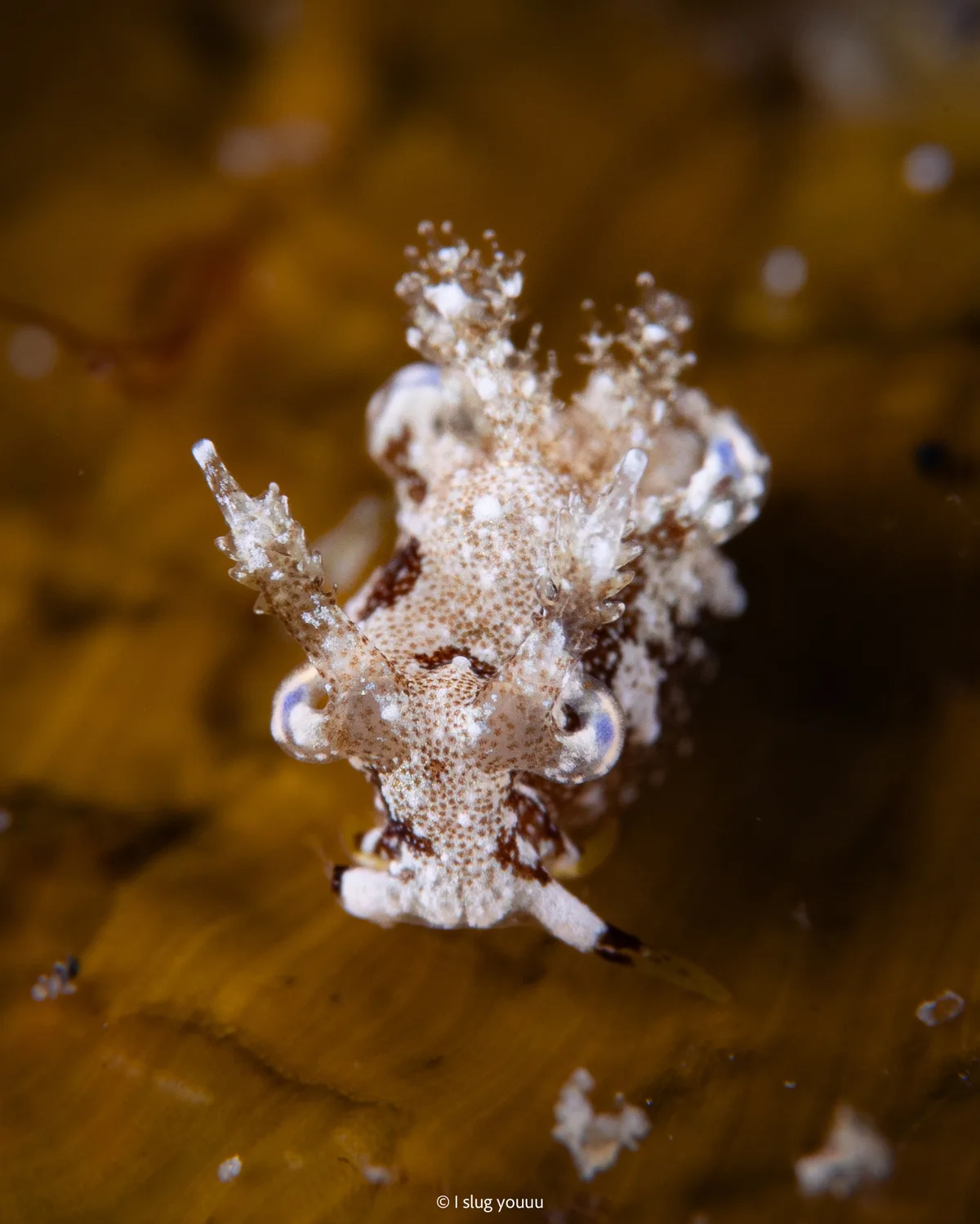
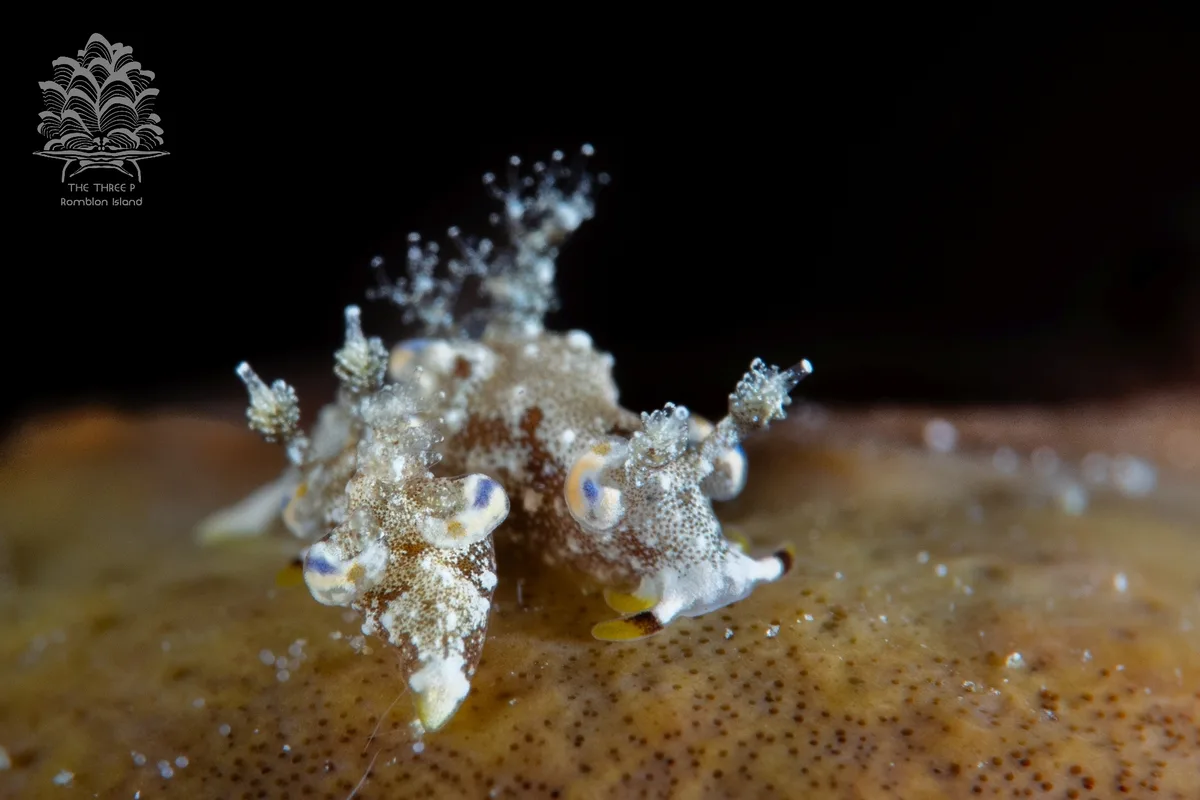
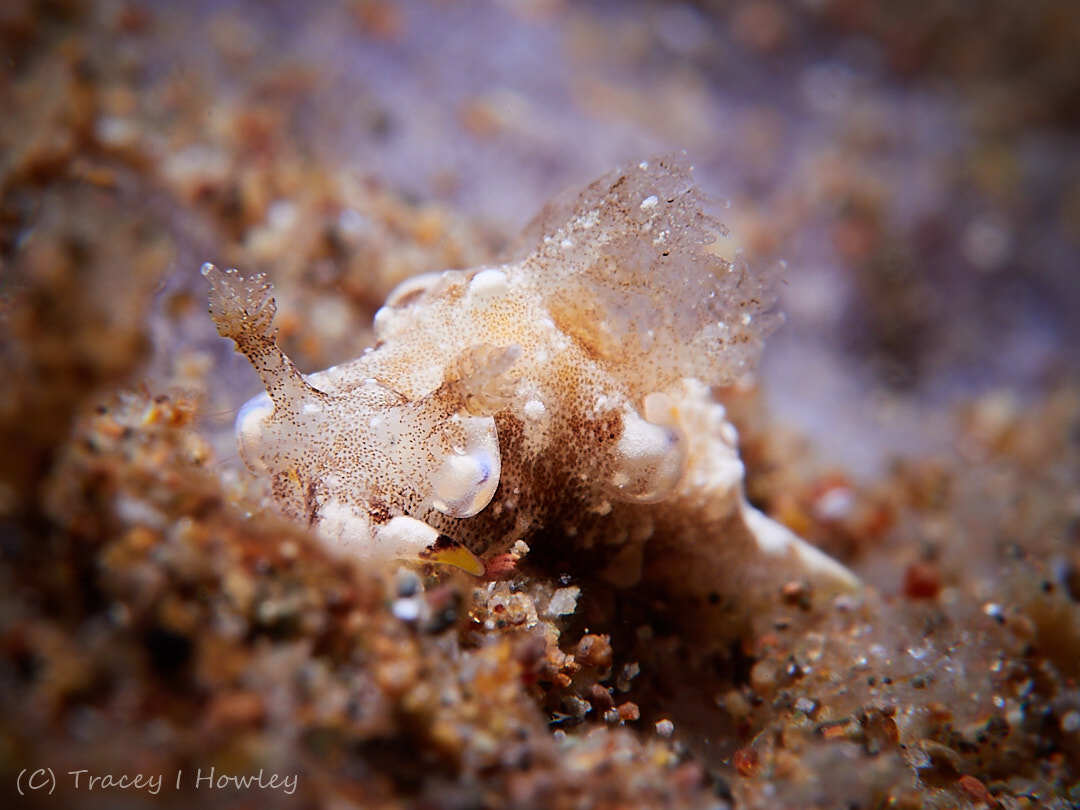
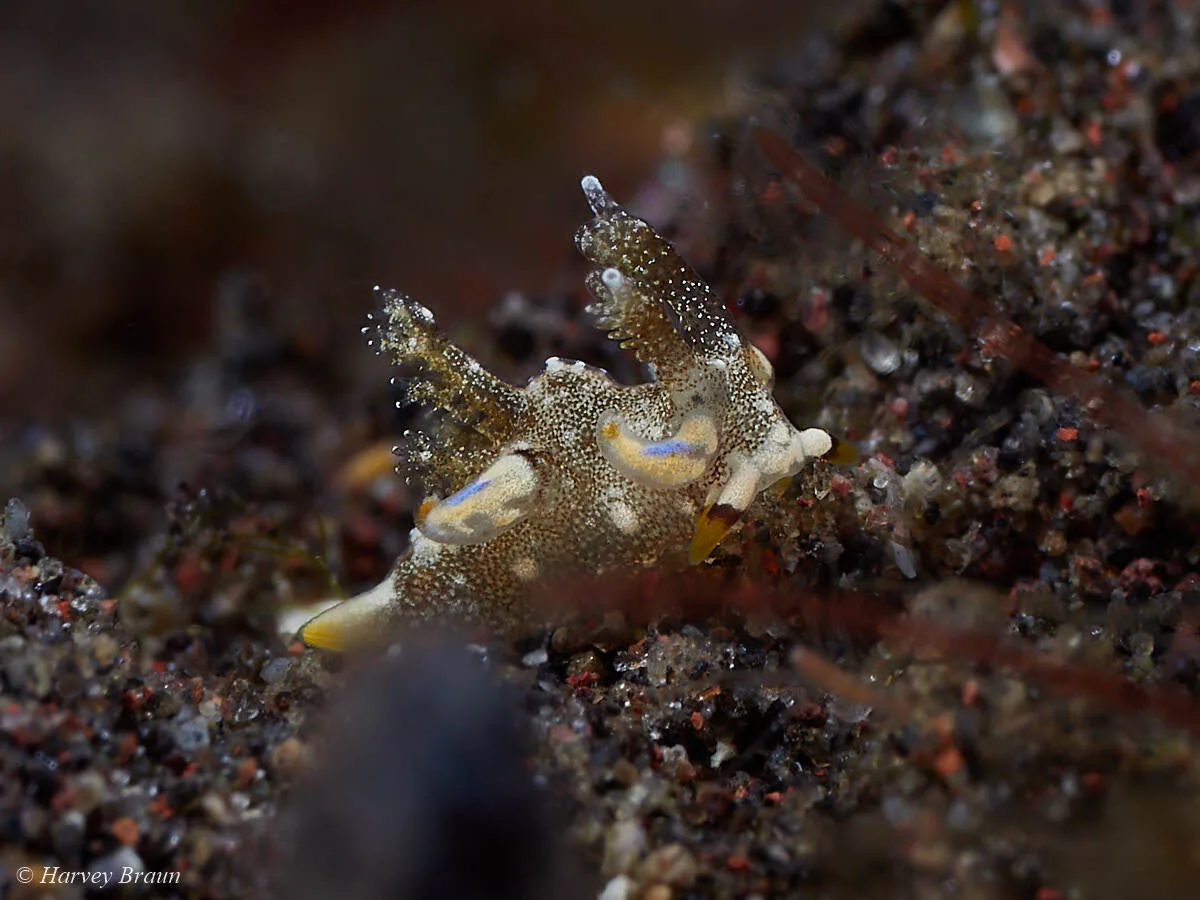
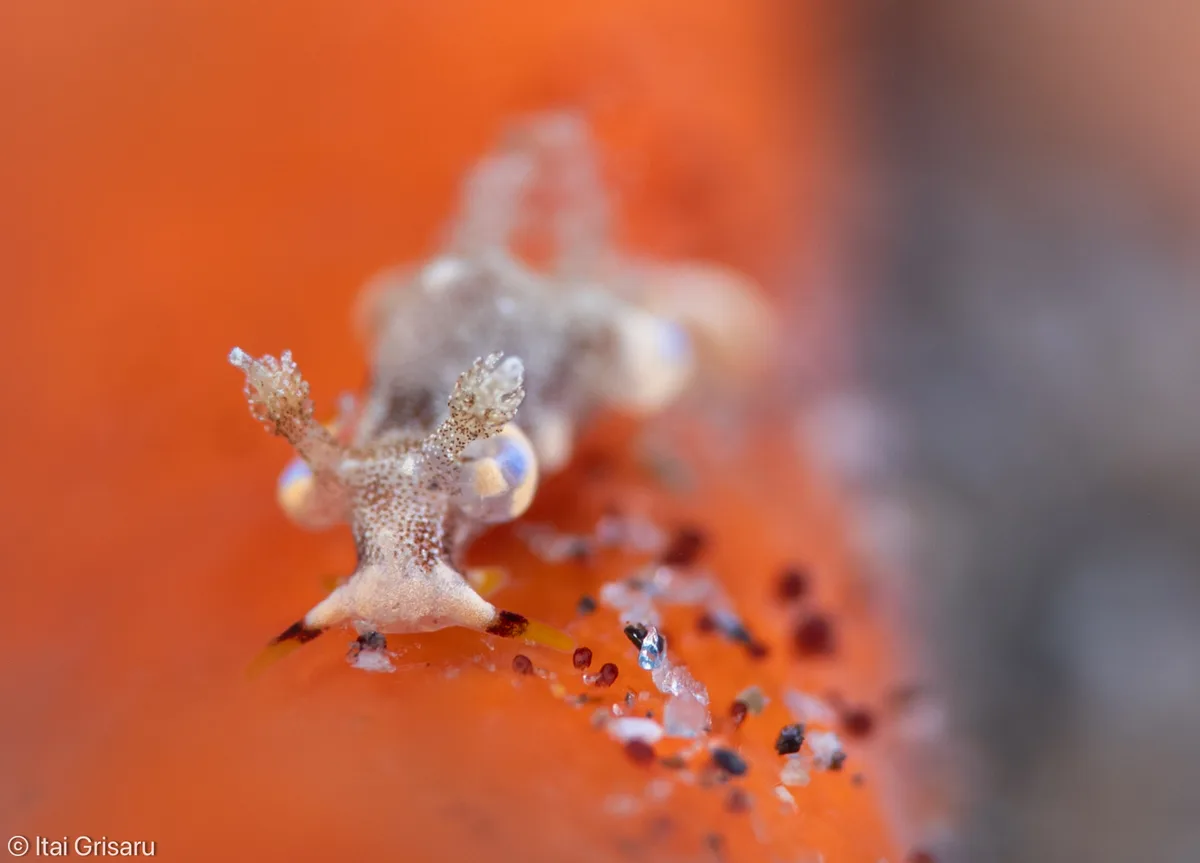
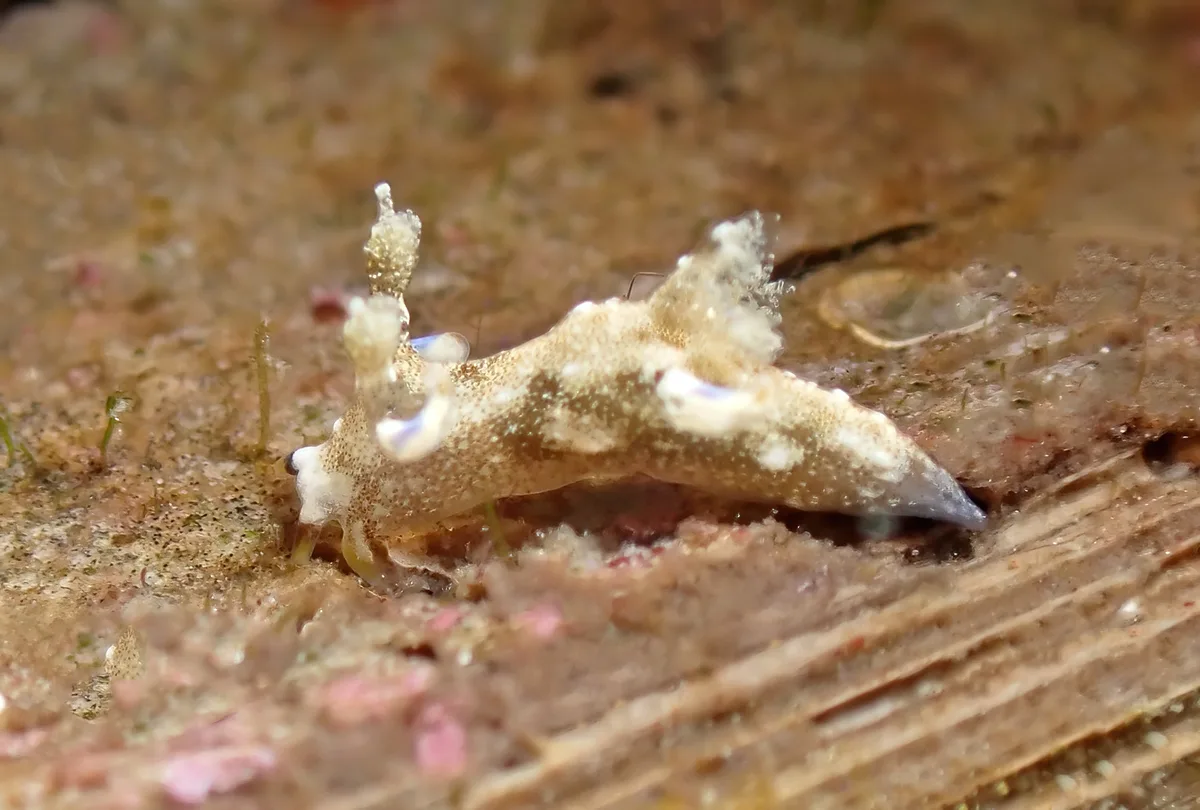
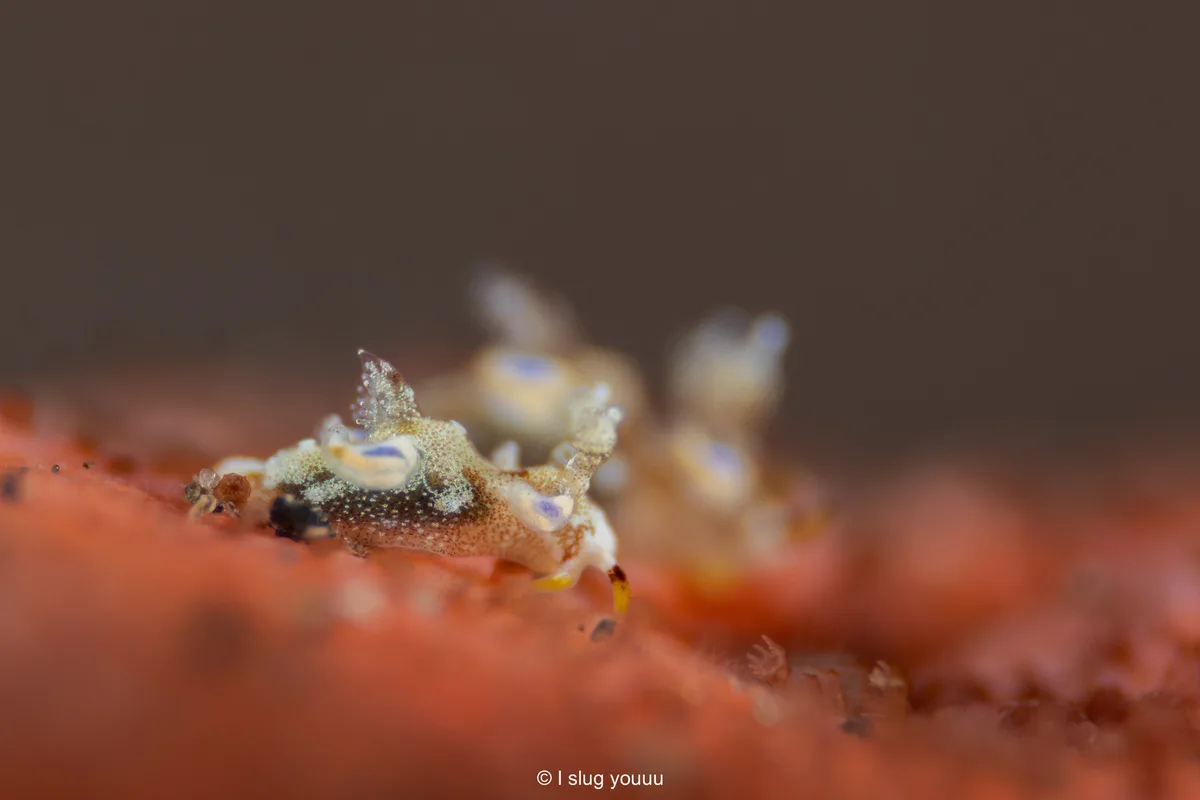
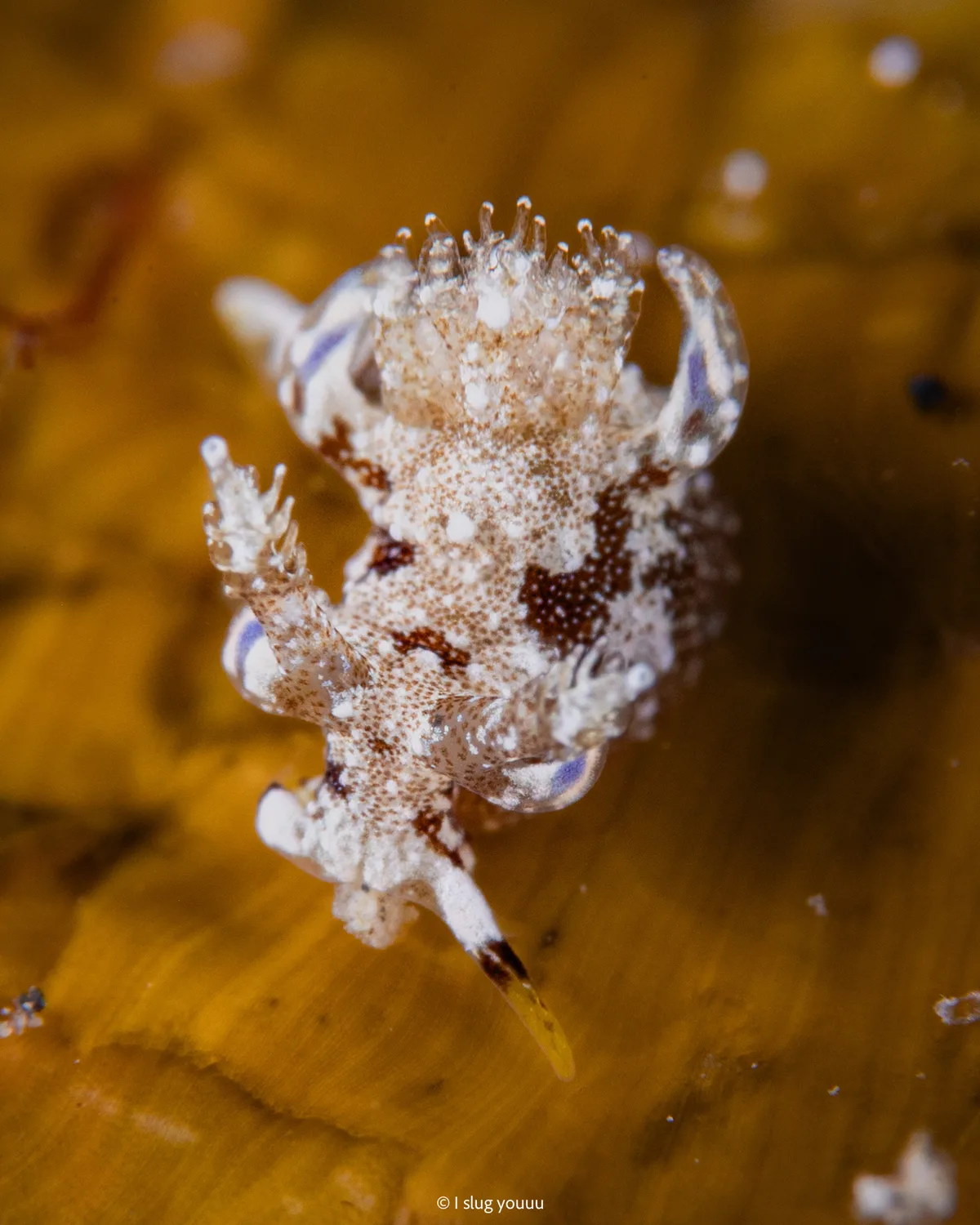
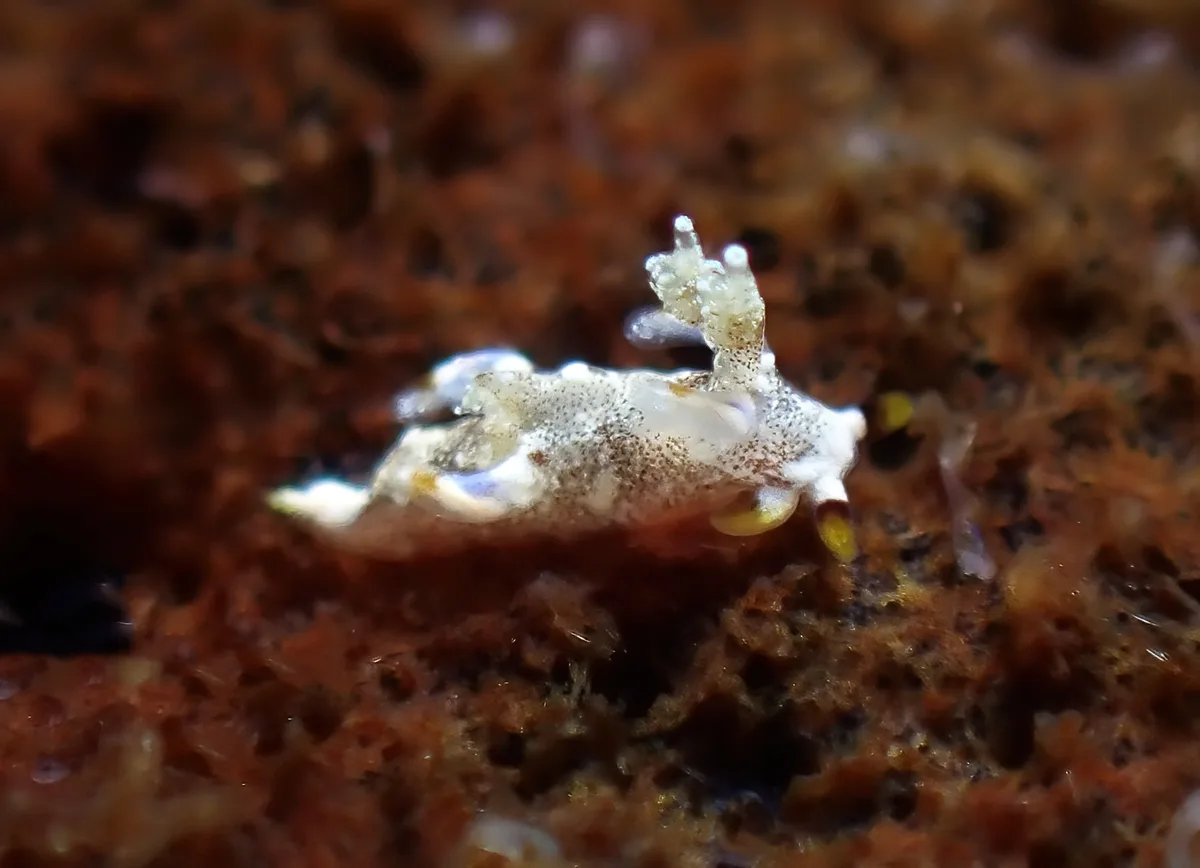
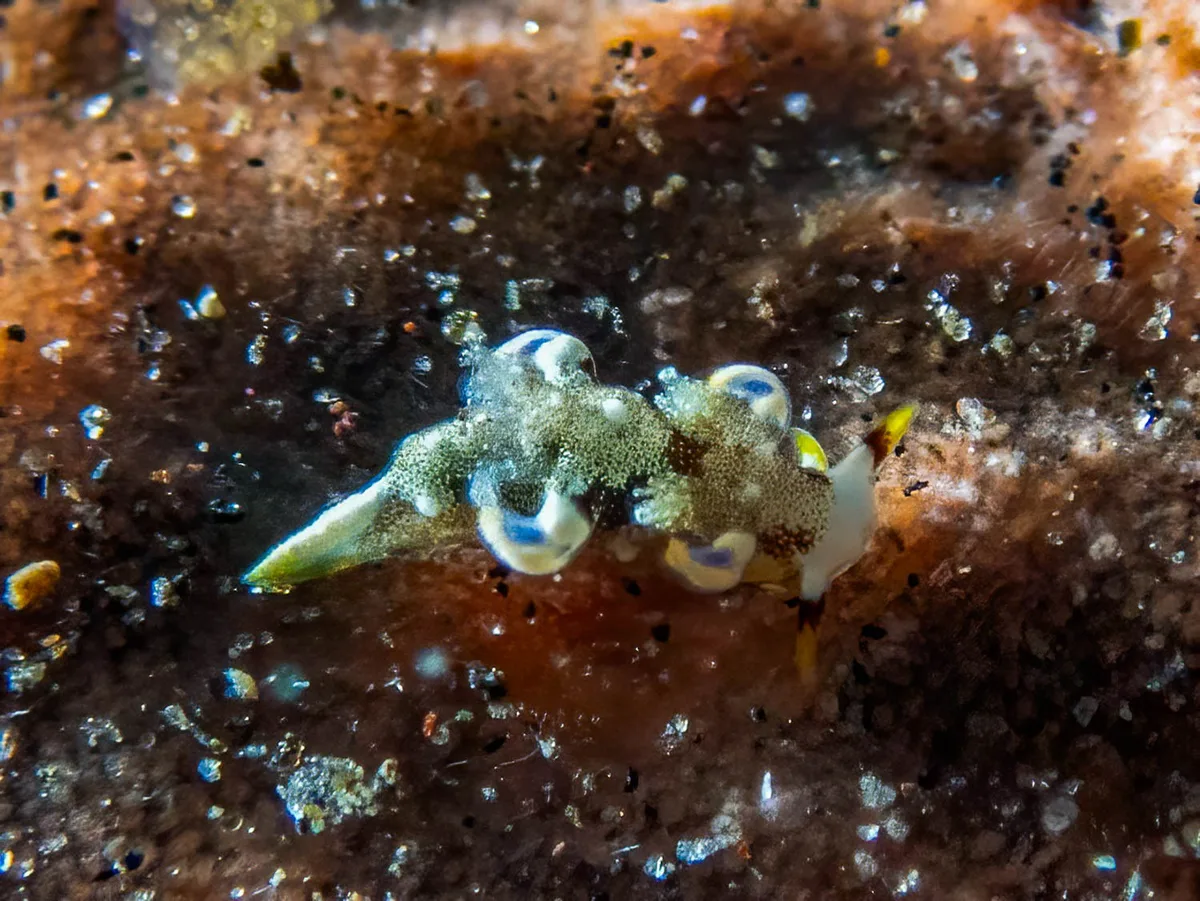
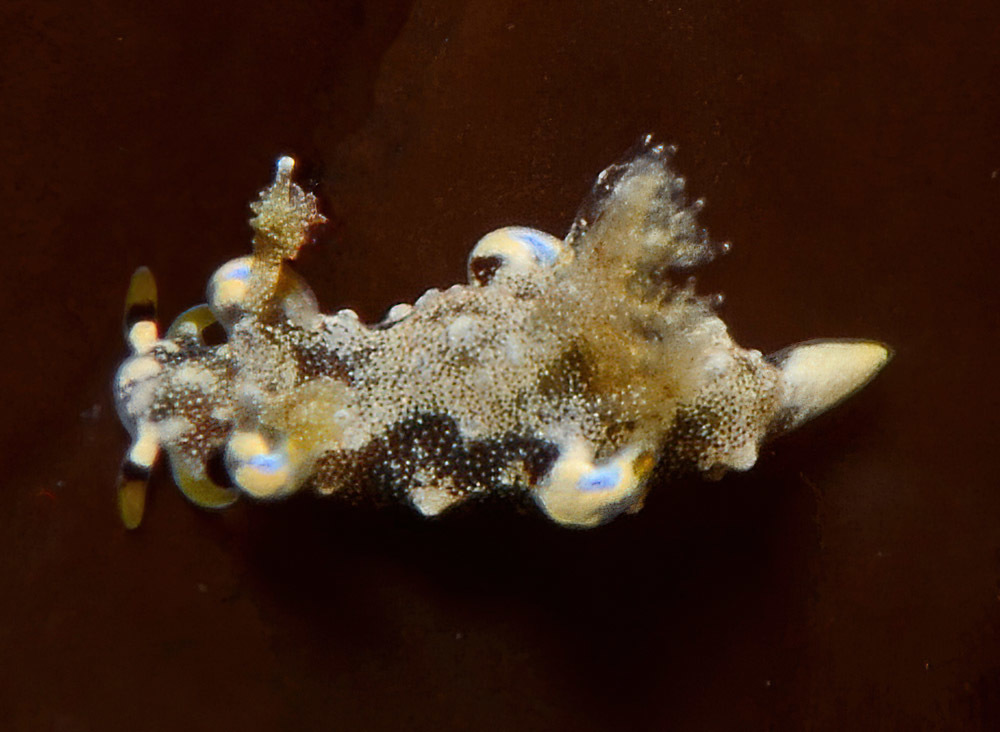
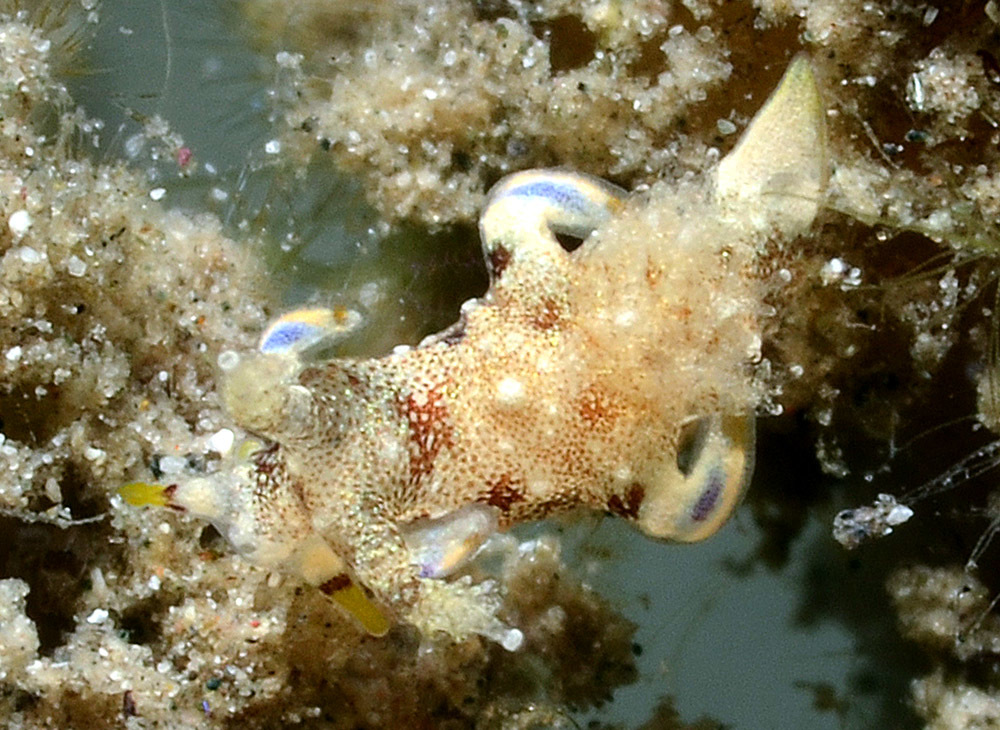
Eight millimeters (0.3 in), and it is carrying blue.
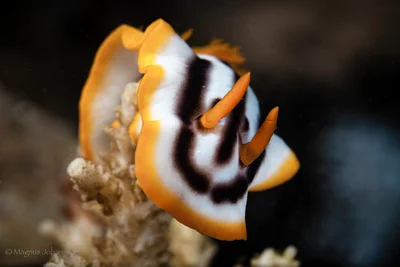
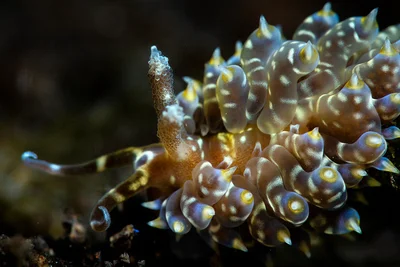
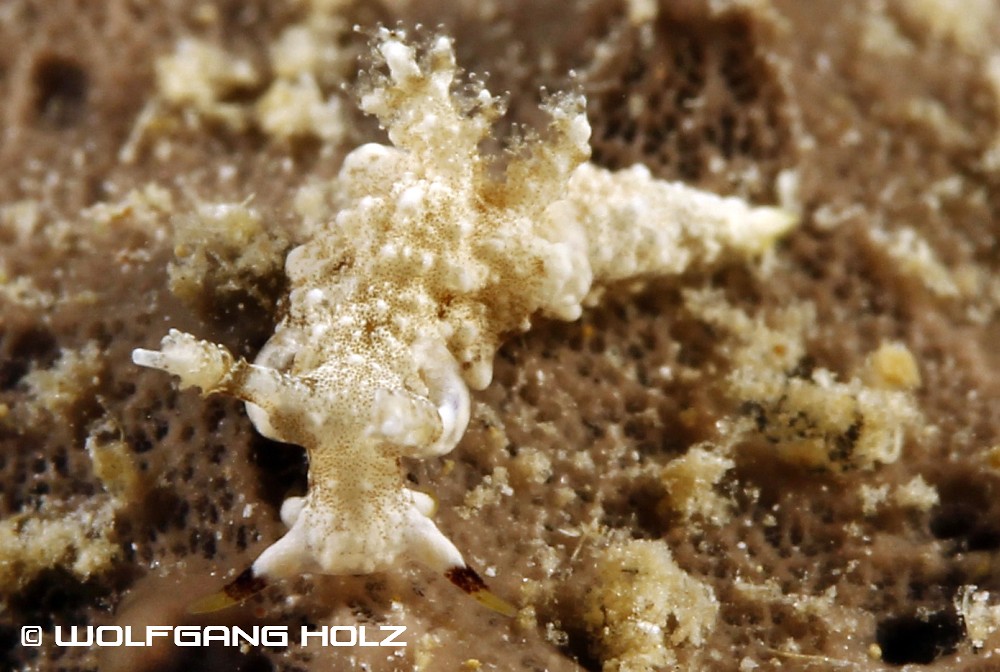
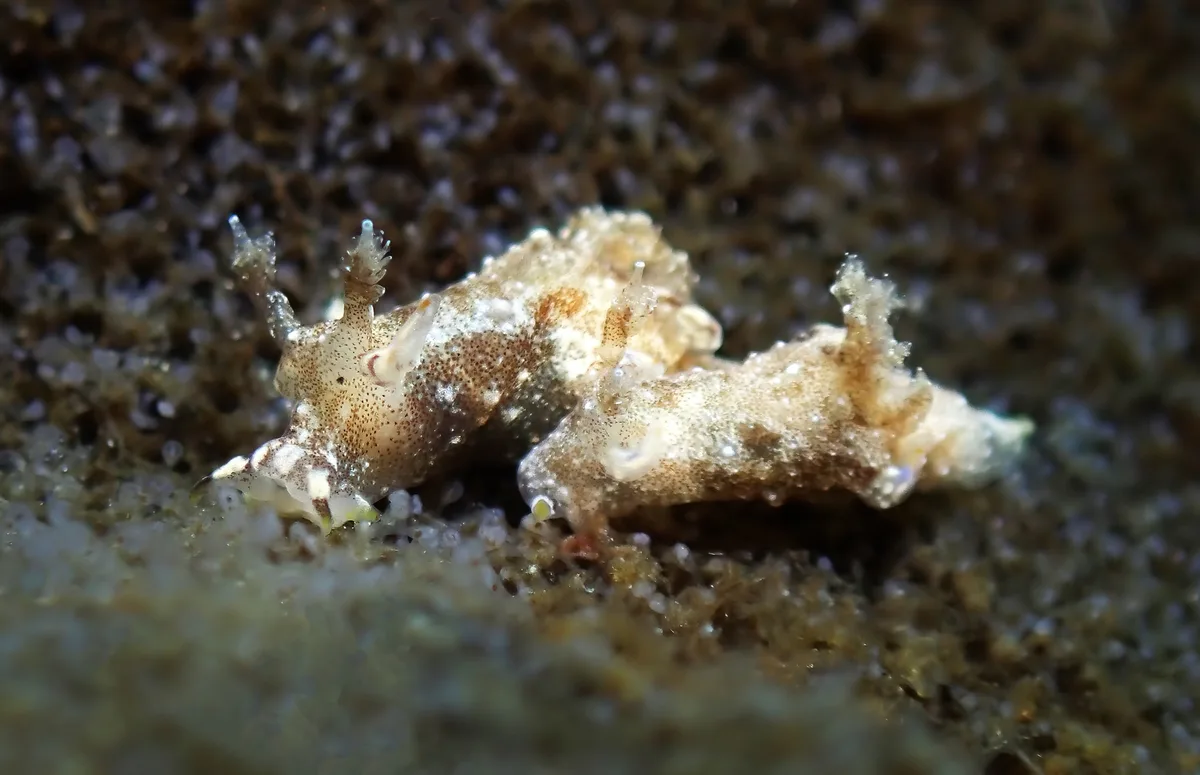
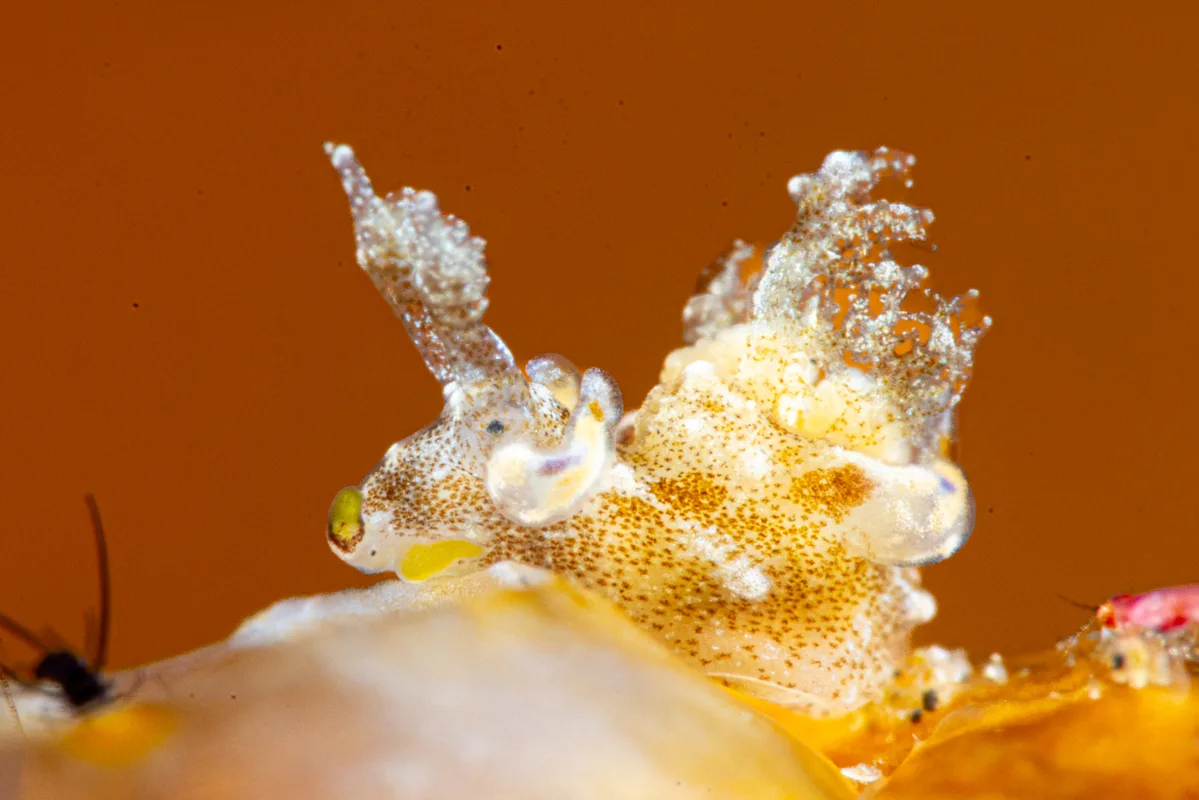
The genus is placed by its appendages: a long process sticking out on each side beside the gill plume, and a second pair standing beside the rhinophores at the front. Four extra processes in two pairs, and no other dorid on this reef has them. On this species those appendages are banded blue, and the oral tentacles are tipped yellow, which is the fastest separation from its relatives here: one is pale yellow blotched brown, another is white with orange tips.
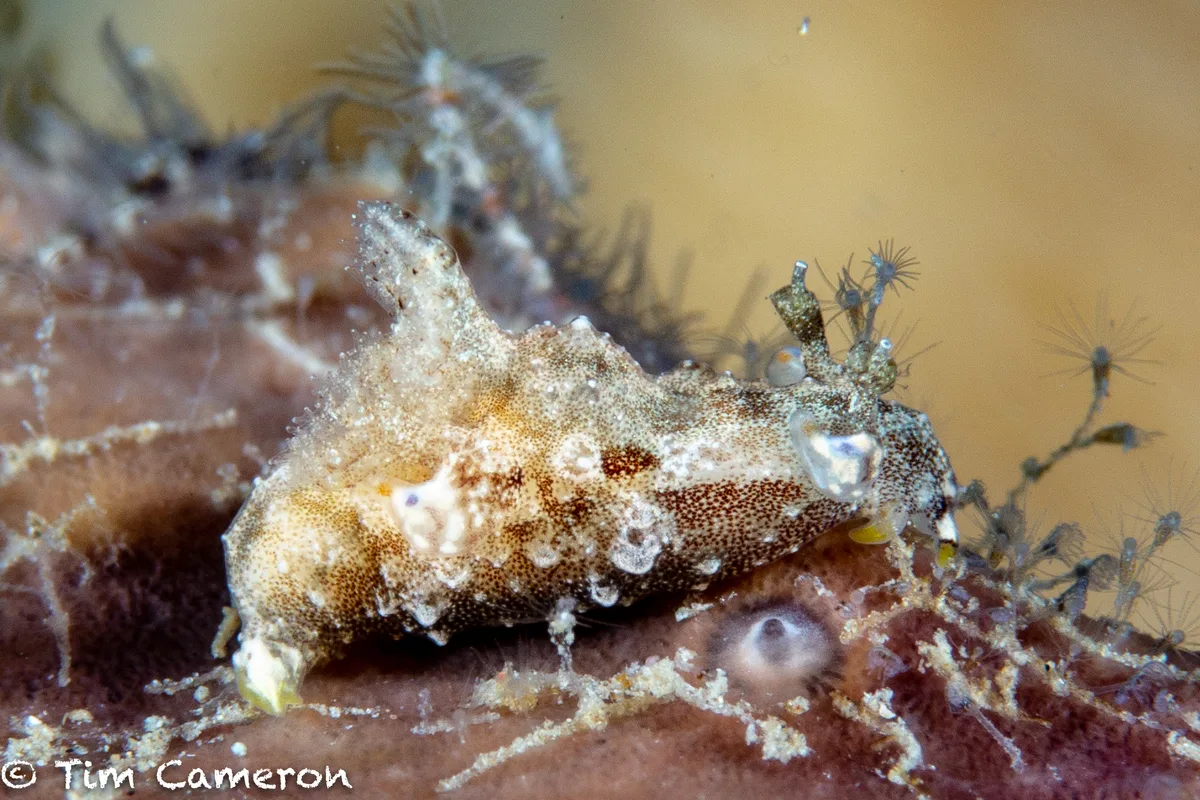
What the whole genus does for a living is eat entoprocts. These are minute stalked animals growing in colonies on sponges and hydroid stems, each a goblet on a stem driving a water current through a ring of tentacles. Essentially nothing else in the sea will touch them, so an animal under a centimeter long has an entire food supply to itself.
That also fixes how you find one. Scanning reef is pointless. You find the fuzz of entoprocts on a sponge, and then you examine that patch closely, and the slug is on it or it is nowhere near.
It was described in 2008 in the same paper as one of its neighbors here, and it has been photographed in the Gulf of Aqaba.
- blue bands on the four extra appendages, which nothing else here has
- oral tentacles tipped yellow
- one long process on each side beside the gills, and a second pair beside the rhinophores
- eight millimeters, on a sponge rather than on the reef