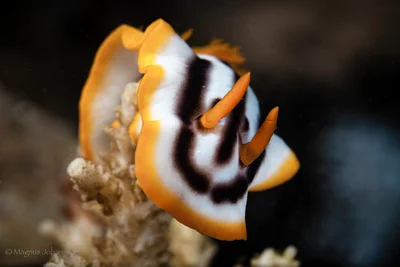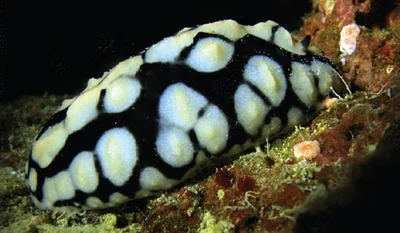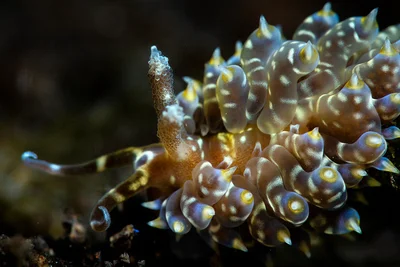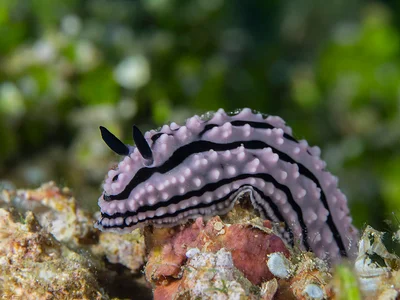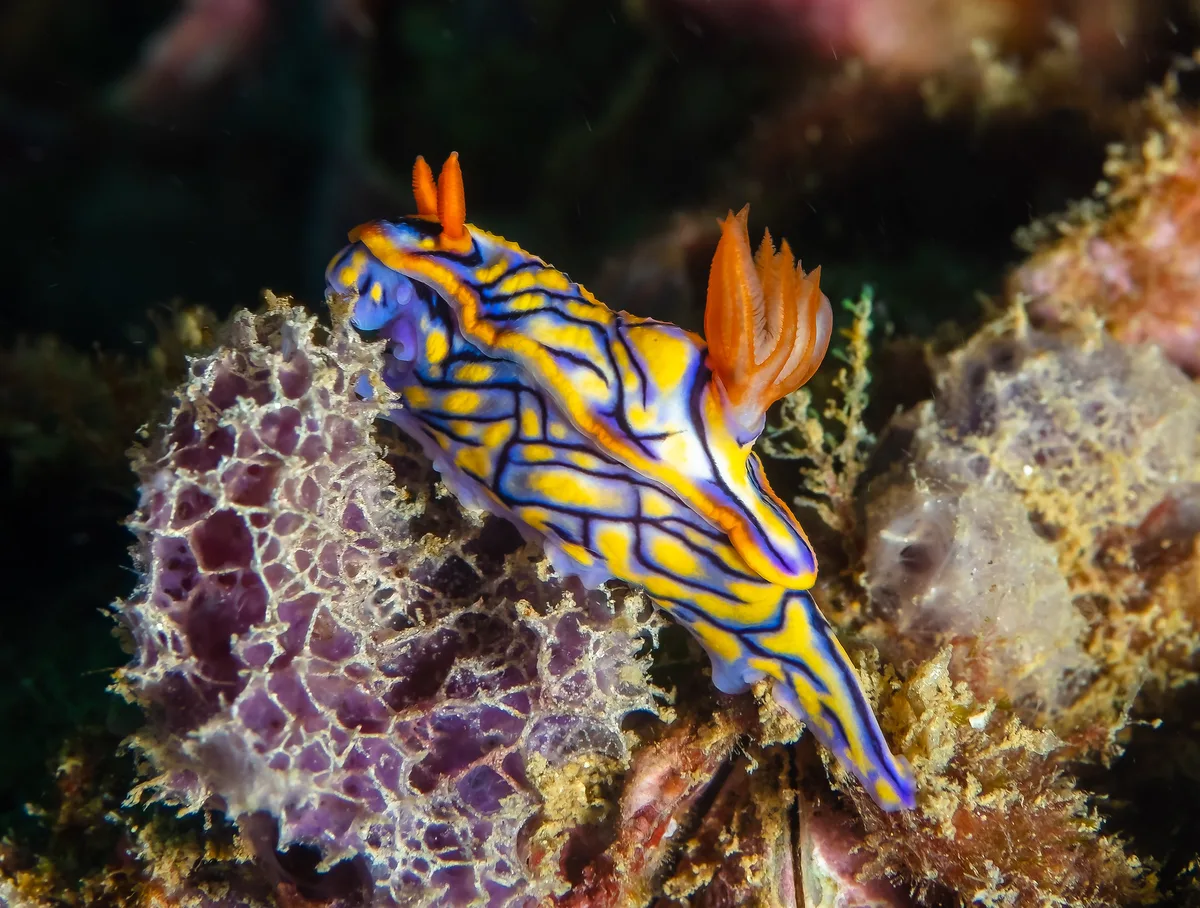
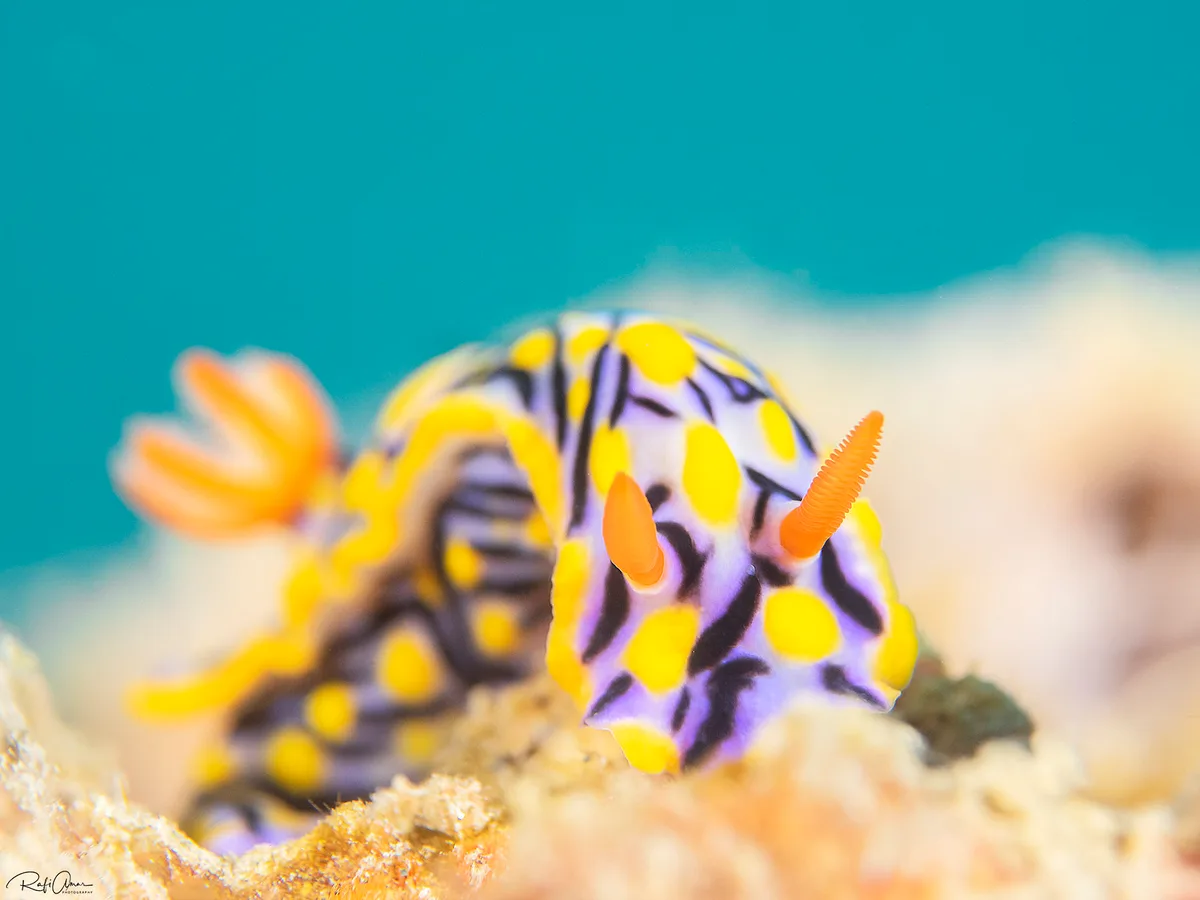
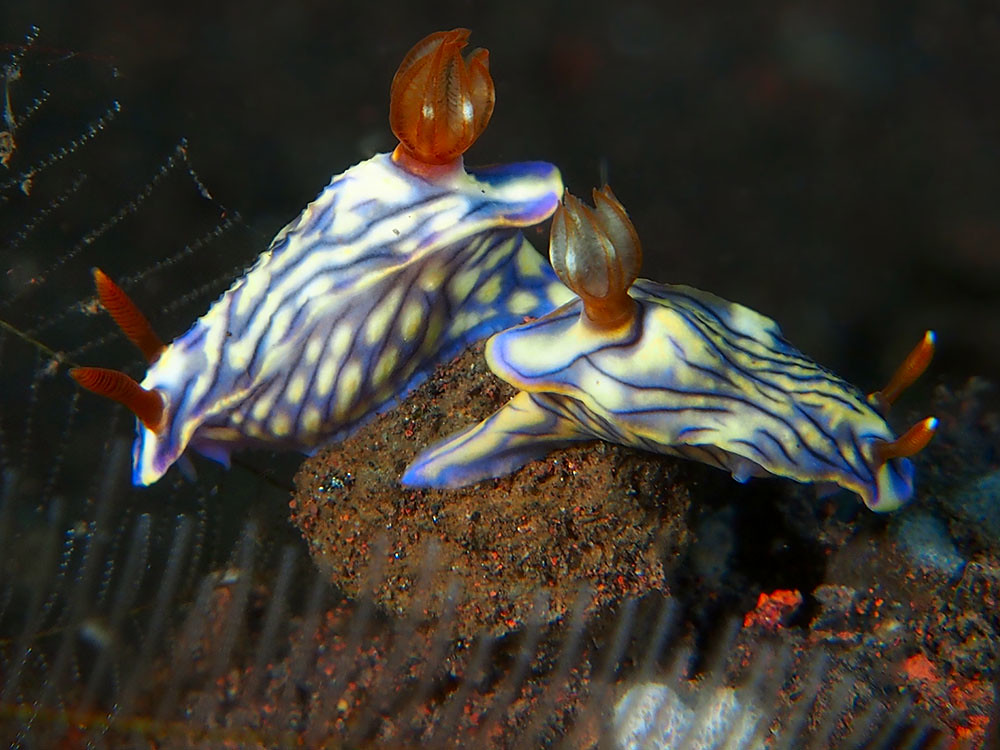
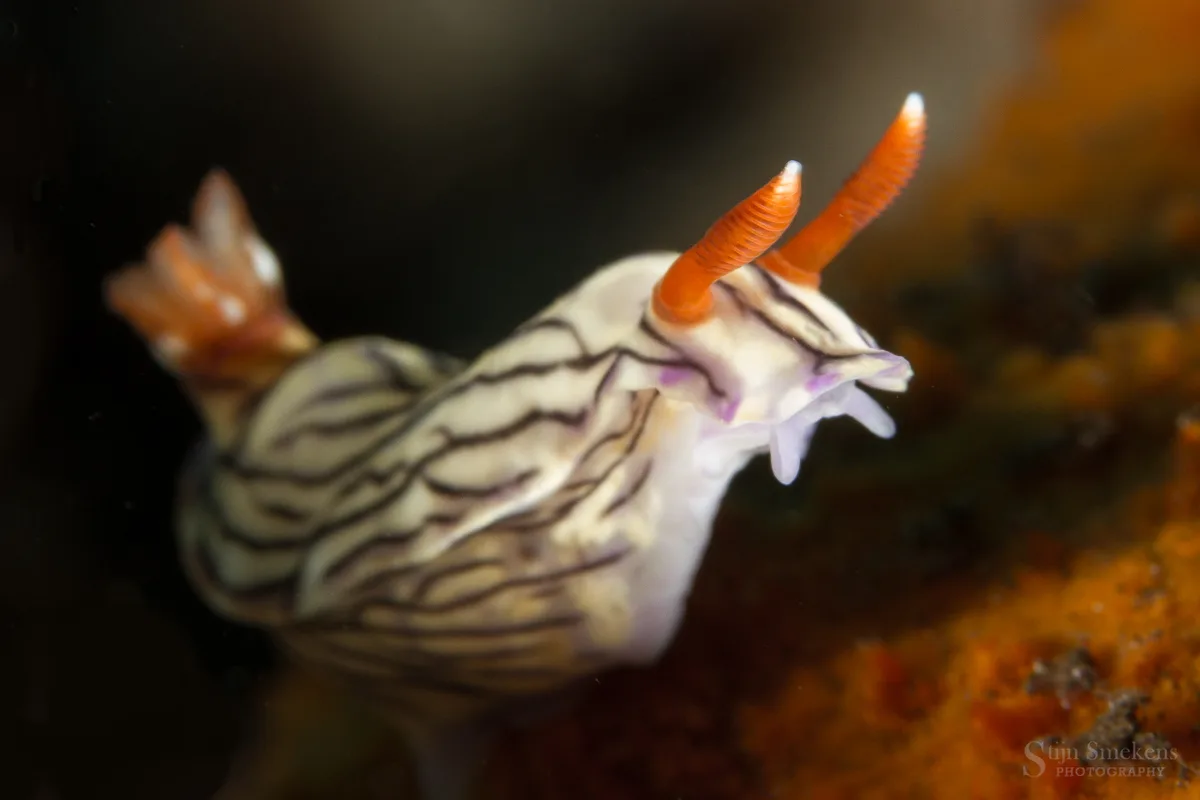
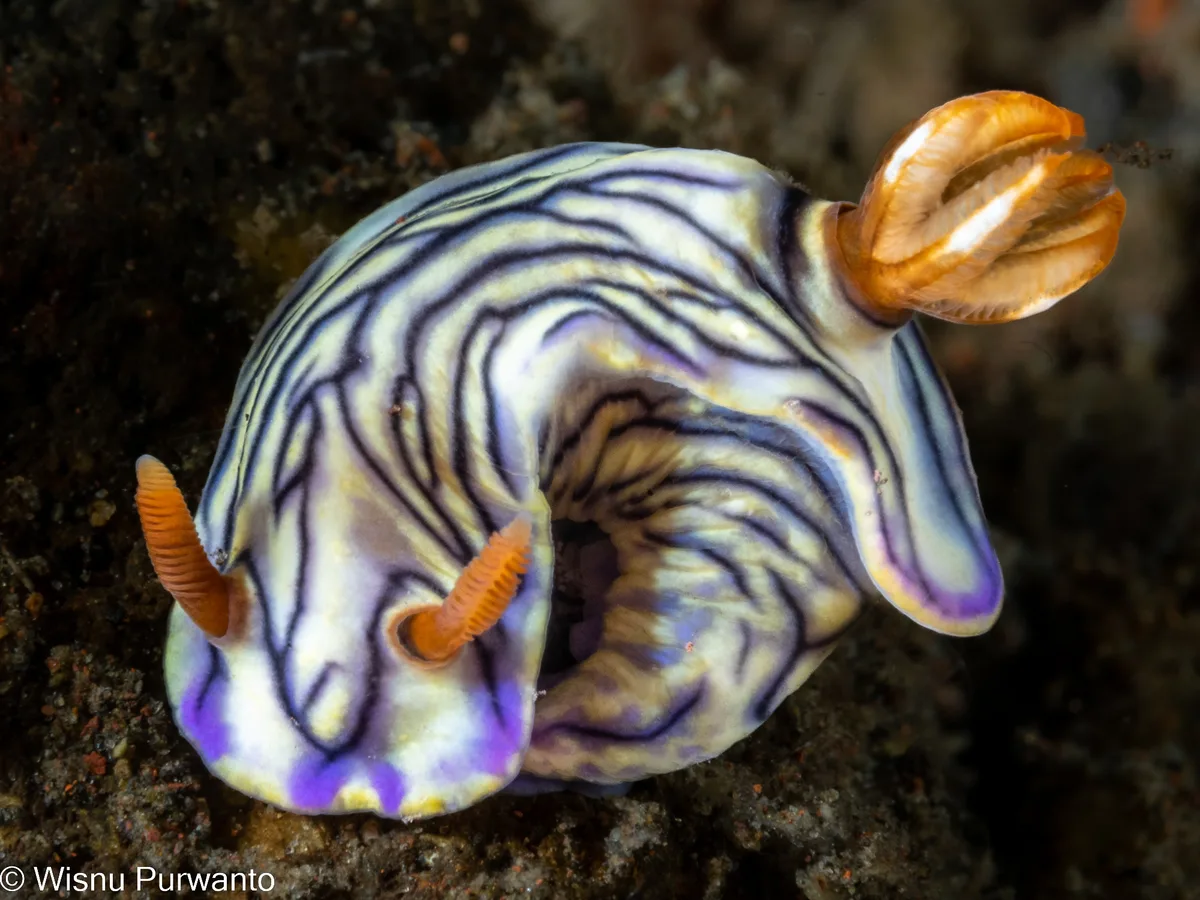
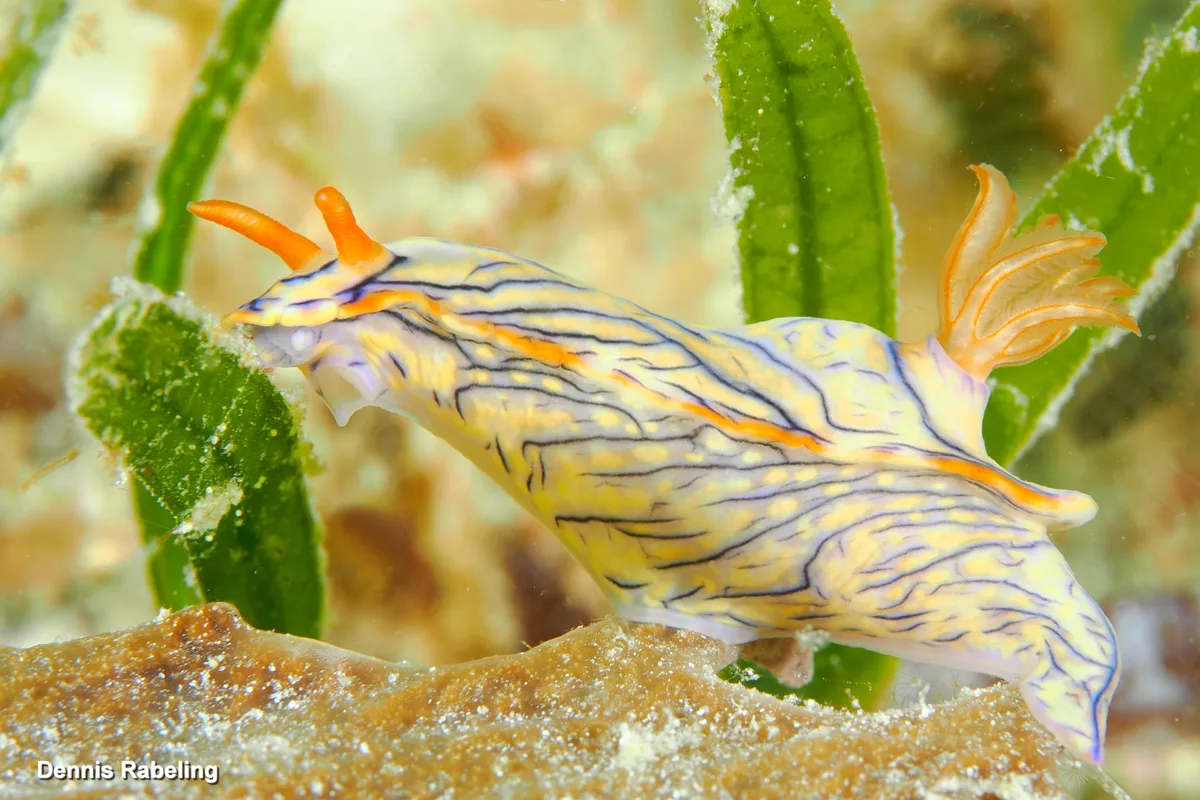
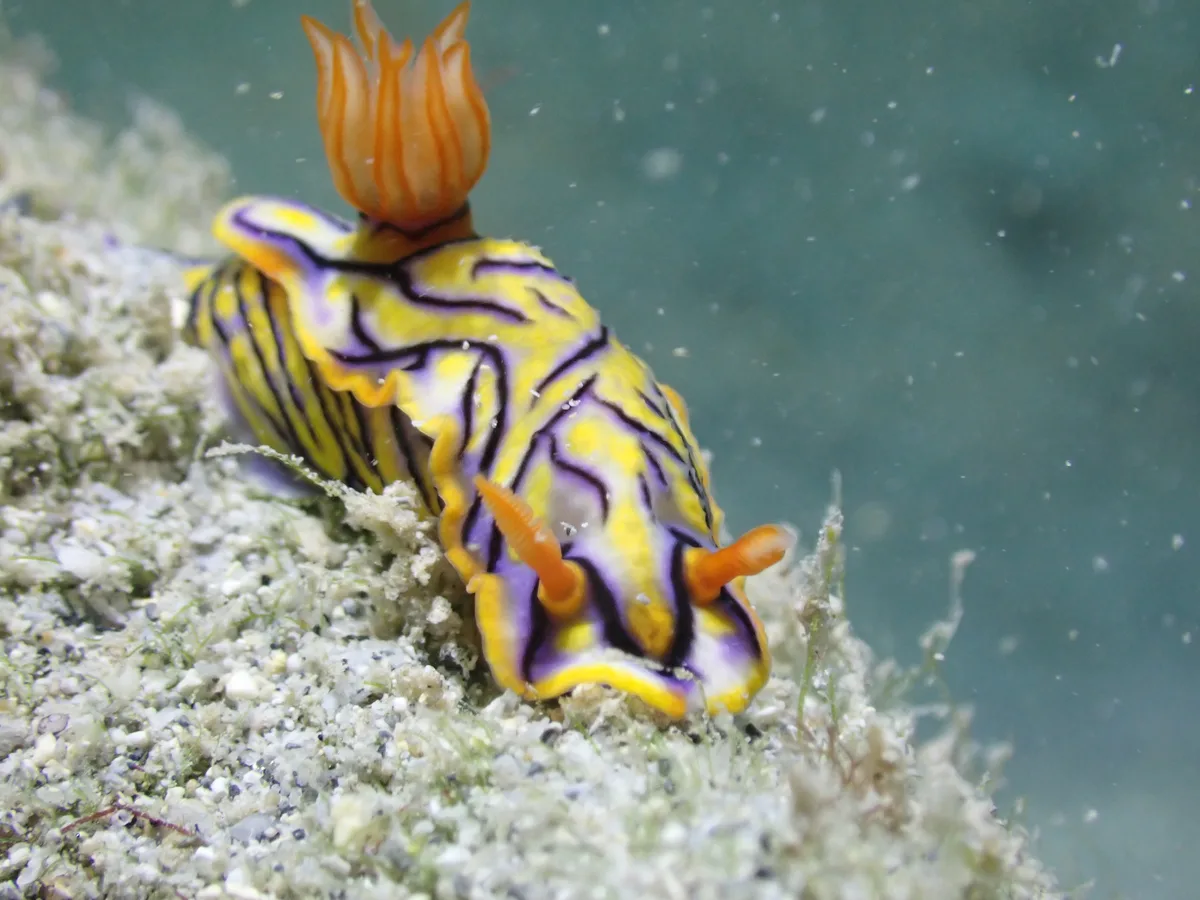
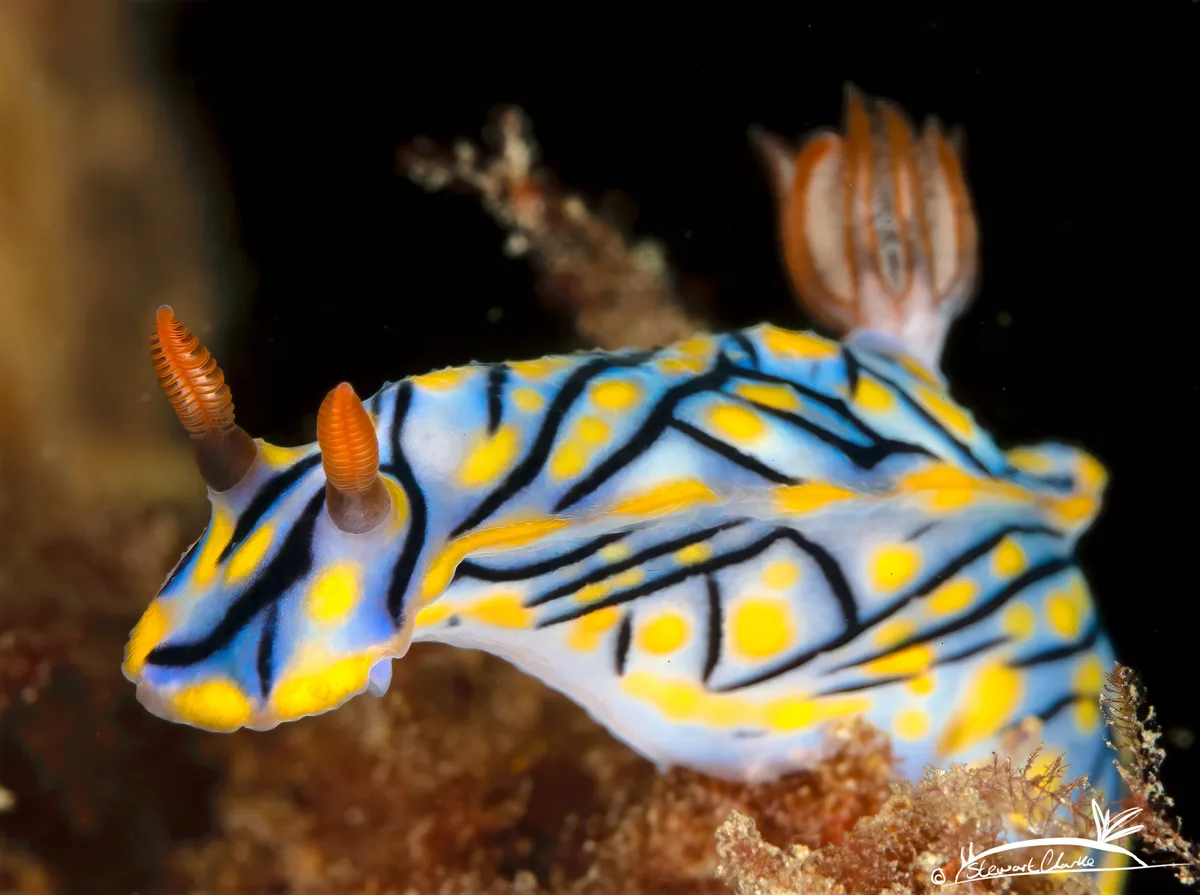
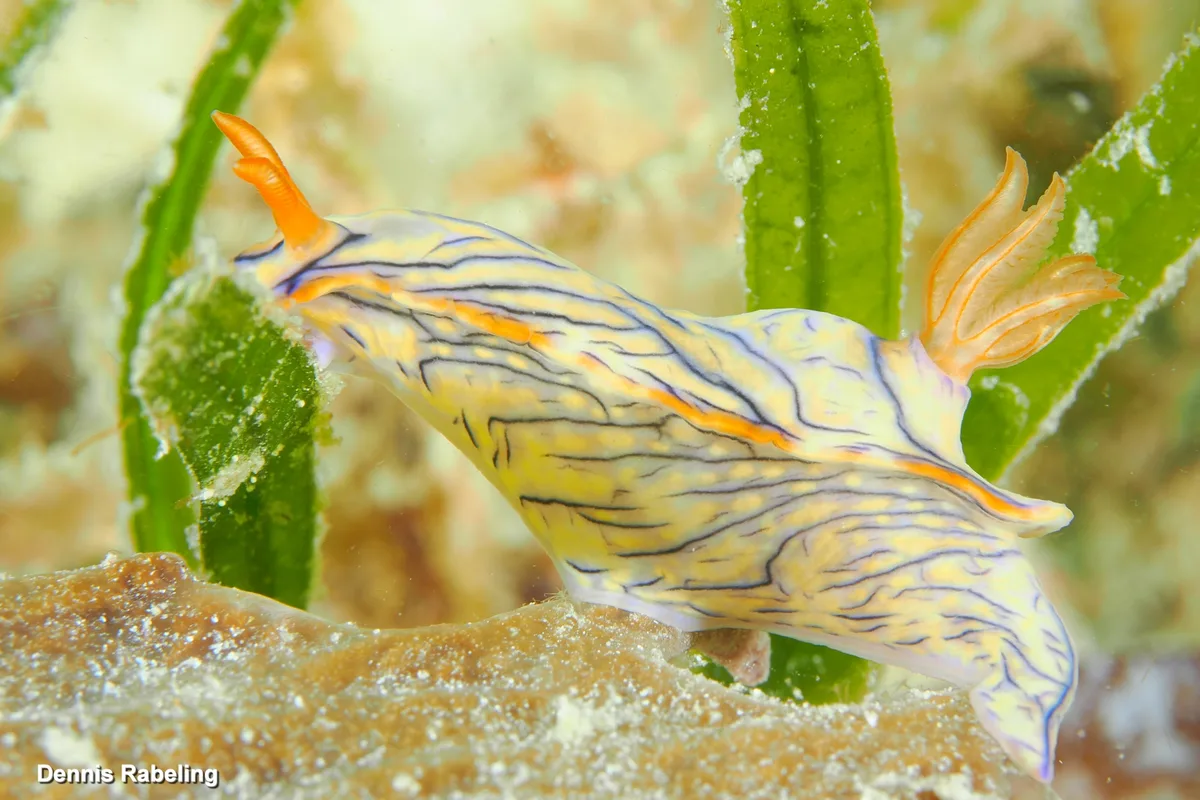
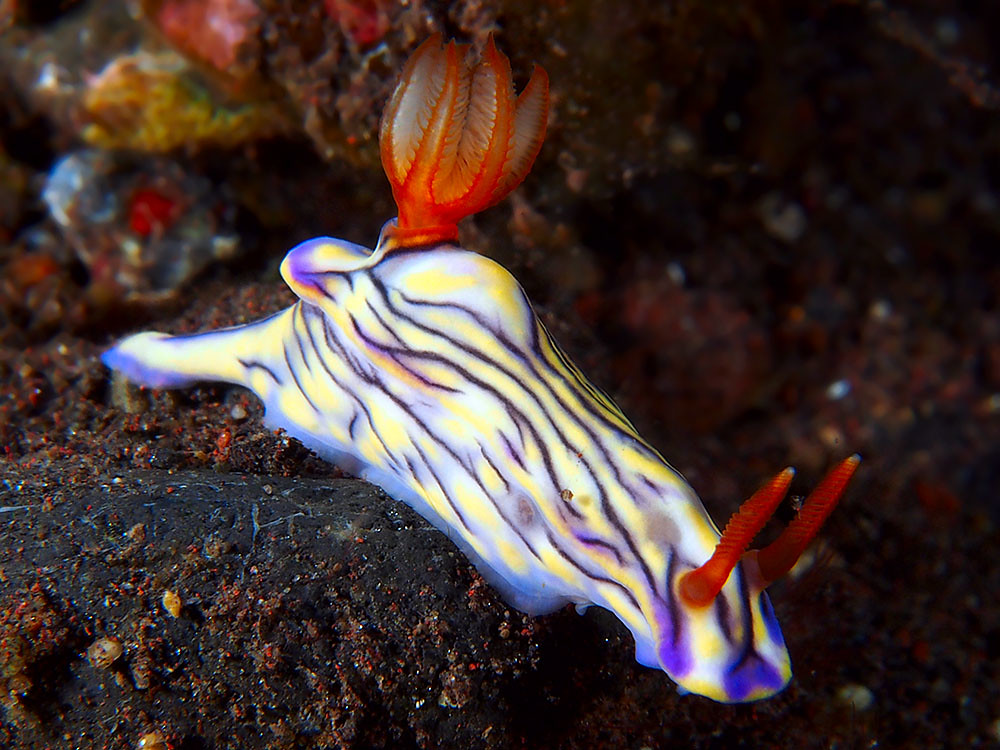
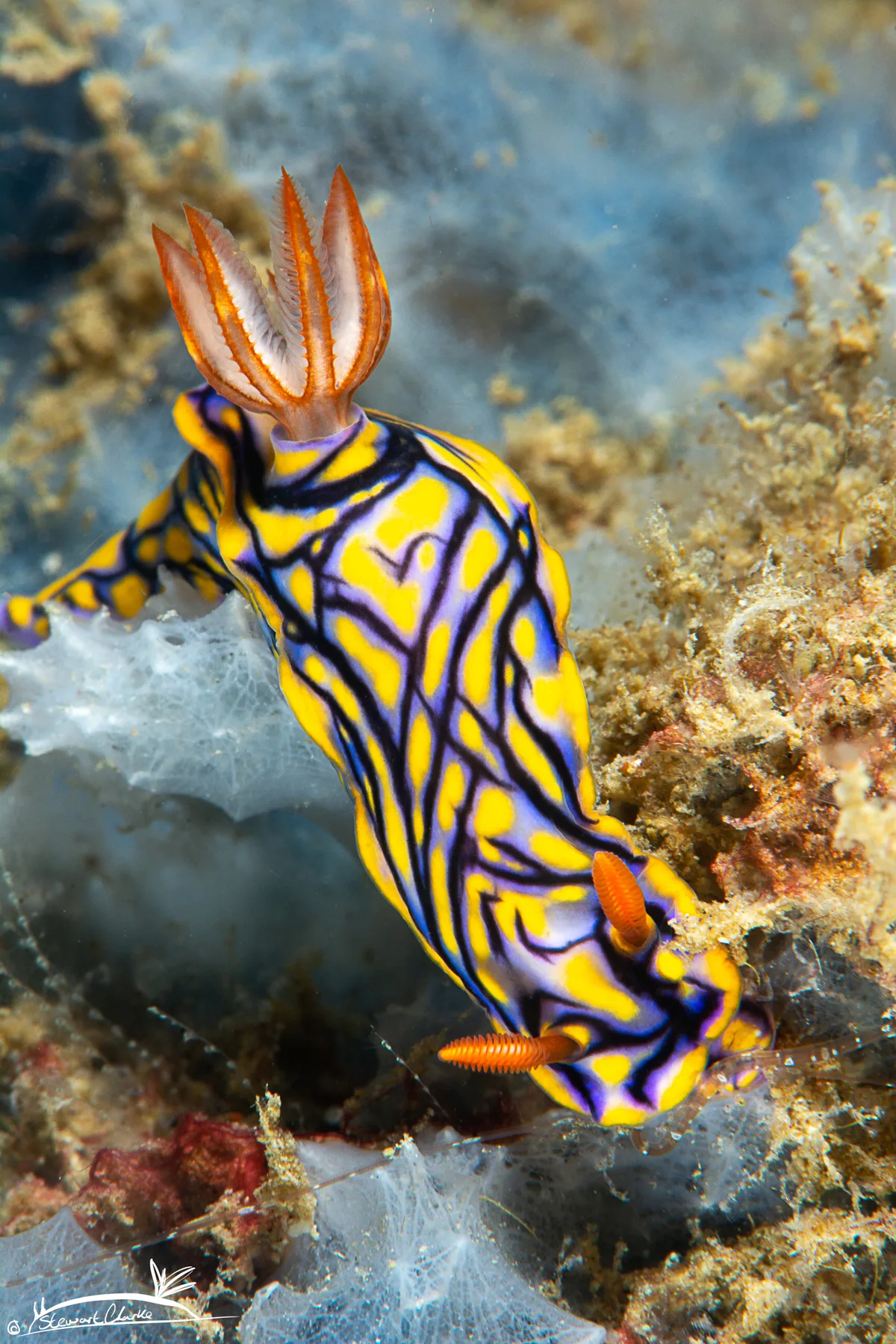
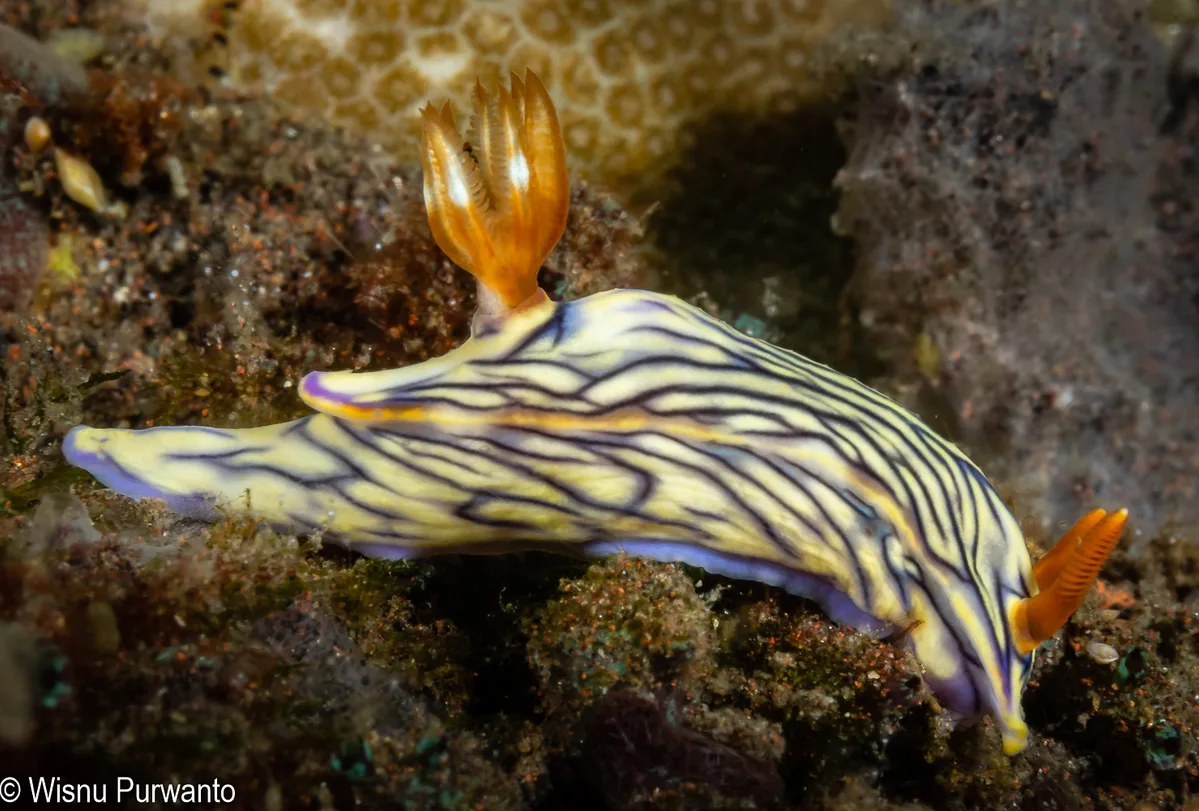
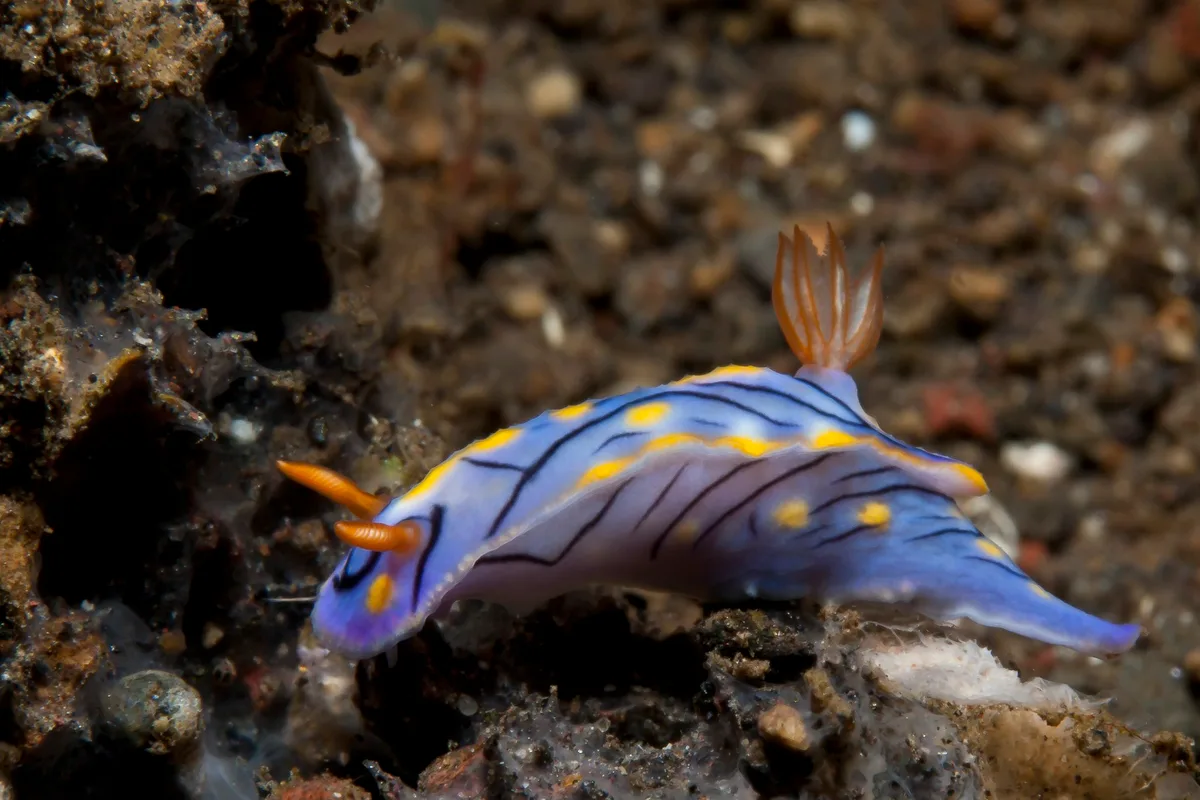
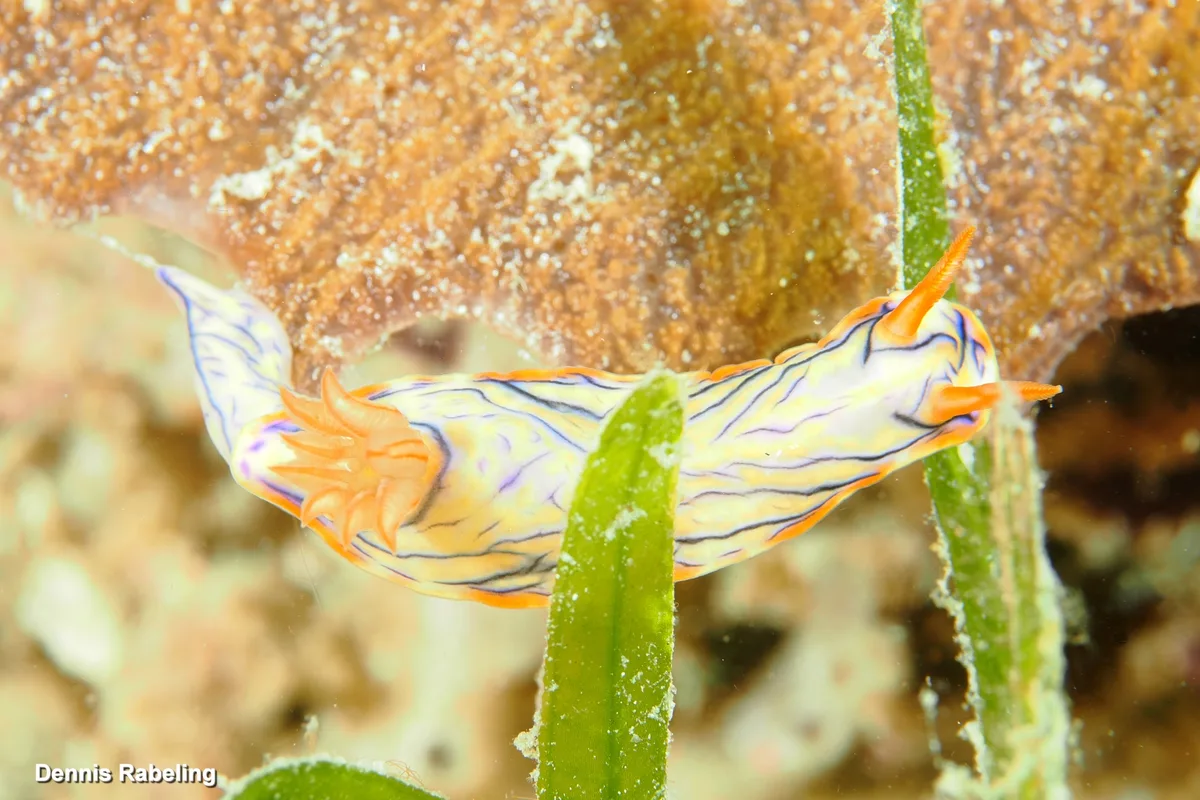
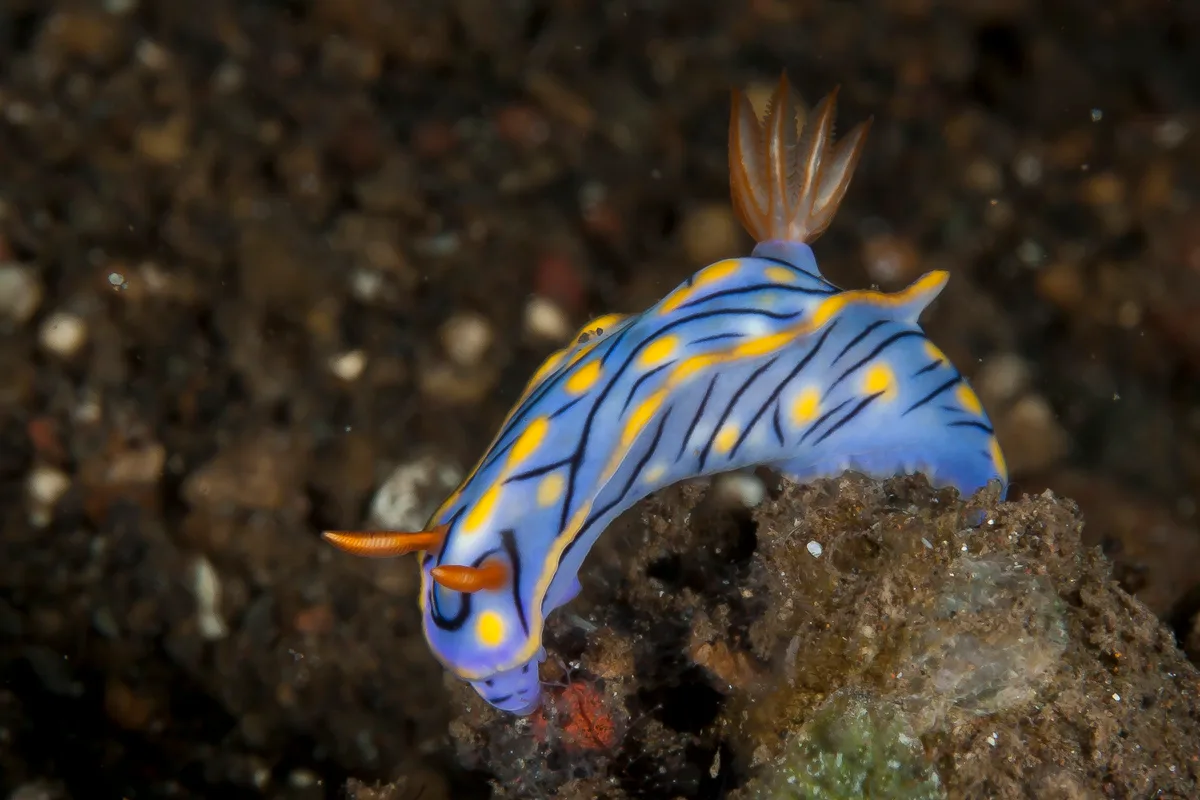
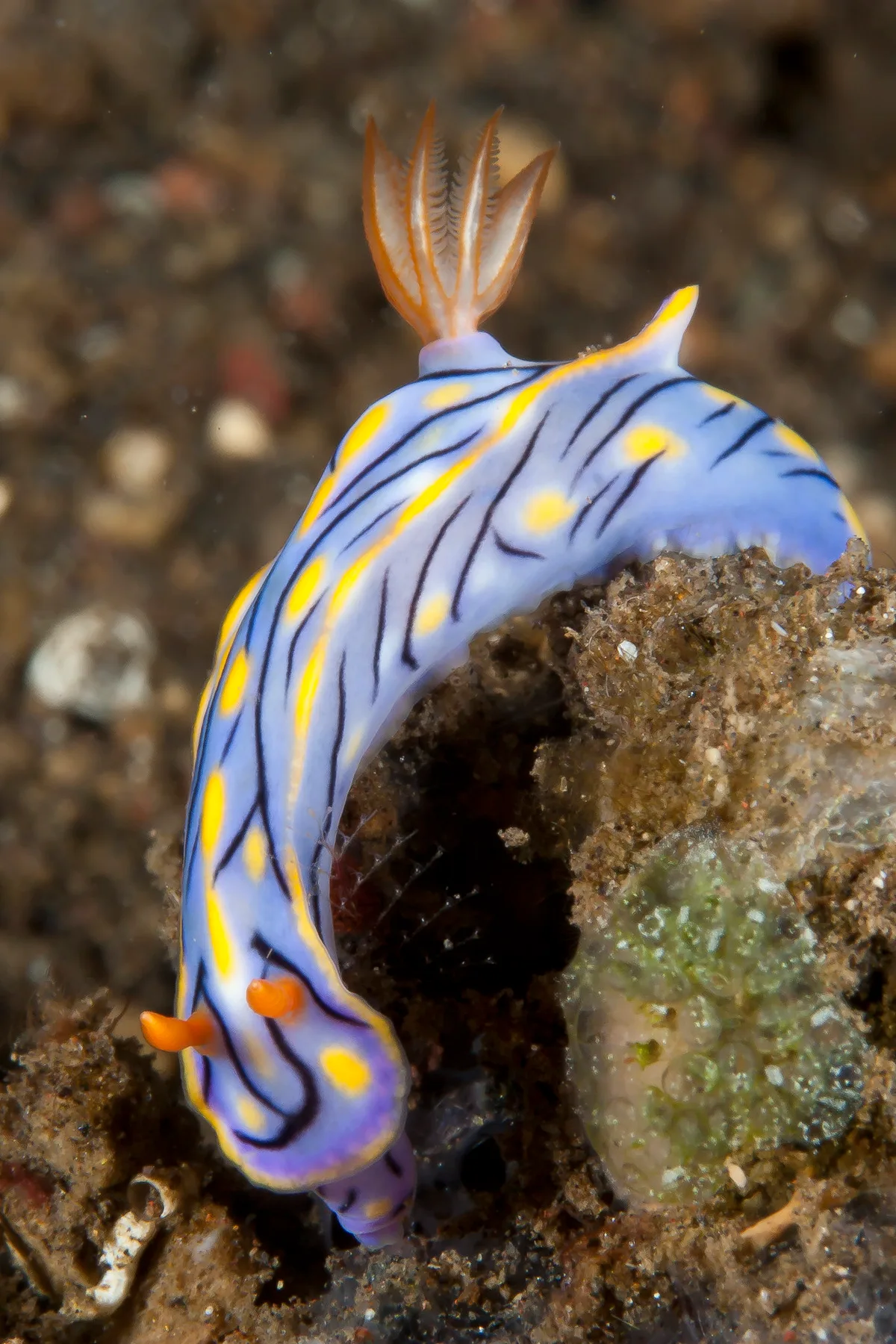
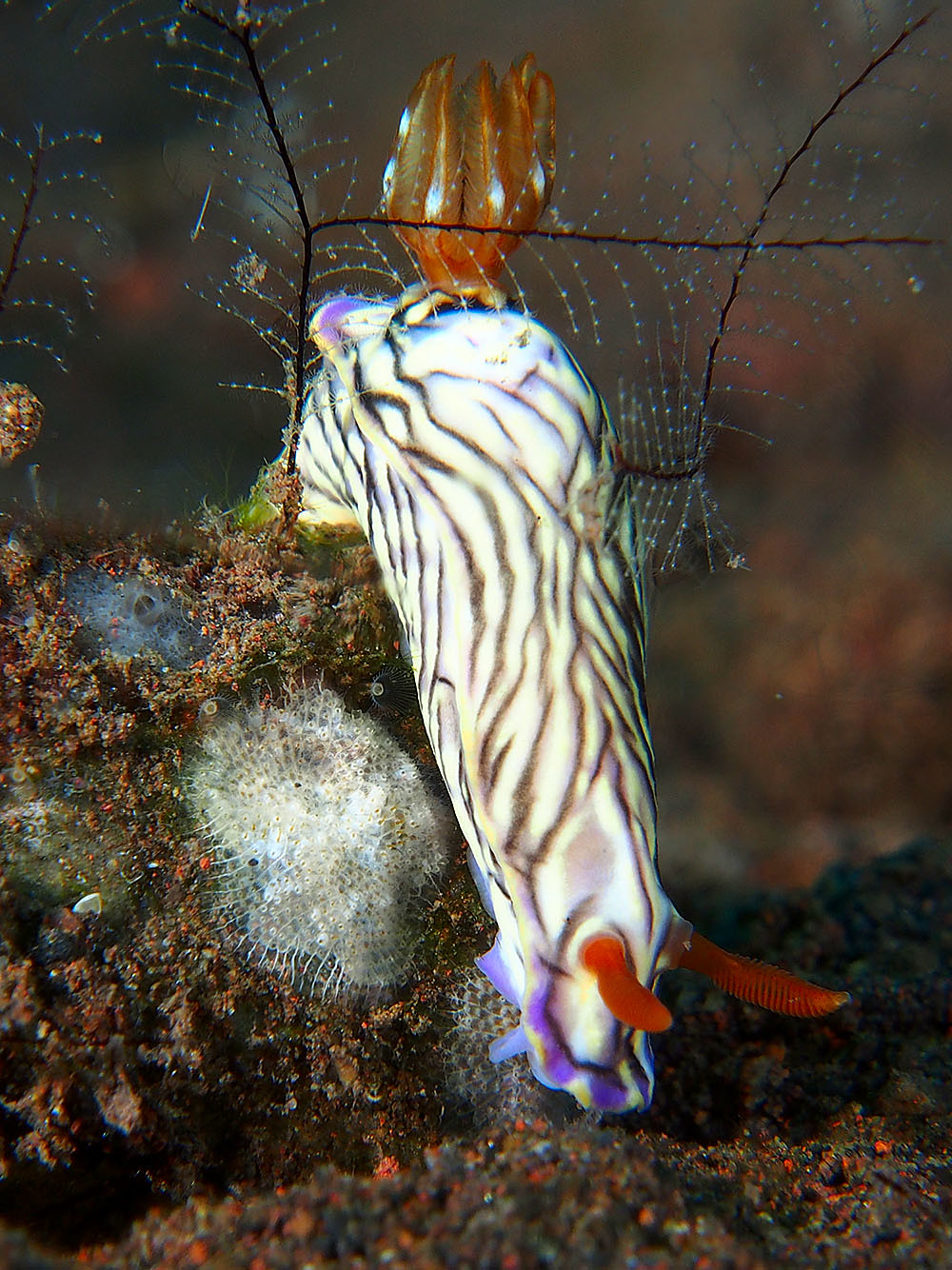
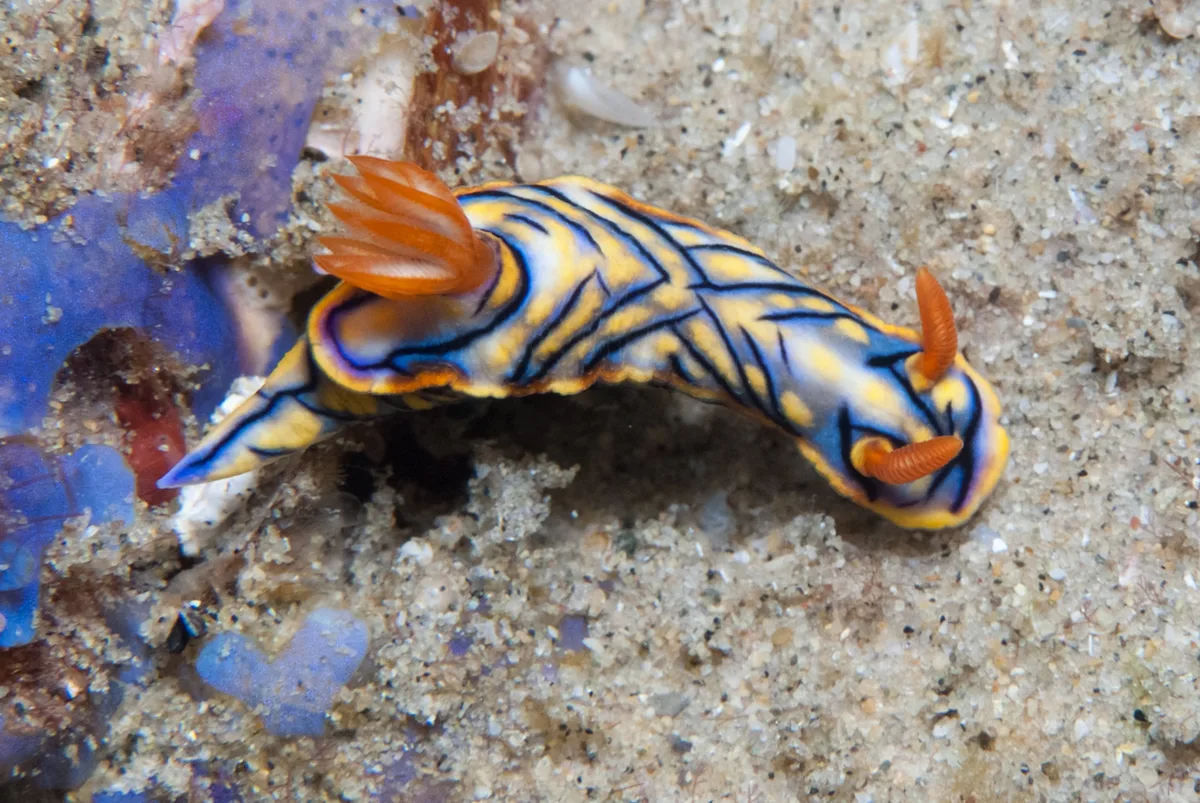
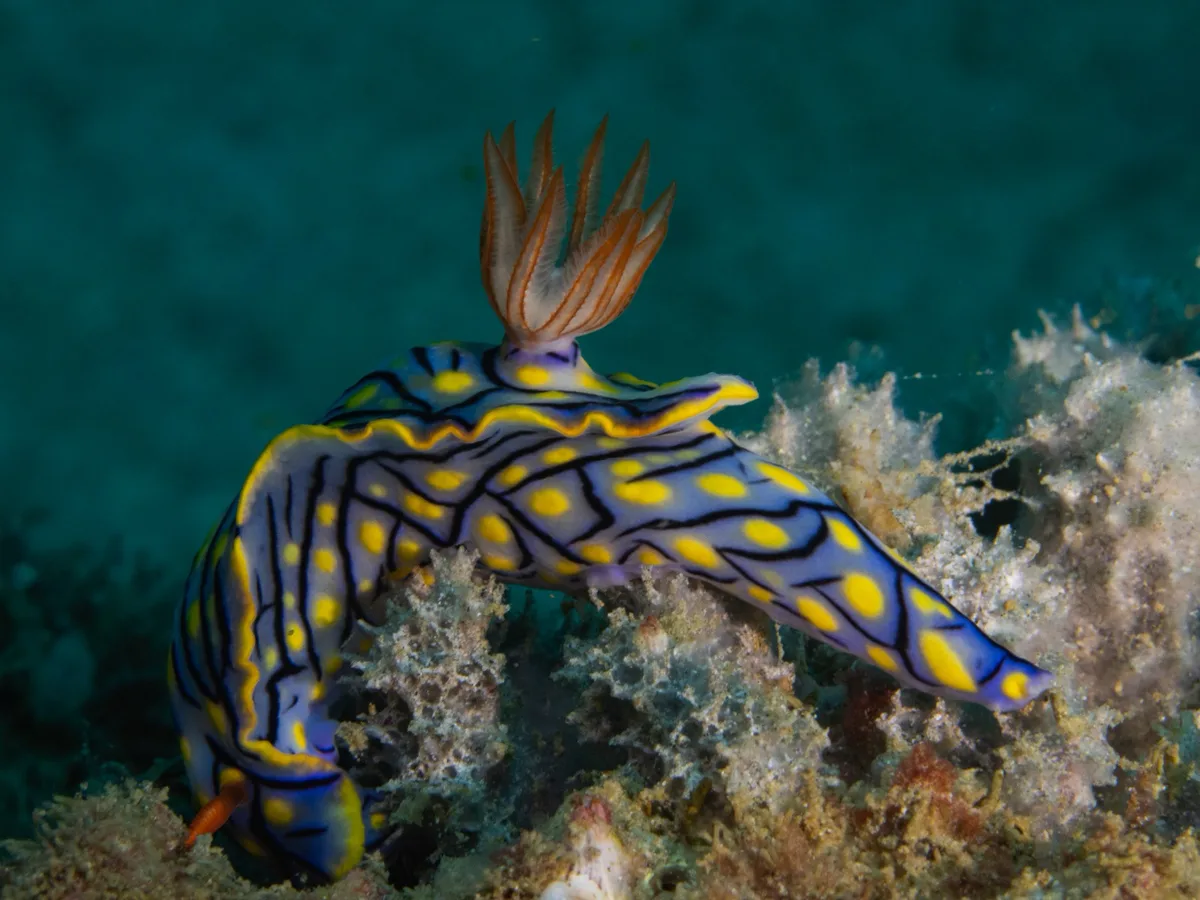
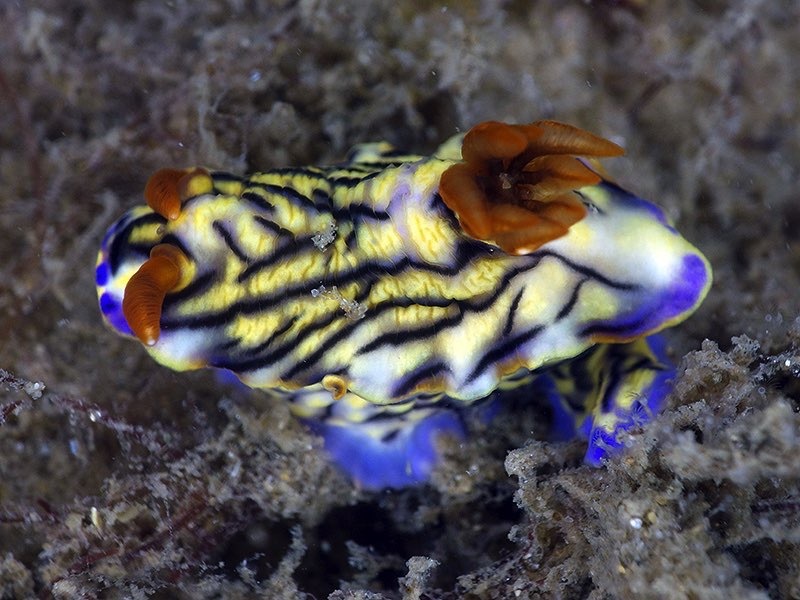
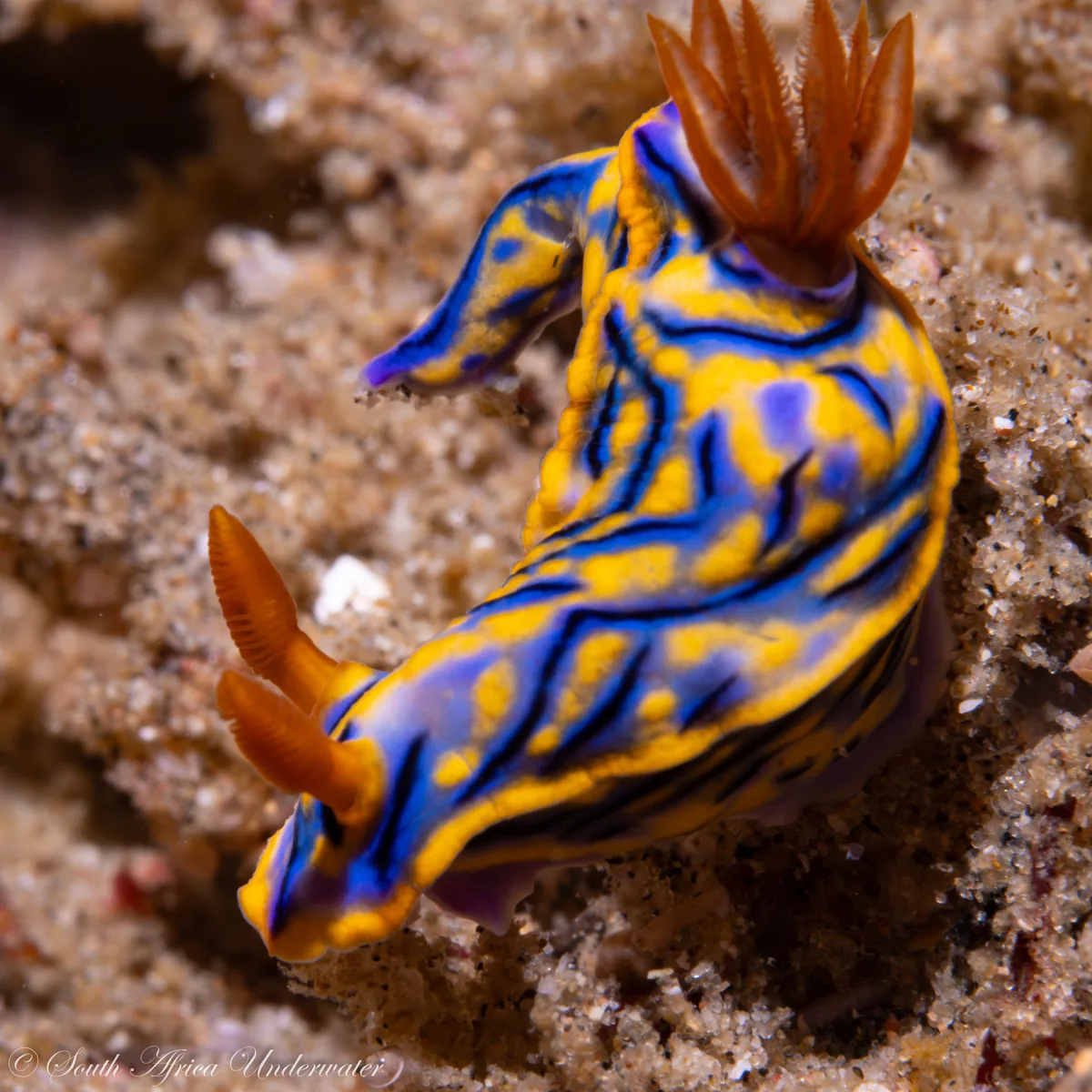
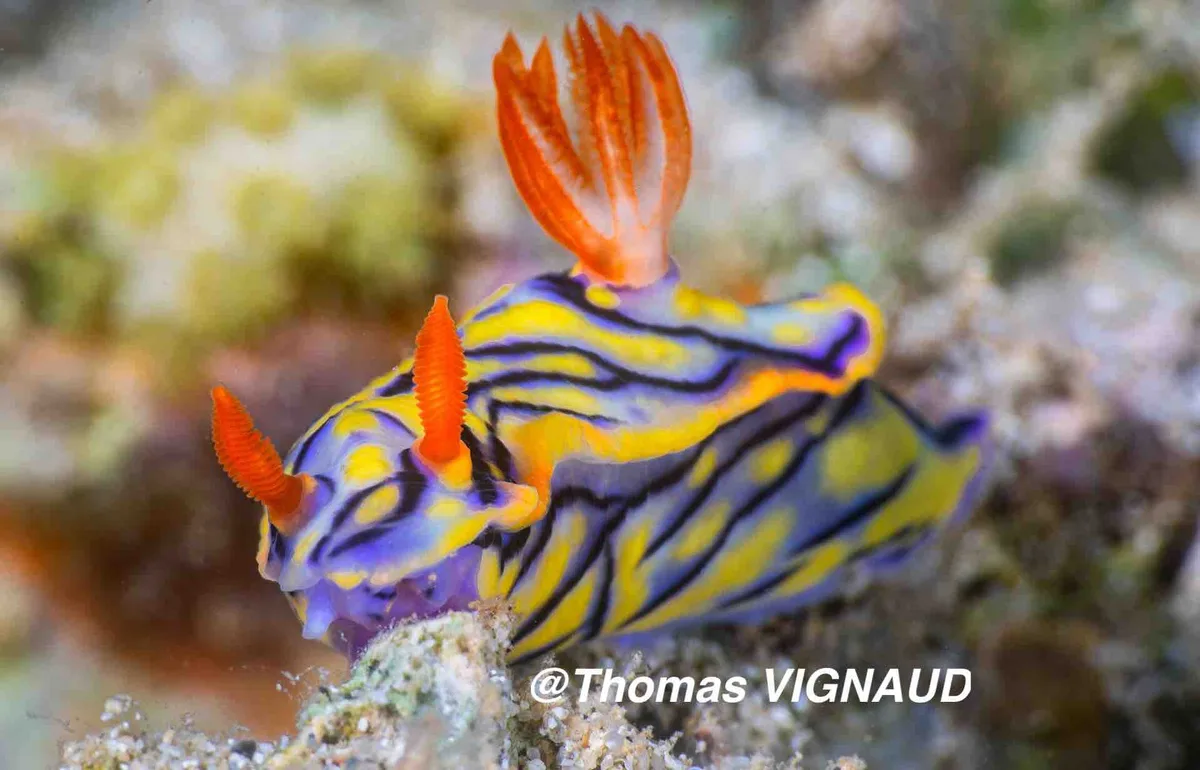
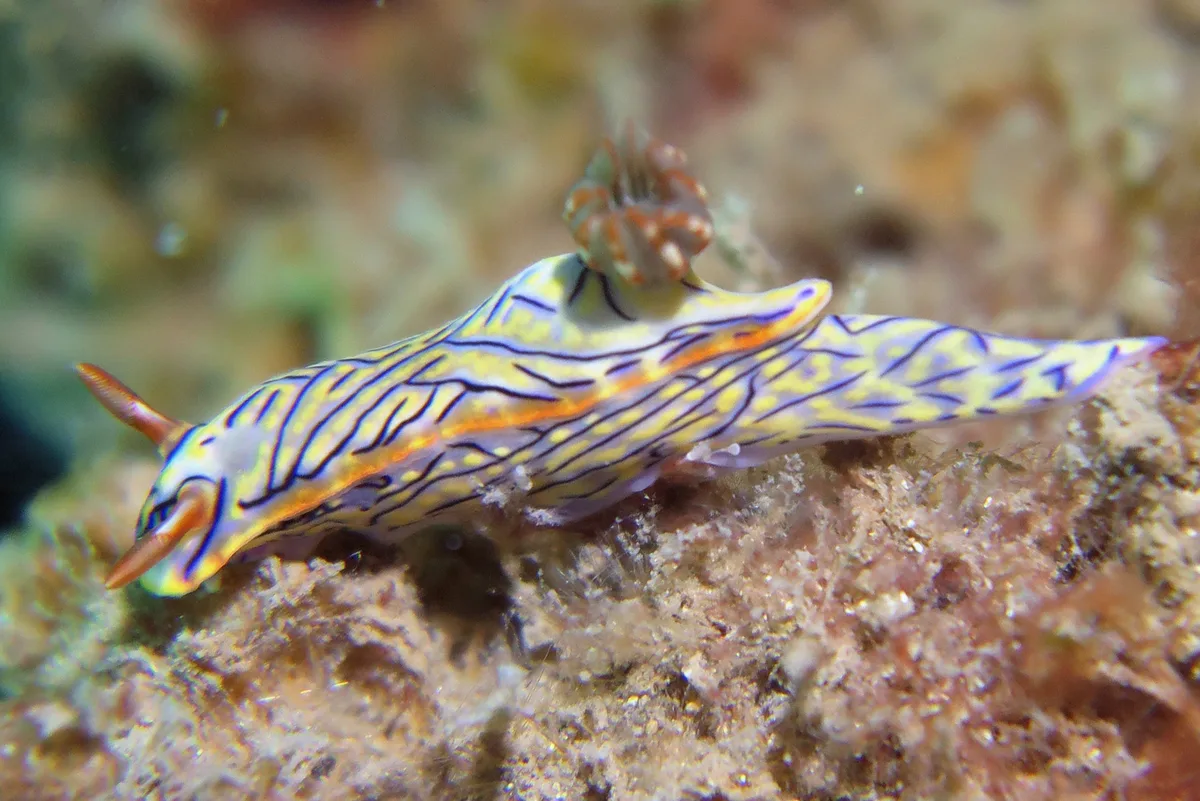
The name says striped and the animal is not. Look at the back and the yellow does not run in parallel lines; it branches, meets itself and encloses areas, forming an irregular network over a blue-violet ground, with every yellow line edged in dark blue. Those dark edges are the nigrostriata of the label, and they are a border rather than the pattern itself.
What actually names this animal across three meters of water is the orange. The rhinophores and the gill plume are bright orange, and against a blue and yellow body that is the strongest signal it carries. This is the useful habit with the whole genus: identify a Hypselodoris by the rhinophores and gills rather than by the body pattern, because the pattern varies between individuals and reefs while the color of those two organs holds steady.
There is a reason those organs are marked and it is not decoration. They are the most exposed parts of the animal, the first thing a fish would take, and both can be pulled down out of reach in an instant. A conspicuous, retractable, brightly colored target on an animal loaded with sponge toxins is a system, not an accident.
Four centimeters (1.6 in), crawling in the open in daylight. Records run across the 🌊 Indian Ocean from 🇰🇪 Kenya to 🇱🇰 Sri Lanka and up into the 🌊 Gulf of Oman.
- rhinophores and gills bright orange, which is the mark that carries at a distance
- yellow lines forming an irregular network on a blue-violet ground
- each yellow line edged in dark blue, which is what the name records
- a yellow band around the mantle margin