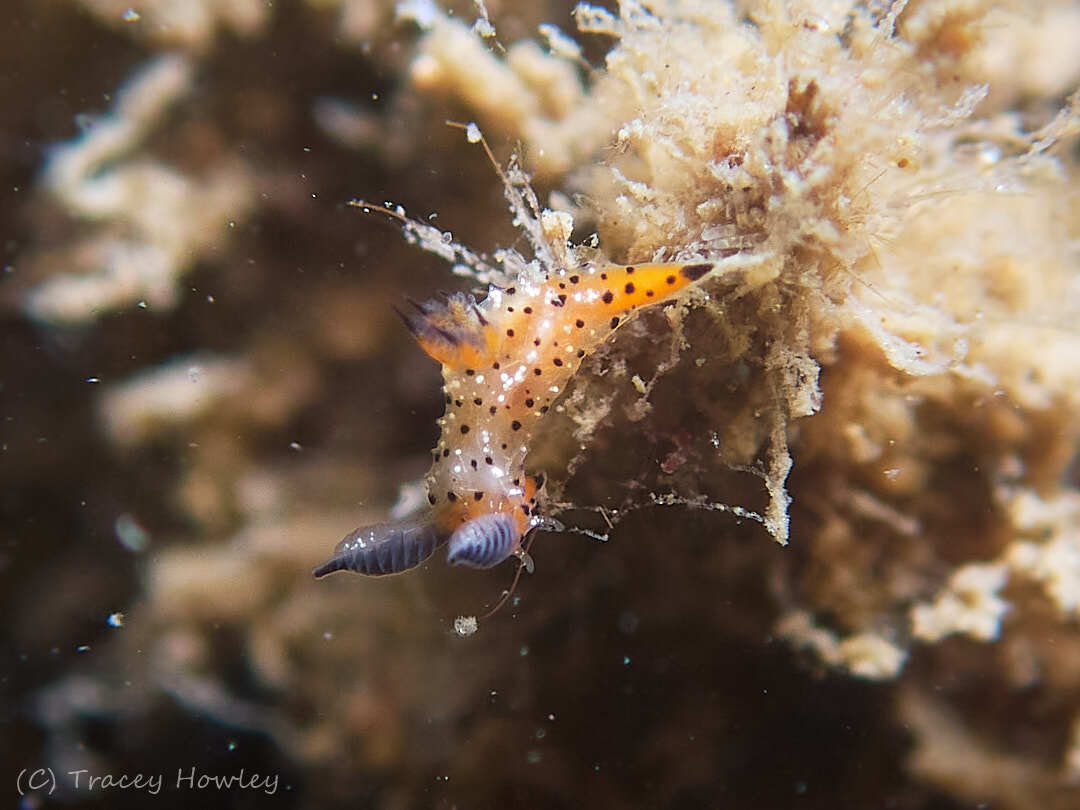
This slug eats one thing, and that one thing is why a centimeter-long animal is recorded from the 🌊 Red Sea, from 🇦🇺 Australia and from 🇳🇿 New Zealand.
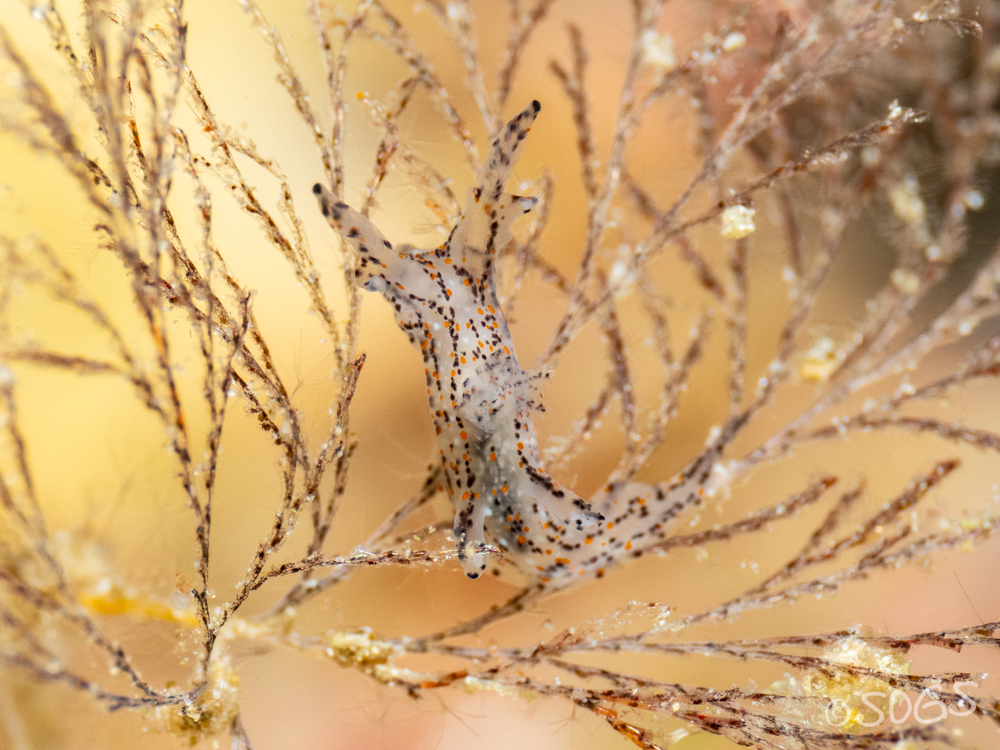
Its food is Bugula, a bryozoan that grows as fine branching tufts and is one of the classic fouling organisms of the sea. It colonizes ropes, mooring lines, buoys, pontoon floats, jetty piles and hulls, anywhere with a hard surface and moving water, and it does this in every warm harbor in the world. A specialist that lives on Bugula therefore lives on things that travel. It is not the only explanation for a range like this one, but it is the obvious one, and it is a reminder that some of the animals in this catalogue got where they are by being attached to something people built.
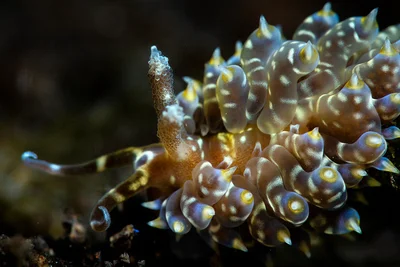
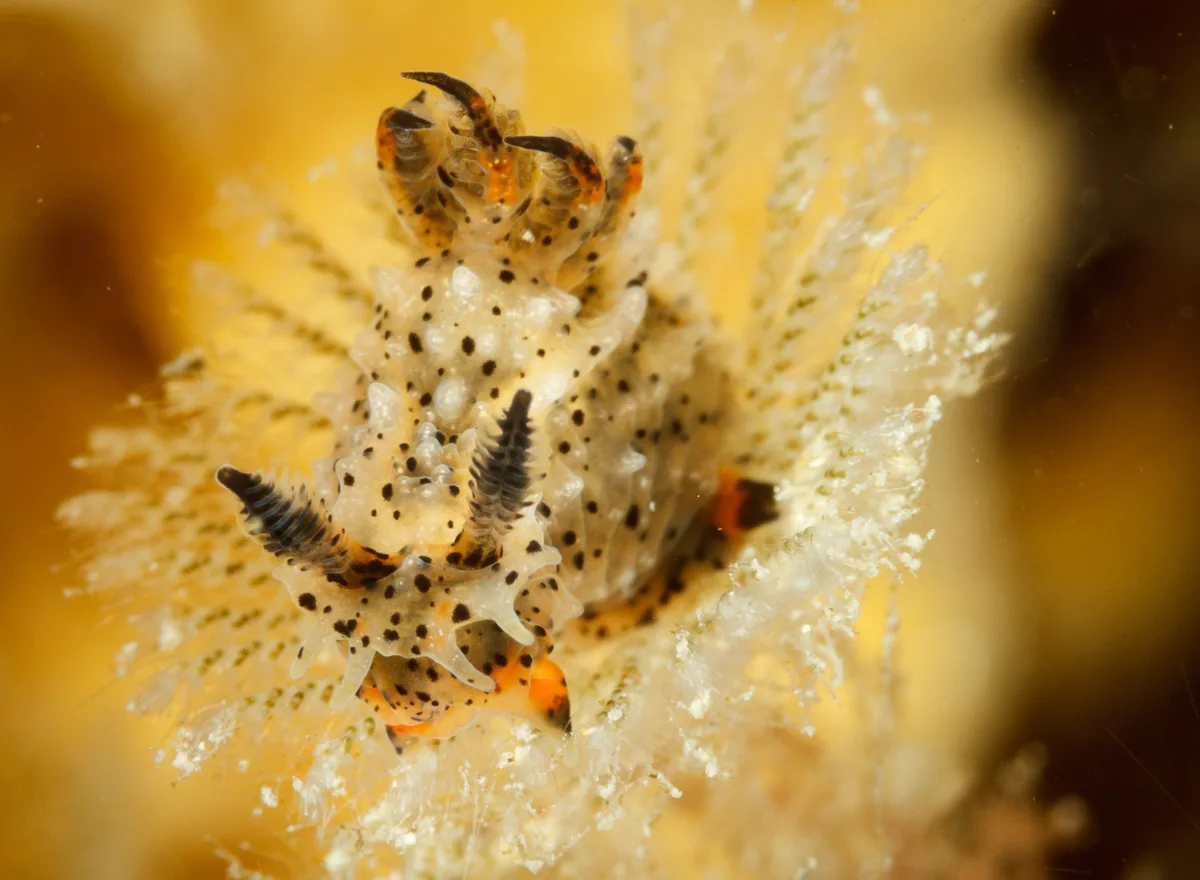
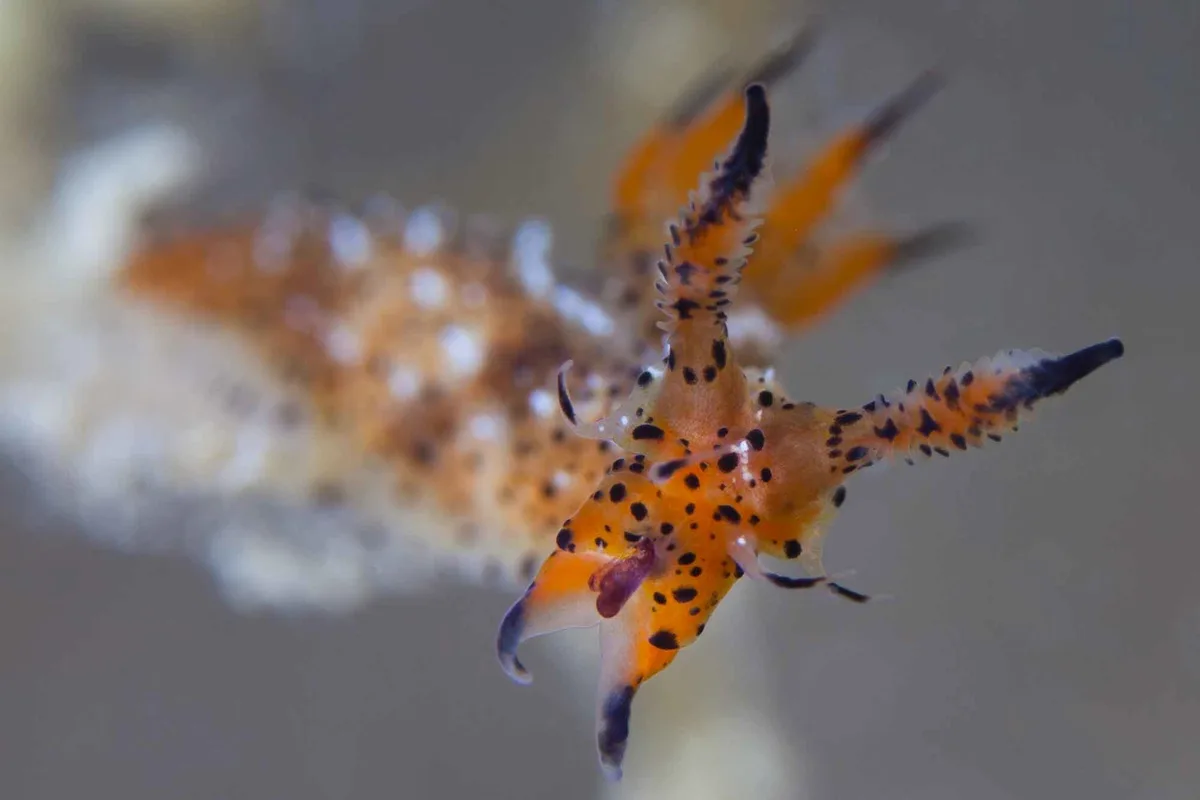
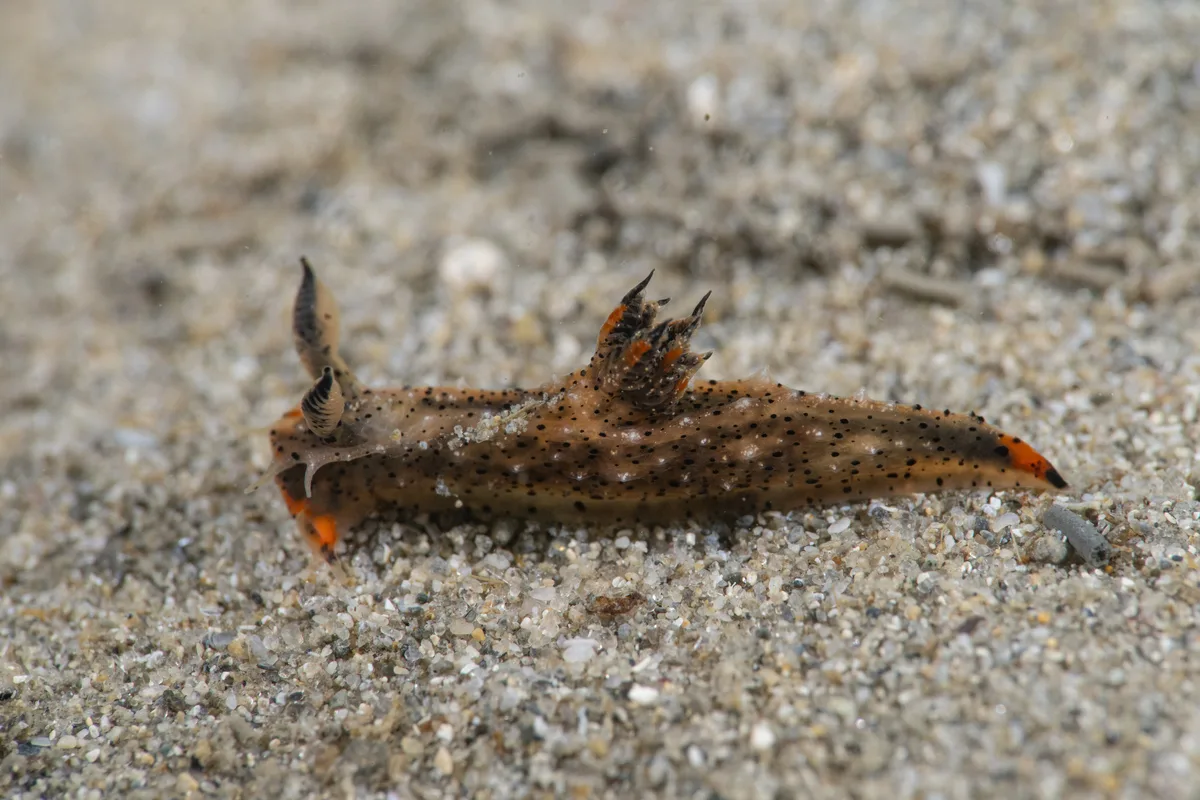
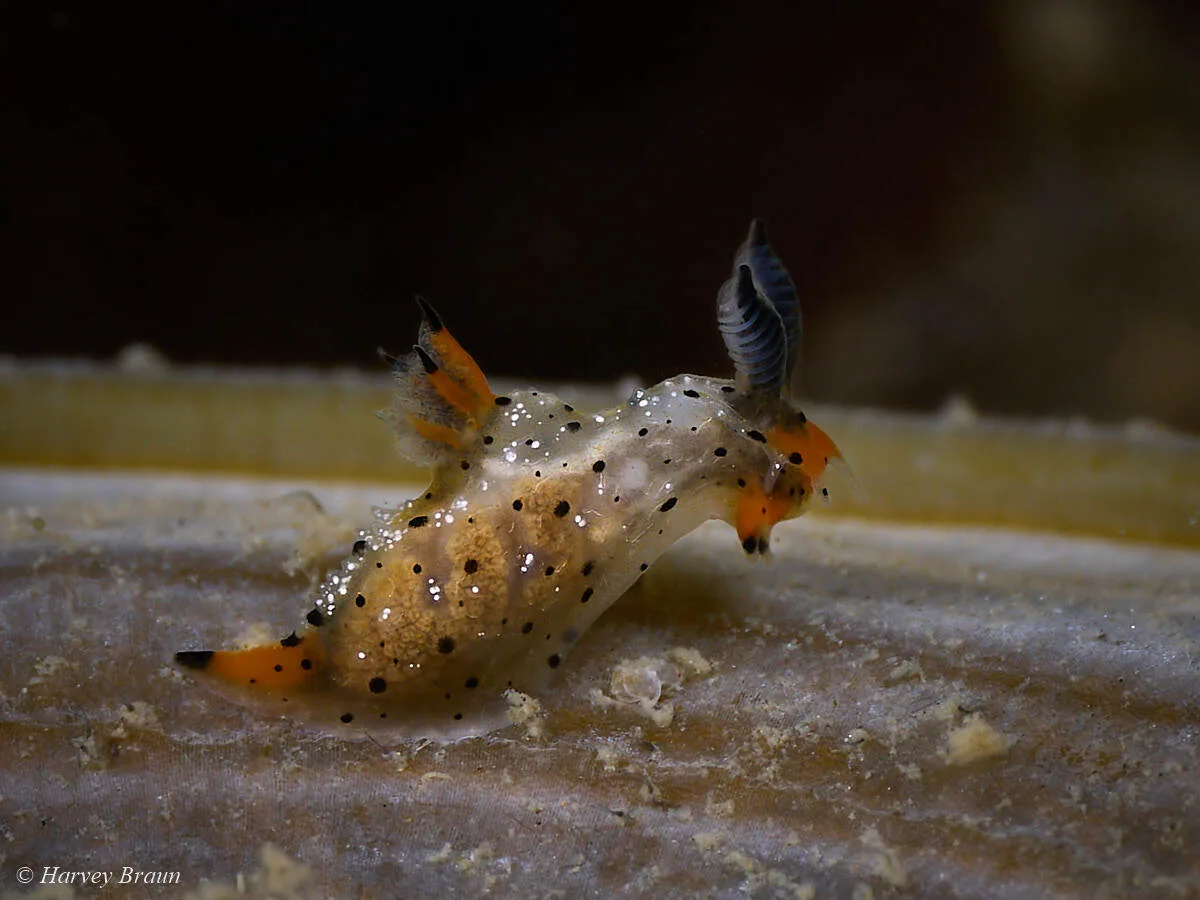
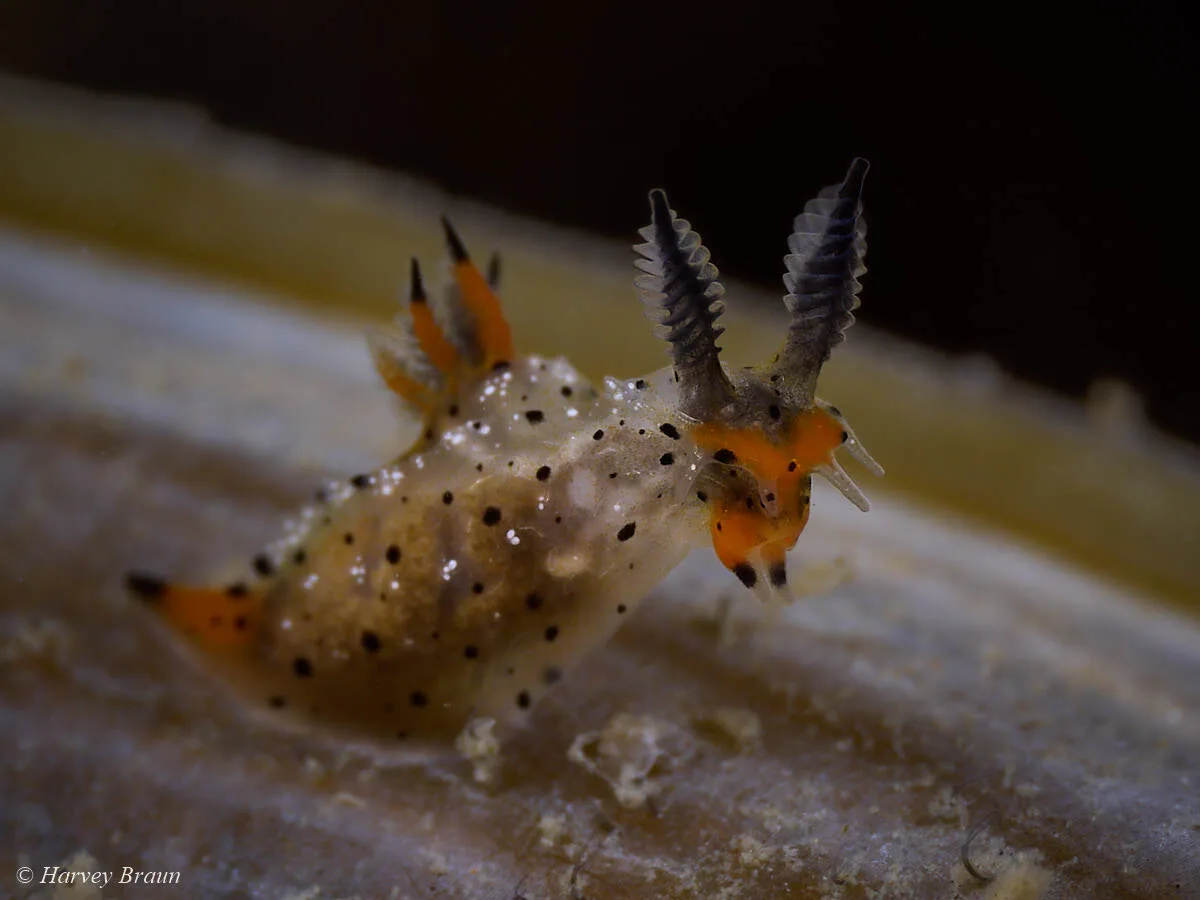
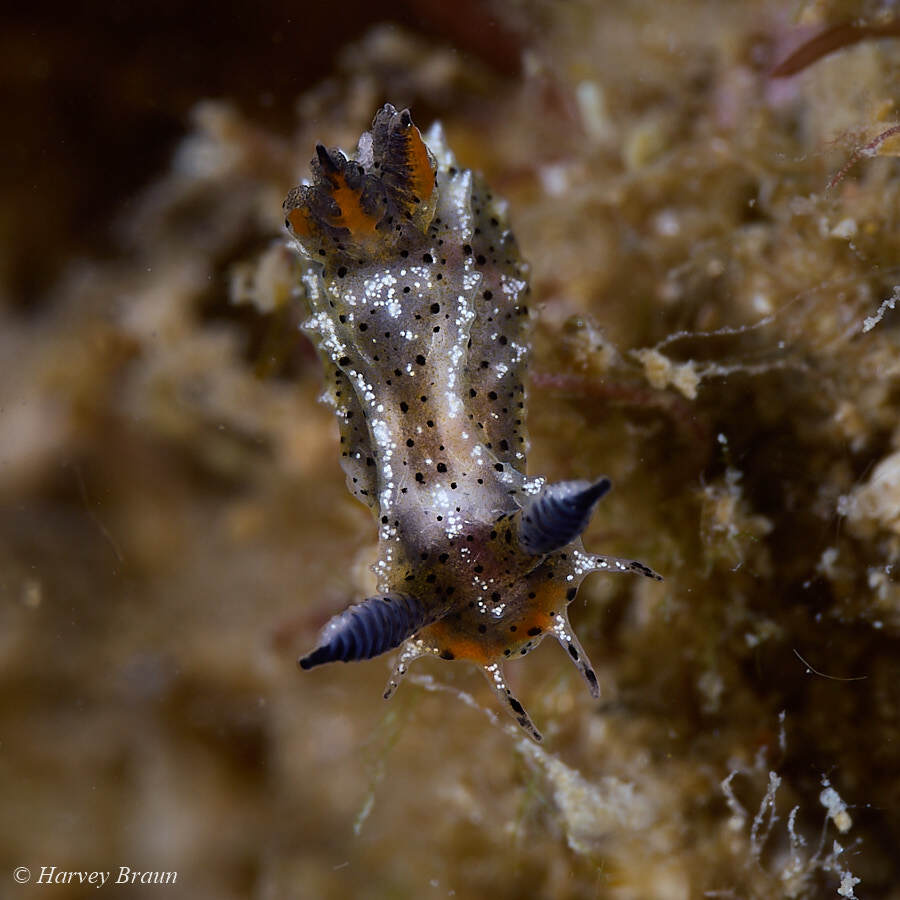
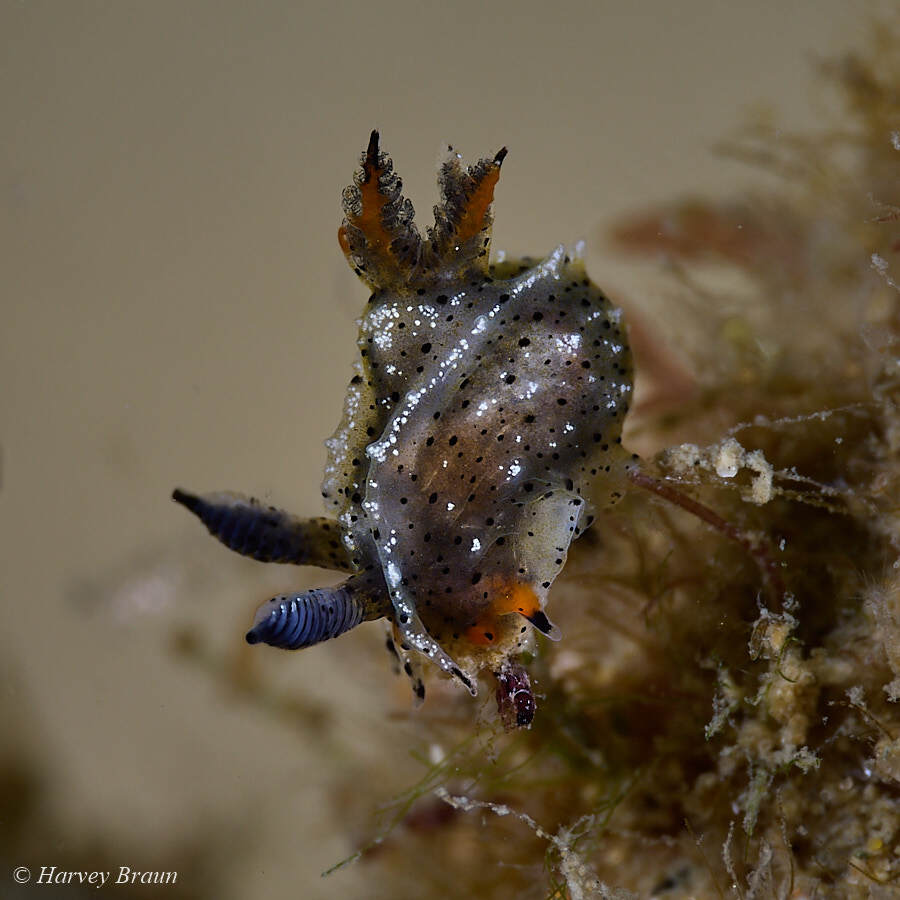
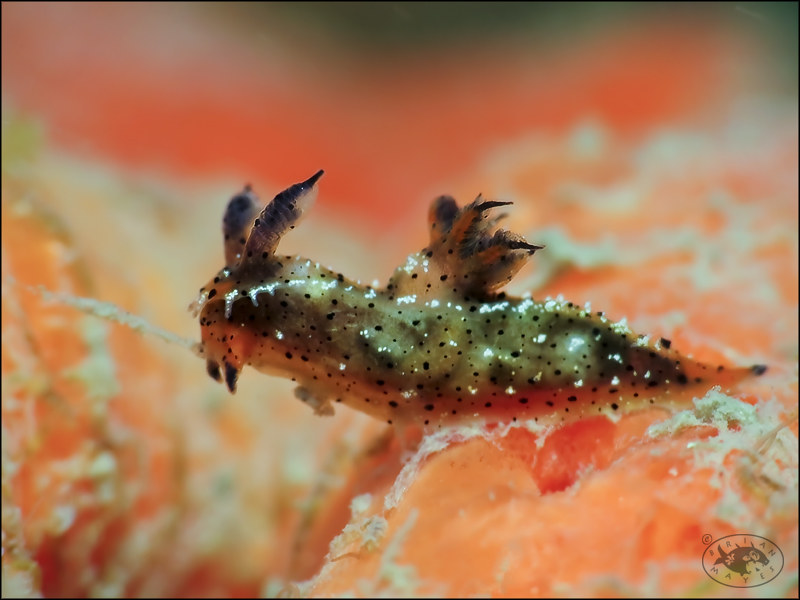
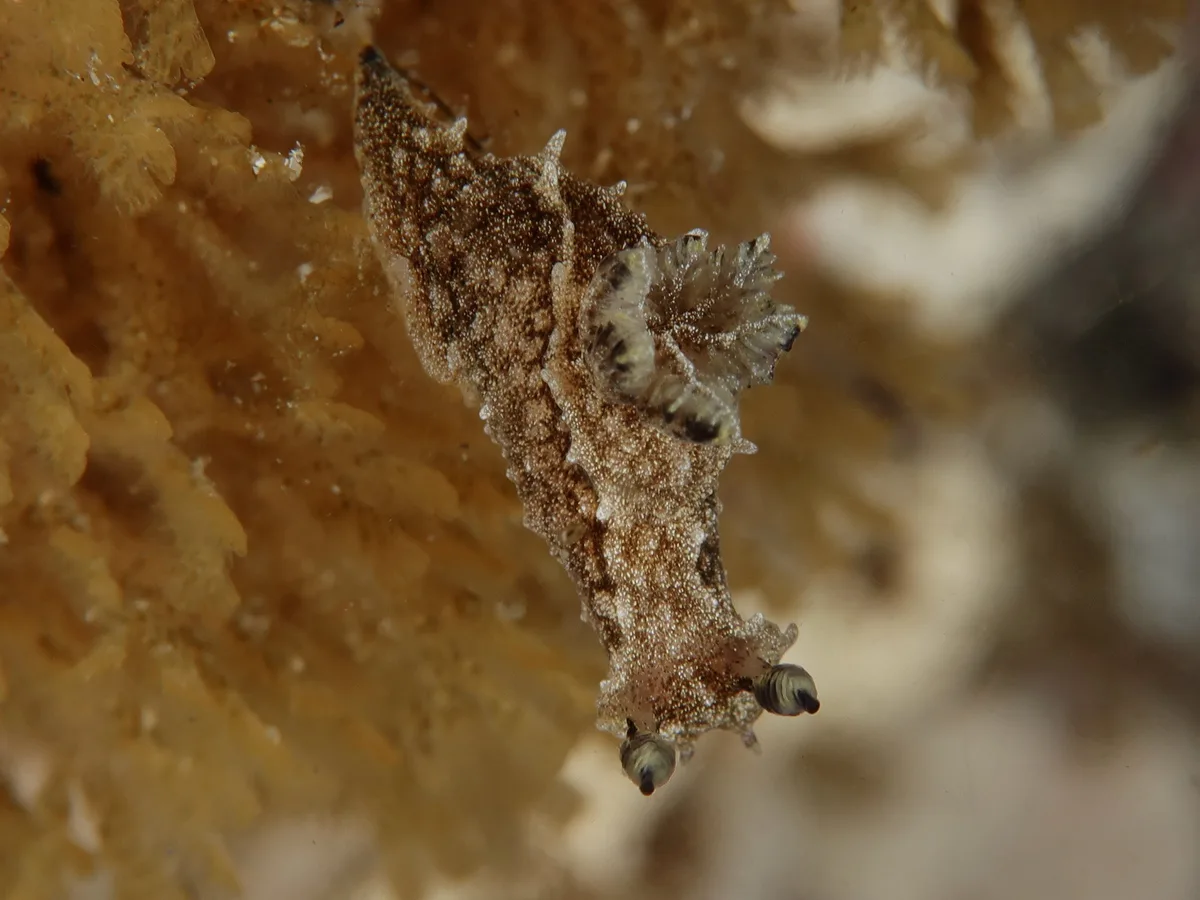
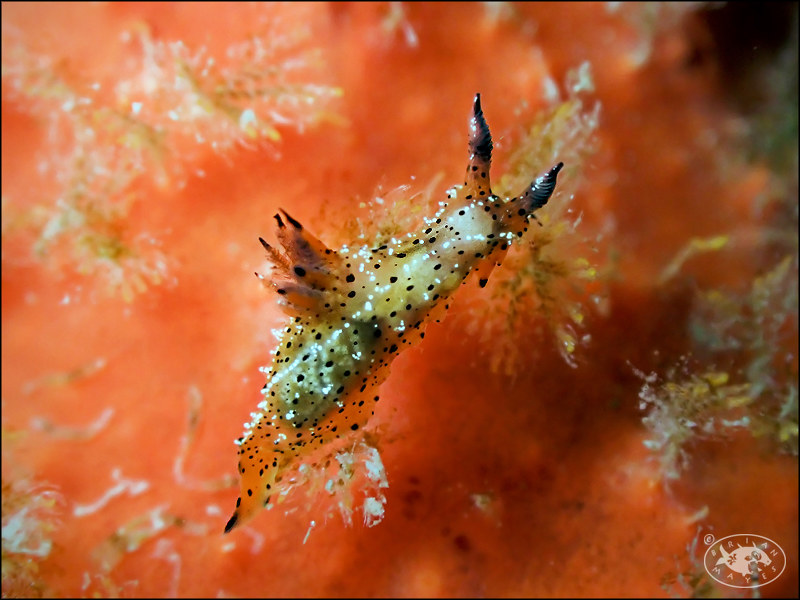
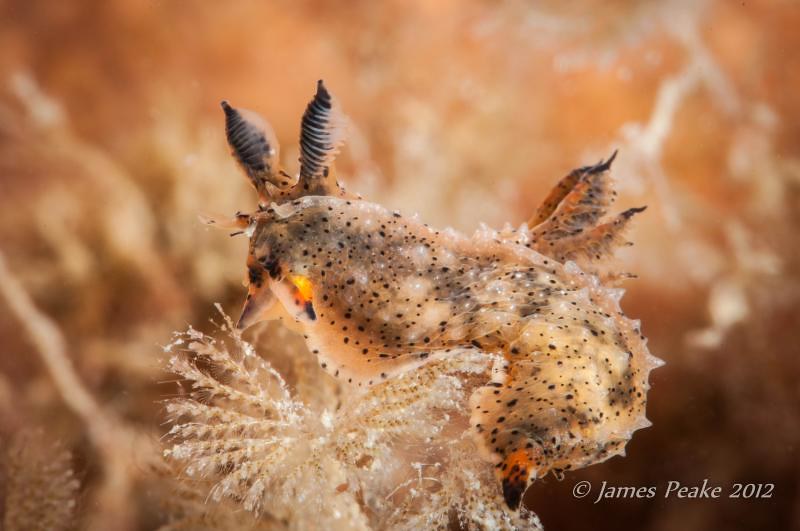
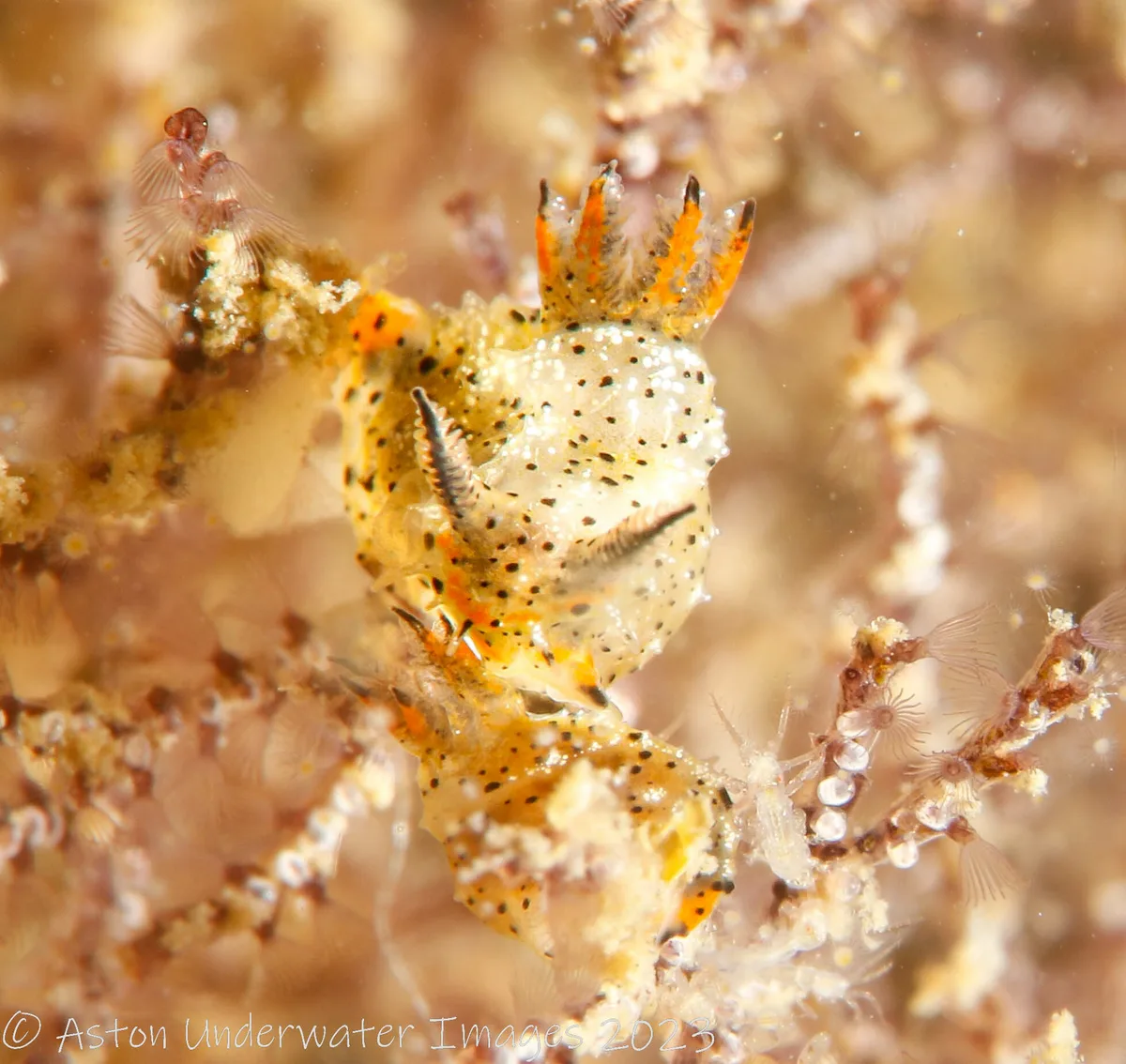
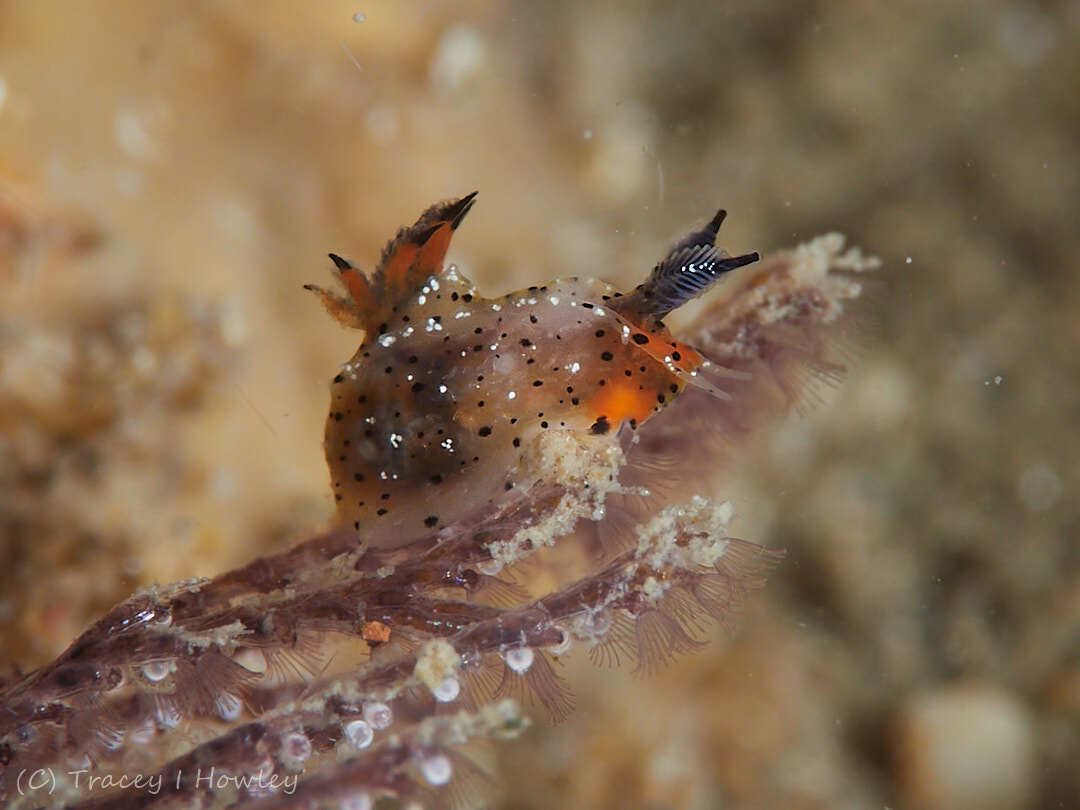
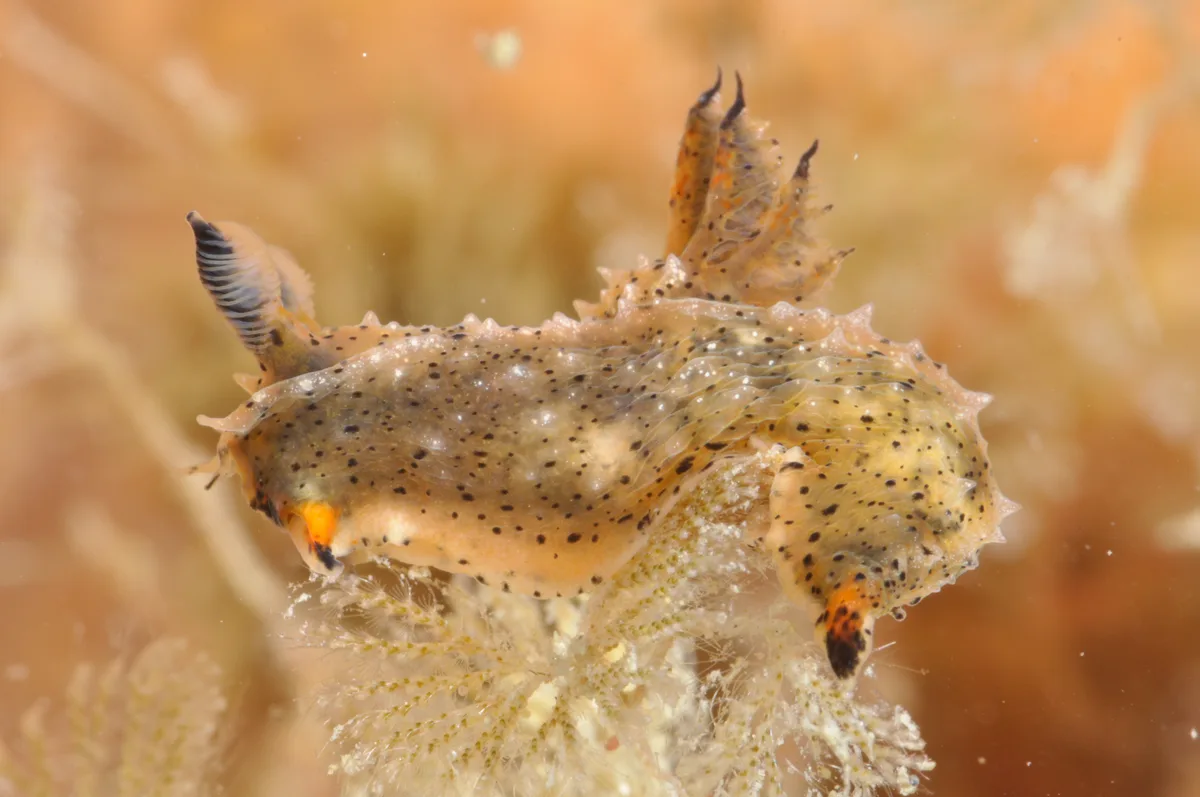
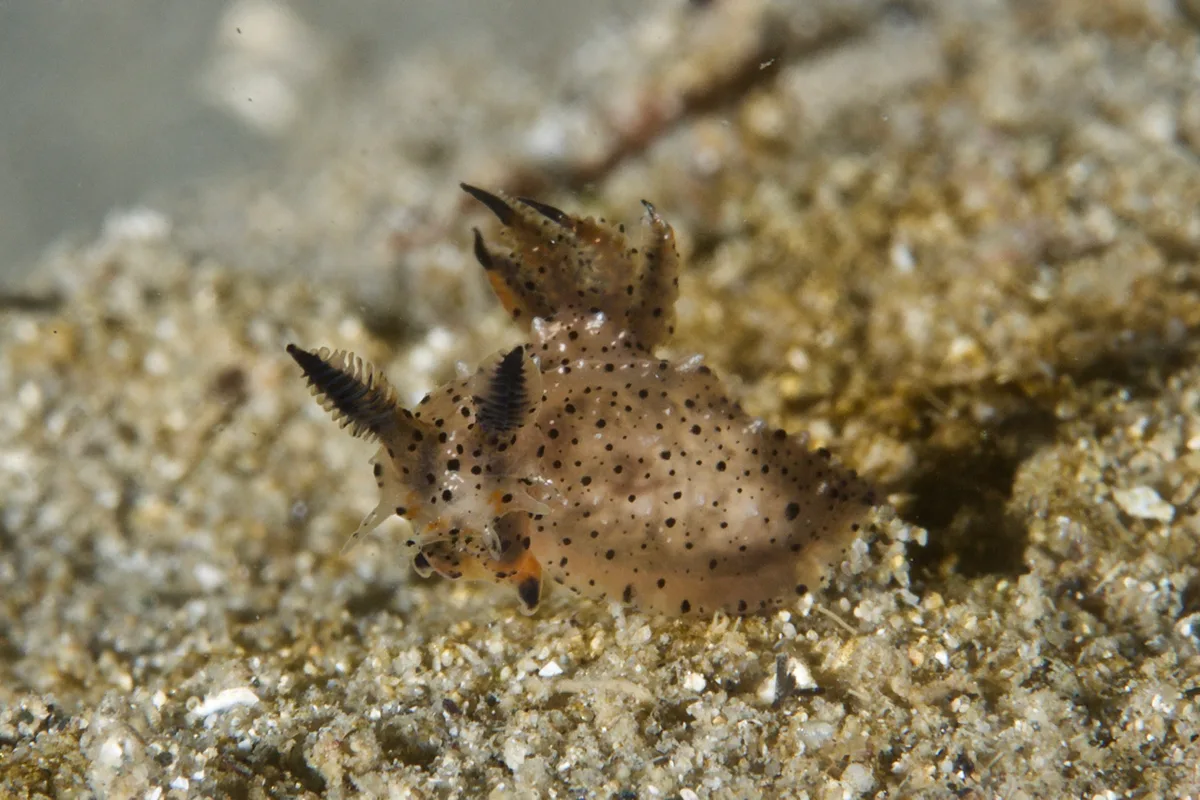
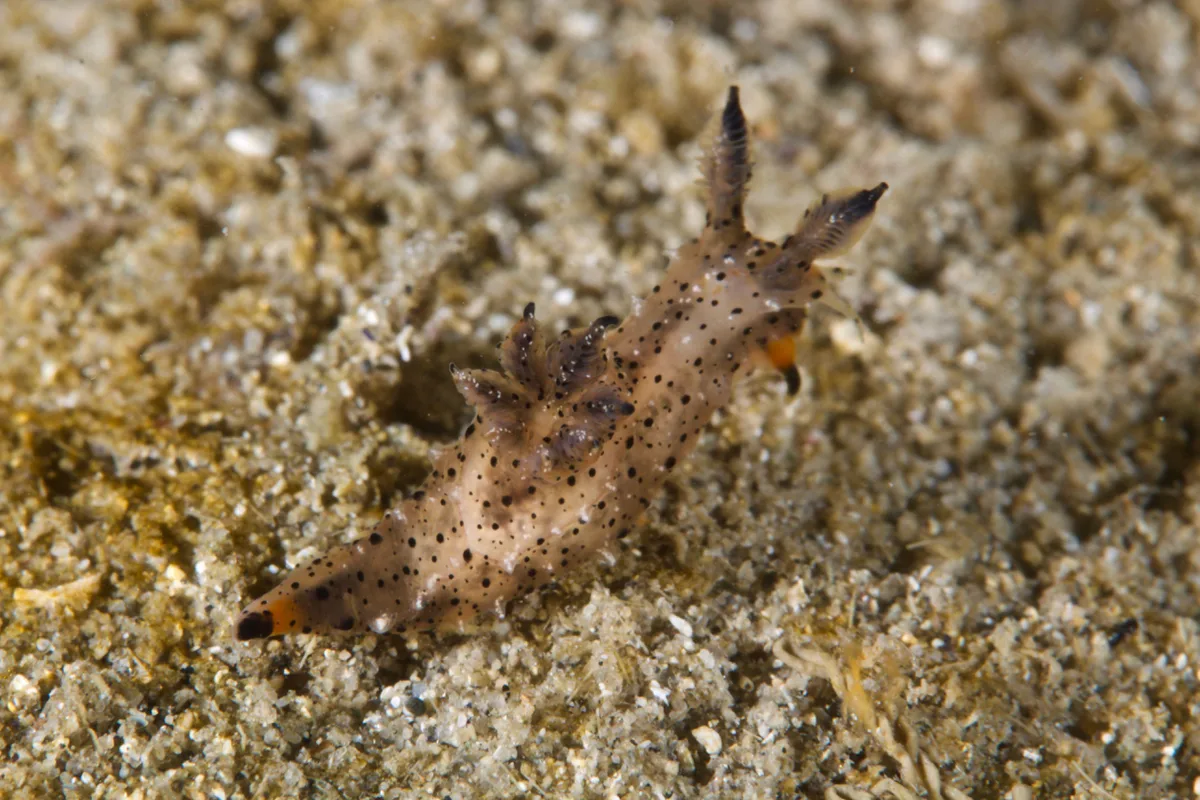
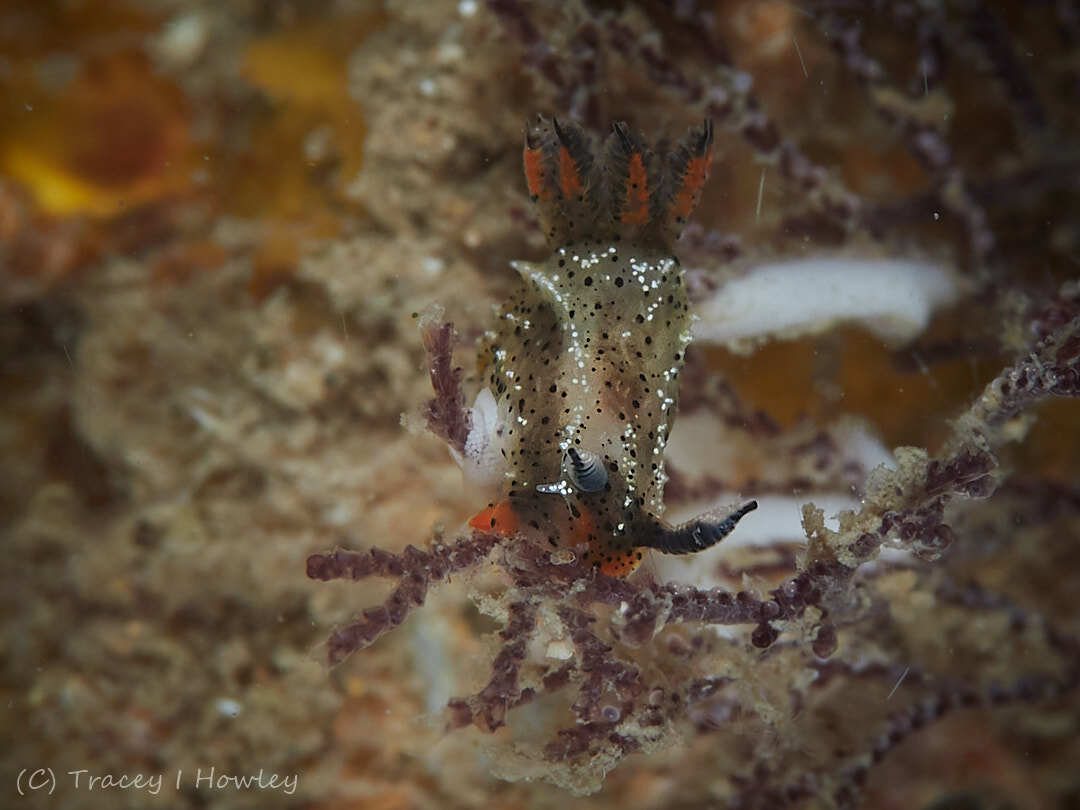
The front of the head carries the family's signature: a row of soft finger-like processes standing up along the leading edge, with more of them flanking the gills at the back. Polycerids cannot pull the gill plume down into a pocket the way most dorids can, and the processes are what they carry instead of one.
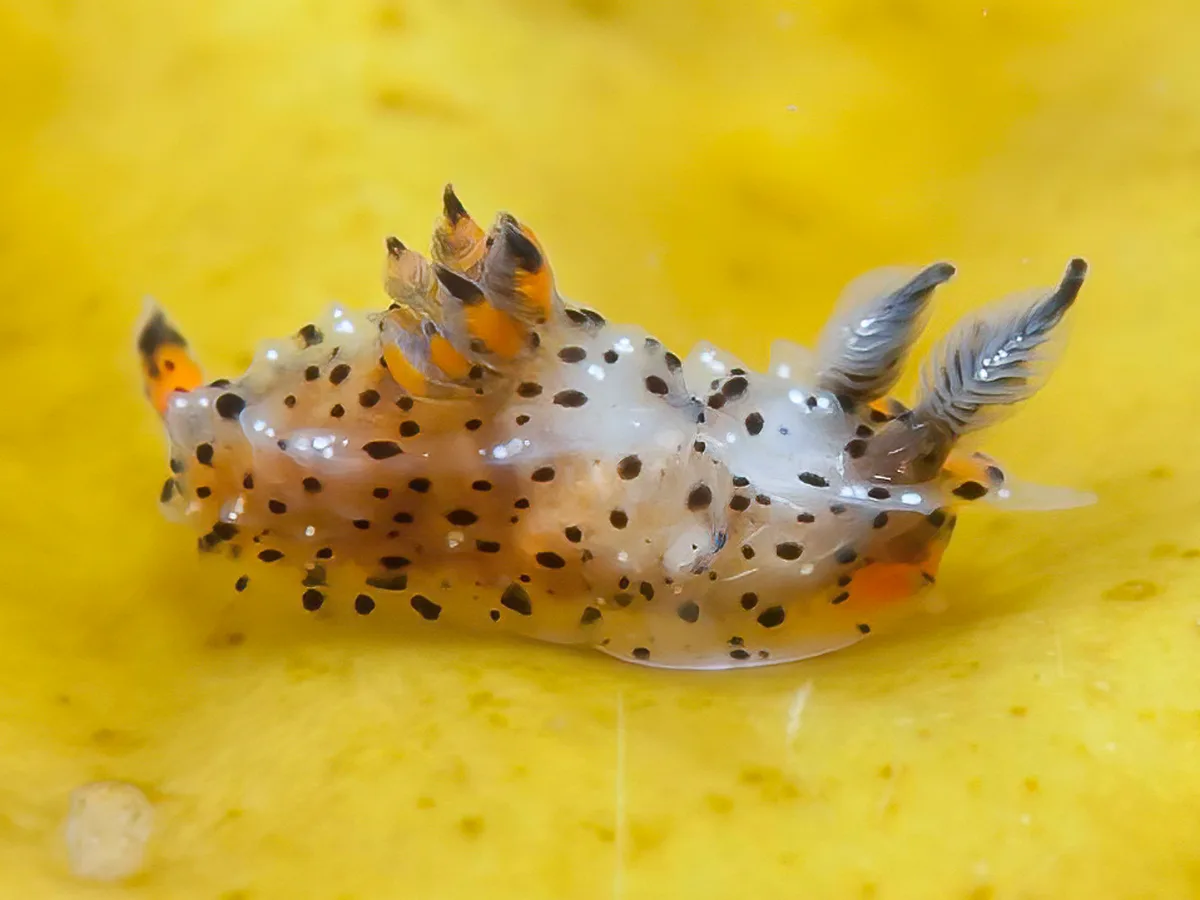
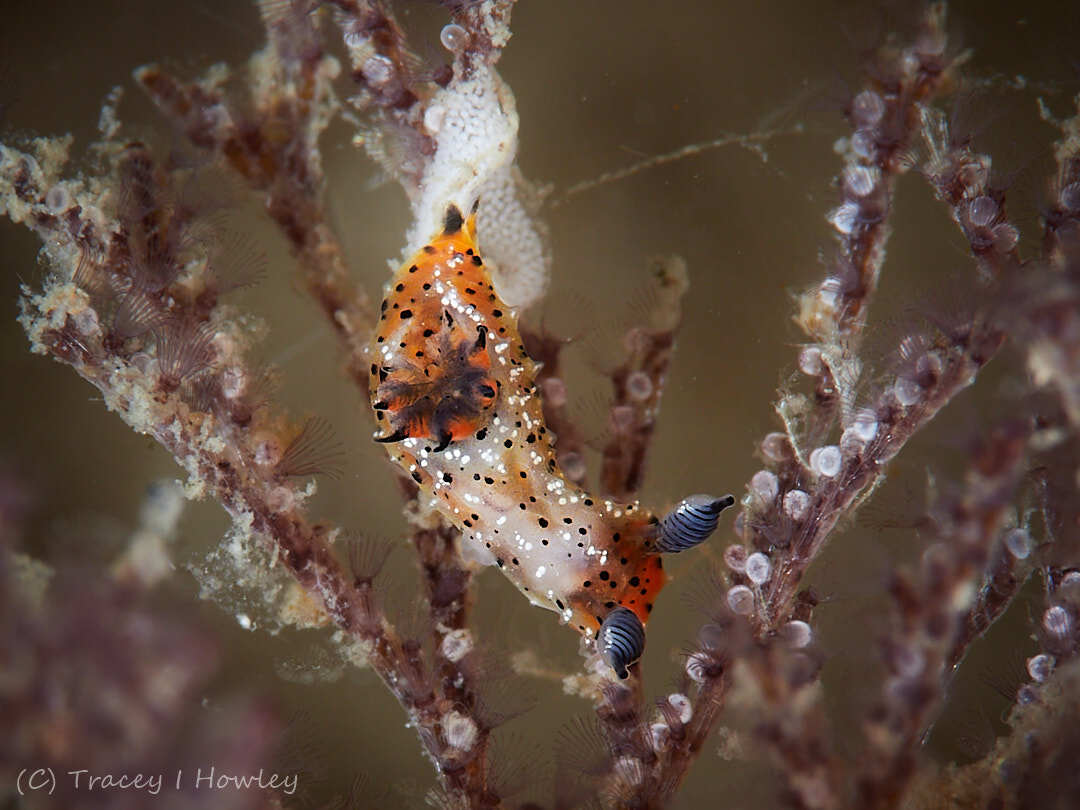
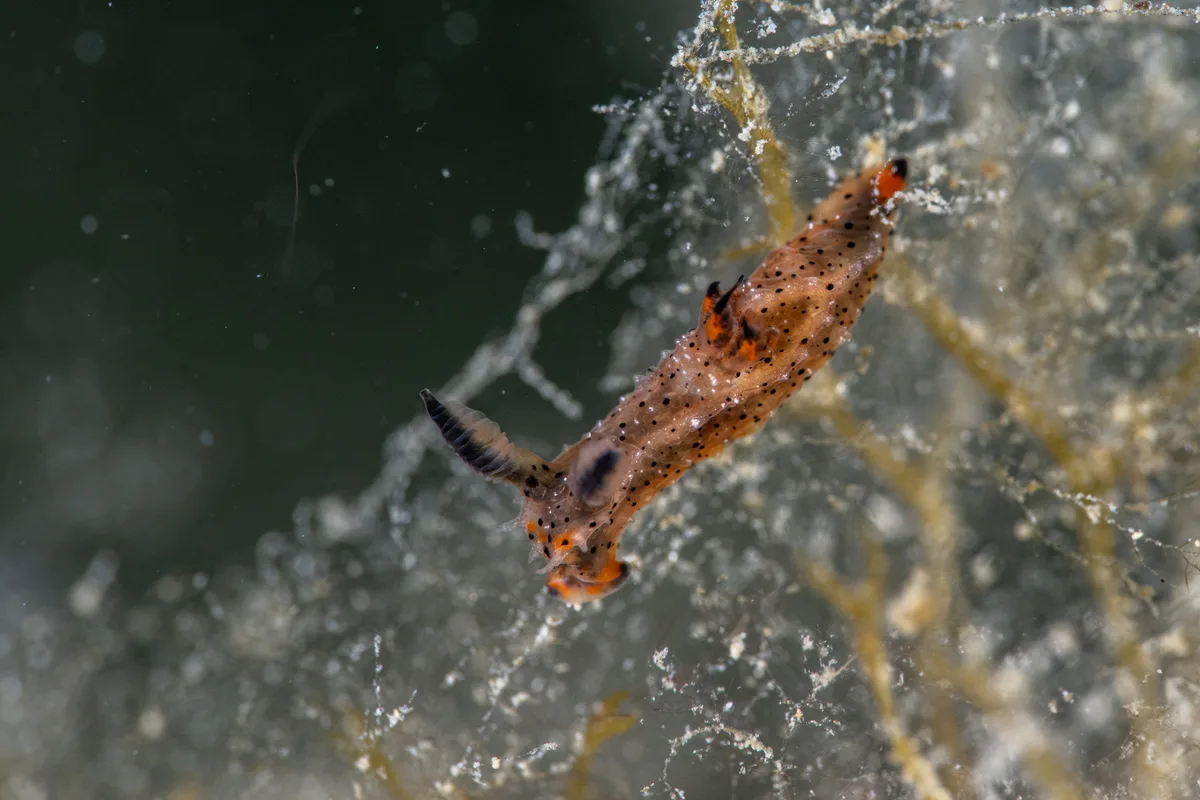
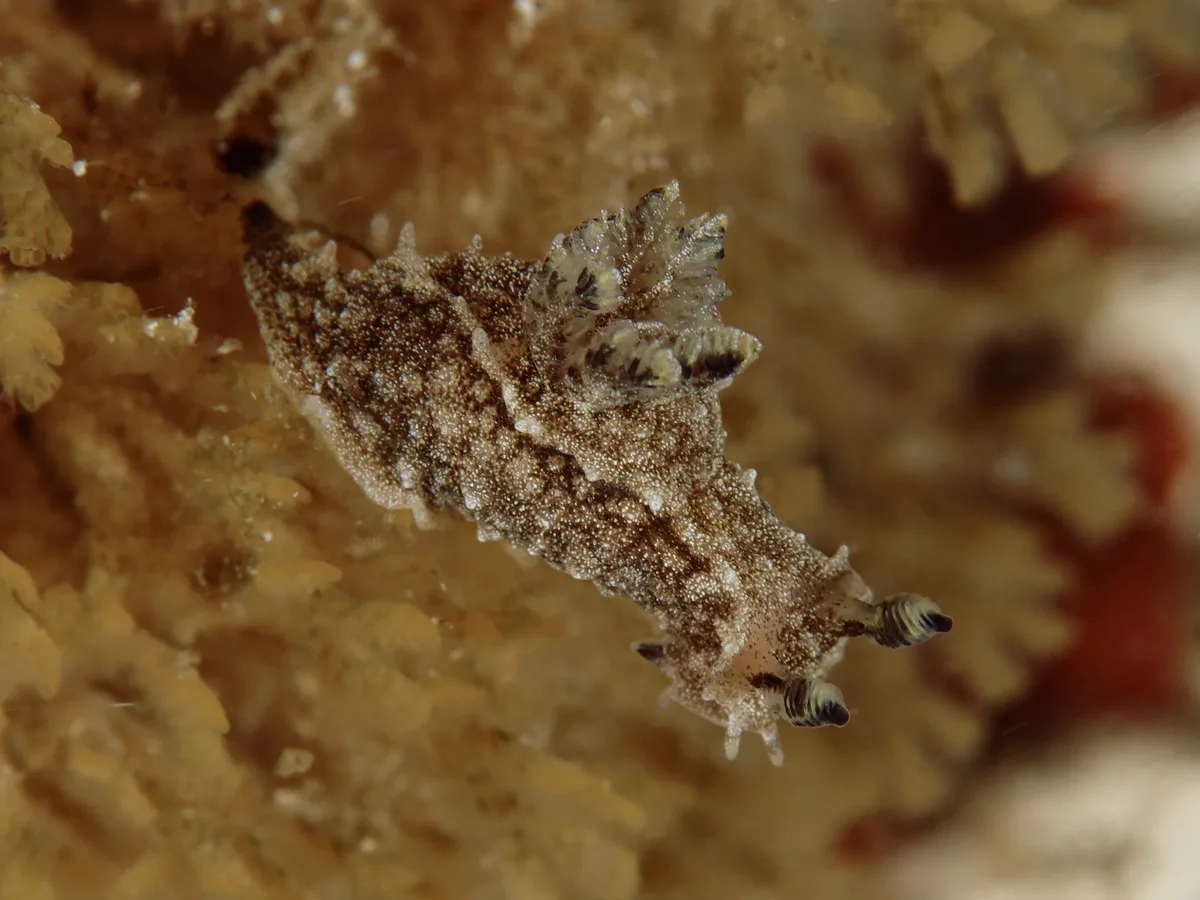
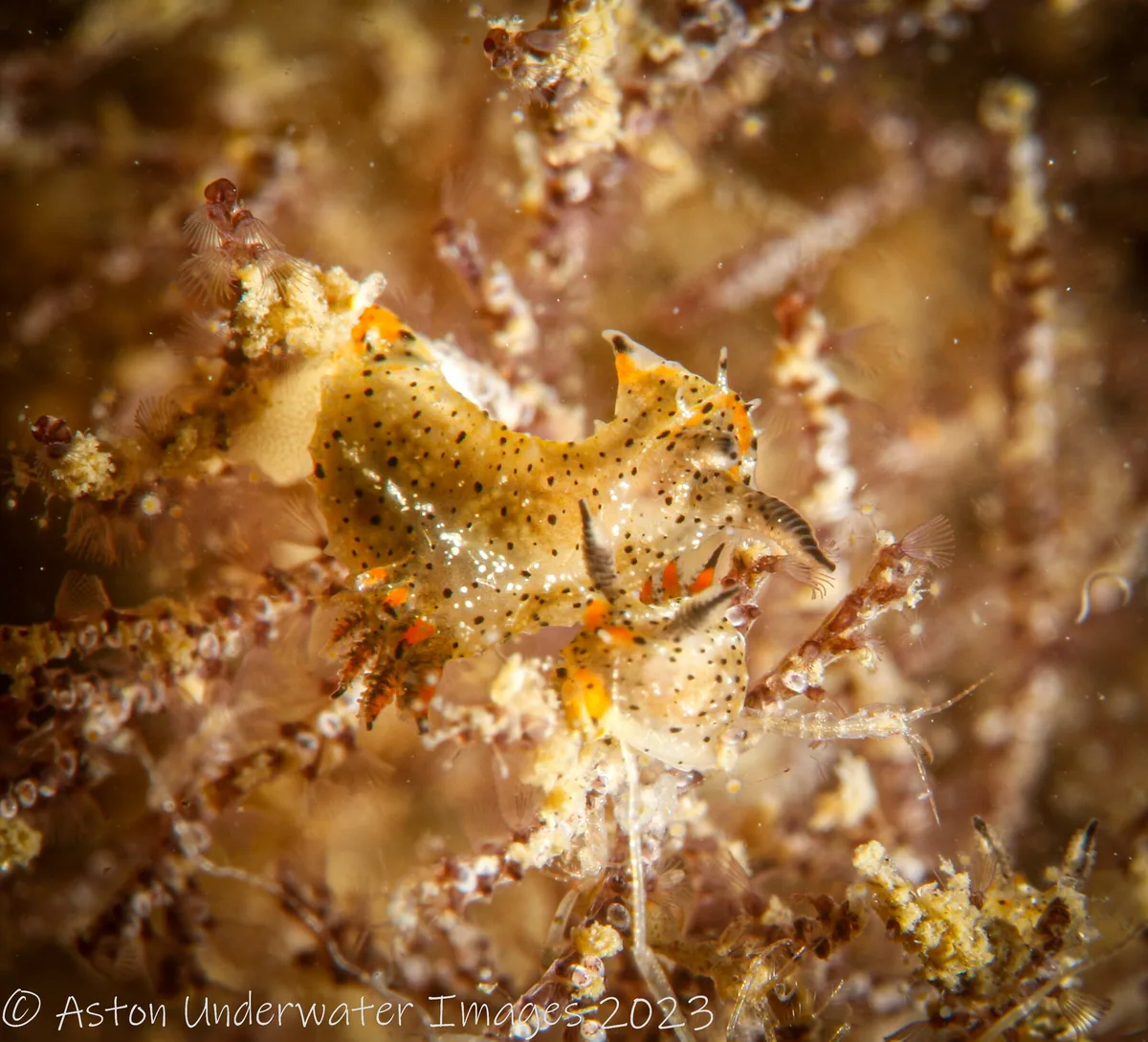
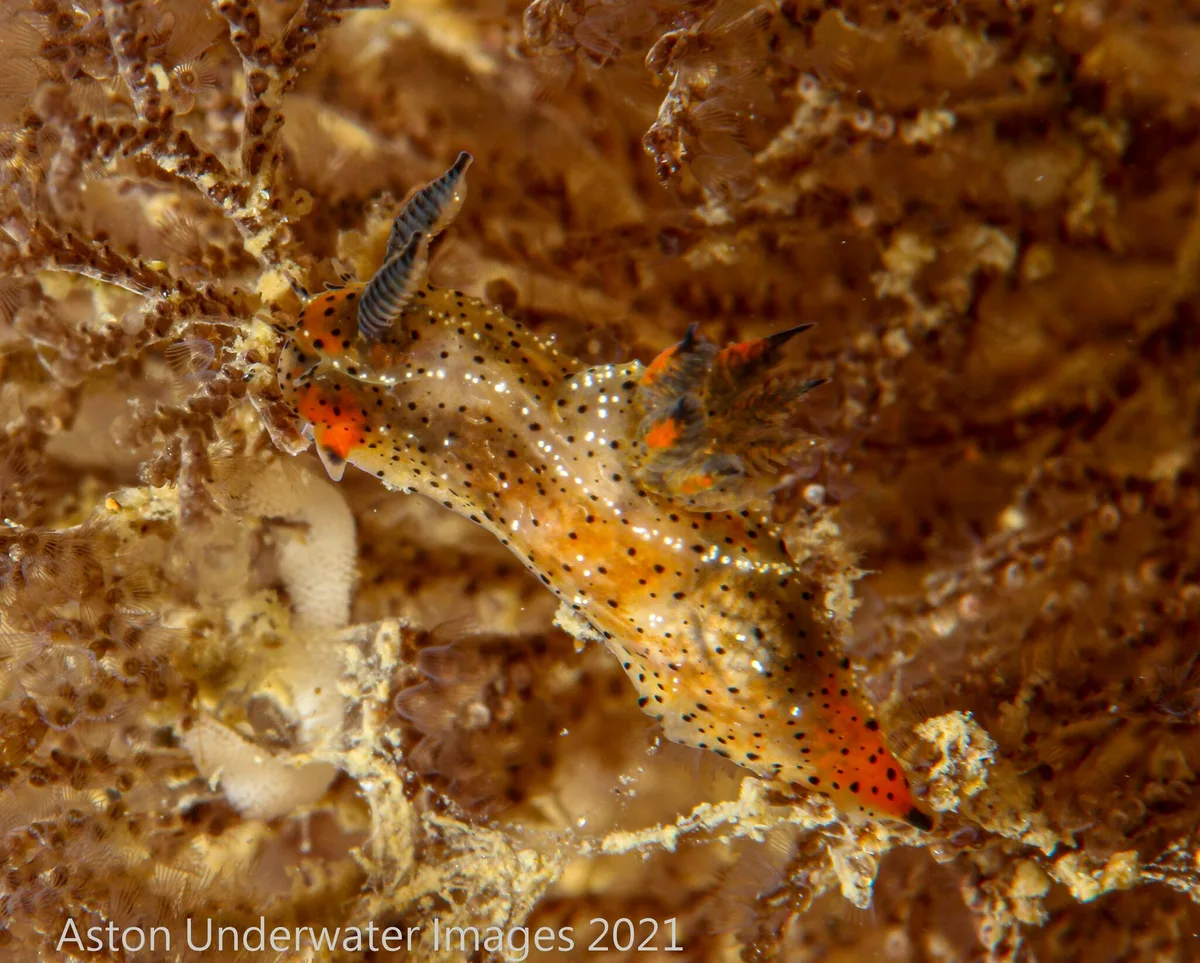
The body is translucent white, clouded with gray-brown and dotted with small black spots, on an animal a centimeter (0.4 in) long sitting in a tuft of branching bryozoan that is itself only a few centimeters high. It has been photographed at Marsa Shagra and in the Gulf of Aqaba, which tells you it is findable here, and that finding it is a matter of examining the fouling growth rather than the reef.
- a row of finger-like processes standing along the front edge of the head
- translucent white with gray-brown patches and small black spots
- one centimeter, almost always on a tuft of fine branching bryozoan
- gills standing exposed at the rear, flanked by more processes