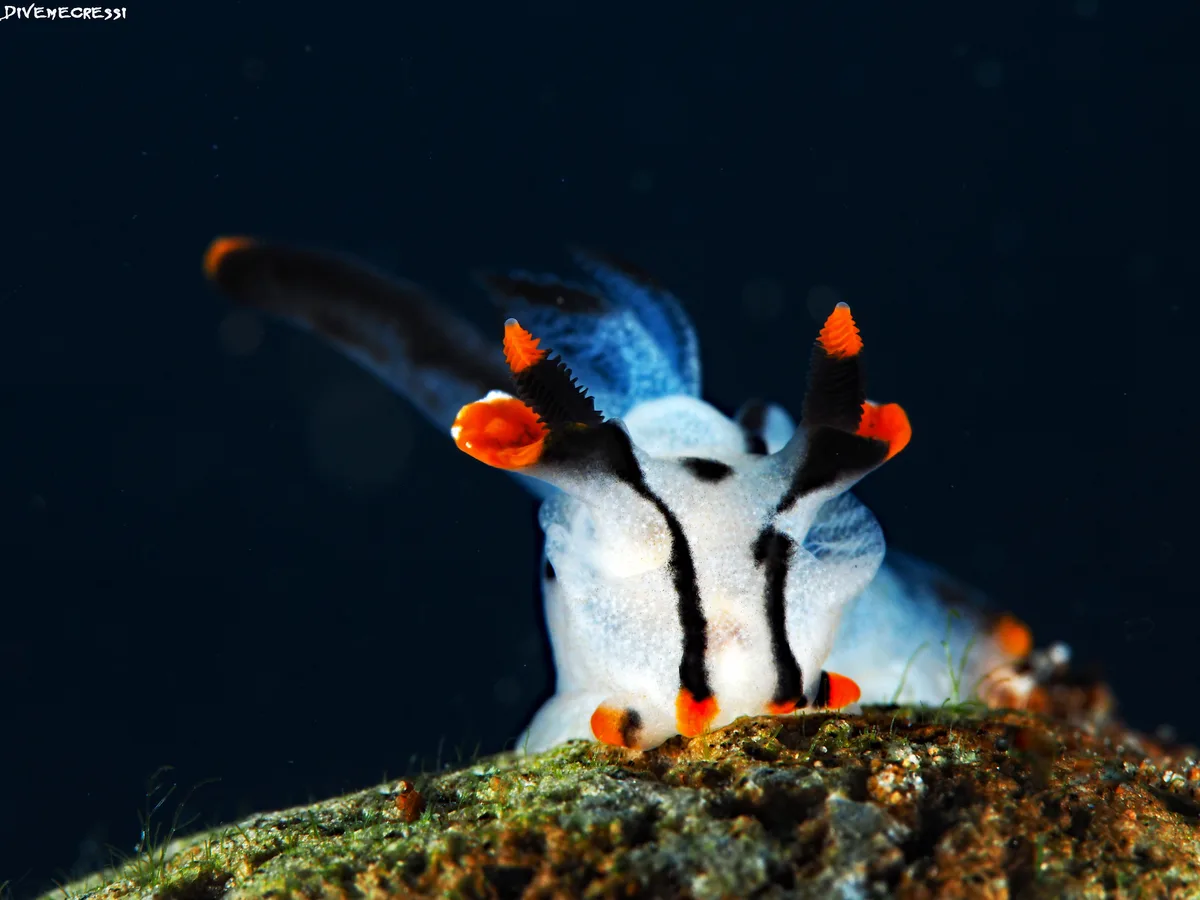
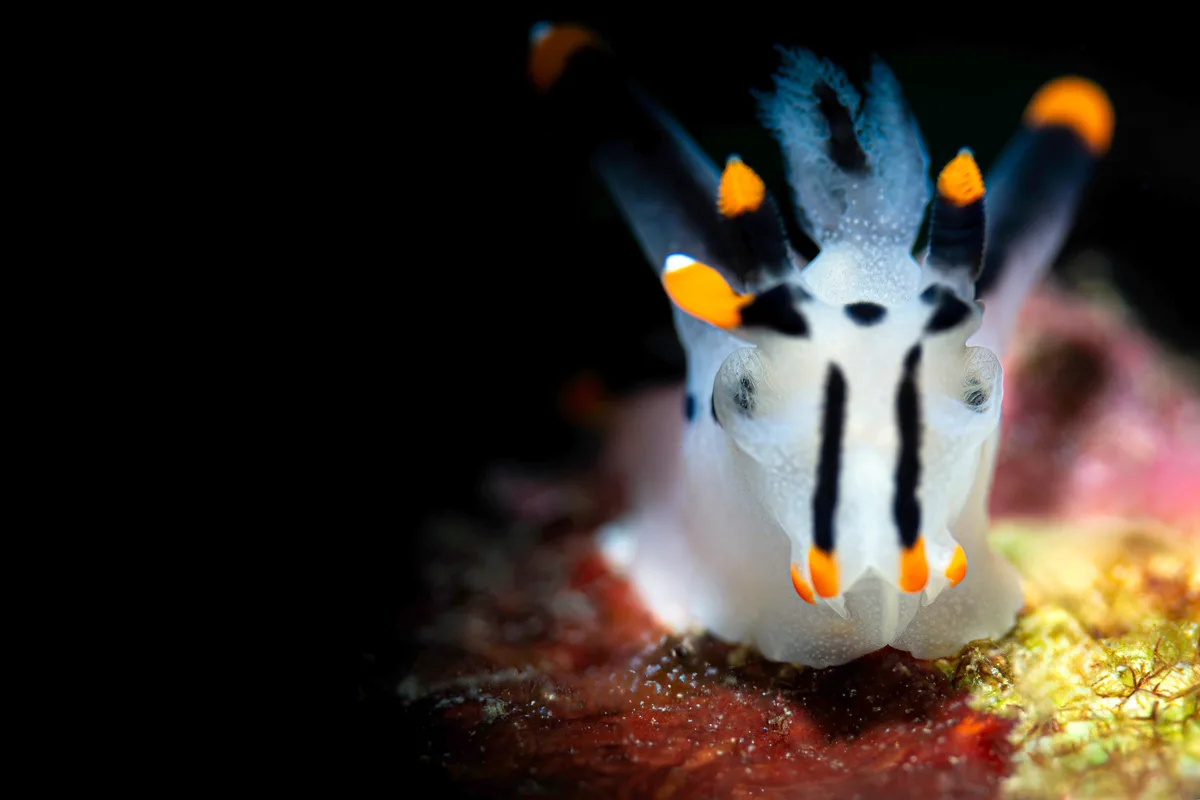
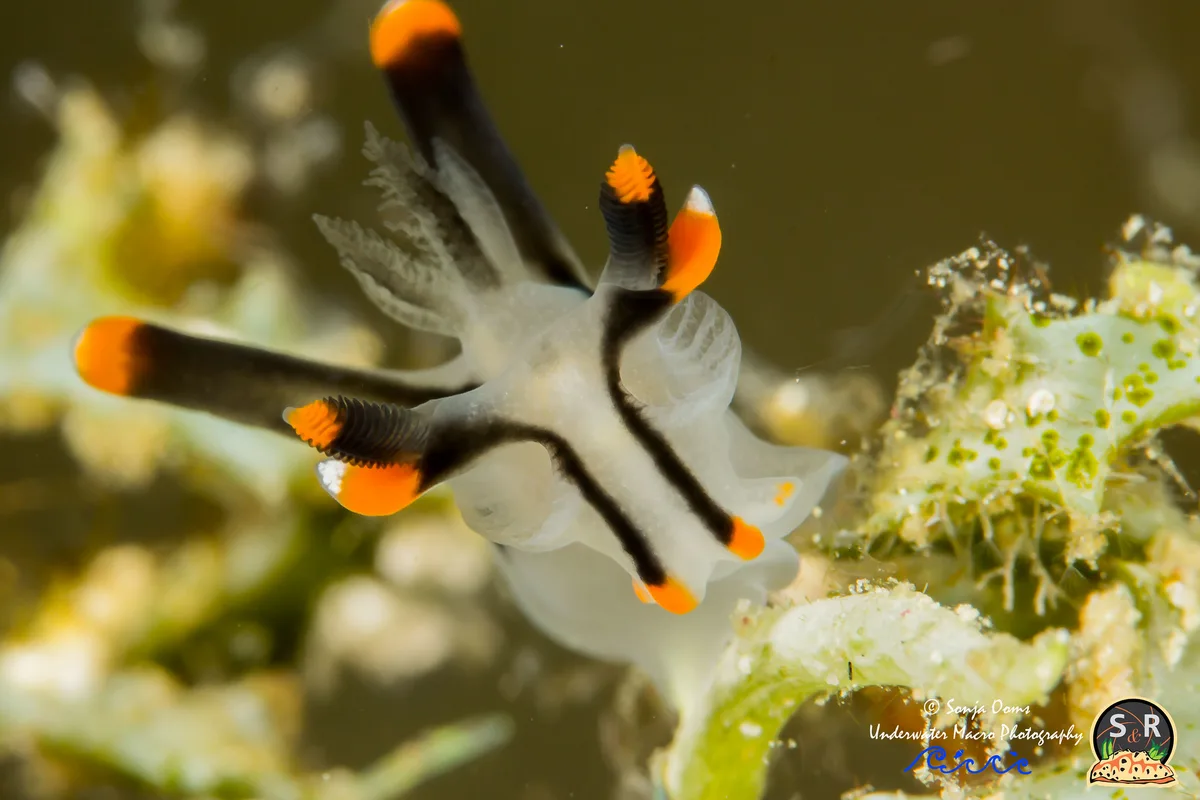
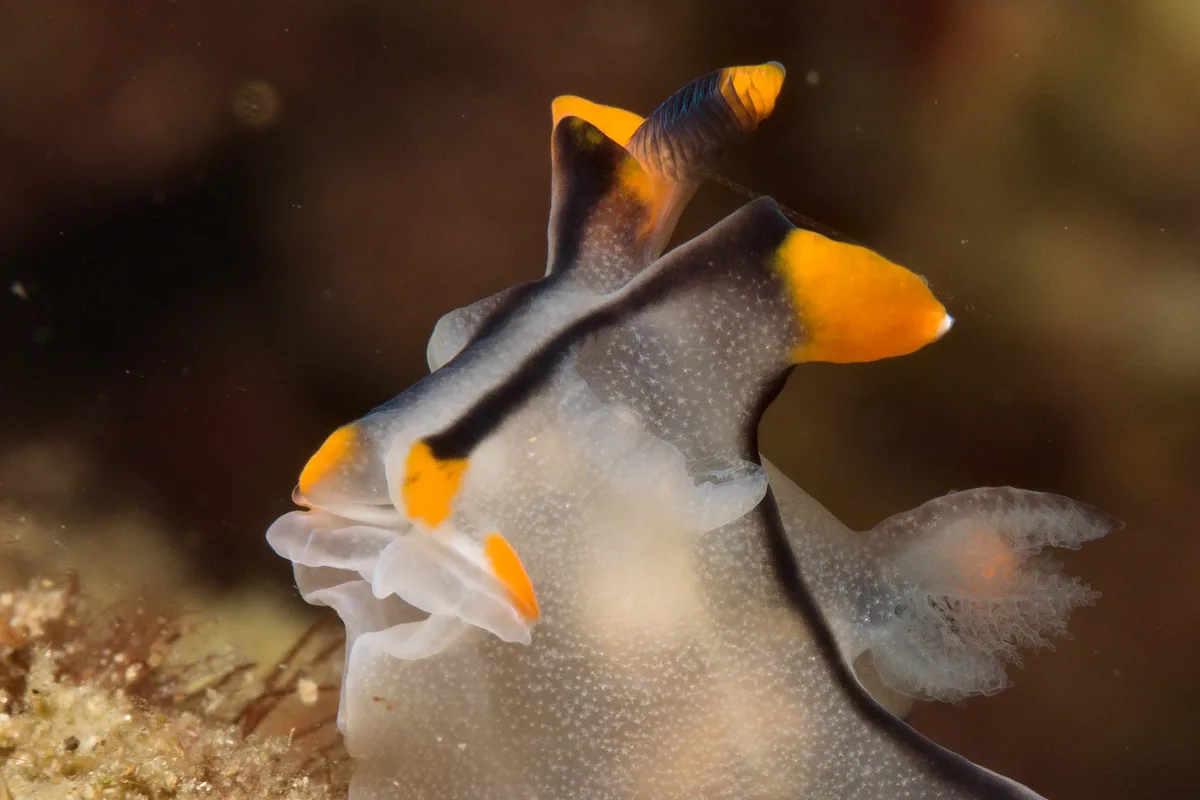
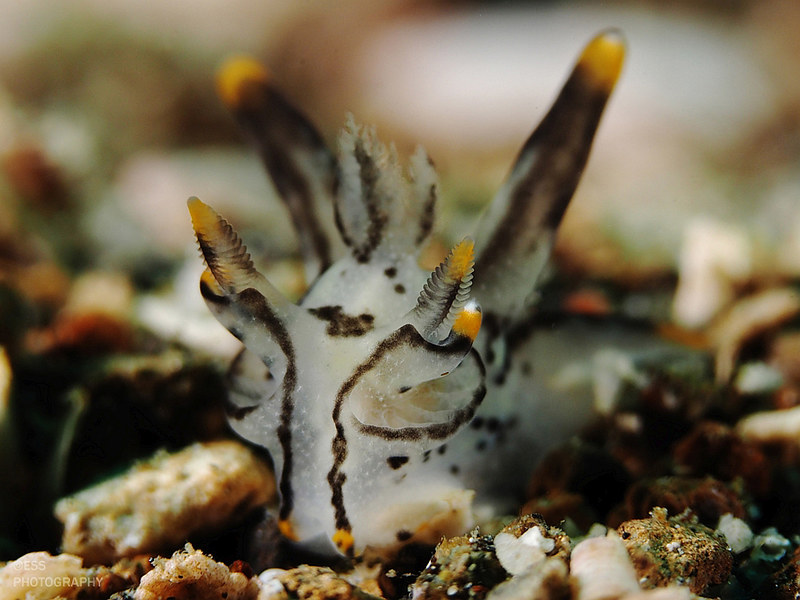
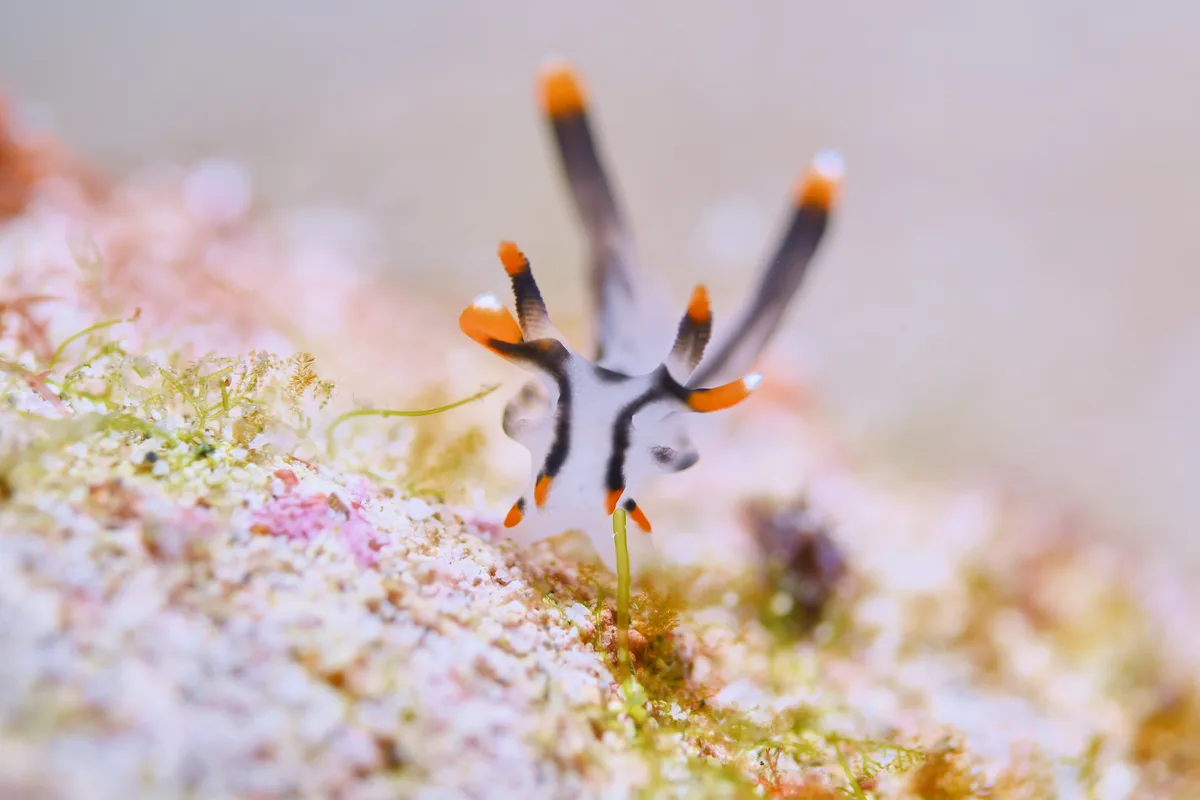
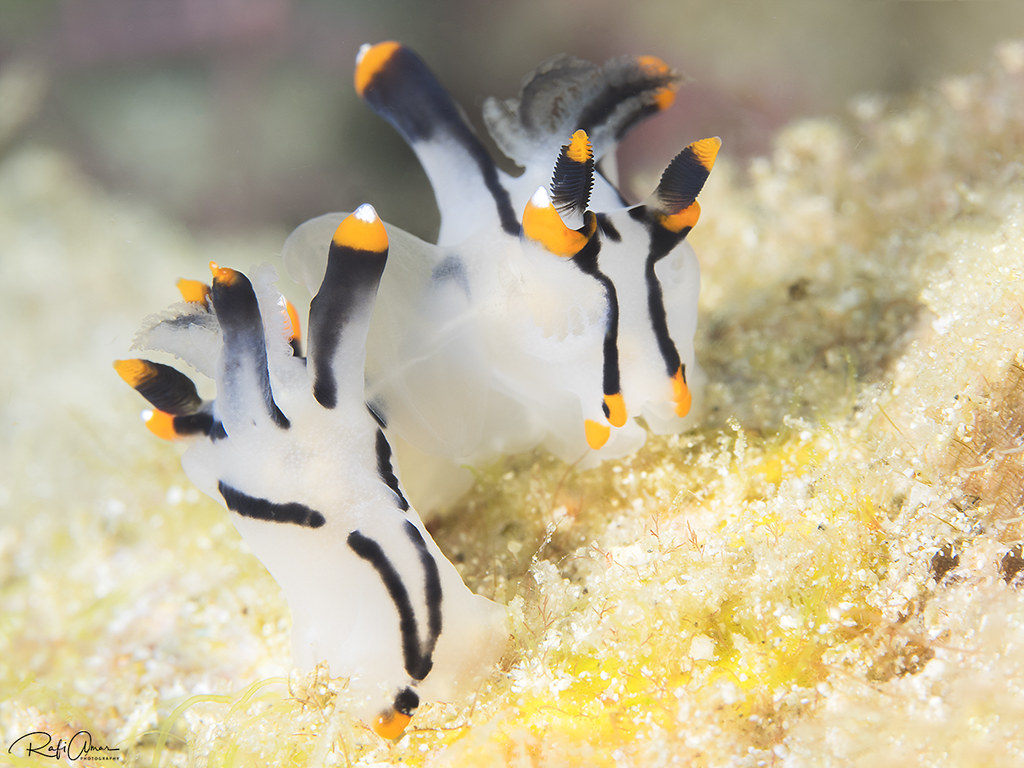
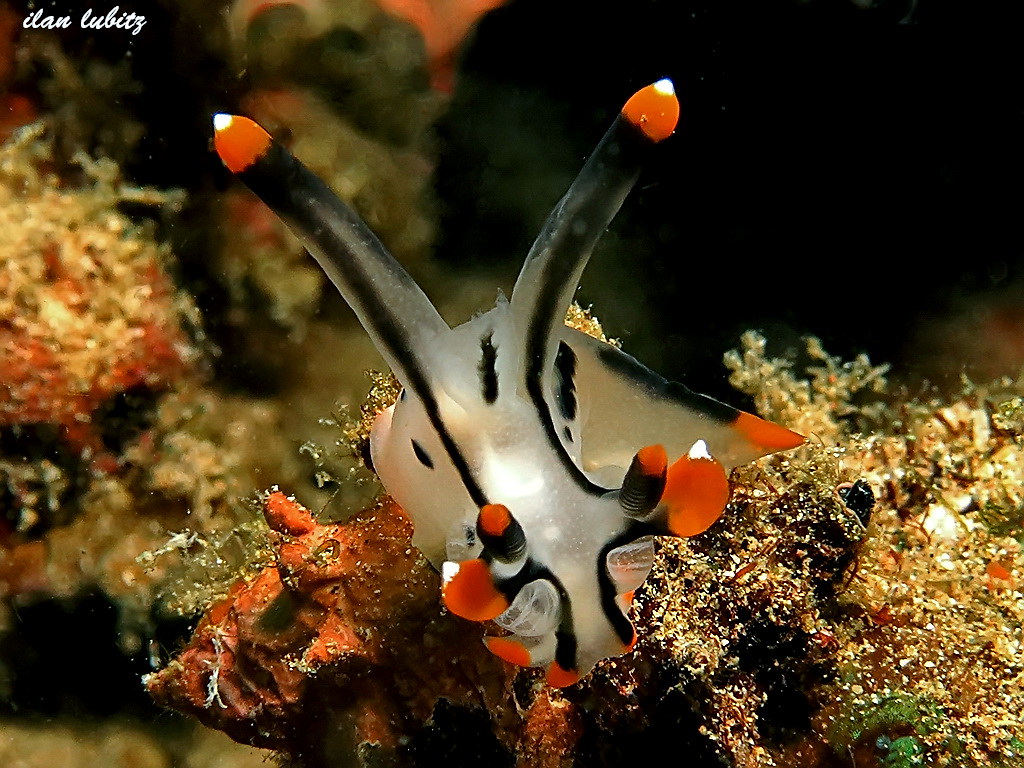
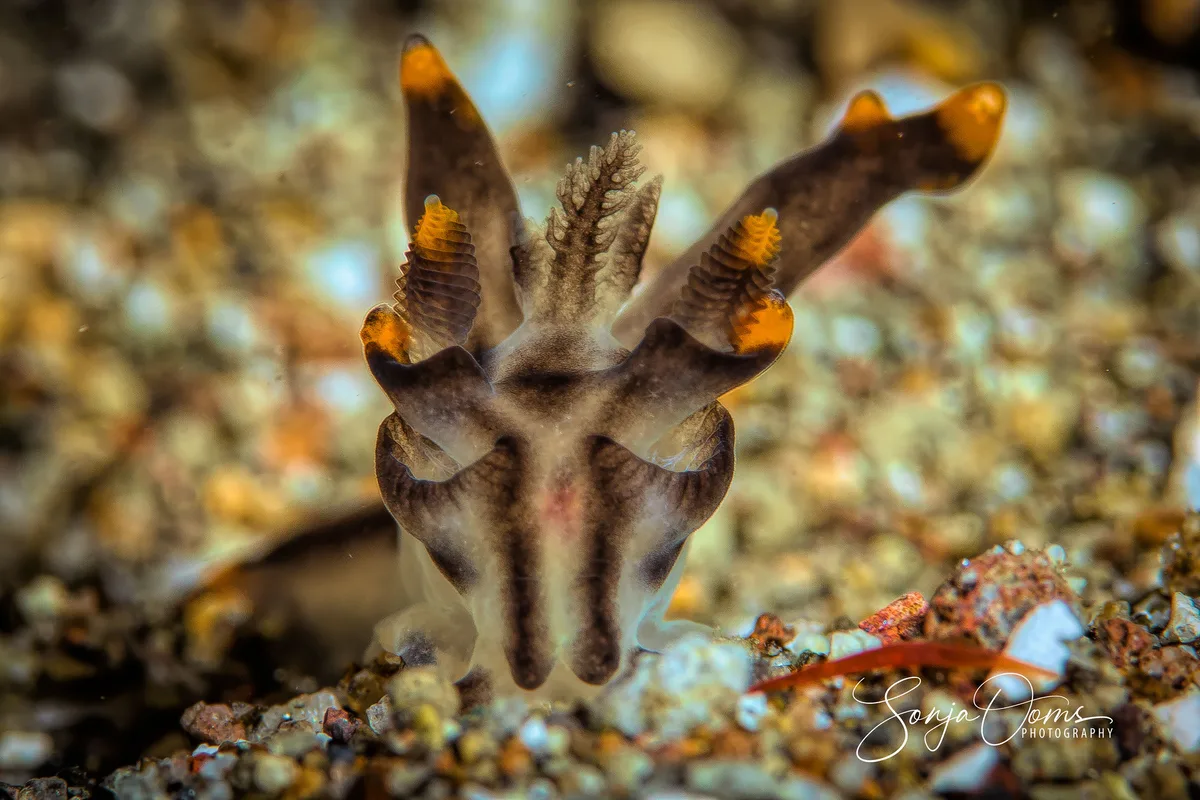
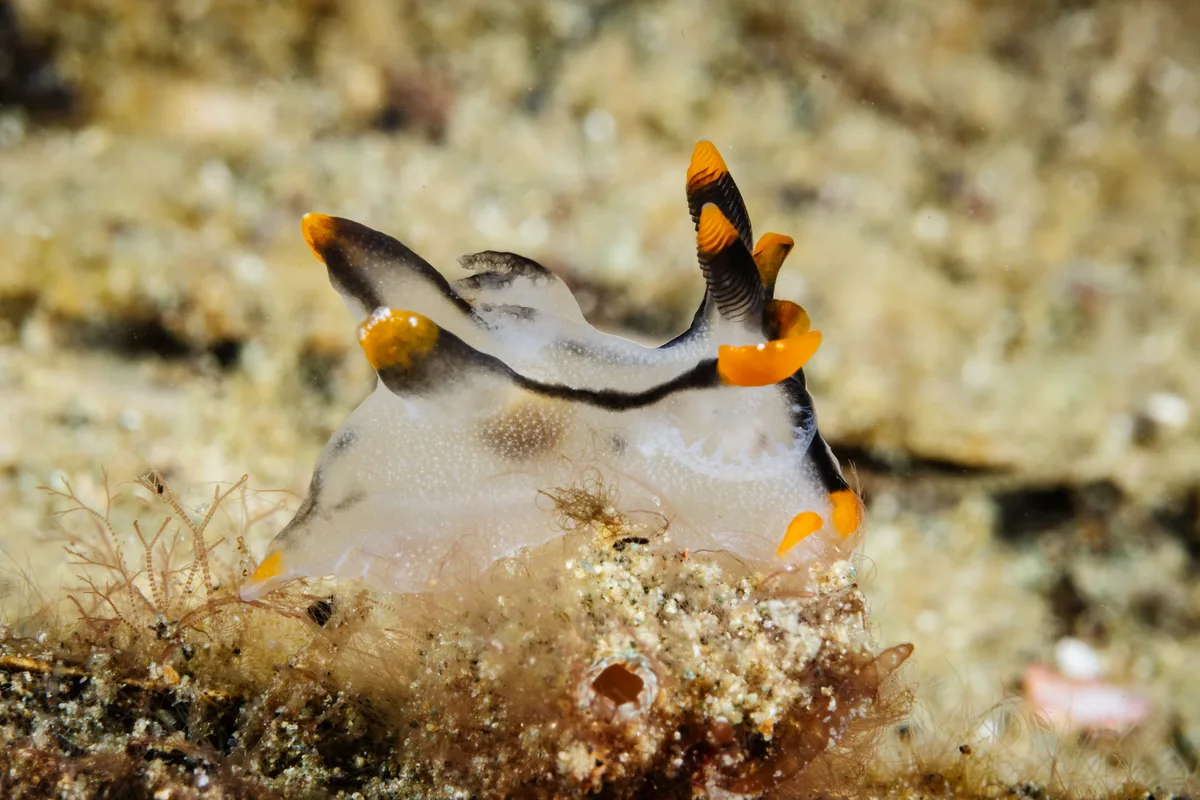
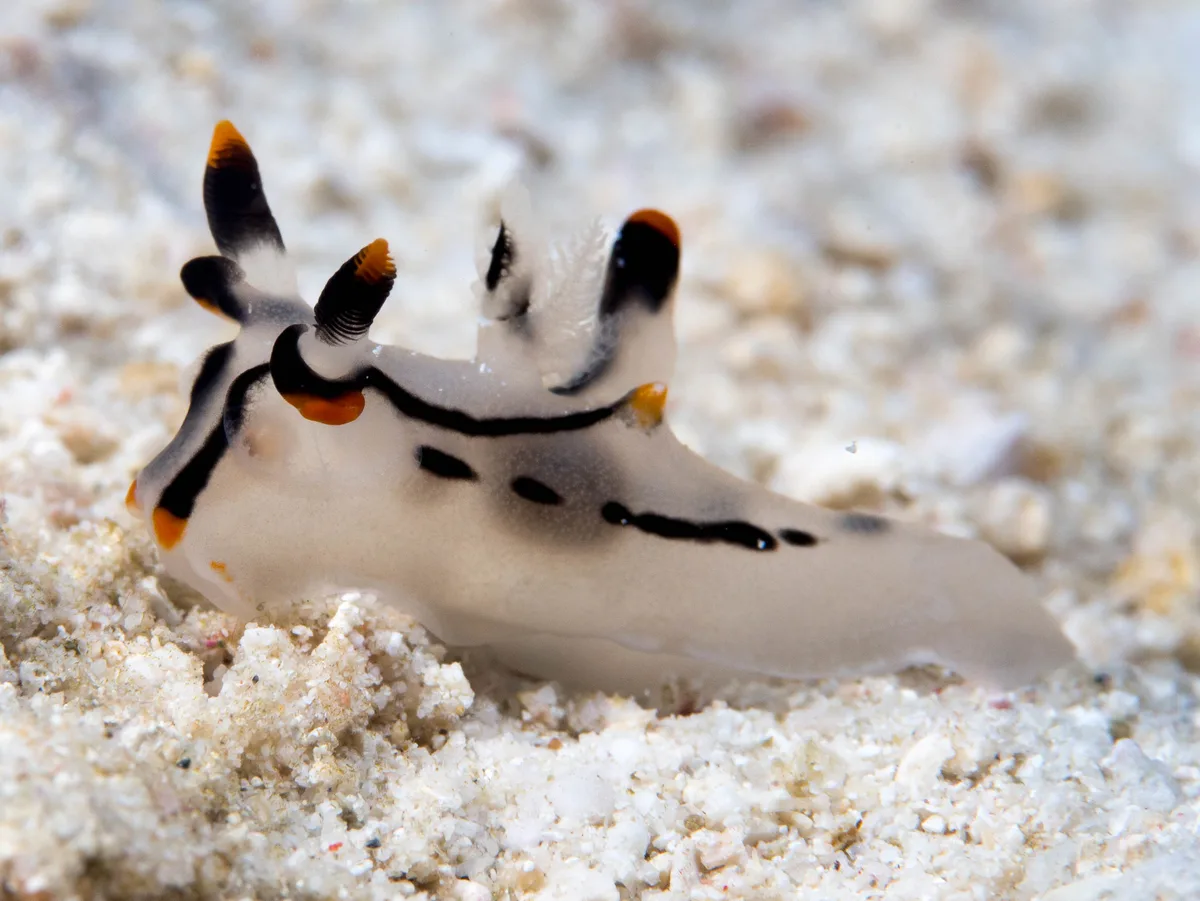
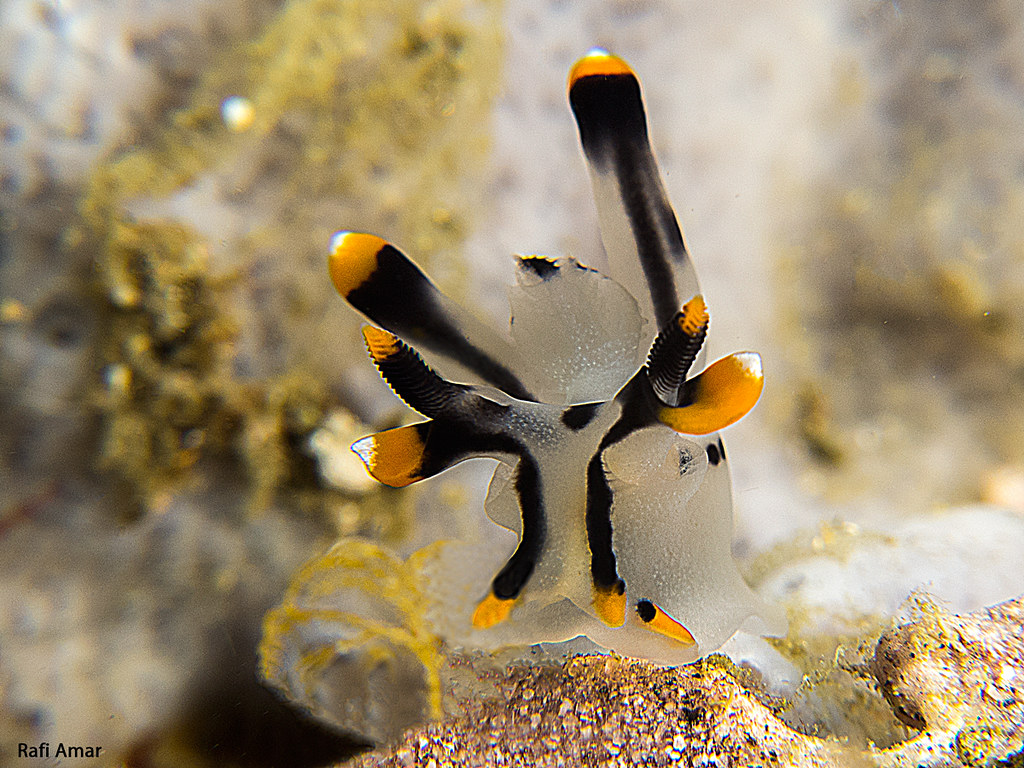
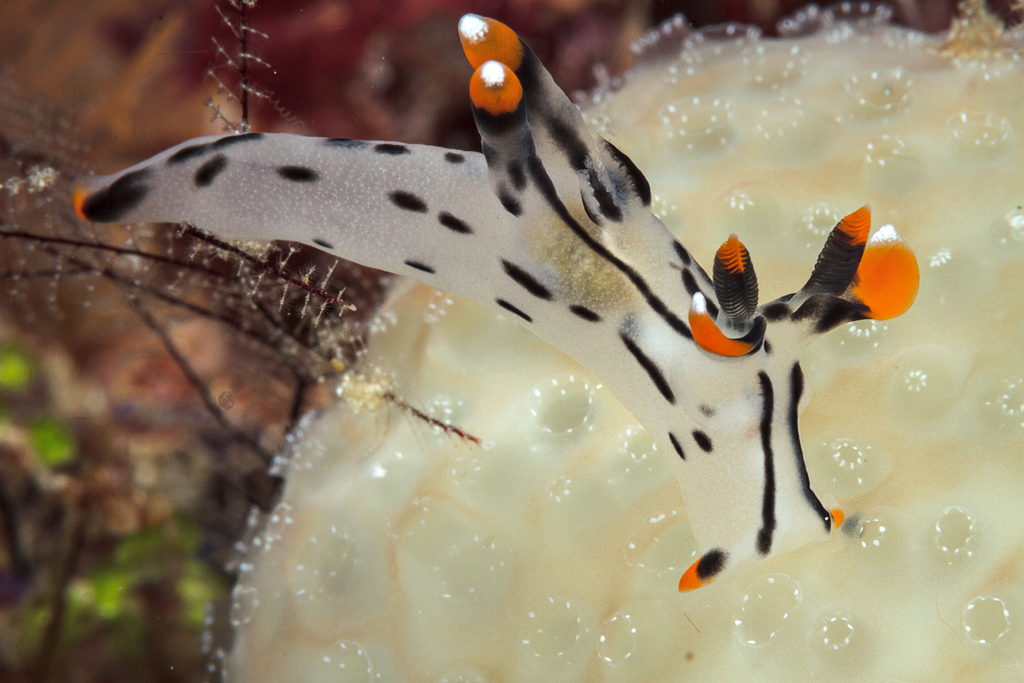
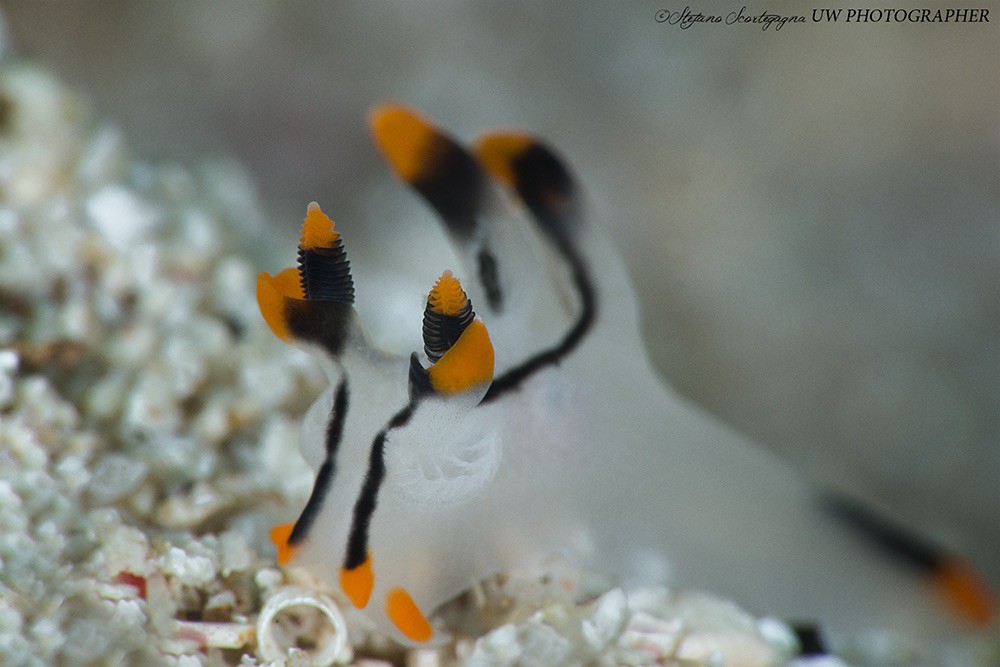
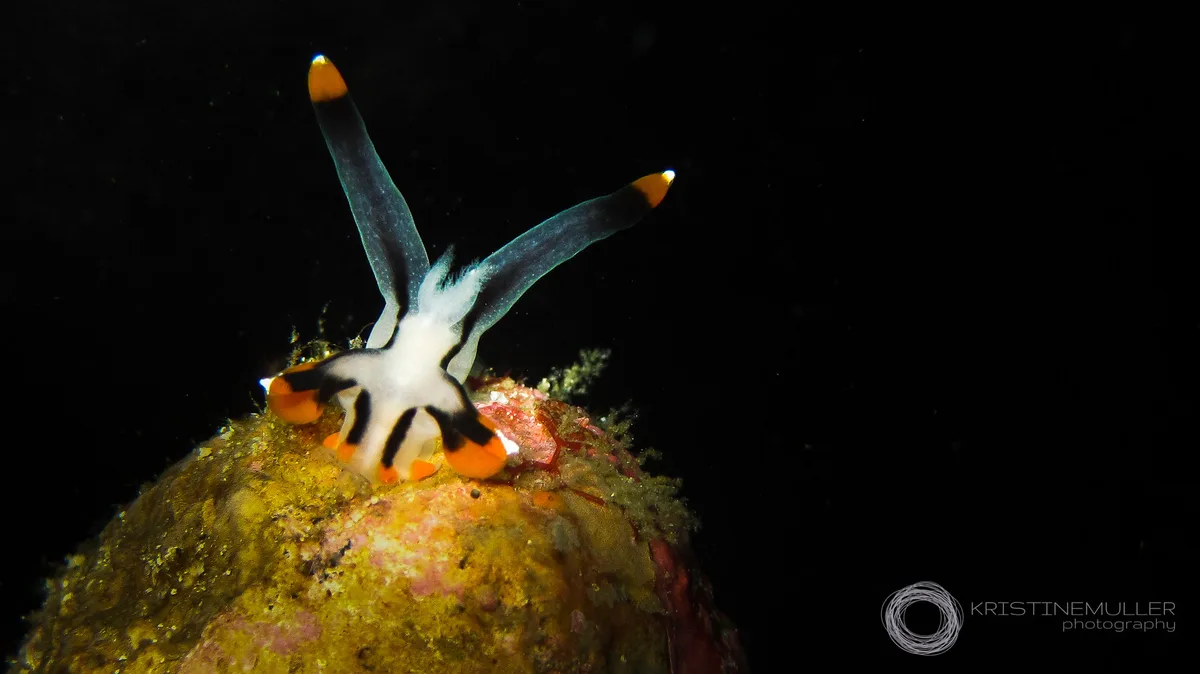
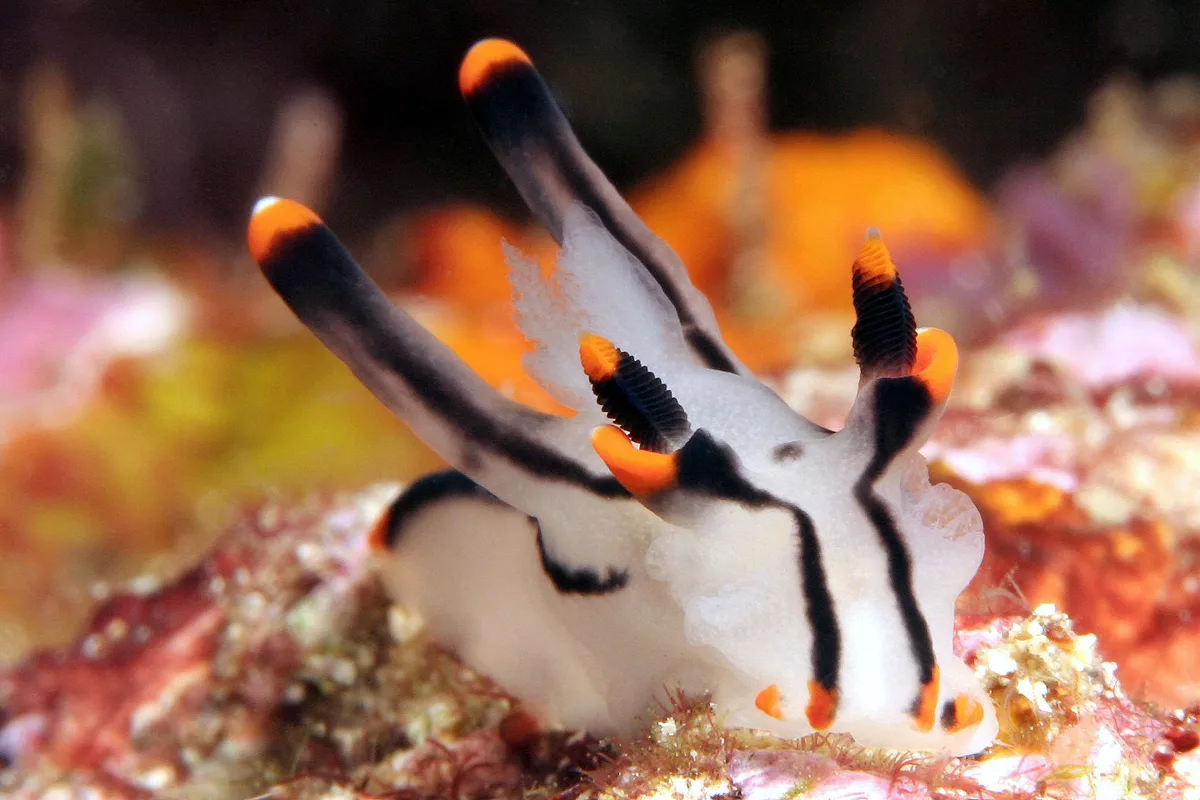
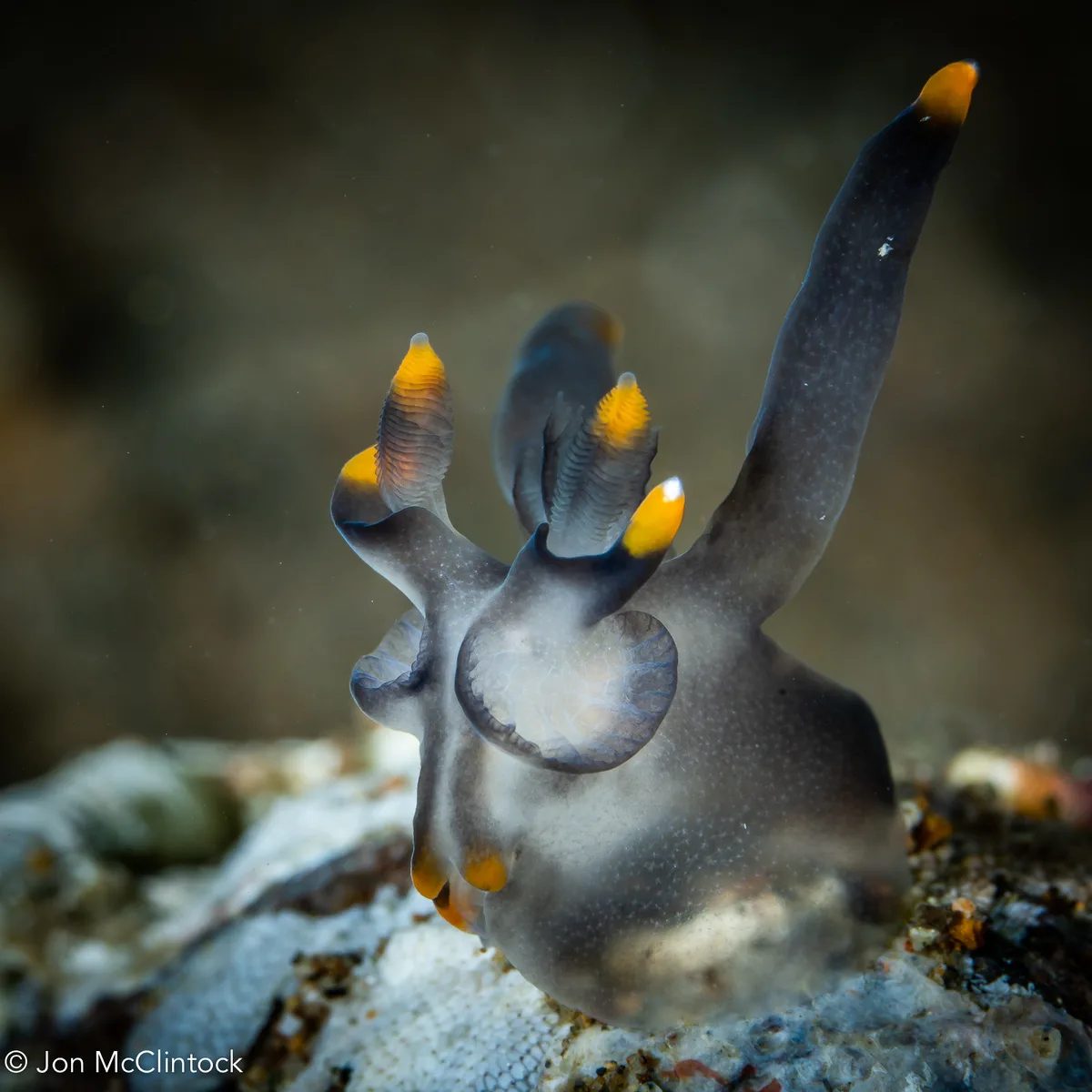
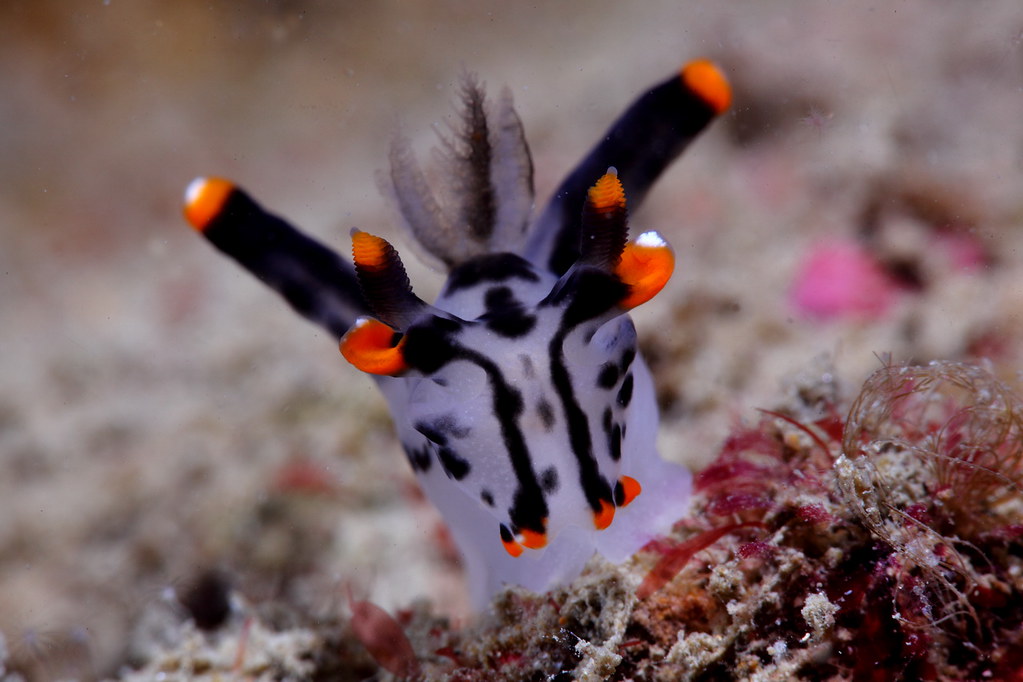
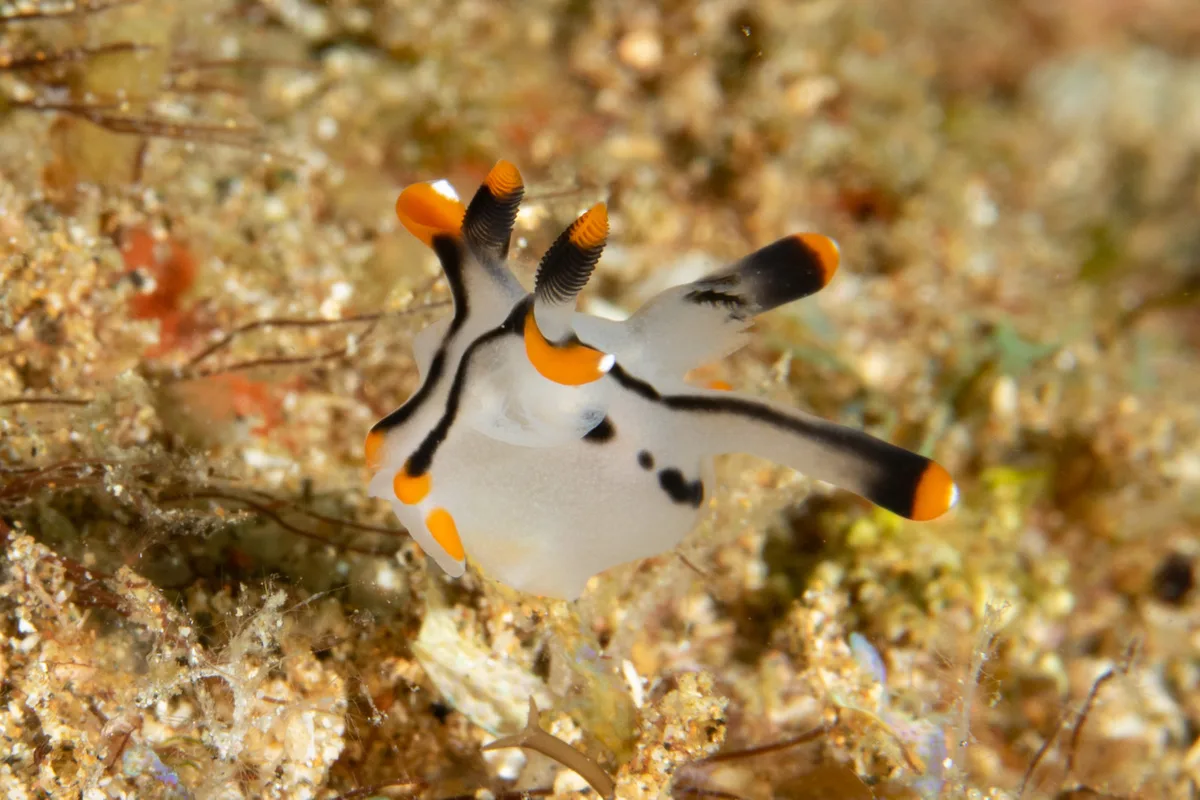
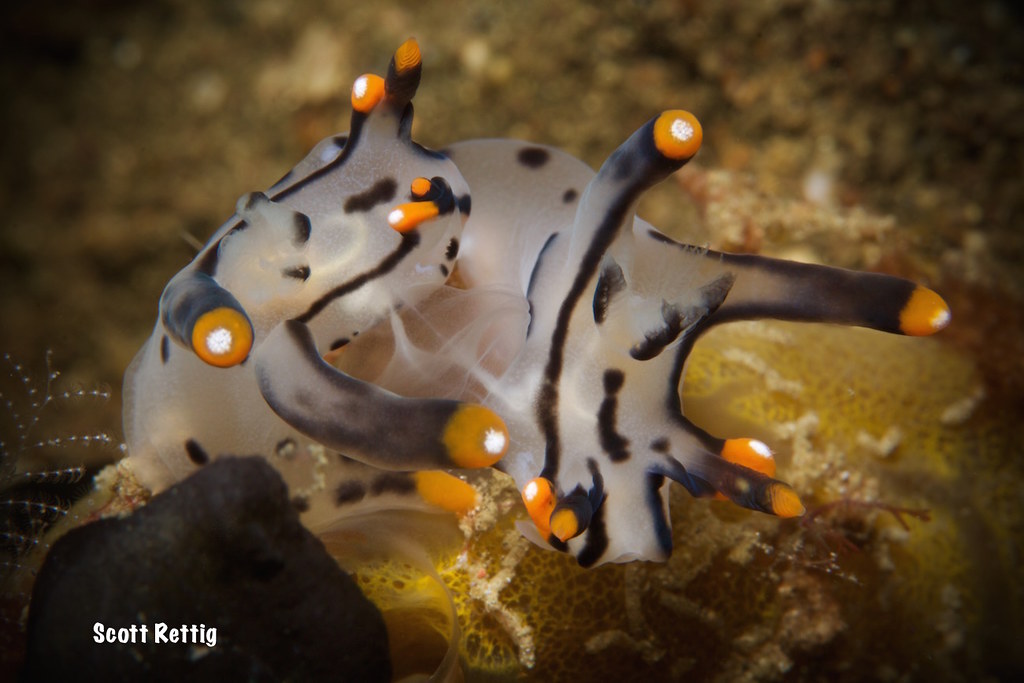
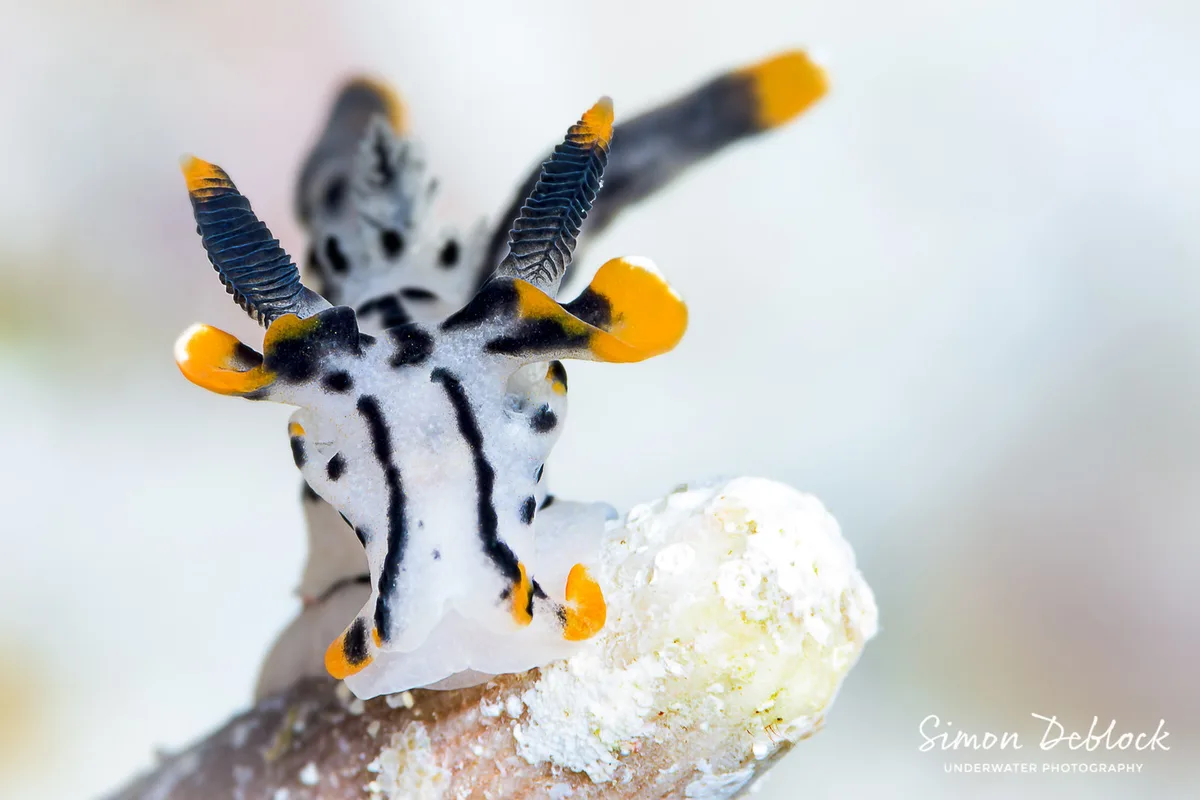
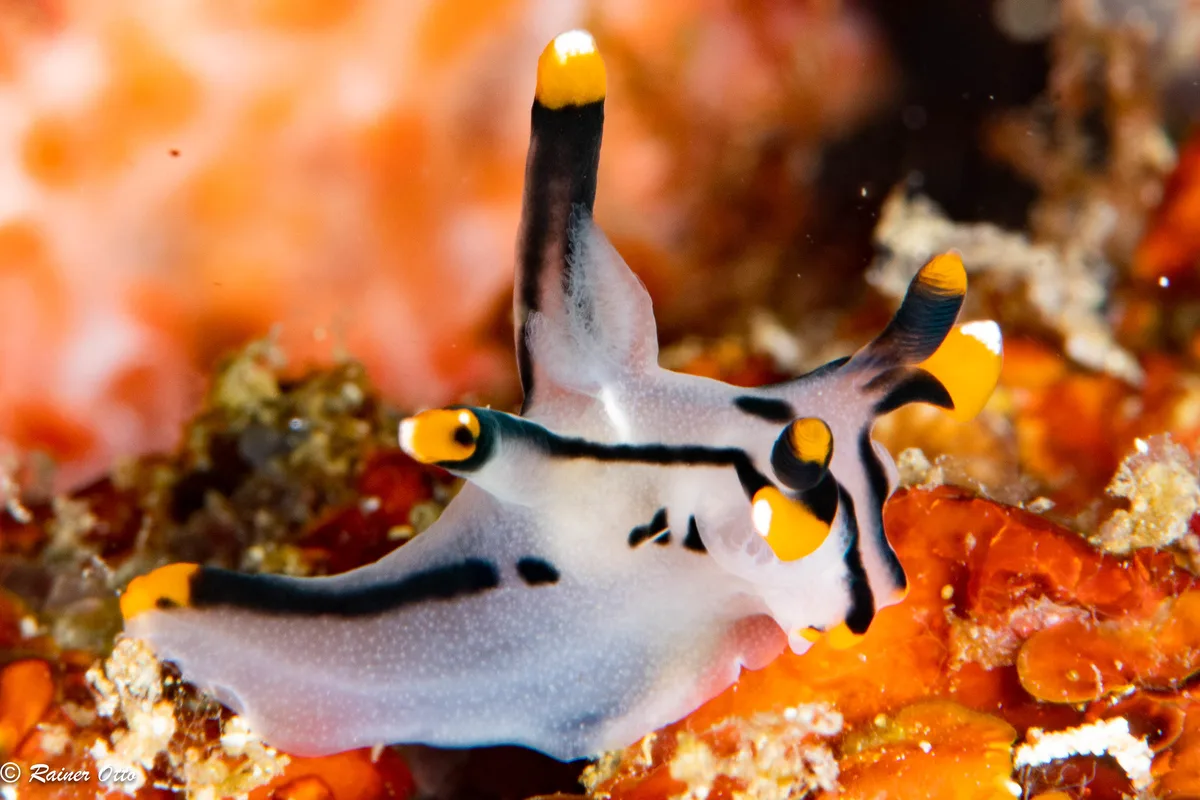
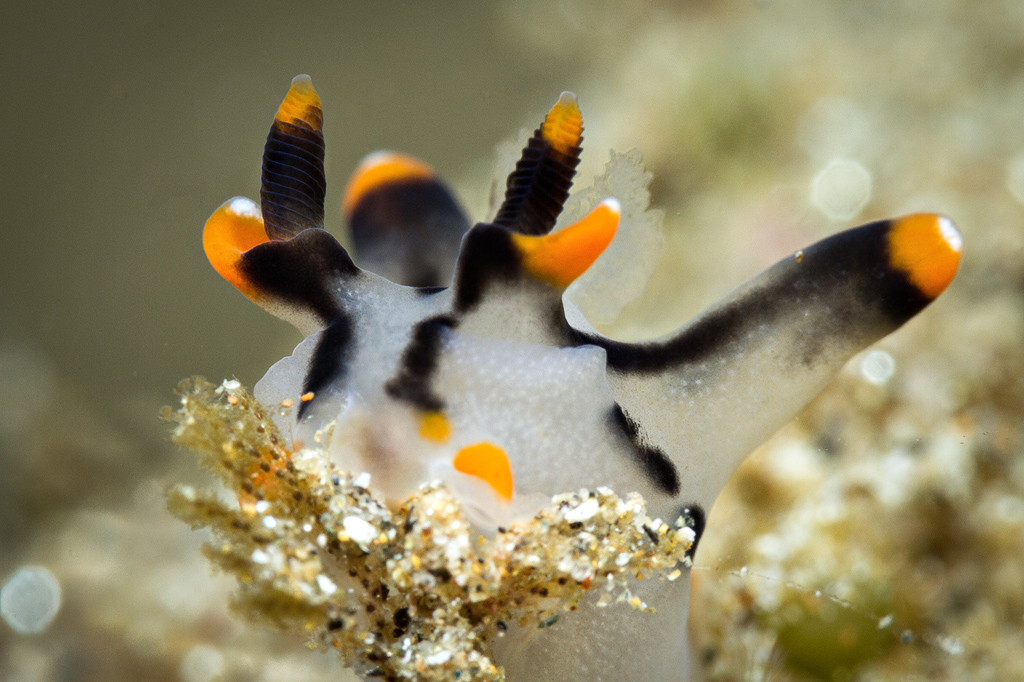
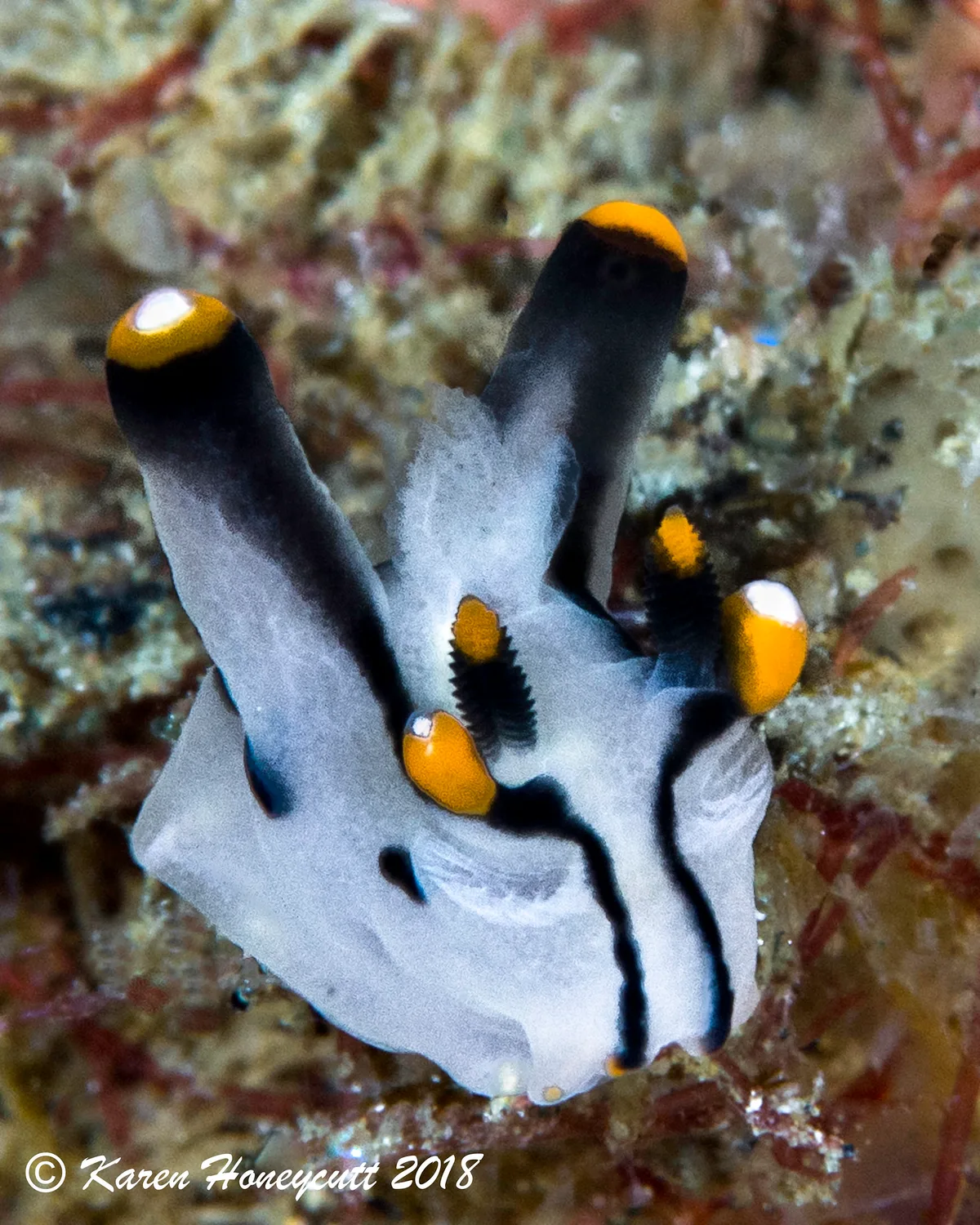
The genus name is a piece of anatomy. Thecacera comes from the Greek for sheath and horn, and it refers to the raised collars around the base of the rhinophores, which the animal can draw those horns down into. Rhinophores are chemical sensors and they are the most exposed thing a slug carries, so a pocket to put them in is worth having.
The rest of the body has the opposite problem. Most dorids can pull the gill plume down into a hole in the back and close it; the polycerids, this animal's family, cannot. The gills stand out permanently, and instead of a pocket the animal grows two lobes flanking them, raised on either side like fenders. That is the outline that makes a Thecacera recognizable from any angle, and the same shape carried in bright orange on this one's famous cousin, the Pikachu nudibranch, is what launched an entire branch of dive tourism.
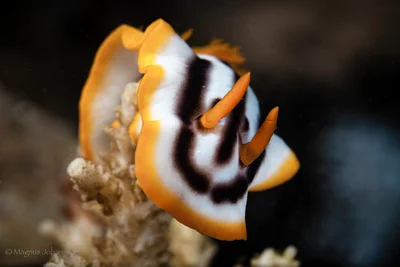
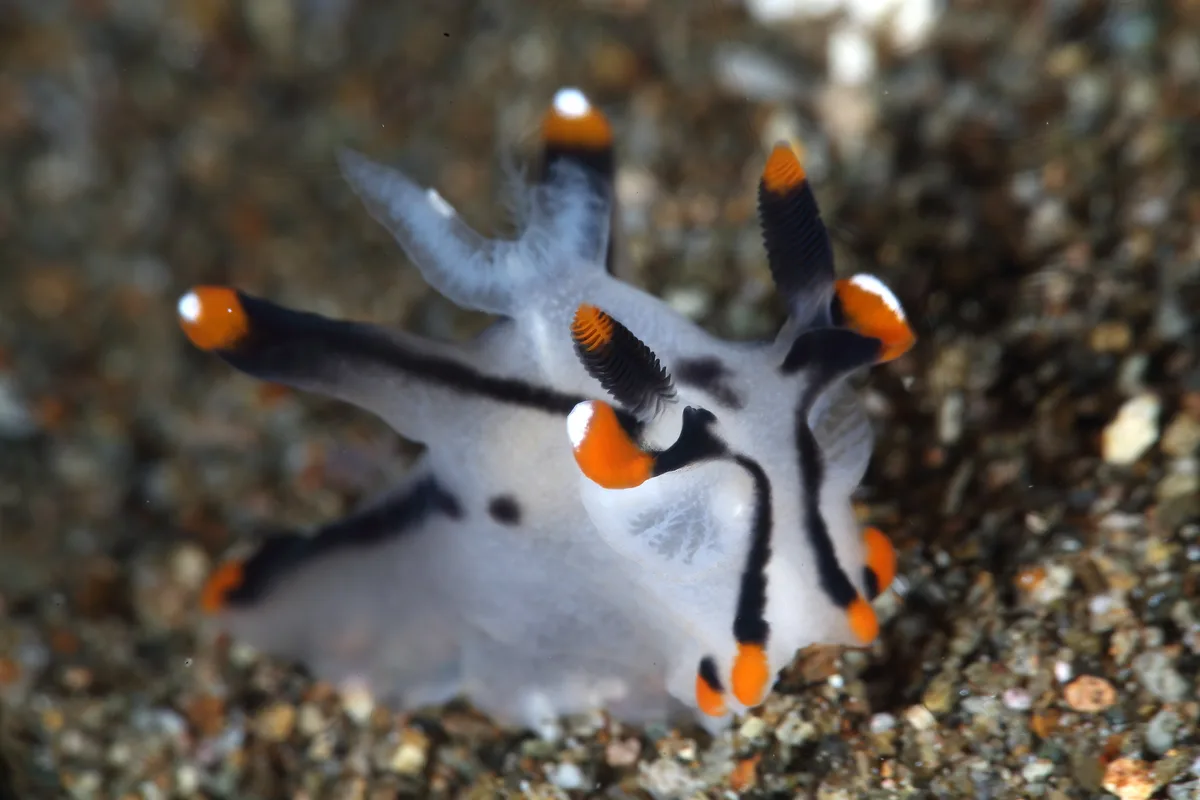
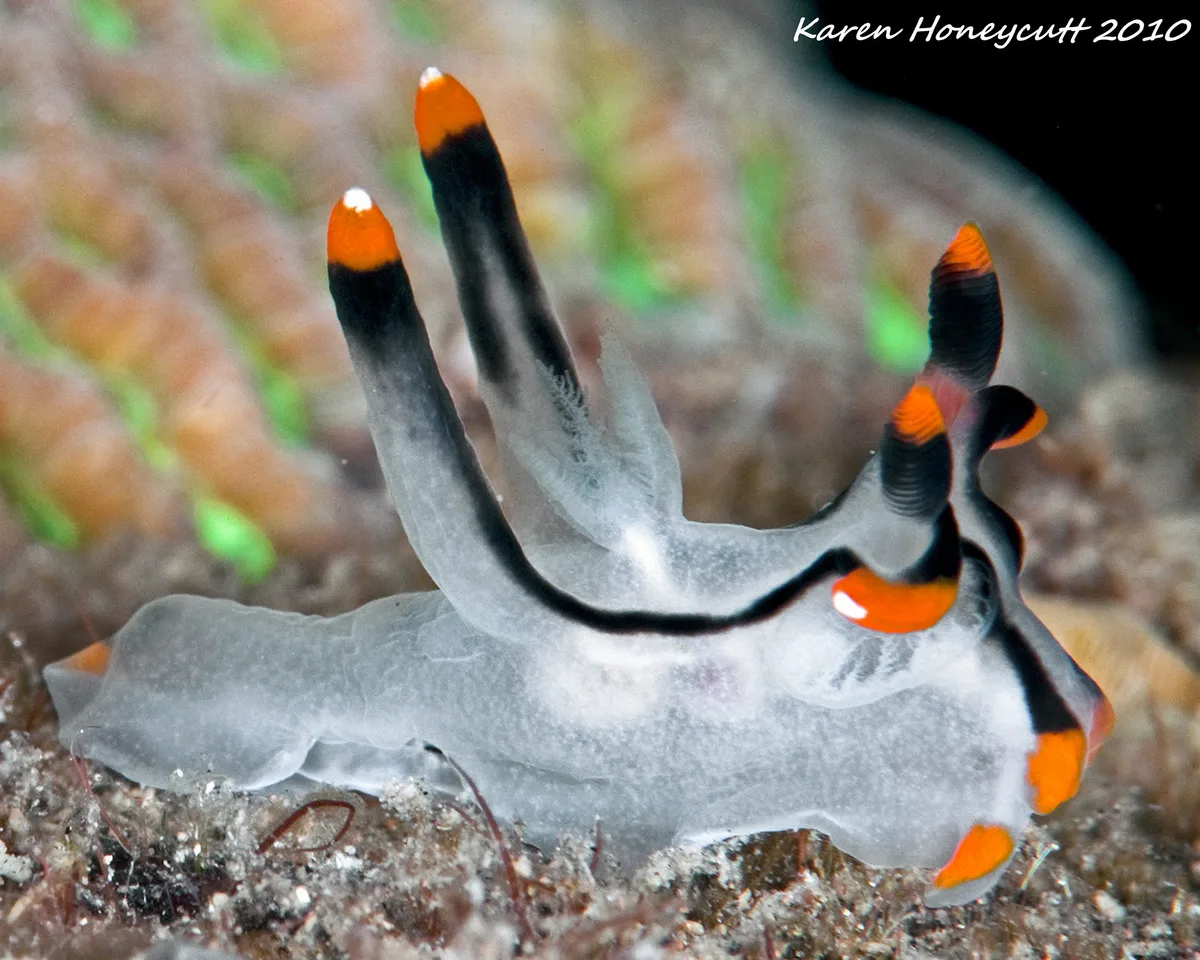
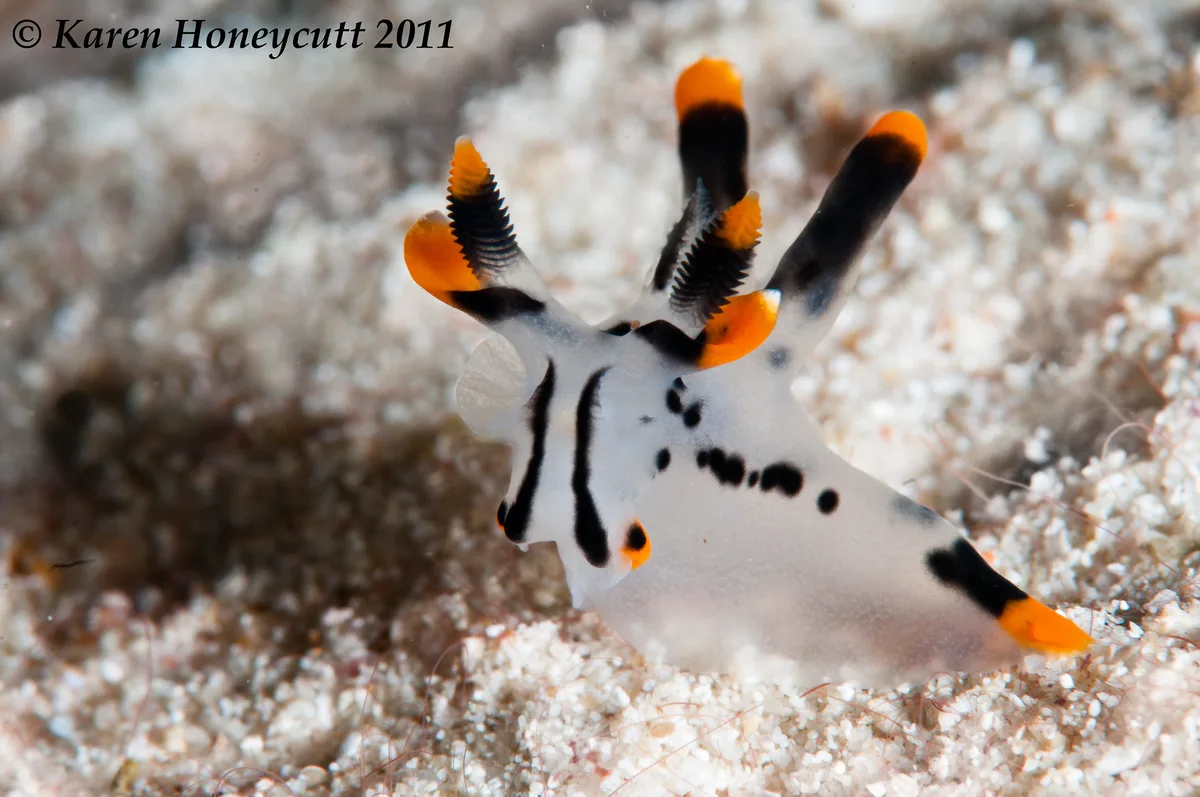
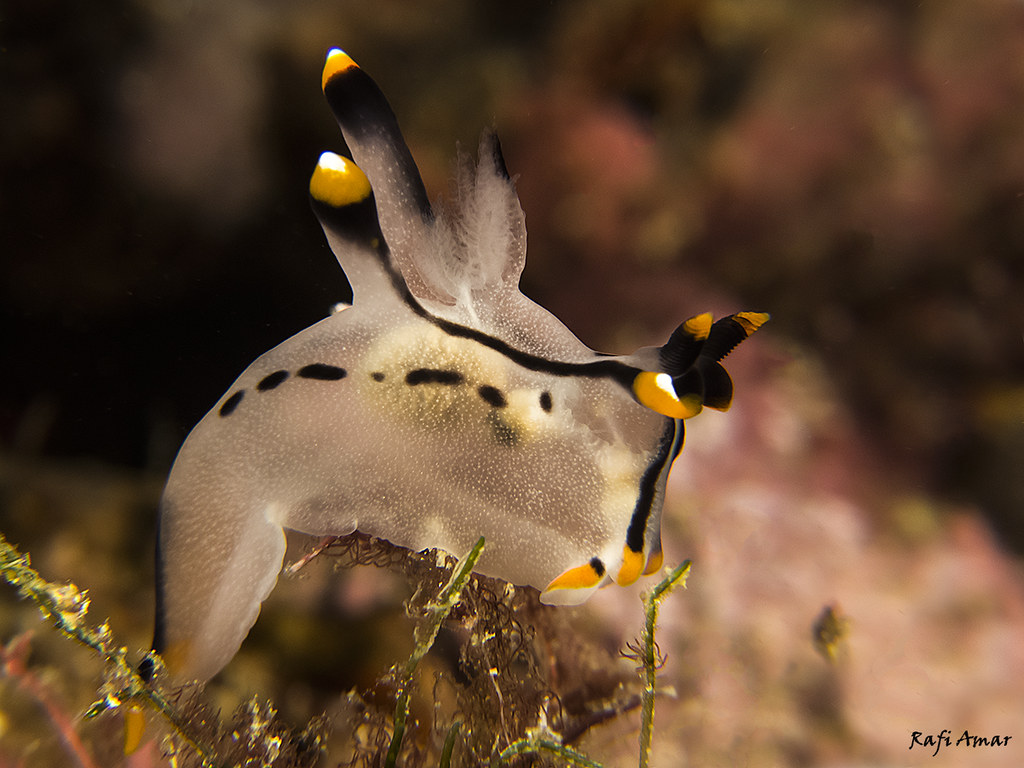
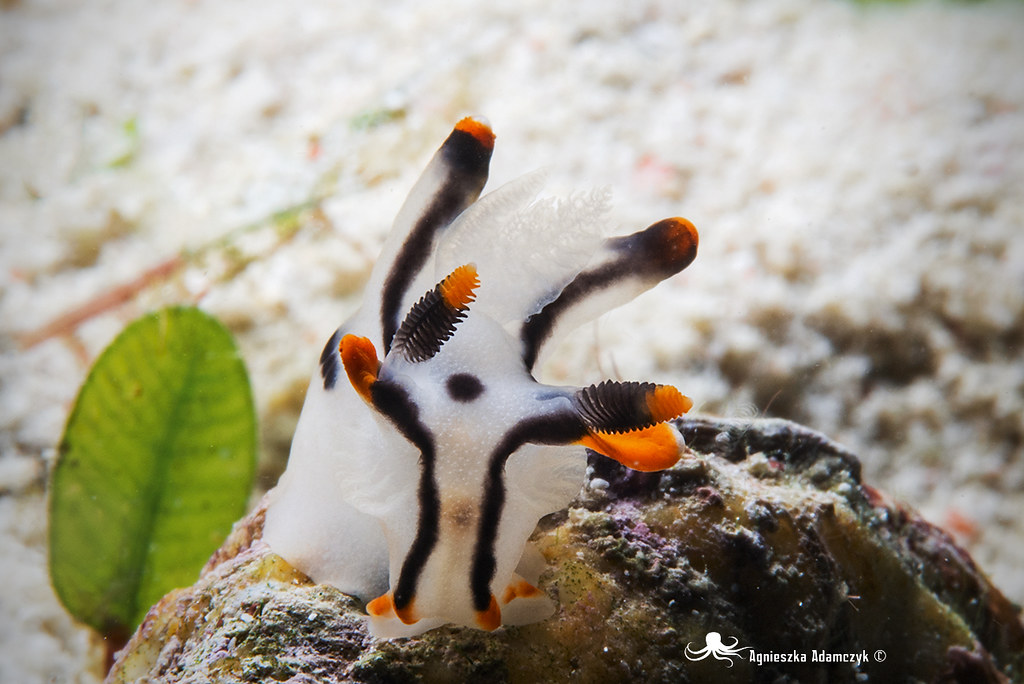
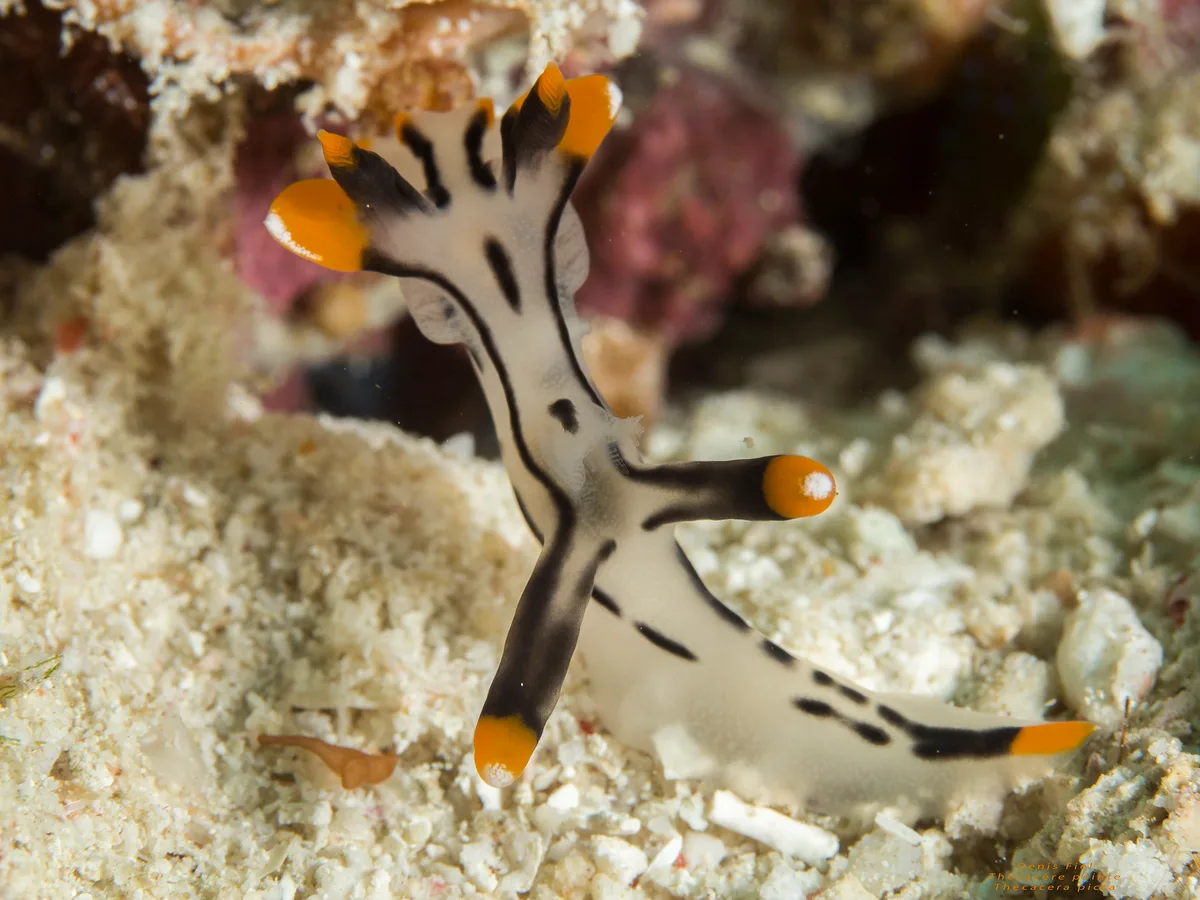
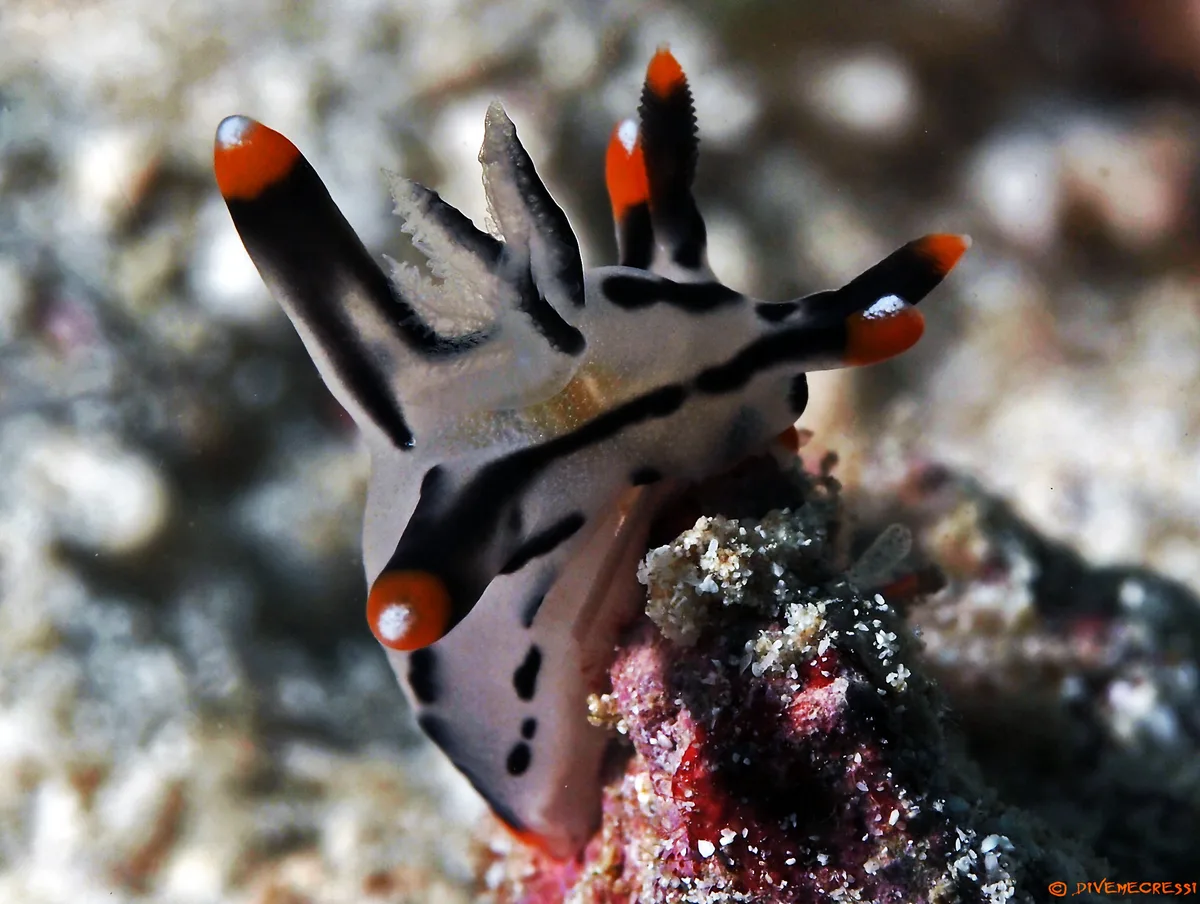
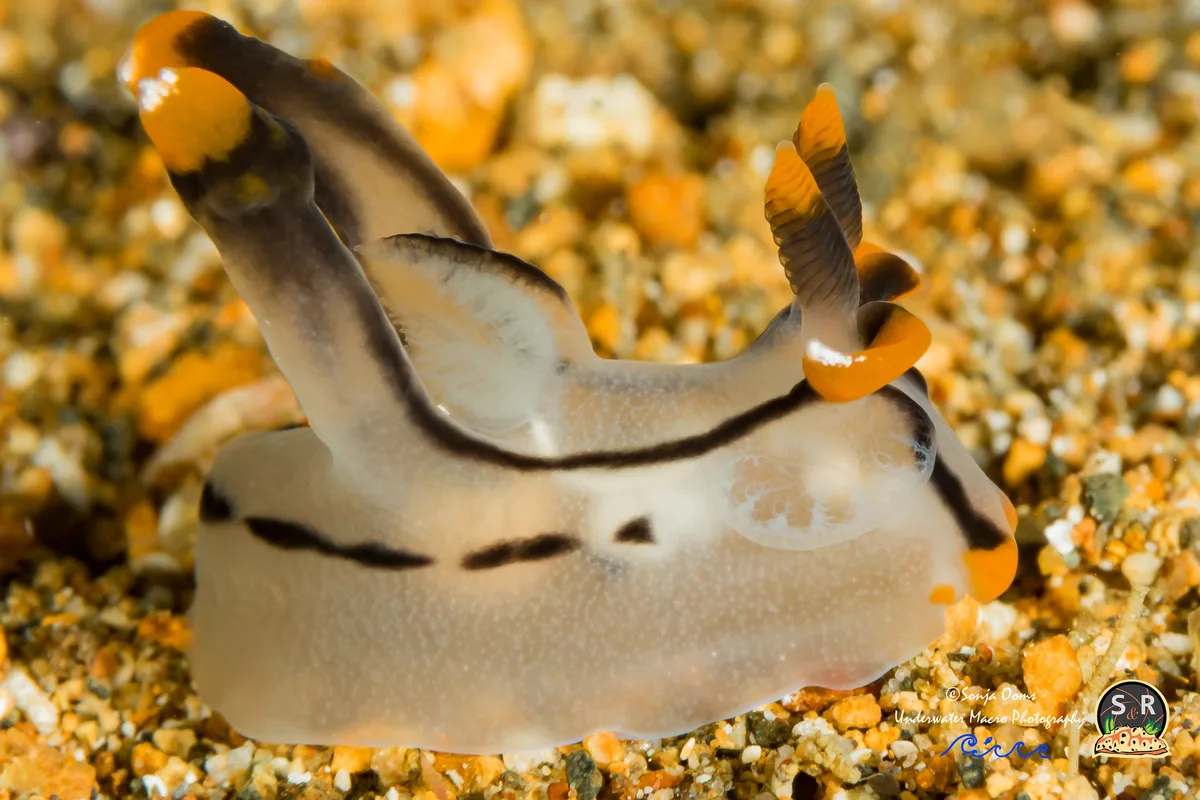
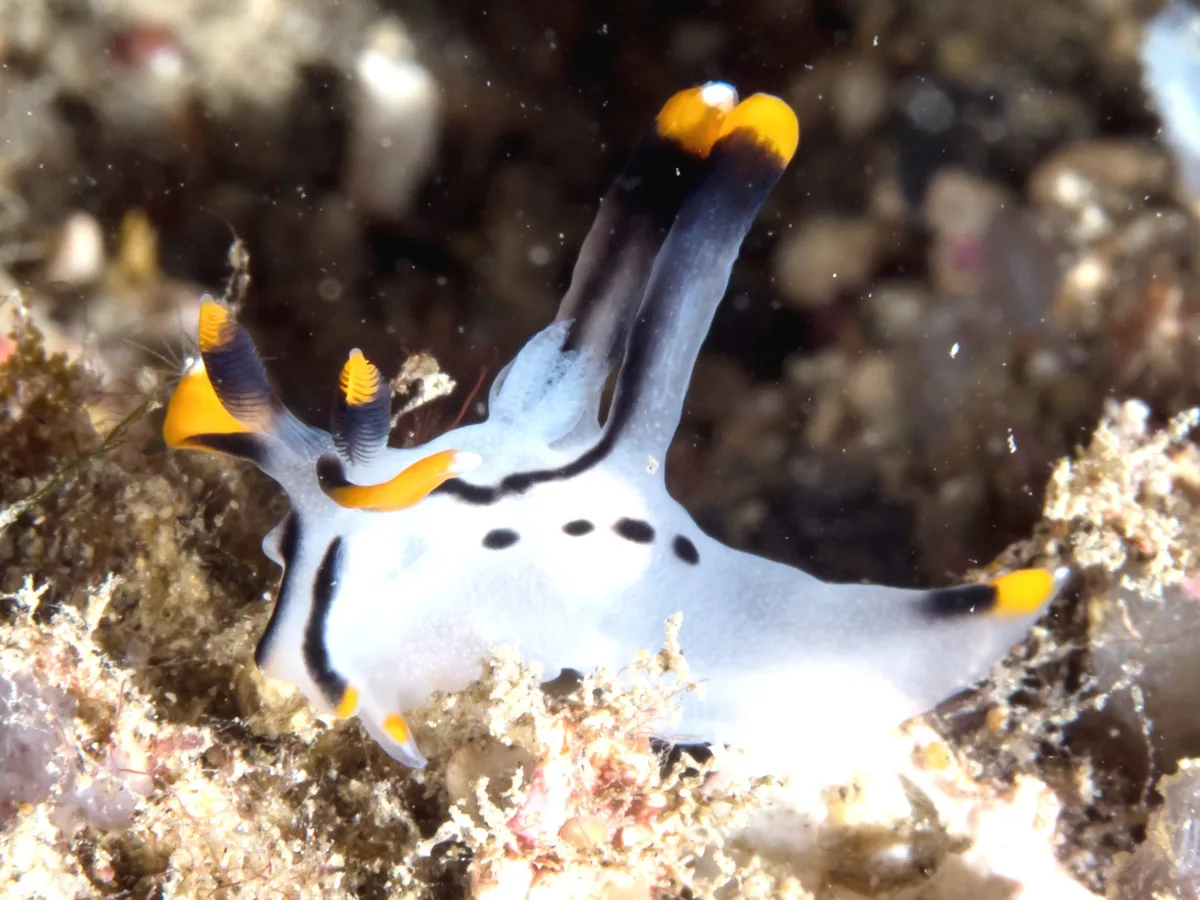
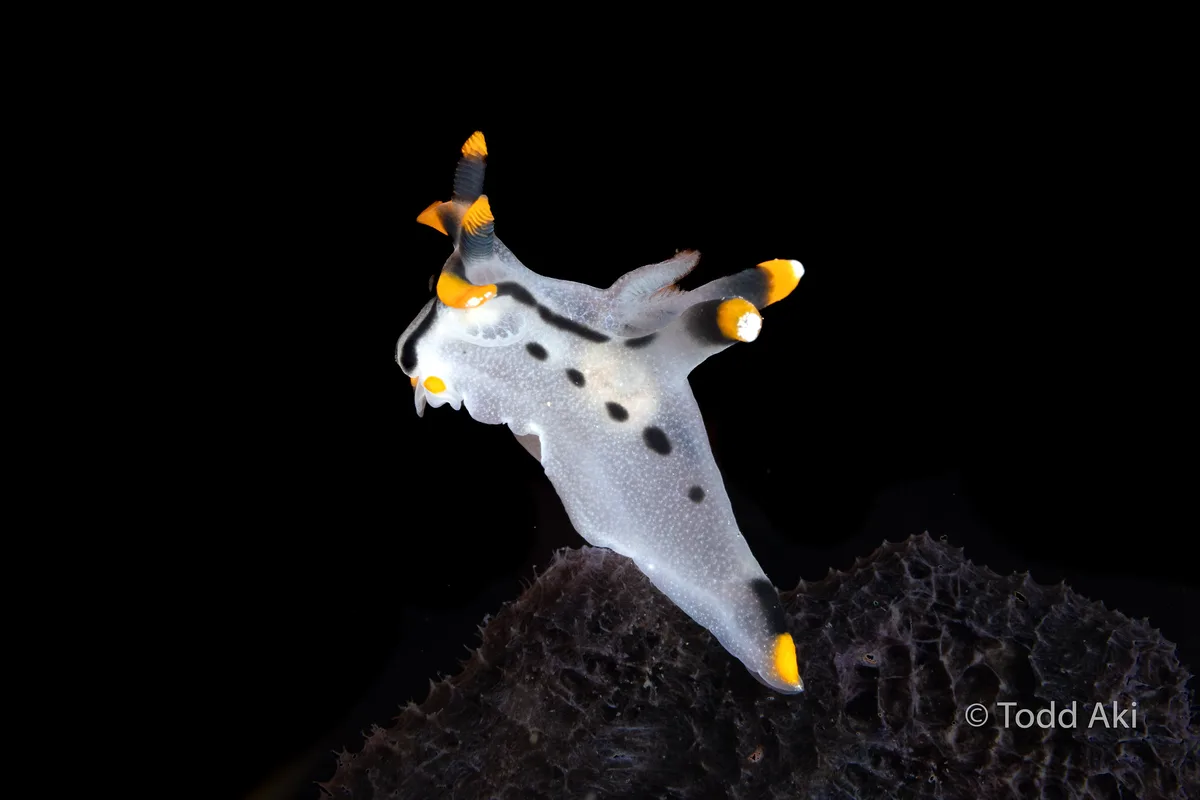
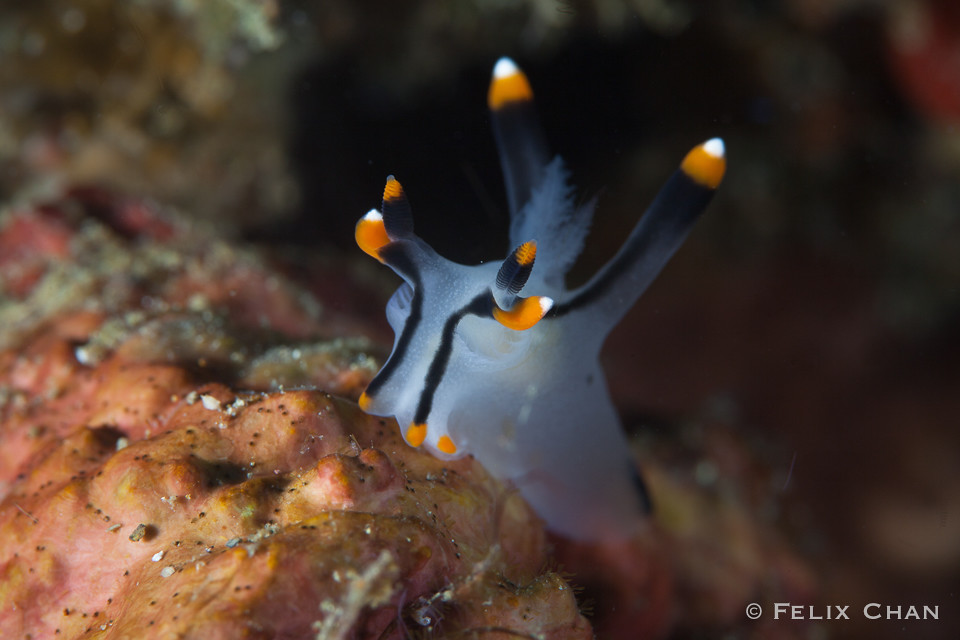
This one is the version nobody put on a poster: white, drawn over with fine black lines, orange only at the tips. Two centimeters (0.8 in).
It lives on bryozoans, the flat lacy mats encrusting rubble and dead coral that most divers scan straight past. They are colonies of thousands of tiny animals in shared calcareous boxes, and grazing them is a slow business of rasping out one occupant at a time. The reef's most photogenic slugs almost all make their living somewhere in that overlooked film of encrusting life, which is a reasonable argument for looking at the rubble.
- white with fine black lines running along the body
- orange tips on the rhinophores and on the raised lobes at the back
- a pair of lobes standing up on either side of the gill plume
- rhinophores sit in raised collars they can pull down into